Controlled Nuclear Fusion: The Paradigm Shift from Lab to Industry and a Strategic Rebuttal to Elon Musk
Date : 2026-01-09
Reading : 1753
As the global energy landscape undergoes a radical transformation, Controlled Nuclear Fusion—long considered the "Holy Grail" of clean energy—is shifting from scientific experimentation to industrial execution. At HDIN Research, we have conducted a comprehensive analysis of this sector, examining technical maturity, national strategies, and commercial potential. This report also serves as a direct, data-driven response to recent skepticism expressed by industry figures such as Elon Musk.
From Theory to Engineering Reality
The journey of nuclear fusion has evolved from theoretical exploration in the 1920s to the current era of engineering feasibility. The timeline below illustrates this critical evolution:
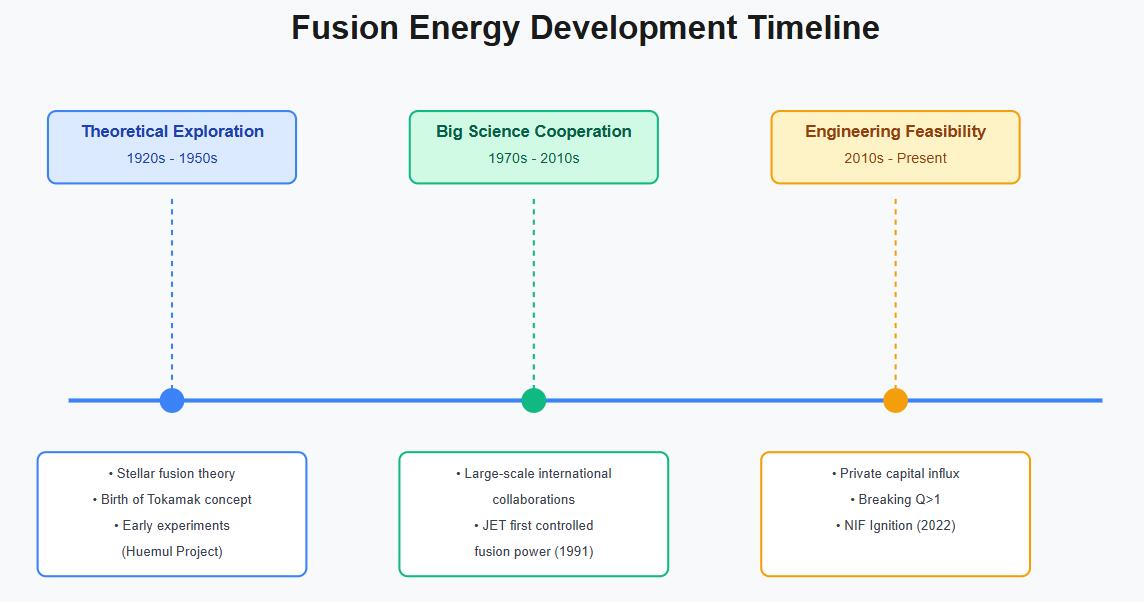
Recent technical breakthroughs confirm this trajectory. In 2022, the US National Ignition Facility (NIF) achieved a historic net energy gain (Q>1), a feat repeated with higher yields in 2025. Simultaneously, magnetic confinement devices like France’s WEST and China’s EAST have set new records for plasma duration, proving that sustained fusion conditions are technically viable.
The Commercialization Race: Capital and Contracts
The most significant shift in the fusion sector is the move from government-funded research to private commercialization, driven by the insatiable energy demands of Artificial Intelligence and data centers.
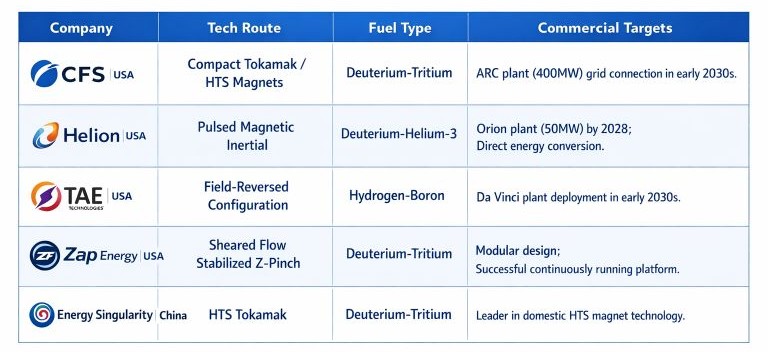
Global private investment in fusion has exceeded $9.7 billion as of mid-2025. The market is no longer speculative; it is transactional. This is evidenced by landmark Power Purchase Agreements (PPAs):
1. Microsoft and Helion Energy: Signed a PPA for at least 50 MWe starting in 2028.
2. Google and Commonwealth Fusion Systems (CFS): Agreed to purchase power from the ARC plant in the early 2030s.
Table Comparison of key players driving this commercial wave
Market Outlook: A $40 Trillion Opportunity
HDIN Research projects that fusion energy will become a cornerstone of the future energy mix. Financial analysis suggests a potential market value of up to $40 trillion by 2050. The sector offers immense opportunities not just in power generation, but in the upstream supply chain, particularly for high-temperature superconducting (HTS) materials, tungsten, and precision manufacturing.
A Strategic Rebuttal to Elon Musk
Despite this progress, skepticism remains. Elon Musk has famously dismissed terrestrial fusion, arguing that the sun is a "free fusion reactor" and that solar power combined with batteries is sufficient.
As a market analysis firm focused on industrial realities, we offer a counter-argument based on "Firm Power" requirements in the AI era.
The "Firm Power" Imperative:
Mr. Musk’s argument overlooks the critical difference between "energy" and "firm, dispatchable power." Solar and wind are intermittent. As AI data centers demand 24/7 high-density electricity, the cost and land requirements for battery storage to bridge seasonal or long-duration gaps become prohibitive. Fusion provides the high-capacity factor necessary to stabilize grids heavily reliant on renewables.
Land Efficiency and Density:
Contrary to the belief that fusion is too complex, modern private fusion companies are utilizing HTS magnets to create compact, modular reactors. Solar farms require vast tracts of land, which is often unavailable near urban load centers or industrial hubs like Northern Virginia. Fusion offers superior power density, allowing for deployment near consumption points without the massive transmission losses associated with remote solar arrays.
Industrial Heat Application:
Beyond electricity, heavy industries (steel, cement) require continuous ultra-high-temperature process heat, which photovoltaics cannot efficiently provide. Fusion reactors can directly couple with these industries to drive deep decarbonization.
Conclusion
While solar and storage are vital tactical tools for the current transition, controlled nuclear fusion is the strategic foundation for a high-energy civilization. With regulatory frameworks maturing—such as the US ADVANCE Act—and capital flooding the sector, the "always 20 years away" joke is now obsolete. For investors and governments, the next decade represents a critical window to secure a position in the ultimate energy market.
---
Disclaimer: The information presented in this report is based on public information sources and market analysis. It does not constitute financial advice.
About HDIN Research:
HDIN Research focuses on providing market consulting services. As an independent third-party consulting firm, it is committed to providing in-depth market research and analysis reports.
Contact:
Email: sales@hdinresearch.com
Website: www.hdinresearch.com
From Theory to Engineering Reality
The journey of nuclear fusion has evolved from theoretical exploration in the 1920s to the current era of engineering feasibility. The timeline below illustrates this critical evolution:
Recent technical breakthroughs confirm this trajectory. In 2022, the US National Ignition Facility (NIF) achieved a historic net energy gain (Q>1), a feat repeated with higher yields in 2025. Simultaneously, magnetic confinement devices like France’s WEST and China’s EAST have set new records for plasma duration, proving that sustained fusion conditions are technically viable.
The Commercialization Race: Capital and Contracts
The most significant shift in the fusion sector is the move from government-funded research to private commercialization, driven by the insatiable energy demands of Artificial Intelligence and data centers.
Global private investment in fusion has exceeded $9.7 billion as of mid-2025. The market is no longer speculative; it is transactional. This is evidenced by landmark Power Purchase Agreements (PPAs):
1. Microsoft and Helion Energy: Signed a PPA for at least 50 MWe starting in 2028.
2. Google and Commonwealth Fusion Systems (CFS): Agreed to purchase power from the ARC plant in the early 2030s.
Table Comparison of key players driving this commercial wave
Market Outlook: A $40 Trillion Opportunity
HDIN Research projects that fusion energy will become a cornerstone of the future energy mix. Financial analysis suggests a potential market value of up to $40 trillion by 2050. The sector offers immense opportunities not just in power generation, but in the upstream supply chain, particularly for high-temperature superconducting (HTS) materials, tungsten, and precision manufacturing.
A Strategic Rebuttal to Elon Musk
Despite this progress, skepticism remains. Elon Musk has famously dismissed terrestrial fusion, arguing that the sun is a "free fusion reactor" and that solar power combined with batteries is sufficient.
As a market analysis firm focused on industrial realities, we offer a counter-argument based on "Firm Power" requirements in the AI era.
The "Firm Power" Imperative:
Mr. Musk’s argument overlooks the critical difference between "energy" and "firm, dispatchable power." Solar and wind are intermittent. As AI data centers demand 24/7 high-density electricity, the cost and land requirements for battery storage to bridge seasonal or long-duration gaps become prohibitive. Fusion provides the high-capacity factor necessary to stabilize grids heavily reliant on renewables.
Land Efficiency and Density:
Contrary to the belief that fusion is too complex, modern private fusion companies are utilizing HTS magnets to create compact, modular reactors. Solar farms require vast tracts of land, which is often unavailable near urban load centers or industrial hubs like Northern Virginia. Fusion offers superior power density, allowing for deployment near consumption points without the massive transmission losses associated with remote solar arrays.
Industrial Heat Application:
Beyond electricity, heavy industries (steel, cement) require continuous ultra-high-temperature process heat, which photovoltaics cannot efficiently provide. Fusion reactors can directly couple with these industries to drive deep decarbonization.
Conclusion
While solar and storage are vital tactical tools for the current transition, controlled nuclear fusion is the strategic foundation for a high-energy civilization. With regulatory frameworks maturing—such as the US ADVANCE Act—and capital flooding the sector, the "always 20 years away" joke is now obsolete. For investors and governments, the next decade represents a critical window to secure a position in the ultimate energy market.
---
Disclaimer: The information presented in this report is based on public information sources and market analysis. It does not constitute financial advice.
About HDIN Research:
HDIN Research focuses on providing market consulting services. As an independent third-party consulting firm, it is committed to providing in-depth market research and analysis reports.
Contact:
Email: sales@hdinresearch.com
Website: www.hdinresearch.com