Sugar Beet Pulp Pellets (SBPP) Market Analysis 2026: Sustainable Feed Solutions Drive Global Growth
Date : 2026-02-20
Reading : 207
HDIN Research has released its latest comprehensive analysis on the Global Sugar Beet Pulp Pellets (SBPP) Market. As the agricultural sector increasingly shifts toward circular economy models, SBPP has emerged as a critical high-value co-product, bridging the gap between sugar processing and advanced animal nutrition.
Market Overview and Growth Trajectory
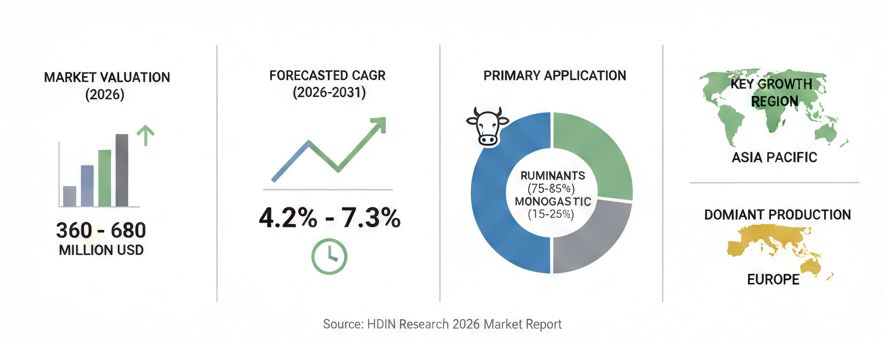
The global SBPP market in 2026 is valued between 360 million and 680 million USD. Driven by the expansion of the global livestock sector and a rising emphasis on sustainable feed alternatives, the market is projected to expand at a compound annual growth rate (CAGR) of 4.2% to 7.3% through 2031.
Sugar Beet Pulp Pellets are derived from the fibrous residue of sugar extraction. Once considered merely a byproduct, they are now recognized for their nutritional superiority in ruminant diets. The product is categorized primarily into molasses-containing and molasses-free variants. Molasses-containing pellets, which retain residual sugars, offer high energy density and palatability, while molasses-free options are utilized in specialized feeding programs requiring strict fiber-to-sugar ratios.
Drivers of Market Expansion
The primary catalyst for market growth is the biological value of the product in livestock production. SBPP contains approximately 80% carbohydrates, primarily in the form of cellulose, hemicellulose, and pectin, with high digestibility rates exceeding 80% for ruminants. Research cited in the report indicates that integrating SBPP into livestock diets can improve feed conversion efficiency by up to 15%.
Furthermore, the industry is benefiting from the global push for sustainability. By converting sugar beet processing residue into high-quality feed, the SBPP market supports waste valorization and reduces the environmental footprint of the agricultural supply chain.
Regional Dynamics and Supply Chain
Europe remains the dominant production base, accounting for a significant share of global supply due to its established sugar beet cultivation infrastructure in France, Germany, and Poland. However, trade dynamics are shifting. The European Union's 2023 restrictions on regular pulp imports have strengthened domestic production consumption within the EU.
Concurrently, the Asia Pacific region represents the fastest-growing market opportunity. With the region's animal feed market projected to grow significantly through 2030, led by China's expanding livestock sector, demand for alternative, high-fiber feed ingredients is rising. North America maintains a stable market structure, heavily supported by cooperative-based sugar beet processing in the United States.
Figure Market Data Summary of Sugar Beet Pulp Pellets (SBPP)
 Competitive Landscape
The market is characterized by a mix of multinational agribusiness corporations and regional sugar cooperatives. Major players leverage integrated production capabilities where SBPP is produced directly alongside sugar. Key industry participants identified in the report include Südzucker Group, Tereos, Nordzucker AG, American Crystal Sugar Company, and Archer Daniels Midland (ADM).
The competitive environment is increasingly focused on product differentiation through certification. Demand for organic-certified SBPP is growing, particularly in European markets, prompting producers to align with standards such as GMP+, FAMI-QS, and various organic regulations to capture premium segments.
About HDIN Research
HDIN Research focuses on providing market consulting services. As an independent third-party consulting firm, it is committed to providing in-depth market research and analysis reports. We help companies navigate complex industry landscapes with data-driven insights.
Media Contact:
HDIN Research
Website: www.hdinresearch.com
Email: sales@hdinresearch.com
Market Overview and Growth Trajectory
The global SBPP market in 2026 is valued between 360 million and 680 million USD. Driven by the expansion of the global livestock sector and a rising emphasis on sustainable feed alternatives, the market is projected to expand at a compound annual growth rate (CAGR) of 4.2% to 7.3% through 2031.
Sugar Beet Pulp Pellets are derived from the fibrous residue of sugar extraction. Once considered merely a byproduct, they are now recognized for their nutritional superiority in ruminant diets. The product is categorized primarily into molasses-containing and molasses-free variants. Molasses-containing pellets, which retain residual sugars, offer high energy density and palatability, while molasses-free options are utilized in specialized feeding programs requiring strict fiber-to-sugar ratios.
Drivers of Market Expansion
The primary catalyst for market growth is the biological value of the product in livestock production. SBPP contains approximately 80% carbohydrates, primarily in the form of cellulose, hemicellulose, and pectin, with high digestibility rates exceeding 80% for ruminants. Research cited in the report indicates that integrating SBPP into livestock diets can improve feed conversion efficiency by up to 15%.
Furthermore, the industry is benefiting from the global push for sustainability. By converting sugar beet processing residue into high-quality feed, the SBPP market supports waste valorization and reduces the environmental footprint of the agricultural supply chain.
Regional Dynamics and Supply Chain
Europe remains the dominant production base, accounting for a significant share of global supply due to its established sugar beet cultivation infrastructure in France, Germany, and Poland. However, trade dynamics are shifting. The European Union's 2023 restrictions on regular pulp imports have strengthened domestic production consumption within the EU.
Concurrently, the Asia Pacific region represents the fastest-growing market opportunity. With the region's animal feed market projected to grow significantly through 2030, led by China's expanding livestock sector, demand for alternative, high-fiber feed ingredients is rising. North America maintains a stable market structure, heavily supported by cooperative-based sugar beet processing in the United States.
Figure Market Data Summary of Sugar Beet Pulp Pellets (SBPP)
Competitive LandscapeThe market is characterized by a mix of multinational agribusiness corporations and regional sugar cooperatives. Major players leverage integrated production capabilities where SBPP is produced directly alongside sugar. Key industry participants identified in the report include Südzucker Group, Tereos, Nordzucker AG, American Crystal Sugar Company, and Archer Daniels Midland (ADM).
The competitive environment is increasingly focused on product differentiation through certification. Demand for organic-certified SBPP is growing, particularly in European markets, prompting producers to align with standards such as GMP+, FAMI-QS, and various organic regulations to capture premium segments.
About HDIN Research
HDIN Research focuses on providing market consulting services. As an independent third-party consulting firm, it is committed to providing in-depth market research and analysis reports. We help companies navigate complex industry landscapes with data-driven insights.
Media Contact:
HDIN Research
Website: www.hdinresearch.com
Email: sales@hdinresearch.com