GS Group Strategic Analysis: Accelerating Green Energy Transition and Retail Asset Optimization
Date : 2026-02-03
Reading : 386
GS Group has released its consolidated financial results for the third quarter of 2025, showcasing a period of significant strategic restructuring and transition toward high-growth, sustainable industries. As a leading South Korean conglomerate, GS Group is currently balancing its traditional core businesses in energy and retail with aggressive forays into green energy and digital transformation.
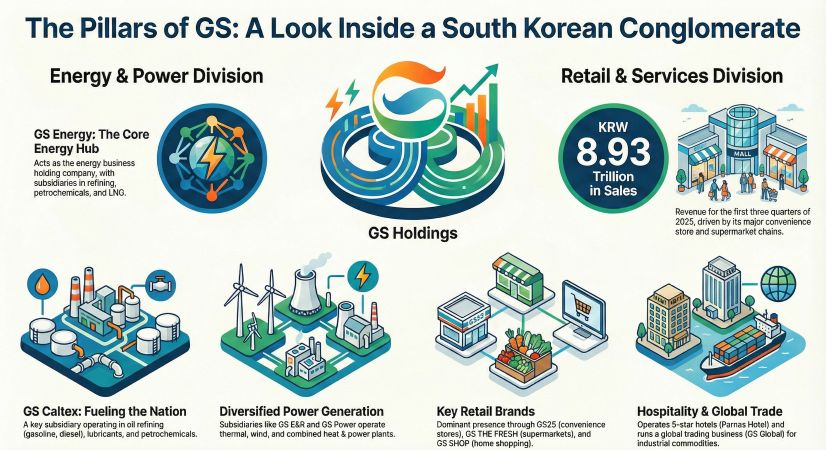
Figure The Pillars of GS Holdings Corp-A Look Inside a South Korean Conglomerate
 Strategic Pivot Toward Green Energy and High-Value Manufacturing
A central theme of GS Group's 2025 strategy is the "Green Transition." GS Energy is currently building a global LNG value chain while investing heavily in the electric vehicle (EV) charging infrastructure and used battery recycling systems. Meanwhile, GS Caltex is preparing for the future by investing in carbon capture and utilization (CCU) and white biotechnology, including a bio-raw material refining facility in Indonesia.
In the manufacturing sector, GS Global is successfully transitioning from low-margin commodity trading to high-value manufacturing. The company is now focusing on the production of substructures for offshore wind farms, positioning itself to capture significant market share in the renewable energy equipment sector.
Retail Optimization and the O4O Strategy
The retail segment remains the largest revenue contributor for the group. GS Retail is actively implementing its O4O (Online for Offline) strategy, utilizing its 17,000 physical locations as hubs for quick commerce and delivery services. To improve operational efficiency, the group has made decisive moves to dispose of non-core or underperforming assets. This includes the exit from the Indonesian supermarket market and the sale of its stake in AboutPet.
Furthermore, the split-off of Parnas Hotel into a separate entity, GS P&L, allows the retail division to focus exclusively on its core convenience store and supermarket operations, while the hotel division focuses on premium brand positioning.
Financial Stability and Performance Analysis
Based on the latest financial data, GS Group maintains a solid capital structure. An analysis of its financial indicators suggests the group is in a stable long-term position, despite minor short-term liquidity pressures typical of large-scale retail and energy operations. The group's gas and power segment remains its primary profit engine, contributing over 80 percent of the total operating profit.
Table GS Group Revenue Structure by Segment (Q1-Q3 2025 Cumulative)
Challenges and Risk Management
GS Group faces several macro-level challenges, including high inflation which impacts consumer purchasing power and rising labor costs due to minimum wage increases affecting the GS25 franchise network. The energy sector is also sensitive to fluctuations in crude oil prices and government policy changes regarding power wholesale prices.
To mitigate these risks, the group is utilizing its venture capital arm, GS Ventures, to invest in next-generation technologies such as AI and blockchain to drive efficiency across all business lines. The divestment of low-ROE assets provides the necessary liquidity to fund these emerging high-growth businesses.
Future Outlook
GS Group is currently in a "selection and concentration" phase. By liquidating underperforming international operations and non-core subsidiaries, the group is refocusing its resources on the energy transition and the digital evolution of retail. This proactive asset management strategy suggests a strong potential for long-term value appreciation as the group's green energy projects begin to yield returns.
HDIN Research
Company Profile: HDIN Research focuses on providing market consulting services. As an independent third-party consulting firm, it is committed to providing in-depth market research and analysis reports.
Official Website: www.hdinresearch.com
Contact Email: sales@hdinresearch.com
Figure The Pillars of GS Holdings Corp-A Look Inside a South Korean Conglomerate
Strategic Pivot Toward Green Energy and High-Value ManufacturingA central theme of GS Group's 2025 strategy is the "Green Transition." GS Energy is currently building a global LNG value chain while investing heavily in the electric vehicle (EV) charging infrastructure and used battery recycling systems. Meanwhile, GS Caltex is preparing for the future by investing in carbon capture and utilization (CCU) and white biotechnology, including a bio-raw material refining facility in Indonesia.
In the manufacturing sector, GS Global is successfully transitioning from low-margin commodity trading to high-value manufacturing. The company is now focusing on the production of substructures for offshore wind farms, positioning itself to capture significant market share in the renewable energy equipment sector.
Retail Optimization and the O4O Strategy
The retail segment remains the largest revenue contributor for the group. GS Retail is actively implementing its O4O (Online for Offline) strategy, utilizing its 17,000 physical locations as hubs for quick commerce and delivery services. To improve operational efficiency, the group has made decisive moves to dispose of non-core or underperforming assets. This includes the exit from the Indonesian supermarket market and the sale of its stake in AboutPet.
Furthermore, the split-off of Parnas Hotel into a separate entity, GS P&L, allows the retail division to focus exclusively on its core convenience store and supermarket operations, while the hotel division focuses on premium brand positioning.
Financial Stability and Performance Analysis
Based on the latest financial data, GS Group maintains a solid capital structure. An analysis of its financial indicators suggests the group is in a stable long-term position, despite minor short-term liquidity pressures typical of large-scale retail and energy operations. The group's gas and power segment remains its primary profit engine, contributing over 80 percent of the total operating profit.
Table GS Group Revenue Structure by Segment (Q1-Q3 2025 Cumulative)
| Business Segment | Revenue (Million KRW) | Revenue Share (%) | Core Operations |
|---|---|---|---|
| Retail | 8,755,587 | 46.8% | GS25, GS THE FRESH, GS SHOP |
| Gas and Power | 5,256,453 | 28.1% | GS Energy, GS EPS, GS E&R |
| Trading | 2,870,644 | 15.4% | GS Global (Resources, Steel, Machinery) |
| Investment and Others | 1,814,101 | 9.7% | Parnas Hotel, GS Ventures, Manufacturing |
| Total | 18,696,785 | 100.0% | Consolidated Group Total |
Challenges and Risk Management
GS Group faces several macro-level challenges, including high inflation which impacts consumer purchasing power and rising labor costs due to minimum wage increases affecting the GS25 franchise network. The energy sector is also sensitive to fluctuations in crude oil prices and government policy changes regarding power wholesale prices.
To mitigate these risks, the group is utilizing its venture capital arm, GS Ventures, to invest in next-generation technologies such as AI and blockchain to drive efficiency across all business lines. The divestment of low-ROE assets provides the necessary liquidity to fund these emerging high-growth businesses.
Future Outlook
GS Group is currently in a "selection and concentration" phase. By liquidating underperforming international operations and non-core subsidiaries, the group is refocusing its resources on the energy transition and the digital evolution of retail. This proactive asset management strategy suggests a strong potential for long-term value appreciation as the group's green energy projects begin to yield returns.
HDIN Research
Company Profile: HDIN Research focuses on providing market consulting services. As an independent third-party consulting firm, it is committed to providing in-depth market research and analysis reports.
Official Website: www.hdinresearch.com
Contact Email: sales@hdinresearch.com