Louisiana-Pacific (LPX) vs Western Forest Products (WFP): Strategic Moats & The 2026 Profitability Gap
Date : 2026-02-22
Reading : 100
The fiscal year 2025 has drawn a sharp line of demarcation in the forest products sector, revealing how strategic positioning can either insulate a company from macroeconomic volatility or expose it to systemic risks. Our latest comparative analysis at HDIN Research examines the divergent trajectories of Louisiana-Pacific Corporation (LPX) and Western Forest Products Inc. (WFP). While LPX has successfully utilized high-margin specialty products to decouple from housing start cycles, WFP has faced a "perfect storm" of regulatory constraints in British Columbia and punitive cross-border trade tariffs.
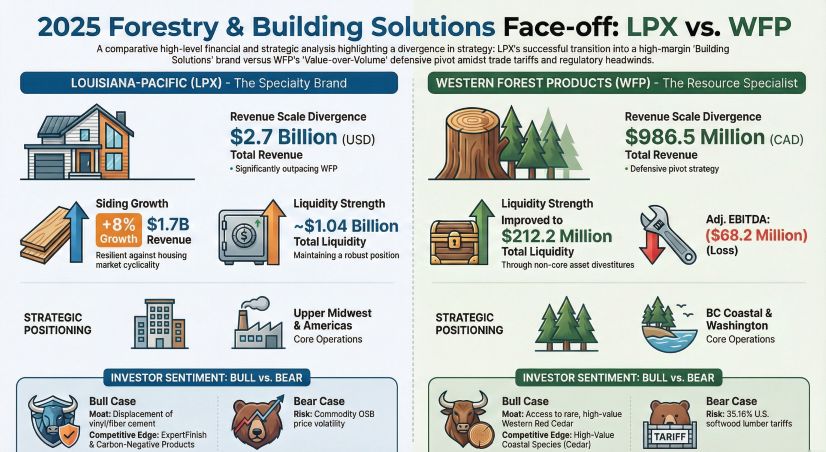
Figure 2025 Forestry & Building Solutions Face-off LPX vs. WFP
 The Decoupling Effect: LPX’s Specialty Transition
The "So What" behind Louisiana-Pacific's 2025 performance is not merely its $2.7 billion in revenue, but the structural shift in *quality* of that revenue. LPX has effectively constructed a defensive moat through its Siding segment, which grew 8% to $1.7 billion despite a 6% decline in single-family housing starts.
This resilience is driven by two strategic pillars:
1. Product Mix Optimization: The aggressive expansion of the *ExpertFinish* line—now 16% of segment sales—allowed LPX to command a 4% increase in average selling prices. This confirms that the market views LPX not as a commodity wood producer, but as a technology-driven building solutions provider.
2. Market Insulation: By shifting over 50% of Siding demand to the Repair & Remodel (R&R) and outdoor structure markets, LPX has insulated its core earnings from the volatility of new home construction. With an Adjusted EBITDA margin of 26.3% in Siding, this segment now provides a floor for consolidated earnings that commodity-dependent peers lack.
WFP: Navigating the “Margin Squeeze” and Regulatory Friction
In contrast, Western Forest Products illustrates the severe impact of external friction on a resource-conversion business model. WFP reported a negative Adjusted EBITDA of $68.2 million (CAD), a figure that signals a critical "margin squeeze" rather than a simple sales dip.
Our analysis identifies three compounding pressures:
* Trade Barriers: The finalization of the AR6 administrative review resulted in a combined duty rate of 35.16% on U.S. exports. This led to a massive $92.8 million export tax expense in 2025, severely eroding profitability.
* Operational Curtailments: Regulatory delays in harvest permits and Indigenous land tenure negotiations in British Columbia forced WFP to reduce lumber production to 479 mmfbm. This triggered a "negative jaws" effect, where fixed costs were spread over significantly lower volumes, driving up unit cash conversion costs by 8%.
* The Defensive Pivot: WFP is currently executing a "Value-over-Volume" strategy. The $39 million investment in continuous dry kilns (commissioning Feb 2026) is a necessary move to transition away from commodity exports toward higher-margin specialty cedar and thermally modified products.
Divergent Capital Allocation: Aggressive Growth vs. Defensive Liquidity
The balance sheet strength of these two entities dictates their 2026 strategic optionality. LPX closed the year with approximately $1.04 billion in total liquidity. This "dry powder" allows for an aggressive capital allocation strategy, including a projected $400 million CapEx plan for 2026 and continued dividend growth ($0.30/share declared for early 2026).
Conversely, WFP has adopted a defensive posture. Through the divestiture of non-core assets—generating $76.5 million from private timberlands and the Alberni Pacific Division—WFP successfully reduced net debt to $33.7 million. However, with $283 million in cash trapped as duty deposits with the U.S. Treasury, WFP’s capital allocation is strictly focused on preserving liquidity and completing essential kiln projects.
HDIN Viewpoint: The 2026 Outlook
At HDIN Research, we believe the valuation gap between these two entities will continue to be driven by "Strategic Moats." LPX’s "carbon-negative" SmartSide portfolio offers a sustainable competitive advantage that justifies a premium valuation, particularly as it continues to displace vinyl and fiber cement substitutes.
For WFP, 2026 is a "show-me" year. The investment case hinges on the successful commissioning of new kiln capacity to restore positive EBITDA and potential diplomatic resolutions to the Softwood Lumber Dispute. While LPX offers immediate stability through operational efficiency, WFP presents a speculative recovery play, highly leveraged to regulatory relief and successful product mix transformation.
Presentation Download
Click the PDF download link under “Related Topics” to access the complete presentation of this report, including detailed DuPont Analysis, Altman Z-Score risk assessments, and our 2026 Strategic Scorecards.
About HDIN Research
HDIN Research focuses on providing market consulting services. As an independent third-party consulting firm, it is committed to providing in-depth market research and analysis reports.
Website: www.hdinresearch.com
E-mail: sales@hdinresearch.com
Figure 2025 Forestry & Building Solutions Face-off LPX vs. WFP
The Decoupling Effect: LPX’s Specialty TransitionThe "So What" behind Louisiana-Pacific's 2025 performance is not merely its $2.7 billion in revenue, but the structural shift in *quality* of that revenue. LPX has effectively constructed a defensive moat through its Siding segment, which grew 8% to $1.7 billion despite a 6% decline in single-family housing starts.
This resilience is driven by two strategic pillars:
1. Product Mix Optimization: The aggressive expansion of the *ExpertFinish* line—now 16% of segment sales—allowed LPX to command a 4% increase in average selling prices. This confirms that the market views LPX not as a commodity wood producer, but as a technology-driven building solutions provider.
2. Market Insulation: By shifting over 50% of Siding demand to the Repair & Remodel (R&R) and outdoor structure markets, LPX has insulated its core earnings from the volatility of new home construction. With an Adjusted EBITDA margin of 26.3% in Siding, this segment now provides a floor for consolidated earnings that commodity-dependent peers lack.
WFP: Navigating the “Margin Squeeze” and Regulatory Friction
In contrast, Western Forest Products illustrates the severe impact of external friction on a resource-conversion business model. WFP reported a negative Adjusted EBITDA of $68.2 million (CAD), a figure that signals a critical "margin squeeze" rather than a simple sales dip.
Our analysis identifies three compounding pressures:
* Trade Barriers: The finalization of the AR6 administrative review resulted in a combined duty rate of 35.16% on U.S. exports. This led to a massive $92.8 million export tax expense in 2025, severely eroding profitability.
* Operational Curtailments: Regulatory delays in harvest permits and Indigenous land tenure negotiations in British Columbia forced WFP to reduce lumber production to 479 mmfbm. This triggered a "negative jaws" effect, where fixed costs were spread over significantly lower volumes, driving up unit cash conversion costs by 8%.
* The Defensive Pivot: WFP is currently executing a "Value-over-Volume" strategy. The $39 million investment in continuous dry kilns (commissioning Feb 2026) is a necessary move to transition away from commodity exports toward higher-margin specialty cedar and thermally modified products.
Divergent Capital Allocation: Aggressive Growth vs. Defensive Liquidity
The balance sheet strength of these two entities dictates their 2026 strategic optionality. LPX closed the year with approximately $1.04 billion in total liquidity. This "dry powder" allows for an aggressive capital allocation strategy, including a projected $400 million CapEx plan for 2026 and continued dividend growth ($0.30/share declared for early 2026).
Conversely, WFP has adopted a defensive posture. Through the divestiture of non-core assets—generating $76.5 million from private timberlands and the Alberni Pacific Division—WFP successfully reduced net debt to $33.7 million. However, with $283 million in cash trapped as duty deposits with the U.S. Treasury, WFP’s capital allocation is strictly focused on preserving liquidity and completing essential kiln projects.
HDIN Viewpoint: The 2026 Outlook
At HDIN Research, we believe the valuation gap between these two entities will continue to be driven by "Strategic Moats." LPX’s "carbon-negative" SmartSide portfolio offers a sustainable competitive advantage that justifies a premium valuation, particularly as it continues to displace vinyl and fiber cement substitutes.
For WFP, 2026 is a "show-me" year. The investment case hinges on the successful commissioning of new kiln capacity to restore positive EBITDA and potential diplomatic resolutions to the Softwood Lumber Dispute. While LPX offers immediate stability through operational efficiency, WFP presents a speculative recovery play, highly leveraged to regulatory relief and successful product mix transformation.
Presentation Download
Click the PDF download link under “Related Topics” to access the complete presentation of this report, including detailed DuPont Analysis, Altman Z-Score risk assessments, and our 2026 Strategic Scorecards.
About HDIN Research
HDIN Research focuses on providing market consulting services. As an independent third-party consulting firm, it is committed to providing in-depth market research and analysis reports.
Website: www.hdinresearch.com
E-mail: sales@hdinresearch.com