The 2025 Structural Bifurcation of Global Sports Giants: Strategic Moats, Capital Allocation, and Sector Positioning
Date : 2026-03-04
Reading : 112
The 2025 fiscal year exposed a profound structural bifurcation in the global sports apparel and equipment sector. Based on HDIN Research’s in-depth dissection of Amer Sports, Columbia Sportswear, and PUMA, the era of ubiquitous, macro-driven growth has concluded. Confronted with volatile consumer sentiment, cyclical climate headwinds, and escalating geopolitical tariffs, brand survival is no longer dictated by mere scale. Instead, operational efficiency, disciplined channel resets, and supply chain agility are actively reshaping capital allocation and long-term sector positioning.
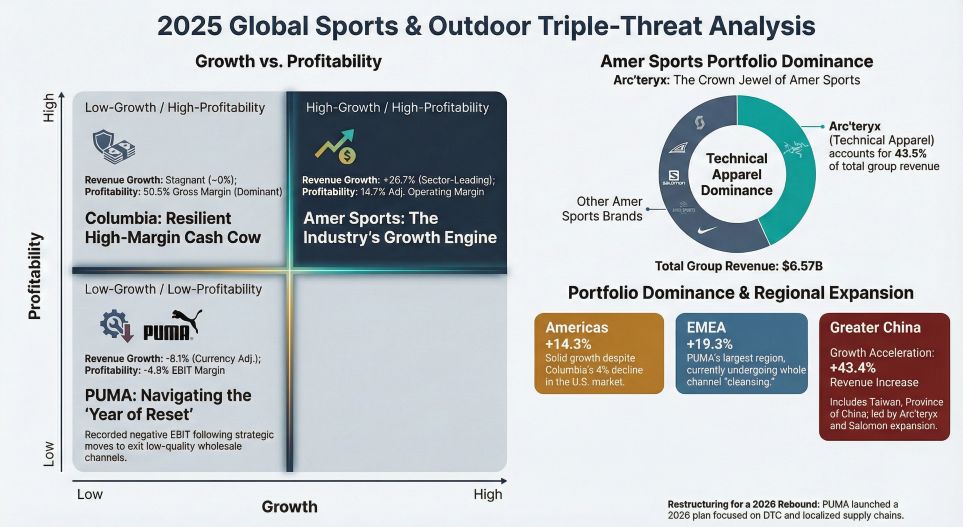
Figure 2025 Global Sports & Outdoor Triple-Threat Analysis
 Sector Positioning: The Divergence of Strategic Moats
In an environment characterized by inflation and high price sensitivity, the analyzed corporations have deployed highly differentiated strategic moats to defend their market share.
* Amer Sports (The High-Growth Premium Engine): Amer Sports has successfully insulated itself from mass-market promotional pressures through extreme premiumization and technical dominance. Driven by its Technical Apparel segment—which surged 30.1% in 2025—marquee brands like Arc’teryx operate more as durable assets than consumable apparel. By vertically integrating its Direct-to-Consumer (DTC) channels, which now account for 48.9% of total revenue, Amer Sports commands exceptional pricing power and brand scarcity.
* Columbia Sportswear (The Defensive Cash Cow): Columbia’s moat is built on functional mass-specialization and unmatched financial health. While top-line growth has matured, the company’s disciplined inventory management and strategic SKU rationalization yielded an industry-leading gross margin of 50.5%. By refusing to chase unprofitable volume, Columbia has cemented its position as a highly resilient, defensive asset.
* PUMA (The Challenger in Reset): PUMA is enduring the painful but necessary "Year of Reset." Recognizing that over-commercialization had diluted brand heat, management initiated a massive channel-clearing strategy. By aggressively buying back inventory to reduce reliance on discount-heavy wholesale channels, PUMA absorbed a short-term EBIT loss of approximately $378 million. This calculated contraction is designed to reclaim the brand’s cultural authority and desirability ahead of major upcoming sports cycles.
Capital Allocation Efficiency & Financial Health
A comparative analysis of capital structures reveals stark contrasts in how these entities are financing their strategic pivots.
Columbia Sportswear exemplifies optimal capital allocation efficiency in a high-interest-rate environment. Operating with a pristine balance sheet boasting zero long-term debt and $442 million in cash equivalents, Columbia generated robust free cash flow, enabling aggressive shareholder returns through substantial share repurchase authorizations.
Conversely, PUMA faces a transitional liquidity squeeze. The company’s negative free cash flow in 2025 necessitated a $530 million bridge loan to sustain working capital, limiting its short-term capital expenditure flexibility. Meanwhile, Amer Sports is optimizing its leverage through equity financing, shifting from a debt-driven model to a cash-flow-driven one. However, HDIN Research notes that Amer's rapid expansion is shadowed by disclosed material weaknesses in internal controls over financial reporting—a critical compliance metric that institutional investors must monitor.
Cyclical Headwinds and Supply Chain Resilience
Global supply chain architecture has transitioned from a cost-saving mechanism to a primary risk-mitigation tool, largely driven by cyclical climate shifts and geopolitical trade barriers.
* Tariff Defense Mechanisms: U.S. import tariffs stand as the foremost profit killer for 2026. Columbia has executed the most aggressive supply chain geographic restructuring, reducing its footwear manufacturing reliance on mainland China to a mere 10%, heavily favoring Vietnam and Bangladesh. Furthermore, Columbia has launched proactive legal challenges against incremental tariffs. PUMA is aggressively pivoting toward "local sourcing" to bypass cross-border taxation, whereas Amer Sports relies on the deep logistical infrastructure of its major shareholder, ANTA Sports, to balance its high exposure (28% of production and 28.4% of sales) in the Greater China region.
* Climate Volatility: The reliance on winter gear exposes both Columbia and Amer Sports to acute climate sensitivity. The unusually warm winter of 2025 resulted in inventory gluts for cold-weather apparel, forcing Columbia to recognize localized impairment charges. This cyclical headwind underscores the necessity of all-season product diversification.
HDIN Viewpoint
From an institutional investment perspective, HDIN Research views the 2026 athletic apparel landscape not as a story of aggregate demand, but of execution disparity.
Amer Sports offers the highest growth ceiling, provided management can successfully remediate its internal control deficiencies before scaling complexities trigger asset impairments. Columbia Sportswear remains the ultimate safe harbor for value investors; its fortress balance sheet and 50.5% gross margin provide absolute downside protection, though its "ACCELERATE" strategy must prove it can effectively capture younger demographics. Finally, PUMA represents a classic turnaround play. The success of its structural reset will not be visible until late 2026, and its recovery hinges entirely on whether short-term margin sacrifices successfully translate into renewed organic brand momentum and positive operating cash flow.
Presentation Download
Click the PDF download link under “Related Topics” to access the presentation of this report.
Click this link to watch the YouTube video.
About HDIN Research Profile:
HDIN Research focuses on providing market consulting services. As an independent third-party consulting firm, it is committed to providing in-depth market research and analysis reports.
Website: www.hdinresearch.com
E-mail: sales@hdinresearch.com
Figure 2025 Global Sports & Outdoor Triple-Threat Analysis
Sector Positioning: The Divergence of Strategic MoatsIn an environment characterized by inflation and high price sensitivity, the analyzed corporations have deployed highly differentiated strategic moats to defend their market share.
* Amer Sports (The High-Growth Premium Engine): Amer Sports has successfully insulated itself from mass-market promotional pressures through extreme premiumization and technical dominance. Driven by its Technical Apparel segment—which surged 30.1% in 2025—marquee brands like Arc’teryx operate more as durable assets than consumable apparel. By vertically integrating its Direct-to-Consumer (DTC) channels, which now account for 48.9% of total revenue, Amer Sports commands exceptional pricing power and brand scarcity.
* Columbia Sportswear (The Defensive Cash Cow): Columbia’s moat is built on functional mass-specialization and unmatched financial health. While top-line growth has matured, the company’s disciplined inventory management and strategic SKU rationalization yielded an industry-leading gross margin of 50.5%. By refusing to chase unprofitable volume, Columbia has cemented its position as a highly resilient, defensive asset.
* PUMA (The Challenger in Reset): PUMA is enduring the painful but necessary "Year of Reset." Recognizing that over-commercialization had diluted brand heat, management initiated a massive channel-clearing strategy. By aggressively buying back inventory to reduce reliance on discount-heavy wholesale channels, PUMA absorbed a short-term EBIT loss of approximately $378 million. This calculated contraction is designed to reclaim the brand’s cultural authority and desirability ahead of major upcoming sports cycles.
Capital Allocation Efficiency & Financial Health
A comparative analysis of capital structures reveals stark contrasts in how these entities are financing their strategic pivots.
Columbia Sportswear exemplifies optimal capital allocation efficiency in a high-interest-rate environment. Operating with a pristine balance sheet boasting zero long-term debt and $442 million in cash equivalents, Columbia generated robust free cash flow, enabling aggressive shareholder returns through substantial share repurchase authorizations.
Conversely, PUMA faces a transitional liquidity squeeze. The company’s negative free cash flow in 2025 necessitated a $530 million bridge loan to sustain working capital, limiting its short-term capital expenditure flexibility. Meanwhile, Amer Sports is optimizing its leverage through equity financing, shifting from a debt-driven model to a cash-flow-driven one. However, HDIN Research notes that Amer's rapid expansion is shadowed by disclosed material weaknesses in internal controls over financial reporting—a critical compliance metric that institutional investors must monitor.
Cyclical Headwinds and Supply Chain Resilience
Global supply chain architecture has transitioned from a cost-saving mechanism to a primary risk-mitigation tool, largely driven by cyclical climate shifts and geopolitical trade barriers.
* Tariff Defense Mechanisms: U.S. import tariffs stand as the foremost profit killer for 2026. Columbia has executed the most aggressive supply chain geographic restructuring, reducing its footwear manufacturing reliance on mainland China to a mere 10%, heavily favoring Vietnam and Bangladesh. Furthermore, Columbia has launched proactive legal challenges against incremental tariffs. PUMA is aggressively pivoting toward "local sourcing" to bypass cross-border taxation, whereas Amer Sports relies on the deep logistical infrastructure of its major shareholder, ANTA Sports, to balance its high exposure (28% of production and 28.4% of sales) in the Greater China region.
* Climate Volatility: The reliance on winter gear exposes both Columbia and Amer Sports to acute climate sensitivity. The unusually warm winter of 2025 resulted in inventory gluts for cold-weather apparel, forcing Columbia to recognize localized impairment charges. This cyclical headwind underscores the necessity of all-season product diversification.
HDIN Viewpoint
From an institutional investment perspective, HDIN Research views the 2026 athletic apparel landscape not as a story of aggregate demand, but of execution disparity.
Amer Sports offers the highest growth ceiling, provided management can successfully remediate its internal control deficiencies before scaling complexities trigger asset impairments. Columbia Sportswear remains the ultimate safe harbor for value investors; its fortress balance sheet and 50.5% gross margin provide absolute downside protection, though its "ACCELERATE" strategy must prove it can effectively capture younger demographics. Finally, PUMA represents a classic turnaround play. The success of its structural reset will not be visible until late 2026, and its recovery hinges entirely on whether short-term margin sacrifices successfully translate into renewed organic brand momentum and positive operating cash flow.
Presentation Download
Click the PDF download link under “Related Topics” to access the presentation of this report.
Click this link to watch the YouTube video.
About HDIN Research Profile:
HDIN Research focuses on providing market consulting services. As an independent third-party consulting firm, it is committed to providing in-depth market research and analysis reports.
Website: www.hdinresearch.com
E-mail: sales@hdinresearch.com