2025 Photonics Strategic Review: The Great Divergence Between AI, Defense, and Industrial Commoditization
Date : 2026-03-07
Reading : 549
The 2025 fiscal year has marked a definitive end to the "rising tide lifts all boats" era for the global photonics and semiconductor equipment sectors. Our analysis of IPG Photonics (IPGP), MKS Instruments (MKSI), and nLIGHT (LASR) reveals a stark structural bifurcation: while traditional industrial material processing faces commoditization and cyclical stagnation, capital is aggressively flowing toward AI-driven semiconductor manufacturing and Directed Energy defense systems.
For institutional investors and industry strategists, the critical takeaway is not merely the revenue growth rates, but the underlying shift in quality of earnings. The market is no longer rewarding generic photonics capabilities; it is rewarding specific exposure to high-complexity ecosystems—specifically the AI computational stack and next-generation warfare.
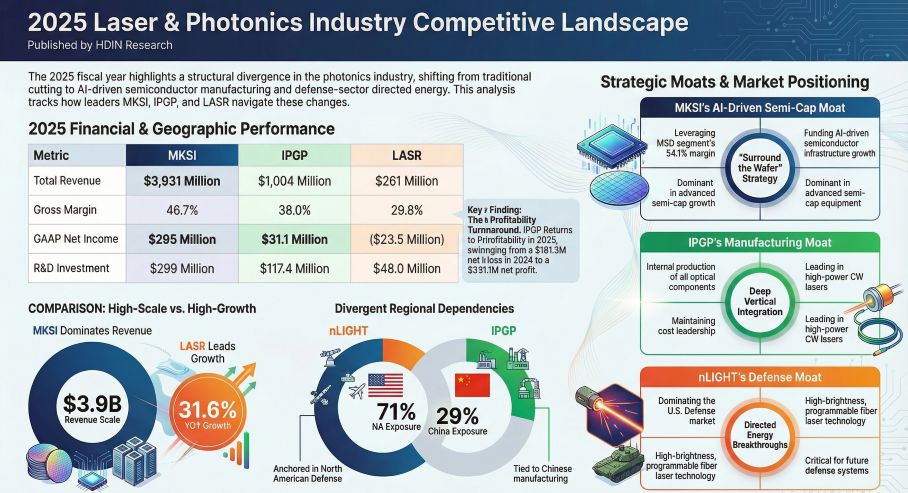
Figure 2025 Laser & Photonics Industry Competitive Landscape
 The New Growth Engines: Semi-Cap and Defense
The divergence in revenue drivers highlights a fundamental shift in the industry's value chain.
* Semiconductor Resilience: MKS Instruments demonstrated significant resilience with a 9.6% revenue increase to $3.93 billion, driven by a 13% surge in its semiconductor business. This growth is directly correlated with the "Surround the Wafer" strategy, where demand for vacuum and chemical subsystems is being propelled by the capital intensity of AI logic chips and foundry expansions.
* The Defense Pivot: nLIGHT has successfully decoupled from industrial cyclicality, posting a 31.6% revenue jump. This was fueled almost exclusively by a 60% explosion in Aerospace & Defense revenue, validating its strategic pivot toward Directed Energy (laser weapon) systems.
* Industrial Headwinds: Conversely, IPG Photonics remains tethered to the general manufacturing cycle. With high-power CW laser sales for cutting applications dropping 7.2%, IPG is facing a "commodity trap" where Chinese competitors (e.g., Raycus) are eroding pricing power in standard applications.
The Double-Edged Sword of Vertical Integration
HDIN Research’s audit of the 2025 financials exposes the hidden risks of the Vertical Integration model favored by all three giants. While controlling the supply chain—from semiconductor diodes to optical fibers—secures intellectual property, it creates massive operating leverage risks.
* Fixed Cost Traps: With approximately 74% of IPG’s workforce in manufacturing, the company faces severe "under-absorption" penalties when volume dips. This was evident in 2025, where gross margins were battered not just by pricing, but by the inability to spread fixed costs across stagnant industrial volumes.
* Inventory Vulnerability: Vertical integration requires maintaining deep inventory levels. Both IPG and MKS flagged significant inventory provisions (IPG: $30.1M; MKS: $45M) as "Critical Audit Matters." In a rapidly evolving tech landscape, the risk of holding obsolete components for internally built systems has become a material drag on balance sheets.
Geopolitics as a Financial Line Item
Geopolitical friction has transitioned from a qualitative risk to a quantifiable expense.
* Export Control Impact: MKS Instruments realized an estimated $200–$250 million annual revenue loss due to BIS export restrictions, despite the semiconductor upturn.
* Tariff Margin Erosion: IPG Photonics disclosed that tariffs specifically negatively impacted their gross margin by approximately 120 basis points in 2025.
* The "China Constant": Despite diversification efforts (e.g., MKS expanding in Malaysia; IPG in Europe), reliance on the Greater China market remains high (approx. 30% for MKS and 29% for IPG). This exposure remains the single largest variable for future earnings volatility.
HDIN Research Viewpoint
"The Middle is Collapsing."
At HDIN Research, we observe that the most profitable positioning in 2025 is at the extremes of the value chain.
1. The Process Extremes: MKS’s MSD division (Material Solutions), with its 54.1% gross margin, proves that owning the *chemical process* is more lucrative than owning the hardware hardware. This "razor-and-blade" model offers a defensive moat that pure hardware suppliers lack.
2. The Power Extremes: nLIGHT’s success suggests that in photonics, value is migrating to "ultra-high brightness" applications where commercial competitors cannot follow due to security clearances and technical complexity.
Strategic Implication: Investors and executives should remain cautious of companies heavily exposed to general industrial laser cutting, where the barrier to entry has collapsed. The premium multiple belongs to firms that have successfully embedded themselves into the "Copy Exact" supply chains of semiconductor fabs or the classified blueprints of the Pentagon.
Presentation Download
For a granular breakdown of the financial ratios, audit "red flags," and a detailed SWOT analysis of these three industry leaders, please access the full briefing deck.
Click the PDF download link under “Related Topics” to access the presentation of this report.
Media
Click this link to watch the YouTube video summarizing our 2025 Photonics Market Analysis.
About HDIN Research
HDIN Research focuses on providing market consulting services. As an independent third-party consulting firm, it is committed to providing in-depth market research and analysis reports.
Website: www.hdinresearch.com
E-mail: sales@hdinresearch.com
For institutional investors and industry strategists, the critical takeaway is not merely the revenue growth rates, but the underlying shift in quality of earnings. The market is no longer rewarding generic photonics capabilities; it is rewarding specific exposure to high-complexity ecosystems—specifically the AI computational stack and next-generation warfare.
Figure 2025 Laser & Photonics Industry Competitive Landscape
The New Growth Engines: Semi-Cap and DefenseThe divergence in revenue drivers highlights a fundamental shift in the industry's value chain.
* Semiconductor Resilience: MKS Instruments demonstrated significant resilience with a 9.6% revenue increase to $3.93 billion, driven by a 13% surge in its semiconductor business. This growth is directly correlated with the "Surround the Wafer" strategy, where demand for vacuum and chemical subsystems is being propelled by the capital intensity of AI logic chips and foundry expansions.
* The Defense Pivot: nLIGHT has successfully decoupled from industrial cyclicality, posting a 31.6% revenue jump. This was fueled almost exclusively by a 60% explosion in Aerospace & Defense revenue, validating its strategic pivot toward Directed Energy (laser weapon) systems.
* Industrial Headwinds: Conversely, IPG Photonics remains tethered to the general manufacturing cycle. With high-power CW laser sales for cutting applications dropping 7.2%, IPG is facing a "commodity trap" where Chinese competitors (e.g., Raycus) are eroding pricing power in standard applications.
The Double-Edged Sword of Vertical Integration
HDIN Research’s audit of the 2025 financials exposes the hidden risks of the Vertical Integration model favored by all three giants. While controlling the supply chain—from semiconductor diodes to optical fibers—secures intellectual property, it creates massive operating leverage risks.
* Fixed Cost Traps: With approximately 74% of IPG’s workforce in manufacturing, the company faces severe "under-absorption" penalties when volume dips. This was evident in 2025, where gross margins were battered not just by pricing, but by the inability to spread fixed costs across stagnant industrial volumes.
* Inventory Vulnerability: Vertical integration requires maintaining deep inventory levels. Both IPG and MKS flagged significant inventory provisions (IPG: $30.1M; MKS: $45M) as "Critical Audit Matters." In a rapidly evolving tech landscape, the risk of holding obsolete components for internally built systems has become a material drag on balance sheets.
Geopolitics as a Financial Line Item
Geopolitical friction has transitioned from a qualitative risk to a quantifiable expense.
* Export Control Impact: MKS Instruments realized an estimated $200–$250 million annual revenue loss due to BIS export restrictions, despite the semiconductor upturn.
* Tariff Margin Erosion: IPG Photonics disclosed that tariffs specifically negatively impacted their gross margin by approximately 120 basis points in 2025.
* The "China Constant": Despite diversification efforts (e.g., MKS expanding in Malaysia; IPG in Europe), reliance on the Greater China market remains high (approx. 30% for MKS and 29% for IPG). This exposure remains the single largest variable for future earnings volatility.
HDIN Research Viewpoint
"The Middle is Collapsing."
At HDIN Research, we observe that the most profitable positioning in 2025 is at the extremes of the value chain.
1. The Process Extremes: MKS’s MSD division (Material Solutions), with its 54.1% gross margin, proves that owning the *chemical process* is more lucrative than owning the hardware hardware. This "razor-and-blade" model offers a defensive moat that pure hardware suppliers lack.
2. The Power Extremes: nLIGHT’s success suggests that in photonics, value is migrating to "ultra-high brightness" applications where commercial competitors cannot follow due to security clearances and technical complexity.
Strategic Implication: Investors and executives should remain cautious of companies heavily exposed to general industrial laser cutting, where the barrier to entry has collapsed. The premium multiple belongs to firms that have successfully embedded themselves into the "Copy Exact" supply chains of semiconductor fabs or the classified blueprints of the Pentagon.
Presentation Download
For a granular breakdown of the financial ratios, audit "red flags," and a detailed SWOT analysis of these three industry leaders, please access the full briefing deck.
Click the PDF download link under “Related Topics” to access the presentation of this report.
Media
Click this link to watch the YouTube video summarizing our 2025 Photonics Market Analysis.
About HDIN Research
HDIN Research focuses on providing market consulting services. As an independent third-party consulting firm, it is committed to providing in-depth market research and analysis reports.
Website: www.hdinresearch.com
E-mail: sales@hdinresearch.com