Lab-Grown Diamond Market: Strategic Analysis & Forecast
- Single User License (1 Users) $ 3,500
- Team License (2~5 Users) $ 4,500
- Corporate License (>5 Users) $ 5,500
The global lab-grown diamond (LGD) market represents a structurally mature industrial and gemological ecosystem characterized by twin synthesis methodologies: High-Pressure High-Temperature (HPHT) and Microwave Plasma Chemical Vapor Deposition (MPCVD). Once positioned primarily as a value alternative within consumer jewelry, single-crystal and polycrystalline cultivated diamonds have transitioned into critical-path functional materials across high-power electronics, advanced optics, and precision mechanics. LGD market dominance rests upon regional industrial clusters. China maintains near-monopolistic control over large-tonnage HPHT hydraulic cubic press fleets, while India commands the downstream cutting and polishing trade alongside an expanding MPCVD reactor footprint. Technology pioneers across Japan, Europe, and the United States control high-frequency plasma reactor engineering, advanced single-crystal wafer synthesis, and thermal submount integration. Production and value realization are geographically bifurcated. Primary synthesis capacity is concentrated within Henan Province, China, and Gujarat (Surat), India. Downstream consumption remains anchored in North America for fine jewelry, with escalating high-tech demand distributed across advanced manufacturing and semiconductor corridors throughout East Asia, North America, and Western Europe.
Following pronounced wholesale price corrections and inventory destocking between 2022 and 2024, the global LGD market entered a cyclical stabilization phase across 2025 and 2026. The global lab-grown diamond market is valued between 19.5 billion USD and 25.5 billion USD in 2026, projected to expand at a compound annual growth rate (CAGR) of 8.5% to 15.5% through 2031. The LGD market expansion is sustained by two structural tailwinds. Within consumer luxury, LGDs offer a 70% to 80% retail discount relative to mined counterparts, enabling accelerated consumer adoption in bridal and self-purchase categories. Concurrently, within advanced technologies, the physical dissipation thresholds of silicon, silicon carbide, and copper packaging in artificial intelligence compute clusters are precipitating an urgent transition toward diamond-based near-junction thermal management solutions.
REGIONAL MARKET DYNAMICS
● North America:
The United States remains the single largest market for consumer lab-grown diamond jewelry, absorbing over half of global polished output. Penetration within the domestic bridal category exceeds 50%, driven by generational shifts across Millennial and Gen Z demographics who prioritize stone size, clarity, and certified traceability over traditional geological provenance.
Regulatory oversight is enforced via the United States Federal Trade Commission (FTC), which mandates unambiguous qualifiers such as "laboratory-grown" or "synthetic" whenever diamond nomenclature is utilized. Compliance architecture extends to United States Customs and Border Protection (CBP) Title 19 regulations, Office of Foreign Assets Control (OFAC) trade sanctions, and FinCEN anti-money laundering monitoring under the USA PATRIOT Act.
Trade tariff fluctuations have historically introduced midstream volatility. Following an interim period between August 2025 and February 2026 where cumulative import duties reached 50%, an executive reset in late February 2026 recalibrated the baseline duty to 10%. With Most-Favored-Nation provisions ranging from 0% to 6.4%, effective landing duties on Indian polished imports currently register between 10.0% and 16.4%.
● Asia-Pacific (APAC):
Asia-Pacific serves as the global production engine for synthesis and secondary processing, characterized by regional specialization across three primary jurisdictions.
1. India:
India functions as the undisputed capital of post-synthesis diamond transformation and a rapidly scaling MPCVD growth hub. Anchored in Surat and traded through the Surat Diamond Bourse (SDB) and Mumbai's Bharat Diamond Bourse (BDB), the country processes approximately 90% of all global rough diamonds. India accounts for approximately 87% of installed global MPCVD reactors, operating roughly 13,700 units in 2026. Strategic government interventions have structurally lowered domestic operating barriers: 100% Foreign Direct Investment under the automatic route, complete elimination of the 5% import duty on diamond seeds in 2023, and a 242.96 crore INR grant establishing the India Centre for Lab-Grown Diamond (InCent-LGD) at IIT Madras. Bureau of Indian Standards mandates (IS 15766:2007 and IS 19469:2025) enforce rigorous nomenclature parity with international trade standards. Export markets benefit from favorable bilateral arrangements, including the India-UAE CEPA and the India-Australia ECTA.
2. China:
China commands the global HPHT industrial infrastructure, centralized within Henan Province. Leveraging decades of superhard materials manufacturing, Chinese producers utilize massive cubic hydraulic presses to manufacture gem-quality stones up to 50 carats alongside heavy volumes of industrial micro-powders and slicing wires. While HPHT rough production remains the baseline, domestic capital is aggressively pivoting toward MPCVD reactor engineering and high-purity functional diamond substrates in response to semiconductor and optical component directives. China represents both a prime manufacturing exporter and the largest import market by volume for Indian polished goods.
3. Japan, South Korea, and Taiwan, China:
East Asia retains critical intellectual property and industrial infrastructure for high-purity single-crystal diamond growth, advanced MPCVD equipment fabrication, and fourth-generation power electronics integration. Japanese industrial leaders direct global standards for precision slicing, chemical mechanical planarization slurries, and specialized microwave plasma reactors. The regional focus centers on electronic substrates and optical windows rather than gemstone jewelry.
● Europe:
The European market is defined by strict ESG parameters and sustainability governance. Consumers exhibit heightened scrutiny regarding carbon emissions, propelling demand for renewable-powered CVD production certified under standards such as SCS-007. The European Union regulatory framework prioritizes end-to-end supply chain transparency, driving enterprise adoption of decentralized provenance tracking.
On the industrial side, capital injections supported by European industrial development grants—such as high-capacity solar-powered MPCVD fabs established in the Iberian Peninsula—reflect strategic efforts to secure domestic supplies of diamond thermal substrates for the European defense, automotive, and power grid infrastructure. Tariff structures are positioned for progressive liberalization via the India-EFTA Trade and Economic Partnership Agreement and pending European Union bilateral pacts.
● Latin America, Middle East, and Africa (MEA):
Latin American adoption remains embryonic, focused on urban luxury retail nodes in Brazil and Colombia, growing at 5.0% to 9.5% annually.
Conversely, the Middle East represents a crucial trade conduit. The United Arab Emirates, specifically the Dubai Multi Commodities Centre (DMCC), serves as the central clearinghouse and logistics arbitrage pivot for global rough and polished distribution. The zero-tariff environment under the India-UAE CEPA has shifted multi-million-carat flows through Dubai, bypassing Western trade frictions. The Gulf region is also exploring high-power electronics and hydrogen energy systems leveraging diamond material properties.
SUPPLY CHAIN & VALUE CHAIN ARCHITECTURE
● Upstream Synthesis & Equipment Manufacturing
The upstream segment exhibits extreme capital expenditure barriers and divergent technological paths:
1. High-Pressure High-Temperature (HPHT):
Replicating subterranean geological physics, HPHT synthesis utilizes massive cubic hydraulic presses with anvil diameters commonly ranging from 800 mm to 1,000 mm. Operating within closed reaction cells at pressures between 5 and 8 GPa and temperatures spanning 1,300 to 1,600 degrees Celsius, carbon sources dissolve into molten catalyst metals (iron, cobalt, nickel alloys) and precipitate onto cooler diamond seed crystals. HPHT yields high-density industrial micro-powders, structural abrasives, and small-to-midsize rough diamonds. Its structural advantages include short production cycles and rapid high-tonnage scaling, though it suffers from high power loads, anvil fatigue, and metallic inclusion vulnerability.
2. Microwave Plasma Chemical Vapor Deposition (MPCVD):
MPCVD synthesis operates at low chamber pressures (100 to 130 Torr) and moderate temperatures (700 to 1,300 degrees Celsius). High-frequency microwave energy (typically 2.45 GHz or 915 MHz, running at 6 kW to 10 kW) ionizes a precursor gas mixture dominated by hydrogen and methane, creating an energetic plasma ball that strips hydrocarbon radicals and deposits carbon atom-by-atom onto single-crystal diamond seeds. Growth durations extend from 7 to 28 days. MPCVD yields Type IIa diamonds completely devoid of metallic inclusions, featuring exceptional optical clarity and crystallographic integrity. This method is the exclusive prerequisite for semiconductor-grade wafers and large-carat solitaires.
Global synthesis capacity reached 15,700 MPCVD reactors in 2026, an exponential scale-up from roughly 4,000 units in 2023. Standard 6 kW reactors output between 120 and 160 carats of rough material monthly, while optimized 10 kW platforms generate 180 to 240 carats per month. Seed harvesting remains a major cost-control bottleneck: precision laser slicing of parent crystals must recover intact seeds to minimize operational overhead across successive synthesis runs.
● Midstream Processing, Enhancement, & Certification
Value preservation in the midstream rests on minimizing yield loss and securing independent pedigree:
1. Advanced Metrology and Sawing:
As-grown rough stones undergo high-resolution 3D laser profiling and internal inclusion mapping using computerized tomography. Automated high-speed green and infrared lasers execute primary cleaving and multi-axis sawing, balancing yield maximization against structural tension release.
2. Polishing and Automation:
Traditional manual faceting on cast-iron scaifes is increasingly superseded by multi-axis CNC robotic polishing stations for stones under two carats. Master craftsmen remain dedicated to fancy cuts and solitaires exceeding two carats, where anisotropic hardness variances demand human sensory feedback.
3. Color Treatment & Defect Engineering:
A high percentage of as-grown CVD material exhibits brownish undertones caused by vacancy-hydrogen complexes or structural dislocations. Midstream processors subject these rough stones to secondary post-growth HPHT thermal annealing cycles (1,800 to 2,500 degrees Celsius at over 5 GPa) to reorganize the carbon crystal lattice, heal lattice voids, and upgrade finished stones to colorless D-F classifications.
4. Third-Party Certification:
Over 80% of polished commercial output is submitted for independent gemological grading. The International Gemological Institute (IGI) holds the largest market share in LGD verification, followed by the Gemological Institute of America (GIA). Standardized 4C documentation provides legal verification of synthetic provenance and protects against fraudulent blending with mined diamond parcels.
● Downstream Retail Channels & High-Tech Integration
Downstream channels reflect stark bifurcations between consumer luxury merchandising and mission-critical enterprise engineering:
1. Wholesale Bourse Networks:
Rough and loose polished inventory is cleared through institutional trading platforms, including the Surat Diamond Bourse, the Bharat Diamond Bourse, and specialized digital inventory platforms that provide real-time global availability to jewelry manufacturers.
2. Omnichannel Consumer Retail:
Branded jewelry retailers, enterprise department stores, and agile Direct-to-Consumer (D2C) web portals capture the bulk of downstream margin. D2C operations deploy dynamic online customizers and virtual try-on software to secure immediate margins, while physical brick-and-mortar stores emphasize ethical positioning, customizable settings, and zero-conflict narratives.
3. Functional Industrial Integration:
High-purity CVD diamond substrates, polycrystalline wafers, and optical-grade blanks bypass gemological channels completely. These materials transition through specialized slicing, chemical-mechanical planarization (CMP) to achieve sub-nanometer surface roughness, and metallization before being bonded directly as thermal spreaders within AI server packaging, high-power radio frequency modules, and directed-energy optical systems.
COMPETITIVE DOSSIERS: KEY MARKET PLAYERS
● Element Six Technological Route: Microwave Plasma CVD and HPHT.
Core Products: Diafilm thermal substrates, DNV-B1 quantum sensing diamond substrates, precision PCD cutting tool blanks, extreme-environment optical windows, and radiation detectors.
● Seki Diamond Systems (Cornes Technologies) Technological Route: High-frequency MPCVD reactor engineering (2.45 GHz and 915 MHz).
Core Products: SDS series and ASTeX-heritage industrial-scale MPCVD diamond growth reactors, customized microwave plasma sources, and vacuum deposition process automation.
● Diamond Foundry Technological Route: Proprietary single-wafer high-density MPCVD.
Core Products: Monocrystalline diamond wafers up to 100 mm, advanced thermal substrates for AI computing and electric vehicle power electronics, luxury jewelry via the direct-to-consumer brand VRAI.
● Lusix Technologies Ltd. Technological Route: Proprietary high-efficiency MPCVD.
Core Products: Premium as-grown Type IIa polished gem diamonds, custom single-crystal substrates for optical engineering.
● Shanghai Zhengshi Technology Co., Ltd. Technological Route: Large-area single-crystal MPCVD.
Core Products: Type IIa gem-quality CVD rough and cut diamonds (CARAXY), infrared optical windows, semiconductor heat sinks, diamond dressing tools.
● Ningbo Crysdiam Technology Co., Ltd. Technological Route: Proprietary MPCVD reactor manufacturing, crystal synthesis, and laser machining.
Core Products: Turnkey 2.45 GHz and 915 MHz MPCVD growth reactors, optical-grade single-crystal diamond plates, gem-grade rough, diamond surgical scalpels.
● Henan Liliang Diamond Co., Ltd. Technological Route: Large-tonnage HPHT cubic presses with expanding MPCVD pilot lines.
Core Products: Large-carat gem-grade HPHT rough (single-crystal record exceeding 200 carats), industrial diamond micro-powders, electroplated diamond saw wire.
● Zhongnan Diamond Co., Ltd. Technological Route: Dual-track HPHT and MPCVD infrastructure.
Core Products: High-clarity D-F color gem-grade HPHT diamonds, polycrystalline diamond compacts (PDC) for resource drilling, industrial micron abrasives.
● Henan Huanghe Whirlwind Co., Ltd.
Technological Route: Heavy industrial HPHT cubic presses, CVD polycrystalline film development.
Core Products: Gem-quality HPHT rough, industrial diamond single crystals, PCD and PCBN tooling blanks, grinding wheels, precision wire-drawing dies.
● Henan Huifeng Diamond Co., Ltd. Technological Route: HPHT and MPCVD deployment across multi-regional bases.
Core Products: Micron and sub-micron diamond micro-powders, specialized Chemical Mechanical Planarization (CMP) polishing slurries, select gem rough.
● Zhengzhou Sino-Crystal Diamond Co., Ltd. Technological Route: HPHT cubic hydraulic press synthesis.
Core Products: White and fancy-colored gem-grade HPHT rough, industrial diamond micro-powders, precision processing tools.
● SF Diamond Co., Ltd. Technological Route: MPCVD via subsidiary Henan Tianxuan Semiconductor Technology Co., Ltd.
Core Products: Premium PDC drilling compacts, CVD optical windows, CVD electronic heat spreaders, gem-grade CVD single crystals.
● Beijing Worldia Diamond Tools Co., Ltd. Technological Route: Hot-Filament CVD (HFCVD), MPCVD, and precision laser machining.
Core Products: Thin-film and thick-film CVD diamond substrates, CVD-coated solid carbide cutting tools, PCD/PCBN tooling, precision glass cutting wheels.
● Hangzhou Chaoran Diamond Co., Ltd.
Technological Route: Advanced HPHT cubic press synthesis.
Core Products: Large single-crystal synthetic rough diamonds, tailored industrial grits, superhard composite materials.
● Sinomach Diamond (Henan) Co., Ltd. Technological Route: Dual-track HPHT and MPCVD supported by national research institutes.
Core Products: Defense-grade optical windows, electronic-grade CVD thermal submounts, specialized MPCVD reactors, industrial grinding abrasives.
● Anjali Labtech Limited Technological Route: High-density captive MPCVD operations.
Core Products: Large-volume Type IIa CVD rough diamonds, calibrated diamond seeds, contract laser slicing.
● Goldiam International Limited Technological Route: Vertically integrated downstream CVD jewelry production.
Core Products: Finished lab-grown diamond bridal collections, certified solitaire rings, stud earrings, private-label jewelry collections.
● KIRA Diam Tech Private Limited Technological Route: Scaled MPCVD rough synthesis.
Core Products: Certified Type IIa CVD rough, polished solitaires up to 10+ carats, fancy-cut loose diamonds.
● Greenlab Diamonds LLP Technological Route: Large-capacity MPCVD powered by renewable energy.
Core Products: Collector-grade CVD single crystals (notably producing record stones exceeding 30 carats), fancy-colored diamonds, certified loose parcels.
S● Bhanderi Lab-Grown Diamonds Technological Route: High-efficiency MPCVD manufacturing.
Core Products: DEF-color, VVS-clarity Type IIa polished diamonds, high-grade single-crystal seed plates, contract laser sawing.
● Bhathwari Technologies LLP Technological Route: MPCVD equipment manufacturing and rough synthesis.
Core Products: Engineered MPCVD diamond growth reactors, customized process monitoring systems, rough single crystals.
● SP3 Diamond Technologies Technological Route: Hot-Filament CVD (HFCVD) and microwave deposition systems.
Core Products: Turnkey Model 650/1000 HFCVD deposition equipment, thin-film diamond wear coatings, freestanding diamond heat spreaders.
● Maitri Lab-Grown Diamond Technological Route: Precision MPCVD growth and export.
Core Products: Type IIa polished rounds, custom fancy cuts (emerald, oval, cushion, pear), finished jewelry.
● Asian Lab Grown Diamonds LLP Technological Route: Scaled MPCVD production and trading.
Core Products: Rough CVD parcels, calibrated melee diamonds, certified commercial solitaires.
● Sahajanand Laser Technology Limited (SLTL Group) Technological Route: Industrial laser systems, seed preparation machines, automated MPCVD hardware.
Core Products: Candy and Halligan series diamond laser sawing, shaping, and marking stations; precision seed-slicing systems; integrated MPCVD synthesis chambers.
● Adamas One Corp. Technological Route: Single-crystal MPCVD.
Core Products: Historically developed lab-grown rough, commercial polished gemstones, legacy diamond thermal and semiconductor material R&D.
Strategic Pivots & Operational Moats: Adamas One acquired assets from Apollo Diamond, a pioneer in single-crystal CVD technology. The company completed an initial public offering on the Nasdaq in December 2022 under the ticker JEWL.
However, the company faced acute operational challenges. Delayed SEC filings (Forms 10-K and 10-Q) and sustained stock trading below compliance thresholds led to its formal delisting from the Nasdaq in late 2024, relegating its equity to over-the-counter (OTC) trading.
With its share price falling to micro-cent levels, secondary equity financing capacity deteriorated. Adamas One operated with negative working capital, high net losses, and limited operational liquidity.
The broader wholesale price compression in gemstone LGDs compounded these financial difficulties, limiting cash flows required to operate capital-intensive CVD reactors. While the enterprise established Adamas Technologies to commercialize diamond semiconductor substrates, the long qualification cycles and sustained capital expenditures required for electronic-grade functional single crystals could not be supported, leaving operations constrained.
OPPORTUNITIES & INHIBITORS
● Market Opportunities:
1. Semiconductor Packaging and Artificial Intelligence Thermal Architectures:
The proliferation of advanced high-performance computing (HPC) nodes, artificial intelligence accelerator chips, high-power radio frequency devices, and electric vehicle power modules has pushed semiconductor power densities beyond the thermal dissipation capabilities of legacy copper, aluminum, and ceramic substrates. Single-crystal CVD diamond features unmatched room-temperature thermal conductivity exceeding 2,000 W/m·K—nearly five times that of copper—alongside an electrical breakdown field of 10 MV/cm and a low dielectric constant.
Polycrystalline diamond offers thermal conductivity between 1,200 and 1,800 W/m·K, while metal-matrix diamond-copper composites achieve 550 to 900 W/m·K. Commercial adoption is moving from experimental verification to high-density server integration. Commercial deployments, such as Lenovo's implementation of 3.4 carats of diamond material within its YOGA Air cooling modules and the integration of diamond-copper thermal submounts in liquid-cooled supercomputers, demonstrate market traction.
The global diamond thermal management addressable market is valued at approximately 37 million USD in 2025 (representing less than 0.1% penetration of compute thermal modules) and is projected to scale rapidly toward 15.2 billion USD by 2030 as near-junction diamond heat spreaders achieve broader penetration. Industry partnerships involving hardware developers and research institutions underscore this transition.
2. Fourth-Generation Wide-Bandgap Semiconductor Substrates:
Beyond passive heat dissipation, diamond's ultra-wide bandgap (5.47 eV), high electron and hole mobility, and radiation hardness establish it as a viable material for extreme-power and high-frequency active electronics. The diamond semiconductor substrate market is valued at approximately 190 million USD in 2025 and is projected to reach 334 million USD by 2030, advancing at a 12% CAGR. Primary technical architectures center on heteroepitaxial growth over silicon or sapphire substrates, as well as mosaic tiling methods to build 2-inch to 4-inch functional wafers.
3. Micro-Drilling Tools and High-Density Interconnect Electronics:
The growth of multi-layer high-density interconnect (HDI) circuit boards, IC packaging substrates, and specialized server PCBs requires micro-drilling across advanced board generations (M7, M8, M9). Standard tungsten carbide micro-drills suffer rapid abrasive wear and tool deflection. Micro-drills coated with CVD diamond or fabricated from synthetic diamond compacts deliver significantly longer operational lifespans and cleaner hole wall geometries. This segment supports a broader PCB micro-drill tools market scaling toward 9.1 billion USD by the late 2020s.
4. Advanced Acoustics, Optics, and Electrochemical Remediation:
CVD diamond acoustic diaphragms eliminate high-frequency distortion in luxury automotive and reference home audio systems, addressing an audio market projected to reach 3.5 billion USD by 2035. In optical engineering, high-purity single-crystal and polycrystalline CVD plates provide structural integrity and broad transparency (ultraviolet through microwave) for directed-energy weapons, high-power CO2 and fiber laser windows, and aerospace viewports. Boron-Doped Diamond (BDD) electrodes are establishing an industrial niche within advanced wastewater management, oxidizing persistent organic pollutants via high hydroxyl radical generation efficiency.
5. Gemstone Price Stabilization and Bridal Market Expansion:
Following market corrections, monthly average retail prices for 1-carat LGD polished stones stabilized between 560 USD and 780 USD across 2025 and 2026. This price floor normalization has enabled stable business planning across retail networks. LGDs provide young consumers and self-purchasing demographics with accessible price points, shifting typical bridal purchases from smaller natural stones toward 2.0 to 2.5-carat lab-grown solitaires.
● Market Inhibitors and Strategic Risks:
1. Wholesale Capacity Surges and Midstream Margin Compression:
Between 2022 and 2024, uncontrolled additions of cubic presses in Henan and MPCVD reactors in Gujarat generated wholesale oversupply. This capacity buildout compressed rough and polished prices, creating liquidity challenges for unintegrated midstream cut-and-polish operators. Producers lacking proprietary equipment manufacturing, low-cost power agreements, or integrated retail channels faced operational distress.
2. Geopolitical Tariffs and Customs Friction:
The market remains sensitive to unilateral trade policies. The volatility observed during the late 2025 United States import tariff increases on Indian polished gems, which temporarily curtailed trade volumes, underscores supply chain vulnerability. While duties were recalibrated to a 10% baseline in February 2026, shifting import restrictions, anti-dumping investigations, and origin tracing compliance demand active logistical management.
3. Wafer Size Limitations and Lattice Mismatch:
In semiconductor applications, single-crystal diamond growth remains technically challenging. Native single-crystal diamond substrates are physically constrained, rarely exceeding 20 mm by 20 mm without mosaic tiling. Heteroepitaxial growth on foreign substrates such as iridium, silicon, or sapphire introduces high thermal expansion coefficient mismatches and lattice strain, frequently causing wafer warping, cracking, or unacceptable dislocation densities. Furthermore, retrofitting diamond substrates into existing commercial semiconductor CMOS foundry lines demands expensive chemical-mechanical polishing (CMP) cycles to achieve surface roughness below 0.5 nanometers.
4. Residual Consumer Misperceptions and Legacy Resistance:
While bridal acceptance exceeds 50% in North America, older wealth demographics and specific international regions maintain cultural preferences for natural stones. Legacy luxury players emphasize long-term asset value retention to protect natural diamond equity, occasionally restricting LGD access to primary luxury retail real estate. Sustaining category growth necessitates transparent origin labeling under FTC and Bureau of Indian Standards mandates, coupled with independent grading from organizations such as IGI and GIA.
1.1 Study Framework and Research Objectives 1
1.2 Analytical Methodology and Multi-Tiered Data Triangulation 2
1.3 Primary Source Engagement and Secondary Synthesis Infrastructure 3
1.4 Bottom-Up and Top-Down Market Sizing Assumptions 4
1.5 Currency, Base Year Metrics, and Unit Conversion Nomenclature 5
1.6 Standard Abbreviations and Acronym Reference Index 6
Chapter 2 Global Lab-Grown Diamond Market Landscape and Ecosystem Architecture 7
2.1 Global Industrial Trajectory and Evolution: Transition from Industrial Abrasives to Supermaterials 7
2.2 Macro-Level Production Capacity, Volume Output, and Global Valuation (2021-2031) 9
2.3 Value Migration Across Gemological vs. Thermal/Electronic Frontiers 11
2.4 Price Dislocation Dynamics: Diamond Rough Realized Prices, Polished Yields, and Margin Pressures 13
2.5 Regulatory Standardization, FTC Guidelines, and ISO Verification Benchmarks 15
Chapter 3 Upstream Supply Chain, Value Chain Architecture, and Cost Economics 16
3.1 Upstream Capital Equipment Infrastructure (CVD Chambers, HPHT Cubic Presses, Seed Crystals) 16
3.2 Industrial Feedstocks, Graphite Sourcing, Methane Gas Purity, and Hydrogen Consumption 18
3.3 Energy Intensity and Utility Cost Discrepancies by Production Geography 20
3.4 Cutting, Polishing, and Laser Profiling Value Chain (Surat Ecosystem Analysis) 22
3.5 Value Chain Margin Distribution from Reactor to Retail and Industrial Integrator 24
Chapter 4 Global Market Breakdown by Synthesis Technology 25
4.1 High-Pressure High-Temperature (HPHT) Diamond Synthesis 25
4.1.1 Cubic Press, Belt Press, and BARS System Architectures 25
4.1.2 Metal Solvent Catalysts (Fe-Ni-Co Systems) and Nitrogen Defect Management 27
4.1.3 Global HPHT Capacity, Production Output, and Price Trends (2021-2031) 29
4.2 Microwave Plasma Chemical Vapor Deposition (MPCVD / CVD) Synthesis 30
4.2.1 915 MHz vs. 2.45 GHz Reactor Dynamics and Single-Crystal Growth Rates 30
4.2.2 Mosaic Wafer Splicing, Heteroepitaxial Growth, and Purity Control 32
4.2.3 Global CVD Capacity, Production Output, and Price Trends (2021-2031) 34
Chapter 5 Global Market Breakdown by Downstream Application 35
5.1 Consumer Gemstone and Luxury Jewelry 35
5.2 Semiconductor and AI Server Thermal Management 38
5.3 Precision Tooling and Consumer Electronics 43
5.4 Specialized Applications (Quantum Computing, Magnetometry, Electrochemical Electrodes) 45
Chapter 6 Global Trade Flow, Import-Export Logistics, and Supply Chain Bottlenecks 47
6.1 Primary Global Rough Diamond Production Hubs and Export Corridors 47
6.2 Trade Flows of Rough Substrates to Cutting/Polishing Epicenters 49
6.3 Import Tariffs, Customs Classifications (HS Code 7104.91), and Sanction Compliance 51
6.4 Seed Substrate Scarcity and Reactor Component Supply Bottlenecks 53
6.5 Strategic Geopolitical Reserves and Energy Tariff Sensitivities 55
Chapter 7 North America Lab-Grown Diamond Market Assessment 57
7.1 North America Production Capacity, Utilization, and Demand Analysis 57
7.2 United States Market Dynamics: High-End CVD Scaling and Retail Dominance 59
7.3 Canada Market Dynamics: Sustainable Synthesis and Cleantech Positioning 65
Chapter 8 Europe Lab-Grown Diamond Market Assessment 68
8.1 European Union Regulatory Environment, ESG Mandates, and Carbon Audits 68
8.2 Germany: Precision Engineering, Industrial Laser Optics, and Tooling Demand 70
8.3 Belgium: Antwerp Diamond Trading Bourses and Rough Diamond Certification Flows 72
8.4 United Kingdom: Retail Expansion and Laboratory-Grown Gemstone Adoption 74
8.5 Switzerland and France: Luxury Horology and High-Jewelry Material Acceptance 76
8.6 The Rest of Europe Market 77
Chapter 9 Asia-Pacific Lab-Grown Diamond Market Assessment 78
9.1 Regional Synthesis Dominance, Massive Scale Efficiencies, and Downstream Demand 78
9.2 China Market Dynamics: HPHT Monopolies and Expanding MPCVD Capabilities 80
9.3 India Market Dynamics: Surat Processing Powerhouse and Indigenous CVD Scaling 85
9.4 Japan Market Dynamics: Advanced MPCVD Equipment Manufacturing and Substrates 88
9.5 South Korea: Semiconductor Substrate Integration and Thermal Interface Demand 90
Chapter 10 Rest of the World Market Assessment 91
10.1 Middle East: United Arab Emirates (Dubai DMCC) Diamond Trading Hub Operations 91
10.2 Israel: High-Tech Diamond Processing, Laser Technologies, and R&D Centers 93
10.3 Latin America: Industrial Mining Consumables and Specialized Tooling Markets 95
Chapter 11 Competitive Intelligence, Corporate Benchmarking, and Market Share 98
11.1 Competitive Tiering Matrix and Reactor Fleet Capacities 98
11.2 Element Six 100
11.2.1 Corporate Overview and Global Manufacturing Footprint 100
11.2.2 Product Portfolio (CVD Electronic Grade, Optical, Industrial Tooling) 101
11.2.3 Operational Metrics, Cost Structure, and Financial Performance 102
11.3 Seki Diamond Systems 103
11.3.1 Corporate Overview and MPCVD Equipment Engineering 103
11.3.2 Reactor Deposition Capabilities and Substrate Specifications 104
11.3.3 Operational Metrics, Cost Structure, and Financial Performance 105
11.4 Diamond Foundry 106
11.4.1 Corporate Overview and Zero-Emission Synthesis Operations 106
11.4.2 Single-Crystal Wafer Scaling and Semiconductor Heat Spreaders 107
11.4.3 Operational Metrics, Cost Structure, and Financial Performance 108
11.5 Lusix Technologies Ltd 109
11.5.1 Corporate Overview and 100% Solar-Powered CVD Technology 109
11.5.2 Rough Gemstone Yields and Optical Substrates 110
11.5.3 Operational Metrics, Cost Structure, and Financial Performance 111
11.6 Shanghai Zhengshi Technology 112
11.6.1 Corporate Overview and MPCVD Core IP Development 112
11.6.2 High-Carat Synthesis and Industrial Thermal Applications 113
11.6.3 Operational Metrics, Cost Structure, and Financial Performance 114
11.7 Ningbo Crysdiam Technology 115
11.7.1 Corporate Overview and Multi-Type MPCVD Reactor Deployment 115
11.7.2 Electronic-Grade Single Crystal Substrates and Jewelry Material 116
11.7.3 Operational Metrics, Cost Structure, and Financial Performance 117
11.8 Henan Liliang Diamond Co. Ltd. 118
11.8.1 Corporate Overview and Massive HPHT Cubic Press Base 118
11.8.2 Dual-Track Gemstone and Industrial Diamond Output 119
11.8.3 Operational Metrics, Cost Structure, and Financial Performance 120
11.9 Zhongnan Diamond Co. Ltd. 121
11.9.1 Corporate Overview and Defense/Industrial Supply Chain Integration 121
11.9.2 Superhard Material Manufacturing and Large-Scale HPHT Lines 122
11.9.3 Operational Metrics, Cost Structure, and Financial Performance 123
11.10 Henan Huanghe Whirlwind Co. Ltd. 124
11.10.1 Corporate Overview and Integrated Industrial Synthesis 124
11.10.2 Gem-Grade HPHT Diamond and Saw Blade Cutting Segments 125
11.10.3 Operational Metrics, Cost Structure, and Financial Performance 126
11.11 Henan Huifeng Diamond Co. Ltd. 127
11.11.1 Corporate Overview and Micron Diamond Powder Specialization 127
11.11.2 Upstream Feedstock Optimization and Laboratory-Grown Material 128
11.11.3 Operational Metrics, Cost Structure, and Financial Performance 129
11.12 Zhengzhou Sino-Crystal Diamond Co. Ltd. 130
11.12.1 Corporate Overview and Restructuring Operational Strategy 130
11.12.2 Cubic Press Synthesis Capacity and Gemstone Product Lines 131
11.12.3 Operational Metrics, Cost Structure, and Financial Performance 132
11.13 SF Diamond Co. Ltd. 133
11.13.1 Corporate Overview and Polycrystalline Composite Material Engineering 133
11.13.2 Oil & Gas Drill Bit Cutters and Synthetic Diamond Blanks 134
11.13.3 Operational Metrics, Cost Structure, and Financial Performance 135
11.14 Worldia Diamond Tools Co. Ltd. 136
11.14.1 Corporate Overview and Precision Diamond Tooling Systems 136
11.14.2 High-Precision CVD/PCD Cutting Tool Manufacturing 137
11.14.3 Operational Metrics, Cost Structure, and Financial Performance 138
11.15 Hangzhou Chaoran Diamond Co. Ltd. 139
11.15.1 Corporate Overview and Industrial Diamond Synthesis 139
11.15.2 Abrasive Grain Scaling and Gemstone Cultivation Assets 140
11.15.3 Operational Metrics, Cost Structure, and Financial Performance 141
11.16 Sinomach Diamond (Henan) Co. Ltd. 142
11.16.1 Corporate Overview and National Research Platform Commercialization 142
11.16.2 Strategic Advanced Abrasives and Gem-Grade Diamond Capacities 143
11.16.3 Operational Metrics, Cost Structure, and Financial Performance 144
11.17 Anjali Labtech Limited 145
11.17.1 Corporate Overview and Surat CVD Reactor Fleet Expansion 145
11.17.2 Jewelry Rough Production and Polishing Integration 146
11.17.3 Operational Metrics, Cost Structure, and Financial Performance 147
11.18 Goldiam International Limited 148
11.18.1 Corporate Overview and Export-Oriented Integrated Jewelry Lines 148
11.18.2 Direct-to-Retail CVD Diamond Processing Capabilities 149
11.18.3 Operational Metrics, Cost Structure, and Financial Performance 150
11.19 KIRA Diam Tech Private Limited 151
11.19.1 Corporate Overview and High-Volume CVD Manufacturing Scale 151
11.19.2 Chemical Vapor Deposition Production Parameters and Gemstone Certification 152
11.19.3 Operational Metrics, Cost Structure, and Financial Performance 153
11.20 Greenlab Diamonds LLP 154
11.20.1 Corporate Overview and Renewable-Powered Production Infrastructure 154
11.20.2 Large-Carat CVD Gemstones and Export Supply Agreements 155
11.20.3 Operational Metrics, Cost Structure, and Financial Performance 156
11.21 Bhanderi Lab-Grown Diamonds 157
11.21.1 Corporate Overview and Surat Reactor Cluster Management 157
11.21.2 Polished Gem Quality Metrics and Proprietary Seed Technology 158
11.21.3 Operational Metrics, Cost Structure, and Financial Performance 159
11.22 Bhathwari Technologies 160
11.22.1 Corporate Overview and CVD Synthesis Automation Protocols 160
11.22.2 Industrial Grade Diamond and Gemstone Supply Lines 161
11.22.3 Operational Metrics, Cost Structure, and Financial Performance 162
11.23 SP3 Technologies LLP 163
11.23.1 Corporate Overview and CVD Growth Deposition Platforms 163
11.23.2 Diamond Thin Films, Thermal Spreading, and Gemstones 164
11.23.3 Operational Metrics, Cost Structure, and Financial Performance 165
11.24 Maitri Lab-Grown Diamond 166
11.24.1 Corporate Overview and Global Distribution Footprint 166
11.24.2 Synthesis Throughput, Grading Metrics, and Polishing Output 167
11.24.3 Operational Metrics, Cost Structure, and Financial Performance 168
11.25 Asian Lab Grown Diamonds LLP 169
11.25.1 Corporate Overview and Modernized Deposition Facilities 169
11.25.2 High-Clarity Rough Production and Wholesale Channels 170
11.25.3 Operational Metrics, Cost Structure, and Financial Performance 171
11.26 Sahajanand Laser Technology 172
11.26.1 Corporate Overview and Diamond Processing Machinery Integration 172
11.26.2 Advanced Laser Cutting, Planning, and CVD Synthesis Systems 173
11.26.3 Operational Metrics, Cost Structure, and Financial Performance 174
11.27 Adamas One Corp. 175
11.27.1 Corporate Overview and Proprietary CVD Technology Acquisition 175
11.27.2 Industrial Semiconductor Substrate R&D and Gemstone Operations 176
11.27.3 Operational Metrics, Cost Structure, and Financial Performance 177
Chapter 12 Intellectual Property, Patent Analytics, and Synthesis Technology Trajectory 178
12.1 Global Patent Landscape: Growth Rate Acceleration and Key Assignees 178
12.2 Single-Crystal Fast Growth vs. Defect Density Optimization IP 180
12.3 Wafer Scale-Up Technologies: 2-Inch to 4-Inch Mosaic and Heteroepitaxy Patents 182
12.4 Post-Synthesis Treatment Innovations (High-Pressure Annealing and Irradiation) 184
Chapter 13 Strategic Outlook, Value Migration, and Market Forecasts (2027-2031) 186
13.1 Long-Term Supply-Demand Equilibrium and Capacity Saturation Scenarios 186
13.2 Margin Squeeze Across Gemstone Retailing and Downstream Integration Strategies 188
13.3 Commercial Inflection Points in High-Power Semiconductor Heat Spreading 190
13.4 Geopolitical Decoupling Risks in Superhard Materials and Equipment Supply 192
Table 2. Global Lab-Grown Diamond Market Size by Value (USD Million) and Volume (Thousand Carats) (2021-2031) 10
Table 3. Average Realized Factory-Gate Price of Lab-Grown Diamond Rough by Synthesis Method (USD/Carat) (2021-2026) 13
Table 4. Cost Structure Breakdown for HPHT Synthesis per Carat (Electricity, Catalyst, Graphite, Depreciation, Labor) 21
Table 5. Cost Structure Breakdown for MPCVD Synthesis per Carat (Power, Gases, Seeds, Chamber Amortization, Yield Loss) 21
Table 6. Global Lab-Grown Diamond Capacity by Synthesis Technology (2021-2031) 25
Table 7. Global Lab-Grown Diamond Production by Synthesis Technology (2021-2031) 26
Table 8. Global HPHT Lab-Grown Diamond Market Metrics: Capacity, Output, and Price Trends (2021-2031) 29
Table 9. Global MPCVD Lab-Grown Diamond Market Metrics: Capacity, Output, and Price Trends (2021-2031) 34
Table 10. Global Lab-Grown Diamond Demand Volume by Downstream Application (Thousand Carats) (2021-2031) 36
Table 11. Global Lab-Grown Diamond Market Value by Downstream Application (USD Million) (2021-2031) 37
Table 12. Semiconductor and AI Server Thermal Substrates Diamond Demand Volume and Value (2021-2031) 39
Table 13. Global Precision Tooling Synthetic Diamond Substrate Consumption by Segment (2021-2031) 44
Table 14. Global Trade Flows of Lab-Grown Diamond Rough by Major Exporting Nation (2021-2026) 48
Table 15. Global Imports of Rough Synthetic Diamonds by Polishing Hub (2021-2026) 50
Table 16. North America Lab-Grown Diamond Capacity, Output, and Market Value (2021-2031) 58
Table 17. United States Lab-Grown Diamond Consumption by Application (2021-2031) 60
Table 18. Europe Lab-Grown Diamond Market Metrics by Country (2021-2031) 69
Table 19. Germany Lab-Grown Diamond Industrial Tooling and Optical Window Consumption (2021-2031) 71
Table 20. Belgium Synthetic Diamond Rough Import and Polished Export Trade Balance (2021-2026) 73
Table 21. Asia-Pacific Lab-Grown Diamond Capacity, Output, and Market Value (2021-2031) 79
Table 22. China Lab-Grown Diamond Production Capacity by Province and Technology (2021-2031) 81
Table 23. India Lab-Grown Diamond Processing Volume, CVD Synthesis Capacity, and Export Value (2021-2031) 86
Table 24. Rest of the World Lab-Grown Diamond Production and Demand Value (2021-2031) 92
Table 25. UAE (Dubai DMCC) Lab-Grown Diamond Rough and Polished Trade Volumes (2021-2026) 93
Table 26. Global Top 10 Lab-Grown Diamond Producers Capacity Market Share (2025-2026) 99
Table 27. Element Six Lab-Grown Diamond Capacity, Production, Price, Cost and Gross Profit Margin (2021-2026) 102
Table 28. Seki Diamond Systems MPCVD Equipment Shipments, Realized Price, Cost, and Gross Margin (2021-2026) 105
Table 29. Diamond Foundry Lab-Grown Diamond Capacity, Production, Price, Cost and Gross Profit Margin (2021-2026) 108
Table 30. Lusix Technologies Ltd Lab-Grown Diamond Capacity, Production, Price, Cost and Gross Profit Margin (2021-2026) 111
Table 31. Shanghai Zhengshi Technology Lab-Grown Diamond Capacity, Production, Price, Cost and Gross Profit Margin (2021-2026) 114
Table 32. Ningbo Crysdiam Technology Lab-Grown Diamond Capacity, Production, Price, Cost and Gross Profit Margin (2021-2026) 117
Table 33. Henan Liliang Diamond Co. Ltd. Lab-Grown Diamond Capacity, Production, Price, Cost and Gross Profit Margin (2021-2026) 120
Table 34. Zhongnan Diamond Co. Ltd. Lab-Grown Diamond Capacity, Production, Price, Cost and Gross Profit Margin (2021-2026) 123
Table 35. Henan Huanghe Whirlwind Co. Ltd. Lab-Grown Diamond Capacity, Production, Price, Cost and Gross Profit Margin (2021-2026) 126
Table 36. Henan Huifeng Diamond Co. Ltd. Lab-Grown Diamond Capacity, Production, Price, Cost and Gross Profit Margin (2021-2026) 129
Table 37. Zhengzhou Sino-Crystal Diamond Co. Ltd. Lab-Grown Diamond Capacity, Production, Price, Cost and Gross Profit Margin (2021-2026) 132
Table 38. SF Diamond Co. Ltd. Lab-Grown Diamond Capacity, Production, Price, Cost and Gross Profit Margin (2021-2026) 135
Table 39. Worldia Diamond Tools Co. Ltd. Lab-Grown Diamond Capacity, Production, Price, Cost and Gross Profit Margin (2021-2026) 138
Table 40. Hangzhou Chaoran Diamond Co. Ltd. Lab-Grown Diamond Capacity, Production, Price, Cost and Gross Profit Margin (2021-2026) 141
Table 41. Sinomach Diamond (Henan) Co. Ltd. Lab-Grown Diamond Capacity, Production, Price, Cost and Gross Profit Margin (2021-2026) 144
Table 42. Anjali Labtech Limited Lab-Grown Diamond Capacity, Production, Price, Cost and Gross Profit Margin (2021-2026) 147
Table 43. Goldiam International Limited Lab-Grown Diamond Capacity, Production, Price, Cost and Gross Profit Margin (2021-2026) 150
Table 44. KIRA Diam Tech Private Limited Lab-Grown Diamond Capacity, Production, Price, Cost and Gross Profit Margin (2021-2026) 153
Table 45. Greenlab Diamonds LLP Lab-Grown Diamond Capacity, Production, Price, Cost and Gross Profit Margin (2021-2026) 156
Table 46. Bhanderi Lab-Grown Diamonds Lab-Grown Diamond Capacity, Production, Price, Cost and Gross Profit Margin (2021-2026) 159
Table 47. Bhathwari Technologies Lab-Grown Diamond Capacity, Production, Price, Cost and Gross Profit Margin (2021-2026) 162
Table 48. SP3 Technologies LLP Lab-Grown Diamond Capacity, Production, Price, Cost and Gross Profit Margin (2021-2026) 165
Table 49. Maitri Lab-Grown Diamond Lab-Grown Diamond Capacity, Production, Price, Cost and Gross Profit Margin (2021-2026) 168
Table 50. Asian Lab Grown Diamonds LLP Lab-Grown Diamond Capacity, Production, Price, Cost and Gross Profit Margin (2021-2026) 171
Table 51. Sahajanand Laser Technology Lab-Grown Diamond Equipment/Material Capacity, Production, Price, Cost and Gross Margin (2021-2026) 174
Table 52. Adamas One Corp. Lab-Grown Diamond Capacity, Production, Price, Cost and Gross Profit Margin (2021-2026) 177
Table 53. Key Patent Filings in Single-Crystal MPCVD Reactor Design and Diamond Growth Kinetics (2021-2026) 179
Figure 1. Lab-Grown Diamond Research Methodology and Multi-Source Data Architecture 2
Figure 2. Global Lab-Grown Diamond Capacity and Production Trajectory (2021-2031) 9
Figure 3. Global Lab-Grown Diamond Market Size by Value (USD Million) (2021-2031) 10
Figure 4. Lab-Grown Diamond Upstream to Downstream Value Chain Margin Realization 17
Figure 5. Global Lab-Grown Diamond Market Share by Synthesis Technology (2021, 2026, 2031) 26
Figure 6. Cost Comparison Dynamics: HPHT versus MPCVD per Finished Carat (2021-2026) 28
Figure 7. Global Lab-Grown Diamond Demand Volume Breakdown by Application (2021-2031) 36
Figure 8. Thermal Management Diamond Market Revenue Growth in Semiconductor/AI Hardware (2021-2031) 40
Figure 9. Global Lab-Grown Diamond Production Geographic Distribution (2026) 47
Figure 10. Global Trade Routes and Rough Diamond Logistics Corridors (2026) 50
Figure 11. North America Lab-Grown Diamond Market Size and Growth Forecast (2021-2031) 58
Figure 12. United States Lab-Grown Diamond Jewelry Retail Penetration Rate (2021-2031) 64
Figure 13. Europe Lab-Grown Diamond Demand Breakdown by End-Use Sector (2026) 70
Figure 14. Asia-Pacific Lab-Grown Diamond Output Share by Synthesis Method (2026) 79
Figure 15. China Henan Province HPHT Synthesis Capacity Concentration Map (2026) 83
Figure 16. India (Surat) Diamond Cutting, Polishing, and CVD Synthesis Output Share (2021-2026) 87
Figure 17. Element Six Lab-Grown Diamond Global Market Share (2021-2026) 102
Figure 18. Seki Diamond Systems Lab-Grown Diamond MPCVD Equipment Market Share (2021-2026) 105
Figure 19. Diamond Foundry Lab-Grown Diamond Global Market Share (2021-2026) 108
Figure 20. Lusix Technologies Ltd Lab-Grown Diamond Global Market Share (2021-2026) 111
Figure 21. Shanghai Zhengshi Technology Lab-Grown Diamond Global Market Share (2021-2026) 114
Figure 22. Ningbo Crysdiam Technology Lab-Grown Diamond Global Market Share (2021-2026) 117
Figure 23. Henan Liliang Diamond Co. Ltd. Lab-Grown Diamond Global Market Share (2021-2026) 120
Figure 24. Zhongnan Diamond Co. Ltd. Lab-Grown Diamond Global Market Share (2021-2026) 123
Figure 25. Henan Huanghe Whirlwind Co. Ltd. Lab-Grown Diamond Global Market Share (2021-2026) 126
Figure 26. Henan Huifeng Diamond Co. Ltd. Lab-Grown Diamond Global Market Share (2021-2026) 129
Figure 27. Zhengzhou Sino-Crystal Diamond Co. Ltd. Lab-Grown Diamond Global Market Share (2021-2026) 132
Figure 28. SF Diamond Co. Ltd. Lab-Grown Diamond Global Market Share (2021-2026) 135
Figure 29. Worldia Diamond Tools Co. Ltd. Lab-Grown Diamond Global Market Share (2021-2026) 138
Figure 30. Hangzhou Chaoran Diamond Co. Ltd. Lab-Grown Diamond Global Market Share (2021-2026) 141
Figure 31. Sinomach Diamond (Henan) Co. Ltd. Lab-Grown Diamond Global Market Share (2021-2026) 144
Figure 32. Anjali Labtech Limited Lab-Grown Diamond Global Market Share (2021-2026) 147
Figure 33. Goldiam International Limited Lab-Grown Diamond Global Market Share (2021-2026) 150
Figure 34. KIRA Diam Tech Private Limited Lab-Grown Diamond Global Market Share (2021-2026) 153
Figure 35. Greenlab Diamonds LLP Lab-Grown Diamond Global Market Share (2021-2026) 156
Figure 36. Bhanderi Lab-Grown Diamonds Lab-Grown Diamond Global Market Share (2021-2026) 159
Figure 37. Bhathwari Technologies Lab-Grown Diamond Global Market Share (2021-2026) 162
Figure 38. SP3 Technologies LLP Lab-Grown Diamond Global Market Share (2021-2026) 165
Figure 39. Maitri Lab-Grown Diamond Lab-Grown Diamond Global Market Share (2021-2026) 168
Figure 40. Asian Lab Grown Diamonds LLP Lab-Grown Diamond Global Market Share (2021-2026) 171
Figure 41. Sahajanand Laser Technology Diamond Equipment/Material Global Market Share (2021-2026) 174
Figure 42. Adamas One Corp. Lab-Grown Diamond Global Market Share (2021-2026) 177
Figure 43. Global Synthetic Diamond Patent Filings by Top Jurisdictions (2021-2026) 179
Figure 44. Strategic Technology Roadmap: Evolution of Diamond Substrate Diameters (2021-2031) 183
Figure 45. Projected Price Deflation Curve vs. Advanced Industrial Penetration Rate (2021-2031) 187
Research Methodology
- Market Estimated Methodology:
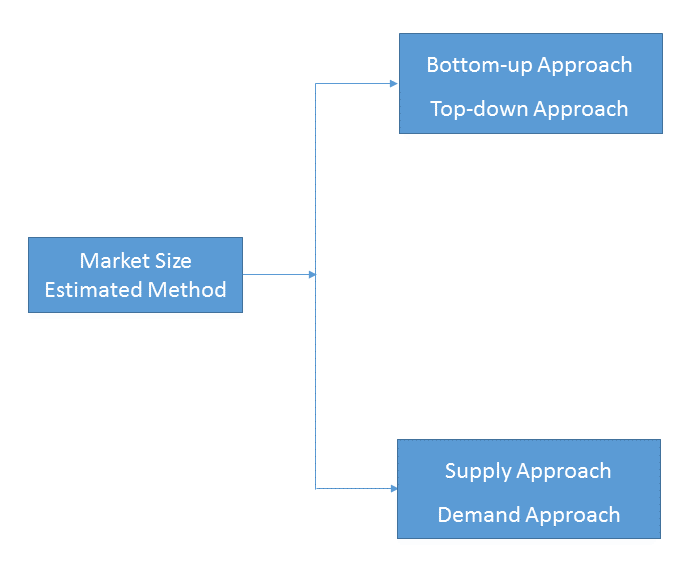
Bottom-up & top-down approach, supply & demand approach are the most important method which is used by HDIN Research to estimate the market size.
1)Top-down & Bottom-up Approach
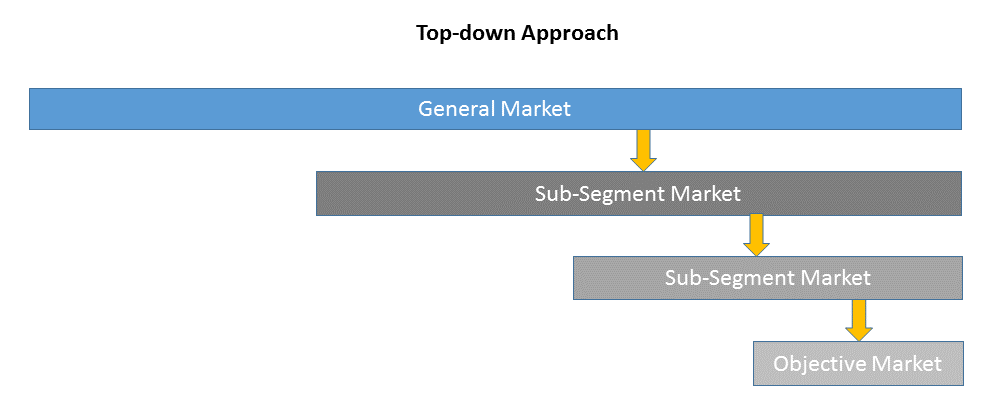
Top-down approach uses a general market size figure and determines the percentage that the objective market represents.
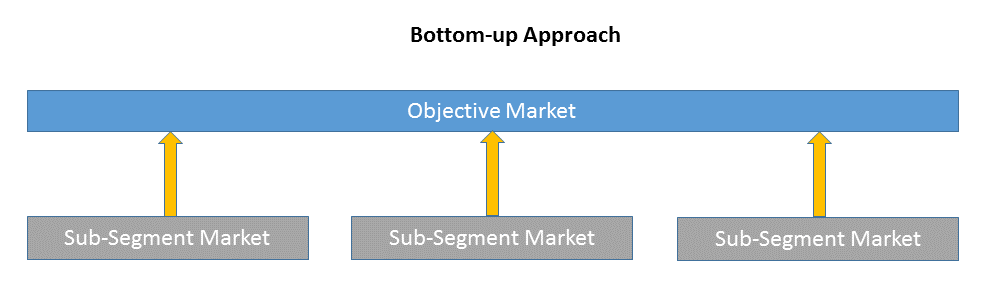
Bottom-up approach size the objective market by collecting the sub-segment information.
2)Supply & Demand Approach
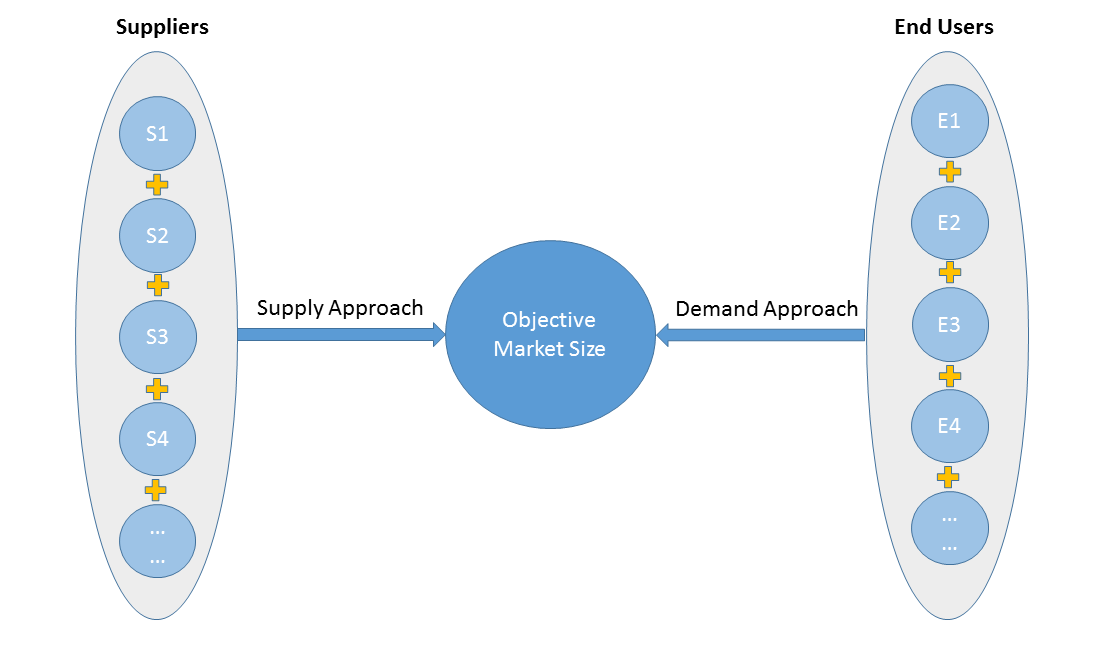
Supply approach is based on assessments of the size of each competitor supplying the objective market.
Demand approach combine end-user data within a market to estimate the objective market size. It is sometimes referred to as bottom-up approach.
- Forecasting Methodology
- Numerous factors impacting the market trend are considered for forecast model:
- New technology and application in the future;
- New project planned/under contraction;
- Global and regional underlying economic growth;
- Threatens of substitute products;
- Industry expert opinion;
- Policy and Society implication.
- Analysis Tools
1)PEST Analysis
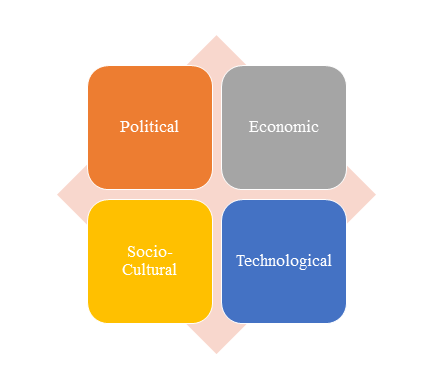
PEST Analysis is a simple and widely used tool that helps our client analyze the Political, Economic, Socio-Cultural, and Technological changes in their business environment.
- Benefits of a PEST analysis:
- It helps you to spot business opportunities, and it gives you advanced warning of significant threats.
- It reveals the direction of change within your business environment. This helps you shape what you’re doing, so that you work with change, rather than against it.
- It helps you avoid starting projects that are likely to fail, for reasons beyond your control.
- It can help you break free of unconscious assumptions when you enter a new country, region, or market; because it helps you develop an objective view of this new environment.
2)Porter’s Five Force Model Analysis
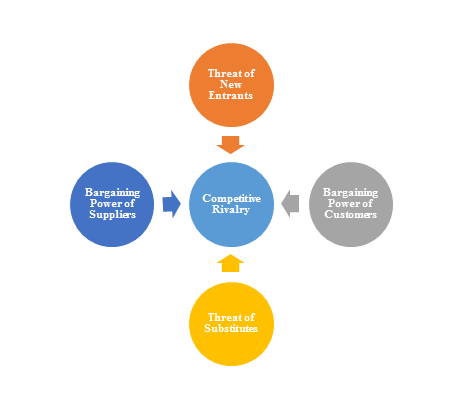
The Porter’s Five Force Model is a tool that can be used to analyze the opportunities and overall competitive advantage. The five forces that can assist in determining the competitive intensity and potential attractiveness within a specific area.
- Threat of New Entrants: Profitable industries that yield high returns will attract new firms.
- Threat of Substitutes: A substitute product uses a different technology to try to solve the same economic need.
- Bargaining Power of Customers: the ability of customers to put the firm under pressure, which also affects the customer's sensitivity to price changes.
- Bargaining Power of Suppliers: Suppliers of raw materials, components, labor, and services (such as expertise) to the firm can be a source of power over the firm when there are few substitutes.
- Competitive Rivalry: For most industries the intensity of competitive rivalry is the major determinant of the competitiveness of the industry.
3)Value Chain Analysis
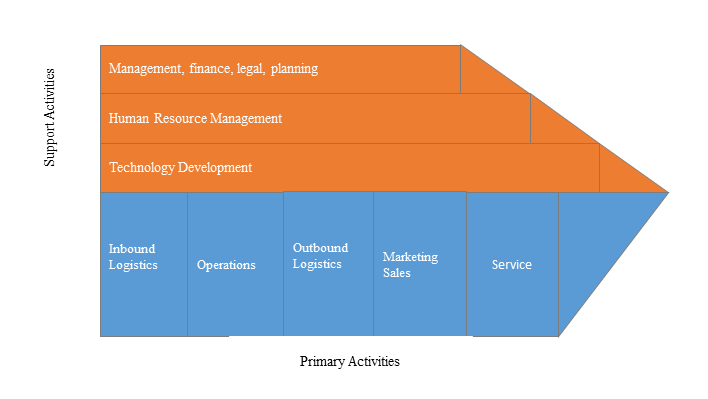
Value chain analysis is a tool to identify activities, within and around the firm and relating these activities to an assessment of competitive strength. Value chain can be analyzed by primary activities and supportive activities. Primary activities include: inbound logistics, operations, outbound logistics, marketing & sales, service. Support activities include: technology development, human resource management, management, finance, legal, planning.
4)SWOT Analysis
SWOT analysis is a tool used to evaluate a company's competitive position by identifying its strengths, weaknesses, opportunities and threats. The strengths and weakness is the inner factor; the opportunities and threats are the external factor. By analyzing the inner and external factors, the analysis can provide the detail information of the position of a player and the characteristics of the industry.
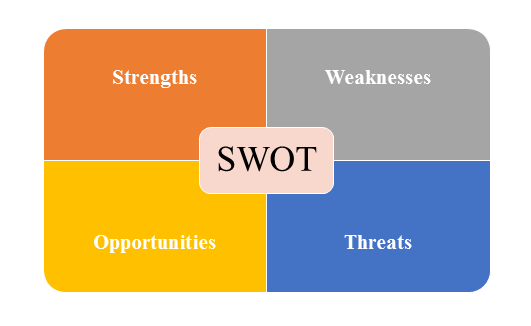
- Strengths describe what the player excels at and separates it from the competition
- Weaknesses stop the player from performing at its optimum level.
- Opportunities refer to favorable external factors that the player can use to give it a competitive advantage.
- Threats refer to factors that have the potential to harm the player.
- Data Sources
| Primary Sources | Secondary Sources |
|---|---|
| Face to face/Phone Interviews with market participants, such as: Manufactures; Distributors; End-users; Experts. Online Survey |
Government/International Organization Data: Annual Report/Presentation/Fact Book Internet Source Information Industry Association Data Free/Purchased Database Market Research Report Book/Journal/News |