Endovascular Surgical Robot Market Outlook 2026-2031
- Single User License (1 Users) $ 3,500
- Team License (2~5 Users) $ 4,500
- Corporate License (>5 Users) $ 5,500
Endovascular surgical robot is an advanced, computer-assisted robotic systems engineered to remotely maneuver guidewires, microcatheters, guide catheters, and diagnostic/ablation tools through complex vascular trees and cardiac chambers. The global endovascular surgical robot market is estimated to 100 to 200 million USD by 2026 with a compound annual growth rate (CAGR) between 25% and 35% through 2031. High procedural adoption is concentrated across North America and Europe, with accelerated regulatory approvals and domestic manufacturing scale emerging across the Asia-Pacific region. Between 2026 and 2031, commercial models are shifting from heavy capital equipment sales toward single-use disposable units, functional diagnostic integration, and distributed hub-and-spoke tele-surgery networks. The structural driver remains dual-fold: eradicating physician radiation exposure and orthopedic strain while achieving sub-millimeter distal control to solve tortuous vascular bottlenecks that manual techniques cannot consistently resolve. Market expansion is currently anchored by multinational medtech platforms such as Siemens Healthineers and Stereotaxis, alongside agile innovators including Microbot Medical, Rainmed Medical, Robocath, LN Robotics, Sentante, WeMed Medical, and research-stage pioneers like Nanoflex Robotics.
TAXONOMY AND CLINICAL DOMAIN ANALYSIS
Endovascular surgical robotics bifurcates into four core procedural categories, distinguished by anatomy, instrument dynamics, and clinical workflow complexity.
1. Percutaneous Coronary Intervention (PCI) Surgical Robots
- Procedural Scope: Remote delivery of 0.014-inch coronary guidewires, microcatheters, balloon dilation catheters, and drug-eluting stents for revascularization in coronary artery disease, calcified bifurcations, and chronic total occlusions (CTO).
- Clinical Volume: Over 3 million PCI procedures are executed annually worldwide. Within the United States, more than 4 million interventional cardiology cases take place annually across roughly 11,000 catheterization laboratories, with 10% to 15% presenting high anatomical complexity where robotic axial positioning directly reduces procedural failures.
- Value Mechanism: Robotic actuation mitigates catheter prolapse, eliminates axial slip during stent deployment, and reduces excessive contrast agent volumes through high-precision motorized indexing.
2. Neurovascular Intervention Surgical Robots
- Procedural Scope: Sub-millimeter microcatheter navigation through the siphon and distal cerebral vessels to perform emergency mechanical thrombectomy in acute ischemic stroke, intracranial aneurysm coil embolization, and arteriovenous malformation (AVM) liquid embolic delivery.
- Clinical Volume: United States stroke incidence exceeds 900,000 cases per year. Availability of endovascular thrombectomy remains structurally limited by the severe concentration of fellowship-trained neuro-interventionalists within top-tier urban academic centers.
- Value Mechanism: The clinical window for mechanical thrombectomy dictates outcomes within minutes. Robotics integrated with low-latency networks decouples the specialist from the physical bedside, allowing immediate intervention from regional referral hubs. Key industry roadmaps, such as Siemens Healthineers within its Advanced Therapies division and Stereotaxis via its EMAGIN platform, identify neurovascular access as their primary high-margin growth engine.
3. Peripheral and Aortic Surgical Robots
- Procedural Scope: Manipulation of endovascular tools across long-distance, high-resistance vessels, addressing peripheral artery disease (PAD), critical limb ischemia, complex endovascular aortic aneurysm repair (EVAR/TEVAR), and renal denervation (RDN).
- Clinical Volume: Surpasses 2 million procedures globally each year.
- Value Mechanism: Extensive procedural times in complex aortic reconstructions lead to high radiation absorption for medical staff. In peripheral indications, robotic drives provide continuous rotational torque without user fatigue, allowing reliable wire passage through extensive calcifications. A major commercial inflexion occurred on September 8, 2025, when the U.S. FDA cleared Microbot Medical's LIBERTY platform under 510(k) protocols for peripheral vascular interventional radiology.
4. Cardiac Electrophysiology (EP) Surgical Robots
- Procedural Scope: Multi-axis steering of mapping and therapeutic ablation catheters (radiofrequency, cryoablation, and pulsed field ablation) within dynamic atrial and ventricular structures to treat atrial fibrillation, atrial flutter, and ventricular tachycardia.
- Clinical Volume: Exceeds 1.5 million procedures annually across 7,000 specialized electrophysiology suites worldwide, maintaining organic procedural expansion of approximately 10% year-on-year.
- Value Mechanism: Rhythmic cardiac contractions disrupt stable wall contact. Robotic platforms, particularly Robotic Magnetic Navigation (RMN), sustain constant contact force without mechanical tissue perforation risks, standardizing lesion depth and drastically curtailing fluoroscopy exposure.
REGIONAL MARKET DYNAMICS
● North America: Retains the largest global share by market revenue, anchored by high private reimbursement density, extensive healthcare capital expenditure budgets, and a high concentration of cath-labs moving toward ambulatory surgery center (ASC) operational formats. Stringent occupational regulations surrounding occupational ionizing radiation, high rates of physician orthopedic attrition, and favorable CMS transitional pass-through payments for robotic consumables provide capital deployment incentives for hospital boards.
● Asia-Pacific: The most rapidly expanding operational theater, led by localized manufacturing initiatives, national medical device fast-track programs, and widespread implementation of hub-and-spoke acute stroke networks. High incidence of acute coronary syndrome and stroke throughout mainland China and India drives procedural demand. In China, government volume-based procurement (VBP) policies are accelerating the pursuit of procedural standardization in non-tier-3 facilities, incentivizing automated platforms. Key manufacturing clusters and technical ecosystems span mainland China, Japan, South Korea, and Taiwan, China.
● Europe: A mature clinical validation market characterized by strong academic medical centers, but decelerated by regulatory compliance hurdles under EU Medical Device Regulation (MDR 2017/745). Public hospital procurement frameworks operate under severe budget ceilings, shifting preferences toward modular solutions and operational-expense-friendly robotic consumables over multi-million-dollar fixed capital acquisitions.
● South America: An early-stage, import-reliant market concentrated within private healthcare networks in Brazil, Argentina, and Chile. Capital expenditure constraints in public networks limit system distribution. Adoption remains confined to quaternary private hospital hubs leveraging robotic capabilities to attract medical tourism and retain clinical talent.
● Middle East and Africa (MEA): A high-income, state-subsidized healthcare segment across the Gulf Cooperation Council (GCC) contrasting with access-limited infrastructures across sub-Saharan regions. The UAE and Saudi Arabia are allocating substantial sovereign wealth reserves to construct greenfield smart hospitals equipped with remote-intervention capabilities, prioritizing high-technology showcases to position themselves as regional centers for specialized care.
SUPPLY CHAIN AND VALUE CHAIN ARCHITECTURE
The industrial chain of endovascular interventional robotics spans three functional tiers, defined by intellectual property boundaries, component miniaturization thresholds, and regulatory moats.
1. Upstream Layer: Precision Components, Specialty Materials, and Software Intellectual Property
- Raw Materials and Magnets: Robotic Magnetic Navigation platforms rely heavily on sintered Neodymium-Iron-Boron (NdFeB) permanent magnets. Rare-earth supplies remain heavily concentrated within East Asian processing corridors, exposing capital equipment makers to raw material availability risks. Catheter and instrument consumables demand medical-grade thermoplastic elastomers (e.g., Pebax), shape-memory nitinol wire cores, and platinum-iridium radiopaque marker bands.
- Mechatronics: Core drive systems require micro-electric linear actuators, brushless DC micro-motors, optical encoders, and piezoresistive micro-force sensors capable of delivering tactile feedback beneath sub-millinewton thresholds.
- Compute and IP Foundations: Systems depend on real-time computational fluid dynamics (CFD) blood flow solvers, multi-modality 3D registration software (fusing pre-operative CT/MRI with intra-operative fluoroscopy), and master-slave low-latency networking engines. Intellectual property architectures are guarded via cross-licensing and university spin-off patents. For example, Microbot Medical co-owns its foundational micro-robotic patent portfolio with the Technion Research and Development Foundation (TRDF), incurring 1.5% to 3.0% net sales royalty structures, coupled with grant payback liabilities of 3% to 5% to the Israeli Innovation Authority. Stereotaxis commands an extensive global portfolio comprising dozens of granted patents covering magnetic field steering and specialized catheter interfaces.
2. Midstream Layer: Robot System Integration, Quality Management, and Operational Models
- Fabless and Subcontracted Operations: To conserve capital and limit manufacturing footprint, innovative market entrants increasingly leverage cleanroom contract development and manufacturing organizations (CDMOs). Microbot Medical utilizes a pure fabless approach governed by turn-key manufacturing partnerships established with institutional industrial suppliers.
- Vertically Integrated Operations: Complex capital assemblies generally demand specialized in-house final integration. Stereotaxis manages its primary system fabrication and magnetic housing in St. Louis, Missouri, while scaling proprietary catheter production lines in Rogers, Minnesota, following its integration of Access Point Technologies. Rainmed Medical maintains substantial GMP-compliant cleanrooms across Suzhou and Tianjin, China, encompassing nearly 8,000 square meters of production space with high-volume annualized sensor and console outputs, alongside expanding new engineering bases.
- Quality Regimes: Facilities operate under strict surveillance frameworks including ISO 13485:2016, EU MDR 2017/745, U.S. FDA Quality Management System Regulation (QMSR), and China NMPA guidelines, establishing multi-year validation cycles for any manufacturing adjustments.
3. Downstream Layer: Clinical Utilization, Healthcare Facilities, and Payor Realities
- Settings: High-volume academic hospitals, private tertiary chains, specialized heart institutes, and emerging office-based labs (OBLs) or ASCs.
- Clinical Decision Makers: Interventional cardiologists, electrophysiologists, neuro-interventional radiologists, and vascular surgeons.
- Value Migration: Value is migrating downstream from simple mechanical capital equipment toward procedure-linked digital software suites and proprietary consumables. Hospital balance sheets show mounting resistance to long-term capital lock-in, driving vendor models toward lease-per-procedure structures, disposable cassette billing, and integrated software analytics.
COMPANY PROFILES: STRATEGIC MOATS AND PIVOTS
● Siemens Healthineers
- Corporate Alignment: Integrated within the Advanced Therapies business segment.
- Core Robotic Platform: CorPath GRX Vascular Robotic System.
- Strategic Pivot: Following broad clinical deployment in coronary and peripheral settings, Siemens strategically realigned core development efforts toward automated, tele-operated neurovascular intervention. Recognizing that manual coronary intervention robotics suffered from prolonged cath-lab turnover times, the platform's long-term enterprise value lies in establishing an end-to-end connected acute stroke network combining robotic endovascular arms with Artis angiography systems.
- Operational Moat: Global imaging market penetration, deep capital installation footprint across tier-1 hospitals, and enterprise balance sheet capacity to finance bundled imaging-and-robotics lease portfolios.
● Microbot Medical Inc
- Corporate Alignment: Commercial medtech innovator addressing capital overhead and sterile processing barriers.
- Core Robotic Platform: LIBERTY Endovascular Robotic Surgical System.
- Strategic Pivot: Microbot departs completely from multi-hundred-thousand-dollar robotic capital consoles. The LIBERTY platform is constructed as a compact, fully disposable, single-use robotic drive unit that clips onto standard off-the-shelf guidewires and microcatheters. By receiving U.S. FDA 510(k) clearance for peripheral vascular applications in September 2025, the company bypasses the hospital capital budget freeze and accesses high-volume outpatient ambulatory surgical center lines.
- Operational Moat: Lean fabless operational model, substantial IP portfolios co-developed with academic institutions, and a disposable footprint that eliminates sterilization and between-procedure setup bottlenecks.
● Stereotaxis
- Corporate Alignment: Pioneer in non-mechanical, computerized magnetic catheter guidance.
- Core Robotic Platforms: Genesis RMN System, GenesisX RMN, Niobe.
- Strategic Pivot: Having anchored the robotic electrophysiology niche with over 150,000 arrhythmia procedures across more than 100 enterprise hospitals, Stereotaxis is aggressively expanding into interventional coronary and neurovascular indications via its specialized guide catheters (such as the EMAGIN platform) and proprietary miniature magnet generators. Concurrently, the acquisition of Access Point Technologies provides vertical integration over proprietary diagnostic catheter manufacturing, converting an open-platform architecture into a closed, high-margin consumable ecosystem.
- Operational Moat: Substantial clinical literature base exceeding 500 peer-reviewed publications, a deep patent portfolio protecting external magnetic field manipulation, and negligible risk of vessel perforation relative to mechanical push-wire robots.
● Rainmed Medical Limited
- Corporate Alignment: Chinese industrial developer fusing physiological diagnostics with automated intervention.
- Core Robotic Platform: FlashBot Vascular Interventional Surgical Robot.
- Strategic Pivot: Rainmed bypasses pure mechanical navigation by pairing robotic manipulators directly with proprietary diagnostic hemodynamics algorithms (caFFR for macrovascular flow reserve and caIMR for microvascular resistance index). This creates a closed-loop platform: algorithmic lesion identification directly informs automated balloon positioning and stent deployment, actively moving toward an unmanned cath-lab paradigm.
- Operational Moat: Extensive domestic clinical footprint, dedicated high-capacity GMP manufacturing facilities, and state-subsidized R&D positioning the platform favorably within localized health insurance procurement programs.
● Robocath
- Corporate Alignment: European interventional cardiology automation developer.
- Core Robotic Platforms: R-One, R-One+.
- Strategic Pivot: Built around an ergonomic master-slave mechanical architecture, Robocath focuses strictly on high-precision bimanual manipulation during standard PCI. The platform addresses sub-millimeter axial tracking and continuous wire rotation to reduce procedural times in complex coronary anatomical variations without requiring proprietary hospital catheter upgrades.
- Operational Moat: Strategic cross-border partnerships in Asian markets, targeted design elegance ensuring rapid operator onboarding, and strong backing from regional clinical foundations in Europe.
● LN Robotics Inc
- Corporate Alignment: Cardiovascular robotics enterprise spun out of Asan Medical Center.
- Core Robotic Platform: AVIAR.
- Strategic Pivot: LN Robotics addresses the primary failure mode of basic coronary robotics: chronic total occlusions (CTO) and bifurcations requiring simultaneous multiple wire configurations. AVIAR integrates multi-channel driving blocks capable of concurrent, independent guidewire manipulation, supplemented by tactile force-feedback systems that measure proximal-to-distal vessel resistance.
- Operational Moat: Deep access to high-volume procedural feedback from elite Asian cardiology centers, coupled with high-density IP in multi-axial robotic wire clamping and haptic feedback loops.
● WeMed Medical
- Corporate Alignment: Interventional imaging and integrated cath-lab suite provider.
- Core Robotic Platforms: ET-Robot, ET-Robot II.
- Strategic Pivot: WeMed addresses the cath-lab as a single, indivisible hardware-software system. Rather than selling a standalone robotic accessory, the company integrates ET-Robot directly with its floor-mounted and ceiling-mounted angiography systems, simplifying digital communication, footprint requirements, and purchasing interfaces for hospital operators.
- Operational Moat: Full-stack imaging-to-robotics product lines, lower pricing structures enabled by centralized Chinese supply chains, and versatile mechanical designs compatible with coronary, peripheral, and neurovascular procedures.
● Sentante
- Corporate Alignment: European tele-surgical robotic hardware manufacturer.
- Core Robotic Platform: Sentante Robotic System.
- Strategic Pivot: Sentante targets full-distance teleoperation across large-vessel vascular applications, specifically peripheral arterial interventions and endovascular aneurysm repair (EVAR). The system accommodates standard clinical sheaths, guidewires, and delivery catheters, enabling surgeons to complete complex graft landings entirely away from the patient radiation field.
- Operational Moat: Broad instrument compatibility preventing hospital vendor lock-in, accompanied by an explicit focus on long-procedure aortic interventions where operator radiation exhaustion is most acute.
● Nanoflex Robotics AG (Development-Stage Player)
- Corporate Alignment: Ultra-flexible electromagnetic neurovascular access developer spun out of ETH Zurich.
- Core Robotic Platform: Nanoflex Magnetically-Guided Robotic System.
- Strategic Pivot: Traditional robotic magnetic platforms require massive fixed suites weighing several tons. Nanoflex focuses on a compact, highly mobile electromagnetic field generator that wheels into any standard cath-lab bed, paired with ultra-soft magnetic microcatheters. The platform targets acute stroke revascularization, aiming to steer around acute arterial curves that block mechanical pushwires.
- Operational Moat: Proprietary electromagnetic field control software and specialized manufacturing methods for micro-magnetic catheter tips originating from European precision engineering ecosystems.
OPPORTUNITIES & BOTTLENECKS
● Structural Accelerators and Unlocked Arbitrage Windows
- Occupational Health as an Economic Driver: Hospital procurement committees historically categorized robotic platforms as high-cost clinical luxuries. However, rising actuarial costs tied to orthopedic spine surgeries, cervical disc replacements, and radiation-induced health hazards among senior interventionalists are altering the ROI equation. An institutional operating room that removes the physical requirement for 15-kilogram lead aprons extends the productive clinical lifespan of high-revenue specialists by 5 to 10 years, offering a compelling executive labor-retention argument.
- Decentralization via Tele-Surgery: The geographic maldistribution of experienced neuro-interventionalists is a structural vulnerability in acute ischemic stroke treatment. The clinical value of early clot retrieval degrades sharply each hour post-symptom onset. Robotic platforms enabling tele-thrombectomy break this spatial bottleneck. Regional community hospitals can establish hub-and-spoke networks where local teams establish vascular sheath access, while a centralized quaternary expert remotely navigates the microcatheter and deploys the stent retriever.
- The Diagnostic-Therapeutic Integration Leap: The standalone mechanical robotic drive is inherently vulnerable to commoditization. The real margin expansion lies in functional diagnostic integration. Platforms that combine robotic delivery with automated hemodynamics (such as real-time FFR and microcirculatory resistance algorithms) strip away procedural guesswork, lower contrast volume usage, and compress fluoroscopy runtimes. This transition from manual tool guiding to algorithmic intervention transforms robotics from a mechanical accessory into a hospital optimization engine.
● Structural Bottlenecks and Market Friction
- The Cath-Lab Setup Penalty: In high-volume interventional cardiology practices, room turnaround time is a critical operational KPI. High-throughput cath-labs run 8 to 12 PCI procedures daily per room. If manual sterile draping, robotic arm articulation, and cartridge calibration add 15 minutes per case, the facility loses one complete procedure slot daily, equating to significant lost operating margin. This operational penalty explains why early coronary robotics experienced clinical pilot stagnation.
- The Capital Expenditure Trap versus Single-Use Disposables: Multi-hundred-thousand-dollar robotic capital consoles face lengthening hospital procurement review cycles and tight budget constraints. Market share will disproportionately accrue toward players offering zero-capital-footprint architectures. Systems utilizing low-cost single-use drives (exemplified by Microbot Medical's disposable concept) or hybrid utilization models fundamentally disrupt the traditional medical device sales model by converting capital balance sheet battles into routine operational expense approvals.
- Haptic Feedback Deficits: Interventionalists rely heavily on passive tactile feedback—feeling a guidewire tip buckle slightly against a distal bifurcation warning of imminent vessel dissection. Early motorized drive rollers eliminate this sensation, forcing the surgeon to rely entirely on visual fluoroscopic cues. Until multi-axis micro-force sensor feedback loops and tactile-mimicking haptic master controllers are universally perfected, broad operator adoption for fragile sub-millimeter neurovascular vessels will encounter natural physician hesitation.
1.1 Endovascular Surgical Robot Market Definition and Scope 1
1.2 Research Methodology, Primary Validations and Secondary Data Modeling 2
1.3 Multi-Source Cross-Verification and Econometric Assumptions 4
1.4 Report Taxonomy and Currencies 5
1.5 Acronyms and Standard Medical Robotics Abbreviations 6
Chapter 2 Global Endovascular Surgical Robot Market Ecosystem and Macro Backdrop 7
2.1 Global Interventional Cardiology and Endovascular Macro Drivers (2021-2031) 7
2.2 Tele-Robotic Infrastructure and Next-Generation Catheterization Lab Upgrades 9
2.3 Radiation Exposure Mitigation and Ergonomic Occupational Imperatives 10
2.4 Technological Convergence: Artificial Intelligence, Haptic Feedback and Imaging Integration 11
Chapter 3 Endovascular Surgical Robot Upstream Architecture and Value Chain Analysis 13
3.1 Upstream Robotic Hardware: Robotic Arms, Force Sensors and Drive Mechanisms 13
3.2 Proprietary Consumables: Sterile Cassettes, Articulating Sheaths and Robotic Catheters 15
3.3 Imaging System Synchronization (Digital Subtraction Angiography, Fluoroscopy, IVUS, OCT) 17
3.4 Margin Pool Dynamics and Cost Breakdown Across the Manufacturing Value Chain 18
3.5 OEM Supply Chain Vulnerabilities, Semiconductor Constraints and Sourcing Localization 19
Chapter 4 Global Endovascular Surgical Robot Market by Architecture and Product Type 21
4.1 Percutaneous Coronary Intervention (PCI) Surgical Robots 21
4.2 Neurovascular Intervention Surgical Robots 24
4.3 Peripheral & Aortic Surgical Robots 26
4.4 Cardiac Electrophysiology (EP) Surgical Robots 27
Chapter 5 Global Endovascular Surgical Robot Market by System Component and Clinical Channel 29
5.1 Capital Equipment (Robotic Console, Articulated Bed Mount, Optical Tracking Modules) 29
5.2 Single-Use Robotic Consumables, Cassettes and Drive Systems 31
5.3 Post-Market Maintenance, Software Updates and Extended Service Agreements 32
5.4 Academic Medical Centers and High-Volume Hybrid Operating Rooms 33
5.5 Ambulatory Surgery Centers (ASCs) and Independent Cath Labs 34
Chapter 6 Cross-Border Trade Flows, Regulatory Frameworks and Reimbursement Architecture 36
6.1 Global Trade Footprint, Component Logistics and Cross-Border Tariffs 36
6.2 Regulatory Pathways: US FDA 510(k)/PMA, EU MDR, and China NMPA Green Channel Approval 37
6.3 Global DRG Integration, New Technology Add-On Payments (NTAP), and Physician Fee Schedules 39
6.4 Intellectual Property Landscape: Robotics Patents, Freedom-to-Operate and Litigation Landscapes 40
Chapter 7 North America Endovascular Surgical Robot Market Analysis 42
7.1 North America Regional Dynamics, Procedure Volume Expansion and Revenue (2021-2031) 42
7.2 United States 44
7.3 Canada 46
Chapter 8 Europe Endovascular Surgical Robot Market Analysis 49
8.1 European Ecosystem: Manufacturing Hubs, CE Mark Transitions and Clinical Evidence 49
8.2 Germany: Commercial Adoption, Robotic Core Engineering Hubs and Regional Share 50
8.3 France: Innovation Incubators, Tele-Intervention Deployments and System Penetration 52
8.4 Switzerland: Precision Microrobotics Clusters and Specialized Research Ecosystems 53
8.5 United Kingdom: NHS Clinical Trials, Capital Allocation Models and Market Projections 54
8.6 Rest of Europe: Lithuania and Baltic High-Tech Engineering Corridors 55
Chapter 9 Asia-Pacific Endovascular Surgical Robot Market Analysis 56
9.1 Asia-Pacific Expansion Vectors: Demographic Shifts and Healthcare Infrastructure Upgrades 56
9.2 China 57
9.3 South Korea 59
9.4 Japan 60
9.5 Rest of Asia-Pacific (Australia, Singapore, India Clinical Adoption Trends) 61
Chapter 10 Latin America, Middle East & Africa Endovascular Surgical Robot Market Analysis 63
10.1 Latin America: Brazil and Mexico Hybrid Operating Suite Implementations (2021-2031) 63
10.2 Middle East & Africa: GCC Medical Tourism Hubs and Advanced Robotic Adoption 64
10.3 Regional Constraints: Capital Expenditure Limitations and Specialized Surgeon Training 65
Chapter 11 Competitive Landscape, Market Share Analysis and Strategic Benchmarking 67
11.1 Global Competitive Matrix and Market Concentration (CR4, CR8, Herfindahl-Hirschman Index) 67
11.2 Market Share Breakdown by Key Vendor (2021-2026) 68
11.3 Remote Tele-Surgery Benchmarking: Latency Architecture and Network Resilience 69
11.4 Strategic M&A, Clinical Consortia Partnerships, and Strategic Licensing (2021-2026) 70
Chapter 12 Corporate Intelligence: Key Market Players 72
12.1 Siemens Healthineers (Corindus Vascular Robotics) 72
12.1.1 Corporate Profile, R&D Facilities and Manufacturing Footprint 72
12.1.2 Product Portfolio: CorPath GRX Robotic System Capabilities and Consumables 73
12.1.3 Financial Metrics: Revenue, Manufacturing Cost, Gross Margin (2021-2026) 74
12.1.4 Global Market Share and Installation Trajectory (2021-2026) 74
12.1.5 SWOT Assessment and Strategic Outlook 75
12.2 Stereotaxis 75
12.2.1 Corporate Overview and Remote Magnetic Navigation (RMN) Architecture 75
12.2.2 Genesis RMN System, Odyssey Information Solution and Consumables Matrix 76
12.2.3 Financial Performance: Revenue, Direct Cost, Gross Margin (2021-2026) 77
12.2.4 Market Share Analysis and Cardiac EP Penetration (2021-2026) 77
12.2.5 SWOT Assessment and Next-Gen Robot Ecosystem 78
12.3 Microbot Medical Inc 78
12.3.1 Company Infrastructure and Disposable Robotic Platform Specialization 78
12.3.2 LIBERTY Endovascular Robotic System Architecture and Clinical Approvals 79
12.3.3 Financial Metrics: Revenue, Cost Structure, Gross Margin (2021-2026) 80
12.3.4 Market Share Position and Regulatory Pathway Milestones (2021-2026) 80
12.3.5 SWOT Assessment and Commercialization Strategy 81
12.4 Robocath 81
12.4.1 Corporate Background, Strategic Investors and French Industrial Hub 81
12.4.2 R-One and R-One+ Platforms: Interventional Capabilities and Peripheral Expansion 82
12.4.3 Financials: Revenue, Operating Cost, Gross Margin Analysis (2021-2026) 83
12.4.4 Market Share and Cath Lab Commercialization Footprint (2021-2026) 83
12.4.5 SWOT Assessment and European Market Penetration 84
12.5 Rainmed Medical Limited 84
12.5.1 Corporate Profile and Integrated Vascular Interventional Ecosystem 84
12.5.2 FlashBot Vascular Intervention Surgical Robot and FFR Synchronization 85
12.5.3 Financial Analysis: Revenue, Cost of Goods Sold, Gross Margin (2021-2026) 86
12.5.4 Market Share in Domestic and International Markets (2021-2026) 86
12.5.5 SWOT Assessment and Chinese Cath Lab Market Strategy 87
12.6 LN Robotics Inc 87
12.6.1 Corporate Background and South Korean Interventional Engineering Base 87
12.6.2 AVIAS Platform: Multi-Channel Steerable Coronary Robotic Architecture 88
12.6.3 Financial Metrics: Revenue, Sourcing Costs, Gross Margin (2021-2026) 89
12.6.4 Market Share Dynamics and APAC Expansion (2021-2026) 89
12.6.5 SWOT Assessment and Product Roadmap 90
12.7 Sentante 90
12.7.1 Corporate Structure and Tele-Robotic Hardware Engineering in Lithuania 90
12.7.2 Sentante Robotic System: Complete Remote Endovascular Intervention Design 91
12.7.3 Financial Evaluation: Revenue, Production Cost, Gross Margin (2021-2026) 92
12.7.4 Market Share Evolution and Clinical Trial Trajectory (2021-2026) 92
12.7.5 SWOT Assessment and International Expansion Model 93
12.8 WeMed Medical 93
12.8.1 Corporate Overview and Interventional Imaging-Robotic Integration Hub 93
12.8.2 ET-Robot Series: Endovascular Interventional Suite and Angiography Synergy 94
12.8.3 Financial Profile: Revenue, Cost Matrix, Gross Margin (2021-2026) 95
12.8.4 Market Share Performance and Chinese Clinical Installation Base (2021-2026) 95
12.8.5 SWOT Assessment and Commercial Roadmap 96
Chapter 13 Corporate Intelligence: Development-Stage Innovators 97
13.1 Nanoflex Robotics AG 97
13.1.1 Corporate Identity and Swiss Precision Magnetic Steering Cluster 97
13.1.2 Technology Architecture: Soft Magnetic Catheters and Mobile Steering Units 98
13.1.3 Pre-Commercial Financials: R&D Cost Modeling, Capital Outlay (2021-2026) 99
13.1.4 Pipeline Evaluation, Stroke Intervention Targeting and Regulatory Milestones 99
13.1.5 SWOT Assessment and Strategic Commercialization Timeline 100
Chapter 14 Industry Horizon, Disruption Vectors and Forecast Scenarios (2027-2031) 101
Table 2 Endovascular Surgical Robot Bill of Materials (BOM) Breakdown by Core Subsystem 14
Table 3 Global Endovascular Surgical Robot Market Size by Architecture Type (USD Million, 2021-2026) 22
Table 4 Global Endovascular Surgical Robot Market Size by Architecture Type (USD Million, 2027-2031) 23
Table 5 Global Percutaneous Coronary Intervention (PCI) Robotic Installations by Region (2021-2031) 24
Table 6 Global Neurovascular Intervention Surgical Robot Market Sizing by Region (USD Million, 2021-2031) 25
Table 7 Global Peripheral & Aortic Surgical Robot Market Size and Volume Forecast (2021-2031) 26
Table 8 Global Cardiac Electrophysiology (EP) Surgical Robot Revenues by Region (USD Million, 2021-2031) 28
Table 9 Global Endovascular Surgical Robot Market Size by Component (USD Million, 2021-2031) 30
Table 10 Global Average Selling Price (ASP) Trends by Robotic Console vs. Disposable Cassette (USD, 2021-2031) 31
Table 11 Global Endovascular Surgical Robot Revenue by End-User Facility (USD Million, 2021-2031) 34
Table 12 Key Regulatory Classifications and Timelines for Endovascular Robots across Key Jurisdictions 38
Table 13 North America Endovascular Surgical Robot Market by Product Type (USD Million, 2021-2031) 43
Table 14 United States Endovascular Surgical Robot Market Financials by Component (USD Million, 2021-2031) 45
Table 15 Canada Endovascular Surgical Robot Revenue Breakdown by Application (USD Million, 2021-2031) 47
Table 16 Europe Endovascular Surgical Robot Market Size by Key Country (USD Million, 2021-2031) 50
Table 17 Germany Endovascular Surgical Robot Market Sizing and Installed Units (2021-2031) 51
Table 18 France Endovascular Surgical Robot Financial Projections by Modality (USD Million, 2021-2031) 52
Table 19 Switzerland Endovascular Precision Robotics Sizing and Supply Exports (USD Million, 2021-2031) 53
Table 20 United Kingdom NHS and Private Robotic Endovascular Adoption (USD Million, 2021-2031) 54
Table 21 Asia-Pacific Endovascular Surgical Robot Market Value by Leading Country (USD Million, 2021-2031) 57
Table 22 China Endovascular Surgical Robot Market Growth and Domestic Penetration (USD Million, 2021-2031) 58
Table 23 South Korea Endovascular Surgical Robot Sales and Export Volumes (USD Million, 2021-2031) 60
Table 24 Japan Endovascular Surgical Robot Sizing by Application Segment (USD Million, 2021-2031) 61
Table 25 Latin America Endovascular Surgical Robot Revenue by Selected Economy (USD Million, 2021-2031) 64
Table 26 Middle East & Africa Endovascular Surgical Robot Installed Base by Hub (2021-2031) 65
Table 27 Global Endovascular Surgical Robot Competitive Concentration Indices (2021-2026) 68
Table 28 Siemens Healthineers Endovascular Surgical Robot Revenue, Cost and Gross Margin (2021-2026) 74
Table 29 Stereotaxis Endovascular Surgical Robot Revenue, Cost and Gross Margin (2021-2026) 77
Table 30 Microbot Medical Inc Endovascular Surgical Robot Revenue, Cost and Gross Margin (2021-2026) 80
Table 31 Robocath Endovascular Surgical Robot Revenue, Cost and Gross Margin (2021-2026) 83
Table 32 Rainmed Medical Limited Endovascular Surgical Robot Revenue, Cost and Gross Margin (2021-2026) 86
Table 33 LN Robotics Inc Endovascular Surgical Robot Revenue, Cost and Gross Margin (2021-2026) 89
Table 34 Sentante Endovascular Surgical Robot Revenue, Cost and Gross Margin (2021-2026) 92
Table 35 WeMed Medical Endovascular Surgical Robot Revenue, Cost and Gross Margin (2021-2026) 95
Table 36 Nanoflex Robotics AG Endovascular Surgical Robot R&D Expenditure and Capital Outlay (2021-2026) 99
Table 37 Global Endovascular Surgical Robot Total Market Forecast Scenarios: Base, Bull, Bear (2026-2031) 104
Figure 1 Global Endovascular Surgical Robot Market Revenue Trajectory in USD Million (2021-2031) 8
Figure 2 Endovascular Surgical Robot Industry Value Chain Architecture and Value Addition Steps 16
Figure 3 Global Endovascular Surgical Robot Market Share by Modality Type (2026 vs. 2031) 21
Figure 4 Neurovascular Surgical Robot Unit Installation Trajectory across Stroke Centers (2021-2031) 25
Figure 5 Global Component Revenue Split: Capital Consoles vs. Single-Use Cassettes (2021-2031) 32
Figure 6 Global Endovascular Surgical Robot Distribution by End-User Environment (2026) 35
Figure 7 Global Regulatory Timeline from Pre-Clinical Testing to Hospital Procurement 38
Figure 8 North America Endovascular Surgical Robot Market Share Breakdown by Country (2026) 43
Figure 9 United States Commercial Robot Penetration in Coronary vs. Peripheral Labs (2021-2031) 46
Figure 10 Europe Endovascular Surgical Robot Revenue Distribution by Key Country (2026) 51
Figure 11 France Robotic Interventional Procedure Adoption Curve (2021-2031) 53
Figure 12 Asia-Pacific Endovascular Surgical Robot Market Growth Vectors (2021-2031) 56
Figure 13 China Domestic vs. Imported Endovascular Surgical Robot Unit Installations (2021-2031) 59
Figure 14 Latin America and Middle East Regional Market Trajectories (2021-2031) 64
Figure 15 Global Endovascular Surgical Robot Vendor Revenue Share Matrix (2026) 69
Figure 16 Siemens Healthineers Endovascular Surgical Robot Market Share (2021-2026) 74
Figure 17 Stereotaxis Endovascular Surgical Robot Market Share (2021-2026) 77
Figure 18 Microbot Medical Inc Endovascular Surgical Robot Market Share (2021-2026) 80
Figure 19 Robocath Endovascular Surgical Robot Market Share (2021-2026) 83
Figure 20 Rainmed Medical Limited Endovascular Surgical Robot Market Share (2021-2026) 86
Figure 21 LN Robotics Inc Endovascular Surgical Robot Market Share (2021-2026) 89
Figure 22 Sentante Endovascular Surgical Robot Market Share (2021-2026) 92
Figure 23 WeMed Medical Endovascular Surgical Robot Market Share (2021-2026) 95
Figure 24 Nanoflex Robotics AG Development Pipeline and Target Milestone Horizon (2026-2031) 100
Figure 25 Next-Generation Autonomous Robotic Intervention Roadmap through 2031 102
Research Methodology
- Market Estimated Methodology:
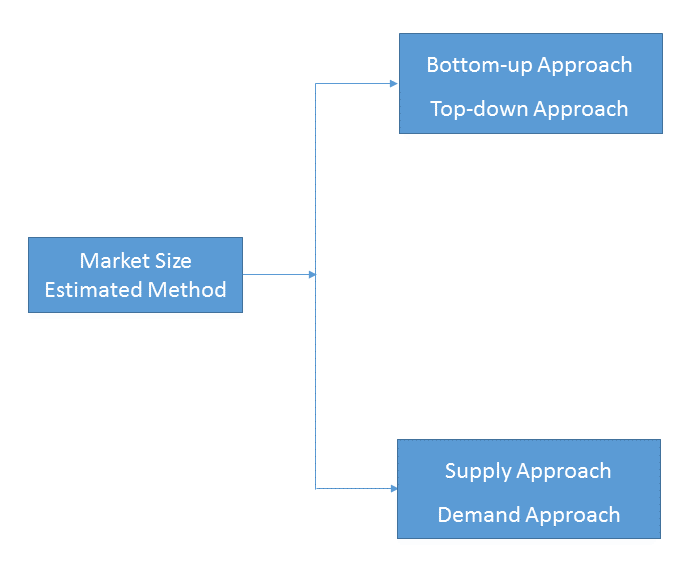
Bottom-up & top-down approach, supply & demand approach are the most important method which is used by HDIN Research to estimate the market size.
1)Top-down & Bottom-up Approach
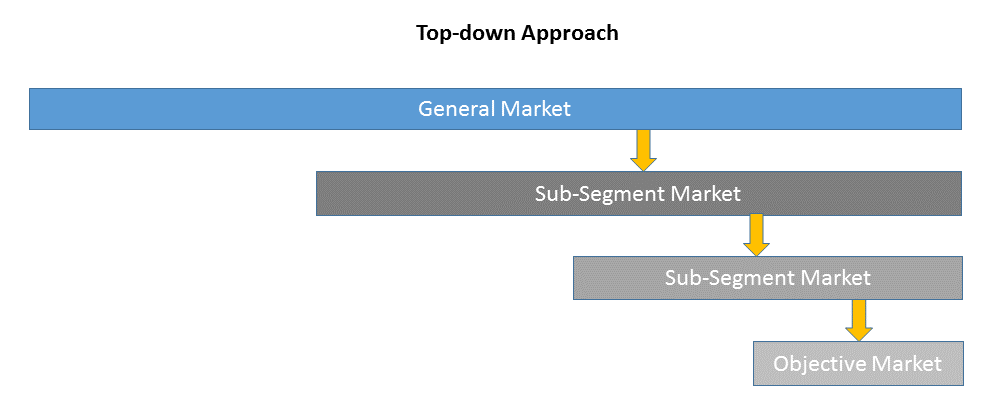
Top-down approach uses a general market size figure and determines the percentage that the objective market represents.
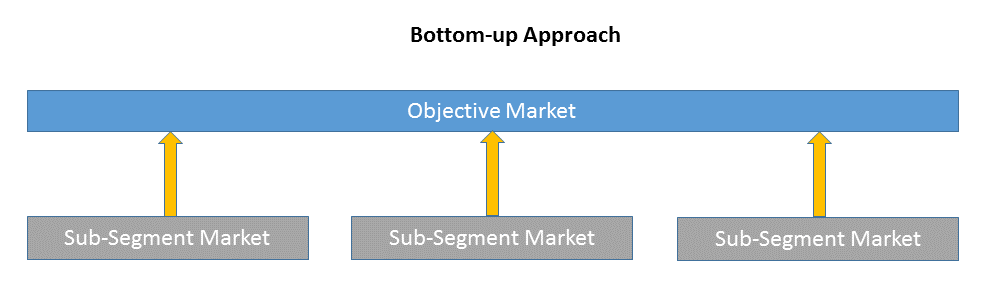
Bottom-up approach size the objective market by collecting the sub-segment information.
2)Supply & Demand Approach
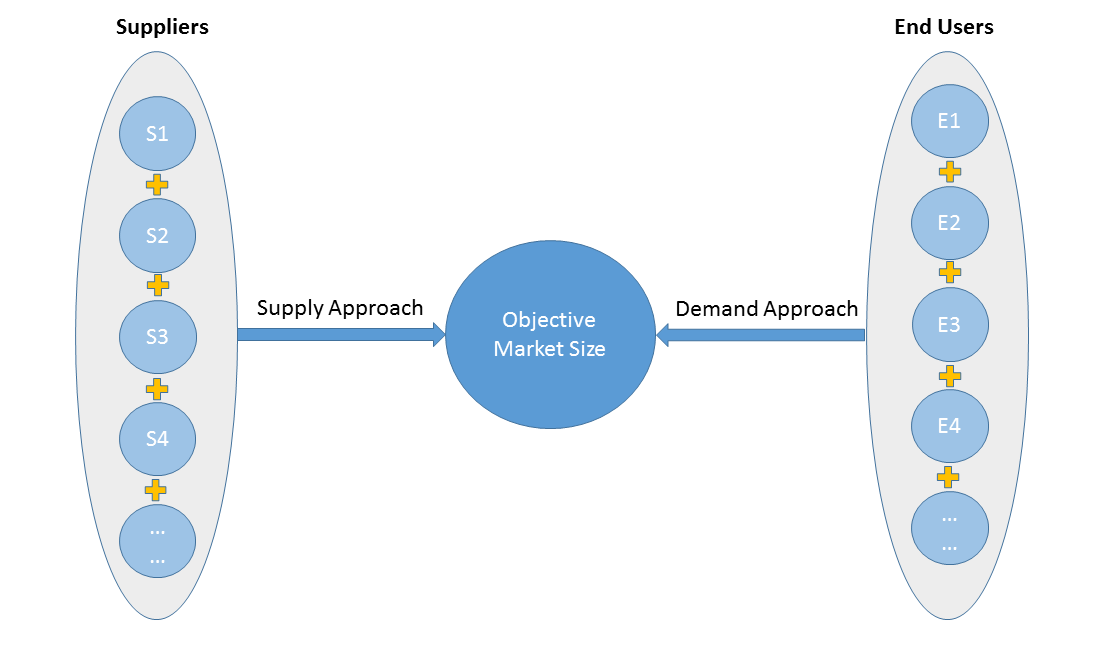
Supply approach is based on assessments of the size of each competitor supplying the objective market.
Demand approach combine end-user data within a market to estimate the objective market size. It is sometimes referred to as bottom-up approach.
- Forecasting Methodology
- Numerous factors impacting the market trend are considered for forecast model:
- New technology and application in the future;
- New project planned/under contraction;
- Global and regional underlying economic growth;
- Threatens of substitute products;
- Industry expert opinion;
- Policy and Society implication.
- Analysis Tools
1)PEST Analysis
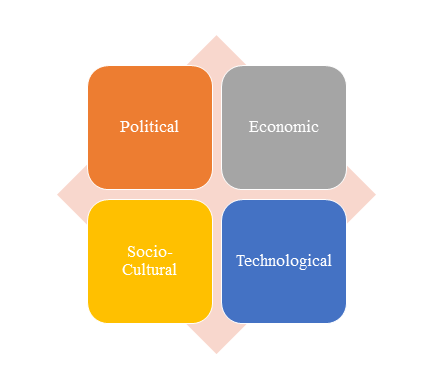
PEST Analysis is a simple and widely used tool that helps our client analyze the Political, Economic, Socio-Cultural, and Technological changes in their business environment.
- Benefits of a PEST analysis:
- It helps you to spot business opportunities, and it gives you advanced warning of significant threats.
- It reveals the direction of change within your business environment. This helps you shape what you’re doing, so that you work with change, rather than against it.
- It helps you avoid starting projects that are likely to fail, for reasons beyond your control.
- It can help you break free of unconscious assumptions when you enter a new country, region, or market; because it helps you develop an objective view of this new environment.
2)Porter’s Five Force Model Analysis
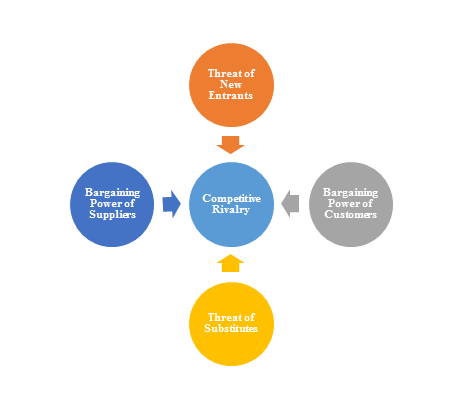
The Porter’s Five Force Model is a tool that can be used to analyze the opportunities and overall competitive advantage. The five forces that can assist in determining the competitive intensity and potential attractiveness within a specific area.
- Threat of New Entrants: Profitable industries that yield high returns will attract new firms.
- Threat of Substitutes: A substitute product uses a different technology to try to solve the same economic need.
- Bargaining Power of Customers: the ability of customers to put the firm under pressure, which also affects the customer's sensitivity to price changes.
- Bargaining Power of Suppliers: Suppliers of raw materials, components, labor, and services (such as expertise) to the firm can be a source of power over the firm when there are few substitutes.
- Competitive Rivalry: For most industries the intensity of competitive rivalry is the major determinant of the competitiveness of the industry.
3)Value Chain Analysis
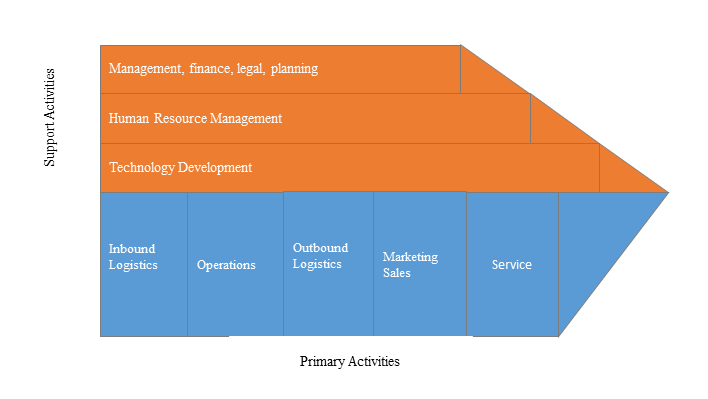
Value chain analysis is a tool to identify activities, within and around the firm and relating these activities to an assessment of competitive strength. Value chain can be analyzed by primary activities and supportive activities. Primary activities include: inbound logistics, operations, outbound logistics, marketing & sales, service. Support activities include: technology development, human resource management, management, finance, legal, planning.
4)SWOT Analysis
SWOT analysis is a tool used to evaluate a company's competitive position by identifying its strengths, weaknesses, opportunities and threats. The strengths and weakness is the inner factor; the opportunities and threats are the external factor. By analyzing the inner and external factors, the analysis can provide the detail information of the position of a player and the characteristics of the industry.
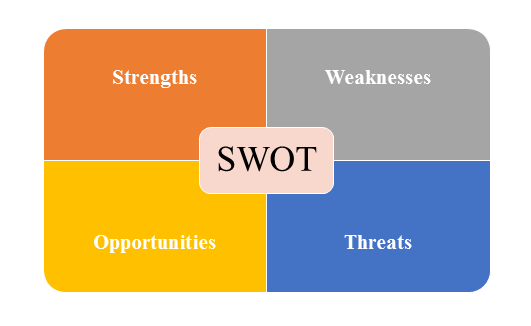
- Strengths describe what the player excels at and separates it from the competition
- Weaknesses stop the player from performing at its optimum level.
- Opportunities refer to favorable external factors that the player can use to give it a competitive advantage.
- Threats refer to factors that have the potential to harm the player.
- Data Sources
| Primary Sources | Secondary Sources |
|---|---|
| Face to face/Phone Interviews with market participants, such as: Manufactures; Distributors; End-users; Experts. Online Survey |
Government/International Organization Data: Annual Report/Presentation/Fact Book Internet Source Information Industry Association Data Free/Purchased Database Market Research Report Book/Journal/News |