Laparoscopic Surgical Robot Market Outlook 2026-2031
- Single User License (1 Users) $ 3,500
- Team License (2~5 Users) $ 4,500
- Corporate License (>5 Users) $ 5,500
A laparoscopic surgical robot is an advanced, computer-assisted, master-slave electromechanical surgical system engineered to remotely, precisely, and dexterously manipulate articulating surgical instruments and 3D stereoscopic endoscopes inside the abdominal, pelvic, or thoracic cavities through keyhole incisions or a single anatomical entry port. By physically decoupling the operating surgeon from the patient table, these platforms convert natural surgeon hand, wrist, and finger movements at a remote console into micro-scaled, tremor-filtered instrument maneuvers within constrained intra-abdominal working spaces.
The global laparoscopic surgical robot market size is projected to 23 to 28 billion USD in 2026 at a compound annual growth rate (CAGR) of 11% to 17% through 2031. Three overarching strategic trends dictate this trajectory:
- Coexistence and Bifurcation of Multi-Port and Single-Port Architectures: While Multi-Port Robotic-Assisted Systems (MP-RAMS)—exemplified by the da Vinci Xi/5, Toumai, MP1000, and SSi Mantra—remain the high-volume workhorses representing the vast majority of soft-tissue procedures, next-generation Single-Port Robotic-Assisted Systems (SP-RAMS) are rapidly clearing clinical and regulatory milestones. Platforms such as the da Vinci SP, Surgerii SR-ENS series, and Edge SP1000 employ superelastic nitinol continuum mechanisms and micro-decoupled actuators to deliver triangulation through a single sub-2 cm incision or natural orifices, addressing deep pelvic and transoral anatomy previously inaccessible to rigid arms.
- Dominance of High-Margin Recurring Revenue Models: Market economics have decoupled from pure capital equipment sales. Market leaders and emerging challengers alike derive the balance of their enterprise value from recurring revenue—comprising per-procedure wristed consumables, smart energy and stapling reloads, service level agreements, and digital AI platform subscriptions. Annual system placements catalyze long-term annuity streams that buffer macroeconomic capital expenditure freezes.
- Globalization of Domestic Challengers and Outpatient Migration: Tier-one Chinese, European, and regional challengers are accelerating international regulatory submissions to penetrate Western European, Latin American, and Asia-Pacific healthcare networks. Simultaneously, manufacturers are re-engineering hardware footprints—introducing modular carts, open consoles, and reduced weights—to transition robotic programs from traditional tertiary operating suites into high-growth Ambulatory Surgical Centers (ASCs) and outpatient surgical facilities.
Core Value Drivers and Clinical Mandates
The clinical imperative for robotic soft-tissue platforms rests on five engineering capabilities:
- True-Depth Stereoscopic Visualization: Immersive 3D HD and 4K optics provide digital spatial magnification up to 10x, dynamic multi-axis camera manipulation, and integrated fluorescence imaging (e.g., indocyanine green for real-time perfusion assessment), exposing microvascular and neural structures obscured during standard 2D laparoscopy.
- High Degree-of-Freedom Wristed Articulation: Robotic effectors supply 7 to 9 degrees of freedom, restoring natural intracorporeal articulation, counteracting the rigid fulcrum ("chopstick") effect of conventional laparoscopy, and executing millimeter-level micro-suturing in deep, acute surgical angles.
- Ergonomic Preservation and Algorithmic Filtering: Ergonomically customized consoles mitigate surgeon musculoskeletal fatigue during prolonged multi-hour interventions, while real-time software algorithms filter physiological tremors and apply user-selected motion scaling (e.g., mapping a 3 cm console movement to a 1 cm tool articulation).
- Sensor Fusion, Computational Analytics, and Force Sensing: Advanced architectures incorporate instrument tip force-sensing, smart generator interfaces, 3D DICOM pre-operative anatomical overlays, and deep-learning surgical video platforms (e.g., Case Insights, Touch Surgery) to standardize technique across institutional cohorts.
- Health-Economic Optimization: Robotic assistance drives clinical outcomes by decreasing blood loss, lowering conversion-to-open rates, reducing surgical site infections, and compressing hospital length of stay, which rationalizes the total cost of care within diagnostic-related group (DRG) frameworks.
Product Classification & Detailed Market Architecture
● Multi-Port Robotic-Assisted Systems (MP-RAMS)
Multi-port systems deploy 3 to 5 separate trocars across the abdominal or thoracic wall. Distinct patient-side cart arms converge at the anatomical target, triangulating independent mechanical effectors and a central 3D stereoscopic endoscope.
- Intuitive Surgical (da Vinci 5 / Xi / X / Si): The standard of care across global robotic laparoscopy. Intuitive received US FDA 510(k) clearance for the fifth-generation da Vinci 5 platform in March 2024 for all historical Xi soft-tissue indications (excluding initial cardiac and pediatric scopes), subsequently securing regulatory clearances in South Korea (October 2024), Japan (June 2025), and under EU MDR (July 2025). Thoracoscopically-assisted cardiac clearance followed from the US FDA in January 2026. The platform integrates axial force-sensing instruments and 10,000x greater computing capability. System placements for 2025 reached 1,721 units (an increase of 13% year-over-year compared to 1,526 units in 2024), bringing the global da Vinci installed base to 11,106 systems as of December 31, 2025 (+12% YoY), of which 1,231 were da Vinci 5 systems. The installed fleet is distributed across 6,364 units in the United States, 2,168 in Europe, 1,993 in Asia, and 581 across the rest of the world. Total procedural volume achieved approximately 3,153,000 cases in 2025, marking an 18% year-over-year increase.
- Medtronic plc (Hugo RAS System): Operating within the Surgical & Endoscopy division of Medtronic's Medical Surgical Portfolio, Hugo provides a modular, multi-cart architecture designed to break the physical footprint constraints of centralized systems. Hugo secured its CE Mark in October 2021, expanded CE certification to incorporate LigaSure vessel-sealing integration in July 2025, and reached a milestone US FDA 510(k) clearance for urologic procedures in December 2025. Its decoupled arm carts permit bespoke bedside positioning, while its open console uses lightweight 3D glasses to preserve surgical team communication.
● Single-Port Robotic-Assisted Systems (SP-RAMS)
Single-port systems operate through a solitary ~2 cm transumbilical incision or natural anatomical orifices (NOTES). A master cannula channels articulating snake-like or continuum instruments alongside a steerable 3D endoscope, deploying multi-directional triangulation internally while eliminating external mechanical arm collisions.
- Intuitive Surgical (da Vinci SP): Channels three multi-jointed wristed instruments and a flexible 3D HD camera through a 2.5 cm cannula. The system holds broad FDA clearances covering urology, colorectal surgery, general thoracoscopy, transanal local excision, cholecystectomy, inguinal hernia repair, appendectomy, and nipple-sparing mastectomy. The platform secured EU MDR certification in January 2024, Taiwan clearance in August 2024, and clearance for its dedicated SP SureForm 45 stapler across the US, South Korea, and Japan throughout 2025. The global da Vinci SP installed base expanded to 377 units by December 31, 2025.
- Beijing Surgerii Robotics Company Limited (SR-ENS-600 / SR-ENS-660 / SR-ENS-700 Series): Engineered using proprietary dual-continuum deformation mechanics based on superelastic nitinol structures, eliminating internal mechanical cable drives. The SR-ENS-600 system obtained China NMPA Class III approval for urology in June 2023, expanding to gynecology (February 2024), general surgery (May 2025), and thoracic procedures (May 2025). In August 2025, Surgerii achieved EU CE Mark certification under MDR covering both adult and pediatric abdominopelvic and thoracic surgery, making it the only single-port robotic platform globally cleared under CE Mark for pediatric interventions. The upgraded SR-ENS-660 obtained NMPA clearance in March 2026, while the modular 700 series—incorporating flexible ultrasonic cutting and stapling—is tracking for regulatory submission in 2027.
Downstream Applications & Procedural Dynamics
● General Surgery
General surgery represents the largest absolute procedural category and the fastest-growing volume driver globally. Clinical interventions include inguinal and ventral hernia repair, cholecystectomy, appendectomy, bariatric procedures (sleeve gastrectomy, Roux-en-Y gastric bypass), and complex colorectal resections.
- In the United States, da Vinci general surgery volume reached 1,250,000 procedures in FY2025 (+18% YoY vs. 1,063,000 in FY2024), driven primarily by outpatient ventral hernia repairs and cholecystectomies migrating away from manual laparoscopy. Outside the US, general surgery procedures surged 31% YoY to 334,000 cases, led by colorectal resections across Western Europe and Japan.
- Bariatric procedural volumes experienced high-single-digit percentage contractions across the US in 2025, driven by clinical adoption of GLP-1 receptor agonists, prompting robotic vendors to diversify procedure mixes toward foregut and abdominal wall repair.
- Medtronic's Surgical & Endoscopy unit targets general surgery via its "Open-to-MIS" campaign, bundling Hugo RAS with LigaSure energy and Parietex/ProGrip mesh technologies. Surgerii's NMPA and CE-marked general surgery indications unlocked commercial gastrointestinal cases across European and Chinese surgical networks.
● Urologic Surgery
Urology is the mature foundation of robotic surgery, maintaining deep standard-of-care penetration.
- Key procedures include radical prostatectomy, partial and radical nephrectomy, pyeloplasty, and radical cystectomy with intracorporeal urinary diversion. Robotic partial nephrectomy is standard across international clinical guidelines due to its nephron-sparing ischemia control.
- In FY2025, Intuitive logged 201,000 US urology procedures (+8% YoY) and 507,000 procedures outside the US (+16% YoY). Medtronic’s Hugo RAS secured US FDA 510(k) clearance in December 2025 explicitly for urology, intensifying hospital-level competition for pelvic cancer programs. Surgerii has commercialized single-port partial nephrectomies and prostatectomies across academic medical institutions.
● Gynecologic Surgery
Gynecologic volume spans benign conditions (hysterectomy, complex myomectomy, sacrocolpopexy) and gynecologic oncology (pelvic lymphadenectomy, endometrial staging).
- Global utilization achieved steady procedural trajectories in FY2025, with Intuitive reporting 468,000 US gynecologic procedures (+11% YoY) and 181,000 procedures outside the US (+28% YoY). Surgerii’s regulatory clearances across China and Europe (NMPA February 2024, CE August 2025) expanded single-port transumbilical hysterectomies, optimizing cosmetic results and patient recovery profiles.
● Thoracic, Cardiac, Pediatric, & Head and Neck Specialties
Specialized disciplines represent high-complexity, high-margin niches expanding the robotic addressable footprint:
- Thoracic and Cardiac Surgery: Robotic anatomical segmentectomies and lobectomies are steadily displacing video-assisted thoracoscopic surgery (VATS). The January 2026 US FDA clearance of da Vinci 5 for thoracoscopically-assisted cardiac procedures (mitral valve repair, internal mammary artery mobilization, ASD closure) expands intracardiac robotic access.
- Pediatric Surgery: Characterized by tight anatomical cavities where classical multi-port robotic arms frequently collide. Surgerii’s SR-ENS-600 platform holds the only CE mark for pediatric single-port soft-tissue interventions, utilizing flexible sub-centimeter instrument articulation.
- Head and Neck Surgery (TORS): Transoral robotic surgery allows resection of oropharyngeal neoplasms without mandibular split osteotomy. SP systems deliver line-of-sight dexterity within narrow pharyngeal corridors.
Sales Channels, Procurement Mechanics, & Business Models
● Direct Sales Force vs. Distributor Networks
- Global market access strategies split between direct operational integration in high-margin healthcare economies and hybrid distributor structures in emerging territories. Intuitive maintains direct sales teams spanning the United States, primary Western European markets, Japan, South Korea, India, Taiwan, and Canada, while operating a 60/40 joint venture (Intuitive Surgical-Fosun) in China. To consolidate European direct channels, Intuitive acquired its historical distribution networks across Italy, Spain, Portugal, Malta, and San Marino in January 2025 for approximately 319 million EUR upfront cash.
- Beijing Surgerii executes a hybrid model: distributor management within mainland China to navigate provincial hospital tenders, alongside direct sales subsidiaries abroad. Surgerii established Surgerii Robotics B.V. in the Netherlands to manage European clinical tenders, securing a 2.42 million EUR (2.736 million USD) direct capital sale at Vall d'Hebron University Hospital in Spain, a commercial placement at München Klinik Bogenhausen in Germany, and inclusion in France’s UniHA public hospital procurement framework.
- Medtronic relies on its extensive global commercial infrastructure, marketing Hugo RAS directly across more than 150 nations.
● Capital Procurement, Operating Leases, and Flexible Financing
Capital acquisition hurdles—where systems command 0.7 million to 3.1 million USD per unit—have led to alternative financing structures:
- Intuitive placed 872 da Vinci systems under operating leases in FY2025 (comprising 51% of all new installations), divided into 376 fixed-payment leases and 496 usage-based/pay-per-procedure contracts, alongside 40 sales-type leases. This brought its total leased installed base to 3,210 systems. Operating lease revenues reached 874 million USD in FY2025, of which 531 million USD stemmed from variable usage arrangements.
- Annual service contracts, yielding 95,000 to 225,000 USD per system per year, generate predictable cash flow streams across vendor balance sheets. Emerging entrants are adopting pure pay-per-procedure and risk-sharing models to place systems inside Ambulatory Surgical Centers.
● Quota Structures & Reimbursement Frameworks
- United States: The Centers for Medicare and Medicaid Services (CMS) and commercial third-party payors do not issue specialized billing add-ons for robotic soft-tissue instrumentation. Procedures are billed under underlying Current Procedural Terminology (CPT) codes and Inpatient Prospective Payment System (IPPS) MS-DRG bundles. Hospital margins depend on shaving days off inpatient length of stay, avoiding readmissions, and strictly controlling single-use instrument burn rates.
- China: Robotic platforms are regulated as Class B Large Medical Equipment subject to central government procurement quotas. The National Health Commission’s 14th Five-Year Plan quota allocated 819 endoscopic surgical system licenses nationwide, permitting 559 new surgical robot additions. In January 2026, the National Healthcare Security Administration (NHSA) published national unified trial guidelines establishing standardized billing items for auxiliary surgical operations, decoupling the robotic operation charge from underlying surgical fees. Provincial health bureaus in Hunan and Guangdong issued local execution fee schedules in April 2026.
Industry Value Chain & Architecture
● Upstream Tier: Precision Hardware, Advanced Alloys, and Core IP
- Critical Components: Precision execution relies on Swiss-manufactured high-torque brushless DC micro-motors (e.g., Maxon motors), high-resolution CMOS stereoscopic sensors, multi-axis load cells for force-torque sensing, medical-grade titanium, and specialized structural alloys. Single-port continuum robotics depends on superelastic nitinol (nickel-titanium memory alloy) structural tubes capable of dynamic elastic bending cycles without plastic deformation.
- Embedded Software & Algorithmic IP: Upstream architecture incorporates real-time inverse kinematics, slave manipulator control algorithms, non-linear elasticity compensation models, master-slave hand-eye synchronization, and active tremor damping. Video processing engines increasingly leverage edge-computing GPUs to handle real-time spatial overlays and AI analytics.
- Licensing and Foundational Patents: Intellectual property creates significant defensibility. Surgerii maintains co-owned continuum manipulation IP with Tsinghua University and Shanghai Jiao Tong University. Emerging players often bear licensing royalties; for example, Microbot Medical licenses foundational robotics IP from the Technion Research and Development Foundation (TRDF) at 1.5% to 3.0% of net sales.
● Midstream Tier: Manufacturing Infrastructure and Quality Assurance
- Manufacturing Models: Market leaders utilize centralized internal manufacturing. Intuitive concentrates its wristed instrument and accessory production in Mexicali, Mexico, optical endoscopes in Germany, and local system integration via the Fosun joint venture in Shanghai. Surgerii operates GMP-certified manufacturing campuses in Beijing and Shanghai. Conversely, asset-light entrants use contract development and manufacturing organizations (CDMOs).
- Regulatory Quality Compliance: Midstream players operate under ISO 13485:2016 management standards, the EU Medical Device Regulation (EU MDR 2017/745), the US FDA Quality Management System Regulation (QMSR / 21 CFR 820), and China NMPA Good Manufacturing Practice frameworks. The transition to EU MDR has extended technical file review cycles and clinical trial requirements, elevating barriers to entry.
● Downstream Tier: Clinical Providers and Healthcare Payors
- Care Settings: Academic medical centers, integrated delivery networks (IDNs), municipal public hospital systems, private specialist chains, and Ambulatory Surgical Centers.
- Clinical Decision-Makers: Multi-specialty surgeons (General, Urology, Gynecology, Thoracic, ENT) driving platform preference, alongside hospital value-analysis committees evaluating procedural economics.
- Payors: Public administrative schemes (US Medicare/Medicaid, China NHSA, European national health services) and private commercial health insurance carriers managing procedural coverage policies.
Regional Market Dynamics
● North America: North America is the largest and most technologically mature robotic soft-tissue market, with market scale supported by widespread installed systems and high robotic penetration in pelvic and abdominal surgery.
- Strategic Catalysts: General surgery expansion remains the core growth driver. In FY2025, US general surgery cases climbed to 1,250,000 (+18% YoY), supported by broad adoption in ventral/inguinal hernia repair and cholecystectomy. Gynecologic volume reached 468,000 cases (+11% YoY), while urology grew to 201,000 cases (+8% YoY). Intuitive installed 987 systems across the US in FY2025 (up from 800 in FY2024), bringing the domestic base to 6,364 units. Concurrently, specialized interventional solutions gained market clearance; Microbot Medical secured US FDA 510(k) clearance for its LIBERTY endovascular robot in September 2025, initiating rollouts at Emory University Hospital and Tampa General Hospital.
- Structural Headwinds: Outpatient migration is shifting procedural economics toward cost containment. With CMS holding firm on DRG reimbursement parity between robotic and manual laparoscopic interventions, hospitals are evaluating total cost-per-procedure, limiting the economic viability of high-cost consumables in low-margin interventions.
● Asia-Pacific: Asia-Pacific represents the highest growth frontier. Growth is underpinned by rising hospital infrastructure expenditures, public healthcare modernization programs, and a rapidly expanding cohort of domestic robotics manufacturers.
- China Dynamics: China operates under centralized Class B large medical equipment allocation quotas. The 14th Five-Year Plan quota authorized 559 new surgical robot placements. Through late 2025, Intuitive Surgical-Fosun secured 162 da Vinci placements under this quota. The healthcare anti-corruption campaign initiated in mid-2023 caused administrative tender reviews, deferrals, and scrutiny, creating delays in hospital capital allocations throughout 2024 and 2025. Domestic challengers—including Surgerii, MicroPort MedBot, Edge Medical, Sagebot, and Weigao—are securing hospital tenders. Surgerii's SR-ENS-600 and SR-ENS-660 platforms achieved multi-specialty NMPA clearances, completing over 3,500 clinical cases across 19 Tier-3 academic hospitals (such as Shanghai Ruijin Hospital). Provincial healthcare cost containment initiatives and the NHSA’s unified billing item trial introduced in early 2026 are standardizing robotic procedural fees.
- Japan, South Korea, and India: Japan operates via biennial Ministry of Health, Labour and Welfare (MHLW) reimbursement cycles. Da Vinci 5 obtained MHLW clearance in June 2025 across all primary soft-tissue indications (excluding cardiac). The April 2024 reimbursement expansion for robotic gastrectomy, rectal resection, and lobectomy drives continuous procedural gains. South Korea's procedure volume rebounded strongly in 2025 following the resolution of physician strikes that disrupted early-2024 clinical volumes. In India, surging private hospital capital expenditures and expanded coverage under public insurance initiatives (Ayushman Bharat PM-JAY) continue to accelerate robotic adoption across tier-one cities.
● Europe: Europe operates under regional economic variation. Public national health services enforce strict health-economic assessments and cost-benefit thresholds.
- Procedural Scale and Regulatory Realities: Total European multi-port robotic procedure volume climbed to approximately 656,000 cases in 2025, with single-port interventions accounting for roughly 14,000 cases. Transition under EU MDR 2017/745 imposes strict clinical evidence mandates and surveillance audits. Intuitive secured EU MDR certification for da Vinci SP in January 2024, followed by da Vinci 5 in July 2025 (covering adult and pediatric abdominopelvic and thoracic surgeries). Intuitive installed 342 systems across Europe in 2025, bringing its installed European fleet to 2,168 units.
- European Market Penetration: Surgerii achieved a regulatory milestone in August 2025 by securing CE Mark certification under MDR for its SR-ENS-600 single-port platform across adult and pediatric abdominopelvic and thoracic indications. Surgerii’s Dutch commercial arm (Surgerii Robotics B.V.) converted commercial hospital placements in 2026, including a 2.42 million EUR capital win at Vall d'Hebron University Hospital in Spain, a pay-per-procedure contract at München Klinik Bogenhausen in Germany, and procurement clearance through France's UniHA hospital consortium.
● Latin America & Middle East/Africa
- Latin America: Regional installed footprints reached 581 da Vinci systems across Rest of World regions by late 2025. Market activity is balanced between capital installations in private hospital chains across Brazil, Mexico, and Colombia, and industrial manufacturing capacity. Mexico serves as a production center; Intuitive manufactures wristed instruments and components at its Mexicali production facility under United States-Mexico-Canada Agreement (USMCA) regulatory terms.
- Middle East and Africa: Middle Eastern activity is concentrated in the Gulf Cooperation Council (GCC) economies, where state-funded hospital systems are building robotic surgery centers of excellence. Israel acts as an R&D and intellectual property center for surgical robotics. Microbot Medical leverages technical facilities in Israel, supported by cumulative research grants from the Israeli Innovation Authority (IIA) totaling 2.5 million USD through 2025, alongside a 2.153 million ILS (approximately 585,000 USD) manufacturing scale-up award in July 2025. Geopolitical volatility and military mobilizations since early 2026 introduce supply chain and engineering continuity variables that regional developers must manage.
Regulatory Frameworks & Healthcare Reform
● United States Policy Framework
Robotic surgical platforms are cleared via the FDA Center for Devices and Radiological Health (CDRH) 510(k) pathway by establishing substantial equivalence to predicate devices, or via De Novo classification for novel kinematic architectures. Payor billing operates under American Medical Association CPT coding. Neither CMS nor commercial payors provide separate supplemental billing codes for using robotic platforms in soft-tissue procedures; hospital reimbursement relies entirely on existing MS-DRG bundles. The Physician Payments Sunshine Act mandates annual disclosures of financial interactions between robotics manufacturers and clinical practitioners. Broader legislative actions, such as the One Big Beautiful Bill Act (enacted July 2025), influence marketplace insurance stability and Medicaid funding frameworks, impacting hospital capital budgets.
● China Policy Framework
The National Health Commission governs robotic equipment installations via Class B procurement quotas to balance healthcare capital expenditure across administrative regions. Since 2022, provincial health commissions have implemented pricing guidelines on hospital robotic surgery surcharges to lower patient out-of-pocket expenses. In January 2026, the National Healthcare Security Administration enacted the "Guidelines for Medical Service Price Items of Auxiliary Operating Class (Trial)," standardizing robotic surgery billing mechanics across provinces. These guidelines allow facilities to bill dedicated auxiliary robotic operation fees alongside primary surgical procedure codes. Hunan and Guangdong were the first provinces to publish regional execution tariff benchmarks in April 2026.
● European and Japanese Policy Frameworks
In the European Union, platforms must pass Notified Body technical audits to obtain CE Mark certification under EU MDR 2017/745, requiring clinical data showing equivalence, usability, and post-market clinical follow-up (PMCF). In Japan, devices require safety clearance from the Pharmaceuticals and Medical Devices Agency (PMDA) and MHLW. Procedural reimbursements are reviewed biennially in April of even-numbered years, determining whether specific robotic interventions qualify for public healthcare coverage over open or manual laparoscopic approaches.
Key Market Players' Information:
- Intuitive Surgical Inc. Platform Portfolio: da Vinci 5, da Vinci Xi, da Vinci X, da Vinci SP, Ion endoluminal system.
- Medtronic plc Platform Portfolio: Hugo Robotic-Assisted Surgery (RAS) System.
- Medicaroid Corporation Platform Portfolio: hinotori Surgical Robot System.
- CMR Surgical Ltd. Platform Portfolio: Versius Surgical Robotic System.
- Distalmotion SA Platform Portfolio: Dexter Surgical System.
- Moon Surgical SAS Platform Portfolio: Maestro Surgical System.
- Asensus Surgical Inc. / KARL STORZ Platform Portfolio: Senhance Surgical System; LUNA System (next-generation developmental platform).
- Virtual Incision Corp. Platform Portfolio: MIRA (Miniaturized In vivo Robotic Assistant).
- Beijing Surgerii Robotics Company Limited Platform Portfolio: SR-ENS-600, SR-ENS-660, SR-ENS-700 Series.
- Shenzhen Edge Medical Co. Ltd. Platform Portfolio: Edge MP1000 (Multi-Port), Edge SP1000 (Single-Port).
- MicroPort MedBot (Shanghai MicroPort MedBot Group Co., Ltd.) Platform Portfolio: Toumai Laparoscopic Surgical Robot (Toumai Multi-Port, Toumai Single-Port).
- Harbin Sagebot Intelligent Medical Equipment Co. Ltd. Platform Portfolio: KangDuo Surgical Robot (KangDuo SR1000, KangDuo SR2000).
- Shandong Weigao Group Platform Portfolio: MicroHand S (Miaoshou S).
- Agibot Medtech (Suzhou) Co. Ltd. Platform Portfolio: AGIBOT Endoscopic Surgical Robot.
Opportunities, Inhibitors, & Structural Risks
● High-Impact Market Opportunities
- Open-to-MIS Transition in Secondary Indications: Despite decades of laparoscopic innovation, millions of abdominal, pelvic, and thoracic interventions globally are still performed via open incisions. Transforming these complex procedures into minimally invasive robotic operations—such as complex incisional hernia repairs, bariatric revisions, and low anterior resections—represents substantial procedure volume potential for modular and cost-effective platforms.
- Single-Port and Natural Orifice Surgery (NOTES): The maturation of continuum single-port systems enables scarless transumbilical interventions and transvaginal or transanal natural orifice procedures. SP technology bypasses abdominal wall musculature, reducing post-operative pain, lowering surgical wound infection rates, and accelerating recovery timelines.
- Specialized Anatomy and Pediatric Surgery: Miniaturized continuum robots unlock delicate anatomical applications where classical multi-port robotic arms face collision constraints. Surgerii's pediatric CE mark certification highlights an underserved addressable niche across pediatric urology, neonatal congenital corrections, and complex reconstructive surgery.
- Digital Ecosystems, Force Sensing, and AI Analytics: Platforms integrating force-feedback instruments (such as da Vinci 5) reduce intraoperative tissue trauma. Cloud-connected video analytics platforms (Case Insights, Touch Surgery) turn procedure videos into structured training data, enabling objective skill assessment, surgical standardization, and operational efficiency gains.
● Market Inhibitors & Structural Industry Risks
- Capital Expenditure Pressures and Hospital Margins: Capital equipment pricing ranging from 0.7 million to 3.1 million USD, combined with annual maintenance agreements (10% to 15% of initial equipment cost) and per-case consumable burn rates, strains hospital capital allocation. In the United States and Europe, public payor DRG fixed-payment structures place the financial burden of robotic instrumentation costs on hospitals, limiting adoption in cost-sensitive community and rural facilities.
- Pharmacological Disruption in Bariatric Surgery: The widespread clinical adoption of GLP-1 receptor agonist pharmaceuticals (e.g., semaglutide, tirzepatide) has disrupted surgical bariatric volume. High-single-digit percentage declines in US robotic bariatric procedures (sleeve gastrectomies and gastric bypasses) throughout 2025 illustrate that pharmaceutical innovations can alter surgical demand.
- Trade Policy, Tariffs, and Supply Chain Protectionism: Geopolitical trade tensions and tariff changes implemented across major markets affect medical device supply chains. Key components, such as German optical lenses, Swiss motors, and Chinese raw materials, face import tariffs. While USMCA rules protect Mexican assembly hubs, evolving tariff policies create supply chain friction and margin pressures.
- Regulatory Complexity and Lengthened Timelines: The transition to the EU MDR regulatory framework in Europe has extended Notified Body review timelines, raised clinical evidence thresholds, and slowed platform launches. Similarly, quota allocations and anti-corruption oversight in China require foreign and domestic vendors to manage complex regulatory, tendering, and pricing approval cycles.
- Geopolitical Disruptions in Key Engineering Hubs: Continued regional instability in technology and manufacturing centers, such as military mobilizations and supply chain disruptions affecting Israel-based R&D hubs since early 2026, presents operational risks for developers reliant on overseas research facilities and precision sub-tier suppliers. Companies must build supply chain redundancy to mitigate international disruptions.
1.1 Study Horizon, Research Scope, and Core Definitions 1
1.2 Multi-Tier Research Methodology and Market Engineering Framework 2
1.2.1 Primary Evidence Synthesis and Clinical Opinion Leader Panels 2
1.2.2 Secondary Sourcing, MedTech Registries, and Trade Data Triangulation 3
1.2.3 Bottom-Up Hospital Procurement and Top-Down Installed Base Modeling 4
1.2.4 Currency Parity, Inflation Deflators, and Modeling Assumptions 5
1.3 Standard Industry Abbreviations and Regulatory Nomenclature 6
Chapter 2 Global Laparoscopic Surgical Robot Industry Ecosystem and Technological Architecture 7
2.1 Architectural Taxonomy of Modern Laparoscopic Robotic Platforms 7
2.2 System-Level Engineering Breakdown: Consoles, Patient-Side Carts, and Vision Stacks 8
2.3 Next-Generation Kinematic Actuation, Cable-Drive vs Direct-Drive Mechanics 9
2.4 Surgical Ergonomics, Optical 3D-HD Endoscopy, and Real-Time Sensor Fusion 10
2.5 Teleoperation Latency Benchmarks, Haptic Feedback Evolution, and AI Guidance Integration 11
Chapter 3 Global Upstream Supply Chain, Component Sourcing, and Cost Stack Engineering 12
3.1 Upstream Value Chain Architecture and Critical Sub-Tier Supplier Mapping 12
3.2 High-Precision Harmonic Reducers, Servomotors, and Articulation Componentry 13
3.3 Stereoscopic Imaging Sensors, Micro-CMOS Arrays, and Optical Fiber Interconnects 14
3.4 Medical-Grade Metallurgy, Biocompatible End-Effector Tooling, and Cleanroom Sourcing 15
3.5 Bill of Materials (BOM) Decomposition and Cost Structure Analysis per Robotic Cart 16
3.6 Supply Chain Vulnerabilities, Geopolitical Friction, and Dual-Sourcing Strategies 17
Chapter 4 Global Laparoscopic Surgical Robot Market by Architectural Configuration 18
4.1 Multi-Port Robotic-Assisted Systems (MP-RAMS) 18
4.2 Single-Port Robotic-Assisted Systems (SP-RAMS) 21
Chapter 5 Global Laparoscopic Surgical Robot Market by Downstream Clinical Specialty 25
5.1 Urologic Surgery 25
5.2 General Surgery 27
5.3 Gynecologic Surgery 29
5.4 Other Emergent Surgical Specialties (Thoracic, Pediatric, Bariatric) 31
Chapter 6 Regulatory Frameworks, Trade Velocity, and Commercial Deployment Models 33
6.1 Global Regulatory Clearence Matrix: FDA 510(k)/PMA, CE Mark MDR, and NMPA Class III 33
6.2 Global Import-Export Flows, Tariff Barriers, and Cross-Border Logistics Dynamics 34
6.3 Commercialization Paradigms: Capital Purchase vs Operating Lease vs Procedure-Based Billing 36
6.4 Consumable Instruments, Servicing Contracts, and Lifetime Value (LTV) Optimization 37
Chapter 7 North American Laparoscopic Surgical Robot Market Analysis 39
7.1 North American Ecosystem Drivers, Hospital Capital Budgets, and ASC Proliferation 39
7.2 United States: Market Scale, Replacement Cycles, and Commercial Installed Base (2021-2031) 41
7.3 Canada: Public Procurement Frameworks, Hospital Tenders, and Adoption Trends (2021-2031) 46
Chapter 8 European Laparoscopic Surgical Robot Market Dynamics 48
8.1 European Market Overview: MDR Compliance Burdens and Public Healthcare Receptions 48
8.2 Germany: High-Precision Component Engineering Base, University Clinics, and Scale (2021-2031) 50
8.3 France: Advanced Surgical Robotics Centers, Clinical Trials, and Procurement Curves (2021-2031) 52
8.4 United Kingdom: NHS Robotic Framework Contracts, Independent Sector Utilization (2021-2031) 53
8.5 Switzerland: Precision Manufacturing Clusters, Innovation Centers, and Commercial Demand (2021-2031) 54
8.6 Italy & Rest of Europe Market 55
Chapter 9 Asia-Pacific Laparoscopic Surgical Robot Market Frontier 56
9.1 Asia-Pacific Ecosystem Dynamics: Domestic Substitution Mandates and Volume Surges 56
9.2 China: Domestic Mass Production Capacities, Volume-Based Procurement, and Scale (2021-2031) 58
9.3 Japan: Robotic Surgery Reimbursement Coverage, Medicaroid Integration, and Growth (2021-2031) 62
9.4 South Korea: Rapid Commercial Adoption Curves and Innovative Surgical Trials (2021-2031) 63
9.5 Australia and India: Dual-Track Adoption Across Private Hospital Chains and Public Systems 64
Chapter 10 Latin America and Middle East & Africa Emerging Market Trajectory 65
10.1 Latin America: Private Healthcare Expansion, Capital Import Dynamics, and Brazil Hub (2021-2031) 65
10.2 Middle East & Africa: Sovereign Healthcare Investments, GCC Medical Tourism Hubs (2021-2031) 68
Chapter 11 Market Share Benchmarking, Competitive Architecture, and Intellectual Property Moats 71
11.1 Global OEM Competitive Structure and Market Share Analysis (2021-2026) 71
11.2 Key Patent Expirations, Litigation Battles, and Intellectual Property Defensibility 72
11.3 Open-Console vs Closed-Console Architectures and Third-Party Instrument Interoperability 73
11.4 Strategic M&A, Academic Hospital Partnerships, and Venture Financing Trajectories 74
Chapter 12 Company Profiles and Operational Benchmarking 76
12.1 Intuitive Surgical Inc. 76
12.1.1 Corporate Structure, Technological Moats, and Manufacturing Infrastructure 76
12.1.2 Product Portfolio Strategy: da Vinci Multi-Port and da Vinci SP Platforms 77
12.1.3 SWOT Analysis and Strategic Growth Levers 78
12.1.4 Laparoscopic Surgical Robot Financial Architecture, Product Margins, and Global Scale 79
12.2 Medtronic 80
12.2.1 Operational Footprint, Global Distribution Leverage, and Surgical Synergies 80
12.2.2 Product Architecture: Hugo Robotic-Assisted Surgery (RAS) Platform 81
12.2.3 SWOT Analysis and Commercialization Trajectory 82
12.2.4 Laparoscopic Surgical Robot Financial Performance and Global Installed Share 83
12.3 MicroPort MedBot 84
12.3.1 Enterprise Profile, Chinese Market Localization, and International Ambitions 84
12.3.2 Product Matrix: Toumai Multi-Port Endoscopic Surgical Robot 85
12.3.3 SWOT Analysis and Domestic Quota Capitalization 86
12.3.4 Laparoscopic Surgical Robot Revenue, Cost Breakdown, and Market Share 87
12.4 Beijing Surgerii Robotics Company Limited 88
12.4.1 Organizational Architecture, Core Intellectual Property, and R&D Capabilities 88
12.4.2 Product Platform: Surgerii Single-Port Robotic System 89
12.4.3 SWOT Analysis and Clinical Validation Pathways 90
12.4.4 Surgical Robotics Financial Indicators, Production Costs, and Market Position 91
12.5 CMR Surgical 92
12.5.1 Enterprise Overview, Modular Architecture Philosophy, and UK Production Hub 92
12.5.2 Product Focus: Versius Surgical Robotic System 93
12.5.3 SWOT Analysis and Scaled Agile Commercialization 94
12.5.4 Financial Dynamics, Modular Cart ASPs, Margins, and Global Market Share 95
12.6 Shenzhen Edge Medical Co. Ltd. 96
12.6.1 Corporate Background, Capital Backing, and Precision Engineering Infrastructure 96
12.6.2 System Lineup: Edge SP1000 and Multi-Port Robotic Platforms 97
12.6.3 SWOT Analysis and Domestic Hospital Network Penetration 98
12.6.4 Financial Metrics, Gross Margins, and Chinese Market Share Realization 99
12.7 Harbin Sagebot Intelligent Medical Equipment Co. Ltd. 100
12.7.1 Institutional Origins, Academic R&D Links, and Industrial Base 100
12.7.2 Product Profile: Sagebot Laparoscopic Robotic Surgery System 101
12.7.3 SWOT Analysis and Tender Penetration Metrics 102
12.7.4 Revenue Generation, Production Cost Stacks, and Regional Market Share 103
12.8 Shandong Weigao Group 104
12.8.1 Conglomerate Scale, Cross-Selling Channels, and Medical Device Infrastructure 104
12.8.2 Product Architecture: Miaoshou S Surgical Robot Platform 105
12.8.3 SWOT Analysis and Domestic Value-Tier Advantage 106
12.8.4 Laparoscopic Robotics Division Revenue, Margin Matrix, and Market Position 107
12.9 Asensus Surgical Inc. / KARL STORZ 108
12.9.1 Strategic Combination, Endoscopic Synergies, and Restructuring Trajectory 108
12.9.2 Product Evolution: Senhance Surgical System and Next-Gen Digital Laparoscopy 109
12.9.3 SWOT Analysis and Multi-Specialty Adoption Realities 110
12.9.4 Financial Performance, Cost Dynamics, Gross Margin, and Market Footprint 111
12.10 Medicaroid 112
12.10.1 Joint Venture Ecosystem (Kawasaki Heavy Industries & Sysmex) and Manufacturing Base 112
12.10.2 System Evaluation: hinotori Surgical Robot System 113
12.10.3 SWOT Analysis and East Asian Regional Expansion Pipeline 114
12.10.4 Financial Metrics, Production Cost Structures, and Japanese Market Share 115
12.11 Distalmotion 116
12.11.1 Swiss MedTech Pedigree, Hybrid Philosophy, and Strategic Positioning 116
12.11.2 Platform Architecture: Dexter Robotic System for Hybrid Laparoscopy 117
12.11.3 SWOT Analysis and European Outpatient ASC Strategy 118
12.11.4 Financial Realities, Unit Economics, Margin Spread, and Market Share 119
12.12 Moon Surgical SAS 120
12.12.1 French-American Cross-Border Hub, Adaptive Robotics, and Capital Backing 120
12.12.2 Innovation Focus: Maestro Robotic Assistant System 121
12.12.3 SWOT Analysis and Surgical Workflow Integration 122
12.12.4 Commercial Financial Matrix, Cost Engineering, and Market Penetration 123
12.13 Virtual Incision Corp. 124
12.13.1 Corporate Profile, Miniaturization Core Competency, and US Research Hub 124
12.13.2 Proprietary Innovation: MIRA Miniature Interventional Robotics Assistant 125
12.13.3 SWOT Analysis and Zero-Footprint Operating Room Positioning 126
12.13.4 Platform Financial Architecture, Gross Margin Evolution, and Market Share 127
12.14 Agibot Medtech (Suzhou) Co. Ltd. 128
12.14.1 Enterprise Genesis, Proprietary Drive Mechanics, and Manufacturing Plant 128
12.14.2 Robotic System Innovation and Kinematic Instrument Lineup 129
12.14.3 SWOT Analysis and Commercial Validation Progress 130
12.14.4 Financial Fundamentals, Cost Profiles, and Early Market Position 131
Table 2 Industry Nomenclature and Regulatory Abbreviations Standard 6
Table 3 Component Decomposition and Global Sourcing Hubs for Laparoscopic Platforms 13
Table 4 Bill of Materials (BOM) Cost Breakdown for Multi-Port Robotic Console and Cart 16
Table 5 Global Laparoscopic Surgical Robot Market Revenue by Architectural Type (2021-2031, USD Million) 19
Table 6 Global Laparoscopic Surgical Robot Market Unit Shipments by Architectural Type (2021-2031, Units) 20
Table 7 Global Laparoscopic Surgical Robot ASP by Architectural Type (2021-2031, USD Thousand/Unit) 22
Table 8 Global Laparoscopic Surgical Robot Market Revenue by Clinical Specialty (2021-2031, USD Million) 26
Table 9 Global Laparoscopic Surgical Robot Procedure Volumes by Specialty (2021-2031, In Thousands) 28
Table 10 Regulatory Pathways and Commercialization Timelines by Target Geography 34
Table 11 Commercial Modality Breakdown: Capital Sales vs Lease vs Fee-per-Procedure Model (2021-2031) 37
Table 12 North America Laparoscopic Surgical Robot Market by Country (2021-2031, USD Million) 40
Table 13 United States Laparoscopic Surgical Robot Shipments and Installed Base (2021-2031, Units) 42
Table 14 United States Laparoscopic Surgical Robot Revenue by Architectural Type (2021-2031, USD Million) 44
Table 15 Canada Laparoscopic Surgical Robot Shipments and Market Size (2021-2031, USD Million) 47
Table 16 Europe Laparoscopic Surgical Robot Market by Country (2021-2031, USD Million) 49
Table 17 Germany Laparoscopic Surgical Robot Revenue and Installed Base (2021-2031, USD Million) 51
Table 18 France Laparoscopic Surgical Robot Market Sizing by Specialty (2021-2031, USD Million) 52
Table 19 United Kingdom Laparoscopic Surgical Robot Platform Shipments (2021-2031, Units) 53
Table 20 Switzerland Laparoscopic Surgical Robot Market Overview (2021-2031, USD Million) 54
Table 21 Italy Laparoscopic Surgical Robot Revenue by Clinical Area (2021-2031, USD Million) 55
Table 22 Asia-Pacific Laparoscopic Surgical Robot Market by Country (2021-2031, USD Million) 57
Table 23 China Laparoscopic Surgical Robot Production Output and Domestic Sales (2021-2031, Units) 59
Table 24 China Laparoscopic Surgical Robot Market by Platform Architecture (2021-2031, USD Million) 61
Table 25 Japan Laparoscopic Surgical Robot Shipments and Procedure Growth (2021-2031, Units) 62
Table 26 South Korea Laparoscopic Surgical Robot Market Value (2021-2031, USD Million) 63
Table 27 Australia and India Laparoscopic Surgical Robot Market Value (2021-2031, USD Million) 64
Table 28 Latin America Laparoscopic Surgical Robot Revenue by Country (2021-2031, USD Million) 66
Table 29 Middle East & Africa Laparoscopic Surgical Robot Market Size by Country (2021-2031, USD Million) 69
Table 30 Global Laparoscopic Surgical Robot Manufacturer Revenue Benchmarking (2021-2026, USD Million) 71
Table 31 Global Laparoscopic Surgical Robot Market Share Breakdown by OEM (2021-2026, %) 72
Table 32 Intuitive Surgical Inc. Laparoscopic Surgical Robot Revenue, Cost and Gross Margin (2021-2026) 79
Table 33 Medtronic Laparoscopic Surgical Robot Revenue, Cost and Gross Margin (2021-2026) 83
Table 34 MicroPort MedBot Laparoscopic Surgical Robot Revenue, Cost and Gross Margin (2021-2026) 87
Table 35 Beijing Surgerii Robotics Company Limited Laparoscopic Surgical Robot Revenue, Cost and Gross Margin (2021-2026) 91
Table 36 CMR Surgical Laparoscopic Surgical Robot Revenue, Cost and Gross Margin (2021-2026) 95
Table 37 Shenzhen Edge Medical Co. Ltd. Laparoscopic Surgical Robot Revenue, Cost and Gross Margin (2021-2026) 99
Table 38 Harbin Sagebot Intelligent Medical Equipment Co. Ltd. Laparoscopic Surgical Robot Revenue, Cost and Gross Margin (2021-2026) 103
Table 39 Shandong Weigao Group Laparoscopic Surgical Robot Revenue, Cost and Gross Margin (2021-2026) 107
Table 40 Asensus Surgical Inc. / KARL STORZ Laparoscopic Surgical Robot Revenue, Cost and Gross Margin (2021-2026) 111
Table 41 Medicaroid Laparoscopic Surgical Robot Revenue, Cost and Gross Margin (2021-2026) 115
Table 42 Distalmotion Laparoscopic Surgical Robot Revenue, Cost and Gross Margin (2021-2026) 119
Table 43 Moon Surgical SAS Laparoscopic Surgical Robot Revenue, Cost and Gross Margin (2021-2026) 123
Table 44 Virtual Incision Corp. Laparoscopic Surgical Robot Revenue, Cost and Gross Margin (2021-2026) 127
Table 45 Agibot Medtech (Suzhou) Co. Ltd. Laparoscopic Surgical Robot Revenue, Cost and Gross Margin (2021-2026) 131
Figure 1 Global Laparoscopic Surgical Robot Market Size and Growth Trajectory (2021-2031, USD Billion) 4
Figure 2 End-to-End Laparoscopic Robotic Surgical Ecosystem and Subsystem Interconnectivity 8
Figure 3 Global Laparoscopic Surgical Robot Value Chain Architecture and Value-Add Distribution 12
Figure 4 Global Laparoscopic Surgical Robot Market Share by Architecture Type (2021 vs 2026 vs 2031) 19
Figure 5 Multi-Port vs Single-Port Robotic System Cost and Complexity Trade-off Frontier 21
Figure 6 Global Laparoscopic Surgical Robot Market Share by Clinical Application (2026) 25
Figure 7 Robotic Urologic vs General Surgery Procedure Diffusion Curve (2021-2031) 27
Figure 8 Global Robotic Consumables vs System Capital Sales Revenue Split (2021-2031) 36
Figure 9 North America Laparoscopic Surgical Robot Revenue Share by Country (2026) 40
Figure 10 United States Installed Base Trajectory: Multi-Port vs Single-Port Platforms (2021-2031) 43
Figure 11 Europe Laparoscopic Surgical Robot Geographic Value Distribution (2026) 49
Figure 12 Asia-Pacific Laparoscopic Surgical Robot Demand vs Domestic Production Matrix (2026) 57
Figure 13 China Laparoscopic Surgical Robot Localization Rate Evolution (2021-2031) 60
Figure 14 Global Laparoscopic Surgical Robot OEM Market Share Distribution (2026) 72
Figure 15 Intuitive Surgical Inc. Laparoscopic Surgical Robot Market Share (2021-2026) 79
Figure 16 Medtronic Laparoscopic Surgical Robot Market Share (2021-2026) 83
Figure 17 MicroPort MedBot Laparoscopic Surgical Robot Market Share (2021-2026) 87
Figure 18 Beijing Surgerii Robotics Company Limited Laparoscopic Surgical Robot Market Share (2021-2026) 91
Figure 19 CMR Surgical Laparoscopic Surgical Robot Market Share (2021-2026) 95
Figure 20 Shenzhen Edge Medical Co. Ltd. Laparoscopic Surgical Robot Market Share (2021-2026) 99
Figure 21 Harbin Sagebot Intelligent Medical Equipment Co. Ltd. Laparoscopic Surgical Robot Market Share (2021-2026) 103
Figure 22 Shandong Weigao Group Laparoscopic Surgical Robot Market Share (2021-2026) 107
Figure 23 Asensus Surgical Inc. / KARL STORZ Laparoscopic Surgical Robot Market Share (2021-2026) 111
Figure 24 Medicaroid Laparoscopic Surgical Robot Market Share (2021-2026) 115
Figure 25 Distalmotion Laparoscopic Surgical Robot Market Share (2021-2026) 119
Figure 26 Moon Surgical SAS Laparoscopic Surgical Robot Market Share (2021-2026) 123
Figure 27 Virtual Incision Corp. Laparoscopic Surgical Robot Market Share (2021-2026) 127
Figure 28 Agibot Medtech (Suzhou) Co. Ltd. Laparoscopic Surgical Robot Market Share (2021-2026) 131
Research Methodology
- Market Estimated Methodology:
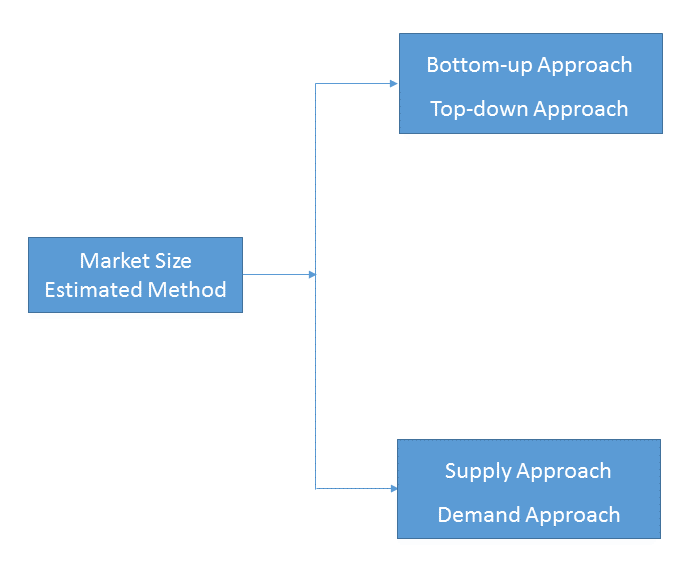
Bottom-up & top-down approach, supply & demand approach are the most important method which is used by HDIN Research to estimate the market size.
1)Top-down & Bottom-up Approach
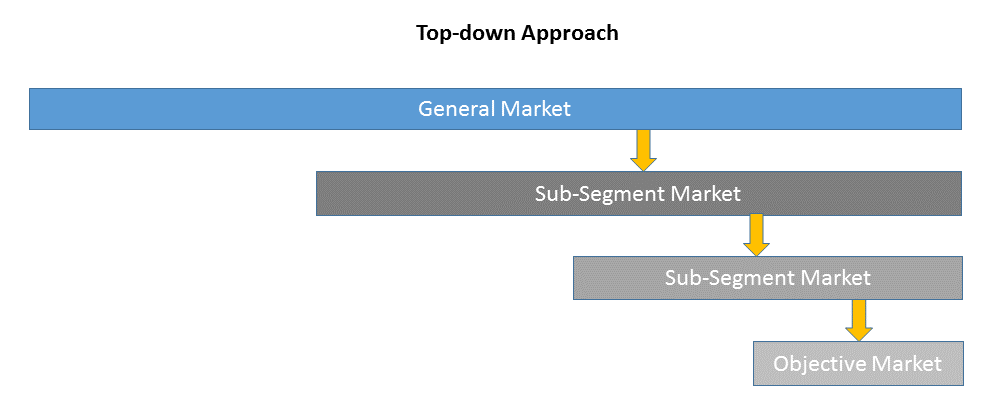
Top-down approach uses a general market size figure and determines the percentage that the objective market represents.
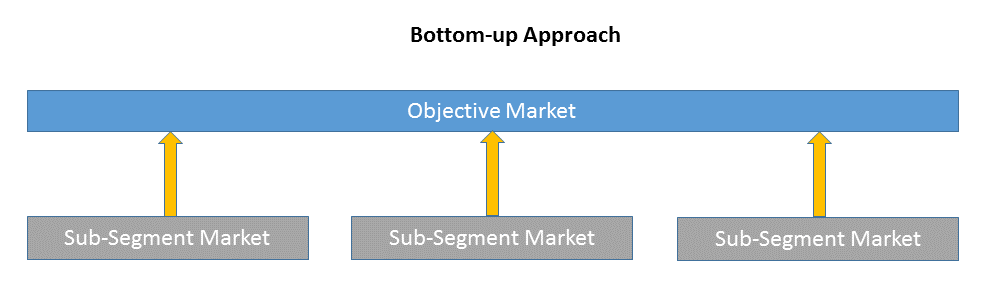
Bottom-up approach size the objective market by collecting the sub-segment information.
2)Supply & Demand Approach
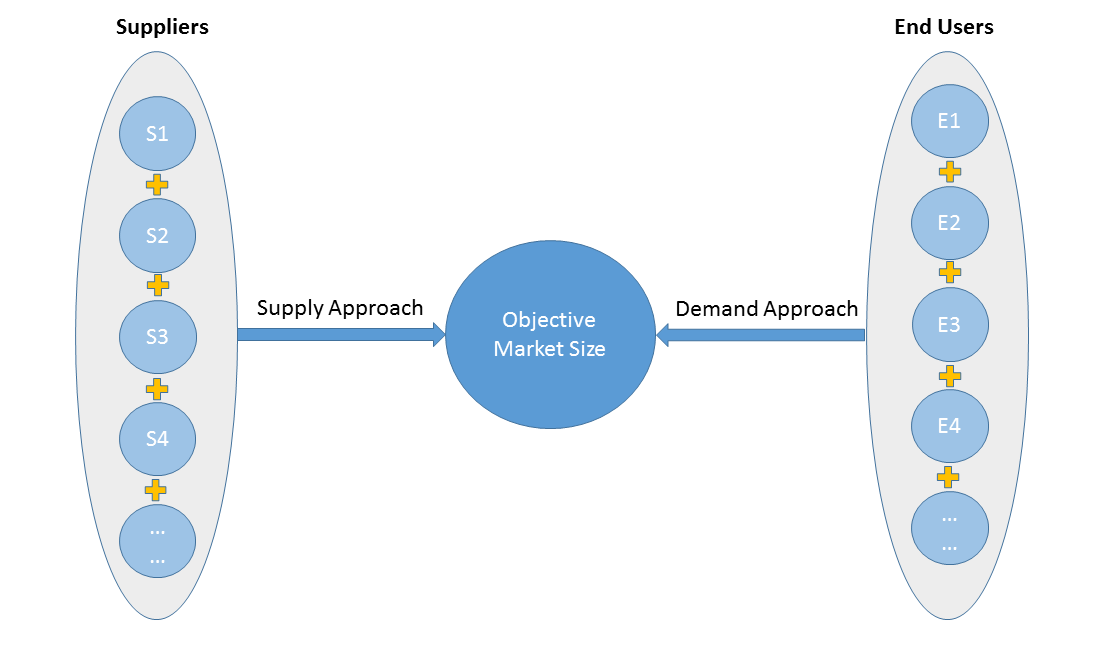
Supply approach is based on assessments of the size of each competitor supplying the objective market.
Demand approach combine end-user data within a market to estimate the objective market size. It is sometimes referred to as bottom-up approach.
- Forecasting Methodology
- Numerous factors impacting the market trend are considered for forecast model:
- New technology and application in the future;
- New project planned/under contraction;
- Global and regional underlying economic growth;
- Threatens of substitute products;
- Industry expert opinion;
- Policy and Society implication.
- Analysis Tools
1)PEST Analysis
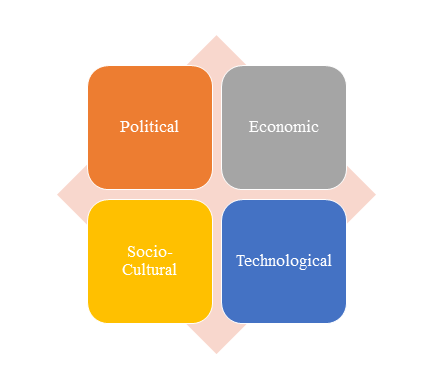
PEST Analysis is a simple and widely used tool that helps our client analyze the Political, Economic, Socio-Cultural, and Technological changes in their business environment.
- Benefits of a PEST analysis:
- It helps you to spot business opportunities, and it gives you advanced warning of significant threats.
- It reveals the direction of change within your business environment. This helps you shape what you’re doing, so that you work with change, rather than against it.
- It helps you avoid starting projects that are likely to fail, for reasons beyond your control.
- It can help you break free of unconscious assumptions when you enter a new country, region, or market; because it helps you develop an objective view of this new environment.
2)Porter’s Five Force Model Analysis
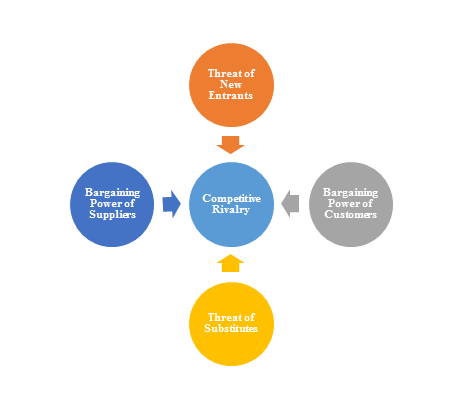
The Porter’s Five Force Model is a tool that can be used to analyze the opportunities and overall competitive advantage. The five forces that can assist in determining the competitive intensity and potential attractiveness within a specific area.
- Threat of New Entrants: Profitable industries that yield high returns will attract new firms.
- Threat of Substitutes: A substitute product uses a different technology to try to solve the same economic need.
- Bargaining Power of Customers: the ability of customers to put the firm under pressure, which also affects the customer's sensitivity to price changes.
- Bargaining Power of Suppliers: Suppliers of raw materials, components, labor, and services (such as expertise) to the firm can be a source of power over the firm when there are few substitutes.
- Competitive Rivalry: For most industries the intensity of competitive rivalry is the major determinant of the competitiveness of the industry.
3)Value Chain Analysis
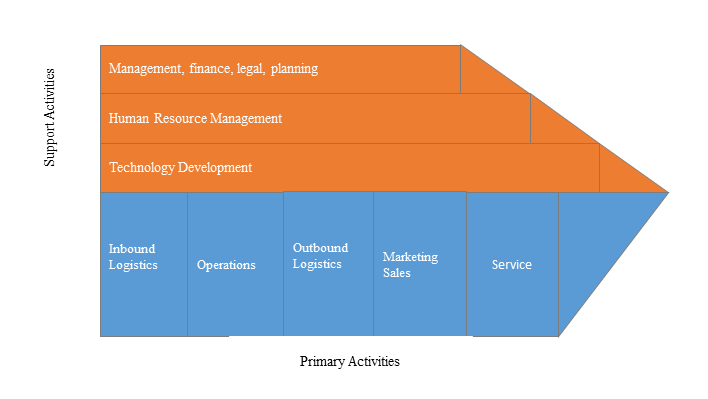
Value chain analysis is a tool to identify activities, within and around the firm and relating these activities to an assessment of competitive strength. Value chain can be analyzed by primary activities and supportive activities. Primary activities include: inbound logistics, operations, outbound logistics, marketing & sales, service. Support activities include: technology development, human resource management, management, finance, legal, planning.
4)SWOT Analysis
SWOT analysis is a tool used to evaluate a company's competitive position by identifying its strengths, weaknesses, opportunities and threats. The strengths and weakness is the inner factor; the opportunities and threats are the external factor. By analyzing the inner and external factors, the analysis can provide the detail information of the position of a player and the characteristics of the industry.
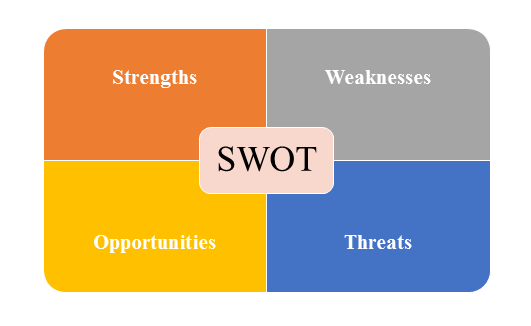
- Strengths describe what the player excels at and separates it from the competition
- Weaknesses stop the player from performing at its optimum level.
- Opportunities refer to favorable external factors that the player can use to give it a competitive advantage.
- Threats refer to factors that have the potential to harm the player.
- Data Sources
| Primary Sources | Secondary Sources |
|---|---|
| Face to face/Phone Interviews with market participants, such as: Manufactures; Distributors; End-users; Experts. Online Survey |
Government/International Organization Data: Annual Report/Presentation/Fact Book Internet Source Information Industry Association Data Free/Purchased Database Market Research Report Book/Journal/News |