Global Fastener Market Analysis & Forecast 2026-2031
- Single User License (1 Users) $ 3,500
- Team License (2~5 Users) $ 4,500
- Corporate License (>5 Users) $ 5,500
The global fastener market size is valued at an estimated 96-116 billion USD in 2026 with a compound annual growth rate of 3.2%-4.4% through 2031. This expansion is decoupled across traditional volume lines. While standard structural carbon steel variants face localized overcapacity and continuous margin erosion, capital is rapidly reallocating toward custom-engineered, mission-critical joining solutions. While carbon and low-alloy steel variants still represent 80% to 85% of physical volume consumption across global industry, the profit pool is consolidating within high-strength metallurgical formulations (Classes 10.9, 12.9, and 14.9), corrosion-resistant austenitic stainless steels (AISI 304/A2-70, AISI 316/A4-80), high-temperature non-ferrous superalloys (Inconel 718, A286, Ti-6Al-4V), and specialized engineered thermoplastics.
Demand architecture is undergoing a split. On one side, high-volume automotive manufacturing—accounting for 30% to 35% of total fastener consumption—faces mixed platform demands as the rebalancing between battery electric vehicles and internal combustion platforms shifts component engineering profiles. Concurrently, narrow-body commercial aerospace delivery backlogs and fleet engine overhauls are driving double-digit demand expansions for superalloy airframe and turbine fasteners. In parallel, infrastructure renewal across rail transportation networks and offshore renewable utility assets requires high-integrity fatigue life and advanced corrosion barriers, insulating tier-one producers from baseline raw material cyclicality.
REGIONAL & MAJOR COUNTRY DYNAMICS
● North America
The market environment in the United States and Canada is shaped by elevated demand across commercial aerospace backlogs, localized civil infrastructure replacement, and fleet renewal in heavy-duty logistics. Conversely, domestic automotive fastener demand has encountered volatility due to shifting Original Equipment Manufacturer (OEM) production mixes between electric vehicles and traditional internal combustion platforms, coupled with interest-rate friction in residential construction. Trade policy represents a key operational determinant. Escalated tariffs under Section 232 and Section 301 have increased the landed cost of imported cold-drawn wire and standard fixings, driving supply chain reshoring and price renegotiation cycles. Mexico continues to secure market share under the United States-Mexico-Canada Agreement (USMCA) regional value content rules, with major international manufacturers establishing localized cold-heading and distribution capacity in northern industrial corridors to supply nearshored automotive assembly hubs.
● Asia-Pacific
The Asia-Pacific region maintains absolute volume dominance and sustained by comprehensive industrial supply chains, expansive high-speed transport infrastructure commitments, and manufacturing density.
China maintains its role as the global volume leader. Customs trade flows indicate total outbound fastener exports exceeded 6.2 million metric tons in 2025, yielding approximately 11.92 billion USD. While domestic standard fastener production experiences margin compression due to capacity saturation, industrial upgrading initiatives are driving tier-one domestic players to re-engineer capacity toward high-strength railway assemblies, ultra-high-voltage transmission fasteners, and localized automotive powertrain hardware.
Taiwan, China, historically recognized for its dense concentration of export manufacturing across the Kaohsiung and Tainan clusters, faces margin pressures. Suppliers are responding to low-cost regional export competition, domestic environmental compliance mandates, and Western interest rate levels by pivoting from generic hardware into certified aerospace fixings, medical fastening systems, and high-strength automotive chassis assemblies.
Japan functions as an advanced precision manufacturing center characterized by near-zero defect operational standards and proprietary metallurgical forming processes. Consumption is tightly integrated with domestic automotive OEMs and precision construction machinery builders, emphasizing miniature electronic fasteners and vibration-resistant threaded systems.
The Republic of Korea operates as a highly consolidated automotive-aligned fastener manufacturing base. Domestic producers capitalize on mature supply agreements with domestic automotive groups and capture commercial advantages across North American and European markets through bilateral free trade frameworks.
Southeast Asia, particularly Malaysia, Vietnam, Thailand, and Indonesia, acts as a primary landing ground for diversified industrial capital. Operations across the region benefit from structural supply chain realignment, although operations in Indonesia remain heavily bound by strict domestic component value requirements (TKDN) that dictate localized manufacturing allocations.
India expansion is supported by capital investments under national industrialization programs, widespread railway modernizations, and escalating demand for heavy construction machinery and commercial transport hardware.
● Europe
Central and Western Europe, specifically Germany, faces structural operational headwinds resulting from elevated baseline industrial energy tariffs, domestic automotive production restructuring, and sluggish regional economic indicators. Conversely, Southern European manufacturing hubs have demonstrated resilience, aided by strong aerospace component fabrication, infrastructure investment, and targeted consolidation. European operations are heavily regulated by decarbonization legislation, including the Carbon Border Adjustment Mechanism (CBAM) and corporate supply chain reporting directives, compelling manufacturers to invest heavily in low-carbon green wire rod feedstock and non-electrolytic surface treatments.
● South America
The South American market is anchored by natural resource sectors, extensive agricultural equipment demand, and public civil works across Brazil, Colombia, and Chile. Top-line revenues are influenced by underlying currency depreciation and regional inflation, which compress real margin yields for processors reliant on imported specialty alloy wire rods.
● Middle East & Africa
Consumption patterns in the Gulf Cooperation Council economies are stimulated by substantial civil engineering megaprojects, solar photovoltaic installations, and industrial diversification initiatives requiring high-grade corrosion-resistant fixings and concrete anchoring arrays. However, broader market performance has been hindered by persistent logistical disruptions along maritime transit lanes through the Red Sea and Suez Canal. The resulting circumnavigation of southern Africa has lengthened shipping timelines by 14 to 25 days, creating regional inventory misallocations and ocean freight rate spikes that directly affect imports from Asian manufacturing centers.
GLOBAL POLICY, TARIFF & REGULATORY ARCHITECTURE
The global industrial fastener sector operates within an increasingly restrictive regulatory matrix defined by trade tariffs, mandatory decarbonization directives, and domestic production mandates.
● Trade Protectionism and Tariffs
Global trade lanes are fragmented by selective trade remedies designed to protect domestic basic metal transformation industries.
- United States Section 232 Actions: Adjustments to Section 232 tariffs on steel and aluminum variants increased tariff rates on specified steel product lines up to 50%. While certain downstream fastener product categories escape direct import categorization depending on Harmonized Tariff Schedule lines, the policy has altered domestic raw material pricing across North American wire drawing and cold-heading operations, widening the cost spread against offshore conversion costs.
- United States Section 301 and Reciprocal Duties: Sustained Section 301 punitive tariffs of up to 95% on selected Chinese-origin fasteners have fundamentally diverted trade patterns. North American procurement strategies increasingly require phased relocations of final conversion capacity away from single-source manufacturing footprints to Southeast Asia, India, and Mexico.
- Uyghur Forced Labor Prevention Act (UFLPA): Customs audit regimes impose documentation mandates covering the raw material chain of custody. Importers must trace the exact provenance of raw iron ore, scrap, bauxite, and wire rods to confirm an absence of inputs from restricted regions, resulting in strict supply chain verification protocols.
- European Union Anti-Dumping Measures: The continuation of punitive anti-dumping duties on specified iron and steel fasteners manufactured in mainland China continues to direct European purchasing toward alternative sourcing locations in Taiwan, China, Vietnam, and Malaysia.
● Environmental, Carbon, and Chemical Directives
Decarbonization policies are shifting from voluntary reporting structures to binding fiscal instruments.
- EU Carbon Border Adjustment Mechanism (CBAM): Following the conclusion of the transition period in late 2025, the entry into force of the permanent CBAM financial surrender mechanism requires European importers of carbon steel, stainless steel, and aluminum fasteners (classified under Combined Nomenclature heading 7318) to purchase and surrender CBAM certificates reflecting direct and indirect carbon emissions embedded during production. This policy forces international wire drawing mills and cold-forging facilities to adopt verified carbon footprint tracking or face margin-eroding border taxes.
- Corporate Sustainability Due Diligence and Reporting Directives (CSRD / ESRS): European fastener manufacturers and integrated distributors must systematically audit and report Scope 1, Scope 2, and upstream Scope 3 greenhouse gas footprints. Because basic rolled wire rod procurement accounts for upwards of 90% to 95% of an industrial fastener's total cradle-to-gate carbon profile, tier-one producers are under contractual pressure from OEMs to secure scrap-based electric arc furnace (EAF) or hydrogen-reduced iron feedstock.
- Chemical Directives (RoHS and REACH): Revisions to EU directives 2011/65/EU and 2015/863/EU strictly prohibit trace inclusions of hexavalent chromium, lead, and cadmium in anti-corrosion surface treatments, mandating universal conversion toward non-electrolytic zinc flake dip-spin systems and specialized passivation chemistry.
● Industrial Localization and Structural Subsidies
- United States Buy America Mandates: Domestic component minimums embedded in federally supported infrastructure, municipal water rehabilitation, and clean energy grid initiatives require melting, coating, and forming operations to occur entirely within domestic borders, incentivizing international capital allocations toward onshore US manufacturing facilities.
- Electrification Strategy Modifications: Policy adjustments in the United States and Europe regarding tailpipe carbon rules and the recalibration of consumer incentives have led multiple automotive OEMs to decelerate pure battery-electric production targets in favor of hybrid and internal combustion vehicle architectures. This shift has altered multi-year tooling allocations for specialty battery enclosure fasteners back toward traditional engine and transmission fasteners.
- Regional Industrial Support Policies: Initiatives such as Indonesia's Tingkat Komponen Dalam Negeri (TKDN) enforce high local content rules across rolling stock and automotive programs. In parallel, modernization initiatives in Taiwan, China, support investments in automated inspection systems, energy-efficient cold formers, and high-purity alloy formulations to counter commodity-grade price competition.
SUPPLY CHAIN & VALUE CHAIN ARCHITECTURE
The industrial fastener value chain functions as an interconnected, multi-tier manufacturing process spanning basic mineral extraction to precision line-side robotic assembly.
● Upstream Transformation: Raw Materials and Consumables
The base of the value chain is governed by primary metallurgy. Iron ore, bauxite, nickel, and copper are smelted into high-integrity billets and subsequently hot-rolled into coiled wire rods. Special steel wire manufacturers dictate the metallurgical parameters necessary for cold-forming:
- Material Sourcing Dynamics: Basic wire rod accounts for 60% to 70% of total fastener production cost. Pricing volatility directly impacts gross margin performance if indexing clauses are absent from downstream master service agreements.
- Tooling and Chemical Inputs: Operational throughput relies on precision upstream tooling, including ultra-hard tungsten carbide cold-heading dies, high-speed thread-rolling flat and cylindrical dies, spheroidizing atmosphere gases, phosphate carrier compounds, and specialized quenching oils.
● Midstream Precision Manufacturing and Surface Engineering
The transformation of rolled wire rod into calibrated industrial fasteners requires rigorous metallurgical conditioning and mechanical deformation:
- Pre-Treatment and Spheroidizing: Coiled wire rod undergoes chemical descaling via acid pickling, followed by phosphate conversion coating to create a dry lubricant carrier interface. The steel is heat-treated within bell-type spheroidizing annealing furnaces to alter carbide microstructures into uniform spherical configurations, minimizing mechanical hardness and maximizing the plastic deformation capacity of the core. The material is then cold-drawn through tungsten carbide dies to calibrated wire diameters.
- Primary Forming Mechanics: For standard and high-volume custom hardware, cold heading (cold forging) dominates. Multi-station cold-forming headers exert high mechanical forces across successive dies at ambient temperatures, rearranging the internal grain structure along component contours without cutting or fracturing metal fibers. Hot forging is reserved for large dimensional profiles (diameters exceeding M30) or temperature-resistant aerospace superalloys, such as Inconel 718 and titanium, where thermal induction reduces mechanical yield stress.
- Secondary Geometry Transformation: Complex non-standard configurations undergo secondary high-speed CNC turning, slotting, eccentric shoulder shaving, or deep-hole drilling to achieve tolerances impossible through heading alone.
- Thread Rolling: Rather than machining or cutting threads, external threads are generated through cold plastic deformation between reciprocating flat dies or rotating cylindrical dies. This thread-rolling process compresses the grain flow continuously across thread crests and roots, conferring superior fatigue limits and shear strength. Internal threading on structural nuts is executed via high-speed synchronized tapping.
- Thermal Heat Treatment: The component achieves its mechanical strength profile inside continuous mesh-belt atmosphere furnaces. Quenching and tempering cycles determine tensile capability, hardness, and yield strength, converting soft cold-headed components into Class 8.8, 10.9, 12.9, or 14.9 structural fasteners.
- Advanced Surface Engineering: Fasteners undergo surface applications to prevent atmospheric and galvanic corrosion. Standard electro-galvanizing is increasingly superseded by non-electrolytic zinc flake coatings (such as Geomet or Dacromet), which provide salt-spray resistance exceeding 1,000 to 1,500 hours without the risk of hydrogen embrittlement. Powder sherardizing is utilized for heavy rail clips to establish deep, abrasion-resistant zinc-iron diffusion layers. Pre-applied micro-encapsulated reactive adhesives or nylon patches are deployed onto thread segments to resist vibration-induced loosening.
- Zero-Defect Optical Screening: To meet the parts-per-million defect mandates of the automotive and aerospace industries, complete batches pass through continuous multi-camera optical sorting lines, verifying thread pitches, dimensional concentricity, and head integrity.
● Downstream Integration, Assembly, and Lifecycle Management
The terminal tier of the value chain transitions from physical hardware delivery toward integrated logistics and automated production deployment:
- Automated Installation Integration: Fasteners are fed directly into high-speed automated assembly tools, including robotic torque-controlled screwdrivers, automatic orbital riveting heads, and hydraulic tensioning devices across assembly plants.
- Vendor-Managed Inventory (VMI) and C-Parts Engineering: Operating margins migrate toward full-service logistics providers managing complete supply loops. By implementing weight-sensing IoT bins and automated RFID Kanban systems directly on factory floors, logistics partners compress the administrative handling overhead associated with processing thousands of discrete small components.
- Maintenance, Overhaul, and Material Recycling: Critical operational sectors, notably commercial aviation and high-speed rail, demand structured fastener replacement intervals during heavy engine overhauls and permanent-way track rehabilitations. Worn fasteners are reclaimed and channeled into closed-loop electric arc furnace recycling streams to sustain industrial circularity requirements.
DOWNSTREAM MARKET APPLICATION PROFILE
Industrial fastener demand is distributed across primary global application sectors:
● Automotive
Representing 30% to 35% of total fastener production, automotive manufacturing requires continuous cold-heading innovation. While the slowing adoption velocity of pure electric vehicle architectures in Western markets has stabilized baseline demand for conventional internal combustion engine fasteners (such as connecting rod and cylinder head bolts), electric powertrain architectures impose unique fastener specifications. Battery pack structural enclosures require hermetically sealed, liquid-tight fasteners to prevent moisture penetration, electrical isolation coatings to neutralize short-circuit hazards, and lightweight high-strength chassis fasteners capable of absorbing vertical shock dynamics up to 21g.
● Aerospace and Defense
The aerospace vertical operates under stringent quality qualification standards (AS9100, NADCAP) and supplier certifications. Global commercial airliner delivery backlogs extending past a decade, coupled with high flight-hour accumulation on operating fleets, are accelerating the consumption of critical fasteners. Demand is heavily weighted toward high-temperature engine turbine studs, fuselage titanium blind fasteners, and structural lockbolts manufactured from Inconel, Waspaloy, and Ti-6Al-4V, driven by engine maintenance overhauls and narrow-body airframe production ramp-ups.
● Renewable Energy
Decarbonization projects support sustained demand across three primary energy segments:
- Wind Energy: Utility-scale wind installations require high-tensile Class 10.9 and 12.9 tower flange bolts, heavy pre-stressed foundation anchor cages, and blade-root embedded connection studs engineered to withstand multidirectional fatigue stresses and offshore marine environments.
- Solar Photovoltaic: Solar tracking frames require massive volumes of austenitic stainless steel (AISI 304 and 316) double-ended threaded rods, serrated flange nuts, and tamper-proof mechanical fasteners designed for multi-decade exterior exposure without corrosion failure.
- Hydrogen Production: Electrolyzer stack designs require specialized disc springs and continuous tension tie-rods that deliver uniform compression across proton exchange membrane (PEM) and alkaline cell assemblies under extreme thermal cycling.
● Railway and High-Speed Rail
High-speed rail and heavy-haul transit networks require precision track-fastening assemblies. Operating track segments subject fasteners to dynamic vibrational resonance, demanding certified elastic rail clips, insulated track bolts, and composite baseplate anchorages. Beyond new line construction, structural replacement and maintenance cycles for track clips and anchor bolts along mature high-speed routes represent steady, high-margin revenue streams.
● Consumer Electronics and Computing Hardware
Driven by data center expansions and hardware updates across consumer electronics, this sector requires miniature and ultra-precision cold-formed screws (M0.6 to M1.2), captive panel hardware, and precision CNC components. Liquid-cooled AI server racks increasingly utilize specialized, fluid-tight quick-release couplings and micro-fasteners capable of resisting localized thermal vibration.
● Construction and Civil Infrastructure
Anchored by structural steel assembly, commercial framing, and infrastructure renovation, this sector consumes concrete expansion anchors, direct powder-actuated drive pins, heavy-hex structural bolt pairs, and exterior insulation fixings compliant with regional seismic and wind-load codes.
● General Industrial Machinery and Heavy Equipment
Encompassing agricultural equipment, earthmoving machinery, and industrial automation, this vertical relies on Class 10.9 and 12.9 heavy-duty track shoe bolts, high-pressure hydraulic flange studs, and anti-vibration locking systems engineered to endure abrasive and shock-heavy working conditions.
● Specialized Emerging Technologies
Emerging segments include the humanoid robotics sector, which requires specialized planetary roller screws and micro-precision actuator tie-rods, and the electric vertical takeoff and landing (eVTOL) sector, which requires lightweight composite-to-metal fastening configurations.
STRATEGIC OPPORTUNITIES & CRITICAL INDUSTRY CHALLENGES
The operational landscape presents a clear divide between high-margin engineered applications and commoditized volume processing.
● Strategic Growth Opportunities
- Commercial Aerospace Engine and MRO Expansion: Historical order backlogs for commercial narrow-body passenger aircraft, combined with substantial increases in commercial engine shop visits, create sustained demand for high-value fasteners. Aircraft fleet utilization and CFM LEAP engine production acceleration drive high-margin replacement demand for titanium fasteners and nickel-based superalloy locking nuts.
- High-Speed Rail Fatigue Replacement Cycles: High-speed rail networks require continuous track maintenance. As high-speed track segments surpass 10 to 15 years of continuous commercial service, track clips, tie bolts, and insulated rail fasteners reach fatigue thresholds, creating multi-year recurring procurement requirements for rail-certified suppliers.
- Renewable Energy and Marine Offshore Transition: Sustained investments in offshore wind installations and large-scale solar arrays demand specialized, highly engineered fastening hardware. Offshore wind turbine foundations require ultra-large diameter (M36-M72) corrosion-protected bolt assemblies, presenting significant market opportunities for hot-forging manufacturers possessing advanced zinc-flake and sherardizing coating certifications.
- Digitalized C-Parts Integration: Significant value creation exists beyond the physical component. By implementing IoT-enabled bin scales, RFID kanban sensors, and direct line-side inventory automation, full-service distributors and manufacturers can eliminate procurement inefficiencies for industrial OEMs, locking in multi-year service contracts and insulating themselves from generic unit-price competition.
- Advanced Precision Applications: Accelerating enterprise investments in high-performance computing and humanoid robotics create niche, high-value demand pools. High-precision planetary roller screws and zero-leakage micro-fasteners represent strategic growth avenues for precision manufacturers transitioning away from commoditized hardware.
● Critical Industry Challenges and Operational Risks
- Upstream Raw Material Volatility: Rolled carbon steel, stainless steel, and specialty alloy wire rods constitute the largest direct component of manufacturing costs. Rapid shifts in global scrap, iron ore, and alloying metal pricing exert immediate compression on gross operational margins when pass-through indexing agreements with downstream customers contain extended adjustment lag windows.
- Geopolitical Protectionism and Border Adjustments: The proliferation of cross-border trade friction, such as US Section 232 and 301 tariffs, anti-dumping duties, and the entry into force of the EU CBAM carbon border tax, complicates international supply chains. Small and mid-sized producers lacking multi-regional conversion facilities or certified carbon tracking methodologies face the loss of Western export market access.
- Powertrain Policy Fluctuations: Shifting corporate strategies among major global automotive manufacturers—characterized by scaled-back pure battery electric targets and revived investments in hybrid and internal combustion platforms—create capital allocation friction. Suppliers that invested heavily in dedicated battery-pack fastener lines must now balance their assets to support renewed demand for conventional mechanical fasteners.
- Structural Overcapacity in Commodity Segments: The rapid installation of multi-station cold formers across standard fastener clusters in mainland China and Southeast Asia has generated global oversupply in generic DIN and ISO standard bolts. This dynamic has depressed pricing and eroded the margins of smaller regional producers unable to transition into value-added, customer-engineered components.
- Maritime Logistics Vulnerability: Extended routing around southern Africa to circumvent Middle Eastern maritime transit disruptions continues to impose elongated lead times and freight surcharges on industrial supply chains. Exporters in Asia and India servicing assembly plants across North America and Europe face recurring working capital lockups and logistics volatility.
COMPANY PROFILES & COMPETITIVE POSITIONING
● North America Players: Illinois Tool Works Inc. (ITW), Stanley Black & Decker, Howmet Aerospace, Precision Castparts Corp (PCC), MacLean-Fogg, PennEngineering (PEM), Optimas OE Solutions LLC, Chicago Rivet & Machine Co., National Rivet & Manufacturing Co., Hanson Rivet & Supply Co. / OneMonroe, PIOLAX INC.
● Europe Players: Würth Group, KAMAX, EJOT, Vossloh, Böllhoff Group, Fischer Group, Keller & Kalmbach, Theo Förch GmbH & Co. KG, Berner, Agrati Group, Fontana Gruppo, SBE-VARVIT S.p.A., Brugola OEB Industriale S.p.A., ARaymond, LISI Group, Bossard Holding AG, SFS Group, Schwihag AG, voestalpine Railway Systems, Nedschroef, Bulten, Bergman & Beving AB, Hilti, Rawlplug S.A., Pandrol.
● Asia Players: Zhejiang Huayuan Automotive Technology Co. Ltd., Changhua Holding Group, Shanghai Detroit Precision Fastener Co. Ltd., Gem-Year Industrial Co. Ltd., Jiangsu Zhenjiang New Energy Equipment Co. Ltd., Shandong Tengda Fasten Tech. Co. Ltd., ZJK Industrial Co. Ltd., Aozhan Hardware Fastener Co. Ltd., Jiangsu Jiajie Special Screw Co. Ltd., Hunan Finework New Energy Technology, Tong Ming Enterprise Co., Ltd., Beijing Tieke Shougang Railway-Tech Co. Ltd., Hebei Yichen Industrial Group, CRCC Longchang Railway Equipment, Zhongyuan Lida Railway Track Technology Development, Zhejiang Ronnie Precision Machinery Co. Ltd., Chun Yu Group, TYCOONS GROUP Enterprise CO. Ltd., National Aerospace Fasteners Corporation (NAFCO), Hon Hai Precision Industry (Foxconn), Nifco Inc., Piolax, Saga Tekkohsho, Nitto Seiko, Yamashina Corporation, Amatei, Wakai & Co., Japan Power Fastening Co Ltd (JPF), Max Co., Lobtex, Yamato Trackwork System, Tetsudo Kiki Co. Ltd., Taeyang Metal Industrial Co. Ltd., JINHAP Co. Ltd., YM Co. Ltd., DONG AH Co. Ltd., S&W Corporation, Youngwoo Fasteners, Jeil Tacker Co. Ltd., Tong Herr Resources Berhad, Chin Well Holdings Berhad, PT. Garuda Metalindo Tbk, Sundram Fasteners Ltd., Gala Precision Engineering Ltd.
1.1 Executive Summary and Scope Definition ... 1
1.2 Research Methodology and Statistical Modeling Architecture ... 2
1.2.1 Primary Intelligence Gathering and Delphi Expert Panel Calibration ... 3
1.2.2 Secondary Data Syntheses, Top-Down Trade Flows and Econometric Modeling ... 4
1.2.3 Macroeconomic Assumptions and 2027-2031 Forecasting Parameters ... 5
1.3 Abbreviations, Unit Standards and Technical Taxonomy ... 6
Chapter 2 Global Fastener Market Executive Landscape and Macroeconomic Drivers ... 7
2.1 Global Industrial Fastener Ecosystem Evolution and 2026 Industry State ... 7
2.2 Macroeconomic Growth Drivers, Re-Industrialization and Infrastructure Megaprojects ... 9
2.3 Energy Transition, EV Lightweighting and Aerospace Fleet Expansion Dynamics ... 12
2.4 Key Regulatory Directives, RoHS/REACH Compliance and CBAM Carbon Tariffs ... 14
2.5 Global Fastener Market Size, Historical Trajectory (2021-2025) and Baseline (2026) ... 16
2.6 Long-Term Market Projections and Compound Annual Growth Drivers (2027-2031) ... 18
Chapter 3 Global Fastener Industry Value Chain and Manufacturing Process Analysis ... 19
3.1 Upstream Raw Material Sourcing Architecture and Metallurgical Price Volatility ... 19
3.2 Manufacturing Process Architecture and Tooling Innovation ... 24
3.3 Middle-Stream Distribution Channels, Smart Warehousing and Vendor-Managed Inventory (VMI) ... 29
3.4 Downstream Integration Hurdles, Assembly Automation and Quality Inspection Standards ... 31
Chapter 4 Global Fastener Market Breakdown by Material Composition ... 33
4.1 Carbon Steel & Low-Alloy Steel Fasteners: Structural Dominance and Cost Economics ... 33
4.2 Stainless Steel Fasteners: Corrosion Resistance and Extreme Environment Utility ... 39
4.3 Non-Ferrous Alloys Fasteners: High-Strength Titanium, Aluminum and Nickel Superalloys ... 42
4.4 Polymer & Engineered Plastic Fasteners: Lightweighting and Non-Conductive Solutions ... 45
Chapter 5 Global Fastener Market by Standardization vs. Custom Engineering ... 47
5.1 Standard Fasteners: Commodity Dynamics, Volume Economics and Pricing Pressures ... 47
5.2 Non-Standard and Custom-Engineered Fasteners: High-Margin Technical Partnerships ... 53
Chapter 6 Global Fastener Market Breakdown by Downstream Application Verticals ... 59
6.1 Automotive: Powertrain, Chassis, BIW and EV Battery Enclosures ... 59
6.2 Aerospace & Defense: High-Precision Shear Bolts, Blind Rivets and Engine Fasteners ... 62
6.3 Renewable Energy: Wind Turbine Foundation Bolts and Solar Tracker Mounting Kits ... 65
6.4 Railway & High-Speed Rail: Sleeper Screws, Baseplate Fastening and Joint Bars ... 68
6.5 Consumer Electronics & Computing Hardware: Micro Screws and Standoffs ... 70
6.6 Construction & Civil Infrastructure: Post-Tensioning Anchors, Structural Bolting ... 73
6.7 General Industrial Machinery & Heavy Construction Machinery ... 75
6.8 Other Specialized Verticals: Shipbuilding, Medical Devices and Agriculture Equipment ... 77
Chapter 7 Global Fastener International Trade, Tariff Architecture and Logistics ... 79
7.1 Global Trade Flow Mapping: Primary Sourcing Centers vs. Net Importers ... 79
7.2 Anti-Dumping Duties, Section 232 Tariffs and Regional Content Requirements ... 82
7.3 Nearshoring, Friend-Shoring and Supply Chain Decoupling Realities ... 85
7.4 Maritime Freight Volatility, Port Lead Times and Containerization Economics ... 88
7.5 Bilateral Trade Matrix: Bilateral Import-Export Balances across Key Geographies ... 90
Chapter 8 North America Fastener Market Analysis and Sourcing Networks ... 93
8.1 United States: Aerospace Reshoring, Automotive EV Sourcing and Infrastructure Bills ... 93
8.2 Mexico: Nearshoring Nexus, Maquiladora Automotive Cluster Expansion ... 99
8.3 Canada: Heavy Machinery, Mining Hardware and Energy Infrastructure Fasteners ... 104
Chapter 9 Europe Fastener Market Analysis and High-Precision Manufacturing Hubs ... 109
9.1 Germany: Automotive Tier-1 Backbone, Industrial Automation and Machine Tools ... 109
9.2 Italy: Cold-Forming Machinery Leadership and Specialized Industrial Fasteners ... 112
9.3 France: Aerospace Fastening Hubs and Rail Transportation Corridors ... 115
9.4 United Kingdom: Energy Infrastructure, Defense and Specialized Distribution ... 118
9.5 Spain: Automotive Assembly Supply Chains and Structural Solar Fastening ... 121
9.6 Poland, Sweden and Rest of Europe ... 124
Chapter 10 Asia-Pacific Fastener Market Analysis and Manufacturing Hubs ... 127
10.1 China: Global Export Foundry, High-Speed Rail Integration and Advanced Coating Upgrades ... 127
10.2 Japan: Ultra-High Precision Fasteners, Robotics and High-Spec Automotive Hardware ... 131
10.3 South Korea: Automotive, Heavy Shipbuilding and Semiconductor Equipment Sourcing ... 134
10.4 India: Sourcing Diversification Hub, Construction Boom and Railway Modernization ... 137
10.5 Taiwan (China): World Sourcing Capital for High-Grade Threaded Rods and Screws ... 140
10.6 Southeast Asia: Regional Industrial Parks and Automotive Assembly Nodes ... 144
Chapter 11 Latin America, Middle East and Africa Fastener Market Dynamics ... 149
11.1 Brazil: Agricultural Machinery, Automotive Platforms and Civil Construction ... 149
11.2 Saudi Arabia and United Arab Emirates: Megaproject Build-Outs and Energy Infrastructure ... 153
11.3 South Africa: Mining Fasteners, Railway Infrastructure and Heavy Equipment ... 157
Chapter 12 Global Fastener Competitive Landscape and Vendor Strategic Positioning ... 161
12.1 Industry Consolidation, Tier-1 M&A Activity and Horizontal Integration ... 161
12.2 Global Top 10 Vendor Market Share Analysis (2021-2026) ... 164
12.3 Strategic Group Mapping: Full-Line Suppliers vs. Application Specialists ... 167
Chapter 13 Corporate Intelligence: Global Multi-Industrial and Tier-1 Automotive Specialists ... 171
13.1 Illinois Tool Works Inc. (ITW) ... 171
13.1.1 Corporate Profile and Fastener Product Architecture ... 171
13.1.2 Strategic SWOT Assessment ... 172
13.1.3 Financial Metrics, Cost Dissection, Gross Margins and Market Share ... 173
13.2 Stanley Black & Decker ... 175
13.2.1 Corporate Profile and Fastener Product Architecture ... 175
13.2.2 Strategic SWOT Assessment ... 176
13.2.3 Financial Metrics, Cost Dissection, Gross Margins and Market Share ... 177
13.3 Hilti ... 179
13.3.1 Corporate Profile and Fastener Product Architecture ... 179
13.3.2 Strategic SWOT Assessment ... 180
13.3.3 Financial Metrics, Cost Dissection, Gross Margins and Market Share ... 181
13.4 SFS Group ... 183
13.4.1 Corporate Profile and Fastener Product Architecture ... 183
13.4.2 Strategic SWOT Assessment ... 184
13.4.3 Financial Metrics, Cost Dissection, Gross Margins and Market Share ... 185
13.5 ARaymond ... 187
13.5.1 Corporate Profile and Fastener Product Architecture ... 187
13.5.2 Strategic SWOT Assessment ... 188
13.5.3 Financial Metrics, Cost Dissection, Gross Margins and Market Share ... 189
13.6 Lisi ... 191
13.6.1 Corporate Profile and Fastener Product Architecture ... 191
13.6.2 Strategic SWOT Assessment ... 192
13.6.3 Financial Metrics, Cost Dissection, Gross Margins and Market Share ... 193
13.7 KAMAX ... 195
13.7.1 Corporate Profile and Fastener Product Architecture ... 195
13.7.2 Strategic SWOT Assessment ... 196
13.7.3 Financial Metrics, Cost Dissection, Gross Margins and Market Share ... 197
13.8 MacLean-Fogg ... 199
13.8.1 Corporate Profile and Fastener Product Architecture ... 199
13.8.2 Strategic SWOT Assessment ... 200
13.8.3 Financial Metrics, Cost Dissection, Gross Margins and Market Share ... 201
13.9 Agrati Group ... 203
13.9.1 Corporate Profile and Fastener Product Architecture ... 203
13.9.2 Strategic SWOT Assessment ... 204
13.9.3 Financial Metrics, Cost Dissection, Gross Margins and Market Share ... 205
13.10 Nifco Inc. ... 207
13.10.1 Corporate Profile and Fastener Product Architecture ... 207
13.10.2 Strategic SWOT Assessment ... 208
13.10.3 Financial Metrics, Cost Dissection, Gross Margins and Market Share ... 209
13.11 SBE-VARVIT S.p.A. ... 211
13.11.1 Corporate Profile and Fastener Product Architecture ... 211
13.11.2 Strategic SWOT Assessment ... 212
13.11.3 Financial Metrics, Cost Dissection, Gross Margins and Market Share ... 213
13.12 Piolax Inc. ... 215
13.12.1 Corporate Profile and Fastener Product Architecture ... 215
13.12.2 Strategic SWOT Assessment ... 216
13.12.3 Financial Metrics, Cost Dissection, Gross Margins and Market Share ... 217
13.13 Bulten ... 219
13.13.1 Corporate Profile and Fastener Product Architecture ... 219
13.13.2 Strategic SWOT Assessment ... 220
13.13.3 Financial Metrics, Cost Dissection, Gross Margins and Market Share ... 221
13.14 Chicago Rivet & Machine Co. ... 223
13.14.1 Corporate Profile and Fastener Product Architecture ... 223
13.14.2 Strategic SWOT Assessment ... 224
13.14.3 Financial Metrics, Cost Dissection, Gross Margins and Market Share ... 225
13.15 National Rivet & Manufacturing Co. ... 227
13.15.1 Corporate Profile and Fastener Product Architecture ... 227
13.15.2 Strategic SWOT Assessment ... 228
13.15.3 Financial Metrics, Cost Dissection, Gross Margins and Market Share ... 229
13.16 Saga Tekkohsho ... 231
13.16.1 Corporate Profile and Fastener Product Architecture ... 231
13.16.2 Strategic SWOT Assessment ... 232
13.16.3 Financial Metrics, Cost Dissection, Gross Margins and Market Share ... 233
13.17 Yamashina Corporation ... 235
13.17.1 Corporate Profile and Fastener Product Architecture ... 235
13.17.2 Strategic SWOT Assessment ... 236
13.17.3 Financial Metrics, Cost Dissection, Gross Margins and Market Share ... 237
13.18 Taeyang Metal Industrial Co. Ltd. ... 239
13.18.1 Corporate Profile and Fastener Product Architecture ... 239
13.18.2 Strategic SWOT Assessment ... 240
13.18.3 Financial Metrics, Cost Dissection, Gross Margins and Market Share ... 241
13.19 YM Co. Ltd. ... 243
13.19.1 Corporate Profile and Fastener Product Architecture ... 243
13.19.2 Strategic SWOT Assessment ... 244
13.19.3 Financial Metrics, Cost Dissection, Gross Margins and Market Share ... 245
13.20 JINHAP Co. Ltd. ... 247
13.20.1 Corporate Profile and Fastener Product Architecture ... 247
13.20.2 Strategic SWOT Assessment ... 248
13.20.3 Financial Metrics, Cost Dissection, Gross Margins and Market Share ... 249
Chapter 14 Corporate Intelligence: Global Industrial Distribution, C-Parts Management and Multi-Market Producers ... 251
14.1 Bossard Holding AG ... 251
14.1.1 Corporate Profile and Fastener Product Architecture ... 251
14.1.2 Strategic SWOT Assessment ... 252
14.1.3 Financial Metrics, Cost Dissection, Gross Margins and Market Share ... 253
14.2 Würth Group ... 255
14.2.1 Corporate Profile and Fastener Product Architecture ... 255
14.2.2 Strategic SWOT Assessment ... 256
14.2.3 Financial Metrics, Cost Dissection, Gross Margins and Market Share ... 257
14.3 Fontana Gruppo ... 259
14.3.1 Corporate Profile and Fastener Product Architecture ... 259
14.3.2 Strategic SWOT Assessment ... 260
14.3.3 Financial Metrics, Cost Dissection, Gross Margins and Market Share ... 261
14.4 Optimas OE Solutions LLC ... 263
14.4.1 Corporate Profile and Fastener Product Architecture ... 263
14.4.2 Strategic SWOT Assessment ... 264
14.4.3 Financial Metrics, Cost Dissection, Gross Margins and Market Share ... 265
14.5 EJOT ... 267
14.5.1 Corporate Profile and Fastener Product Architecture ... 267
14.5.2 Strategic SWOT Assessment ... 268
14.5.3 Financial Metrics, Cost Dissection, Gross Margins and Market Share ... 269
14.6 Zhejiang Huayuan Automotive Technology Co. Ltd. ... 271
14.6.1 Corporate Profile and Fastener Product Architecture ... 271
14.6.2 Strategic SWOT Assessment ... 272
14.6.3 Financial Metrics, Cost Dissection, Gross Margins and Market Share ... 273
14.7 Changhua Holding Group ... 275
14.7.1 Corporate Profile and Fastener Product Architecture ... 275
14.7.2 Strategic SWOT Assessment ... 276
14.7.3 Financial Metrics, Cost Dissection, Gross Margins and Market Share ... 277
14.8 Shanghai Detroit Precision Fastener Co. Ltd. ... 279
14.8.1 Corporate Profile and Fastener Product Architecture ... 279
14.8.2 Strategic SWOT Assessment ... 280
14.8.3 Financial Metrics, Cost Dissection, Gross Margins and Market Share ... 281
14.9 Gem-Year Industrial Co. Ltd. ... 283
14.9.1 Corporate Profile and Fastener Product Architecture ... 283
14.9.2 Strategic SWOT Assessment ... 284
14.9.3 Financial Metrics, Cost Dissection, Gross Margins and Market Share ... 285
14.10 Jiangsu Zhenjiang New Energy Equipment Co. Ltd. ... 287
14.10.1 Corporate Profile and Fastener Product Architecture ... 287
14.10.2 Strategic SWOT Assessment ... 288
14.10.3 Financial Metrics, Cost Dissection, Gross Margins and Market Share ... 289
14.11 PT. Garuda Metalindo Tbk ... 291
14.11.1 Corporate Profile and Fastener Product Architecture ... 291
14.11.2 Strategic SWOT Assessment ... 292
14.11.3 Financial Metrics, Cost Dissection, Gross Margins and Market Share ... 293
14.12 Sundram Fasteners Ltd. ... 295
14.12.1 Corporate Profile and Fastener Product Architecture ... 295
14.12.2 Strategic SWOT Assessment ... 296
14.12.3 Financial Metrics, Cost Dissection, Gross Margins and Market Share ... 297
14.13 PennEngineering ... 299
14.13.1 Corporate Profile and Fastener Product Architecture ... 299
14.13.2 Strategic SWOT Assessment ... 300
14.13.3 Financial Metrics, Cost Dissection, Gross Margins and Market Share ... 301
14.14 Nedschroef ... 303
14.14.1 Corporate Profile and Fastener Product Architecture ... 303
14.14.2 Strategic SWOT Assessment ... 304
14.14.3 Financial Metrics, Cost Dissection, Gross Margins and Market Share ... 305
14.15 Vossloh ... 307
14.15.1 Corporate Profile and Fastener Product Architecture ... 307
14.15.2 Strategic SWOT Assessment ... 308
14.15.3 Financial Metrics, Cost Dissection, Gross Margins and Market Share ... 309
14.16 Böllhoff Group ... 311
14.16.1 Corporate Profile and Fastener Product Architecture ... 311
14.16.2 Strategic SWOT Assessment ... 312
14.16.3 Financial Metrics, Cost Dissection, Gross Margins and Market Share ... 313
14.17 Theo Förch GmbH & Co. KG ... 315
14.17.1 Corporate Profile and Fastener Product Architecture ... 315
14.17.2 Strategic SWOT Assessment ... 316
14.17.3 Financial Metrics, Cost Dissection, Gross Margins and Market Share ... 317
14.18 Berner ... 319
14.18.1 Corporate Profile and Fastener Product Architecture ... 319
14.18.2 Strategic SWOT Assessment ... 320
14.18.3 Financial Metrics, Cost Dissection, Gross Margins and Market Share ... 321
14.19 Keller & Kalmbach ... 323
14.19.1 Corporate Profile and Fastener Product Architecture ... 323
14.19.2 Strategic SWOT Assessment ... 324
14.19.3 Financial Metrics, Cost Dissection, Gross Margins and Market Share ... 325
14.20 Brugola OEB Industriale S.p.A. ... 327
14.20.1 Corporate Profile and Fastener Product Architecture ... 327
14.20.2 Strategic SWOT Assessment ... 328
14.20.3 Financial Metrics, Cost Dissection, Gross Margins and Market Share ... 329
Chapter 15 Corporate Intelligence: Construction, Anchoring, Heavy Rail and Infrastructure Specialists ... 331
15.1 Nitto Seiko ... 331
15.1.1 Corporate Profile and Fastener Product Architecture ... 331
15.1.2 Strategic SWOT Assessment ... 332
15.1.3 Financial Metrics, Cost Dissection, Gross Margins and Market Share ... 333
15.2 Hanson Rivet & Supply Co. / OneMonroe ... 335
15.2.1 Corporate Profile and Fastener Product Architecture ... 335
15.2.2 Strategic SWOT Assessment ... 336
15.2.3 Financial Metrics, Cost Dissection, Gross Margins and Market Share ... 337
15.3 DONG AH Co. Ltd. ... 339
15.3.1 Corporate Profile and Fastener Product Architecture ... 339
15.3.2 Strategic SWOT Assessment ... 340
15.3.3 Financial Metrics, Cost Dissection, Gross Margins and Market Share ... 341
15.4 Shandong Tengda Fasten Tech. Co. Ltd. ... 343
15.4.1 Corporate Profile and Fastener Product Architecture ... 343
15.4.2 Strategic SWOT Assessment ... 344
15.4.3 Financial Metrics, Cost Dissection, Gross Margins and Market Share ... 345
15.5 Gala Precision Engineering Ltd. ... 347
15.5.1 Corporate Profile and Fastener Product Architecture ... 347
15.5.2 Strategic SWOT Assessment ... 348
15.5.3 Financial Metrics, Cost Dissection, Gross Margins and Market Share ... 349
15.6 ZJK Industrial Co. Ltd. ... 351
15.6.1 Corporate Profile and Fastener Product Architecture ... 351
15.6.2 Strategic SWOT Assessment ... 352
15.6.3 Financial Metrics, Cost Dissection, Gross Margins and Market Share ... 353
15.7 S&W Corporation ... 355
15.7.1 Corporate Profile and Fastener Product Architecture ... 355
15.7.2 Strategic SWOT Assessment ... 356
15.7.3 Financial Metrics, Cost Dissection, Gross Margins and Market Share ... 357
15.8 Tong Herr Resources Berhad ... 359
15.8.1 Corporate Profile and Fastener Product Architecture ... 359
15.8.2 Strategic SWOT Assessment ... 360
15.8.3 Financial Metrics, Cost Dissection, Gross Margins and Market Share ... 361
15.9 Tong Ming Enterprise Co., Ltd. ... 363
15.9.1 Corporate Profile and Fastener Product Architecture ... 363
15.9.2 Strategic SWOT Assessment ... 364
15.9.3 Financial Metrics, Cost Dissection, Gross Margins and Market Share ... 365
15.10 Chun Yu Group ... 367
15.10.1 Corporate Profile and Fastener Product Architecture ... 367
15.10.2 Strategic SWOT Assessment ... 368
15.10.3 Financial Metrics, Cost Dissection, Gross Margins and Market Share ... 369
15.11 TYCOONS GROUP Enterprise CO. Ltd. ... 371
15.11.1 Corporate Profile and Fastener Product Architecture ... 371
15.11.2 Strategic SWOT Assessment ... 372
15.11.3 Financial Metrics, Cost Dissection, Gross Margins and Market Share ... 373
15.12 Aozhan Hardware Fastener Co. Ltd. ... 375
15.12.1 Corporate Profile and Fastener Product Architecture ... 375
15.12.2 Strategic SWOT Assessment ... 376
15.12.3 Financial Metrics, Cost Dissection, Gross Margins and Market Share ... 377
15.13 Jiangsu Jiajie Special Screw Co. Ltd. ... 379
15.13.1 Corporate Profile and Fastener Product Architecture ... 379
15.13.2 Strategic SWOT Assessment ... 380
15.13.3 Financial Metrics, Cost Dissection, Gross Margins and Market Share ... 381
15.14 Hunan Finework New Energy Technology ... 383
15.14.1 Corporate Profile and Fastener Product Architecture ... 383
15.14.2 Strategic SWOT Assessment ... 384
15.14.3 Financial Metrics, Cost Dissection, Gross Margins and Market Share ... 385
15.15 Bergman & Beving AB ... 387
15.15.1 Corporate Profile and Fastener Product Architecture ... 387
15.15.2 Strategic SWOT Assessment ... 388
15.15.3 Financial Metrics, Cost Dissection, Gross Margins and Market Share ... 389
15.16 Fischer Group ... 391
15.16.1 Corporate Profile and Fastener Product Architecture ... 391
15.16.2 Strategic SWOT Assessment ... 392
15.16.3 Financial Metrics, Cost Dissection, Gross Margins and Market Share ... 393
15.17 Amatei ... 395
15.17.1 Corporate Profile and Fastener Product Architecture ... 395
15.17.2 Strategic SWOT Assessment ... 396
15.17.3 Financial Metrics, Cost Dissection, Gross Margins and Market Share ... 397
15.18 Wakai & Co. ... 399
15.18.1 Corporate Profile and Fastener Product Architecture ... 399
15.18.2 Strategic SWOT Assessment ... 400
15.18.3 Financial Metrics, Cost Dissection, Gross Margins and Market Share ... 401
15.19 Japan Power Fastening Co Ltd (JPF) ... 403
15.19.1 Corporate Profile and Fastener Product Architecture ... 403
15.19.2 Strategic SWOT Assessment ... 404
15.19.3 Financial Metrics, Cost Dissection, Gross Margins and Market Share ... 405
15.20 Max Co. ... 407
15.20.1 Corporate Profile and Fastener Product Architecture ... 407
15.20.2 Strategic SWOT Assessment ... 408
15.20.3 Financial Metrics, Cost Dissection, Gross Margins and Market Share ... 409
Chapter 16 Corporate Intelligence: Aerospace, Rail Infrastructure and Precision Component Leaders ... 411
16.1 Lobtex ... 411
16.1.1 Corporate Profile and Fastener Product Architecture ... 411
16.1.2 Strategic SWOT Assessment ... 412
16.1.3 Financial Metrics, Cost Dissection, Gross Margins and Market Share ... 413
16.2 Youngwoo Fasteners ... 415
16.2.1 Corporate Profile and Fastener Product Architecture ... 415
16.2.2 Strategic SWOT Assessment ... 416
16.2.3 Financial Metrics, Cost Dissection, Gross Margins and Market Share ... 417
16.3 Jeil Tacker Co. Ltd. ... 419
16.3.1 Corporate Profile and Fastener Product Architecture ... 419
16.3.2 Strategic SWOT Assessment ... 420
16.3.3 Financial Metrics, Cost Dissection, Gross Margins and Market Share ... 421
16.4 Chin Well Holdings Berhad ... 423
16.4.1 Corporate Profile and Fastener Product Architecture ... 423
16.4.2 Strategic SWOT Assessment ... 424
16.4.3 Financial Metrics, Cost Dissection, Gross Margins and Market Share ... 425
16.5 Rawlplug S.A. ... 427
16.5.1 Corporate Profile and Fastener Product Architecture ... 427
16.5.2 Strategic SWOT Assessment ... 428
16.5.3 Financial Metrics, Cost Dissection, Gross Margins and Market Share ... 429
16.6 Howmet Aerospace ... 431
16.6.1 Corporate Profile and Fastener Product Architecture ... 431
16.6.2 Strategic SWOT Assessment ... 432
16.6.3 Financial Metrics, Cost Dissection, Gross Margins and Market Share ... 433
16.7 Precision Castparts Corp (PCC) ... 435
16.7.1 Corporate Profile and Fastener Product Architecture ... 435
16.7.2 Strategic SWOT Assessment ... 436
16.7.3 Financial Metrics, Cost Dissection, Gross Margins and Market Share ... 437
16.8 National Aerospace Fasteners Corporation (NAFCO) ... 439
16.8.1 Corporate Profile and Fastener Product Architecture ... 439
16.8.2 Strategic SWOT Assessment ... 440
16.8.3 Financial Metrics, Cost Dissection, Gross Margins and Market Share ... 441
16.9 Beijing Tieke Shougang Railway-Tech Co. Ltd. ... 443
16.9.1 Corporate Profile and Fastener Product Architecture ... 443
16.9.2 Strategic SWOT Assessment ... 444
16.9.3 Financial Metrics, Cost Dissection, Gross Margins and Market Share ... 445
16.10 Hebei Yichen Industrial Group ... 447
16.10.1 Corporate Profile and Fastener Product Architecture ... 447
16.10.2 Strategic SWOT Assessment ... 448
16.10.3 Financial Metrics, Cost Dissection, Gross Margins and Market Share ... 449
16.11 Pandrol ... 451
16.11.1 Corporate Profile and Fastener Product Architecture ... 451
16.11.2 Strategic SWOT Assessment ... 452
16.11.3 Financial Metrics, Cost Dissection, Gross Margins and Market Share ... 453
16.12 Schwihag AG ... 455
16.12.1 Corporate Profile and Fastener Product Architecture ... 455
16.12.2 Strategic SWOT Assessment ... 456
16.12.3 Financial Metrics, Cost Dissection, Gross Margins and Market Share ... 457
16.13 CRCC Longchang Railway Equipment ... 459
16.13.1 Corporate Profile and Fastener Product Architecture ... 459
16.13.2 Strategic SWOT Assessment ... 460
16.13.3 Financial Metrics, Cost Dissection, Gross Margins and Market Share ... 461
16.14 Zhongyuan Lida Railway Track Technology Development ... 463
16.14.1 Corporate Profile and Fastener Product Architecture ... 463
16.14.2 Strategic SWOT Assessment ... 464
16.14.3 Financial Metrics, Cost Dissection, Gross Margins and Market Share ... 465
16.15 Hon Hai Precision Industry ... 467
16.15.1 Corporate Profile and Fastener Product Architecture ... 467
16.15.2 Strategic SWOT Assessment ... 468
16.15.3 Financial Metrics, Cost Dissection, Gross Margins and Market Share ... 469
16.16 Zhejiang Ronnie Precision Machinery Co. Ltd. ... 471
16.16.1 Corporate Profile and Fastener Product Architecture ... 471
16.16.2 Strategic SWOT Assessment ... 472
16.16.3 Financial Metrics, Cost Dissection, Gross Margins and Market Share ... 473
16.17 voestalpine Railway Systems ... 475
16.17.1 Corporate Profile and Fastener Product Architecture ... 475
16.17.2 Strategic SWOT Assessment ... 476
16.17.3 Financial Metrics, Cost Dissection, Gross Margins and Market Share ... 477
16.18 Yamato Trackwork System ... 479
16.18.1 Corporate Profile and Fastener Product Architecture ... 479
16.18.2 Strategic SWOT Assessment ... 480
16.18.3 Financial Metrics, Cost Dissection, Gross Margins and Market Share ... 481
16.19 Tetsudo Kiki Co. Ltd. ... 483
16.19.1 Corporate Profile and Fastener Product Architecture ... 483
16.19.2 Strategic SWOT Assessment ... 484
16.19.3 Financial Metrics, Cost Dissection, Gross Margins and Market Share ... 485
Table 2 Macroeconomic Assumptions and Industrial Output Growth Rates (2021-2031) ... 5
Table 3 Global Fastener Market Revenue and Volume Breakdown (2021-2031) ... 17
Table 4 Raw Material Price Indices for CHQ Steel, Stainless Wire and Advanced Polymers (2021-2026) ... 20
Table 5 Comparison of Fastener Forming Technologies: Cold Heading, Hot Forging, Machining ... 25
Table 6 Global Fastener Market Size by Material Composition (2021-2031) ... 34
Table 7 Global Carbon & Low-Alloy Steel Fastener Revenue by Tensile Grade (2021-2031) ... 36
Table 8 Global Stainless Steel Fastener Market by Alloy Series (2021-2031) ... 39
Table 9 Global Non-Ferrous Alloys Fastener Revenue by Metal Base (2021-2031) ... 42
Table 10 Global Polymer & Engineered Plastic Fastener Market by Resin Type (2021-2031) ... 45
Table 11 Global Fastener Market Size by Standardization Tier (2021-2031) ... 48
Table 12 Global Standard Fastener Shipments by Metric and Imperial Specification (2021-2031) ... 50
Table 13 Global Non-Standard Engineered Fastener Revenue by Client Sector (2021-2031) ... 54
Table 14 Global Fastener Market Breakdown by Downstream Application (2021-2031) ... 60
Table 15 Automotive Fastener Market Breakdown by Vehicle Sub-System (2021-2031) ... 61
Table 16 Aerospace & Defense Fastener Market Size by Airframe and Propulsion System (2021-2031) ... 63
Table 17 Renewable Energy Fastener Market Size for Wind and Solar Installations (2021-2031) ... 66
Table 18 Railway & High-Speed Rail Track Fastening System Market Breakdown (2021-2031) ... 69
Table 19 Consumer Electronics Micro-Fastener Revenue by Device Architecture (2021-2031) ... 71
Table 20 Construction & Civil Infrastructure Fastener Market by Anchor Category (2021-2031) ... 74
Table 21 General Machinery & Heavy Equipment Fastener Consumption Trends (2021-2031) ... 76
Table 22 Top 15 Fastener Exporting Nations: Volume, Value and CAGR (2021-2026) ... 80
Table 23 Top 15 Fastener Importing Nations: Volume, Value and Penetration (2021-2026) ... 81
Table 24 Tariff Schedules, Anti-Dumping Measures and Trade Defense Actions by Destination ... 83
Table 25 North America Fastener Market Size by Country (2021-2031) ... 94
Table 26 United States Fastener Market by Application and Material (2021-2031) ... 96
Table 27 Mexico Fastener Market Size and Export Manufacturing Shipments (2021-2031) ... 101
Table 28 Canada Fastener Market Consumption by Primary Industry (2021-2031) ... 106
Table 29 Europe Fastener Market Size by Country (2021-2031) ... 110
Table 30 Germany Fastener Market Breakdown by Precision Grade (2021-2031) ... 111
Table 31 Italy Fastener Market Consumption and Industrial Export Ratio (2021-2031) ... 113
Table 32 France Fastener Market Breakdown by Aerospace and Transport Utility (2021-2031) ... 116
Table 33 United Kingdom Fastener Sourcing Value by Industry Segment (2021-2031) ... 119
Table 34 Spain Fastener Demand across Automotive and Structural Segments (2021-2031) ... 122
Table 35 Poland and Sweden Fastener Market Dynamic Comparison (2021-2031) ... 125
Table 36 Asia-Pacific Fastener Market Size by Country and Region (2021-2031) ... 128
Table 37 China Fastener Production Output, Domestic Consumption and Export Share (2021-2031) ... 129
Table 38 Japan Fastener Market Value by Application Vertical (2021-2031) ... 132
Table 39 South Korea Fastener Shipments to Automotive, Shipbuilding and Rail (2021-2031) ... 135
Table 40 India Fastener Market Expansion across Infrastructure and Automotive Hubs (2021-2031) ... 138
Table 41 Taiwan (China) Fastener Production, Export Destinations and Precision Sourcing (2021-2031) ... 141
Table 42 Malaysia and Indonesia Fastener Market Sourcing and Downstream Growth (2021-2031) ... 145
Table 43 Latin America Fastener Market by Key Country (2021-2031) ... 150
Table 44 Middle East & Africa Fastener Demand in Energy and Infrastructure Megaprojects (2021-2031) ... 154
Table 45 Global Top 10 Fastener Manufacturer Matrix and Revenue Benchmarks (2026) ... 165
Table 46 Illinois Tool Works Inc. (ITW) Fastener Revenue, Cost and Gross Margin (2021-2026) ... 173
Table 47 Stanley Black & Decker Fastener Revenue, Cost and Gross Margin (2021-2026) ... 177
Table 48 Hilti Fastener Revenue, Cost and Gross Margin (2021-2026) ... 181
Table 49 SFS Group Fastener Revenue, Cost and Gross Margin (2021-2026) ... 185
Table 50 ARaymond Fastener Revenue, Cost and Gross Margin (2021-2026) ... 189
Table 51 Lisi Fastener Revenue, Cost and Gross Margin (2021-2026) ... 193
Table 52 KAMAX Fastener Revenue, Cost and Gross Margin (2021-2026) ... 197
Table 53 MacLean-Fogg Fastener Revenue, Cost and Gross Margin (2021-2026) ... 201
Table 54 Agrati Group Fastener Revenue, Cost and Gross Margin (2021-2026) ... 205
Table 55 Nifco Inc. Fastener Revenue, Cost and Gross Margin (2021-2026) ... 209
Table 56 SBE-VARVIT S.p.A. Fastener Revenue, Cost and Gross Margin (2021-2026) ... 213
Table 57 Piolax Inc. Fastener Revenue, Cost and Gross Margin (2021-2026) ... 217
Table 58 Bulten Fastener Revenue, Cost and Gross Margin (2021-2026) ... 221
Table 59 Chicago Rivet & Machine Co. Fastener Revenue, Cost and Gross Margin (2021-2026) ... 225
Table 60 National Rivet & Manufacturing Co. Fastener Revenue, Cost and Gross Margin (2021-2026) ... 229
Table 61 Saga Tekkohsho Fastener Revenue, Cost and Gross Margin (2021-2026) ... 233
Table 62 Yamashina Corporation Fastener Revenue, Cost and Gross Margin (2021-2026) ... 237
Table 63 Taeyang Metal Industrial Co. Ltd. Fastener Revenue, Cost and Gross Margin (2021-2026) ... 241
Table 64 YM Co. Ltd. Fastener Revenue, Cost and Gross Margin (2021-2026) ... 245
Table 65 JINHAP Co. Ltd. Fastener Revenue, Cost and Gross Margin (2021-2026) ... 249
Table 66 Bossard Holding AG Fastener Revenue, Cost and Gross Margin (2021-2026) ... 253
Table 67 Würth Group Fastener Revenue, Cost and Gross Margin (2021-2026) ... 257
Table 68 Fontana Gruppo Fastener Revenue, Cost and Gross Margin (2021-2026) ... 261
Table 69 Optimas OE Solutions LLC Fastener Revenue, Cost and Gross Margin (2021-2026) ... 265
Table 70 EJOT Fastener Revenue, Cost and Gross Margin (2021-2026) ... 269
Table 71 Zhejiang Huayuan Automotive Technology Co. Ltd. Fastener Revenue, Cost and Gross Margin (2021-2026) ... 273
Table 72 Changhua Holding Group Fastener Revenue, Cost and Gross Margin (2021-2026) ... 277
Table 73 Shanghai Detroit Precision Fastener Co. Ltd. Fastener Revenue, Cost and Gross Margin (2021-2026) ... 281
Table 74 Gem-Year Industrial Co. Ltd. Fastener Revenue, Cost and Gross Margin (2021-2026) ... 285
Table 75 Jiangsu Zhenjiang New Energy Equipment Co. Ltd. Fastener Revenue, Cost and Gross Margin (2021-2026) ... 289
Table 76 PT. Garuda Metalindo Tbk Fastener Revenue, Cost and Gross Margin (2021-2026) ... 293
Table 77 Sundram Fasteners Ltd. Fastener Revenue, Cost and Gross Margin (2021-2026) ... 297
Table 78 PennEngineering Fastener Revenue, Cost and Gross Margin (2021-2026) ... 301
Table 79 Nedschroef Fastener Revenue, Cost and Gross Margin (2021-2026) ... 305
Table 80 Vossloh Fastener Revenue, Cost and Gross Margin (2021-2026) ... 309
Table 81 Böllhoff Group Fastener Revenue, Cost and Gross Margin (2021-2026) ... 313
Table 82 Theo Förch GmbH & Co. KG Fastener Revenue, Cost and Gross Margin (2021-2026) ... 317
Table 83 Berner Fastener Revenue, Cost and Gross Margin (2021-2026) ... 321
Table 84 Keller & Kalmbach Fastener Revenue, Cost and Gross Margin (2021-2026) ... 325
Table 85 Brugola OEB Industriale S.p.A. Fastener Revenue, Cost and Gross Margin (2021-2026) ... 329
Table 86 Nitto Seiko Fastener Revenue, Cost and Gross Margin (2021-2026) ... 333
Table 87 Hanson Rivet & Supply Co. / OneMonroe Fastener Revenue, Cost and Gross Margin (2021-2026) ... 337
Table 88 DONG AH Co. Ltd. Fastener Revenue, Cost and Gross Margin (2021-2026) ... 341
Table 89 Shandong Tengda Fasten Tech. Co. Ltd. Fastener Revenue, Cost and Gross Margin (2021-2026) ... 345
Table 90 Gala Precision Engineering Ltd. Fastener Revenue, Cost and Gross Margin (2021-2026) ... 349
Table 91 ZJK Industrial Co. Ltd. Fastener Revenue, Cost and Gross Margin (2021-2026) ... 353
Table 92 S&W Corporation Fastener Revenue, Cost and Gross Margin (2021-2026) ... 357
Table 93 Tong Herr Resources Berhad Fastener Revenue, Cost and Gross Margin (2021-2026) ... 361
Table 94 Tong Ming Enterprise Co., Ltd. Fastener Revenue, Cost and Gross Margin (2021-2026) ... 365
Table 95 Chun Yu Group Fastener Revenue, Cost and Gross Margin (2021-2026) ... 369
Table 96 TYCOONS GROUP Enterprise CO. Ltd. Fastener Revenue, Cost and Gross Margin (2021-2026) ... 373
Table 97 Aozhan Hardware Fastener Co. Ltd. Fastener Revenue, Cost and Gross Margin (2021-2026) ... 377
Table 98 Jiangsu Jiajie Special Screw Co. Ltd. Fastener Revenue, Cost and Gross Margin (2021-2026) ... 381
Table 99 Hunan Finework New Energy Technology Fastener Revenue, Cost and Gross Margin (2021-2026) ... 385
Table 100 Bergman & Beving AB Fastener Revenue, Cost and Gross Margin (2021-2026) ... 389
Table 101 Fischer Group Fastener Revenue, Cost and Gross Margin (2021-2026) ... 393
Table 102 Amatei Fastener Revenue, Cost and Gross Margin (2021-2026) ... 397
Table 103 Wakai & Co. Fastener Revenue, Cost and Gross Margin (2021-2026) ... 401
Table 104 Japan Power Fastening Co Ltd (JPF) Fastener Revenue, Cost and Gross Margin (2021-2026) ... 405
Table 105 Max Co. Fastener Revenue, Cost and Gross Margin (2021-2026) ... 409
Table 106 Lobtex Fastener Revenue, Cost and Gross Margin (2021-2026) ... 413
Table 107 Youngwoo Fasteners Fastener Revenue, Cost and Gross Margin (2021-2026) ... 417
Table 108 Jeil Tacker Co. Ltd. Fastener Revenue, Cost and Gross Margin (2021-2026) ... 421
Table 109 Chin Well Holdings Berhad Fastener Revenue, Cost and Gross Margin (2021-2026) ... 425
Table 110 Rawlplug S.A. Fastener Revenue, Cost and Gross Margin (2021-2026) ... 429
Table 111 Howmet Aerospace Fastener Revenue, Cost and Gross Margin (2021-2026) ... 433
Table 112 Precision Castparts Corp (PCC) Fastener Revenue, Cost and Gross Margin (2021-2026) ... 437
Table 113 National Aerospace Fasteners Corporation (NAFCO) Fastener Revenue, Cost and Gross Margin (2021-2026) ... 441
Table 114 Beijing Tieke Shougang Railway-Tech Co. Ltd. Fastener Revenue, Cost and Gross Margin (2021-2026) ... 445
Table 115 Hebei Yichen Industrial Group Fastener Revenue, Cost and Gross Margin (2021-2026) ... 449
Table 116 Pandrol Fastener Revenue, Cost and Gross Margin (2021-2026) ... 453
Table 117 Schwihag AG Fastener Revenue, Cost and Gross Margin (2021-2026) ... 457
Table 118 CRCC Longchang Railway Equipment Fastener Revenue, Cost and Gross Margin (2021-2026) ... 461
Table 119 Zhongyuan Lida Railway Track Technology Development Fastener Revenue, Cost and Gross Margin (2021-2026) ... 465
Table 120 Hon Hai Precision Industry Fastener Revenue, Cost and Gross Margin (2021-2026) ... 469
Table 121 Zhejiang Ronnie Precision Machinery Co. Ltd. Fastener Revenue, Cost and Gross Margin (2021-2026) ... 473
Table 122 voestalpine Railway Systems Fastener Revenue, Cost and Gross Margin (2021-2026) ... 477
Table 123 Yamato Trackwork System Fastener Revenue, Cost and Gross Margin (2021-2026) ... 481
Table 124 Tetsudo Kiki Co. Ltd. Fastener Revenue, Cost and Gross Margin (2021-2026) ... 485
Figure 1 Global Fastener Market Value and Year-over-Year Growth Trajectory (2021-2031) ... 18
Figure 2 End-to-End Value Chain Map: Upstream Smelting to Downstream Assembly ... 20
Figure 3 Cost Breakdown Architecture of Standard vs. Custom-Engineered Fastener Production ... 27
Figure 4 Global Fastener Market Share by Material Composition (2026) ... 34
Figure 5 Global Fastener Revenue Distribution: Standard vs. Custom-Engineered Parts (2021-2031) ... 48
Figure 6 Downstream Industry Demand Distribution for Fasteners (2026) ... 60
Figure 7 Global Fastener Trade Heat Map and Primary Cross-Border Corridors (2026) ... 82
Figure 8 North America Fastener Revenue Share by Country (2026) ... 95
Figure 9 Europe Fastener Consumption by Key Industrial Country (2026) ... 110
Figure 10 Asia-Pacific Fastener Production Output Share by Economy (2026) ... 128
Figure 11 Global Fastener Top 10 Vendor Market Share Distribution (2026) ... 166
Figure 12 Illinois Tool Works Inc. (ITW) Fastener Market Share (2021-2026) ... 174
Figure 13 Stanley Black & Decker Fastener Market Share (2021-2026) ... 178
Figure 14 Hilti Fastener Market Share (2021-2026) ... 182
Figure 15 SFS Group Fastener Market Share (2021-2026) ... 186
Figure 16 ARaymond Fastener Market Share (2021-2026) ... 190
Figure 17 Lisi Fastener Market Share (2021-2026) ... 194
Figure 18 KAMAX Fastener Market Share (2021-2026) ... 198
Figure 19 MacLean-Fogg Fastener Market Share (2021-2026) ... 202
Figure 20 Agrati Group Fastener Market Share (2021-2026) ... 206
Figure 21 Nifco Inc. Fastener Market Share (2021-2026) ... 210
Figure 22 SBE-VARVIT S.p.A. Fastener Market Share (2021-2026) ... 214
Figure 23 Piolax Inc. Fastener Market Share (2021-2026) ... 218
Figure 24 Bulten Fastener Market Share (2021-2026) ... 222
Figure 25 Chicago Rivet & Machine Co. Fastener Market Share (2021-2026) ... 226
Figure 26 National Rivet & Manufacturing Co. Fastener Market Share (2021-2026) ... 230
Figure 27 Saga Tekkohsho Fastener Market Share (2021-2026) ... 234
Figure 28 Yamashina Corporation Fastener Market Share (2021-2026) ... 238
Figure 29 Taeyang Metal Industrial Co. Ltd. Fastener Market Share (2021-2026) ... 242
Figure 30 YM Co. Ltd. Fastener Market Share (2021-2026) ... 246
Figure 31 JINHAP Co. Ltd. Fastener Market Share (2021-2026) ... 250
Figure 32 Bossard Holding AG Fastener Market Share (2021-2026) ... 254
Figure 33 Würth Group Fastener Market Share (2021-2026) ... 258
Figure 34 Fontana Gruppo Fastener Market Share (2021-2026) ... 262
Figure 35 Optimas OE Solutions LLC Fastener Market Share (2021-2026) ... 266
Figure 36 EJOT Fastener Market Share (2021-2026) ... 270
Figure 37 Zhejiang Huayuan Automotive Technology Co. Ltd. Fastener Market Share (2021-2026) ... 274
Research Methodology
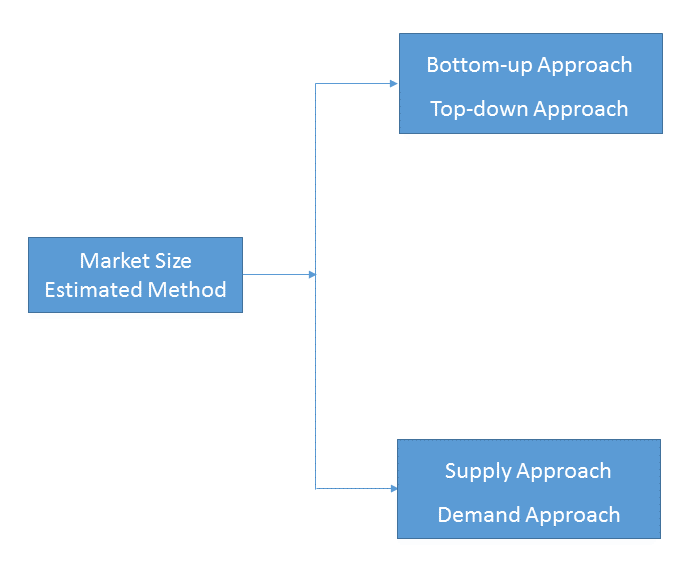
- Market Estimated Methodology:
Bottom-up & top-down approach, supply & demand approach are the most important method which is used by HDIN Research to estimate the market size.
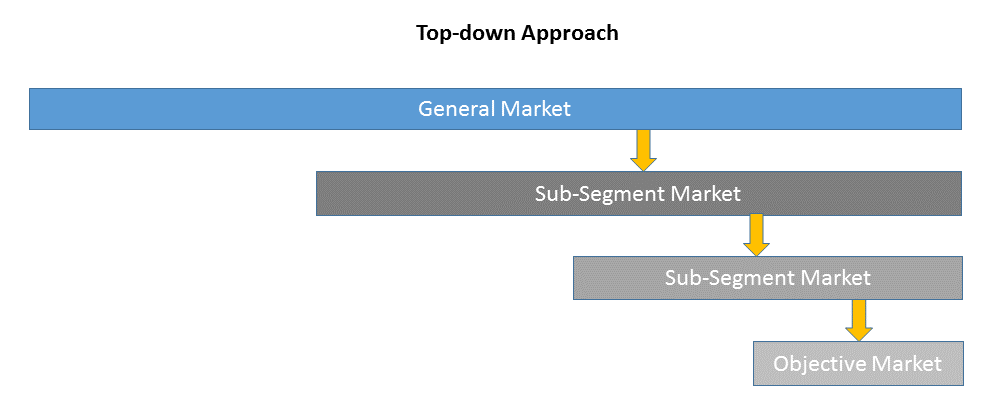
1)Top-down & Bottom-up Approach
Top-down approach uses a general market size figure and determines the percentage that the objective market represents.
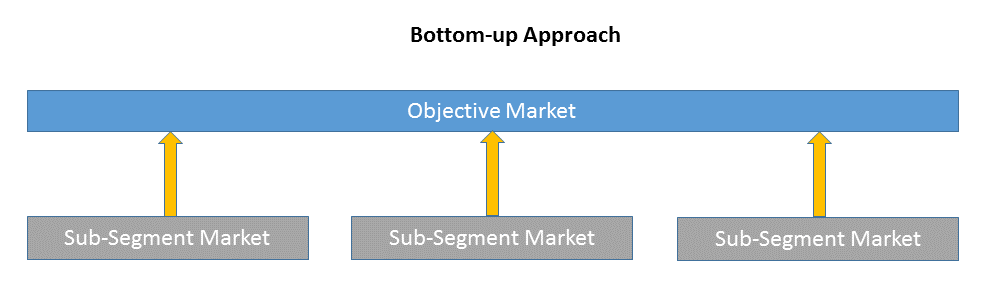
Bottom-up approach size the objective market by collecting the sub-segment information.
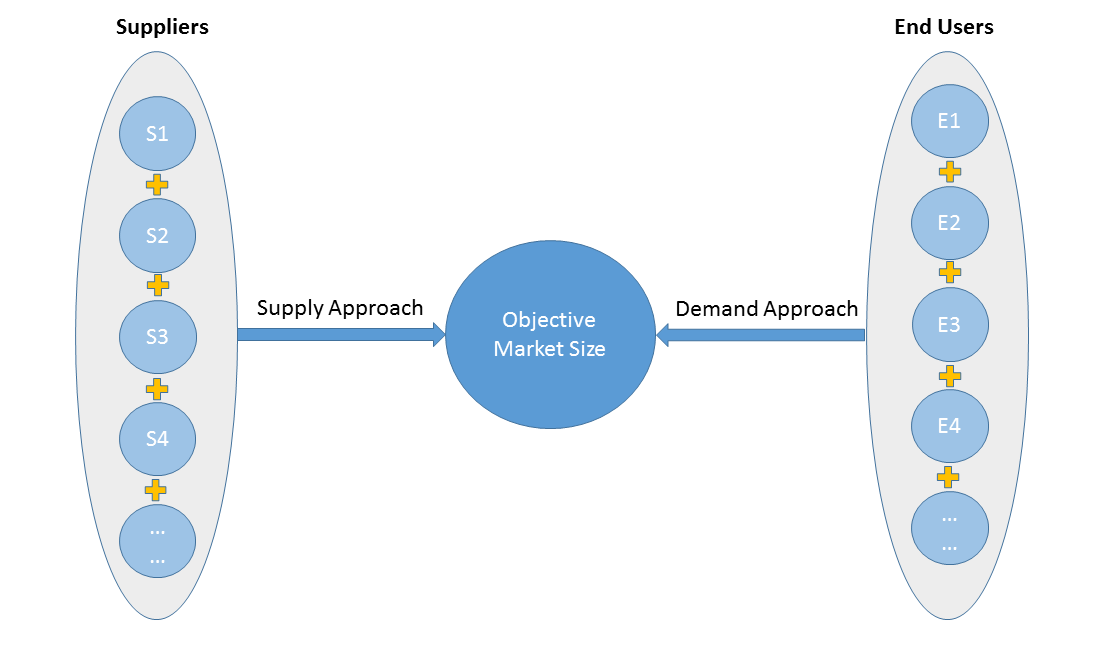
2)Supply & Demand Approach
Supply approach is based on assessments of the size of each competitor supplying the objective market.
Demand approach combine end-user data within a market to estimate the objective market size. It is sometimes referred to as bottom-up approach.
- Forecasting Methodology
- Numerous factors impacting the market trend are considered for forecast model:
- New technology and application in the future;
- New project planned/under contraction;
- Global and regional underlying economic growth;
- Threatens of substitute products;
- Industry expert opinion;
- Policy and Society implication.
- Analysis Tools
1)PEST Analysis
PEST Analysis is a simple and widely used tool that helps our client analyze the Political, Economic, Socio-Cultural, and Technological changes in their business environment.
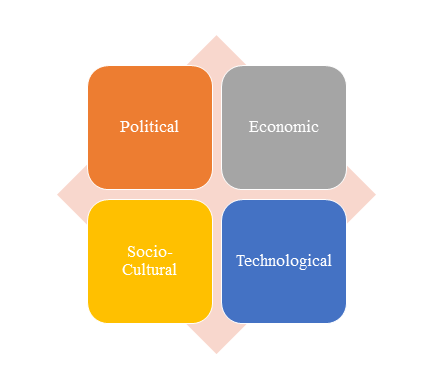
- Benefits of a PEST analysis:
- It helps you to spot business opportunities, and it gives you advanced warning of significant threats.
- It reveals the direction of change within your business environment. This helps you shape what you’re doing, so that you work with change, rather than against it.
- It helps you avoid starting projects that are likely to fail, for reasons beyond your control.
- It can help you break free of unconscious assumptions when you enter a new country, region, or market; because it helps you develop an objective view of this new environment.
2)Porter’s Five Force Model Analysis
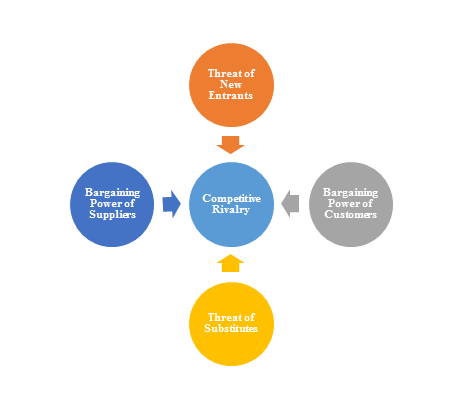
The Porter’s Five Force Model is a tool that can be used to analyze the opportunities and overall competitive advantage. The five forces that can assist in determining the competitive intensity and potential attractiveness within a specific area.
- Threat of New Entrants: Profitable industries that yield high returns will attract new firms.
- Threat of Substitutes: A substitute product uses a different technology to try to solve the same economic need.
- Bargaining Power of Customers: the ability of customers to put the firm under pressure, which also affects the customer's sensitivity to price changes.
- Bargaining Power of Suppliers: Suppliers of raw materials, components, labor, and services (such as expertise) to the firm can be a source of power over the firm when there are few substitutes.
- Competitive Rivalry: For most industries the intensity of competitive rivalry is the major determinant of the competitiveness of the industry.
3)Value Chain Analysis
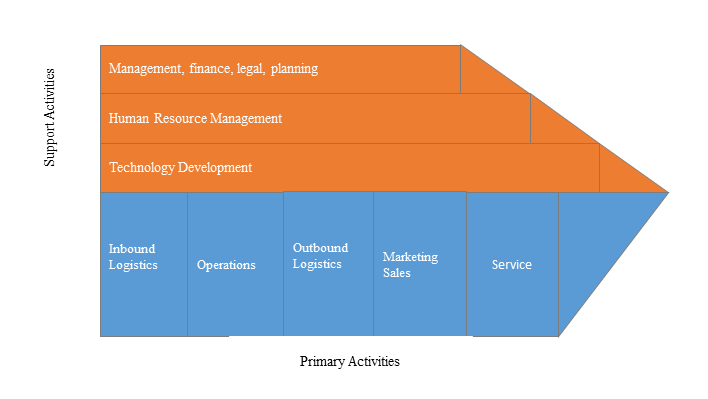
Value chain analysis is a tool to identify activities, within and around the firm and relating these activities to an assessment of competitive strength. Value chain can be analyzed by primary activities and supportive activities. Primary activities include: inbound logistics, operations, outbound logistics, marketing & sales, service. Support activities include: technology development, human resource management, management, finance, legal, planning.
4)SWOT Analysis
SWOT analysis is a tool used to evaluate a company's competitive position by identifying its strengths, weaknesses, opportunities and threats. The strengths and weakness is the inner factor; the opportunities and threats are the external factor. By analyzing the inner and external factors, the analysis can provide the detail information of the position of a player and the characteristics of the industry.
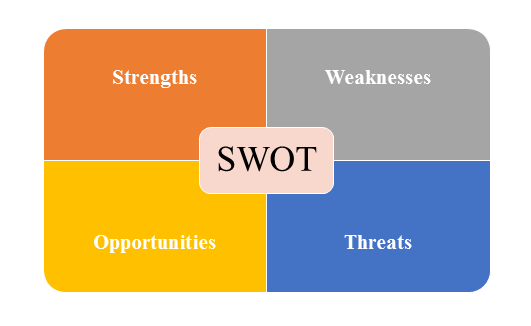
- Strengths describe what the player excels at and separates it from the competition
- Weaknesses stop the player from performing at its optimum level.
- Opportunities refer to favorable external factors that the player can use to give it a competitive advantage.
- Threats refer to factors that have the potential to harm the player.
- Data Sources
| Primary Sources | Secondary Sources |
|---|---|
| Face to face/Phone Interviews with market participants, such as: Manufactures; Distributors; End-users; Experts. Online Survey |
Government/International Organization Data: Annual Report/Presentation/Fact Book Internet Source Information Industry Association Data Free/Purchased Database Market Research Report Book/Journal/News |