Automotive Fastener Market Architecture & Global Outlook
- Single User License (1 Users) $ 3,500
- Team License (2~5 Users) $ 4,500
- Corporate License (>5 Users) $ 5,500
The global automotive fastener market size is valued between USD 30 billion and USD 38 billion in 2026, with a compound annual growth rate ranging from 3.2% to 4.4% through 2031. Fasteners represent less than 2% of total vehicle bill-of-materials cost, yet they dictate over 20% to 30% of physical manufacturing assembly steps and govern upwards of 80% of vehicle joint warranty liability. Mechanical failures at the fastener interface generate immediate recall risks, placing high-tensile cold-heading assets and zero-defect optical sorting lines at the center of Original Equipment Manufacturer risk-mitigation strategies. The traditional perception of fasteners as undifferentiated hardware commodities has eroded. A sharp value migration is underway from standard catalog parts toward highly engineered, application-specific heteromorphic formers. The market is bifurcated. General-purpose standard bolts face margin compression caused by raw steel wire rod price volatility and commoditized production scale.
Simultaneously, specialized fasteners—such as hermetically sealed battery enclosure perimeter bolts, high-precision Electric Parking Brake actuator lead screws, micro-encapsulated adhesive threaded parts, and lightweight aluminum-to-composite structural elements—yield gross margins between 24% and 40%. The fastener content value within fully electrified, multi-material vehicle architectures has scaled up to roughly USD 220 per vehicle, compensating for the elimination of traditional internal combustion engine exhaust and cylinder head hardware. Global supply networks are concurrently reorganizing under the pressure of regional trade barriers, including Section 232 and Section 301 tariffs in the United States and European Union trade defense instruments targeting imported steel fasteners. Automotive OEMs and module integrators have systematically initiated local-for-local sourcing directives. This structural pivot favors cold-forging suppliers capable of deploying automated multi-station headers, in-house metallurgical heat treatment, and synchronized Vendor-Managed Inventory platforms directly adjacent to primary vehicle assembly corridors.
Taxonomy and Mechanical Architecture by Material Composition
The raw material composition of automotive fasteners dictates tensile performance, corrosion endurance, assembly cycle times, and vehicle weight optimization. The four primary material classifications demonstrate divergent manufacturing economics and functional utility.
1. Carbon Steel & Low-Alloy Steel Fasteners
Carbon and low-alloy steel variants constitute the structural tonnage backbone of the industry, representing the majority of overall volume consumption across chassis, suspension, and high-load mechanical interfaces.
Upstream Feedstocks: Cold Heading Quality wire rods categorized into low-carbon, medium-carbon, and alloyed variants utilizing manganese, chromium, molybdenum, and boron chemistries, such as SCM435, 10B21, and 40Cr.
Subsystem Utilization: Critical structural locations including wheel hub assemblies, suspension control arm pivots, engine cylinder heads, chassis subframes, transmission casings, and leaf-spring U-bolts.
Forming and Processing Infrastructure: Coiled wire rod pickling and descaling, spheroidizing annealing in protective atmosphere bell furnaces, multi-die cold forging, high-speed thread rolling, and continuous mesh-belt quenching and tempering to establish Property Classes 8.8, 10.9, 12.9, and 13.9.
Strategic Positioning: This sector features high capital requirements and significant exposure to upstream steel mill spot pricing. Tier-1 participants defend operating margins by engineering complex, multi-station stepped geometries and proprietary washer-bolt combinations to deter standard commodity competition.
2. Stainless Steel Fasteners
Stainless steel elements provide permanent chemical passivation, elevated thermal tolerance, and aesthetic longevity without relying on electroplated sacrificial barriers.
Upstream Feedstocks: Austenitic grades dominated by AISI 304 and molybdenum-bearing AISI 316 wire rods, converted via Cold Heading Quality practices.
Subsystem Utilization: Exhaust systems, turbocharger bypass interfaces, oxygen sensor retainers, hydraulic brake line brackets, high-temperature battery compartment pass-throughs, and exterior body trim mountings.
Forming and Processing Infrastructure: Chemical surface lubrication films, high-tonnage cold forming with carbide tooling, specialized tapping operations, and mechanical passivation steps to prevent surface contamination and preserve the chromium oxide layer.
Strategic Positioning: Stainless steel fastener pricing remains indexed to global nickel, molybdenum, and chromium indices. Vehicle designers deploy stainless joints selectively where long-term exposure to road salts or thermal cycling above 400 degrees Celsius would cause protective zinc coatings on carbon steel to break down.
3. Non-Ferrous Alloys Fasteners
Lightweighting mandates, battery pack integration, and electrical conductivity requirements drive the adoption of non-ferrous fastening solutions.
Aluminum Alloys: Cold-forged from high-strength 6000 and 7000 series aluminum wire, delivering yield strengths over 400 MPa. These fasteners reduce component weight by roughly 60% relative to carbon steel equivalents. They eliminate galvanic corrosion when clamping aluminum structural sheets, cast battery enclosures, and extruded vehicle frame members.
Copper and Brass Alloys: Fabricated from free-cutting brass and high-conductivity copper bars. These items serve as internally threaded knurled inserts embedded within structural polymer housings, high-voltage busbar connections, and electronic control unit ground points, balancing electrical conductivity with mechanical pull-out strength.
Titanium and Nickel Superalloys: Utilized in performance niches, advanced motorsport, and localized ultra-high-temperature exhaust zones exceeding 600 degrees Celsius. These parts deliver superior strength-to-weight ratios and high fatigue survival under dynamic mechanical strain.
4. Polymer & Engineered Plastic Fasteners
Engineered plastic fasteners have shifted from lightweight interior clips into multifunctional component routing and retention architectures.
Upstream Feedstocks: Polyamide resins (PA6, PA66, glass-fiber reinforced formulations), Polyoxymethylene, Polypropylene, Polycarbonate, and recycled thermoplastic variants.
Subsystem Utilization: Fluid line brackets, high-voltage battery cable guides, door panel retainers, fascia clips, underbody acoustic shield pins, and dashboard assembly latches.
Forming and Processing Infrastructure: High-cavity injection molding machines fitted with hot-runner tooling, multi-axis robotic take-out arms, automated ultrasonic welding fixtures, and in-mold insert assembly lines.
Strategic Positioning: Plastic fasteners generate high margins by integrating snap-fit capabilities that reduce assembly times for OEM operators. These solutions lower vehicle curb weight, eliminate NVH rattle pathways, and comply with European Union circularity directives mandating minimum recycled plastic thresholds in automotive assemblies.
Subsystem Structural Analysis and Platform Dynamics
Automotive fasteners must satisfy diverging mechanical and thermal criteria based on subsystem operating demands.
1. Powertrain and Drivetrain Systems
Internal combustion engines, multi-speed transmissions, and transfer cases require threaded joints engineered to endure severe cyclic fatigue, elevated operating temperatures (-40 degrees Celsius to +150 degrees Celsius), and continuous rotational torque dynamics. Fasteners in this domain include cylinder head bolts, connecting rod bolts, flywheel retainers, and differential ring gear bolts. These fasteners leverage Property Class 10.9 and 12.9 alloy steels subjected to torque-to-yield tightening regimes, where the fastener is stretched beyond its elastic limit into controlled plastic deformation to achieve permanent clamping force.
2. Electric Powertrain and New Energy Vehicles
Electrified platforms shift mechanical priorities toward hermetic sealing, electrical isolation, electromagnetic compatibility, and dynamic mass containment. High-voltage battery systems require specialized structural perimeter bolts engineered to maintain IP67 and IP6K9K environmental enclosure integrity over 15-year vehicle lifespans. Fasteners must withstand vertical dynamic accelerations up to 21g during vehicle operation while preventing moisture intrusion into lithium-ion cell matrices. Furthermore, structural fasteners in proximity to high-voltage electronics must comply with strict ISO 16232 and VDA 19 particulate cleanliness thresholds to eliminate conductive metallic shedding that could initiate short circuits.
3. Chassis, Steering, and Suspension Systems
The chassis and suspension represent the primary load path for dynamic road energy, vehicle inertia, and braking moments. Control arm pivot bolts, front and rear subframe mounting assemblies, stabilizer link fasteners, and steering rack attachments operate under severe cyclic shear, bending moments, and aggressive road brine exposure. Fasteners utilized in these safety-critical joints demand high fracture toughness at sub-zero temperatures and non-electrolytic zinc flake surface coatings providing more than 1,000 hours of resistance to neutral salt spray testing.
4. Active Braking and Deceleration Systems
Active braking hardware is exposed to rapid thermal cycling exceeding 300 degrees Celsius, direct exposure to hydraulic fluids, and high-frequency actuation cycles. Caliper mounting bolts, ABS hydraulic valve block fasteners, and Electric Parking Brake motor-gear-unit spindles demand mechanical precision. Actuator lead screws within modern electronic calipers require cold-headed profile accuracies within 0.01 mm, operating over hundreds of thousands of engagement cycles without micro-spalling or thread fatigue.
5. Body-in-White (BIW) and Structural Exterior Assemblies
The ongoing implementation of multi-material vehicle architectures—combining hot-stamped boron steels, 6000-series aluminum sheets, and carbon-fiber composite panels—prohibits legacy spot welding techniques. This structural evolution accelerates demand for mechanical joining solutions, including self-piercing riveting, drawn-arc weld studs, flow-drill screws, and structural blind fasteners. These components permit automated robotic insertion with cycle times under two seconds per node, using localized sealing rings or barrier coatings to prevent galvanic corrosion between dissimilar metallic substrates.
6. Interior Trim, Cockpit, and Seating Systems
Fasteners deployed within the passenger cell emphasize ergonomic assembly, vibration damping, and occupant restraint during collision events. Seat frame anchor bolts, child seat restraint brackets, and power-seat adjuster worm screws must sustain multi-directional impact loads exceeding several tons. Conversely, instrument panel push-pins and center console clips rely on low-insertion-force engineered polymers coupled with high extraction retention, engineered to suppress interior squeaks and rattles.
7. Platform Segmentation: Passenger Cars versus Commercial Vehicles
The passenger car segment represents high unit volumes, high model changeover frequencies, and wide SKU counts, where Tier-1 suppliers maintain thousands of unique part geometries per platform. Fastener engineering focuses on lightweighting, automated optical defect elimination, and continuous unit-cost reductions.
Conversely, the commercial vehicle market (medium and heavy trucks, coaches, off-highway tractors) demands high-tensile, large-diameter structural hardware (M16 through M30+). Commercial vehicle platforms operate over million-kilometer lifespans under continuous operational loads. The transition toward battery-electric heavy trucks introduces severe battery pack securing challenges, where massive dynamic masses require structural cold-forged chassis tie-downs engineered against multi-axis harmonic vibration.
Supply Chain and Value Chain Architecture
The transformation of raw metallic wire into a certified vehicle structural joint encompasses an integrated, capital-heavy manufacturing process.
1. Upstream Conversion and Capital Tooling
The value chain originates at blast furnace or electric arc furnace steelmakers that supply Cold Heading Quality wire coils. Metallurgical purity is critical; non-metallic inclusions, center-line segregation, and surface seams will cause high-speed cold-heading blanks to shear or split.
Tooling manufacturers supply multi-station carbide dies, punch pins, and thread-rolling sets. Leading fastener manufacturers maintain in-house tooling design and EDM finishing centers. Internal die production secures intellectual property for proprietary heteromorphic head shapes and protects high-volume production schedules from external tooling lead-time bottlenecks.
Primary capital equipment requires significant balance sheet allocations. Five- to seven-station progressive cold headers, high-speed rotary thread formers, and automated mesh-belt heat treatment furnaces require multi-million-dollar capital investments, presenting structural entry barriers to emerging suppliers.
2. Midstream Processing and Thermal Transformation
Wire preparation begins with chemical or mechanical descaling to strip hot-rolled scale, followed by spheroidizing annealing to convert internal lamellar iron carbide into spherical cementite structures, imparting necessary cold-heading ductility. Coils are drawn through sizing dies with phosphate-soap coatings to optimize dimensional tolerances and surface lubricity.
Cold heading operates at ambient temperatures, leveraging high-tonnage punches to displace metal plastic flow along the continuous grain structure of the wire blank. This process maintains mechanical grain alignment along the part contours, elevating structural shear resistance compared to subtractive machining.
Secondary operations introduce cold-formed or rolled threads, creating burnished thread roots with compressive residual stresses that double dynamic fatigue resistance relative to cut threads. Quenching and tempering lines modulate metallurgical crystal structures from brittle martensite into tempered martensite or bainite, reaching precise Rockwell hardness specifications while avoiding surface decarburization.
Protective surface finishing applies sacrificial coatings. The phase-out of hexavalent chromium has established zinc-nickel electroplating and non-electrolytic zinc flake dip-spin systems as automotive baselines. These coatings integrate specialized organic or inorganic topcoats with micro-encapsulated friction modifiers to establish precise, consistent friction coefficients (typically 0.10 to 0.15) under high-speed robotic tightening.
Optical and optoelectronic sorting serves as the final midstream checkpoint. Glass-dial rotary inspection machines and eddy-current non-destructive testing modules verify dimensions, thread integrity, and metallurgical hardness profiles at rates surpassing 800 parts per minute, ensuring delivered defect rates remain below 1 part per million.
3. Downstream Value Migration and Logistics Integration
The primary profit pool within the automotive fastener sector has progressively decoupled from the raw manufacturing of physical bolts, moving downstream toward supply chain integration, line-side automated replenishment, and synchronous engineering. Fastener hardware accounts for roughly 15% of an OEM's total fastener-related acquisition cost, whereas inventory carrying costs, manual bin management, quality validation, and assembly station downtime constitute the remaining 85%.
Suppliers providing Full Service Provider (FSP) and Vendor-Managed Inventory (VMI) frameworks embed themselves into OEM operational infrastructure. By deploying smart-weight bin sensors, automated RFID kanban racks, and cloud-linked replenishment software directly at the assembly line, FSP integrators lock in long-term platform contracts, transforming standard hardware supply into high-retention enterprise service agreements.
Commercial Go-To-Market Distribution Architecture
Automotive fastener producers reach vehicle platforms through four defined commercial pathways:
1. Direct OEM Supply (Tier 0.5 Engagement)
Automotive manufacturers contract directly with selected fastener producers for safety-critical structural applications, including engine cylinder bolts, suspension anchor points, and chassis subframe assemblies. These relationships are governed by multi-year Master Service Agreements tied to multi-year vehicle lifecycles.
Fastener engineers operate as resident technical resources during the OEM vehicle design phase, utilizing finite element modeling to optimize clamp loads, tool clearances, and joining geometries before tooling freeze. Direct OEM relationships yield long production volumes but operate under strict open-book cost accounting and mandatory annual price-down schedules.
2. Tier-1 and Tier-2 Modular Integrator Network
As global OEMs transition toward modular assembly architectures, component purchasing authority has shifted toward major systems integrators responsible for full functional subsystems (complete cockpits, power seats, braking modules, e-axles, and door assemblies). Fastener suppliers contract directly with these tier-1 companies to supply custom heteromorphic hardware, such as actuator pins, specialized seat-track leadscrews, and micro-screws for electronic control enclosures.
3. Full Service Provider (FSP) Logistics Networks
FSP operators manage the end-to-end procurement and inventory footprint for up to 90% of the active fastener part numbers within a vehicle assembly facility. FSP providers leverage hybrid supply architectures: they produce complex, proprietary, high-margin fasteners on internal cold headers while sourcing generic, high-volume standard hardware from certified low-cost production centers. They assume comprehensive liability for delivery reliability, line-side stock levels, and quality screening across the vehicle lifecycle.
4. Aftermarket and Maintenance, Repair, and Operations (MRO) Channels
The commercial vehicle fleet sector, automotive collision repair networks, and franchised dealership service networks procure replacement hardware kits, specialized body clips, and suspension replacement bolts via aftermarket distribution. While ordering lots are fragmented and demand patterns fluctuate, aftermarket channels yield substantially higher gross profit margins than high-volume serial OEM supply contracts.
Regional Market Dynamics
Qualitative assessment reveals clear regional divergence across production scale, technical adaptation, and regulatory overhead.
1. North America
The North American market (United States, Canada, Mexico) is characterized by a high mix of full-size light trucks, sport-utility vehicles, and commercial fleet platforms, supporting high demand for heavy-duty, high-tensile Class 10.9 and 12.9 chassis bolts.
The competitive landscape is consolidated among capital-rich multinational suppliers and established specialty cold headers. Growth rates in the region mirror overall vehicle platform renewal.
Supply chain logistics are deeply integrated under the USMCA trade agreement. Mexico functions as an essential, high-volume production base, where tier-1 cold-forming and injection-molding assets concentrated in Monterrey, Queretaro, and Saltillo supply vehicle assembly nodes throughout the Midwest and Southern United States manufacturing belts.
US federal adjustments relaxing zero-emission vehicle targets and extending internal combustion engine life cycles have stabilized near-term demand for high-strength steel powertrain fasteners, while high-voltage battery pack fastening programs proceed steadily across localized manufacturing hubs.
2. Asia-Pacific
Asia-Pacific represents the largest manufacturing center and consumption market for automotive fasteners globally.
China: Operating as the global epicenter of automobile assembly, China produced over 34 million motor vehicles annually, driven by rapid NEV domestic penetration and growing vehicle export corridors. The domestic market has evolved from high-volume standard hardware toward high-precision structural fasteners for electric powertrains, automated driving sensors, and complex chassis modules. Local suppliers are leveraging national equipment upgrading initiatives to modernize tooling, deploy advanced heat treatment infrastructure, and establish domestic self-sufficiency in high-grade cold-heading steel.
Japan: The Japanese fastener sector is anchored by domestic vehicle platforms and focuses on precision engineering polymers, interior mechanisms, and elastic spring-steel fasteners. Japanese cold headers maintain deep, long-term engineering integration with domestic OEMs, prioritizing high-quality alloy purity, compact electronic micro-screws, and specialized hybrid transmission fasteners.
South Korea: Operating alongside major global domestic automotive groups, Korean manufacturers maintain high technological competence in cold-forged safety fasteners, suspension ball-stud components, and specialized differential drive bolts. Korean suppliers are accelerating R&D spending on lightweight structural aluminum bolts and high-integrity electric vehicle braking assemblies.
India: India's automotive assembly output continues to register resilient growth across passenger SUVs, commercial trucks, and two-wheelers. The fastener landscape is shifting from fragmented, regional job-shops to organized, automated cold-heading facilities capable of satisfying global export standards and expanding domestic electric vehicle component mandates.
Southeast Asia: Driven by domestic component level requirements (such as Indonesia's TKDN localization targets for electric vehicles) and global supply chain diversification, Southeast Asia is emerging as an attractive production node. Regional manufacturers in Malaysia, Thailand, and Vietnam are absorbing foreign capital to serve export channels into North America and Europe while supporting domestic vehicle assembly clusters.
Taiwan, China: Fastener producers in Taiwan, China maintain an export-focused operating profile, holding significant global export shares in stainless steel fasteners, structural weld studs, and specialized automotive cold-formed hardware, supported by integrated upstream specialty steel operations and extensive tooling design capabilities.
3. Europe
The European automotive fastener market operates within a mature industrial landscape. The region is characterized by high engineering standards, advanced lightweighting mandates, and rigorous environmental compliance frameworks.
European automotive suppliers lead in the commercialization of flow-drill screws for multi-material structural joints, specialized non-electrolytic zinc flake coatings, and smart-bin digital factory logistics.
However, high domestic energy inputs, elevated labor overhead, and competitive pressures from Asian manufacturers have led to structural capacity rationalization. Major European cold-forming leaders are consolidating production footprints, divesting non-core peripheral business units, and concentrating domestic capital allocation on safety-critical, high-margin functional joints and battery enclosure assemblies.
Concurrently, European operations are leading the industrialization of the Carbon Border Adjustment Mechanism (CBAM) and Corporate Sustainability Reporting Directive (CSRD) protocols, accelerating the shift toward low-carbon scrap-fed electric arc furnace steels.
4. South America
The South American fastener market remains concentrated within Brazil and Argentina, reflecting an industrial ecosystem historically linked to European and North American platform designs.
Production is oriented toward flexible-fuel passenger car hardware, agricultural utility vehicles, and heavy transport trucks. Multinational OEMs operating in the region are primarily served by localized foreign subsidiaries and regional high-volume standard fastener formers, with high-complexity electronic micro-screws and specialized high-tensile safety bolts supported via import channels.
5. Middle East and Africa (MEA)
The Middle East and Africa region exhibits uneven industrial maturity.
Northern Africa, specifically Morocco's Tangier automotive manufacturing belt, has solidified its position as a high-efficiency production platform serving vehicle assembly plants across Spain, France, and Southern Europe. Leading French and international fastener manufacturers have established manufacturing sites in Moroccan free trade zones to produce plastic clips, brackets, and stamped fasteners.
Turkey represents an established industrial gateway, supplying forged structural chassis bolts and heavy commercial vehicle fasteners to European buyers, though domestic suppliers navigate foreign exchange dynamics and raw material inflation. The broader Sub-Saharan market remains primarily import-driven, centered on commercial fleet maintenance and aftermarket mechanical components.
Company Covered in the report:
● Integrated Full-Service & System Solution Leaders: Illinois Tool Works Inc. (ITW), Stanley Black & Decker (Stanley Engineered Fastening), Bulten AB, Lisi Automotive,, Würth Group, Bossard Holding AG.
● Engineered Thread-Forming and Precision Specialist Champions: KAMAX, EJOT, Agrati Group, Fontana Gruppo, SFS Group, SBE-VARVIT S.p.A., Nedschroef, Hilti, MacLean-Fogg, PennEngineering (PEM), Optimas OE Solutions LLC, Chicago Rivet & Machine Co., National Rivet & Manufacturing Co.
● Polymer and Elastic Fastening Champions: Nifco Inc., Piolax, ARaymond.
● Asia-Pacific Regional and Scale Specialists: Taeyang Metal Industrial Co. Ltd., YM Co. Ltd., JINHAP Co. Ltd., Zhejiang Huayuan Automotive Technology Co. Ltd., Changhua Holding Group, Shanghai Detroit Precision Fastener Co. Ltd., Gem-Year Industrial Co. Ltd., Jiangsu Zhenjiang New Energy Equipment Co. Ltd., Saga Tekkohsho, Yamashina Corporation, PT. Garuda Metalindo Tbk, Sundram Fasteners Ltd.
Strategic Opportunities versus Structural Friction
1. Strategic Growth Frontiers
● High-Value Battery Enclosure Sealing Systems: The commercialization of large-format electric skateboard platforms, structural battery packs (Cell-to-Pack and Cell-to-Chassis), and 800V charging architectures creates opportunities for specialized cold headers. Battery enclosures require 80 to 150 perimeter structural bolts engineered with integrated elastomeric sealing washers or micro-encapsulated under-head sealants. These joints must guarantee continuous hermetic protection against water ingress under dynamic operating strains and vertical acceleration shocks up to 21g, while allowing automated line-side disengagement for battery service or end-of-life recycling. Suppliers holding intellectual property in hermetic sealing fasteners capture substantial margin premiums over legacy chassis hardware.
● Electric Parking Brake and Deceleration Spindles: The mainstream adoption of automated driver assistance systems and the elimination of manual handbrake linkages drive universal integration of Electric Parking Brake calipers. The electromechanical heart of an EPB unit is the actuator spindle—a precision-formed leadscrew that converts electric motor rotation into clamping force on the brake pad. Manufacturing these spindles requires specialized multi-station cold heading, high-precision thread rolling, and induction surface hardening to satisfy micron-level tolerances over hundreds of thousands of actuation cycles, yielding attractive margins for advanced cold-forging specialists.
● Multi-Material Joining via Mechanical Fastening: Vehicle weight reduction mandates require the concurrent joining of high-strength steel frames, stamped 6000-series aluminum outer skins, and composite inner structures. Because dissimilar metals cannot be resistance welded without severe galvanic breakdown, assembly plants rely heavily on mechanical joining solutions. Self-piercing rivets, flow-drilling thread-forming screws, and specialized structural blind fasteners are capturing assembly share from spot-welding lines. Suppliers offering complete joining ecosystems—combining proprietary fasteners with robotic feed automation—lock in high-margin, capital-equipment-linked consumable revenue.
2. Structural Friction and Operational Headwinds
● Tier-1 Price Compression within Electrification Ecosystems: Downstream automotive manufacturers are locked in price competition, particularly across the New Energy Vehicle landscape in East Asia. Automotive OEMs continuously transfer profit margin pressure upstream onto Tier-1 and Tier-2 suppliers through aggressive annual price-reduction targets (typically 3% to 8%). For fastener suppliers manufacturing commoditized parts, this price compression erodes gross operating margins, accelerating corporate insolvencies or forced asset divestitures among under-capitalized formers.
● Delayed Hydrogen Embrittlement Vulnerabilities: The continuous drive to reduce vehicle weight has accelerated the specification of high-strength, Property Class 10.9, 12.9, and 13.9 bolts across chassis and suspension assemblies. However, as steel tensile strength surpasses 1,000 to 1,200 MPa, the material becomes vulnerable to delayed catastrophic hydrogen embrittlement failure. Diffusible atomic hydrogen—introduced during chemical acid pickling, electroplating, or through environmental corrosion—migrates to areas of high tensile stress concentration, initiating spontaneous sub-critical brittle fractures without visible plastic deformation. Mitigating this catastrophic liability requires continuous investment in clean alloy steels, protective-atmosphere spheroidizing annealing, prolonged de-hydrogenation baking furnaces, and non-electrolytic zinc-flake dip-spin coatings, driving up capital intensity.
● Supply Chain Regionalization and Regulatory Compliance Costs: Trade policies—including United States Section 232 and 301 tariffs, the European Union's anti-dumping duties on Asian fasteners, and the implementation of the Carbon Border Adjustment Mechanism—have altered the economics of centralized, low-cost Asian export manufacturing. Multinational fastener producers face capital demands to establish duplicate, localized production sites within North America, the European periphery, and the USMCA corridor.
1.1 Automotive Fastener Industry Definition and Research Scope 1
1.2 Multi-Tier Research Methodology and Market Estimation Models 2
1.2.1 Primary Sourcing and Expert Interviews 2
1.2.2 Secondary Data Triangulation and Statistical Verification 3
1.2.3 Bottom-Up Aggregation and Top-Down Validation Architecture 4
1.3 Critical Market Assumptions and Macroeconomic Variables (2021-2031) 5
1.4 Standard Industry Abbreviations and Nomenclature Matrix 6
Chapter 2 Global Automotive Fastener Market Landscape and Strategic Dynamics 7
2.1 Global Automotive Fastener Market Revenue and Volume Trajectory (2021-2031) 7
2.2 Mega-Trends Reshaping Automotive Fastening Technologies 9
2.3 Value Chain Margin Migration and Supplier Tiering Dynamics 15
2.4 Regulatory Compliance, Quality Standards and Fastener Traceability 17
Chapter 3 Global Automotive Fastener Market by Material Composition 18
3.1 Carbon Steel & Low-Alloy Steel Fastener 18
3.2 Stainless Steel Fastener 22
3.3 Non-Ferrous Alloys Fastener 25
3.4 Polymer & Engineered Plastic Fastener 29
Chapter 4 Global Automotive Fastener Market by Vehicle Structure Application 33
4.1 Powertrain and Drivetrain System 33
4.2 Electric Powertrain and New Energy Vehicles (NEVs) 36
4.3 Chassis & Steering and Suspension System 40
4.4 Active Braking and Deceleration System 43
4.5 Body-in-White (BIW) and Structural Exterior 46
4.6 Interior Trim & Seating 49
Chapter 5 Global Automotive Fastener Market by Vehicle Type 52
5.1 Passenger Cars 52
5.2 Commercial Vehicles 56
Chapter 6 Global Automotive Fastener Supply Chain, Value Chain and Manufacturing Ecosystem 59
6.1 Upstream Raw Material Procurement Dynamics 59
6.2 Advanced Cold Forming, Machining and Thread Rolling Technologies 62
6.3 Surface Treatment, Electroplating, Zinc-Flake and Anti-Corrosion Coating 64
6.4 Value Chain Cost Breakdown and Manufacturing Margin Optimization 66
6.5 Tier-1 Automotive Integrator Collaboration Models and JIT Delivery Logistics 68
Chapter 7 Global Automotive Fastener Trade Dynamics and Supply Route Analysis 70
7.1 Global Cross-Border Trade Flow Patterns (2021-2026) 70
7.2 Major Fastener Export Hubs: China, Germany, Japan, South Korea, Italy 72
7.3 Critical Import Centers: United States, Mexico, Germany, United Kingdom, Spain 74
7.4 Geopolitical Friction, Tariff Shifts and Regional Supply Chain Nearshoring 76
Chapter 8 Automotive Fastener Regional and Major Country Analysis 78
8.1 North America Automotive Fastener Market 78
8.1.1 United States 79
8.1.2 Canada 85
8.2 Europe Automotive Fastener Market 87
8.2.1 Germany 88
8.2.2 France 91
8.2.3 Italy 93
8.2.4 Spain 95
8.2.5 United Kingdom 97
8.2.6 Poland 99
8.2.7 Czech Republic & Rest of Europe 101
8.3 Asia-Pacific Automotive Fastener Market 103
8.3.1 China 104
8.3.2 Japan 107
8.3.3 South Korea 110
8.3.4 India 113
8.3.5 Southeast Asia 116
8.4 Latin America Automotive Fastener Market 119
8.4.1 Brazil 120
8.4.2 Mexico 121
8.5 Middle East & Africa Automotive Fastener Market 122
8.5.1 Turkey 123
8.5.2 South Africa 125
8.5.3 Morocco 127
Chapter 9 Competitive Landscape and Global Market Share Analysis 129
9.1 Tier-1 Competitive Benchmarking Matrix 129
9.2 Market Concentration Ratios (CR4, CR8, HHI) Analysis 131
9.3 Mergers, Acquisitions, Strategic Alliances and Joint Ventures (2021-2026) 133
Chapter 10 Corporate Intelligence: Global Automotive Fastener Key Players 135
10.1 Illinois Tool Works Inc. (ITW) 135
10.1.1 Corporate Profile, Footprint and Automotive Divisions 135
10.1.2 Product Portfolio and Specialized Fastening Platforms 136
10.1.3 Automotive Fastener Financial Performance and Market Share Metrics 136
10.1.4 Strategic Positioning and SWOT Analysis 137
10.2 Stanley Black & Decker 138
10.2.1 Corporate Profile, Footprint and Engineered Fastening Divisions 138
10.2.2 Product Portfolio and Specialized Fastening Platforms 138
10.2.3 Automotive Fastener Financial Performance and Market Share Metrics 139
10.2.4 Strategic Positioning and SWOT Analysis 140
10.3 Hilti 141
10.3.1 Corporate Profile, Footprint and Automotive OEM Divisions 141
10.3.2 Product Portfolio and Specialized Fastening Platforms 141
10.3.3 Automotive Fastener Financial Performance and Market Share Metrics 142
10.3.4 Strategic Positioning and SWOT Analysis 143
10.4 SFS Group 144
10.4.1 Corporate Profile, Footprint and Automotive Fastener Divisions 144
10.4.2 Product Portfolio and Specialized Fastening Platforms 144
10.4.3 Automotive Fastener Financial Performance and Market Share Metrics 145
10.4.4 Strategic Positioning and SWOT Analysis 146
10.5 ARaymond 147
10.5.1 Corporate Profile, Footprint and Fastening Divisions 147
10.5.2 Product Portfolio and Specialized Fastening Platforms 147
10.5.3 Automotive Fastener Financial Performance and Market Share Metrics 148
10.5.4 Strategic Positioning and SWOT Analysis 149
10.6 Lisi Automotive 150
10.6.1 Corporate Profile, Footprint and Fastening Divisions 150
10.6.2 Product Portfolio and Specialized Fastening Platforms 150
10.6.3 Automotive Fastener Financial Performance and Market Share Metrics 151
10.6.4 Strategic Positioning and SWOT Analysis 152
10.7 KAMAX 153
10.7.1 Corporate Profile, Footprint and High-Strength Fastener Divisions 153
10.7.2 Product Portfolio and Specialized Fastening Platforms 153
10.7.3 Automotive Fastener Financial Performance and Market Share Metrics 154
10.7.4 Strategic Positioning and SWOT Analysis 155
10.8 MacLean-Fogg 156
10.8.1 Corporate Profile, Footprint and Vehicle Fastening Divisions 156
10.8.2 Product Portfolio and Specialized Fastening Platforms 156
10.8.3 Automotive Fastener Financial Performance and Market Share Metrics 157
10.8.4 Strategic Positioning and SWOT Analysis 158
10.9 Agrati Group 159
10.9.1 Corporate Profile, Footprint and Advanced Fastening Divisions 159
10.9.2 Product Portfolio and Specialized Fastening Platforms 159
10.9.3 Automotive Fastener Financial Performance and Market Share Metrics 160
10.9.4 Strategic Positioning and SWOT Analysis 161
10.10 Nifco Inc. 162
10.10.1 Corporate Profile, Footprint and Synthetic Fastening Divisions 162
10.10.2 Product Portfolio and Specialized Fastening Platforms 162
10.10.3 Automotive Fastener Financial Performance and Market Share Metrics 163
10.10.4 Strategic Positioning and SWOT Analysis 164
10.11 SBE-VARVIT S.p.A. 165
10.11.1 Corporate Profile, Footprint and Fastener Divisions 165
10.11.2 Product Portfolio and Specialized Fastening Platforms 165
10.11.3 Automotive Fastener Financial Performance and Market Share Metrics 166
10.11.4 Strategic Positioning and SWOT Analysis 167
10.12 Piolax 168
10.12.1 Corporate Profile, Footprint and Precision Fastener Divisions 168
10.12.2 Product Portfolio and Specialized Fastening Platforms 168
10.12.3 Automotive Fastener Financial Performance and Market Share Metrics 169
10.12.4 Strategic Positioning and SWOT Analysis 170
10.13 Bulten 171
10.13.1 Corporate Profile, Footprint and Fastener Divisions 171
10.13.2 Product Portfolio and Specialized Fastening Platforms 171
10.13.3 Automotive Fastener Financial Performance and Market Share Metrics 172
10.13.4 Strategic Positioning and SWOT Analysis 173
10.14 Chicago Rivet & Machine Co. 174
10.14.1 Corporate Profile, Footprint and Fastener Divisions 174
10.14.2 Product Portfolio and Specialized Fastening Platforms 174
10.14.3 Automotive Fastener Financial Performance and Market Share Metrics 175
10.14.4 Strategic Positioning and SWOT Analysis 176
10.15 PIOLAX INC 177
10.15.1 Corporate Profile, Footprint and North American Fastener Divisions 177
10.15.2 Product Portfolio and Specialized Fastening Platforms 177
10.15.3 Automotive Fastener Financial Performance and Market Share Metrics 178
10.15.4 Strategic Positioning and SWOT Analysis 179
10.16 National Rivet & Manufacturing Co. 180
10.16.1 Corporate Profile, Footprint and Rivet Fastening Divisions 180
10.16.2 Product Portfolio and Specialized Fastening Platforms 180
10.16.3 Automotive Fastener Financial Performance and Market Share Metrics 181
10.16.4 Strategic Positioning and SWOT Analysis 182
10.17 Saga Tekkohsho 183
10.17.1 Corporate Profile, Footprint and Fastener Divisions 183
10.17.2 Product Portfolio and Specialized Fastening Platforms 183
10.17.3 Automotive Fastener Financial Performance and Market Share Metrics 184
10.17.4 Strategic Positioning and SWOT Analysis 185
10.18 Yamashina Corporation 186
10.18.1 Corporate Profile, Footprint and Precision Screw Divisions 186
10.18.2 Product Portfolio and Specialized Fastening Platforms 186
10.18.3 Automotive Fastener Financial Performance and Market Share Metrics 187
10.18.4 Strategic Positioning and SWOT Analysis 188
10.19 Taeyang Metal Industrial Co. Ltd. 189
10.19.1 Corporate Profile, Footprint and Fastener Divisions 189
10.19.2 Product Portfolio and Specialized Fastening Platforms 189
10.19.3 Automotive Fastener Financial Performance and Market Share Metrics 190
10.19.4 Strategic Positioning and SWOT Analysis 191
10.20 YM Co. Ltd. 192
10.20.1 Corporate Profile, Footprint and Fastener Divisions 192
10.20.2 Product Portfolio and Specialized Fastening Platforms 192
10.20.3 Automotive Fastener Financial Performance and Market Share Metrics 193
10.20.4 Strategic Positioning and SWOT Analysis 194
10.21 JINHAP Co. Ltd. 195
10.21.1 Corporate Profile, Footprint and Fastener Divisions 195
10.21.2 Product Portfolio and Specialized Fastening Platforms 195
10.21.3 Automotive Fastener Financial Performance and Market Share Metrics 196
10.21.4 Strategic Positioning and SWOT Analysis 197
10.22 Bossard Holding AG 198
10.22.1 Corporate Profile, Footprint and Fastening Logistics Divisions 198
10.22.2 Product Portfolio and Specialized Fastening Platforms 198
10.22.3 Automotive Fastener Financial Performance and Market Share Metrics 199
10.22.4 Strategic Positioning and SWOT Analysis 200
10.23 Würth Group 201
10.23.1 Corporate Profile, Footprint and Automotive Assembly Divisions 201
10.23.2 Product Portfolio and Specialized Fastening Platforms 201
10.23.3 Automotive Fastener Financial Performance and Market Share Metrics 202
10.23.4 Strategic Positioning and SWOT Analysis 203
10.24 Fontana Gruppo 204
10.24.1 Corporate Profile, Footprint and Fasteners Divisions 204
10.24.2 Product Portfolio and Specialized Fastening Platforms 204
10.24.3 Automotive Fastener Financial Performance and Market Share Metrics 205
10.24.4 Strategic Positioning and SWOT Analysis 206
10.25 Optimas OE Solutions LLC 207
10.25.1 Corporate Profile, Footprint and Supply Chain Fastener Divisions 207
10.25.2 Product Portfolio and Specialized Fastening Platforms 207
10.25.3 Automotive Fastener Financial Performance and Market Share Metrics 208
10.25.4 Strategic Positioning and SWOT Analysis 209
10.26 EJOT 210
10.26.1 Corporate Profile, Footprint and Engineered Fastening Divisions 210
10.26.2 Product Portfolio and Specialized Fastening Platforms 210
10.26.3 Automotive Fastener Financial Performance and Market Share Metrics 211
10.26.4 Strategic Positioning and SWOT Analysis 212
10.27 Zhejiang Huayuan Automotive Technology Co. Ltd. 213
10.27.1 Corporate Profile, Footprint and Precision Fastener Divisions 213
10.27.2 Product Portfolio and Specialized Fastening Platforms 213
10.27.3 Automotive Fastener Financial Performance and Market Share Metrics 214
10.27.4 Strategic Positioning and SWOT Analysis 215
10.28 Changhua Holding Group 216
10.28.1 Corporate Profile, Footprint and Fastener Divisions 216
10.28.2 Product Portfolio and Specialized Fastening Platforms 216
10.28.3 Automotive Fastener Financial Performance and Market Share Metrics 217
10.28.4 Strategic Positioning and SWOT Analysis 218
10.29 Shanghai Detroit Precision Fastener Co. Ltd. 219
10.29.1 Corporate Profile, Footprint and Joint Venture Operations 219
10.29.2 Product Portfolio and Specialized Fastening Platforms 219
10.29.3 Automotive Fastener Financial Performance and Market Share Metrics 220
10.29.4 Strategic Positioning and SWOT Analysis 221
10.30 Gem-Year Industrial Co. Ltd. 222
10.30.1 Corporate Profile, Footprint and Industrial Fastener Divisions 222
10.30.2 Product Portfolio and Specialized Fastening Platforms 222
10.30.3 Automotive Fastener Financial Performance and Market Share Metrics 223
10.30.4 Strategic Positioning and SWOT Analysis 224
10.31 Jiangsu Zhenjiang New Energy Equipment Co. Ltd. 225
10.31.1 Corporate Profile, Footprint and Structural Fastener Divisions 225
10.31.2 Product Portfolio and Specialized Fastening Platforms 225
10.31.3 Automotive Fastener Financial Performance and Market Share Metrics 226
10.31.4 Strategic Positioning and SWOT Analysis 227
10.32 PT. Garuda Metalindo Tbk 228
10.32.1 Corporate Profile, Footprint and Fastener Divisions 228
10.32.2 Product Portfolio and Specialized Fastening Platforms 228
10.32.3 Automotive Fastener Financial Performance and Market Share Metrics 229
10.32.4 Strategic Positioning and SWOT Analysis 230
10.33 Sundram Fasteners Ltd. 231
10.33.1 Corporate Profile, Footprint and Automotive Divisions 231
10.33.2 Product Portfolio and Specialized Fastening Platforms 231
10.33.3 Automotive Fastener Financial Performance and Market Share Metrics 232
10.33.4 Strategic Positioning and SWOT Analysis 233
10.34 PennEngineering 234
10.34.1 Corporate Profile, Footprint and Clinch Fastener Divisions 234
10.34.2 Product Portfolio and Specialized Fastening Platforms 234
10.34.3 Automotive Fastener Financial Performance and Market Share Metrics 235
10.34.4 Strategic Positioning and SWOT Analysis 236
10.35 Nedschroef 237
10.35.1 Corporate Profile, Footprint and Fastener Engineering Divisions 237
10.35.2 Product Portfolio and Specialized Fastening Platforms 237
10.35.3 Automotive Fastener Financial Performance and Market Share Metrics 238
10.35.4 Strategic Positioning and SWOT Analysis 239
Table 2 Global Automotive Fastener Market Revenue (USD Million) and Growth Rate (2021-2031) 8
Table 3 Global Automotive Fastener Market Shipment Volume (Million Units) (2021-2031) 9
Table 4 Global Automotive Fastener Market Revenue by Material Composition (USD Million, 2021-2031) 18
Table 5 Global Carbon Steel & Low-Alloy Steel Fastener Revenue by Region (USD Million, 2021-2031) 20
Table 6 Global Stainless Steel Fastener Revenue by Region (USD Million, 2021-2031) 23
Table 7 Global Non-Ferrous Alloys Fastener Revenue by Region (USD Million, 2021-2031) 27
Table 8 Global Polymer & Engineered Plastic Fastener Revenue by Region (USD Million, 2021-2031) 30
Table 9 Global Automotive Fastener Market Revenue by Vehicle Structure Application (USD Million, 2021-2031) 33
Table 10 Powertrain and Drivetrain Fastener Revenue by Region (USD Million, 2021-2031) 35
Table 11 Electric Powertrain and NEV Fastener Revenue by Region (USD Million, 2021-2031) 38
Table 12 Chassis & Steering and Suspension Fastener Revenue by Region (USD Million, 2021-2031) 41
Table 13 Active Braking and Deceleration Fastener Revenue by Region (USD Million, 2021-2031) 44
Table 14 BIW and Structural Exterior Fastener Revenue by Region (USD Million, 2021-2031) 47
Table 15 Interior Trim & Seating Fastener Revenue by Region (USD Million, 2021-2031) 50
Table 16 Global Automotive Fastener Market Revenue by Vehicle Type (USD Million, 2021-2031) 52
Table 17 Passenger Car Automotive Fastener Revenue by Region (USD Million, 2021-2031) 54
Table 18 Commercial Vehicle Automotive Fastener Revenue by Region (USD Million, 2021-2031) 57
Table 19 Raw Material Price Volatility and Benchmark Cost Index (2021-2026) 61
Table 20 Surface Coating Specifications and Salt Spray Corrosion Resistance Ratings 65
Table 21 Global Automotive Fastener Export Value by Major Origin Country (USD Million, 2021-2026) 72
Table 22 Global Automotive Fastener Import Value by Destination Country (USD Million, 2021-2026) 74
Table 23 Global Automotive Fastener Market Revenue by Region (USD Million, 2021-2031) 78
Table 24 North America Automotive Fastener Market Revenue by Country (USD Million, 2021-2031) 79
Table 25 United States Automotive Fastener Market Revenue by Material (USD Million, 2021-2031) 80
Table 26 United States Automotive Fastener Market Revenue by Vehicle Structure (USD Million, 2021-2031) 81
Table 27 Mexico Automotive Fastener Market Revenue by Material (USD Million, 2021-2031) 83
Table 28 Mexico Automotive Fastener Market Revenue by Vehicle Structure (USD Million, 2021-2031) 84
Table 29 Canada Automotive Fastener Market Revenue by Material (USD Million, 2021-2031) 86
Table 30 Europe Automotive Fastener Market Revenue by Country (USD Million, 2021-2031) 87
Table 31 Germany Automotive Fastener Market Revenue by Material (USD Million, 2021-2031) 89
Table 32 Germany Automotive Fastener Market Revenue by Vehicle Structure (USD Million, 2021-2031) 90
Table 33 France Automotive Fastener Market Revenue by Material (USD Million, 2021-2031) 92
Table 34 Italy Automotive Fastener Market Revenue by Material (USD Million, 2021-2031) 94
Table 35 Spain Automotive Fastener Market Revenue by Material (USD Million, 2021-2031) 96
Table 36 United Kingdom Automotive Fastener Market Revenue by Material (USD Million, 2021-2031) 98
Table 37 Poland Automotive Fastener Market Revenue by Material (USD Million, 2021-2031) 100
Table 38 Czech Republic Automotive Fastener Market Revenue by Material (USD Million, 2021-2031) 102
Table 39 Asia-Pacific Automotive Fastener Market Revenue by Country (USD Million, 2021-2031) 103
Table 40 China Automotive Fastener Market Revenue by Material (USD Million, 2021-2031) 105
Table 41 China Automotive Fastener Market Revenue by Vehicle Structure (USD Million, 2021-2031) 106
Table 42 Japan Automotive Fastener Market Revenue by Material (USD Million, 2021-2031) 108
Table 43 Japan Automotive Fastener Market Revenue by Vehicle Structure (USD Million, 2021-2031) 109
Table 44 South Korea Automotive Fastener Market Revenue by Material (USD Million, 2021-2031) 111
Table 45 South Korea Automotive Fastener Market Revenue by Vehicle Structure (USD Million, 2021-2031) 112
Table 46 India Automotive Fastener Market Revenue by Material (USD Million, 2021-2031) 114
Table 47 Indonesia Automotive Fastener Market Revenue by Material (USD Million, 2021-2031) 116
Table 48 Thailand Automotive Fastener Market Revenue by Material (USD Million, 2021-2031) 118
Table 49 Latin America Automotive Fastener Market Revenue by Country (USD Million, 2021-2031) 119
Table 50 Brazil Automotive Fastener Market Revenue by Material (USD Million, 2021-2031) 121
Table 51 Middle East & Africa Automotive Fastener Market Revenue by Country (USD Million, 2021-2031) 122
Table 52 Turkey Automotive Fastener Market Revenue by Material (USD Million, 2021-2031) 124
Table 53 South Africa Automotive Fastener Market Revenue by Material (USD Million, 2021-2031) 126
Table 54 Morocco Automotive Fastener Market Revenue by Material (USD Million, 2021-2031) 128
Table 55 Global Automotive Fastener Leading Players Ranking and Market Share Benchmark (2026) 130
Table 56 Key Mergers, Strategic Alliances and Plant Expansions (2021-2026) 134
Table 57 Illinois Tool Works Inc. (ITW) Automotive Fastener Revenue, Cost and Gross Margin (2021-2026) 136
Table 58 Stanley Black & Decker Automotive Fastener Revenue, Cost and Gross Margin (2021-2026) 139
Table 59 Hilti Automotive Fastener Revenue, Cost and Gross Margin (2021-2026) 142
Table 60 SFS Group Automotive Fastener Revenue, Cost and Gross Margin (2021-2026) 145
Table 61 ARaymond Automotive Fastener Revenue, Cost and Gross Margin (2021-2026) 148
Table 62 Lisi Automotive Automotive Fastener Revenue, Cost and Gross Margin (2021-2026) 151
Table 63 KAMAX Automotive Fastener Revenue, Cost and Gross Margin (2021-2026) 154
Table 64 MacLean-Fogg Automotive Fastener Revenue, Cost and Gross Margin (2021-2026) 157
Table 65 Agrati Group Automotive Fastener Revenue, Cost and Gross Margin (2021-2026) 160
Table 66 Nifco Inc. Automotive Fastener Revenue, Cost and Gross Margin (2021-2026) 163
Table 67 SBE-VARVIT S.p.A. Automotive Fastener Revenue, Cost and Gross Margin (2021-2026) 166
Table 68 Piolax Automotive Fastener Revenue, Cost and Gross Margin (2021-2026) 169
Table 69 Bulten Automotive Fastener Revenue, Cost and Gross Margin (2021-2026) 172
Table 70 Chicago Rivet & Machine Co. Automotive Fastener Revenue, Cost and Gross Margin (2021-2026) 175
Table 71 PIOLAX INC Automotive Fastener Revenue, Cost and Gross Margin (2021-2026) 178
Table 72 National Rivet & Manufacturing Co. Automotive Fastener Revenue, Cost and Gross Margin (2021-2026) 181
Table 73 Saga Tekkohsho Automotive Fastener Revenue, Cost and Gross Margin (2021-2026) 184
Table 74 Yamashina Corporation Automotive Fastener Revenue, Cost and Gross Margin (2021-2026) 187
Table 75 Taeyang Metal Industrial Co. Ltd. Automotive Fastener Revenue, Cost and Gross Margin (2021-2026) 190
Table 76 YM Co. Ltd. Automotive Fastener Revenue, Cost and Gross Margin (2021-2026) 193
Table 77 JINHAP Co. Ltd. Automotive Fastener Revenue, Cost and Gross Margin (2021-2026) 196
Table 78 Bossard Holding AG Automotive Fastener Revenue, Cost and Gross Margin (2021-2026) 199
Table 79 Würth Group Automotive Fastener Revenue, Cost and Gross Margin (2021-2026) 202
Table 80 Fontana Gruppo Automotive Fastener Revenue, Cost and Gross Margin (2021-2026) 205
Table 81 Optimas OE Solutions LLC Automotive Fastener Revenue, Cost and Gross Margin (2021-2026) 208
Table 82 EJOT Automotive Fastener Revenue, Cost and Gross Margin (2021-2026) 211
Table 83 Zhejiang Huayuan Automotive Technology Co. Ltd. Automotive Fastener Revenue, Cost and Gross Margin (2021-2026) 214
Table 84 Changhua Holding Group Automotive Fastener Revenue, Cost and Gross Margin (2021-2026) 217
Table 85 Shanghai Detroit Precision Fastener Co. Ltd. Automotive Fastener Revenue, Cost and Gross Margin (2021-2026) 220
Table 86 Gem-Year Industrial Co. Ltd. Automotive Fastener Revenue, Cost and Gross Margin (2021-2026) 223
Table 87 Jiangsu Zhenjiang New Energy Equipment Co. Ltd. Automotive Fastener Revenue, Cost and Gross Margin (2021-2026) 226
Table 88 PT. Garuda Metalindo Tbk Automotive Fastener Revenue, Cost and Gross Margin (2021-2026) 229
Table 89 Sundram Fasteners Ltd. Automotive Fastener Revenue, Cost and Gross Margin (2021-2026) 232
Table 90 PennEngineering Automotive Fastener Revenue, Cost and Gross Margin (2021-2026) 235
Table 91 Nedschroef Automotive Fastener Revenue, Cost and Gross Margin (2021-2026) 238
Figure 1 Multi-Tier Research Architecture and Data Triangulation Model 3
Figure 2 Global Automotive Fastener Revenue Trajectory and Growth Rates (USD Million, 2021-2031) 8
Figure 3 Global Automotive Fastener Market Share by Material Composition (2026 vs 2031) 19
Figure 4 Global Automotive Fastener Market Share by Vehicle Structure Application (2026) 34
Figure 5 Global Automotive Fastener Market Share by Vehicle Type (2026) 53
Figure 6 Automotive Fastener End-to-End Value Chain and Manufacturing Stages 63
Figure 7 Global Automotive Fastener Trade Network Flow and Corridor Dynamics (2026) 71
Figure 8 North America Automotive Fastener Revenue Breakdown by Country (2026) 79
Figure 9 Europe Automotive Fastener Revenue Breakdown by Country (2026) 88
Figure 10 Asia-Pacific Automotive Fastener Revenue Breakdown by Country (2026) 104
Figure 11 Global Automotive Fastener Market Concentration Curve (CR4, CR8, 2021-2026) 132
Figure 12 Illinois Tool Works Inc. (ITW) Automotive Fastener Market Share (2021-2026) 137
Figure 13 Stanley Black & Decker Automotive Fastener Market Share (2021-2026) 140
Figure 14 Hilti Automotive Fastener Market Share (2021-2026) 143
Figure 15 SFS Group Automotive Fastener Market Share (2021-2026) 146
Figure 16 ARaymond Automotive Fastener Market Share (2021-2026) 149
Figure 17 Lisi Automotive Automotive Fastener Market Share (2021-2026) 152
Figure 18 KAMAX Automotive Fastener Market Share (2021-2026) 155
Figure 19 MacLean-Fogg Automotive Fastener Market Share (2021-2026) 158
Figure 20 Agrati Group Automotive Fastener Market Share (2021-2026) 161
Figure 21 Nifco Inc. Automotive Fastener Market Share (2021-2026) 164
Figure 22 SBE-VARVIT S.p.A. Automotive Fastener Market Share (2021-2026) 167
Figure 23 Piolax Automotive Fastener Market Share (2021-2026) 170
Figure 24 Bulten Automotive Fastener Market Share (2021-2026) 173
Figure 25 Chicago Rivet & Machine Co. Automotive Fastener Market Share (2021-2026) 176
Figure 26 PIOLAX INC Automotive Fastener Market Share (2021-2026) 179
Figure 27 National Rivet & Manufacturing Co. Automotive Fastener Market Share (2021-2026) 182
Figure 28 Saga Tekkohsho Automotive Fastener Market Share (2021-2026) 185
Figure 29 Yamashina Corporation Automotive Fastener Market Share (2021-2026) 188
Figure 30 Taeyang Metal Industrial Co. Ltd. Automotive Fastener Market Share (2021-2026) 191
Figure 31 YM Co. Ltd. Automotive Fastener Market Share (2021-2026) 194
Figure 32 JINHAP Co. Ltd. Automotive Fastener Market Share (2021-2026) 197
Figure 33 Bossard Holding AG Automotive Fastener Market Share (2021-2026) 200
Figure 34 Würth Group Automotive Fastener Market Share (2021-2026) 203
Figure 35 Fontana Gruppo Automotive Fastener Market Share (2021-2026) 206
Figure 36 Optimas OE Solutions LLC Automotive Fastener Market Share (2021-2026) 209
Figure 37 EJOT Automotive Fastener Market Share (2021-2026) 212
Figure 38 Zhejiang Huayuan Automotive Technology Co. Ltd. Automotive Fastener Market Share (2021-2026) 215
Figure 39 Changhua Holding Group Automotive Fastener Market Share (2021-2026) 218
Figure 40 Shanghai Detroit Precision Fastener Co. Ltd. Automotive Fastener Market Share (2021-2026) 221
Figure 41 Gem-Year Industrial Co. Ltd. Automotive Fastener Market Share (2021-2026) 224
Figure 42 Jiangsu Zhenjiang New Energy Equipment Co. Ltd. Automotive Fastener Market Share (2021-2026) 227
Figure 43 PT. Garuda Metalindo Tbk Automotive Fastener Market Share (2021-2026) 230
Figure 44 Sundram Fasteners Ltd. Automotive Fastener Market Share (2021-2026) 233
Figure 45 PennEngineering Automotive Fastener Market Share (2021-2026) 236
Figure 46 Nedschroef Automotive Fastener Market Share (2021-2026) 239
Research Methodology
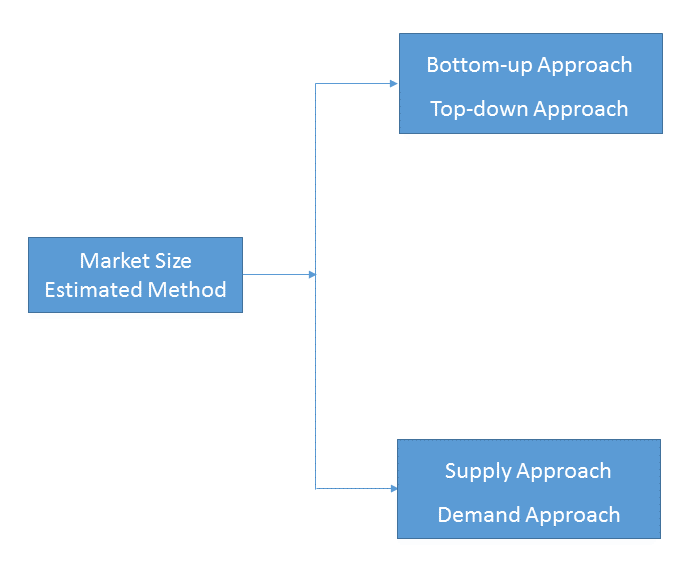
- Market Estimated Methodology:
Bottom-up & top-down approach, supply & demand approach are the most important method which is used by HDIN Research to estimate the market size.
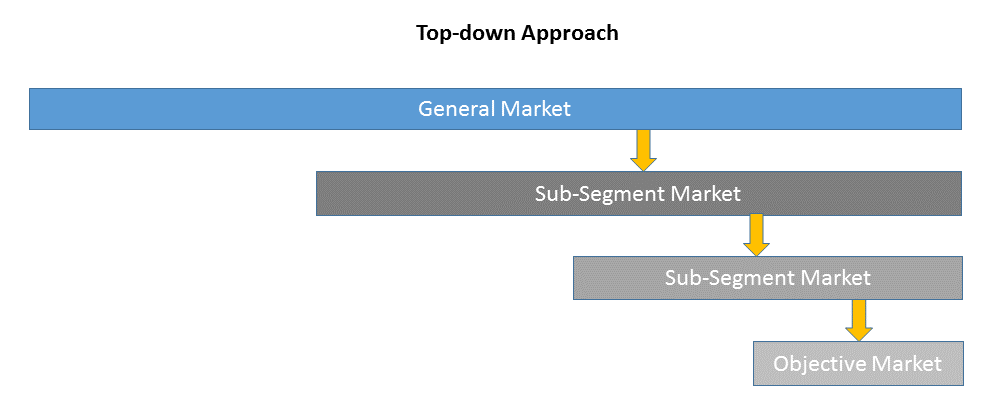
1)Top-down & Bottom-up Approach
Top-down approach uses a general market size figure and determines the percentage that the objective market represents.
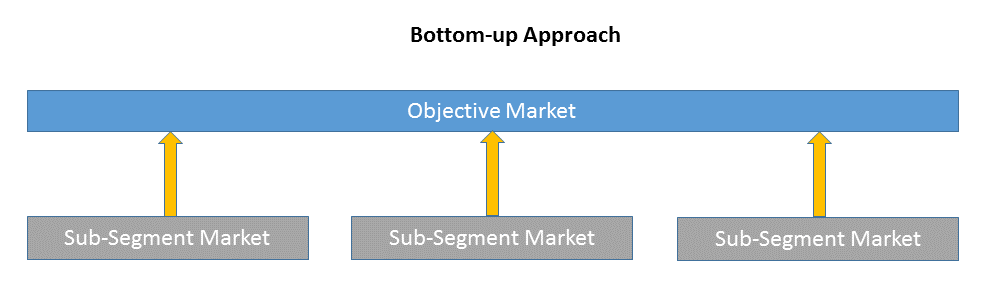
Bottom-up approach size the objective market by collecting the sub-segment information.
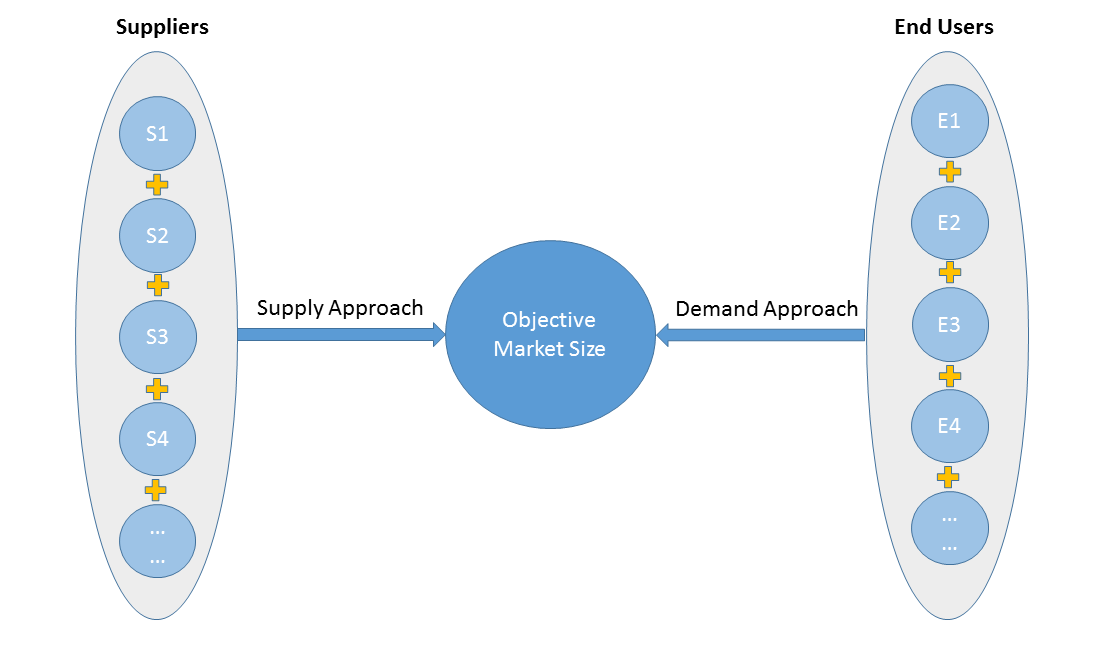
2)Supply & Demand Approach
Supply approach is based on assessments of the size of each competitor supplying the objective market.
Demand approach combine end-user data within a market to estimate the objective market size. It is sometimes referred to as bottom-up approach.
- Forecasting Methodology
- Numerous factors impacting the market trend are considered for forecast model:
- New technology and application in the future;
- New project planned/under contraction;
- Global and regional underlying economic growth;
- Threatens of substitute products;
- Industry expert opinion;
- Policy and Society implication.
- Analysis Tools
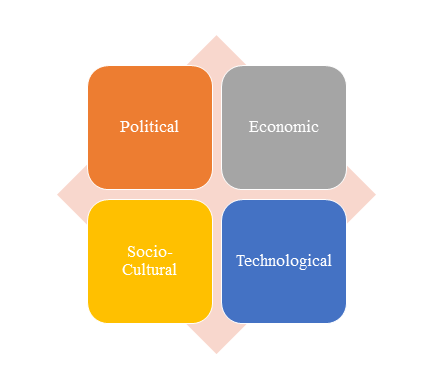
1)PEST Analysis
PEST Analysis is a simple and widely used tool that helps our client analyze the Political, Economic, Socio-Cultural, and Technological changes in their business environment.
- Benefits of a PEST analysis:
- It helps you to spot business opportunities, and it gives you advanced warning of significant threats.
- It reveals the direction of change within your business environment. This helps you shape what you’re doing, so that you work with change, rather than against it.
- It helps you avoid starting projects that are likely to fail, for reasons beyond your control.
- It can help you break free of unconscious assumptions when you enter a new country, region, or market; because it helps you develop an objective view of this new environment.
2)Porter’s Five Force Model Analysis
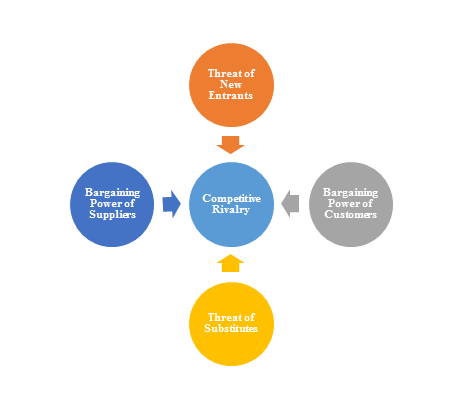
The Porter’s Five Force Model is a tool that can be used to analyze the opportunities and overall competitive advantage. The five forces that can assist in determining the competitive intensity and potential attractiveness within a specific area.
- Threat of New Entrants: Profitable industries that yield high returns will attract new firms.
- Threat of Substitutes: A substitute product uses a different technology to try to solve the same economic need.
- Bargaining Power of Customers: the ability of customers to put the firm under pressure, which also affects the customer's sensitivity to price changes.
- Bargaining Power of Suppliers: Suppliers of raw materials, components, labor, and services (such as expertise) to the firm can be a source of power over the firm when there are few substitutes.
- Competitive Rivalry: For most industries the intensity of competitive rivalry is the major determinant of the competitiveness of the industry.
3)Value Chain Analysis
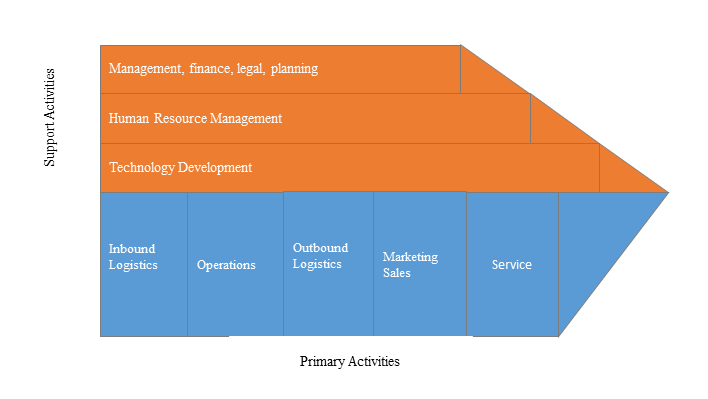
Value chain analysis is a tool to identify activities, within and around the firm and relating these activities to an assessment of competitive strength. Value chain can be analyzed by primary activities and supportive activities. Primary activities include: inbound logistics, operations, outbound logistics, marketing & sales, service. Support activities include: technology development, human resource management, management, finance, legal, planning.
4)SWOT Analysis
SWOT analysis is a tool used to evaluate a company's competitive position by identifying its strengths, weaknesses, opportunities and threats. The strengths and weakness is the inner factor; the opportunities and threats are the external factor. By analyzing the inner and external factors, the analysis can provide the detail information of the position of a player and the characteristics of the industry.
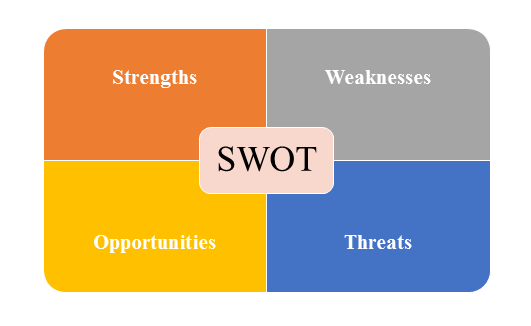
- Strengths describe what the player excels at and separates it from the competition
- Weaknesses stop the player from performing at its optimum level.
- Opportunities refer to favorable external factors that the player can use to give it a competitive advantage.
- Threats refer to factors that have the potential to harm the player.
- Data Sources
| Primary Sources | Secondary Sources |
|---|---|
| Face to face/Phone Interviews with market participants, such as: Manufactures; Distributors; End-users; Experts. Online Survey |
Government/International Organization Data: Annual Report/Presentation/Fact Book Internet Source Information Industry Association Data Free/Purchased Database Market Research Report Book/Journal/News |