Aerospace Fastener Market: Strategic Industry Analysis 2026-2031
- Single User License (1 Users) $ 3,500
- Team License (2~5 Users) $ 4,500
- Corporate License (>5 Users) $ 5,500
The aerospace fastener market size is valued at an estimated 8.8 to 9.8 billion USD in 2026, with a compound annual growth rate of 6.5% to 9.5% through 2031. has reached a defining structural inflection point. The market is driven by simultaneous commercial narrowbody acceleration, widebody renewal cycles, surging defense budgets, and an unprecedented aero-engine overhaul wave. Over the 2025 to 2044 horizon, authoritative fleet projections from commercial airframers indicate demand for approximately 41,700 new aircraft deliveries, underpinned by a 3.6% baseline compound annual expansion in global air passenger traffic.
Airbus is advancing production of its A320neo family toward 75 aircraft monthly by 2027 while scaling the widebody A350. Concurrently, Boeing is normalizing production across 737 MAX and 787 assembly lines, bolstered by regulatory clearance for rate increases secured in late 2025. In civil propulsion, CFM International expanded LEAP turbofan output by 28% year-over-year in 2025 to 1,800 units, targeting 2,600 units annually by 2028. Because an individual narrowbody aircraft requires over one million dedicated fasteners and widebody twin-aisles exceed two to three million units, structural assembly backlogs provide sustained long-term revenue visibility.
Simultaneously, the competitive landscape is undergoing rapid consolidation and structural de-risking. The sector remains concentrated among an elite tier: Howmet Aerospace, Precision Castparts Corp (PCC), LISI AEROSPACE, and National Aerospace Fasteners Corporation (NAFCO). Capacity constraints and manufacturing interruptions at key legacy facilities, notably SPS Technologies in North America, have disrupted airframer lines, prompting original equipment manufacturers (OEMs) to enforce dual-sourcing mandates and accelerate supplier diversification.
Concurrently, a bifurcated sales channel dynamic has emerged. While OEM assembly demands automated, sensor-enabled blind installation hardware and line-side automated replenishment, commercial aircraft engine maintenance, repair, and overhaul (MRO) volume is projected to expand by 50% to 70% between 2026 and 2031. This shift has elevated the strategic importance of automated C-parts logistics integrators, such as Bossard Group and Würth Group, who manage line-side replenishment and minimize stock-out risks across commercial airlines, military depots, and tier-1 aerostructure plants.
REGIONAL MARKET DYNAMICS
● NORTH AMERICA
North America represents the largest manufacturing base and procurement hub for aerospace fasteners. The market is anchored by large-scale commercial and military aircraft assembly operations, extensive propulsion design and manufacturing hubs, and specialized tier-1 aerostructure integrators.
Demand in the region is supported by the stabilization and production acceleration of Boeing commercial assembly lines. Following regulatory authorization from the Federal Aviation Administration in late 2025 to increase 737 MAX production rates, procurement of airframe structural pins, titanium shear bolts, and collar systems has recovered. Concurrently, widebody 787 assembly lines in South Carolina are consuming larger volumes of titanium fasteners. Propulsion procurement remains robust, with GE Aerospace and RTX Corporation (Pratt & Whitney) driving substantial requirements for hot-section superalloy fasteners and engine casing bolts.
The regional manufacturing footprint is characterized by high technical concentration. Howmet maintains major manufacturing and installation tooling complexes across Arizona (Tucson) and Southern California (Carson, City of Industry, Fullerton, Torrance). LISI AEROSPACE North America operates key production facilities across California, including Hi-Shear Corporation (Torrance), The Monadnock Company (City of Industry), and B&E Manufacturing (Garden Grove), supplemented by LISI AEROSPACE Canada in Dorval, Quebec.
Aerospace-dedicated C-parts distribution networks are centered in Texas, Arizona, and Florida, supported by facilities operated by Bossard Aerospace and regional distribution centers. In addition, nearshore manufacturing corridors in northern Mexico support the North American assembly ecosystem; Howmet maintains casting and fastener processing operations in Ciudad Acuña, while specialized hardware logistics hubs operate in Monterrey and Guadalajara to serve tier-1 assembly sites.
● EUROPE
Europe represents the second-largest global aerospace fastener market. Market demand is driven by the Airbus manufacturing network, regional propulsion primes including Safran and Rolls-Royce, and sustained increases in sovereign defense spending.
Airbus's operational ramp-up of the A320neo family from 64 aircraft per month toward an industrial baseline of 75 aircraft per month by 2027, coupled with output scaling of the A350, has expanded demand across European forging and thread-rolling facilities. In defense aviation, sovereign defense budgets among European nations expanded by an average of 11% year-over-year in 2025, reaching approximately 2.1% of gross domestic product, with North Atlantic Treaty Organization members establishing spending trajectories targeting 3.5% of GDP. This shift directly benefits programs such as the Dassault Rafale, Eurofighter Typhoon, and specialized military transport platforms.
The European manufacturing infrastructure is concentrated in France, the United Kingdom, Germany, and Italy. LISI AEROSPACE operates 19 production centers across eight countries, maintaining key French manufacturing complexes at Saint-Ouen-l'Aumône, Vignoux-sur-Barangeon, and Villefranche-de-Rouergue. In 2025, LISI allocated 63.80 million EUR (72.13 million USD) in capital expenditures to expand fastener production footprints in France and modernize production facilities in Saint-Brieuc.
Howmet operates fastener manufacturing plants across the United Kingdom in Leicester, Redditch, and Telford. In Southern Europe, Fontana Gruppo provides precision cold- and hot-forged defense components, while specialized manufacturing enclaves in Poland, Turkey, and Morocco feed machined and formed hardware into main assembly lines across France, Germany, and Spain.
● ASIA-PACIFIC
The Asia-Pacific region is the fastest-growing market. Growth is propelled by expanding commercial aircraft fleets, commercial aircraft manufacturing programs, and an aggressive strategic shift toward precision aerospace engineering across regional supply chains.
A defining structural development in the region is the international expansion of National Aerospace Fasteners Corporation (NAFCO), headquartered in Taiwan, China. Ranked among the world's leading engine fastener manufacturers, NAFCO experienced a 15.80% expansion in aerospace revenues in 2025, absorbing order flows from Western engine primes seeking qualified alternative manufacturing sources amid supply constraints in North America.
To manage localized cross-strait geopolitical exposure and comply with customer dual-sourcing mandates, NAFCO initiated an international manufacturing diversification program. The company acquired industrial facilities across the M3 and M4 land parcels in Malaysia during 2025, followed by the groundbreaking of its phase-two M2 production complex in early 2026. This initiative establishes a 27,000 to 30,000 square meter integrated manufacturing footprint outside of Taiwan, China, providing global engine manufacturers with alternative supply routes.
Concurrently, LISI AEROSPACE completed a portfolio realignment in the region by entering into an agreement in December 2025 to divest its 53.8% majority holding in Bangalore-based Ankit Fasteners back to its local joint-venture partner. At the same time, regional maritime disruptions along Middle Eastern and Red Sea shipping corridors increased container freight rates and lead times, reinforcing customer requirements for regional dual-source manufacturing and integrated assembly logistics.
● LATIN AMERICA
The Latin American aerospace fastener market is projected to expand at a compound annual growth rate of 5.5% to 7.5%. The market is anchored by commercial regional jet production in Brazil and expanding aerospace manufacturing corridors in Mexico.
Demand in South America is centered on Embraer's commercial E-Jets E2 and defense transport programs (C-390 Millennium). These platforms consume precision titanium airframe pins, lockbolts, and specialized interior panel hardware sourced via North American and European distribution channels.
Mexico serves as an integral manufacturing and nearshoring node for North American commercial airframes and defense systems. Manufacturing facilities in Baja California, Sonora, Chihuahua, Querétaro, and Nuevo León perform CNC machining, wire harness assembly, and aerostructure sub-assembly. Howmet operates aerospace component processing lines in Ciudad Acuña, while specialized logistics integrators, including Bossard Aerospace Mexico, maintain automated distribution hubs in Monterrey and Guadalajara to provide line-side C-parts management.
● MIDDLE EAST AND AFRICA
The Middle East and Africa region is positioned to grow at an estimated compound annual rate of 6.0% to 8.0%. The region operates as both an export manufacturing corridor bordering Europe and an expanding center for commercial widebody fleet operations and engine MRO consumption.
Industrial manufacturing capacity is clustered within North African aerospace hubs. Morocco has established a specialized precision aerospace hardware export base. Howmet Fastening Systems maintains an operational manufacturing plant in Casablanca, while LISI AEROSPACE operates LIXUS Industrie in Tangier, delivering machined and formed hardware directly to European final assembly lines under streamlined customs agreements.
Downstream demand is driven by major commercial airline operators across the Arabian Gulf, including Emirates, Qatar Airways, and flydubai. With large backlogs for widebody aircraft such as the Airbus A350, Boeing 777X, and Boeing 787, regional airlines are establishing specialized maintenance, repair, and overhaul centers. However, regional geopolitical disruptions along Red Sea shipping lanes in 2025 and 2026 resulted in freight detours around the Cape of Good Hope, extending component transit times and prompting regional operators to maintain larger safety stocks of engine replacement bolts and structural rivets.
SUPPLY CHAIN AND VALUE CHAIN ARCHITECTURE
● UPSTREAM: METALLURGY AND RAW MATERIAL PREPARATION
The aerospace fastener supply chain begins with vacuum induction melting (VIM) and vacuum arc remelting (VAR) of specialized aerospace-grade alloys. Upstream metallurgical systems include:
- Titanium Alloys: Ti-6Al-4V (Grade 5) and specialized beta-alloys (such as Ti-45Nb and Ti-15V-3Cr-3Al-3Sn), which provide a high strength-to-density ratio (density ~4.43 g/cm3) and galvanic compatibility with carbon-fiber aerostructures.
- High-Temperature Superalloys: Nickel- and cobalt-base superalloys, including Inconel 718, Inconel 625, Waspaloy, and A-286, engineered to retain yield strengths above 1,000 MPa at operating temperatures between 600 and 1,000 degrees Celsius while resisting cyclic fatigue, creep, and hot oxidation.
- High-Strength Alloy Steels: Structural steels, including AISI 4340, 300M, H11, and precipitation-hardening stainless steels (15-5PH, 17-4PH, Custom 465), delivering tensile strengths of 1,800 to 2,100 MPa for high-load airframe joints.
- Aerospace Aluminum Alloys: 2000-series (copper-bearing, e.g., 2024, 2117) and 7000-series (zinc-bearing, e.g., 7050, 7075) wire coils and extruded rods for shear rivets and low-weight interior structures.
- Copper and Brass Alloys: Free-cutting brass (such as C3604) and specialty copper-beryllium alloys for electrical grounding bushings, precision threaded inserts, and hydraulic fittings.
Supply chain risks in upstream metallurgy involve tight supplier qualification structures and geopolitical raw material dependencies. Howmet retains vertical integration through its Engineered Structures segment, producing titanium ingots, mill products, and extrusions that internally supply its Fastening Systems division.
In contrast, independent fastener manufacturers rely on merchant market mill suppliers for aerospace-certified metals. Restrictions on Russian titanium suppliers (such as VSMPO-AVISMA) have required aerospace suppliers to qualify alternative sponge and ingot sources in North America, Japan, and Western Europe. Additionally, sustainability requirements have accelerated the adoption of closed-loop revert recycling, in which titanium and nickel machining swarf is recovered, chemically cleaned, and re-melted into commercial-grade aerospace ingots.
● MIDSTREAM: PRECISION FORMING, MACHINING, AND SPECIAL PROCESSES
Midstream operations convert raw wire coils, bars, and billets into finished, certified aerospace fasteners through precision forming, thermal processing, and surface finishing:
- Cold and Hot Forging: High-speed multi-station cold headers form structural aluminum, alloy steel, and smaller titanium wire blanks into fastener preforms, preserving continuous metallurgical grain flow along the transition from head to shank. For high-temperature nickel superalloys and large-diameter titanium airframe bolts, induction-assisted hot forging is employed to shape heads without inducing micro-cracking or grain boundary degradation.
- Advanced Net-Shape Forming: Proprietary net-shape technologies, such as LISI's TYX forming process, utilize hydraulic presses operating at 1,000 to 3,000 tons to produce complex cross-sections. This approach reduces the required forming force compared to conventional forging, lowers buy-to-fly ratios, and minimizes raw material scrap.
- Precision CNC Turning and Autonomous Machining: Precision CNC lathes shape complex geometric features, including internal recess drives, collar locking grooves, thin-wall hollow shanks, and self-locking nut threads. The deployment of AI-supported autonomous micro-factories, such as the WATCH OUT systems installed at LISI's Saint-Ouen-l'Aumône facility, enables 24/7 autonomous production with real-time sensor feedback, automated tool wear compensation, and in-line defect sorting.
- Thread Rolling: To maximize cyclic fatigue resistance, threads are cold-rolled onto pre-ground shanks after final vacuum heat treatment. This continuous displacement process induces residual compressive stresses across thread roots, mitigating fatigue crack initiation during flight cycles.
- Nadcap Vacuum Heat Treatment: Fasteners undergo vacuum induction solution annealing, precipitation age hardening, and controlled inert-gas quenching to achieve target mechanical tensile and shear properties without surface decarburization, hydrogen embrittlement, or surface oxidation.
- Chemical Processing and Surface Coatings: Fastener surfaces receive Nadcap-accredited barrier coatings to prevent galling, wear, and corrosion. Common finishes include ion-vapor deposited (IVD) aluminum, passivated dry-film lubricants, cadmium alternatives, anodized conversions, and specialized proprietary anti-galling coatings (such as HI-KOTE) that ensure uniform torque-tension relationships during high-speed automated installation.
- Non-Destructive Testing and Automated Quality Verification: Fastener lots undergo 100% automated optical dimensional sorting, fluorescent penetrant inspection (FPI) for surface micro-fractures, eddy-current verification for material hardness, and ultrasonic load verification.
● DOWNSTREAM: OEM INTEGRATION, AUTOMATION, AND SMART DISTRIBUTION
The downstream value chain bridges component manufacturing with aircraft final assembly and fleet aftermarket support:
- Airframe Installation Tooling: Structural fasteners, blind bolts, and two-piece lockbolts require specialized hydraulic, pneumatic, and electric installation tooling. Modern aircraft assembly lines use automated robotic end-effectors mounted on articulated arms to drill, insert, clamp, and swage collars onto structural pins at rapid cycle times.
- Line-Side Smart C-Parts Logistics: Fasteners are classified as critical class-C hardware; a stock-out of a single part number can interrupt final assembly lines. Logistics providers, including Bossard and Würth, integrate automated Vendor-Managed Inventory (VMI) systems into customer facilities. These systems utilize weight-sensor bins (SmartBin), RFID scanning, and cloud-linked enterprise software to automate part replenishments and reduce indirect procurement costs.
- Fleet Overhaul and AOG Depot Logistics: The aerospace aftermarket operates through distributed networks of authorized aerospace distributors, repair stations, and aircraft-on-ground (AOG) support centers. Fastener distribution relies on specialized packaging, dual-language certification documentation, and regional buffer stock to support commercial flight operations and military maintenance depots worldwide.
DEEP-DIVE SEGMENTATION DYNAMICS
1. BY STRUCTURAL CRITICALITY
● PRIMARY STRUCTURAL FASTENERS
Primary structural fasteners are deployed in mission-critical flight joints where a single mechanical failure could compromise airframe structural integrity, result in cabin depressurization, cause wing or empennage separation, or lead to catastrophic engine failure.
Engineering Characteristics and Manufacturing Protocols:
- Engineered to withstand severe tensile, multiaxial shear, and cyclic fatigue loads under sustained operational stress.
- Processing requires vacuum-melted raw materials, controlled forging grain flow, post-heat-treat thread rolling, centerless shank grinding, and 100% non-destructive fluorescent penetrant testing.
- High barriers to entry, with qualification cycles at Boeing, Airbus, GE Aerospace, and Safran typically requiring two to five years of testing.
Flagship Product Families:
- Engine Casing Bolts and High-Temperature Locknuts: Precision hardware deployed across turbine casings, compressor disc attachments, and exhaust assemblies. NAFCO specializes in high-temperature engine self-locking nuts (reversible nuts, handle-mounted nuts, flat plate nuts) and casing bolts engineered to resist thermal relaxation and extreme vibrational environments.
- High-Strength Structural Lockbolts and Blind Bolting Systems: Howmet produces proprietary structural pin-and-collar lockbolt systems (Huck) used throughout fuselage barrel joins and wing-to-body fairings. LISI AEROSPACE manufactures the OPTIBLIND system, a structural blind fastener utilizing a pull-and-thread installation mechanism with integrated real-time load verification, designed for automated, one-sided composite assembly.
- Critical Tension and Shear Airframe Bolts: High-tensile titanium and superalloy bolts securing wing spars, engine pylon struts, and main landing gear attachments.
Financial Dynamics:
- This segment commands the highest average selling prices and operating gross margins, supported by multi-year OEM long-term agreements and high customer switching barriers.
● SECONDARY STRUCTURAL FASTENERS
Secondary structural fasteners are utilized in airframe and nacelle assemblies where mechanical stress is substantial, but failure does not directly cause immediate loss of the aircraft.
Engineering Characteristics and Manufacturing Protocols:
- Focused on installation accessibility, automated assembly compatibility, multi-axial shear endurance, and corrosion protection.
- Designed for integration into modular sub-assemblies to optimize cycle times on final assembly lines.
Flagship Product Families:
- Structural Gang Channels: Extruded aluminum or stainless steel channels holding floating, self-locking nut elements. NAFCO manufactures gang channels using continuous rail-molding techniques that eliminate separate hole-drilling and individual nut-riveting operations, accelerating airframe structural assembly and component replacement.
- Cowling and Access Mechanism Latches: Precision structural latch systems engineered for high shear and tension performance within compact spatial envelopes, including engine nacelles, radomes, and maintenance doors. LISI AEROSPACE expanded dedicated latch manufacturing capacity at its facilities in France (Vignoux-sur-Barangeon) and California to address demand.
- Clip Nuts, Fixed Nutplates, and Fluid-Line Clamps: Sheet-metal clip-on fasteners providing blind assembly points across secondary airframe structures, coupled with high-pressure fluid-line retention hardware.
Financial Dynamics:
- Driven by commercial assembly line acceleration. Operating margins remain stable, supported by automated manufacturing cells, progressive tooling, and multi-spindle machining centers.
● NON-STRUCTURAL AND INTERIOR FASTENERS
Non-structural fasteners secure commercial aircraft passenger cabins, cargo holds, passenger service units, galleys, lavatory modules, avionics enclosures, and aerodynamic access panels.
Engineering Characteristics and Manufacturing Protocols:
- Optimized for lightweight designs, rapid installation and removal, vibration damping, cabin aesthetics, and regulatory flammability compliance.
Flagship Product Families:
- Threaded Bushings and Inserts: Precision brass and aluminum threaded inserts, including NAFCO standard inserts and C3604 free-cutting brass bushings, installed directly into composite honeycomb panels, cabin partitions, and overhead stowage compartments.
- Surface-Bonded Fasteners and Studs: Click Bond pioneered adhesive-bonded surface-mount fastening systems. These components secure wire bundles, brackets, and interior furnishings directly onto composite airframe panels via structural adhesives, eliminating the need to drill holes and preserving composite laminate integrity.
- Quarter-Turn Quick-Release Fasteners and Wire Routing Hardware: Catalog hardware distributed by Bossard and Würth, facilitating tool-less or quarter-turn access to avionics bays and routing cabin electrical harnesses.
Financial Dynamics:
- Characterized by high unit volumes, lower individual component prices, and recurring demand driven by airline cabin retrofit and interior refresh cycles. Products are predominantly managed through automated C-parts logistics and vendor-managed inventory programs.
2. BY MATERIAL AND METALLURGICAL SYSTEM
● TITANIUM ALLOYS AEROSPACE FASTENERS
Titanium fasteners represent an essential material category for composite-intensive aircraft structures due to their structural characteristics and galvanic compatibility with carbon-fiber-reinforced polymers.
Metallurgical Grades and Characteristics:
- Predominantly Ti-6Al-4V (Grade 5) and specialized beta-titanium formulations (e.g., Ti-45Nb).
- Delivers an exceptional strength-to-density ratio (density ~4.43 g/cm3), high fatigue endurance, and galvanic isolation when paired with carbon fiber laminates, preventing the galvanic corrosion common to aluminum-steel interfaces.
Applications and Manufacturing Developments:
- High-tensile airframe pins, lockbolts, blind fasteners, and structural aircraft nuts. LISI AEROSPACE expanded its STARLITE nut family with titanium variants coated with HI-KOTE lubricants to prevent galling during automated high-speed torque installation.
- LISI deployed its proprietary TYX forming process for titanium components, using hydraulic presses operating up to 3,000 tons to reduce buy-to-fly ratios and raw material scrap.
- Howmet maintains vertical integration by supplying captive titanium ingots, mill products, and wire directly from its Engineered Structures operations to its Fastening Systems segment.
Market Factors:
- Titanium raw material supply and pricing remain exposed to geopolitical developments and export restrictions affecting traditional Russian producers. Manufacturers manage raw material risks through long-term supply agreements, contractual material pass-through formulas, and closed-loop scrap revert programs.
● SUPERALLOYS AEROSPACE FASTENERS (NICKEL- AND COBALT-BASE)
Superalloy fasteners provide specialized high-temperature strength, corrosion resistance, and thermal stability within aero-engine and gas turbine systems.
Metallurgical Grades and Characteristics:
- High-nickel and cobalt-base superalloys, including Inconel 718, Inconel 625, Waspaloy, A-286, and L-605.
- These alloys maintain structural yield strengths above 1,000 MPa at operating temperatures between 600 and 1,000 degrees Celsius while resisting mechanical creep, thermal fatigue, and hot gas oxidation.
Applications and Manufacturing Developments:
- Turbine casing joints, compressor rotor stacking, exhaust nozzle brackets, combustor casings, and engine pylon mountings.
- NAFCO specializes in the hot forging and precision machining of nickel-alloy engine fasteners, manufacturing self-locking nuts, casing studs, and rotating assembly bolts for turbofan programs.
- Howmet manufactures nickel superalloy fastening systems that integrate with its investment-cast engine components and rolled rings.
Market Factors:
- This segment benefits from production increases in commercial narrowbody and widebody turbofans, alongside rising shop visits within engine MRO networks. Production requires Nadcap-accredited vacuum induction heat-treating lines, optical defect inspection, and specialized CNC machining cells.
● ALLOY STEELS AEROSPACE FASTENERS
Alloy steel fasteners provide high tensile strength, shear rigidity, and mechanical toughness for heavy load-bearing airframe applications.
Metallurgical Grades and Characteristics:
- High-strength low-alloy steels (including AISI 4340, 300M, and H11) and precipitation-hardening stainless steels (15-5PH, 17-4PH, Custom 465, and A286).
- Capable of achieving ultimate tensile strengths between 1,800 and 2,100 MPa, providing high clamping force and shear resistance.
Applications and Manufacturing Developments:
- Main landing gear retraction assemblies, wheel-and-brake mounting bolts, wing-to-fuselage attachments, and engine pylon links.
- Requires barrier coatings, such as cadmium replacements, zinc-nickel plating, or ion-vapor deposited aluminum, to prevent hydrogen embrittlement and environmental corrosion.
- Specialized standard part distributors, including Bossard and Würth, provide catalog stainless steel components across secondary structures.
Market Factors:
- A mature product segment facing customer-driven sustainability initiatives, including preliminary feasibility assessments into low-emission raw steel options for assembly hardware.
● ALUMINUM ALLOYS AEROSPACE FASTENERS
Aluminum fasteners provide low material density for shear-dominated joints, sheet-metal aerostructures, and weight-sensitive aircraft systems.
Metallurgical Grades and Characteristics:
- High-strength copper-bearing 2000-series (e.g., 2024, 2117) and zinc-bearing 7000-series (e.g., 7050, 7075) aluminum alloys.
- Delivers low component density (density ~2.7 to 2.8 g/cm3) with thermal expansion properties that match metallic aluminum aircraft skins, stringers, and frames.
Applications and Manufacturing Developments:
- Solid rivets for exterior fuselage skin lap joints, lightweight blind fasteners, hydraulic tube couplings, and electrical bracket hardware.
- Advanced net-shape forming is expanding into aluminum alloys. LISI AEROSPACE extended its TYX forming process from titanium to aluminum, completing TRL5 validation across prototype part numbers in late 2025 and progressing toward pilot-line demonstration (TRL6) to support aircraft entry.
Market Factors:
- Cross-border trade measures, including U.S. tariffs on imported aluminum products implemented in early 2025, have increased import duty costs for international metal fabricators, prompting manufacturers to seek tariff exclusions or establish dual-region production footprints.
● OTHER MATERIAL SYSTEMS (COMPOSITES, COPPER, AND ADVANCED COATINGS)
- Free-Cutting Brass and Copper Alloys: Materials such as C3604 brass, utilized by NAFCO for precision threaded bushings, electrical grounding hardware, and hydraulic fluid line caps.
- High-Performance Engineered Polymers: Materials including polyetheretherketone (PEEK), polyamide-imide (PAI), and glass-filled composites used for interior routing brackets, wire standoffs, and non-structural panels where weight reduction and electrical insulation are priorities.
3. BY SALES CHANNELS
● OEM DIRECT SUPPLY CHANNEL
The original equipment manufacturer (OEM) direct channel encompasses sales to commercial airframers, engine manufacturers, and major tier-1 aerostructure integrators.
Commercial Structure and Entry Requirements:
- Procurement is conducted primarily through multi-year Long-Term Agreements (LTAs) spanning three to ten years. These contracts generally incorporate indexed pricing formulas that adjust for fluctuations in raw materials (titanium, nickel, stainless steel) and industrial energy costs.
- Suppliers must clear comprehensive technical audits, obtain platform-specific part qualifications, and maintain operational data integration with customer manufacturing planning systems.
- Howmet provides direct supply to major commercial aircraft and engine programs, with RTX Corporation and GE Aerospace each accounting for approximately 11% of Howmet's consolidated third-party net sales in 2025. NAFCO maintains direct OEM tier-1 certifications with GE Aerospace, Safran, Rolls-Royce, Pratt & Whitney, Collins Aerospace, Honeywell, and Moog.
Collaborative Engineering and Platform Integration:
- Fastener producers locate engineering teams near airframer design facilities. LISI AEROSPACE operates Customer Application Development (CAD) centers in Europe and North America to co-develop fastening systems directly with airframe design teams, supporting early-stage integration on new aircraft platforms.
● MAINTENANCE, REPAIR, AND OVERHAUL (MRO) AFTERMARKET CHANNEL
The aftermarket MRO channel provides recurring, counter-cyclical revenue driven by commercial flight cycles, engine operating hours, and mandatory airworthiness maintenance schedules.
Fleet Utilization and Maintenance Dynamics:
- Commercial engine overhauls follow defined flight-hour and operating-cycle thresholds. As global commercial airlines expanded flight operations post-pandemic, next-generation turbofans—led by the CFM LEAP platform—began entering initial shop-visit overhaul cycles.
- Commercial engine overhaul volume is projected to grow by 50% between 2025 and 2028, and up to 70% by 2031. This dynamic drives sustained replacement demand for high-temperature turbine bolts, locknuts, exhaust hardware, and structural pins that must be replaced during engine teardowns.
Specialized Aerospace Distribution and Inventory Management:
- Commercial airlines and independent MRO stations rely on authorized aerospace stockists and specialized logistics providers to avoid carrying large, slow-moving inventories of diverse part numbers.
- Global C-parts distributors, such as Bossard Group and Würth Group, manage localized inventory hubs, maintain full chemical-lot traceability documentation, and provide 24/7 aircraft-on-ground (AOG) rapid-response delivery services to support airline line-maintenance facilities globally.
4. BY DOWNSTREAM APPLICATIONS
● COMMERCIAL AIRCRAFT AND CIVIL AVIATION
Commercial air transport constitutes the largest application sector, accounting for over 70% of total aerospace fastener consumption.
Production Rates and Program Volumes:
- Commercial Narrowbody Programs: Airbus manufactured approximately 64 A320neo family aircraft per month during 2025, progressing toward an industrial target of 75 aircraft monthly by 2027. Boeing's 737 MAX production lines stabilized and received regulatory approval for planned rate increases in late 2025.
- Commercial Widebody Programs: Build rates for the composite-intensive Airbus A350 and Boeing 787 continued to recover, supporting demand for specialized titanium structural bolts, collar systems, and high-strength pins.
- Commercial Propulsion Output: CFM International increased production of the LEAP turbofan platform by 28% year-over-year in 2025 to 1,800 units, targeting 2,600 units annually by 2028.
- Long-Term Commercial Aircraft Demand: Multi-decade market forecasts from airframers project approximately 41,700 new aircraft deliveries between 2025 and 2044, driven by a 3.6% compound annual growth rate in passenger traffic.
● DEFENSE AND MILITARY AVIATION
Defense aviation provides a steady, high-margin end market supported by multi-year government programs and shifting geopolitical security priorities.
1.1 Study Framework and Research Objectives 1
1.2 Aerospace Fastener Product Scope and Taxonomy 2
1.3 Research Methodology and Data Triangulation 3
1.4 Bottom-Up and Top-Down Market Sizing Models 4
1.5 Secondary and Primary Industry Source Verification 5
1.6 Acronyms and Technical Abbreviations 6
Chapter 2 Global Aerospace Fastener Industry Ecosystem and Value Chain Architecture 7
2.1 End-to-End Aerospace Fastener Value Chain Matrix 7
2.2 Upstream Raw Material Sourcing: Metallurgy, Ingot Processing, and Specialty Alloys 8
2.3 Midstream Manufacturing Processes: Cold Heading, Thread Rolling, Heat Treatment, and Surface Coating 10
2.4 Downstream Airframe Assembly, Engine Integration, and MRO Workflows 11
2.5 Regulatory Certification Framework: AS9100, NADCAP, and OEM Qualified Manufacturer Lists (QML) 12
Chapter 3 Global Aerospace Fastener Market by Structural Criticality 14
3.1 Primary Structural Fasteners (Flight-Critical, High-Load Airframe and Wing Attachments) 14
3.2 Secondary Structural Fasteners (Panels, Nacelles, Access Doors, Internal Brackets) 17
3.3 Non-Structural and Cabin Interior Fasteners (Monogram Systems, Galleys, Seating Track Fasteners) 19
Chapter 4 Global Aerospace Fastener Market by Material and Metallurgical System 21
4.1 Titanium Alloys (Ti-6Al-4V, Ti-Beta-C) Aerospace Fasteners 21
4.2 Superalloys (Inconel, A286, Nickel-Cobalt Base) Aerospace Fasteners 24
4.3 Alloy Steels (Cadmium-Plated, High-Strength Steels) Aerospace Fasteners 25
4.4 Aluminum Alloys (2024, 7075 Series) Aerospace Fasteners 26
4.5 Other Advanced Composites and Specialty Non-Ferrous Formulations 27
Chapter 5 Global Aerospace Fastener Market by Downstream Application 29
5.1 Commercial Aircraft and Civil Aviation 29
5.2 Defense and Military Aviation 32
5.3 Commercial Spaceflight and Launch Systems 34
Chapter 6 Global Aerospace Fastener Market by Sales and Distribution Channel 36
6.1 Direct Original Equipment Manufacturer (OEM) Long-Term Agreements (LTAs) 36
6.2 Maintenance, Repair, and Overhaul (MRO) Aftermarket Distribution 38
Chapter 7 Global Cross-Border Trade and Logistics Flow 42
7.1 Global Trade Map: Primary Exporting Hubs vs. Assembly Demand Centers 42
7.2 Tariffs, Export Controls (ITAR/EAR), and Bilateral Aviation Safety Agreements (BASA) 44
7.3 Nearshoring and Multi-Sourcing Strategic Inventory Buffering (2021-2031) 46
Chapter 8 Global Regional and Key Country Market Breakdown 48
8.1 North America Aerospace Fastener Market Dynamics 48
8.1.1 United States 49
8.1.2 Canada 51
8.1.3 Mexico 52
8.2 Europe Aerospace Fastener Market Dynamics 53
8.2.1 France 54
8.2.2 Germany 55
8.2.3 United Kingdom 56
8.2.4 Spain & Rest of Europe 57
8.3 Asia-Pacific Aerospace Fastener Market Dynamics 58
8.3.1 China 58
8.3.2 Japan 59
8.3.3 Taiwan (China) 60
8.3.4 India & Southeast Asia 60
8.4 Rest of the World (Brazil and United Arab Emirates) 61
Chapter 9 Competitive Landscape, OEM Sourcing Models, and Market Concentration 62
9.1 Global Market Share Matrix and Tier-Level Mapping (2021-2026) 62
9.2 OEM Sourcing Dynamics: Dual-Sourcing Policies and Direct Procurement Consortia 63
9.3 Mergers, Acquisitions, and Vertically Integrated Manufacturing Capacity 64
Chapter 10 Corporate Intelligence and Strategic Competitor Analysis 66
10.1 Lisi S.A. 66
10.1.1 Corporate Profile, Manufacturing Footprint, and Product Portfolio 66
10.1.2 SWOT Analysis and Strategic Risk Assessment 67
10.1.3 Aerospace Fastener Financial Performance: Revenue, Cost, and Gross Margin (2021-2026) 68
10.1.4 Global Market Share and Capacity Expansion Vectors 69
10.2 Howmet Aerospace 70
10.2.1 Corporate Profile, Manufacturing Footprint, and Product Portfolio 70
10.2.2 SWOT Analysis and Strategic Risk Assessment 71
10.2.3 Aerospace Fastener Financial Performance: Revenue, Cost, and Gross Margin (2021-2026) 72
10.2.4 Global Market Share and High-Strength Fastener R&D Programs 73
10.3 Precision Castparts Corp (PCC) 74
10.3.1 Corporate Profile, Manufacturing Footprint, and Product Portfolio 74
10.3.2 SWOT Analysis and Strategic Risk Assessment 75
10.3.3 Aerospace Fastener Financial Performance: Revenue, Cost, and Gross Margin (2021-2026) 76
10.3.4 Global Market Share and Integrated Nickel-Alloy Value Chain Control 77
10.4 National Aerospace Fasteners Corporation (NAFCO) 78
10.4.1 Corporate Profile, Manufacturing Footprint, and Product Portfolio 78
10.4.2 SWOT Analysis and Strategic Risk Assessment 79
10.4.3 Aerospace Fastener Financial Performance: Revenue, Cost, and Gross Margin (2021-2026) 80
10.4.4 Global Market Share and Asian Aerospace Supply Chain Integration 81
10.5 Bossard Holding AG 82
10.5.1 Corporate Profile, Logistics Network, and Product Portfolio 82
10.5.2 SWOT Analysis and Smart Factory Logistics Assessment 83
10.5.3 Aerospace Fastener Financial Performance: Revenue, Cost, and Gross Margin (2021-2026) 84
10.5.4 Global Market Share and C-Class Components Distribution Footprint 85
10.6 Würth Group 86
10.6.1 Corporate Profile, Global Assembly Footprint, and Product Portfolio 86
10.6.2 SWOT Analysis and Strategic Risk Assessment 87
10.6.3 Aerospace Fastener Financial Performance: Revenue, Cost, and Gross Margin (2021-2026) 88
10.6.4 Global Market Share and Vendor Managed Inventory (VMI) Expansion 89
10.7 Fontana Gruppo 90
10.7.1 Corporate Profile, Manufacturing Footprint, and Product Portfolio 90
10.7.2 SWOT Analysis and Strategic Risk Assessment 91
10.7.3 Aerospace Fastener Financial Performance: Revenue, Cost, and Gross Margin (2021-2026) 92
10.7.4 Global Market Share and European Structural Fastener Footprint 93
10.8 National Rivet & Manufacturing Co. 94
10.8.1 Corporate Profile, Manufacturing Footprint, and Product Portfolio 94
10.8.2 SWOT Analysis and Cold Heading Specialization Assessment 95
10.8.3 Aerospace Fastener Financial Performance: Revenue, Cost, and Gross Margin (2021-2026) 96
10.8.4 Global Market Share and Solid Rivet Niche Positioning 97
10.9 Click Bond Inc. 98
10.9.1 Corporate Profile, Patented Adhesive-Bonded Fastener Portfolio 98
10.9.2 SWOT Analysis and Strategic Risk Assessment 99
10.9.3 Aerospace Fastener Financial Performance: Revenue, Cost, and Gross Margin (2021-2026) 100
10.9.4 Global Market Share and Advanced Fastening Innovation Roadmap 101
10.10 Nedschroef 102
10.10.1 Corporate Profile, Machinery Integration, and Product Portfolio 102
10.10.2 SWOT Analysis and Strategic Risk Assessment 103
10.10.3 Aerospace Fastener Financial Performance: Revenue, Cost, and Gross Margin (2021-2026) 104
10.10.4 Global Market Share and Specialty Aerospace Fastener Penetration 105
Table 2 High-Performance Aerospace Fastener Metallurgical Specifications and Standard Equivalents 9
Table 3 Global Aerospace Fastener Market Size by Structural Criticality, USD Million (2021-2026) 15
Table 4 Global Aerospace Fastener Market Size Forecast by Structural Criticality, USD Million (2027-2031) 16
Table 5 Primary Structural Fastener Market Volume by Airframe Zone, Million Units (2021-2031) 17
Table 6 Secondary Structural Fastener Market Value by Fastener Type, USD Million (2021-2031) 18
Table 7 Cabin Interior and Non-Structural Fastener Value by Aircraft Cabin Category, USD Million (2021-2031) 20
Table 8 Global Aerospace Fastener Market Value by Material System, USD Million (2021-2026) 22
Table 9 Global Aerospace Fastener Market Value Forecast by Material System, USD Million (2027-2031) 23
Table 10 Titanium Alloy Fasteners Volume Consumption by Commercial Program, Metric Tons (2021-2031) 24
Table 11 Superalloy Aerospace Fastener Shipments by Engine Hot-Section Application, Thousand Units (2021-2031) 25
Table 12 Alloy Steel Fasteners Market Value by Plating Type (Cadmium, Zinc-Nickel), USD Million (2021-2031) 26
Table 13 Aluminum Alloy Fasteners Market Size by Series (2024, 7075), USD Million (2021-2031) 27
Table 14 Global Aerospace Fastener Market Size by Downstream Application, USD Million (2021-2026) 29
Table 15 Global Aerospace Fastener Market Size Forecast by Downstream Application, USD Million (2027-2031) 30
Table 16 Commercial Aircraft Aerospace Fastener Consumption by Build Rate Scenario, USD Million (2021-2031) 31
Table 17 Defense & Military Aviation Fastener Value by Platform Class, USD Million (2021-2031) 33
Table 18 Commercial Spaceflight Fastener Demand by Launch Vehicle Architecture, USD Million (2021-2031) 35
Table 19 Global Aerospace Fastener Market Size by Sales Channel, USD Million (2021-2026) 37
Table 20 Global Aerospace Fastener Market Forecast by Sales Channel, USD Million (2027-2031) 38
Table 21 Commercial Airframe MRO Fastener Replacement Frequency and Spend by Check Type (C-Check, D-Check) 39
Table 22 Top 10 Bilateral Export-Import Flow Values for Aerospace Fasteners, USD Million (2021-2026) 43
Table 23 Import Tariff Structures and Regulatory Compliance Mandates across Key Jurisdictions 45
Table 24 Global Aerospace Fastener Market Value by Geographic Region, USD Million (2021-2026) 48
Table 25 Global Aerospace Fastener Market Value Forecast by Geographic Region, USD Million (2027-2031) 49
Table 26 North America Aerospace Fastener Market by Country, USD Million (2021-2031) 50
Table 27 United States Aerospace Fastener Demand by Defense vs. Civil Sector, USD Million (2021-2031) 51
Table 28 Europe Aerospace Fastener Market by Country, USD Million (2021-2031) 53
Table 29 France Aerospace Fastener Production Output vs. Domestic Consumption, USD Million (2021-2031) 54
Table 30 Asia-Pacific Aerospace Fastener Market by Country/Region, USD Million (2021-2031) 58
Table 31 China Aerospace Fastener Domestic Procurement for C919/ARJ21 Platforms, USD Million (2021-2031) 59
Table 32 Tier-1 OEM Sourcing Matrix: Fastener Manufacturer Approvals by Major Airframers 63
Table 33 Lisi S.A. Aerospace Fastener Revenue, Cost and Gross Margin (2021-2026) 68
Table 34 Howmet Aerospace Aerospace Fastener Revenue, Cost and Gross Margin (2021-2026) 72
Table 35 Precision Castparts Corp (PCC) Aerospace Fastener Revenue, Cost and Gross Margin (2021-2026) 76
Table 36 National Aerospace Fasteners Corporation (NAFCO) Aerospace Fastener Revenue, Cost and Gross Margin (2021-2026) 80
Table 37 Bossard Holding AG Aerospace Fastener Revenue, Cost and Gross Margin (2021-2026) 84
Table 38 Würth Group Aerospace Fastener Revenue, Cost and Gross Margin (2021-2026) 88
Table 39 Fontana Gruppo Aerospace Fastener Revenue, Cost and Gross Margin (2021-2026) 92
Table 40 National Rivet & Manufacturing Co. Aerospace Fastener Revenue, Cost and Gross Margin (2021-2026) 96
Table 41 Click Bond Inc. Aerospace Fastener Revenue, Cost and Gross Margin (2021-2026) 100
Table 42 Nedschroef Aerospace Fastener Revenue, Cost and Gross Margin (2021-2026) 104
Figure 1 Research Process Flow and Empirical Validation Architecture 4
Figure 2 Aerospace Fastener Manufacturing Flowchart: From Rod Annealing to Surface Passivation 10
Figure 3 Primary Structural Fastener Market Share Breakdown by Load Bearing Zone (2026) 14
Figure 4 Global Aerospace Fastener Volume Trajectory by Criticality Tier (2021-2031) 19
Figure 5 Penetration Rate of Titanium vs. Superalloys in New-Generation Wide-Body Airframes (2021-2031) 23
Figure 6 Global Aerospace Fastener Revenue Split by Metallurgical System (2026 vs. 2031) 28
Figure 7 Global Commercial Aviation Fastener Consumption Curve vs. Aircraft Delivery Rates (2021-2031) 32
Figure 8 Commercial Spaceflight Fastener Annualized Growth Velocity (2021-2031) 34
Figure 9 Sales Channel Distribution Dynamics: OEM Long-Term Agreements vs. MRO Aftermarket (2026) 36
Figure 10 Vendor Managed Inventory Penetration Curve in Commercial MRO Facilities (2021-2031) 41
Figure 11 Global Aerospace Fastener Trade Corridors and Critical Shipping Hub Hubs (2026) 43
Figure 12 Regional Market Share Redistribution: North America, Europe, Asia-Pacific, RoW (2021, 2026, 2031) 50
Figure 13 United States Aerospace Fastener Production Output vs. Export Trajectory, USD Million (2021-2031) 52
Figure 14 European Aerospace Fastener Consumption Share by Country (2026) 55
Figure 15 Asia-Pacific Commercial Aircraft Assembly Fastener Volume Growth (2021-2031) 59
Figure 16 Global Aerospace Fastener Market Concentration (CR4, CR8) Index (2021-2026) 62
Figure 17 Lisi S.A. Aerospace Fastener Market Share (2021-2026) 69
Figure 18 Howmet Aerospace Aerospace Fastener Market Share (2021-2026) 73
Figure 19 Precision Castparts Corp (PCC) Aerospace Fastener Market Share (2021-2026) 77
Figure 20 National Aerospace Fasteners Corporation (NAFCO) Aerospace Fastener Market Share (2021-2026) 81
Figure 21 Bossard Holding AG Aerospace Fastener Market Share (2021-2026) 85
Figure 22 Würth Group Aerospace Fastener Market Share (2021-2026) 89
Figure 23 Fontana Gruppo Aerospace Fastener Market Share (2021-2026) 93
Figure 24 National Rivet & Manufacturing Co. Aerospace Fastener Market Share (2021-2026) 97
Figure 25 Click Bond Inc. Aerospace Fastener Market Share (2021-2026) 101
Figure 26 Nedschroef Aerospace Fastener Market Share (2021-2026) 105
Research Methodology
- Market Estimated Methodology:
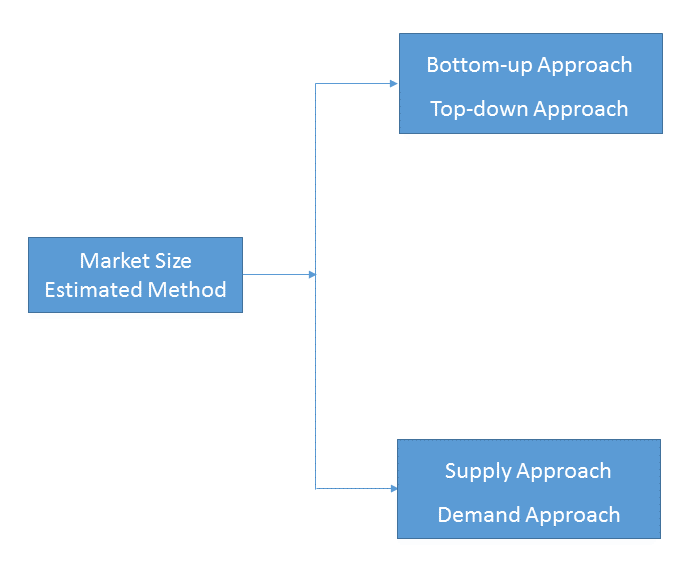
Bottom-up & top-down approach, supply & demand approach are the most important method which is used by HDIN Research to estimate the market size.
1)Top-down & Bottom-up Approach
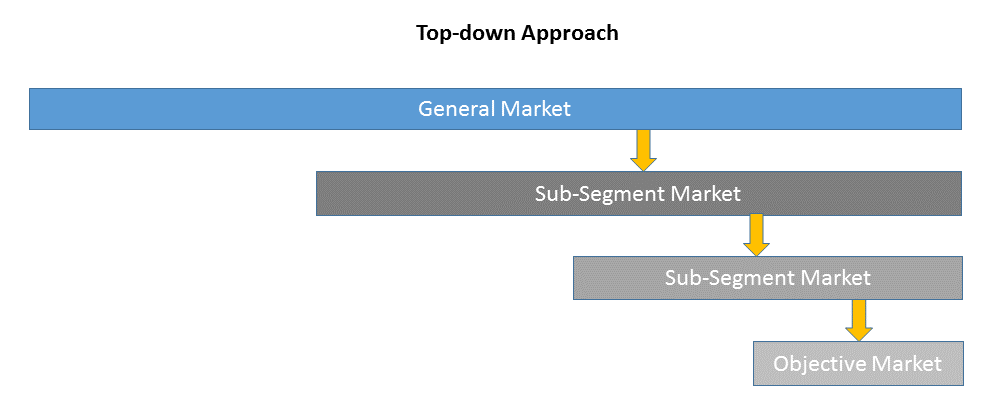
Top-down approach uses a general market size figure and determines the percentage that the objective market represents.
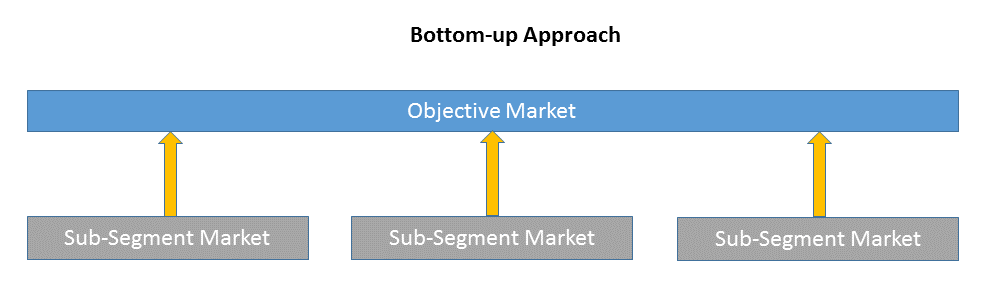
Bottom-up approach size the objective market by collecting the sub-segment information.
2)Supply & Demand Approach
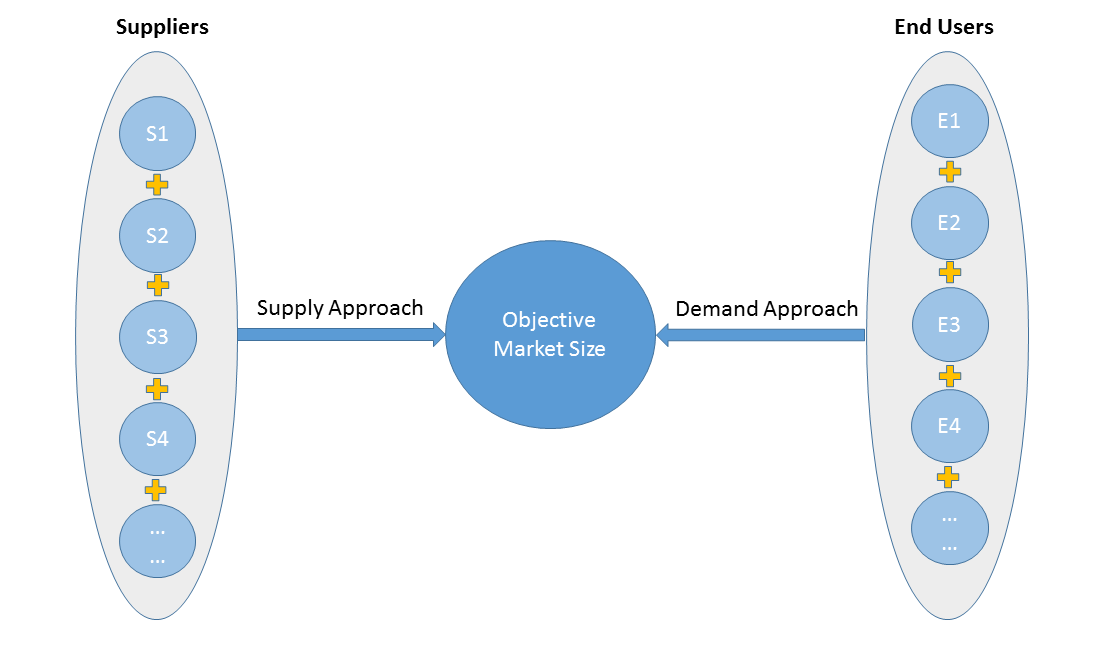
Supply approach is based on assessments of the size of each competitor supplying the objective market.
Demand approach combine end-user data within a market to estimate the objective market size. It is sometimes referred to as bottom-up approach.
- Forecasting Methodology
- Numerous factors impacting the market trend are considered for forecast model:
- New technology and application in the future;
- New project planned/under contraction;
- Global and regional underlying economic growth;
- Threatens of substitute products;
- Industry expert opinion;
- Policy and Society implication.
- Analysis Tools
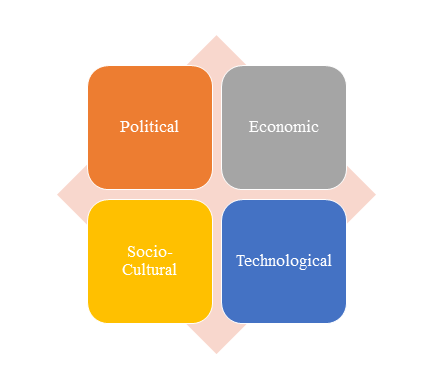
1)PEST Analysis
PEST Analysis is a simple and widely used tool that helps our client analyze the Political, Economic, Socio-Cultural, and Technological changes in their business environment.
- Benefits of a PEST analysis:
- It helps you to spot business opportunities, and it gives you advanced warning of significant threats.
- It reveals the direction of change within your business environment. This helps you shape what you’re doing, so that you work with change, rather than against it.
- It helps you avoid starting projects that are likely to fail, for reasons beyond your control.
- It can help you break free of unconscious assumptions when you enter a new country, region, or market; because it helps you develop an objective view of this new environment.
2)Porter’s Five Force Model Analysis
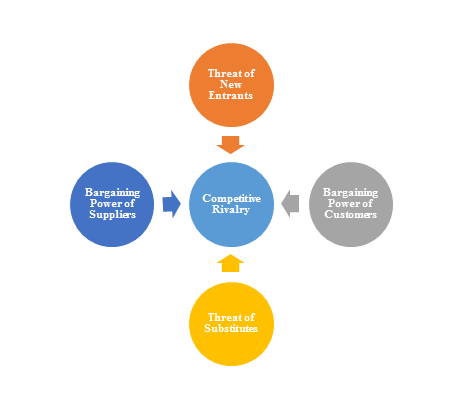
The Porter’s Five Force Model is a tool that can be used to analyze the opportunities and overall competitive advantage. The five forces that can assist in determining the competitive intensity and potential attractiveness within a specific area.
- Threat of New Entrants: Profitable industries that yield high returns will attract new firms.
- Threat of Substitutes: A substitute product uses a different technology to try to solve the same economic need.
- Bargaining Power of Customers: the ability of customers to put the firm under pressure, which also affects the customer's sensitivity to price changes.
- Bargaining Power of Suppliers: Suppliers of raw materials, components, labor, and services (such as expertise) to the firm can be a source of power over the firm when there are few substitutes.
- Competitive Rivalry: For most industries the intensity of competitive rivalry is the major determinant of the competitiveness of the industry.
3)Value Chain Analysis
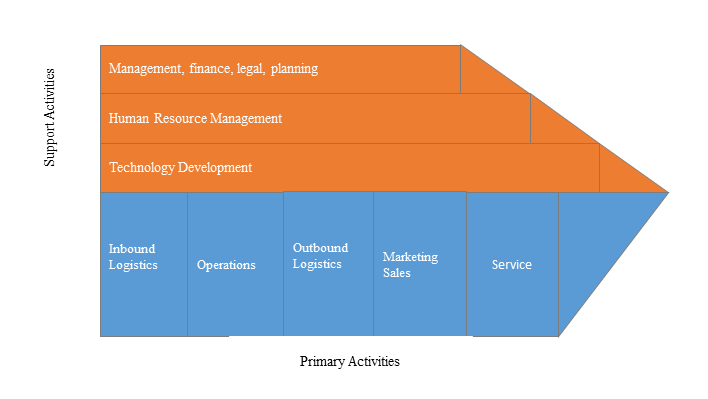
Value chain analysis is a tool to identify activities, within and around the firm and relating these activities to an assessment of competitive strength. Value chain can be analyzed by primary activities and supportive activities. Primary activities include: inbound logistics, operations, outbound logistics, marketing & sales, service. Support activities include: technology development, human resource management, management, finance, legal, planning.
4)SWOT Analysis
SWOT analysis is a tool used to evaluate a company's competitive position by identifying its strengths, weaknesses, opportunities and threats. The strengths and weakness is the inner factor; the opportunities and threats are the external factor. By analyzing the inner and external factors, the analysis can provide the detail information of the position of a player and the characteristics of the industry.
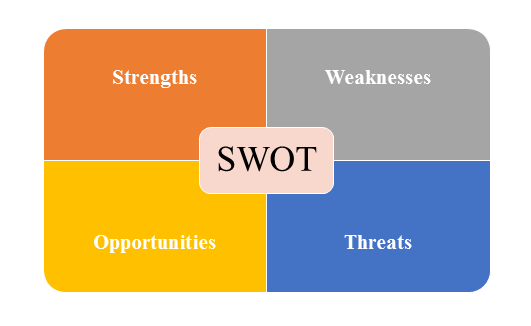
- Strengths describe what the player excels at and separates it from the competition
- Weaknesses stop the player from performing at its optimum level.
- Opportunities refer to favorable external factors that the player can use to give it a competitive advantage.
- Threats refer to factors that have the potential to harm the player.
- Data Sources
| Primary Sources | Secondary Sources |
|---|---|
| Face to face/Phone Interviews with market participants, such as: Manufactures; Distributors; End-users; Experts. Online Survey |
Government/International Organization Data: Annual Report/Presentation/Fact Book Internet Source Information Industry Association Data Free/Purchased Database Market Research Report Book/Journal/News |