Automotive Connector Market: Growth, Tech & Global Trends
- Single User License (1 Users) $ 3,500
- Team License (2~5 Users) $ 4,500
- Corporate License (>5 Users) $ 5,500
The global automotive connector market size is estimated between 20 billion and 22 billion USD in 2026 with a compound annual growth rate of 4.8% to 6.8% through 2031. This expansion is governed by an ongoing vehicular paradigm shift: the dual transition toward electrified powertrains and centralized, software-defined vehicle architectures.
A baseline internal combustion engine vehicle historically utilizes between 2,500 and 3,500 electromechanical interconnection points, predominantly localized across 12V distributed networks. Battery electric platforms increase connector intensity by roughly 40%, introducing 400V to 800V+ direct-current traction circuits alongside multi-gigabit sensor channels. The industry's technological focus has moved beyond basic mechanical continuity. Critical requirements now center on high-voltage insulation integrity under rapid thermal cycling, 360-degree electromagnetic interference shielding, continuous liquid-cooled current transmission exceeding 600A, and RF transmission stability up to 20 GHz.
Product Classification & Engineering Architecture
Automotive connectors serve as separable electromechanical interfaces connecting wiring harnesses, printed circuit boards, and integrated modules. They are engineered to endure broad temperature ranges (-40 deg C to 150 deg C), sustained road vibrations up to severity level 4 (LV214 engine mounting specifications), fluid exposure, and mechanical shocks without signal degradation or fretting wear. Interconnect architectures fall into three primary categories:
1. High-Voltage Connectors
High-voltage connectors are designed for electrified vehicle powertrains operating across 400V to 800V+ platforms, with impulse test ratings exceeding 3,000V AC and continuous current capabilities ranging from 80A to over 600A. A vital design element is the High-Voltage Interlock Loop. This closed, low-voltage control circuit breaks electromechanical continuity prior to the disconnection of the main high-voltage pins, eliminating hazardous DC arcing during service procedures or collision impacts.
Electromagnetic compatibility mandates the incorporation of cast or stamped 360-degree metal shielding cages within flame-retardant polymer housings (UL94 V-0, utilizing materials like PBT and PPS). These protect microcontrollers and cabin infotainment systems from switching noise generated by Silicon Carbide and IGBT traction inverters. In response to vehicle lightweighting mandates, terminal contact interfaces are shifting from traditional heavy-gauge round copper pins toward stamped blade contacts and ultrasonic-welded aluminum busbars.
2. Low-Voltage Connectors
Operating across 12V, 24V, and emerging 48V zonal networks, low-voltage systems handle control signals, sensor telemetry, and auxiliary power up to 50A. These systems range from heavy-duty wire-to-wire multi-pin housings within engine compartments to high-density, micro-pitch wire-to-board headers inside Electronic Control Units.
A primary structural development in low-voltage interconnects is the widespread adoption of press-fit compliant pin technology. By mechanically cold-forming an elastic terminal into a plated PCB through-hole, press-fit methods eliminate SMT reflow and selective solder operations. This approach mitigates thermal warpage, avoids solder bridge defects, and improves vibration reliability in critical vehicle safety controllers.
3. High-Frequency and High-Speed Connectors
Centralized compute architectures, high-resolution cameras, and 4D imaging radars require dedicated high-frequency, low-latency transmission channels:
- FAKRA and Mini-FAKRA (HFM): Standard coaxial FAKRA systems operate reliably up to 6 GHz. Space constraints within modern vehicle envelopes have accelerated the migration toward Mini-FAKRA architectures. These operate up to 15 GHz to 20 GHz, handle transmission rates up to 20 Gbps, and yield space savings of roughly 70% while maintaining standardized mechanical keying.
- High-Speed Data (HSD): 100-ohm shielded quad differential interconnects, widely deployed for Low-Voltage Differential Signaling across central information displays and instrument clusters.
- Automotive Ethernet (100BASE-T1, 1000BASE-T1, Multi-Gigabit) and H-MTD: Shielded and unshielded twisted-pair connectors delivering single-pair deterministic data speeds from 1 Gbps to 10 Gbps and beyond, acting as primary physical links for zonal controllers.
- Ruggedized USB Type-C: Sealed cabin interfaces (IP67) featuring high cable retention forces (up to 110N pull-out force), supporting 60W to 240W USB Power Delivery and high-resolution video pass-through.
- Floating Board-to-Board Connectors: Precision multi-pin interconnects with three-axis (X, Y, Z) mechanical floating tolerances (typically +/-0.5mm to +/-0.7mm). These absorb dynamic road vibration, thermal expansion mismatches, and robotic pick-and-place assembly tolerances while maintaining PCIe 5.0 speed levels up to 32 GT/s.
Downstream Vehicular Applications
1. Powertrain and Tri-Electric Systems
The tri-electric ecosystem (traction battery, electric drive motor, and motor controller) represents the primary area of high-voltage component demand.
- Traction Battery Packs: Transitioning from modular packaging toward Cell-to-Pack (CTP) and Cell-to-Chassis (CTC) designs. Heavy discrete wiring bundles are being replaced by integrated Cell Contact Systems (CCS). These integrate flexible printed circuits, stamped nickel-plated copper or aluminum busbars, and surface-mount thermistors into single automated assemblies. Battery disconnect units and high-voltage distribution boxes use robust, high-amperage bulkheads capable of withstanding 400A to 600A continuous direct current.
- Drive Motor and Traction Inverter: Interconnects here must resist severe vibrations and temperatures up to 150 deg C. Three-phase AC cabling interfaces use shielded terminal blocks and specialized resolver sensors to track rotor angular positioning with sub-millimeter precision.
- Auxiliary Electrified Units: DC-DC converters, On-Board Chargers, high-voltage PTC cabin heaters, and electric air conditioning compressors rely on multi-way, sealed, shielded high-voltage connectors rated from 20A to 60A.
2. ADAS and Autonomous Driving Perception
The sensor-to-compute interface presents strict bandwidth and signal fidelity constraints.
- Vision Subsystems: Front-facing 8-megapixel cameras, electronic mirrors, and surround-view camera networks utilize waterproof coaxial Mini-FAKRA or micro-coaxial harnesses to stream uncompressed raw video to image signal processors without frame loss.
- Radar and LiDAR Deployments: Millimeter-wave, 4D imaging radars, and solid-state LiDAR units interface via Automotive Ethernet and high-speed differential links, requiring tight impedance matching to prevent signal reflections.
- Autonomous Driving Domain Controllers: Central compute blocks integrate multi-core SoCs and discrete accelerators. These demand high-density floating board-to-board connectors to join mezzanine daughtercards, combined with ruggedized high-bandwidth input/output headers.
3. In-Vehicle Infotainment and Telematics
Consumer demand for smart cockpits is driving display and connectivity upgrades.
- Displays and Smart Cockpits: Pillar-to-pillar multi-screen consoles, digital clusters, and heads-up displays rely on high-pin-count FPC and HSD interfaces for high-definition video streaming.
- Telematics Control Units (T-Box): Modern roof antennas integrate 5G NR, multi-band GNSS, Wi-Fi, Bluetooth, and C-V2X transceivers. These pass through multi-port Mini-FAKRA bundles to vehicle telematics processors.
- Passenger Interfaces: In-cabin interfaces feature high-power USB Type-C receptacles designed for harsh automotive use, capable of high mating-cycle durability and fluid resistance.
4. Body, Chassis, and Safety Electronics
Chassis actuation and vehicle safety run on low-voltage interconnects prioritizing high contact reliability.
- Drive-by-Wire: Steering-by-wire and electro-hydraulic braking systems demand fail-safe, redundant wire-to-board pin headers and press-fit pins to prevent contact resistance drift under dynamic mechanical stress.
- Active Suspension: Electronically controlled dampers and air suspensions utilize ruggedized, IP6K9K-rated connectors to survive continuous exposure to road grit, moisture, and gravel impact.
- Passive Safety and Comfort: Supplemental Restraint Systems (airbags) require dedicated, squib-specific yellow connectors with integrated shorting clips to prevent accidental electrostatic discharge during maintenance.
Commercialization Models and Qualification Dynamics
1. Direct Sales Models and Tier Consolidation
Connector manufacturers primarily operate through direct engineering and commercial relationships, deploying Field Application Engineers directly into customer technical centers. Traditional multi-tier supply chain dynamics, where connector manufacturers served strictly as Tier 2 component suppliers to wiring harness houses, are shifting.
In high-voltage vehicle architectures and central computing, connector manufacturers frequently contract directly with vehicle OEMs as co-development Tier 1 or ODM partners. The OEM retains architectural control over the pinouts, high-voltage distribution, and high-speed serial links, issuing direct component source codes. The acquisition of Leoni by Luxshare Precision illustrates this structural shift, creating a vertically integrated operation capable of providing stamped terminals, molded connectors, and full vehicle wiring harnesses directly to global vehicle platforms.
2. Qualification Thresholds and Capital Gestation Cycles
The automotive interconnect industry maintains high barriers to entry centered on functional safety and process stability:
- Quality and Process Gating: Suppliers must secure IATF 16949:2016 certifications, comply with VDA 6.3 process audit frameworks, and meet component testing specifications including USCAR-2, USCAR-37, and LV214.
- Production Approval Gating: Serial production requires passing multi-phase Advanced Product Quality Planning and Production Part Approval Process Level 3 submittals, which include full dimensional metrology, high-stress endurance testing, and micrographic cross-sectioning.
- Platform Lock-In: The qualification path from initial component architecture through prototype testing and final vehicle launch spans roughly 18 to 36 months. Once an automotive platform is designated and serial tooling is qualified, switching costs are prohibitive. Re-qualifying an alternative connector design introduces high functional safety risks and validation expenses, securing production tenure for chosen suppliers over a typical 5 to 10 year platform lifecycle.
Value Chain Structure and Manufacturing Bottlenecks
1. Upstream: Raw Materials, Chemical Formulations, and Precision Tooling
Raw materials account for approximately 60% to over 85% of standard connector manufacturing costs. This exposes component fabricators to upstream commodity volatility:
- Conductor Alloys: Pure copper, phosphor bronze, brass, beryllium copper, and titanium copper strips are selected for their electrical conductivity, spring relaxation resistance, and fatigue limits. Electrified platforms increasingly replace heavy copper busbars with automotive-grade aluminum alloys to reduce weight and control material costs.
- Dielectric Resins: Connectors require engineering plastics that maintain dimensional stability, flame retardancy (UL94 V-0), high comparative tracking indices, and high dielectric strength across extreme temperature profiles. Resins including Liquid Crystal Polymer (LCP) are essential for micro-pitch high-frequency systems, while Polybutylene Terephthalate (PBT), Polyphenylene Sulfide (PPS), and Polyamide (PA66) serve sealed engine bay housings and structural connector shells.
- Reel-to-Reel Surface Chemistry: Terminal strips undergo continuous reel-to-reel electroplating. Base layers of nickel are coated with selective plating of pure tin, hard gold, silver (for high-current high-voltage terminals), or palladium-nickel alloys to optimize conductivity and prevent fretting corrosion.
- Tooling Manufacturing: Upstream tooling relies on high-precision progressive stamping dies and multi-cavity injection molds manufactured from tungsten carbide. Tooling tolerances must remain within +/-0.005mm through millions of production strokes.
2. Midstream: Precision Fabrication, Surface Treatment, and Harness Assembly
Midstream operations integrate precision stamping, molding, automated testing, and harness termination:
- Stamping and Forming: High-speed presses stamp sheet metal into contact springs, press-fit pins, and outer shielding cans at thousands of strokes per minute.
- Insert Molding: Precision injection molding machines inject molten resin around pre-formed metal leadframes, providing hermetic terminal sealing while maintaining tight dimensional spacing between pins.
- Assembly and Testing: Automated high-speed assembly equipment inserts stamped pins into molded housings, integrates secondary locks (Terminal Position Assurance and Connector Position Assurance), installs silicone seals, and runs continuous Automated Optical Inspection, pin-retention pull tests, and high-voltage insulation tests.
- Harness Termination: High-voltage shielded cables, twisted pairs, and coaxial lines are stripped, crimped, or ultrasonically welded to connector interfaces, then verified using dynamic resistance testing.
3. Downstream: Tier 1 Subsystems and Automotive OEMs
Downstream operations are divided between harness aggregators and vehicle assembly plants:
- Subsystem Integrators: Tier 1 suppliers (such as Aptiv, Bosch, Denso, Lear, and CATL) incorporate connectors into battery enclosures, power electronics boxes, steering racks, and centralized wiring looms.
- Automotive OEMs: Traditional automakers alongside pure-play electric vehicle OEMs direct vehicle platform architectures, dictate approved vendor lists, and install completed harness networks into the structural vehicle body during final assembly.
Regional Market Dynamics
1. Asia-Pacific
Asia-Pacific remains the primary manufacturing base and consumption region for automotive connectors, driven by integrated component clusters and aggressive electric vehicle adoption.
- China: China accounts for the largest share of global connector production and domestic consumption. According to CAAM, domestic automotive output and deliveries reached 34.531 million and 34.400 million units in 2025, expanding by 10.4% and 9.4% respectively. New energy vehicles reached annual production and sales of 16.626 million and 16.490 million units, representing roughly 48% to 50% of total automotive deliveries. Total vehicle exports reached 7.098 million units, with electrified vehicle shipments reaching 2.615 million units.
The domestic supply chain is undergoing rapid component substitution. Domestic connector suppliers—including Luxshare Precision, AVIC JONHON, Suzhou Recodeal, and ECT—have expanded beyond standard build-to-print roles into collaborative engineering partnerships with OEMs such as BYD, Geely, Changan, and Chery.
- Japan: The Japanese market share has trended downward, influenced by competitive pressures on vehicle export volumes and currency fluctuations. Japanese manufacturers continue to hold high-precision electromechanical moats, leading in floating board-to-board interconnects, micro-miniature terminals, and high-reliability chassis interfaces. Key players include Yazaki Corporation, JAE, Hirose Electric, and IRISO Electronics.
- Republic of Korea: Supported by domestic battery cells and the Hyundai-Kia automotive ecosystem, South Korea is a prominent hub for high-voltage powertrain interfaces and wiring harness lines, led by Korea Electric Terminal alongside specialized suppliers such as CNPLUS and UJU Electronics.
- Taiwan, China: Following structural margin compression in consumer personal computer segments, Taiwanese suppliers have directed capital into automotive connectivity. Companies like Foxconn Interconnect Technology (FIT), BizLink, and SINBON have acquired specialized automotive assets to expand their high-voltage harness and EV charging connector portfolios.
- Southeast Asia (ASEAN): Vietnam, Thailand, Malaysia, and Indonesia are expanding as manufacturing destinations under supply chain diversification programs. Tier 1 suppliers and connector makers are establishing brownfield assembly facilities in these regions to support international logistics routes.
2. North America
North America remains the second-largest connector production region, focusing on light trucks, commercial platforms, and hybrid powertrains. United States electric vehicle deliveries reached approximately 1.28 million units in 2025, reflecting a contraction of roughly 2% year-over-year. The phase-out of targeted consumer purchase credits and changing tariff structures slowed pure BEV expansion rates, resulting in a parallel increase in hybrid-electric and plug-in hybrid production volumes.
Mexico serves as an integral nearshoring base for the North American market. High-density wire harness assembly, terminal stamping, and connector molding plants along the USMCA manufacturing corridor support vehicle assembly facilities across the United States and Canada.
3. Europe
Europe ranks as the third-largest connector manufacturing region, characterized by demanding technical standards, LV214 validation procedures, and strict carbon accounting mandates. In Western Europe, EV deliveries rebounded in 2025, rising by 26.8% year-over-year to secure an 18% share of the global EV space, even as European carmakers faced growing import competition.
The regional market has seen cross-border asset integration, marked by Luxshare Precision's acquisition of Leoni and FIT's acquisition of Auto-Kabel. Prominent regional specialists include Rosenberger, TE Connectivity, and Aptiv. Central and Eastern European countries, including Poland, Romania, Slovakia, the Czech Republic, and Serbia, serve as primary harness assembly and component manufacturing nodes for Western European vehicle plants.
4. South America
Brazil and Argentina operate as the primary automotive nodes in South America. Regional connector demand is focused largely on 12V low-voltage electromechanical systems, flex-fuel engine management harnesses, and basic chassis stability electronics, with regional component fabricators feeding local vehicle assembly plants.
5. Middle East and Africa
Regional market expansion is driven by commercial fleet replacement, modernization of light vehicle fleets, and regulatory steps mandating baseline vehicular safety systems. North Africa functions as an established nearshoring belt for the European automotive industry. Global harness makers operate high-volume wiring assembly and terminal crimping plants across Morocco, Tunisia, and Egypt to supply European vehicle platforms.
Key Market Players
● North America Players
- Amphenol Corporation: Specializes in high-voltage interconnect systems incorporating RadSok high-amperage contact geometries, manual service disconnect switches, battery management interfaces, and FAKRA/Mini-FAKRA RF architectures for ADAS and chassis controls.
- Molex LLC: Focuses on miniaturized sealed and unsealed wire-to-board architectures (such as Mini50 and MX150), alongside high-speed HSAutoLink differential connectors and EV battery flex-circuit termination systems.
- Samtec, Inc.: Provides high-speed, high-density board-to-board and edge-card interconnects compliant with automotive vibration and shock profiles, targeting ADAS central compute nodes, LiDAR modules, and digital cockpits.
- Sensata Technologies (Attleboro, Massachusetts, USA): Manufactures specialized harsh-environment interconnects, including high-voltage contactors, pyrofuse disconnects, and hermetically sealed glass-to-metal terminals for hydraulic, transmission, and thermal pressure monitoring.
● Europe Players
- TE Connectivity Ltd.: A global market leader offering broad connectivity lines including MCON, AMP MCP, and NanoMQS low-voltage systems; AMP+ and HVA high-voltage EV distribution lines; and MATE-AX and GEMnet automotive Ethernet interconnects.
- Aptiv PLC: Provides integrated vehicle electrical distribution networks, high-voltage battery and power electronics connection architectures, charging inlets, and shielded interconnects for automated driving domain controllers.
- Rosenberger Hochfrequenztechnik GmbH & Co. KG: Pioneers automotive RF and high-speed data transmission standards, with primary market standing across FAKRA, Mini-FAKRA (HFM), HSD, and H-MTD Ethernet architectures, complemented by its HVS high-voltage powertrain systems.
● Japan
- Hirose Electric Co., Ltd. : Produces high-reliability floating board-to-board systems (including the FX26 series) designed for powertrain inverters, along with compact waterproof wire-to-wire systems and micro-coaxial interfaces for camera sensors.
- IRISO Electronics Co., Ltd.: Developer of three-axis floating board-to-board interconnects designed to absorb powertrain vibrations and assembly tolerances within ECUs and inverters, alongside automotive Ethernet and Auto-I-Lock FPC connectors.
- Japan Aviation Electronics Industry, Ltd.: Manufactures the MX34 and MX44 automotive wire-to-board and wire-to-wire ECU series, high-speed differential and coaxial camera links, and high-voltage inverter interconnects.
- YAZAKI Corporation: A major wiring harness and connector manufacturer, providing high-volume vehicle-wide low-voltage terminals, engine-compartment junction boxes, battery terminals, and high-voltage power distribution blocks.
- Sumitomo Electric Industries, Ltd.: Delivers sealed automotive wiring connectors, high-voltage shielded harness interfaces for hybrid and EV traction motors, and high-speed optical and copper differential interconnects.
- I-PEX Inc.: Focuses on micro-coaxial and fine-pitch FPC board-to-board interfaces, engineered for camera modules, driver monitoring systems, and electronic camera monitoring side mirrors.
- Hosiden Corporation: Manufactures vehicle multimedia connections, including automotive-grade USB Type-C hubs, RF coaxial connectors, high-speed camera streaming assemblies, and custom steering wheel headers.
- SMK Corp.: Manufactures FAKRA-compliant RF coaxial interfaces, high-speed differential camera modules, durable touch-screen FPC connectors, and miniaturized exterior sensor housings.
● South Korea
- Korea Electric Terminal Co., Ltd.: South Korea's leading supplier of automotive wiring harness terminals, sealed junction box connectors, high-voltage EV battery distribution interfaces, and vehicle charging inlets.
- CNPLUS Co., Ltd.: Manufactures precision fine-pitch FPC/FFC connectors and board-to-board interfaces for automotive digital instrument clusters, navigation units, and camera systems.
- UJU Electronics Co., Ltd.: Specializes in automotive fine-pitch board-to-board, FPC, and interface connectors deployed in electronic control units, radar sensors, and digital center consoles.
● Taiwan, China
- Foxconn Interconnect Technology Limited: Develops high-speed data connectors (Mini-FAKRA, Ethernet), high-voltage powertrain connectors, battery management interfaces, and passenger fast-charging ports.
- SINBON Electronics Co., Ltd.: Specializes in custom EV charging cables and couplers (supporting CCS1, CCS2, NACS, and GB/T), high-voltage onboard harness systems, battery swap interfaces, and sensor interconnects.
- Singatron Group: Produces waterproof wire-to-board and wire-to-wire automotive connectors, exterior chassis sensor interfaces, in-cabin USB ports, and light electric vehicle battery interfaces.
- ACES Electronics Co., Ltd.: Manufactures automotive-grade high-speed board-to-board connectors, display FPC interfaces, battery management signal connectors, and camera module links.
- Wieson Technologies Co., Ltd.: Manufactures automotive antenna connectors (FAKRA, Mini-FAKRA), high-speed differential HSD connectors, automotive Ethernet lines, and wireless charging interfaces.
- BizLink Holding Inc.: Supplies high-voltage powertrain harnesses, charging couplers and inlets, battery pack BMS cabling, and high-speed data interconnects for autonomous driving compute modules.
- Advanced-Connectek Inc.: Produces high-frequency FAKRA and HSD data links, automotive USB Type-C data and power hubs, and board-to-board interfaces for infotainment and cameras.
- Alltop Technology Co., Ltd.: Specializes in high-current power distribution connectors for electric vehicles, high-speed data transmission lines, and board-level ECU power headers.
● China
- Luxshare Precision Industry Co., Ltd.: Provides broad automotive connectivity systems spanning high-voltage distribution units, battery pack interconnects, charging inlets, high-speed Mini-FAKRA and Ethernet links, and full vehicle wiring harnesses via its Leoni consolidation.
- DongGuan DingTong Precision Metal Co., Ltd.: Produces high-precision connector terminal components, internal structural metal shielding, and multi-pin housings for high-voltage and high-speed automotive lines.
- Jonhon Optronic Technology: A major domestic supplier of high-voltage connection platforms, high-power DC charging inlets, liquid-cooled charging connectors, battery swap interfaces, and high-speed optical and RF links.
- CWB Automotive Electronics Co., Ltd.: Specializes in automotive ECU pin headers, transmission and braking system connectors, sensor interfaces, and integrated EV lead frames and busbars.
- Shenzhen Uniconn Technology Co., Ltd.: Focuses on integrated battery Cell Contact Systems (CCS), low-profile voltage and temperature sampling harnesses, high-voltage battery disconnects, and sensor harnesses.
- Wenzhou Yihua Connector Co., Ltd.: Produces automotive high-speed data connectors, including FAKRA, Mini-FAKRA, HSD, and Automotive Ethernet for smart cockpits and autonomous sensor arrays.
- Zhejiang Yonggui Electric Equipment Co., Ltd.: Develops high-voltage vehicle connectors, high-power liquid-cooled charging guns, automated battery swap docking mechanisms, and vehicle-to-grid power systems.
- Shenzhen Chuangyitong Technology Co., Ltd.: Manufactures new energy battery Cell Contact Systems, battery cell sampling FPC connectors, and high-voltage copper busbar connections.
- Shenzhen Everwin Precision Technology Co., Ltd.: Produces high-current battery pack busbar assemblies, precision sensor terminal components, structural metal shielding, and high-voltage connections.
- Weifang Genius Electronics Co., Ltd.: Manufactures sealed wire-to-wire and wire-to-board connectors, vehicle lighting harnesses, exterior sensor connectors, and centralized electrical junction boxes.
- Electric Connector Technology Co., Ltd.: A major Chinese supplier of RF and high-speed interconnects, leading in FAKRA, Mini-FAKRA, H-MTD Ethernet, and micro-coaxial assemblies for ADAS cameras and LiDAR.
- WCON ELECTRONICS Co., Ltd.: Produces board-to-board, wire-to-board, and pin-header connections for automotive battery management systems, on-board chargers, DC-DC converters, and infotainment displays.
- Shenglan Technology Co. Ltd.: Supplies high-voltage EV connectors, charging inlets and guns, battery pack busbar links, and low-voltage electronic control connectors.
- Suzhou Recodeal Interconnect System Co., Ltd.: Specializes in high-voltage powertrain connector platforms, battery swap mechanical connection systems, high-power DC charging interfaces, and high-speed FAKRA/HSD assemblies.
Opportunities and Challenges
1. Technology Migration and High-Value Opportunities
- The 800V-to-1000V Silicon Carbide Platform Transition: The deployment of 800V drive architectures as standard equipment creates engineering requirements that obsolete legacy 400V connectors. Operating at higher voltages requires wider creepage and clearance distances, advanced tracking-resistant dielectric polymers (CTI Group 0 and I), integrated high-voltage interlock circuits, and robust continuous shielding to eliminate inverter EMI. These design constraints command higher unit average selling prices compared to mature low-voltage parts.
- Liquid-Cooled Megawatt Fast Charging: As commercial haulage and passenger EVs push for 10-minute charge cycles, standard passive-cooled copper conductors face thermal limitations. Connectors operating between 600A and 800A continuous charging current require active liquid cooling, running synthetic dielectric coolants through the connector body directly around the terminal crimps. This eliminates excessive cable bulk and weight while opening new product lines for specialized thermal interconnect suppliers.
- High-Bandwidth ADAS Perception Pipelines: The expansion of Level 2+ and Level 3 automation expands multi-sensor camera and radar topologies. The corresponding data volumes necessitate a complete changeout of standard FAKRA coaxial lines in favor of Mini-FAKRA (HFM) and H-MTD multi-gigabit Automotive Ethernet. This architectural upgrade offers multi-fold increases in dollar content per vehicle for high-frequency connector manufacturers.
- Structural Integration (CTP/CTC and Busbar Conversion): Cell-to-Pack and Cell-to-Chassis battery designs eliminate intermediate modules, replacing loose wire harnesses with integrated Cell Contact Systems. Suppliers capable of combining thin-film flexible printed circuits, stamped structural busbars, and surface-mount sensors into unified, surface-mountable assemblies gain competitive ground over traditional wire-cutting and crimping shops.
2. Structural Headwinds and Capital Realities
- Downstream Price Squeezes: Aggressive vehicle pricing actions in both domestic Chinese and international markets continue to compress component supply chains. Vehicle manufacturers demand aggressive, multi-year price reductions from Tier 1 and Tier 2 suppliers. As a consequence, connector makers frequently face situations where unit shipment volumes expand while operating gross margins contract.
- Upstream Raw Material Inflation: Midstream manufacturing margins are heavily exposed to cyclical shifts in commodity prices. Raw materials comprise over 60% of baseline connector costs. Spikes in the cost of copper alloys, engineering resins (such as LCP, PBT, and PA66), and precious plating metals (gold and silver) compress margins for suppliers lacking automated pass-through indexation clauses in long-term supply agreements.
- Geopolitical Duplication and Fragmented Footprints: Trade barriers, local-content quotas, and tariff disputes between major economies are disrupting consolidated production footprints. Automotive connector manufacturers are forced to invest capital into duplicate assembly lines across multiple geographic regions—such as China, Southeast Asia, Mexico, and Eastern Europe—to satisfy local content rules. This duplicative capital investment dilutes overall return on invested capital across the supply chain.
- Extended Validation Timelines and Platform Cancellation Exposure: Qualifying a new automotive connector line requires between 18 and 36 months to clear IATF 16949, VDA 6.3, and multi-tier PPAP validation gates. The front-loaded capital required for precision progressive tooling and automated assembly lines exposes suppliers to volume cancellation risk should an OEM vehicle platform underperform its projected sales run-rates.
1.1 Automotive Connector Industry Scope and Product Boundary Definition 1
1.2 Market Sizing and Econometric Modeling Logic 2
1.3 Primary Data Sourcing and Validation Pipelines 3
1.4 Secondary Data Gathering, Synthesis, and Trade Triangulation 4
1.5 Core Research Hypotheses and Macroeconomic Assumptions 5
1.6 Standardized Industry Acronyms and Technical Nomenclature 6
Chapter 2 Global Automotive Connector Macroeconomic Environment and Industry Evolution 7
2.1 Global Automotive Electrification and Architecture Transition Dynamics 7
2.2 Vehicle Electrical/Electronic (E/E) Architecture Decentralization to Central Zonal Computing 9
2.3 Signal Integrity, High-Voltage Safety, and Thermal Dissipation Mandates 11
2.4 Raw Material Price Volatility: Copper Alloys, Specialty Resins, and Precious Metal Coatings 13
2.5 Global Supply Chain Realignment: Nearshoring, Friendshoring, and Regional Localization 16
Chapter 3 Automotive Connector Value Chain Architecture and Upstream Sourcing Dynamics 19
3.1 Comprehensive Value Chain Mapping: Upstream Refinement to Tier-1 Subsystem Integration 19
3.2 Upstream Raw Material Landscape: Phosphor Bronze, Beryllium Copper, and High-Performance Polymers 22
3.3 Tooling, Stamping, Precision Injection Molding, and Electroplating Technologies 25
3.4 Cost Component Breakdown: Direct Materials, Tooling Amortization, and Fabrication Overhead 28
Chapter 4 Global Automotive Connector Market Breakdown by Product Type 31
4.1 Product Matrix Taxonomy and Performance Characteristics 31
4.2 High-Voltage Connector 33
4.3 Low-Voltage Connector 37
4.4 High-Frequency/High-Speed Connector 41
Chapter 5 Global Automotive Connector Market Breakdown by Downstream Application 44
5.1 Downstream Application Ecosystem Overview 44
5.2 Powertrain and Tri-Electric System 46
5.3 ADAS and Autonomous Driving Perception 49
5.4 In-Vehicle Infotainment (IVI) & Telematics (IoV) 52
5.5 Body & Chassis 55
Chapter 6 Global Cross-Border Trade Flows, Regulatory Frameworks, and Tariff Dynamics 57
6.1 International Trade Flow Patterns and Export-Import Imbalances 57
6.2 HS Code Classification and Custom Clearance Tariff Regimes (HS 8536.69, 8536.90) 59
6.3 OEM Harmonized Standards and Safety Specifications (USCAR-2, LV214, LV215) 61
6.4 Carbon Footprint Accounting and Sustainability Regulations in Automotive Interconnects 63
Chapter 7 North America Automotive Connector Market Analysis 66
7.1 Regional Market Sizing, Vehicle Production Run-Rates, and Architecture Evolution 66
7.2 United States: Demand Dynamics in EV Platforms, ADAS Deployment, and Manufacturing Relocalization 69
7.3 Mexico: Tier-1 Harness Assembly Infrastructure, Nearshoring Clusters, and Export Capacity 72
7.4 Canada: EV Battery Ecosystem Integration and Specialized Harsh-Environment Applications 75
Chapter 8 Europe Automotive Connector Market Analysis 78
8.1 Regional Electrification Targets, Euro 7 Norms, and Zonal Architecture Penetration 78
8.2 Germany: Premium OEM Platform Requirements and Ultra-High-Speed Ethernet Adoption 81
8.3 France: High-Density Packaging and Compact EV Powertrain Architecture Requirements 84
8.4 United Kingdom: Specialty Vehicle Electrification and Autonomous Transport Corridors 86
8.5 Rest of Europe: Manufacturing Clusters in Poland, Hungary, Czech Republic, and Romania 88
Chapter 9 Asia-Pacific Automotive Connector Market Analysis 90
9.1 Macro Demand Patterns: Convergence of New Energy Vehicle (NEV) Scaling and Regional Assembly 90
9.2 China: Rapid BEV/PHEV Innovation, Domestic Component Substitution, and 800V High-Voltage Penetration 93
9.3 Japan: Keiretsu Supply Integration, Reliability Standards, and Next-Generation Hybrid Platforms 97
9.4 South Korea: High-Density Battery Connector Innovations and Global Export Linkages 100
9.5 Taiwan (China): High-Frequency Precision Machining, Electronics Manufacturing Strengths, and Tier-2 Supply 103
9.6 India & Southeast Asia: Two-Wheeler Electrification, Low-Voltage Expansion, and Component Assembly Hubs 106
Chapter 10 Latin America, Middle East, and Africa Automotive Connector Market Analysis 109
10.1 Latin America: Brazil and Regional Fleet Modernization and Flex-Fuel Powertrain Connectors 109
10.2 Middle East & Africa: Gulf Electric Vehicle Hub Initiatives and Morocco Automotive Manufacturing Ecosystem 113
Chapter 11 Competitive Landscape Benchmarking and Strategic Positioning 117
11.1 Global Competitive Matrix: Market Concentration, Tier-1 OEM Alliances, and Market Tiers 117
11.2 Strategic Mergers, Acquisitions, and Technology Cross-Licensing (2021-2026) 120
11.3 High-Voltage and High-Frequency Patent Moats and Proprietary Terminal Designs 123
Chapter 12 Corporate Profiles and Quantitative Competitive Intelligence 127
12.1 Amphenol 127
12.2 TE Connectivity 130
12.3 Molex 133
12.4 Aptiv 136
12.5 Foxconn Interconnect Technology Limited (FIT) 139
12.6 Hirose Electric 142
12.7 IRISO Electronics 145
12.8 Japan Aviation Electronics Industry (JAE) 148
12.9 Korea Electric Terminal (KET) 151
12.10 YAZAKI Corporation 154
12.11 Sumitomo Electric 157
12.12 I-PEX Inc. 160
12.13 Samtec 163
12.14 Rosenberger 166
12.15 Luxshare 169
12.16 Hosiden Corporation 172
12.17 Sensata Technologies 175
12.18 SMK Corp. 178
12.19 CNPLUS 181
12.20 UJU Electronics 184
12.21 DongGuan DingTong Precision Metal Co. Ltd 187
12.22 Jonhon Optronic Technology 190
12.23 SINBON Electronics 193
12.24 Singatron Group 196
12.25 CWB Automotive Electronics Co. Ltd 199
12.26 Shenzhen Uniconn Technology 202
12.27 ACES Electronics 205
12.28 Wenzhou Yihua Connector Co. Ltd. 208
12.29 Zhejiang Yonggui Electric Equipment Co. Ltd 211
12.30 Shenzhen Chuangyitong Technology 214
12.31 Shenzhen Everwin Precision Technology 217
12.32 Weifang Genius Electronics 220
12.33 Electric Connector Technology Co. Ltd. (ECT) 223
12.34 WCON ELECTRONICS 226
12.35 Shenglan Technology Co. Ltd. 229
12.36 Suzhou Recodeal Interconnect System Co. Ltd 232
12.37 Wieson Technologies 235
12.38 BizLink 238
12.39 Advanced-Connectek Inc. (ACON) 241
12.40 Alltop Technology 244
Table 2 Global Automotive Production and Electrification Volume Forecasts by Vehicle Architecture (2021-2031) 8
Table 3 Technical Comparison of Terminal Contact Materials and Plating Substrates 14
Table 4 High-Performance Polymers for Automotive Housing: Thermal and Flammability Benchmarking 23
Table 5 Automotive Connector Bill of Materials (BOM) Cost Breakdown Structure 29
Table 6 Global Automotive Connector Market Value by Product Type (2021-2031) (USD Million) 32
Table 7 Global Automotive Connector Shipment Volume by Product Type (2021-2031) (Million Units) 33
Table 8 Global High-Voltage Automotive Connector Market Metrics by Voltage Category (2021-2031) 36
Table 9 Global Low-Voltage Automotive Connector Market Breakdown by Pin Configuration (2021-2031) 40
Table 10 High-Speed Automotive Interconnect Protocols and Bandwidth Capabilities 42
Table 11 Global High-Frequency/High-Speed Automotive Connector Market Value (2021-2031) (USD Million) 43
Table 12 Global Automotive Connector Market Value by Downstream Application (2021-2031) (USD Million) 45
Table 13 Powertrain and Tri-Electric System Connector Market Sizing by Powertrain Architecture (2021-2031) 48
Table 14 ADAS and Autonomous Driving Perception Connector Market Sizing by Sensor Interface (2021-2031) 51
Table 15 In-Vehicle Infotainment (IVI) & Telematics Connector Market Breakdown by Subsystem (2021-2031) 54
Table 16 Body & Chassis Connector Market Volume and Value Projections (2021-2031) 56
Table 17 Global Cross-Border Export Value of Automotive Connectors by Key Exporter Nations (2021-2026) 58
Table 18 Import Tariffs and Trade Remedy Duties across Key Destination Markets 60
Table 19 Automotive Connector Compliance Standards: LV214, LV215, and USCAR Validation Requirements 62
Table 20 North America Automotive Connector Market Value by Country (2021-2031) (USD Million) 67
Table 21 North America Automotive Connector Market Value by Product Type (2021-2031) (USD Million) 68
Table 22 United States Automotive Connector Demand and Localization Metrics (2021-2031) 71
Table 23 Mexico Automotive Harness and Connector Assembly Export Statistics (2021-2031) 74
Table 24 Canada Automotive Connector Market Value by Application (2021-2031) (USD Million) 77
Table 25 Europe Automotive Connector Market Value by Country (2021-2031) (USD Million) 79
Table 26 Europe Automotive Connector Market Value by Product Type (2021-2031) (USD Million) 80
Table 27 Germany Automotive Connector Market Value and Volume Projections (2021-2031) 83
Table 28 France Automotive Connector Market Breakdown by Application (2021-2031) (USD Million) 85
Table 29 United Kingdom Automotive Connector Revenue Projections (2021-2031) (USD Million) 87
Table 30 Rest of Europe Automotive Connector Assembly Output by Country (2021-2031) 89
Table 31 Asia-Pacific Automotive Connector Market Value by Country/Region (2021-2031) (USD Million) 91
Table 32 Asia-Pacific Automotive Connector Shipment Volume by Country/Region (2021-2031) (Million Units) 92
Table 33 China Automotive Connector Market Value by Voltage Class and Speed (2021-2031) (USD Million) 95
Table 34 China Domestic vs Foreign Supplier Market Share Shift (2021-2026) 96
Table 35 Japan Automotive Connector Market Metrics by OEM Platform Integration (2021-2031) 99
Table 36 South Korea Automotive Connector Market Value by Application (2021-2031) (USD Million) 102
Table 37 Taiwan (China) Automotive Connector Component Export and Fabrication Revenue (2021-2031) 105
Table 38 India and Southeast Asia Automotive Connector Market Sizing (2021-2031) (USD Million) 108
Table 39 Latin America Automotive Connector Market Breakdown by Country (2021-2031) (USD Million) 111
Table 40 Middle East and Africa Automotive Connector Market Sizing (2021-2031) (USD Million) 115
Table 41 Global Automotive Connector Top 10 Supplier Market Share Benchmarking (2021-2026) 119
Table 42 Key Corporate M&A, Technology Licensing, and Joint Ventures in Automotive Interconnects (2021-2026) 122
Table 43 Patent Filings in 800V Architecture and Multi-Gig Automotive Ethernet by Assignee (2021-2026) 125
Table 44 Amphenol Automotive Connector Revenue, Cost and Gross Margin (2021-2026) 128
Table 45 TE Connectivity Automotive Connector Revenue, Cost and Gross Margin (2021-2026) 131
Table 46 Molex Automotive Connector Revenue, Cost and Gross Margin (2021-2026) 134
Table 47 Aptiv Automotive Connector Revenue, Cost and Gross Margin (2021-2026) 137
Table 48 Foxconn Interconnect Technology Limited (FIT) Automotive Connector Revenue, Cost and Gross Margin (2021-2026) 140
Table 49 Hirose Electric Automotive Connector Revenue, Cost and Gross Margin (2021-2026) 143
Table 50 IRISO Electronics Automotive Connector Revenue, Cost and Gross Margin (2021-2026) 146
Table 51 Japan Aviation Electronics Industry (JAE) Automotive Connector Revenue, Cost and Gross Margin (2021-2026) 149
Table 52 Korea Electric Terminal (KET) Automotive Connector Revenue, Cost and Gross Margin (2021-2026) 152
Table 53 YAZAKI Corporation Automotive Connector Revenue, Cost and Gross Margin (2021-2026) 155
Table 54 Sumitomo Electric Automotive Connector Revenue, Cost and Gross Margin (2021-2026) 158
Table 55 I-PEX Inc. Automotive Connector Revenue, Cost and Gross Margin (2021-2026) 161
Table 56 Samtec Automotive Connector Revenue, Cost and Gross Margin (2021-2026) 164
Table 57 Rosenberger Automotive Connector Revenue, Cost and Gross Margin (2021-2026) 167
Table 58 Luxshare Automotive Connector Revenue, Cost and Gross Margin (2021-2026) 170
Table 59 Hosiden Corporation Automotive Connector Revenue, Cost and Gross Margin (2021-2026) 173
Table 60 Sensata Technologies Automotive Connector Revenue, Cost and Gross Margin (2021-2026) 176
Table 61 SMK Corp. Automotive Connector Revenue, Cost and Gross Margin (2021-2026) 179
Table 62 CNPLUS Automotive Connector Revenue, Cost and Gross Margin (2021-2026) 182
Table 63 UJU Electronics Automotive Connector Revenue, Cost and Gross Margin (2021-2026) 185
Table 64 DongGuan DingTong Precision Metal Co. Ltd Automotive Connector Revenue, Cost and Gross Margin (2021-2026) 188
Table 65 Jonhon Optronic Technology Automotive Connector Revenue, Cost and Gross Margin (2021-2026) 191
Table 66 SINBON Electronics Automotive Connector Revenue, Cost and Gross Margin (2021-2026) 194
Table 67 Singatron Group Automotive Connector Revenue, Cost and Gross Margin (2021-2026) 197
Table 68 CWB Automotive Electronics Co. Ltd Automotive Connector Revenue, Cost and Gross Margin (2021-2026) 200
Table 69 Shenzhen Uniconn Technology Automotive Connector Revenue, Cost and Gross Margin (2021-2026) 203
Table 70 ACES Electronics Automotive Connector Revenue, Cost and Gross Margin (2021-2026) 206
Table 71 Wenzhou Yihua Connector Co. Ltd. Automotive Connector Revenue, Cost and Gross Margin (2021-2026) 209
Table 72 Zhejiang Yonggui Electric Equipment Co. Ltd Automotive Connector Revenue, Cost and Gross Margin (2021-2026) 212
Table 73 Shenzhen Chuangyitong Technology Automotive Connector Revenue, Cost and Gross Margin (2021-2026) 215
Table 74 Shenzhen Everwin Precision Technology Automotive Connector Revenue, Cost and Gross Margin (2021-2026) 218
Table 75 Weifang Genius Electronics Automotive Connector Revenue, Cost and Gross Margin (2021-2026) 221
Table 76 Electric Connector Technology Co. Ltd. (ECT) Automotive Connector Revenue, Cost and Gross Margin (2021-2026) 224
Table 77 WCON ELECTRONICS Automotive Connector Revenue, Cost and Gross Margin (2021-2026) 227
Table 78 Shenglan Technology Co. Ltd. Automotive Connector Revenue, Cost and Gross Margin (2021-2026) 230
Table 79 Suzhou Recodeal Interconnect System Co. Ltd Automotive Connector Revenue, Cost and Gross Margin (2021-2026) 233
Table 80 Wieson Technologies Automotive Connector Revenue, Cost and Gross Margin (2021-2026) 236
Table 81 BizLink Automotive Connector Revenue, Cost and Gross Margin (2021-2026) 239
Table 82 Advanced-Connectek Inc. (ACON) Automotive Connector Revenue, Cost and Gross Margin (2021-2026) 242
Table 83 Alltop Technology Automotive Connector Revenue, Cost and Gross Margin (2021-2026) 245
Figure 1 Research Process Flow and Data Verification Architecture 4
Figure 2 Evolution of Automotive E/E Architecture: Distributed vs Zonal Centralized Processing 10
Figure 3 Terminal Contact Resistance and Thermal Dissipation Under Elevated Amperage 12
Figure 4 Benchmark Price Trends of Copper and Engineering Resins (2021-2026) 15
Figure 5 Automotive Connector Upstream and Downstream Structural Value Chain Mapping 21
Figure 6 Precision Progressive Stamping and Automated Insert Molding Process Architecture 26
Figure 7 Global Automotive Connector Market Value Trajectory (2021-2031) (USD Billion) 32
Figure 8 Market Share Breakdown of Automotive Connectors by Product Type (2026 vs 2031) 34
Figure 9 High-Voltage Connector Market Penetration Across 400V vs 800V Vehicle Platforms (2021-2031) 37
Figure 10 Low-Voltage Connector Market Value Trajectory by Application Cluster (2021-2031) 39
Figure 11 High-Speed Sensor Data Rates and Corresponding Connector Interface Transition 42
Figure 12 Market Share Split by Downstream Application (2026) 45
Figure 13 Tri-Electric Powertrain Connector Value Content per BEV Platform (2021-2031) 47
Figure 14 ADAS Sensor Suite Connector Demand Growth Correlation with Autonomous Driving Levels 50
Figure 15 In-Vehicle Infotainment Interconnect Bandwidth Projections (2021-2031) 53
Figure 16 Global Trade Flow Mapping of Automotive Interconnects: Key Export and Import Corridors (2026) 58
Figure 17 North America Automotive Connector Market Sizing by Country (2021-2031) (USD Million) 67
Figure 18 United States Automotive Connector Production vs Domestic Assembly Consumption (2021-2031) 70
Figure 19 Mexico Automotive Interconnect Production Capacity and Export Share (2021-2031) 73
Figure 20 Europe Automotive Connector Market Sizing by Core Country (2021-2031) (USD Million) 79
Figure 21 Germany High-Voltage and Ethernet Connector Market Trajectory (2021-2031) 82
Figure 22 Asia-Pacific Automotive Connector Regional Growth Velocity Matrix (2021-2031) 91
Figure 23 China Automotive Connector Market Revenue and Electrification Multiplier (2021-2031) 94
Figure 24 Japan Automotive Connector Domestic Consumption vs Export Shipments (2021-2031) 98
Figure 25 South Korea Automotive Connector Shipment Value to Global OEM Platforms (2021-2031) 101
Figure 26 Taiwan (China) Precision Stamping and Connector Manufacturing Revenue (2021-2031) 104
Figure 27 Latin America Automotive Connector Market Sizing (2021-2031) (USD Million) 110
Figure 28 Middle East and Africa Automotive Connector Market Share by Key Hub (2026) 114
Figure 29 Global Automotive Connector Market Concentration (CR4, CR8, HHI Index) (2021-2026) 118
Figure 30 Amphenol Automotive Connector Market Share (2021-2026) 129
Figure 31 TE Connectivity Automotive Connector Market Share (2021-2026) 132
Figure 32 Molex Automotive Connector Market Share (2021-2026) 135
Figure 33 Aptiv Automotive Connector Market Share (2021-2026) 138
Figure 34 Foxconn Interconnect Technology Limited (FIT) Automotive Connector Market Share (2021-2026) 141
Figure 35 Hirose Electric Automotive Connector Market Share (2021-2026) 144
Figure 36 IRISO Electronics Automotive Connector Market Share (2021-2026) 147
Figure 37 Japan Aviation Electronics Industry (JAE) Automotive Connector Market Share (2021-2026) 150
Figure 38 Korea Electric Terminal (KET) Automotive Connector Market Share (2021-2026) 153
Figure 39 YAZAKI Corporation Automotive Connector Market Share (2021-2026) 156
Figure 40 Sumitomo Electric Automotive Connector Market Share (2021-2026) 159
Figure 41 I-PEX Inc. Automotive Connector Market Share (2021-2026) 162
Figure 42 Samtec Automotive Connector Market Share (2021-2026) 165
Figure 43 Rosenberger Automotive Connector Market Share (2021-2026) 168
Figure 44 Luxshare Automotive Connector Market Share (2021-2026) 171
Figure 45 Hosiden Corporation Automotive Connector Market Share (2021-2026) 174
Figure 46 Sensata Technologies Automotive Connector Market Share (2021-2026) 177
Figure 47 SMK Corp. Automotive Connector Market Share (2021-2026) 180
Figure 48 CNPLUS Automotive Connector Market Share (2021-2026) 183
Figure 49 UJU Electronics Automotive Connector Market Share (2021-2026) 186
Figure 50 DongGuan DingTong Precision Metal Co. Ltd Automotive Connector Market Share (2021-2026) 189
Figure 51 Jonhon Optronic Technology Automotive Connector Market Share (2021-2026) 192
Figure 52 SINBON Electronics Automotive Connector Market Share (2021-2026) 195
Figure 53 Singatron Group Automotive Connector Market Share (2021-2026) 198
Figure 54 CWB Automotive Electronics Co. Ltd Automotive Connector Market Share (2021-2026) 201
Figure 55 Shenzhen Uniconn Technology Automotive Connector Market Share (2021-2026) 204
Figure 56 ACES Electronics Automotive Connector Market Share (2021-2026) 207
Figure 57 Wenzhou Yihua Connector Co. Ltd. Automotive Connector Market Share (2021-2026) 210
Figure 58 Zhejiang Yonggui Electric Equipment Co. Ltd Automotive Connector Market Share (2021-2026) 213
Figure 59 Shenzhen Chuangyitong Technology Automotive Connector Market Share (2021-2026) 216
Figure 60 Shenzhen Everwin Precision Technology Automotive Connector Market Share (2021-2026) 219
Figure 61 Weifang Genius Electronics Automotive Connector Market Share (2021-2026) 222
Figure 62 Electric Connector Technology Co. Ltd. (ECT) Automotive Connector Market Share (2021-2026) 225
Figure 63 WCON ELECTRONICS Automotive Connector Market Share (2021-2026) 228
Figure 64 Shenglan Technology Co. Ltd. Automotive Connector Market Share (2021-2026) 231
Figure 65 Suzhou Recodeal Interconnect System Co. Ltd Automotive Connector Market Share (2021-2026) 234
Figure 66 Wieson Technologies Automotive Connector Market Share (2021-2026) 237
Figure 67 BizLink Automotive Connector Market Share (2021-2026) 240
Figure 68 Advanced-Connectek Inc. (ACON) Automotive Connector Market Share (2021-2026) 243
Figure 69 Alltop Technology Automotive Connector Market Share (2021-2026) 246
Research Methodology
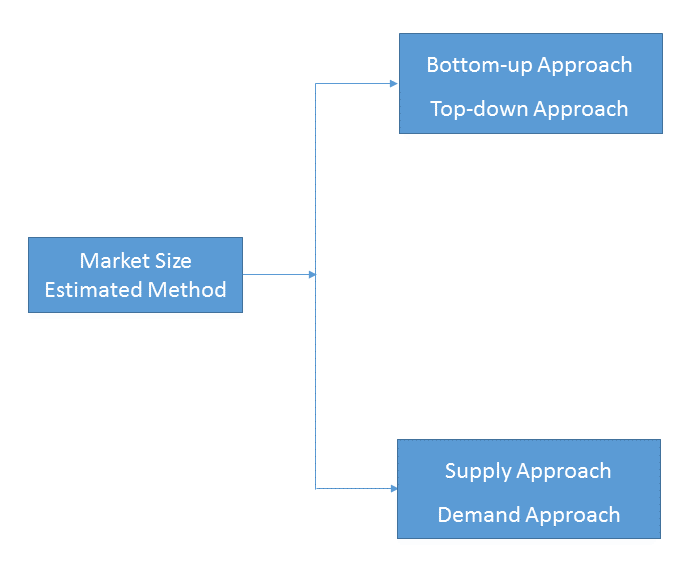
- Market Estimated Methodology:
Bottom-up & top-down approach, supply & demand approach are the most important method which is used by HDIN Research to estimate the market size.
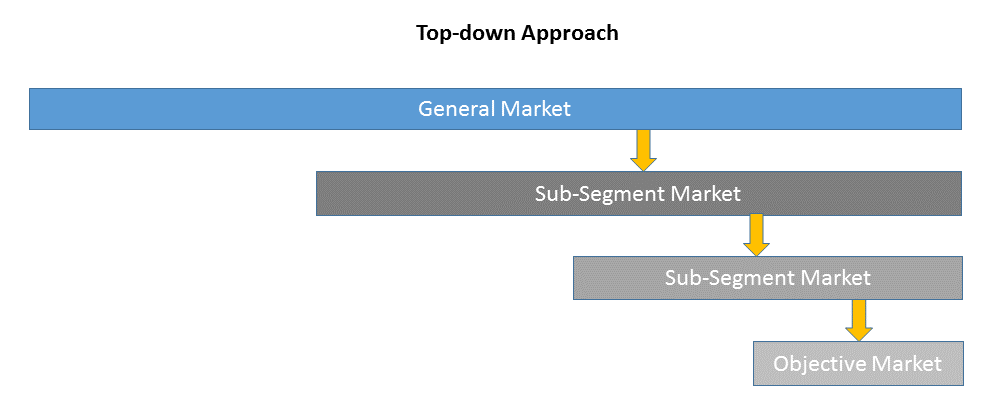
1)Top-down & Bottom-up Approach
Top-down approach uses a general market size figure and determines the percentage that the objective market represents.
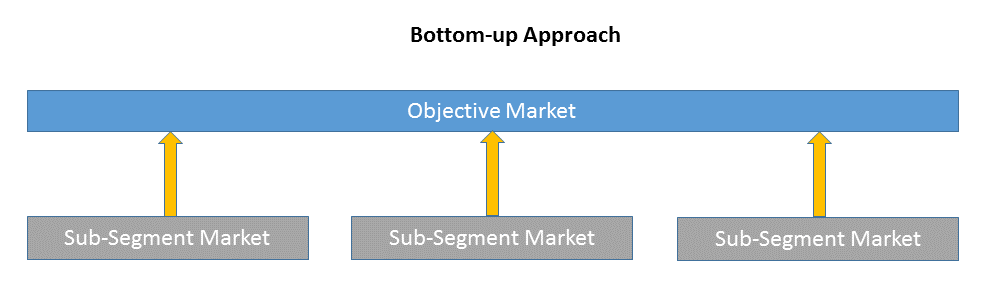
Bottom-up approach size the objective market by collecting the sub-segment information.
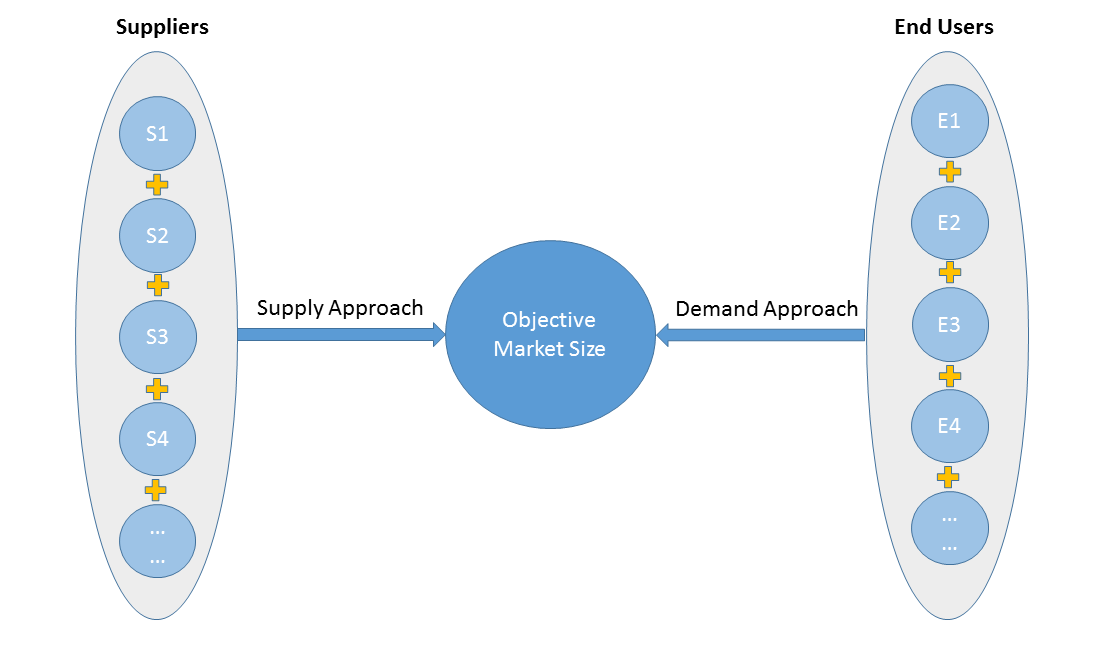
2)Supply & Demand Approach
Supply approach is based on assessments of the size of each competitor supplying the objective market.
Demand approach combine end-user data within a market to estimate the objective market size. It is sometimes referred to as bottom-up approach.
- Forecasting Methodology
- Numerous factors impacting the market trend are considered for forecast model:
- New technology and application in the future;
- New project planned/under contraction;
- Global and regional underlying economic growth;
- Threatens of substitute products;
- Industry expert opinion;
- Policy and Society implication.
- Analysis Tools
1)PEST Analysis
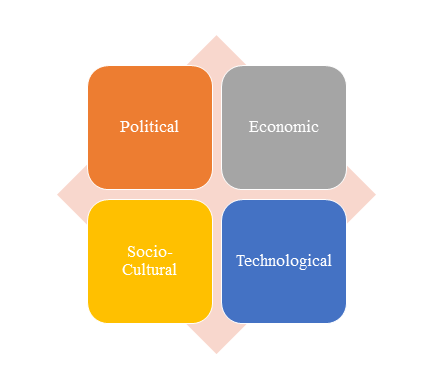
PEST Analysis is a simple and widely used tool that helps our client analyze the Political, Economic, Socio-Cultural, and Technological changes in their business environment.
- Benefits of a PEST analysis:
- It helps you to spot business opportunities, and it gives you advanced warning of significant threats.
- It reveals the direction of change within your business environment. This helps you shape what you’re doing, so that you work with change, rather than against it.
- It helps you avoid starting projects that are likely to fail, for reasons beyond your control.
- It can help you break free of unconscious assumptions when you enter a new country, region, or market; because it helps you develop an objective view of this new environment.
2)Porter’s Five Force Model Analysis
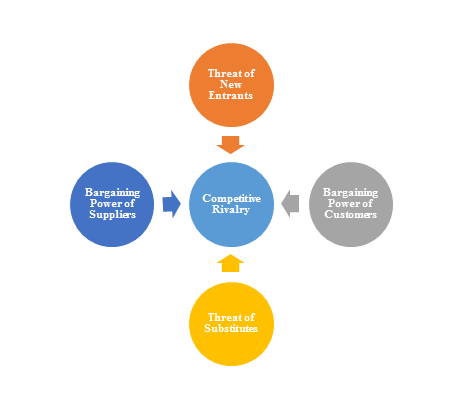
The Porter’s Five Force Model is a tool that can be used to analyze the opportunities and overall competitive advantage. The five forces that can assist in determining the competitive intensity and potential attractiveness within a specific area.
- Threat of New Entrants: Profitable industries that yield high returns will attract new firms.
- Threat of Substitutes: A substitute product uses a different technology to try to solve the same economic need.
- Bargaining Power of Customers: the ability of customers to put the firm under pressure, which also affects the customer's sensitivity to price changes.
- Bargaining Power of Suppliers: Suppliers of raw materials, components, labor, and services (such as expertise) to the firm can be a source of power over the firm when there are few substitutes.
- Competitive Rivalry: For most industries the intensity of competitive rivalry is the major determinant of the competitiveness of the industry.
3)Value Chain Analysis
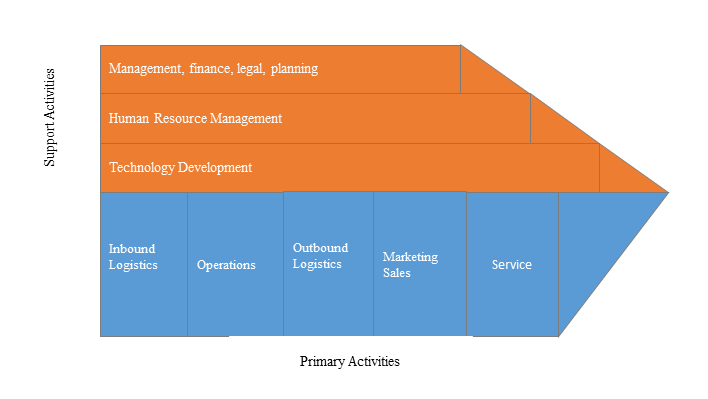
Value chain analysis is a tool to identify activities, within and around the firm and relating these activities to an assessment of competitive strength. Value chain can be analyzed by primary activities and supportive activities. Primary activities include: inbound logistics, operations, outbound logistics, marketing & sales, service. Support activities include: technology development, human resource management, management, finance, legal, planning.
4)SWOT Analysis
SWOT analysis is a tool used to evaluate a company's competitive position by identifying its strengths, weaknesses, opportunities and threats. The strengths and weakness is the inner factor; the opportunities and threats are the external factor. By analyzing the inner and external factors, the analysis can provide the detail information of the position of a player and the characteristics of the industry.
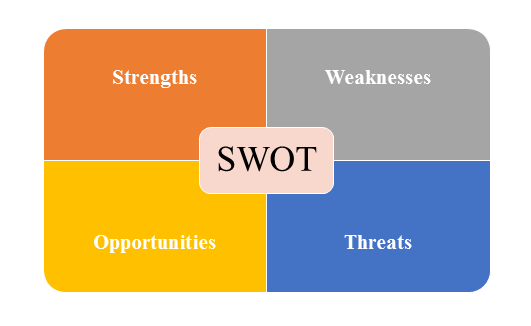
- Strengths describe what the player excels at and separates it from the competition
- Weaknesses stop the player from performing at its optimum level.
- Opportunities refer to favorable external factors that the player can use to give it a competitive advantage.
- Threats refer to factors that have the potential to harm the player.
- Data Sources
| Primary Sources | Secondary Sources |
|---|---|
| Face to face/Phone Interviews with market participants, such as: Manufactures; Distributors; End-users; Experts. Online Survey |
Government/International Organization Data: Annual Report/Presentation/Fact Book Internet Source Information Industry Association Data Free/Purchased Database Market Research Report Book/Journal/News |