Defibrillator Market Analysis: Global Trends, Scale & Forecast
- Single User License (1 Users) $ 3,500
- Team License (2~5 Users) $ 4,500
- Corporate License (>5 Users) $ 5,500
The global defibrillator market size is estimated at 7.2 to 8.2 billion USD in 2026 with a compound annual growth rate (CAGR) of 5.5% to 8.5% through 2031. The primary operational catalyst is the stark disparity between clinical survival rates and emergency response intervals: sudden cardiac arrest (SCA) survival deteriorates by 7% to 10% per minute without immediate defibrillation, yielding an average baseline survival of approximately 5% for out-of-hospital cardiac arrest (OHCA). Given that urban emergency medical service (EMS) response timelines average 7 minutes, early intervention via automated external defibrillators (AEDs) elevates survival outcomes to an interval of 50% to 71%.
Concurrently, therapy delivery is shifting from episodic hospital crash-cart events to preventative, continuous telemetry ecosystems. While Class III transvenous and extravascular Implantable Cardioverter Defibrillators (ICDs) continue to secure the lion's share of high-acuity therapeutic revenue, Wearable Cardioverter Defibrillators (WCDs) and Internet of Things (IoT)-enabled public AEDs are redefining institutional cash flows. Transitioning away from standalone capital equipment procurement, original equipment manufacturers (OEMs) are leveraging recurring reimbursement structures, algorithmic false-alarm mitigation, and Durable Medical Equipment (DME) capped rental logistics.
Regional Market Dynamics
● North America
North America maintains the dominant market share across the global landscape, underpinned by high cardiovascular disease incidence, high healthcare expenditures, and an aggressive payer reimbursement environment. The United States represents the focal point of high-margin defibrillation models, accounting for more than 80% of global WCD demand. The US total addressable market (TAM) for wearable devices is estimated at 10 billion USD annually, driven by roughly 800,000 post-myocardial infarction or heart failure patients exhibiting left ventricular ejection fractions (LVEF) at or below 35%, in conjunction with 50,000 annual explant or transitional ventricular arrhythmia candidates. However, real-world clinical adoption hovered near 16% in 2025, revealing an expansive unpenetrated margin. Canada exhibits a highly mature direct-sales hospital environment, characterized by consistent replacement cycles across critical care infrastructure.
● Europe
Europe stands as the second-largest regional market, sustained by centralized statutory frameworks and prominent public health networks. The European Society of Cardiology (ESC) guidelines for ventricular arrhythmias strongly influence clinical adoption of both extravascular ICD architectures and WCDs. Germany remains the continental linchpin, housing over 20,000 intensive care unit (ICU) beds and providing reliable access via the NUB (Neue Untersuchungs- und Behandlungsmethoden) innovation funding scheme and Diagnosis Related Groups (DRG) inpatient frameworks. Conversely, the United Kingdom, France, Italy, and Spain rely primarily on centralized national health procurement channels, prioritizing long-term service level agreements and automated Public Access Defibrillation (PAD) network deployments.
● Asia-Pacific (APAC)
Asia-Pacific demonstrates the highest regional growth velocity. This expansion is governed by substantial healthcare infrastructure investment, demographic aging across East Asia, and targeted legislation. Japan ranks among the highest AED per-capita density markets globally, where high baseline public awareness generates continuous equipment refresh cycles. In China, procurement dynamics are heavily steered by domestic content mandates and Volume-Based Procurement (VBP), favoring tier-one domestic conglomerates that integrate high-tier hospital monitor-defibrillators with nationwide public tender access. South Korea enforces rigid statutory installations via the Emergency Medical Service Act, imposing statutory fines for non-compliance within high-density residential facilities and transport hubs. Regional demand across emerging Southeast Asian zones and Taiwan, China, continues to pivot toward connected public AED infrastructure.
● Latin America
Latin America is emerging as an opportunistic growth corridor. The market is anchored by Brazil, Mexico, Colombia, Peru, and Paraguay. Demand is partitioned between two distinct operating realities: budget-constrained public hospitals dependent on multilateral tenders for multi-parameter resuscitation monitors, and high-end private healthcare chains investing in transvenous ICDs and connected AED fleets. Regional growth faces macro headwinds in the form of foreign exchange fluctuations against the US Dollar and localized import tariff barriers on specialized electronic assemblies.
● Middle East and Africa (MEA)
The MEA region is bifurcated between high-capital expenditure Gulf Cooperation Council (GCC) economies and distribution-focused African markets, particularly Saudi Arabia and the United Arab Emirates, are deploying state-sponsored capital toward intelligent hospital infrastructure and municipal smart-city AED networks. The enforcement of localized manufacturing frameworks, such as Saudi Arabia's local content initiative, is compelling international tier-one device makers to partner with domestic distributors or establish regional assembly hubs. South Africa operates as the principal logistics and clinical regulatory nexus for distribution throughout Sub-Saharan Africa.
Supply Chain and Value Chain Architecture
● Upstream Segment: Raw Material and Component Sourcing
The upstream supply chain represents an intricate tier of specialized electronic, mechanical, and biomaterial suppliers. Key component classifications include:
- Active Electronics and Microprocessing: Specialized Digital Signal Processors (DSP), ultra-low-power microcontrollers, Analog-to-Digital Converters (ADCs), and telemetry modules (incorporating 4G/5G cellular arrays engineered by Telit, Gemalto, or Sierra Wireless, alongside industrial-grade Bluetooth and Wi-Fi transceivers).
- High-Reliability Energy Storage: Medical-grade lithium-ion, lithium manganese dioxide, and lithium-polymer battery cells optimized for low self-discharge rates and instant burst currents. High-voltage energy storage capacitors, capable of charging to deliver 150J to 360J truncated exponential biphasic discharges within milliseconds, represent an acute supply bottleneck.
- Patient-Interface Assemblies: Hydrogel-coated defibrillation therapy pads, biocompatible chest-lead sensors, silver/silver chloride (Ag/AgCl) non-polarizing monitoring electrodes, and specialized textile substrates utilized in wearable garments (such as conductive micro-fiber weaves and integrated SensorFit matrices).
- Precision Housings and Enclosures: Flame-retardant, high-impact polycarbonate, ABS, and thermoplastic elastomers molded to meet ingress protection ratings (IP55 up to IP66) against moisture and particulate contamination, supplemented by internal electromagnetic interference (EMI) aluminum shielding.
● Midstream Segment: Engineering, Integration, and Regulatory Gatekeeping
Midstream manufacturing transforms discrete components into Class II and Class III life-saving hardware through rigid operational phases:
- Algorithmic Signal Discrimination: Midstream intellectual property is concentrated within proprietary arrhythmia discrimination software. Platforms deploy advanced filtering to parse real Ventricular Fibrillation (VF) and pulseless Ventricular Tachycardia (VT) from patient motion artifacts, muscle tremors, or baseline wandering. Maintaining approximately 100% sensitivity for lethal rhythms while driving specificity upward to prevent inappropriate shocks (targeting rates under 0.01 per patient-month) constitutes the principal technical barrier to entry.
- Surface-Mount Technology (SMT) and Cleanroom Assembly: High-density PCBA mounting occurring in ISO Class 7 and Class 8 cleanroom environments, coupled with automated optical inspection, high-voltage load discharging tests, and full environmental stress screening.
- Regulatory Compliance Gauntlets: The regulatory barrier to entry has steepened substantially. Class III devices (ICDs, extravascular systems, and WCDs) necessitate Premarket Approval (PMA) pathways supported by multi-center clinical trials under US FDA jurisdictions, alongside the new FDA Quality Management System Regulation (QMSR / ISO 13485:2016 alignment finalized in early 2026). In Europe, transition to EU MDR (2017/745) Class III mandates continuous clinical evaluation reports (CER) and rigorous Post-Market Clinical Follow-up (PMCF) registries administered by constrained Notified Bodies.
● Downstream Segment: Commercial Distribution and Reconditioning Logistics
The terminal segment orchestrates capital allocation and device circulation through four primary tracks:
- Institutional and Acute Sales: High-acuity hospital defibrillators and manual monitor/defibrillators flow via direct institutional sales forces and Group Purchasing Organizations (GPOs) into ICUs, emergency departments, and cardiac catheterization labs.
- Public Access and Municipal Tendering: Public sector, corporate enterprise, and commercial real estate buyers acquire AEDs primarily through independent distribution networks, system integrators, and competitive public tenders.
- Telemetry Fleet Management: Modern deployments mandate continuous equipment uptime. IoT backbones (e.g., Stryker LIFELINKcentral, Kestra CareStation, Avive REALConnect) conduct automated daily, weekly, and monthly internal circuit diagnostics, reporting battery status and electrode pad expiration directly to institutional administrators via cloud dashboards.
- Reverse Logistics and FDA-Validated Reconditioning (WCD Lease Circuit): The commercial model for wearable defibrillators relies entirely on durable medical equipment circularity. When a patient concludes a 60-to-90-day recovery cycle, the used garment is incinerated/disposed of, while the active electronic monitor, chargers, and physiological pods undergo validated bio-decontamination, multi-point software diagnostics, structural stress analysis, component recalibration, and repackaging for redeployment.
Downstream Clinical Applications and Commercial Channels
● Downstream Clinical Application Breakdown
- Hospital and Acute Inpatient Care: Deployed within intensive care units, emergency departments, operating suites, and cardiac care units. Utilization profiles focus on advanced cardiac life support (ALS), manual synchronized cardioversion for atrial fibrillation or stable ventricular tachycardia, transcutaneous pacing, and internal thoracic defibrillation using sterilized paddles during open-chest cardiothoracic procedures.
- Emergency Medical Services (EMS) and Pre-Hospital Transport: Integrated into municipal ambulances, air medical rescue, and fire response networks. Hardware requirements emphasize mechanical durability, IP-rated weatherproofing, high-contrast displays readable in direct sunlight, escalating biphasic energy outputs reaching 360 Joules, and automated multi-parameter telemetry streaming 12-lead ECG traces directly to destination hospital trauma centers.
- Public Access Defibrillation (PAD) and Commercial Facilities: Automated deployment in high-density congregational environments: commercial transit hubs (airports, high-speed rail terminals, subway concourses), corporate campuses, athletic complexes, schools, and vertical residential properties. Driven almost entirely by statutory mandates, liability mitigation strategies, and zero-maintenance self-testing capabilities.
- Outpatient, Home Recovery, and Transitional Care: Geared toward post-infarction, post-coronary revascularization, or newly diagnosed heart failure patients exhibiting suppressed ejection fraction (LVEF <= 35%) transitioning home. Encompasses wearable defibrillator garments protecting patients during mandatory guideline-directed waiting windows (e.g., 40 days post-MI, 90 days post-revascularization) prior to permanent ICD evaluation, alongside ultra-compact direct-to-consumer Home AED systems.
● Commercialization Pathways and Pricing Models
- Direct Clinical Sales Force: Employed for high-margin CRM lines (ICDs, CRT-Ds) and high-acuity wearable systems. Manufacturers deploy specialized territory managers and clinical specialists into hospital systems to interface with electrophysiologists, interventional cardiologists, and emergency medicine chairs.
- Durable Medical Equipment (DME) Capped Rental and TaaS: The dominant economic mechanism governing the Wearable Cardioverter Defibrillator sector. In the United States, WCD systems are commercialized not as capital goods, but as monthly service subscriptions billed via Healthcare Common Procedure Coding System (HCPCS) code K0606 ("Automated external defibrillator, with integrated ECG analysis, garment type"). Under the CMS DMEPOS Capped Rental schedule, the 2026 Medicare allowable fee is structured at 3,589 USD per month for months 1 through 3, declining by 25% to 2,692 USD per month for months 4 through 13, bounded by an aggregate ceiling of 37,683 USD. Commercial private payers largely mirror this reimbursement blueprint.
- Distribution Networks and GPO Frameworks: Public access devices and lower-acuity hospital monitoring gear rely on indirect dealer networks and multi-year supply contracts negotiated through institutional Integrated Delivery Networks (IDNs) and GPOs, trading price-point concessions for predictable high-volume unit velocity.
Key Market Players
● Implantable and Wearable Defibrillation Systems Players: Medtronic plc, Boston Scientific Corporation, Abbott Laboratories, Biotronik SE & Co. KG, MicroPort Scientific Corporation (MicroPort CRM), Kestra Medical Technologies, Inc., ZOLL Medical Corporation (An Asahi Kasei Company), Stryker Corporation, Heartstream, Nihon Kohden Corporation, Shenzhen Mindray Bio-Medical Electronics Co., Ltd., Schiller AG, GS Elektromedizinische Geräte G. Stemple GmbH (corpuls).
● Automated External Defibrillator Specialists and Regional Manufacturers: Primedic / Yuwell, CU Medical Systems, Inc., Mediana Co., Ltd., Avive Solutions, Inc., Bexen Cardio (Osatu S. Coop.), AMI Italia S.r.l., METsis Medikal, Nanoomtech Co., Ltd., Innomed Medical Zrt., Progetti Medical S.r.l., Shenzhen Comen Medical Instruments Co., Ltd., Fukuda Denshi Co., Ltd., WEINMANN Emergency Medical Technology GmbH, BPL Medical Technologies Pvt. Ltd., Skanray Technologies Limited, Allied Medical Limited, MS Westfalia GmbH.
Opportunities and Systemic Challenges
● Strategic Market Opportunities
- Wearable Cardioverter Defibrillator Under-Penetration: The WCD landscape remains an attractive blue-ocean category. With real-world market penetration hovering near 16% in the critical United States market, substantial commercial territory remains uncontested. The vast majority of post-infarction, newly diagnosed cardiomyopathy, and revascularization recovery patients with depressed ejection fraction are discharged without temporary protection. By addressing the historical duopoly through lower-profile, comfortable sensor-garment designs, emerging challengers can unlock high-margin recurring cash flows via existing K0606 Medicare and private payer fee structures.
- Algorithmic False-Alarm Suppression: The historical barrier to public and wearable defibrillation adoption has been user hesitation stemming from false detections and inappropriate shocks. The deployment of advanced multi-channel digital signal filtering and artificial intelligence models (such as AccuRhythm AI or Quad Channel Processing) dramatically decreases the inappropriate shock incidence rate. Dropping false alarms to levels below 0.01 per patient-month while preserving true ventricular fibrillation detection efficiency lowers patient anxiety, elevates prescription compliance above 23 hours daily, and mitigates legal liabilities.
- Connected Fleet Ecosystems and Decentralized Resuscitation: The migration from passive hardware to IoT-integrated devices provides recurring software revenue opportunities. Cloud-connected AED fleets that perform autonomous self-testing, continuously communicate battery and gel-pad life, and automatically integrate into emergency dispatch (911/112 CAD platforms) eliminate the primary cause of AED failure—dead batteries and neglected maintenance.
● Systemic Challenges and Macro Headwinds
- Regulatory Gatekeeping and Compliance Squeeze: The transition toward more stringent global regulatory regimes has expanded time-to-market and bloated R&D budgets. Navigating Class III FDA Premarket Approval mandates, harmonizing under the 2026 FDA QMSR revisions, and satisfying the onerous technical documentation demands of the European Union MDR (2017/745) create severe bottlenecks. The constrained capacity of European Notified Bodies has extended recertification and approval horizons to intervals of 24 to 36 months, disproportionately penalizing smaller manufacturers.
- Pricing Compression via Volume-Based Procurement: Across key growth geographies—most notably China—centralized government procurement programs and hospital VBP mechanisms exert intense downward pressure on capital equipment pricing. While securing a tender can yield high-volume product deliveries, gross margins on standard manual defibrillators and institutional AEDs face compression exceeding 40% to 50%, requiring OEMs to optimize manufacturing cost structures or forfeit access to major regional hospital networks.
- Patient Adherence and Ergonomic Friction: Despite technological advances, wearable medical systems are fundamentally limited by human behavior. Physical discomfort, sleep disruption, skin irritation from hydrogels, and the weight of legacy monitoring units historically caused substantial numbers of patients to prematurely abandon therapy within the first 30 days of prescription. Manufacturers unable to balance textile breathability, battery weight, and discreet industrial design will face elevated prescription cancellation rates and reduced economic life per patient journey.
- Component Vulnerabilities and Geopolitical Trade Frictions: The intersection of high-voltage capacitors, high-density computing chips, specialized lithium formulations, and cellular radio modules leaves the defibrillator manufacturing complex exposed to supply chain friction. Ongoing geopolitical realignments, currency volatility against the US Dollar, and trade policies threaten gross margins across trans-Pacific and trans-Atlantic distribution corridors, requiring device makers to diversify component dual-sourcing architectures.
1.1 Executive Research Architecture 1
1.2 Research Methodology, Data Triangulation and Statistical Modeling 2
1.3 Primary Sources and Secondary Verification Engines 4
1.4 Base Metrics, Currency Benchmarks and Forecasting Assumptions 5
1.5 Abbreviations and Definitional Ontology 6
Chapter 2 Global Defibrillator Market Landscape and Macroeconomic Dynamics 7
2.1 Market Value, Consumption Volume and Growth Trajectory (2021-2031) 7
2.2 Sudden Cardiac Arrest (SCA) Epidemiology and Global Disease Burden 10
2.3 Public Access Defibrillation (PAD) Mandates and Reimbursement Frameworks 12
2.4 Technological Vector: Cellular IoT, Automated Telemetry and AI Arrhythmia Algorithms 14
Chapter 3 Global Defibrillator Market Breakdown by Product Type 17
3.1 Implantable Cardioverter Defibrillator (ICD) Market Size and Volume 17
3.1.1 Transvenous ICD (Single-Chamber, Dual-Chamber, CRT-D) 18
3.1.2 Subcutaneous ICD (S-ICD) and Extravascular ICD Systems 20
3.2 External Defibrillator Market Size and Volume 22
3.2.1 Automated External Defibrillators (AED) (Semi-Automated and Fully Automated) 23
3.2.2 Manual External Defibrillators and Integrated Resuscitation Consoles 25
3.3 Wearable Cardioverter Defibrillator (WCD) Market Size and Volume 26
Chapter 4 Global Defibrillator Market Breakdown by Downstream Application 28
4.1 Hospitals and Advanced Cardiac Care Centers 28
4.2 Pre-Hospital Emergency Medical Services (EMS) and Mobile Rescue Units 30
4.3 Public Access Infrastructure (Transit Hubs, Corporate Facilities, Educational Venues) 32
4.4 Alternative Care Environments, Ambulatory Surgical Centers and Home Care 34
Chapter 5 Upstream Supply Chain, Component Architecture and Manufacturing Processes 37
5.1 High-Voltage Capacitors, Medical-Grade Batteries and Microelectrode Sourcing 37
5.2 Microelectronics, Lead Wire Fabrication and Sensor Array Integration 39
5.3 Value Chain Architecture, Gross Value Distribution and Margin Migration 41
5.4 Cleanroom Assembly Protocols, Quality Assurance and Contract Manufacturing Dynamics 43
Chapter 6 Global Trade Dynamics, Regulatory Approvals and Compliance Architecture 45
6.1 Primary Manufacturing Nodes and Bilateral Cross-Border Trade Flows 45
6.2 Regulatory Pathways: EU MDR Compliance, US FDA Premarket Approvals (PMA) and NMPA Standards 48
6.3 Import/Export Tariff Matrices and Supply Chain De-Risking Strategies 50
Chapter 7 North America Defibrillator Market Analysis 52
7.1 North America Market Size, Consumption Volume and Growth Outlook 52
7.2 United States: Production Capacities, Resuscitation Protocols and PAD Penetration 54
7.3 Canada: EMS Fleet Modernization and Hospital Replacement Dynamics 58
Chapter 8 Europe Defibrillator Market Analysis 61
8.1 Europe Market Size, Consumption Volume and Regulatory Harmonization 61
8.2 Germany: High-Precision Manufacturing Hub and Clinical Adoption 63
8.3 France: Public Health Procurement and Emergency Response Deployment 65
8.4 United Kingdom: NHS Procurement and Community First Responder Networks 66
8.5 Italy: Hospital Infrastructure Upgrades and Public AED Mandates 67
8.6 Spain: Regional Healthcare Purchasing and Pre-Hospital Logistics 68
8.7 Switzerland, Netherlands & Rest of Europe 69
Chapter 9 Asia-Pacific Defibrillator Market Analysis 71
9.1 Asia-Pacific Market Size, Consumption Volume and Demographic Acceleration 71
9.2 China: Domestic Substitution, Assembly Hubs and Tier-Based Hospital Procurement 73
9.3 Japan: High AED Density, Geriatric Cardiovascular Care and Local Production 75
9.4 India & Southeast Asia: Expanding Emergency Infrastructure, Import Dependence and Value-Tier Demand 77
9.5 South Korea and Australia: Institutional Upgrades and Out-of-Hospital Resuscitation Systems 79
Chapter 10 Latin America, Middle East and Africa Defibrillator Market Analysis 81
10.1 Latin America Defibrillator Market Overview 81
10.1.1 Brazil: Public Sector Tenders and Domestic Distribution Channels 82
10.1.2 Mexico: Cross-Border Sourcing and Private Healthcare Expansion 84
10.2 Middle East and Africa Defibrillator Market Overview 85
10.2.1 Saudi Arabia and United Arab Emirates: Smart City AED Networks and Tertiary Care Investments 86
10.2.2 South Africa and Turkey: EMS Fleet Expansion and Local Distribution Networks 88
Chapter 11 Industry Competitive Matrix and Market Concentration Analysis 90
11.1 Global Market Share Analysis, CR4, CR8 and Herfindahl-Hirschman Index (HHI) 90
11.2 Premium vs. Value Tier Positioning and Pricing Pressure Dynamics 92
11.3 Mergers, Strategic Acquisitions, OEM Partnerships and Licensing Agreements 94
Chapter 12 Corporate Intelligence: Key Defibrillator Market Players 96
12.1 Medtronic 96
12.1.1 Corporate Profile, Product Matrix and Operational Footprint 96
12.1.2 Defibrillator Operational Analysis: Sales Volume, Revenue, Price, Cost and Gross Margin 97
12.1.3 Strategic SWOT Assessment, R&D Pipeline and Go-to-Market Model 99
12.2 Heartstream 100
12.2.1 Corporate Profile, Product Matrix and Operational Footprint 100
12.2.2 Defibrillator Operational Analysis: Sales Volume, Revenue, Price, Cost and Gross Margin 101
12.2.3 Strategic SWOT Assessment, R&D Pipeline and Go-to-Market Model 103
12.3 Boston Scientific 104
12.3.1 Corporate Profile, Product Matrix and Operational Footprint 104
12.3.2 Defibrillator Operational Analysis: Sales Volume, Revenue, Price, Cost and Gross Margin 105
12.3.3 Strategic SWOT Assessment, R&D Pipeline and Go-to-Market Model 107
12.4 Abbott 108
12.4.1 Corporate Profile, Product Matrix and Operational Footprint 108
12.4.2 Defibrillator Operational Analysis: Sales Volume, Revenue, Price, Cost and Gross Margin 109
12.4.3 Strategic SWOT Assessment, R&D Pipeline and Go-to-Market Model 111
12.5 ZOLL Medical/Asahi Kasei 112
12.5.1 Corporate Profile, Product Matrix and Operational Footprint 112
12.5.2 Defibrillator Operational Analysis: Sales Volume, Revenue, Price, Cost and Gross Margin 113
12.5.3 Strategic SWOT Assessment, R&D Pipeline and Go-to-Market Model 115
12.6 Stryker 116
12.6.1 Corporate Profile, Product Matrix and Operational Footprint 116
12.6.2 Defibrillator Operational Analysis: Sales Volume, Revenue, Price, Cost and Gross Margin 117
12.6.3 Strategic SWOT Assessment, R&D Pipeline and Go-to-Market Model 119
12.7 Nihon Kohden Corporation 120
12.7.1 Corporate Profile, Product Matrix and Operational Footprint 120
12.7.2 Defibrillator Operational Analysis: Sales Volume, Revenue, Price, Cost and Gross Margin 121
12.7.3 Strategic SWOT Assessment, R&D Pipeline and Go-to-Market Model 123
12.8 Fukuda Denshi 124
12.8.1 Corporate Profile, Product Matrix and Operational Footprint 124
12.8.2 Defibrillator Operational Analysis: Sales Volume, Revenue, Price, Cost and Gross Margin 125
12.8.3 Strategic SWOT Assessment, R&D Pipeline and Go-to-Market Model 127
12.9 CU Medical Systems Inc. 128
12.9.1 Corporate Profile, Product Matrix and Operational Footprint 128
12.9.2 Defibrillator Operational Analysis: Sales Volume, Revenue, Price, Cost and Gross Margin 129
12.9.3 Strategic SWOT Assessment, R&D Pipeline and Go-to-Market Model 131
12.10 Mediana Co. Ltd. 132
12.10.1 Corporate Profile, Product Matrix and Operational Footprint 132
12.10.2 Defibrillator Operational Analysis: Sales Volume, Revenue, Price, Cost and Gross Margin 133
12.10.3 Strategic SWOT Assessment, R&D Pipeline and Go-to-Market Model 135
12.11 Mindray 136
12.11.1 Corporate Profile, Product Matrix and Operational Footprint 136
12.11.2 Defibrillator Operational Analysis: Sales Volume, Revenue, Price, Cost and Gross Margin 137
12.11.3 Strategic SWOT Assessment, R&D Pipeline and Go-to-Market Model 139
12.12 Primedic/Yuwell 140
12.12.1 Corporate Profile, Product Matrix and Operational Footprint 140
12.12.2 Defibrillator Operational Analysis: Sales Volume, Revenue, Price, Cost and Gross Margin 141
12.12.3 Strategic SWOT Assessment, R&D Pipeline and Go-to-Market Model 143
12.13 MicroPort Scientific Corporation 144
12.13.1 Corporate Profile, Product Matrix and Operational Footprint 144
12.13.2 Defibrillator Operational Analysis: Sales Volume, Revenue, Price, Cost and Gross Margin 145
12.13.3 Strategic SWOT Assessment, R&D Pipeline and Go-to-Market Model 147
12.14 Kestra Medical Technologies 148
12.14.1 Corporate Profile, Product Matrix and Operational Footprint 148
12.14.2 Defibrillator Operational Analysis: Sales Volume, Revenue, Price, Cost and Gross Margin 149
12.14.3 Strategic SWOT Assessment, R&D Pipeline and Go-to-Market Model 151
12.15 Biotronik 152
12.15.1 Corporate Profile, Product Matrix and Operational Footprint 152
12.15.2 Defibrillator Operational Analysis: Sales Volume, Revenue, Price, Cost and Gross Margin 153
12.15.3 Strategic SWOT Assessment, R&D Pipeline and Go-to-Market Model 155
12.16 Progetti Medical 156
12.16.1 Corporate Profile, Product Matrix and Operational Footprint 156
12.16.2 Defibrillator Operational Analysis: Sales Volume, Revenue, Price, Cost and Gross Margin 157
12.16.3 Strategic SWOT Assessment, R&D Pipeline and Go-to-Market Model 159
12.17 BPL Medical Technologies 160
12.17.1 Corporate Profile, Product Matrix and Operational Footprint 160
12.17.2 Defibrillator Operational Analysis: Sales Volume, Revenue, Price, Cost and Gross Margin 161
12.17.3 Strategic SWOT Assessment, R&D Pipeline and Go-to-Market Model 163
12.18 MS Westfalia GmbH 164
12.18.1 Corporate Profile, Product Matrix and Operational Footprint 164
12.18.2 Defibrillator Operational Analysis: Sales Volume, Revenue, Price, Cost and Gross Margin 165
12.18.3 Strategic SWOT Assessment, R&D Pipeline and Go-to-Market Model 167
12.19 Bexen Cardio 168
12.19.1 Corporate Profile, Product Matrix and Operational Footprint 168
12.19.2 Defibrillator Operational Analysis: Sales Volume, Revenue, Price, Cost and Gross Margin 169
12.19.3 Strategic SWOT Assessment, R&D Pipeline and Go-to-Market Model 171
12.20 Avive Solutions 172
12.20.1 Corporate Profile, Product Matrix and Operational Footprint 172
12.20.2 Defibrillator Operational Analysis: Sales Volume, Revenue, Price, Cost and Gross Margin 173
12.20.3 Strategic SWOT Assessment, R&D Pipeline and Go-to-Market Model 175
12.21 AMI Italia 176
12.21.1 Corporate Profile, Product Matrix and Operational Footprint 176
12.21.2 Defibrillator Operational Analysis: Sales Volume, Revenue, Price, Cost and Gross Margin 177
12.21.3 Strategic SWOT Assessment, R&D Pipeline and Go-to-Market Model 179
12.22 METsis Medikal 180
12.22.1 Corporate Profile, Product Matrix and Operational Footprint 180
12.22.2 Defibrillator Operational Analysis: Sales Volume, Revenue, Price, Cost and Gross Margin 181
12.22.3 Strategic SWOT Assessment, R&D Pipeline and Go-to-Market Model 183
12.23 Schiller AG 184
12.23.1 Corporate Profile, Product Matrix and Operational Footprint 184
12.23.2 Defibrillator Operational Analysis: Sales Volume, Revenue, Price, Cost and Gross Margin 185
12.23.3 Strategic SWOT Assessment, R&D Pipeline and Go-to-Market Model 187
12.24 WEINMANN Emergency 188
12.24.1 Corporate Profile, Product Matrix and Operational Footprint 188
12.24.2 Defibrillator Operational Analysis: Sales Volume, Revenue, Price, Cost and Gross Margin 189
12.24.3 Strategic SWOT Assessment, R&D Pipeline and Go-to-Market Model 191
12.25 GS Elektromedizinische Geräte G. Stemple GmbH 192
12.25.1 Corporate Profile, Product Matrix and Operational Footprint 192
12.25.2 Defibrillator Operational Analysis: Sales Volume, Revenue, Price, Cost and Gross Margin 193
12.25.3 Strategic SWOT Assessment, R&D Pipeline and Go-to-Market Model 195
12.26 Allied Meditec 196
12.26.1 Corporate Profile, Product Matrix and Operational Footprint 196
12.26.2 Defibrillator Operational Analysis: Sales Volume, Revenue, Price, Cost and Gross Margin 197
12.26.3 Strategic SWOT Assessment, R&D Pipeline and Go-to-Market Model 199
12.27 Shenzhen Comen Medical Instruments 200
12.27.1 Corporate Profile, Product Matrix and Operational Footprint 200
12.27.2 Defibrillator Operational Analysis: Sales Volume, Revenue, Price, Cost and Gross Margin 201
12.27.3 Strategic SWOT Assessment, R&D Pipeline and Go-to-Market Model 203
12.28 Innomed Medical Zrt. 204
12.28.1 Corporate Profile, Product Matrix and Operational Footprint 204
12.28.2 Defibrillator Operational Analysis: Sales Volume, Revenue, Price, Cost and Gross Margin 205
12.28.3 Strategic SWOT Assessment, R&D Pipeline and Go-to-Market Model 207
12.29 Nanoomtech 208
12.29.1 Corporate Profile, Product Matrix and Operational Footprint 208
12.29.2 Defibrillator Operational Analysis: Sales Volume, Revenue, Price, Cost and Gross Margin 209
12.29.3 Strategic SWOT Assessment, R&D Pipeline and Go-to-Market Model 211
12.30 Skanray Technologies 212
12.30.1 Corporate Profile, Product Matrix and Operational Footprint 212
12.30.2 Defibrillator Operational Analysis: Sales Volume, Revenue, Price, Cost and Gross Margin 213
12.30.3 Strategic SWOT Assessment, R&D Pipeline and Go-to-Market Model 215
Table 2 Industry Abbreviations and Definitional Taxonomy 6
Table 3 Global Defibrillator Market Value (USD Million) and Consumption Volume (Units), 2021-2026 8
Table 4 Global Defibrillator Market Value (USD Million) and Consumption Volume (Units) Forecast, 2027-2031 9
Table 5 Global Defibrillator Market Value Breakdown by Product Type (USD Million), 2021-2026 17
Table 6 Global Defibrillator Market Value Breakdown by Product Type (USD Million) Forecast, 2027-2031 18
Table 7 Global Implantable Cardioverter Defibrillator (ICD) Volume by Segment (Units), 2021-2031 21
Table 8 Global External Defibrillator Consumption Volume by Segment (Units), 2021-2031 24
Table 9 Global Wearable Cardioverter Defibrillator (WCD) Market Value and Volume, 2021-2031 27
Table 10 Global Defibrillator Market Value Breakdown by Downstream Application (USD Million), 2021-2026 29
Table 11 Global Defibrillator Market Value Breakdown by Downstream Application (USD Million) Forecast, 2027-2031 30
Table 12 Hospital and Advanced Cardiac Center Defibrillator Procurements (USD Million and Units), 2021-2031 31
Table 13 Pre-Hospital and EMS Defibrillator Shipments (USD Million and Units), 2021-2031 33
Table 14 Public Access Venue Defibrillator Shipments (USD Million and Units), 2021-2031 35
Table 15 Direct Bill of Materials (BOM) Breakdown for Defibrillator Manufacturing 38
Table 16 Cost Breakdown Architecture Across the Defibrillator Manufacturing Value Chain 42
Table 17 Global Defibrillator Trade Flow by Major Exporting Nation (USD Million), 2021-2026 46
Table 18 Global Defibrillator Trade Flow by Major Importing Nation (USD Million), 2021-2026 47
Table 19 North America Defibrillator Market Value and Volume by Country, 2021-2031 53
Table 20 United States Defibrillator Market Value and Volume by Product Type, 2021-2031 56
Table 21 Canada Defibrillator Market Value and Volume by Product Type, 2021-2031 59
Table 22 Europe Defibrillator Market Value and Volume by Country, 2021-2031 62
Table 23 Germany Defibrillator Market Value and Volume by Product Type, 2021-2031 64
Table 24 France Defibrillator Market Value and Volume by Product Type, 2021-2031 65
Table 25 United Kingdom Defibrillator Market Value and Volume by Product Type, 2021-2031 66
Table 26 Italy Defibrillator Market Value and Volume by Product Type, 2021-2031 67
Table 27 Spain Defibrillator Market Value and Volume by Product Type, 2021-2031 68
Table 28 Switzerland and Netherlands Defibrillator Market Value and Volume, 2021-2031 70
Table 29 Asia-Pacific Defibrillator Market Value and Volume by Country, 2021-2031 72
Table 30 China Defibrillator Market Value and Volume by Product Type, 2021-2031 74
Table 31 Japan Defibrillator Market Value and Volume by Product Type, 2021-2031 76
Table 32 India Defibrillator Market Value and Volume by Product Type, 2021-2031 78
Table 33 South Korea and Australia Defibrillator Market Value and Volume, 2021-2031 80
Table 34 Latin America Defibrillator Market Value and Volume by Country, 2021-2031 82
Table 35 Brazil Defibrillator Market Value and Volume by Product Type, 2021-2031 83
Table 36 Mexico Defibrillator Market Value and Volume by Product Type, 2021-2031 84
Table 37 Middle East and Africa Defibrillator Market Value and Volume by Country, 2021-2031 86
Table 38 Saudi Arabia and UAE Defibrillator Market Value and Volume, 2021-2031 87
Table 39 South Africa and Turkey Defibrillator Market Value and Volume, 2021-2031 89
Table 40 Top Tier Global Defibrillator Manufacturer Revenue Rankings and Shares, 2025-2026 91
Table 41 Medtronic Defibrillator Sales, Price, Cost and Gross Profit Margin (2021-2026) 98
Table 42 Heartstream Defibrillator Sales, Price, Cost and Gross Profit Margin (2021-2026) 102
Table 43 Boston Scientific Defibrillator Sales, Price, Cost and Gross Profit Margin (2021-2026) 106
Table 44 Abbott Defibrillator Sales, Price, Cost and Gross Profit Margin (2021-2026) 110
Table 45 ZOLL Medical/Asahi Kasei Defibrillator Sales, Price, Cost and Gross Profit Margin (2021-2026) 114
Table 46 Stryker Defibrillator Sales, Price, Cost and Gross Profit Margin (2021-2026) 118
Table 47 Nihon Kohden Corporation Defibrillator Sales, Price, Cost and Gross Profit Margin (2021-2026) 122
Table 48 Fukuda Denshi Defibrillator Sales, Price, Cost and Gross Profit Margin (2021-2026) 126
Table 49 CU Medical Systems Inc. Defibrillator Sales, Price, Cost and Gross Profit Margin (2021-2026) 130
Table 50 Mediana Co. Ltd. Defibrillator Sales, Price, Cost and Gross Profit Margin (2021-2026) 134
Table 51 Mindray Defibrillator Sales, Price, Cost and Gross Profit Margin (2021-2026) 138
Table 52 Primedic/Yuwell Defibrillator Sales, Price, Cost and Gross Profit Margin (2021-2026) 142
Table 53 MicroPort Scientific Corporation Defibrillator Sales, Price, Cost and Gross Profit Margin (2021-2026) 146
Table 54 Kestra Medical Technologies Defibrillator Sales, Price, Cost and Gross Profit Margin (2021-2026) 150
Table 55 Biotronik Defibrillator Sales, Price, Cost and Gross Profit Margin (2021-2026) 154
Table 56 Progetti Medical Defibrillator Sales, Price, Cost and Gross Profit Margin (2021-2026) 158
Table 57 BPL Medical Technologies Defibrillator Sales, Price, Cost and Gross Profit Margin (2021-2026) 162
Table 58 MS Westfalia GmbH Defibrillator Sales, Price, Cost and Gross Profit Margin (2021-2026) 166
Table 59 Bexen Cardio Defibrillator Sales, Price, Cost and Gross Profit Margin (2021-2026) 170
Table 60 Avive Solutions Defibrillator Sales, Price, Cost and Gross Profit Margin (2021-2026) 174
Table 61 AMI Italia Defibrillator Sales, Price, Cost and Gross Profit Margin (2021-2026) 178
Table 62 METsis Medikal Defibrillator Sales, Price, Cost and Gross Profit Margin (2021-2026) 182
Table 63 Schiller AG Defibrillator Sales, Price, Cost and Gross Profit Margin (2021-2026) 186
Table 64 WEINMANN Emergency Defibrillator Sales, Price, Cost and Gross Profit Margin (2021-2026) 190
Table 65 GS Elektromedizinische Geräte G. Stemple GmbH Defibrillator Sales, Price, Cost and Gross Profit Margin (2021-2026) 194
Table 66 Allied Meditec Defibrillator Sales, Price, Cost and Gross Profit Margin (2021-2026) 198
Table 67 Shenzhen Comen Medical Instruments Defibrillator Sales, Price, Cost and Gross Profit Margin (2021-2026) 202
Table 68 Innomed Medical Zrt. Defibrillator Sales, Price, Cost and Gross Profit Margin (2021-2026) 206
Table 69 Nanoomtech Defibrillator Sales, Price, Cost and Gross Profit Margin (2021-2026) 210
Table 70 Skanray Technologies Defibrillator Sales, Price, Cost and Gross Profit Margin (2021-2026) 214
Figure 1 Global Defibrillator Market Architecture and Triangulation Model 3
Figure 2 Global Defibrillator Market Value (USD Million) Trend, 2021-2031 9
Figure 3 Global Defibrillator Consumption Volume (Units) Trend, 2021-2031 10
Figure 4 Global Defibrillator Market Value Share by Product Type, 2026 vs. 2031 19
Figure 5 Global Defibrillator Market Volume Share by Downstream Application, 2026 29
Figure 6 Defibrillator End-to-End Value Chain Map and Sourcing Nodes 40
Figure 7 Global Cross-Border Defibrillator Trade Flow Matrix, 2026 46
Figure 8 North America Defibrillator Market Value and Volume Share by Country, 2026 53
Figure 9 Europe Defibrillator Market Value Share by Country, 2026 62
Figure 10 Asia-Pacific Defibrillator Market Value Share by Country, 2026 72
Figure 11 Latin America and Middle East & Africa Defibrillator Value Distribution, 2026 83
Figure 12 Global Defibrillator CR4 and HHI Industry Concentration Trends (2021-2026) 91
Figure 13 Medtronic Defibrillator Market Share (2021-2026) 99
Figure 14 Heartstream Defibrillator Market Share (2021-2026) 103
Figure 15 Boston Scientific Defibrillator Market Share (2021-2026) 107
Figure 16 Abbott Defibrillator Market Share (2021-2026) 111
Figure 17 ZOLL Medical/Asahi Kasei Defibrillator Market Share (2021-2026) 115
Figure 18 Stryker Defibrillator Market Share (2021-2026) 119
Figure 19 Nihon Kohden Corporation Defibrillator Market Share (2021-2026) 123
Figure 20 Fukuda Denshi Defibrillator Market Share (2021-2026) 127
Figure 21 CU Medical Systems Inc. Defibrillator Market Share (2021-2026) 131
Figure 22 Mediana Co. Ltd. Defibrillator Market Share (2021-2026) 135
Figure 23 Mindray Defibrillator Market Share (2021-2026) 139
Figure 24 Primedic/Yuwell Defibrillator Market Share (2021-2026) 143
Figure 25 MicroPort Scientific Corporation Defibrillator Market Share (2021-2026) 147
Figure 26 Kestra Medical Technologies Defibrillator Market Share (2021-2026) 151
Figure 27 Biotronik Defibrillator Market Share (2021-2026) 155
Figure 28 Progetti Medical Defibrillator Market Share (2021-2026) 159
Figure 29 BPL Medical Technologies Defibrillator Market Share (2021-2026) 163
Figure 30 MS Westfalia GmbH Defibrillator Market Share (2021-2026) 167
Figure 31 Bexen Cardio Defibrillator Market Share (2021-2026) 171
Figure 32 Avive Solutions Defibrillator Market Share (2021-2026) 175
Figure 33 AMI Italia Defibrillator Market Share (2021-2026) 179
Figure 34 METsis Medikal Defibrillator Market Share (2021-2026) 183
Figure 35 Schiller AG Defibrillator Market Share (2021-2026) 187
Figure 36 WEINMANN Emergency Defibrillator Market Share (2021-2026) 191
Figure 37 GS Elektromedizinische Geräte G. Stemple GmbH Defibrillator Market Share (2021-2026) 195
Figure 38 Allied Meditec Defibrillator Market Share (2021-2026) 199
Figure 39 Shenzhen Comen Medical Instruments Defibrillator Market Share (2021-2026) 203
Figure 40 Innomed Medical Zrt. Defibrillator Market Share (2021-2026) 207
Figure 41 Nanoomtech Defibrillator Market Share (2021-2026) 211
Figure 42 Skanray Technologies Defibrillator Market Share (2021-2026) 215
Research Methodology
- Market Estimated Methodology:
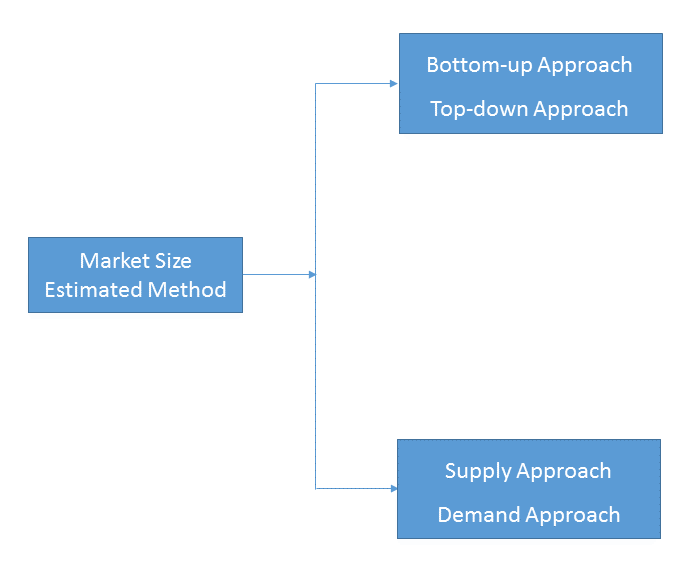
Bottom-up & top-down approach, supply & demand approach are the most important method which is used by HDIN Research to estimate the market size.
1)Top-down & Bottom-up Approach
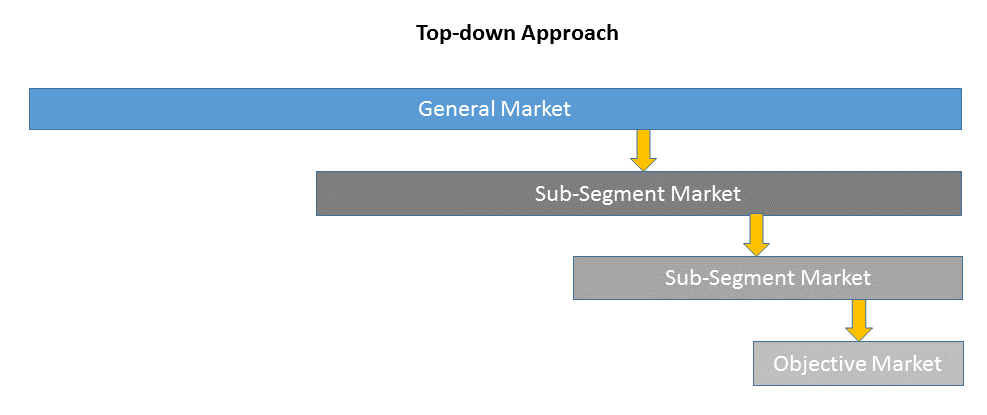
Top-down approach uses a general market size figure and determines the percentage that the objective market represents.
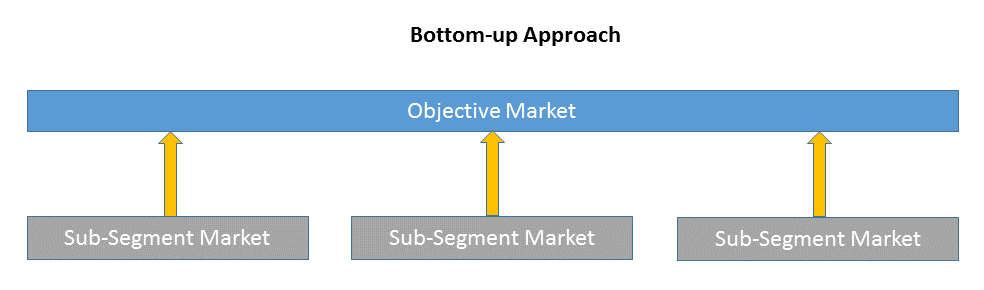
Bottom-up approach size the objective market by collecting the sub-segment information.
2)Supply & Demand Approach
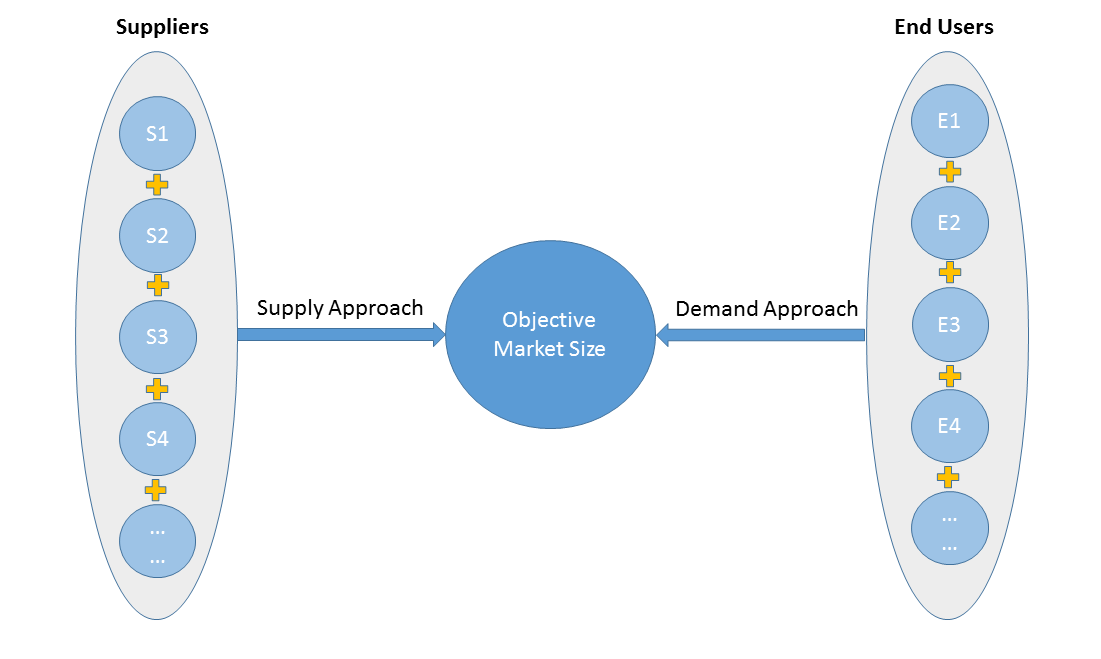
Supply approach is based on assessments of the size of each competitor supplying the objective market.
Demand approach combine end-user data within a market to estimate the objective market size. It is sometimes referred to as bottom-up approach.
- Forecasting Methodology
- Numerous factors impacting the market trend are considered for forecast model:
- New technology and application in the future;
- New project planned/under contraction;
- Global and regional underlying economic growth;
- Threatens of substitute products;
- Industry expert opinion;
- Policy and Society implication.
- Analysis Tools
1)PEST Analysis
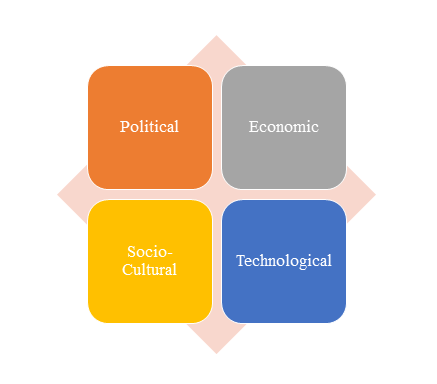
PEST Analysis is a simple and widely used tool that helps our client analyze the Political, Economic, Socio-Cultural, and Technological changes in their business environment.
- Benefits of a PEST analysis:
- It helps you to spot business opportunities, and it gives you advanced warning of significant threats.
- It reveals the direction of change within your business environment. This helps you shape what you’re doing, so that you work with change, rather than against it.
- It helps you avoid starting projects that are likely to fail, for reasons beyond your control.
- It can help you break free of unconscious assumptions when you enter a new country, region, or market; because it helps you develop an objective view of this new environment.
2)Porter’s Five Force Model Analysis
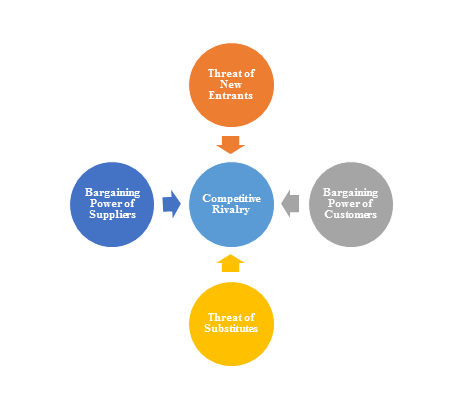
The Porter’s Five Force Model is a tool that can be used to analyze the opportunities and overall competitive advantage. The five forces that can assist in determining the competitive intensity and potential attractiveness within a specific area.
- Threat of New Entrants: Profitable industries that yield high returns will attract new firms.
- Threat of Substitutes: A substitute product uses a different technology to try to solve the same economic need.
- Bargaining Power of Customers: the ability of customers to put the firm under pressure, which also affects the customer's sensitivity to price changes.
- Bargaining Power of Suppliers: Suppliers of raw materials, components, labor, and services (such as expertise) to the firm can be a source of power over the firm when there are few substitutes.
- Competitive Rivalry: For most industries the intensity of competitive rivalry is the major determinant of the competitiveness of the industry.
3)Value Chain Analysis
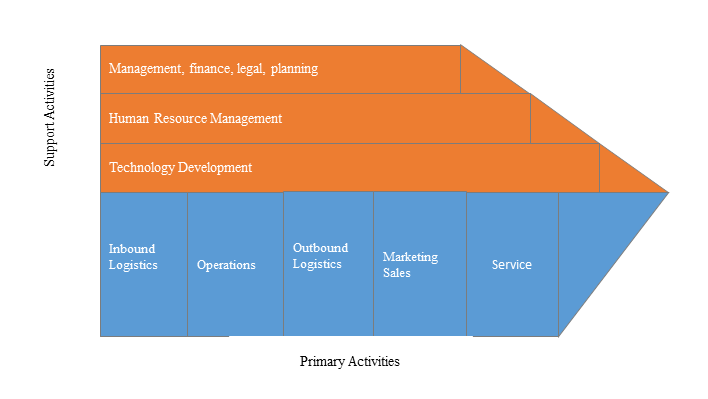
Value chain analysis is a tool to identify activities, within and around the firm and relating these activities to an assessment of competitive strength. Value chain can be analyzed by primary activities and supportive activities. Primary activities include: inbound logistics, operations, outbound logistics, marketing & sales, service. Support activities include: technology development, human resource management, management, finance, legal, planning.
4)SWOT Analysis
SWOT analysis is a tool used to evaluate a company's competitive position by identifying its strengths, weaknesses, opportunities and threats. The strengths and weakness is the inner factor; the opportunities and threats are the external factor. By analyzing the inner and external factors, the analysis can provide the detail information of the position of a player and the characteristics of the industry.
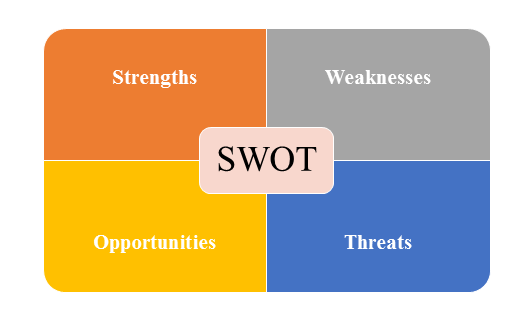
- Strengths describe what the player excels at and separates it from the competition
- Weaknesses stop the player from performing at its optimum level.
- Opportunities refer to favorable external factors that the player can use to give it a competitive advantage.
- Threats refer to factors that have the potential to harm the player.
- Data Sources
| Primary Sources | Secondary Sources |
|---|---|
| Face to face/Phone Interviews with market participants, such as: Manufactures; Distributors; End-users; Experts. Online Survey |
Government/International Organization Data: Annual Report/Presentation/Fact Book Internet Source Information Industry Association Data Free/Purchased Database Market Research Report Book/Journal/News |