Structural Heart Device Market Analysis & Growth Trends 2031
- Single User License (1 Users) $ 3,500
- Team License (2~5 Users) $ 4,500
- Corporate License (>5 Users) $ 5,500
The global structural heart device market represents a technologically complex, Class II and Class III implantable medtech segment, distinct from coronary and peripheral intervention fields. While coronary therapies manage endovascular luminal narrowing due to atheromatous plaque, structural heart platforms remediate macro-architectural, hemodynamic, and congenital cardiac pathology across chambers, valves, septa, and adjacent great vessels. The addressable clinical landscape spans valvular calcific degeneration, high-volume functional regurgitation, cardioembolic reservoirs such as the left atrial appendage, congenital septal communications, and terminal biventricular heart failure.
The global structural heart device is valued at an estimated 17.1 to 18.1 billion USD in 2026, with a compound annual growth rate (CAGR) between 8.5% and 12.5% through 2031. This growth profile is supported by structural demographic shifts, clinical expansion into lower-risk and asymptomatic patient cohorts, and rapid technological iteration. Transcatheter Aortic Valve Replacement (TAVR) continues to provide the core revenue base. Simultaneously, capital allocation and clinical trial velocity are shifting aggressively toward Transcatheter Mitral and Tricuspid Therapies (TMTT), bioresorbable occlusion architectures, and short- to long-term mechanical circulatory support systems. Regulatory scrutiny, manufacturing hand-craftsmanship bottlenecks, and national reimbursement pricing pressures present operational hurdles. Even so, structural heart therapies maintain a high-growth trajectory within the global cardiovascular interventions sector.
Product Classification and Segment Analysis
● Valvular Heart Disease Devices
1. Transcatheter Heart Valves and Repair Systems
Catheter-directed therapies allow the deployment of biological valve replacements and mechanical reconstruction implants through transfemoral, transapical, or transseptal routes, avoiding median sternotomy and cardiopulmonary bypass.
Transcatheter Aortic Valve Replacement (TAVR/TAVI): TAVR anchors the modern structural heart market, moving from historically inoperable populations to low-risk and asymptomatic cohorts. Balloon-expandable platforms rely on Cobalt-Chromium (CoCr) or high-yield alloy frames (such as Edwards SAPIEN 3 Ultra RESILIA and Anteris DurAVR), offering precise annular deployment and radial strength. Self-expanding architectures utilize superelastic nitinol frames (such as Medtronic Evolut FX/FX+, Venus Medtech VenusA-Plus, Peijia Medical TaurusElite, MicroPort Vitaglow, and ScienTech ScienCrown). These preserve supra-annular hemodynamic output and enable intra-procedural recapture and repositioning.
Transcatheter Mitral and Tricuspid Therapies (TMTT): Mitral and tricuspid valve disease represent large, historically undertreated clinical populations.
Transcatheter Edge-to-Edge Repair (TEER) functions as the established first-line intervention for functional and degenerative regurgitation via targeted leaflet approximation. Market benchmarks include Abbott's MitraClip and TriClip, alongside Edwards Lifesciences' PASCAL system, Jenscare's JensClip, and Peijia's GeminiOne.
Transcatheter Valve Replacement targets anatomies unsuitable for edge-to-edge reconstruction. Tricuspid replacement has advanced rapidly following clinical validations, represented by the Edwards EVOQUE transfemoral system and Jenscare's LuX-Valve Plus (which utilizes non-radial anchoring to prevent conduction disturbance). Mitral replacement approaches require larger-profile delivery mechanisms to counteract high left ventricular closing pressures; these include Abbott's transapical Tendyne platform, HighLife's transseptal system, Edwards SAPIEN M3, Peijia Sutra Hemi-Valve, and Sinomed Accufit.
Transcatheter Pulmonary Valve Replacement (TPVR): TPVR treats right ventricular outflow tract (RVOT) dysfunction in adult and pediatric post-congenital repair settings. Medtronic's Melody and Harmony systems address both stenotic conduits and enlarged native outflow tracts. Venus Medtech's self-expanding VenusP-Valve and Taewoong Medical's PULSTA platform accommodate dilated anatomies without requiring pre-stenting.
2. Surgical Heart Valves and Repair Systems
Surgical intervention remains an essential pillar for complex multi-valve pathology, active infective endocarditis, and younger patient demographics requiring structural durability.
Surgical Tissue (Bioprosthetic) Valves: Fabricated from bovine pericardium or porcine aortic tissue, these valves utilize advanced chemical crosslinking and anti-calcification treatments. The Edwards Lifesciences RESILIA family (INSPIRIS RESILIA aortic, MITRIS RESILIA mitral, KONECT valved conduit) serves as an industry durability benchmark, relying on glycerol capping to prevent free aldehyde oxidation and allow dry-valve packaging. Sutureless or rapid-deployment valves, such as Corcym's Perceval platform, blend surgical leaflet durability with self-expanding nitinol frames to lower cross-clamp times.
Mechanical Heart Valves: Utilizing pyrolytic carbon bileaflet architectures and titanium housings, these devices provide wear-resistant durability for patients where lifetime mechanical wear outweighs the burden of lifelong warfarin anticoagulation. The Artivion On-X platform provides lower thrombogenicity profiles, allowing lower target International Normalized Ratios (INR 1.5 to 2.0). Abbott maintains market presence via its Masters and Regent Series, while TTK Healthcare serves cost-sensitive regional markets.
Surgical Annuloplasty and Tissue Reconstruction: Open-heart annuloplasty rings and bands (from Bairen Medical, Edwards, and Medtronic) stabilize native valve geometry during valve-sparing surgical interventions, supported by pericardial surgical reconstruction patches.
● Occluders and Closure Systems
1. Congenital Heart Disease (CHD) Occluders
Structural septal occluders correct intracardiac shunts across Atrial Septal Defects (ASD), Ventricular Septal Defects (VSD), and Patent Ductus Arteriosus (PDA). Metallic configurations traditionally combine double-umbrella nitinol wire meshes with internal polytetrafluoroethylene (PTFE) or polyethylene terephthalate (PET) blocking membranes (e.g., Lepu ScienTech MemoPart and Lifetech CeraFlex). The technology is shifting toward bioabsorbable polymer scaffolds, such as Lepu ScienTech’s MemoSorb series. These platforms utilize biodegradable poly-L-lactic acid (PLLA) matrices that degrade following progressive cellular endothelization, preventing late erosion and preserving access pathways across the interatrial septum.
2. Cardioembolic Stroke Prevention Occluders
Patent Foramen Ovale (PFO) Occluders: PFO closure is a standard therapeutic pathway for cryptogenic ischemic stroke in younger cohorts. Major systems include Abbott's Amplatzer PFO Occluder, Gore's CARDIOFORM, and Lepu ScienTech's bioresorbable MemoSorb PFO platform.
Left Atrial Appendage Occluders (LAAO): LAA closure mitigates cardioembolic stroke risks in non-valvular atrial fibrillation patients contra-indicated for long-term oral anticoagulants. Boston Scientific's WATCHMAN FLX / FLX Pro represents the leading plug-style occlusion mechanism, utilizing fluoropolymer coatings to accelerate healing. Abbott's Amplatzer Amulet uses a dual-seal (lobe and disc) mechanism for varied landing zones. Chinese regional designs, such as MicroPort’s AnchorMan and Lepu ScienTech’s MemoLefort, incorporate variable anchoring geometries for Asian anatomical variations.
3. Vascular Access and Structural Pathway Systems
Percutaneous structural operations rely on specialized high-caliber access and closure architectures. Large-bore femoral arteriotomy sites resulting from 14F to 24F delivery sheaths require active mechanical closure to prevent life-threatening hematomas and pseudoaneurysms. Primary solutions include Teleflex's collagen-plug-based MANTA device, Abbott's suture-based Perclose ProGlide / ProStyle, and specialized pre-embedded nitinol systems. Accessory pathways involve transseptal radiofrequency crossing needles, steerable large-bore guiding sheaths, and extra-stiff support guidewires.
● Ventricular Remodeling and Heart Failure Devices
1. Mechanical Circulatory Support (MCS) and Total Artificial Hearts (TAH)
End-stage heart failure progression creates clinical demand for mechanical devices that offload the ventricular myocardium or replace native biventricular pump function.
Total Artificial Hearts (TAH): Indicated for biventricular failure, complex congenital anomalies, or refractory allograft failure. Picard Medical’s SynCardia TAH remains the clinical standard for Bridge-to-Transplant (BTT), utilizing Segmented Polyurethane Solution (SPUS) housings and air-driven diaphragms providing up to 9.5 liters per minute of pulsatile flow. Alternative platforms include Scandinavian Real Heart’s dual-atrial pulsatile displacement pump, CARMAT's bioprosthetic-lined Aeson platform, and BiVACOR's maglev continuous-flow rotary system.
Left Ventricular Assist Devices (LVAD) and Percutaneous MCS: Long-term mechanical support relies on continuous-flow rotary blood pumps such as the Abbott HeartMate 3, which uses full magnetic levitation to reduce shear-induced hemolysis. Short-term support for cardiogenic shock relies on catheter-mounted micro-axial flow pumps, such as the Abiomed Impella platform, alongside emerging Chinese transcatheter percutaneous systems.
2. Structural Shunts, Neuromodulation, and Denervation
Interatrial Shunts: Engineered to manage elevated left atrial pressures in heart failure with preserved or reduced ejection fraction (HFpEF/HFrEF) by introducing calibrated left-to-right decompressing interatrial shunts.
Autonomic Neuromodulation and Cardiac Modulation: CVRx's Barostim delivers carotid baroreflex activation to regulate neurohormonal tone, while Cardiac Contractility Modulation (CCM) applies non-excitatory electrical signals during myocardial refractory phases to improve intracellular calcium handling.
Renal Denervation (RDN): Catheter-based sympathetic denervation systems (e.g., Medtronic Symplicity Spyral) target chronic neurogenic arterial hypertension, addressing a primary upstream driver of structural myocardial hypertrophy.
Downstream Indications and Clinical Demographics
The clinical utility of structural heart platforms is anchored to global cardiovascular epidemiology:
● Valvular Pathophysiology: Valvular diseases affect more than 28 million individuals globally. Aortic stenosis is common among aging populations, with severe symptomatic aortic stenosis carrying a 50% mortality rate at two years without valve replacement. Mitral regurgitation is the most common valve disorder worldwide, affecting a large functional population. Tricuspid regurgitation has transitioned from an historically neglected diagnosis to a target for catheter intervention, driven by high diagnostic rates via advanced echocardiography.
● The Global Heart Failure Burden: Heart failure impacts an estimated 64 million individuals globally, with five-year mortality for advanced stages exceeding 50%. This supports continued utilization of ventricular assist systems, interatrial venting devices, and biological pumps.
● Cardioembolic Thromboembolism: Atrial fibrillation drives up to 30% of global ischemic stroke events through thrombus formation within the left atrial appendage, establishing clinical indications for transcatheter exclusion systems. Concurrently, cryptogenic stroke populations maintain the procedural demand for PFO septal closure platforms.
Supply Chain and Value Chain Architecture
● Upstream: Material Science and Biologics Sourcing
Biologic Xenograft Tissue: Sourcing bovine pericardial membranes or porcine matrices requires secure, disease-free herds (primarily located across the United States, Australia, and New Zealand). Processing protocols demand strict clearance certifications to prevent viral transmission and eliminate Bovine Spongiform Encephalopathy (BSE) agents.
Specialty Superalloys: Nitinol (nickel-titanium) forms the metallurgical foundation for self-expanding valve cages and septal occluders due to its shape memory, superelasticity, and biocompatibility. Cobalt-Chromium alloys provide the radial yield strength and radio-opacity required for balloon-expandable stents, while pyrolytic carbon coatings on graphite substrates provide thrombo-resistant contact layers for mechanical implants.
Advanced Polymers: Fluoropolymers, including expanded polytetrafluoroethylene (ePTFE) and woven polyethylene terephthalate (PET), provide micro-porous coverage for tissue seal skirts, preventing paravalvular leak. Specialized synthetic polymers, such as segmented polyurethanes (SPUS) and biostable siloxane-polyurethanes (Elast-Eon), provide mechanical flexural life for artificial hearts and trileaflet polymeric valves.
● Midstream: Tissue Engineering and Cleanroom Hand-Assembly
Tissue Fixation and De-calcification: The proprietary core of biological valve manufacturing involves processing extracted pericardium through cross-linking agents. Advanced chemistries, such as the Edwards RESILIA process (glycerol capping) and the Anteris ADAPT tissue process (aldehyde detoxification), neutralize residual active glutaraldehyde molecules, mitigating post-implant calcium binding and eliminating liquid glutaraldehyde storage requirements.
Precision Assembly Operations: The mounting of biological tissue leaflets onto metallic frames remains largely unautomated. Highly trained cleanroom technicians manually stitch each leaflet to nitinol or CoCr frames under stereoscopic magnification within Class 7 / ISO cleanrooms. This reliance on manual assembly creates a structural capacity bottleneck across global manufacturing networks.
Quality Management and Regulatory Approvals: Facilities must adhere to ISO 13485 standards, United States FDA Class III Premarket Approval (PMA) regulations, and the European Union Medical Device Regulation (EU MDR 2017/745).
● Downstream: Clinical Field Engineering and Value Realization
Direct Proctoring Models: Unlike basic consumable medtech, the commercialization of structural heart platforms requires vendor-employed clinical specialists to proctor transcatheter valve and occluder deployments in hospital catheterization laboratories and hybrid operating rooms.
Consignment Inventory Structures: Structural heart delivery requires extensive consignment inventory management inside healthcare facilities. Hospitals maintain sizing matrices across all product categories without upfront capital outlays, invoicing the supplier only upon device deployment.
Health Economics and Outcomes Research (HEOR): Payer reimbursement approvals depend on real-world registry performance (e.g., STS/ACC TVT Registry data) demonstrating reductions in thirty-day all-cause mortality, shorter hospital stays, and lower 30-day readmission rates relative to open surgical standards.
Regional Market Dynamics
● North America
North America accounts for more than 50% of global structural heart market value. The United States market is characterized by high procedural adoption, high average selling prices (ASPs), and advanced hybrid OR infrastructure.
The US FDA Class III Premarket Approval (PMA) framework remains the global standard for clinical evidence, requiring randomized controlled trials with active long-term follow-up. Recent milestones include FDA Investigational Device Exemption (IDE) approval for Anteris Technologies' randomized PARADIGM trial evaluating its DurAVR platform, FDA approval for Abbott’s Tendyne TMVR system, and approvals for the Medtronic Evolut FX+ platform.
EBR Systems began commercializing its WiSE CRT pacing platform across US institutions following regulatory clearance. Reimbursement frameworks established by the Centers for Medicare and Medicaid Services (CMS) maintain broad coverage for TAVR across all clinical risk tiers, supported by dedicated Medicare Severity Diagnosis Related Groups (MS-DRGs).
● Europe
Europe represents the second-largest market, holding over 33% of global volume. Adoption rates for TAVR and TMTT are elevated across mature healthcare markets including Germany, France, Italy, and the UK.
Regulatory friction stemming from the transition to the European Medical Device Regulation (EU MDR 2017/745) continues to increase administrative and clinical follow-up overhead, prolonging review cycles and leading to selective portfolio rationalization among niche platforms. However, novel therapies continue to secure CE Mark clearance, including HighLife’s transseptal mitral replacement system in early 2026.
At the regional level, legislative modifications in Italy have capped historical hospital payback liabilities for device vendors (covering past public regional overspends from 2015 to 2018) to approximately 25% of originally claimed values, reducing financial balance sheet liabilities for operating entities.
● Asia-Pacific
The Asia-Pacific region is experiencing the fastest procedural volume growth, expanding at an estimated CAGR between 11.5% and 15.5%. Growth is anchored by healthcare modernization in China, established high-price access in Japan, and private tertiary hospital investments across India, Australia, and South Korea.
China is an active center for technological and policy evolution. The National Medical Products Administration (NMPA) operates an Innovation Medical Device Special Review Procedure ("Green Channel"), accelerating review for platforms that offer proprietary domestic intellectual property. Peijia Medical, MicroPort CardioFlow, Venus Medtech, Jenscare, and Balancemed have expanded commercial transcatheter pipelines through this mechanism.
Concurrently, Centralized Volume-Based Procurement (VBP) policies, directed regionally by entities such as the Fujian Provincial Healthcare Security Bureau, have targeted mature metallic septal occluders and basic vascular accessories, driving price reductions on older platforms.
This pricing compression has accelerated a clinical shift toward innovative, premium, non-VBP segments, notably fully bioabsorbable occluders (such as Lepu ScienTech’s MemoSorb line, which demonstrated over 30% volume expansion in 2025). Furthermore, standardized coding classifications issued by the National Healthcare Security Administration (NHSA) have streamlined inter-hospital billing pipelines, supporting procedural penetration into tertiary municipal centers.
Japan maintains high reimbursement rates and rigorous Pharmaceuticals and Medical Devices Agency (PMDA) regulatory standards, favoring established Western platforms. In India, multinational manufacturers compete with domestic producers like Meril Life Sciences and Sahajanand Medical Technologies (SMT), who deploy lower-cost balloon-expandable and self-expanding valve options. Taiwan, China maintains structured clinical adoption through national health insurance programs for high-risk transcatheter indications.
● Latin America
Latin America is an emerging market characterized by concentrated adoption in private healthcare networks across Brazil, Mexico, Colombia, and Argentina. Public healthcare reimbursement for complex structural interventions remains constrained, though private insurers and self-pay demographics support ongoing volume growth. Regional distribution commonly relies on hybrid models, utilizing third-party distribution partners supported by direct application specialists.
● Middle East and Africa (MEA)
The MEA region displays distinct structural market bifurcation. Gulf Cooperation Council (GCC) member nations (Saudi Arabia, the UAE, and Qatar) invest heavily in hybrid cardiac suites, acquiring advanced structural heart technologies at ASPs comparable to Western European benchmarks. Conversely, the public healthcare systems of Sub-Saharan Africa remain constrained by limited cardiac catheterization infrastructure and funding shortages, restricting advanced structural therapies to select private academic institutions.
Opportunities and Challenges
● Market Opportunities
Asymptomatic and Low-Risk Cohort Expansion: TAVR is moving beyond the boundaries of aged, high-risk populations. Clinical trial results, notably from the EARLY TAVR trial using Edwards SAPIEN 3, have confirmed the hemodynamic benefits of replacing stenotic valves prior to symptom manifestation, challenging watchful waiting strategies. This expands the eligible aortic stenosis addressable population.
Indication Expansion into Pure Aortic Regurgitation: Transcatheter deployment has traditionally targeted calcified aortic stenosis due to the radial friction anchoring required by earlier-generation stents. The introduction of dedicated clamping and positioning clips, exemplified by the JenaValve Trilogy architecture (licensed domestically as Peijia’s TaurusTrio), establishes a viable therapeutic approach for pure non-calcified aortic regurgitation, unlocking a historically surgical-only cohort.
Scale Potential of the TMTT Landscape: Because the combined incidence of severe functional mitral and tricuspid regurgitation exceeds that of calcific aortic stenosis, TMTT presents a larger potential market. As edge-to-edge platforms (MitraClip, PASCAL, JensClip) are augmented by transfemoral replacement systems (such as EVOQUE for the tricuspid valve and Tendyne or HighLife for the mitral position), procedural volumes are expected to expand across heart failure networks.
Material Evolution to Bioresorbable Scaffolding and Dry Tissues: Metallic occluders leave permanent foreign materials within the heart, preventing future transseptal crossing and risking continuous low-level nickel elution. Bioresorbable matrices address these long-term concerns, driving replacement cycles. Simultaneously, the adoption of glutaraldehyde-free, dry-stored pericardial leaflets reduces structural valve degeneration (SVD) and simplifies hospital supply chain logistics by removing the need for saline rinsing cycles prior to implantation.
Total Artificial Heart and Minimally Invasive MCS Adoption: With the donor heart supply structurally capped below 6,000 procedures globally each year, end-stage heart failure populations require alternative durable options. Advancements in continuous-flow pulsatile artificial hearts and smaller percutaneous unloading pumps create opportunities to manage advanced heart failure.
● Industry Challenges and Structural Inhibitors
Pricing Erosion and Public Tender Mechanisms: State-run tender mechanisms, including national and provincial procurement frameworks in China, alongside cost-containment programs across European single-payer health networks, are driving down average selling prices on mature devices. Manufacturers face gross margin compression on legacy product lines, necessitating manufacturing efficiencies or transitions toward proprietary, non-tendered technologies.
R&D Capital Demands and Pipeline Pruning: Structural heart innovation requires sustained high research and development capital, frequently demanding 15% to 20% of topline revenue. Complex multi-center clinical trials carry high clinical and financial risk profiles. Sub-scale or trailing programs face sudden cancellation, illustrated by Boston Scientific's operational decision to discontinue its ACURATE TAVR platform globally, resulting in approximately $87 million in restructuring and write-off charges.
Proctoring Overhead and Operator Learning Curves: Unlike coronary stenting, transcatheter mitral and tricuspid interventions require real-time 3D transesophageal echocardiography (TEE) navigation, complex multi-planar intracardiac guidance, and direct supplier proctoring. The time required to train structural heart heart teams restricts procedural operations to high-volume tertiary hospitals, limiting access in community and rural healthcare systems.
Company Profiles
1. Multi-Segment Diversified Leaders
● Abbott Laboratories
Abbott maintains an expansive structural heart portfolio, holding a strong position in transcatheter edge-to-edge repair through the MitraClip and TriClip product lines. The company has expanded its transcatheter footprint with the Tendyne transapical TMVR system, while marketing the Navitor TAVI platform (featuring active sealing cuffs) for aortic interventions. Abbott's occlusion business centers on the Amplatzer portfolio, featuring the Amplatzer Amulet for left atrial appendage occlusion, alongside dedicated congenital defect devices like the Amplatzer Piccolo, the first transcatheter system approved for low-weight neonates. The surgical business is anchored by the Regent and Masters series pyrolytic mechanical valves.
● Edwards Lifesciences Corporation
Edwards Lifesciences remains a dedicated pure-play leader in structural heart innovation, allocating approximately 18% of revenue to internal R&D. Its operational moat in TAVR is supported by the balloon-expandable SAPIEN 3 Ultra platform, which incorporates RESILIA anti-calcification tissue to support dry-packaging and structural durability. Within TMTT, Edwards commercializes the PASCAL Precision repair system and the EVOQUE system, the first commercially approved transcatheter tricuspid replacement system in major markets. Its surgical business is anchored by the INSPIRIS RESILIA aortic and MITRIS RESILIA mitral bioprosthetic valves.
● Medtronic plc
Medtronic holds a major share of the global self-expanding TAVR market through its supra-annular CoreValve Evolut platform (incorporating the Evolut FX and Evolut FX+ iterations), which provides low post-procedural transvalvular gradients across small aortic annuli. In the transcatheter pulmonary space, Medtronic provides the Harmony and Melody TPV systems, addressing native and conduit RVOT anatomies. Its transcatheter mitral pipeline features the Intrepid TMVR system, which is undergoing clinical evaluation for both transfemoral-transseptal and transapical access. The company's surgical offering includes the Hancock II and Mosaic tissue valves, supplemented by the Symplicity Spyral renal denervation system for upstream hypertension management.
● Boston Scientific Corporation
Boston Scientific’s primary structural heart pillar is the WATCHMAN and WATCHMAN FLX / FLX Pro Left Atrial Appendage Closure (LAAC) franchise, which functions as an alternative to long-term oral anticoagulation in non-valvular AF. Following the strategic portfolio discontinuation of the ACURATE neo2 / Prime TAVR program to cut operational overhead, the company has redirected capital toward its LAAC portfolio, structural imaging accessories, and large-scale acquisitions, including its strategic bid for Penumbra to build out vascular access and thrombectomy workflows.
2. Congenital Occlusion and Structural Pathway Specialists
● W. L. Gore and Associates, Inc. (Gore Medical)
Gore leverages its proprietary fluoropolymer and biomaterial platforms to manufacture low-profile structural heart closure devices. Its core portfolio includes the GORE CARDIOFORM Septal Occluder and CARDIOFORM ASD Occluder, which integrate platinum-filled nitinol frames with microporous expanded polytetrafluoroethylene (ePTFE) membranes. This design promotes rapid tissue endothelialization, lowers thrombogenicity, and reduces mechanical profile strain on cardiac septa relative to traditional thick wire hubs.
● Lifetech Scientific Corporation
Based in Shenzhen, Lifetech specializes in structural heart occluders and minimally invasive peripheral devices. Its congenital line includes the Cera and CeraFlex septal platforms, which use titanium nitride (TiN) nano-coatings to prevent nickel ion leaching and lower surface thrombogenicity. In stroke prevention, Lifetech markets the LAmbre LAA Closure System, designed with variable anchor structures to stabilize implants across diverse atrial anatomies. The company's transcatheter pipeline includes the C-Valve TAVR and the Fit-Trans pulmonary valve.
3. Surgical Bioprosthetic and Tissue Engineering Pioneers
● Artivion, Inc.
Headquartered in the United States, Artivion specializes in surgical cardiac and aortic repair. Its product line centers on the On-X Prosthetic Heart Valve, a bileaflet pyrolytic carbon mechanical valve cleared by the US FDA for reduced oral anticoagulation management (target INR 1.5 to 2.0). Artivion also processes decellularized human pulmonary and aortic allografts (SynerGraft), alongside PhotoFix decellularized bovine pericardial reconstructive patches and the AMDS hybrid aortic graft for acute DeBakey Type I dissections.
● Corcym S.r.l.
Formed through the carve-out of LivaNova’s heart valve division, Corcym is a European surgical device manufacturer. Its core product is the Perceval and Perceval Plus sutureless bioprosthetic aortic valve, which uses a self-expanding nitinol frame to eliminate surgical suturing, reducing cardiopulmonary bypass times. The company also produces the Carbomedics mechanical valve line, Crown PRT stented tissue valves, and Memo 4D annuloplasty rings.
● Beijing Balance Medical Technology Co., Ltd. (Balancemed)
Listed on the Shanghai STAR Market, Balancemed specializes in animal-derived regenerative biomaterials and decellularized tissue engineering. The company developed the first domestically approved bovine pericardial bioprosthesis in China and supplies porcine tissue valves, surgical annuloplasty rings, and pulmonary valved conduits. Balancemed is expanding into transcatheter therapies with the Renatus TAVR platform and the Renato valve-in-valve system.
● KingstronBio Co., Ltd.
KingstronBio develops bioprosthetic tissue valves and minimally invasive transcatheter implants using its Micro-Ex cross-linking technology. Its surgical lines include the X-Link bovine pericardial valve and dry-tissue, non-glutaraldehyde pericardial patches. Its transcatheter pipeline includes the Prostyle A TAVR platform and the Prostyle M mitral replacement system.
4. The Rest of Companies Covered: MicroPort Scientific Corporation, Venus Medtech (Hangzhou) Inc., Peijia Medical Limited, ScienTech Medical, Jenscare Scientific Co., Ltd., Shanghai NewMed Medical Co., Ltd., Jiangsu Trulive Medtech Co., Ltd., Lepu Medical Technology (Beijing) Co., Ltd., Sino Medical Sciences Technology Inc. (SINOMED), Meril Life Sciences Pvt. Ltd., Sahajanand Medical Technologies Ltd. (SMT), Relisys Medical Devices Limited, Biosensors International Group, Taewoong Medical Co., Ltd., Anteris Technologies Ltd.
1.1 Research Framework and Analytical Parameters 1
1.2 Primary Research and Secondary Data Synthesis 2
1.3 Model Assumptions and 2026 Baseline Econometrics 4
1.4 Standardized Terminology and Acronym Directory 6
Chapter 2 Executive Summary & Global Market Landscape 7
2.1 Macroeconomic Dynamics and Global Structural Heart Evolution 7
2.2 Global Market Size and Growth Trajectory (2021-2031) 9
2.3 Disease Epidemiology: Aortic Stenosis, Mitral Regurgitation, and Tricuspid Deficits 11
2.4 Cross-Segment Value Migration and Technological Inflection Points 13
Chapter 3 Value Chain Architecture & Manufacturing Sourcing Dynamics 14
3.1 Upstream Raw Material Sourcing: Superelastic Nitinol, Bioprosthetic Pericardium, and Medical Polymers 14
3.2 Precision Fabrication: Femtosecond Laser Micromachining, Shape Memory Heat Treatment, and Suture Assembly 16
3.3 Critical Component Integration: Steerable Catheter Delivery Systems and Hemodynamic Seals 18
3.4 Sterilization, Cold Chain Logistics, and Cleanroom Quality Governance 20
Chapter 4 Global Structural Heart Device Market by Product Sub-Segment 22
4.1 Valvular Heart Disease Devices 22
4.1.1 Transcatheter Heart Valve Replacement (TAVR, TMVR, TTVR) Systems 23
4.1.2 Transcatheter Heart Valve Repair (Edge-to-Edge, Annuloplasty, Chordal Replacement) Systems 25
4.1.3 Surgical Heart Valves (Tissue Bioprostheses and Mechanical Valves) 27
4.2 Occluders & Closure Systems 28
4.2.1 Left Atrial Appendage (LAA) Occluders 29
4.2.2 Patent Foramen Ovale (PFO) and Atrial Septal Defect (ASD) Devices 30
4.2.3 Ventricular Septal Defect (VSD) and Patent Ductus Arteriosus (PDA) Occluders 31
4.3 Ventricular Remodeling & Heart Failure Restoration Systems 31
Chapter 5 Global Structural Heart Device Market by Clinical Application & End-User Setting 32
5.1 Inpatient Hybrid Operating Suites & Specialized Cardiac Theaters 32
5.2 Independent Catheterization Laboratories and Tertiary Heart Institutes 34
5.3 Ambulatory Surgical Centers (ASCs) and Emerging Outpatient Structural Interventions 36
5.4 Clinical Trial Infrastructure and Commercial Adoption Across Heart Teams 37
Chapter 6 Global Trade Flow, Regulatory Governance & Cross-Border Supply Chains 39
6.1 Global Export Hubs and Bilateral Structural Heart Device Logistics 39
6.2 Tariffs, Trade Compliance, and Dual-Sourcing Resilience Strategies 41
6.3 Regulatory Approval Pathways: US FDA PMA, European Union MDR, and China NMPA Priority Review 43
6.4 Post-Market Clinical Follow-up (PMCF) and International Hemocompatibility Standards 44
Chapter 7 North America Structural Heart Device Market Dynamics 46
7.1 North America Market Performance and Macro Drivers 46
7.2 United States Production Infrastructure, Clinical Trial Networks, and Consumption 48
7.3 Canada Procedural Volumes, Provincial Reimbursement, and Device Utilization 52
Chapter 8 Europe Structural Heart Device Market Dynamics 55
8.1 European Union Structural Interventions Landscape and CE-Mark Migration 55
8.2 Germany Production Bases, Interventional Cardiology Adoption, and Procurement 57
8.3 France Transcatheter Valve Programs and Public Health Tenders 59
8.4 United Kingdom National Health Service Specialized Commissioning 60
8.5 Italy Regional Cardiac Hub Distribution and Capital Equipment Upgrades 61
8.6 Switzerland High-Precision Manufacturing Ecosystem and Innovation Clusters 62
8.7 Ireland & Rest of Europe Market 63
Chapter 9 Asia-Pacific Structural Heart Device Market Dynamics 65
9.1 Asia-Pacific Structural Heart Expansion and Access Acceleration 65
9.2 China Domestic Substitution Policies, Volume-Based Procurement (VBP), and Clinical Capacity 67
9.3 Japan PMDA Regulatory Pathways, Reimbursement Tariffs, and Aging Demographics 70
9.4 India & Southeast Asia Market 72
9.5 Australia Medicare Benefits Schedule (MBS) Dynamics and Procedural Volumes 73
9.6 South Korea Clinical Trials Ecosystem and Interventional Adoption 74
Chapter 10 Latin America, Middle East & Africa Regional Analysis 76
10.1 Latin America Healthcare Infrastructure and Market Penetration 76
10.1.1 Brazil Anvisa Regulatory Environment and Private Hospital System Adoption 77
10.1.2 Mexico Institutional Purchasing and Cross-Border Medical Device Inflows 79
10.2 Middle East & Africa Emerging Cardiovascular Centers of Excellence 80
10.2.1 Saudi Arabia Vision 2030 Healthcare Transformation and Cardiac Hubs 81
10.2.2 United Arab Emirates Medical Tourism and Interventional Cardiology Centers 82
10.2.3 South Africa Private Healthcare Sector Demands and Market Constraints 83
Chapter 11 Competitive Benchmarking & Enterprise Share Analysis 84
11.1 Global Competitive Matrix and Market Concentration Analysis (CR4, CR8, HHI) 84
11.2 Technological IP Portfolios, Patent Litigation, and Cross-Licensing Landscapes 86
11.3 Strategic Mergers, Acquisitions, and Venture-Stage Clinical Partnerships 88
Chapter 12 Competitive Profiles of Global Tier-1 and Emerging Market Players 90
12.1 Abbott 90
12.1.1 Corporate Profile and Operational Footprint 90
12.1.2 Structural Heart Product Architecture and Pipeline 90
12.1.3 Strategic SWOT Matrix 91
12.1.4 Product-Specific Revenue, Cost, Gross Margin, and Share Performance 92
12.2 Medtronic 93
12.2.1 Corporate Profile and Operational Footprint 93
12.2.2 Structural Heart Product Architecture and Pipeline 93
12.2.3 Strategic SWOT Matrix 94
12.2.4 Product-Specific Revenue, Cost, Gross Margin, and Share Performance 95
12.3 Boston Scientific 96
12.3.1 Corporate Profile and Operational Footprint 96
12.3.2 Structural Heart Product Architecture and Pipeline 96
12.3.3 Strategic SWOT Matrix 97
12.3.4 Product-Specific Revenue, Cost, Gross Margin, and Share Performance 98
12.4 Edwards Life Sciences 99
12.4.1 Corporate Profile and Operational Footprint 99
12.4.2 Structural Heart Product Architecture and Pipeline 99
12.4.3 Strategic SWOT Matrix 100
12.4.4 Product-Specific Revenue, Cost, Gross Margin, and Share Performance 101
12.5 Lifetech Scientific 102
12.5.1 Corporate Profile and Operational Footprint 102
12.5.2 Structural Heart Product Architecture and Pipeline 102
12.5.3 Strategic SWOT Matrix 103
12.5.4 Product-Specific Revenue, Cost, Gross Margin, and Share Performance 104
12.6 MicroPort Scientific Corporation 105
12.6.1 Corporate Profile and Operational Footprint 105
12.6.2 Structural Heart Product Architecture and Pipeline 105
12.6.3 Strategic SWOT Matrix 106
12.6.4 Product-Specific Revenue, Cost, Gross Margin, and Share Performance 107
12.7 Venus Medtech 108
12.7.1 Corporate Profile and Operational Footprint 108
12.7.2 Structural Heart Product Architecture and Pipeline 108
12.7.3 Strategic SWOT Matrix 109
12.7.4 Product-Specific Revenue, Cost, Gross Margin, and Share Performance 110
12.8 Peijia Medical Limited 111
12.8.1 Corporate Profile and Operational Footprint 111
12.8.2 Structural Heart Product Architecture and Pipeline 111
12.8.3 Strategic SWOT Matrix 112
12.8.4 Product-Specific Revenue, Cost, Gross Margin, and Share Performance 113
12.9 ScienTech Medical 114
12.9.1 Corporate Profile and Operational Footprint 114
12.9.2 Structural Heart Product Architecture and Pipeline 114
12.9.3 Strategic SWOT Matrix 115
12.9.4 Product-Specific Revenue, Cost, Gross Margin, and Share Performance 116
12.10 Balancemed 117
12.10.1 Corporate Profile and Operational Footprint 117
12.10.2 Structural Heart Product Architecture and Pipeline 117
12.10.3 Strategic SWOT Matrix 118
12.10.4 Product-Specific Revenue, Cost, Gross Margin, and Share Performance 119
12.11 Jenscare 120
12.11.1 Corporate Profile and Operational Footprint 120
12.11.2 Structural Heart Product Architecture and Pipeline 120
12.11.3 Strategic SWOT Matrix 121
12.11.4 Product-Specific Revenue, Cost, Gross Margin, and Share Performance 122
12.12 Lepu Medical 123
12.12.1 Corporate Profile and Operational Footprint 123
12.12.2 Structural Heart Product Architecture and Pipeline 123
12.12.3 Strategic SWOT Matrix 124
12.12.4 Product-Specific Revenue, Cost, Gross Margin, and Share Performance 125
12.13 Corcym S.r.l. 126
12.13.1 Corporate Profile and Operational Footprint 126
12.13.2 Structural Heart Product Architecture and Pipeline 126
12.13.3 Strategic SWOT Matrix 127
12.13.4 Product-Specific Revenue, Cost, Gross Margin, and Share Performance 128
12.14 Biosensors International Group 129
12.14.1 Corporate Profile and Operational Footprint 129
12.14.2 Structural Heart Product Architecture and Pipeline 129
12.14.3 Strategic SWOT Matrix 130
12.14.4 Product-Specific Revenue, Cost, Gross Margin, and Share Performance 131
12.15 Meril Lifesciences 132
12.15.1 Corporate Profile and Operational Footprint 132
12.15.2 Structural Heart Product Architecture and Pipeline 132
12.15.3 Strategic SWOT Matrix 133
12.15.4 Product-Specific Revenue, Cost, Gross Margin, and Share Performance 134
12.16 Relisys Medical Devices Limited 135
12.16.1 Corporate Profile and Operational Footprint 135
12.16.2 Structural Heart Product Architecture and Pipeline 135
12.16.3 Strategic SWOT Matrix 136
12.16.4 Product-Specific Revenue, Cost, Gross Margin, and Share Performance 137
12.17 Sahajanand Medical Technologies Ltd. (SMT) 138
12.17.1 Corporate Profile and Operational Footprint 138
12.17.2 Structural Heart Product Architecture and Pipeline 138
12.17.3 Strategic SWOT Matrix 139
12.17.4 Product-Specific Revenue, Cost, Gross Margin, and Share Performance 140
12.18 Sino Medical Sciences Technology 141
12.18.1 Corporate Profile and Operational Footprint 141
12.18.2 Structural Heart Product Architecture and Pipeline 141
12.18.3 Strategic SWOT Matrix 142
12.18.4 Product-Specific Revenue, Cost, Gross Margin, and Share Performance 143
12.19 Jiangsu Trulive Medtech 144
12.19.1 Corporate Profile and Operational Footprint 144
12.19.2 Structural Heart Product Architecture and Pipeline 144
12.19.3 Strategic SWOT Matrix 145
12.19.4 Product-Specific Revenue, Cost, Gross Margin, and Share Performance 146
12.20 Shanghai NewMed Medical 147
12.20.1 Corporate Profile and Operational Footprint 147
12.20.2 Structural Heart Product Architecture and Pipeline 147
12.20.3 Strategic SWOT Matrix 148
12.20.4 Product-Specific Revenue, Cost, Gross Margin, and Share Performance 149
12.21 KingstronBio 150
12.21.1 Corporate Profile and Operational Footprint 150
12.21.2 Structural Heart Product Architecture and Pipeline 150
12.21.3 Strategic SWOT Matrix 151
12.21.4 Product-Specific Revenue, Cost, Gross Margin, and Share Performance 152
12.22 Artivion Inc 153
12.22.1 Corporate Profile and Operational Footprint 153
12.22.2 Structural Heart Product Architecture and Pipeline 153
12.22.3 Strategic SWOT Matrix 154
12.22.4 Product-Specific Revenue, Cost, Gross Margin, and Share Performance 155
12.23 Taewoong Medical 156
12.23.1 Corporate Profile and Operational Footprint 156
12.23.2 Structural Heart Product Architecture and Pipeline 156
12.23.3 Strategic SWOT Matrix 157
12.23.4 Product-Specific Revenue, Cost, Gross Margin, and Share Performance 158
12.24 Anteris Technologies 159
12.24.1 Corporate Profile and Operational Footprint 159
12.24.2 Structural Heart Product Architecture and Pipeline 159
12.24.3 Strategic SWOT Matrix 160
12.24.4 Product-Specific Revenue, Cost, Gross Margin, and Share Performance 161
12.25 WL Gore & Associates Inc. 162
12.25.1 Corporate Profile and Operational Footprint 162
12.25.2 Structural Heart Product Architecture and Pipeline 162
12.25.3 Strategic SWOT Matrix 163
12.25.4 Product-Specific Revenue, Cost, Gross Margin, and Share Performance 164
Table 2 Global Structural Heart Device Market Value by Segment (USD Million, 2021-2031) 10
Table 3 Global Structural Heart Device Shipment Volume by Segment (Units, 2021-2031) 10
Table 4 Upstream Raw Material Specification Standards and Leading Sourcing Jurisdictions 15
Table 5 Manufacturing Cost Breakdown Across Transcatheter vs. Surgical Heart Valve Systems 17
Table 6 Global Valvular Heart Disease Devices Market by Sub-Segment (USD Million, 2021-2031) 23
Table 7 Global Transcatheter Heart Valve Replacement Market by Route (USD Million, 2021-2031) 24
Table 8 Global Transcatheter Valve Repair Systems Market by Valve Position (USD Million, 2021-2031) 26
Table 9 Global Surgical Heart Valves Market by Valve Type (USD Million, 2021-2031) 28
Table 10 Global Occluders & Closure Systems Market by Sub-Segment (USD Million, 2021-2031) 29
Table 11 Global Ventricular Remodeling & Heart Failure Devices Market (USD Million, 2021-2031) 32
Table 12 Global Structural Heart Device Value by End-User Facility Type (USD Million, 2021-2031) 33
Table 13 Global Cross-Border Export Value of Structural Heart Devices by Major Exporter (USD Million, 2021-2026) 40
Table 14 Global Import Value of Structural Heart Devices by Major Sourcing Country (USD Million, 2021-2026) 41
Table 15 Regulatory Clearance Lifecycles and Approval Milestones by Global Jurisdiction 44
Table 16 North America Structural Heart Device Market by Product Sub-Segment (USD Million, 2021-2031) 47
Table 17 United States Structural Heart Device Market by Product Category (USD Million, 2021-2031) 49
Table 18 United States Annual Structural Heart Interventional Procedure Volume by Indication (2021-2031) 51
Table 19 Canada Structural Heart Device Market by Product Category (USD Million, 2021-2031) 53
Table 20 Europe Structural Heart Device Market by Product Sub-Segment (USD Million, 2021-2031) 56
Table 21 Germany Structural Heart Device Market by Product Category (USD Million, 2021-2031) 58
Table 22 France Structural Heart Device Market by Product Category (USD Million, 2021-2031) 59
Table 23 United Kingdom Structural Heart Device Market by Product Category (USD Million, 2021-2031) 60
Table 24 Italy Structural Heart Device Market by Product Category (USD Million, 2021-2031) 61
Table 25 Switzerland Structural Heart Device Market by Product Category (USD Million, 2021-2031) 62
Table 26 Ireland Structural Heart Device Manufacturing Output and Trade Balance (USD Million, 2021-2031) 64
Table 27 Asia-Pacific Structural Heart Device Market by Product Sub-Segment (USD Million, 2021-2031) 66
Table 28 China Structural Heart Device Market by Product Category (USD Million, 2021-2031) 68
Table 29 Japan Structural Heart Device Market by Product Category (USD Million, 2021-2031) 71
Table 30 India Structural Heart Device Market by Product Category (USD Million, 2021-2031) 72
Table 31 Australia Structural Heart Device Market by Product Category (USD Million, 2021-2031) 74
Table 32 South Korea Structural Heart Device Market by Product Category (USD Million, 2021-2031) 75
Table 33 Latin America Structural Heart Device Market by Country (USD Million, 2021-2031) 77
Table 34 Brazil Structural Heart Device Market by Product Category (USD Million, 2021-2031) 78
Table 35 Mexico Structural Heart Device Market by Product Category (USD Million, 2021-2031) 79
Table 36 Middle East & Africa Structural Heart Device Market by Country (USD Million, 2021-2031) 81
Table 37 Saudi Arabia Structural Heart Device Market by Product Category (USD Million, 2021-2031) 82
Table 38 United Arab Emirates Structural Heart Device Market by Product Category (USD Million, 2021-2031) 83
Table 39 South Africa Structural Heart Device Market by Product Category (USD Million, 2021-2031) 84
Table 40 Global Structural Heart Device Vendor Concentration Ratios (CR4, CR8, HHI, 2021-2026) 85
Table 41 Abbott Structural Heart Device Revenue, Cost and Gross Margin (2021-2026) 92
Table 42 Medtronic Structural Heart Device Revenue, Cost and Gross Margin (2021-2026) 95
Table 43 Boston Scientific Structural Heart Device Revenue, Cost and Gross Margin (2021-2026) 98
Table 44 Edwards Life Sciences Structural Heart Device Revenue, Cost and Gross Margin (2021-2026) 101
Table 45 Lifetech Scientific Structural Heart Device Revenue, Cost and Gross Margin (2021-2026) 104
Table 46 MicroPort Scientific Corporation Structural Heart Device Revenue, Cost and Gross Margin (2021-2026) 107
Table 47 Venus Medtech Structural Heart Device Revenue, Cost and Gross Margin (2021-2026) 110
Table 48 Peijia Medical Limited Structural Heart Device Revenue, Cost and Gross Margin (2021-2026) 113
Table 49 ScienTech Medical Structural Heart Device Revenue, Cost and Gross Margin (2021-2026) 116
Table 50 Balancemed Structural Heart Device Revenue, Cost and Gross Margin (2021-2026) 119
Table 51 Jenscare Structural Heart Device Revenue, Cost and Gross Margin (2021-2026) 122
Table 52 Lepu Medical Structural Heart Device Revenue, Cost and Gross Margin (2021-2026) 125
Table 53 Corcym S.r.l. Structural Heart Device Revenue, Cost and Gross Margin (2021-2026) 128
Table 54 Biosensors International Group Structural Heart Device Revenue, Cost and Gross Margin (2021-2026) 131
Table 55 Meril Lifesciences Structural Heart Device Revenue, Cost and Gross Margin (2021-2026) 134
Table 56 Relisys Medical Devices Limited Structural Heart Device Revenue, Cost and Gross Margin (2021-2026) 137
Table 57 Sahajanand Medical Technologies Ltd. (SMT) Structural Heart Device Revenue, Cost and Gross Margin (2021-2026) 140
Table 58 Sino Medical Sciences Technology Structural Heart Device Revenue, Cost and Gross Margin (2021-2026) 143
Table 59 Jiangsu Trulive Medtech Structural Heart Device Revenue, Cost and Gross Margin (2021-2026) 146
Table 60 Shanghai NewMed Medical Structural Heart Device Revenue, Cost and Gross Margin (2021-2026) 149
Table 61 KingstronBio Structural Heart Device Revenue, Cost and Gross Margin (2021-2026) 152
Table 62 Artivion Inc Structural Heart Device Revenue, Cost and Gross Margin (2021-2026) 155
Table 63 Taewoong Medical Structural Heart Device Revenue, Cost and Gross Margin (2021-2026) 158
Table 64 Anteris Technologies Structural Heart Device Revenue, Cost and Gross Margin (2021-2026) 161
Table 65 WL Gore & Associates Inc. Structural Heart Device Revenue, Cost and Gross Margin (2021-2026) 164
Figure 1 Research Process Flow and Data Triangulation Methodology 3
Figure 2 Global Structural Heart Device Market Revenue Trajectory (USD Million, 2021-2031) 9
Figure 3 Global Structural Heart Device Market Breakdown by Product Type (2026 vs. 2031) 12
Figure 4 End-to-End Structural Heart Device Value Chain Architecture 14
Figure 5 Global Value Chain Markup and Cost Distribution Across Component Strata 19
Figure 6 Global Transcatheter vs. Surgical Heart Valve Market Share Shift (2021-2031) 24
Figure 7 Global Occluders Market Dynamics by Clinical Indication (2021-2031) 29
Figure 8 End-User Channel Adoption Matrix for Transcatheter Therapies 35
Figure 9 Global Bilateral Trade Corridor Flow Map for Interventional Cardiology Hardware 40
Figure 10 North America Structural Heart Device Market Share by Country (2026) 47
Figure 11 United States Transcatheter Procedure Penetration Curve (2021-2031) 50
Figure 12 Europe Structural Heart Device Revenue Breakdown by Key National Markets (2026) 56
Figure 13 Germany Structural Heart Market Dynamics and Procedure Growth (2021-2031) 58
Figure 14 Asia-Pacific Structural Heart Device Revenue Distribution by Country (2026) 66
Figure 15 China Structural Heart Device Market Trajectory and Domestic Substitution Share (2021-2031) 69
Figure 16 Japan Interventional Structural Heart Procedural Growth Curve (2021-2031) 71
Figure 17 Latin America and Middle East & Africa Market Comparison (2021-2031) 76
Figure 18 Global Structural Heart Device Market Share Analysis by Competitor Tier (2026) 86
Figure 19 Abbott Structural Heart Device Market Share (2021-2026) 92
Figure 20 Medtronic Structural Heart Device Market Share (2021-2026) 95
Figure 21 Boston Scientific Structural Heart Device Market Share (2021-2026) 98
Figure 22 Edwards Life Sciences Structural Heart Device Market Share (2021-2026) 101
Figure 23 Lifetech Scientific Structural Heart Device Market Share (2021-2026) 104
Figure 24 MicroPort Scientific Corporation Structural Heart Device Market Share (2021-2026) 107
Figure 25 Venus Medtech Structural Heart Device Market Share (2021-2026) 110
Figure 26 Peijia Medical Limited Structural Heart Device Market Share (2021-2026) 113
Figure 27 ScienTech Medical Structural Heart Device Market Share (2021-2026) 116
Figure 28 Balancemed Structural Heart Device Market Share (2021-2026) 119
Figure 29 Jenscare Structural Heart Device Market Share (2021-2026) 122
Figure 30 Lepu Medical Structural Heart Device Market Share (2021-2026) 125
Figure 31 Corcym S.r.l. Structural Heart Device Market Share (2021-2026) 128
Figure 32 Biosensors International Group Structural Heart Device Market Share (2021-2026) 131
Figure 33 Meril Lifesciences Structural Heart Device Market Share (2021-2026) 134
Figure 34 Relisys Medical Devices Limited Structural Heart Device Market Share (2021-2026) 137
Figure 35 Sahajanand Medical Technologies Ltd. (SMT) Structural Heart Device Market Share (2021-2026) 140
Figure 36 Sino Medical Sciences Technology Structural Heart Device Market Share (2021-2026) 143
Figure 37 Jiangsu Trulive Medtech Structural Heart Device Market Share (2021-2026) 146
Figure 38 Shanghai NewMed Medical Structural Heart Device Market Share (2021-2026) 149
Figure 39 KingstronBio Structural Heart Device Market Share (2021-2026) 152
Figure 40 Artivion Inc Structural Heart Device Market Share (2021-2026) 155
Figure 41 Taewoong Medical Structural Heart Device Market Share (2021-2026) 158
Figure 42 Anteris Technologies Structural Heart Device Market Share (2021-2026) 161
Figure 43 WL Gore & Associates Inc. Structural Heart Device Market Share (2021-2026) 164
Research Methodology
- Market Estimated Methodology:
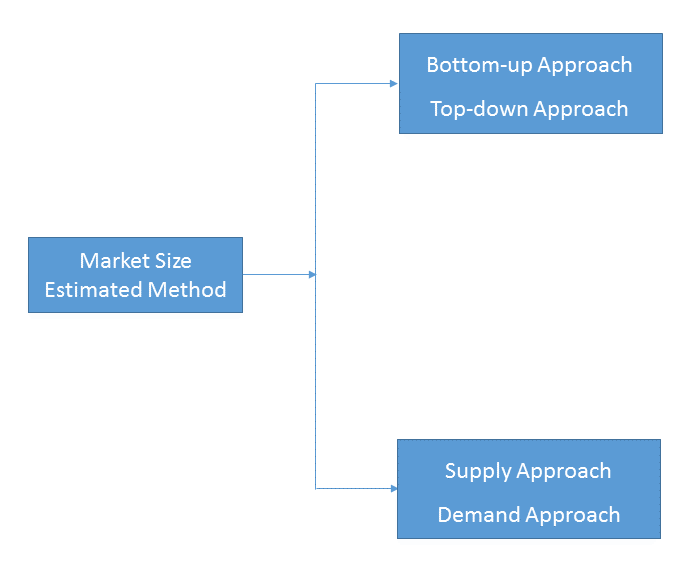
Bottom-up & top-down approach, supply & demand approach are the most important method which is used by HDIN Research to estimate the market size.
1)Top-down & Bottom-up Approach
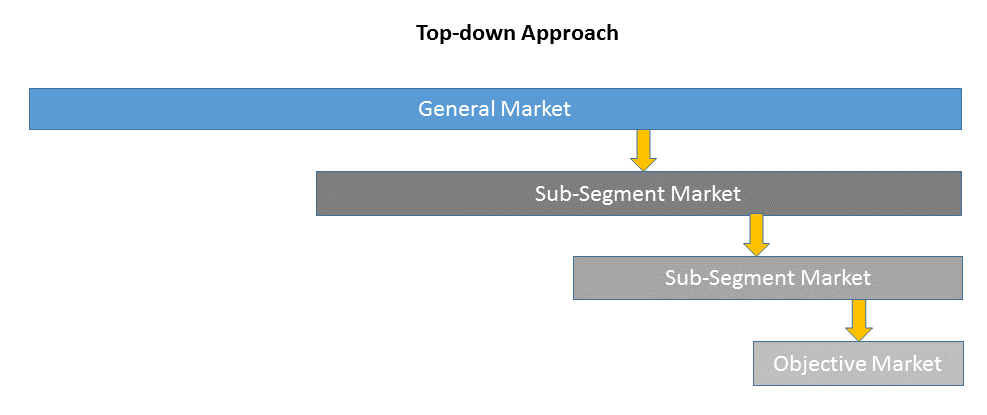
Top-down approach uses a general market size figure and determines the percentage that the objective market represents.
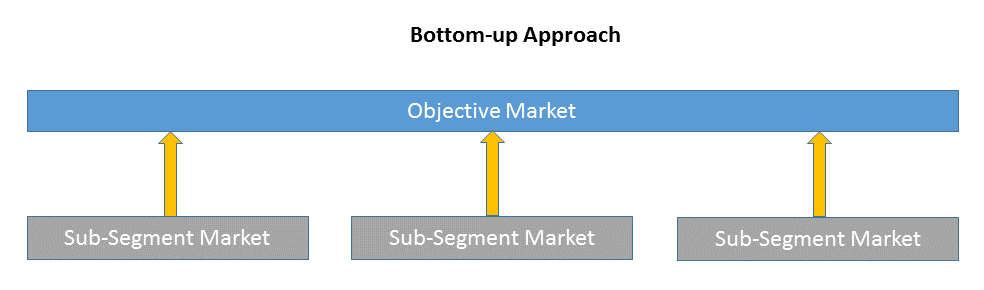
Bottom-up approach size the objective market by collecting the sub-segment information.
2)Supply & Demand Approach
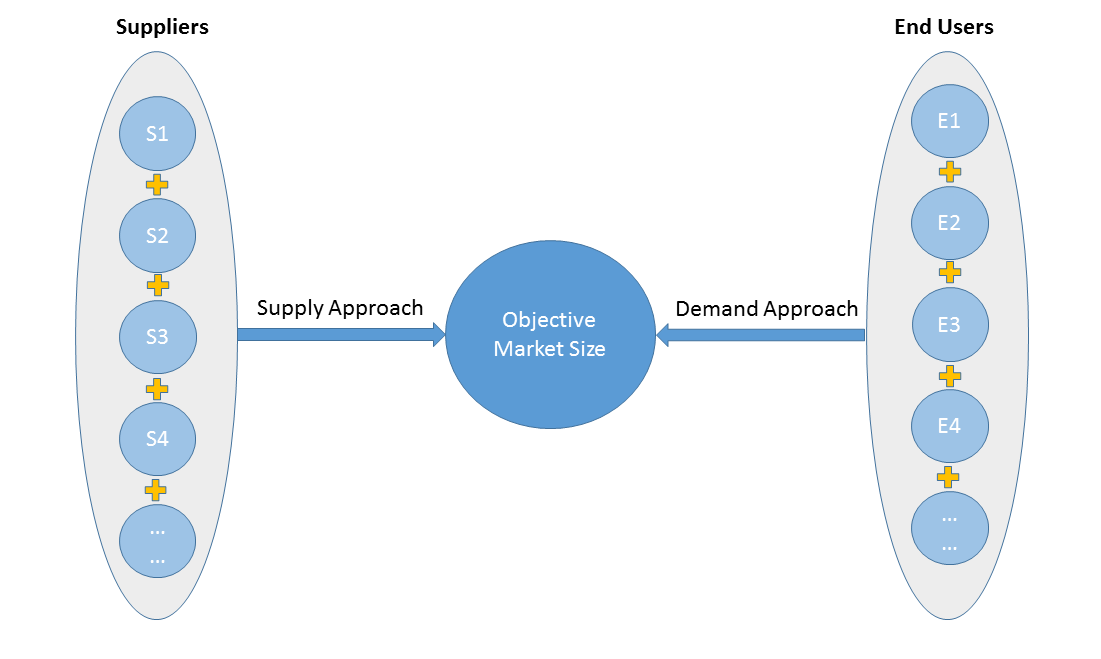
Supply approach is based on assessments of the size of each competitor supplying the objective market.
Demand approach combine end-user data within a market to estimate the objective market size. It is sometimes referred to as bottom-up approach.
- Forecasting Methodology
- Numerous factors impacting the market trend are considered for forecast model:
- New technology and application in the future;
- New project planned/under contraction;
- Global and regional underlying economic growth;
- Threatens of substitute products;
- Industry expert opinion;
- Policy and Society implication.
- Analysis Tools
1)PEST Analysis
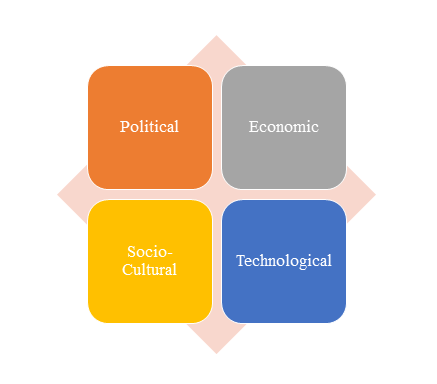
PEST Analysis is a simple and widely used tool that helps our client analyze the Political, Economic, Socio-Cultural, and Technological changes in their business environment.
- Benefits of a PEST analysis:
- It helps you to spot business opportunities, and it gives you advanced warning of significant threats.
- It reveals the direction of change within your business environment. This helps you shape what you’re doing, so that you work with change, rather than against it.
- It helps you avoid starting projects that are likely to fail, for reasons beyond your control.
- It can help you break free of unconscious assumptions when you enter a new country, region, or market; because it helps you develop an objective view of this new environment.
2)Porter’s Five Force Model Analysis
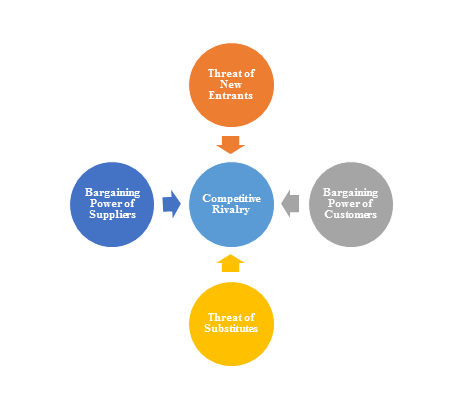
The Porter’s Five Force Model is a tool that can be used to analyze the opportunities and overall competitive advantage. The five forces that can assist in determining the competitive intensity and potential attractiveness within a specific area.
- Threat of New Entrants: Profitable industries that yield high returns will attract new firms.
- Threat of Substitutes: A substitute product uses a different technology to try to solve the same economic need.
- Bargaining Power of Customers: the ability of customers to put the firm under pressure, which also affects the customer's sensitivity to price changes.
- Bargaining Power of Suppliers: Suppliers of raw materials, components, labor, and services (such as expertise) to the firm can be a source of power over the firm when there are few substitutes.
- Competitive Rivalry: For most industries the intensity of competitive rivalry is the major determinant of the competitiveness of the industry.
3)Value Chain Analysis
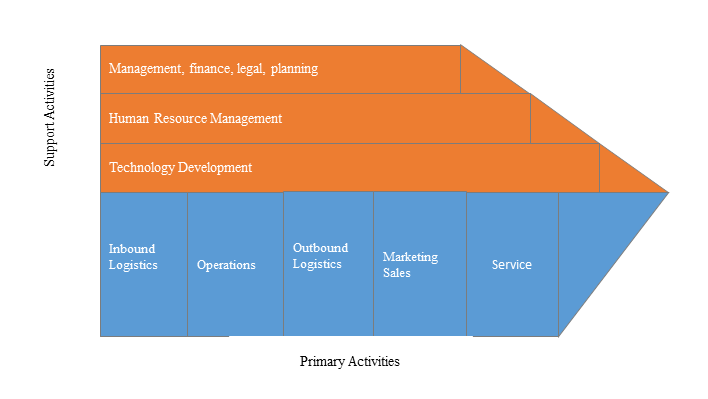
Value chain analysis is a tool to identify activities, within and around the firm and relating these activities to an assessment of competitive strength. Value chain can be analyzed by primary activities and supportive activities. Primary activities include: inbound logistics, operations, outbound logistics, marketing & sales, service. Support activities include: technology development, human resource management, management, finance, legal, planning.
4)SWOT Analysis
SWOT analysis is a tool used to evaluate a company's competitive position by identifying its strengths, weaknesses, opportunities and threats. The strengths and weakness is the inner factor; the opportunities and threats are the external factor. By analyzing the inner and external factors, the analysis can provide the detail information of the position of a player and the characteristics of the industry.
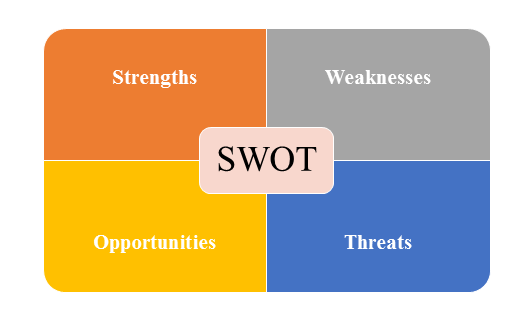
- Strengths describe what the player excels at and separates it from the competition
- Weaknesses stop the player from performing at its optimum level.
- Opportunities refer to favorable external factors that the player can use to give it a competitive advantage.
- Threats refer to factors that have the potential to harm the player.
- Data Sources
| Primary Sources | Secondary Sources |
|---|---|
| Face to face/Phone Interviews with market participants, such as: Manufactures; Distributors; End-users; Experts. Online Survey |
Government/International Organization Data: Annual Report/Presentation/Fact Book Internet Source Information Industry Association Data Free/Purchased Database Market Research Report Book/Journal/News |