Endovascular Device Market Analysis & Growth Forecast 2031
- Single User License (1 Users) $ 3,500
- Team License (2~5 Users) $ 4,500
- Corporate License (>5 Users) $ 5,500
The global endovascular device market size is projected to reach an estimated valuation between 16.8 billion USD and 19.8 billion USD in 2026, advancing at a compound annual growth rate (CAGR) within the range of 4.6% to 6.6% through 2031. As single-use or permanently implantable instruments deployed percutaneously via vascular lumens under real-time fluoroscopic or intravascular imaging, these devices diagnose, revascularize, repair, bypass, seal, or debulk diseased blood vessels. The industry is characterized by a structural transition from permanent metallic scaffolding toward "intervention without implantation" technologies, notably drug-coated balloons (DCBs), and the ascendancy of computer-assisted vacuum thrombectomy (CAVT). Rregulatory tightening, clinical migrations toward outpatient ambulatory surgical centers (ASCs), and institutional purchasing shifts—such as Volume-Based Procurement (VBP) in Mainland China and Group Purchasing Organization (GPO) consolidation in North America—are reshaping the operational moats of multinational and domestic medical device manufacturers.
Regional Market Dynamics
● North America
North America maintains the largest regional market share by revenue, commanding over 50% of global expenditure. Market expansion is supported by premium Average Selling Prices (ASPs), high procedural density across critical limb-threatening ischemia (CLTI) and coronary interventions, and rapid adoption of novel platforms. The migration of peripheral interventions, vascular access management, and vein ablation to outpatient ASCs and Office-Based Labs (OBLs) has generated sustained demand for low-profile access catheters, rapid vascular closure devices, and packaged procedural trays. Regulatory clarity under the United States Food and Drug Administration (FDA) Premarket Approval (PMA) pathway, alongside the expansion of Centers for Medicare & Medicaid Services (CMS) coverage—exemplified by the National Coverage Determination (NCD) for Carotid Artery Stenting (CAS) and Transcarotid Artery Revascularization (TCAR) in asymptomatic and standard-risk patients.
● Europe
Europe represents the second-largest endovascular market globally, governed by universal healthcare frameworks and centralized public tender procurement. Procedural volumes reflect high adoption of DCB platforms, supported by European Society of Cardiology (ESC) guidelines. However, commercial operations face friction stemming from the European Union Medical Device Regulation (EU MDR 2017/745). The resource intensity of post-market clinical follow-up (PMCF) and lengthened Notified Body audit cycles (spanning 12 to 18 months) have led to product rationalization, particularly among mid-tier suppliers of mature peripheral bare-metal stents and standard percutaneous transluminal angioplasty (PTA) catheters. Despite these administrative burdens, structural demand for branched thoracoabdominal endoprostheses and complex aortic repair platforms remains robust.
● Asia-Pacific
Asia-Pacific stands as the fastest-growing volume market globally, propelled by aging demographic structures, hospital catheterization laboratory expansion, and structural healthcare reforms.
In China, annual percutaneous coronary intervention (PCI) procedure volumes have exceeded 2.0 million cases. The deployment of provincial alliance and national Volume-Based Procurement (VBP) tenders has altered the competitive dynamics of coronary and peripheral consumables. While price compression has reduced top-line unit value on mature bare-metal stents and basic PTA dilation tools, it has dramatically elevated overall procedural volumes and accelerated domestic import replacement for players operating within the National Medical Products Administration (NMPA) Innovation Green Channel.
In Japan, the Pharmaceuticals and Medical Devices Agency (PMDA) maintains rigorous clinical assessment standards while offering stable reimbursement for differentiated technologies such as bioresorbable coatings and branched aortic grafts. Australia and parts of Southeast Asia present expanding demand for peripheral revascularization hardware.
● Latin America & Middle East/Africa
Latin America exhibits localized expansion centered in Brazil, Mexico, and Colombia. Multinational original equipment manufacturers (OEMs) primarily maintain direct commercial entities in Brazil, while relying on third-party buyout distributors across secondary markets. Regional macroeconomic volatility, currency devaluation, and disparate reimbursement access across private and public sectors constrain overall market velocity.
The Middle East and Africa (MEA) region demonstrates bifurcated growth. High-capital public healthcare initiatives across the Gulf Cooperation Council (GCC)—notably Saudi Arabia and the United Arab Emirates—are scaling sophisticated hybrid operating suites and attracting international supply agreements for high-acuity interventions, including complex aortic repair and bioabsorbable devices. Conversely, other emerging African territories remain restricted by capital infrastructure deficits, relying largely on basic diagnostic catheterization consumables and international aid tenders.
Supply Chain & Value Chain Architecture
● Upstream Material Feedstocks & Specialized Components
The upstream tier of the endovascular supply chain is defined by strict raw material specifications, tight tolerance parameters, and elevated supplier concentration.
- Structural Metallic Tubing and Wire: Precision seamless hollow tubes of Nitinol (nickel-titanium shape memory alloy), Cobalt-Chromium (CoCr L605, MP35N), and 316L medical-grade stainless steel form the structural chassis for stents and delivery components. Nitinol procurement represents an operational bottleneck due to high metallurgical requirements for superelasticity and thermal transformation predictability. Radiopaque markers utilize precision micro-rings composed of high-density precious metals, including platinum-iridium, gold, and tantalum.
- Polymeric and Textile Biomaterials: Catheter construction relies on variable-durometer extrusion resins, notably polyether block amide (PEBAX), nylon-12, and medical polyurethanes. Aortic stent grafts and covered peripheral stents require expanded polytetrafluoroethylene (ePTFE) membranes or high-density woven polyester (polyethylene terephthalate / Dacron) fabrics to ensure hemocompatibility, low wall thickness, and resistance to endoluminal tear forces.
- Biologic Tissue Scaffolds: Specialized segments incorporate crosslinked decellularized xenografts (bovine pericardium, bovine carotid arteries, porcine submucosa) or human primary cell-derived extracellular matrices, requiring stringent pathogen inactivation protocols.
- Active Pharmaceutical Ingredients (APIs): Drug-eluting stents and balloons utilize high-purity crystalline or semi-amorphous antiproliferative drugs, dominated by the 'limus family (Sirolimus, Everolimus, Zotarolimus, Biolimus A9) and Paclitaxel, paired with excipients such as shellac, urea, or resorbable polymers (PLGA, PLLA).
● Midstream Manufacturing Operations
Midstream operations dictate product functionality and unit gross margins through capital-intensive precision engineering.
- Laser Micro-Machining and Surface Treatment: Stent and scaffold manufacturing hinges on femtosecond and fiber laser micro-machining of thin-walled metallic tubes into intricate cell patterns. Post-cutting workflows require chemical cleaning, mechanical deslagging, and electropolishing to achieve passivation and structural fatigue resistance.
- Heat Setting and Stent Graft Assembly: Nitinol components undergo molten salt bath or fluidized furnace heat treatment under rigid fixturing to establish final structural memory dimensions. For aortic and peripheral stent grafts, fabric encapsulation is performed via automated micro-suturing or proprietary bonding/lamination of ePTFE layers onto the metallic skeleton.
- Coating and Elution Chemistry: Antiproliferative pharmaceutical formulations are deposited using ultrasonic spray heads, micro-pipetting, or laser micro-groove filling. Process control over micro-crystallinity and drug-polymer distribution is critical to ensure predictable in vivo elution kinetics and prevent particulate downstream shedding.
- Balloon Molding and System Integration: Dilation catheters demand precision blow-molding to produce non-compliant or semi-compliant balloon walls capable of enduring burst pressures up to 30 atmospheres. Assembly culminates in high-precision radial crimping of the stent or stent graft onto the catheter delivery system within ISO Class 7 or Class 8 cleanroom facilities, followed by moisture-controlled packaging and Ethylene Oxide (EtO) sterilization.
● Downstream Distribution Logistics and Channel Economics
Distribution models reflect the high unit cost and critical procedural necessity of endovascular hardware.
- Mature Markets (North America, Western Europe): Multinationals rely heavily on direct sales models. Field clinical specialists provide real-time intra-procedural technical assistance inside the Cath Lab. A high percentage of premium devices—specifically branched aortic endoprostheses, carotid stents, and neurovascular coils—are distributed under consignment models. The inventory remains on hospital premises, and revenue realization occurs strictly upon surgical deployment. Procurement is concentrated via competitive bidding through Group Purchasing Organizations (GPOs) and Integrated Delivery Networks (IDNs).
- Emerging Markets (Mainland China, LATAM, Secondary APAC): Commercialization typically utilizes a two-step buyout distribution network. Independent regional distributors assume localized capital financing, provincial hospital tender management, and secondary storage logistics. In Mainland China, the intensification of national and regional VBP programs has compressed distributor margins, incentivizing major domestic manufacturers to streamline distribution layers and engage in direct tender bidding.
Product Classification & Clinical Domain Analysis
A. Peripheral & Iliac/Femoral Stent
Engineered to resolve lower extremity peripheral artery disease (PAD) and venous outflow obstructions across the superficial femoral artery (SFA), popliteal artery (PPA), and iliofemoral veins. The portfolio consists of self-expanding Nitinol stents built to resist arterial twisting and compression, balloon-expandable CoCr stents for rigid focal lesions, and covered stent grafts that isolate aneurysms or ruptures.
Commercial Platforms:
- Abbott: Supera Peripheral Stent System (woven Nitinol architecture).
- BD: LifeStent self-expanding Nitinol family, Covera and Fluency peripheral stent grafts.
- MicroPort Endovastec: CROWNUS Nitinol stent, Veryan BM3D 3D-helical stent, Vflower iliac vein stent.
- Zylox-Tonbridge: ZENFlex peripheral stent platform, Penguin iliac vein stent system.
- Medtronic: Abre venous self-expanding stent.
- Artivion: E-ventus BX and Tuva BX ePTFE-covered balloon-expandable stent grafts, E-liac branched stent graft.
B. Carotid Stent
Targeted at internal carotid artery stenosis to prevent cerebrovascular ischemic events. Interventions are executed via Transfemoral Carotid Artery Stenting (CAS) or Transcarotid Artery Revascularization (TCAR), the latter deploying transcarotid access with circuit flow reversal for neuroprotection. In the United States, procedure rates approximate 155,000 cases annually.
Commercial Platforms:
- InspireMD: CGuard EPS and CGuard Prime Carotid Stent Systems (dual-layer platform marrying an outer Nitinol frame with a 150–180 micron PET MicroNet mesh designed to entrap soft plaque against the vessel wall).
- Abbott: Acculink and Xact carotid stent systems.
- Boston Scientific: TCAR platform (obtained via Silk Road Medical).
- Medtronic: Carotid dual-filter and embolic protection stent portfolios.
C. Aortic Stent (Aortic Endoprosthesis & Stent Graft)
Comprising metallic structural armatures encapsulated within liquid-impermeable ePTFE or woven Dacron fabric. Deployed to exclude abdominal aortic aneurysms (AAA), thoracic aortic aneurysms and dissections (TAA/TAAD), and complex thoracoabdominal aortic aneurysms (TAAA) through endovascular repair (EVAR/TEVAR) procedures.
Commercial Platforms:
- Medtronic: Endurant II AAA stent graft system, Valiant Captivia TEVAR stent graft.
- MicroPort Endovastec: Minos ultra-low profile (14F) AAA system, Castor unibody branched thoracic stent graft, Talos straight stent graft, Cratos branch system.
- Artivion: E-tegra, E-nside off-the-shelf multibranch TAAA system, E-vita Open NEO hybrid prostheses, AMDS Ascyrus Medical Dissection Stent, and the distributed NEXUS arch stent graft family (NEXUS ONE, DUO, TRE).
D. Coronary Stent
Drug-Eluting Stents (DES) remain standard revascularization tools in Percutaneous Coronary Intervention (PCI). They provide acute radial support to counteract arterial recoil while eluting cytostatic or cytotoxic agents to suppress neointimal hyperplasia and In-Stent Restenosis (ISR).
Commercial Platforms:
- Abbott: XIENCE family (Everolimus-eluting Cobalt-Chromium platforms).
- Medtronic: Onyx Frontier and Resolute Onyx (Zotarolimus-eluting platforms).
- Boston Scientific: SYNERGY (bioabsorbable polymer Everolimus platform) and Promus series.
- Bluesail Medical / JW Medical Systems: BioFreedom and BioFreedom Ultra polymer-free Biolimus A9 (BA9) DES, Excrossal / Expansal CoCr platforms.
- MicroPort Scientific: Firehawk Sirolimus target-eluting stent, Firebird2 DES.
- SINOMED: BuMA bioresorbable coating DES, HT Supreme and HT Infinity healing-targeted stent systems.
- Lepu Medical: Partner, Nano plus, and GuReater DES lines, alongside NeoVas bioresorbable coronary scaffold (BRS).
- OrbusNeich: eucaLimus DES series.
E. Balloon Systems (PTCA/PTA, Drug-Coated Balloons, Specialty Balloons)
Includes semi-compliant and non-compliant balloons for vessel preparation, alongside Drug-Coated Balloons (DCBs) that deliver antiproliferative therapeutics directly to the endoluminal wall via lipophilic excipients, avoiding permanent foreign-body implantation.
Commercial Platforms:
- Boston Scientific: Ranger Paclitaxel PTA DCB, AGENT Paclitaxel DCB (coronary in-stent restenosis indication).
- Medtronic: IN.PACT Admiral and IN.PACT 018 Paclitaxel DCBs, Euphora PTCA dilation series.
- BD: Lutonix DCB system.
- Acotec Scientific: AcoArt Orchid & Dahlia (femoropopliteal DCB), AcoArt Tulip & Lotos (below-the-knee DCB).
- Zylox-Tonbridge: UltraFree peripheral DCB system.
- OrbusNeich: Scoreflex NC scoring balloon, Jade and Sapphire peripheral and coronary series.
- Lepu Medical: Angiocide scoring and cutting platforms.
- Orchestra BioMed: Virtue Sirolimus AngioInfusion Balloon (SAB).
F. Thrombectomy & Atherectomy System
Systems designed to restore acute lumen patency by physically debulking, ablating, or aspirating organized endoluminal thrombus or severely calcified atheromatous plaque.
Commercial Platforms:
- Computer-Assisted Vacuum Thrombectomy (CAVT) & Aspiration: Penumbra Indigo System with Lightning Flash and Lightning Bolt platforms; Boston Scientific AngioJet rheolytic thrombectomy and EKOS ultrasound-enhanced thrombolysis; Stryker / Inari Medical FlowTriever and ClotTriever systems; AngioDynamics AngioVac and AlphaVac lines; Acotec AcoStream; Zylox-Tonbridge Eagle and Mammoth thrombectomy catheters.
- Atherectomy Platforms: Abbott Diamondback 360 orbital atherectomy system; BD Rotarex rotational excisional atherectomy; Medtronic HawkOne directional atherectomy; AngioDynamics Auryon laser atherectomy; Zylox-Tonbridge Pantheris OCT-guided directional atherectomy.
G. Procedural Accessories & Tissue Conduits
Ancillary hardware necessary for endoluminal access, crossing, closure, and vascular replacement.
Commercial Platforms:
- Vascular Closure Devices: Teleflex MANTA (large-bore biomechanical closure for 10F–24F access sites); Abbott Perclose ProGlide, ProStyle suture-based systems, and StarClose SE; Haemonetics (Vivasure Medical percutaneous closure platform); Zylox-Tonbridge Unicorn suture device.
- Off-the-Shelf Bio-Engineered Vascular Conduits: Humacyte Symvess Acellular Tissue Engineered Vessel (ATEV), approved for extremity vascular trauma reconstruction and arteriovenous (AV) access conduits.
- Catheters and Access Kits: Teleflex GuideLiner and Turnpike catheter lines; Merit Medical SwiftNINJA steerable microcatheter and Pursue microcatheters.
Competitive Profiles
● Global Multidisciplinary Medical Technology Conglomerates
1. Medtronic plc: Medtronic retains wide procedural scale across endovascular cardiology, aortic repair, and peripheral vascular disease. The firm leverages deep capital reserves to bundle clinical hardware across Cath Labs globally.
2. Boston Scientific Corporation: Boston Scientific holds high-share commercial assets across peripheral stenting, arterial debulking, and localized drug delivery.
3. Abbott Laboratories: Abbott operates high-volume portfolios across coronary intervention, peripheral revascularization, and large-bore femoral closure.
4. Becton, Dickinson and Company (BD): BD expanded its endovascular footprint through the strategic absorption of C. R. Bard’s peripheral vascular operations.
● Specialized Aortic & Endoprosthesis Developers
5. W. L. Gore & Associates, Inc. (Gore Medical): Gore Medical maintains deep technological specialization in advanced fluoropolymer biomaterials and covered stent grafts.
6. Cook Medical: Cook Medical is a pioneer in interventional vascular hardware, operating dedicated portfolios across aortic branch grafting, peripheral drug-eluting stenting, and vascular access.
7. Terumo Corporation: Operating through Terumo Aortic (integrating legacy Vascutek and Bolton Medical) and Terumo Interventional Systems (TIS), this Japanese conglomerate provides comprehensive endovascular access and structural repair technologies.
8. Artivion, Inc.: Artivion (formerly CryoLife / JOTEC) provides specialized implantable biological and endovascular therapies for high-acuity thoracic aortic repair.
9. Bentley InnoMed GmbH: Bentley InnoMed operates as a pure-play developer of high-precision balloon-expandable covered stents.
10. Rhevera Medical (formerly Endologix): Rhevera Medical focuses on differentiated anatomical fixations for endovascular abdominal aortic aneurysm repair and peripheral percutaneous bypass.
● Peripheral Specialists, Thrombectomy, & Access Innovators
11. Acotec Scientific Holdings Limited: Acotec Scientific is a specialized Chinese interventional developer that pioneered domestic drug-coated balloon commercialization.
12. Zylox-Tonbridge Medical Technology Co., Ltd.: Zylox-Tonbridge is an integrated player in peripheral vascular and neurovascular interventions, listed on the Hong Kong Stock Exchange.
13. Stryker Corporation: Stryker maintains strong commercial positions across acute ischemic stroke revascularization, intracranial aneurysm coiling, and large-vessel venous thrombectomy.
14. InspireMD, Inc.: InspireMD is an interventional developer focused on specialized embolic prevention technology for carotid artery revascularization.
15. Teleflex Incorporated: Teleflex delivers specialized vascular access kits, large-bore arteriotomy closure platforms, and specialty diagnostic crossing catheters.
16. Haemonetics Corporation: Haemonetics provides interventional vascular therapies, blood management platforms, and hemostasis closure hardware.
17. Merit Medical Systems, Inc.: Merit Medical manufactures disposable hardware and fluid-management components utilized across interventional cardiology and radiology.
18. Argon Medical Devices, Inc.: Argon manufactures interventional instruments for venous thromboembolism, vascular access, and drainage.
19. Cordis Corporation: Cordis is an established cardiovascular hardware pioneer, previously held by Johnson & Johnson and Cardinal Health.
20. B. Braun: B. Braun is a privately held healthcare conglomerate with manufacturing operations in drug-coated balloon technology.
21. iVascular SLU: iVascular is a vertically integrated European developer and manufacturer of coronary and peripheral interventional platforms.
22. MicroPort Scientific Corporation: MicroPort manages its global peripheral and aortic franchise primarily via its Shanghai STAR Market-listed subsidiary, MicroPort Endovastec (688016.SH).
● Broad Cardiovascular, Regional, & Diversified Manufacturers
23. Bluesail Medical Co., Ltd. (Biosensors International / JW Medical Systems): Headquartered in China, Bluesail expanded its cardiovascular reach by acquiring Singapore-based Biosensors International and JW Medical Systems.
24. Lepu Medical Technology (Beijing) Co., Ltd.: Listed on the Shenzhen Stock Exchange, Lepu Medical provides end-to-end coronary and peripheral revascularization hardware across Mainland China.
25. Sino Medical Sciences Technology Inc. (SINOMED): Listed on the Shanghai STAR Market, SINOMED specializes in targeted elution dynamics and surface-modification chemistry.
26. OrbusNeich Medical Group Holdings Limited: Headquartered in Hong Kong, China, OrbusNeich specializes in micro-vessel navigation catheters and focused-force dilation balloons.
27. Meril Life Sciences Pvt. Ltd.: Headquartered in India, Meril has evolved into a diversified multinational device company across emerging markets.
28. Sahajanand Medical Technologies Ltd. (SMT): Headquartered in India, SMT is a high-volume cardiovascular and peripheral interventional manufacturer.
29. Integris Medtech Limited (Translumina): Headquartered in India with manufacturing and design facilities in Hechingen, Germany.
30. CID S.p.A. (Alvimedica): Based in Saluggia, Italy, CID provides specialized interventional solutions under the Alvimedica group.
31. Liaoning Yinyi Biological Technology Co., Ltd.: A Chinese interventional manufacturer noted for polymer-free coating platforms.
32. Relisys Medical Devices Limited: Located in Hyderabad, India, Relisys maintains integrated manufacturing for cardiovascular, neurovascular, and peripheral catheter devices.
33. Genoss Co., Ltd.: Based in South Korea, Genoss manufactures dental, orthopedic, and cardiovascular devices.
34. Osstem Cardiotec Co., Ltd.: The cardiovascular device division of South Korea's Osstem Implant Co., Ltd.
1.1 Report Scope and Research Objectives 1
1.2 Multi-Tiered Market Sizing and Triangulation Methodology 2
1.3 Primary Data Sources and Executive Interview Fieldwork 3
1.4 Secondary Validation Models and Statistical Frameworks 4
1.5 Definitional Boundaries and Forecast Assumptions 5
1.6 Acronyms and Abbreviations Reference 6
Chapter 2 Global Endovascular Device Market Landscape and Macroeconomic Dynamics (2021-2031) 7
2.1 Global Endovascular Device Market Valuation and Trajectory (2021-2031) 7
2.2 Clinical Epidemiology: Shifting Vascular Disease Burden and Intervention Rates 8
2.3 Structural Shift Toward Minimally Invasive Catheter-Based Interventions 9
2.4 Technological Innovations in Bioresorbable Platforms and Drug Delivery 10
2.5 Healthcare Reimbursement Landscapes, DRG Coding, and Pricing Pressures 11
2.6 Market Headwinds, Supply Vulnerabilities, and Strategic Opportunities 12
Chapter 3 Global Endovascular Device Market Breakdown by Product Type 13
3.1 Peripheral and Iliac/Femoral Stent Systems 13
3.2 Carotid Stent Systems and Neurovascular Protection Devices 14
3.3 Aortic Stent Grafts (EVAR, TEVAR, and Complex Branched/Fenestrated Devices) 15
3.4 Coronary Stent Systems (Drug-Eluting Stents, Bare-Metal Stents, Bioresorbable Scaffolds) 16
3.5 Angioplasty Balloon Catheters (Plain Balloon, Drug-Coated Balloon, Scoring/Cutting Balloon) 17
3.6 Thrombectomy and Atherectomy Systems (Mechanical, Aspiration, Laser, Rotational) 18
3.7 Other Devices (Vascular Access, Vascular Closure Devices, and Tissue Conduits) 19
Chapter 4 Global Endovascular Device Market Breakdown by Clinical End-User Environment 20
4.1 Inpatient Hospital Catheterization Laboratories and Hybrid Operating Rooms 20
4.2 Ambulatory Surgical Centers (ASCs) and Outpatient Endovascular Suites 21
4.3 Specialized Cardiovascular and Peripheral Vascular Centers 22
4.4 Academic Medical Centers and Clinical Research Facilities 23
4.5 Procurement Dynamics Across Public Tendering and Private Healthcare Networks 24
Chapter 5 Value Chain Architecture, Materials Sourcing, and Manufacturing Ecosystem 25
5.1 End-to-End Value Chain and Value Addition Node Analysis 25
5.2 Advanced Biomaterials: Nitinol, Cobalt-Chromium, Platinum-Chromium, and Bio-Polymers 26
5.3 Precision Manufacturing Technologies: Femtosecond Laser Micromachining and Surface Coating 27
5.4 OEM Sourcing, Extrusion Sub-Assemblies, and Cleanroom Sterilization Operations 28
5.5 Total Cost of Ownership and Margin Distribution Across Distribution Tiers 29
Chapter 6 Global Trade Architecture, Regulatory Pathways, and Production Hubs 30
3.1 Global Export-Import Trade Corridors and Cross-Border Intermediary Flows 30
3.2 Primary Manufacturing and Export Centers: United States, Ireland, Germany, Switzerland, and Costa Rica 31
3.3 Regulatory Clearance Paradigms: US FDA PMA/510(k), EU MDR (2017/745), and NMPA 32
3.4 Tariffs, Supply Chain Localization Mandates, and Nearshoring Realignment 33
3.5 Sterilization Regulatory Compliance (EtO Emission Directives vs. E-Beam/X-Ray Alternatives) 34
Chapter 7 North America Endovascular Device Market Analysis 35
7.1 Regional Trajectory and Cross-Category Volume Dynamics (2021-2031) 35
7.2 United States: Shift to Outpatient ASCs, Inpatient Reimbursement, and Product Adoption 36
7.3 Canada: Provincial Healthcare Procurement and Catheterization Laboratory Utilization 38
Chapter 8 Europe Endovascular Device Market Analysis 42
8.1 European Market Evolution Under MDR Regulatory Re-Certification Protocols 42
8.2 Germany: High-Volume Interventional Infrastructure and Stent Utilization Dynamics 43
8.3 France: Centralized Hospital Purchasing Networks and Device Tariffs 44
8.4 United Kingdom: NHS Interventional Radiology Frameworks and Volume Procurement 45
8.5 Italy: Regional Public Health Authority Tender Architecture 46
8.6 Spain: Autonomous Community Procurement and Vascular Lab Modernization 47
8.7 Ireland, Switzerland and Rest of Europe Market 48
Chapter 9 Asia-Pacific Endovascular Device Market Analysis 49
9.1 Macro Drivers: Expanding Middle-Class Healthcare Access and Procedural Capacity 49
9.2 China: Volume-Based Procurement (VBP) Impact and Domestic Substitution Dynamics 50
9.3 Japan: Aging Demographics, PMDA Approval Cycles, and Shunsai Clinical Trends 51
9.4 India & Southeast Asia: Price Ceilings on Interventional Implants, Local Manufacturing, and Import Patterns 52
9.5 South Korea: Advanced Hybrid Intervention Centers and Health Insurance Review Agency Policies 53
9.6 Australia and New Zealand: Medical Device Access Programs and Private Hospital Reimbursement 54
Chapter 10 Latin America, Middle East, and Africa Endovascular Device Market Analysis 56
10.1 Latin America Regional Growth Drivers and Import Dependency Ratios 56
10.2 Brazil: ANVISA Approvals, Private vs. SUS Dual-Track Market Characteristics 57
10.3 Mexico: Device Assembling Hubs and Social Security Institute (IMSS) Tenders 58
10.4 Middle East GCC: Healthcare Infrastructure Expansion and Modern Vascular Centers 59
10.5 South Africa: Private Health Sector Demand and Specialized Interventional Services 60
Chapter 11 Global Competitive Landscape, Mergers, and Market Share Matrix 61
11.1 Competitive Tiering: Tier-1 Multinationals, Tier-2 Specialists, and Emerging Fast-Followers 61
11.2 Mergers, Acquisitions, Strategic Alliances, and Technology Licensing (2021-2026) 62
11.3 Patent Landscape: Drug Delivery Formulations, Mesh Microstructures, and Access Delivery Catheters 63
11.4 Global Market Concentration and Firm-Level Competitive Positioning Matrix 64
Chapter 12 Corporate Intelligence and Competitor Benchmarking 65
12.1 Abbott 65
12.1.1 Corporate Profile and Strategic Focus 65
12.1.2 Endovascular Device Portfolio and Pipeline Innovations 66
12.1.3 SWOT Analysis 67
12.1.4 Product-Specific Operational and Financial Metrics 68
12.2 Medtronic 69
12.2.1 Corporate Profile and Strategic Focus 69
12.2.2 Endovascular Device Portfolio and Pipeline Innovations 70
12.2.3 SWOT Analysis 71
12.2.4 Product-Specific Operational and Financial Metrics 72
12.3 Boston Scientific 73
12.3.1 Corporate Profile and Strategic Focus 73
12.3.2 Endovascular Device Portfolio and Pipeline Innovations 74
12.3.3 SWOT Analysis 75
12.3.4 Product-Specific Operational and Financial Metrics 76
12.4 Teleflex 77
12.4.1 Corporate Profile and Strategic Focus 77
12.4.2 Endovascular Device Portfolio and Pipeline Innovations 78
12.4.3 SWOT Analysis 79
12.4.4 Product-Specific Operational and Financial Metrics 80
12.5 B. Braun 81
12.5.1 Corporate Profile and Strategic Focus 81
12.5.2 Endovascular Device Portfolio and Pipeline Innovations 82
12.5.3 SWOT Analysis 83
12.5.4 Product-Specific Operational and Financial Metrics 84
12.6 BD 85
12.6.1 Corporate Profile and Strategic Focus 85
12.6.2 Endovascular Device Portfolio and Pipeline Innovations 86
12.6.3 SWOT Analysis 87
12.6.4 Product-Specific Operational and Financial Metrics 88
12.7 Bluesail Medical (including Biosensors International and JWMS) 89
12.7.1 Corporate Profile and Strategic Focus 89
12.7.2 Endovascular Device Portfolio and Pipeline Innovations 90
12.7.3 SWOT Analysis 91
12.7.4 Product-Specific Operational and Financial Metrics 92
12.8 Terumo 93
12.8.1 Corporate Profile and Strategic Focus 93
12.8.2 Endovascular Device Portfolio and Pipeline Innovations 94
12.8.3 SWOT Analysis 95
12.8.4 Product-Specific Operational and Financial Metrics 96
12.9 Lepu Medical 97
12.9.1 Corporate Profile and Strategic Focus 97
12.9.2 Endovascular Device Portfolio and Pipeline Innovations 98
12.9.3 SWOT Analysis 99
12.9.4 Product-Specific Operational and Financial Metrics 100
12.10 Microport 101
12.10.1 Corporate Profile and Strategic Focus 101
12.10.2 Endovascular Device Portfolio and Pipeline Innovations 102
12.10.3 SWOT Analysis 103
12.10.4 Product-Specific Operational and Financial Metrics 104
12.11 SINOMED 105
12.11.1 Corporate Profile and Strategic Focus 105
12.11.2 Endovascular Device Portfolio and Pipeline Innovations 106
12.11.3 SWOT Analysis 107
12.11.4 Product-Specific Operational and Financial Metrics 108
12.12 WL Gore & Associates 109
12.12.1 Corporate Profile and Strategic Focus 109
12.12.2 Endovascular Device Portfolio and Pipeline Innovations 110
12.12.3 SWOT Analysis 111
12.12.4 Product-Specific Operational and Financial Metrics 112
12.13 Cook Medical 113
12.13.1 Corporate Profile and Strategic Focus 113
12.13.2 Endovascular Device Portfolio and Pipeline Innovations 114
12.13.3 SWOT Analysis 115
12.13.4 Product-Specific Operational and Financial Metrics 116
12.14 Artivion 117
12.14.1 Corporate Profile and Strategic Focus 117
12.14.2 Endovascular Device Portfolio and Pipeline Innovations 118
12.14.3 SWOT Analysis 119
12.14.4 Product-Specific Operational and Financial Metrics 120
12.15 Integris Medtech Limited 121
12.15.1 Corporate Profile and Strategic Focus 121
12.15.2 Endovascular Device Portfolio and Pipeline Innovations 122
12.15.3 SWOT Analysis 123
12.15.4 Product-Specific Operational and Financial Metrics 124
12.16 Meril Lifesciences 125
12.16.1 Corporate Profile and Strategic Focus 125
12.16.2 Endovascular Device Portfolio and Pipeline Innovations 126
12.16.3 SWOT Analysis 127
12.16.4 Product-Specific Operational and Financial Metrics 128
12.17 Relisys Medical Devices 129
12.17.1 Corporate Profile and Strategic Focus 129
12.17.2 Endovascular Device Portfolio and Pipeline Innovations 130
12.17.3 SWOT Analysis 131
12.17.4 Product-Specific Operational and Financial Metrics 132
12.18 Sahajanand Medical Technologies Ltd. 133
12.18.1 Corporate Profile and Strategic Focus 133
12.18.2 Endovascular Device Portfolio and Pipeline Innovations 134
12.18.3 SWOT Analysis 135
12.18.4 Product-Specific Operational and Financial Metrics 136
12.19 Liaoning Yinyi Biological Technology Co. Ltd. 137
12.19.1 Corporate Profile and Strategic Focus 137
12.19.2 Endovascular Device Portfolio and Pipeline Innovations 138
12.19.3 SWOT Analysis 139
12.19.4 Product-Specific Operational and Financial Metrics 140
12.20 OrbusNeich Medical Group 141
12.20.1 Corporate Profile and Strategic Focus 141
12.20.2 Endovascular Device Portfolio and Pipeline Innovations 142
12.20.3 SWOT Analysis 143
12.20.4 Product-Specific Operational and Financial Metrics 144
12.21 CID S.p.A. 145
12.21.1 Corporate Profile and Strategic Focus 145
12.21.2 Endovascular Device Portfolio and Pipeline Innovations 146
12.21.3 SWOT Analysis 147
12.21.4 Product-Specific Operational and Financial Metrics 148
12.22 iVascular 149
12.22.1 Corporate Profile and Strategic Focus 149
12.22.2 Endovascular Device Portfolio and Pipeline Innovations 150
12.22.3 SWOT Analysis 151
12.22.4 Product-Specific Operational and Financial Metrics 152
12.23 Genoss Co. Ltd. 153
12.23.1 Corporate Profile and Strategic Focus 153
12.23.2 Endovascular Device Portfolio and Pipeline Innovations 154
12.23.3 SWOT Analysis 155
12.23.4 Product-Specific Operational and Financial Metrics 156
12.24 Osstem Cardiotec 157
12.24.1 Corporate Profile and Strategic Focus 157
12.24.2 Endovascular Device Portfolio and Pipeline Innovations 158
12.24.3 SWOT Analysis 159
12.24.4 Product-Specific Operational and Financial Metrics 160
12.25 Acotec Scientific 161
12.25.1 Corporate Profile and Strategic Focus 161
12.25.2 Endovascular Device Portfolio and Pipeline Innovations 162
12.25.3 SWOT Analysis 163
12.25.4 Product-Specific Operational and Financial Metrics 164
12.26 Zylox-Tonbridge 165
12.26.1 Corporate Profile and Strategic Focus 165
12.26.2 Endovascular Device Portfolio and Pipeline Innovations 166
12.26.3 SWOT Analysis 167
12.26.4 Product-Specific Operational and Financial Metrics 168
12.27 InspireMD 169
12.27.1 Corporate Profile and Strategic Focus 169
12.27.2 Endovascular Device Portfolio and Pipeline Innovations 170
12.27.3 SWOT Analysis 171
12.27.4 Product-Specific Operational and Financial Metrics 172
12.28 Cordis Corporation 173
12.28.1 Corporate Profile and Strategic Focus 173
12.28.2 Endovascular Device Portfolio and Pipeline Innovations 174
12.28.3 SWOT Analysis 175
12.28.4 Product-Specific Operational and Financial Metrics 176
12.29 Stryker 177
12.29.1 Corporate Profile and Strategic Focus 177
12.29.2 Endovascular Device Portfolio and Pipeline Innovations 178
12.29.3 SWOT Analysis 179
12.29.4 Product-Specific Operational and Financial Metrics 180
12.30 Argon Medical Devices 181
12.30.1 Corporate Profile and Strategic Focus 181
12.30.2 Endovascular Device Portfolio and Pipeline Innovations 182
12.30.3 SWOT Analysis 183
12.30.4 Product-Specific Operational and Financial Metrics 184
12.31 Merit Medical Systems 185
12.31.1 Corporate Profile and Strategic Focus 185
12.31.2 Endovascular Device Portfolio and Pipeline Innovations 186
12.31.3 SWOT Analysis 187
12.31.4 Product-Specific Operational and Financial Metrics 188
12.32 Rhevera Medical 189
12.32.1 Corporate Profile and Strategic Focus 189
12.32.2 Endovascular Device Portfolio and Pipeline Innovations 190
12.32.3 SWOT Analysis 191
12.32.4 Product-Specific Operational and Financial Metrics 192
12.33 Bentley InnoMed GmbH 193
12.33.1 Corporate Profile and Strategic Focus 193
12.33.2 Endovascular Device Portfolio and Pipeline Innovations 194
12.33.3 SWOT Analysis 195
12.33.4 Product-Specific Operational and Financial Metrics 196
12.34 Haemonetics 197
12.34.1 Corporate Profile and Strategic Focus 197
12.34.2 Endovascular Device Portfolio and Pipeline Innovations 198
12.34.3 SWOT Analysis 199
12.34.4 Product-Specific Operational and Financial Metrics 200
Table 2 Global Endovascular Device Market Revenue Breakdown by Product Category (USD Million, 2021-2031) 13
Table 3 Global Peripheral and Iliac/Femoral Stent Market Size by Sub-Type (USD Million, 2021-2031) 14
Table 4 Global Carotid Stent Market Sizing and Procedural Volume Projections (2021-2031) 15
Table 5 Global Aortic Stent Graft Market Revenue and Unit Volume Forecasts (2021-2031) 16
Table 6 Global Coronary Stent Market Value by Drug-Eluting Platform Generation (2021-2031) 17
Table 7 Global Angioplasty Balloon Market Size by Technology Type (USD Million, 2021-2031) 18
Table 8 Global Thrombectomy and Atherectomy System Market by Clinical Indication (2021-2031) 19
Table 9 Global Vascular Access, Closure Devices, and Conduits Revenue Breakdown (2021-2031) 20
Table 10 Global Endovascular Device Market Share by Clinical Setting (USD Million, 2021-2031) 21
Table 11 Cost Architecture and Value Retention Across Key Upstream Material Suppliers 26
Table 12 Global Endovascular Device Export Volumes and Trade Balance by Leading Producing Nation (2021-2026) 31
Table 13 North America Endovascular Device Revenue by Segment (USD Million, 2021-2031) 36
Table 14 United States Endovascular Device Revenue and Procedural Demand Projections (2021-2031) 37
Table 15 Canada Endovascular Device Revenue by Product Group (USD Million, 2021-2031) 39
Table 16 Europe Endovascular Device Market Revenue by Product Category (USD Million, 2021-2031) 42
Table 17 Germany Endovascular Device Market Revenue and Stent Implantation Projections (2021-2031) 43
Table 18 France Endovascular Device Sales Forecast across Public and Private Hospital Tiers (2021-2031) 44
Table 19 United Kingdom Endovascular Device Sizing Across NHS Trusts and Independent Providers (2021-2031) 45
Table 20 Italy Endovascular Device Procurement Valuation Across Regional Health Entities (2021-2031) 46
Table 21 Spain Endovascular Device Consumption by Clinical Specialization (USD Million, 2021-2031) 47
Table 22 Asia-Pacific Endovascular Device Market Revenue by Product Segment (USD Million, 2021-2031) 49
Table 23 China Endovascular Device Volume and Revenue Dynamics Pre- and Post-VBP Expansion (2021-2031) 50
Table 24 Japan Endovascular Device Procedural Consumption and Revenue Projections (2021-2031) 51
Table 25 India Endovascular Device Market Valuation and Price Ceiling Impact (2021-2031) 52
Table 26 South Korea Endovascular Device Value Forecast Across Academic and Specialized Units (2021-2031) 53
Table 27 Australia Endovascular Device Market Forecast by Reimbursement Category (2021-2031) 55
Table 28 Latin America Endovascular Device Market Sizing Across Core Clinical Lines (2021-2031) 56
Table 29 Brazil Endovascular Device Revenue by Product Line Across SUS and Private Insurers (2021-2031) 57
Table 30 Mexico Endovascular Device Import Value and In-Country Assembling Demand (2021-2031) 58
Table 31 Middle East and Africa Endovascular Device Market Revenue by Key Territory (2021-2031) 59
Table 32 Major Cross-Border Mergers, Strategic Acquisitions, and Platform Divestitures (2021-2026) 62
Table 33 Global Top 10 Endovascular Device Supplier Revenue Share Benchmarking (2021-2026) 64
Table 34 Abbott Endovascular Device Revenue, Cost and Gross Margin (2021-2026) 68
Table 35 Medtronic Endovascular Device Revenue, Cost and Gross Margin (2021-2026) 72
Table 36 Boston Scientific Endovascular Device Revenue, Cost and Gross Margin (2021-2026) 76
Table 37 Teleflex Endovascular Device Revenue, Cost and Gross Margin (2021-2026) 80
Table 38 B. Braun Endovascular Device Revenue, Cost and Gross Margin (2021-2026) 84
Table 39 BD Endovascular Device Revenue, Cost and Gross Margin (2021-2026) 88
Table 40 Bluesail Medical Endovascular Device Revenue, Cost and Gross Margin (2021-2026) 92
Table 41 Terumo Endovascular Device Revenue, Cost and Gross Margin (2021-2026) 96
Table 42 Lepu Medical Endovascular Device Revenue, Cost and Gross Margin (2021-2026) 100
Table 43 Microport Endovascular Device Revenue, Cost and Gross Margin (2021-2026) 104
Table 44 SINOMED Endovascular Device Revenue, Cost and Gross Margin (2021-2026) 108
Table 45 WL Gore & Associates Endovascular Device Revenue, Cost and Gross Margin (2021-2026) 112
Table 46 Cook Medical Endovascular Device Revenue, Cost and Gross Margin (2021-2026) 116
Table 47 Artivion Endovascular Device Revenue, Cost and Gross Margin (2021-2026) 120
Table 48 Integris Medtech Limited Endovascular Device Revenue, Cost and Gross Margin (2021-2026) 124
Table 49 Meril Lifesciences Endovascular Device Revenue, Cost and Gross Margin (2021-2026) 128
Table 50 Relisys Medical Devices Endovascular Device Revenue, Cost and Gross Margin (2021-2026) 132
Table 51 Sahajanand Medical Technologies Ltd. Endovascular Device Revenue, Cost and Gross Margin (2021-2026) 136
Table 52 Liaoning Yinyi Biological Technology Co. Ltd. Endovascular Device Revenue, Cost and Gross Margin (2021-2026) 140
Table 53 OrbusNeich Medical Group Endovascular Device Revenue, Cost and Gross Margin (2021-2026) 144
Table 54 CID S.p.A. Endovascular Device Revenue, Cost and Gross Margin (2021-2026) 148
Table 55 iVascular Endovascular Device Revenue, Cost and Gross Margin (2021-2026) 152
Table 56 Genoss Co. Ltd. Endovascular Device Revenue, Cost and Gross Margin (2021-2026) 156
Table 57 Osstem Cardiotec Endovascular Device Revenue, Cost and Gross Margin (2021-2026) 160
Table 58 Acotec Scientific Endovascular Device Revenue, Cost and Gross Margin (2021-2026) 164
Table 59 Zylox-Tonbridge Endovascular Device Revenue, Cost and Gross Margin (2021-2026) 168
Table 60 InspireMD Endovascular Device Revenue, Cost and Gross Margin (2021-2026) 172
Table 61 Cordis Corporation Endovascular Device Revenue, Cost and Gross Margin (2021-2026) 176
Table 62 Stryker Endovascular Device Revenue, Cost and Gross Margin (2021-2026) 180
Table 63 Argon Medical Devices Endovascular Device Revenue, Cost and Gross Margin (2021-2026) 184
Table 64 Merit Medical Systems Endovascular Device Revenue, Cost and Gross Margin (2021-2026) 188
Table 65 Rhevera Medical Endovascular Device Revenue, Cost and Gross Margin (2021-2026) 192
Table 66 Bentley InnoMed GmbH Endovascular Device Revenue, Cost and Gross Margin (2021-2026) 196
Table 67 Haemonetics Endovascular Device Revenue, Cost and Gross Margin (2021-2026) 200
Figure 1 Endovascular Device Research Framework and Analytical Data Pipeline 3
Figure 2 Global Endovascular Device Revenue and Growth Rate Trajectory (USD Million, 2021-2031) 7
Figure 3 Technology Innovation Roadmap for Bioresorbable Scaffolds and Next-Gen Coatings 10
Figure 4 Global Endovascular Device Value Share by Product Segment (2021 vs. 2026 vs. 2031) 13
Figure 5 Comparative Average Selling Price (ASP) Dynamics Across Device Segments (2021-2031) 17
Figure 6 Procedural Volume Shift Toward Ambulatory Surgical Centers (2021-2031) 22
Figure 7 Global Supply Chain Value Capture and Margin Spread Across Manufacturing Stages 25
Figure 8 Major Raw Material and Component Supply Node Concentration Map 27
Figure 9 Primary Global Interventional Device Trade Flows and Balance of Trade 30
Figure 10 Global Sterilization Infrastructure Footprint by Modality (EtO, E-Beam, X-Ray) 34
Figure 11 North America Endovascular Device Market Share Breakdown by Country (2021-2031) 35
Figure 12 United States Device Volume Growth in Outpatient vs. Inpatient Systems (2021-2031) 37
Figure 13 Europe Endovascular Device Adoption by Major Geography (2026) 42
Figure 14 Asia-Pacific Regional Growth Vector and Volume Acceleration Map (2021-2031) 49
Figure 15 Competitive Concentration Curve (CR4 and CR8) for the Global Endovascular Market 61
Figure 16 Abbott Endovascular Device Market Share (2021-2026) 68
Figure 17 Medtronic Endovascular Device Market Share (2021-2026) 72
Figure 18 Boston Scientific Endovascular Device Market Share (2021-2026) 76
Figure 19 Teleflex Endovascular Device Market Share (2021-2026) 80
Figure 20 B. Braun Endovascular Device Market Share (2021-2026) 84
Figure 21 BD Endovascular Device Market Share (2021-2026) 88
Figure 22 Bluesail Medical Endovascular Device Market Share (2021-2026) 92
Figure 23 Terumo Endovascular Device Market Share (2021-2026) 96
Figure 24 Lepu Medical Endovascular Device Market Share (2021-2026) 100
Figure 25 Microport Endovascular Device Market Share (2021-2026) 104
Figure 26 SINOMED Endovascular Device Market Share (2021-2026) 108
Figure 27 WL Gore & Associates Endovascular Device Market Share (2021-2026) 112
Figure 28 Cook Medical Endovascular Device Market Share (2021-2026) 116
Figure 29 Artivion Endovascular Device Market Share (2021-2026) 120
Figure 30 Integris Medtech Limited Endovascular Device Market Share (2021-2026) 124
Figure 31 Meril Lifesciences Endovascular Device Market Share (2021-2026) 128
Figure 32 Relisys Medical Devices Endovascular Device Market Share (2021-2026) 132
Figure 33 Sahajanand Medical Technologies Ltd. Endovascular Device Market Share (2021-2026) 136
Figure 34 Liaoning Yinyi Biological Technology Co. Ltd. Endovascular Device Market Share (2021-2026) 140
Figure 35 OrbusNeich Medical Group Endovascular Device Market Share (2021-2026) 144
Figure 36 CID S.p.A. Endovascular Device Market Share (2021-2026) 148
Figure 37 iVascular Endovascular Device Market Share (2021-2026) 152
Figure 38 Genoss Co. Ltd. Endovascular Device Market Share (2021-2026) 156
Figure 39 Osstem Cardiotec Endovascular Device Market Share (2021-2026) 160
Figure 40 Acotec Scientific Endovascular Device Market Share (2021-2026) 164
Figure 41 Zylox-Tonbridge Endovascular Device Market Share (2021-2026) 168
Figure 42 InspireMD Endovascular Device Market Share (2021-2026) 172
Figure 43 Cordis Corporation Endovascular Device Market Share (2021-2026) 176
Figure 44 Stryker Endovascular Device Market Share (2021-2026) 180
Figure 45 Argon Medical Devices Endovascular Device Market Share (2021-2026) 184
Figure 46 Merit Medical Systems Endovascular Device Market Share (2021-2026) 188
Figure 47 Rhevera Medical Endovascular Device Market Share (2021-2026) 192
Figure 48 Bentley InnoMed GmbH Endovascular Device Market Share (2021-2026) 196
Figure 49 Haemonetics Endovascular Device Market Share (2021-2026) 200
Research Methodology
- Market Estimated Methodology:
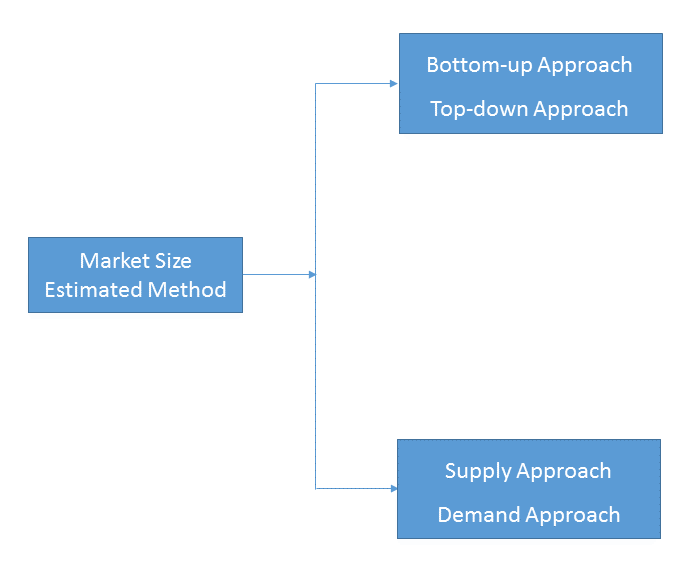
Bottom-up & top-down approach, supply & demand approach are the most important method which is used by HDIN Research to estimate the market size.
1)Top-down & Bottom-up Approach
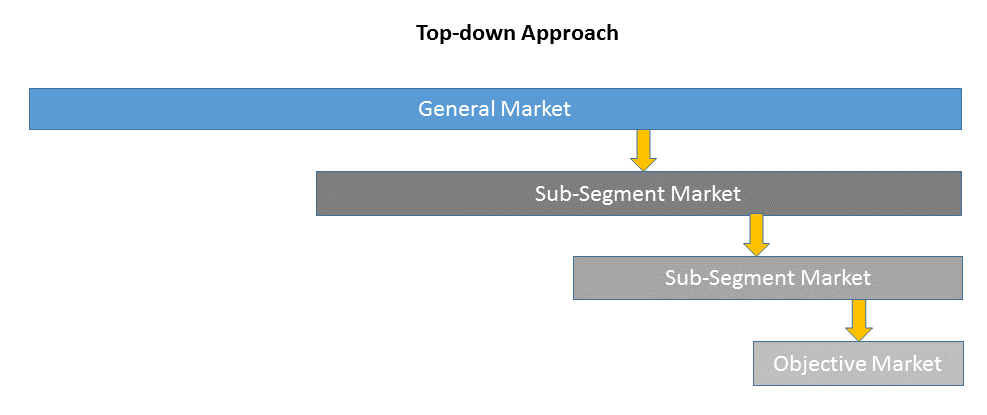
Top-down approach uses a general market size figure and determines the percentage that the objective market represents.
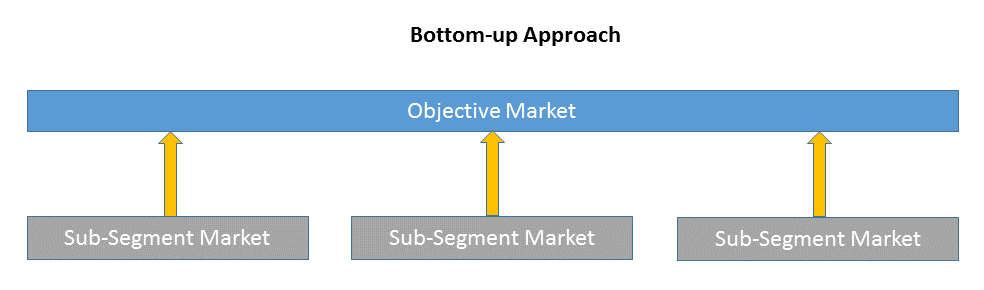
Bottom-up approach size the objective market by collecting the sub-segment information.
2)Supply & Demand Approach
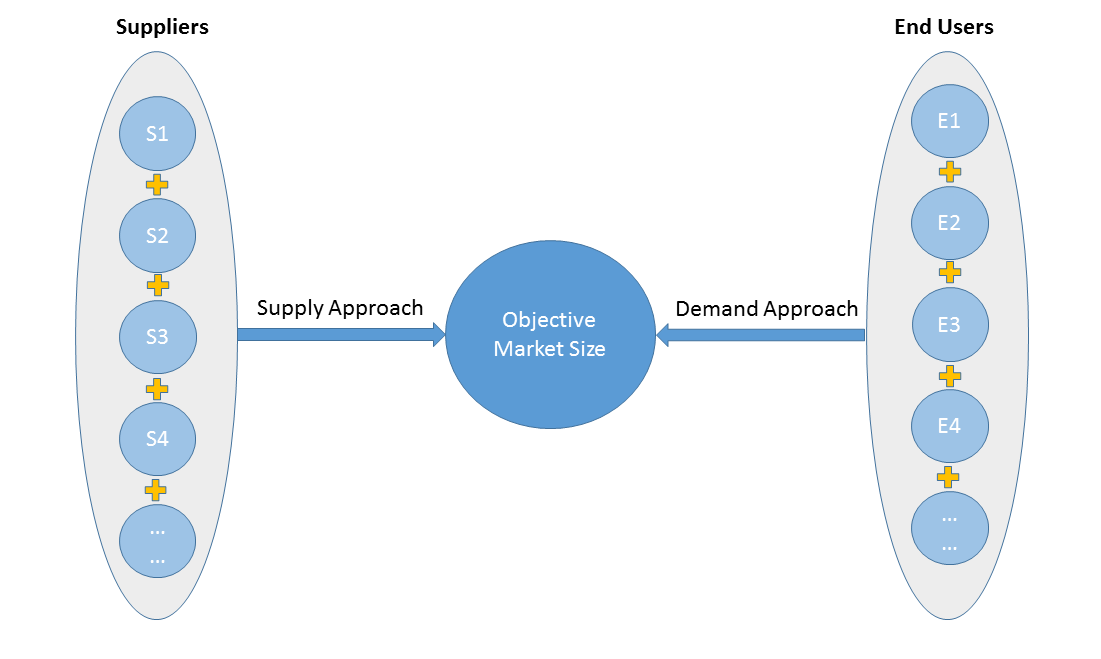
Supply approach is based on assessments of the size of each competitor supplying the objective market.
Demand approach combine end-user data within a market to estimate the objective market size. It is sometimes referred to as bottom-up approach.
- Forecasting Methodology
- Numerous factors impacting the market trend are considered for forecast model:
- New technology and application in the future;
- New project planned/under contraction;
- Global and regional underlying economic growth;
- Threatens of substitute products;
- Industry expert opinion;
- Policy and Society implication.
- Analysis Tools
1)PEST Analysis
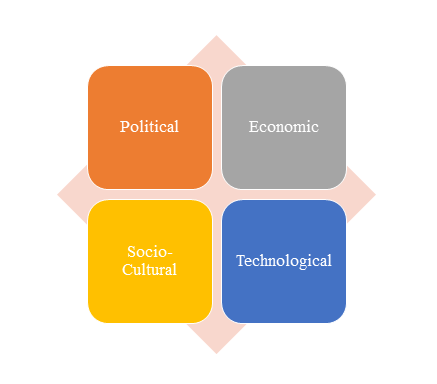
PEST Analysis is a simple and widely used tool that helps our client analyze the Political, Economic, Socio-Cultural, and Technological changes in their business environment.
- Benefits of a PEST analysis:
- It helps you to spot business opportunities, and it gives you advanced warning of significant threats.
- It reveals the direction of change within your business environment. This helps you shape what you’re doing, so that you work with change, rather than against it.
- It helps you avoid starting projects that are likely to fail, for reasons beyond your control.
- It can help you break free of unconscious assumptions when you enter a new country, region, or market; because it helps you develop an objective view of this new environment.
2)Porter’s Five Force Model Analysis
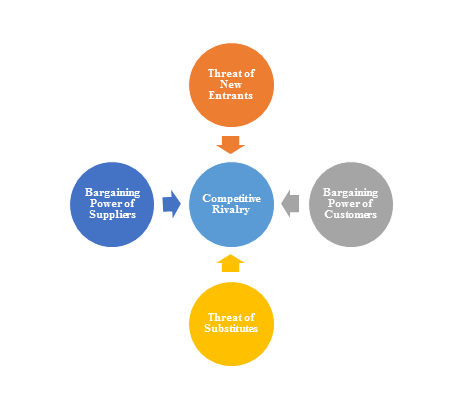
The Porter’s Five Force Model is a tool that can be used to analyze the opportunities and overall competitive advantage. The five forces that can assist in determining the competitive intensity and potential attractiveness within a specific area.
- Threat of New Entrants: Profitable industries that yield high returns will attract new firms.
- Threat of Substitutes: A substitute product uses a different technology to try to solve the same economic need.
- Bargaining Power of Customers: the ability of customers to put the firm under pressure, which also affects the customer's sensitivity to price changes.
- Bargaining Power of Suppliers: Suppliers of raw materials, components, labor, and services (such as expertise) to the firm can be a source of power over the firm when there are few substitutes.
- Competitive Rivalry: For most industries the intensity of competitive rivalry is the major determinant of the competitiveness of the industry.
3)Value Chain Analysis
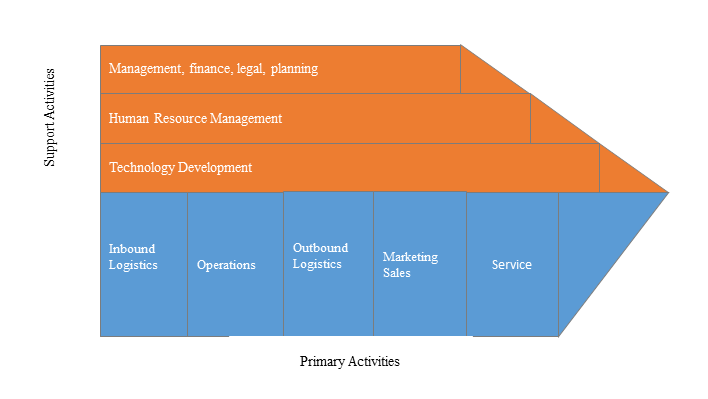
Value chain analysis is a tool to identify activities, within and around the firm and relating these activities to an assessment of competitive strength. Value chain can be analyzed by primary activities and supportive activities. Primary activities include: inbound logistics, operations, outbound logistics, marketing & sales, service. Support activities include: technology development, human resource management, management, finance, legal, planning.
4)SWOT Analysis
SWOT analysis is a tool used to evaluate a company's competitive position by identifying its strengths, weaknesses, opportunities and threats. The strengths and weakness is the inner factor; the opportunities and threats are the external factor. By analyzing the inner and external factors, the analysis can provide the detail information of the position of a player and the characteristics of the industry.
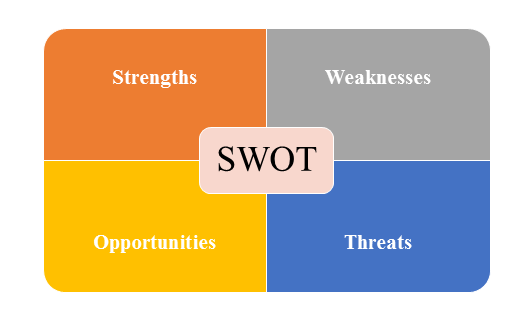
- Strengths describe what the player excels at and separates it from the competition
- Weaknesses stop the player from performing at its optimum level.
- Opportunities refer to favorable external factors that the player can use to give it a competitive advantage.
- Threats refer to factors that have the potential to harm the player.
- Data Sources
| Primary Sources | Secondary Sources |
|---|---|
| Face to face/Phone Interviews with market participants, such as: Manufactures; Distributors; End-users; Experts. Online Survey |
Government/International Organization Data: Annual Report/Presentation/Fact Book Internet Source Information Industry Association Data Free/Purchased Database Market Research Report Book/Journal/News |