Global Neurovascular Intervention Devices Market Analysis & Forecast
- Single User License (1 Users) $ 3,500
- Team License (2~5 Users) $ 4,500
- Corporate License (>5 Users) $ 5,500
The global neurovascular intervention device market size is valued at an estimated 6.5 to 7.5 billion USD in 2026, with a compound annual growth rate of 7% to 11% through 2031. This expansion is underpinned by non-discretionary clinical demand linked to severe vascular pathologies. Globally, stroke remains a leading cause of mortality and permanent disability, accounting for 69.94 million ischemic strokes and 16.60 million intracerebral hemorrhage events each year, precipitating approximately 7.25 million deaths. Mainland China alone represents an epidemiological center of this burden, with over 28.0 million prevalent stroke survivors, an annual incidence ranging between 3.70 million and 3.94 million cases, and annual mortality exceeding 1.80 million individuals.
PRODUCT TAXONOMY AND ENGINEERING ARCHITECTURE
A neurovascular intervention device is defined as an engineered, single-use, or permanently implantable apparatus advanced endovascularly through the arterial tree to diagnose, revascularize, occlude, or reconstruct intracranial and extracranial vessels supplying the brain and central nervous system. Unlike open surgical craniotomy or direct microsurgical aneurysm clipping, neurovascular interventions are executed under digital subtraction angiography within dedicated hybrid operating suites or catheterization laboratories, accessing deep intracranial vascular beds via transfemoral or transradial arterial entries.
The equipment landscape is categorized into four primary operational domains based on clinical mechanics and mechanical architecture:
● Hemorrhagic Stroke Intervention Devices
Hemorrhagic stroke interventions target the structural isolation of intracranial aneurysms and arteriovenous malformations from systemic hemodynamics to eliminate wall shear stress and prevent subarachnoid hemorrhage.
- Detachable Embolization Coils: Micro-machined platinum-tungsten alloys wound into primary and secondary helical or complex 3D shapes. These implants are advanced through microcatheters into the aneurysm fundus and detached via electrolytic, mechanical, thermal, or hydraulic mechanisms to form a dense mechanical lattice that triggers thrombogenesis. Major commercial platforms include Stryker Target Coils with Ultra HD detachment, Medtronic Axium and Matrix systems, Penumbra SMART and Penumbra Coil 400 series, MicroPort NeuroTech NUMEN, NUMEN Silk, and NUMEN Nest lines, Zylox-Tonbridge Phoenix mechanical coils, Peijia Medical Jasper and Presgo systems, Kaneka i-ED Coil and ED COIL systems, and HeartCare Medical detachable coils.
- Flow Diverter Stents: Low-porosity, high-metal-surface-area tubular endoprostheses braided from nitinol and radiopaque platinum or cobalt-chromium micro-filaments. Deployed in the parent vessel across the neck of wide-neck or fusiform aneurysms, flow diverters redirect hemodynamic inflow away from the sac, creating intra-saccular blood stasis while preserving perforator artery patency, ultimately facilitating endoluminal endothelialization. Leading architectures include Medtronic Pipeline Vantage with Shield Technology and Pipeline Flex, Stryker Surpass Evolve, MicroPort NeuroTech Tubridge and Tubridge Plus, Zylox-Tonbridge Kylin, Peijia Medical YonFlow, Balt Silk Vista and Silk Vista Baby, and Sino Medical Aucura anti-thrombotic coated system compatible with 0.017-inch microcatheters.
- Intracranial Covered Stents and Aneurysm Assist Stents: Covered stent grafts, such as MicroPort NeuroTech WILLIS covered stent system, provide instantaneous exclusion of traumatic or giant pseudoaneurysms and carotid-cavernous fistulas. Braided or laser-cut scaffolding stents, such as Zylox-Tonbridge Feilong drawn filled tube assistant stent, Sino Medical laser-cut anti-thrombotic assistant stent, Cerenovus Enterprise 2, and Terumo LVIS series, secure coil masses within wide-necked bifurcations.
- Liquid Embolic Agents and Intrasaccular Disruptors: Non-adhesive polymer solutions dissolved in dimethyl sulfoxide, such as Medtronic Onyx and Balt Squid and PHIL, which precipitate upon contact with ionic aqueous blood to cast complex arteriovenous malformations. Mechanical alternatives include woven nitinol intrasaccular flow disruptors such as Terumo WEB and Zylox-Tonbridge nitinol mesh occluders, alongside bioresorbable platforms like MicroPort NeuroTech NuFairy PLGA coils.
● Ischemic Stroke Devices
These devices resolve acute large vessel occlusions within established therapeutic windows through endovascular mechanical revascularization to restore cerebral perfusion.
- Stent Retrievers: Precision laser-cut self-expanding nitinol baskets that incorporate micro-struts engineered to penetrate, integrate, and entrap organized fibrin-rich or red blood cell-rich thrombi. Platforms encompass Medtronic Solitaire X, Stryker Trevo NXT ProVue, Cerenovus EmboTrap III dual-channel system, Penumbra 3D Revascularization Device, MicroPort NeuroTech NeuroHawk and AISAdvance combo units, Zylox-Tonbridge DragonFly CRD, Peijia Medical Syphonet, HeartCare Medical Captor multi-segment radiopaque device, Balt Catch Expert, Acandis APERIO Hybrid, Wallaby Medical pREset, and Sino Medical Ghunter retriever.
- Aspiration Catheters and Vacuum Revascularization Hardware: Large-bore, highly trackable flexible catheters engineered with differential multi-zone polymer stiffness and braided or coiled steel reinforcing shafts to resist luminal collapse under extreme negative pressure. Catheters are coupled to precision electromechanical aspiration pumps or specialized vacuum syringes. Systems include Penumbra RED, JET, and ACE series, Medtronic React 68 and 71 with Riptide tubing, Cerenovus CEREGLIDE 71, MicroPort NeuroTech WAVE-track and AISFast aspiration suites, Peijia Medical Tethys AS, HeartCare Medical 088 large-bore catheter for the CATCH technique, Wallaby Medical Esperance, and Sino Medical Apachi line.
● Neurovascular Stenosis and Atherosclerotic Interventions
Targeting hemodynamically significant intracranial atherosclerotic disease and extracranial carotid and vertebral stenoses to prevent primary or recurrent embolic and hypoperfusive strokes.
- Intracranial and Vertebral Stenting Systems: Low-profile balloon-expandable and self-expanding metallic bare-metal and drug-eluting stents. Representative designs include Sino Medical NOVA and NOVA NEO, the premier commercially approved drug-eluting intracranial stent utilizing zero-polymer surface modifications to suppress restenosis; MicroPort NeuroTech APOLLO balloon-expandable intracranial stent and Bridge drug-eluting vertebral stent; HeartCare Medical self-expanding intracranial DES; and Medtronic Wingspan stent system.
- Carotid Artery Stenting and Transcarotid Neuroprotection Platforms: Devices stabilizing unstable atherosclerotic plaques in the bifurcation of the common carotid artery. Key platforms feature InspireMD CGuard EPS and CGuard Prime MicroNet mesh-covered self-expanding nitinol stents engineered to prevent intra-procedural and post-procedural plaque prolapse; Boston Scientific Carotid WALLSTENT and Silk Road Medical TCAR platform; Cordis PRECISE Pro RX and ANGIOGUARD RX system; and Acandis CARESTO heal braided carotid stent.
- Intracranial and Vertebral Balloon Catheters: Ultra-low profile, semi-compliant and non-compliant micro-balloons for pre-dilation and post-dilation of fibrous atherosclerotic lesions. Examples include Acotec Scientific NEO-Skater intracranial percutaneous transluminal angioplasty balloon and AcoArt Verbena paclitaxel-coated balloon, MicroPort NeuroTech Diveer, Peijia Medical SacSpeed and Fastunnel microcatheter-balloon combination, and Sino Medical Neuro RX and Neuro LPS systems.
● Neurovascular Access and Delivery Systems
Structural conduits providing stable mechanical access through tortuous cervical pathways into the circle of Willis.
- Steerable Balloon Guide Catheters: Positioned in the internal carotid artery to achieve temporary flow arrest during mechanical aspiration, reducing downstream clot fragment embolization. Products include MicroPort NeuroTech NeuroGuard, Zylox-Tonbridge DaYu BGC, Peijia Medical Fluxcap, HeartCare Medical Fullblock, and Sino Medical COVESTAR.
- Distal Access and Intermediate Catheters: Highly trackable, hydrophilically coated catheters delivering structural support across the carotid siphon, such as Penumbra BENCHMARK and Neuron MAX, Cordis Envoy DA, MicroPort NeuroTech X-track, Zylox-Tonbridge SilverSnake DA, and Peijia Medical Tethys.
- Microcatheters and Micro-Guidewires: Micro-engineered polyimide/PTFE lumens ranging from 0.017-inch to 0.027-inch inner diameters, paired with shapable nitinol or platinum-tungsten core wires ranging from 0.008-inch to 0.014-inch outer diameters, providing steering through tortuous tertiary cerebral branches.
DOWNSTREAM INDICATIONS AND CLINICAL CARE ARCHITECTURE
The deployment of neurovascular intervention hardware is governed by clear clinical indications and strictly regulated operating environments:
● Acute Ischemic Stroke and Large Vessel Occlusion
Accounting for roughly 80% to 85% of acute strokes worldwide, large vessel occlusions in the internal carotid artery terminus, middle cerebral artery M1/M2 segments, or basilar artery demand emergent mechanical thrombectomy within 6 to 24 hours of onset. In the United States, approximately 700,000 ischemic events manifest annually, yielding an estimated 200,000 patients eligible for mechanical thrombectomy. In China, where ischemic strokes surpass 3.0 million annually, thrombectomy penetration rates are rapidly accelerating beyond tertiary metropolitan centers into county-level medical networks.
● Intracranial Aneurysms and Subarachnoid Hemorrhage
Unruptured intracranial aneurysms exhibit an estimated general population prevalence of 2% to 3%, encompassing approximately 9 million individuals in the United States alone. When wall rupture occurs, the resulting subarachnoid hemorrhage produces 30% to 40% immediate mortality and severe neurological morbidity. Prophylactic treatment using flow diverters and intrasaccular disruption has overtaken microsurgical clipping in high-income regions due to reduced post-operative lengths of stay.
● Intracranial Atherosclerotic Disease
Intracranial stenosis accounts for 30% to 50% of stroke presentations in Asian populations, affecting an estimated 17.3 million individuals in China. Management focuses on preventing recurrent hypoperfusion through balloon angioplasty and zero-polymer drug-eluting stents tailored to withstand cerebral vascular shear forces without triggering secondary thrombosis.
● Carotid Artery Stenosis
Atherosclerotic accumulation at the carotid bifurcation represents a primary contributor to embolic transient ischemic attacks and cerebral infarctions. In the United States, high-grade carotid stenosis underpins a procedural intervention market of 155,000 operations annually, equating to an immediate 1.3 billion USD intervention market and a broader 9.3 billion USD potential addressable clinical horizon as transcarotid artery revascularization techniques supplant conventional surgical endarterectomy.
● Operating Environment Infrastructure
Neurovascular interventions require specialized clinical environments due to procedural precision demands:
- High-acuity Comprehensive Stroke Centers and Advanced Stroke Centers: Equipped with high-resolution biplane digital subtraction angiography systems, intra-procedural flat-panel computed tomography, and rapid artificial intelligence neuro-imaging triage software.
- Operating Teams: Procedures are performed exclusively by subspecialty-credentialed neurointerventional radiologists, endovascular neurosurgeons, and interventional neurologists. In China, top tier suppliers systematically maintain commercial relations across 3,800 hospital networks, ensuring complete presence within 100% of the Top 100 National Advanced Stroke Centers.
VALUE CHAIN ARCHITECTURE AND MANUFACTURING RESILIENCE
The production of neurovascular implants and access conduits involves microscopic tolerances, specialized biomaterials, and cleanroom labor:
● Upstream Raw Materials and Micro-Components
- Specialized Alloys and Core Wires: Nitinol shape-memory tubing and wire with strict transformation temperature controls, platinum-tungsten and platinum-iridium radiopaque marker bands, 316L stainless steel micro-braiding wires, and drawn filled tube wire featuring a nitinol outer mantle over a solid platinum or gold core for full-length radiopacity.
- Medical Polymers: Precision extrusions of polyether block amide, polytetrafluoroethylene liners, thermoplastic polyurethanes, high-lubricity polyimide tubing, and bioresorbable poly(lactic-co-glycolic acid) copolymers for temporary structural lattices.
- Surface Coatings and Active Pharmaceutical Ingredients: Sirolimus and paclitaxel active ingredients, hydrophilic cross-linked polyvinylpyrrolidone lubricious coatings, and covalently bonded bio-passive heparinized coatings designed to mitigate foreign body platelet reactivity.
● Midstream Manufacturing Operations
- Micro-Laser Machining and Braiding: High-precision femtosecond and picosecond laser-cutting fixtures slicing nitinol micro-tubing to sub-millimeter tolerances with minimal thermal damage. Flow diverter manufacturing relies on 48 to 72 carrier horizontal and vertical braiding machines interlacing ultra-fine metallic filaments.
- Thermo-Mechanical Heat Setting and Electropolishing: Vacuum furnace treatment utilizing custom mandrel tooling to imprint geometric memory into braided nitinol matrices, followed by chemical and electropolishing baths to eliminate surface micro-cracks, passivating titanium oxide layers.
- Cleanroom Assembly: Extensive manual microscopic fabrication under ISO Class 7 and Class 8 laminar flow environments. Technicians perform precision crimping, micro-resistance spot welding, and polymer jacket reflowing over mandrels to construct complex transition zones in 0.017-inch catheter bodies.
- Sterilization and Packaging: Double-barrier medical Tyvek packaging exposed to validated Ethylene Oxide sterilization cycles to eliminate bioburden without compromising polymer lubricity or drug integrity.
● Downstream Clinical Integration and Value Capture
Downstream models rely heavily on technical service. Manufacturers support continuous simulation labs, flow-model training circuits, and hospital consignment inventories to ensure immediate procedural readiness within Cath Labs.
COMMERCIAL DISTRIBUTION AND REIMBURSEMENT POLICY
Commercialization models in the neurovascular space reflect stark regional divergences in procurement governance, regulatory oversight, and payer architecture:
● Direct Sales Force Versus Stocking Distributor Models
- Direct Sales Infrastructure: Standard in North America and Western European territories. Medical device manufacturers field direct clinical specialists who attend live cases, provide technical sizing counsel inside the sterile field, and directly service hospital buying groups and integrated delivery networks.
- Two-Tier Distributor Networks: Dominant across China, Latin America, and the Middle East. Device developers sell capital inventories on a buyout basis to authorized master distributors who manage provincial hospital tenders, carry territorial accounts receivable, and finance institutional consignment buffers. Leading regional entities utilize extensive networks; Peijia Medical distributes across more than 2,500 Chinese medical centers via nearly one hundred dedicated field managers, while MicroPort NeuroTech maintains channel access across 36 international territories.
● Centralized Procurement and Volume-Based Tendering Dynamics
China Volume-Based Procurement frameworks have introduced systemic price rationalization:
- Centralized provincial alliances (including the Hebei multi-province alliance, Henan 15-product cohort, and regional Guangdong and Anhui consortiums) have targeted neurovascular coils, mechanical stent retrievers, flow diverters, and intermediate catheters.
- The tendering structures enforce 30% to 50% unit price reductions. However, winning enterprises receive dedicated public hospital quotas, which reduces field sales overhead, displaces sub-scale domestic competitors, and accelerates the substitution of multinational brands with qualified domestic equivalents.
● Reimbursement Coding and Coverage Evolution
- United States Inpatient Prospective Payment Logic: Neurovascular interventions fall under Medicare Severity Diagnosis Related Groups (MS-DRG 020 to 024 for intracranial vascular procedures and MS-DRG 037 to 039 for extracranial carotid revascularization). High-impact novel technologies benefit from New Technology Add-on Payments (NTAP), which offset acquisition premiums for devices demonstrating superior clinical efficacy.
- Expansion of Carotid Stenting Coverage: Centers for Medicare and Medicaid Services broadened National Coverage Determinations for transcarotid and percutaneous carotid stenting to cover standard-risk surgical and asymptomatic populations, dramatically expanding procedure authorizations.
REGIONAL MARKET DYNAMICS
● North America
North America represents the primary revenue generating geography, maintaining over 45% of total global market value.
- Procedural Density and Tech Adoption: The region is defined by rapid adoption of premium devices, fully integrated stroke network transfers, and high mechanical thrombectomy uptake. Over 200,000 annual US patients are candidates for acute large vessel recanalization.
- Premium Valuation: Premium hospital reimbursement frameworks support high average selling prices for computer-assisted vacuum thrombectomy equipment and novel surface-modified flow diverters.
- Carotid Interventions: Expanded federal coverage parameters for carotid stenting and rapid migration toward transcarotid artery revascularization techniques continue to expand procedural volumes.
● Asia-Pacific
Asia-Pacific is the second-largest neurovascular market globally and the fastest growing by procedural volume.
- China Procedural Expansion: China represents the second largest single-country market globally by value and the largest by patient eligibility. Volume expansion is propelled by aggressive construction of County Stroke Centers, hospital network consolidation, and expanding clinical coverage across Tier-2 and Tier-3 healthcare systems.
- Regional Industrial Competitiveness: Domestic Chinese manufacturers now maintain market parity across multiple intervention categories, leveraging volume-based procurement wins to dominate standard coiling and stent retrieval segments.
- Advanced Developed Markets: Japan, South Korea, Australia, and Taiwan, China display mature clinical infrastructure with rapid reimbursement inclusion for high-density braided flow diverters and next-generation intrasaccular implants.
● Europe
Europe stands as the third largest global neurovascular market.
- Centralized Healthcare Infrastructure: Adoption is sustained by universal healthcare systems, mandated hospital stroke center designations, and guideline-driven clinical trial participation.
- Regulatory Compliance: The full operational enforcement of the European Union Medical Device Regulation (EU MDR 2017/745) has raised compliance overhead, lengthening clearance timelines and favoring established European innovators and well-capitalized multinational players over small entrants.
● Latin America, Middle East, and Africa
These emerging territories represent long-term procedural expansion zones.
- Latin America: Regional procedure volumes concentrate heavily within private and public referral hubs across Brazil, Mexico, Colombia, and Argentina, characterized by bifurcated tender pricing models and gradual infrastructure modernization.
- Middle East and Africa: Expansion is driven by aggressive healthcare capital expenditures, national health initiatives, and modern hospital construction throughout Saudi Arabia, the United Arab Emirates, Turkey, and Egypt.
REGULATORY PATHWAYS AND CLINICAL TRIAL BENCHMARKS
Navigating international regulatory gates for Class III neurovascular implants represents a key operational hurdle:
● United States Food and Drug Administration Framework
- Premarket Approval Pathways: Class III neurovascular devices, including flow diverter stents, intracranial drug-eluting stents, and carotid artery mesh implants, require extensive premarket approvals backed by prospective, multi-center randomized controlled clinical trials demonstrating non-inferiority or superiority against established historical surgical or medical controls.
- Breakthrough Device Designations: The FDA has accelerated clinical assessment pathways for transformative iterations. Notable designations include Sino Medical COMETIU self-expanding intracranial drug-eluting stent in August 2025 and MicroPort NeuroTech APOLLO Dream sirolimus DES. InspireMD achieved full FDA Premarket Approval for its CGuard Prime carotid mesh stent in June 2025 based on extensive clinical trials.
● European Union Medical Device Regulation (EU MDR 2017/745)
- Heightened Notified Body Rigor: The regulatory shift from MDD to MDR requires stringent technical documentation, clinical data evaluations, continuous post-market clinical follow-up registries, and regular unannounced audits.
- International Conformity Achievements: Despite stringent testing environments, advanced international platforms have secured CE MDR certification, exemplified by Sino Medical Ghunter stent retriever in February 2026 and MicroPort NeuroTech NeuroHawk revascularization system.
● China National Medical Products Administration Framework
- Innovation Green Channel Review: The NMPA operates an expedited special approval evaluation channel for proprietary devices demonstrating significant domestic invention patent exclusivity and clear clinical necessity.
- Breakthrough Domestic Approvals: MicroPort NeuroTech NuFairy fully bioresorbable PLGA coil and StraitPass hematoma aspiration platform secured entrance into the NMPA green channel, accelerating market commercialization and local hospital adoption.
DRIVERS, DISRUPTIONS, AND BOTTLENECK RISKS
● High-Growth Market Drivers
- Computer-Assisted Vacuum Thrombectomy: Mechanical thrombectomy is shifting toward high-flow, automated large-bore aspiration platforms. Microprocessor-governed algorithms that modulate vacuum pressure in real-time reduce blood loss, limit vessel collapse, and accelerate first-pass complete recanalization without systemic thrombolysis.
- Bio-Passive and Anti-Thrombotic Coatings: The integration of non-thrombogenic surface modifications (such as Medtronic Shield Technology and Sino Medical zero-polymer electronic grafting) minimizes acute in-stent thrombosis, creating opportunities to reduce or eliminate dual antiplatelet drug regimens for fragile hemorrhagic patients.
- Interventional Brain-Computer Interfaces: Catheter-delivered intracranial endovascular electrode grids, spearheaded by developers like HeartCare Medical, leverage traditional access sheaths to position neuro-recording arrays within intracranial sinuses, enabling functional motor rehabilitation post-stroke with human trials targeting 2026.
● Operational and Structural Inhibitors
- Global Price Rationalization and Margin Degradation: Government-mandated tender pricing across China and capped public reimbursements in European territories exert downward pressure on device margins. This trend pressures single-product device developers and forces operating margins lower across mid-tier suppliers.
- Neurovascular Tortuosity and Clinical Adverse Events: Navigating the carotid siphon and delicate distal intracerebral arteries carries persistent procedural risks, including vessel perforation, acute vasospasm, arterial dissection, and distal micro-clot embolization. Addressing these challenges requires intensive physician simulator training and long learning curves.
- Intellectual Property and Cleanroom Scaling Hurdles: Strict patent protection around micro-braiding configurations, electrolytic detachment circuits, and laser-slotted geometries creates substantial barrier-to-entry walls, forcing new entrants to execute alternative engineering maneuvers or navigate complex patent infringement litigation.
CORPORATE CONSOLIDATION AND M&A DYNAMICS
Corporate merger and acquisition activities reflect clear strategic efforts to assemble comprehensive endovascular portfolios spanning access, ischemic retrieval, and hemorrhagic embolization:
- Boston Scientific Acquisition of Penumbra: In January 2026, Boston Scientific agreed to acquire Penumbra for approximately 14.500 billion USD (374 USD per share), unifying Penumbra market-leading neuro-aspiration lines and peripheral embolization technologies into Boston Scientific cardiovascular operating divisions.
- Boston Scientific Acquisition of Silk Road Medical: Executed in 2024 to lock up the proprietary transcarotid artery revascularization portfolio, giving Boston Scientific dominant control over transcarotid flow-reversal protection systems.
- Stryker Vascular Integration: Stryker integrated its Neurovascular division with newly acquired peripheral thrombectomy specialist Inari Medical to create an integrated Vascular division, achieving 1,968 million USD in net sales in fiscal 2025.
COMPETITIVE DOSSIERS: KEY INDUSTRY OPERATORS
● Stryker Corporation: Headquartered in Kalamazoo, Michigan, with primary neurovascular production operations concentrated in Fremont, California. Stryker is a global market leader in acute ischemic mechanical revascularization and cerebral aneurysm embolization hardware.
● Medtronic plc: Operating from corporate headquarters in Minneapolis, Minnesota, and Galway, Ireland, Medtronic Neurovascular possesses deep clinical trial heritage and extensive global distribution across ischemic and hemorrhagic care pathways.
● Johnson & Johnson: Cerenovus, operating as the neurovascular business unit of Johnson & Johnson MedTech from Irvine, California, bases product development on specialized clot science and endovascular stroke physics.
● Terumo Corporation: Based in Tokyo, Japan, with global neurovascular operations directed through its subsidiary MicroVention in Aliso Viejo, California. Specializes in hydrogel-coated embolic coils and intrasaccular flow disruption architecture.
● Balt Group: Located in Montmorency, France, Balt is an early neurovascular engineering enterprise founded in 1977, credited with inventing flow-directed microcatheters and chemically optimized liquid embolic agents.
● Acandis GmbH: Engineering-focused manufacturer based in Pforzheim, Germany, specializing in miniaturized neurovascular stents and anti-thrombogenic implant surfaces.
● Wallaby Medical: Cross-border medical developer maintaining headquarters in Laguna Hills, California, Shanghai, China, and Bochum, Germany, having substantially expanded global scale via the acquisition of phenox GmbH in 2022.
● InspireMD, Inc.: Based in Tel Aviv, Israel, and Boston, Massachusetts, InspireMD is focused on structural embolic prevention and carotid artery stenting systems.
● Boston Scientific Corporation: Headquartered in Marlborough, Massachusetts, Boston Scientific is an interventional device multinational that substantially expanded its neurovascular market presence via targeted multi-billion-dollar acquisitions.
● Cordis Corporation: Headquartered in Miami Lakes, Florida, Cordis possesses a deep legacy in endovascular catheterization, carotid stenting, and neurovascular vascular access.
● Kaneka Corporation: Headquartered in Tokyo and Osaka, Japan, Kaneka leverages proprietary high-performance medical polymer engineering and precision alloy fabrication through its dedicated medical intervention unit.
● MicroPort NeuroTech Limited: Headquartered in Shanghai, China, and listed on the Hong Kong Stock Exchange, MicroPort NeuroTech is the largest domestic neurovascular medical device enterprise in China, with expanding operations across Latin America, Europe, and the Middle East.
● Zylox-Tonbridge Medical Technology Co., Ltd.: Headquartered in Hangzhou, Zhejiang Province, China, and listed on the Hong Kong Stock Exchange, Zylox-Tonbridge provides complete neuro- and peripheral-vascular device portfolios under its Tonbridge franchise.
● Peijia Medical Limited (Achieva Medical): Headquartered in Suzhou and Shanghai, China, listed on the Hong Kong Stock Exchange, Peijia Medical directs its extensive neurointerventional business operations through its wholly owned subsidiary, Achieva Medical.
● HeartCare Medical (Shanghai HeartCare Medical Technology): Located in Shanghai, China, and listed on the Hong Kong Stock Exchange, HeartCare Medical is an innovative cardiovascular and neuro-interventional medical device enterprise.
● Sino Medical Sciences Technology Inc. (SINOMED): Headquartered in Tianjin, China, and listed on the Shanghai STAR Market, SINOMED applies proprietary zero-polymer electro-grafting coating science to cardiovascular and neurovascular implants.
1.1 Research Architecture and Analytical Framework 1
1.2 Primary Sources and Expert Elicitation Protocol 2
1.3 Secondary Sources and Macro Datasets 3
1.4 Bottom-Up and Top-Down Market Estimation Models 4
1.5 Currency Conversions, Inflation Adjustments, and Forecasting Assumptions 5
1.6 Standard Abbreviations and Medical Terminology 6
Chapter 2 Industry Paradigm and Neurovascular Ecosystem Overview 7
2.1 Clinical Evolution of Stroke Management and Intervention Technologies 7
2.2 Taxonomy of Neurovascular Intervention Devices 8
2.3 Value Proposition Across Acute Ischemic Stroke vs. Hemorrhagic Stroke 9
2.4 Convergence of Endovascular Robotics, AI Guidance, and Micro-Device Engineering 10
Chapter 3 Global Neurovascular Intervention Device Market Dynamics and Macro Fundamentals 11
3.1 Macroeconomic Tailwinds, Aging Demographics, and Cardiovascular Risk Epidemiology 11
3.2 Disease Burden Analysis: Global Stroke Incidence, Occlusion Types, and Fatality Trends 13
3.3 Industry Growth Catalysts and Technology Penetration Curves 14
3.4 Structural Industry Bottlenecks: Physician Training Cycles and Operator Skill Scarcity 15
3.5 Post-COVID Endovascular Procedural Rebounds and Elective Intervention Recovery 16
3.6 Global Device Pricing Pressures, Group Purchasing, and Diagnosis-Related Group Constraints 17
Chapter 4 Global Market Assessment by Device Modality 18
4.1 Device Modality Segmentation Overview 18
4.2 Hemorrhagic Stroke Intervention Devices 19
4.2.1 Embolization Coils (Bare Platinum, Hydrogel-Coated, Mechanically Detachable) 20
4.2.2 Flow Diverters and Endoluminal Remodeling Stents 21
4.2.3 Intrasaccular Aneurysm Disruptors 22
4.2.4 Liquid Embolic Agents and Embolic Micro-Spheres 23
4.3 Ischemic Stroke Devices 24
4.3.1 Mechanical Thrombectomy Stent Retrievers 24
4.3.2 Large-Bore Direct Aspiration Catheters and Pumping Systems 25
4.3.3 Distal Protection Devices and Thrombus Extractor Systems 26
4.4 Neurovascular Stenosis and Atherosclerotic Intervention Devices 27
4.4.1 Self-Expanding and Balloon-Expandable Intracranial Stents 27
4.4.2 Percutaneous Transluminal Angioplasty Balloon Catheters and Drug-Coated Balloons 27
4.5 Neurovascular Access and Delivery Systems 28
4.5.1 Diagnostic Guiding Catheters and Balloon Guide Catheters 28
4.5.2 Steerable Microcatheters, Intermediate Catheters, and Neurovascular Guidewires 29
Chapter 5 Global Market Sizing and Segmentation by Target Indication and Downstream End-Users 30
5.1 Indication Breakdown: Intracranial Aneurysms, Arteriovenous Malformations, and Dural Fistulas 30
5.2 Indication Breakdown: Large Vessel Occlusion and Acute Ischemic Stroke 31
5.3 Indication Breakdown: Carotid and Intracranial Atherosclerotic Disease 32
5.4 Downstream Channel Matrix: Comprehensive Stroke Centers and Academic Medical Centers 33
5.5 Downstream Channel Matrix: Regional Thrombectomy-Capable Hospitals and Primary Centers 34
Chapter 6 Upstream Engineering, Raw Materials, and Manufacturing Ecosystem 35
6.1 Strategic Material Sourcing: Superelastic Nitinol, Medical Platinum-Iridium, and Tungsten 35
6.2 Advanced Polymeric Tubing: PTFE Liners, Polyimide, Pebax, and Hydrophilic Lubricious Coatings 36
6.3 Precision Manufacturing Technologies: Laser Micromachining, Micro-Braiding, and Micro-Coiling 37
6.4 Cleanroom Assembly, Radiopaque Marker Swaging, and Sterilization Methodologies 39
6.5 Supply Chain Vulnerabilities, Upstream Sourcing Concentration, and Material Geopolitics 40
Chapter 7 Regulatory Gateways, Clinical Benchmarks, and Cross-Border Trade Flows 42
7.1 Global Regulatory Clearance Pathways: US FDA PMA and 510(k) Pre-Market Clearances 42
7.2 European Union Medical Device Regulation (EU MDR 2017/745) Clinical Evidence Directives 43
7.3 China National Medical Products Administration (NMPA) Green-Channel Innovations 44
7.4 Cross-Border Tariff Classifications, MedTech Trade Flows, and Bilateral Supply Policies 45
7.5 Reimbursement Systems: CPT/DRG Codes (US), DRG (Europe), and National Procurement (China) 47
Chapter 8 Global Regional and National Market Dynamics 49
8.1 Global Regional Footprint and Multi-Tiered Market Evolution 49
8.2 North America (Primary Production Hub & Consumption Market) 50
8.2.1 United States: Clinical Infrastructure, Inpatient Reimbursement, and Technology Leadership 50
8.2.2 Canada: Provincial Healthcare Allocation and Comprehensive Stroke Center Networks 51
8.3 Europe (Primary Precision Manufacturing Hub & High-Adoption Zone) 52
8.3.1 Germany: Central European Production Center and Catheterization Laboratory Footprint 52
8.3.2 France: Endovascular Stroke Intervention Protocols and Academic Hub Density 53
8.3.3 United Kingdom: National Health Service Stroke Action Plan and Mechanical Thrombectomy Targets 54
8.3.4 Switzerland: High-Precision Component Fabrication and Specialty Hub Operations 55
8.3.5 Ireland & Rest of Europe Market 56
8.4 Asia-Pacific (Fastest-Growing Demand Region and Expanding Sourcing Hub) 57
8.4.1 China: Domestic Substitution Mandates, Volume-Based Procurement, and Clinical Scaling 57
8.4.2 Japan: Ultra-Aged Demographics, Shonin Approvals, and High Coiling Penetration 58
8.4.3 South Korea: Advanced Clinical Care Tiering and National Health Insurance Coverage 59
8.4.4 India & Southeast Asia: Tier-1 Private Hospital Cluster Expansion and Out-of-Pocket Payment Dynamics 60
8.4.5 Australia and New Zealand: Public-Private Healthcare Interface and Centralized Hub-and-Spoke Stroke Models 61
8.5 Latin America (Emerging Consumption Markets) 62
8.5.1 Brazil: SUS Reimbursement Milestones and Private Interventional Neuroradiology Capacity 62
8.5.2 Mexico: IMSS Institutional Framework and Device Import Reliance 63
8.6 Middle East and Africa (Specialty Demand Hubs) 64
8.6.1 Saudi Arabia: Vision 2030 Healthcare Modernization and Specialized Stroke Centers 64
8.6.2 United Arab Emirates: Medical Tourism Hubs and Advanced Interventional Deployments 64
8.6.3 South Africa: Dual-Tier Delivery Structure and Tertiary Endovascular Access 64
Chapter 9 Competitive Landscape, Market Share Analysis, and Strategic Positioning 65
9.1 Global Competitor Matrix: Tier-1 Multi-Nationals vs. Specialized Disruptors 65
9.2 Market Share Breakdown by Key Neurovascular Category (2021-2026) 66
9.3 Mergers, Acquisitions, Strategic Co-Developments, and IP Licensing Dynamics 67
9.4 Pricing Architecture and Cost Breakdown Across Interventional Portfolios 68
9.5 Barriers to Entry: Clinical Registry Requirements, Surgeon Lock-in, and Patent Fortresses 69
Chapter 10 Corporate Intelligence: Global Key Players 70
10.1 Stryker Corporation 70
10.1.1 Corporate Profile and Neurovascular Business Architecture 70
10.1.2 Product Portfolio Analysis and Pipeline Innovations 71
10.1.3 Stryker Neurovascular Intervention Device Financials: Revenue, Cost, and Gross Margin (2021-2026) 72
10.1.4 Global Market Share and Geographic Footprint (2021-2026) 73
10.1.5 SWOT Assessment and Strategic Outlook 73
10.2 Medtronic 74
10.2.1 Corporate Profile and Neurovascular Portfolio Infrastructure 74
10.2.2 Product Commercialization and Clinical Trial Progress 75
10.2.3 Medtronic Neurovascular Intervention Device Financials: Revenue, Cost, and Gross Margin (2021-2026) 76
10.2.4 Global Market Share and Geographic Footprint (2021-2026) 77
10.2.5 SWOT Assessment and Strategic Outlook 77
10.3 Johnson & Johnson (Cerenovus) 78
10.3.1 Corporate Profile and Neurovascular Strategic Focus 78
10.3.2 Portfolio Evolution: Embolization, Thrombectomy, and Access 79
10.3.3 Johnson & Johnson Neurovascular Intervention Device Financials: Revenue, Cost, and Gross Margin (2021-2026) 80
10.3.4 Global Market Share and Geographic Footprint (2021-2026) 81
10.3.5 SWOT Assessment and Strategic Outlook 81
10.4 Terumo Corporation (MicroVention) 82
10.4.1 Corporate Profile and Interventional Neuroradiology Assets 82
10.4.2 MicroVention Manufacturing and Product Strategy 83
10.4.3 Terumo Corporation Neurovascular Intervention Device Financials: Revenue, Cost, and Gross Margin (2021-2026) 84
10.4.4 Global Market Share and Geographic Footprint (2021-2026) 85
10.4.5 SWOT Assessment and Strategic Outlook 85
10.5 Boston Scientific Corporation 86
10.5.1 Corporate Profile and Neurovascular Intervention Ecosystem 86
10.5.2 Product Portfolio Engineering and Clinical Milestones 87
10.5.3 Boston Scientific Neurovascular Intervention Device Financials: Revenue, Cost, and Gross Margin (2021-2026) 88
10.5.4 Global Market Share and Geographic Footprint (2021-2026) 89
10.5.5 SWOT Assessment and Strategic Outlook 89
10.6 InspireMD 90
10.6.1 Corporate Profile and Novel Mesh-Based Stenting Platform 90
10.6.2 Clinical Pathways (C-Guard Platform) and Commercialization Status 91
10.6.3 InspireMD Neurovascular Intervention Device Financials: Revenue, Cost, and Gross Margin (2021-2026) 92
10.6.4 Global Market Share and Regional Positioning (2021-2026) 93
10.6.5 SWOT Assessment and Strategic Outlook 93
10.7 MicroPort NeuroTech 94
10.7.1 Corporate Profile and Domestic Market Consolidation Strategy 94
10.7.2 Full-Line Stroke Solution Development and Global Expansion 95
10.7.3 MicroPort NeuroTech Neurovascular Intervention Device Financials: Revenue, Cost, and Gross Margin (2021-2026) 96
10.7.4 Global Market Share and Distribution Penetration (2021-2026) 97
10.7.5 SWOT Assessment and Strategic Outlook 97
10.8 Zylox-Tonbridge 98
10.8.1 Corporate Profile and R&D Platform Architecture 98
10.8.2 Comprehensive Acute Ischemic and Hemorrhagic Portfolio 99
10.8.3 Zylox-Tonbridge Neurovascular Intervention Device Financials: Revenue, Cost, and Gross Margin (2021-2026) 100
10.8.4 Global Market Share and Emerging Market Positioning (2021-2026) 101
10.8.5 SWOT Assessment and Strategic Outlook 101
10.9 Peijia Medical (Achieva Medical) 102
10.9.1 Corporate Profile and Neurovascular Synergy Integration 102
10.9.2 Product Innovation in Flow Diversion and Micro-Catheter Access 103
10.9.3 Peijia Medical Neurovascular Intervention Device Financials: Revenue, Cost, and Gross Margin (2021-2026) 104
10.9.4 Global Market Share and Regional Adoption (2021-2026) 105
10.9.5 SWOT Assessment and Strategic Outlook 105
10.10 HeartCare Medical 106
10.10.1 Corporate Profile and Endovascular Solution Pipeline 106
10.10.2 Full-System Thrombectomy and Access Systems Development 107
10.10.3 HeartCare Medical Neurovascular Intervention Device Financials: Revenue, Cost, and Gross Margin (2021-2026) 108
10.10.4 Global Market Share and Domestic Tendering Performance (2021-2026) 109
10.10.5 SWOT Assessment and Strategic Outlook 109
10.11 Sino Medical Sciences Technology (SINOMED) 110
10.11.1 Corporate Profile and Neurovascular Vascular Scaffold Capabilities 110
10.11.2 Intracranial Drug-Eluting Stents and Specialty Dilation Solutions 111
10.11.3 SINOMED Neurovascular Intervention Device Financials: Revenue, Cost, and Gross Margin (2021-2026) 112
10.11.4 Global Market Share and Regional Presence (2021-2026) 113
10.11.5 SWOT Assessment and Strategic Outlook 113
10.12 Cordis Corporation 114
10.12.1 Corporate Profile and Specialized Neurovascular Lineage 114
10.12.2 Vascular Access and Catheter Delivery Systems Portfolio 115
10.12.3 Cordis Neurovascular Intervention Device Financials: Revenue, Cost, and Gross Margin (2021-2026) 116
10.12.4 Global Market Share and Geographic Channel Strength (2021-2026) 117
10.12.5 SWOT Assessment and Strategic Outlook 117
10.13 Kaneka Corporation 118
10.13.1 Corporate Profile and Medical Devices Division Architecture 118
10.13.2 Proprietary Microcatheter and Embolic Coiling Solutions 119
10.13.3 Kaneka Neurovascular Intervention Device Financials: Revenue, Cost, and Gross Margin (2021-2026) 120
10.13.4 Global Market Share and Asian Market Penetration (2021-2026) 121
10.13.5 SWOT Assessment and Strategic Outlook 121
10.14 Balt Group 122
10.14.1 Corporate Profile and European Neuroradiology Legacy 122
10.14.2 Flow Diverter, Intracranial Stent, and Steerable Wire Capabilities 123
10.14.3 Balt Group Neurovascular Intervention Device Financials: Revenue, Cost, and Gross Margin (2021-2026) 124
10.14.4 Global Market Share and Pan-European Positioning (2021-2026) 125
10.14.5 SWOT Assessment and Strategic Outlook 125
10.15 Acandis GmbH 126
10.15.1 Corporate Profile and German Engineering Base 126
10.15.2 Advanced Mechanical Thrombectomy and Remodeling Stent Engineering 127
10.15.3 Acandis Neurovascular Intervention Device Financials: Revenue, Cost, and Gross Margin (2021-2026) 128
10.15.4 Global Market Share and EMEA Footprint (2021-2026) 129
10.15.5 SWOT Assessment and Strategic Outlook 129
10.16 Wallaby Medical 130
10.16.1 Corporate Profile and Cross-Border Integration Model (phenox Acquisition) 130
10.16.2 Synergistic Portfolio: Coil Embolization, Flow Redirection, and Clot Retraction 131
10.16.3 Wallaby Medical Neurovascular Intervention Device Financials: Revenue, Cost, and Gross Margin (2021-2026) 132
10.16.4 Global Market Share and Multi-Regional Performance (2021-2026) 133
10.16.5 SWOT Assessment and Strategic Outlook 133
Chapter 11 Future Industry Roadmaps and Strategic Horizons (2027-2031) 134
Table 2 Global Neurovascular Intervention Device Market Size by Value and Volume (2021-2031) 14
Table 3 Global Stroke Epidemiology and Incidence by Occlusion Category (2021-2026) 16
Table 4 Global Neurovascular Intervention Device Market Size by Device Modality (2021-2026) 18
Table 5 Global Neurovascular Intervention Device Market Size by Device Modality (2027-2031) 19
Table 6 Hemorrhagic Stroke Intervention Device Market Size by Sub-Type (2021-2031) 20
Table 7 Ischemic Stroke Device Market Size by Sub-Type (2021-2031) 24
Table 8 Neurovascular Stenosis and Atherosclerotic Interventions Market Size by Sub-Type (2021-2031) 27
Table 9 Neurovascular Access and Delivery Systems Market Size by Sub-Type (2021-2031) 28
Table 10 Global Neurovascular Intervention Device Market Size by Target Indication (2021-2031) 31
Table 11 Global Neurovascular Intervention Device Market Size by End-User Facility (2021-2031) 33
Table 12 Strategic Medical Polymers and Metal Alloys: Supplier Mapping and Application Metrics 36
Table 13 Key International Clinical Registries and Regulatory Impact Comparison 43
Table 14 Global Neurovascular Intervention Device Market Size by Region (2021-2031) 49
Table 15 North America Neurovascular Intervention Device Market Size by Country (2021-2031) 50
Table 16 Europe Neurovascular Intervention Device Market Size by Country (2021-2031) 53
Table 17 Asia-Pacific Neurovascular Intervention Device Market Size by Country (2021-2031) 57
Table 18 Latin America Neurovascular Intervention Device Market Size by Country (2021-2031) 62
Table 19 Middle East and Africa Neurovascular Intervention Device Market Size by Country (2021-2031) 64
Table 20 Global Top 10 Neurovascular Intervention Device Manufacturers Revenue Ranking (2025-2026) 66
Table 21 Stryker Corporation Neurovascular Intervention Device Revenue, Cost and Gross Margin (2021-2026) 72
Table 22 Medtronic Neurovascular Intervention Device Revenue, Cost and Gross Margin (2021-2026) 76
Table 23 Johnson & Johnson Neurovascular Intervention Device Revenue, Cost and Gross Margin (2021-2026) 80
Table 24 Terumo Corporation Neurovascular Intervention Device Revenue, Cost and Gross Margin (2021-2026) 84
Table 25 Boston Scientific Neurovascular Intervention Device Revenue, Cost and Gross Margin (2021-2026) 88
Table 26 InspireMD Neurovascular Intervention Device Revenue, Cost and Gross Margin (2021-2026) 92
Table 27 MicroPort NeuroTech Neurovascular Intervention Device Revenue, Cost and Gross Margin (2021-2026) 96
Table 28 Zylox-Tonbridge Neurovascular Intervention Device Revenue, Cost and Gross Margin (2021-2026) 100
Table 29 Peijia Medical Neurovascular Intervention Device Revenue, Cost and Gross Margin (2021-2026) 104
Table 30 HeartCare Medical Neurovascular Intervention Device Revenue, Cost and Gross Margin (2021-2026) 108
Table 31 Sino Medical Sciences Technology Neurovascular Intervention Device Revenue, Cost and Gross Margin (2021-2026) 112
Table 32 Cordis Corporation Neurovascular Intervention Device Revenue, Cost and Gross Margin (2021-2026) 116
Table 33 Kaneka Neurovascular Intervention Device Revenue, Cost and Gross Margin (2021-2026) 120
Table 34 Balt Group Neurovascular Intervention Device Revenue, Cost and Gross Margin (2021-2026) 124
Table 35 Acandis GmbH Neurovascular Intervention Device Revenue, Cost and Gross Margin (2021-2026) 128
Table 36 Wallaby Medical Neurovascular Intervention Device Revenue, Cost and Gross Margin (2021-2026) 132
Table 37 Neurovascular Intervention Device Market Modality Forecast Matrix (2027-2031) 137
Figure 1 Neurovascular Intervention Device Research Methodological Framework 2
Figure 2 Bottom-Up Market Sizing and Verification Pipeline 4
Figure 3 Neurovascular Intervention Device Industry Ecosystem Flowchart 8
Figure 4 Global Neurovascular Intervention Device Market Size and YoY Growth (2021-2031) 12
Figure 5 Global Market Value Share by Modality: 2021, 2026, and 2031 18
Figure 6 Hemorrhagic Stroke Intervention Device Segment Share Evolution (2021-2031) 21
Figure 7 Ischemic Stroke Device Value Share by Mechanism (2021-2031) 25
Figure 8 Neurovascular Access & Delivery Device Market Share Breakdown (2026) 29
Figure 9 End-User Distribution Matrix: Comprehensive Stroke Centers vs. Secondary Facilities 34
Figure 10 Neurovascular Device End-to-End Value Chain and Margin Addition Points 38
Figure 11 Global Regulatory Approval Timelines and Clearance Complexity by Region 44
Figure 12 Global Neurovascular Device Regional Revenue Breakdown: 2021 vs. 2026 vs. 2031 49
Figure 13 United States Neurovascular Device Penetration and Procedure Count (2021-2031) 51
Figure 14 European Major Markets Interventional Procedural Volume Comparison (2021-2026) 55
Figure 15 China Neurovascular Market Growth Dynamics and Domestic vs. Foreign Share (2021-2031) 58
Figure 16 Japan Endovascular Intervention Market Trend Analysis (2021-2031) 59
Figure 17 Global Neurovascular Intervention Device Supplier Tiering and Concentration (2026) 65
Figure 18 Stryker Corporation Neurovascular Intervention Device Market Share (2021-2026) 73
Figure 19 Medtronic Neurovascular Intervention Device Market Share (2021-2026) 77
Figure 20 Johnson & Johnson Neurovascular Intervention Device Market Share (2021-2026) 81
Figure 21 Terumo Corporation Neurovascular Intervention Device Market Share (2021-2026) 85
Figure 22 Boston Scientific Neurovascular Intervention Device Market Share (2021-2026) 89
Figure 23 InspireMD Neurovascular Intervention Device Market Share (2021-2026) 93
Figure 24 MicroPort NeuroTech Neurovascular Intervention Device Market Share (2021-2026) 97
Figure 25 Zylox-Tonbridge Neurovascular Intervention Device Market Share (2021-2026) 101
Figure 26 Peijia Medical Neurovascular Intervention Device Market Share (2021-2026) 105
Figure 27 HeartCare Medical Neurovascular Intervention Device Market Share (2021-2026) 109
Figure 28 Sino Medical Sciences Technology Neurovascular Intervention Device Market Share (2021-2026) 113
Figure 29 Cordis Corporation Neurovascular Intervention Device Market Share (2021-2026) 117
Figure 30 Kaneka Neurovascular Intervention Device Market Share (2021-2026) 121
Figure 31 Balt Group Neurovascular Intervention Device Market Share (2021-2026) 125
Figure 32 Acandis GmbH Neurovascular Intervention Device Market Share (2021-2026) 129
Figure 33 Wallaby Medical Neurovascular Intervention Device Market Share (2021-2026) 133
Figure 34 Global Neurovascular Device Regional Growth Vector Mapping (2027-2031) 138
Research Methodology
- Market Estimated Methodology:
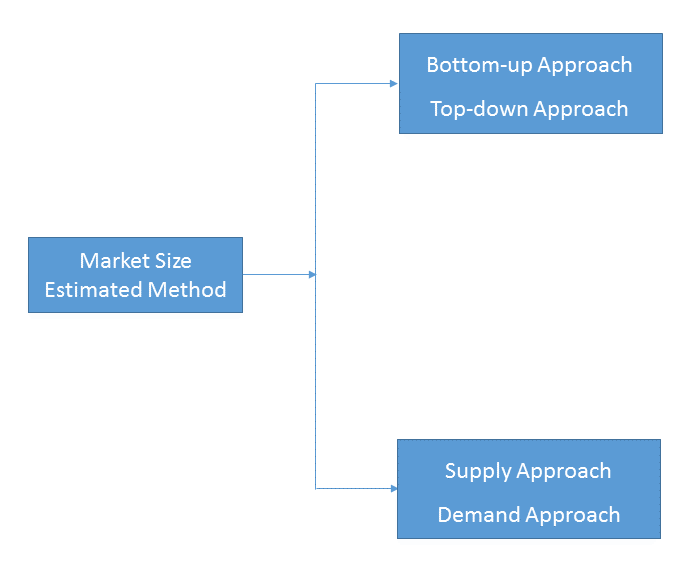
Bottom-up & top-down approach, supply & demand approach are the most important method which is used by HDIN Research to estimate the market size.
1)Top-down & Bottom-up Approach
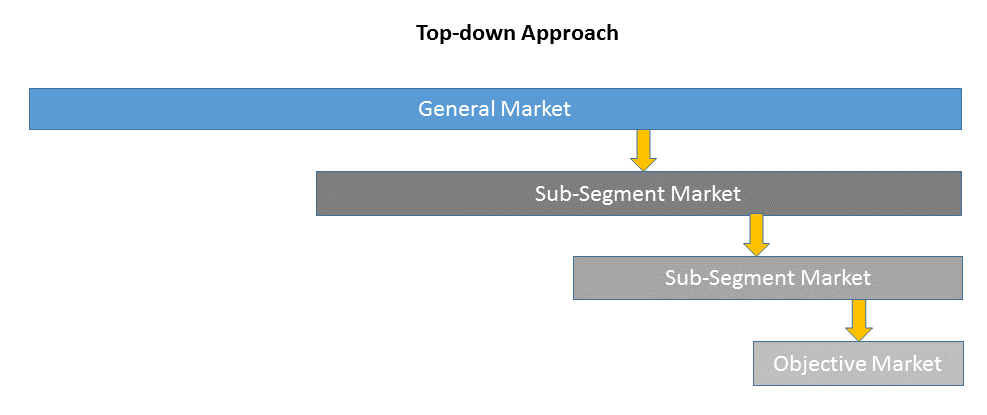
Top-down approach uses a general market size figure and determines the percentage that the objective market represents.
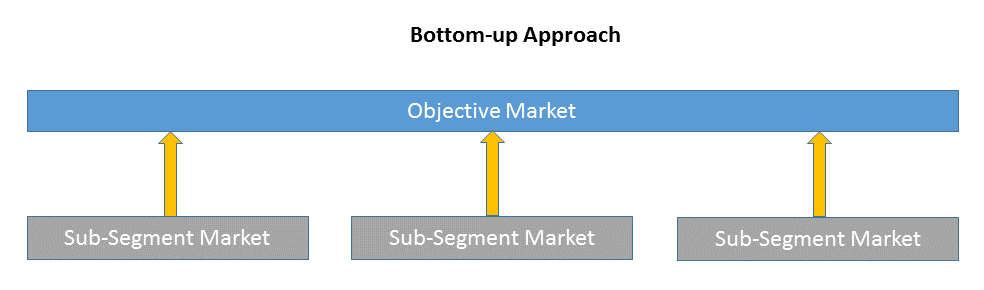
Bottom-up approach size the objective market by collecting the sub-segment information.
2)Supply & Demand Approach
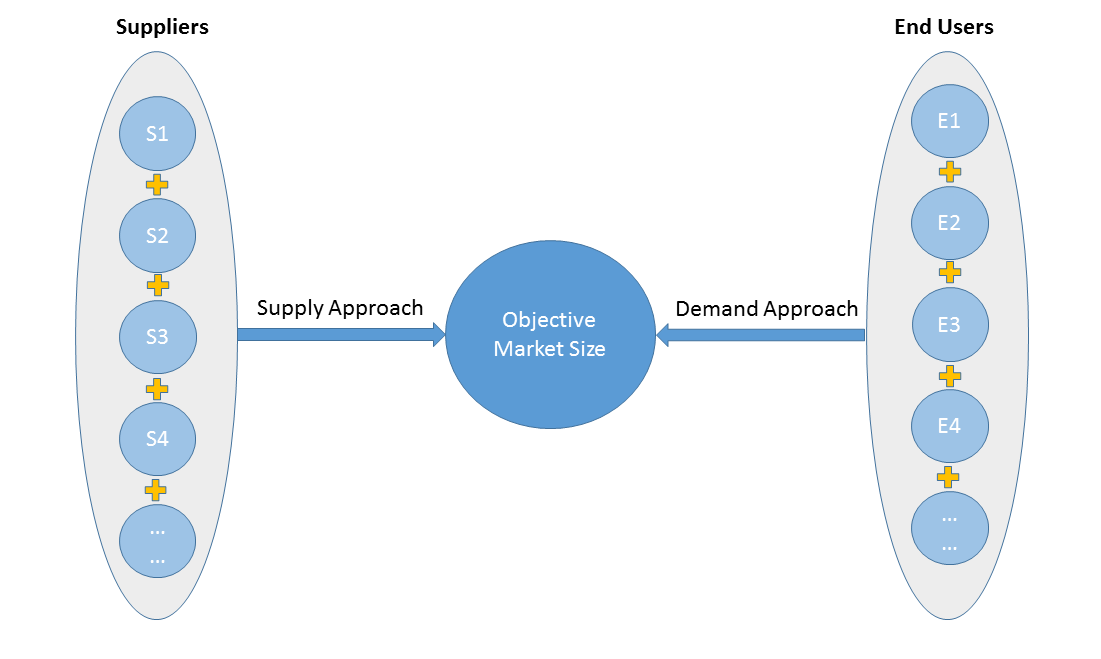
Supply approach is based on assessments of the size of each competitor supplying the objective market.
Demand approach combine end-user data within a market to estimate the objective market size. It is sometimes referred to as bottom-up approach.
- Forecasting Methodology
- Numerous factors impacting the market trend are considered for forecast model:
- New technology and application in the future;
- New project planned/under contraction;
- Global and regional underlying economic growth;
- Threatens of substitute products;
- Industry expert opinion;
- Policy and Society implication.
- Analysis Tools
1)PEST Analysis
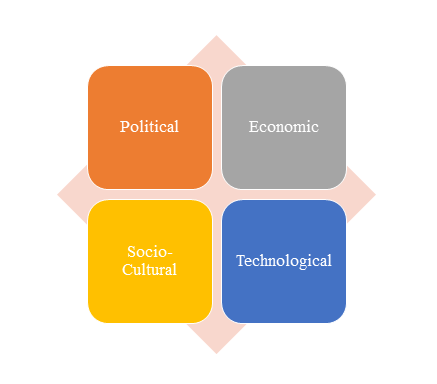
PEST Analysis is a simple and widely used tool that helps our client analyze the Political, Economic, Socio-Cultural, and Technological changes in their business environment.
- Benefits of a PEST analysis:
- It helps you to spot business opportunities, and it gives you advanced warning of significant threats.
- It reveals the direction of change within your business environment. This helps you shape what you’re doing, so that you work with change, rather than against it.
- It helps you avoid starting projects that are likely to fail, for reasons beyond your control.
- It can help you break free of unconscious assumptions when you enter a new country, region, or market; because it helps you develop an objective view of this new environment.
2)Porter’s Five Force Model Analysis
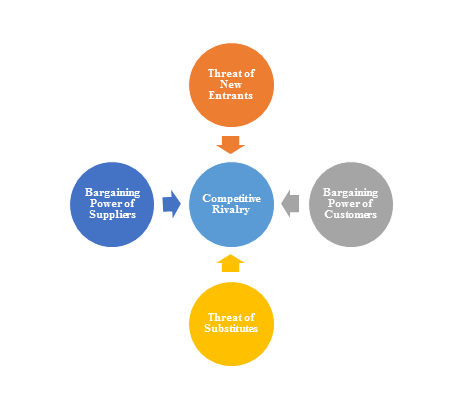
The Porter’s Five Force Model is a tool that can be used to analyze the opportunities and overall competitive advantage. The five forces that can assist in determining the competitive intensity and potential attractiveness within a specific area.
- Threat of New Entrants: Profitable industries that yield high returns will attract new firms.
- Threat of Substitutes: A substitute product uses a different technology to try to solve the same economic need.
- Bargaining Power of Customers: the ability of customers to put the firm under pressure, which also affects the customer's sensitivity to price changes.
- Bargaining Power of Suppliers: Suppliers of raw materials, components, labor, and services (such as expertise) to the firm can be a source of power over the firm when there are few substitutes.
- Competitive Rivalry: For most industries the intensity of competitive rivalry is the major determinant of the competitiveness of the industry.
3)Value Chain Analysis
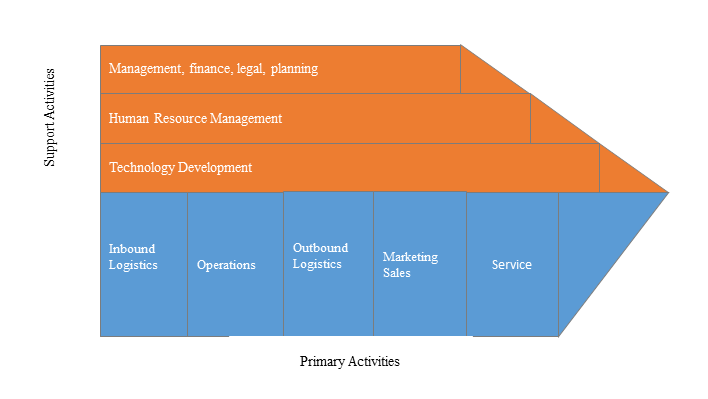
Value chain analysis is a tool to identify activities, within and around the firm and relating these activities to an assessment of competitive strength. Value chain can be analyzed by primary activities and supportive activities. Primary activities include: inbound logistics, operations, outbound logistics, marketing & sales, service. Support activities include: technology development, human resource management, management, finance, legal, planning.
4)SWOT Analysis
SWOT analysis is a tool used to evaluate a company's competitive position by identifying its strengths, weaknesses, opportunities and threats. The strengths and weakness is the inner factor; the opportunities and threats are the external factor. By analyzing the inner and external factors, the analysis can provide the detail information of the position of a player and the characteristics of the industry.
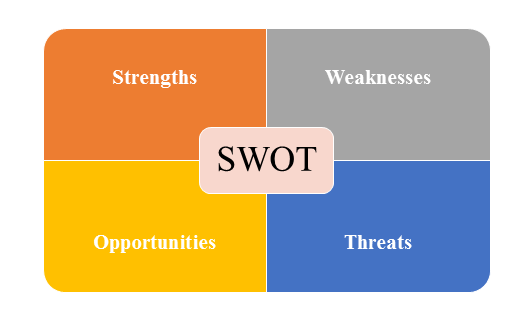
- Strengths describe what the player excels at and separates it from the competition
- Weaknesses stop the player from performing at its optimum level.
- Opportunities refer to favorable external factors that the player can use to give it a competitive advantage.
- Threats refer to factors that have the potential to harm the player.
- Data Sources
| Primary Sources | Secondary Sources |
|---|---|
| Face to face/Phone Interviews with market participants, such as: Manufactures; Distributors; End-users; Experts. Online Survey |
Government/International Organization Data: Annual Report/Presentation/Fact Book Internet Source Information Industry Association Data Free/Purchased Database Market Research Report Book/Journal/News |