Global Extracorporeal Membrane Oxygenation (ECMO) Market Analysis & Strategic Forecast to 2031
- Single User License (1 Users) $ 3,500
- Team License (2~5 Users) $ 4,500
- Corporate License (>5 Users) $ 5,500
Extracorporeal Membrane Oxygenation (ECMO) encompasses durable capital equipment (driving consoles, modular centrifugal blood pump units, integrated flow-bubble-temperature sensor systems, backup manual actuators) and high-turnover single-use consumables (polymethylpentene hollow-fiber membrane oxygenators, magnetic centrifugal pump heads, polyurethane cannulae, biocompatible perfusion circuits). The global ECMO market size is valued at 1.2 to 1.8 billion USD in 2026, with a compound annual growth rate (CAGR) of 6% to 10% through 2031. The market is dirven by rising global prevalence of acute respiratory distress syndrome (ARDS), post-cardiotomy shock, refractory cardiogenic shock, and fulminant myocarditis, coupled with an expanding clinical perimeter encompassing ex-vivo organ preservation and out-of-hospital mobile extracorporeal cardiopulmonary resuscitation (eCPR). Commercial demand is concentrated in North American and European tertiary intensive care units (ICUs) and cardiothoracic suites, while high-velocity adoption accelerates across Asia-Pacific medical infrastructure hubs.
Regional Market Dynamics
● North America
North America represents the largest revenue-generating territory, underpinned by dense allocations of quaternary academic medical centers, established Extracorporeal Life Support Organization (ELSO) centers of excellence, and established clinical pathways for veno-arterial (VA) and veno-venous (VV) therapies. Procurement runs through Group Purchasing Organizations (GPOs) and Integrated Delivery Networks (IDNs), maintaining a high tolerance for premium-priced capital consoles and advanced biocompatible coating technologies. Institutional demand prioritizes deep electronic health record (EHR) integration, advanced multi-parameter optical telemetry, and streamlined mobile transport configurations for air and ground patient transfers. The regional growth trajectory is supported by robust clinical trials assessing early ECMO deployment during refractory cardiac arrest and bridge-to-lung-transplantation protocols.
● Asia-Pacific
Asia-Pacific demonstrates the fastest demand acceleration globally. This expansion is governed by substantial public health capital expenditures, an aging population vulnerable to cardiorespiratory decompensation, and aggressive domestic capacity building in acute critical care. In China, market mechanics are increasingly influenced by Volume-Based Procurement (VBP) policies and public hospital infrastructure initiatives, fostering a transition toward domestic Class III medical device approvals to offset reliance on Western imports. Japan exhibits mature clinical perfusion protocols with high ICU density per capita, prioritizing ultra-safe, low-prime-volume systems. Emerging economic nodes across India, South Korea, Thailand, and Taiwan, China, are scaling operational ECMO centers to mitigate severe respiratory viral outbreaks and cardiogenic emergencies.
● Europe
Europe stands as the second-largest global market, characterized by institutional adoption of standardized perfusion protocols and long-term extracorporeal carbon dioxide removal (ECCO2R) therapies. Market evolution is heavily gated by regulatory friction introduced under the European Union Medical Device Regulation (EU MDR 2017/745). Stringent Notified Body audits and extended clinical evidence requirements have increased post-market surveillance costs and elongated product development cycles for next-generation hardware. Despite these headwinds, Western European nations, notably Germany, France, and Italy, exhibit sustained consumable pull-through, while Eastern European facilities undergo structural infrastructure modernization via selective tender networks and distributor agreements.
● Latin America
The Latin American critical care environment is characterized by a dual-tier structure, dividing well-funded private healthcare conglomerates from cash-constrained public systems. Expansion is propelled by the consolidation of private surgical chains in Brazil, Mexico, and Colombia, alongside operational investments by international healthcare networks expanding acute cardiopulmonary units. High capital equipment import duties and foreign exchange volatility remain structural inhibitors, prompting healthcare providers to leverage distributor networks, managed equipment services, and multi-year consumable bundle contracts to balance initial expenditure burdens.
● Middle East & Africa (MEA)
The MEA landscape reflects highly localized investment patterns. Growth is centered across Gulf Cooperation Council (GCC) nations, spearheaded by sovereign-backed national healthcare modernization drives such as Saudi Arabia's healthcare transformation program. These investments fund state-of-the-art trauma centers, tertiary cardiac surgery hubs, and airborne mobile emergency life support fleets. Conversely, North African and Sub-Saharan territories face macro-level capital constraints, limiting routine ECMO availability to isolated university teaching hospitals and relying heavily on supranational procurement grants and foreign physician training exchanges.
Supply Chain & Value Chain Architecture
● Upstream Feedstock & Precision Componentry
The operational foundation of ECMO equipment rests on narrow, highly specialized material science and precision manufacturing disciplines. The most critical supply chain bottleneck exists in the production of gas-exchange membranes. The global standard relies almost exclusively on asymmetric poly-4-methyl-1-pentene (PMP) hollow-fiber polymers. Unlike microporous polypropylene fibers prone to plasma leakage during extended runs, PMP hollow fibers provide a true non-porous outer diffusion skin that prevents fluid permeation while enabling efficient gas diffusion. Specialized resin synthesis and spinning extrusion capacity are concentrated among a limited number of specialized chemical converters.
Parallel upstream dependencies involve biocompatible non-thrombogenic surface treatments. Raw polyurethane or polyvinyl chloride (PVC) lines require proprietary covalent bonding or physical adsorption of heparin formulations, phosphorylcholine polymers, or synthetic fluoropolymers to prevent platelet adhesion, protein denaturation, and systemic inflammatory cascades. Centrifugal pump mechanics depend on tight-tolerance brushless DC electric motors, optical fluid mechanics components, rare-earth permanent magnets for contactless magnetic levitation drives, and micro-machined medical-grade titanium and polycarbonate pump housings.
● Midstream Assembly, Software Integration & Regulatory Governance
Midstream operations center on OEM hardware fabrication, precision system integration, and advanced computational fluid dynamics (CFD) modeling. Manufacturers engineer blood paths to mitigate high shear stress, eliminate stagnation zones (eddy currents), and reduce hemolytic destruction of red blood cells. The midstream ecosystem must maintain strict compliance with cleanroom assembly standards (ISO 13485) and implement ethylene oxide (EtO) or precision gamma sterilization regimens that preserve thin-film membrane integrity.
Firmware architecture has migrated from simple physical dial controls to intelligent operating systems. Modern consoles incorporate sophisticated closed-loop algorithms, real-time arterial-venous pressure differential monitoring, automated bubble detection, multi-wavelength optical hemoglobin and oxygen saturation telemetry, and automated failsafe protocols that divert drive systems to redundant lithium-ion battery banks or manual hand-crank mechanisms during critical failures.
● Downstream Utilization & Clinical Channels
Downstream distribution moves via high-barrier, clinical-specialty channels. Unlike general surgical supplies, ECMO adoption is decided by multidisciplinary committees comprising perfusionists, cardiothoracic surgeons, intensivist-pulmonologists, critical care nurses, and hospital procurement directors. Because capital systems have life spans extending from 7 to 10 years, value creation has migrated structurally downstream into the razor-and-blade model: consumable circuit packs represent 70% to 80% of aggregate lifetime platform revenue. Clinical training, simulation centers, perfusion support services, and comprehensive preventative maintenance contracts serve as primary competitive moats to safeguard recurring disposable purchases.
Product Categorization & Technical Specifications
● ECMO Systems (Capital Equipment & Hardware Consoles)
- Main Operating Console: Central power management unit, multi-voltage AC adapters, internal charging infrastructure, dynamic battery backup systems supporting up to 90 to 180 minutes of untethered operation, and high-integrity mounting brackets for membrane oxygenators and drive motors.
- Interactive Display Interface: Detachable or cart-mounted high-resolution graphical user interfaces displaying real-time pressure channels (venous drainage, pre-membrane internal, post-membrane arterial), continuous venous oxygen saturation (SvO2), hematocrit, body temperature, continuous flow profiles, trend logging, and visual alarm hierarchies.
- Centrifugal Pump Drive Unit: Motor driver featuring mechanical motor-mount couplers or fully non-contact magnetic levitation housings designed to spin single-use disposable impellers at speeds ranging from 1,000 to 5,000+ RPM. Includes independent interface displays, umbilical cabling, and integrated flow-bubble-temperature sensor connections.
- Precision Telemetry Sensors: Optical and ultrasonic clamp-on transit-time flow sensors, micro-bubble acoustic detectors, non-invasive continuous arterial/venous blood-gas optical probes, and integrated thermal probes.
- Redundant Manual Drive Actuator: Mechanically geared hand-crank pump mechanisms providing manual backup to maintain continuous extracorporeal blood propulsion during total electrical or motor drive failure.
- Accessory Architecture: Specialized transport trolleys, intra-hospital bed-rail clamps, cable management splitters, and aerospace-certified mounting brackets.
● ECMO Consumables (Sterile Single-Use Kits)
- Membrane Oxygenator (Artificial Lung): Advanced dual-chamber thermal exchange and gas-diffusion modules. The blood passes across specialized woven mats of polyethylene terephthalate (PET) hollow fibers for thermal management, coupled to PMP hollow-fiber bundles delivering gas exchange across surface areas typically spanning 0.8 to 1.8 square meters for adults.
- Centrifugal Blood Pump Head (Artificial Heart): Polycarbonate casing housing a magnetically coupled, hydraulically optimized conical or diagonal impeller. Blood enters axially and is propelled radially via centrifugal force, minimizing shear-induced hemolysis and mechanical thrombosis without internal friction seals.
- Biocompatible Vascular Access Cannulae: Multi-stage drainage and return cannulae extruded from kink-resistant polyurethane reinforced with high-tensile stainless steel wire. Configurations encompass thin-walled femoral arterial/venous designs, dual-lumen bicaval single-puncture jugular lines, and specialized transseptal kits.
- Extracorporeal Perfusion Tubing Sets: Medical-grade PVC and silicone lines coated internally with bio-inert polymer matrices, complete with luer access ports, rapid prime bypass circuits, purge lines, and integrated sampling manifolds.
Downstream Clinical Application Verticals
● Intensive Care Units & Severe Acute Respiratory Failure
ICUs consume the vast majority of continuous-run ECMO disposable packs globally. Indications are dominated by refractory ARDS, viral or bacterial pneumonia, massive pulmonary contusions, and inhalation injuries. Under V-V configurations, deoxygenated blood extracted from the vena cava is oxygenated and returned to the right atrium, bypassing the non-functional native pulmonary parenchyma. This mechanism directly elevates blood oxygen saturation above 95%, reduces arterial carbon dioxide tensions within minutes, and enables lung-protective, low-tidal-volume mechanical ventilation, preventing ventilator-induced lung injury (VILI) and high-pressure barotrauma.
● Operating Rooms & Cardiopulmonary Bypass Cardiac Surgeries
Within cardiothoracic surgical environments, ECMO systems serve as extended cardiopulmonary support mechanisms for adult, pediatric, and neonatal patients undergoing open-heart procedures, surgical ventricular restoration, and heart-lung transplantation. Unlike standard 4-to-6-hour intraoperative CPB heart-lung machines, ECMO systems are deployed for prolonged pre-procedural stabilization or post-cardiotomy shock when patients fail to separate from cardiopulmonary bypass, providing weeks of temporary VA circulation to allow myocardial recovery.
● Ex-Vivo Organ Preservation & Transplantation
An expanding strategic frontier is the deployment of ECMO perfusion circuits in ex-vivo organ assessment, reconditioning, and transport. Specialized continuous perfusion systems preserve donor kidneys, lungs, and hearts under physiological normothermic or hypothermic oxygenated conditions. By continually pumping oxygenated, nutrient-rich perfusate through the donor organ's vascular architecture, these systems clear cellular metabolites, reverse warm ischemia damage, and enable functional viability testing before transplantation, salvaging borderline marginal organs that would otherwise be discarded.
● Mobile Emergency Medical Services & Inter-Hospital Perfusion
Miniaturized, crash-tested ECMO architectures are utilized across mobile intensive care units (MICUs), rotary-wing rescue aircraft, and fixed-wing long-range medical evacuation jets. Mobile ECMO platforms facilitate regional "ECMO Retrieval Services," where surgical rescue teams cannulate critically unstable patients at peripheral community facilities lacking advanced critical care infrastructure and transport them under active extracorporeal support to regional quaternary hubs. In metropolitan centers, compact units are integrated into rapid-response out-of-hospital cardiac arrest (OHCA) protocols, initiating eCPR within 30 to 45 minutes of circulatory collapse.
Company Profiles
● Getinge AB: Headquartered in Gothenburg, Sweden, Getinge commands a leading global market position through its established Acute Care Therapies franchise.
- Strategic Pivots: The enterprise has directed capital expenditures toward regulatory remediation, fleet modernization, and sensor digitalization. Following intense regulatory scrutiny and technical documentation alignment under EU MDR, Getinge has prioritized the transition to its next-generation Cardiohelp II console architecture, engineered to secure comprehensive CE and global regulatory clearances. Concurrently, the organization has pivoted into advanced organ viability solutions, deploying systems such as the KidneyVault platform to optimize renal graft perfusion over extended holding windows.
- Operational Moats: Getinge retains an extensive installed base with its benchmark Cardiohelp and Rotaflow drive ecosystems. Its long-term Permanent Life Support (PLS) sets and Quadrox-i oxygenator configurations represent institutional standards in intensive care facilities. Proprietary Bioline (heparin-albumin) surface functionalization and deep integration into ICU transport frameworks create high clinical switching costs for hospitals standardizing on its closed-loop consumables.
● Medtronic plc: Headquartered in Galway, Ireland, with operational centers in Minneapolis, Minnesota, Medtronic executes an enterprise-scale cardiopulmonary life support strategy within its Cardiovascular Portfolio.
- Strategic Pivots: Medtronic has rationalized its extracorporeal therapies to focus on non-thrombogenic fluid mechanics and intelligent perfusion integration. The launch and rollout of the VitalFlow ECMO platform represent an active pivot toward streamlined bedside workflows, consolidating complex hardware operations into intuitive software interfaces designed for emergency intensivist deployment.
- Operational Moats: The organization leverages its Nautilus ECMO Oxygenator platform, which incorporates a distinctive circular flow path, radial guided inlets, and flow-diverting vanes engineered with computational fluid dynamics to suppress boundary-layer stasis zones. Paired with its proprietary Balance Biosurface coating—a non-heparin, hydrophilic polymer coating designed to decrease platelet activation without systemic anticoagulation risks—Medtronic cross-sells its perfusion hardware against its vascular cannulae portfolio and broad cardiovascular hospital contracts.
● Terumo Corporation: Based in Tokyo, Japan, Terumo maintains a prominent global presence in cardiopulmonary bypass hardware, autotransfusion, and emergency life support platforms.
- Strategic Pivots: Terumo executed a major strategic expansion into organ perfusion technologies via the acquisition of OrganOx, Ltd. for approximately 7.98 billion JPY, formalizing its dedicated Organ Technologies division to lead ex-vivo liver and kidney normothermic perfusion. Simultaneously, Terumo has targeted high-speed clinical diagnostics, integrating real-time continuous in-line blood parameter monitoring hardware (CDI OneView) directly into its extracorporeal drive circuits.
- Operational Moats: The company’s CAPIOX family of oxygenators (notably the FX and NX series with integrated arterial filters) and CAPIOX Emergency Bypass Systems (EBS) are anchored by proprietary X-Coating biocompatible matrices. Terumo operates expansive, vertically integrated medical manufacturing assets across Japan and the United States, providing resilience against regional component disruptions and maintaining strong supply contracts with cardiac surgery departments worldwide.
● LivaNova PLC: Headquartered in London, United Kingdom, LivaNova holds an established leadership tier within intraoperative cardiopulmonary equipment and neuromodulation therapies.
- Strategic Pivots: The company has realigned its acute life support roadmap around the Essenz Perfusion System, decoupling legacy analog heart-lung machines into modular, digital-native perfusion hubs equipped with advanced intra-procedural physiological data tracking. Through its TandemLife acquisition, LivaNova expanded directly into the dedicated intensive care ECMO space, focusing on low-prime-volume mechanical circulatory support.
- Operational Moats: LivaNova’s proprietary moat is anchored by the LifeSPARC platform, an FDA-cleared, miniaturized centrifugal pump platform featuring an integrated low-prime motor and streamlined software driving both respiratory and circulatory assist circuits. Its consumable portfolio is reinforced by the Inspire family of hollow-fiber membrane oxygenators (spanning over 10 clinical models) alongside specialized vascular access lines, including ProtekDuo dual-lumen jugular cannulae and TandemHeart transseptal cannulation sets.
● Fresenius SE & Co. KGaA: Headquartered in Bad Homburg, Germany, Fresenius provides complete critical organ replacement therapies spanning continuous renal replacement therapy (CRRT) and extracorporeal cardiopulmonary support via its subsidiary Xenios AG.
- Strategic Pivots: Fresenius is focused on advancing the continuum of extracorporeal lung support, positioning low-flow extracorporeal carbon dioxide removal (ECCO2R) as an early-stage therapeutic option before resorting to full high-flow VV ECMO. This strategy aims to decrease invasive mechanical ventilation rates in chronic obstructive pulmonary disease (COPD) and moderate ARDS patient cohorts.
- Operational Moats: The multi-therapy Xenios Console and Novalung platform are certified for prolonged cardiopulmonary management and extracorporeal CPR. The underlying operational moat is driven by the DP3 diagonal impeller centrifugal pump, specifically configured to generate laminar blood propulsion with low hydraulic shear stress, paired with specialized heparin-albumin-coated Novalung and Medos membrane oxygenator kits capable of handling varied flow rates from 0.5 to 7.0 liters per minute.
● Eurosets s.r.l.: Based in Medolla, Italy, Eurosets is a dedicated medical design and precision manufacturing specialist in cardiopulmonary devices and extracorporeal life support systems.
- Strategic Pivots: Eurosets has positioned its strategic R&D around ultra-miniaturized transport systems and infection-mitigation consumables. Recognizing the operational friction of patient transfers, the company engineered ultra-compact platforms configured for out-of-hospital retrieval and dynamic ICU setups.
- Operational Moats: Eurosets produces the Colibri System, recognized as one of the most compact and lightweight portable ECLS/ECMO systems globally. The platform features an integrated magnetic levitation pump, cable-free tablet telemetry, and specialized brackets for air rescue and field stretchers. For long-term inpatient life support, its ECMOLIFE trolley console pairs with A.L.ONE oxygenators, which are validated for extended use up to 14 to 30 days utilizing full phosphorylcholine biocompatible coatings.
● Shenzhen Chinabridge Medical Technology Co., Ltd.: Headquartered in Shenzhen, China, Chinabridge Medical is a pioneer in domestic life support devices, having developed the first domestically approved complete ECMO circuit in China.
- Strategic Pivots: Chinabridge has strategically leveraged national medtech localization mandates to establish fully independent intellectual property across all primary ECMO components, eliminating supply dependencies on imported Western console sub-assemblies.
- Operational Moats: The Chinabridge ECMO System possesses Chinese National Medical Products Administration (NMPA) Class III commercial clearance. Its competitive advantage is built on a magnetic-drive centrifugal pump paired with integrated multidirectional bubble and temperature sensors, and proprietary heparin-bonded PMP hollow-fiber oxygenation circuits manufactured within domestic cleanroom hubs, enabling cost-competitive positioning across public tender bidding networks.
● Jiangsu STMed Technology Co., Ltd.: Located in Suzhou Industrial Park, China, STMed Technology is an advanced medical enterprise focused on developing portable life support, organ preservation, and hemodynamic systems.
- Strategic Pivots: STMed has prioritized form-factor reduction, targeting the emergency response, ground ambulance, and military/civilian medical evacuation sectors. Its commercial strategy capitalizes on national initiatives to equip prefecture-level Chinese hospitals with emergency cardiopulmonary resuscitation equipment.
- Operational Moats: The company commercializes the OASSIST ECMO System (STM001 series), an ultra-compact, lightweight Chinese domestic console. The system integrates a magnetic levitation, low-shear centrifugal pump, a modular PMP oxygenator, and internal thermal-exchange systems. The platform's integrated real-time micro-blood gas analysis module allows continuous hemodynamic optimization in off-grid field environments.
● LifeShield Medical: Operating through a transnational structure with dual hubs in Aachen, Germany (enmodes GmbH) and Suzhou, China (LungShield Medical), the company bridges European computational fluid engineering with Chinese manufacturing scale.
- Strategic Pivots: LifeShield has aligned its long-term product pipeline toward low-trauma, flow-optimized perfusion systems. It leverages advanced in-silico fluid modeling to suppress shear-induced blood damage, extending beyond conventional VA/VV life support into targeted mid-flow ECMO platforms designed for hypercapnic respiratory failure and purge-free percutaneous ventricular assist devices (pVAD).
- Operational Moats: The company's core platform, the Rengine ECMO System, leverages enmodes' computational fluid dynamics (CFD) optimization to redesign internal fluid shear profiles. This engineering foundation yields oxygenator housings and low-profile cannulae with high anti-thrombotic efficacy, providing a robust operational bridge between European clinical performance standards and Asian commercial manufacturing.
Opportunities & Challenges
● Expansion Beyond Bedside Support: Ex-Vivo Preservation
The traditional clinical role of ECMO as a reactive, bedside rescue tool for respiratory or heart failure is transitioning toward active procedural intervention. The most prominent value-creation vector is ex-vivo organ preservation and reconditioning. As highlighted by Terumo’s acquisition of OrganOx and Getinge’s validation of its KidneyVault platform, standard cold storage for organ transplantation is being augmented by continuous normothermic machine perfusion (NMP).
Perfusion circuits that pump oxygenated, warm, substrate-enriched perfusate through donor allografts substantially extend safe ischemic preservation windows—up to 24 hours for renal grafts and prolonged windows for donor hearts and lungs. This procedural evolution allows transplant surgeons to assess metabolic biomarkers, deliver ex-vivo gene or cellular therapeutics, and utilize extended-criteria donor (ECD) organs that would otherwise face disposal. This clinical transition effectively decouples ECMO consumable utilization from sporadic ICU admissions, establishing a planned, scheduled procedural revenue channel.
● Hardware Miniaturization and the Decentralization of Critical Perfusion
A structural redesign of driving consoles is reshaping acute resuscitation logistics. Historically, ECMO machines were large, cart-based consoles restricted to dedicated cardiothoracic operating rooms and tertiary surgical ICUs, requiring dedicated transport teams. Recent engineering advances have yielded compact, battery-efficient, magnetic-levitation systems weighing under 10 kilograms, such as the Eurosets Colibri, Getinge Cardiohelp, and STMed OASSIST.
This physical miniaturization enables continuous cardiopulmonary support across rotary and fixed-wing air ambulances, local emergency response vehicles, and inter-departmental hospital transfers. The decentralization of extracorporeal support to front-line emergency departments accelerates the deployment of out-of-hospital extracorporeal cardiopulmonary resuscitation (eCPR). Initiating ECMO during ongoing refractory cardiac arrest within a 30-to-45-minute window substantially improves neurologically intact survival rates compared to conventional advanced life support (ACLS) alone. This shifting treatment paradigm moves ECMO hardware procurement beyond high-tier surgical units into regional emergency networks and municipal trauma networks.
● Sensor Telemetry & Data-Driven Closed-Loop Systems
The integration of non-invasive, continuous diagnostic monitoring within the extracorporeal blood loop represents an important technological shift. Traditional ECMO management requires serial blood draws for external blood gas analysis (ABG), introducing blood loss, infection risks, and time lags in therapeutic adjustments. Modern development roadmaps incorporate integrated, inline optical sensor modules directly into the disposable circuitry.
These solid-state modules provide continuous optical tracking of venous oxygen saturation, hemoglobin concentrations, and partial pressures of oxygen and carbon dioxide without requiring blood extraction. When combined with digital clinical decision support engines, next-generation ECMO consoles can automate pump speed and sweep gas delivery in response to continuous patient metrics. This shift toward closed-loop physiological regulation reduces perfusionist staffing burdens, lowers technical error rates, and improves clinical management across non-specialist peripheral care centers.
● Operational and Upstream Bottleneck Realities
Despite solid demand dynamics, the global ECMO industry faces clear operational and supply-chain vulnerabilities. Foremost among these is an extreme upstream reliance on asymmetric polymethylpentene (PMP) hollow-fiber gas-exchange membranes. The global supply of medical-grade PMP hollow fibers is heavily consolidated within a small group of specialized polymer manufacturers. Unlike standard hemodialysis or filtration materials, synthesizing PMP hollow fibers requires specialized extrusion equipment and cleanroom infrastructure capable of ensuring pore-free skin consistency down to sub-micron tolerances. Any geopolitical, industrial, or regulatory disruptions impacting these specialized polymer lines create instantaneous supply contractions across all global downstream oxygenator manufacturers, creating a persistent systemic vulnerability.
● Clinical Complications and Evidence-Based Reimbursement Pressures
ECMO remains one of the most physiologically invasive procedures in modern critical medicine. Prolonged contact between blood and artificial foreign surfaces invariably activates systemic inflammatory cascades, consumes coagulation factors, and carries high complication rates. Severe clinical adverse events—including localized or systemic thromboses, intracranial hemorrhages, mechanical hemolysis, vessel wall rupture during percutaneous cannulation, and catheter-related bloodstream infections—remain significant clinical challenges.
Concurrently, international healthcare payers, including CMS in the United States and statutory healthcare insurance funds across Europe, are elevating evidentiary thresholds for high-cost critical care interventions. As healthcare systems transition toward value-based purchasing models, hospital systems face rigorous utilization audits. OEMs must invest heavily in multicenter randomized controlled trials (RCTs) and health economic analyses to definitively demonstrate that high-cost ECMO interventions deliver statistically meaningful reductions in 90-day all-cause mortality, intensive care length of stay, and readmission rates relative to optimize conventional lung-protective ventilation and pharmacological therapies. Providers capable of delivering integrated systems that lower clinical complication rates while demonstrating clear total cost-of-care benefits will command defensible competitive advantages over the coming decade.
1.1 Market Definition and Extracorporeal Membrane Oxygenation (ECMO) Classification 1
1.2 Research Design and Multi-Factor Deterministic Modeling 2
1.3 Primary Source Validation and Secondary Data Aggregation 3
1.4 Economic, Regulatory, and Inflationary Modeling Assumptions 5
1.5 Definitional Glossary and Standard Industry Abbreviations 6
Chapter 2 Global Extracorporeal Membrane Oxygenation (ECMO) Market Sizing and Velocity Analysis
2.1 Global Market Trajectory and Revenue Baseline (2021-2031) 7
2.2 Volume Displacement: System Installations vs. Perfusion Consumable Utilization 8
2.3 Critical Care Spending Elasticity and Healthcare Capital Allocation Cycles 9
2.4 Cross-Segment Price Sensitivity and Hospital Reimbursement Architectures 10
Chapter 3 Upstream Component Sourcing, Biocompatible Materials, and Value Chain Architecture
3.1 Upstream Value Chain Mapping: Microporous Polymers and Advanced Biomaterials 11
3.2 Polymethylpentene (PMP) Hollow Fiber Membrane Supply Dynamics and Concentration 12
3.3 Centrifugal Blood Pump Drive Mechanisms and Magnetic Levitation Technology 13
3.4 Bioactive and Biopassive Surface Heparin Coating Chemistries 14
3.5 Value Chain Cost Dissection: BOM Architecture, R&D Amortization, and Sterilization 15
3.6 Supply Chain Fragility, Single-Source Vulnerabilities, and Strategic Buffer Stocks 16
Chapter 4 Global Extracorporeal Membrane Oxygenation (ECMO) Market by Product Modality
4.1 Global ECMO System Hardware Market Size and Unit Placement (2021-2031) 17
4.1.1 Centrifugal Flow ECMO Consoles 18
4.1.2 Roller Pump ECMO Consoles 19
4.2 Global ECMO Single-Use Consumables and Perfusion Kits Market (2021-2031) 20
4.2.1 Membrane Oxygenators and Heat Exchangers 21
4.2.2 Perfusion Tubing Sets, Cannulae, and Vascular Access Kits 22
Chapter 5 Global Extracorporeal Membrane Oxygenation (ECMO) Market by Clinical Modality and Indication
5.1 Veno-Arterial (VA) ECMO: Indications, Hemodynamic Management, and Market Share 23
5.2 Veno-Venous (VV) ECMO: Acute Respiratory Distress Syndrome (ARDS) Dynamics 24
5.3 Extracorporeal Cardiopulmonary Resuscitation (ECPR) Integration in Emergency Protocols 25
5.4 Extracorporeal Carbon Dioxide Removal (ECCO2R) for Severe Hypercapnic Failure 26
5.5 Patient Demographics: Neonatal, Pediatric, and Adult Clinical Stratification 27
Chapter 6 Global Extracorporeal Membrane Oxygenation (ECMO) Market by End-Use Healthcare Infrastructure
6.1 Intensive Care Units (ICUs) and Cardiothoracic Critical Care Centers 28
6.2 Operating Rooms and Cardiac Catheterization Laboratories 29
6.3 Specialized Organ Retrieval, Transplantation, and Perfusion Units 30
6.4 Mobile ECMO Transport and Emergency Medical Evacuation Networks 31
Chapter 7 Global Cross-Border Trade Flows, Regulatory Frameworks, and Tariff Regimes
7.1 Global Trade Corridor Mapping: Major Export Hubs and Import Sinkholes 32
7.2 Production Ecosystem Consolidation in Germany, the United States, Japan, and China 33
7.3 Regulatory Harmonization: FDA 510(k)/PMA, EU MDR 2017/745, and NMPA Class III Approvals 34
7.4 Cross-Border Logistics, Cold Chain Integrity for Coated Tubing, and Customs Tariffs 35
Chapter 8 North America Extracorporeal Membrane Oxygenation (ECMO) Market
8.1 Regional Overview, Critical Care ICU Bed Densities, and Protocol Evolution 36
8.2 United States: Demand Trajectory, Medicare MS-DRG Reimbursement, and Clinical Trials 38
8.3 Canada: Public Single-Payer Procurement and Provincial ECMO Network Hubs 41
Chapter 9 Europe Extracorporeal Membrane Oxygenation (ECMO) Market
9.1 Pan-European Market Dynamics, Extracorporeal Life Support Organization (ELSO) Registry 43
9.2 Germany: High-Density ICU Capacity, Production Centers, and DRG Funding Structures 45
9.3 France: SAMU Mobile ECMO Infrastructure and University Hospital Integration 47
9.4 Italy: Specialized Manufacturing Clusters and Regional Tendering Frameworks 49
9.5 United Kingdom: National Health Service (NHS) Highly Specialised Commissioning 51
9.6 Rest of Europe Market 52
Chapter 10 Asia-Pacific Extracorporeal Membrane Oxygenation (ECMO) Market
10.1 Regional Clinical Expansion, Healthcare Modernization, and Local Manufacturing Policies 53
10.2 China: Domestic Substitution Mandates, Volume-Based Procurement (VBP), and Capacity Build 55
10.3 Japan: Aging Demographics, PMDA Regulatory Approvals, and Terumo Domestic Footprint 58
10.4 South Korea: High ECMO Adoption Rates and National Health Insurance Program (NHIP) Coverage 60
Chapter 11 Latin America, Middle East & Africa Extracorporeal Membrane Oxygenation (ECMO) Market
11.1 Latin America: Infrastructure Gaps, Private vs. Public Healthcare Polarities, and Brazilian Demand 62
11.2 Middle East & Africa: Gulf Cooperation Council (GCC) Investments and Specialized Critical Care Expansion 64
Chapter 12 Industry Competition Structure, Consolidation, and Patent Mapping
12.1 Industry Concentration Metrics: Herfindahl-Hirschman Index (HHI) and Tier Classifications 66
12.2 Intellectual Property Landscape: Patent Filings in PMP Membranes and Blood Flow Dynamics 67
Chapter 13 Corporate Intelligence: Competitive Profiles and Financial Dissections
13.1 Getinge AB 68
13.1.1 Corporate Entity Overview and Critical Care Product Strategy 68
13.1.2 SWOT Matrix and Strategic Positioning 69
13.1.3 R&D Pipeline, Next-Gen Cardiopulmonary Consoles, and Global Distribution Footprint 70
13.1.4 Product-Specific Operational and Financial Metrics 71
13.2 Medtronic plc 72
13.2.1 Corporate Entity Overview and Perfusion Technologies Integration 72
13.2.2 SWOT Matrix and Strategic Positioning 73
13.2.3 Commercialization Strategy and Critical Care Ecosystem Synergies 74
13.2.4 Product-Specific Operational and Financial Metrics 75
13.3 Terumo Corporation 76
13.3.1 Corporate Entity Overview and Cardiovascular Solutions Portfolio 76
13.3.2 SWOT Matrix and Strategic Positioning 77
13.3.3 Production Infrastructure in Japan and Global Direct-Sales Penetration 78
13.3.4 Product-Specific Operational and Financial Metrics 79
13.4 LivaNova PLC 80
13.4.1 Corporate Entity Overview and Advanced Circulatory Support Division 80
13.4.2 SWOT Matrix and Strategic Positioning 81
13.4.3 Cannulae Engineering Innovations and European Footprint 82
13.4.4 Product-Specific Operational and Financial Metrics 83
13.5 Fresenius SE & Co. KGaA 84
13.5.1 Corporate Entity Overview and Intensive Care Systems Integration 84
13.5.2 SWOT Matrix and Strategic Positioning 85
13.5.3 Xenios AG Acquisition Synergy and ECCO2R Market Exploitation 86
13.5.4 Product-Specific Operational and Financial Metrics 87
13.6 Eurosets s.r.l. 88
13.6.1 Corporate Entity Overview and Perfusion Consumables Specialization 88
13.6.2 SWOT Matrix and Strategic Positioning 89
13.6.3 Membrane Oxygenator Coating Technologies and Contract Manufacturing 90
13.6.4 Product-Specific Operational and Financial Metrics 91
13.7 Shenzhen Chinabridge Medical Technology Co. Ltd. 92
13.7.1 Corporate Entity Overview and Proprietary Magnetic Levitation Pump Architecture 92
13.7.2 SWOT Matrix and Strategic Positioning 93
13.7.3 Domestic Market Penetration and Emerging Market Export Strategies 94
13.7.4 Product-Specific Operational and Financial Metrics 95
13.8 Jiangsu STMed Technology Co. Ltd. 96
13.8.1 Corporate Entity Overview and Localization of Advanced Perfusion Technologies 96
13.8.2 SWOT Matrix and Strategic Positioning 97
13.8.3 NMPA Approval Pathway, Product Scalability, and Supply Chain Integration 98
13.8.4 Product-Specific Operational and Financial Metrics 99
13.9 Lifeshield Medical 100
13.9.1 Corporate Entity Overview and Domestic Chinese Critical Care Innovation 100
13.9.2 SWOT Matrix and Strategic Positioning 101
13.9.3 Miniaturized Extracorporeal Life Support Platforms and Expansion Plans 102
13.9.4 Product-Specific Operational and Financial Metrics 103
Chapter 14 Industry Horizon: Emerging Technological Vectors and Clinical Frontiers (2027-2031) 104
Table 2 Global Extracorporeal Membrane Oxygenation (ECMO) Market Revenue, by Region, 2021-2031 (USD Million) 7
Table 3 Global Extracorporeal Membrane Oxygenation (ECMO) Unit Placements and Shipments, 2021-2031 (Units) 8
Table 4 Bill of Materials (BOM) Breakdown: ECMO Centrifugal Console vs. Oxygenator Cartridge 15
Table 5 Global Extracorporeal Membrane Oxygenation (ECMO) Market Value, by Type, 2021-2031 (USD Million) 17
Table 6 Global Extracorporeal Membrane Oxygenation (ECMO) Systems Market, by Pump Mechanism, 2021-2031 (USD Million) 18
Table 7 Global Extracorporeal Membrane Oxygenation (ECMO) Consumables Market, by Component, 2021-2031 (USD Million) 20
Table 8 Global Extracorporeal Membrane Oxygenation (ECMO) Consumables Volume, by Component, 2021-2031 (Thousand Units) 21
Table 9 Global Extracorporeal Membrane Oxygenation (ECMO) Market, by Clinical Modality, 2021-2031 (USD Million) 23
Table 10 Global Extracorporeal Membrane Oxygenation (ECMO) Market, by Patient Demographic, 2021-2031 (USD Million) 27
Table 11 Global Extracorporeal Membrane Oxygenation (ECMO) Market, by End-Use Setting, 2021-2031 (USD Million) 28
Table 12 Global ECMO Hardware and Consumables Export Value, by Major Producing Nation, 2021-2026 (USD Million) 32
Table 13 Global ECMO Import Value, by Major Destination Country, 2021-2026 (USD Million) 33
Table 14 Comparative Regulatory Pathways and Clearance Timelines for ECMO Class III Devices 34
Table 15 North America Extracorporeal Membrane Oxygenation (ECMO) Market, by Product Type, 2021-2031 (USD Million) 36
Table 16 North America Extracorporeal Membrane Oxygenation (ECMO) Market, by Country, 2021-2031 (USD Million) 37
Table 17 United States Extracorporeal Membrane Oxygenation (ECMO) Market, by Clinical Indication, 2021-2031 (USD Million) 39
Table 18 Europe Extracorporeal Membrane Oxygenation (ECMO) Market, by Product Type, 2021-2031 (USD Million) 43
Table 19 Europe Extracorporeal Membrane Oxygenation (ECMO) Market, by Country, 2021-2031 (USD Million) 44
Table 20 Germany Extracorporeal Membrane Oxygenation (ECMO) Market, by End-Use Setting, 2021-2031 (USD Million) 46
Table 21 France Extracorporeal Membrane Oxygenation (ECMO) Market, by Product Type, 2021-2031 (USD Million) 48
Table 22 Italy Extracorporeal Membrane Oxygenation (ECMO) Market, by Product Type, 2021-2031 (USD Million) 50
Table 23 United Kingdom Extracorporeal Membrane Oxygenation (ECMO) Market, by Product Type, 2021-2031 (USD Million) 52
Table 24 Asia-Pacific Extracorporeal Membrane Oxygenation (ECMO) Market, by Product Type, 2021-2031 (USD Million) 53
Table 25 Asia-Pacific Extracorporeal Membrane Oxygenation (ECMO) Market, by Country, 2021-2031 (USD Million) 54
Table 26 China Extracorporeal Membrane Oxygenation (ECMO) Market, by Clinical Indication, 2021-2031 (USD Million) 56
Table 27 Japan Extracorporeal Membrane Oxygenation (ECMO) Market, by Product Type, 2021-2031 (USD Million) 58
Table 28 South Korea Extracorporeal Membrane Oxygenation (ECMO) Market, by Product Type, 2021-2031 (USD Million) 60
Table 29 Latin America Extracorporeal Membrane Oxygenation (ECMO) Market, by Country, 2021-2031 (USD Million) 62
Table 30 Middle East & Africa Extracorporeal Membrane Oxygenation (ECMO) Market, by Country, 2021-2031 (USD Million) 64
Table 31 Global Extracorporeal Membrane Oxygenation (ECMO) Manufacturer Market Share Matrix, 2021-2026 (%) 66
Table 32 Getinge AB Extracorporeal Membrane Oxygenation (ECMO) Revenue, Cost and Gross Margin (2021-2026) 71
Table 33 Medtronic plc Extracorporeal Membrane Oxygenation (ECMO) Revenue, Cost and Gross Margin (2021-2026) 75
Table 34 Terumo Corporation Extracorporeal Membrane Oxygenation (ECMO) Revenue, Cost and Gross Margin (2021-2026) 79
Table 35 LivaNova PLC Extracorporeal Membrane Oxygenation (ECMO) Revenue, Cost and Gross Margin (2021-2026) 83
Table 36 Fresenius SE & Co. KGaA Extracorporeal Membrane Oxygenation (ECMO) Revenue, Cost and Gross Margin (2021-2026) 87
Table 37 Eurosets s.r.l. Extracorporeal Membrane Oxygenation (ECMO) Revenue, Cost and Gross Margin (2021-2026) 91
Table 38 Shenzhen Chinabridge Medical Technology Co. Ltd. Extracorporeal Membrane Oxygenation (ECMO) Revenue, Cost and Gross Margin (2021-2026) 95
Table 39 Jiangsu STMed Technology Co. Ltd. Extracorporeal Membrane Oxygenation (ECMO) Revenue, Cost and Gross Margin (2021-2026) 99
Table 40 Lifeshield Medical Extracorporeal Membrane Oxygenation (ECMO) Revenue, Cost and Gross Margin (2021-2026) 103
Figure 1 Extracorporeal Membrane Oxygenation (ECMO) Industry Research Framework and Triangulation 3
Figure 2 Global ECMO Revenue Expansion Corridor, 2021-2031 (USD Million) 7
Figure 3 Upstream Hollow Fiber Membrane Supply Concentration by Global Producer 12
Figure 4 End-to-End ECMO Value Chain Node Margin Accretion Analysis 16
Figure 5 Global ECMO Market Share by Product Type: Systems vs. Consumables (2026 vs. 2031) 17
Figure 6 Global ECMO Consumable Revenue Share Distribution by Component, 2026 21
Figure 7 Global ECMO Market Value by Clinical Modality: VA vs. VV vs. ECPR vs. ECCO2R (2021-2031) 24
Figure 8 Patient Age Stratification and Consumption Ratio of Perfusion Kits (2021-2031) 27
Figure 9 Global End-User Revenue Share: ICUs vs. Operating Theaters vs. Transport 30
Figure 10 Global ECMO Strategic Trade Inflow and Outflow Heatmap 33
Figure 11 North America ECMO Market Trajectory and Installed Console Base, 2021-2031 37
Figure 12 United States ECMO Reimbursement Pathway Evolution (Inpatient MS-DRG Allocations) 40
Figure 13 Europe ECMO Regional Market Breakdown by Tier-1 Economies, 2026 44
Figure 14 Germany ECMO Clinical Adoption and Hospital System Density Matrix 46
Figure 15 Asia-Pacific ECMO Growth Divergence: Mature vs. Emerging Economies, 2021-2031 54
Figure 16 China ECMO Domestic Manufacturing Penetration vs. Foreign Import Share (2021-2031) 57
Figure 17 Extracorporeal Membrane Oxygenation Market Concentration Curve (CR4, CR8, and HHI Trend) 67
Figure 18 Getinge AB Extracorporeal Membrane Oxygenation (ECMO) Market Share (2021-2026) 71
Figure 19 Medtronic plc Extracorporeal Membrane Oxygenation (ECMO) Market Share (2021-2026) 75
Figure 20 Terumo Corporation Extracorporeal Membrane Oxygenation (ECMO) Market Share (2021-2026) 79
Figure 21 LivaNova PLC Extracorporeal Membrane Oxygenation (ECMO) Market Share (2021-2026) 83
Figure 22 Fresenius SE & Co. KGaA Extracorporeal Membrane Oxygenation (ECMO) Market Share (2021-2026) 87
Figure 23 Eurosets s.r.l. Extracorporeal Membrane Oxygenation (ECMO) Market Share (2021-2026) 91
Figure 24 Shenzhen Chinabridge Medical Technology Co. Ltd. Extracorporeal Membrane Oxygenation (ECMO) Market Share (2021-2026) 95
Figure 25 Jiangsu STMed Technology Co. Ltd. Extracorporeal Membrane Oxygenation (ECMO) Market Share (2021-2026) 99
Figure 26 Lifeshield Medical Extracorporeal Membrane Oxygenation (ECMO) Market Share (2021-2026) 103
Figure 27 Emerging Technology Disruption Vector: Microfluidics, Automation, and Miniaturization (2026-2031) 105
Research Methodology
- Market Estimated Methodology:
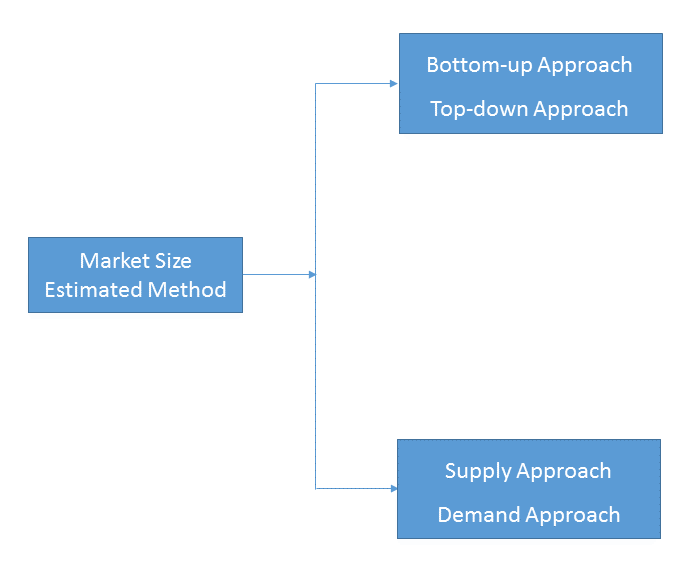
Bottom-up & top-down approach, supply & demand approach are the most important method which is used by HDIN Research to estimate the market size.
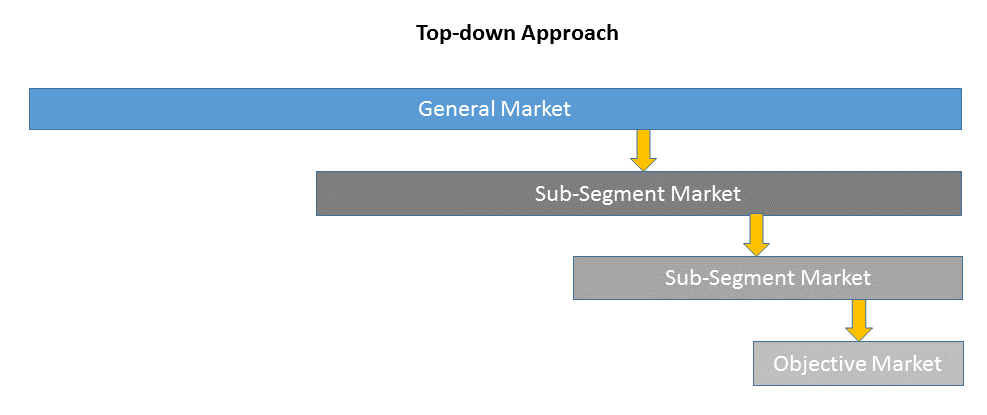
1)Top-down & Bottom-up Approach
Top-down approach uses a general market size figure and determines the percentage that the objective market represents.
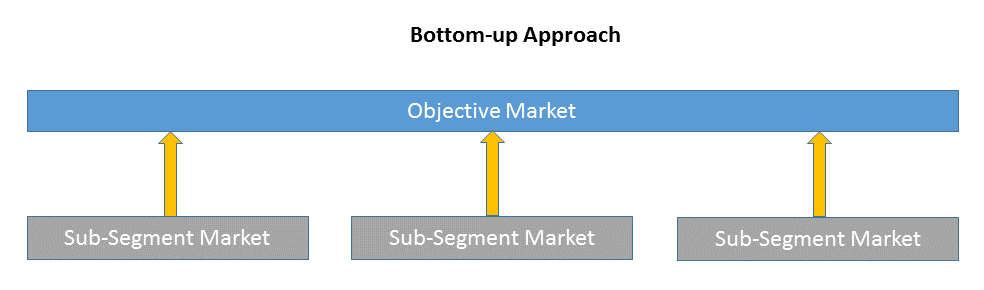
Bottom-up approach size the objective market by collecting the sub-segment information.
2)Supply & Demand Approach
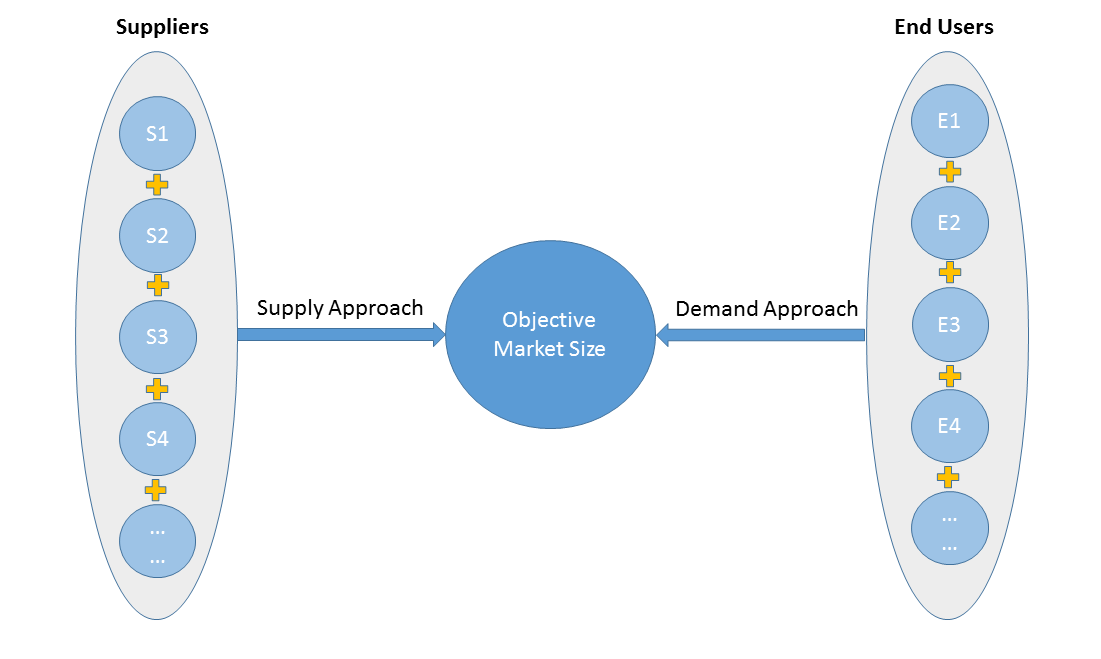
Supply approach is based on assessments of the size of each competitor supplying the objective market.
Demand approach combine end-user data within a market to estimate the objective market size. It is sometimes referred to as bottom-up approach.
- Forecasting Methodology
- Numerous factors impacting the market trend are considered for forecast model:
- New technology and application in the future;
- New project planned/under contraction;
- Global and regional underlying economic growth;
- Threatens of substitute products;
- Industry expert opinion;
- Policy and Society implication.
- Analysis Tools
1)PEST Analysis
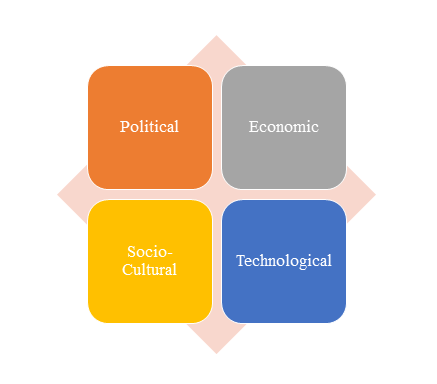
PEST Analysis is a simple and widely used tool that helps our client analyze the Political, Economic, Socio-Cultural, and Technological changes in their business environment.
- Benefits of a PEST analysis:
- It helps you to spot business opportunities, and it gives you advanced warning of significant threats.
- It reveals the direction of change within your business environment. This helps you shape what you’re doing, so that you work with change, rather than against it.
- It helps you avoid starting projects that are likely to fail, for reasons beyond your control.
- It can help you break free of unconscious assumptions when you enter a new country, region, or market; because it helps you develop an objective view of this new environment.
2)Porter’s Five Force Model Analysis
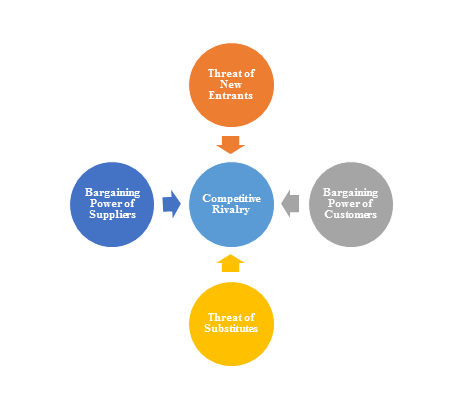
The Porter’s Five Force Model is a tool that can be used to analyze the opportunities and overall competitive advantage. The five forces that can assist in determining the competitive intensity and potential attractiveness within a specific area.
- Threat of New Entrants: Profitable industries that yield high returns will attract new firms.
- Threat of Substitutes: A substitute product uses a different technology to try to solve the same economic need.
- Bargaining Power of Customers: the ability of customers to put the firm under pressure, which also affects the customer's sensitivity to price changes.
- Bargaining Power of Suppliers: Suppliers of raw materials, components, labor, and services (such as expertise) to the firm can be a source of power over the firm when there are few substitutes.
- Competitive Rivalry: For most industries the intensity of competitive rivalry is the major determinant of the competitiveness of the industry.
3)Value Chain Analysis
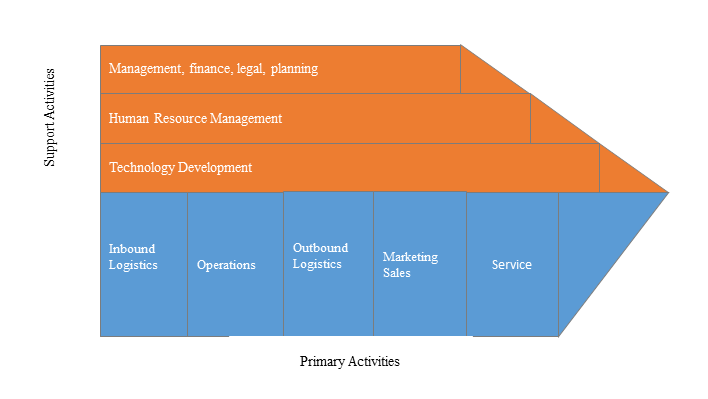
Value chain analysis is a tool to identify activities, within and around the firm and relating these activities to an assessment of competitive strength. Value chain can be analyzed by primary activities and supportive activities. Primary activities include: inbound logistics, operations, outbound logistics, marketing & sales, service. Support activities include: technology development, human resource management, management, finance, legal, planning.
4)SWOT Analysis
SWOT analysis is a tool used to evaluate a company's competitive position by identifying its strengths, weaknesses, opportunities and threats. The strengths and weakness is the inner factor; the opportunities and threats are the external factor. By analyzing the inner and external factors, the analysis can provide the detail information of the position of a player and the characteristics of the industry.
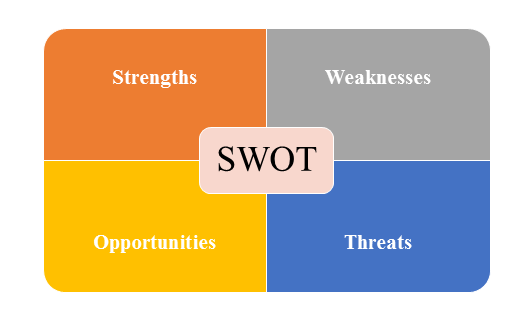
- Strengths describe what the player excels at and separates it from the competition
- Weaknesses stop the player from performing at its optimum level.
- Opportunities refer to favorable external factors that the player can use to give it a competitive advantage.
- Threats refer to factors that have the potential to harm the player.
- Data Sources
| Primary Sources | Secondary Sources |
|---|---|
| Face to face/Phone Interviews with market participants, such as: Manufactures; Distributors; End-users; Experts. Online Survey |
Government/International Organization Data: Annual Report/Presentation/Fact Book Internet Source Information Industry Association Data Free/Purchased Database Market Research Report Book/Journal/News |