Respiratory Care Device Market Report 2021-2031
- Single User License (1 Users) $ 3,500
- Team License (2~5 Users) $ 4,500
- Corporate License (>5 Users) $ 5,500
The global respiratory care device market size is valued at an estimated 16.5 to 18.5 billion USD in 2026, with a compound annual growth rate (CAGR) of 4.0% to 6.0% through 2031. This trajectory reflects two opposing post-pandemic forces: the cyclical digestion of intensive care unit (ICU) ventilator fleets installed during peak emergency procurements, counterbalanced by accelerated capital allocation into outpatient interventional pulmonology, chronic obstructive pulmonary disease (COPD) maintenance, and home-based obstructive sleep apnea (OSA) ecosystems.
Epidemiological pressures serve as the primary demand engine. Global clinical registries indicate that COPD affects approximately 480 million individuals, causing more than 3.5 million deaths annually. Concurrently, the addressable adult OSA population aged 30 to 69 has crossed 936 million individuals globally, with moderate-to-severe disease present in roughly 425 million patients. Diagnostic penetration remains severely suppressed: field intelligence indicates that over 80% of OSA cases in mature Western healthcare systems and over 90% across emerging territories remain undiagnosed. Clinical outcome data has established therapeutic necessity over comfort-driven compliance. Large-scale longitudinal evidence indicates that consistent continuous positive airway pressure (PAP) therapy drives a 37.0% reduction in all-cause mortality and a 54.0% reduction in cardiovascular mortality among high-risk patients. At the enterprise level, the locus of care is rapidly decentralizing. Hospitals are deploying capital to decouple high-acuity ICU capacity from sub-acute monitoring, shifting early extubation and chronic respiratory therapy into specialized step-down wards, home medical equipment (HME) pathways, and remote patient management (RPM) setups.
CORE GROWTH TRAJECTORIES
Key growth drivers for respiratory care device market include:
- Therapeutic positive airway pressure and portable oxygen delivery platforms expanding at above-average single-digit growth rates, fueled by home care migration.
- Acute mechanical ventilation hardware tracking normalized cyclical fleet replacement cycles of 7 to 10 years, counterbalanced by double-digit adoption curves for intelligent closed-loop weaning software modules.
- Single-use visualization endoscopy and disposable respiratory circuits capturing high-margin consumable volumes, with clinical projection models indicating conversion rates from 20.0% penetration in 2025 toward a long-term target of 70.0% across bronchoscopy and difficult airway intubation suites.
PRODUCT TAXONOMY AND TECHNOLOGICAL ARCHITECTURE
● Therapeutic Respiratory Devices
1. Mechanical Ventilators (Invasive and Non-Invasive)
The mechanical ventilator sector spans high-acuity ICU systems, dedicated non-invasive positive pressure ventilators (NIV), emergency transport platforms, and specialized neonatal high-frequency oscillatory ventilators (HFOV). Following the post-pandemic supply overhang, engineering moats have shifted toward autonomous physiological feedback loops. Systems employ adaptive algorithms such as proportional assist ventilation, Neurally Adjusted Ventilatory Assist (NAVA), and closed-loop minute ventilation titrations that dynamically modulate inspiratory pressure and flow based on patient effort. Modern ICU platforms integrate real-time lung mechanics, electrical impedance tomography (EIT), functional residual capacity (FRC) measurement, and transpulmonary pressure monitoring to minimize ventilator-induced lung injury (VILI) and acute respiratory distress syndrome (ARDS) complications.
2. Sleep Apnea and Positive Airway Pressure (PAP) Platforms
Covering continuous positive airway pressure (CPAP), automatic positive airway pressure (APAP), bilevel positive airway pressure (BiPAP), and adaptive servo-ventilation (ASV), this product tier represents the highest recurring unit sales and digital ecosystem integration. Hardware architecture relies on quiet, brushless DC micro-blowers, heated humidification chambers, and automated leak compensation algorithms. Market dynamics are governed by cloud-native connectivity modules (cellular and Bluetooth Low Energy) streaming real-time compliance metrics, apnea-hypopnea index (AHI) measurements, and mask fit metrics directly into clinical management portals.
3. High-Flow Nasal Therapy (HFNT) and Respiratory Humidification
Positioned as a first-line non-invasive alternative to intubation, HFNT systems deliver heated, fully saturated gas blends up to 80 to 90 L/min via dedicated large-bore nasal interfaces. Supported by global GOLD clinical guidelines, HFNT reduces the work of breathing, flushes nasopharyngeal anatomical dead space, generates low-level positive end-expiratory pressure (PEEP), and preserves mucociliary clearance across acute hypoxemic respiratory failure and COPD exacerbations.
4. Oxygen Therapy Systems
Covering portable oxygen concentrators (POCs), stationary molecular sieve pressure swing adsorption (PSA) systems, liquid oxygen (LOX) setups, and hospital-grade electric nitric oxide (NO) gas delivery systems. In the outpatient ambulatory segment, demand centers on lightweight (under 5 pounds) pulse-dose POC platforms yielding up to 6 flow settings with long-life lithium-ion battery architectures, clearing FAA commercial flight standards and replacing logistical delivery infrastructures for heavy steel cylinders.
5. Airway Clearance and Secretion Management Systems
Anchored by High-Frequency Chest Wall Oscillation (HFCWO) pulse generator vests and mechanical insufflation-exsufflation (cough-assist) machines. Primarily targeted at cystic fibrosis, bronchiectasis, and neuromuscular diseases, modern designs have shifted from bulky pneumatic compression bladders attached via heavy hoses to wearable, untethered garments utilizing localized electromechanical oscillating motors that deliver acoustic shear waves directly across the thorax.
6. Interventional Pulmonology and Inhaled ICU Sedation
A high-margin specialty sector comprising bronchoscopic lung volume reduction (BLVR) nitinol endobronchial valves, transbronchial radiofrequency (RF) ablation catheters, bronchoscopic thermal vapor ablation (BTVA) platforms, 3D navigational bronchoscopy suites, and dedicated anesthetic conserving devices. Inhaled ICU sedation hardware allows volatile anesthetics (such as isoflurane) to replace intravenous sedation in mechanically ventilated patients, incorporating miniature reflective carbon-filter vaporizers within the ventilator circuit to recycle up to 90% of expired volatile agents.
● Diagnostic and Monitoring Respiratory Devices
1. Sleep Diagnostic Systems
Categorized into high-density laboratory polysomnography (PSG) hardware (Type I) capturing 16 to 32 physiological channels (EEG, EOG, EMG, ECG, airflow, respiratory effort, SpO2) and Home Sleep Apnea Testing (HSAT) devices (Type III and IV). Driven by clinical cost containment, the HSAT segment is capturing rapid share via multi-night wearable sensors, disposable diagnostic patches, and automated machine-learning scoring software.
2. Pulmonary Function Testing (PFT) and Capnography
Includes advanced body plethysmography boxes, diffusing capacity of the lungs for carbon monoxide (DLCO) gas analyzers, digital spirometers, side-stream and main-stream capnographs (EtCO2), and high-acuity multi-wavelength pulse co-oximeters. Engineering priorities focus on ultrasonic flow sensors that eliminate field recalibration requirements and algorithmic motion-tolerant artifact rejection.
● Respiratory Consumables and Patient Interfaces
Accounting for the primary recurring margin profile across the industry, consumables include modular silicone and memory foam CPAP/BiPAP masks (nasal, pillow, and full-face), waterless humidification cartridges, closed suction catheter systems, bacterial/viral HME filters, single-use video bronchoscope shafts, and reinforced silicone tracheostomy and endotracheal tubes.
DOWNSTREAM CARE PATHWAYS AND APPLICATION SECTORS
● Acute Hospital Care
Encompassing intensive care units, emergency departments, operating theaters, and post-anesthesia care units. Procurement within acute hospital systems is structured around enterprise risk mitigation, open communication architecture, and life-cycle capital servicing. Hospitals increasingly mandate device inter-operability under IEEE 11073 Service-oriented Device Connectivity (SDC) protocols, demanding that mechanical ventilators, infusion systems, and bedside monitors continuously stream high-fidelity waveforms directly into enterprise Electronic Health Record (EHR) environments. Clinical drivers prioritize alarm fatigue reduction algorithms and predictive closed-loop ventilation weaning to reduce median ICU length of stay.
● Specialized Outpatient and Sub-Acute Care
Encompassing independent pulmonary clinics, sleep diagnostic laboratories, bronchoscopy procedure suites, and specialized step-down pulmonary rehabilitation centers. Outpatient surgical environments are accelerating the uptake of single-use bronchoscopy, quantitative CT planning software, and minimally invasive endobronchial lung volume reduction to migrate procedures out of high-cost inpatient theaters. Outpatient sleep clinics focus on rapid-turnaround HSAT fulfillment platforms that minimize manual technician scoring hours through validated artificial intelligence interpretation.
● Home Healthcare and Remote Patient Management (RPM)
The fastest-growing deployment sector. Driven by value-based reimbursement frameworks and payer penalties on 30-day readmissions for COPD and congestive heart failure, the home environment has transformed into an active clinical monitoring node. Homecare flow generators, battery-powered HFCWO vests, and portable oxygen units utilize integrated cellular modems to transmit therapy compliance, minute ventilation, mask leaks, and oxygen saturation parameters directly to cloud monitoring software. Care teams intervene preemptively upon identifying acute parameter deviations, preventing hospital admissions.
SALES CHANNELS AND COMMERCIAL DISTRIBUTION ARCHITECTURE
● Direct-to-Patient and Provider Referral Networks
Specialized homecare device manufacturers are progressively executing disintermediation strategies against traditional durable medical equipment (DME) channels. Under this model, captive commercial sales representatives call directly on adult pulmonologists, allergists, and sleep clinics to capture prescriptions. The device manufacturer's internal billing division manages payer pre-authorizations directly, shipping the device directly to the patient's residence while certified respiratory therapists execute virtual or in-home setup and onboarding. This operational framework allows manufacturers to capture both wholesale manufacturing margins and retail payer reimbursement margins.
● Direct Hospital Enterprise Sales Force
The dominant commercial model for multi-parameter ICU ventilators, interventional pulmonology capital platforms, and hospital-wide respiratory monitoring suites. Enterprise commercial teams target clinical service line chiefs, ICU nursing directors, biomedical engineering leads, and hospital group C-suite committees. Contracts routinely bundle hardware acquisition with multi-year preventative maintenance agreements, clinical training software, and committed long-term consumable delivery schedules.
● Home Medical Equipment (HME) and DME Dealer Networks
Third-party DME networks maintain substantial logistical scale for standard home oxygen, CPAP flow generators, and disposable interfaces. These dealers manage extensive regional warehousing, physical delivery vehicles, and multi-payer billing capabilities. Manufacturers selling through this tier rely on tier-volume rebates, co-op marketing programs, and comprehensive API connectivity between their cloud tracking portals and the DME's enterprise billing systems.
● Public Tenders, GPOs, and Centralized Provincial Procurement
Institutional sales across mature European healthcare systems, American hospital networks, and Asian provincial bodies rely heavily on consolidated Group Purchasing Organization (GPO) pricing structures and national government tenders. In China, institutional procurement requires listing on provincial Sunshine Procurement Platforms across 27 to 30 administrative regions under unified National Healthcare Security Administration (NHSA) medical service pricing frameworks. Consumable pricing is tightly controlled, necessitating automated, large-scale domestic manufacturing footprints to remain economically viable.
REGULATORY ARCHITECTURE AND REIMBURSEMENT FRAMEWORKS
● United States Regulatory Matrix
Respiratory devices are classified under Class II (510(k) Premarket Notification) or Class III (Premarket Approval - PMA) oversight by the US Food and Drug Administration (FDA). Effective February 2, 2026, the FDA completed its regulatory harmonization, replacing the legacy Quality System Regulation (21 CFR Part 820) with the new Quality Management System Regulation (QMSR), which directly incorporates ISO 13485:2016 standards. This regulatory transition mandates enhanced risk management documentation throughout commercial life-cycles.
Reimbursement across the home respiratory segment is governed by the Healthcare Common Procedure Coding System (HCPCS). For example, targeted High-Frequency Chest Wall Oscillation devices are reimbursed under code HCPCS E0483, generating allowable commercial and Medicare reimbursement payments of approximately 16,000 USD per qualified patient upon demonstration of failure with conventional bronchial hygiene therapy.
● European Union Medical Device Regulation (EU MDR 2017/745)
The EU MDR regulatory architecture imposes stringent pre-market clinical evaluation, mandatory Unique Device Identification (UDI) tracking within the EUDAMED database, and unannounced annual Notified Body audits. While transitional timeline extensions permit certified legacy Class III devices to be commercialized through December 31, 2027, and medium/low risk Class IIa, IIb, and Class I devices through December 31, 2028, compliance costs have driven significant portfolio rationalization, prompting multinational manufacturers to discontinue niche legacy pediatric and mechanical ventilation lines in favor of standardized platforms.
● China Procurement and Green Channel Frameworks
China's National Medical Products Administration (NMPA) maintains accelerated review via its Innovative Medical Device Special Review Procedure (the "Green Channel"), designed to fast-track clinically urgent, novel domestic technologies. Parallel to market access approvals, the NHSA established structural Medical Service Price Guidelines for respiratory procedures, establishing specific pricing codes for endobronchial thermal vapor ablation (BTVA) and transbronchial RF ablation. To secure hospital adoption, specialized single-use catheters must achieve online listing across individual provincial Sunshine Procurement bidding platforms.
REGIONAL INDUSTRIAL DYNAMICS
● North America
North America represents the largest regional value pool, supported by high per-capita healthcare expenditure, extensive clinical diagnostic sleep laboratory networks, and early reimbursement coverage for remote physiological monitoring (RPM). The United States market exhibits intense direct-to-patient homecare commercialization and rapid clinical integration of single-use video bronchoscopes across acute ICU departments. Market dynamics are heavily influenced by payer audit scrutiny regarding CPAP patient compliance metrics, compelling device manufacturers to invest heavily in integrated cloud-adherence algorithms.
● Europe
Europe constitutes the second-largest global market, characterized by comprehensive state-funded healthcare networks, high ICU bed capacities in central European economies, and strict regulatory standards. Germany, France, and the United Kingdom represent the primary revenue-generating nations. European market players are heavily focused on meeting the documentation requirements of the EU MDR, leading to localized capacity bottlenecks as small-to-midsize device manufacturers struggle with Notified Body backlogs. High adoption of non-invasive home mechanical ventilation for severe hypercapnic COPD is a defining clinical characteristic of the Western European region.
● Asia-Pacific
Asia-Pacific demonstrates the highest annualized growth rate across the global landscape. Expansion is underpinned by rapid hospital infrastructure construction, intensive care fleet modernization across tier-two and tier-three urban centers, and an expansive undiagnosed base of chronic respiratory patients. Domestic Chinese manufacturing leaders are capturing increasing baseline hospital procurement, aided by localized medical device preference mandates, while expanding international footprints into Latin America and Southeast Asia. India, Japan, Australia, and South Korea present distinct growth environments: Japan relies on advanced geriatric respiratory monitoring networks, while India's market is characterized by high out-of-pocket spending on portable oxygen and CPAP hardware. In Taiwan, China, advanced medical electronics manufacturing and high-acuity clinical monitoring networks continue to expand both domestic clinical supply and international OEM module integration.
● Latin America
The Latin American respiratory market is defined by increasing chronic respiratory disease prevalence tied to historical smoking rates, occupational exposures, and accelerating urban air pollution. Brazil and Mexico represent the key commercial gateways. The market exhibits significant demand for cost-effective stationary and portable oxygen concentrators, driven by expanding home medical equipment distributor networks seeking to serve underserved rural and sub-acute patient populations.
● Middle East and Africa (MEA)
Market growth across the MEA region is geographically bifurcated. The Gulf Cooperation Council (GCC) nations, spearheaded by Saudi Arabia and the United Arab Emirates, are executing multi-billion-dollar healthcare modernization programs, constructing advanced ICU complexes, and demanding top-tier, interconnected European and North American mechanical ventilation ecosystems. Conversely, African nations are heavily reliant on multi-lateral aid agency funding, non-governmental global health tenders, and durable, low-maintenance mechanical oxygen systems engineered to function stably despite volatile power grids.
SUPPLY CHAIN ECOSYSTEM AND BOTTLENECK RESILIENCE
The respiratory care equipment value chain exhibits critical dependency on specialized tier-one and tier-two component providers. Supply chain fragility remains concentrated in three primary architectural areas:
- Medical-Grade Micro-Blowers and Dynamic Turbine Assemblies: High-acuity portable ventilators and modern PAP systems rely on frictionless, dynamic micro-turbines capable of accelerating from baseline to extreme therapeutic pressures within milliseconds. Manufacturing relies on high-precision Swiss-style machining and specialized ceramic ball bearings, with production concentrated among a small number of global precision component producers.
- Physiological Sensors and Flow Transducers: The architecture of modern ventilators requires continuous, ultra-precise gas flow and differential pressure sensing. Platinum wire hot-wire anemometers, paramagnetic oxygen sensors, and microelectromechanical (MEMS) differential pressure chips represent critical procurement bottlenecks subject to lead-time volatility.
- Medical-Grade Silicones and Thermoplastic Elastomers: Supply chains for non-invasive interfaces and single-use breathing circuits require biocompatible liquid silicone rubber (LSR). Disruptions in upstream raw chemical refining directly compress margin profiles for consumable manufacturers.
Value within the respiratory manufacturing chain is actively migrating away from sheet-metal assembly and basic chassis manufacturing toward embedded software stacks, automated manufacturing lines for single-use optical systems, and encrypted cloud ecosystem layers that link connected hardware to health system EHR portals.
COMPETITIVE DOSSIERS: KEY INDUSTRIAL PLAYERS
● Intensive Care, Neonatal, and Transport Mechanical Ventilation Leaders: Drägerwerk AG & Co. KGaA, Getinge AB, Hamilton Medical AG, GE HealthCare,Medtronic plc, Shenzhen Mindray Bio-Medical Electronics Co., Ltd., Nihon Kohden Corporation, Vyaire Medical, Inc., Acutronic Medical Systems, Inspiration Healthcare Group plc, MEKICS Co., Ltd., eVent Medical Ltd., Airon Corporation, WEINMANN Emergency Medical Technology GmbH.
● Sleep Apnea, Non-Invasive Ventilation (NIV), and Home Respiratory Care Players: ResMed Inc., Philips Healthcare (Philips Respironics), Fisher & Paykel Healthcare Corporation, Löwenstein Medical, Shanghai Fosun Pharmaceutical / Breas Medical, React Health, Beijing BMC Medical Co., Ltd., Jiangsu Yuyue Medical Equipment & Supply Co., Ltd. (Yuwell), Cofoe Medical Technology Co., Ltd., Air Liquide Medical Systems S.A.
● Long-Term Oxygen Therapy (LTOT) and Portable Oxygen Concentrators (POC) Players: Inogen, Inc., CAIRE Inc., Drive Medical, O2 Concepts, Rhythm Healthcare.
● Airway Clearance, Bronchial Hygiene, and Secretion Management Players: Baxter International Inc., Electromed, Inc., Tactile Systems Technology, Inc. (Tactile Medical).
● Interventional Pulmonology, Airway Access, and Perfusion Systems Players: Pulmonx Corporation, Olympus Corporation, Broncus Holding Corporation, Teleflex Incorporated, ICU Medical, Inc., Intersurgical Ltd., Sedana Medical AB, Masimo Corporation, FUKUDA DENSHI CO., LTD., Contec Medical Systems Co., Ltd., TaiDoc Technology Corporation, LivaNova PLC.
OPPORTUNITIES AND STRUCTURAL HEADWINDS
● Primary Growth Vectors
1. Artificial Intelligence Decision Support and Closed-Loop Weaning Architectures
The commercial integration of machine learning algorithms into acute ventilator firmware represents the next frontier of high-acuity value generation. Mechanical ventilation management is highly resource-intensive, with clinical outcomes tied directly to bedside staff expertise. Modern platforms are integrating deep-learning models trained on millions of breath waveforms to predict patient-ventilator dyssynchrony, preemptive ARDS onset, and extubation readiness. Manufacturers establishing clinically validated closed-loop weaning algorithms can transition capital hardware from standard price-pressured tender bidding into premium-tier, software-upgradable clinical ecosystems that demonstrably lower ICU length of stay.
2. Diagnostic Channel Arbitrage via Wearable Home Sleep Apnea Testing
With more than 80% of the global adult OSA cohort undiagnosed, traditional in-laboratory polysomnography (PSG) represents an extreme clinical capacity bottleneck. The global HSAT segment presents a massive market expansion window. By engineering high-reliability multi-channel wearable patches and fingertip optical sensors paired with automated AI interpretation platforms, diagnostic device manufacturers can bypass capacity-constrained sleep laboratories. Aligning HSAT platforms with direct home-delivery CPAP fulfillment workflows unlocks a rapid diagnostic-to-treatment monetization loop.
3. Outpatient Migration and Direct-to-Patient Distribution Margin Capture
The migration of chronic respiratory disease management from acute hospital settings into ambulatory and home environments provides a major margin expansion opportunity for agile medtech manufacturers. Delivering specialized airway clearance systems (such as mobile HFCWO vests) and connected portable oxygen devices directly to patients allows manufacturers to capture high DME reimbursement rates (e.g., HCPCS E0483 code allowances near 16,000 USD) rather than selling at wholesale capital discounts to intermediary distributors.
● Primary Industry Headwinds
1. EU MDR Regulatory Attrition and Notified Body Certification Backlogs
The administrative and clinical trial burdens mandated by the European Medical Device Regulation (EU MDR 2017/745) represent a systemic barrier to continuous innovation. Unannounced factory audits, mandatory continuous Post-Market Clinical Follow-up (PMCF) registries, and severe Notified Body capacity shortages have resulted in extensive product approval delays across the European Union. Medtech manufacturers are actively pruning unprofitable product lines, specifically low-margin consumables and specialized neonatal configurations, suppressing product variety and creating localized clinical equipment shortages.
2. Global Electronic Component Inflation and Supply Chain Fragility
Geopolitical friction, international tariff realignments, and concentrated raw material refining expose respiratory hardware margins to persistent volatility. The reliance of advanced ventilators and connected CPAP units on high-precision micro-blowers, specialized pressure transducers, and medical-grade automotive semiconductors creates single-source vulnerability. Sudden component cost inflation cannot be immediately passed down to end customers due to locked, multi-year hospital group purchasing contracts and fixed government reimbursement schedules.
3. Clinical Staff Shortages, Alarm Fatigue, and the Push for Silent ICU Integration
Intensive care units globally are grappling with severe nursing shortages, high turnover, and widespread clinical burnout driven in part by non-actionable equipment alarm fatigue. Respiratory devices trigger hundreds of non-critical sensory alarms per patient bed every day. Healthcare systems are increasingly disqualifying capital equipment bids that lack intelligent, context-aware alarm algorithms. Mechanical ventilator manufacturers must invest heavily to reconstruct their software communication stacks around IEEE 11073 SDC standards to route filtered, actionable alerts directly to clinical mobile communication devices while maintaining silent bedside operating environments.
1.1 Research Framework and Core Analytical Focus 1
1.2 Multi-Tiered Data Validation and Primary Source Architecture 2
1.3 Secondary Information Sourcing and Enterprise Registry Synthesis 3
1.4 Economic Modeling, Historical Baseline (2021-2025) and Projection Parameters (2027-2031) 4
1.5 Definitional Boundaries and Product Taxonomy Matrix 5
1.6 Acronyms and Technical Nomenclature 6
Chapter 2 Global Respiratory Care Device Industry Ecosystem and Macro-Regulatory Environment 7
2.1 Clinical Demand Determinants: Global Burden of Obstructive and Restrictive Pulmonary Diseases 7
2.2 Post-Pandemic ICU Capacity Recalibration and Sub-Acute Transition Patterns 9
2.3 Regulatory Clearance Architecture: US FDA 510(k)/PMA, EU MDR 2017/745 and NMPA Pathways 11
2.4 Digital Health Integration, Interoperability Mandates and Reimbursement Infrastructure 13
2.5 Total Market Valuation and Volume Disruption Dynamics (2021-2026) 15
Chapter 3 Global Respiratory Care Device Value Chain and Sourcing Architecture 16
3.1 Upstream Component Architecture: Precision Blowers, Proportional Solenoid Valves and Micro-Sensors 16
3.2 Embedded Software, Closed-Loop Control Algorithms and Telemetry Modules 18
3.3 Critical Material Sourcing: Medical-Grade Silicones, Polycarbonates and Biocompatible Elastomers 20
3.4 Original Equipment Manufacturing (OEM), Contract Manufacturing and System Assembly 22
3.5 Value Addition and Margin Accretion Across Supply Tiers 24
Chapter 4 Global Respiratory Care Device Market Breakdown by Product Classification 26
4.1 Therapeutic Respiratory Devices 26
4.1.1 Mechanical Ventilators (Invasive ICU, Non-Invasive, Transport and Emergency) 27
4.1.2 Sleep Apnea and Positive Airway Pressure (PAP) Devices (CPAP, BiPAP, APAP) 29
4.1.3 High Flow Nasal Therapy (HFNT) and Active Respiratory Humidification Systems 31
4.1.4 Oxygen Therapy Equipment (Stationary and Portable Oxygen Concentrators, Regulators) 33
4.1.5 Airway Clearance Systems (High-Frequency Chest Wall Oscillation, Mechanical In-Exsufflation) 35
4.1.6 Interventional Pulmonology Platforms and Inhaled ICU Sedation Delivery Systems 37
4.2 Diagnostic and Monitoring Respiratory Devices 39
4.2.1 Clinical and Home Polysomnography (PSG) and Sleep Diagnostic Systems 39
4.2.2 Pulmonary Function Testing (PFT) Systems, Spirometers and Respiratory Gas Monitors 41
4.3 Respiratory Consumables and Single-Patient Interfaces 43
4.3.1 Masks, Patient Breathing Circuits, Endotracheal Tubes and Resuscitator Bags 43
4.3.2 Filters, Humidification Chambers and Nasal Cannulae 44
Chapter 5 Global Respiratory Care Device Market Breakdown by Clinical Application 45
5.1 Acute Hospital Care 45
5.1.1 Intensive Care Units (ICU) and Neonatal/Pediatric Critical Care Units 47
5.1.2 Emergency Departments and Operating Theaters 49
5.2 Specialized Outpatient and Sub-Acute Care 51
5.2.1 Pulmonology Clinics, Sleep Centers and Pulmonary Rehabilitation Facilities 51
5.2.2 Long-Term Acute Care Hospitals (LTACH) and Step-Down Units 53
5.3 Home Healthcare and Remote Patient Management (RPM) 54
5.3.1 Domiciliary Ventilation and Chronic Sleep Apnea Therapy 54
5.3.2 Cloud-Connected Tele-Monitoring and Real-Time Adherence Tracking Platforms 56
Chapter 6 Global Trade Matrix, Import/Export Dynamics and Supply Chain Resilience 57
6.1 Primary Manufacturing and Export Hubs: China, United States, Germany, Switzerland, New Zealand 57
6.2 Trade Flow Vectors Across Key Cross-Border Trade Routes 59
6.3 Tariff Classification, Trade Barriers and Local Content Regulations 61
6.4 Nearshoring Trends, Dual-Sourcing Strategies and Strategic Component Stockpiling 63
6.5 Freight Cost Volatility and Logistics Integrity for Sensitive Medical Equipment 65
Chapter 7 North America Respiratory Care Device Market Analysis 67
7.1 Regional Market Sizing, Installed Base and Revenue Forecast 67
7.2 United States: Market Dynamics, Medicare/Medicaid Reimbursement Policies and Home Care Expansion 71
7.3 Canada: Public Healthcare Procurement Dynamics and Provincial Distribution Channels 77
Chapter 8 Europe Respiratory Care Device Market Analysis 82
8.1 European Market Overview and EU MDR Transition Dynamics 82
8.2 Germany: Hospital Remuneration Systems and Home Care Supply Structures 84
8.3 France: Public Tender Mechanisms and Social Security Reimbursement Tariffs 86
8.4 United Kingdom: NHS Supply Chain Centralization and Community Care Models 88
8.5 Italy: Regional Healthcare Decentralization and Critical Care Infrastructure 90
8.6 Switzerland: Specialized Respiratory Technology Production and High-End Clinical Adoption 92
8.7 Sweden & Rest of Europe Market 94
Chapter 9 Asia-Pacific Respiratory Care Device Market Analysis 97
9.1 Regional Macroeconomic Dynamics, Infrastructure Upgrades and Sizing 97
9.2 China: Domestic Substitution Policies, Volume-Based Procurement and Manufacturing Hub Expansion 100
9.3 Japan: Aging Demographics, High-Density Hospital Infrastructure and PAP Therapy Reimbursement 103
9.4 India & Southeast Asia: Expanding Private Hospital Networks, Healthcare Access and Domestic Production Drives 106
9.5 Australia and New Zealand: Sleep Disorder Prevalence and Private Health Insurance Frameworks 109
9.6 South Korea: High-Tech Diagnostic Penetration and Universal Health Coverage Structure 111
9.7 Taiwan (China): Medical Device Component Sourcing and Contract Manufacturing Footprint 112
Chapter 10 Latin America, Middle East and Africa Respiratory Care Device Market Analysis 114
10.1 Latin America Regional Overview and Economic Headwinds 114
10.1.1 Brazil: SUS Procurement, Private Hospital Networks and Currency Exposure 115
10.1.2 Mexico: IMSS Procurement Programs, Medical Tourism and Nearshore Manufacturing 117
10.2 Middle East and Africa Regional Overview and Modernization Programs 119
10.2.1 Saudi Arabia: Vision 2030 Healthcare Transformation and National Hospital Modernization 120
10.2.2 United Arab Emirates: Clinical Specialization Centers and Inbound Medical Tourism 122
10.2.3 South Africa: Dual Healthcare Delivery Model and Budget Constraints 123
Chapter 11 Competitive Benchmarking and Corporate Strategic Architecture 125
11.1 Global Competitive Landscape and Tiered Competitor Positioning Matrix 125
11.2 Market Consolidation Trends, Mergers and Strategic Corporate Realignments 127
11.3 Organic vs. Inorganic R&D Allocations and Intellectual Property Portfolios 129
11.4 Distribution Channel Partnerships, OEM Agreements and Direct-to-Provider Operations 132
Chapter 12 Corporate Intelligence and Strategic Profiles of Key Market Competitors 136
12.1 Philips Healthcare 136
12.1.1 Corporate Profile and Strategic Trajectory 136
12.1.2 SWOT Assessment 136
12.1.3 Respiratory Care Financial Performance (Revenue, Cost, Gross Margin, Market Share) 137
12.2 ResMed 138
12.2.1 Corporate Profile and Strategic Trajectory 138
12.2.2 SWOT Assessment 138
12.2.3 Respiratory Care Financial Performance (Revenue, Cost, Gross Margin, Market Share) 139
12.3 Drägerwerk 140
12.3.1 Corporate Profile and Strategic Trajectory 140
12.3.2 SWOT Assessment 140
12.3.3 Respiratory Care Financial Performance (Revenue, Cost, Gross Margin, Market Share) 141
12.4 GE HealthCare 142
12.4.1 Corporate Profile and Strategic Trajectory 142
12.4.2 SWOT Assessment 142
12.4.3 Respiratory Care Financial Performance (Revenue, Cost, Gross Margin, Market Share) 143
12.5 Fisher & Paykel 144
12.5.1 Corporate Profile and Strategic Trajectory 144
12.5.2 SWOT Assessment 144
12.5.3 Respiratory Care Financial Performance (Revenue, Cost, Gross Margin, Market Share) 145
12.6 Getinge 146
12.6.1 Corporate Profile and Strategic Trajectory 146
12.6.2 SWOT Assessment 146
12.6.3 Respiratory Care Financial Performance (Revenue, Cost, Gross Margin, Market Share) 147
12.7 Mindray 148
12.7.1 Corporate Profile and Strategic Trajectory 148
12.7.2 SWOT Assessment 148
12.7.3 Respiratory Care Financial Performance (Revenue, Cost, Gross Margin, Market Share) 149
12.8 Nihon Kohden 150
12.8.1 Corporate Profile and Strategic Trajectory 150
12.8.2 SWOT Assessment 150
12.8.3 Respiratory Care Financial Performance (Revenue, Cost, Gross Margin, Market Share) 151
12.9 Baxter 152
12.9.1 Corporate Profile and Strategic Trajectory 152
12.9.2 SWOT Assessment 152
12.9.3 Respiratory Care Financial Performance (Revenue, Cost, Gross Margin, Market Share) 153
12.10 MEKICS Co. Ltd. 154
12.10.1 Corporate Profile and Strategic Trajectory 154
12.10.2 SWOT Assessment 154
12.10.3 Respiratory Care Financial Performance (Revenue, Cost, Gross Margin, Market Share) 155
12.11 Shanghai Fosun Pharmaceutical (Breas Medical) 156
12.11.1 Corporate Profile and Strategic Trajectory 156
12.11.2 SWOT Assessment 156
12.11.3 Respiratory Care Financial Performance (Revenue, Cost, Gross Margin, Market Share) 157
12.12 Beijing BMC Medical 158
12.12.1 Corporate Profile and Strategic Trajectory 158
12.12.2 SWOT Assessment 158
12.12.3 Respiratory Care Financial Performance (Revenue, Cost, Gross Margin, Market Share) 159
12.13 Inspiration Healthcare Group plc 160
12.13.1 Corporate Profile and Strategic Trajectory 160
12.13.2 SWOT Assessment 160
12.13.3 Respiratory Care Financial Performance (Revenue, Cost, Gross Margin, Market Share) 161
12.14 FUKUDA DENSHI 162
12.14.1 Corporate Profile and Strategic Trajectory 162
12.14.2 SWOT Assessment 162
12.14.3 Respiratory Care Financial Performance (Revenue, Cost, Gross Margin, Market Share) 163
12.15 Jiangsu Yuyue (Yuwell) 164
12.15.1 Corporate Profile and Strategic Trajectory 164
12.15.2 SWOT Assessment 164
12.15.3 Respiratory Care Financial Performance (Revenue, Cost, Gross Margin, Market Share) 165
12.16 Cofoe Medical Technology 166
12.16.1 Corporate Profile and Strategic Trajectory 166
12.16.2 SWOT Assessment 166
12.16.3 Respiratory Care Financial Performance (Revenue, Cost, Gross Margin, Market Share) 167
12.17 Hamilton Medical AG 168
12.17.1 Corporate Profile and Strategic Trajectory 168
12.17.2 SWOT Assessment 168
12.17.3 Respiratory Care Financial Performance (Revenue, Cost, Gross Margin, Market Share) 169
12.18 Medtronic plc 170
12.18.1 Corporate Profile and Strategic Trajectory 170
12.18.2 SWOT Assessment 170
12.18.3 Respiratory Care Financial Performance (Revenue, Cost, Gross Margin, Market Share) 171
12.19 Vyaire Medical 172
12.19.1 Corporate Profile and Strategic Trajectory 172
12.19.2 SWOT Assessment 172
12.19.3 Respiratory Care Financial Performance (Revenue, Cost, Gross Margin, Market Share) 173
12.20 Löwenstein Medical 174
12.20.1 Corporate Profile and Strategic Trajectory 174
12.20.2 SWOT Assessment 174
12.20.3 Respiratory Care Financial Performance (Revenue, Cost, Gross Margin, Market Share) 175
12.21 Air Liquide Medical Systems S.A 176
12.21.1 Corporate Profile and Strategic Trajectory 176
12.21.2 SWOT Assessment 176
12.21.3 Respiratory Care Financial Performance (Revenue, Cost, Gross Margin, Market Share) 177
12.22 WEINMANN Emergency Medical Technology GmbH 178
12.22.1 Corporate Profile and Strategic Trajectory 178
12.22.2 SWOT Assessment 178
12.22.3 Respiratory Care Financial Performance (Revenue, Cost, Gross Margin, Market Share) 179
12.23 eVent Medical Ltd. 180
12.23.1 Corporate Profile and Strategic Trajectory 180
12.23.2 SWOT Assessment 180
12.23.3 Respiratory Care Financial Performance (Revenue, Cost, Gross Margin, Market Share) 181
12.24 Intersurgical Ltd 182
12.24.1 Corporate Profile and Strategic Trajectory 182
12.24.2 SWOT Assessment 182
12.24.3 Respiratory Care Financial Performance (Revenue, Cost, Gross Margin, Market Share) 183
12.25 Masimo Corporation 184
12.25.1 Corporate Profile and Strategic Trajectory 184
12.25.2 SWOT Assessment 184
12.25.3 Respiratory Care Financial Performance (Revenue, Cost, Gross Margin, Market Share) 185
12.26 LivaNova PLC 186
12.26.1 Corporate Profile and Strategic Trajectory 186
12.26.2 SWOT Assessment 186
12.26.3 Respiratory Care Financial Performance (Revenue, Cost, Gross Margin, Market Share) 187
12.27 Teleflex 188
12.27.1 Corporate Profile and Strategic Trajectory 188
12.27.2 SWOT Assessment 188
12.27.3 Respiratory Care Financial Performance (Revenue, Cost, Gross Margin, Market Share) 189
12.28 ICU Medical 190
12.28.1 Corporate Profile and Strategic Trajectory 190
12.28.2 SWOT Assessment 190
12.28.3 Respiratory Care Financial Performance (Revenue, Cost, Gross Margin, Market Share) 191
12.29 Inogen 192
12.29.1 Corporate Profile and Strategic Trajectory 192
12.29.2 SWOT Assessment 192
12.29.3 Respiratory Care Financial Performance (Revenue, Cost, Gross Margin, Market Share) 193
12.30 CAIRE Inc. 194
12.30.1 Corporate Profile and Strategic Trajectory 194
12.30.2 SWOT Assessment 194
12.30.3 Respiratory Care Financial Performance (Revenue, Cost, Gross Margin, Market Share) 195
12.31 Drive Medical 196
12.31.1 Corporate Profile and Strategic Trajectory 196
12.31.2 SWOT Assessment 196
12.31.3 Respiratory Care Financial Performance (Revenue, Cost, Gross Margin, Market Share) 197
12.32 Rhythm Healthcare 198
12.32.1 Corporate Profile and Strategic Trajectory 198
12.32.2 SWOT Assessment 198
12.32.3 Respiratory Care Financial Performance (Revenue, Cost, Gross Margin, Market Share) 199
12.33 O2 Concepts 200
12.33.1 Corporate Profile and Strategic Trajectory 200
12.33.2 SWOT Assessment 200
12.33.3 Respiratory Care Financial Performance (Revenue, Cost, Gross Margin, Market Share) 201
12.34 React Health 202
12.34.1 Corporate Profile and Strategic Trajectory 202
12.34.2 SWOT Assessment 202
12.34.3 Respiratory Care Financial Performance (Revenue, Cost, Gross Margin, Market Share) 203
12.35 Electromed 204
12.35.1 Corporate Profile and Strategic Trajectory 204
12.35.2 SWOT Assessment 204
12.35.3 Respiratory Care Financial Performance (Revenue, Cost, Gross Margin, Market Share) 205
12.36 Tactile Systems Technology 206
12.36.1 Corporate Profile and Strategic Trajectory 206
12.36.2 SWOT Assessment 206
12.36.3 Respiratory Care Financial Performance (Revenue, Cost, Gross Margin, Market Share) 207
12.37 Pulmonx Corporation 208
12.37.1 Corporate Profile and Strategic Trajectory 208
12.37.2 SWOT Assessment 208
12.37.3 Respiratory Care Financial Performance (Revenue, Cost, Gross Margin, Market Share) 209
12.38 Olympus Corporation 210
12.38.1 Corporate Profile and Strategic Trajectory 210
12.38.2 SWOT Assessment 210
12.38.3 Respiratory Care Financial Performance (Revenue, Cost, Gross Margin, Market Share) 211
12.39 Broncus Holding Corporation 212
12.39.1 Corporate Profile and Strategic Trajectory 212
12.39.2 SWOT Assessment 212
12.39.3 Respiratory Care Financial Performance (Revenue, Cost, Gross Margin, Market Share) 213
12.40 Sedana Medical AB 214
12.40.1 Corporate Profile and Strategic Trajectory 214
12.40.2 SWOT Assessment 214
12.40.3 Respiratory Care Financial Performance (Revenue, Cost, Gross Margin, Market Share) 215
12.41 Airon Corporation 216
12.41.1 Corporate Profile and Strategic Trajectory 216
12.41.2 SWOT Assessment 216
12.41.3 Respiratory Care Financial Performance (Revenue, Cost, Gross Margin, Market Share) 217
12.42 Acutronic Medical Systems 218
12.42.1 Corporate Profile and Strategic Trajectory 218
12.42.2 SWOT Assessment 218
12.42.3 Respiratory Care Financial Performance (Revenue, Cost, Gross Margin, Market Share) 219
12.43 Contec Medical Systems 220
12.43.1 Corporate Profile and Strategic Trajectory 220
12.43.2 SWOT Assessment 220
12.43.3 Respiratory Care Financial Performance (Revenue, Cost, Gross Margin, Market Share) 221
12.44 Taidoc Technology Corporation 222
12.44.1 Corporate Profile and Strategic Trajectory 222
12.44.2 SWOT Assessment 222
12.44.3 Respiratory Care Financial Performance (Revenue, Cost, Gross Margin, Market Share) 223
Chapter 13 Strategic Market Outlook and Growth Horizon (2027-2031) 225
Table 2 Key Acronyms and Technical Nomenclature in Respiratory Care 6
Table 3 Global Respiratory Care Device Market Size by Value and Volume (2021-2026) 15
Table 4 Bill of Materials (BOM) Breakdown for Intensive Care Ventilators 17
Table 5 Upstream Component Supplier Landscape for Critical Sensors and Valves 19
Table 6 Global Respiratory Care Device Market Revenue by Product Segment (2021-2026) 26
Table 7 Global Mechanical Ventilator Market by Modality (2021-2026) 28
Table 8 Global Sleep Apnea and PAP Device Revenue and Unit Shipments (2021-2026) 30
Table 9 Global HFNT and Active Humidification Market by Region (2021-2026) 32
Table 10 Global Oxygen Therapy Equipment Market by Modality (2021-2026) 34
Table 11 Global Airway Clearance System Revenue by Setting (2021-2026) 36
Table 12 Global Interventional Pulmonology and ICU Sedation Delivery Systems (2021-2026) 38
Table 13 Global Sleep Diagnostic System Revenue by Modality (2021-2026) 40
Table 14 Global PFT and Respiratory Monitoring Equipment Market (2021-2026) 42
Table 15 Global Respiratory Consumables Market Revenue by Category (2021-2026) 44
Table 16 Global Respiratory Care Device Revenue by Clinical Application (2021-2026) 46
Table 17 Acute Hospital Care Segment Market Revenue by Department (2021-2026) 48
Table 18 Specialized Outpatient and Sub-Acute Segment Revenue (2021-2026) 52
Table 19 Home Healthcare and RPM Respiratory Device Market Revenue (2021-2026) 55
Table 20 Global Respiratory Care Device Export Value by Leading Producing Country (2021-2026) 58
Table 21 Global Respiratory Care Device Import Value by Leading Consuming Country (2021-2026) 60
Table 22 Harmonized System (HS) Tariff Classifications for Key Respiratory Technologies 62
Table 23 North America Respiratory Care Device Market Revenue by Country (2021-2026) 68
Table 24 North America Respiratory Care Device Market Revenue by Product (2021-2026) 69
Table 25 North America Respiratory Care Device Market Revenue by Application (2021-2026) 70
Table 26 United States Respiratory Care Device Market Revenue by Product Segment (2021-2026) 73
Table 27 United States Respiratory Care Device Market Revenue by Application (2021-2026) 75
Table 28 Canada Respiratory Care Device Market Revenue by Product Segment (2021-2026) 78
Table 29 Canada Respiratory Care Device Market Revenue by Application (2021-2026) 80
Table 30 Europe Respiratory Care Device Market Revenue by Country (2021-2026) 83
Table 31 Germany Respiratory Care Device Market Revenue by Product (2021-2026) 85
Table 32 France Respiratory Care Device Market Revenue by Product (2021-2026) 87
Table 33 United Kingdom Respiratory Care Device Market Revenue by Product (2021-2026) 89
Table 34 Italy Respiratory Care Device Market Revenue by Product (2021-2026) 91
Table 35 Switzerland Respiratory Care Device Market Revenue by Product (2021-2026) 93
Table 36 Sweden Respiratory Care Device Market Revenue by Product (2021-2026) 95
Table 37 Asia-Pacific Respiratory Care Device Market Revenue by Country (2021-2026) 98
Table 38 Asia-Pacific Respiratory Care Device Market Revenue by Product (2021-2026) 99
Table 39 China Respiratory Care Device Market Revenue by Product Segment (2021-2026) 101
Table 40 China Respiratory Care Device Market Revenue by Application (2021-2026) 102
Table 41 Japan Respiratory Care Device Market Revenue by Product Segment (2021-2026) 104
Table 42 Japan Respiratory Care Device Market Revenue by Application (2021-2026) 105
Table 43 India Respiratory Care Device Market Revenue by Product Segment (2021-2026) 107
Table 44 India Respiratory Care Device Market Revenue by Application (2021-2026) 108
Table 45 Australia Respiratory Care Device Market Revenue by Product Segment (2021-2026) 110
Table 46 South Korea Respiratory Care Device Market Revenue by Product Segment (2021-2026) 112
Table 47 Taiwan (China) Respiratory Care Device Market Revenue by Product Segment (2021-2026) 113
Table 48 Latin America Respiratory Care Device Market Revenue by Country (2021-2026) 114
Table 49 Brazil Respiratory Care Device Market Revenue by Product Segment (2021-2026) 116
Table 50 Mexico Respiratory Care Device Market Revenue by Product Segment (2021-2026) 118
Table 51 Middle East and Africa Respiratory Care Device Market Revenue by Country (2021-2026) 119
Table 52 Saudi Arabia Respiratory Care Device Market Revenue by Product Segment (2021-2026) 121
Table 53 United Arab Emirates Respiratory Care Device Market Revenue by Product Segment (2021-2026) 122
Table 54 South Africa Respiratory Care Device Market Revenue by Product Segment (2021-2026) 124
Table 55 Global Respiratory Care Device Market Share Ranking of Top 15 Manufacturers (2025-2026) 126
Table 56 Key Mergers, Acquisitions and Strategic Partnership Deals (2021-2026) 128
Table 57 Philips Healthcare Respiratory Care Device Revenue, Cost and Gross Margin (2021-2026) 137
Table 58 ResMed Respiratory Care Device Revenue, Cost and Gross Margin (2021-2026) 139
Table 59 Drägerwerk Respiratory Care Device Revenue, Cost and Gross Margin (2021-2026) 141
Table 60 GE HealthCare Respiratory Care Device Revenue, Cost and Gross Margin (2021-2026) 143
Table 61 Fisher & Paykel Respiratory Care Device Revenue, Cost and Gross Margin (2021-2026) 145
Table 62 Getinge Respiratory Care Device Revenue, Cost and Gross Margin (2021-2026) 147
Table 63 Mindray Respiratory Care Device Revenue, Cost and Gross Margin (2021-2026) 149
Table 64 Nihon Kohden Respiratory Care Device Revenue, Cost and Gross Margin (2021-2026) 151
Table 65 Baxter Respiratory Care Device Revenue, Cost and Gross Margin (2021-2026) 153
......
......
Table 95 Broncus Holding Corporation Respiratory Care Device Revenue, Cost and Gross Margin (2021-2026) 213
Table 96 Sedana Medical AB Respiratory Care Device Revenue, Cost and Gross Margin (2021-2026) 215
Table 97 Airon Corporation Respiratory Care Device Revenue, Cost and Gross Margin (2021-2026) 217
Table 98 Acutronic Medical Systems Respiratory Care Device Revenue, Cost and Gross Margin (2021-2026) 219
Table 99 Contec Medical Systems Respiratory Care Device Revenue, Cost and Gross Margin (2021-2026) 221
Table 100 Taidoc Technology Corporation Respiratory Care Device Revenue, Cost and Gross Margin (2021-2026) 223
Table 102 Global Respiratory Care Device Forecast Revenue by Product Classification (2027-2031) 225
Table 103 Global Respiratory Care Device Forecast Revenue by Regional Market (2027-2031) 225
Table 104 Global Respiratory Care Device Forecast Revenue by Application (2027-2031) 226
Figure 1 Global Respiratory Care Device Research Methodological Workflow 2
Figure 2 Global Respiratory Care Device Product Taxonomy Architecture 5
Figure 3 Global Respiratory Care Device Value Chain Margin Spread 24
Figure 4 Global Respiratory Care Device Market Share by Product Segment (2026) 27
Figure 5 Global Mechanical Ventilator Market Volume by Modality (2021-2026) 28
Figure 6 Global Sleep Apnea and PAP Device Unit Shipment Growth (2021-2026) 30
Figure 7 Global Oxygen Therapy Market Share by Delivery Type (2026) 34
Figure 8 Global Respiratory Care Device Market Share by Clinical Application (2026) 46
Figure 9 Acute Hospital Care vs. Home Healthcare Market Share Evolution (2021-2026) 50
Figure 10 Global Trade Map: Primary Export Routes and Receiving Hubs (2026) 59
Figure 11 North America Respiratory Care Device Revenue Breakdown by Country (2021-2026) 68
Figure 12 United States Respiratory Care Device Share by Application Setting (2026) 74
Figure 13 Europe Respiratory Care Device Market Revenue Breakdown by Major Country (2021-2026) 83
Figure 14 Asia-Pacific Respiratory Care Device Market Breakdown by Major Country (2021-2026) 98
Figure 15 China Domestic vs. Imported Respiratory Device Market Share Trends (2021-2026) 102
Figure 16 Global Market Share Concentration (CR4, CR8 and HHI Index) (2021-2026) 126
Figure 17 Philips Healthcare Respiratory Care Device Market Share (2021-2026) 137
Figure 18 ResMed Respiratory Care Device Market Share (2021-2026) 139
Figure 19 Drägerwerk Respiratory Care Device Market Share (2021-2026) 141
Figure 20 GE HealthCare Respiratory Care Device Market Share (2021-2026) 143
Figure 21 Fisher & Paykel Respiratory Care Device Market Share (2021-2026) 145
Figure 22 Getinge Respiratory Care Device Market Share (2021-2026) 147
Figure 23 Mindray Respiratory Care Device Market Share (2021-2026) 149
Figure 24 Nihon Kohden Respiratory Care Device Market Share (2021-2026) 151
Figure 25 Baxter Respiratory Care Device Market Share (2021-2026) 153
Figure 26 MEKICS Co. Ltd. Respiratory Care Device Market Share (2021-2026) 155
Figure 27 Shanghai Fosun Pharmaceutical (Breas Medical) Respiratory Care Device Market Share (2021-2026) 157
Figure 28 Beijing BMC Medical Respiratory Care Device Market Share (2021-2026) 159
Figure 29 Inspiration Healthcare Group plc Respiratory Care Device Market Share (2021-2026) 161
Figure 30 FUKUDA DENSHI Respiratory Care Device Market Share (2021-2026) 163
Figure 31 Jiangsu Yuyue (Yuwell) Respiratory Care Device Market Share (2021-2026) 165
Figure 32 Cofoe Medical Technology Respiratory Care Device Market Share (2021-2026) 167
Figure 33 Hamilton Medical AG Respiratory Care Device Market Share (2021-2026) 169
Figure 34 Medtronic plc Respiratory Care Device Market Share (2021-2026) 171
Figure 35 Vyaire Medical Respiratory Care Device Market Share (2021-2026) 173
Figure 36 Löwenstein Medical Respiratory Care Device Market Share (2021-2026) 175
Figure 37 Air Liquide Medical Systems S.A Respiratory Care Device Market Share (2021-2026) 177
Figure 38 WEINMANN Emergency Medical Technology GmbH Respiratory Care Device Market Share (2021-2026) 179
Figure 39 eVent Medical Ltd. Respiratory Care Device Market Share (2021-2026) 181
Figure 40 Intersurgical Ltd Respiratory Care Device Market Share (2021-2026) 183
Figure 41 Masimo Corporation Respiratory Care Device Market Share (2021-2026) 185
Figure 42 LivaNova PLC Respiratory Care Device Market Share (2021-2026) 187
Figure 43 Teleflex Respiratory Care Device Market Share (2021-2026) 189
Figure 44 ICU Medical Respiratory Care Device Market Share (2021-2026) 191
Figure 45 Inogen Respiratory Care Device Market Share (2021-2026) 193
Figure 46 CAIRE Inc. Respiratory Care Device Market Share (2021-2026) 195
Figure 47 Drive Medical Respiratory Care Device Market Share (2021-2026) 197
Figure 48 Rhythm Healthcare Respiratory Care Device Market Share (2021-2026) 199
Figure 49 O2 Concepts Respiratory Care Device Market Share (2021-2026) 201
Figure 50 React Health Respiratory Care Device Market Share (2021-2026) 203
Figure 51 Electromed Respiratory Care Device Market Share (2021-2026) 205
Figure 52 Tactile Systems Technology Respiratory Care Device Market Share (2021-2026) 207
Figure 53 Pulmonx Corporation Respiratory Care Device Market Share (2021-2026) 209
Figure 54 Olympus Corporation Respiratory Care Device Market Share (2021-2026) 211
Figure 55 Broncus Holding Corporation Respiratory Care Device Market Share (2021-2026) 213
Figure 56 Sedana Medical AB Respiratory Care Device Market Share (2021-2026) 215
Figure 57 Airon Corporation Respiratory Care Device Market Share (2021-2026) 217
Figure 58 Acutronic Medical Systems Respiratory Care Device Market Share (2021-2026) 219
Figure 59 Contec Medical Systems Respiratory Care Device Market Share (2021-2026) 221
Figure 60 Taidoc Technology Corporation Respiratory Care Device Market Share (2021-2026) 223
Research Methodology
- Market Estimated Methodology:
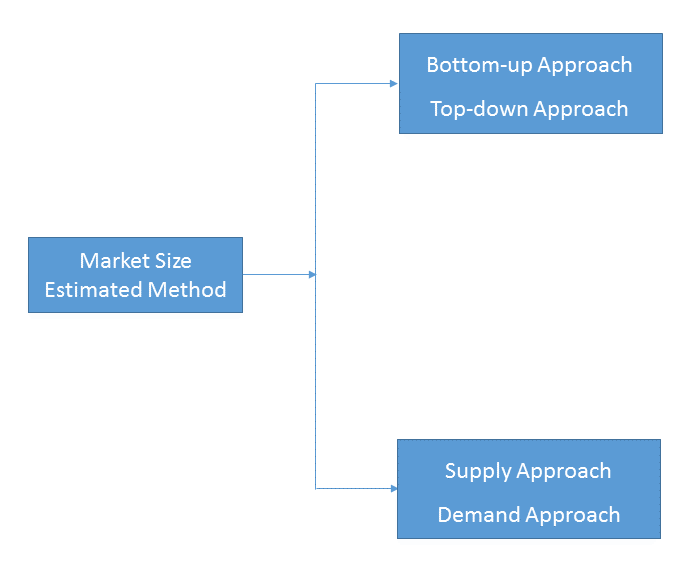
Bottom-up & top-down approach, supply & demand approach are the most important method which is used by HDIN Research to estimate the market size.
1)Top-down & Bottom-up Approach
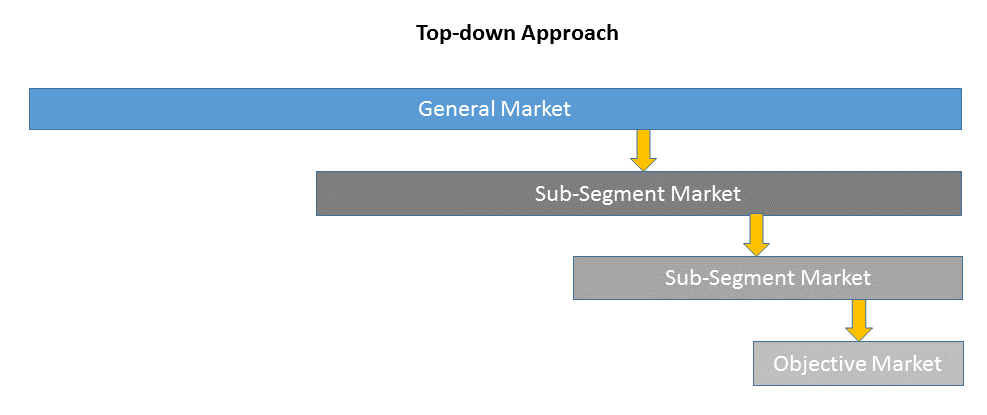
Top-down approach uses a general market size figure and determines the percentage that the objective market represents.
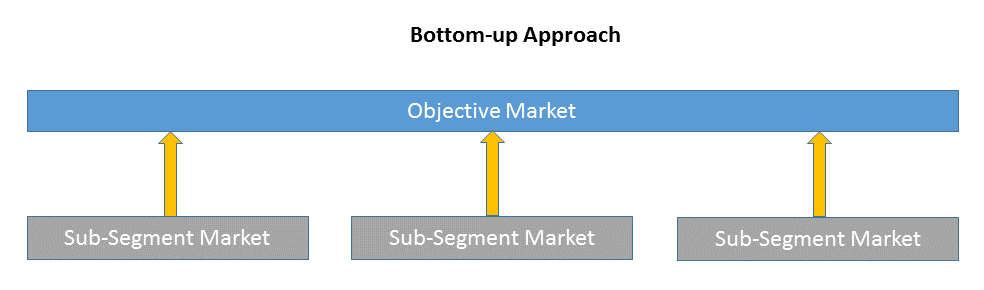
Bottom-up approach size the objective market by collecting the sub-segment information.
2)Supply & Demand Approach
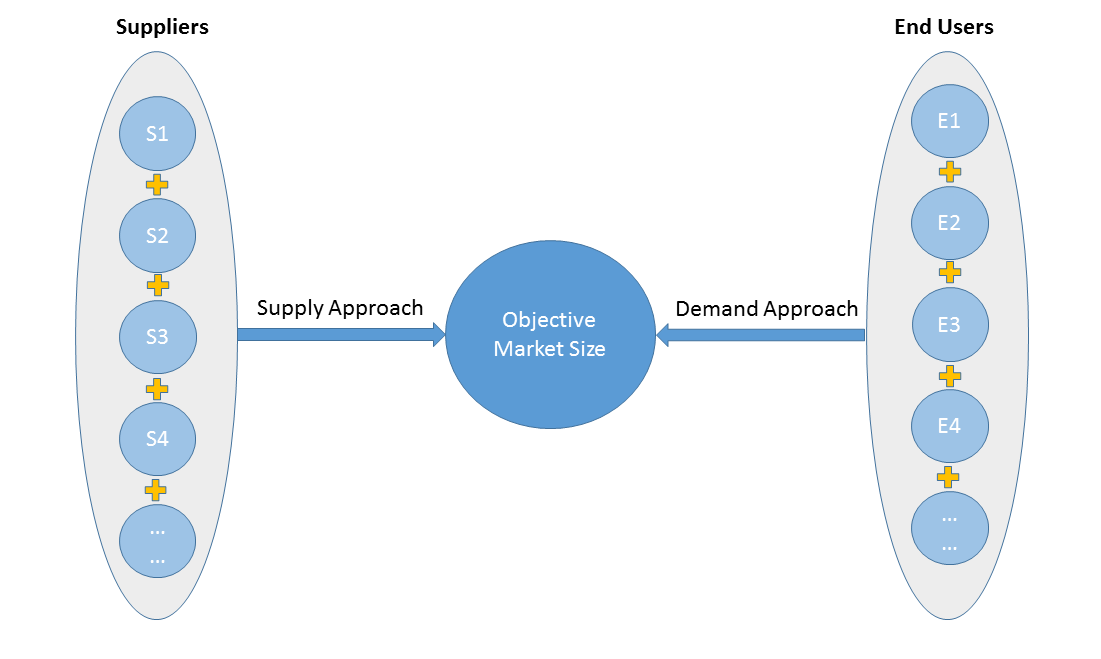
Supply approach is based on assessments of the size of each competitor supplying the objective market.
Demand approach combine end-user data within a market to estimate the objective market size. It is sometimes referred to as bottom-up approach.
- Forecasting Methodology
- Numerous factors impacting the market trend are considered for forecast model:
- New technology and application in the future;
- New project planned/under contraction;
- Global and regional underlying economic growth;
- Threatens of substitute products;
- Industry expert opinion;
- Policy and Society implication.
- Analysis Tools
1)PEST Analysis
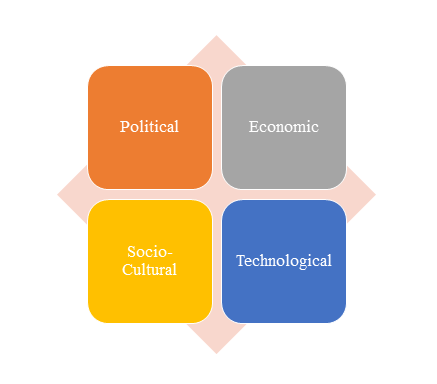
PEST Analysis is a simple and widely used tool that helps our client analyze the Political, Economic, Socio-Cultural, and Technological changes in their business environment.
- Benefits of a PEST analysis:
- It helps you to spot business opportunities, and it gives you advanced warning of significant threats.
- It reveals the direction of change within your business environment. This helps you shape what you’re doing, so that you work with change, rather than against it.
- It helps you avoid starting projects that are likely to fail, for reasons beyond your control.
- It can help you break free of unconscious assumptions when you enter a new country, region, or market; because it helps you develop an objective view of this new environment.
2)Porter’s Five Force Model Analysis
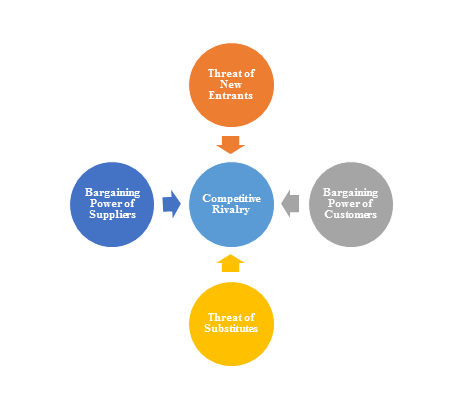
The Porter’s Five Force Model is a tool that can be used to analyze the opportunities and overall competitive advantage. The five forces that can assist in determining the competitive intensity and potential attractiveness within a specific area.
- Threat of New Entrants: Profitable industries that yield high returns will attract new firms.
- Threat of Substitutes: A substitute product uses a different technology to try to solve the same economic need.
- Bargaining Power of Customers: the ability of customers to put the firm under pressure, which also affects the customer's sensitivity to price changes.
- Bargaining Power of Suppliers: Suppliers of raw materials, components, labor, and services (such as expertise) to the firm can be a source of power over the firm when there are few substitutes.
- Competitive Rivalry: For most industries the intensity of competitive rivalry is the major determinant of the competitiveness of the industry.
3)Value Chain Analysis
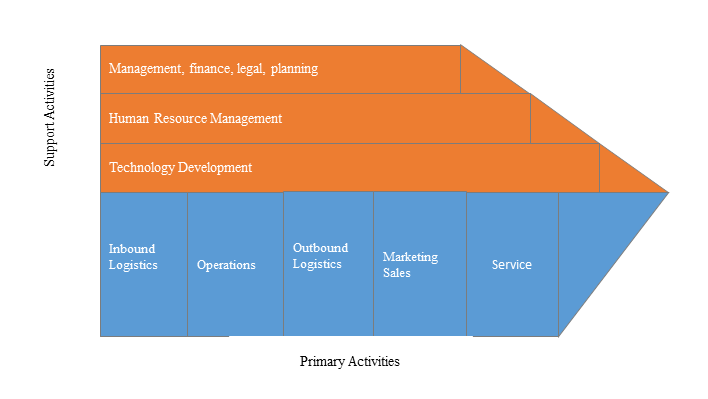
Value chain analysis is a tool to identify activities, within and around the firm and relating these activities to an assessment of competitive strength. Value chain can be analyzed by primary activities and supportive activities. Primary activities include: inbound logistics, operations, outbound logistics, marketing & sales, service. Support activities include: technology development, human resource management, management, finance, legal, planning.
4)SWOT Analysis
SWOT analysis is a tool used to evaluate a company's competitive position by identifying its strengths, weaknesses, opportunities and threats. The strengths and weakness is the inner factor; the opportunities and threats are the external factor. By analyzing the inner and external factors, the analysis can provide the detail information of the position of a player and the characteristics of the industry.
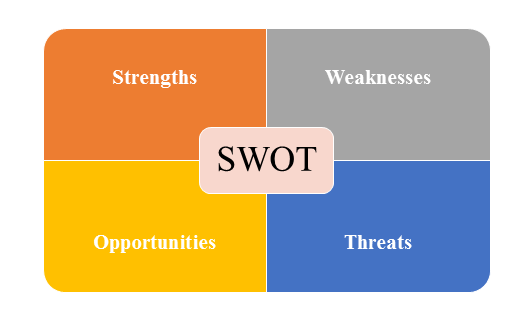
- Strengths describe what the player excels at and separates it from the competition
- Weaknesses stop the player from performing at its optimum level.
- Opportunities refer to favorable external factors that the player can use to give it a competitive advantage.
- Threats refer to factors that have the potential to harm the player.
- Data Sources
| Primary Sources | Secondary Sources |
|---|---|
| Face to face/Phone Interviews with market participants, such as: Manufactures; Distributors; End-users; Experts. Online Survey |
Government/International Organization Data: Annual Report/Presentation/Fact Book Internet Source Information Industry Association Data Free/Purchased Database Market Research Report Book/Journal/News |