Global Intravenous Fluid Market Analysis 2026-2031
- Single User License (1 Users) $ 3,500
- Team License (2~5 Users) $ 4,500
- Corporate License (>5 Users) $ 5,500
Across surgical, intensive care, trauma, and chronic disease protocols, intravenous therapy serves as the baseline clinical delivery mechanism for homeostasis maintenance, electrolyte correction, volume resuscitation, and systemic pharmacotherapy. In 2026, the global global intravenous (IV) fluid market size is projected to achieve between 57 billion USD and 61 billion USD, driven by demographic aging, expanding surgical volumes across developing economies, and higher hospital bed utilization rates globally. with a steady compound annual growth rate (CAGR) of 3.8% to 5.8% to 2031. Growth reflects a structural bifurcation between volume and value. In mature geographies, volume growth remains constrained in the low single digits due to strict cost containment and initiatives to reduce non-essential inpatient stays. However, value realization is expanding via the rapid clinical substitution of commodity glass or rigid plastics with advanced multi-layer non-PVC flexible bags, vertical self-standing polyolefin bags, premixed Ready-to-Use (RTU) drug-diluent combinations, and multi-chamber Total Parenteral Nutrition (TPN) platforms. Conversely, emerging markets across Asia-Pacific, Latin America, and the Middle East are generating robust high-single-digit volume expansion. This reflects expanding public health coverage, accelerated hospital construction, and scaled domestic procurement tenders. The competitive landscape is characterized by intensifying capital asset reallocation, geographic capacity realignments, and strategic cross-border joint ventures designed to capture manufacturing economies of scale while shielding high-margin proprietary parenteral portfolios from aggressive state-level pricing pressures.
Taxonomy and Clinical Classification Framework
Intravenous fluids are sterile, pyrogen-free, isotonic, hypotonic, or hypertonic liquid formulations engineered for direct instillation into the human venous vascular network via targeted access devices. Structurally, the market segments across three distinct classification vectors:
1. Classification by Physicochemical Properties
● Crystalloid IV Solutions: Aqueous formulations consisting of physiological salts and water-soluble carbohydrate molecules possessing low molecular weights, enabling unhindered movement across semipermeable biological membranes.
- Hypotonic Crystalloids: Solutions maintaining lower osmolar pressure than native plasma (e.g., 0.45% Sodium Chloride). Clinically indicated to drive cellular rehydration by orchestrating an osmotic fluid migration from the intravascular compartment into intracellular spaces during severe cellular dehydration.
- Isotonic Crystalloids: Solutions with an osmolality approximating normal blood plasma (e.g., 0.9% Sodium Chloride, Lactated Ringer's, Ringer's Solution). These formulations act as the foundational standard of care for perioperative extracellular volume support, normovolemic fluid maintenance, and the direct reconstitution of broad-spectrum systemic intravenous therapeutics.
- Hypertonic Crystalloids: Formulations exhibiting higher osmolar concentrations than human plasma (e.g., 3% Sodium Chloride, 10% or 50% Concentrated Dextrose, Mannitol). Indicated to generate rapid trans-membrane oncotic fluid shifts, mitigating refractory cerebral edema, expanding intravascular volume, and providing rapid nutritional or metabolic caloric support.
Colloid IV Solutions: Complex aqueous suspensions of high-molecular-weight macromolecules that are physically incapable of penetrating the capillary endothelium under normal physiological conditions, exerting an artificial oncotic pressure gradient that draws and retains fluid inside the vascular space.
- Human Plasma Fractions: Human Serum Albumin (formulated at 5% and 25% concentrations), fresh frozen plasma fractions, and specialized plasma protein suspensions, essential for oncotic stabilization, advanced hepatic decompensation, and targeted resuscitation during hypo-oncotic states.
● Synthetic Colloids: Hydroxyethyl Starch (HES 130/0.4 in Saline carrier vehicles) and modified fluid gelatin matrices, engineered for rapid, acute intravascular volume restoration during traumatic shock or severe surgical blood loss.
2. Classification by Primary Packaging and Container Formats
● Non-PVC Soft Bags: Fabricated from multi-layer co-extruded polyolefin films, primarily medical-grade polypropylene (PP) and polyethylene (PE), formulated completely free of plasticizing chemicals such as Di(2-ethylhexyl)phthalate (DEHP). These systems mitigate chemical leaching and toxicological exposure while ensuring low vapor transmission and minimal oxygen ingress. The natural atmospheric collapse of the flexible container during gravity infusion eliminates the requirement for external room-air venting, eliminating airborne microbial contamination pathways and positioning this format as the gold standard in contemporary hospital care.
● Vertical Polypropylene (PP) Bags: Stand-up, self-supporting soft polyolefin containers developed to merge the rigid stability of plastic bottles with the closed-system safety profiles of collapsible bags. This structural format streamlines high-density cleanroom storage, simplifies bedside hookup, and optimizes pharmacy shelf space and automated compounding workflows.
● PP Plastic Bottles: Semi-rigid blow-fill-seal (BFS) or injection-stretch blow-molded containers. They represent a high-throughput, mechanically durable, cost-optimized vehicle for standard crystalloids. However, many variants require vented clinical administration sets, creating potential secondary air contamination vulnerabilities if not paired with hydrophobic bacterial filtration vents.
● Glass Bottles and Ampoules: Heavy borosilicate glass containers characterized by absolute chemical neutrality and impervious gas barriers. This legacy format is restricted to highly reactive, solvent-sensitive, or photosensitive small-volume parenterals (SVPs) and targeted high-stability large-volume parenterals (LVPs). Elevated breakability, shipping weight inefficiencies, and particulate contamination secondary to ampoule neck snapping constrain widespread expansion.
3. Classification by Functional and Therapeutic Indications
● Parenteral Nutrition (PN): Intravenous administration of life-sustaining macronutrients and micronutrients for critically ill or chronic patients suffering from severe gastrointestinal tract failure. Formulations encompass discrete single-entity infusions, synthetic amino acid compounds, multi-source lipid emulsions (incorporating structured soybean, medium-chain triglycerides, olive, and fish oil omega-3 fatty acids), concentrated dextrose, and automated multi-chamber bags (MCBs). Three-chamber bags store crystalline amino acids, glucose, and lipid emulsions in isolated barrier compartments that are blended immediately prior to infusion, preserving emulsion stability and lowering aseptic handling infection risks.
● Resuscitation and Volume Expansion: High-velocity delivery of isotonic crystalloids or hyperoncotic colloids formulated to reverse microvascular hypoperfusion, correct systemic oxygen debt, and re-establish hemodynamic stability during hemorrhagic shock, septic shock, multi-trauma presentations, and extensive thermal injury.
● Routine Maintenance Fluids: Daily maintenance solutions engineered to sustain physiological fluid, sodium, and potassium balances, compensating for ongoing sensible and insensible liquid losses in fasting or non-critically ill bed-bound hospital populations.
● Replacement and Redistribution Fluids: Precision pharmacotherapeutic formulations deployed to counteract pathological fluid sequestration or severe electrolyte deficits resulting from enterocutaneous fistulas, hypersecretory diarrhea, persistent emesis, polyuria, or major tissue trauma.
- Electrolyte-Balancing Agents: High-concentration 3% and 5% Hypertonic Saline (for symptomatic acute hyponatremia), concentrated Potassium Chloride for controlled dilution, and sterile Magnesium Sulfate solutions.
- Acid-Base Normalization: 1.4% and 5% Sodium Bicarbonate formulations indicated for the systematic pharmacologic correction of severe metabolic acidosis and renal clearance optimization.
Drug Vehicles and Sterile Diluents: Carrier fluids engineered without therapeutic intent to function exclusively as sterile, pyrogen-free aqueous delivery media for the solubilization and intravenous administration of freeze-dried powders, antineoplastic agents, cardiovascular infusions, and broad-spectrum anti-infectives, as well as maintaining vascular patency via specialized line flush and lock protocols.
- 0.9% Normal Saline Solutions: Universal diluent for high-stability, basic, or non-reactive injectable molecules.
- 5% Dextrose in Water (D5W): Acidic-to-neutral carbohydrate matrix dedicated to therapeutics that aggregate or degrade in saline, including amiodarone and norepinephrine.
- Sterile Water for Injection (SWFI): Highly purified vehicle utilized solely for reconstitution of lyophilizates, contraindicated for direct infusion due to rapid hemolysis risks.
● Specialized Therapeutic Fluids: High-osmolarity, non-physiological fluid systems designed to achieve precise thermodynamic and osmotic pressure deltas in human tissues.
- Osmotic Diuretics: 20% Mannitol solutions, used to establish rapid transmural osmotic gradients that drain fluid from swollen brain tissue into the vascular lumen to mitigate refractory intracranial pressure, or reduce intraocular tension during acute glaucoma.
- Hypertonic Fructose and Glycerol-Saline Infusions: Specialized non-glucose dehydrating agents utilized to achieve controlled osmotic brain decompression and metabolic support.
Downstream Applications and Care Dynamics
● Inpatient Acute Care: Operates as the dominant volume and revenue application anchor. Intensive Care Units (ICUs), Emergency Resuscitation Suites, and Surgical Theaters generate large-volume requirements for crystalloid resuscitation, perioperative intravascular expansion, hemodynamic stabilization, and continuous infusion of pharmacotherapeutics. Oncology and step-down medical wards sustain high-volume demand for RTU antineoplastic premixes and continuous maintenance hydration.
● Renal Care and Dialysis Settings: Dedicated centers require tailored fluid matrices, including standardized Hemodialysis balance solutions, automated Peritoneal Dialysis (PD) formulations, and specialized Continuous Renal Replacement Therapy (CRRT) replacement and substitution fluids. As End-Stage Renal Disease (ESRD) incidence expands, patient management shifts toward high-volume home automated PD solutions and continuous replacement therapy in critical care settings.
● Emergency Medical Services (EMS) and Pre-Hospital Logistics: The operational setting demands shatter-proof, lightweight, thermally resilient, and non-PVC-packaged isotonic crystalloids, along with pre-filled syringe formats. Rapid volume administration during acute trauma, pre-hospital transport, and field stabilization requires durable vertical bags and flexible packaging that withstand high mechanical stress.
● Home Healthcare and Chronic Disease Platforms: Driven by structural shifts to decrease acute bed utilization, the home infusion corridor represents the highest-margin segment. Home Parenteral Nutrition (HPN), chronic Intravenous Immunoglobulin (IVIg) therapies, and ambulatory chemotherapy rely heavily on pre-assembled multi-chamber nutrition bags and lightweight, elastomeric or battery-operated wearable ambulatory pumps requiring closed-system non-PVC soft bag configurations.
Industrial Value Chain Architecture
● Upstream Raw Material and Equipment Tier:
- Active Chemical Feedstocks: Production of pharmaceutical-grade Dextrose Monohydrate, high-purity crystalline Sodium Chloride, specialized essential amino acids, and concentrated marine-derived polyunsaturated fatty acid lipids. Supply security relies heavily on certified synthetic and agricultural-source fermentation facilities.
- Advanced Polymers and Primary Components: High-density medical grade Polypropylene (PP), specialized Polyethylene (PE) resins, synthetic Thermoplastic Elastomers (TPE), multi-layer co-extruded non-PVC films, polyisoprene elastomeric stoppers, multi-port connectors, and sterile break-off valves. This segment requires stringent controls over polymer extractables, leachables, and migration characteristics.
- Cleanroom Capital Infrastructure: High-speed automated Blow-Fill-Seal (BFS) systems, Form-Fill-Seal (FFS) multi-layer lines, superheated water spray terminal sterilization autoclaves, continuous purified water loops, and sub-micron particulate inspection machinery.
● Midstream Manufacturing and Aseptic Processing:
- Water for Injection (WFI) Generation: Large-scale, continuous generation of sterile, endotoxin-free Water for Injection using multiple-effect distillation or advanced membrane-based reverse osmosis coupled with continuous electro-deionization (CEDI) and ultrafiltration.
- Precision Compounding: Automated digital dosing of active raw materials into multi-ton temperature-controlled formulation vessels, continuous pH monitoring, inert gas blanketing (nitrogen purging to prevent lipid or active ingredient oxidation), and multi-stage sterile microfiltration.
- Primary Packaging Forming and Filling: In-line thermoforming and fabrication of non-PVC bags or continuous blow-molding of plastic bottles, followed immediately by high-speed precision liquid dispensing and thermal welding of multi-port access systems in Class A/B cleanroom zones.
- Terminal Sterilization and Batch Release: Sterilization in large autoclaves running counter-pressure steam or superheated water cascades to guarantee a Sterility Assurance Level (SAL) of 10^-6 without warping flexible packaging. Post-sterilization protocols require 100% automated visual inspection for container closure integrity, sub-visible particulate matter, and package-surface moisture removal, followed by automated overwrapping with high-barrier secondary foil wraps.
● Downstream Logistics and Point-of-Care Deployment:
- Cold Chain and Controlled Logistics: Temperature-managed transport networks and regional warehousing hubs designed to handle bulk weight and volume, alongside strict temperature limits to prevent freeze-thaw degradation of lipid emulsions.
- Institutional Pharmacy Compounding and Bedside Administration: Modern hospital pharmacies integrate closed-system transfer technologies, barcoded medication matching, automated medication dispensing cabinets, and dedicated smart infusion pumps loaded with dose error reduction software (DERS) to safely administer large- and small-volume parenterals to patients.
Regional Market Dynamics and Country Profiles
● North America
United States: The United States represents the largest market by gross value, underpinned by high per capita healthcare expenditures, widespread adoption of high-value premixed Ready-to-Use (RTU) bags, and an established market for multi-chamber Total Parenteral Nutrition. The domestic market has experienced elevated supply chain volatility, driven by regulatory interventions regarding container sterility and vulnerability to regional natural disasters that previously impacted primary domestic manufacturing plants. This instability has accelerated strategic capital investments toward decentralized multi-site redundancy and automation. Otsuka Pharmaceutical Factory’s acquisition of a 60% controlling interest in ICU Medical's domestic IV solutions division to establish Otsuka ICU Medical LLC marks a major structural shift in North American asset ownership. Concurrently, Baxter International continues to defend its market footprint while modernizing infrastructure following divestitures and managing distribution remediation programs for its large-volume infusion pump lines.
Canada: The market operates under a provincial procurement framework driven by group purchasing organizations (GPOs) and Health Canada regulatory requirements. Growth remains tied to routine acute inpatient utilization and expanding specialized home parenteral infusion programs. The competitive landscape is split between a small group of multinational suppliers delivering high-volume crystalloids and high-barrier non-PVC parenteral nutrition systems.
● Asia-Pacific
China: Represents the world’s largest national market by gross physical volume. While consumption experienced short-term adjustments due to shifting seasonal viral epidemiology and systemic healthcare anti-corruption campaigns that reduced non-essential clinical utilization, structural upgrading continues. National Volume-Based Procurement (VBP) rounds across provincial alliances (such as the Sichuan and Guangdong multi-province procurement consortia) have compressed baseline unit pricing for commodity 0.9% Saline and Dextrose bottles.
In response, domestic manufacturers are deploying large-scale automated Form-Fill-Seal lines and accelerating their transition away from rigid polypropylene bottles toward double-valve non-PVC flexible soft bags, upright vertical PP soft bags, and 3-chamber TPN bags. Domestic champions—including Sichuan Kelun, SSY Group, and China Resources Double-Crane—maintain high domestic capacity, integrating raw materials through finished packaging to protect gross operating margins.
Japan: The domestic Japanese market is shaped by advanced population aging, shifting clinical care models toward long-term geriatric maintenance, post-acute nutritional care, and home care delivery. Regulatory standards enforce closed-system safety profiles, virtually eliminating open-vented rigid containers in favor of flexible polyolefin containers and multi-chamber systems. The landscape is dominated by Otsuka Pharmaceutical Factory, alongside established medical device and solution developers including Terumo Corporation, JMS Co., Ltd., and Nipro Corporation.
South Korea: Driven by high hospital bed densities and modern tertiary medical facilities, South Korea generates steady demand for standard resuscitation crystalloids, specialized post-operative replacement fluids, and domestic multi-chamber parenteral nutrition formulations. JW LifeScience (operating under JW Holdings), HK inno.N Corporation, and Daehan Pharm lead domestic manufacturing, with JW LifeScience utilizing its non-PVC multi-layer extrusion capabilities to export multi-chamber TPN configurations into advanced international healthcare systems.
Taiwan, China: A stable, mature clinical environment characterized by high clinical safety standards and rapid adoption of pre-filled and Ready-to-Use parenteral delivery systems. Domestic leaders such as Nang Kuang Pharmaceutical and Chi Sheng Pharma supply medical centers and export specialized injectables across the wider Asia-Pacific and North American regions.
India and ASEAN: Rapid expansion of private tertiary healthcare facilities, expanding mandatory health insurance programs, and rising medical tourism are driving mid-to-high single-digit volume growth. The market features both large-scale, cost-effective Blow-Fill-Seal domestic crystalloid manufacturing for mass domestic distribution (led by operators like Aculife Healthcare and Eurolife Healthcare) and increasing imports of advanced high-barrier nutrition soft bags from East Asian and European facilities.
● Europe
Western Europe (Germany, France, Spain, United Kingdom): Mature, highly regulated healthcare ecosystems characterized by single-payer or centralized national health authorities that impose strict downward pricing pressure on baseline fluid acquisitions. Sustainability initiatives are accelerating the phase-out of plasticizers and halogenated polymers, driving full market penetration of eco-friendly, non-PVC, multi-chamber soft packaging. The market is controlled by a consolidated core consisting of Fresenius Kabi, B. Braun, and Baxter International, with growth heavily weighted toward complex 3-chamber bags containing balanced fish-oil/olive-oil lipid emulsions and RTU anti-infective formulations.
Central and Eastern Europe: Characterized by the modernization of public hospital infrastructure and progressive harmonization with European Union medical device and pharmaceutical manufacturing directives. Growth outpaces Western European averages, with facilities shifting from basic rigid glass and semi-rigid containers toward modern closed-system flexible bags.
● Latin America
Brazil, Mexico, and Argentina: The Latin American corridor exhibits growing demand for basic resuscitation solutions and routine perioperative maintenance fluids, driven by public health modernization programs. However, market operations face challenges from regional currency fluctuations, inflationary adjustments, and complex tender regulations. Multinational players like Fresenius Kabi and B. Braun operate alongside established domestic pharmaceutical manufacturers. Flexible non-PVC formats are capturing market share in private hospital networks, while public state-run hospitals continue to consume high volumes of standard polyethylene and polypropylene rigid bottles.
● Middle East and Africa
Saudi Arabia, United Arab Emirates, and South Africa: The Gulf Cooperation Council (GCC) area exhibits high public capital expenditure directed toward state-of-the-art specialized hospital cities, driving double-digit demand for high-end parenteral nutrition, dialysis balance solutions, and premixed critical care injectables. Growth in Africa remains concentrated in standard resuscitation solutions and basic electrolyte correction fluids to treat infectious and trauma-related dehydration, supported by international healthcare procurement tenders and modular local manufacturing investments.
Policy, Regulatory, and Compliance Environment
Centralized Pricing and Procurement Pressures: The global deployment of public healthcare tendering frameworks—epitomized by China’s National and Provincial Volume-Based Procurement (VBP) and European state tenders—has commoditized single-chamber basic crystalloids. Unit pricing for standard Normal Saline and Dextrose has been pushed down toward thin margins, penalizing sub-scale operators. Manufacturers are forced to either expand manufacturing volume to reduce marginal production costs or pivot internal research and development capital toward VBP-exempt high-barrier products, including 3-chamber nutritional bags, multi-component electrolyte replacements, and complex ready-to-use injectables.
Quality Assurance and Sterility Mandates: Regulatory authorities, led by the US Food and Drug Administration (FDA) and the European Medicines Agency (EMA), have heightened scrutiny over terminal sterilization cycles, water-system bioburden validation, and sub-visible particulate controls. Regulatory warnings and product holds concerning automated large-volume infusion pumps have directly constrained IV fluid container distribution, emphasizing that container-closure architectures must be validated against smart-pump physical loading channels and pressure sensors.
EU Medical Device Regulation (MDR) Convergence: The ongoing enforcement of the European Medical Device Regulation (MDR 2017/745) has increased administrative and technical burdens for integrated delivery systems, including pre-filled flush syringes, specialized closed-system transfer devices (CSTDs), and fluid transfer line sets. Manufacturers must navigate higher clinical evaluation and third-party notified-body audit requirements, accelerating industry consolidation as smaller players struggle to absorb sustained regulatory compliance overhead.
Decarbonization, Packaging Standards, and DEHP Elimination: Global regulatory guidelines and hospital purchasing consortia are setting binding targets to eliminate Di(2-ethylhexyl)phthalate (DEHP) and Polyvinyl Chloride (PVC) formulations from primary fluid contact surfaces due to endocrine-disruption risks and environmental disposal hazards. This regulatory environment is driving capital conversions toward multi-layer co-extruded polyolefin films (polypropylene/polyethylene blends) that maintain low extractable and leachable profiles while reducing raw material physical mass.
Opportunities and Structural Challenges
● Opportunities
- Accelerated Penetration of Multi-Chamber TPN Systems: The global migration from manual hospital compounding of parenteral nutrition to commercially prepared, standardized 3-Chamber Bags (3CB) represents an attractive value-creation corridor. Standardized 3CB formats dramatically lower hospital pharmacy labor costs, eliminate sterile reconstitution errors, and reduce catheter-related bloodstream infections (CRBSI), generating substantial operational ROI for healthcare systems.
- Expansion of Ready-to-Use (RTU) Premixed Therapeutics: Shifting unstable lyophilized or concentrated active pharmaceutical drugs into stable, factory-premixed, unit-dose flexible IV containers eliminates manual bedside reconstitution by nursing staff. RTU formats minimize nosocomial dosing errors, guarantee microbiological sterility, and accelerate rapid delivery in emergency and critical care departments.
- Specialized Dialysis, CRRT, and Chronic Nephrology Drivers: Accelerating global prevalence of diabetes, hypertension, and subsequent chronic kidney disease (CKD) is expanding volume demand for peritoneal dialysis (PD) fluids, high-volume hemodialysis solutions, and regional Continuous Renal Replacement Therapy (CRRT) fluids. Growth in Home PD adoption creates a stable, recurring distribution model for specialized large-volume parenteral bags.
- Decentralization to Home Infusion and Ambulatory Platforms: As hospital networks seek to reduce expensive inpatient bed occupancies, long-term antibiotic administration, post-operative hydration, oncologic infusions, and clinical nutrition are moving into ambulatory infusion centers and home healthcare settings. This transition drives structural demand for durable, non-collapsible, or ultra-flexible specialized soft bags engineered for integration with ambulatory, wearable, or elastomeric infusion systems.
● Challenges
- Severe Margin Compression in Commodity Crystalloids: Standard crystalloids (0.9% NaCl and 5% Dextrose) operate as commoditized high-volume products characterized by thin margins. Elevated transportation, energy, and localized sterilization costs strain operating income if manufacturing facilities are not fully integrated and located near consumption centers.
- High Capital Barriers to Scaled Aseptic Manufacturing: Constructing compliant, high-speed automated Form-Fill-Seal or Blow-Fill-Seal facilities paired with pure Water for Injection (WFI) plants and superheated steam terminal autoclaves requires substantial upfront capital expenditure. Unplanned contamination events or failures in cleanroom sterility controls can cause batch rejections and costly plant shutdowns.
- Feedstock and Supply Chain Vulnerabilities: Fluid manufacturers are directly exposed to input price volatility in medical-grade polypropylene, high-barrier functional films, and essential active pharmaceutical ingredients (APIs). Disruption in specialized base resins, rubber closures, or primary chemical feedstocks rapidly cascades into manufacturing interruptions, exposing healthcare providers to clinical shortages.
Company Covered in the report
● Global Multinationals Players: Fresenius Kabi (Fresenius SE & Co. KGaA), Baxter International Inc., ICU Medical, Inc., B. Braun.
● East Asian Regional Champions: Sichuan Kelun Pharmaceutical Co., Ltd., SSY Group Limited, JW Holdings Corporation (JW LifeScience / JW Pharmaceutical), Huaren Pharmaceutical Co., Ltd., HK inno.N Corporation, Daehan Pharm. Co., Ltd., Harbin Sanlian Pharmaceutical Co., Ltd., Cisen Pharmaceutical Co., Ltd., Jimin Health Management Co., Ltd., Nang Kuang Pharmaceutical Co., Ltd., Chi Sheng Pharma & Biotech, Shandong Ande Medical Products Co., Ltd., Qilu Pharmaceutical Co., Ltd.
● South Asian Players: Aculife Healthcare Private Limited (Nirma Group), Eurolife Healthcare Private Limited.
1.1 Executive Summary and Scope of Global Intravenous (IV) Fluid Industry 1
1.2 Research Methodology, Secondary Synthesis, and Primary Field Validations 2
1.3 Bottom-Up Market Sizing and Forecasting Algorithmic Modeling 3
1.4 Baseline Macroeconomic Assumptions and Currency Standardization 4
1.5 Quality Assurance and Analytical Triangulation Framework 5
1.6 Regulatory and Clinical Acronyms and Technical Abbreviations 6
Chapter 2 Global Intravenous (IV) Fluid Industry Architecture and Macro Environment 7
2.1 Global IV Fluid Market Trajectory and Growth Horizon (2021-2031) 7
2.2 Global Pharmacopeial Compliance and Sterilization Regulatory Directives 8
2.3 Parenteral Infusion Clinical Drivers and Nosocomial Disease Prevalence Shifts 9
2.4 Production Capacity Pressures, Essential Medicine Shortages, and Strategic Reserves 10
2.5 Medical Plastic Sustainability Mandates and DEHP-Free Material Transitions 11
2.6 Hospital Procurement Tendering Pressures and Price Ceiling Regulations 12
2.7 Geopolitical Supply Chain Relocalization and Aseptic Fill-Finish Nearshoring 13
Chapter 3 Global IV Fluid Upstream Sourcing, Manufacturing, and Trade Infrastructure 14
3.1 Structural Architecture of the Global IV Fluid Value Chain 14
3.2 Upstream Sourcing: Water for Injection (WFI), APIs, and Medical-Grade Resins 15
3.3 Manufacturing Technology Paradigms: Blow-Fill-Seal (BFS) vs. Form-Fill-Seal (FFS) 16
3.4 Operational Cost Structure Analysis Across Large-Volume Parenteral Facilities 17
3.5 Global Trade Flow Dynamics: Primary Export Hubs and Strategic Import Dependencies 18
3.6 Tariff Barriers, Import Clearances, and Cross-Border Regulatory Harmonization 19
3.7 End-to-End Cold Chain and Temperature-Controlled Logistics Architecture 20
Chapter 4 Global Intravenous (IV) Fluid Market by Physicochemical Properties 21
4.1 Crystalloid IV Fluid Market Dynamics, Sizing, and Volume Projections 21
4.2 Colloid IV Fluid Market Dynamics, Sizing, and Volume Projections 25
4.3 Comparative Physicochemical Adoption: Volume Expansion Efficiency vs. Osmolality Control 27
Chapter 5 Global Intravenous (IV) Fluid Market by Primary Packaging and Container Formats 28
5.1 Non-PVC Soft Bag Systems and Multi-Chamber Delivery Capabilities 28
5.2 Vertical Polypropylene (PP) Bag Formats and Self-Collapsible Delivery Profiles 31
5.3 Polypropylene (PP) Plastic Bottle Systems and Semi-Rigid High-Speed Blow-Fill Operations 32
5.4 Glass Bottles and Glass Ampoules: Chemical Inertness for Sensitive Admixtures 33
5.5 Container-Closure Integrity (CCI) Testing and Particulate Matter Contamination Protocols 34
5.6 Packaging Cost Efficiency vs. Eco-Footprint Lifecycle Assessment 35
Chapter 6 Global Intravenous (IV) Fluid Market by Functional and Therapeutic Indications 36
6.1 Parenteral Nutrition Formulations (Total Parenteral Nutrition, Amino Acids, Lipid Emulsions) 36
6.2 Resuscitation and Intravascular Volume Expansion in Hypovolemic and Hemorrhagic Shock 38
6.3 Routine Maintenance Fluid Therapy for Fluid-Electrolyte Equilibrium 40
6.4 Fluid Replacement and Redistribution in Major Surgical Interventions 41
6.5 Drug Vehicles, Reconstitution Diluents, and Carrier Solutions 42
6.6 Special Therapeutic Fluid Systems (Osmotic Diuretics, Acid-Base Correctors) 43
6.7 Clinical Utilization Matrix Across Acute vs. Chronic Treatment Pathways 44
Chapter 7 Global Intravenous (IV) Fluid Market by Downstream Application and Care Settings 45
7.1 Inpatient Hospital Ecosystems (Surgical Suites, Intensive Care Units, General Wards) 45
7.2 Renal Care and Specialized Dialysis Centers 47
7.3 Emergency Medical Services (EMS), Tactical Care, and Pre-Hospital First Responders 48
7.4 Home Healthcare Providers and Chronic Disease Outpatient Infusion Management 50
7.5 Ambulatory Surgical Centers and Specialized Clinics 51
Chapter 8 Global Intravenous (IV) Fluid Regional Production Hubs and Consumption Markets 52
8.1 North America Market 52
8.1.1 United States 53
8.1.2 Canada 54
8.2 Europe Market 54
8.2.1 Germany 55
8.2.2 France 55
8.2.3 United Kingdom 56
8.2.4 Italy 56
8.2.5 Spain & Rest of Europe 57
8.3 Asia-Pacific Market 57
8.3.1 China 58
8.3.2 Japan 58
8.3.3 South Korea 59
8.3.4 India 59
8.3.5 Taiwan (China) 60
8.3.6 Australia 60
8.4 Latin America Market 61
8.4.1 Brazil 61
8.4.2 Mexico 61
8.5 Middle East and Africa Market 61
8.5.1 Saudi Arabia 61
8.5.2 United Arab Emirates 61
8.5.3 South Africa 61
Chapter 9 Global Competitive Landscape, Capacity Benchmarking, and Strategic Positioning 62
9.1 Global Market Share Concentration and Tier Structuring 62
9.2 Manufacturing Capacity Footprint and Annual Container Output Benchmarking 63
9.3 Strategic Consolidations, Hospital Group Purchasing (GPO) Contracts, and Tenders 64
9.4 Automated BFS/FFS Line Investments and Cleanroom Modernization Projects 65
9.5 Strategic Positioning Matrix: Product Breadth vs. Packaging Innovation 66
Chapter 10 Company Deep-Dive: North American and European Multinational Pioneers 68
10.1 Baxter 68
10.1.1 Corporate Overview and Global Infusion Strategy 68
10.1.2 IV Fluid Product Portfolio and Therapeutic Indications 69
10.1.3 Manufacturing Footprint, BFS/FFS Capacity, and Supply Chain Networks 69
10.1.4 SWOT Analysis 70
10.1.5 Product-Specific Financial Performance: Revenue, Cost, Gross Margin, and Market Share 70
10.2 Fresenius Kabi / Fresenius SE & Co. KGaA 72
10.2.1 Corporate Overview and Clinical Nutrition Integration 72
10.2.2 IV Fluid Product Portfolio and Freeflex Bag Systems 73
10.2.3 Manufacturing Facilities, Regional Hubs, and Regulatory Clearances 73
10.2.4 SWOT Analysis 74
10.2.5 Product-Specific Financial Performance: Revenue, Cost, Gross Margin, and Market Share 74
10.3 ICU Medical 76
10.3.1 Corporate Overview and Infusion Consumables Architecture 76
10.3.2 IV Solutions Portfolio and Closed Infusion Systems 77
10.3.3 Manufacturing Capacity, Production Economics, and Quality Systems 77
10.3.4 SWOT Analysis 78
10.3.5 Product-Specific Financial Performance: Revenue, Cost, Gross Margin, and Market Share 78
Chapter 11 Company Deep-Dive: Asia-Pacific International Leaders 80
11.1 Otsuka Pharmaceutical 80
11.1.1 Corporate Overview and Clinical Nutrition Capabilities 80
11.1.2 Clinical IV Fluid Lines and Packaging Technology Innovations 81
11.1.3 Production Capacity and Pan-Asian Distribution Architecture 81
11.1.4 SWOT Analysis 82
11.1.5 Product-Specific Financial Performance: Revenue, Cost, Gross Margin, and Market Share 82
11.2 JW Holdings Corporation 84
11.2.1 Corporate Overview and Total Infusion Solution Positioning 84
11.2.2 Non-PVC Multi-Chamber IV Bags and Sourcing Integrations 85
11.2.3 Dangjin Automated Manufacturing Complex and Global Export Footprint 85
11.2.4 SWOT Analysis 86
11.2.5 Product-Specific Financial Performance: Revenue, Cost, Gross Margin, and Market Share 86
11.3 HK inno.N 88
11.3.1 Corporate Overview and Hospital Parenteral Expansion Strategy 88
11.3.2 IV Fluid Product Portfolio and Electrolyte Formulation Platforms 89
11.3.3 Smart Production Line Deployments and Scale Economics 89
11.3.4 SWOT Analysis 90
11.3.5 Product-Specific Financial Performance: Revenue, Cost, Gross Margin, and Market Share 90
11.4 Dai Han Pharm. Co. Ltd. 92
11.4.1 Corporate Overview and Domestic Hospital Supply Leadership 92
11.4.2 Large-Volume Parenterals and Specialized Reconstitution Fluids 93
11.4.3 Automated BFS/FFS Infrastructure and Quality Assurance Protocols 93
11.4.4 SWOT Analysis 94
11.4.5 Product-Specific Financial Performance: Revenue, Cost, Gross Margin, and Market Share 94
Chapter 12 Company Deep-Dive: Greater China Integrated Producers - Volume Leaders 96
12.1 Sichuan Kelun Pharmaceutical 96
12.1.1 Corporate Overview and Mega-Scale Parenteral Dominance 96
12.1.2 Upright Soft Bag and Multi-Chamber Product Innovation Pipeline 97
12.1.3 National Production Network, Bulk Raw Material Integration, and Capacity 97
12.1.4 SWOT Analysis 98
12.1.5 Product-Specific Financial Performance: Revenue, Cost, Gross Margin, and Market Share 98
12.2 Huaren Pharmaceutical 100
12.2.1 Corporate Overview and Non-PVC Soft Bag Specialization 100
12.2.2 Peritoneal Dialysis Solutions and Clinical Fluid Lines 101
12.2.3 Cleanroom Manufacturing Operations and Regional Logistics Networks 101
12.2.4 SWOT Analysis 102
12.2.5 Product-Specific Financial Performance: Revenue, Cost, Gross Margin, and Market Share 102
12.3 Harbin Sanlian Pharmaceutical 104
12.3.1 Corporate Overview and Regional Hospital Supply Foundation 104
12.3.2 IV Fluid Portfolio and Novel Packaging Formats 105
12.3.3 Production Facilities, Lyophilized Synergies, and Quality Benchmarks 105
12.3.4 SWOT Analysis 106
12.3.5 Product-Specific Financial Performance: Revenue, Cost, Gross Margin, and Market Share 106
12.4 Cisen Pharmaceutical 108
12.4.1 Corporate Overview and Diversified Parenteral Formulations 108
12.4.2 Large Volume Parenterals and Specialty Electrolyte Infusions 109
12.4.3 High-Capacity Automated Filling Facilities and Distribution Reach 109
12.4.4 SWOT Analysis 110
12.4.5 Product-Specific Financial Performance: Revenue, Cost, Gross Margin, and Market Share 110
Chapter 13 Company Deep-Dive: Greater China Integrated Producers - Specialized Leaders 112
13.1 Duorui Pharmaceutical 112
13.1.1 Corporate Overview and Critical Care Infusion Focus 112
13.1.2 Sodium Acetate Ringer's and Therapeutic Rehydration Solutions 113
13.1.3 Manufacturing Operations and National Tender Distribution Strategy 113
13.1.4 SWOT Analysis 114
13.1.5 Product-Specific Financial Performance: Revenue, Cost, Gross Margin, and Market Share 114
13.2 Jimin Health Management 116
13.2.1 Corporate Overview and Medical Plastic Packaging Integration 116
13.2.2 Non-PVC IV Bag Production and Contract Infusion Manufacturing 117
13.2.3 Equipment Innovation, Mold Fabrication, and Filling Capacity 117
13.2.4 SWOT Analysis 118
13.2.5 Product-Specific Financial Performance: Revenue, Cost, Gross Margin, and Market Share 118
13.3 SSY Group Limited 120
13.3.1 Corporate Overview and Hong Kong-Listed Scale Advantages 120
13.3.2 Advanced Upright Soft Bags, BFS Ampoules, and Fluid Formulations 121
13.3.3 Manufacturing Megasite Infrastructure and International Export Footprint 121
13.3.4 SWOT Analysis 122
13.3.5 Product-Specific Financial Performance: Revenue, Cost, Gross Margin, and Market Share 122
13.4 CR Double-Crane 124
13.4.1 Corporate Overview and Central SOE Healthcare Ecosystem Integration 124
13.4.2 BFS Polypropylene Solutions and Specialty Parenteral Portfolio 125
13.4.3 Multi-Regional Production Hubs and National Hospital Supply Contracts 125
13.4.4 SWOT Analysis 126
13.4.5 Product-Specific Financial Performance: Revenue, Cost, Gross Margin, and Market Share 126
Chapter 14 Company Deep-Dive: Regional Specialists, Taiwan Enterprises, and Emerging Market Producers 128
14.1 Nang Kuang Pharmaceutical 128
14.1.1 Corporate Overview and Specialty Parenteral Manufacturing in Taiwan (China) 128
14.1.2 Soft Bag IV Infusions and Aseptic Fill-Finish Operations 129
14.1.3 Export Strategies to Japan and Southeast Asian Healthcare Markets 129
14.1.4 SWOT Analysis 130
14.1.5 Product-Specific Financial Performance: Revenue, Cost, Gross Margin, and Market Share 130
14.2 Chi Sheng Pharma 132
14.2.1 Corporate Overview and Long-Term Institutional Supply in Taiwan (China) 132
14.2.2 Large-Volume Parenterals, Dialysis Fluids, and Packaging Lines 133
14.2.3 Quality Standards, PIC/S GMP Compliance, and Facility Scale 133
14.2.4 SWOT Analysis 134
14.2.5 Product-Specific Financial Performance: Revenue, Cost, Gross Margin, and Market Share 134
14.3 Qilu Pharma 136
14.3.1 Corporate Overview and Comprehensive Biopharmaceutical Capabilities 136
14.3.2 Large-Volume and Small-Volume Parenteral Infusion Portfolios 137
14.3.3 Mega-Scale Aseptic Manufacturing Facilities and International Certifications 137
14.3.4 SWOT Analysis 138
14.3.5 Product-Specific Financial Performance: Revenue, Cost, Gross Margin, and Market Share 138
14.4 Aculife Healthcare Private Limited 140
14.4.1 Corporate Overview and Global Export-Oriented Infusion Manufacturing 140
14.4.2 Form-Fill-Seal (FFS) and Blow-Fill-Seal (BFS) IV Fluid Portfolio 141
14.4.3 Gujarat Production Megasites, US FDA/WHO GMP Capabilities, and Scale 141
14.4.4 SWOT Analysis 142
14.4.5 Product-Specific Financial Performance: Revenue, Cost, Gross Margin, and Market Share 142
14.5 Eurolife Healthcare 144
14.5.1 Corporate Overview and Form-Fill-Seal Capacity Expansion in India 144
14.5.2 Intravenous Solutions Portfolio Across Crystalloids and Specialty Fluids 145
14.5.3 Pan-India Production Footprint and Emerging Market Export Outlets 145
14.5.4 SWOT Analysis 146
14.5.5 Product-Specific Financial Performance: Revenue, Cost, Gross Margin, and Market Share 146
Table 2 Regulatory Standards and Pharmacopeial Monographs for Large-Volume Parenterals by Major Jurisdiction 8
Table 3 Global Intravenous (IV) Fluid Upstream Raw Material Cost Index and Price Trends (2021-2026) 15
Table 4 Comparative Operational Metrics: Blow-Fill-Seal (BFS) vs. Form-Fill-Seal (FFS) vs. Glass Line Operations 16
Table 5 Manufacturing Cost Structure Breakdown for Standard Intravenous (IV) Fluid Containers (2021-2026) 17
Table 6 Global Trade Matrix: Cross-Border Intravenous (IV) Fluid Shipments by Major Exporter and Importer (2025) 18
Table 7 Global Intravenous (IV) Fluid Market by Physicochemical Properties (USD Million), 2021-2031 21
Table 8 Global Crystalloid IV Fluid Market by Sub-Type (USD Million), 2021-2031 22
Table 9 Global Colloid IV Fluid Market by Sub-Type (USD Million), 2021-2031 25
Table 10 Global Intravenous (IV) Fluid Market by Primary Packaging and Container Format (USD Million), 2021-2031 28
Table 11 Global Non-PVC Soft Bag Market Sizing by Single-Chamber vs. Multi-Chamber (USD Million), 2021-2031 29
Table 12 Global Intravenous (IV) Fluid Market by Functional/Therapeutic Indication (USD Million), 2021-2031 36
Table 13 Global Intravenous Parenteral Nutrition Market by Sub-Category (USD Million), 2021-2031 37
Table 14 Global Resuscitation and Volume Expansion Market by Fluid Formulation (USD Million), 2021-2031 39
Table 15 Global Intravenous (IV) Fluid Market by Downstream Application (USD Million), 2021-2031 45
Table 16 Global Inpatient Hospital Infusion Volume and Market Value by Clinical Department (2021-2031) 46
Table 17 Global Intravenous (IV) Fluid Market by Geographic Region (USD Million), 2021-2031 52
Table 18 North America Intravenous (IV) Fluid Market by Country (USD Million), 2021-2031 53
Table 19 Europe Intravenous (IV) Fluid Market by Country (USD Million), 2021-2031 55
Table 20 Asia-Pacific Intravenous (IV) Fluid Market by Country and Region (USD Million), 2021-2031 58
Table 21 Latin America Intravenous (IV) Fluid Market by Country (USD Million), 2021-2031 61
Table 22 Middle East and Africa Intravenous (IV) Fluid Market by Country (USD Million), 2021-2031 61
Table 23 Global Top 20 Intravenous (IV) Fluid Enterprise Capacity Benchmarking and Output Run-Rates (2026) 63
Table 24 Baxter Intravenous (IV) Fluid Revenue, Cost and Gross Margin (2021-2026) 71
Table 25 Fresenius Kabi / Fresenius SE & Co. KGaA Intravenous (IV) Fluid Revenue, Cost and Gross Margin (2021-2026) 75
Table 26 ICU Medical Intravenous (IV) Fluid Revenue, Cost and Gross Margin (2021-2026) 79
Table 27 Otsuka Pharmaceutical Intravenous (IV) Fluid Revenue, Cost and Gross Margin (2021-2026) 83
Table 28 JW Holdings Corporation Intravenous (IV) Fluid Revenue, Cost and Gross Margin (2021-2026) 87
Table 29 HK inno.N Intravenous (IV) Fluid Revenue, Cost and Gross Margin (2021-2026) 91
Table 30 Dai Han Pharm. Co. Ltd. Intravenous (IV) Fluid Revenue, Cost and Gross Margin (2021-2026) 95
Table 31 Sichuan Kelun Pharmaceutical Intravenous (IV) Fluid Revenue, Cost and Gross Margin (2021-2026) 99
Table 32 Huaren Pharmaceutical Intravenous (IV) Fluid Revenue, Cost and Gross Margin (2021-2026) 103
Table 33 Harbin Sanlian Pharmaceutical Intravenous (IV) Fluid Revenue, Cost and Gross Margin (2021-2026) 107
Table 34 Cisen Pharmaceutical Intravenous (IV) Fluid Revenue, Cost and Gross Margin (2021-2026) 111
Table 35 Duorui Pharmaceutical Intravenous (IV) Fluid Revenue, Cost and Gross Margin (2021-2026) 115
Table 36 Jimin Health Management Intravenous (IV) Fluid Revenue, Cost and Gross Margin (2021-2026) 119
Table 37 SSY Group Limited Intravenous (IV) Fluid Revenue, Cost and Gross Margin (2021-2026) 123
Table 38 CR Double-Crane Intravenous (IV) Fluid Revenue, Cost and Gross Margin (2021-2026) 127
Table 39 Nang Kuang Pharmaceutical Intravenous (IV) Fluid Revenue, Cost and Gross Margin (2021-2026) 131
Table 40 Chi Sheng Pharma Intravenous (IV) Fluid Revenue, Cost and Gross Margin (2021-2026) 135
Table 41 Qilu Pharma Intravenous (IV) Fluid Revenue, Cost and Gross Margin (2021-2026) 139
Table 42 Aculife Healthcare Private Limited Intravenous (IV) Fluid Revenue, Cost and Gross Margin (2021-2026) 143
Table 43 Eurolife Healthcare Intravenous (IV) Fluid Revenue, Cost and Gross Margin (2021-2026) 147
Figure 1 Global Intravenous (IV) Fluid Market Trajectory and Revenue Growth Curve (USD Million), 2021-2031 7
Figure 2 End-to-End Value Chain Map of the Global Intravenous (IV) Fluid Manufacturing Ecosystem 14
Figure 3 Manufacturing Flow Comparison: Form-Fill-Seal vs. Blow-Fill-Seal Sterile Production Cycles 16
Figure 4 Global Intravenous (IV) Fluid Production Cost Breakdown Percentage (2026) 17
Figure 5 Global Intravenous (IV) Fluid Market Share by Physicochemical Properties (2021, 2026, 2031) 21
Figure 6 Crystalloid vs. Colloid Volume Expansion Efficacy and Retention Kinetics Over Time 27
Figure 7 Global Intravenous (IV) Fluid Packaging Format Share Evolution (2021-2031) 28
Figure 8 Non-PVC Soft Bag Lifecycle Carbon Footprint Comparison vs. Traditional Glass and Semi-Rigid PP 35
Figure 9 Global Intravenous (IV) Fluid Market Share by Functional/Therapeutic Indication (2026) 36
Figure 10 Clinical Distribution Matrix of Intravenous Fluids Across Acute and Intensive Care Pathways 44
Figure 11 Global Intravenous (IV) Fluid Market Breakdown by Downstream Care Setting (2026) 45
Figure 12 Regional Consumption Dynamics: Global IV Fluid Revenue Share by Geography (2021-2031) 52
Figure 13 United States Intravenous (IV) Fluid Consumption and Import Dependence Rate (2021-2031) 53
Figure 14 China Intravenous (IV) Fluid Production Volume and Hospital Tender Price Trajectory (2021-2031) 58
Figure 15 Global Intravenous (IV) Fluid Market Tier Share Distribution (Tier 1, Tier 2, Tier 3) (2026) 62
Figure 16 Strategic Competitive Positioning Matrix: Packaging Innovation Index vs. Portfolio Breadth (2026) 66
Figure 17 Baxter Intravenous (IV) Fluid Market Share (2021-2026) 71
Figure 18 Fresenius Kabi / Fresenius SE & Co. KGaA Intravenous (IV) Fluid Market Share (2021-2026) 75
Figure 19 ICU Medical Intravenous (IV) Fluid Market Share (2021-2026) 79
Figure 20 Otsuka Pharmaceutical Intravenous (IV) Fluid Market Share (2021-2026) 83
Figure 21 JW Holdings Corporation Intravenous (IV) Fluid Market Share (2021-2026) 87
Figure 22 HK inno.N Intravenous (IV) Fluid Market Share (2021-2026) 91
Figure 23 Dai Han Pharm. Co. Ltd. Intravenous (IV) Fluid Market Share (2021-2026) 95
Figure 24 Sichuan Kelun Pharmaceutical Intravenous (IV) Fluid Market Share (2021-2026) 99
Figure 25 Huaren Pharmaceutical Intravenous (IV) Fluid Market Share (2021-2026) 103
Figure 26 Harbin Sanlian Pharmaceutical Intravenous (IV) Fluid Market Share (2021-2026) 107
Figure 27 Cisen Pharmaceutical Intravenous (IV) Fluid Market Share (2021-2026) 111
Figure 28 Duorui Pharmaceutical Intravenous (IV) Fluid Market Share (2021-2026) 115
Figure 29 Jimin Health Management Intravenous (IV) Fluid Market Share (2021-2026) 119
Figure 30 SSY Group Limited Intravenous (IV) Fluid Market Share (2021-2026) 123
Figure 31 CR Double-Crane Intravenous (IV) Fluid Market Share (2021-2026) 127
Figure 32 Nang Kuang Pharmaceutical Intravenous (IV) Fluid Market Share (2021-2026) 131
Figure 33 Chi Sheng Pharma Intravenous (IV) Fluid Market Share (2021-2026) 135
Figure 34 Qilu Pharma Intravenous (IV) Fluid Market Share (2021-2026) 139
Figure 35 Aculife Healthcare Private Limited Intravenous (IV) Fluid Market Share (2021-2026) 143
Figure 36 Eurolife Healthcare Intravenous (IV) Fluid Market Share (2021-2026) 147
Research Methodology
- Market Estimated Methodology:
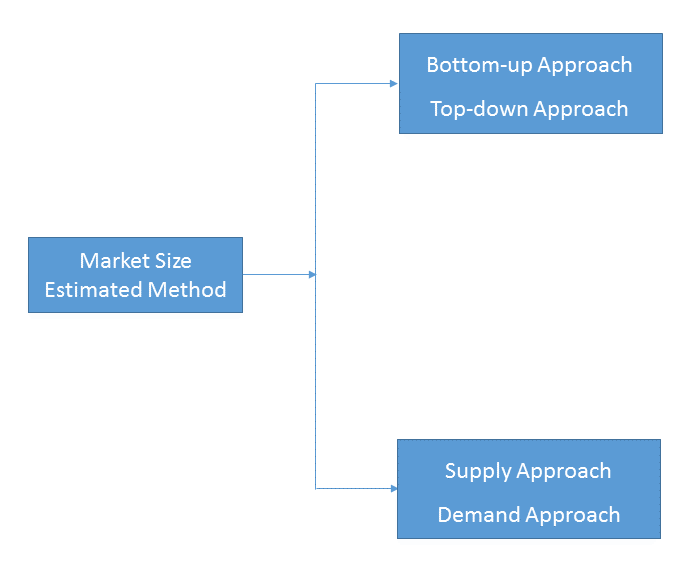
Bottom-up & top-down approach, supply & demand approach are the most important method which is used by HDIN Research to estimate the market size.
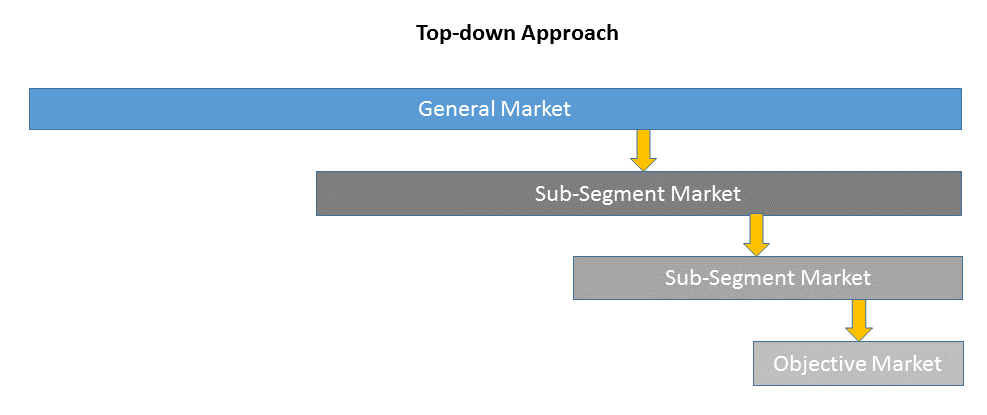
1)Top-down & Bottom-up Approach
Top-down approach uses a general market size figure and determines the percentage that the objective market represents.
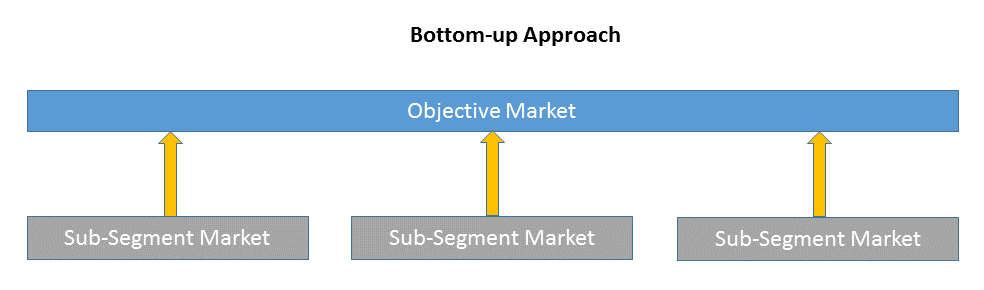
Bottom-up approach size the objective market by collecting the sub-segment information.
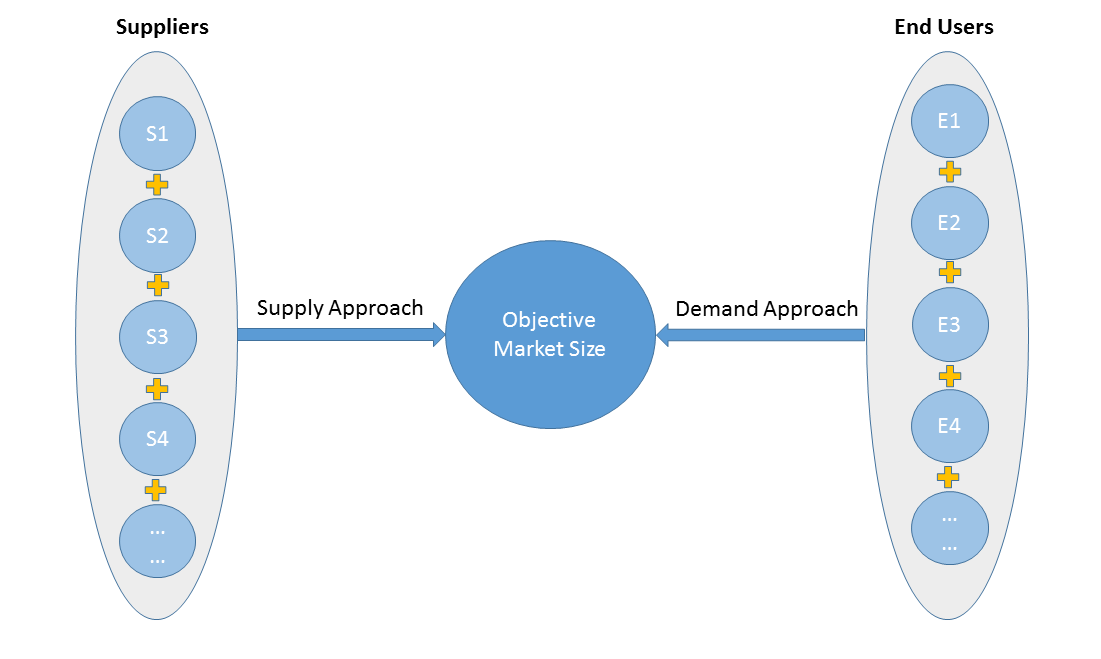
2)Supply & Demand Approach
Supply approach is based on assessments of the size of each competitor supplying the objective market.
Demand approach combine end-user data within a market to estimate the objective market size. It is sometimes referred to as bottom-up approach.
- Forecasting Methodology
- Numerous factors impacting the market trend are considered for forecast model:
- New technology and application in the future;
- New project planned/under contraction;
- Global and regional underlying economic growth;
- Threatens of substitute products;
- Industry expert opinion;
- Policy and Society implication.
- Analysis Tools
1)PEST Analysis
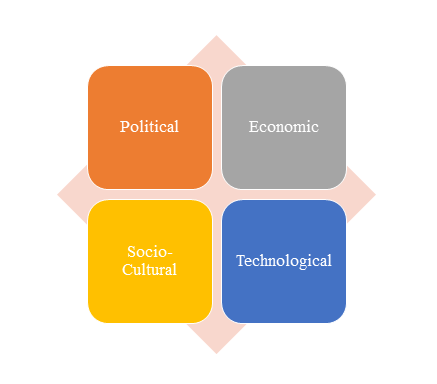
PEST Analysis is a simple and widely used tool that helps our client analyze the Political, Economic, Socio-Cultural, and Technological changes in their business environment.
- Benefits of a PEST analysis:
- It helps you to spot business opportunities, and it gives you advanced warning of significant threats.
- It reveals the direction of change within your business environment. This helps you shape what you’re doing, so that you work with change, rather than against it.
- It helps you avoid starting projects that are likely to fail, for reasons beyond your control.
- It can help you break free of unconscious assumptions when you enter a new country, region, or market; because it helps you develop an objective view of this new environment.
2)Porter’s Five Force Model Analysis
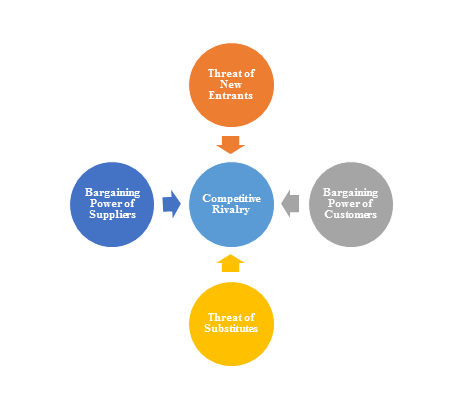
The Porter’s Five Force Model is a tool that can be used to analyze the opportunities and overall competitive advantage. The five forces that can assist in determining the competitive intensity and potential attractiveness within a specific area.
- Threat of New Entrants: Profitable industries that yield high returns will attract new firms.
- Threat of Substitutes: A substitute product uses a different technology to try to solve the same economic need.
- Bargaining Power of Customers: the ability of customers to put the firm under pressure, which also affects the customer's sensitivity to price changes.
- Bargaining Power of Suppliers: Suppliers of raw materials, components, labor, and services (such as expertise) to the firm can be a source of power over the firm when there are few substitutes.
- Competitive Rivalry: For most industries the intensity of competitive rivalry is the major determinant of the competitiveness of the industry.
3)Value Chain Analysis
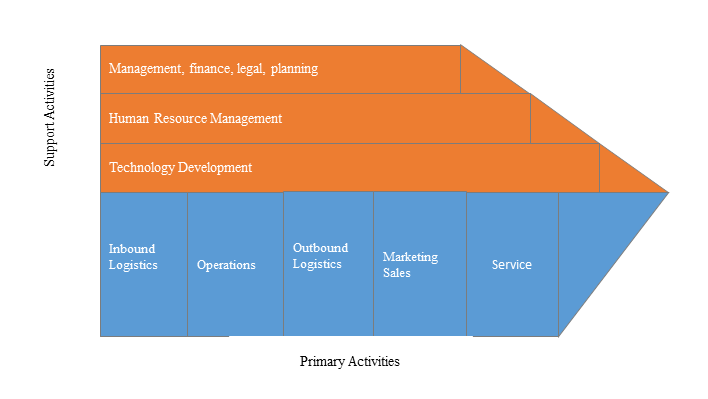
Value chain analysis is a tool to identify activities, within and around the firm and relating these activities to an assessment of competitive strength. Value chain can be analyzed by primary activities and supportive activities. Primary activities include: inbound logistics, operations, outbound logistics, marketing & sales, service. Support activities include: technology development, human resource management, management, finance, legal, planning.
4)SWOT Analysis
SWOT analysis is a tool used to evaluate a company's competitive position by identifying its strengths, weaknesses, opportunities and threats. The strengths and weakness is the inner factor; the opportunities and threats are the external factor. By analyzing the inner and external factors, the analysis can provide the detail information of the position of a player and the characteristics of the industry.
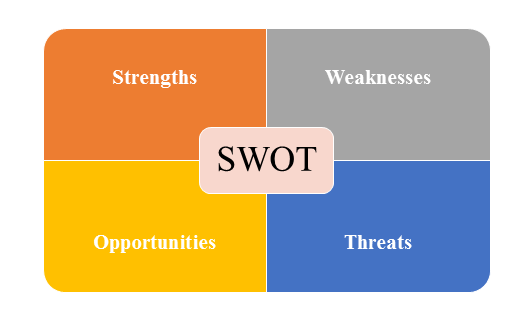
- Strengths describe what the player excels at and separates it from the competition
- Weaknesses stop the player from performing at its optimum level.
- Opportunities refer to favorable external factors that the player can use to give it a competitive advantage.
- Threats refer to factors that have the potential to harm the player.
- Data Sources
| Primary Sources | Secondary Sources |
|---|---|
| Face to face/Phone Interviews with market participants, such as: Manufactures; Distributors; End-users; Experts. Online Survey |
Government/International Organization Data: Annual Report/Presentation/Fact Book Internet Source Information Industry Association Data Free/Purchased Database Market Research Report Book/Journal/News |