Global Infusion Pump Market Analysis & Strategic Outlook
- Single User License (1 Users) $ 3,500
- Team License (2~5 Users) $ 4,500
- Corporate License (>5 Users) $ 5,500
The global infusion pump market size is valued at 6.2-7.8 billion USD in 2026 with a CAGR of 5.2% - 7.2% through 2031. Once dominated by standard capital hardware sales characterized by multi-year replacement cycles, the sector has transitioned into an ecosystem anchored by high-margin dedicated consumables, integrated software algorithms, and recurring digital health connectivity subscriptions. Clinical risk mitigation and regulatory stringency have reshaped competitive moats, as medical-grade electro-mechanical systems face heightened scrutiny over software telemetry, dose error reduction systems (DERS), and fluidic path tolerances. Concurrently, a therapeutic migration from acute inpatient settings to decentralized ambulatory and home-based environments is driving divergence in device architectures. While acute care providers prioritize enterprise-wide electronic health record (EHR) interoperability, fleet-wide automated drug library updating, and closed-loop multi-channel infusion suites, the chronic care domain is experiencing explosive demand for tubeless insulin patch pumps, automated insulin delivery (AID) algorithms, and passive elastomeric or mechanical syringe drivers for subcutaneous immunoglobulin (SCIg) infusions. Capital allocators face an intricate operating landscape governed by mandatory shifts to the United States Food and Drug Administration (FDA) Quality Management System Regulation (QMSR), evolving European Union Medical Device Regulation (EU MDR) certification cliffs, China centralized Volume-Based Procurement (VBP) pricing compression, and structural payment overhauls under the United States Centers for Medicare and Medicaid Services (CMS) Durable Medical Equipment, Prosthetics, Orthotics, and Supplies (DMEPOS) program.
Product Classification & Technological Architectures
● Classification by Clinical Specialty & Function
1. Large Volume Pumps and General Intravenous Infusion Systems
Large Volume Pumps (LVPs) remain the structural backbone of hospital-based fluid resuscitation, parenteral nutrition, electrolyte balance maintenance, and intravenous pharmacotherapy. Modern LVPs operate across dynamic delivery intervals typically ranging from 0.1 mL/h to 1,200 mL/h, maintaining target volumetric delivery tolerances within plus or minus 3% to plus or minus 4.5%. Contemporary LVP architecture integrates enterprise-grade microprocessors, dual optical line sensors for air-in-line detection, ultrasonic flow meters, downstream and upstream piezoresistive pressure transducers, and integrated motorized door-clamp safety mechanisms designed to eliminate free-flow incidents.
Strategic differentiation within this tier has migrated almost entirely away from basic motor performance toward software-defined clinical risk mitigation. Leading platforms operate sophisticated DERS drug libraries, bidirectional continuous Wi-Fi synchronization with hospital clinical information systems, and integrated bar-code medication administration (BCMA) confirmation. Operational deployments require high physical durability, fluid ingress resistance rated at IP44 or higher, and validated resistance to aggressive quaternary ammonium and hydrogen peroxide surface disinfectants.
2. Target-Controlled Infusion and Patient-Controlled Analgesia Pumps
Target-Controlled Infusion (TCI) and Patient-Controlled Analgesia (PCA) platforms occupy critical niches in operating theaters, intensive care units, post-anesthesia care units, and labor suites. PCA systems govern the administration of potent synthetic opioids, local anesthetics, and analgesics by giving patients the autonomy to self-administer micro-boluses within hard-coded clinical parameters. Embedded microprocessor controls enforce clinician-programmed lockout intervals, basal rate limits, maximum four-hour cumulative dosage caps, and background rate titrations to prevent fatal respiratory depression.
TCI systems advance precision titration further by executing real-time pharmacokinetic and pharmacodynamic (PK/PD) algorithm modeling directly on embedded hardware. Rather than relying on simple volumetric flow metrics, TCI platforms modulate intravenous anesthetic infusion rates (such as propofol or remifentanil) based on calculated drug concentrations in target blood plasma or effect-site compartments. Hardware designs in this category mandate high-resolution linear stepper drives, ultra-responsive anti-bolus pressure relief mechanisms to absorb accumulated mechanical drive slack following occlusion clearance, and non-DEHP fluid reservoirs fitted with specialized tamper-resistant mechanical locking enclosures.
3. Enteral Feeding Pumps
Enteral nutrition devices serve patients with functional gastrointestinal tracts who cannot maintain oral nutritional intake due to neuromuscular compromise, critical trauma, oncological resection, or prolonged intensive care stays. These systems meter liquid clinical nutrition, specialized elemental formulations, and water flushes directly into the stomach, duodenum, or jejunum via nasogastric, nasojejunal, or percutaneous endoscopic gastrostomy (PEG) access lines. Flow parameters demand continuous precision rates between 1 mL/h and 400 mL/h, alongside programmed auto-flush cycles designed to prevent formula stagnation and enteral lumen clogging.
To eliminate systemic risks associated with lethal misconnections into intravenous vascular lines, enteral hardware has standardized universally around international ISO 80369-3 engineering controls (the ENFit standard). Enteral drive mechanisms utilize dedicated rotary peristaltic rotors operating in tandem with molded fluid cassettes. Sensor arrays incorporate optical density detectors to differentiate between formula delivery, air passage, and empty feeding bags, operating in conjunction with low-noise brushless direct-current (BLDC) motors optimized for quiet home care and overnight ward environments.
4. Insulin Pumps and Automated Insulin Delivery Ecosystems
The chronic metabolic management space has experienced profound structural shifts, driven by the commercial maturation of Continuous Subcutaneous Insulin Infusion (CSII) and Automated Insulin Delivery (AID) platforms. Modern CSII architectures are deployed across two fundamental hardware formats: durable electromechanical pumps connected to subcutaneous infusion sites via flexible fluoropolymer or steel catheter tubing sets, and tubeless disposable patch pumps that adhere directly to the epidermal tissue.
Leading-edge AID platforms operate as closed-loop or hybrid closed-loop artificial pancreas networks. These devices combine durable or semi-durable pumping hardware, continuous glucose monitor (CGM) sensor telemetry received over low-energy wireless links, and proprietary predictive algorithmic engines (such as proportional-integral-derivative variants, model predictive controllers, or neural network adaptations). The software calculates dynamic basal rates and automated correction boluses delivered every five minutes, counteracting glycemic excursions without requiring continuous manual patient intervention. Hardware engineering prioritizes extreme miniaturization, micro-stepper motor lead screws capable of sub-microliter basal increments (as low as 0.025 units of U-100 insulin), low quiescent battery drain profiles, high ingress protection (IP28 immersion-rated), and secure Bluetooth mesh synchronization with consumer smartphones.
● Classification by Mechanical Drive Mechanisms
1. Peristaltic Pump Architectures
Peristaltic systems represent the most widely deployed volumetric mechanism across acute care, divided into linear and rotary formats. Linear peristaltic systems utilize a continuous series of motor-driven eccentric cams that articulate progressive mechanical fingers. These fingers compress dedicated medical-grade tubing sequentially against a fixed backplate, driving the fluid column forward in continuous volumetric waves. Rotary peristaltic systems operate via two to four revolving rollers mounted on a central drive hub, squeezing elastomeric tube segments positioned within a semicircular pumping race.
The primary clinical advantage of peristaltic architecture lies in complete physical isolation: the fluid path remains wholly contained within the sterile disposable administration set, preventing cross-contamination with the motor mechanics. However, peristaltic devices require tight manufacturing controls over tube wall thickness, polymer durometer, and elastic recovery properties. Over long continuous runtimes, mechanical fatigue and permanent tubing deformation can induce volumetric drift, requiring precision software compensation models or specialized cassette interfaces.
2. Syringe Driver Mechanisms
Syringe drivers utilize high-precision mechanical translation assemblies, wherein a precision stepper motor or linear actuator drives an ultra-fine lead screw. The advancing lead-screw nut engages an articulated drive head that compresses the plunger of a standard disposable syringe barrel. This architecture excels in micro-dosing precision, delivering stable flow rates as low as 0.01 mL/h with accuracy boundaries strictly controlled within plus or minus 1.8% to plus or minus 2.0%.
Syringe drivers eliminate the pulsatile fluctuations characteristic of low-rate peristaltic systems, providing near-instantaneous onset of action. Consequently, they serve as the clinical gold standard for the titration of ultra-short half-life vasoactive agents (such as norepinephrine, vasopressin, and epinephrine), neonatal fluid administration, and pediatric intensive care. Critical sensor components include syringe barrel size confirmation clamps, optical flange position detectors, and linear force sensors that monitor plunger backpressure to detect distal vascular occlusions within seconds.
3. Volumetric Cassette and Positive Displacement Pumps
Volumetric cassette systems decouple fluid displacement from the mechanical properties of simple cylindrical tubing. Instead, they utilize rigid, injection-molded plastic cassette modules that seat securely into a dedicated electromechanical pump bay. The internal architecture of these cassettes integrates dual reciprocating fluid chambers, micro-elastomeric diaphragms, and actively controlled intake and discharge valves.
By mechanically loading and expelling exact volumetric chambers in continuous alternations, positive displacement cassette pumps maintain flow precisions within plus or minus 3.0% across wide pressure differentials, variable fluid viscosities, and changing head-height pressures. The structural advantage of the rigid cassette design is its high resistance to hydrostatic siphonage and cold-flow polymer fatigue. Furthermore, cassette platforms allow integrated multi-line manifolding, enabling single-channel hardware to manage concurrent, non-interacting dual-infusion lines through complex valve gating.
4. Mechanical, Spring-Driven, and Elastomeric Systems
Mechanical infusion platforms function completely independent of electrical power sources, microcontrollers, or external utility infrastructure. Elastomeric infusion devices utilize a specialized, medical-grade cross-linked silicone or polyisoprene balloon reservoir housed inside a rigid, transparent outer casing. When filled under hydraulic pressure with medication, the balloon expands; its natural elastomeric contraction exerts a continuous, stable internal pressure on the fluid matrix. Downstream fluid rate regulation is governed entirely by micro-bore capillary glass restrictors or precision flow-path orifices, delivering passive fluid rates ranging from 0.5 mL/h to 250 mL/h.
Mechanical syringe drivers utilize constant-force mechanical springs or pneumatic force chambers that apply steady mechanical force to a standard syringe plunger. These systems, when paired with precision subcutaneous needle sets and balanced hydrodynamic flow-path lines, automatically equalize against systemic subcutaneous backpressures. Mechanical systems deliver silent, reliable, maintenance-free drug delivery, establishing a dominant clinical role in outpatient antibiotic regimens, post-operative surgical site local analgesia, and self-administered subcutaneous immunoglobulin replacement therapy.
Downstream Applications & Clinical Dynamics
● Inpatient Hospital Infrastructure
Acute care within hospitals represents the largest absolute demand generator for smart infusion hardware, dedicated disposable administration sets, and centralized device management software. Within high-acuity environments—specifically intensive care units, emergency departments, operating theaters, and neonatal intensive care units—patients require multi-channel drug infusion architectures. A single critically ill bed often requires six to ten synchronized pump channels delivering sedatives, inotropes, crystalloid fluids, total parenteral nutrition, and systemic antibiotics.
Procurement strategies within hospital networks are governed by fleet standardization initiatives designed to streamline supply chains and eliminate clinician programming errors across medical wards. Clinical engineering leadership enforces strict mandates covering bi-directional EHR interoperability, real-time wireless integration with computerized physician order entry systems, and mandatory point-of-care barcode validation to verify the five rights of medication administration. The prevailing operational focus is eliminating adverse drug events caused by manual programming transcription errors, software vulnerabilities, and late-stage IV line misconnections.
● Specialty Clinical & Outpatient Networks
Specialized outpatient facilities—encompassing ambulatory surgery centers, freestanding oncology infusion suites, regional dialysis units, and pain management clinics—exhibit procurement dynamics optimized for rapid patient turnaround, low operational footprints, and localized therapy regimens. In cancer infusion centers, the primary clinical imperative centers on the secure administration of hazardous antineoplastic biologics and chemotherapies. These workflows mandate integration with closed-system drug transfer devices (CSTDs) and ambulatory continuous-infusion pumps that shield clinical staff from chemical toxicity during drug compounding and vascular line changeouts.
Ambulatory surgery centers increasingly utilize specialized micro-pumps and regional nerve block catheters to execute continuous local anesthetic infiltration following orthopedic, gynecological, and abdominal procedures. These protocols shorten hospital lengths of stay, suppress post-operative systemic opioid consumption, and accelerate discharge times, shifting clinical care pathways toward patient-controlled regional analgesia systems.
● Home Healthcare & Chronic Disease Management
Home-based non-diabetes infusion therapy has expanded rapidly, supported by demographic aging, an increasing incidence of autoimmune neuropathies, and systemic payer pressure to shift infusions out of expensive hospital environments. The core home healthcare segment encompasses long-term continuous and intermittent therapies managed by visiting nursing organizations, specialty pharmacies, or trained non-professional family caregivers. Key clinical indications include home parenteral nutrition (HPN), prolonged outpatient parenteral antimicrobial therapy (OPAT), and subcutaneous immunoglobulin (SCIg) infusions for primary immunodeficiency diseases (PIDD) and chronic inflammatory demyelinating polyneuropathy (CIDP).
Infusion architectures within home environments must balance clinical-grade flow precision with extreme hardware durability, intuitive non-clinical user interfaces, low device weights, extended battery endurance, and comprehensive mechanical fail-safes. The rapid clinical shift from intravenous immunoglobulin (IVIG) to self-administered subcutaneous immunoglobulin (SCIg) has catalyzed widespread adoption of low-profile, passive mechanical and spring-driven syringe drivers. These devices enable patients to execute weekly self-infusions in residential settings without complex digital programming, risk of electrical failure, or catheter access complications.
● Home Care & Chronic Disease Self-Management
The home-based self-management segment is defined primarily by intensive insulin replacement therapies for individuals living with Type 1 diabetes and advanced insulin-dependent Type 2 diabetes. This market layer operates almost entirely under direct patient stewardship, requiring medical systems that integrate seamlessly into everyday personal routines. The historical standard of multi-daily manual needle injections has yielded substantial market ground to continuous automated delivery systems.
End-user adoption criteria prioritize physical comfort, minimal device visibility, waterproof construction, and deep automated digital intelligence. The rapid rise of tubeless insulin patch pumps mirrors consumer medtech preferences for small footprints that eliminate snagging hazards associated with conventional infusion tubing. Concurrently, the operational convergence between continuous glucose sensing hardware and automated algorithmic drug delivery has elevated user expectations. In this paradigm, algorithmic control of glucose excursions, automated baseline stabilization, and continuous remote data sharing with clinical endocrinologists serve as the primary metrics of commercial viability.
Regional Market Dynamics
● North America
North America represents the largest regional infusion pump market globally with more than 40% global market share. The region is characterized by capital-dense healthcare systems, advanced IT infrastructure, and rigorous patient safety mandates. Acute care procurement is concentrated within Group Purchasing Organizations (GPOs) and large Integrated Delivery Networks (IDNs), which negotiate unified long-term hardware and consumable contracts across dozens of constituent hospitals.
Enterprise health systems mandate high-reliability smart pumps equipped with enterprise-wide wireless DERS updates, automated EHR-integrated closed-loop infusion documentation, and cybersecurity compliance certified under the UL Cybersecurity Assurance Program (CAP). Concurrently, the outpatient and chronic therapy segment across the United States is rapidly pivoting. In the chronic diabetes and rare disease sectors, reimbursement pathways are migrating decisively from traditional, documentation-heavy Durable Medical Equipment (DME) channels toward retail and specialty Pharmacy Benefit Plans (PBPs). This operational transition dramatically reduces up-front patient copays, accelerating the clinical transition toward wearable tubeless patch pumps and user-centric subcutaneous delivery platforms.
● Europe
Europe constitutes the second-largest regional market for acute and home-based infusion platforms. Demand is supported by universal, state-funded healthcare delivery architectures, high elder-care dependency ratios, and well-developed home nursing care delivery networks across Western Europe, particularly across Germany, France, the United Kingdom, and the Benelux region.
European healthcare buyers place substantial weight on environmental sustainability, carbon footprint reductions, and total lifecycle management, driving interest in multi-year modular pump systems that minimize disposable electronic waste. The region demonstrates exceptionally high clinical adoption of outpatient subcutaneous infusion modalities. Standard care pathways frequently leverage mechanical syringe drivers and specialized elastomeric sets for self-administered subcutaneous immunoglobulin (SCIg) regimens, continuous subcutaneous levodopa/carbidopa infusions for refractory Parkinson's disease, and ambulatory oncological pain management. However, margin performance remains under pressure from stringent state-level healthcare budgeting constraints and the substantial compliance expenditures required to maintain technical dossiers under the EU MDR regime.
● Asia-Pacific
The Asia-Pacific region demonstrates the highest forward-looking compound annual growth across the global industry. Growth dynamics are propelled by massive state-sponsored hospital infrastructure expansions, rising disposable household incomes, and the expanding prevalence of complex lifestyle and chronic metabolic conditions across major population centers.
In China, the medical landscape has been radically reshuffled by national and inter-provincial centralized Volume-Based Procurement (VBP) policies. Mass regional and 24-province alliance tenders have aggressively targeted high-volume general IV infusion consumables and standard delivery hardware, driving average selling prices down by 40% to 75%. This severe margin erosion has driven systemic supply-chain rationalization, squeezing high-cost foreign imports and accelerating aggressive domestic substitution toward local manufacturing leaders capable of sustaining hyper-efficient, high-volume production.
Conversely, mature Asia-Pacific markets, led by Japan and South Korea, demonstrate demand priorities mirroring Western acute-care expectations. Japan places high strategic value on micro-dose syringe precision, absolute mechanical durability, and specialized neonatal delivery systems, heavily dominated by trusted domestic corporate groups. In diabetes and wearable technology, advanced hubs including South Korea and Taiwan, China, are experiencing accelerated uptake of connected digital micro-pumps and consumer-oriented automated insulin management platforms.
● Latin America
The Latin American infusion pump market demand concentrated within the primary economic centers of Brazil, Mexico, Colombia, and Argentina. The market structure is bifurcated: a resource-constrained public healthcare tier relies on basic volumetric peristaltic hardware and manual gravity IV lines, while an elite, rapidly growing network of private hospitals and ambulatory surgery centers invests aggressively in advanced, connected smart-pump fleets to secure international healthcare accreditations.
Multinational hardware vendors manage commercial distributions in Latin America primarily through direct corporate subsidiaries in major urban hubs, supplemented by third-party distributor networks throughout secondary and rural territories. In the chronic diabetes vertical, patient penetration for continuous automated insulin systems remains constrained relative to North America and Europe, bound by limited public insurance reimbursement coverage. Consequently, durable smart pumps and wearable patch platforms operate primarily as self-pay cash markets or through specialized judicial litigation channels where patients legally mandate state coverage for critical insulin therapies.
● Middle East & Africa
The Middle East and Africa region exhibits wide variance. Growth momentum is anchored by the wealthy economies of the Gulf Cooperation Council (GCC)—notably Saudi Arabia, the United Arab Emirates, and Qatar. These nations are executing sweeping healthcare transformation agendas, constructing advanced clinical cities, and upgrading digital health technologies.
The GCC demonstrates some of the highest global population per-capita prevalences of Type 1 and Type 2 diabetes, generating substantial state-backed tender demand for advanced continuous subcutaneous insulin pumps, automated closed-loop algorithm systems, and compatible sensor ecosystems. Government tenders across Saudi Arabia and the UAE consistently prioritize high-tier, connected Western acute-care smart infusion pumps and premium wearable diabetes technologies. In stark contrast, the broader African market, outside of private clinical enclaves in South Africa, is constrained by capital limits. The broader African territory functions largely as a basic replacement market prioritizing mechanical elastomeric systems, standalone gravity administration lines, and ruggedized, low-cost volumetric pumps resistant to unreliable electrical grid infrastructure.
Competitive Landscape & Major Manufacturer Deep-Dive
● Global Acute Care & Multi-Therapy Infusion Giants
1. Baxter International Inc.: Baxter maintains a central presence across hospital fluid resuscitation, acute intravenous drug delivery, dedicated infusion disposables, and clinical nutrition systems. The core of Baxter's acute care presence in North America rests upon the Spectrum IQ Infusion System, widely deployed for its integrated bidirectional EHR interoperability, automated dose confirmation, and integrated health-system wireless DERS synchronization.
2. Becton, Dickinson and Company (BD): BD holds one of the largest global footprint installations in acute-care medication delivery, spearheaded by its iconic BD Alaris Infusion System. The Alaris platform utilizes a modular hardware design comprising a central point-of-care user interface unit (the BD Alaris PC Unit) that docks with up to four interchangeable peripheral modules, including large-volume peristaltic pump units, precision syringe drivers, patient-controlled analgesia (PCA) modules, and respiratory monitoring units (pulse oximetry and capnography).
3. Fresenius Kabi: Operating within the MedTech division of Fresenius SE, Fresenius Kabi delivers an integrated Infusion and Nutrition Systems (INS) portfolio spanning volumetric infusion hardware, precision syringe pumps, dedicated enteral feeding delivery platforms, sterile disposables, and infusion management software. Globally, the enterprise deploys the established Agilia infusion suite, comprising the Volumat Agilia volumetric pump and Injectomat Agilia syringe driver, integrated through Vigilant safety software.
4. B. Braun SE: Headquartered in Melsungen, Germany, B. Braun stands as one of the world's most enduring and vertically integrated medical technology manufacturers. Its infusion systems division designs and manufactures integrated smart infusion suites, high-precision syringe drivers, specialized volumetric infusion hardware, and IV access accessories. Its primary hardware platform, the Space Infusion System, features an ultra-compact, modular footprint designed to stack vertically within customized SpaceStation hospital bedside racks.
5. ICU Medical, Inc.: Following its transformative multi-billion-dollar acquisition of Smiths Medical, ICU Medical emerged as an acute and specialized infusion giant. Its acute care hardware foundation is built on the Plum 360 Large Volume Infusion Pump, an industry-standard platform consistently recognized for clinical excellence in electronic health record integration and closed-loop medication safety. The Plum 360 utilizes a unique cassette-based positive-displacement fluid mechanism featuring an active air-trap architecture that clears inline air bubbles without breaking the sterile fluid path.
● Wearable Diabetes Infusion & Continuous Metabolic Technology Leaders
1. MiniMed Group: MiniMed represents one of the most clinically established global enterprises dedicated to continuous subcutaneous insulin infusion, managing an active global cohort exceeding 640,000 pump users. The vanguard of its commercial portfolio is the MiniMed 780G Automated Insulin Delivery (AID) system. Driven by proprietary SmartGuard technology, the 780G executes dynamic baseline insulin adjustments and automated autocorrection micro-boluses every five minutes, targeting real-time interstitial glucose metrics delivered via the continuous Guardian or Simplera Sync sensor networks.
2. Tandem Diabetes Care, Inc.: Tandem Diabetes Care transformed the commercial diabetes landscape by pioneering touchscreen-driven, software-updatable smart insulin pumps. Its foundational hardware platform, the t:slim X2, holds approximately 34% of the United States insulin pump market, powered by its advanced Control-IQ algorithmic software. Control-IQ uses predictive continuous glucose trends from integrated Dexcom CGM sensors to proactively modulate basal insulin delivery and automate sleep and exercise profiles to eliminate severe hypoglycemia.
3. Insulet Corporation: Insulet Corporation revolutionized the global insulin therapy domain through the creation and scaled commercialization of the Omnipod tubeless patch pump ecosystem. Holding approximately 43% of the United States insulin pump market and operating across 16 international markets, Insulet eliminated traditional infusion tubing entirely. Its flagship commercial platform, the Omnipod 5 Automated Insulin Delivery System, comprises a fully disposable, waterproof on-body Pod housing a 200-unit insulin reservoir, fluid pumping engine, automated micro-needle insertion cannula, and embedded algorithms that communicate directly with compatible CGM sensors.
4. Beta Bionics, Inc.: Beta Bionics commercializes the iLet Bionic Pancreas, a highly differentiated platform that secured FDA 510(k) clearance as an Alternate Controller Enabled (ACE) pump equipped with an integrated automated glycemic controller (iAGC). The iLet platform fundamentally redefines automated diabetes management by removing the operational complexity of traditional pump therapy: it requires zero manual carbohydrate counting, eliminates basal rate programming, and dispenses with insulin sensitivity correction factor configurations.
5. Modular Medical, Inc.: Modular Medical represents a high-efficiency disruption model within the wearable diabetes space, founded by insulin delivery pioneers to address the large, underserved population of individuals with diabetes who remain untreated with advanced pump technology due to cost and complexity barriers. The enterprise developed the Pivot / MODD1 wearable micro-pump platform, engineered specifically to lower total cost of ownership barriers while delivering three-part modular functionality.
6. mylife Diabetes Care: Based in Burgdorf, Switzerland, Ypsomed established an advanced European market presence through the development of the mylife YpsoPump. The YpsoPump is an ultra-compact, lightweight, touchscreen-driven durable insulin pump utilizing glass prefilled insulin cartidges (such as NovoRapid PumpCart), significantly accelerating cartridge preparation and loading for patients. The device is fully integrated into open and hybrid automated insulin delivery algorithms, pairing with independent continuous glucose sensors and smartphone software controllers.
7. Sequel Med Tech: Sequel Med Tech is an advanced American diabetes technology innovator focused on delivering next-generation automated micro-dosing systems. The enterprise developed the twiist automated insulin delivery system, an advanced wearable pump platform that secured 510(k) clearance from the United States FDA as an interoperable ACE insulin delivery pump.
8. MicroTech Medical (Hangzhou) Co., Ltd.: Based in Hangzhou, China, MicroTech Medical is a prominent publicly listed Chinese medical device developer specializing in advanced diabetes management hardware. The enterprise achieved commercial success through its Equil semi-disposable patch insulin pump. The Equil is an ultra-lightweight (approximately 23 grams), tubeless, waterproof wearable pump that adheres directly to the skin and communicates wirelessly with a dedicated PDA controller or personal smartphone.
9. SOOIL Development Co., Ltd.: Headquartered in Seoul, South Korea, SOOIL Development is an early pioneer in continuous insulin delivery, founded by clinical endocrinologists. The enterprise manufactures the established DANA Diabecare lineup, including the DANA-i and DANA-RS smart insulin pumps. These platforms are engineered as ultra-miniaturized, durable micro-pumps operating on standard user-replaceable AAA batteries and weighing approximately 60 grams.
● Specialized Subcutaneous & Ambulatory Infusion Innovators & Emerging Asia-Pacific & Regional Market Leaders: Terumo Corporation, Nipro Corporation, KORU Medical Systems, Inc., DAIKEN MEDICAL CO., LTD., Moog Medical, Shenzhen Mindray Bio-Medical Electronics Co., Ltd., Shandong Weigao Group Medical Polymer Co., Ltd., Medcaptain Medical Technology Co., Ltd., Jiangsu Apon Medical Technology Co., Ltd., Zhonghong Pulin Medical Supplies Co., Ltd. / MedRena, Ningbo David Medical Device Co., Ltd., Top Corporation, Daiwha Corporation, AMPall Co., Ltd., JMS Co., Ltd., Well Lead Medical Co., Ltd.
1.1 Research Architecture and Scope Definition 1
1.2 Multi-Tiered Data Triangulation and Primary Source Verification 3
1.3 Econometric Assumptions and Currency Matrix 5
1.4 Technical Lexicon and Abbreviations Directory 6
Chapter 2 Executive Summary and Global Infusion Pump Market Trajectory 7
2.1 Global Infusion Pump Market Landscape and Macro Drivers 7
2.2 Historical and Forecast Market Valuation and Unit Volume (2021-2031) 9
2.3 Clinical Specialty Matrix and Modality Shift Dynamics 11
2.4 Technology Transformation and Competitive Ecosystem Realignment 12
Chapter 3 Global Regulatory Framework, Cybersecurity Protocols, and Safety Standards 13
3.1 FDA Cybersecurity Guidelines, 510(k)/PMA Directives, and Total Product Life Cycle 13
3.2 European Union Medical Device Regulation (EU MDR 2017/745) Compliance 15
3.3 China NMPA Device Registration Standards and Volume-Based Procurement Dynamics 16
3.4 IEC 60601-1-8 / ISO 28620 Safety Mandates and Dose Error Reduction Systems (DERS) 17
Chapter 4 Global Infusion Pump Value Chain and Manufacturing Architecture 19
4.1 Upstream Bill of Materials: Precision Stepper Motors, Sensors, and Fluidic Chips 19
4.2 Midstream System Integration, Embedded Firmware, and Calibration Assemblies 21
4.3 Downstream Consumables Ecosystem: Dedicated vs Non-Dedicated Administration Sets 23
4.4 Value Chain Margin Distribution and Strategic Contract Manufacturing 25
Chapter 5 Global Infusion Pump Market Breakdown by Pump Mechanism 26
5.1 Peristaltic Pump Systems (Linear and Rotary Architectures) 26
5.2 Syringe Pump Systems (Micro and Macro Infusion Platforms) 28
5.3 Volumetric Infusion Pump Platforms (Cassette and Piston Architectures) 30
5.4 Mechanical and Elastomeric Infusion Pumps 32
Chapter 6 Global Infusion Pump Market Breakdown by Clinical Specialty and Functional Type 33
6.1 Intravenous (IV) Infusion Pump Systems 33
6.2 Target-Controlled Infusion (TCI) and Patient-Controlled Analgesia (PCA) Devices 35
6.3 Enteral Feeding Pump Architectures 37
6.4 Continuous Subcutaneous Insulin Infusion (CSII) and Patch Pumps 39
Chapter 7 Global Infusion Pump Market Breakdown by Downstream Application 41
7.1 Inpatient Hospital Ecosystems (ICU, Surgical Suites, and General Wards) 41
7.2 Specialty Clinical Centers and Ambulatory Surgical Centers (ASCs) 43
7.3 Home Healthcare and Chronic Disease Management 45
7.4 Home Care and Chronic Disease Self-Management Platforms 47
Chapter 8 Global Trade Dynamics, Sourcing Networks, and Cross-Border Logistics 48
8.1 Global Cross-Border Trade Flux and Customs Valuation Patterns (2021-2026) 48
8.2 Primary Manufacturing Hubs: United States, Germany, Switzerland, China, Japan, Costa Rica 50
8.3 Supply Chain Resilience, Nearshoring, and Strategic Buffer Inventories 52
Chapter 9 Global Geographic Breakdown and Regional Market Performance 54
9.1 North America 54
9.1.1 United States 54
9.1.2 Canada 55
9.1.3 Mexico 55
9.2 Europe 56
9.2.1 Germany 56
9.2.2 France 56
9.2.3 United Kingdom 57
9.2.4 Italy 57
9.2.5 Spain 58
9.2.6 Switzerland 58
9.2.7 Ireland & Rest of Europe 59
9.3 Asia-Pacific 60
9.3.1 China 60
9.3.2 Japan 61
9.3.3 South Korea 61
9.3.4 India 62
9.3.5 Australia 62
9.4 Latin America 63
9.4.1 Brazil 63
9.4.3 Colombia 63
9.5 Middle East and Africa 64
9.5.1 Saudi Arabia 64
9.5.2 United Arab Emirates 64
9.5.3 South Africa 65
Chapter 10 Competitive Dynamics, Market Concentration, and Strategic Positioning 66
10.1 Global Market Share Hierarchy and Supplier Tiering Analysis 66
10.2 Industry Concentration Dynamics: CR4, CR8, and Herfindahl-Hirschman Index (HHI) 67
10.3 Competitive Benchmarking: Technological Depth versus Global Commercial Breadth 68
10.4 Strategic Mergers, Acquisitions, and Technology Partnerships (2021-2026) 69
Chapter 11 Corporate Intelligence and Competitor Case Studies 70
11.1 Baxter 70
11.1.1 Corporate Profile and Operational Footprint 70
11.1.2 Infusion Pump Product Architecture and Technological Portfolio 70
11.1.3 Baxter SWOT Analysis 71
11.1.4 Infusion Pump Financials, Cost Analysis, and Market Share 71
11.2 Fresenius SE & Co. KGaA 72
11.2.1 Corporate Profile and Operational Footprint 72
11.2.2 Infusion Pump Product Architecture and Technological Portfolio 72
11.2.3 Fresenius SE & Co. KGaA SWOT Analysis 73
11.2.4 Infusion Pump Financials, Cost Analysis, and Market Share 74
11.3 BD 75
11.3.1 Corporate Profile and Operational Footprint 75
11.3.2 Infusion Pump Product Architecture and Technological Portfolio 76
11.3.3 BD SWOT Analysis 77
11.3.4 Infusion Pump Financials, Cost Analysis, and Market Share 78
11.4 B. Braun 79
11.4.1 Corporate Profile and Operational Footprint 79
11.4.2 Infusion Pump Product Architecture and Technological Portfolio 80
11.4.3 B. Braun SWOT Analysis 81
11.4.4 Infusion Pump Financials, Cost Analysis, and Market Share 82
11.5 ICU Medical 83
11.5.1 Corporate Profile and Operational Footprint 83
11.5.2 Infusion Pump Product Architecture and Technological Portfolio 84
11.5.3 ICU Medical SWOT Analysis 85
11.5.4 Infusion Pump Financials, Cost Analysis, and Market Share 86
11.6 Daiken Medical 87
11.6.1 Corporate Profile and Operational Footprint 87
11.6.2 Infusion Pump Product Architecture and Technological Portfolio 88
11.6.3 Daiken Medical SWOT Analysis 89
11.6.4 Infusion Pump Financials, Cost Analysis, and Market Share 90
11.7 KORU Medical Systems Inc. 91
11.7.1 Corporate Profile and Operational Footprint 91
11.7.2 Infusion Pump Product Architecture and Technological Portfolio 92
11.7.3 KORU Medical Systems Inc. SWOT Analysis 93
11.7.4 Infusion Pump Financials, Cost Analysis, and Market Share 94
11.8 Terumo 95
11.8.1 Corporate Profile and Operational Footprint 95
11.8.2 Infusion Pump Product Architecture and Technological Portfolio 96
11.8.3 Terumo SWOT Analysis 97
11.8.4 Infusion Pump Financials, Cost Analysis, and Market Share 98
11.9 mylife Diabetes Care AG 99
11.9.1 Corporate Profile and Operational Footprint 99
11.9.2 Infusion Pump Product Architecture and Technological Portfolio 100
11.9.3 mylife Diabetes Care AG SWOT Analysis 101
11.9.4 Infusion Pump Financials, Cost Analysis, and Market Share 102
11.10 Mindray 103
11.10.1 Corporate Profile and Operational Footprint 103
11.10.2 Infusion Pump Product Architecture and Technological Portfolio 104
11.10.3 Mindray SWOT Analysis 105
11.10.4 Infusion Pump Financials, Cost Analysis, and Market Share 106
11.11 Zhonghong Pulin Medical 107
11.11.1 Corporate Profile and Operational Footprint 107
11.11.2 Infusion Pump Product Architecture and Technological Portfolio 108
11.11.3 Zhonghong Pulin Medical SWOT Analysis 109
11.11.4 Infusion Pump Financials, Cost Analysis, and Market Share 110
11.12 Shandong Weigao Group 111
11.12.1 Corporate Profile and Operational Footprint 111
11.12.2 Infusion Pump Product Architecture and Technological Portfolio 112
11.12.3 Shandong Weigao Group SWOT Analysis 113
11.12.4 Infusion Pump Financials, Cost Analysis, and Market Share 114
11.13 Ningbo David Medical Device 115
11.13.1 Corporate Profile and Operational Footprint 115
11.13.2 Infusion Pump Product Architecture and Technological Portfolio 116
11.13.3 Ningbo David Medical Device SWOT Analysis 117
11.13.4 Infusion Pump Financials, Cost Analysis, and Market Share 118
11.14 Jiangsu Apon Medical Technology 119
11.14.1 Corporate Profile and Operational Footprint 119
11.14.2 Infusion Pump Product Architecture and Technological Portfolio 120
11.14.3 Jiangsu Apon Medical Technology SWOT Analysis 121
11.14.4 Infusion Pump Financials, Cost Analysis, and Market Share 122
11.15 JMS Co. Ltd. 123
11.15.1 Corporate Profile and Operational Footprint 123
11.15.2 Infusion Pump Product Architecture and Technological Portfolio 124
11.15.3 JMS Co. Ltd. SWOT Analysis 125
11.15.4 Infusion Pump Financials, Cost Analysis, and Market Share 126
11.16 Well Lead Medical Co. Ltd. 127
11.16.1 Corporate Profile and Operational Footprint 127
11.16.2 Infusion Pump Product Architecture and Technological Portfolio 128
11.16.3 Well Lead Medical Co. Ltd. SWOT Analysis 129
11.16.4 Infusion Pump Financials, Cost Analysis, and Market Share 130
11.17 Moog Medical 131
11.17.1 Corporate Profile and Operational Footprint 131
11.17.2 Infusion Pump Product Architecture and Technological Portfolio 132
11.17.3 Moog Medical SWOT Analysis 133
11.17.4 Infusion Pump Financials, Cost Analysis, and Market Share 134
11.18 Nipro 135
11.18.1 Corporate Profile and Operational Footprint 135
11.18.2 Infusion Pump Product Architecture and Technological Portfolio 136
11.18.3 Nipro SWOT Analysis 137
11.18.4 Infusion Pump Financials, Cost Analysis, and Market Share 138
11.19 Beta Bionics 139
11.19.1 Corporate Profile and Operational Footprint 139
11.19.2 Infusion Pump Product Architecture and Technological Portfolio 140
11.19.3 Beta Bionics SWOT Analysis 141
11.19.4 Infusion Pump Financials, Cost Analysis, and Market Share 142
11.20 Tandem 143
11.20.1 Corporate Profile and Operational Footprint 143
11.20.2 Infusion Pump Product Architecture and Technological Portfolio 144
11.20.3 Tandem SWOT Analysis 145
11.20.4 Infusion Pump Financials, Cost Analysis, and Market Share 146
11.21 Insulet 147
11.21.1 Corporate Profile and Operational Footprint 147
11.21.2 Infusion Pump Product Architecture and Technological Portfolio 148
11.21.3 Insulet SWOT Analysis 149
11.21.4 Infusion Pump Financials, Cost Analysis, and Market Share 150
11.22 MiniMed Group 151
11.22.1 Corporate Profile and Operational Footprint 151
11.22.2 Infusion Pump Product Architecture and Technological Portfolio 152
11.22.3 MiniMed Group SWOT Analysis 153
11.22.4 Infusion Pump Financials, Cost Analysis, and Market Share 154
11.23 Modular Medical 155
11.23.1 Corporate Profile and Operational Footprint 155
11.23.2 Infusion Pump Product Architecture and Technological Portfolio 156
11.23.3 Modular Medical SWOT Analysis 157
11.23.4 Infusion Pump Financials, Cost Analysis, and Market Share 158
11.24 AMPall Co. Ltd. 159
11.24.1 Corporate Profile and Operational Footprint 159
11.24.2 Infusion Pump Product Architecture and Technological Portfolio 160
11.24.3 AMPall Co. Ltd. SWOT Analysis 161
11.24.4 Infusion Pump Financials, Cost Analysis, and Market Share 162
11.25 Medcaptain Medical 163
11.25.1 Corporate Profile and Operational Footprint 163
11.25.2 Infusion Pump Product Architecture and Technological Portfolio 164
11.25.3 Medcaptain Medical SWOT Analysis 165
11.25.4 Infusion Pump Financials, Cost Analysis, and Market Share 166
11.26 Top Corporation 167
11.26.1 Corporate Profile and Operational Footprint 167
11.26.2 Infusion Pump Product Architecture and Technological Portfolio 168
11.26.3 Top Corporation SWOT Analysis 169
11.26.4 Infusion Pump Financials, Cost Analysis, and Market Share 170
11.27 Daiwha Corporation 171
11.27.1 Corporate Profile and Operational Footprint 171
11.27.2 Infusion Pump Product Architecture and Technological Portfolio 172
11.27.3 Daiwha Corporation SWOT Analysis 173
11.27.4 Infusion Pump Financials, Cost Analysis, and Market Share 174
11.28 Sequel 175
11.28.1 Corporate Profile and Operational Footprint 175
11.28.2 Infusion Pump Product Architecture and Technological Portfolio 176
11.28.3 Sequel SWOT Analysis 177
11.28.4 Infusion Pump Financials, Cost Analysis, and Market Share 178
11.29 MicroTech Medical 179
11.29.1 Corporate Profile and Operational Footprint 179
11.29.2 Infusion Pump Product Architecture and Technological Portfolio 180
11.29.3 MicroTech Medical SWOT Analysis 181
11.29.4 Infusion Pump Financials, Cost Analysis, and Market Share 182
11.30 SOOIL Development Co. Ltd 183
11.30.1 Corporate Profile and Operational Footprint 183
11.30.2 Infusion Pump Product Architecture and Technological Portfolio 184
11.30.3 SOOIL Development Co. Ltd SWOT Analysis 185
11.30.4 Infusion Pump Financials, Cost Analysis, and Market Share 186
Table 2 Global Foreign Exchange Rate Fluctuations and Forecast Deflator Indices (2021-2031) 5
Table 3 Global Infusion Pump Market Size by Value (USD Million) and Volume (Thousand Units) (2021-2031) 10
Table 4 Global Infusion Pump Market Revenue Breakdown by Clinical Specialty (USD Million, 2021-2031) 11
Table 5 Major Global Infusion Pump Regulatory Classifications, Recall Benchmarks, and Submission Timelines 14
Table 6 Cybersecurity and Interoperability Compliance Directives Across Major Healthcare Jurisdictions 18
Table 7 Key Raw Materials and Bill of Materials Cost Breakdown for Infusion Pump Systems 20
Table 8 Dedicated vs Non-Dedicated Infusion Consumables Cost Structure and Gross Margin Comparison 24
Table 9 Global Infusion Pump Market Revenue by Mechanism (USD Million, 2021-2031) 27
Table 10 Global Peristaltic Infusion Pump Shipments and Average Selling Price (2021-2031) 28
Table 11 Global Syringe Infusion Pump Revenue and Shipment Volume (2021-2031) 29
Table 12 Global Volumetric Infusion Pump Revenue and ASP Dynamics (2021-2031) 31
Table 13 Global Mechanical and Elastomeric Infusion Pump Market Size (USD Million, 2021-2031) 32
Table 14 Global IV Infusion Pump Market Size by Region (USD Million, 2021-2031) 34
Table 15 Global TCI and PCA Infusion Pump Revenue by Region (USD Million, 2021-2031) 36
Table 16 Global Enteral Feeding Pump Market Value and Unit Shipments (2021-2031) 38
Table 17 Global Insulin Infusion Pump (CSII and Patch) Market Size (USD Million, 2021-2031) 40
Table 18 Global Infusion Pump Market Revenue by Downstream Application (USD Million, 2021-2031) 42
Table 19 Inpatient Hospital Infusion Pump Revenue by Sub-Setting (USD Million, 2021-2031) 43
Table 20 Specialty Clinical and ASC Infusion Pump Market Valuation (USD Million, 2021-2031) 44
Table 21 Home Healthcare Infusion Pump Market Size and Patient Adoption Rates (2021-2031) 46
Table 22 Home Care and Chronic Disease Self-Management Device Shipments (2021-2031) 47
Table 23 Global Infusion Pump Cross-Border Export Value by Originating Hub (USD Million, 2021-2026) 49
Table 24 Global Infusion Pump Import Value by Destination Country (USD Million, 2021-2026) 49
Table 25 Primary Manufacturing Hub Operating Cost Comparison and Tariff Benchmark (2026) 51
Table 26 Global Infusion Pump Market Revenue by Region (USD Million, 2021-2031) 54
Table 27 North America Infusion Pump Revenue by Country (USD Million, 2021-2031) 55
Table 28 Europe Infusion Pump Revenue by Country (USD Million, 2021-2031) 57
Table 29 Asia-Pacific Infusion Pump Revenue by Country (USD Million, 2021-2031) 59
Table 30 Latin America Infusion Pump Revenue by Country (USD Million, 2021-2031) 60
Table 31 Middle East and Africa Infusion Pump Revenue by Country (USD Million, 2021-2031) 61
Table 32 Top 10 Infusion Pump Manufacturers Market Share and Consolidation Index (2021-2026) 63
Table 33 Key Strategic Mergers, Acquisitions, and Equity Alliances in Infusion Systems (2021-2026) 66
Table 34 Baxter Infusion Pump Revenue, Cost and Gross Margin (2021-2026) 70
Table 35 Fresenius SE & Co. KGaA Infusion Pump Revenue, Cost and Gross Margin (2021-2026) 74
Table 36 BD Infusion Pump Revenue, Cost and Gross Margin (2021-2026) 78
Table 37 B. Braun Infusion Pump Revenue, Cost and Gross Margin (2021-2026) 82
Table 38 ICU Medical Infusion Pump Revenue, Cost and Gross Margin (2021-2026) 86
Table 39 Daiken Medical Infusion Pump Revenue, Cost and Gross Margin (2021-2026) 90
Table 40 KORU Medical Systems Inc. Infusion Pump Revenue, Cost and Gross Margin (2021-2026) 94
Table 41 Terumo Infusion Pump Revenue, Cost and Gross Margin (2021-2026) 98
Table 42 mylife Diabetes Care AG Infusion Pump Revenue, Cost and Gross Margin (2021-2026) 102
Table 43 Mindray Infusion Pump Revenue, Cost and Gross Margin (2021-2026) 106
Table 44 Zhonghong Pulin Medical Infusion Pump Revenue, Cost and Gross Margin (2021-2026) 110
Table 45 Shandong Weigao Group Infusion Pump Revenue, Cost and Gross Margin (2021-2026) 114
Table 46 Ningbo David Medical Device Infusion Pump Revenue, Cost and Gross Margin (2021-2026) 118
Table 47 Jiangsu Apon Medical Technology Infusion Pump Revenue, Cost and Gross Margin (2021-2026) 122
Table 48 JMS Co. Ltd. Infusion Pump Revenue, Cost and Gross Margin (2021-2026) 126
Table 49 Well Lead Medical Co. Ltd. Infusion Pump Revenue, Cost and Gross Margin (2021-2026) 130
Table 50 Moog Medical Infusion Pump Revenue, Cost and Gross Margin (2021-2026) 134
Table 51 Nipro Infusion Pump Revenue, Cost and Gross Margin (2021-2026) 138
Table 52 Beta Bionics Infusion Pump Revenue, Cost and Gross Margin (2021-2026) 142
Table 53 Tandem Infusion Pump Revenue, Cost and Gross Margin (2021-2026) 146
Table 54 Insulet Infusion Pump Revenue, Cost and Gross Margin (2021-2026) 150
Table 55 MiniMed Group Infusion Pump Revenue, Cost and Gross Margin (2021-2026) 154
Table 56 Modular Medical Infusion Pump Revenue, Cost and Gross Margin (2021-2026) 158
Table 57 AMPall Co. Ltd. Infusion Pump Revenue, Cost and Gross Margin (2021-2026) 162
Table 58 Medcaptain Medical Infusion Pump Revenue, Cost and Gross Margin (2021-2026) 166
Table 59 Top Corporation Infusion Pump Revenue, Cost and Gross Margin (2021-2026) 170
Table 60 Daiwha Corporation Infusion Pump Revenue, Cost and Gross Margin (2021-2026) 174
Table 61 Sequel Infusion Pump Revenue, Cost and Gross Margin (2021-2026) 178
Table 62 MicroTech Medical Infusion Pump Revenue, Cost and Gross Margin (2021-2026) 182
Table 63 SOOIL Development Co. Ltd Infusion Pump Revenue, Cost and Gross Margin (2021-2026) 186
Figure 1 Global Infusion Pump Research Methodology Framework 2
Figure 2 Bottom-Up and Top-Down Market Sizing Architecture 3
Figure 3 Global Infusion Pump Market Revenue Growth Curve (USD Million, 2021-2031) 9
Figure 4 Global Infusion Pump Shipment Volume Trend (Thousand Units, 2021-2031) 10
Figure 5 Medical Device Regulatory Approval Life Cycle Flowchart 15
Figure 6 Closed-Loop Smart Infusion Architecture and DERS Workflow 17
Figure 7 Infusion Pump End-to-End Industry Value Chain Mapping 22
Figure 8 Cost Waterfall of Assembled Volumetric Infusion Device 25
Figure 9 Global Infusion Pump Market Share by Mechanism (2026) 26
Figure 10 Peristaltic vs Syringe vs Volumetric Growth Trajectory (2021-2031) 30
Figure 11 Global Infusion Pump Market Share by Clinical Specialty (2026) 33
Figure 12 Automated Insulin Delivery (AID) Closed-Loop Ecosystem Adoption Curve 39
Figure 13 Global Infusion Pump Market Share by Downstream Application (2026) 41
Figure 14 Shift in Care Setting: Hospital Inpatient vs Home Healthcare Penetration (2021-2031) 45
Figure 15 Global Infusion Pump Trade Flow Route and Sourcing Hub Map 48
Figure 16 Global Infusion Pump Revenue Distribution by Geographic Region (2026) 54
Figure 17 North America Market Share by Country (2026) 55
Figure 18 Europe Market Share by Country (2026) 56
Figure 19 Asia-Pacific Market Share by Country (2026) 58
Figure 20 Infusion Pump Industry Herfindahl-Hirschman Index (HHI) Evolution (2021-2026) 63
Figure 21 Global Infusion Pump Competitive Positioning Matrix (Execution vs Innovation) 64
Figure 22 Baxter Infusion Pump Market Share (2021-2026) 70
Figure 23 Fresenius SE & Co. KGaA Infusion Pump Market Share (2021-2026) 74
Figure 24 BD Infusion Pump Market Share (2021-2026) 78
Figure 25 B. Braun Infusion Pump Market Share (2021-2026) 82
Figure 26 ICU Medical Infusion Pump Market Share (2021-2026) 86
Figure 27 Daiken Medical Infusion Pump Market Share (2021-2026) 90
Figure 28 KORU Medical Systems Inc. Infusion Pump Market Share (2021-2026) 94
Figure 29 Terumo Infusion Pump Market Share (2021-2026) 98
Figure 30 mylife Diabetes Care AG Infusion Pump Market Share (2021-2026) 102
Figure 31 Mindray Infusion Pump Market Share (2021-2026) 106
Figure 32 Zhonghong Pulin Medical Infusion Pump Market Share (2021-2026) 110
Figure 33 Shandong Weigao Group Infusion Pump Market Share (2021-2026) 114
Figure 34 Ningbo David Medical Device Infusion Pump Market Share (2021-2026) 118
Figure 35 Jiangsu Apon Medical Technology Infusion Pump Market Share (2021-2026) 122
Figure 36 JMS Co. Ltd. Infusion Pump Market Share (2021-2026) 126
Figure 37 Well Lead Medical Co. Ltd. Infusion Pump Market Share (2021-2026) 130
Figure 38 Moog Medical Infusion Pump Market Share (2021-2026) 134
Figure 39 Nipro Infusion Pump Market Share (2021-2026) 138
Figure 40 Beta Bionics Infusion Pump Market Share (2021-2026) 142
Figure 41 Tandem Infusion Pump Market Share (2021-2026) 146
Figure 42 Insulet Infusion Pump Market Share (2021-2026) 150
Figure 43 MiniMed Group Infusion Pump Market Share (2021-2026) 154
Figure 44 Modular Medical Infusion Pump Market Share (2021-2026) 158
Figure 45 AMPall Co. Ltd. Infusion Pump Market Share (2021-2026) 162
Figure 46 Medcaptain Medical Infusion Pump Market Share (2021-2026) 166
Figure 47 Top Corporation Infusion Pump Market Share (2021-2026) 170
Figure 48 Daiwha Corporation Infusion Pump Market Share (2021-2026) 174
Figure 49 Sequel Infusion Pump Market Share (2021-2026) 178
Figure 50 MicroTech Medical Infusion Pump Market Share (2021-2026) 182
Figure 51 SOOIL Development Co. Ltd Infusion Pump Market Share (2021-2026) 186
Research Methodology
- Market Estimated Methodology:
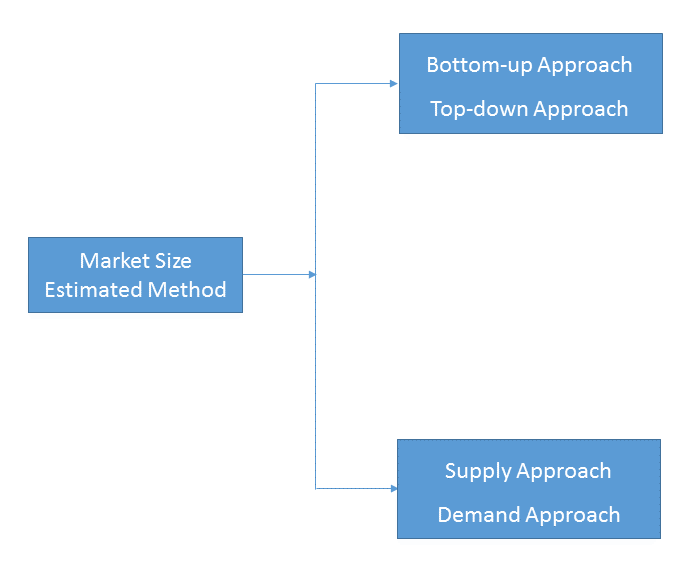
Bottom-up & top-down approach, supply & demand approach are the most important method which is used by HDIN Research to estimate the market size.
1)Top-down & Bottom-up Approach
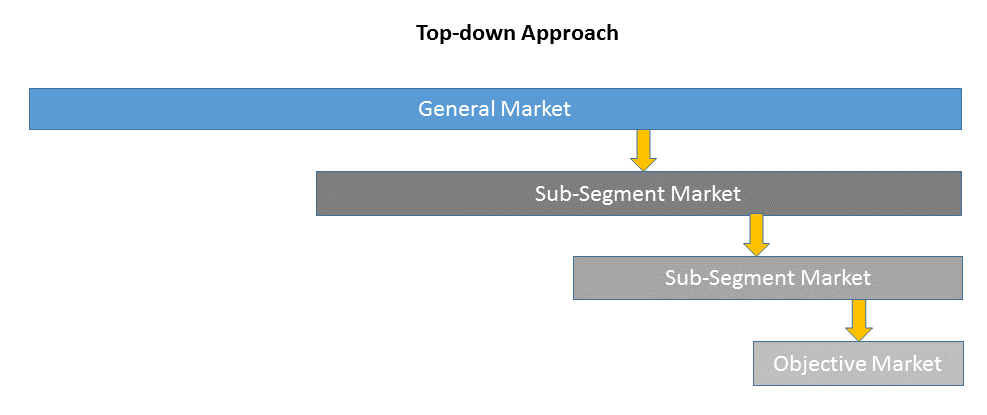
Top-down approach uses a general market size figure and determines the percentage that the objective market represents.
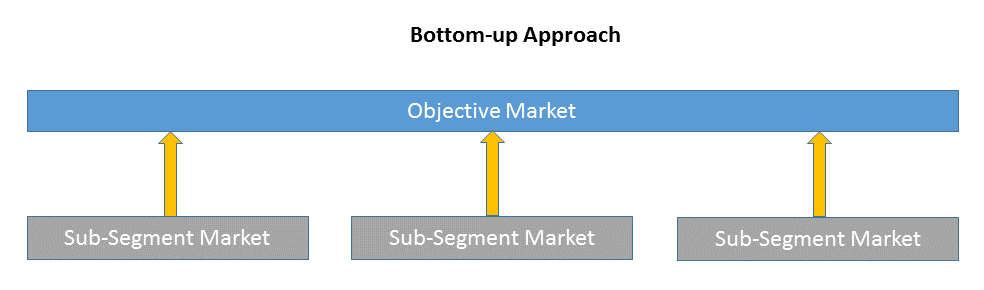
Bottom-up approach size the objective market by collecting the sub-segment information.
2)Supply & Demand Approach
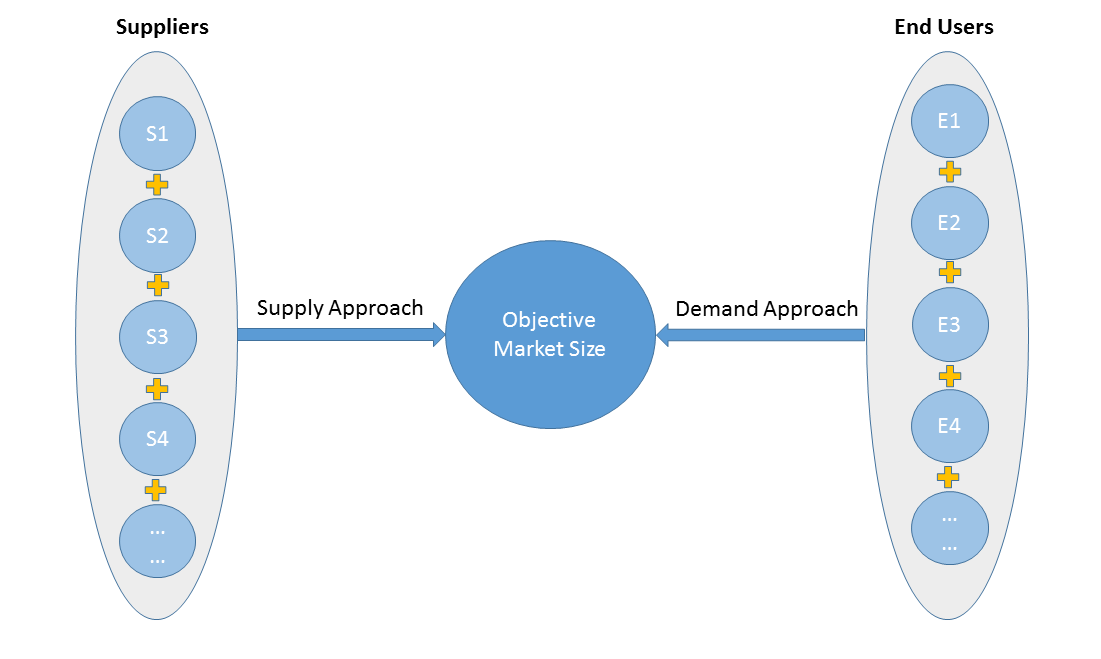
Supply approach is based on assessments of the size of each competitor supplying the objective market.
Demand approach combine end-user data within a market to estimate the objective market size. It is sometimes referred to as bottom-up approach.
- Forecasting Methodology
- Numerous factors impacting the market trend are considered for forecast model:
- New technology and application in the future;
- New project planned/under contraction;
- Global and regional underlying economic growth;
- Threatens of substitute products;
- Industry expert opinion;
- Policy and Society implication.
- Analysis Tools
1)PEST Analysis
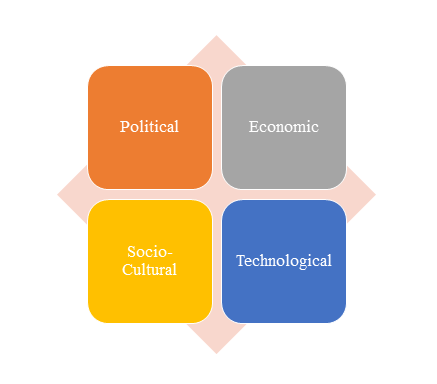
PEST Analysis is a simple and widely used tool that helps our client analyze the Political, Economic, Socio-Cultural, and Technological changes in their business environment.
- Benefits of a PEST analysis:
- It helps you to spot business opportunities, and it gives you advanced warning of significant threats.
- It reveals the direction of change within your business environment. This helps you shape what you’re doing, so that you work with change, rather than against it.
- It helps you avoid starting projects that are likely to fail, for reasons beyond your control.
- It can help you break free of unconscious assumptions when you enter a new country, region, or market; because it helps you develop an objective view of this new environment.
2)Porter’s Five Force Model Analysis
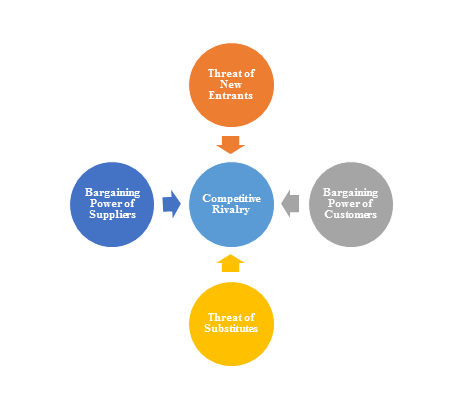
The Porter’s Five Force Model is a tool that can be used to analyze the opportunities and overall competitive advantage. The five forces that can assist in determining the competitive intensity and potential attractiveness within a specific area.
- Threat of New Entrants: Profitable industries that yield high returns will attract new firms.
- Threat of Substitutes: A substitute product uses a different technology to try to solve the same economic need.
- Bargaining Power of Customers: the ability of customers to put the firm under pressure, which also affects the customer's sensitivity to price changes.
- Bargaining Power of Suppliers: Suppliers of raw materials, components, labor, and services (such as expertise) to the firm can be a source of power over the firm when there are few substitutes.
- Competitive Rivalry: For most industries the intensity of competitive rivalry is the major determinant of the competitiveness of the industry.
3)Value Chain Analysis
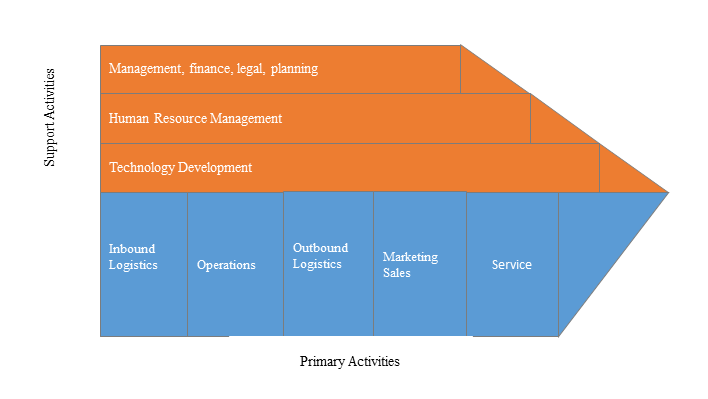
Value chain analysis is a tool to identify activities, within and around the firm and relating these activities to an assessment of competitive strength. Value chain can be analyzed by primary activities and supportive activities. Primary activities include: inbound logistics, operations, outbound logistics, marketing & sales, service. Support activities include: technology development, human resource management, management, finance, legal, planning.
4)SWOT Analysis
SWOT analysis is a tool used to evaluate a company's competitive position by identifying its strengths, weaknesses, opportunities and threats. The strengths and weakness is the inner factor; the opportunities and threats are the external factor. By analyzing the inner and external factors, the analysis can provide the detail information of the position of a player and the characteristics of the industry.
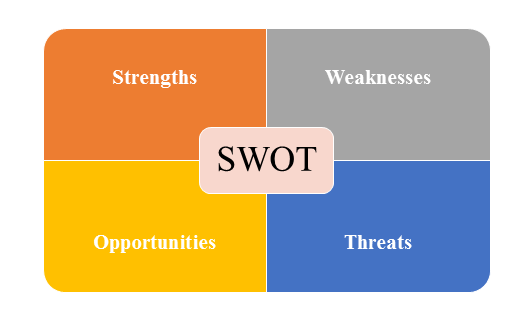
- Strengths describe what the player excels at and separates it from the competition
- Weaknesses stop the player from performing at its optimum level.
- Opportunities refer to favorable external factors that the player can use to give it a competitive advantage.
- Threats refer to factors that have the potential to harm the player.
- Data Sources
| Primary Sources | Secondary Sources |
|---|---|
| Face to face/Phone Interviews with market participants, such as: Manufactures; Distributors; End-users; Experts. Online Survey |
Government/International Organization Data: Annual Report/Presentation/Fact Book Internet Source Information Industry Association Data Free/Purchased Database Market Research Report Book/Journal/News |