Low Dead Space Syringe Market Summary & 2031 Forecast
- Single User License (1 Users) $ 3,500
- Team License (2~5 Users) $ 4,500
- Corporate License (>5 Users) $ 5,500
The Low Dead Space (LDS) syringe is engineered to suppress residual fluid trapped within the syringe nozzle and needle lumen from conventional Luer thresholds of 0.05 mL–0.10 mL down to sub-0.035 mL (and frequently below 0.002 mL). The global LDS syringe market size is valued at an estimated USD 1.1 billion to USD 1.8 billion in 2026, with a compound annual growth rate (CAGR) of 4.2% to 6.2% through 2031. While the 2024–2025 operating cycle absorbed painful post-pandemic inventory destocking across North American and European distributor networks, the 2026–2031 horizon is defined by bifurcated regional trade corridors. The United States has erected formidable protectionist walls via a 100% Section 301 tariff (enacted September 2024) and a supplemental 10% Section 122 ad valorem duty (effective February 20, 2026) targeting Chinese-manufactured syringes and needles. Simultaneously, China has normalized provincial Volume-Based Procurement (VBP) and enforced revised Good Manufacturing Practices (GMP, effective November 2026), triggering intense domestic consolidation.
Market leadership is splitting between western institutional incumbents (Becton Dickinson, Retractable Technologies, West Pharmaceutical Services, B. Braun), precision Asian engineering conglomerates (Terumo, Nipro, POONGLIM Pharmatech, TOP Corporation), and agile Chinese export/domestic titans (Shandong Weigao Group, Kindly Group, Jiangsu Caina Medical, Sol-Millennium). The underlying catalyst is clear: more than one in three new pharmaceutical approvals globally is a biologic. When administering high-concentration monoclonal antibodies (mAbs), antibody-drug conjugates (ADCs), or specialized ophthalmic anti-VEGF regimens that cost thousands of dollars per milliliter, standard hub dead-space retention equates to hundreds of dollars in discarded therapeutic value per injection.
Technical Architecture & Structural Segmentation
● Segmentation by Structural Needle Configuration
* Integrated Fixed-Needle LDS Syringe (Permanent Staked Configuration): In this architecture, the surgical stainless steel cannula (typically SUS304 or SUS316L) is directly staked via UV-curable medical epoxy or insert-molded into the syringe barrel collar during high-speed automated assembly. By entirely eliminating the internal female-to-male Luer conical interface, fixed-needle configurations achieve the lowest residual dead volume in the medical device industry, routinely registering below 0.002 mL (2 microliters). While historically confined to 0.3 mL–1.0 mL subcutaneous insulin and tuberculin formats, staked-needle architectures are rapidly capturing share in intravitreal ophthalmic injections and micro-aliquot aesthetic procedures. The primary operational constraint remains clinical inflexibility: healthcare workers cannot swap a large-bore aspiration needle (used to draw viscous biologics from a vial) for a high-gauge administration needle, exposing the fine cannula bevel to dulling during vial stopper penetration.
* Detachable Hub LDS Syringe (Engineered Needle Hub Core): Designed to preserve clinical workflow flexibility, this configuration retains a detachable Luer-slip or Luer-lock interface but modifies the internal geometry of the female needle hub. A precision-molded polymeric protrusion or reduced-volume internal cone is integrated into the needle hub, engineered to mate seamlessly with the interior geometry of the male syringe nozzle. This displaces fluid that would otherwise pool in the transition neck. While residual volume (typically 0.015 mL to 0.030 mL) is marginally higher than staked-needle variants, detachable hub LDS systems are heavily favored in hospital compounding pharmacies and oncology infusion suites where multi-step drug reconstitution and needle exchange are mandatory.
* Extended Plunger Syringe (Plunger-Piston Displacement Architecture): The most mechanically versatile format, the extended plunger design incorporates a micro-engineered conical protrusion—colloquially termed a "dead-space plug" or "snout"—at the distal tip of the elastomeric plunger stopper. Upon complete axial depression of the plunger rod, this elastomeric extension advances entirely through the syringe barrel neck and penetrates the base of the needle hub, mechanically purging trapped fluid. This allows standard detachable Luer connections to achieve sub-0.005 mL dead-space metrics. However, strategic audits of midstream fabrication lines reveal severe manufacturing bottlenecks in this segment: microscopic deviations in plunger-stopper concentricity or barrel nozzle internal diameter result in elastomeric shearing, fluid blow-by, or excessive break-loose and glide forces during clinician thumb depression.
● Segmentation by Volumetric Capacity
* Micro-Volume LDS Syringes (0.3 mL – 2.0 mL): Representing the overwhelming majority of global unit volume, this tier is anchored by 0.5 mL, 1.0 mL, and 2.0 mL barrels. The 1.0 mL format remains the undisputed global benchmark for mass immunization campaigns (such as mRNA and seasonal influenza vaccines), extracting 6 to 7 full doses from multi-dose vials originally calibrated for 5 doses. Beyond public health, micro-volume barrels dominate endocrine self-administration (insulin and GLP-1 receptor agonists), intravitreal anti-VEGF ophthalmology, and facial aesthetic micro-injections (botulinum toxins and cross-linked hyaluronic acid fillers), where dosing increments of 0.01 mL to 0.05 mL dictate clinical outcomes.
* Mid-Volume LDS Syringes (2.0 mL – 10.0 mL): Encompassing 3.0 mL, 5.0 mL, and 10.0 mL formats, this segment is the primary workhorse of acute-care hospital compounding, regional nerve block anesthesia, and pediatric/neonatal intensive care units (NICUs/PICUs). In neonatal workflows, where infant weight requires fractional milliliter dosing, dead-space fluid retention or inadvertent flushing of the hub space can trigger lethal toxic overdosing or sub-therapeutic failure. Furthermore, mid-volume LDS barrels are increasingly paired with Closed System Drug Transfer Devices (CSTDs) for subcutaneous and intravenous oncology boluses (mAbs and ADCs), balancing dead-space mitigation with barrel wall rigidity to prevent deflection under high extrusion pressures.
* Large-Volume LDS Syringes (10.0 mL – 20.0 mL and Above): Extending from 10 mL and 20 mL handheld formats up to specialized 50 mL/60 mL barrels engineered for automated syringe infusion pumps, this tier targets diagnostic imaging and surgical instillation. In conventional large-bore syringes, hub dead space routinely traps 0.20 mL to 0.50 mL of fluid. Large-volume LDS iterations are critical in computed tomography (CT), magnetic resonance imaging (MRI), and positron emission tomography (PET) workflows. They ensure complete vascular clearance of expensive contrast media and short-half-life radiopharmaceuticals, simultaneously reducing residual radioactive contamination within discarded single-use medical waste.
Downstream Clinical Workflows & Value Migration
Value creation within the hypodermic market is actively migrating away from volume-driven public health tenders toward value-driven specialty therapeutic delivery. Our internal modeling suggests that while unit volumes in baseline immunization have plateaued following the absorption of pandemic-era stockpiles, revenue growth is over-indexing in four specialized clinical corridors.
● High-Cost Biologics and Oncology Injections
The biopharmaceutical pipeline is heavily skewed toward high-concentration, high-viscosity subcutaneous formulations designed to replace lengthy intravenous hospital infusions. Drugs such as daratumumab, targeted immune checkpoint inhibitors, and novel antibody-drug conjugates carry wholesale acquisition costs ranging from USD 2,000 to over USD 10,000 per vial. Leaving 0.08 mL of a high-concentration biologic trapped in a standard Luer-lock hub represents an immediate, unrecoverable financial loss for hospital pharmacies and specialty infusion clinics. Moreover, in cytotoxic oncology compounding, integrating LDS plunger geometries with mechanical CSTDs eliminates residual hazardous drug pooling at the Luer interface, satisfying stringent occupational health mandates regarding aerosolization and dermal exposure for oncology nurses.
● Chronic Disease Self-Administration & Metabolic Therapies
The secular migration of chronic care from acute inpatient wards to the home setting has catalyzed an unprecedented surge in specialized self-injection formats. The explosive commercial adoption of glucagon-like peptide-1 (GLP-1) and dual GIP/GLP-1 receptor agonists for type 2 diabetes and clinical obesity, alongside intensive basal-bolus insulin regimens, has strained global primary packaging capacity. Within this corridor, LDS technology operates in two distinct modes: as standalone, ultra-fine gauge (31G–34G) disposable fixed-needle syringes for manual vial draw, and as prefillable primary container cores (glass or cyclic olefin polymer) integrated directly into automated spring-driven autoinjectors and wearable patch infusers.
● Aesthetic Medicine & Regenerative Dermatology
Minimally invasive cosmetic dermatology operates entirely on cash-pay economics, making clinic profitability hyper-sensitive to consumable yield. Practitioners administering botulinum neurotoxins, poly-L-lactic acid biostimulants, and hyaluronic acid dermal fillers require extreme volumetric precision across dozens of facial injection sites per patient. Utilizing fixed-needle or extended-plunger ultra-low dead space syringes enables dermatologists and plastic surgeons to capture an additional 10% to 15% of usable product per reconstituted vial or prefilled syringe. Furthermore, advanced LDS aesthetic syringes are engineered with silicone-free or baked-on lubrication profiles and ergonomic thumb pads to eliminate extrusion force variability (the "stiction" effect), preventing sudden bolus release that causes localized tissue trauma or vascular occlusion.
● Radiopharmaceuticals & Diagnostic Contrast Media
In nuclear medicine and interventional radiology, time is a depreciating asset. Positron-emitting radiotracers (such as F-18 FDG or Ga-68 PSMA) decay rapidly. When clinicians draw and administer micro-volumes of radiopharmaceuticals using standard syringes, a significant fraction of the calculated megabecquerel (MBq) activity remains trapped in the syringe nozzle, invalidating standardized uptake value (SUV) diagnostic calculations and requiring complex post-injection residual radioactivity measurements. Specialized micro-volume LDS radionuclide syringes—often encased in tungsten syringe shields—ensure near-100% dose delivery into the patient's venous line while minimizing occupational radiation exposure to nuclear medicine technologists.
● Vaccination Campaigns
While the acute demand spikes of 2021–2022 have subsided, mass immunization remains the foundational volume anchor of the LDS industry. Public health procurement frameworks governed by UNICEF, the World Health Organization (WHO), and national strategic stockpiles have permanently rewritten tender specifications. Standard hypodermic syringes are largely disqualified from multi-dose viral vaccine tenders; current mandates require the convergence of three features in a single barrel: low dead-space fluidics (<0.035 mL), fixed cannula geometry, and Auto-Disable (AD) or passive retractable safety mechanisms to prevent illicit syringe reuse and bloodborne pathogen transmission.
Regional Market Dynamics & Regulatory
● North America
North America represents the highest revenue-generating regional market globally, underpinned by elevated average selling prices (ASPs), mandatory OSHA needlestick safety legislation, and rapid uptake of biologic therapies. However, the U.S. supply chain is undergoing violent structural realignment due to federal trade interventions.
On September 13, 2024, the Office of the U.S. Trade Representative (USTR) finalized modifications under Section 301 of the Trade Act of 1974, imposing a punitive 100% tariff on syringes and needles originating from China. While auxiliary reciprocal tariffs enacted under the International Emergency Economic Powers Act (IEEPA) were subsequently vacated by the U.S. Supreme Court in February 2026, the core 100% Section 301 duty remains fiercely enforced, compounded by an additional 10% ad valorem tariff implemented under Section 122 of the Trade Act effective February 20, 2026.
This cumulative 110% import duty wall has shattered legacy OEM sourcing models. U.S. medical device brands that historically relied on Chinese contract manufacturers for 70% to 85% of their finished safety and LDS syringe volumes have faced severe margin compression. For example, Retractable Technologies, Inc. (RTI) aggressively restructured its procurement footprint, successfully reducing its reliance on Chinese manufacturing partners from over 80% down to 62.6% during the 2025 fiscal cycle while ramping capital expenditure at its Little Elm, Texas facilities. Conversely, top-tier Chinese fabricators are countering tariff barriers by securing high-value U.S. FDA regulatory clearances to maintain GPO access; notably, Jiangsu Caina Medical received FDA 510(k) clearance (K252814) on February 19, 2026, covering its comprehensive Profoject portfolio of Low Dead Space, Permanent-Needle, and Safety LDS syringes. Simultaneously, the FDA has tightened post-market surveillance on precision fluid delivery, evidenced by the April 2025 Warning Letter issued to ICU Medical regarding unapproved modifications to its Medfusion 4000 syringe infusion pumps, forcing new 510(k) re-validations in July 2025.
● Asia-Pacific
The Asia-Pacific region serves a dual role as the world's undisputed manufacturing powerhouse for cannula drawing and polymer molding, as well as the fastest-growing clinical consumption market.
Within China, domestic market dynamics are entirely dictated by the National Healthcare Security Administration (NHSA) and the National Medical Products Administration (NMPA). By year-end 2025, the nationwide implementation of Diagnosis-Related Groups (DRG) and Big Data Diagnosis-Intervention Packets (DIP) 2.0 encompassed over 95% of inpatient clinical workflows. Under DRG/DIP bundled payment caps, disposable syringes shifted from hospital profit centers to strict departmental cost items. Simultaneously, multi-provincial Volume-Based Procurement (VBP) alliances have instituted "anti-inward-competition" (anti-involution) bidding architectures that compress baseline ASPs while disqualifying sub-scale workshops that fail quality thresholds. Crucially, the NMPA promulgated revised Good Manufacturing Practices (GMP) for Medical Devices (effective November 1, 2026), mandating automated digital traceability (UDI), cleanroom environmental validation, and full life-cycle risk management. This regulatory pincer is forcing hundreds of small-scale syringe assemblers in Jiangsu and Zhejiang provinces to exit the market, consolidating domestic market share into automated giants like Shandong Weigao Group and Kindly Group, alongside Taiwan, China precision mold fabricators.
In Japan and South Korea, the market is characterized by ultra-high quality tolerances and deep integration between device makers and domestic pharmaceutical innovators. Japan’s clinical ecosystem is anchored by Terumo Corporation, Nipro Corporation, and TOP Corporation, which supply ultra-low residue fixed-needle systems and prefillable cyclic olefin polymer barrels. South Korea has established itself as a specialized export hub for extended-plunger LDS technologies, led by POONGLIM Pharmatech, leveraging state-backed smart-factory automation originally co-developed with Samsung Electronics.
● Europe
Europe represents a mature, highly regulated clinical environment where growth is driven by the transition toward prefilled delivery systems, home-care biologics, and stringent environmental and occupational safety directives. The overarching structural barrier in Europe remains the ongoing enforcement of the European Union Medical Device Regulation (EU MDR 2017/745). The transition from the legacy Medical Device Directive (MDD) has escalated the cost of maintaining CE marking for Class IIa and IIb sterile injection devices with measuring functions or integrated safety mechanisms. Manufacturers must compile exhaustive Clinical Evaluation Reports (CERs), conduct rigorous extractables and leachables (E&L) biocompatibility testing on elastomeric dead-space plungers, and maintain EUDAMED UDI compliance. This compliance burden has acted as a powerful moat for entrenched European leaders like B. Braun SE and well-capitalized international suppliers that have already absorbed recertification capex. Additionally, European hospital tenders increasingly incorporate Scope 3 carbon emission scoring, pressuring LDS manufacturers to reduce blister-pack polymer weight and explore bio-attributed polypropylene resins.
● South America
South America exhibits resilient volume demand anchored by Brazil, Colombia, and Chile, where expanding private hospital networks and modernized public immunization frameworks drive steady procurement of safety-engineered LDS consumables. Because South American jurisdictions have largely refrained from imposing punitive anti-dumping tariffs comparable to U.S. Section 301 measures, the region has become a primary trade diversion destination for Chinese and South Korean syringe exporters seeking to offload excess cleanroom capacity. However, persistent sovereign currency volatility and extended reimbursement payment cycles from public health ministries require multinational vendors to utilize localized distributor factoring and assemble knock-down kits within Mercosur trade zones to protect operating margins.
● Middle East & Africa
The MEA region presents a stark structural dichotomy. Within the Gulf Cooperation Council (GCC)—specifically Saudi Arabia and the United Arab Emirates—sovereign wealth investments in tertiary oncology centers, medical tourism hubs, and local biopharmaceutical fill-finish plants are driving premium demand for high-margin prefillable LDS syringes, CSTD-compatible barrels, and aesthetic micro-injectors. Conversely, Sub-Saharan African markets remain structurally dependent on multilateral donor procurement (Gavi, UNICEF, WHO). Demand in Africa is heavily concentrated in low-cost, fixed-needle 0.5 mL and 1.0 mL Auto-Disable (AD) LDS syringes designed for pediatric and epidemic vaccination campaigns, where procurement awards are fought over fractions of a cent per unit.
Supply Chain & Value Chain Architecture
● Upstream: Polymeric Resins, Elastomers, and Cannula Metallurgy
The upstream tier is bifurcated between commodity petrochemical derivatives and highly monopolized specialty medical polymers:
* Barrel and Plunger Polymers: Standard disposable LDS barrels utilize medical-grade homopolymer or random copolymer polypropylene (PP, CAS 9003-07-0), formulated with specialized nucleating agents for optical clarity and radiation stabilizers to prevent polymer chain scission (and subsequent barrel embrittlement or yellowing) during Electron Beam (E-beam) or Gamma sterilization. However, in the high-growth prefillable syringe (PFS) segment for biologics and mRNA therapies, traditional borosilicate glass is increasingly challenged by Cyclic Olefin Copolymers (COC) and Cyclic Olefin Polymers (COP). COP/COC barrels eliminate glass delamination risks, prevent metal ion leaching, break resistance, and allow injection molding of complex, zero-dead-space nozzle geometries that cannot be achieved via traditional glass-tubing flame-forming.
* Elastomeric Plunger Stoppers: The critical component in extended-plunger LDS syringes is the piston seal. Historically fabricated from vulcanized natural rubber, modern LDS stoppers utilize bromobutyl or chlorobutyl synthetic rubbers, or medical-grade Thermoplastic Elastomers (TPE), to eliminate latex allergenic proteins. For sensitive biologics, stoppers are laminated with fluoropolymer films (such as ETFE or PTFE) to create an inert barrier that prevents drug adsorption and eliminates the need for free silicone oil lubrication—a major culprit in sub-visible particulate contamination that causes biologic protein aggregation.
* Surgical Cannula Fabrication: Needle manufacturing requires cold-drawing and laser welding of austenitic stainless steel strip (SUS304 or molybdenum-alloyed SUS316L for enhanced corrosion resistance) into micro-diameter tubing. Achieving painless tissue penetration requires multi-stage electrochemical grinding (three-bevel or five-bevel lancet geometry) followed by micro-bead blasting and curing with medical-grade polydimethylsiloxane (PDMS) lubricants.
● Midstream Bottleneck: High-Cavitation Hot-Runner Mold Tooling
The single greatest technical barrier to entry in the LDS sector is precision mold engineering. In a standard Luer syringe, minor dimensional variances in the nozzle interior are inconsequential. In an extended-plunger or detachable-hub LDS syringe, the male plunger extension must mate with the female barrel nozzle and needle hub within tolerances measured in single-digit microns (typically ±0.005 mm).
Producing these components economically requires 64-cavity to 128-cavity hot-runner injection molds operating at cycle times under 8 seconds. If thermal expansion across the mold platen is uneven, or if core-pin deflection occurs during high-pressure polymer injection, the resulting syringe barrels will exhibit wall-thickness eccentricity (core shift). Core shift causes two catastrophic clinical failures: either the extended plunger tip jams prematurely against the barrel shoulder (leaving massive dead space and failing to deliver the full dose), or the elastomeric seal deforms asymmetrically, allowing high-viscosity fluid to blow backward past the plunger ribs under thumb pressure. Furthermore, in integrated fixed-needle lines, automated high-speed assembly machines must orient the needle bevel precisely aligned with the printed volumetric graduations on the barrel exterior, inspected at rates exceeding 400 parts per minute via in-line optical machine vision systems.
Sterilization & Packaging Logistics
Completed assemblies undergo terminal sterilization via either Ethylene Oxide (EtO, CAS 75-21-8) gas diffusion or ionizing radiation (Gamma Co-60 or high-energy E-beam). In North America and Europe, heightened environmental regulations from the U.S. EPA and EU authorities regarding fugitive EtO emissions have created sterilization capacity bottlenecks, forcing manufacturers to reformulate polypropylene barrels and elastomeric stoppers to withstand E-beam irradiation without altering mechanical glide forces.
● Downstream Value Migration
Downstream value is migrating away from bulk hospital distribution toward integrated pharmaceutical packaging partnerships. Device manufacturers that sell bulk unsterile or sterile disposable syringes to hospital GPOs capture modest single-digit to low-double-digit operating margins. Conversely, manufacturers offering pre-sterilized, ready-to-fill (RTF) low dead space syringes packaged in standardized nest-and-tub configurations to pharmaceutical CDMOs capture operating margins exceeding 25% to 35%, protected by multi-year regulatory lock-in once the syringe is registered within the drug's New Drug Application (NDA) or Biologics License Application (BLA).
Competitive Landscape & Company Dossiers
● Becton, Dickinson and Company (BD): Headquartered in New Jersey, BD is the global hegemon in medication delivery infrastructure. Following the April 2022 spin-off of its retail diabetes care business into Embecta Corp., BD consolidated its core injection assets within its BD Medical segment, divided between Medication Delivery Solutions (institutional disposables) and Pharmaceutical Systems (prefillable primary packaging). Its LDS portfolio spans high-volume institutional formats (BD Integra retracting syringes with Tru-Lok technology, specialized BD Eclipse and Luer-Lok low-waste combinations) and glass/polymer prefillable barrels.
● Retractable Technologies, Inc. (RTI): Based in Little Elm, Texas, RTI is a pure-play specialist in automated sharps safety and low-waste fluid delivery. Its flagship franchise is the VanishPoint automated retractable syringe line (0.5 mL to 10 mL), supplemented by Patient Safe syringes and EasyPoint retractable needles. The VanishPoint 1.0 mL syringe is engineered with a specialized internal plunger mechanism where full dose depression simultaneously purges the nozzle dead space and triggers passive spring-loaded retraction of the contaminated needle directly from the patient’s tissue into the plunger barrel.
● West Pharmaceutical Services, Inc.: Operating from Exton, Pennsylvania, West deliberately eschews the commodity hospital disposable syringe market, positioning itself exclusively as the premier upstream engineering partner for injectable pharmaceutical containment and delivery. Its LDS capabilities are anchored by its NovaPure and FluroTec fluoropolymer-coated elastomeric plungers—featuring precision-molded conical front-end geometries—and its Daikyo Crystal Zenith (CZ) cyclic olefin polymer insert-needle prefillable syringe systems.
● Terumo Corporation: Headquartered in Tokyo, Terumo is a premier Japanese medtech conglomerate with deep expertise in vascular intervention, blood management, and hypodermic engineering. Its LDS portfolio is anchored by its proprietary FN (Fine Needle) fixed-needle low dead-space syringes, SurGuard safety needle systems, and PLAJEX cyclic olefin polymer prefillable syringes with baked-on silicone or silicone-free i-coating technology.
● Nipro Corporation: Based in Osaka, Nipro is one of the world’s highest-volume vertically integrated manufacturers of hypodermic needles, disposable syringes, dialyzers, and pharmaceutical glass tubing. Nipro produces an extensive matrix of standard Luer-lock, Luer-slip, and specialized low dead space syringes with integrated or detachable safety needles.
● ICU Medical, Inc.: Following its transformative acquisition of Smiths Medical, San Clemente-based ICU Medical manages a vast portfolio spanning infusion therapy, vascular access, and oncology consumables. Its syringe and injection assets encompass the legacy Jelco safety hypodermic portfolio, Portex arterial blood gas syringes, Medfusion 4000 precision syringe infusion pumps, and market-leading ChemoLock and ChemoClave Closed System Drug Transfer Devices (CSTDs).
● B. Braun SE: Headquartered in Melsungen, Germany, B. Braun is a privately held European healthcare titan. Its syringe division is anchored by the ubiquitous Omnifix (three-piece) and Injekt (two-piece) product families, including dedicated 0.5 mL and 1.0 mL low dead space configurations, Omnican fine-needle insulin/tuberculin systems, and specialized Original Perfusor syringes engineered for B. Braun’s automated Space infusion pump ecosystems.
● Shandong Weigao Group Medical Polymer Co., Ltd. (WEGO): China’s largest medical consumable conglomerate, Weigao operates a bifurcated syringe strategy. Its clinical care division mass-produces disposable sterile syringes, auto-disable immunization syringes, and safety needles, while its publicly listed subsidiary, Shandong WEGO Prefills, dominates China’s domestic pharmaceutical primary packaging market.
● Shanghai Kindly Enterprise Development Group Co., Ltd. (Kindly Group): Kindly Group is China’s premier vertically integrated manufacturer of medical puncture instruments, holding 146 domestic NMPA registrations and 176 international regulatory certificates. Its portfolio spans raw stainless steel needle tubing, specialized biopsy and anesthesia needles, safety hypodermic syringes, and low-residue injection devices.
● Sol-Millennium Medical Inc.: Operating as a globally integrated medtech enterprise with commercial headquarters in Chicago and extensive manufacturing in China and Brazil, Sol-Millennium specializes exclusively in safety-engineered and low-waste medication delivery. Its portfolio is anchored by the SOL-M Low Dead Space syringe line (utilizing extended plunger tip geometry to achieve <0.005 mL residual volume) and the SOL-CARE safety syringe family (featuring fixed needles and manual or retractable safety shields achieving down to 0.001 mL dead space).
● Jiangsu Caina Medical Co., Ltd. (Caina Technology): A premier Chinese OEM/ODM and branded fabricator of precision hypodermic consumables, Caina produces safety syringes, low-resistance (LOR) anesthesia syringes, and the comprehensive Profoject LDS portfolio.
● POONGLIM Pharmatech Inc.: A specialized South Korean precision medical device manufacturer based in Gunsan, POONGLIM rose to global prominence by co-developing mass-production ultra-low dead space syringes alongside the South Korean Ministry of SMEs and Startups and Samsung Electronics. Its patented extended-plunger safety and Luer syringes reduce residual dead volume to approximately 0.004 mL.
● TOP Corporation: A historic Tokyo-based medical instrumentation manufacturer, TOP produces regional anesthesia needles, infusion lines, and the specialized TOP Syringe MV—a fixed-needle low dead space syringe approved by Japan’s Ministry of Health, Labour and Welfare (MHLW).
1.1 Executive Summary and Core Value Migration Trends 1
1.2 Product Definition and Fluid Retention Physics of Low Dead Space Syringe 2
1.3 Research Methodology and Data Triangulation Framework 3
1.4 Primary and Secondary Data Sources and Assumptions 4
1.5 List of Abbreviations and Technical Nomenclature 6
Chapter 2 Global Low Dead Space Syringe Market Architecture and Macro-Dynamics 7
2.1 Global Market Volume (Consumption) and Market Size (Value) Trajectory (2021-2031) 7
2.2 Value Chain and Supply Chain Resilience Architecture 9
2.2.1 Upstream Raw Material Sourcing 9
2.2.2 Precision Injection Molding, Silicone-Free Lubrication, and Automated Assembly Processes 11
2.2.3 Downstream Distribution Channels and Hospital Group Purchasing Organization (GPO) Procurement 12
2.3 Regulatory Compliance and Pharmacopoeial Standards (ISO 7886-1, FDA 510(k), EU MDR) 13
2.4 Pricing Dynamics, Cost Structure Decomposition, and Margin Shifting 14
2.5 Patent Landscape and Technological Innovation in Zero-Residual Fluid Mechanics 15
Chapter 3 Global Trade Logistics and Import/Export Flow Analysis 17
3.1 Global Trade Flow Matrix and Tariff Impact Assessment 17
3.2 Primary Exporting Hubs: Production Capacity and Outbound Logistics (2021-2026) 18
3.3 Primary Importing Markets: Dependency Ratios and Inventory Buffering (2021-2026) 20
3.4 Supply Chain Localization Strategies and Nearshoring Trends 21
Chapter 4 Global Market Segmentation by Structural Needle Configuration 23
4.1 Comparative Fluid Waste Performance and Clinical Adoption by Configuration 23
4.2 Integrated Fixed-Needle LDS Syringe Market Size and Volume (2021-2031) 24
4.3 Detachable Hub LDS Syringe Market Size and Volume (2021-2031) 26
4.4 Extended Plunger Syringe Market Size and Volume (2021-2031) 27
Chapter 5 Global Market Segmentation by Volume Capacity 29
5.1 Volumetric Tolerance and Dead Space Thresholds by Syringe Size 29
5.2 Micro-Volume Syringe (0.3 mL-2.0 mL) Market Size and Volume (2021-2031) 30
5.3 Mid-Volume Syringe (2 mL-10 mL) Market Size and Volume (2021-2031) 32
5.4 Large-Volume Syringe (10 mL-20 mL) Market Size and Volume (2021-2031) 33
Chapter 6 Global Market Segmentation by Downstream Application 35
6.1 Economic Impact of Drug Overfill Reduction Across Therapeutic Verticals 35
6.2 Vaccination Market Consumption and Value (2021-2031) 36
6.3 High-Cost Biologics and Oncology Injection Market Consumption and Value (2021-2031) 38
6.4 Radiopharmaceuticals & Contrast Media Market Consumption and Value (2021-2031) 39
6.5 Aesthetic Medicine Market Consumption and Value (2021-2031) 41
6.6 Chronic Disease Self-Administration Market Consumption and Value (2021-2031) 42
6.7 Others Market Consumption and Value (2021-2031) 43
Chapter 7 North America Market Performance and Country-Level Intelligence 44
7.1 North America Low Dead Space Syringe Market Volume and Revenue Overview (2021-2031) 44
7.2 United States 46
7.3 Canada 47
7.4 Mexico 48
Chapter 8 Europe Market Performance and Country-Level Intelligence 50
8.1 Europe Low Dead Space Syringe Market Volume and Revenue Overview (2021-2031) 50
8.2 Germany 52
8.3 France 53
8.4 United Kingdom 54
8.5 Italy 55
8.6 Spain 56
8.7 Switzerland & Rest of Europe 57
Chapter 9 Asia-Pacific Market Performance and Country-Level Intelligence 58
9.1 Asia-Pacific Low Dead Space Syringe Market Volume and Revenue Overview (2021-2031) 58
9.2 China 60
9.3 Japan 61
9.4 South Korea 62
9.5 India 63
9.6 Australia 64
Chapter 10 Latin America and Middle East & Africa Market Performance 65
10.1 Latin America Low Dead Space Syringe Market Volume and Revenue Overview (2021-2031) 65
10.1.1 Brazil 66
10.1.2 Argentina 67
10.2 Middle East & Africa Low Dead Space Syringe Market Volume and Revenue Overview (2021-2031) 68
10.2.1 Saudi Arabia 69
10.2.2 United Arab Emirates 70
10.2.3 South Africa 71
Chapter 11 Corporate Competitive Landscape and Market Share Benchmarking 72
11.1 Global Manufacturer Tiering and Market Concentration (CR3, CR5, HHI Index) 72
11.2 Global Corporate Sales Volume Share by Company (2021-2026) 73
11.3 Global Corporate Revenue Share by Company (2021-2026) 74
11.4 Strategic Manufacturing Footprint and Capacity Expansion Matrix 75
Chapter 12 Global Tier-1 Multinationals Corporate Intelligence 77
12.1 Becton Dickinson 77
12.1.1 Corporate Profile and Manufacturing Asset Footprint 77
12.1.2 SWOT Analysis and Strategic Positioning 78
12.1.3 Product-Specific Operations: Sales Volume, Price, Cost, Gross Margin, and Market Share (2021-2026) 79
12.1.4 R&D Expenditure and Next-Generation Drug Delivery Integration 80
12.2 Terumo Corporation 81
12.2.1 Corporate Profile and Manufacturing Asset Footprint 81
12.2.2 SWOT Analysis and Strategic Positioning 82
12.2.3 Product-Specific Operations: Sales Volume, Price, Cost, Gross Margin, and Market Share (2021-2026) 83
12.2.4 Go-To-Market (GTM) Strategy and Biopharma Partnerships 84
12.3 B. Braun 85
12.3.1 Corporate Profile and Manufacturing Asset Footprint 85
12.3.2 SWOT Analysis and Strategic Positioning 86
12.3.3 Product-Specific Operations: Sales Volume, Price, Cost, Gross Margin, and Market Share (2021-2026) 87
12.3.4 Hospital Channel Penetration Strategy 88
12.4 Nipro 89
12.4.1 Corporate Profile and Manufacturing Asset Footprint 89
12.4.2 SWOT Analysis and Strategic Positioning 90
12.4.3 Product-Specific Operations: Sales Volume, Price, Cost, Gross Margin, and Market Share (2021-2026) 91
12.4.4 Global Production Capacity Optimization 92
12.5 West Pharma 93
12.5.1 Corporate Profile and Manufacturing Asset Footprint 93
12.5.2 SWOT Analysis and Strategic Positioning 94
12.5.3 Product-Specific Operations: Sales Volume, Price, Cost, Gross Margin, and Market Share (2021-2026) 95
12.5.4 Elastomer Plunger Technology and Containment Synergies 96
Chapter 13 North American Specialized Manufacturers Corporate Intelligence 97
13.1 Retractable Technologies 97
13.1.1 Corporate Profile and Manufacturing Asset Footprint 97
13.1.2 SWOT Analysis and Strategic Positioning 98
13.1.3 Product-Specific Operations: Sales Volume, Price, Cost, Gross Margin, and Market Share (2021-2026) 99
13.1.4 Safety Mechanism Integration and Government Contracting 100
13.2 ICU Medical 101
13.2.1 Corporate Profile and Manufacturing Asset Footprint 101
13.2.2 SWOT Analysis and Strategic Positioning 102
13.2.3 Product-Specific Operations: Sales Volume, Price, Cost, Gross Margin, and Market Share (2021-2026) 103
13.2.4 Portfolio Rationalization post-Smiths Medical Acquisition 104
13.3 Sol-Millennium Medical Inc. 105
13.3.1 Corporate Profile and Manufacturing Asset Footprint 105
13.3.2 SWOT Analysis and Strategic Positioning 106
13.3.3 Product-Specific Operations: Sales Volume, Price, Cost, Gross Margin, and Market Share (2021-2026) 107
13.3.4 Global Distribution Network and OEM Manufacturing Dynamics 108
Chapter 14 Asia-Pacific Precision Manufacturers Corporate Intelligence 109
14.1 Shandong Weigao Group 109
14.1.1 Corporate Profile and Manufacturing Asset Footprint 109
14.1.2 SWOT Analysis and Strategic Positioning 110
14.1.3 Product-Specific Operations: Sales Volume, Price, Cost, Gross Margin, and Market Share (2021-2026) 111
14.1.4 Domestic Volume-Based Procurement Navigation and Export Growth 112
14.2 Kindly Group 113
14.2.1 Corporate Profile and Manufacturing Asset Footprint 113
14.2.2 SWOT Analysis and Strategic Positioning 114
14.2.3 Product-Specific Operations: Sales Volume, Price, Cost, Gross Margin, and Market Share (2021-2026) 115
14.2.4 Vertical Integration in Cannula Drawing and Polymer Processing 116
14.3 TOP Corporation 117
14.3.1 Corporate Profile and Manufacturing Asset Footprint 117
14.3.2 SWOT Analysis and Strategic Positioning 118
14.3.3 Product-Specific Operations: Sales Volume, Price, Cost, Gross Margin, and Market Share (2021-2026) 119
14.3.4 Regional Market Defensiveness and Quality Control Protocols 120
14.4 POONGLIM Pharmatech Inc 121
14.4.1 Corporate Profile and Manufacturing Asset Footprint 121
14.4.2 SWOT Analysis and Strategic Positioning 122
14.4.3 Product-Specific Operations: Sales Volume, Price, Cost, Gross Margin, and Market Share (2021-2026) 123
14.4.4 Precision Mold Engineering and Automated Inspection Capabilities 124
14.5 Jiangsu Caina Medical Co. Ltd 125
14.5.1 Corporate Profile and Manufacturing Asset Footprint 125
14.5.2 SWOT Analysis and Strategic Positioning 126
14.5.3 Product-Specific Operations: Sales Volume, Price, Cost, Gross Margin, and Market Share (2021-2026) 127
14.5.4 ODM/OEM Client Retention and Overseas Capacity Expansion 128
Chapter 15 Strategic Market Opportunities and Risk Mitigation Matrix (2027-2031) 129
Table 2 Raw Material Grade Specifications and Primary Global Chemical Suppliers 10
Table 3 Global Low Dead Space Syringe Manufacturing Cost Structure Breakdown (2026) 14
Table 4 Key Active Patents in Low Dead Space Plunger and Hub Geometry (2021-2026) 16
Table 5 Global Low Dead Space Syringe Export Volume (Million Units) by Key Manufacturing Hub (2021-2026) 19
Table 6 Global Low Dead Space Syringe Import Volume (Million Units) by Major Consumption Country (2021-2026) 20
Table 7 Global Market Volume (Million Units) by Structural Needle Configuration (2021-2026) 23
Table 8 Global Market Volume Forecast (Million Units) by Structural Needle Configuration (2027-2031) 24
Table 9 Global Market Size (USD Million) by Structural Needle Configuration (2021-2026) 25
Table 10 Global Market Size Forecast (USD Million) by Structural Needle Configuration (2027-2031) 26
Table 11 Global Market Volume (Million Units) by Volume Capacity (2021-2026) 29
Table 12 Global Market Volume Forecast (Million Units) by Volume Capacity (2027-2031) 30
Table 13 Global Market Size (USD Million) by Volume Capacity (2021-2026) 31
Table 14 Global Market Size Forecast (USD Million) by Volume Capacity (2027-2031) 32
Table 15 Global Market Volume (Million Units) by Downstream Application (2021-2026) 35
Table 16 Global Market Volume Forecast (Million Units) by Downstream Application (2027-2031) 36
Table 17 Global Market Size (USD Million) by Downstream Application (2021-2026) 37
Table 18 Global Market Size Forecast (USD Million) by Downstream Application (2027-2031) 38
Table 19 North America Low Dead Space Syringe Market Volume (Million Units) by Country (2021-2031) 44
Table 20 North America Low Dead Space Syringe Market Size (USD Million) by Country (2021-2031) 45
Table 21 Europe Low Dead Space Syringe Market Volume (Million Units) by Country (2021-2031) 50
Table 22 Europe Low Dead Space Syringe Market Size (USD Million) by Country (2021-2031) 51
Table 23 Asia-Pacific Low Dead Space Syringe Market Volume (Million Units) by Country (2021-2031) 58
Table 24 Asia-Pacific Low Dead Space Syringe Market Size (USD Million) by Country (2021-2031) 59
Table 25 Latin America Low Dead Space Syringe Market Volume (Million Units) and Size (USD Million) by Country (2021-2031) 65
Table 26 Middle East & Africa Low Dead Space Syringe Market Volume (Million Units) and Size (USD Million) by Country (2021-2031) 68
Table 27 Global Low Dead Space Syringe Sales Volume (Million Units) by Company (2021-2026) 73
Table 28 Global Low Dead Space Syringe Sales Revenue (USD Million) by Company (2021-2026) 74
Table 29 Becton Dickinson Low Dead Space Syringe Sales, Price, Cost and Gross Profit Margin (2021-2026) 79
Table 30 Terumo Corporation Low Dead Space Syringe Sales, Price, Cost and Gross Profit Margin (2021-2026) 83
Table 31 B. Braun Low Dead Space Syringe Sales, Price, Cost and Gross Profit Margin (2021-2026) 87
Table 32 Nipro Low Dead Space Syringe Sales, Price, Cost and Gross Profit Margin (2021-2026) 91
Table 33 West Pharma Low Dead Space Syringe Sales, Price, Cost and Gross Profit Margin (2021-2026) 95
Table 34 Retractable Technologies Low Dead Space Syringe Sales, Price, Cost and Gross Profit Margin (2021-2026) 99
Table 35 ICU Medical Low Dead Space Syringe Sales, Price, Cost and Gross Profit Margin (2021-2026) 103
Table 36 Sol-Millennium Medical Inc. Low Dead Space Syringe Sales, Price, Cost and Gross Profit Margin (2021-2026) 107
Table 37 Shandong Weigao Group Low Dead Space Syringe Sales, Price, Cost and Gross Profit Margin (2021-2026) 111
Table 38 Kindly Group Low Dead Space Syringe Sales, Price, Cost and Gross Profit Margin (2021-2026) 115
Table 39 TOP Corporation Low Dead Space Syringe Sales, Price, Cost and Gross Profit Margin (2021-2026) 119
Table 40 POONGLIM Pharmatech Inc Low Dead Space Syringe Sales, Price, Cost and Gross Profit Margin (2021-2026) 123
Table 41 Jiangsu Caina Medical Co. Ltd Low Dead Space Syringe Sales, Price, Cost and Gross Profit Margin (2021-2026) 127
Figure 1 Dead Space Fluid Retention Comparison: Conventional Luer-Lock vs. Low Dead Space Architecture 2
Figure 2 Research Methodology and Bottom-Up Market Sizing Model 4
Figure 3 Global Low Dead Space Syringe Market Volume (Million Units) and Growth Rate (2021-2031) 8
Figure 4 Global Low Dead Space Syringe Industry Value Chain and Margin Distribution 9
Figure 5 Global Average Selling Price (ASP) Trajectory by Configuration (2021-2031) 15
Figure 6 Global Trade Flow Map: Primary Production Hubs to Consumption Centers (2026) 18
Figure 7 Global Market Value Share by Structural Needle Configuration (2021, 2026, 2031) 24
Figure 8 Integrated Fixed-Needle LDS Syringe Demand Trajectory (2021-2031) 25
Figure 9 Detachable Hub LDS Syringe Demand Trajectory (2021-2031) 27
Figure 10 Extended Plunger Syringe Demand Trajectory (2021-2031) 28
Figure 11 Global Market Value Share by Volume Capacity (2021, 2026, 2031) 30
Figure 12 Micro-Volume Syringe (0.3 mL-2.0 mL) Market Revenue and Volume (2021-2031) 31
Figure 13 Mid-Volume Syringe (2 mL-10 mL) Market Revenue and Volume (2021-2031) 33
Figure 14 Large-Volume Syringe (10 mL-20 mL) Market Revenue and Volume (2021-2031) 34
Figure 15 Global Market Value Share by Downstream Application (2021, 2026, 2031) 36
Figure 16 Aesthetic Medicine and Biologics Overfill Cost Savings Model 40
Figure 17 North America Market Volume and Value Forecast (2021-2031) 45
Figure 18 Europe Market Volume and Value Forecast (2021-2031) 51
Figure 19 Asia-Pacific Market Volume and Value Forecast (2021-2031) 59
Figure 20 Global Low Dead Space Syringe Market Concentration (CR3 & CR5) Evolution (2021-2026) 72
Figure 21 Global Corporate Revenue Share Matrix (2026) 75
Figure 22 Becton Dickinson Low Dead Space Syringe Market Share (2021-2026) 80
Figure 23 Terumo Corporation Low Dead Space Syringe Market Share (2021-2026) 84
Figure 24 B. Braun Low Dead Space Syringe Market Share (2021-2026) 88
Figure 25 Nipro Low Dead Space Syringe Market Share (2021-2026) 92
Figure 26 West Pharma Low Dead Space Syringe Market Share (2021-2026) 96
Figure 27 Retractable Technologies Low Dead Space Syringe Market Share (2021-2026) 100
Figure 28 ICU Medical Low Dead Space Syringe Market Share (2021-2026) 104
Figure 29 Sol-Millennium Medical Inc. Low Dead Space Syringe Market Share (2021-2026) 108
Figure 30 Shandong Weigao Group Low Dead Space Syringe Market Share (2021-2026) 112
Figure 31 Kindly Group Low Dead Space Syringe Market Share (2021-2026) 116
Figure 32 TOP Corporation Low Dead Space Syringe Market Share (2021-2026) 120
Figure 33 POONGLIM Pharmatech Inc Low Dead Space Syringe Market Share (2021-2026) 124
Figure 34 Jiangsu Caina Medical Co. Ltd Low Dead Space Syringe Market Share (2021-2026) 128
Research Methodology
- Market Estimated Methodology:
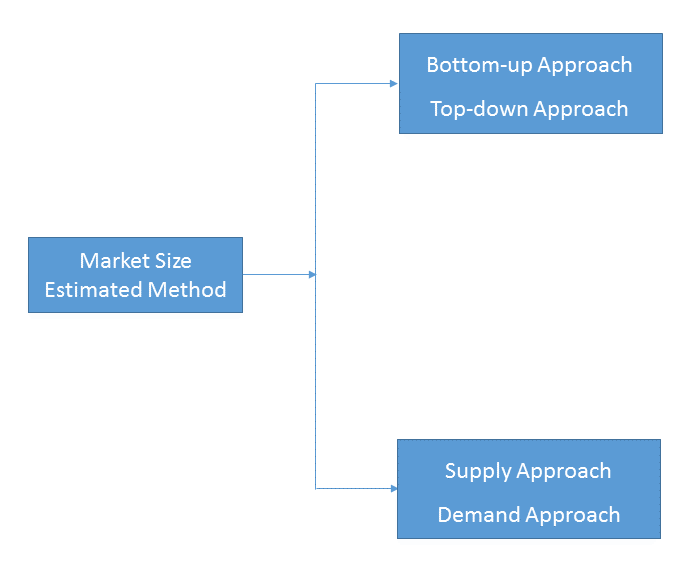
Bottom-up & top-down approach, supply & demand approach are the most important method which is used by HDIN Research to estimate the market size.
1)Top-down & Bottom-up Approach
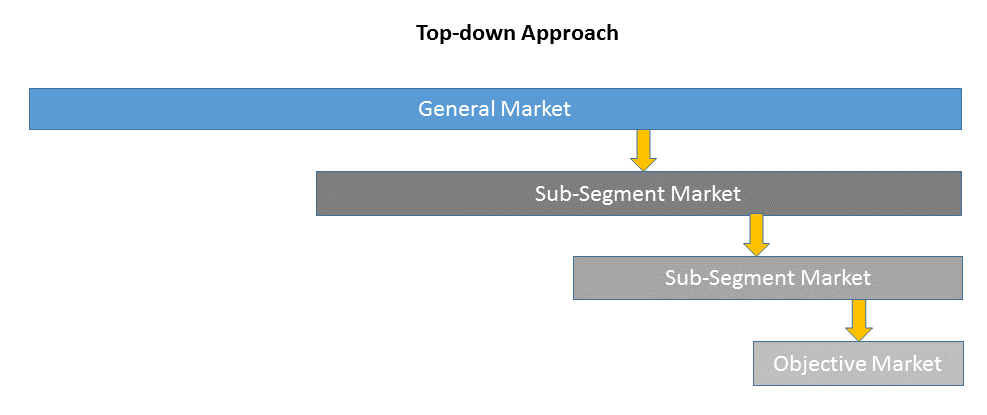
Top-down approach uses a general market size figure and determines the percentage that the objective market represents.
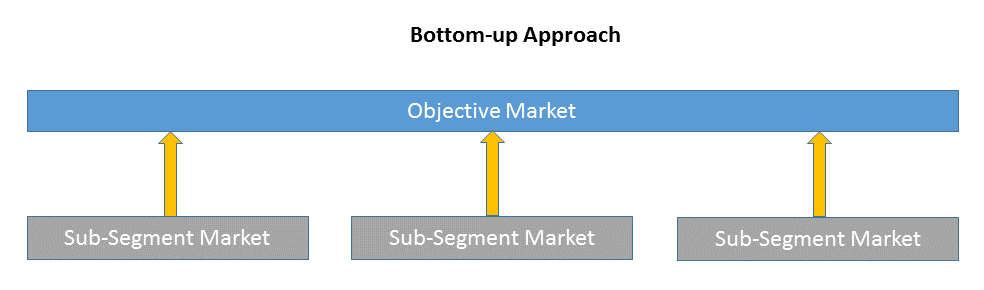
Bottom-up approach size the objective market by collecting the sub-segment information.
2)Supply & Demand Approach
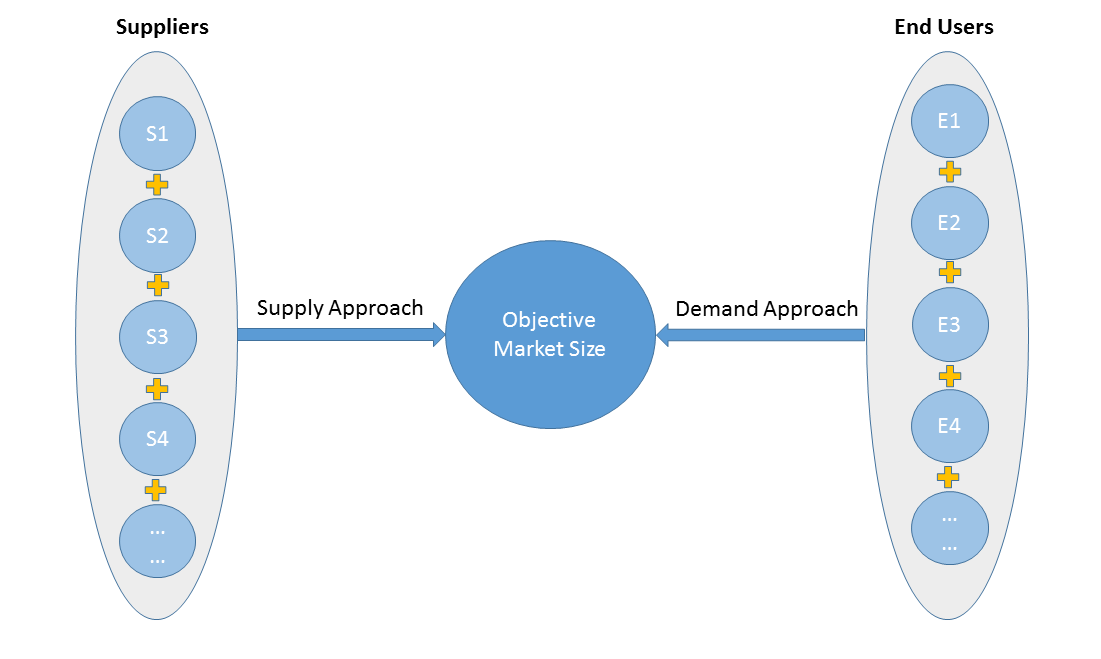
Supply approach is based on assessments of the size of each competitor supplying the objective market.
Demand approach combine end-user data within a market to estimate the objective market size. It is sometimes referred to as bottom-up approach.
- Forecasting Methodology
- Numerous factors impacting the market trend are considered for forecast model:
- New technology and application in the future;
- New project planned/under contraction;
- Global and regional underlying economic growth;
- Threatens of substitute products;
- Industry expert opinion;
- Policy and Society implication.
- Analysis Tools
1)PEST Analysis
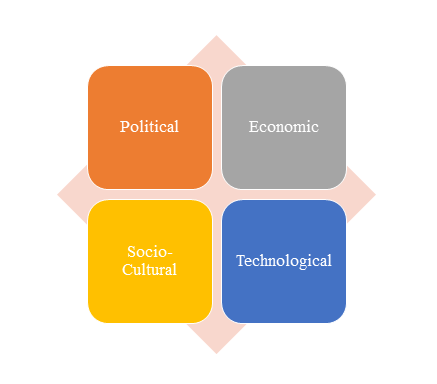
PEST Analysis is a simple and widely used tool that helps our client analyze the Political, Economic, Socio-Cultural, and Technological changes in their business environment.
- Benefits of a PEST analysis:
- It helps you to spot business opportunities, and it gives you advanced warning of significant threats.
- It reveals the direction of change within your business environment. This helps you shape what you’re doing, so that you work with change, rather than against it.
- It helps you avoid starting projects that are likely to fail, for reasons beyond your control.
- It can help you break free of unconscious assumptions when you enter a new country, region, or market; because it helps you develop an objective view of this new environment.
2)Porter’s Five Force Model Analysis
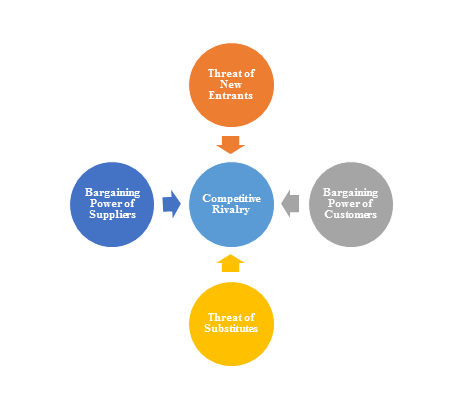
The Porter’s Five Force Model is a tool that can be used to analyze the opportunities and overall competitive advantage. The five forces that can assist in determining the competitive intensity and potential attractiveness within a specific area.
- Threat of New Entrants: Profitable industries that yield high returns will attract new firms.
- Threat of Substitutes: A substitute product uses a different technology to try to solve the same economic need.
- Bargaining Power of Customers: the ability of customers to put the firm under pressure, which also affects the customer's sensitivity to price changes.
- Bargaining Power of Suppliers: Suppliers of raw materials, components, labor, and services (such as expertise) to the firm can be a source of power over the firm when there are few substitutes.
- Competitive Rivalry: For most industries the intensity of competitive rivalry is the major determinant of the competitiveness of the industry.
3)Value Chain Analysis
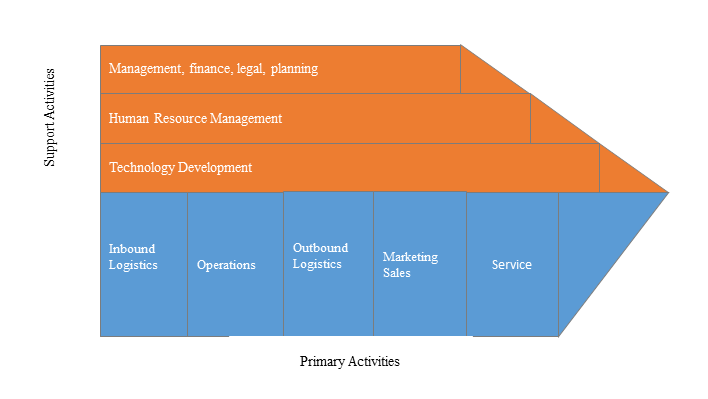
Value chain analysis is a tool to identify activities, within and around the firm and relating these activities to an assessment of competitive strength. Value chain can be analyzed by primary activities and supportive activities. Primary activities include: inbound logistics, operations, outbound logistics, marketing & sales, service. Support activities include: technology development, human resource management, management, finance, legal, planning.
4)SWOT Analysis
SWOT analysis is a tool used to evaluate a company's competitive position by identifying its strengths, weaknesses, opportunities and threats. The strengths and weakness is the inner factor; the opportunities and threats are the external factor. By analyzing the inner and external factors, the analysis can provide the detail information of the position of a player and the characteristics of the industry.
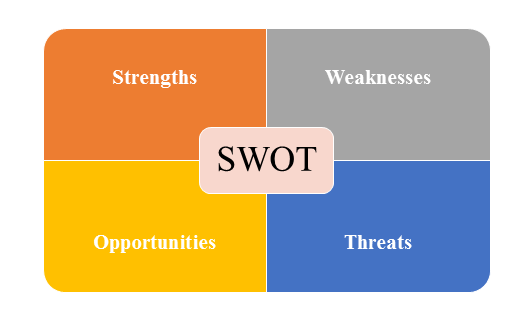
- Strengths describe what the player excels at and separates it from the competition
- Weaknesses stop the player from performing at its optimum level.
- Opportunities refer to favorable external factors that the player can use to give it a competitive advantage.
- Threats refer to factors that have the potential to harm the player.
- Data Sources
| Primary Sources | Secondary Sources |
|---|---|
| Face to face/Phone Interviews with market participants, such as: Manufactures; Distributors; End-users; Experts. Online Survey |
Government/International Organization Data: Annual Report/Presentation/Fact Book Internet Source Information Industry Association Data Free/Purchased Database Market Research Report Book/Journal/News |