Global Skin Stapler Market Outlook & Strategy 2021-2031
- Single User License (1 Users) $ 3,500
- Team License (2~5 Users) $ 4,500
- Corporate License (>5 Users) $ 5,500
The global skin stapler market size is valued at an estimated 0.8 billion to 1.0 billion USD in 2026, and the global market is projected to expand at a muted compound annual growth rate (CAGR) of 0.8% to 1.8% through 2031. This modest top-line expansion reflects a fierce tug-of-war in clinical utilization. Upward volume momentum is anchored by over 230 million major open surgical interventions annually, particularly driven by demographic-led surges in outpatient Total Knee Arthroplasty (TKA) and Total Hip Arthroplasty (THA), alongside stable global Cesarean section volumes. However, revenue expansion is heavily suppressed by three converging structural headwinds: aggressive price compression from centralized procurement mandates, the cannibalization of open longitudinal incisions by multi-port robotic-assisted surgery (RAS), and selective substitution in low-tension incisions by topical adhesives. Value concentration remains skewed toward North America, which commands 45% to 48% of global market revenue via nearly universal single-use disposable adoption (approaching 98% penetration) and consolidated Group Purchasing Organization (GPO) contracting. Simultaneously, manufacturing gravity and volume growth have migrated toward the Asia-Pacific corridor—specifically within the precision metallurgical hubs of Japan, automated cleanroom facilities in Thai Nguyen Province (Vietnam), and the industrial medical clusters of Changzhou (China). The competitive architecture is stratified into legacy multinational medtech conglomerates (Johnson & Johnson/Ethicon, Medtronic, B. Braun, Teleflex), specialized technology innovators (CooperSurgical, MANI, INC.), European wound care stalwarts (SMI AG), and high-capacity Chinese domestic consolidators (Waston Medical, Victor Medical, Changzhou Kangdi, Tuoren Medical).
Biomechanical Architecture & Product Classification Dynamics
At its foundational engineering level, a skin stapler is a calibrated mechanical force-delivery instrument. Upon manual actuation of the ergonomic trigger or handle lever, an internal mechanical pusher advances a pre-formed U-shaped wire staple from a spring-fed magazine against a stationary or moving anvil. This kinetic action deforms the metallic wire into a closed rectangular or B-shaped geometry.
The biomechanical necessity of this B-shape formation cannot be overstated: it secures opposing dermal margins under consistent, calibrated horizontal tension while enforcing dermal edge eversion—a vital prerequisite for uninterrupted epidermal migration and optimal scar remodeling. Crucially, the overarching cross-bar of the B-form staple remains slightly elevated above the cutaneous surface, preventing tissue strangulation, preserving subdermal microvascular perfusion, and mitigating localized ischemic necrosis.
The core clinical value proposition rests on three operational pillars:
* Operative Velocity: Mechanical stapling compresses cutaneous closure duration by 70% to 80% relative to conventional interrupted manual suturing, directly lowering operating room (OR) occupancy costs and cutting patient exposure to general anesthesia.
* Occupational Biosafety: The enclosed delivery mechanism virtually eliminates sharp suture needle-stick injuries among surgical personnel, mitigating bloodborne pathogen transmission risks.
* Geometric Standardization: Automated feed mechanisms ensure uniform staple pitch, spacing, and tissue penetration depth across extended linear incisions.
● Structural Segmentation: Disposable vs. Reusable Systems
1. Disposable Skin Staplers (Single-Use)
* Engineering Architecture: Self-contained, pre-sterilized, fully disposable mechanical assemblies housing an integrated polymer cartridge pre-loaded with surgical staples (standardized across 15, 25, 35, or 55 staple counts). The external housings are precision-molded from medical-grade Acrylonitrile Butadiene Styrene (ABS), Polycarbonate (PC), and low-friction Polyoxymethylene (POM) for internal pusher slides and transparent staple-counter windows.
* Market Position: Commands over 90% of global unit volume and exceeds 95% of total revenue value. Dominant adoption is propelled by stringent hospital-acquired infection (HAI) and Surgical Site Infection (SSI) prevention mandates, accreditation compliance, and the complete elimination of Central Sterile Services Department (CSSD) reprocessing labor.
* Design Variants: Fixed-head staplers represent the high-volume baseline for linear laparotomies and orthopedic incisions. Articulating or 360-degree rotating-head staplers command a price premium, engineered to optimize the surgeon's visual line-of-sight and ergonomic wrist angles along curved incisions or anatomically restricted cavities.
* Companion Consumables: Routinely commercialized in sterile procedural packs alongside single-use metallic or polymer staple extractors, which apply reverse leverage to unbend the B-shaped staple without inducing epidermal tearing during outpatient removal.
2. Reusable Skin Staplers
* Engineering Architecture: Heavy-duty metallic handle bodies machined from medical-grade 316L stainless steel or titanium alloys, engineered to withstand repeated autoclave steam sterilization cycles, paired with single-use sterile drop-in staple reload cartridges.
* Market Position: A residual, structurally declining niche representing less than 10% of global unit volume.
* Target Deployment: Restricted to capital-constrained public healthcare networks in developing economies, rural trauma clinics, and military field medicine logistics where upfront hardware amortization is prioritized over recurring disposable acquisition costs.
* Operational Vulnerability: Internal cost-of-ownership audits consistently reveal that reusable systems incur hidden financial penalties. These stem from CSSD water and energy utilities, administrative tracking of decontamination cycles, and progressive mechanical fatigue or micro-misalignment of the internal anvil, which eventually causes incomplete staple closure (""""jamming"""") in the operating theater.
Downstream Clinical Applications & Value Migration
Consumption of skin staplers correlates directly with global open surgical procedure volumes, yet value realization varies significantly across clinical specialties based on tissue tension dynamics and cosmetic thresholds.
● Orthopedics & Traumatology: The Primary Value Engine
* Procedural Scope: Total Knee Arthroplasty (TKA), Total Hip Arthroplasty (THA), Open Reduction and Internal Fixation (ORIF) of long-bone fractures, multi-level dorsal spinal fusions, and traumatic amputations.
* Strategic Dynamics: Orthopedics represents the single largest value driver in mature healthcare economies. Incisions crossing articulated joints (such as the anterior midline knee incision in TKA) are subjected to extreme dynamic biomechanical tension during early post-operative physical therapy and joint mobilization. Stainless steel staples provide superior tensile retention and wound dehiscence resistance compared to liquid topical adhesives or running subcuticular absorbable sutures. As TKA and THA procedures aggressively migrate toward Ambulatory Surgery Centers (ASCs), rapid, high-strength mechanical stapling remains indispensable for maximizing daily surgical throughput.
● General Surgery & Abdominal Procedures: High-Volume Baseline Under Robotic Pressure
* Procedural Scope: Midline and transverse laparotomies, open colectomies, open bariatric interventions, emergency appendectomies, and complex ventral/incisional hernia reconstructions.
* Strategic Dynamics: Generates massive, recurring unit volumes. Following prolonged intra-abdominal exploration or visceral resection, surgical teams experience cognitive and physical fatigue; mechanical skin staplers are deployed during final cutaneous closure to rapidly conclude the operation and accelerate OR turnover. However, this segment experiences the most acute cannibalization from Minimally Invasive Surgery (MIS) and robotic platforms (such as Intuitive Surgical's da Vinci and Medtronic's Hugo RAS). The conversion of a 20-centimeter midline laparotomy into four or five 8-millimeter to 12-millimeter robotic trocar port sites drastically contracts the linear wound length requiring cutaneous stapling, shifting consumable spend toward internal endoscopic linear cutters and single-stitch port-site closure devices.
● Obstetrics & Gynecology (OB/GYN): Cosmetic Arbitrage & Subcuticular Innovation
* Procedural Scope: Cesarean deliveries (predominantly Pfannenstiel transverse suprapubic incisions), open abdominal hysterectomies, open myomectomies, and pelvic exenterations.
* Strategic Dynamics: Characterized by exceptionally stable, non-cyclical global demand tethered to demographic birth rates and institutional C-section ratios. Clinical decision-making in OB/GYN balances the urgent need for rapid hemostatic closure (to minimize maternal blood loss and anesthesia exposure) against heightened patient demand for superior cosmetic scar outcomes. While percutaneous metal staplers remain standard for high-BMI patients (where subcutaneous adipose tissue increases wound tension and seroma risk), low-tension Pfannenstiel incisions are increasingly captured by subcuticular bioabsorbable staplers (deploying polylactic/polyglycolic acid copolymer staples beneath the epidermis) and adhesive mesh systems, which eliminate painful post-natal outpatient metal staple extraction.
● Thoracic & Cardiovascular Surgery: High-Acuity Infection Mitigation
* Procedural Scope: Median sternotomies for Coronary Artery Bypass Grafting (CABG) and open surgical valve replacements, posterolateral thoracotomies, open lobectomies, and femoral/groin vascular cutdowns for endovascular access or saphenous vein harvesting.
* Strategic Dynamics: A high-acuity segment where wound healing complications carry catastrophic mortality risks. Following sternal bone wiring in CABG procedures, rapid, uniform cutaneous approximation is critical to prevent superficial wound dehiscence from progressing into deep sternal wound infection (mediastinitis). While traditional metal staplers maintain a strong foothold—particularly in saphenous vein harvest leg incisions and thoracotomies—long-wound topical cyanoacrylate mesh barriers (such as LiquiBand XL and Dermabond Prineo) have made substantial inroads in median sternotomy closure due to their sealed antimicrobial barrier properties.
● Specialized & Acute Care Applications
* Procedural Scope: Neurosurgical craniotomies (securing large curved vascularized scalp flaps), reconstructive and burn surgery (anchoring split-thickness skin grafts [STSG] and biosynthetic dermal matrices onto debrided burn beds), and Emergency Department (ED) trauma triage.
* Strategic Dynamics: In neurosurgery and ED trauma, metal staplers are unmatched for closing scalp lacerations and craniotomy flaps; stainless steel staples do not mat surrounding hair fibers (unlike cyanoacrylate glues) and provide immediate hemostasis against the rich galeal vascular plexus, while remaining easily visible for subsequent removal.
Regional Market Dynamics
● North America (United States & Canada): Commands 45% to 48% of global market share. Represents a mature, fully converted single-use disposable market (approaching 98% penetration). Demand is underpinned by the world's highest per-capita utilization of orthopedic joint replacements and a rapid structural shift of surgical volumes from inpatient hospital departments to freestanding ASCs. Market access is strictly gated by major national Group Purchasing Organizations (Vizient, Premier, HealthTrust) and consolidated Integrated Delivery Networks (IDNs). Standalone skin stapler manufacturers struggle to secure shelf space; dominant suppliers (Ethicon, Medtronic, Teleflex) leverage comprehensive cross-portfolio contracting, bundling skin staplers with manual sutures, internal endocutters, trocars, and advanced bipolar energy devices to offer tiered volume rebates.
● Asia-Pacific (APAC): The fastest-growing regional block, driven by expanding surgical infrastructure, universal healthcare coverage expansion, and rapid demographic aging in East Asia.
* China: Characterized by massive open and minimally invasive procedural volumes alongside severe regulatory price compression. The National Healthcare Security Administration (NHSA) has progressively expanded Volume-Based Procurement (VBP) mandates from high-value coronary stents and endoscopic staplers down to open surgical consumables and wound closure devices via provincial and municipal tender alliances. VBP execution has compressed hospital acquisition prices by 50% to 75% in tendered categories, eroding channel margins for multinational corporations and accelerating domestic substitution toward high-capacity local manufacturers clustered in Changzhou (Jiangsu Province) and Henan Province.
* Japan: A hyper-stringent, quality-obsessed market where domestic metallurgy specialist MANI, INC. commands significant market share alongside multinational leaders, supported by the world's most aged demographic profile requiring high volumes of orthopedic and oncological interventions.
* Taiwan, China: Operates under a centralized National Health Insurance (NHI) single-payer framework with high per-capita surgical capacity and advanced clinical standards, balancing cost-controlled standard disposable staplers in public hospitals with patient co-pay upgrades for specialized closure systems.
* India & Southeast Asia: Highly decentralized, price-sensitive growth markets. As Tier-2 and Tier-3 private hospital chains expand across India, Vietnam, Malaysia, and Indonesia, clinical practice is actively converting from manual interrupted suturing to disposable mechanical stapling to maximize limited surgeon capacity. Manufacturers utilize localized subsidiary hubs—such as MANI's operational footprint in Thai Nguyen Province (Vietnam) and commercial subsidiaries in New Delhi and Malaysia—to bypass import tariffs and manage fragmented multi-tier dealer networks.
● Europe: The second-largest regional market globally.
* Germany, UK, & France: Germany serves as the industrial manufacturing anchor of Europe, spearheaded by B. Braun's Aesculap division in Tuttlingen. In the United Kingdom (NHS Supply Chain) and French public hospital syndicates (UniHA, RESAH), tender procurement heavily weights total clinical pathway cost, driving selective adoption of topical adhesives in cardiac and day-case surgeries to eliminate post-discharge community nursing visits for staple removal.
* Regulatory & Fiscal Headwinds: Two structural overhangs dominate European corporate strategy. First, the full enforcement of EU MDR 2017/745 has escalated Notified Body audit costs and mandated exhaustive Post-Market Clinical Follow-Up (PMCF) data and ISO 10993 biocompatibility re-validations for implantable metal staples, triggering portfolio rationalization among smaller European suppliers. Second, Southern European fiscal clawback mechanisms—specifically the Italian Medical Device Payback law requiring suppliers to refund regional governments when public healthcare spending caps are breached—have directly damaged corporate profitability. Recent 2025 financial filings highlight the severity of this mechanism: Medtronic recorded an incremental 90 million USD payback accrual, while Teleflex recognized a 19.4 million USD reserve (following an August 2025 Italian legislative revision adjusting assessment formulas).
● Latin America: A sharply bifurcated healthcare ecosystem. Tier-1 private hospital networks in metropolitan hubs (São Paulo, Rio de Janeiro, Mexico City, Bogotá, Buenos Aires) mirror North American clinical protocols, utilizing premium single-use articulating staplers. Conversely, underfunded public healthcare ministries (such as Brazil's SUS) rely on lowest-bid public tenders, fostering intense price competition among Chinese OEM exports and sustaining residual demand for reusable metallic handles with drop-in cartridges. Persistent macroeconomic inflation and currency devaluations against the US Dollar create ongoing working-capital and margin headwinds for import-dependent distributors.
● Middle East & Africa (MEA): Exhibits extreme regional heterogeneity. The Gulf Cooperation Council (GCC) states—led by Saudi Arabia (under Vision 2030 healthcare privatization initiatives), the United Arab Emirates, and Qatar—feature capital-intensive tertiary hospital complexes that procure premium US and European single-use staplers through centralized ministry and private group tenders. Conversely, across Sub-Saharan Africa, skin stapler penetration remains embryonic; manual thread suturing predominates due to severe consumable budget constraints, restricting mechanical stapling to urban university teaching hospitals, acute trauma centers, and international humanitarian surgical missions.
Supply Chain & Value Chain Architecture: Bottleneck Resilience & Value Migration
● Upstream: Metallurgical Precision & Polymer Feedstocks
The critical technical bottleneck in the skin stapler supply chain lies in the upstream sourcing and drawing of surgical-grade wire.
* Implantable Metals: Staples are predominantly fabricated from vacuum-melted, cold-worked austenitic stainless steel wire conforming strictly to ASTM F138 / ISO 5832-1 (Grade 316L or 316LVM), composed of Iron, Chromium (17-19%), Nickel (13-15%), and Molybdenum (2.25-3%). For nickel-sensitive patient populations or specialized MRI-compatible requirements, medical-grade Titanium wire (ASTM F67 unalloyed titanium, or ASTM F136 Ti-6Al-4V ELI) is utilized.
* The Ductility-Yield Arbitrage: Upstream wire drawing requires extraordinary metallurgical control. The wire must possess high tensile strength to pierce tough dermal tissue (especially scarred or thickened skin in revision orthopedics) without buckling, yet simultaneously exhibit precise ductility and zero elastic spring-back so that when compressed against the anvil, it retains a permanent, uniform B-shape. Inferior wire metallurgy leads to micro-fracturing at the staple bend radii or incomplete closure, resulting in post-operative wound dehiscence.
* Bioabsorbable Polymers: In the subcuticular segment, upstream synthesis relies on high-purity Polyglycolic Acid (PGA) and Polylactic Acid (PLA) copolymers. These resins require moisture-free extrusion and precision injection molding to guarantee predictable hydrolytic degradation profiles over 60 to 90 days in vivo.
● Midstream: Automated Cleanroom Assembly & The EO Sterilization Squeeze
* Micro-Fabrication & Assembly: Midstream fabrication involves high-speed continuous wire feeding, precision cutting, progressive die stamping into U-formations, and stacking into polymer cartridges powered by calibrated stainless steel constant-force springs. Handle shells, internal pushers, and actuator levers are produced via multi-cavity precision injection molding. Final assembly occurs within ISO Class 7 (Class 10,000) or ISO Class 8 (Class 100,000) cleanrooms. Leading manufacturers have replaced manual assembly with fully automated robotic lines equipped with inline optical machine-vision systems that verify staple leg alignment, cartridge feed pitch, and trigger actuation resistance in real time.
* Packaging & Terminal Sterilization Bottlenecks: Assembled devices are sealed in medical-grade thermoformed blister trays paired with breathable DuPont Tyvek (high-density polyethylene fiber) lids (validated under ISO 11607) to maintain a 3- to 5-year sterile shelf life. Terminal sterilization relies overwhelmingly on Ethylene Oxide gas processing or Gamma irradiation (Cobalt-60). Over the 2024–2026 period, stringent U.S. EPA National Emission Standards for Hazardous Air Pollutants (NESHAP) and parallel European environmental regulations targeting industrial EO emissions have created a severe structural bottleneck across third-party contract sterilization facilities. Manufacturers have been forced to invest heavily in cycle re-validation to reduce EO gas concentrations and residual outgassing levels (per ISO 10993-7), extending supply chain lead times and raising unit overhead costs.
● Downstream: Value Migration & The OEM/ODM Shift
Value capture within the supply chain has migrated away from manual assembly toward two poles: upstream automated smart-factory scale and downstream GPO channel control. Faced with rising EU MDR compliance overheads and China VBP margin compression, mid-tier western brand owners increasingly outsource physical fabrication to specialized automated OEMs in Asia (such as MANI's Vietnam hub or Changzhou's cleanroom clusters), retaining only branding, regulatory registration, and hospital tender management.
Competitive Landscape & Company Dossiers
● Johnson & Johnson MedTech (Ethicon): Commercializes the industry-standard PROXIMATE Skin Stapler portfolio, encompassing fixed-head and 360-degree rotating-head single-use staplers pre-loaded with 35 or 55 stainless steel staples, alongside ergonomic extractors. Ethicon's primary moat is its cross-category dominance: it commands the market's leading manual absorbable suture brands (VICRYL, MONOCRYL, PDS Plus Antibacterial), barbed sutures (STRATAFIX), and topical skin adhesives (DERMABOND and DERMABOND PRINEO Skin Closure System).
● Medtronic plc: Markets the Appose ULC single-use skin stapler line and companion extractors, positioned alongside its dominant internal endoscopic stapling franchises (Signia powered stapling system, Endo GIA with Tri-Staple technology) and wound closure sutures (V-Loc barbed sutures, Polysorb, Biosyn).
● B. Braun SE (Aesculap Division): Commercializes the proprietary Aesculap Manipler AZ sterile single-use skin stapler and single-use staple extractors. The Manipler AZ is engineered with an angled head design for direct visualization of the wound edge, an ergonomic lever reducing actuation fatigue, and precise B-shaped staple geometry.
● Teleflex Incorporated: Manages cutaneous closure under its Surgical Product Category via the legacy Weck brand. The flagship Weck Visistat single-use skin stapler line (offered in regular and wide staple configurations) is bundled commercially with Weck Hem-o-lok polymer locking ligation clips, Horizon metal ligating clips, and Weck EFx endo-fascial closure systems.
● MANI, INC.: MANI's core competitive moat is proprietary micro-wire drawing, work-hardening metallurgy, and surface siliconization/polishing technology. Using proprietary austenitic stainless steel processing, MANI manufactures skin staplers that exhibit exceptionally low tissue penetration resistance—minimizing epidermal trauma during firing—combined with highly consistent B-form anvil deformation.
● CooperSurgical, Inc. (A CooperCompanies Company): Controls a unique technological monopoly in the bioabsorbable mechanical closure niche via its flagship INSORB Absorbable Skin Stapler. Unlike percutaneous metal staplers, the INSORB device grasps the dermis and deploys a U-shaped staple composed of a copolymer of polylactic acid (PLA) and polyglycolic acid (PGA) horizontally into the subcuticular tissue layer, completely beneath the epidermis.
● SMI AG: Anchors its mechanical segment with sterile, single-use Skin Staplers pre-loaded with 35 medical-grade stainless steel staples (available in regular and wide dimensions) and companion metallic extractors.
● Waston Medical Corporation: Tier-1 Chinese diversified medtech manufacturer based in Changzhou, Jiangsu Province, commanding major domestic and international footprints in orthopedic trauma/spine implants and mechanical surgical staplers. Waston operates a vertically integrated stapling portfolio covering endoscopic linear cutters, circular staplers, curved cutters, PPH anorectal staplers, and disposable skin staplers.
● Victor Medical Instruments Co., Ltd.: Manufactures a full suite of mechanical staplers—including single-use circular staplers, endoscopic linear cutters, linear staplers, prolapse/hemorrhoid staplers, and ergonomic disposable skin staplers.
● Changzhou Kangdi Medical Stapler Co., Ltd.: Produces open linear and circular staplers, purse-string clamp staplers, endo-cutters, and disposable skin staplers.
* Strategic Pivot: Operates as a high-capacity domestic tender supplier and global OEM manufacturing powerhouse, leveraging mature precision stamping and cleanroom assembly infrastructure in the Changzhou medical technology corridor to deliver ultra-competitive unit economics.
● Tuoren Medical (Henan Tuoren Medical Device Group Co., Ltd.): Massive Chinese medical consumable conglomerate headquartered in Changyuan (Henan Province), historically dominant in anesthesia, airway management, vascular infusion, and pain management consumables. Within its expanding perioperative and surgical wound care division, Tuoren manufactures Disposable Skin Staplers and extractors, commercialized alongside surgical drape packs, suction tubing, and negative-pressure wound drainage systems.
Opportunities & Challenges
● Core Market Opportunities
1. The Outpatient Total Joint Arthroplasty (TJA) Boom
The single most resilient pocket of value creation for percutaneous metal skin staplers lies in the migration of Total Knee and Total Hip Arthroplasties to Ambulatory Surgery Centers (ASCs) in North America and Western Europe. In an ASC environment, economic viability depends on rapid OR turnaround and same-day patient discharge with immediate weight-bearing mobilization. High-tensile 316L stainless steel staples remain biomechanically superior for neutralizing the acute flexion forces across the knee joint while cutting skin closure time to under two minutes. Suppliers that pre-package rotating-head skin staplers directly into customized ASC orthopedic procedural trays will lock in sticky, high-margin recurring revenues.
2. Smart-Factory Automation as a Margin Shield
Manual cleanroom assembly of skin staplers is economically obsolete due to rising labor costs, human error rates in spring/pusher seating, and bioburden contamination risks. B. Braun's 90 million EUR Tuttlingen Technology Factory and MANI's automated lines in Vietnam demonstrate the winning industrial blueprint: transitioning to high-speed progressive wire stamping paired with vision-guided robotic assembly. This capital expenditure creates an insurmountable cost and quality moat against smaller, manual assemblers struggling with EU MDR and FDA QSR audit compliance.
3. Subcuticular Bioabsorbable Arbitrage in High-Cosmesis Indications
The clinical friction point of traditional metal stapling has always been the secondary outpatient staple extraction visit—which induces patient anxiety, localized pain, and consumes clinical nursing time. While topical glues address this in minor incisions, they lack deep dermal tensile strength. Subcuticular bioabsorbable stapling (exemplified by PLA/PGA copolymer platforms) bridges this gap. Expanding the adoption of bioabsorbable staplers beyond U.S. Cesarean sections into global bariatric, plastic reconstructive, and colorectal closures represents a substantial value-upgrade opportunity, transforming a commodity 8 to 12 USD metal stapler transaction into a 45 to 65 USD premium device placement.
● Structural Challenges & Risk Mitigation
1. The Two-Front Substitution Squeeze (Robotics + Cyanoacrylates)
Skin stapler manufacturers are caught in a permanent anatomical pincer movement. From above, multi-port and single-port surgical robotics are systematically eliminating long midline abdominal and thoracic incisions, shrinking the addressable linear wound centimeters per patient. From below, advanced topical sealants—specifically high-viscosity 2-octyl cyanoacrylate formulations paired with self-adhering polyester mesh tapes—are capturing low-to-moderate tension incisions by offering a waterproof microbial barrier and superior scar cosmesis. Pure-play skin stapler manufacturers that lack either an internal endoscopic stapling portfolio or a synthetic tissue adhesive line face terminal share erosion in general and cardiothoracic surgery.
2. Sovereign Fiscal Clawbacks & Tender Deflation
The proliferation of aggressive state-mandated price controls represents an acute threat to gross margins. In China, provincial VBP extensions continue to commoditize standard open surgical instruments, turning legacy multinational sales teams into high-overhead liabilities unless paired with localized domestic manufacturing. Simultaneously, in Europe, mechanisms such as Italy's medical device payback law have proven capable of wiping out tens of millions of dollars in booked corporate earnings retroactively. Executive leadership must restructure European commercial contracts, incorporating sovereign payback risk premiums into tender bids and rationalizing direct sales headcount in regions with uncapped clawback exposure.
3. Environmental Regulatory Friction in Terminal Sterilization
The heavy reliance of single-use polymer-housed skin staplers on Ethylene Oxide (EO) gas sterilization remains a critical supply chain vulnerability. Tightening EPA emissions thresholds in the United States and parallel European chemical restrictions have permanently reduced commercial contract sterilization capacity. Manufacturers must allocate engineering capital toward validating alternative sterilization modalities—such as E-beam, X-ray irradiation, or vaporized hydrogen peroxide (VHP)—while reformulating polycarbonate and ABS housing resins with radiation-stabilized additives to prevent polymer embrittlement and yellowing during non-EO sterilization cycles.
1.1 Executive Summary and Core Value Migration Trends 1
1.2 Product Definition and Clinical Classification of Skin Stapler 2
1.3 Research Methodology and Data Triangulation Framework 3
1.4 Analytical Assumptions and Econometric Modeling Parameters 5
1.5 List of Abbreviations and Industry Terminology 6
Chapter 2 Global Skin Stapler Supply Chain and Value Architecture 7
2.1 Upstream Raw Material Ecosystem (Medical Grade 316L Stainless Steel, Titanium, Biocompatible Polymers) 7
2.2 Precision Stamping, Injection Molding, and Sterilization Cost Structure 9
2.3 Value Chain Margin Distribution from OEMs to Hospital Group Purchasing Organizations (GPOs) 11
2.4 Supply Chain Resilience and Nearshoring Dynamics 13
2.5 Downstream Clinical Adoption Drivers and Surgical Volume Elasticities 15
Chapter 3 Global Market Dynamics, Regulatory Landscape, and Technology Evolution 17
3.1 Surgical Wound Closure Economics and Reimbursement Shifts (DRG/DIP Impacts) 17
3.2 Regulatory Compliance Matrix (FDA 510(k), EU MDR, NMPA, PMDA) 19
3.3 Patent Landscape and Ergonomic Design Innovations (Anti-jamming Mechanisms, Bioabsorbable Pins) 21
3.4 Infection Control Mandates and Single-Use Device Penetration 23
Chapter 4 Global Skin Stapler Market Segmentation by Type (2021-2031) 25
4.1 Global Market Volume and Value Overview by Product Type 25
4.2 Disposable Skin Stapler Market Performance and Clinical Preference 27
4.3 Reusable Skin Stapler Market Trajectory and Sterilization Economics 29
4.4 Average Selling Price (ASP) Erosion and Volume-Based Procurement Impacts by Type 31
Chapter 5 Global Skin Stapler Market Segmentation by Application (2021-2031) 33
5.1 Global Consumption Volume and Revenue Distribution across Surgical Specialties 33
5.2 General Surgery & Abdominal Procedures Demand Analysis 35
5.3 Orthopedics & Traumatology High-Tension Closure Requirements 37
5.4 Obstetrics & Gynecology Cesarean Section Utilization Rates 38
5.5 Thoracic & Cardiovascular Surgery Specialized Closure Needs 40
5.6 Other Applications (Plastic, Reconstructive, and Emergency Triage) 41
Chapter 6 North America Skin Stapler Market Analysis (2021-2031) 43
6.1 North America Market Size, Volume, and GPO Procurement Structure 43
6.2 United States 45
6.3 Canada 47
6.4 Mexico 48
Chapter 7 Europe Skin Stapler Market Analysis (2021-2031) 50
7.1 Europe Market Value, Volume, and EU MDR Compliance Bottlenecks 50
7.2 Germany 52
7.3 United Kingdom 54
7.4 France 55
7.5 Italy 57
7.6 Spain 58
7.7 Belgium & Rest of Europe 59
Chapter 8 Asia-Pacific Skin Stapler Market Analysis (2021-2031) 61
8.1 Asia-Pacific Manufacturing Dominance and Domestic Consumption Surge 61
8.2 China 63
8.3 Japan 65
8.4 India & Southeast Asia 67
8.5 South Korea 68
8.6 Australia 70
Chapter 9 South America and Middle East & Africa Skin Stapler Market Analysis (2021-2031) 71
9.1 Regional Healthcare Infrastructure Expansion and Tender Markets 71
9.2 Brazil 73
9.3 Argentina 74
9.4 Saudi Arabia 75
9.5 United Arab Emirates 76
9.6 South Africa 77
Chapter 10 Global Trade Flows and Import/Export Dynamics 79
10.1 Global Skin Stapler Trade Balance and Tariff Implications 79
10.2 Primary Exporting Hubs (China, United States, Germany, Japan, Belgium) 81
10.3 Primary Importing Markets and Customs Clearance Dynamics 83
10.4 Cross-Border OEM/ODM Contract Manufacturing Flows 85
Chapter 11 Competitive Landscape and Corporate Market Share Analysis 87
11.1 Global Competitive Tiering (Multinational MedTech vs. Regional Volume Leaders) 87
11.2 Global Skin Stapler Corporate Revenue Ranking (2021-2026) 89
11.3 Global Skin Stapler Corporate Sales Volume Ranking (2021-2026) 91
11.4 Pricing Strategies, Bundling Tactics, and Hospital Tender Win-Rates 93
Chapter 12 Key Market Players Profiles and Operational Intelligence 95
12.1 Medtronic 95
12.1.1 Corporate Profile and Surgical Innovations Portfolio 95
12.1.2 SWOT Analysis 96
12.1.3 Skin Stapler Sales Volume, Price, Cost, Gross Margin, and Market Share (2021-2026) 97
12.1.4 Go-To-Market Strategy and GPO Contracting 98
12.2 Johnson & Johnson 99
12.2.1 Corporate Profile and Ethicon Wound Closure Ecosystem 99
12.2.2 SWOT Analysis 100
12.2.3 Skin Stapler Sales Volume, Price, Cost, Gross Margin, and Market Share (2021-2026) 101
12.2.4 R&D Expenditure and Ergonomic Device Iteration 102
12.3 CooperSurgical 103
12.3.1 Corporate Profile and Obstetric Surgical Focus 103
12.3.2 SWOT Analysis 104
12.3.3 Skin Stapler Sales Volume, Price, Cost, Gross Margin, and Market Share (2021-2026) 105
12.4 Teleflex 106
12.4.1 Corporate Profile and Weck Closure Systems Operations 106
12.4.2 SWOT Analysis 107
12.4.3 Skin Stapler Sales Volume, Price, Cost, Gross Margin, and Market Share (2021-2026) 108
12.5 B. Braun 109
12.5.1 Corporate Profile and Aesculap Surgical Division 109
12.5.2 SWOT Analysis 110
12.5.3 Skin Stapler Sales Volume, Price, Cost, Gross Margin, and Market Share (2021-2026) 111
12.5.4 European Hospital Supply Integration 112
12.6 MANI INC. 113
12.6.1 Corporate Profile and Micro-Metallurgy Capabilities 113
12.6.2 SWOT Analysis 114
12.6.3 Skin Stapler Sales Volume, Price, Cost, Gross Margin, and Market Share (2021-2026) 115
12.7 Waston Medical Corporation 116
12.7.1 Corporate Profile and Domestic Chinese Market Leadership 116
12.7.2 SWOT Analysis 117
12.7.3 Skin Stapler Sales Volume, Price, Cost, Gross Margin, and Market Share (2021-2026) 118
12.7.4 Volume-Based Procurement (VBP) Adaptation Strategy 119
12.8 Victor Medical Instruments Co. Ltd. 120
12.8.1 Corporate Profile and Surgical Stapling Specialization 120
12.8.2 SWOT Analysis 121
12.8.3 Skin Stapler Sales Volume, Price, Cost, Gross Margin, and Market Share (2021-2026) 122
12.9 Changzhou Kangdi Medical Stapler Co. Ltd. 123
12.9.1 Corporate Profile and Export-Oriented Manufacturing 123
12.9.2 SWOT Analysis 124
12.9.3 Skin Stapler Sales Volume, Price, Cost, Gross Margin, and Market Share (2021-2026) 125
12.10 SMI AG 126
12.10.1 Corporate Profile and European Wound Closure Footprint 126
12.10.2 SWOT Analysis 127
12.10.3 Skin Stapler Sales Volume, Price, Cost, Gross Margin, and Market Share (2021-2026) 128
12.11 Tuoren Medical 129
12.11.1 Corporate Profile and Medical Consumables Expansion 129
12.11.2 SWOT Analysis 130
12.11.3 Skin Stapler Sales Volume, Price, Cost, Gross Margin, and Market Share (2021-2026) 131
12.11.4 Channel Penetration in Emerging Markets 132
Chapter 13 Global Skin Stapler Market Forecast and Strategic Outlook (2027-2031) 133
Table 2 Key Raw Material Specifications and Cost Weighting in Skin Stapler Manufacturing 8
Table 3 Global Skin Stapler Manufacturing Cost Structure Breakdown (2026) 10
Table 4 Regulatory Classification and Approval Pathways Across Major Jurisdictions 20
Table 5 Global Skin Stapler Market Volume by Type (2021-2026) 25
Table 6 Global Skin Stapler Market Value by Type (2021-2026) 26
Table 7 Global Skin Stapler Average Selling Price by Type (2021-2026) 31
Table 8 Global Skin Stapler Market Volume by Application (2021-2026) 33
Table 9 Global Skin Stapler Market Value by Application (2021-2026) 34
Table 10 North America Skin Stapler Market Volume and Value by Country (2021-2026) 44
Table 11 Europe Skin Stapler Market Volume and Value by Country (2021-2026) 51
Table 12 Asia-Pacific Skin Stapler Market Volume and Value by Country (2021-2026) 62
Table 13 South America and MEA Skin Stapler Market Volume and Value by Country (2021-2026) 72
Table 14 Global Skin Stapler Export Volume and Value by Key Manufacturing Hubs (2021-2026) 82
Table 15 Global Skin Stapler Import Volume and Value by Key Consumption Markets (2021-2026) 84
Table 16 Global Skin Stapler Revenue by Company (2021-2026) 89
Table 17 Global Skin Stapler Sales Volume by Company (2021-2026) 91
Table 18 Medtronic Skin Stapler Sales, Price, Cost and Gross Profit Margin (2021-2026) 97
Table 19 Johnson & Johnson Skin Stapler Sales, Price, Cost and Gross Profit Margin (2021-2026) 101
Table 20 CooperSurgical Skin Stapler Sales, Price, Cost and Gross Profit Margin (2021-2026) 105
Table 21 Teleflex Skin Stapler Sales, Price, Cost and Gross Profit Margin (2021-2026) 108
Table 22 B. Braun Skin Stapler Sales, Price, Cost and Gross Profit Margin (2021-2026) 111
Table 23 MANI INC. Skin Stapler Sales, Price, Cost and Gross Profit Margin (2021-2026) 115
Table 24 Waston Medical Corporation Skin Stapler Sales, Price, Cost and Gross Profit Margin (2021-2026) 118
Table 25 Victor Medical Instruments Co. Ltd. Skin Stapler Sales, Price, Cost and Gross Profit Margin (2021-2026) 122
Table 26 Changzhou Kangdi Medical Stapler Co. Ltd. Skin Stapler Sales, Price, Cost and Gross Profit Margin (2021-2026) 125
Table 27 SMI AG Skin Stapler Sales, Price, Cost and Gross Profit Margin (2021-2026) 128
Table 28 Tuoren Medical Skin Stapler Sales, Price, Cost and Gross Profit Margin (2021-2026) 131
Table 29 Global Skin Stapler Market Volume and Value Forecast by Region (2027-2031) 134
Table 30 Global Skin Stapler Market Volume and Value Forecast by Type (2027-2031) 135
Table 31 Global Skin Stapler Market Volume and Value Forecast by Application (2027-2031) 135
Figure 1 Skin Stapler Clinical Classification and Mechanical Architecture 2
Figure 2 Research Data Triangulation and Bottom-Up Market Sizing Model 4
Figure 3 Global Skin Stapler Value Chain and Margin Allocation (2026) 12
Figure 4 Patent Filing Trends in Cutaneous Stapling Mechanisms (2021-2026) 22
Figure 5 Global Skin Stapler Market Volume Share by Type (2021-2031) 26
Figure 6 Global Disposable Skin Stapler Demand and ASP Trajectory (2021-2026) 28
Figure 7 Global Reusable Skin Stapler Demand and Sterilization Cost Curve (2021-2026) 30
Figure 8 Global Skin Stapler Consumption Share by Surgical Application (2026) 34
Figure 9 General Surgery & Abdominal Procedures Skin Stapler Consumption Volume (2021-2031) 36
Figure 10 Orthopedics & Traumatology Skin Stapler Consumption Volume (2021-2031) 37
Figure 11 Obstetrics & Gynecology Skin Stapler Consumption Volume (2021-2031) 39
Figure 12 Thoracic & Cardiovascular Surgery Skin Stapler Consumption Volume (2021-2031) 40
Figure 13 North America Skin Stapler Market Size and Volume Trajectory (2021-2031) 43
Figure 14 Europe Skin Stapler Market Size and Volume Trajectory (2021-2031) 50
Figure 15 Asia-Pacific Skin Stapler Market Size and Volume Trajectory (2021-2031) 61
Figure 16 China Volume-Based Procurement (VBP) Impact on Domestic Skin Stapler Pricing 64
Figure 17 South America and MEA Skin Stapler Market Size and Volume Trajectory (2021-2031) 71
Figure 18 Global Skin Stapler Trade Flow Map and Net Export Balances (2026) 80
Figure 19 Global Skin Stapler Market Share Concentration (CR5 and CR10 Analysis, 2026) 88
Figure 20 Medtronic Skin Stapler Market Share (2021-2026) 97
Figure 21 Johnson & Johnson Skin Stapler Market Share (2021-2026) 101
Figure 22 CooperSurgical Skin Stapler Market Share (2021-2026) 105
Figure 23 Teleflex Skin Stapler Market Share (2021-2026) 108
Figure 24 B. Braun Skin Stapler Market Share (2021-2026) 111
Figure 25 MANI INC. Skin Stapler Market Share (2021-2026) 115
Figure 26 Waston Medical Corporation Skin Stapler Market Share (2021-2026) 118
Figure 27 Victor Medical Instruments Co. Ltd. Skin Stapler Market Share (2021-2026) 122
Figure 28 Changzhou Kangdi Medical Stapler Co. Ltd. Skin Stapler Market Share (2021-2026) 125
Figure 29 SMI AG Skin Stapler Market Share (2021-2026) 128
Figure 30 Tuoren Medical Skin Stapler Market Share (2021-2026) 131
Figure 31 Global Skin Stapler Market Value and Volume Growth Forecast (2027-2031) 133
Research Methodology
- Market Estimated Methodology:
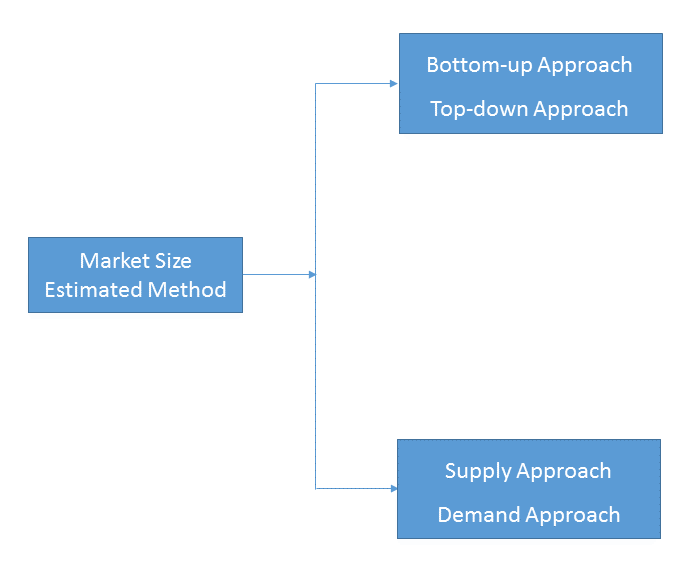
Bottom-up & top-down approach, supply & demand approach are the most important method which is used by HDIN Research to estimate the market size.
1)Top-down & Bottom-up Approach
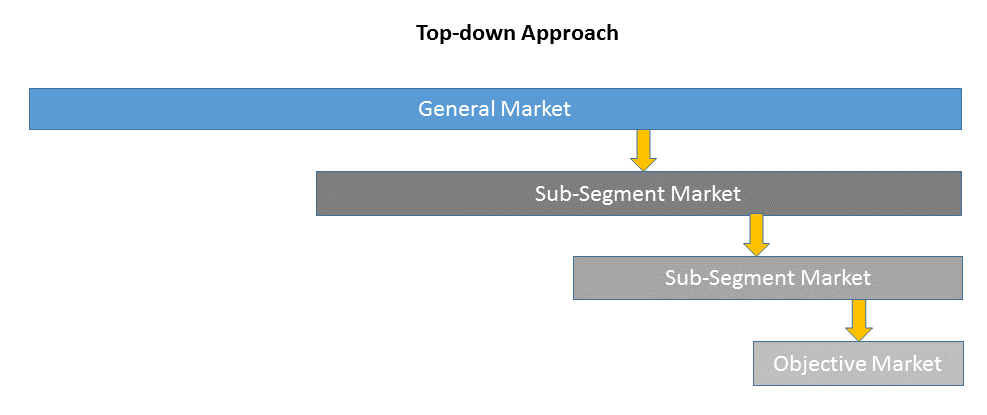
Top-down approach uses a general market size figure and determines the percentage that the objective market represents.
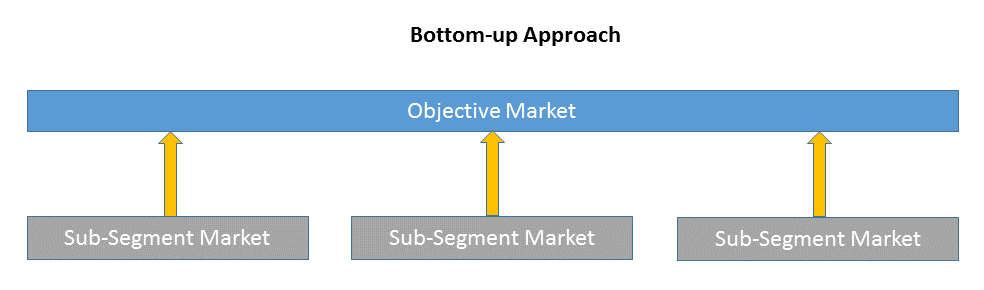
Bottom-up approach size the objective market by collecting the sub-segment information.
2)Supply & Demand Approach
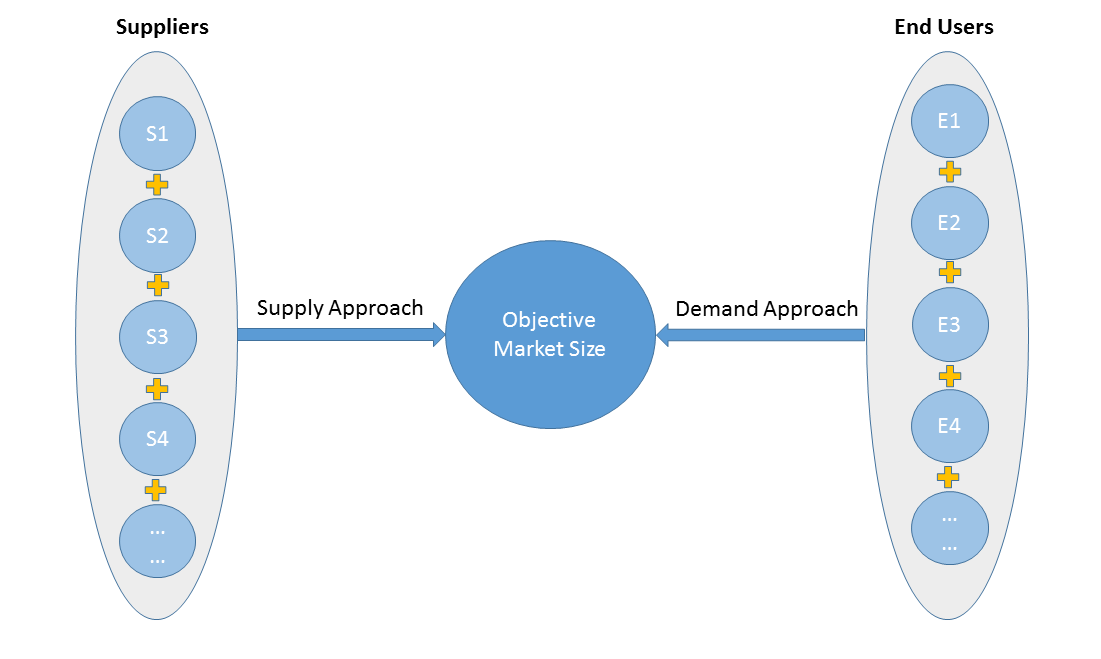
Supply approach is based on assessments of the size of each competitor supplying the objective market.
Demand approach combine end-user data within a market to estimate the objective market size. It is sometimes referred to as bottom-up approach.
- Forecasting Methodology
- Numerous factors impacting the market trend are considered for forecast model:
- New technology and application in the future;
- New project planned/under contraction;
- Global and regional underlying economic growth;
- Threatens of substitute products;
- Industry expert opinion;
- Policy and Society implication.
- Analysis Tools
1)PEST Analysis
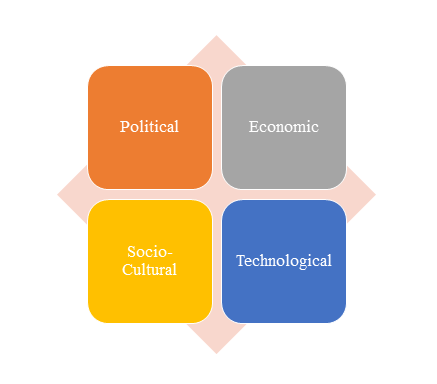
PEST Analysis is a simple and widely used tool that helps our client analyze the Political, Economic, Socio-Cultural, and Technological changes in their business environment.
- Benefits of a PEST analysis:
- It helps you to spot business opportunities, and it gives you advanced warning of significant threats.
- It reveals the direction of change within your business environment. This helps you shape what you’re doing, so that you work with change, rather than against it.
- It helps you avoid starting projects that are likely to fail, for reasons beyond your control.
- It can help you break free of unconscious assumptions when you enter a new country, region, or market; because it helps you develop an objective view of this new environment.
2)Porter’s Five Force Model Analysis
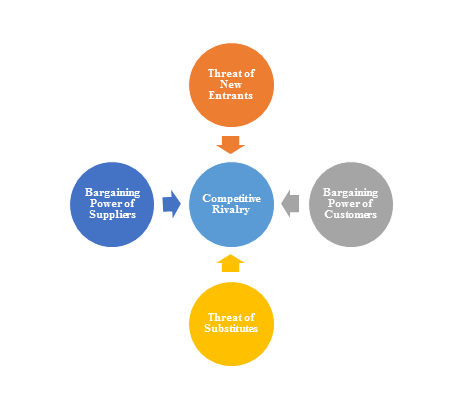
The Porter’s Five Force Model is a tool that can be used to analyze the opportunities and overall competitive advantage. The five forces that can assist in determining the competitive intensity and potential attractiveness within a specific area.
- Threat of New Entrants: Profitable industries that yield high returns will attract new firms.
- Threat of Substitutes: A substitute product uses a different technology to try to solve the same economic need.
- Bargaining Power of Customers: the ability of customers to put the firm under pressure, which also affects the customer's sensitivity to price changes.
- Bargaining Power of Suppliers: Suppliers of raw materials, components, labor, and services (such as expertise) to the firm can be a source of power over the firm when there are few substitutes.
- Competitive Rivalry: For most industries the intensity of competitive rivalry is the major determinant of the competitiveness of the industry.
3)Value Chain Analysis
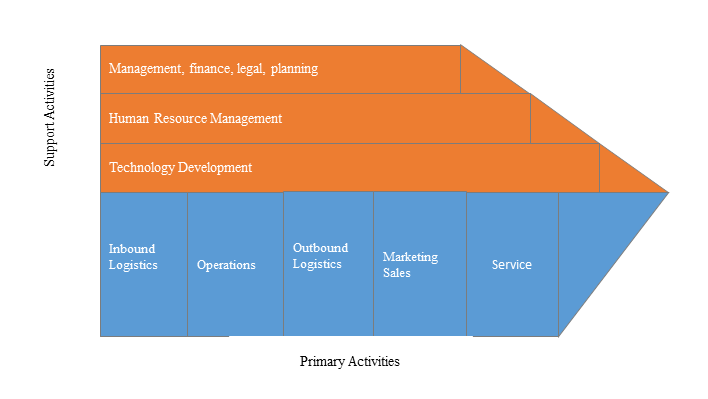
Value chain analysis is a tool to identify activities, within and around the firm and relating these activities to an assessment of competitive strength. Value chain can be analyzed by primary activities and supportive activities. Primary activities include: inbound logistics, operations, outbound logistics, marketing & sales, service. Support activities include: technology development, human resource management, management, finance, legal, planning.
4)SWOT Analysis
SWOT analysis is a tool used to evaluate a company's competitive position by identifying its strengths, weaknesses, opportunities and threats. The strengths and weakness is the inner factor; the opportunities and threats are the external factor. By analyzing the inner and external factors, the analysis can provide the detail information of the position of a player and the characteristics of the industry.
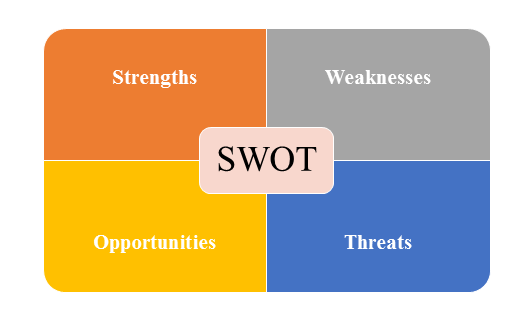
- Strengths describe what the player excels at and separates it from the competition
- Weaknesses stop the player from performing at its optimum level.
- Opportunities refer to favorable external factors that the player can use to give it a competitive advantage.
- Threats refer to factors that have the potential to harm the player.
- Data Sources
| Primary Sources | Secondary Sources |
|---|---|
| Face to face/Phone Interviews with market participants, such as: Manufactures; Distributors; End-users; Experts. Online Survey |
Government/International Organization Data: Annual Report/Presentation/Fact Book Internet Source Information Industry Association Data Free/Purchased Database Market Research Report Book/Journal/News |