Primary Lithium Battery Market 2026-2031 Strategic Report
- Single User License (1 Users) $ 3,500
- Team License (2~5 Users) $ 4,500
- Corporate License (>5 Users) $ 5,500
The global primary lithium battery market size is valued between 3.8 billion USD and 4.8 billion USD in 2026, with a compound annual growth rate (CAGR) of 6.2% to 9.2% through 2031. Growth is propelled by decadal-lifespan deployments in smart utility metering, automotive active safety telemetry, retail electronic shelf labels (ESL), and tactical defense procurement. Manufacturing volume remains heavily concentrated in the Asia-Pacific corridor, specifically within China's Guangdong, Hubei, and Jiangsu provinces, alongside specialized high-reliability production nodes in Japan, the Republic of Korea, Germany, France, Israel, and the United States. However, brownfield expansions and greenfield capital allocations are rapidly migrating toward Southeast Asian tariff-engineering corridors—most notably Senai in Johor, Malaysia, and Ninh Binh, Vietnam—as well as North American oilfield and defense hubs in Calgary, Canada, and New York and Missouri in the United States.
Electrochemical Taxonomy and Physical Form Factor Architecture
A primary lithium battery operates via non-reversible Faradaic oxidation-reduction reactions utilizing metallic lithium or lithium-aluminum alloys as the negative active material. Because metallic lithium possesses the lowest standard reduction potential (-3.04V versus the standard hydrogen electrode) and the lowest equivalent weight among metallic elements, these systems achieve cell nominal voltages between 1.5V and 3.65V. A single 3.0V or 3.6V lithium cell replaces two to three legacy 1.5V alkaline or zinc-carbon cells in series, compressing device volumetric footprints.
Unlike alkaline systems that exhibit continuously sloping discharge curves, primary lithium chemistries maintain a flat voltage plateau across 80% to 90% of their depth of discharge, preventing brownout resets in low-voltage microcontrollers and RF transceivers. Furthermore, controlled chemical passivation at the anode-electrolyte interface suppresses annual self-discharge to below 1% to 2% at ambient temperatures, enabling 5-to-20-year operational and storage lifespans across thermal envelopes spanning -60 degrees Celsius to +85 degrees Celsius, and up to +200 degrees Celsius in modified downhole chemistries.
1. Classification by Chemical System
- Lithium-Thionyl Chloride (Li-SOCl2) Battery:
Operating at a nominal voltage of 3.6V (open-circuit voltage of 3.65V), this chemistry pairs a metallic lithium anode with a liquid inorganic depolarizer and cathode comprising thionyl chloride, a porous carbon black catalytic cathode collector, and lithium tetrachloroaluminate (LiAlCl4) electrolyte salt. Upon contact between lithium and SOCl2, a spontaneous solid electrolyte interphase (SEI) of lithium chloride (LiCl) forms on the anode. While this passivation layer enables 20-year shelf stability and operating ranges from -60 degrees Celsius to +85 degrees Celsius (extendable to +150 degrees Celsius to +200 degrees Celsius for subterranean telemetry), thickening of the LiCl film during prolonged storage causes transient voltage delay upon initial high-current load application.
To manage discharge kinetics, manufacturers deploy four distinct structural configurations:
First, Bobbin Structure cells utilize a cylindrical solid carbon cathode block pressed inside a lithium-lined stainless steel can, maximizing volumetric energy density for microampere background currents over 10 to 20 years in utility meters and memory backup.
Second, Spiral-Wound (Wound) Structure cells employ high-surface-area coiled electrode foils separated by microporous glass-fiber or polyolefin membranes, mitigating voltage delay and supporting continuous medium-to-high drain and heavy pulse discharge in GPS asset trackers and tactical communications.
Third, Hybrid Capacitor Systems join a high-capacity Li-SOCl2 bobbin cell in parallel with a hermetically sealed EDLC or lithium pulse capacitor (SPC/LSC). The bobbin cell trickle-charges the capacitor, which subsequently discharges multi-ampere pulses for cellular IoT transmissions while bypassing passivation impedance.
Fourth, Reserve and Ampoule Systems physically isolate liquid SOCl2 within a hermetically sealed glass ampoule or metallic bellows chamber during storage. Mechanical shock from artillery firing or missile launch shatters the ampoule, activating the electrolyte instantly after 15 to 20 years of zero-degradation stockpiling.
- Lithium-Manganese Dioxide (Li-MnO2) Battery:
Representing the largest volumetric and revenue segment in the industry, Li-MnO2 cells deliver a nominal voltage of 3.0V (open-circuit voltage near 3.3V) and operate across -40 degrees Celsius to +70 degrees Celsius, with specialized automotive electrolyte formulations reaching +125 degrees Celsius. The cathode utilizes solid heat-treated electrolytic manganese dioxide (EMD) processed at 350 to 400 degrees Celsius to convert gamma-MnO2 into anhydrous beta/gamma phases, preventing parasitic gas generation with the lithium anode. The electrolyte consists of organic cyclic and linear esters or ethers—typically propylene carbonate and 1,2-dimethoxyethane—dissolved with lithium perchlorate (LiClO4) or lithium trifluoromethanesulfonate (LiCF3SO3). Li-MnO2 dominates 3V coin formats, cylindrical photo/industrial formats, 9V smoke alarm blocks, and flexible pouch laminates.
- Lithium-Iron Disulfide (Li-FeS2) Battery:
Engineered with a metallic lithium anode, a pyrite iron disulfide cathode, and an organic liquid electrolyte, Li-FeS2 operates at a nominal voltage of 1.5V. It functions as a direct drop-in replacement for legacy 1.5V alkaline and zinc-carbon cylindrical cells (AA/FR6 and AAA/FR03 formats). Because FeS2 undergoes a four-electron reduction pathway without generating soluble polysulfide intermediates at ambient temperatures, these cells deliver 15 to 30 times the operational service life of alkaline equivalents in high-drain pulsed digital cameras, smart locks, and medical infusion pumps, alongside a 15-to-20-year shelf life and leak-free construction. China's National Development and Reform Commission (NDRC) explicitly designates Li-FeS2 as an encouraged strategic energy technology under the Industrial Structure Adjustment Guidance Catalog (2024 Edition).
- Lithium-Carbon Monofluoride (Li-CFx) Battery:
Designated under the international BR prefix, Li-CFx cells pair a lithium anode with an intercalated fluorinated synthetic graphite/carbon cathode in an organic fluorinated or carbonate electrolyte, yielding a 3.0V nominal output. Li-CFx possesses a theoretical gravimetric capacity exceeding 800 mAh/g, exhibits virtually zero gas evolution under high-temperature storage, and maintains structural stability up to +125 degrees Celsius. Discharge converts insulating CFx into conductive carbon black and lithium fluoride, progressively lowering internal impedance across the discharge cycle. It is heavily utilized in aerospace telemetry, active implantable medical devices, computer motherboard real-time clock (RTC) backup, and automotive tire pressure sensors.
- Li-CFx / MnO2 Hybrid Battery:
By mechanically blending carbon monofluoride (CFx) and heat-treated manganese dioxide (MnO2) within a single composite cathode matrix, this architecture bridges the extreme energy density and thermal stability of CFx with the superior pulse-rate capability, flatter initial voltage plateau, and lower material cost of MnO2. Commercialized extensively in military D-cell configurations and manpack radio assemblies (such as the BA-5390 format), hybrid cells deliver up to 100% greater energy density than legacy pressurized sulfur dioxide cells and extend mission runtime by 50% to 100% across more than 60 allied defense programs without experiencing voltage delay.
- Lithium-Sulfur Dioxide (Li-SO2) Battery:
Utilizing a lithium anode, a pressurized liquid sulfur dioxide depolarizer, and an acetonitrile solvent containing lithium bromide (LiBr), Li-SO2 operates at 2.8V to 3.0V and provides high-rate discharge down to -40 degrees Celsius. While historically entrenched as the NATO and US military standard for tactical manpack radios (the legacy BA-5590 series), Li-SO2 is undergoing systematic structural phase-out. Pressurized toxic gas transport restrictions, safety venting hazards, and inferior volumetric energy density are accelerating its substitution by non-pressurized Li-CFx/MnO2 hybrids and military-grade secondary packs.
2. Classification by Physical Form Factor
- Coin and Button Type Batteries:
Constructed in flat circular geometries where cell height is less than diameter (standardized IEC formats including CR2032, CR2450, CR2477, CR2050HR, and BR-series equivalents), these cells utilize stamped stainless steel cans crimp-sealed with polypropylene or high-temperature polyphenylene sulfide (PPS) insulating grommets. Automated high-speed rotary stamping lines yield low unit average selling prices (ASPs), anchoring high-volume deployments in automotive Remote Keyless Entry (RKE), Tire Pressure Monitoring Systems (TPMS), Electronic Shelf Labels (ESL), motherboard CMOS/RTC backup, and blood glucose meters.
- Cylindrical Type Batteries:
Built inside deep-drawn nickel-plated steel or stainless steel cans across standardized formats (1/2AA/ER14250, 2/3A/CR17335, AA/ER14505, C/ER26500, D/ER34615, DD, CR123A, and CR2), industrial cylindrical cells utilize either bobbin or spiral-wound electrode assemblies. Premium industrial and defense cells incorporate hermetic glass-to-metal (GTM) compression or matched seals to prevent moisture ingress and toxic electrolyte vapor escape over 15-year deployments in smart utility meters, pipeline inspection gauges (PIGs), downhole Measurement While Drilling (MWD) tools, and military transceivers.
- Pouch and Thin-Film Type Batteries:
Encapsulated within flexible aluminum-plastic laminate film (CP/soft-pack series) or fabricated via roll-to-roll printed substrate deposition, pouch primary lithium batteries achieve thicknesses below 0.5mm to 2.0mm. High electrode surface-to-volume ratios support high pulse currents relative to cell mass, driving rapid adoption in cold-chain pharmaceutical temperature loggers, active RFID smart cards, Electronic Toll Collection (ETC) windshield tags, disposable continuous glucose monitor (CGM) patches, and transdermal cosmetic iontophoresis masks.
Downstream Application Matrix and Commercialization Pathways
1. Core End-Market Application Verticals
- Smart Metering and Grid Infrastructure:
Utility automation represents the foundational baseload for cylindrical primary lithium demand, with global smart meter hardware installations exceeding 11.3 billion USD annually. Ultrasonic and electromagnetic water meters, residential diaphragm gas meters, heat cost allocators, and smart electricity meter clock backups require 10 to 15+ years of unattended outdoor operation across -40 degrees Celsius to +85 degrees Celsius. Because cellular NB-IoT, LoRaWAN, and Wireless M-Bus protocols demand multi-ampere transmission bursts that overwhelm passivated bobbin cells, utilities increasingly specify integrated ER14505, ER26500, and ER34615 Li-SOCl2 bobbin cells paired in parallel with pulse capacitors (SPC/LSC).
- Automotive Electronics and Intelligent Transportation:
Vehicular deployments impose extreme mechanical and thermal qualification thresholds, including operational survival from -40 degrees Celsius to +125 degrees Celsius, centrifugal acceleration resistance up to 2,000G inside rotating wheel rims, and automotive-grade defect ceilings measured in single-digit parts per million (PPM). Direct Tire Pressure Monitoring Systems (TPMS) rely exclusively on high-temperature coin cells (CR2050HR, CR2450HR) and BR-series Li-CFx cells potted directly into valve-stem sensor modules. Concurrently, mandatory Automotive Emergency Call (eCall) and telematics control units (T-Box) utilize primary Li-SOCl2 or Li-MnO2 backup packs to guarantee emergency GPS coordinate transmission when main 12V lead-acid or high-voltage traction batteries sever during collisions. In highway infrastructure, cylindrical Li-MnO2, Li-SOCl2+SPC hybrids, and thin-film pouch cells power windshield Electronic Toll Collection (ETC) on-board units (OBUs) and commercial fleet telematics.
- IoT and Retail Digitization:
Hypermarket automation and omnichannel price synchronization have triggered massive procurement of Electronic Shelf Labels (ESL). Modern multi-color e-paper displays require high peak current pulses during daily wireless price updates while maintaining ultra-thin profiles, driving multi-hundred-million-unit demand for CR2450 coin cells and laminated Li-MnO2 pouch packs engineered for 5-to-7-year lifespans. In industrial logistics, Bluetooth Low Energy (BLE) beacons and active RFID tags utilize coin and thin-film cells to track intermodal shipping containers, aviation ground equipment, and cold-chain biologics.
- Smart Security and Building Automation:
International fire and life-safety regulations—including National Fire Protection Association (NFPA 72) codes in the United States and EN 14604 standards in Europe—mandate 10-year sealed, non-replaceable battery operation in residential smoke and carbon monoxide detectors. This regulatory floor sustains high-margin demand for 9V Li-MnO2 block batteries, cylindrical CR123A and CR2 cells, and high-capacity pouch packs across wireless passive infrared (PIR) motion detectors, glass-break acoustic sensors, and commercial electronic access locks.
- Medical Devices:
Clinical applications demand absolute zero premature failure tolerance, low impedance after multi-year shelf storage, and strict regulatory compliance under ISO 13485 and US FDA quality frameworks. Automated External Defibrillators (AEDs) depend on high-rate cylindrical Li-MnO2 packs to charge high-voltage capacitors within seconds after years of standby. Wearable Continuous Glucose Monitors (CGMs), ambulatory insulin infusion pumps, capsule endoscopes, and bone growth stimulators rely on high-precision coin and pouch cells, whereas active implantable devices (pacemakers, implantable cardioverter-defibrillators, neurostimulators) utilize medical-grade Li-CFx and Li-CFx/SVO (silver vanadium oxide) chemistries. Because FDA and CE medical device validation cycles span 24 to 36 months, incumbent battery suppliers enjoy immense switching-cost moats.
- Aerospace and Defense:
Defense modernization programs require compliance with stringent MIL-STD environmental, shock, and vibration specifications. Manpack tactical software-defined radios (such as the AN/PRC series), thermal weapon sights, night vision goggles, and chemical agent monitors rely heavily on BA-5390 Li-CFx/MnO2 hybrid packs and spiral-wound Li-SOCl2 cells. In expendable munitions, artillery proximity fuzes, guided missiles, torpedoes, and naval acoustic sonobuoys deploy reserve/ampoule Li-SOCl2 and thermal batteries capable of surviving 15,000G to 30,000G gun-launch accelerations after 20 years in depot storage.
- Specialized Industrial and Harsh-Environment Telemetry:
In upstream oil and gas exploration, Measurement While Drilling (MWD) and Logging While Drilling (LWD) sensor strings operate miles underground at temperatures of +150 degrees Celsius to +200 degrees Celsius under intense lateral shock. Secondary lithium-ion cells undergo thermal runaway under these conditions, leaving modified high-temperature Li-SOCl2 and lithium-sulfuryl chloride (Li-SO2Cl2) packs as the sole viable electrochemical power source. Additional industrial niches include subsea acoustic transponders, Emergency Position Indicating Radio Beacons (EPIRBs), oil pipeline inspection gauges (PIGs), and absolute position encoders on CNC machine tools and industrial robotics.
2. Commercialization and Distribution Architecture
- Direct OEM and Defense Engineering Sales:
Dominating utility metering, automotive Tier-1, medical, and military verticals, this pathway involves direct co-engineering between battery cell manufacturers and device OEMs. Qualification cycles require 12 to 36 months of accelerated thermal aging, passivation impedance modeling, and field trials, locking in multi-year framework supply agreements.
- Original Design Manufacturer (ODM) and Private Label Contracting:
Specialized Chinese and Asian manufacturers—such as Huiderui, Power Glory, and Wuhan Lixing—operate high-speed automated lines producing branded cells and custom packs for western consumer battery marketers and smoke alarm OEMs, optimizing global capacity utilization.
- Value-Added Reseller (VAR) and Industrial Distributor Networks:
Fragmented IoT integrators and regional industrial accounts procure cells via global electronic component distributors (such as Arrow and Avnet) and specialized battery value-added pack assemblers who perform custom spot-welding, wire harnessing, and epoxy potting.
- Consumer Retail and Direct-to-Consumer (D2C) Channels:
Standardized consumer-replaceable formats—specifically 1.5V Li-FeS2 AA/AAA cells, 9V lithium blocks, and child-resistant blister-packed CR2032 coin cells—are commercialized through mass merchandisers, hardware chains, pharmacies, and digital marketplaces.
Regional Market Dynamics and Policy Arbitrage
- Asia-Pacific:
Asia-Pacific serves as both the primary global manufacturing engine and the fastest-expanding consumption theatre. China anchors global output, supported by State Grid smart electricity meter replacements, NB-IoT water/gas meter rollouts, domestic NEV automotive TPMS/eCall integration, and ESL manufacturing. While China's NDRC supports domestic advanced primary lithium manufacturing by maintaining an exemption from the 4% domestic battery consumption tax, Chinese fiscal authorities are actively dismantling export subsidies for commoditized capacity. Following the December 1, 2024 reduction of the primary lithium battery export VAT rebate from 13% to 9%, Announcement No. 2 of 2026 lowers the rebate to 6% from April 1, 2026 through December 31, 2026, before abolishing it entirely (0%) on January 1, 2027.
This policy shift is accelerating supply chain migration into Southeast Asia. For example, GP Industries consolidated its Malaysian battery manufacturing operations in Senai, Johor, and initiated a dedicated lithium coin cell plant in Ninh Binh, Vietnam, creating an offshore tariff-free export platform. Meanwhile, India represents a premier structural growth node, driven by the government's Revamped Distribution Sector Scheme (RDSS) targeting 250 million smart prepaid electricity meters, alongside emerging domestic Li-FeS2 consumer adoption and defense localization. Japan and the Republic of Korea remain focused on high-margin automotive TPMS cells, semiconductor equipment memory backup, and global smart grid exports, complemented by regional distribution hubs across Singapore and Taiwan, China.
- North America:
North America represents a high-ASP, margin-accretive market underpinned by municipal Advanced Metering Infrastructure (AMI) upgrades, DoD munitions and tactical radio replenishment, and FDA-regulated medical devices. U.S. Section 301 tariffs on Chinese-origin battery components have reshaped procurement logic, prompting utilities and automotive Tier-1s to favor suppliers with Korean, Japanese, Southeast Asian, or domestic North American footprints. In Canada, the Western Canadian Sedimentary Basin drives steady demand for high-temperature MWD/LWD downhole battery packs—a corridor consolidated by Vitzrocell's acquisition of Calgary-based Innova Power Solutions. In Mexico, industrial nearshoring along the US border is expanding demand for cross-border fleet GPS tracking and cold-chain telemetry.
- Europe:
European demand is bifurcated between resilient B2B industrial procurement and a structurally challenged consumer retail sector. Macro headwinds, energy price inflation, and purchasing power erosion stemming from geopolitical conflicts in Eastern Europe have pushed retail consumers toward lower-cost private-label alkaline cells, depressing branded consumer lithium retail volumes. Conversely, industrial demand remains robust, propelled by smart gas and heat sub-metering mandates under the EU Energy Efficiency Directive, mandatory automotive eCall regulations, and NATO defense restocking. Exporters entering Europe face escalating non-tariff compliance barriers under the EU Battery Regulation (Regulation EU 2023/1542), which enforces strict heavy metal limits, supply chain due diligence, carbon footprint declarations, and lifecycle digital battery passports.
- Middle East and Africa:
Market expansion in the MEA region is concentrated within Gulf Cooperation Council (GCC) states—specifically Saudi Arabia and the United Arab Emirates—where national smart city initiatives and municipal water/gas grid automation require specialized Li-SOCl2 bobbin and hybrid cells engineered to operate continuously in ambient desert utility boxes reaching +70 degrees Celsius. Furthermore, national oil companies across the Arabian Peninsula represent core end-users of +150 degrees Celsius to +200 degrees Celsius downhole drilling packs and pipeline inspection gauges. Across Sub-Saharan Africa, consumer channels remain dominated by legacy zinc-carbon cells, though prepaid urban water metering and off-grid solar/telecom asset tracking provide localized growth pockets.
- South America:
South America exhibits sharp segmentation between price-sensitive consumer markets and resource-driven industrial automation. High inflation and currency volatility, notably in Argentina, have constrained consumer upgrades to premium primary lithium formats. However, Brazil anchors regional industrial consumption through national electronic tolling networks, agricultural and mining fleet telematics, and utility anti-theft smart electricity metering deployments.
Competitive Dossiers
- EVE Energy Co., Ltd.: Having established dominance in China's domestic smart meter and automotive ETC sectors, EVE Energy has pivoted aggressively toward globalized automotive OEM integration and hybridized capacitor systems (ER+SPC). EVE commands the industry's broadest chemical portfolio, spanning Li-SOCl2, Li-MnO2, Li-FeS2, and proprietary SPC pulse capacitors. By achieving ultra-low PPM defect rates on fully automated cylindrical and coin lines in Huizhou and Wuhan, EVE became the first Chinese supplier to break the Japanese monopoly in global Tier-1 automotive TPMS and eCall power supplies, leveraging massive scale to insulate margins against China's export VAT rebate rollback.
- Saft Groupe (including Tadiran Batteries, Subsidiary of TotalEnergies): Following its integration of Israel-based Tadiran Batteries, Saft has focused on defending its roughly 50% historical revenue share in global high-end Li-SOCl2 by migrating utility and defense clients into proprietary PulsesPlus hybrid systems (combining Li-SOCl2 bobbin cells with Tadiran's patented TLI rechargeable lithium-ion pulse capacitors). Multi-decade field validation data across European, North American, and Middle Eastern utilities creates an almost insurmountable qualification moat. With automated manufacturing hubs in Poitiers and Nersac (France), Kiryat Ekron (Israel), Büdingen (Germany), and Zhuhai (China), Saft bypasses regional trade barriers while maintaining entrenched positions in NATO defense, oceanographic buoys, and aerospace telemetry.
- Vitzrocell Co., Ltd.: Headquartered in the Republic of Korea, Vitzrocell has executed an aggressive inorganic expansion and application-diversification strategy to move beyond standard smart grid cells into high-temperature downhole oilfield packs and military ampoule reserve batteries. Ranked among the top three global Li-SOCl2 producers alongside Saft and EVE, Vitzrocell holds the number-one market share in North American smart utility metering and supplies the top five smart meter OEMs in India's 250-million-unit RDSS rollout. Its acquisition of Calgary-based Innova Power Solutions locked in direct access to the North American MWD/LWD oil and gas corridor, generating over 5.17 million USD in quarterly consolidated downhole revenues.
- Panasonic Energy Co., Ltd.: Panasonic Energy has systematically exited low-margin consumer commodity segments to concentrate capital allocation on high-temperature automotive electronics, ultra-reliable Li-CFx (BR series) industrial cells, and high-pulse coin cells for retail digitization. As the original commercial pioneer of Poly-carbonmonofluoride Lithium (Li-CFx) chemistry, Panasonic possesses unmatched proprietary mastery over fluorinated carbon cathode synthesis and high-temperature electrolyte additives. Its BR-series coin and cylindrical cells represent the de facto global benchmark for automotive TPMS, ETC transponders, and industrial PLC memory backup requiring zero gas generation at +125 degrees Celsius.
- Ultralife Corporation (including Electrochem Solutions): Ultralife executed a transformative consolidation of the North American specialty primary battery landscape in late 2024 by completing the full acquisition of Electrochem Solutions, Inc., merging its defense and medical franchise with Electrochem's premier oilfield and industrial portfolio. Ultralife holds an entrenched structural moat in allied defense logistics via its proprietary Li-CFx/MnO2 hybrid D-cells and BA-5390 manpack radio batteries deployed across more than 60 defense programs, alongside its industry-standard 9V Li-MnO2 smoke alarm blocks. The integration of Electrochem grants Ultralife domestic US monopoly-like capabilities in +200 degrees Celsius Li-SOCl2 and sulfuryl chloride cells for MWD/LWD downhole drilling and mission-critical medical devices.
- Energizer Holdings, Inc.: Confronting volume stagnation in legacy alkaline retail categories, Energizer has leveraged its global brand equity and child-secure packaging innovations to expand distribution of its premium consumer lithium portfolio across e-commerce and B2B maintenance channels. Energizer commands a near-monopoly in the Western consumer 1.5V cylindrical primary lithium segment through its flagship Energizer Ultimate Lithium (Li-FeS2) AA and AAA product lines. Backed by foundational formulation patents, high-speed manufacturing scale, and global retail shelf space, Energizer captures premium pricing from consumers and commercial users requiring leak-proof, extreme-temperature AA/AAA performance.
- EaglePicher Technologies: EaglePicher continues to deepen its vertical integration within the US defense industrial base, expanding automated production capacity for tactical munition reserve batteries, thermal batteries, and deep-space primary lithium systems. Operating under strict US Department of Defense security clearances and ITAR compliance frameworks, EaglePicher dominates life-critical and high-survivability niches where commercial suppliers cannot compete. Its technological moat spans custom Li-CFx, Li-SOCl2, Li-SO2, and pyrotechnic thermal/ampoule reserve cells powering missile guidance systems, artillery fuzes, naval sonobuoys, Mars rovers, and implantable cardiac defibrillators.
- VARTA AG: Amidst corporate debt restructuring and severe European consumer retail headwinds, VARTA has refocused its specialty primary lithium operations around automated "Made in Germany" B2B industrial, medical diagnostic, and European smart metering verticals. VARTA's high-precision automated assembly lines produce cylindrical (CR 1/2 AA, CR 2/3 AA, CR AA) and coin Li-MnO2 cells with annual self-discharge rates below 1%. Its proximity to European automotive Tier-1s and compliance readiness for EU Battery Regulation 2023/1542 secure its role in European eCall modules, heat cost allocators, and connected medical patches.
- Maxell, Ltd.: Maxell has concentrated R&D and manufacturing resources on heat-resistant micro-power solutions, targeting automotive direct-TPMS, continuous glucose monitors, and ultra-thin infrastructure sensors. Manufacturing within precision Japanese facilities and distributing via wholly owned subsidiaries including Maxell America, Maxell Europe, Maxell Asia, and Maxell Taiwan, China, the company excels in metallurgical sealing and electrolyte stabilization. Its CR-HR series heat-resistant coin cells withstand 2,000G centrifugal forces and +125 degrees Celsius thermal cycling without electrolyte creep.
- Huizhou Huiderui Lithium Battery Technology Co., Ltd.: Recognized as a Chinese National "Little Giant" enterprise, Huiderui has expanded high-speed automated capacity for 1.5V Li-FeS2 and cylindrical Li-MnO2 cells while transitioning toward higher-margin custom IoT packs to mitigate export VAT rebate reductions. Focussing exclusively on primary lithium chemistries, Huiderui ranks among China's largest manufacturers and ODM exporters of cylindrical Li-MnO2 (CR123A, CR2, CR14505), cylindrical Li-FeS2 (AA/AAA), and soft-pack pouch cells, maintaining deep private-label manufacturing partnerships with international battery brands and security OEMs.
- Power Glory Battery Tech (Hubei) Co., Ltd.: Operating as a specialized National "Little Giant" from its Hubei manufacturing base, Power Glory has targeted the explosive growth in retail Electronic Shelf Labels (ESL), automotive RKE, and medical telemetry by scaling ultra-high-pulse coin and hybrid capacitor cells. Power Glory possesses specialized expertise in micro-power electrochemical engineering across Li-MnO2 coin cells (CR series), Li-CFx coin cells (BR series), pin-type batteries, and Lithium Subsea/Pulse Capacitors (LSC series), serving as a qualified core supplier to Fortune 500 electronics OEMs and global ESL leaders.
- GP Industries Limited: GP Industries proactively executed a geographic de-risking strategy, consolidating Malaysian battery production in Senai, Johor, and constructing a dedicated lithium coin cell facility in Ninh Binh, Vietnam, to insulate international customers from US-China tariff friction and Chinese VAT rebate rollbacks. Combining multi-country ASEAN manufacturing agility with extensive global consumer and B2B distribution networks across the Americas, Europe, and Asia, GP Industries captures market share from single-country Chinese exporters in IoT, smart building automation, and retail coin cell segments.
- Wuhan Lixing (Torch) Power Sources Co., Ltd.: As one of China's earliest military-to-civilian primary lithium pioneers, Wuhan Lixing has upgraded its automated production bases to capture domestic Chinese grid modernization, highway ETC replacements, and cold-chain logistics tracking. Wuhan Lixing operates a balanced triangular portfolio covering cylindrical/coin Li-MnO2 (CR series), cylindrical Li-SOCl2 (ER series), and ultra-thin aluminum-plastic pouch cells. Additionally, competitors such as Guangzhou Great Power Energy & Technology Co., Ltd. complement this domestic landscape via dedicated Li-FeS2 and Li-MnO2 divisions and strategic equity cross-holdings in micro-battery specialists.
- FDK CORPORATION: FDK has aligned its primary lithium cylindrical and coin cell business with global smart utility metering, industrial factory automation (PLC/servo encoder backup), and Japanese automotive electronics. Utilizing proprietary cathode formulation and high-rate spiral-wound assembly techniques inherited from its Japanese electrochemical pedigree, FDK delivers high-discharge cylindrical Li-MnO2 cells exhibiting superior voltage stability and ultra-low internal resistance after decade-long standby cycles.
- Eveready Industries India Ltd.: Seeking to capture higher-margin growth beyond India's commoditized zinc-carbon dry cell market, Eveready launched its premium Eveready Ultima Lithium product line targeting urban digital consumers and high-drain medical/electronic devices. Commanding over 50% market share in India's portable dry cell sector through an unmatched pan-Indian retail distribution network, Eveready leverages its brand ubiquity to commercialize 1.5V Li-FeS2 AA and AAA cells without requiring the customer acquisition costs faced by foreign entrants.
1.1 Report Overview and Scope ... 1
1.2 Research Methodology and Analytical Framework ... 2
1.3 Data Sources and Key Assumptions ... 4
1.4 Industry Taxonomy and Abbreviations ... 6
Chapter 2 Global Primary Lithium Battery Value Chain and Supply Architecture ... 7
2.1 Upstream Raw Material Sourcing ... 7
2.2 Midstream Cell Manufacturing and Component Supply Bottlenecks ... 8
2.3 Value Chain Margin Distribution and Pricing Transmission Mechanisms ... 10
2.4 Logistics Infrastructure and Hazardous Material Transport Regulations ... 11
Chapter 3 Manufacturing Process Paradigms, Cost Structure, and Patent Landscape ... 13
3.1 Cathode Depolarizer and Non-Aqueous Electrolyte Formulation Technologies ... 13
3.2 Cell Assembly Engineering: Bobbin Type vs. Spiral Wound vs. Coin and Pouch Formats ... 14
3.3 Manufacturing Cost Structure and Bill of Materials (BOM) Breakdown ... 16
3.4 Global Patent Filing Trends, Voltage Delay Mitigation, and Intellectual Property Landscape (2021-2026) ... 17
Chapter 4 Global Primary Lithium Battery Market Dynamics, Capacity, Production, and Trade Logistics ... 19
4.1 Global Primary Lithium Battery Capacity, Production, and Utilization Rate (2021-2031) ... 19
4.2 Global Market Size (Consumption Volume and Revenue) and Average Selling Price (ASP) Trajectory (2021-2031) ... 21
4.3 Global Import and Export Trade Flows, Tariff Impacts, and Supply Chain Realignment (2021-2026) ... 23
4.4 Industry Growth Drivers, Passivation Phenomenon Challenges, and Environmental Directives ... 24
Chapter 5 Global Primary Lithium Battery Market Segmentation by Chemical System (2021-2031) ... 26
5.1 Global Market Overview by Chemical System ... 26
5.2 Lithium-Thionyl Chloride Battery ... 27
5.3 Lithium-Manganese Dioxide Battery ... 28
5.4 Lithium-Iron Disulfide Battery ... 29
5.5 Lithium-Carbon Monofluoride Battery ... 30
5.6 Li-CFx/MnO2 Hybrids Battery ... 31
5.7 Lithium-Sulfur Dioxide Battery ... 32
Chapter 6 Global Primary Lithium Battery Market Segmentation by Physical Form Factor (2021-2031) ... 34
6.1 Global Market Overview by Physical Form Factor ... 34
6.2 Coin Battery ... 35
6.3 Cylindrical Battery ... 36
6.4 Pouch/Thin-Film Battery ... 37
Chapter 7 Global Primary Lithium Battery Downstream Application Demand Analysis (2021-2031) ... 39
7.1 Global Downstream Consumption Volume and Revenue Share by Application ... 39
7.2 Smart Metering & Grid Infrastructure ... 40
7.3 Automotive Electronics & Intelligent Transportation ... 41
7.4 IoT & Retail Digitization ... 42
7.5 Smart Security & Building Automation ... 43
7.6 Medical Device ... 44
7.7 Aerospace & Defense ... 45
7.8 Others ... 46
Chapter 8 Regional Market Performance and Cross-Border Trade Dynamics (2021-2031) ... 47
8.1 Global Regional Capacity, Production, Consumption, and Market Size Comparison (2021-2031) ... 47
8.2 North America Primary Lithium Battery Market Analysis ... 49
8.2.1 United States ... 49
8.2.2 Canada ... 50
8.2.3 Mexico ... 50
8.3 Europe Primary Lithium Battery Market Analysis ... 51
8.3.1 France ... 51
8.3.2 Germany ... 51
8.3.3 United Kingdom ... 52
8.3.4 Italy ... 52
8.3.5 Spain & Rest of Europe... 52
8.4 Asia-Pacific Primary Lithium Battery Market Analysis ... 53
8.4.1 China ... 53
8.4.2 Japan ... 53
8.4.3 South Korea ... 54
8.4.4 India ... 54
8.4.5 Southeast Asia ... 54
8.4.6 Australia ... 54
8.5 South America Primary Lithium Battery Market Analysis ... 55
8.5.1 Brazil ... 55
8.5.2 Argentina ... 55
8.6 Middle East & Africa Primary Lithium Battery Market Analysis ... 56
8.6.1 Saudi Arabia ... 56
8.6.2 United Arab Emirates ... 56
8.6.3 South Africa ... 57
Chapter 9 Corporate Competitive Landscape and Market Concentration (2021-2026) ... 58
9.1 Global Player Tiering and Market Concentration Analysis (CR3, CR5, and HHI Index) ... 58
9.2 Corporate Primary Lithium Battery Capacity and Production Footprint Comparison (2021-2026) ... 59
9.3 Corporate Primary Lithium Battery Revenue and Market Share Benchmarking (2021-2026) ... 60
9.4 Strategic Mergers, Acquisitions, Capacity Expansions, and OEM Supply Agreements ... 61
Chapter 10 Key Market Players Operational and Financial Intelligence ... 62
10.1 Energizer ... 62
10.1.1 Corporate Profile and Strategic Positioning ... 62
10.1.2 SWOT Analysis ... 63
10.1.3 Primary Lithium Battery Operational Metrics (Capacity, Production, Utilization Rate, Price, Cost, Gross Margin, Revenue, and Market Share) ... 64
10.1.4 R&D Expenditure and Go-To-Market Strategy ... 65
10.2 Saft ... 66
10.2.1 Corporate Profile and Strategic Positioning ... 66
10.2.2 SWOT Analysis ... 67
10.2.3 Primary Lithium Battery Operational Metrics (Capacity, Production, Utilization Rate, Price, Cost, Gross Margin, Revenue, and Market Share) ... 68
10.2.4 R&D Expenditure and Go-To-Market Strategy ... 69
10.3 FDK CORPORATION ... 70
10.3.1 Corporate Profile and Strategic Positioning ... 70
10.3.2 SWOT Analysis ... 71
10.3.3 Primary Lithium Battery Operational Metrics (Capacity, Production, Utilization Rate, Price, Cost, Gross Margin, Revenue, and Market Share) ... 72
10.3.4 R&D Expenditure and Go-To-Market Strategy ... 73
10.4 Panasonic Energy ... 74
10.4.1 Corporate Profile and Strategic Positioning ... 74
10.4.2 SWOT Analysis ... 75
10.4.3 Primary Lithium Battery Operational Metrics (Capacity, Production, Utilization Rate, Price, Cost, Gross Margin, Revenue, and Market Share) ... 76
10.4.4 R&D Expenditure and Go-To-Market Strategy ... 77
10.5 GP Industries Limited ... 78
10.5.1 Corporate Profile and Strategic Positioning ... 78
10.5.2 SWOT Analysis ... 79
10.5.3 Primary Lithium Battery Operational Metrics (Capacity, Production, Utilization Rate, Price, Cost, Gross Margin, Revenue, and Market Share) ... 80
10.5.4 R&D Expenditure and Go-To-Market Strategy ... 81
10.6 VARTA AG ... 82
10.6.1 Corporate Profile and Strategic Positioning ... 82
10.6.2 SWOT Analysis ... 83
10.6.3 Primary Lithium Battery Operational Metrics (Capacity, Production, Utilization Rate, Price, Cost, Gross Margin, Revenue, and Market Share) ... 84
10.6.4 R&D Expenditure and Go-To-Market Strategy ... 85
10.7 VITZROCELL Co. Ltd. (Vitzrocell) ... 86
10.7.1 Corporate Profile and Strategic Positioning ... 86
10.7.2 SWOT Analysis ... 87
10.7.3 Primary Lithium Battery Operational Metrics (Capacity, Production, Utilization Rate, Price, Cost, Gross Margin, Revenue, and Market Share) ... 88
10.7.4 R&D Expenditure and Go-To-Market Strategy ... 89
10.8 Huizhou Huiderui Lithium Battery Technology Co. Ltd. ... 90
10.8.1 Corporate Profile and Strategic Positioning ... 90
10.8.2 SWOT Analysis ... 91
10.8.3 Primary Lithium Battery Operational Metrics (Capacity, Production, Utilization Rate, Price, Cost, Gross Margin, Revenue, and Market Share) ... 92
10.8.4 R&D Expenditure and Go-To-Market Strategy ... 93
10.9 Maxell Ltd ... 94
10.9.1 Corporate Profile and Strategic Positioning ... 94
10.9.2 SWOT Analysis ... 95
10.9.3 Primary Lithium Battery Operational Metrics (Capacity, Production, Utilization Rate, Price, Cost, Gross Margin, Revenue, and Market Share) ... 96
10.9.4 R&D Expenditure and Go-To-Market Strategy ... 97
10.10 EVE Energy ... 98
10.10.1 Corporate Profile and Strategic Positioning ... 98
10.10.2 SWOT Analysis ... 99
10.10.3 Primary Lithium Battery Operational Metrics (Capacity, Production, Utilization Rate, Price, Cost, Gross Margin, Revenue, and Market Share) ... 100
10.10.4 R&D Expenditure and Go-To-Market Strategy ... 101
10.11 Ultralife Corporation ... 102
10.11.1 Corporate Profile and Strategic Positioning ... 102
10.11.2 SWOT Analysis ... 103
10.11.3 Primary Lithium Battery Operational Metrics (Capacity, Production, Utilization Rate, Price, Cost, Gross Margin, Revenue, and Market Share) ... 104
10.11.4 R&D Expenditure and Go-To-Market Strategy ... 105
10.12 Eveready Industries India Ltd. ... 106
10.12.1 Corporate Profile and Strategic Positioning ... 106
10.12.2 SWOT Analysis ... 107
10.12.3 Primary Lithium Battery Operational Metrics (Capacity, Production, Utilization Rate, Price, Cost, Gross Margin, Revenue, and Market Share) ... 108
10.12.4 R&D Expenditure and Go-To-Market Strategy ... 109
10.13 Power Glory Battery Tech(Hubei) Co. Ltd ... 110
10.13.1 Corporate Profile and Strategic Positioning ... 110
10.13.2 SWOT Analysis ... 111
10.13.3 Primary Lithium Battery Operational Metrics (Capacity, Production, Utilization Rate, Price, Cost, Gross Margin, Revenue, and Market Share) ... 112
10.13.4 R&D Expenditure and Go-To-Market Strategy ... 113
10.14 Wuhan Lixing (Torch) Power Sources Co. Ltd. ... 114
10.14.1 Corporate Profile and Strategic Positioning ... 114
10.14.2 SWOT Analysis ... 115
10.14.3 Primary Lithium Battery Operational Metrics (Capacity, Production, Utilization Rate, Price, Cost, Gross Margin, Revenue, and Market Share) ... 116
10.14.4 R&D Expenditure and Go-To-Market Strategy ... 117
10.15 EaglePicher Technologies ... 118
10.15.1 Corporate Profile and Strategic Positioning ... 118
10.15.2 SWOT Analysis ... 119
10.15.3 Primary Lithium Battery Operational Metrics (Capacity, Production, Utilization Rate, Price, Cost, Gross Margin, Revenue, and Market Share) ... 120
10.15.4 R&D Expenditure and Go-To-Market Strategy ... 121
Chapter 11 Market Channel Architecture, Value Migration, and Strategic Outlook (2027-2031) ... 122
Table 2: Macroeconomic and Raw Material Price Assumptions (2026-2031) ... 4
Table 3: Industry Taxonomy and Technical Abbreviations ... 6
Table 4: Battery-Grade Lithium Metal and Cathode Precursor Specifications and Key Suppliers ... 7
Table 5: Global Primary Lithium Battery Supply Chain Bottlenecks and Vulnerability Index ... 9
Table 6: International Transport Regulations (UN 3090 and UN 3091) Compliance Matrix ... 11
Table 7: Electrochemical Performance Comparison by Cathode and Electrolyte System ... 13
Table 8: Bobbin Type vs. Spiral Wound vs. Pouch Cell Manufacturing Process Parameters ... 14
Table 9: Primary Lithium Battery Bill of Materials (BOM) Cost Breakdown by Chemistry (2026) ... 16
Table 10: Key Global Patent Holders and Core Technological Clusters (2021-2026) ... 17
Table 11: Global Primary Lithium Battery Capacity, Production, and Utilization Rate (2021-2031) ... 19
Table 12: Global Primary Lithium Battery Consumption Volume, Market Size, and ASP (2021-2031) ... 21
Table 13: Global Primary Lithium Battery Import and Export Volume by Major Trade Hubs (2021-2026) ... 23
Table 14: Global Primary Lithium Battery Production Volume by Chemical System (2021-2031) ... 26
Table 15: Global Primary Lithium Battery Revenue by Chemical System (2021-2031) ... 26
Table 16: Global Primary Lithium Battery Average Selling Price by Chemical System (2021-2031) ... 27
Table 17: Global Lithium-Thionyl Chloride Battery Market Size (Volume and Value) (2021-2031) ... 27
Table 18: Global Lithium-Manganese Dioxide Battery Market Size (Volume and Value) (2021-2031) ... 28
Table 19: Global Lithium-Iron Disulfide Battery Market Size (Volume and Value) (2021-2031) ... 29
Table 20: Global Lithium-Carbon Monofluoride Battery Market Size (Volume and Value) (2021-2031) ... 30
Table 21: Global Li-CFx/MnO2 Hybrids Battery Market Size (Volume and Value) (2021-2031) ... 31
Table 22: Global Lithium-Sulfur Dioxide Battery Market Size (Volume and Value) (2021-2031) ... 32
Table 23: Global Primary Lithium Battery Production Volume by Physical Form Factor (2021-2031) ... 34
Table 24: Global Primary Lithium Battery Revenue by Physical Form Factor (2021-2031) ... 34
Table 25: Global Coin Primary Lithium Battery Market Size (Volume and Value) (2021-2031) ... 35
Table 26: Global Cylindrical Primary Lithium Battery Market Size (Volume and Value) (2021-2031) ... 36
Table 27: Global Pouch/Thin-Film Primary Lithium Battery Market Size (Volume and Value) (2021-2031) ... 37
Table 28: Global Primary Lithium Battery Consumption Volume by Application (2021-2031) ... 39
Table 29: Global Primary Lithium Battery Revenue by Application (2021-2031) ... 39
Table 30: Smart Metering & Grid Infrastructure Primary Lithium Battery Demand (2021-2031) ... 40
Table 31: Automotive Electronics & Intelligent Transportation Primary Lithium Battery Demand (2021-2031) ... 41
Table 32: IoT & Retail Digitization Primary Lithium Battery Demand (2021-2031) ... 42
Table 33: Smart Security & Building Automation Primary Lithium Battery Demand (2021-2031) ... 43
Table 34: Medical Device Primary Lithium Battery Demand (2021-2031) ... 44
Table 35: Aerospace & Defense Primary Lithium Battery Demand (2021-2031) ... 45
Table 36: Other Applications Primary Lithium Battery Demand (2021-2031) ... 46
Table 37: Global Primary Lithium Battery Production Volume by Region (2021-2031) ... 47
Table 38: Global Primary Lithium Battery Consumption Volume by Region (2021-2031) ... 47
Table 39: Global Primary Lithium Battery Market Size (Revenue) by Region (2021-2031) ... 48
Table 40: North America Primary Lithium Battery Capacity, Production, Consumption, and Revenue (2021-2031) ... 49
Table 41: North America Primary Lithium Battery Consumption Volume by Country (2021-2031) ... 50
Table 42: Europe Primary Lithium Battery Capacity, Production, Consumption, and Revenue (2021-2031) ... 51
Table 43: Europe Primary Lithium Battery Consumption Volume by Country (2021-2031) ... 52
Table 44: Asia-Pacific Primary Lithium Battery Capacity, Production, Consumption, and Revenue (2021-2031) ... 53
Table 45: Asia-Pacific Primary Lithium Battery Consumption Volume by Country (2021-2031) ... 54
Table 46: South America Primary Lithium Battery Production, Consumption, and Revenue by Country (2021-2031) ... 55
Table 47: Middle East & Africa Primary Lithium Battery Production, Consumption, and Revenue by Country (2021-2031) ... 56
Table 48: Global Top Manufacturers Primary Lithium Battery Capacity (2021-2026) ... 59
Table 49: Global Top Manufacturers Primary Lithium Battery Production Volume (2021-2026) ... 59
Table 50: Global Top Manufacturers Primary Lithium Battery Revenue and Market Share (2021-2026) ... 60
Table 51: Key Corporate Strategic Expansions, M&A, and Supply Contracts (2021-2026) ... 61
Table 52: Energizer Primary Lithium Battery Capacity, Production, Price, Cost and Gross Profit Margin (2021-2026) ... 64
Table 53: Saft Primary Lithium Battery Capacity, Production, Price, Cost and Gross Profit Margin (2021-2026) ... 68
Table 54: FDK CORPORATION Primary Lithium Battery Capacity, Production, Price, Cost and Gross Profit Margin (2021-2026) ... 72
Table 55: Panasonic Energy Primary Lithium Battery Capacity, Production, Price, Cost and Gross Profit Margin (2021-2026) ... 76
Table 56: GP Industries Limited Primary Lithium Battery Capacity, Production, Price, Cost and Gross Profit Margin (2021-2026) ... 80
Table 57: VARTA AG Primary Lithium Battery Capacity, Production, Price, Cost and Gross Profit Margin (2021-2026) ... 84
Table 58: VITZROCELL Co. Ltd. (Vitzrocell) Primary Lithium Battery Capacity, Production, Price, Cost and Gross Profit Margin (2021-2026) ... 88
Table 59: Huizhou Huiderui Lithium Battery Technology Co. Ltd. Primary Lithium Battery Capacity, Production, Price, Cost and Gross Profit Margin (2021-2026) ... 92
Table 60: Maxell Ltd Primary Lithium Battery Capacity, Production, Price, Cost and Gross Profit Margin (2021-2026) ... 96
Table 61: EVE Energy Primary Lithium Battery Capacity, Production, Price, Cost and Gross Profit Margin (2021-2026) ... 100
Table 62: Ultralife Corporation Primary Lithium Battery Capacity, Production, Price, Cost and Gross Profit Margin (2021-2026) ... 104
Table 63: Eveready Industries India Ltd. Primary Lithium Battery Capacity, Production, Price, Cost and Gross Profit Margin (2021-2026) ... 108
Table 64: Power Glory Battery Tech(Hubei) Co. Ltd Primary Lithium Battery Capacity, Production, Price, Cost and Gross Profit Margin (2021-2026) ... 112
Table 65: Wuhan Lixing (Torch) Power Sources Co. Ltd. Primary Lithium Battery Capacity, Production, Price, Cost and Gross Profit Margin (2021-2026) ... 116
Table 66: EaglePicher Technologies Primary Lithium Battery Capacity, Production, Price, Cost and Gross Profit Margin (2021-2026) ... 120
Table 67: Primary Lithium Battery Distribution Channel Share (Direct OEM vs. Distributors) (2021-2031) ... 122
Table 68: Total Cost of Ownership (TCO) Comparison: Primary Lithium vs. Rechargeable Li-ion in IoT Nodes ... 123
Figure 1: Global Primary Lithium Battery Market Research Methodology and Triangulation Framework ... 3
Figure 2: Historical and Forecast Battery-Grade Lithium Metal Ingot Pricing Dynamics (2021-2031) ... 8
Figure 3: Global Primary Lithium Battery Value Chain Architecture and Margin Pool Distribution (2026) ... 10
Figure 4: Primary Lithium Cell Manufacturing Process Flow and Quality Control Nodes ... 15
Figure 5: Global Primary Lithium Battery Patent Filing Velocity and Jurisdiction Share (2021-2026) ... 18
Figure 6: Global Primary Lithium Battery Capacity vs. Production Volume Trajectory (2021-2031) ... 20
Figure 7: Global Primary Lithium Battery Revenue Growth and Average Selling Price Evolution (2021-2031) ... 22
Figure 8: Global Cross-Border Trade Flow Map and Tariff Impact Assessment (2026) ... 24
Figure 9: Global Primary Lithium Battery Revenue Share by Chemical System (2021 vs. 2026 vs. 2031) ... 26
Figure 10: Gravimetric Energy Density vs. Operating Temperature Range Across Primary Lithium Chemistries ... 33
Figure 11: Global Primary Lithium Battery Market Share by Physical Form Factor (2021-2031) ... 35
Figure 12: Form Factor Selection Matrix by Pulse Discharge Current and Volumetric Constraint ... 38
Figure 13: Global Primary Lithium Battery Revenue Breakdown by Downstream Application (2021-2031) ... 40
Figure 14: Global Primary Lithium Battery Production vs. Consumption Regional Imbalance (2026) ... 48
Figure 15: Asia-Pacific Primary Lithium Battery Export Dominance and Regional Demand Growth (2021-2031) ... 53
Figure 16: Global Primary Lithium Battery Market Concentration Ratios (CR3, CR5, CR10) (2026) ... 58
Figure 17: Competitive Positioning Matrix of Global Primary Lithium Battery Manufacturers (2026) ... 60
Figure 18: Energizer Primary Lithium Battery Market Share (2021-2026) ... 64
Figure 19: Saft Primary Lithium Battery Market Share (2021-2026) ... 68
Figure 20: FDK CORPORATION Primary Lithium Battery Market Share (2021-2026) ... 72
Figure 21: Panasonic Energy Primary Lithium Battery Market Share (2021-2026) ... 76
Figure 22: GP Industries Limited Primary Lithium Battery Market Share (2021-2026) ... 80
Figure 23: VARTA AG Primary Lithium Battery Market Share (2021-2026) ... 84
Figure 24: VITZROCELL Co. Ltd. (Vitzrocell) Primary Lithium Battery Market Share (2021-2026) ... 88
Figure 25: Huizhou Huiderui Lithium Battery Technology Co. Ltd. Primary Lithium Battery Market Share (2021-2026) ... 92
Figure 26: Maxell Ltd Primary Lithium Battery Market Share (2021-2026) ... 96
Figure 27: EVE Energy Primary Lithium Battery Market Share (2021-2026) ... 100
Figure 28: Ultralife Corporation Primary Lithium Battery Market Share (2021-2026) ... 104
Figure 29: Eveready Industries India Ltd. Primary Lithium Battery Market Share (2021-2026) ... 108
Figure 30: Power Glory Battery Tech(Hubei) Co. Ltd Primary Lithium Battery Market Share (2021-2026) ... 112
Figure 31: Wuhan Lixing (Torch) Power Sources Co. Ltd. Primary Lithium Battery Market Share (2021-2026) ... 116
Figure 32: EaglePicher Technologies Primary Lithium Battery Market Share (2021-2026) ... 120
Figure 33: Value Migration Trajectory Across Primary Lithium Chemistries and Form Factors (2026-2031) ... 123
Figure 34: Supply Chain Risk-Resilience Matrix for Global Battery Procurement (2027-2031) ... 124
Research Methodology
- Market Estimated Methodology:
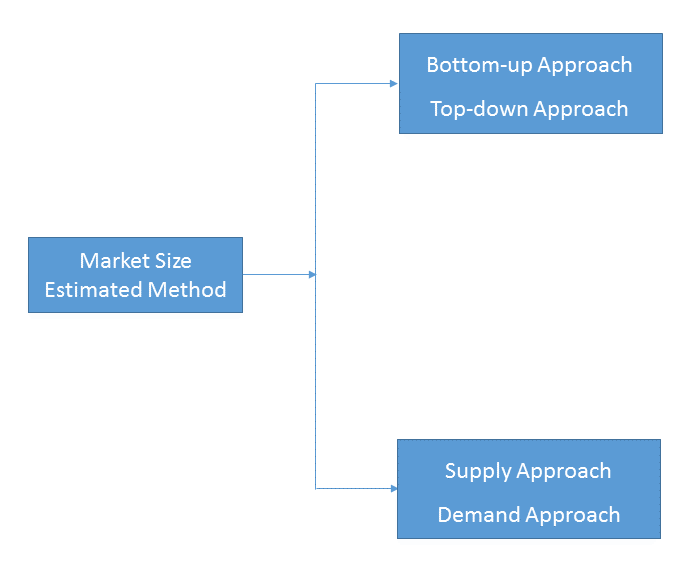
Bottom-up & top-down approach, supply & demand approach are the most important method which is used by HDIN Research to estimate the market size.
1)Top-down & Bottom-up Approach
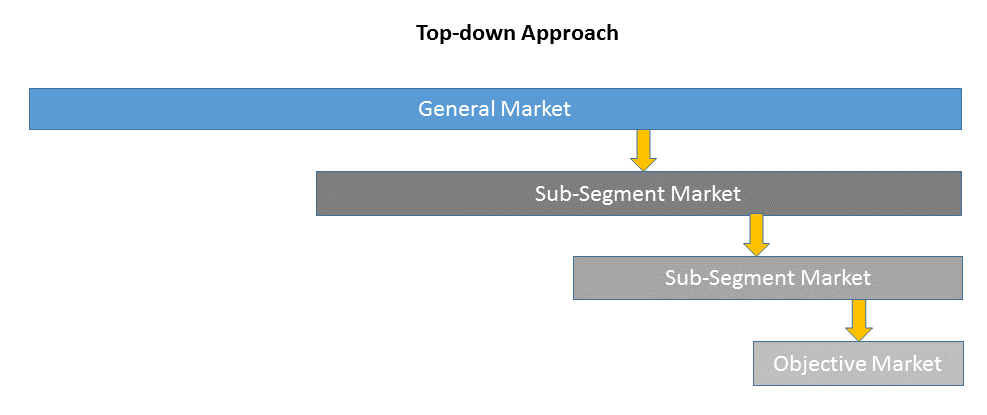
Top-down approach uses a general market size figure and determines the percentage that the objective market represents.
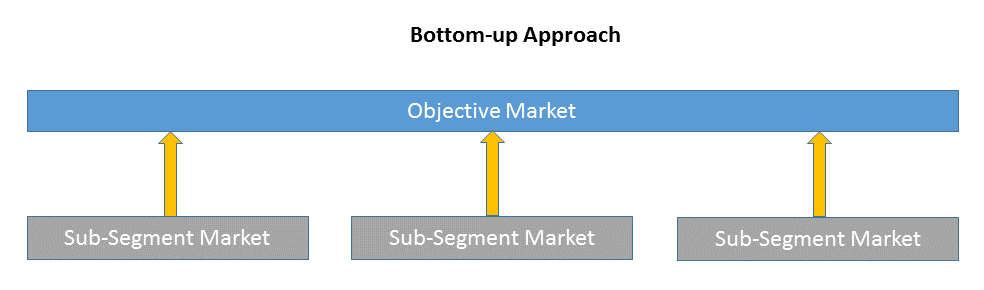
Bottom-up approach size the objective market by collecting the sub-segment information.
2)Supply & Demand Approach
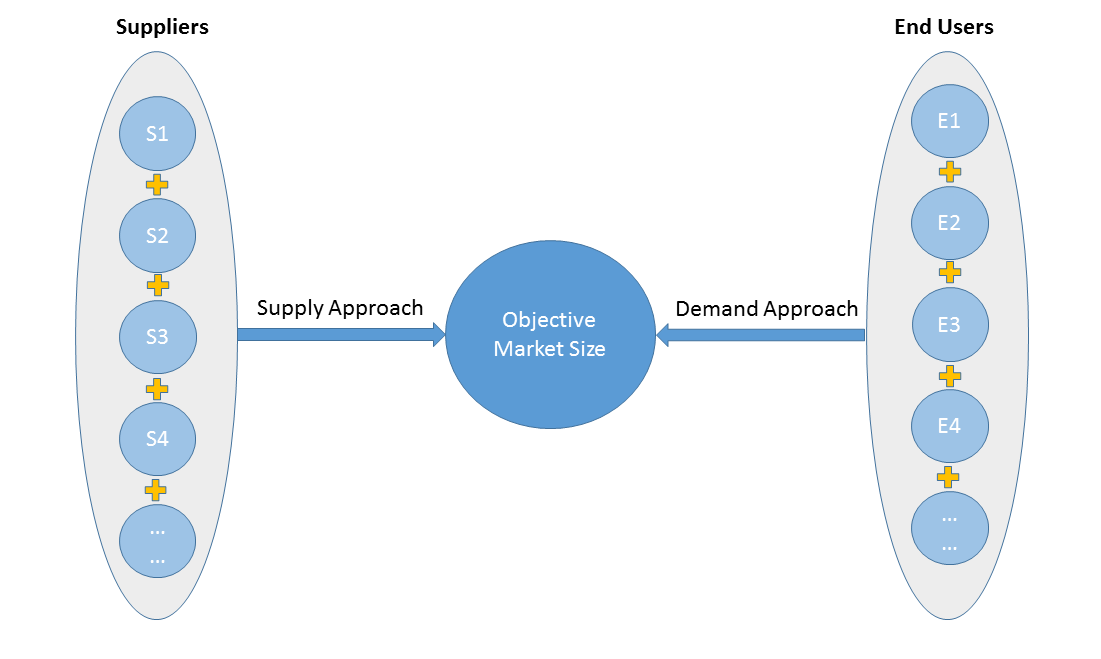
Supply approach is based on assessments of the size of each competitor supplying the objective market.
Demand approach combine end-user data within a market to estimate the objective market size. It is sometimes referred to as bottom-up approach.
- Forecasting Methodology
- Numerous factors impacting the market trend are considered for forecast model:
- New technology and application in the future;
- New project planned/under contraction;
- Global and regional underlying economic growth;
- Threatens of substitute products;
- Industry expert opinion;
- Policy and Society implication.
- Analysis Tools
1)PEST Analysis
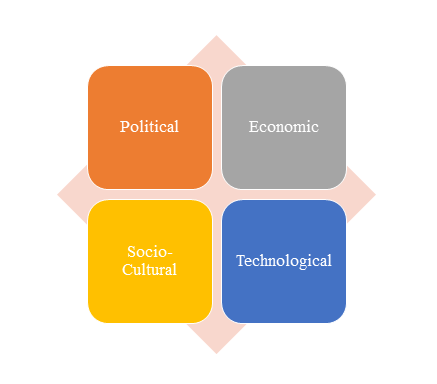
PEST Analysis is a simple and widely used tool that helps our client analyze the Political, Economic, Socio-Cultural, and Technological changes in their business environment.
- Benefits of a PEST analysis:
- It helps you to spot business opportunities, and it gives you advanced warning of significant threats.
- It reveals the direction of change within your business environment. This helps you shape what you’re doing, so that you work with change, rather than against it.
- It helps you avoid starting projects that are likely to fail, for reasons beyond your control.
- It can help you break free of unconscious assumptions when you enter a new country, region, or market; because it helps you develop an objective view of this new environment.
2)Porter’s Five Force Model Analysis
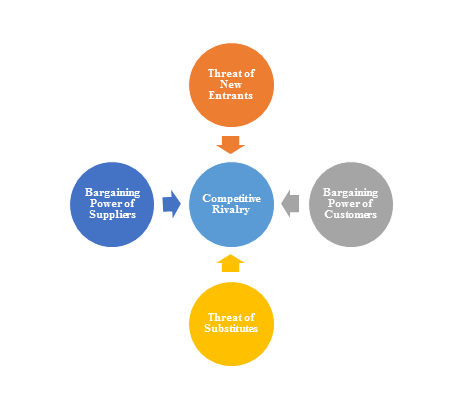
The Porter’s Five Force Model is a tool that can be used to analyze the opportunities and overall competitive advantage. The five forces that can assist in determining the competitive intensity and potential attractiveness within a specific area.
- Threat of New Entrants: Profitable industries that yield high returns will attract new firms.
- Threat of Substitutes: A substitute product uses a different technology to try to solve the same economic need.
- Bargaining Power of Customers: the ability of customers to put the firm under pressure, which also affects the customer's sensitivity to price changes.
- Bargaining Power of Suppliers: Suppliers of raw materials, components, labor, and services (such as expertise) to the firm can be a source of power over the firm when there are few substitutes.
- Competitive Rivalry: For most industries the intensity of competitive rivalry is the major determinant of the competitiveness of the industry.
3)Value Chain Analysis
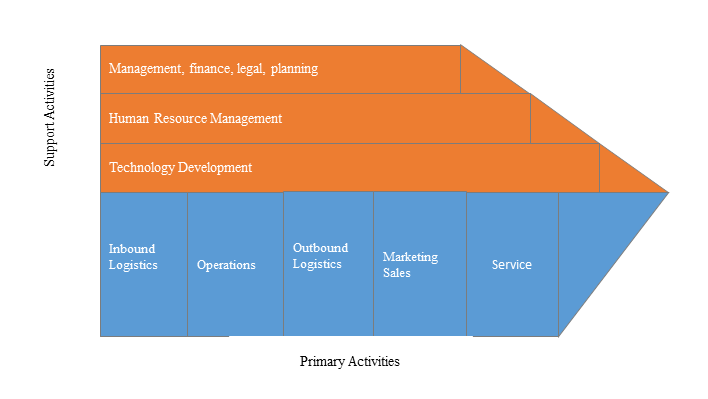
Value chain analysis is a tool to identify activities, within and around the firm and relating these activities to an assessment of competitive strength. Value chain can be analyzed by primary activities and supportive activities. Primary activities include: inbound logistics, operations, outbound logistics, marketing & sales, service. Support activities include: technology development, human resource management, management, finance, legal, planning.
4)SWOT Analysis
SWOT analysis is a tool used to evaluate a company's competitive position by identifying its strengths, weaknesses, opportunities and threats. The strengths and weakness is the inner factor; the opportunities and threats are the external factor. By analyzing the inner and external factors, the analysis can provide the detail information of the position of a player and the characteristics of the industry.
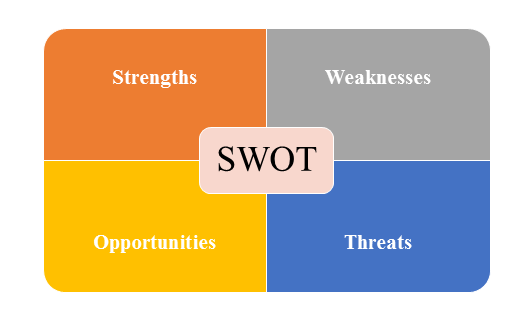
- Strengths describe what the player excels at and separates it from the competition
- Weaknesses stop the player from performing at its optimum level.
- Opportunities refer to favorable external factors that the player can use to give it a competitive advantage.
- Threats refer to factors that have the potential to harm the player.
- Data Sources
| Primary Sources | Secondary Sources |
|---|---|
| Face to face/Phone Interviews with market participants, such as: Manufactures; Distributors; End-users; Experts. Online Survey |
Government/International Organization Data: Annual Report/Presentation/Fact Book Internet Source Information Industry Association Data Free/Purchased Database Market Research Report Book/Journal/News |