Ammonium Metatungstate Market Outlook: Global Strategic Analysis, Catalyst Demand Trends, and Industrial Value Chain Dynamics (2026–2031)
- Single User License (1 Users) $ 3,500
- Team License (2~5 Users) $ 4,500
- Corporate License (>5 Users) $ 5,500
Ammonium Metatungstate (AMT) represents one of the most technologically advanced and commercially critical downstream chemical compounds derived from tungsten hydrometallurgy. Positioned within the refined non-ferrous chemical sector, AMT serves as a vital bridge connecting bulk hydrometallurgical processing with high-performance end markets, including heterogeneous petrochemical catalysis, nanostructured hard metals, advanced structural ceramics, and specialized industrial coatings. Unlike commodity-grade tungsten intermediates, AMT is characterized by its high chemical purity and complete, high-concentration water solubility. These attributes eliminate the processing bottlenecks historically associated with conventional tungsten salts, enabling precision liquid-phase synthesis and molecular-scale chemical distribution.
The commercial evolution of the AMT industry reflects a broader paradigm shift across the global advanced materials landscape. Historically dominated by standard metallurgical grades, industrial procurement has transitioned toward ultra-pure, application-tailored chemical precursors. In contemporary industrial settings, AMT is not merely consumed as a source of tungsten units; rather, it functions as an essential functional enabler in environments requiring precise crystal morphology, tailored pore architecture, and clean decomposition behavior. From an economic perspective, the global Ammonium Metatungstate market is valued at an estimated range between USD 420 million and USD 960 million in 2026. Over the forecast horizon from 2026 to 2031, the market is projected to expand at a compound annual growth rate (CAGR) of 4.8% to 5.5%.
This steady commercial expansion is propelled by several interlocking structural drivers. In the petrochemical and energy refining arenas, increasingly stringent environmental mandates governing transportation fuels have accelerated demand for next-generation hydroprocessing catalysts capable of processing heavier, sour crude feeds while complying with near-zero sulfur and nitrogen specifications. Concurrently, the powder metallurgy industry continues to push the operational boundaries of cemented carbides, requiring submicron and nanoscale tungsten carbide grains to support modern precision machining, micro-electronics manufacturing, and wear-resistant tool engineering. In these demanding contexts, the ability of AMT to deliver liquid-phase molecular blending presents clear performance advantages over conventional solid-state blending techniques.
Furthermore, capital investments across advanced ceramic engineering and technical textiles have unlocked incremental demand pockets. While production remains structurally constrained by complex thermal dissociation and ion-exchange manufacturing technologies, the market is demonstrating resilient volume uptake. As sovereign entities and multinational corporations prioritize critical mineral security and industrial decarbonization, the strategic value of high-purity chemical processing platforms like AMT continues to escalate across the international manufacturing matrix.
Regional Market Analysis
North America
The North American Ammonium Metatungstate market is characterized by mature downstream demand, sophisticated refining infrastructure, and robust consumption in specialized alloy and defense sectors. The region is projected to register a steady growth rate ranging between 4.2% and 5.0% over the forecast period. Demand in the United States represents the primary volume anchor, driven by large-scale catalyst change-out cycles within Gulf Coast refining complexes. These facilities rely heavily on tungsten-promoted hydrocracking and hydrodesulfurization (HDS) formulations to yield ultra-low sulfur diesel (ULSD) and high-octane blendstocks.
In parallel, the resurgence of domestic manufacturing initiatives and aerospace-grade tooling production provides strong baseline consumption for ultrafine tungsten powders derived from AMT. Canada contributes incremental demand primarily through its energy exploration tooling and mining consumables segments, which require wear-resistant components capable of withstanding severe mechanical stress. Cross-border supply chains remain tightly integrated, though procurement executives increasingly emphasize domestic and allied-nation sourcing to mitigate geopolitical exposure across critical mineral streams.
Asia-Pacific
The Asia-Pacific region stands as both the global manufacturing epicenter and the fastest-expanding consumption base for Ammonium Metatungstate, with an estimated growth rate trajectory of 5.3% to 6.2%. China serves as the dominant structural pillar within this ecosystem, commanding integrated access to primary raw material feeds while rapidly moving up the chemical value chain. Strong demand within China is anchored by large-scale expansions in petrochemical refining, fine chemical manufacturing, and the country's extensive industrial carbide fabrication sector. Furthermore, capital expenditure programs in ultra-hard tooling, electric vehicle component machining, and electronic substrates continue to stimulate domestic consumption of high-grade AMT solutions.
Beyond China, other prominent industrial economies exhibit distinct, high-value demand profiles:
• Japan maintains steady procurement focused primarily on high-selectivity oxidation catalysts, semiconductor-grade tungsten chemicals, and ultra-precision ceramic components for the automotive and electronics industries.
• South Korea exhibits robust demand channeled through its cutting-edge semiconductor fabrication hubs, advanced metal cutting tool producers, and downstream chemical synthesis sectors.
• India represents a high-potential growth market, where nationwide refinery modernization programs and expanding automotive manufacturing clusters drive increasing procurement of advanced catalyst precursors and industrial wear materials.
• Southeast Asian manufacturing hubs are gradually scaling their participation in precision metal finishing and intermediate chemical processing, adding further regional momentum.
Europe
The European AMT market is defined by stringent environmental regulatory frameworks, high energy efficiency standards, and an emphasis on industrial circularity. The regional market is projected to grow at an estimated rate of 3.8% to 4.6%. Consumption across Western European industrial centers—most notably Germany, France, and the United Kingdom—is closely linked to specialty catalyst fabrication for the chemical sector, high-performance tooling for automotive and aerospace manufacturing, and advanced technical ceramics.
European catalyst manufacturers operate under rigorous Euro-series fuel emission standards, which necessitate the deployment of advanced tungsten-containing catalyst packs designed to maximize yield and minimize carbon intensity during refining operations. In Central and Eastern Europe, demand is supported by localized tooling and machinery fabrication clusters servicing the broader European industrial base. A key defining dynamic across the continent is the operational focus on closed-loop processing; European processors and end users increasingly demand high-purity chemical intermediates produced with verifiable environmental credentials and a high proportion of recycled secondary tungsten content.
South America
The South American market represents an emerging, natural-resource-centric demand territory, with an estimated growth rate expanding within the range of 3.5% to 4.3%. The regional demand profile is heavily skewed toward industrial maintenance, mining tooling, and localized refinery operations. Brazil stands as the largest consumer within the region, where demand is generated by the domestic petrochemical industry, specialized agricultural machinery manufacturing, and heavy metalworking operations.
In Chile and Peru, the intense mechanical demands of large-scale copper and polymetallic mining operations necessitate continuous replenishment of tungsten-carbide-tipped drill bits, wear liners, and excavation teeth. While primary chemical conversion capacity within South America remains limited, industrial import demand for high-durability powders and catalytic compounds provides steady commercial opportunities for multinational suppliers capable of navigating regional logistical and currency challenges.
Middle East and Africa (MEA)
The Middle East and Africa region is positioned for accelerated commercial activity, with an estimated growth rate spanning 4.6% to 5.4%. Market expansion is almost entirely underpinned by the vast downstream industrial diversification programs underway across the Gulf Cooperation Council (GCC) nations, alongside foundational mining activities across select African markets. In Saudi Arabia, the United Arab Emirates, and Qatar, state-backed energy conglomerates are investing heavily in integrated downstream petrochemical complexes. These mega-facilities utilize advanced hydroprocessing units that consume substantial volumes of tungsten-based hydrocracking and selective oxidation catalysts.
Moreover, regional industrial strategies aimed at localizing technical services and equipment manufacturing are fostering interest in local powder metallurgy and wear-coating operations. In Africa, demand remains predominantly concentrated in major mining corridors, such as South Africa, where hard metal tooling and drilling consumables sustain baseline demand for tungsten intermediate products.
Market Segmentation Analysis
Application Segmentation
Catalyst Applications
The catalyst segment represents the single most commercially significant and technologically demanding outlet for AMT. Within modern refinery operations, AMT functions as the premier inorganic precursor for hydrocracking, hydrodesulfurization (HDS), and hydrodenitrogenation (HDN) catalysts. These catalysts are indispensable for converting low-value, high-sulfur vacuum gas oils and residue fractions into high-value, clean-burning transportation fuels. Because AMT exhibits exceptional water solubility, catalyst manufacturers can prepare highly concentrated aqueous solutions without premature precipitation. This characteristic enables uniform impregnation across porous catalyst substrates, such as high-surface-area gamma alumina, resulting in superior active metal dispersion and elevated sulfur-removal kinetics.
Beyond crude oil refining, AMT is increasingly utilized in fine and specialty chemical synthesis:
• In selective olefin epoxidation, tungsten-based active sites derived from AMT deliver remarkable catalytic efficiency and high target selectivity, curbing unwanted side reactions.
• In alcohol oxidative dehydrogenation, the clean thermal decomposition of AMT yields reactive, non-stoichiometric tungsten oxide phases that maximize conversion rates while reducing overall operating temperatures.
• Environmental abatement systems, particularly selective catalytic reduction (SCR) units used in stationary power plants and heavy marine engines, utilize tungsten-promoted formulations to suppress sulfur dioxide oxidation while maintaining elevated nitrogen oxide conversion efficiencies.
Tungsten Metal Powder Applications
The segment covering tungsten metal powder constitutes a foundational metallurgical demand pillar. As modern manufacturing tolerances tighten, the limitations of traditional solid-state hydrogen reduction of tungsten oxides have become increasingly apparent. AMT serves as an ideal precursor for producing submicron, ultrafine, and nanoscale tungsten powders via specialized spray drying and fluidized bed thermal reduction routes. The ability to atomize pure, highly concentrated AMT solutions ensures exceptional particle size uniformity, preventing agglomeration during the subsequent hydrogen reduction stages.
These ultrafine powders are vital for the synthesis of nano-structured tungsten carbide (WC-Co) compounds used in micro-drills for printed circuit boards, precision milling cutters for aerospace alloys, and ultra-high-pressure punch dies. Furthermore, AMT's complete liquid-phase miscibility makes it the premier material for fabricating dispersion-strengthened heavy alloys and doped tungsten products. When producing specialized non-sag tungsten wire or ductile heavy alloys, dopants such as potassium, silicon, aluminum, or lanthanum oxides can be introduced directly into the AMT solution. This achieves molecular-level homogenization that cannot be replicated through mechanical powder blending, resulting in superior creep resistance, elevated recrystallization temperatures, and enhanced ductile-to-brittle transition metrics.
Others: Advanced Ceramics, Flame Retardants, and Functional Formulations
The "Others" classification encompasses high-margin, specialized application environments where AMT delivers distinct physical and chemical enhancements:
• Advanced Technical Ceramics: AMT is utilized as an active sintering aid and performance-enhancing flux. Incorporating tungsten into ceramic matrices, such as silicon carbide, aluminum oxide, or zirconia, significantly depresses required sintering temperatures. This reduction generates direct energy savings for ceramic fabricators while curbing thermal stress during densification. Microscopically, tungsten additions act as grain boundary pinning agents, suppressing abnormal grain growth and eliminating internal microporosity. The resulting ceramics demonstrate marked improvements in flexural strength, fracture toughness, and resistance to thermal shock.
• Fire Retardant and Textile Finishing: Leveraging its robust chemical stability, AMT is incorporated into flame-retardant masterbatches, industrial back-coatings, and textile impregnation baths. Upon exposure to elevated thermal loads, the tungsten complex decomposes to form an impermeable, non-combustible ceramic char layer that restricts oxygen diffusion and impedes heat transfer to the underlying polymer matrix. Furthermore, the molecular affinity of the decomposed compound ensures high wash-durability, making it particularly valuable for institutional fire-safe fabrics, military protective apparel, and aircraft cabin interiors.
Industry Chain & Value Chain Analysis
The Ammonium Metatungstate industry chain is characterized by a high degree of technical complexity, capital intensity, and strict downstream qualification requirements. The progression of value accumulation across the supply chain is structured as follows:
Upstream Raw Material Dynamics
The industry chain originates in the extraction and beneficiation of primary tungsten ores, predominantly wolframite and scheelite. The resulting concentrates undergo aggressive hydrometallurgical digestion using concentrated alkali autoclaving, followed by comprehensive purification to remove impurities such as silicon, phosphorus, arsenic, and molybdenum. This stream is processed via solvent extraction or ion exchange to synthesize Ammonium Paratungstate (APT), the universal bulk commercial intermediate of the global tungsten industry.
Raw material pricing at this upstream tier is inherently subject to supply-side discipline, environmental inspection regimes in primary mining jurisdictions, and geopolitical trade dynamics. For downstream AMT producers, securing a steady, chemically consistent supply of high-purity APT is essential, as even trace metallic contaminants (such as iron, calcium, or sodium) can poison delicate petrochemical catalysts or degrade the fracture toughness of resulting hard metals.
Midstream Conversion and Technical Barriers
The conversion of APT to AMT represents the primary value-add step where significant technological and economic barriers emerge. Unlike APT, which crystallizes readily as a low-solubility salt, AMT is an unstable thermodynamic intermediate requiring precise process controls. The midstream processing sector employs three primary industrial routes:
• Thermal Dissociation: APT is subjected to tightly regulated calcination to drive off a precise stoichiometric fraction of ammonia and crystal water, yielding an amorphous, water-soluble intermediate that is subsequently dissolved, filtered, and recrystallized.
• Ion Exchange Method: APT slurries are passed through specialized ion-exchange resins that selectively extract ammonium cations, shifting the solution pH into the acidic stability window of the metatungstate polyanion.
• Neutralization / Acidification: Precise chemical neutralization using organic acids or mineral acids combined with solvent extraction, followed by spray drying.
The thermal dissociation approach requires sophisticated rotary calcination equipment featuring tight temperature tolerances, as minor temperature excursions produce insoluble tungsten trioxide phases, rendering the batch off-spec. The operational complexities, high energy inputs, and capital requirements inherent to these conversion units result in a midstream manufacturing footprint that is significantly more consolidated than the broad APT merchant market. Midstream margins are driven by conversion yield efficiency, energy optimization during crystallization, and the capacity to produce specialized physical forms, such as rapid-dissolving micro-granules or high-bulk-density powders.
Downstream Integration and Value Capture
Downstream integration represents the final and most lucrative tier of the value chain. At this stage, AMT is consumed by specialized catalyst fabricators, industrial powder metallurgy plants, and advanced materials formulators. Customer switching costs at this level are exceptionally high; refinery operators and aerospace tooling manufacturers must subject new chemical precursors to multi-year pilot trials and commercial qualification protocols before authorizing changes to their raw material matrices.
Consequently, value capture is concentrated among producers capable of providing certified chemical consistency, lot-to-lot structural uniformity, and integrated analytical documentation. Furthermore, the downstream tier is increasingly tied to closed-loop recycling loops. Processors capable of recovering tungsten from spent hydroprocessing catalysts or hard metal grinding sludge, converting those reclaimed streams back into specification-grade AMT, capture significant economic margins while shielding their operations from primary ore volatility.
Competitive Landscape & Key Players
The global competitive landscape in the Ammonium Metatungstate market is characterized by high operational barriers, high asset concentration, and strategic vertical integration. Market participants compete primarily on product purity, particle morphology control, supply reliability, and geographical footprint. Leading multinational participants maintain fully or partially integrated value chains stretching from primary mining and refining through to advanced chemical synthesis and powder engineering.
China Tungsten and Hightech Materials Co Ltd
China Tungsten and Hightech Materials Co Ltd operates as an integrated industrial enterprise across the primary tungsten and hard materials landscape. Leveraging an expansive domestic upstream reserve base, the organization possesses comprehensive scale economies that span extraction, hydrometallurgical conversion, and downstream material fabrication. In the AMT segment, the company capitalizes on its captive supply of high-grade APT to drive large-scale, cost-competitive production lines.
The company's strategic posture emphasizes moving up the global value chain through continuous investment in advanced process automation and high-purity chemical lines. By serving both China's vast domestic petrochemical market and international merchant channels, China Tungsten and Hightech Materials exerts considerable influence over baseline market pricing, volume availability, and primary product standards.
Jiangxi Tungsten Holding Group Company Limited
Jiangxi Tungsten Holding Group Company Limited represents a cornerstone of China's historical and modern tungsten industry, anchored in the resource-rich Jiangxi province. The group operates an extensive network of specialized subsidiaries dedicated to the deep processing of non-ferrous metals and high-purity functional chemicals. Jiangxi Tungsten has undertaken targeted strategic investments to systematically expand its downstream fine chemical footprint.
Within its operational portfolio:
• Ganzhou Huamao Tungsten Materials Co., Ltd.: Operating as a key subsidiary under the Jiangxi Tungsten umbrella within the Ganzhou High-Tech Industrial Development Zone, the entity has advanced a major relocation and technological upgrade project. This modern industrial installation encompasses an annual production capacity of 5,000 metric tons of Ammonium Metatungstate, alongside 15,000 metric tons of advanced tungsten oxides. This facility integrates advanced continuous thermal dissociation technologies and closed-loop environmental controls, positioning it as one of the largest single-site AMT manufacturing platforms globally.
• Ganzhou Huaxing Tungsten Products Co., Ltd.: Associated with Jiangxi Tungsten's equipment and industrial manufacturing ecosystem (related to public entity code 600397), this state-owned holding enterprise maintains a dedicated Ammonium Metatungstate production line with an established operational capacity of 800 metric tons per year. The facility caters to specialized downstream applications requiring precision-controlled liquid-phase dissolution and custom chemical specifications.
Through these strategic subsidiaries, Jiangxi Tungsten Holding Group maintains substantial aggregate capacity, providing high-volume stability to domestic catalyst manufacturers while actively servicing cross-border intermediate chemical demands.
Global Tungsten & Powders (GTP)
Global Tungsten & Powders (GTP) functions as a strategic manufacturing pillar across the Western hemisphere, operating key production infrastructure in the United States and Europe. GTP exhibits deep technological competence in refractory metal chemistry, fine powder synthesis, and high-performance material engineering. The company's competitive advantage lies in its specialized chemical processing capabilities, high regulatory compliance standards, and extensive intellectual property covering refractory powder atomization and thermal reduction.
GTP maintains a prominent position within the Western market for advanced tungsten chemicals, serving as a dependable, domestic-qualified supplier to aerospace, defense, and high-end industrial consumers. Furthermore, the company has integrated secondary tungsten processing into its operational framework, enabling the conversion of spent tungsten-bearing scrap and secondary streams into virgin-equivalent chemical precursors. This recycling capability offers industrial clients verifiable carbon footprint reductions and enhanced supply chain resilience against international supply disruptions.
H.C. Starck
H.C. Starck holds an established position as a global benchmark in advanced refractory chemical technologies and specialized hydrometallurgy. Historically instrumental in developing high-purity chemical synthesis standards, the brand represents premium technical execution, tight analytical controls, and advanced chemical conversion processes. Its manufacturing facilities in Europe are optimized for high-purity, application-specific products, including specialized catalyst-grade AMT solutions tailored to proprietary refinery formulations.
The organization's strategic approach focuses on high-margin, technically demanding niches where batch-to-batch variation must be kept near zero. H.C. Starck maintains close collaborative research partnerships with top-tier industrial catalyst developers and advanced ceramic fabricators, co-engineering custom product specifications to suit next-generation chemical reactors and specialized powder deposition applications.
Masan High-Tech Materials Corporation
Masan High-Tech Materials Corporation, based in Vietnam, has emerged as a disruptive, globally integrated non-ferrous chemical and advanced materials platform. Anchored by the poly-metallic deposit at the Nui Phao mine, Masan maintains low-cost primary access to tungsten units outside of China. The corporation's acquisition of H.C. Starck Holding GmbH's downstream processing business created an integrated player combining a secure raw material supply with advanced European chemical conversion technology.
Masan's strategic posture emphasizes international expansion, circular economy initiatives, and sustainable raw material stewardship. By balancing primary extraction in Southeast Asia with deep processing installations across Europe and North America, Masan provides international industrial consumers with an integrated, non-traditional sourcing alternative, insulating its commercial partners from regional trade barriers and geopolitical friction points.
Market Opportunities & Challenges
Strategic Market Opportunities
The global AMT industry is positioned adjacent to several powerful macroeconomic and industrial tailwinds that present commercial growth channels:
• Refinery Upgrades for Lower-Carbon and Low-Sulfur Fuels: The maritime sector's adherence to stringent fuel oil sulfur limits, coupled with the global roll-out of strict automotive emission standards, requires modern refineries to boost hydrotreating intensity. This dynamic creates recurring, non-cyclical replacement demand for tungsten-promoted HDS and hydrocracking catalyst beds, which offer higher thermal stability and sulfur resistance than conventional molybdenum-only catalysts.
• Nanostructured Tooling and Additive Manufacturing: Rapid adoption of micro-machining tools across the semiconductor and consumer electronics industries has spurred demand for sub-100-nanometer tungsten carbide powders. The liquid-phase synthesis route enabled by AMT represents the only commercially viable, scalable method for achieving the required chemical and dimensional uniformity, opening expanded avenues for high-margin product grades.
• Energy-Efficient Advanced Ceramic Sintering: As global industrial manufacturers face rising energy costs and industrial decarbonization pressures, AMT's utility as a fluxing agent offers ceramic plants a pathway to reduce kiln operating temperatures by several hundred degrees Celsius. This kinetic advantage simultaneously elevates mechanical performance while decreasing energy intensity per production batch.
Critical Industry Challenges
Despite favorable demand fundamentals, market participants must navigate distinct structural bottlenecks and operational vulnerabilities:
• Thermal Dissociation Process Sensitivity: The conversion of APT to AMT operates within narrow chemical and thermal windows. Slight variances in heating rates, atmospheric moisture, or residence time can cause incomplete conversion or premature calcination into insoluble oxides. Managing these operational tolerances requires capital-intensive instrumentation and specialized operational expertise.
• Upstream Price Volatility and Resource Concentration: Because primary tungsten mining and smelting capacity remains highly concentrated in a limited number of jurisdictions, the AMT value chain is inherently vulnerable to export policy shifts, environmental crackdowns, and trade disputes. Unhedged price spikes in upstream APT compress conversion margins for non-integrated midstream processors.
• Long Downstream Qualification Cycles: Achieving commercial supplier status within major petrochemical conglomerates or aerospace supply chains entails comprehensive qualification processes. Testing can extend from 18 to 36 months, creating substantial commercial barriers to entry and demanding significant balance sheet resilience from chemical manufacturers attempting to capture market share.
• High Energy and Environmental Compliance Costs: The energy-intensive nature of continuous calcination, spray drying, and hydrometallurgical recycling exposes processors to volatility across primary electricity and natural gas markets. Furthermore, managing ammonia-laden off-gases and hydrometallurgical waste streams requires continuous capital expenditure to comply with national zero-discharge and clean-air regulations.
1.1 Study Scope ...... 1
1.2 Research Methodology ...... 2
1.2.1 Data Sources ...... 3
1.2.2 Assumptions ...... 4
1.3 Abbreviations and Acronyms ...... 5
Chapter 2 Global Ammonium Metatungstate Market Environment and Geopolitical Dynamics ...... 6
2.1 Global Advanced Chemicals and Metallurgical Industry Outlook ...... 6
2.2 Geopolitical Conflict in the Middle East and Cross-Border Supply Chains ...... 7
2.2.1 Red Sea Maritime Route Bottlenecks and Shipping Freight Hikes ...... 8
2.2.2 Natural Gas Price Volatility and Thermal Energy Surcharges ...... 9
2.2.3 Raw Material Protectionism and Regional Sourcing Realignment ...... 10
2.3 Critical Minerals Strategic Policies and Industrial Supply Security ...... 11
Chapter 3 Ammonium Metatungstate Industry Chain, Synthesis Technologies and Patent Landscape ...... 12
3.1 Ammonium Metatungstate Industry Value Chain Architecture ...... 12
3.2 Upstream Feedstock Dynamics: Ammonium Paratungstate (APT) and Tungstic Acid ...... 13
3.3 Commercial Synthesis and Refining Methodologies ...... 14
3.3.1 Thermal Decomposition and Acid Dissolution Method ...... 14
3.3.2 Ion Exchange and Solvent Extraction Techniques ...... 15
3.3.3 Membrane Electrodialysis and High-Purity Crystallization ...... 16
3.4 Global Patent Landscape, Process Innovation and Green Synthesis Trends ...... 17
Chapter 4 Global Ammonium Metatungstate Market by Type ...... 18
4.1 Product Classification by Grade and Purity ...... 18
4.2 Standard Grade AMT (Purity 99.9%) ...... 19
4.2.1 Global Smelter Capacity and Production Volume (2021-2026) ...... 19
4.2.2 Market Value and Volume Forecast (2027-2031) ...... 21
4.3 High Purity Grade AMT (Purity ≥99.99%) ...... 22
4.3.1 High-Tech Demands and Output Analysis (2021-2026) ...... 22
4.3.2 Revenue Growth Projections (2027-2031) ...... 23
Chapter 5 Global Ammonium Metatungstate Market by Application ...... 24
5.1 Application Structure and Downstream Conversion Matrix ...... 24
5.2 Tungsten Metal Powder ...... 25
5.3 Catalyst (Petroleum Hydrocracking, De-NOx SCR and Chemical Synthesis) ...... 26
5.4 Other Applications (Corrosion Inhibitors, Thin Films, Ceramics and Medical Devices) ...... 28
5.5 Application Demand Share and Revenue Growth Comparison (2021-2031) ...... 30
Chapter 6 Global Ammonium Metatungstate Production, Capacity and Facility Utilization ...... 31
6.1 Global AMT Production Capacity, Output and Utilization Rates (2021-2026) ...... 31
6.2 Regional Smelting Capacities and Refining Infrastructure ...... 32
6.2.1 China Manufacturing Base and Capacity Concentration ...... 33
6.2.2 Asia-Pacific (Excl. China) Processing Facilities ...... 34
6.2.3 North America Industrial Smelting Footprint ...... 35
6.2.4 Europe Refining Assets and Closed-Loop Recycling ...... 36
6.2.5 Latin America, Middle East and Africa Overview ...... 37
Chapter 7 Global Ammonium Metatungstate Consumption and Market Size by Region ...... 38
7.1 Global AMT Consumption Volume and Market Size Trajectory (2021-2031) ...... 38
7.2 North America ...... 39
7.2.1 United States ...... 40
7.2.2 Canada and Mexico ...... 42
7.3 Europe ...... 43
7.3.1 Germany, Austria and United Kingdom ...... 43
7.3.2 Rest of Europe ...... 44
7.4 Asia-Pacific ...... 45
7.4.1 China, Japan and South Korea ...... 45
7.4.2 Southeast Asia and Rest of Asia-Pacific ...... 46
Chapter 8 Global Ammonium Metatungstate International Trade and Logistics ...... 47
8.1 International Trade Corridors and Bulk Chemical Transport Standards ...... 47
8.2 Major Exporting Countries/Regions and Volume Dynamics (2021-2026) ...... 48
8.3 Major Importing Countries/Regions and Sourcing Dependency (2021-2026) ...... 49
8.4 Tariff Policies, Trade Barriers and Hazardous Chemical Handling Regulations ...... 50
8.5 Ocean Freight Inflation, Container Availability and Supply Security ...... 51
8.6 Net Trade Balance Analysis Across Core Markets ...... 52
Chapter 9 Industry Dynamics, Environmental Regulations and Pricing Structure ...... 53
9.1 Market Drivers: Ultrafine Tungsten Powders and Environmental Catalyst Demand ...... 53
9.2 Market Restraints, Environmental Compliance and Wastewater Treatment Mandates ...... 54
9.3 Global Tungsten Chemical Pricing Mechanisms and Historical Volatility (2021-2026) ...... 55
9.4 Production Cost Analysis (Feedstock APT, Acids, Power and Logistics) ...... 55
9.5 AMT Price Forecast and Margin Outlook (2027-2031) ...... 56
Chapter 10 Competitive Landscape and Market Concentration ...... 57
10.1 Global AMT Market Concentration Ratio (CR3 and CR5) (2021-2026) ...... 57
10.2 Leading Producer Competitive Matrix and Market Positioning ...... 58
10.3 Corporate Consolidations, Asset Restructuring and Strategic Joint Ventures ...... 59
Chapter 11 Key Player Profiles ...... 60
11.1 H.C. Starck ...... 60
11.1.1 Company Overview and Specialty Chemicals Business ...... 60
11.1.2 Ammonium Metatungstate Operational Data Analysis (2021-2026) ...... 61
11.1.3 SWOT Analysis ...... 62
11.1.4 Technological Leadership and Circular Refining Initiatives ...... 63
11.2 Global Tungsten & Powders (GTP) ...... 64
11.2.1 Company Overview and Product Portfolio ...... 64
11.2.2 Ammonium Metatungstate Operational Data Analysis (2021-2026) ...... 65
11.2.3 SWOT Analysis ...... 66
11.2.4 North American Supply Security and Downstream Linkage ...... 67
11.3 Jiangxi Tungsten Holding Group Company Limited ...... 68
11.3.1 Company Overview and Upstream Mining Base ...... 68
11.3.2 Ammonium Metatungstate Operational Data Analysis (2021-2026) ...... 69
11.3.3 SWOT Analysis ...... 70
11.3.4 Production Scale Optimization and Clean Refining Upgrades ...... 71
11.4 China Tungsten and Hightech Materials Co Ltd ...... 72
11.4.1 Company Overview and Smelting Footprint ...... 72
11.4.2 Ammonium Metatungstate Operational Data Analysis (2021-2026) ...... 73
11.4.3 SWOT Analysis ...... 74
11.4.4 Integrated Value Chain Strategy and High-End Chemical Scaling ...... 75
11.5 Masan High-Tech Materials Corporation ...... 76
11.5.1 Company Overview and Mineral Processing Assets ...... 76
11.5.2 Ammonium Metatungstate Operational Data Analysis (2021-2026) ...... 77
11.5.3 SWOT Analysis ...... 78
11.5.4 International Market Expansion and Downstream Diversification ...... 79
Chapter 12 Global Ammonium Metatungstate Market Forecast and Strategic Development ...... 80
12.1 Global Smelting Capacity, Production and Consumption Projections (2027-2031) ...... 80
12.2 Global Market Revenue and Volume Forecast by Segment (2027-2031) ...... 81
12.3 Regional Expansion Opportunities and Emerging Industrial Centers ...... 82
12.4 Strategic Recommendations for Smelters and Chemical Processors ...... 83
12.5 Supply Chain Risk Mitigation and Geopolitical Buffer Strategies ...... 84
12.6 Synthesis Innovation Roadmap and Concluding Growth Summary ...... 85
Table 2 Middle East Conflict: Supply Chain Disruption Matrix for Specialty Tungsten Chemicals ...... 8
Table 3 Technical Comparison of Commercial AMT Manufacturing Processes ...... 14
Table 4 Comparative Parameters Between Thermal Decomposition and Electrodialysis Routes ...... 15
Table 5 Global AMT Production Volume by Type (2021-2026) ...... 19
Table 6 Global AMT Production Volume Forecast by Type (2027-2031) ...... 21
Table 7 Global AMT Market Size by Type (2021-2026) ...... 22
Table 8 Global AMT Market Size Forecast by Type (2027-2031) ...... 23
Table 9 Global AMT Consumption Volume by Application (2021-2026) ...... 24
Table 10 Global AMT Consumption Volume Forecast by Application (2027-2031) ...... 28
Table 11 Global AMT Market Size by Application (2021-2026) ...... 29
Table 12 Global AMT Production Capacity and Utilization Rate by Region (2021-2026) ...... 31
Table 13 Global AMT Production by Region (2021-2026) ...... 32
Table 14 Global AMT Production Forecast by Region (2027-2031) ...... 37
Table 15 Global AMT Consumption Volume by Region (2021-2026) ...... 38
Table 16 Global AMT Consumption Forecast by Region (2027-2031) ...... 40
Table 17 North America AMT Consumption Volume by Country (2021-2026) ...... 41
Table 18 Europe AMT Consumption Volume by Country/Region (2021-2026) ...... 43
Table 19 Asia-Pacific AMT Consumption Volume by Country/Region (2021-2026) ...... 45
Table 20 Major Global AMT Exporting Countries/Regions by Volume (2021-2026) ...... 48
Table 21 Major Global AMT Importing Countries/Regions by Volume (2021-2026) ...... 49
Table 22 Tariff Structures and Hazardous Chemical Import Restrictions Across Key Nations ...... 50
Table 23 Comprehensive Growth Drivers and Market Restraints for Ammonium Metatungstate ...... 53
Table 24 Primary Cost Structure Breakdown for Industrial AMT Manufacturing ...... 55
Table 25 Global AMT Market Share Ranking of Leading Producers (2026) ...... 57
Table 26 Major Consolidation Activities and Strategic Investments in Specialty Tungsten Chemicals ...... 59
Table 27 H.C. Starck Ammonium Metatungstate Capacity, Production, Price, Cost and Gross Profit Margin (2021-2026) ...... 61
Table 28 Global Tungsten & Powders (GTP) Ammonium Metatungstate Capacity, Production, Price, Cost and Gross Profit Margin (2021-2026) ...... 65
Table 29 Jiangxi Tungsten Holding Group Company Limited Ammonium Metatungstate Capacity, Production, Price, Cost and Gross Profit Margin (2021-2026) ...... 69
Table 30 China Tungsten and Hightech Materials Co Ltd Ammonium Metatungstate Capacity, Production, Price, Cost and Gross Profit Margin (2021-2026) ...... 73
Table 31 Masan High-Tech Materials Corporation Ammonium Metatungstate Capacity, Production, Price, Cost and Gross Profit Margin (2021-2026) ...... 77
Table 32 Global AMT Smelting Capacity, Production and Demand Balance (2027-2031) ...... 80
Table 33 Global AMT Market Revenue and Volume Projections by Segment (2027-2031) ...... 81
Figure 1 Thermal Energy and Chemical Reagent Price Trends Impacting AMT Processing (2021-2026) ...... 9
Figure 2 Strategic Sourcing Realignments in Specialty Tungsten Salts ...... 10
Figure 3 Ammonium Metatungstate Value Chain and Downstream Transformation Ecosystem ...... 12
Figure 4 Global Patent Publication Trajectory for AMT Synthesis and Refining (2021-2026) ...... 17
Figure 5 Global AMT Production Breakdown by Type in 2026 ...... 20
Figure 6 Global AMT Market Revenue Growth Trend by Type (2021-2031) ...... 23
Figure 7 Global AMT Consumption Share by Application in 2026 ...... 25
Figure 8 Global AMT Demand Growth in Catalyst Manufacturing (2021-2031) ...... 27
Figure 9 Global AMT Market Size Forecast by Application (2021-2031) ...... 30
Figure 10 Global AMT Smelting Facility Utilization Rate (2021-2026) ...... 33
Figure 11 Global AMT Production Share by Region in 2026 ...... 35
Figure 12 Global AMT Consumption Volume Breakdown by Region in 2026 ...... 39
Figure 13 North America AMT Market Revenue Growth Trend (2021-2031) ...... 42
Figure 14 Europe AMT Market Revenue Growth Trend (2021-2031) ...... 44
Figure 15 Asia-Pacific AMT Market Revenue Growth Trend (2021-2031) ...... 46
Figure 16 Key Maritime Trade Corridors and Shipping Lanes for Specialty Tungsten Salts ...... 47
Figure 17 Marine Freight Volatility and Delivery Lead-Time Impact on AMT Cargoes (2021-2026) ...... 51
Figure 18 Global Average Historical AMT Benchmark Price Fluctuations (2021-2026) ...... 54
Figure 19 Global Average AMT Price Forecast Trajectory (2027-2031) ...... 56
Figure 20 Global AMT Market Concentration Ratios CR3 and CR5 (2021-2026) ...... 58
Figure 21 H.C. Starck Ammonium Metatungstate Market Share (2021-2026) ...... 62
Figure 22 Global Tungsten & Powders (GTP) Ammonium Metatungstate Market Share (2021-2026) ...... 66
Figure 23 Jiangxi Tungsten Holding Group Company Limited Ammonium Metatungstate Market Share (2021-2026) ...... 70
Figure 24 China Tungsten and Hightech Materials Co Ltd Ammonium Metatungstate Market Share (2021-2026) ...... 74
Figure 25 Masan High-Tech Materials Corporation Ammonium Metatungstate Market Share (2021-2026) ...... 78
Figure 26 Global AMT Market Size and Demand Growth Curve (2021-2031) ...... 82
Figure 27 Strategic Framework for Feedstock Risk Management and Downstream Expansion ...... 84
Research Methodology
- Market Estimated Methodology:
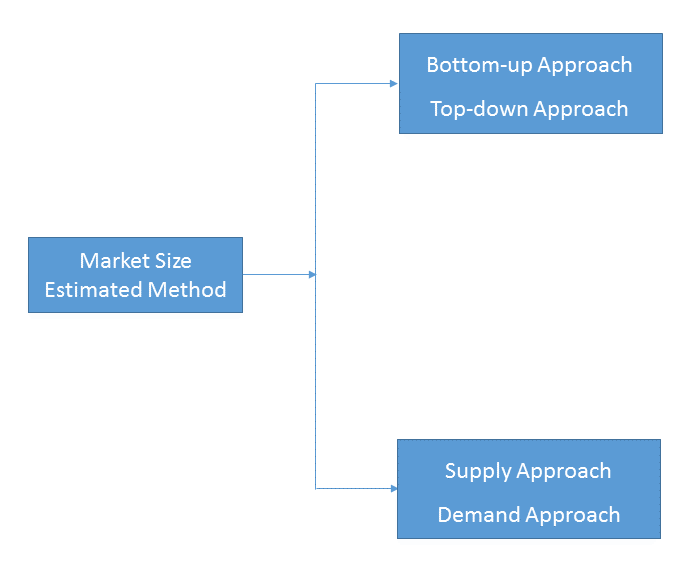
Bottom-up & top-down approach, supply & demand approach are the most important method which is used by HDIN Research to estimate the market size.
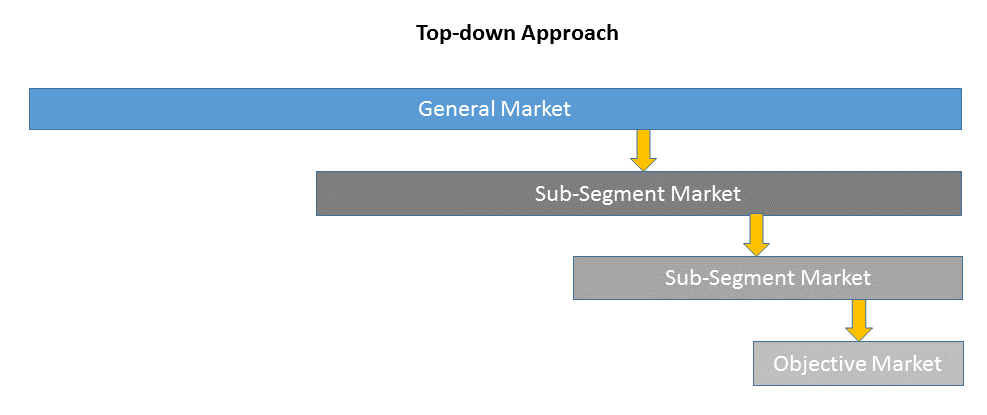
1)Top-down & Bottom-up Approach
Top-down approach uses a general market size figure and determines the percentage that the objective market represents.
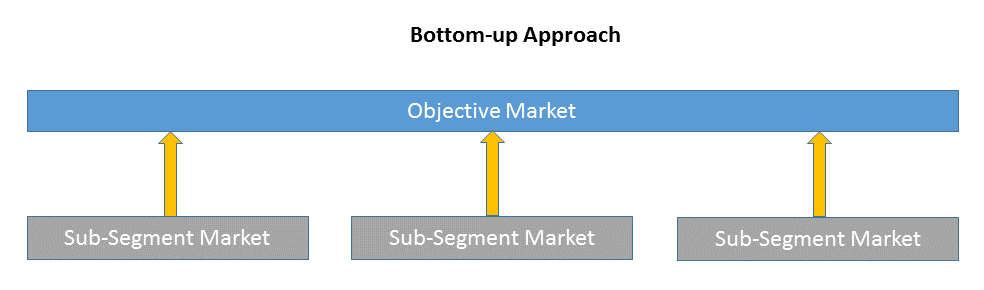
Bottom-up approach size the objective market by collecting the sub-segment information.
2)Supply & Demand Approach
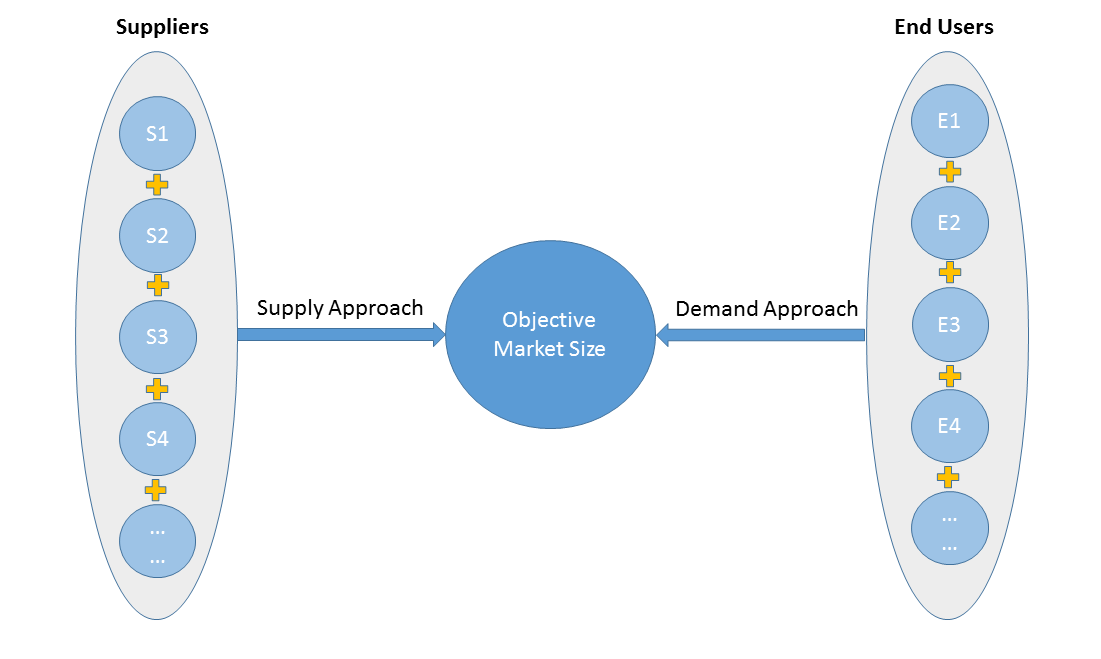
Supply approach is based on assessments of the size of each competitor supplying the objective market.
Demand approach combine end-user data within a market to estimate the objective market size. It is sometimes referred to as bottom-up approach.
- Forecasting Methodology
- Numerous factors impacting the market trend are considered for forecast model:
- New technology and application in the future;
- New project planned/under contraction;
- Global and regional underlying economic growth;
- Threatens of substitute products;
- Industry expert opinion;
- Policy and Society implication.
- Analysis Tools
1)PEST Analysis
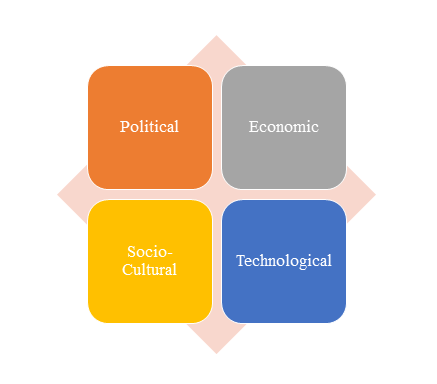
PEST Analysis is a simple and widely used tool that helps our client analyze the Political, Economic, Socio-Cultural, and Technological changes in their business environment.
- Benefits of a PEST analysis:
- It helps you to spot business opportunities, and it gives you advanced warning of significant threats.
- It reveals the direction of change within your business environment. This helps you shape what you’re doing, so that you work with change, rather than against it.
- It helps you avoid starting projects that are likely to fail, for reasons beyond your control.
- It can help you break free of unconscious assumptions when you enter a new country, region, or market; because it helps you develop an objective view of this new environment.
2)Porter’s Five Force Model Analysis
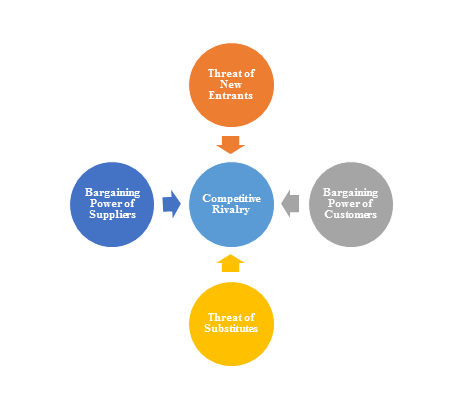
The Porter’s Five Force Model is a tool that can be used to analyze the opportunities and overall competitive advantage. The five forces that can assist in determining the competitive intensity and potential attractiveness within a specific area.
- Threat of New Entrants: Profitable industries that yield high returns will attract new firms.
- Threat of Substitutes: A substitute product uses a different technology to try to solve the same economic need.
- Bargaining Power of Customers: the ability of customers to put the firm under pressure, which also affects the customer's sensitivity to price changes.
- Bargaining Power of Suppliers: Suppliers of raw materials, components, labor, and services (such as expertise) to the firm can be a source of power over the firm when there are few substitutes.
- Competitive Rivalry: For most industries the intensity of competitive rivalry is the major determinant of the competitiveness of the industry.
3)Value Chain Analysis
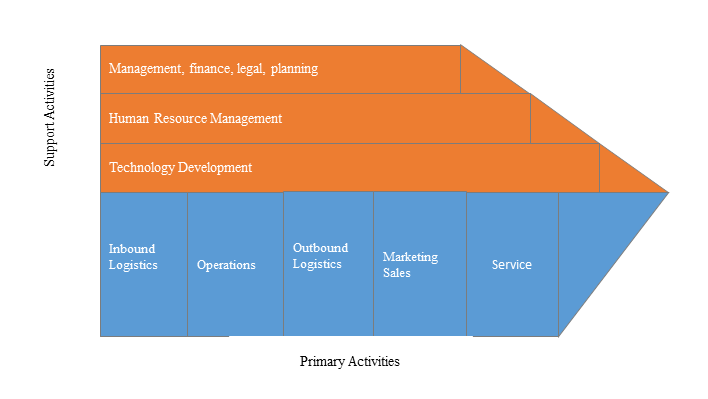
Value chain analysis is a tool to identify activities, within and around the firm and relating these activities to an assessment of competitive strength. Value chain can be analyzed by primary activities and supportive activities. Primary activities include: inbound logistics, operations, outbound logistics, marketing & sales, service. Support activities include: technology development, human resource management, management, finance, legal, planning.
4)SWOT Analysis
SWOT analysis is a tool used to evaluate a company's competitive position by identifying its strengths, weaknesses, opportunities and threats. The strengths and weakness is the inner factor; the opportunities and threats are the external factor. By analyzing the inner and external factors, the analysis can provide the detail information of the position of a player and the characteristics of the industry.
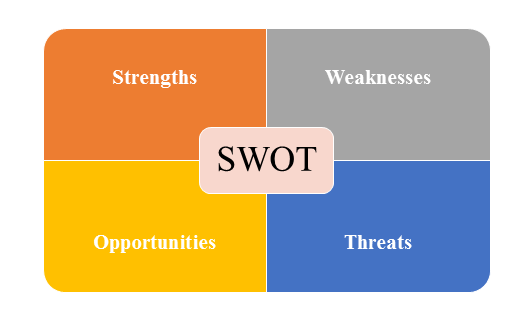
- Strengths describe what the player excels at and separates it from the competition
- Weaknesses stop the player from performing at its optimum level.
- Opportunities refer to favorable external factors that the player can use to give it a competitive advantage.
- Threats refer to factors that have the potential to harm the player.
- Data Sources
| Primary Sources | Secondary Sources |
|---|---|
| Face to face/Phone Interviews with market participants, such as: Manufactures; Distributors; End-users; Experts. Online Survey |
Government/International Organization Data: Annual Report/Presentation/Fact Book Internet Source Information Industry Association Data Free/Purchased Database Market Research Report Book/Journal/News |