Trimethylolpropane Market Summary: 2026-2031 Size, Growth Drivers & Strategic Outlook
- Single User License (1 Users) $ 3,500
- Team License (2~5 Users) $ 4,500
- Corporate License (>5 Users) $ 5,500
Product and Industry Overview
Trimethylolpropane (TMP) is a high-performance specialty polyol positioned within the fine chemicals and oxo intermediates sector, functioning as an indispensable crosslinker, chain extender, and resin backbone modifier across global polymer synthesis. Commercialized extensively across coatings, synthetic lubricants, polyurethanes, adhesives, and radiation-curable formulations, TMP enables downstream resin formulators to achieve superior thermal endurance, hydrolytic stability, weather resistance, gloss retention, and mechanical strength compared with conventional commodity polyols such as glycerol.
In 2026, the global Trimethylolpropane market is valued at USD 380 million to USD 560 million, and is projected to expand at a steady compound annual growth rate (CAGR) of 5.0% to 5.5% through 2031. While foundational volume demand tracks global industrial production, automotive manufacturing, and construction activity, structural growth over the forecast horizon is reinforced by three secular tailwinds: tightening environmental mandates driving low-VOC and UV/EB radiation-curable coating adoption, accelerating demand for polyol ester (POE) synthetic lubricants in commercial aviation and electric vehicle thermal management, and sustained replacement of lower-performing commodity polyols in high-durability industrial coatings.
From a manufacturing standpoint, industrial TMP production—principally executed via the alkaline condensation and reduction of n-butyraldehyde and formaldehyde—carries substantial technical complexity, capital intensity, and economies-of-scale thresholds. Efficient commercial operation requires tight upstream integration into oxo-chemical feedstocks alongside effective valorization of formate salt co-products. Consequently, global production capacity remains heavily concentrated among vertically integrated multinational chemical leaders with established oxo value chains and a focused tier of scaled Chinese specialty polyol producers competing aggressively across domestic and export markets.
Regional Market Analysis
Global Trimethylolpropane demand reflects pronounced regional differentiation driven by industrial manufacturing intensity, environmental regulation maturity, aviation and automotive build rates, and downstream resin formulation capacity.
Asia-Pacific (Estimated CAGR: 5.8% - 6.5%): Asia-Pacific serves as the primary volume growth engine of the global TMP market, anchored by China, India, Japan, South Korea, and Taiwan, China. China leads regional consumption and capacity expansion, propelled by world-scale automotive and new energy vehicle (NEV) production requiring premium topcoats, structural adhesives, and advanced thermal management fluids, alongside massive industrial anti-corrosion coating demand across marine, rail, and infrastructure assets. Japan, South Korea, and Taiwan, China represent high-specification demand centers for ultra-pure TMP derivatives—especially trimethylolpropane triacrylate (TMPTA) utilized in electronic photoresists, display coatings, and precision UV-curable resins. India is emerging as a fast-expanding regional consumer driven by rapid industrial coating, automotive manufacturing, and construction chemical growth.
North America (Estimated CAGR: 4.3% - 4.9%): North America constitutes a technologically mature, high-value market led by the United States, Canada, and Mexico. U.S. demand is anchored by commercial and defense aviation fleets requiring high-stability POE synthetic turbine lubricants, stringent HVACR regulatory transitions toward low-global-warming-potential refrigerants paired with POE compressor oils, and premium automotive refinish and coil coatings. Additionally, growing investment in domestic infrastructure, residential and commercial sealants, and industrial composites supports steady baseline consumption of TMP-modified polyurethane adhesives. Mexico contributes resilient demand through nearshored automotive assembly and white-goods appliance coating lines.
Europe (Estimated CAGR: 3.8% - 4.5%): Europe operates as the global innovation epicenter for sustainable specialty polyols, centered on Germany, Sweden, France, Italy, and the United Kingdom. Home to several of the world's foremost integrated oxo and polyol producers, European demand is heavily weighted toward high-specification automotive OEM coatings, eco-friendly refrigeration lubricants, low-emission wood and industrial UV coatings, and advanced polyurethane elastomers. While European chemical manufacturing contends with structurally elevated energy costs and mature industrial volume growth, regional buyers are pioneering commercial adoption of mass-balance bio-attributed and reduced-carbon-footprint TMP grades to satisfy strict corporate Scope 3 decarbonization targets.
South America (Estimated CAGR: 4.5% - 5.1%): Regional expansion in South America is concentrated in Brazil, Argentina, and Colombia, driven predominantly by architectural and industrial alkyd coatings, heavy agricultural and mining machinery finishes, automotive manufacturing, and civil construction sealants. Because indigenous TMP synthesis capacity remains minimal across the continent, South American resin formulators rely almost entirely on imported material from European, North American, and Asian producers, rendering regional purchasing patterns sensitive to international ocean freight rates and petrochemical feedstock swings.
Middle East and Africa (Estimated CAGR: 4.7% - 5.3%): Growth across the Middle East and Africa (MEA) is supported by large-scale energy infrastructure protection, commercial real estate mega-projects, and rising cooling demand in extreme climates. Saudi Arabia and the United Arab Emirates generate robust consumption of TMP-based high-durability industrial anti-corrosion coatings for petrochemical plants, pipelines, and marine facilities, alongside growing demand for synthetic POE refrigeration compressor oils and weather-resistant construction sealants. South Africa anchors Sub-Saharan industrial paint, mining equipment coating, and adhesive consumption.
Market Segmentation Analysis
Commercial utilization of Trimethylolpropane spans diverse polymer synthesis and specialty esterification pathways, with performance premiums concentrating in high-durability coatings, synthetic lubrication, structural bonding, and radiation-curable materials.
Coating: Representing the largest and most established application pillar, coatings absorb the primary share of global TMP demand across multiple resin architectures. In alkyd and saturated polyester resins, TMP systematically replaces traditional glycerol to deliver superior gloss retention, color stability, water resistance, and hydrolytic endurance for automotive topcoats, heavy-duty industrial anti-corrosion systems, and high-performance metal coil coatings. Simultaneously, TMP functions as the direct precursor for trimethylolpropane triacrylate (TMPTA), an indispensable reactive diluent enabling rapid cure speeds and high surface hardness in low-VOC UV/EB radiation-curable wood, packaging, and electronics coatings, as well as a key crosslinker in specialty polyurethane protective finishes.
Lubricant: Synthetic lubricants represent one of the highest-margin, most resilient growth frontiers for TMP. Through esterification with selected carboxylic and fatty acids, TMP produces premium polyol ester (POE) synthetic base oils exhibiting exceptional thermal-oxidative stability and reliable low-temperature fluidity. These performance thresholds make TMP-based esters irreplaceable in commercial and military jet aviation turbine lubricants, fluorine-free and low-GWP eco-friendly refrigeration compressor oils, and emerging thermal management and drivetrain fluids for new energy vehicles. Rising global air travel hours, accelerated HVACR refrigerant phase-downs, and EV powertrain electrification underpin durable multi-year expansion.
Adhesive and Sealant: Within the adhesives and sealants sector, TMP serves as a high-efficiency crosslinker and chain extender for polyurethane (PU) structural adhesives, reactive hot-melt adhesives, and high-performance industrial sealants. Incorporating TMP enhances crosslink density, cohesive bond strength, thermal durability, and chemical resistance—critical attributes for multi-material lightweight bonding in electric vehicles, composite wind-turbine blade assembly, insulated architectural glazing, and industrial flexible packaging lamination.
Others: This versatile segment encompasses high-growth specialty polymers and fine chemical derivatives outside core coating, lubricant, and bonding streams. Major pathways include polyurethane elastomers and high-resilience foams requiring elevated mechanical durability, photopolymer resins for industrial 3D printing and additive manufacturing, precision photoresists for semiconductor and printed circuit board fabrication (via TMPTA derivatives), inorganic pigment surface treatments (particularly titanium dioxide dispersion enhancement), and specialty plasticizers.
Industry Chain and Value Chain Analysis
The Trimethylolpropane industry chain exhibits strong vertical cost linkages between upstream petrochemical cracking, capital-intensive midstream oxo synthesis, and globally fragmented downstream resin and ester formulation.
Upstream Petrochemical Feedstocks: TMP production depends directly on two primary petrochemical raw materials: n-butyraldehyde (derived from propylene via hydroformylation / oxo synthesis) and formaldehyde (derived from methanol), reacted in the presence of an alkaline catalyst such as caustic soda or lime. Consequently, TMP cost competitiveness is tightly tethered to regional propylene, natural gas, coal-to-methanol, and utility pricing. Producers lacking captive oxo-aldehyde or formaldehyde integration face persistent margin compression during petrochemical upcycles.
Midstream TMP Synthesis and Co-Product Valorization: Midstream conversion operates via alkaline condensation-reduction followed by multi-stage extraction, distillation, and finishing into commercial solid or molten grades. A defining economic feature of TMP manufacturing is the simultaneous generation of significant formate salt co-products (sodium formate or calcium formate). Profitable plant operation hinges not only on high conversion yields and ultra-low impurity distillation—essential for optical-grade coatings and aviation ester customers—but also on securing reliable downstream outlets for formate co-products in de-icing, leather tanning, oilfield drilling, or construction additives.
Downstream Formulation and Distribution Channels: Downstream converters transform TMP into alkyd/polyester resins, POE synthetic base stocks, TMPTA acrylate monomers, and polyurethane prepolymers, supplying global paint majors, lubricant blenders, adhesive formulators, and electronics chemical manufacturers. High-volume Western resin and ester plants frequently procure molten TMP via heated bulk logistics to eliminate remelting energy costs, whereas cross-border trade and distributed Asian, Latin American, and MEA buyers predominantly source solid packaged material via direct contracts and regional chemical distributors.
Value Distribution and Structural Bottlenecks: Profit pools across the value chain skew clearly toward two advantaged positions: fully integrated oxo-chemical leaders capturing upstream propylene-to-aldehyde spreads alongside molten-delivery efficiencies, and downstream specialty derivative formulators producing aviation-qualified POE lubricants, electronic-grade acrylates, and bio-attributed resins. Key bottlenecks include high capital expenditure barriers for greenfield oxo-integrated complexes, periodic imbalances in formate co-product markets, stringent wastewater and effluent treatment obligations, and elevated European energy costs impacting Western asset utilization.
Competitive Landscape and Key Players
The global Trimethylolpropane competitive landscape is anchored by an oligopolistic tier of European and transatlantic oxo-chemical leaders competing alongside rapidly scaling Chinese integrated chemical producers. Strategic differentiation centers on feedstock self-sufficiency, high-purity product consistency, molten versus packaged delivery networks, and sustainable low-carbon product portfolios.
BASF: Leveraging one of the world's most extensively integrated chemical production networks, BASF maintains a formidable presence across specialty polyols, oxo intermediates, and downstream coating resin value chains. Its competitive positioning is reinforced by deep upstream petrochemical integration, broad formulation expertise across automotive and industrial coatings, and an expansive global commercial network serving multinational OEMs.
LANXESS: Operating within its advanced industrial intermediates portfolio, LANXESS is a premier European producer of high-purity Trimethylolpropane alongside integrated formate co-product streams. The company focuses on high-specification European and global industrial coatings, polyurethane systems, and specialty applications, while actively expanding lower-carbon, sustainably sourced specialty intermediate offerings to align with stringent European customer decarbonization mandates.
Perstorp: Widely recognized as a global benchmark in specialty polyols and pentaerythritol/TMP chemistry, Perstorp combines deep technical application engineering with strong positions across European, North American, and Asian coating, synthetic lubricant, and radiation-curing markets. The company has distinguished itself as an industry pioneer in renewable and recycled mass-balance TMP solutions, enabling resin and lubricant customers to lower lifecycle product carbon footprints without reformulating existing manufacturing processes.
OXEA: As a major global oxo-intermediates specialist, OXEA underwent a notable corporate milestone when OQ Chemicals officially rebranded back to OXEA effective May 19, 2025, following its acquisition by Strategic Value Partners (SVP) and Blantyre Capital. Under its renewed ownership and strategic focus, OXEA leverages vertically integrated aldehyde and oxo-chemical manufacturing across Europe and North America to supply high-purity TMP and carboxylic acids tailored for synthetic POE lubricants, industrial coatings, and specialty resins.
Hubei Yihua Group: Standing among China's foremost large-scale chemical conglomerates, Hubei Yihua Group operates substantial integrated polyol and fine chemical capacity. Supported by strong domestic feedstock access and scale economies, the group serves as a major supplier to China's expansive alkyd resin, coating, and polyurethane adhesive sectors while maintaining active export participation across Asia-Pacific.
Jiangsu Baichuan: A prominent Chinese fine chemical specialist, Jiangsu Baichuan integrates TMP production with a complementary portfolio of acetate esters, plasticizers, and coating resin intermediates. Its agile manufacturing base in eastern China provides close geographic proximity to major Yangtze River Delta paint, resin, and UV-curing clusters as well as efficient export access to international markets.
Jiangxi Gaoxin Frontier Technology and Chifeng Ruiyang Chemical Co. Ltd: Representing focused Chinese specialty polyol producers, Jiangxi Gaoxin Frontier Technology operates an established annual TMP production capacity of 20,000 metric tons serving domestic resin, adhesive, and specialty chemical buyers. Chifeng Ruiyang Chemical Co. Ltd leverages northern China's chemical feedstock base to manufacture TMP alongside complementary polyols, supplying regional coating, resin, and industrial lubricant value chains with competitive cost positioning.
Market Opportunities and Challenges
Between 2026 and 2031, Trimethylolpropane producers will navigate a dynamic interplay of clean-technology expansion opportunities and structural margin and regulatory headwinds.
Key Market Opportunities:
Accelerating Aviation, HVACR, and EV Thermal Management Demand: Sustained commercial aviation fleet expansion, global phase-downs of high-GWP refrigerants favoring POE compressor oils, and specialized immersion and drivetrain cooling requirements in electric vehicles are creating durable, high-margin demand growth for TMP-based synthetic esters.
Expansion of UV/EB Curing and Industrial 3D Printing: Ongoing regulatory shifts away from solvent-borne systems toward low-VOC radiation-curable coatings, alongside rapid adoption of photopolymer additive manufacturing and advanced electronics photoresists, sustain structural demand for TMP-derived acrylate monomers.
Commercialization of Bio-Attributed and Low-Carbon Polyols: Multinational paint, automotive, and lubricant brands are increasingly embedding Scope 3 carbon reduction targets into supplier scorecards, creating durable pricing premiums and long-term volume commitments for producers offering certified mass-balance bio-based TMP.
Emerging Market Industrialization: Rapid infrastructure expansion, automotive localization, and rising appliance ownership across India, Southeast Asia, and the Middle East continue to pull baseline volume growth in high-durability alkyd and polyester coatings.
Structural Market Challenges:
Petrochemical Feedstock and Energy Cost Volatility: Sharp fluctuations in propylene, n-butyraldehyde, methanol, and natural gas prices create persistent margin compression risks—particularly for European producers facing structurally higher energy costs than Asian and North American peers.
Evolving Chemical Regulatory Scrutiny on Derivatives: Tightening toxicological classifications and hazard labeling requirements surrounding downstream derivatives such as TMPTA in Europe and other developed jurisdictions are prompting some radiation-curing formulators to explore modified ethoxylated/propoxylated TMP variants or alternative multifunctional monomers.
Global Capacity Imbalances and Export Competition: Expanding Chinese specialty polyol capacity periodically intensifies export price competition across standard solid TMP grades in Asia-Pacific, South America, and Europe, squeezing utilization rates for non-integrated midstream facilities.
1.1 Study Scope ...... 1
1.2 Research Methodology ...... 2
1.2.1 Data Sources ...... 3
1.2.2 Assumptions ...... 4
1.3 Abbreviations and Acronyms ...... 5
Chapter 2 Global Trimethylolpropane (TMP) Market Environment and Geopolitical Dynamics ...... 6
2.1 Global Petrochemical Industry Landscape and Polyol Demand Trends ...... 6
2.2 Geopolitical Conflict in the Middle East and Global Supply Chain Disruption ...... 7
2.2.1 Red Sea Shipping Lane Bottlenecks and Maritime Freight Inflation ...... 8
2.2.2 Upstream Olefins, Propylene and n-Butyraldehyde Feedstock Volatility ...... 9
2.2.3 Raw Material Insecurity and Supply Chain Nearshoring Dynamics ...... 10
2.3 Environmental Regulatory Policies and Low-Carbon Polyol Mandates ...... 11
Chapter 3 Trimethylolpropane (TMP) Industry Chain, Manufacturing Processes and Patent Landscape ...... 12
3.1 TMP Industry Value Chain Structure and Downstream Conversion Ecosystem ...... 12
3.2 Upstream Feedstock Sourcing: n-Butyraldehyde and Formaldehyde ...... 13
3.3 Commercial Synthesis and Purification Technologies ...... 14
3.3.1 Cannizzaro Process: Operational Parameters and Salt By-Product Treatment ...... 14
3.3.2 Catalytic Hydrogenation Route: Process Efficiency and Yield Optimization ...... 15
3.3.3 Purification, Flaking, Molten Delivery and Packaging Standards ...... 16
3.4 Global TMP Patent Filings, Green Catalyst Innovations and Process R&D ...... 17
Chapter 4 Global Trimethylolpropane (TMP) Market by Type ...... 18
4.1 Product Classification by Purity and Physical State ...... 18
4.2 Standard Industrial Grade TMP (Purity 98.0%-98.5%) ...... 19
4.2.1 Global Production Capacity and Smelter Output (2021-2026) ...... 19
4.2.2 Market Value and Volume Growth Forecast (2027-2031) ...... 21
4.3 High Purity Grade TMP (Purity ≥99.0%, Low Ash and Formate Free) ...... 22
4.3.1 Specialty Resin and Synthetic Lubricant Adoption (2021-2026) ...... 22
4.3.2 Revenue Growth Projections (2027-2031) ...... 23
Chapter 5 Global Trimethylolpropane (TMP) Market by Application ...... 24
5.1 Application Architecture and Cross-Sector Polyol Utilization ...... 24
5.2 Adhesive and Sealant (Polyurethane Adhesives and Hot Melts) ...... 25
5.3 Coating (Alkyd Resins, Polyurethane Coatings and Radiation-Cured Acrylates) ...... 26
5.4 Lubricant (Synthetic Ester Base Oils, Aviation Lubricants and Refrigeration Oils) ...... 28
5.5 Other Applications (Polyurethane Foams, Plasticizers, Pigment Treatment and Printing Inks) ...... 29
5.6 Application Demand Comparison and Revenue Growth Analysis (2021-2031) ...... 30
Chapter 6 Global Trimethylolpropane (TMP) Production, Capacity and Facility Utilization ...... 32
6.1 Global TMP Production Capacity, Output and Utilization Rates (2021-2026) ...... 32
6.2 Regional Manufacturing Infrastructure and Reactor Assets ...... 33
6.2.1 China Production Capacity Expansion and Process Upgrades ...... 34
6.2.2 Asia-Pacific (Excl. China) Processing Facilities ...... 35
6.2.3 North America Industrial Synthesis Footprint ...... 36
6.2.4 Europe Polyol Production Plants and Bio-Based Initiatives ...... 37
6.2.5 Latin America, Middle East and Africa Overview ...... 38
Chapter 7 Global Trimethylolpropane (TMP) Consumption and Market Size by Countries/Regions ...... 39
7.1 Global TMP Consumption Volume and Market Size (2021-2031) ...... 39
7.2 North America ...... 40
7.2.1 United States ...... 41
7.2.2 Canada and Mexico ...... 42
7.3 Europe ...... 43
7.3.1 Germany, Sweden and United Kingdom ...... 44
7.3.2 Rest of Europe ...... 44
7.4 Asia-Pacific ...... 45
7.4.1 China, Japan and South Korea ...... 46
7.4.2 Southeast Asia and Rest of Asia-Pacific ...... 46
7.4.3 Regional Polyol Consumption Benchmark Comparison ...... 47
Chapter 8 Global Trimethylolpropane (TMP) International Trade and Logistics ...... 48
8.1 Global Petrochemical Trade Corridors and Liquid vs Flake Transportation ...... 48
8.2 Major Exporting Countries/Regions and Outbound Volumes (2021-2026) ...... 49
8.3 Major Importing Countries/Regions and Inbound Logistics (2021-2026) ...... 50
8.4 Tariff Barriers, Antidumping Measures and Free Trade Agreements ...... 51
8.5 Ocean Freight Volatility, Port Turnaround Times and Supply Chain Security ...... 52
Chapter 9 Industry Dynamics, Environmental Regulations and Pricing Structure ...... 53
9.1 Market Drivers: High-Solid Coatings and High-Performance Synthetic Esters ...... 53
9.2 Market Restraints: Feedstock Price Swings and By-Product Disposal Costs ...... 54
9.3 Global TMP Benchmark Pricing Mechanisms and Historical Volatility (2021-2026) ...... 55
9.4 Production Cost Analysis (Feedstock n-Butyraldehyde, Formaldehyde, Energy and Labor) ...... 55
9.5 Global TMP Price Forecast and Smelting Margins (2027-2031) ...... 56
Chapter 10 Competitive Landscape and Market Concentration ...... 57
10.1 Global TMP Market Concentration Ratio (CR3 and CR5) (2021-2026) ...... 57
10.2 Leading Producer Competitive Matrix and Technical Benchmarking ...... 58
10.3 Mergers, Capacity Expansion Projects and Feedstock Integration Alliances ...... 60
Chapter 11 Key Player Profiles ...... 61
11.1 BASF ...... 61
11.1.1 Company Overview and Petrochemicals Operating Division ...... 61
11.1.2 TMP Operational Data Analysis (2021-2026) ...... 62
11.1.3 SWOT Analysis ...... 63
11.1.4 Verbund Production System and Hydrogenation Technology Leadership ...... 64
11.2 LANXESS ...... 65
11.2.1 Company Overview and Advanced Industrial Intermediates Business ...... 65
11.2.2 TMP Operational Data Analysis (2021-2026) ...... 66
11.2.3 SWOT Analysis ...... 67
11.2.4 European Asset Optimization and Specialty Ester Alignment ...... 68
11.3 Perstorp ...... 69
11.3.1 Company Overview and Polyol Market Positioning ...... 69
11.3.2 TMP Operational Data Analysis (2021-2026) ...... 70
11.3.3 SWOT Analysis ...... 71
11.3.4 Pro-Environment Polyol Innovation and Renewable Sourcing Roadmap ...... 72
11.4 OXEA ...... 73
11.4.1 Company Overview and Oxo Intermediates Capacity ...... 73
11.4.2 TMP Operational Data Analysis (2021-2026) ...... 74
11.4.3 SWOT Analysis ...... 75
11.4.4 Integrated Oxo Value Chain and Global Supply Network ...... 76
11.5 Hubei Yihua Group ...... 77
11.5.1 Company Overview and Chemical Manufacturing Scale ...... 77
11.5.2 TMP Operational Data Analysis (2021-2026) ...... 78
11.5.3 SWOT Analysis ...... 79
11.5.4 Domestic Market Penetration and Upstream Chemical Synergy ...... 80
11.6 Jiangsu Baichuan ...... 81
11.6.1 Company Overview and Fine Chemical Production Base ...... 81
11.6.2 TMP Operational Data Analysis (2021-2026) ...... 82
11.6.3 SWOT Analysis ...... 83
11.6.4 High-Purity Polyol Expansion and Integrated Industrial Park Advantage ...... 84
11.7 Jiangxi Gaoxin Frontier Technology ...... 85
11.7.1 Company Overview and Specialization in Polyols ...... 85
11.7.2 TMP Operational Data Analysis (2021-2026) ...... 86
11.7.3 SWOT Analysis ...... 87
11.7.4 Continuous Catalytic Upgrades and Target Market Differentiation ...... 88
11.8 Chifeng Ruiyang Chemical Co. Ltd ...... 89
11.8.1 Company Overview and Regional Production Infrastructure ...... 89
11.8.2 TMP Operational Data Analysis (2021-2026) ...... 90
11.8.3 SWOT Analysis ...... 91
11.8.4 Large-Scale Synthesis Facilities and Export Channel Expansion ...... 92
Chapter 12 Global Trimethylolpropane (TMP) Market Forecast and Strategic Development ...... 93
12.1 Global Production Capacity, Output and Consumption Balance (2027-2031) ...... 93
12.2 Global Market Revenue and Volume Projections by Segment (2027-2031) ...... 94
12.3 Regional Market Opportunities and Strategic Expansion Hubs ...... 95
12.4 Strategic Roadmaps for Polyol Producers and Downstream Formulators ...... 96
12.5 Supply Chain Security and Upstream Feedstock Hedging Frameworks ...... 97
12.6 Emerging High-Performance Niches and Concluding Growth Summary ...... 98
Table 2 Geopolitical Disruption in the Middle East: Petrochemical Freight and Feedstock Impact Matrix ...... 8
Table 3 Technical Comparison Between Cannizzaro and Catalytic Hydrogenation Routes for TMP ...... 14
Table 4 Operating Parameters, Catalyst Lifespans and By-Product Ratios Across Commercial Routes ...... 15
Table 5 Global TMP Production Volume by Type (2021-2026) ...... 19
Table 6 Global TMP Production Volume Forecast by Type (2027-2031) ...... 21
Table 7 Global TMP Market Size by Type (2021-2026) ...... 22
Table 8 Global TMP Market Size Forecast by Type (2027-2031) ...... 23
Table 9 Global TMP Consumption Volume by Application (2021-2026) ...... 24
Table 10 Global TMP Consumption Volume Forecast by Application (2027-2031) ...... 29
Table 11 Global TMP Market Size by Application (2021-2026) ...... 30
Table 12 Global TMP Production Capacity and Utilization Rate by Region (2021-2026) ...... 32
Table 13 Global TMP Production by Region (2021-2026) ...... 33
Table 14 Global TMP Production Forecast by Region (2027-2031) ...... 38
Table 15 Global TMP Consumption Volume by Countries/Regions (2021-2026) ...... 39
Table 16 Global TMP Consumption Forecast by Countries/Regions (2027-2031) ...... 41
Table 17 North America TMP Consumption Volume by Country (2021-2026) ...... 42
Table 18 Europe TMP Consumption Volume by Country/Region (2021-2026) ...... 44
Table 19 Asia-Pacific TMP Consumption Volume by Country/Region (2021-2026) ...... 46
Table 20 Major Global TMP Exporting Countries/Regions by Volume (2021-2026) ...... 49
Table 21 Major Global TMP Importing Countries/Regions by Volume (2021-2026) ...... 50
Table 22 Tariff Structures and Regional Regulatory Restraints for Polyol Imports ...... 51
Table 23 Comprehensive Growth Drivers and Restraints in the Global TMP Market ...... 53
Table 24 Manufacturing Cost Breakdown for Industrial TMP Synthesis ...... 55
Table 25 Global TMP Market Share Ranking of Leading Manufacturers (2026) ...... 57
Table 26 Major Consolidation Activities and Strategic Capacity Expansions in Polyols ...... 60
Table 27 BASF TMP Capacity, Production, Price, Cost and Gross Profit Margin (2021-2026) ...... 62
Table 28 LANXESS TMP Capacity, Production, Price, Cost and Gross Profit Margin (2021-2026) ...... 66
Table 29 Perstorp TMP Capacity, Production, Price, Cost and Gross Profit Margin (2021-2026) ...... 70
Table 30 OXEA TMP Capacity, Production, Price, Cost and Gross Profit Margin (2021-2026) ...... 74
Table 31 Hubei Yihua Group TMP Capacity, Production, Price, Cost and Gross Profit Margin (2021-2026) ...... 78
Table 32 Jiangsu Baichuan TMP Capacity, Production, Price, Cost and Gross Profit Margin (2021-2026) ...... 82
Table 33 Jiangxi Gaoxin Frontier Technology TMP Capacity, Production, Price, Cost and Gross Profit Margin (2021-2026) ...... 86
Table 34 Chifeng Ruiyang Chemical Co. Ltd TMP Capacity, Production, Price, Cost and Gross Profit Margin (2021-2026) ...... 90
Table 35 Global TMP Capacity, Production and Consumption Balance Overview (2027-2031) ...... 93
Table 36 Global TMP Market Revenue and Growth Forecast by Application (2027-2031) ...... 94
Figure 1 n-Butyraldehyde and Formaldehyde Historical Price Trends (2021-2026) ...... 9
Figure 2 International Trade Realignment and Polyol Sourcing Shift Patterns ...... 10
Figure 3 Trimethylolpropane Industry Value Chain and Downstream Transformation Ecosystem ...... 12
Figure 4 Global Patent Publication Trajectory for TMP Synthesis and Purification (2021-2026) ...... 17
Figure 5 Global TMP Production Breakdown by Type in 2026 ...... 20
Figure 6 Global TMP Market Value Growth Trajectory by Type (2021-2031) ...... 23
Figure 7 Global TMP Consumption Share by Application in 2026 ...... 25
Figure 8 Global TMP Consumption Growth in Synthetic Lubricants and Aviation Fluids (2021-2031) ...... 27
Figure 9 Global TMP Market Size Forecast by Application (2021-2031) ...... 31
Figure 10 Global TMP Smelting Facility Utilization Rate Trend (2021-2026) ...... 34
Figure 11 Global TMP Production Breakdown by Region in 2026 ...... 36
Figure 12 Global TMP Consumption Share by Countries/Regions in 2026 ...... 40
Figure 13 North America TMP Market Revenue Trend (2021-2031) ...... 43
Figure 14 Europe TMP Market Revenue Trend (2021-2031) ...... 45
Figure 15 Asia-Pacific TMP Market Revenue Trend (2021-2031) ...... 47
Figure 16 Key Maritime Trade Routes and Shipping Corridors for Polyol Chemicals ...... 48
Figure 17 Ocean Freight Rates and Logistics Lead-Time Impacts on TMP Shipments (2021-2026) ...... 52
Figure 18 Global Average Historical TMP Benchmark Price Fluctuations (2021-2026) ...... 54
Figure 19 Global Average TMP Price Forecast (2027-2031) ...... 56
Figure 20 Global TMP Market Concentration Ratios CR3 and CR5 (2021-2026) ...... 58
Figure 21 BASF TMP Market Share (2021-2026) ...... 63
Figure 22 LANXESS TMP Market Share (2021-2026) ...... 67
Figure 23 Perstorp TMP Market Share (2021-2026) ...... 71
Figure 24 OXEA TMP Market Share (2021-2026) ...... 75
Figure 25 Hubei Yihua Group TMP Market Share (2021-2026) ...... 79
Figure 26 Jiangsu Baichuan TMP Market Share (2021-2026) ...... 83
Figure 27 Jiangxi Gaoxin Frontier Technology TMP Market Share (2021-2026) ...... 87
Figure 28 Chifeng Ruiyang Chemical Co. Ltd TMP Market Share (2021-2026) ...... 91
Figure 29 Global TMP Market Size and Volume Growth Trajectory (2021-2031) ...... 95
Figure 30 Strategic Feedstock Sourcing Risk Mitigation and Price Hedging Architecture ...... 97
Research Methodology
- Market Estimated Methodology:
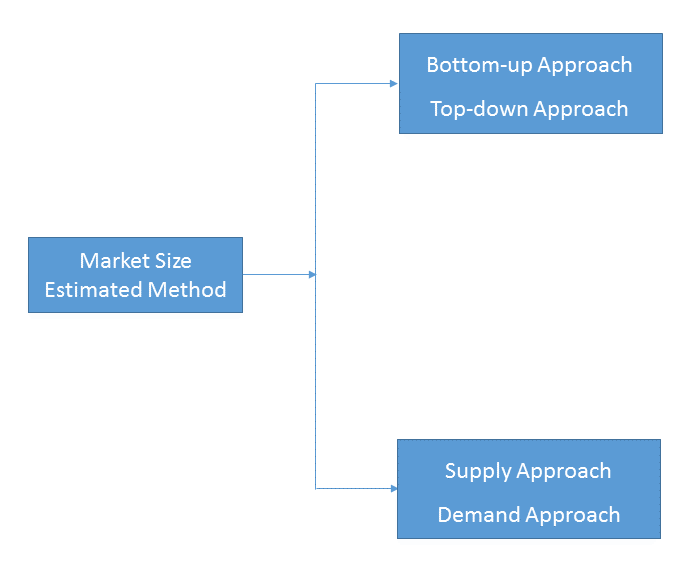
Bottom-up & top-down approach, supply & demand approach are the most important method which is used by HDIN Research to estimate the market size.
1)Top-down & Bottom-up Approach
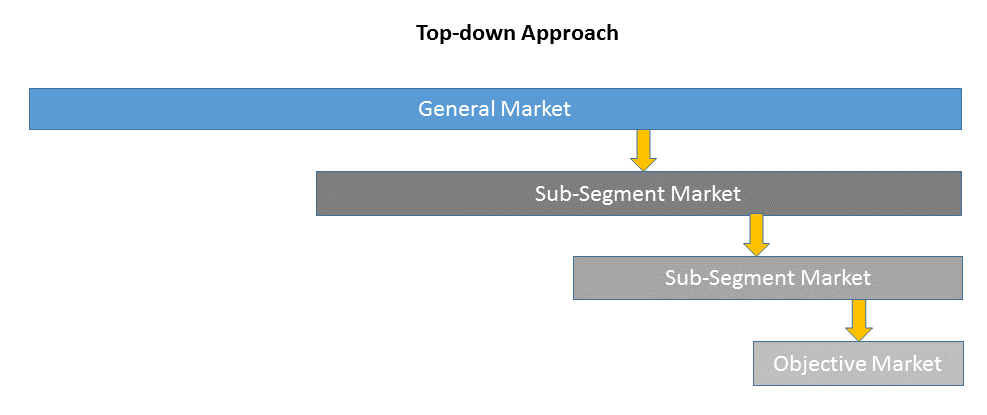
Top-down approach uses a general market size figure and determines the percentage that the objective market represents.
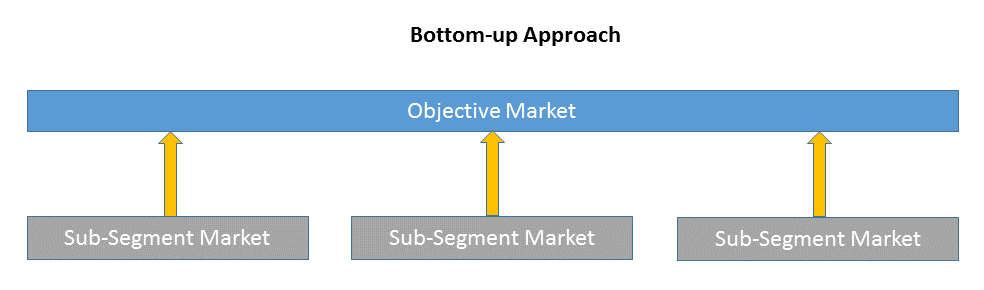
Bottom-up approach size the objective market by collecting the sub-segment information.
2)Supply & Demand Approach
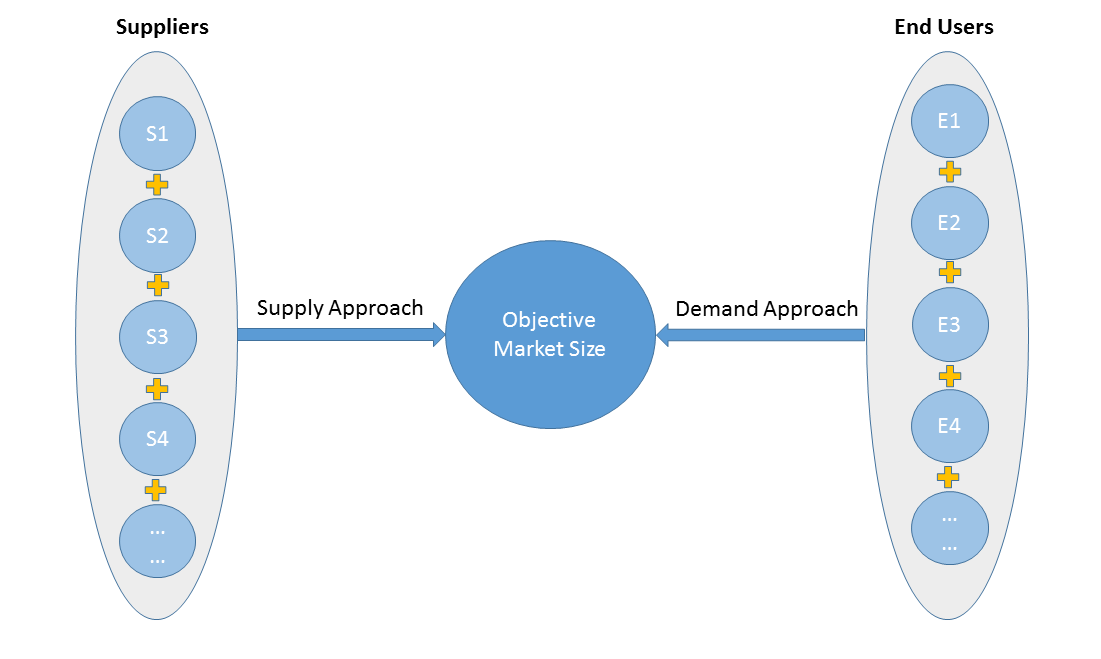
Supply approach is based on assessments of the size of each competitor supplying the objective market.
Demand approach combine end-user data within a market to estimate the objective market size. It is sometimes referred to as bottom-up approach.
- Forecasting Methodology
- Numerous factors impacting the market trend are considered for forecast model:
- New technology and application in the future;
- New project planned/under contraction;
- Global and regional underlying economic growth;
- Threatens of substitute products;
- Industry expert opinion;
- Policy and Society implication.
- Analysis Tools
1)PEST Analysis
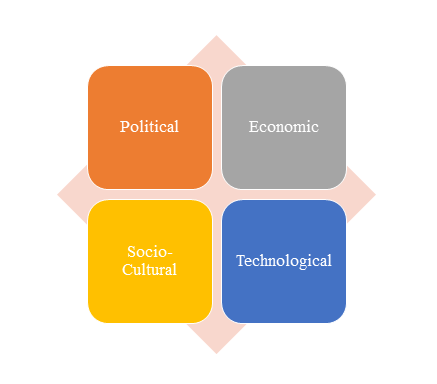
PEST Analysis is a simple and widely used tool that helps our client analyze the Political, Economic, Socio-Cultural, and Technological changes in their business environment.
- Benefits of a PEST analysis:
- It helps you to spot business opportunities, and it gives you advanced warning of significant threats.
- It reveals the direction of change within your business environment. This helps you shape what you’re doing, so that you work with change, rather than against it.
- It helps you avoid starting projects that are likely to fail, for reasons beyond your control.
- It can help you break free of unconscious assumptions when you enter a new country, region, or market; because it helps you develop an objective view of this new environment.
2)Porter’s Five Force Model Analysis
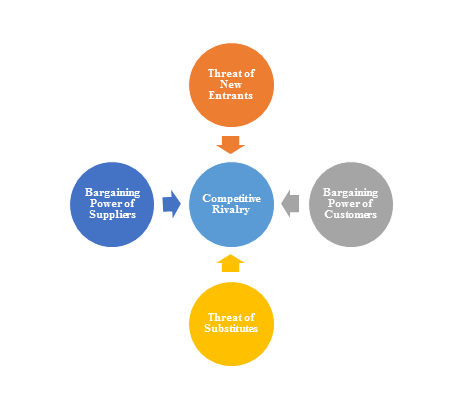
The Porter’s Five Force Model is a tool that can be used to analyze the opportunities and overall competitive advantage. The five forces that can assist in determining the competitive intensity and potential attractiveness within a specific area.
- Threat of New Entrants: Profitable industries that yield high returns will attract new firms.
- Threat of Substitutes: A substitute product uses a different technology to try to solve the same economic need.
- Bargaining Power of Customers: the ability of customers to put the firm under pressure, which also affects the customer's sensitivity to price changes.
- Bargaining Power of Suppliers: Suppliers of raw materials, components, labor, and services (such as expertise) to the firm can be a source of power over the firm when there are few substitutes.
- Competitive Rivalry: For most industries the intensity of competitive rivalry is the major determinant of the competitiveness of the industry.
3)Value Chain Analysis
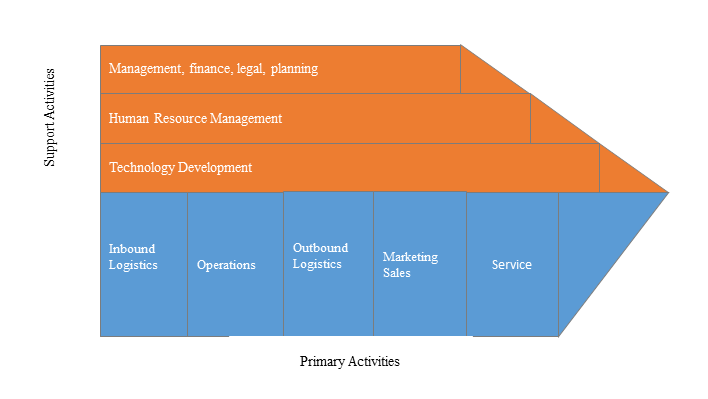
Value chain analysis is a tool to identify activities, within and around the firm and relating these activities to an assessment of competitive strength. Value chain can be analyzed by primary activities and supportive activities. Primary activities include: inbound logistics, operations, outbound logistics, marketing & sales, service. Support activities include: technology development, human resource management, management, finance, legal, planning.
4)SWOT Analysis
SWOT analysis is a tool used to evaluate a company's competitive position by identifying its strengths, weaknesses, opportunities and threats. The strengths and weakness is the inner factor; the opportunities and threats are the external factor. By analyzing the inner and external factors, the analysis can provide the detail information of the position of a player and the characteristics of the industry.
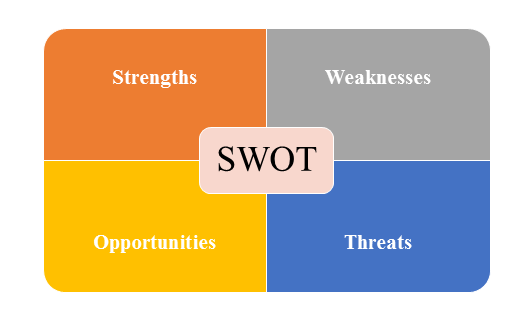
- Strengths describe what the player excels at and separates it from the competition
- Weaknesses stop the player from performing at its optimum level.
- Opportunities refer to favorable external factors that the player can use to give it a competitive advantage.
- Threats refer to factors that have the potential to harm the player.
- Data Sources
| Primary Sources | Secondary Sources |
|---|---|
| Face to face/Phone Interviews with market participants, such as: Manufactures; Distributors; End-users; Experts. Online Survey |
Government/International Organization Data: Annual Report/Presentation/Fact Book Internet Source Information Industry Association Data Free/Purchased Database Market Research Report Book/Journal/News |