Crosshead Piston Market Summary: 2026-2031 Size, Marine & Automotive Outlook
- Single User License (1 Users) $ 3,500
- Team License (2~5 Users) $ 4,500
- Corporate License (>5 Users) $ 5,500
Product and Industry Overview
A Crosshead Piston is a heavy-duty reciprocating engine assembly engineered to decouple lateral side-thrust loads from vertical combustion forces, dramatically reducing cylinder liner wear, stabilizing extreme thermal expansion, and isolating harsh combustion byproducts from crankcase lubricating oil. Commercial deployment centers on two demanding industrial domains: large-bore, low-speed two-stroke marine propulsion engines powering ocean-going merchant fleets—where a dedicated crosshead guide shoe absorbs connecting-rod side forces—and articulated two-piece steel-crown pistons operating inside heavy-duty commercial diesel vehicles, high-boost turbocharged powertrains, and heavy industrial reciprocating compressors.
In 2026, the global Crosshead Piston market is valued between USD 1.8 billion and USD 3.4 billion, and is projected to expand at a compound annual growth rate (CAGR) of 5.0% to 5.6% through 2031. Market resilience and steady expansion are anchored by multi-year shipyard orderbooks for cleaner dual-fuel merchant vessels, high-margin recurring dry-dock marine overhaul cycles, sustained global commercial trucking freight volumes requiring extreme peak-firing-pressure durability, and precision high-output internal combustion upgrades.
Between 2024 and 2026, two powerful strategic currents have reshaped the global crosshead piston landscape. Across maritime propulsion, accelerating fleet decarbonization toward LNG, methanol, and ammonia-ready two-stroke engines is driving rapid metallurgical upgrades in piston crowns and ring packs—underscored by MAN Energy Solutions officially rebranding to Everllence on June 4, 2025 to spearhead maritime, energy, and heavy-industry decarbonization under its "Moving big things to zero" strategy. Concurrently, across the automotive and precision-component ecosystem, manufacturers are executing dual strategies: capturing resilient margin in high-boost turbocharged engines and heavy-duty commercial diesels while diversifying via targeted M&A into broader precision engineering—illustrated by Shriram Pistons & Rings Ltd's December 10, 2024 agreement to acquire TGPEL Precision Engineering for an enterprise value of INR 220 crore and MAHLE Motorsport's September 2024 launch of high-performance PowerPak piston kits for twin-turbo direct-injected SUV engines.
Regional Market Analysis
Regional demand and production dynamics in the Crosshead Piston market reflect the geographic concentration of global shipbuilding and marine engine fabrication in East Asia, engineering leadership in Europe, heavy commercial trucking and gas compression in North America, and expanding industrial fleets across emerging economies.
Asia-Pacific (Estimated CAGR: 5.5% - 6.3%): Asia-Pacific stands as the undisputed global epicenter for both marine crosshead engine manufacturing and commercial automotive piston production, led by China, South Korea, Japan, India, and Taiwan, China. South Korea (anchored by HD Hyundai Heavy Industries), China, and Japan (led by Mitsubishi Heavy Industries and Aisin Corporation) command the world's premier shipyards and licensed two-stroke marine engine factories, pulling substantial volumes of large-bore forged steel crosshead piston assemblies for newbuild container ships, LNG carriers, and bulkers alongside heavy port-side maintenance demand. India represents a dynamic commercial-vehicle and precision-engineering growth hub—exemplified by domestic piston specialists scaling export reach and Shriram Pistons & Rings Ltd's December 2024 INR 220 crore acquisition of TGPEL Precision Engineering to broaden precision manufacturing depth. Taiwan, China serves as a high-precision manufacturing base supplying automotive, heavy-duty, and aftermarket pistons across regional and global distribution channels.
Europe (Estimated CAGR: 4.4% - 5.1%): Europe functions as the global technological and intellectual-property hub for two-stroke marine crosshead engine design, multi-fuel maritime decarbonization, and heavy-duty steel automotive pistons, centered in Germany, Switzerland, Finland, Denmark, Italy, and the United Kingdom. Home to industry trailblazers Everllence, WinGD, Wärtsilä, and Rheinmetall, Europe leads R&D in high-temperature weld-clad crowns for methanol and ammonia marine engines as well as ultra-high-pressure commercial truck diesel pistons compliant with tightening regional emission standards. Europe's dense network of Northern and Mediterranean maritime service hubs further sustains brisk, high-margin piston crown reconditioning and replacement revenue.
North America (Estimated CAGR: 4.8% - 5.5%): North America constitutes a high-value heavy-duty commercial automotive, industrial compression, and performance-aftermarket hub led by the United States, Canada, and Mexico. Demand is underpinned by heavy Class 8 long-haul diesel trucks, mining and agricultural off-highway machinery, vast natural-gas pipeline and petrochemical reciprocating compressor installations (served by industrial leaders such as Ingersoll Rand), and resilient high-output turbocharged passenger and SUV engine platforms—vividly reflected in MAHLE Motorsport's September 2024 release of high-performance PowerPak piston kits for twin-turbo direct-injected SUV engines such as the VR30DDTT platform.
South America (Estimated CAGR: 4.5% - 5.2%): Regional demand across South America—led by Brazil, Argentina, Chile, and Peru—is anchored by heavy-duty commercial freight fleets, mining and agricultural off-highway diesel engines, coastal shipping, and offshore energy support vessels. Because local large-bore marine forging capacity remains limited, regional consumption is heavily weighted toward commercial automotive OEM replacements and marine aftermarket overhaul kits imported from European, Asian, and Indian manufacturers.
Middle East and Africa (Estimated CAGR: 5.2% - 6.0%): Growth across the Middle East and Africa (MEA) is propelled by strategic maritime trade arteries (Persian Gulf, Red Sea, and Cape shipping lanes), expanding world-class dry-dock ship repair complexes in the United Arab Emirates, Bahrain, Saudi Arabia, and Oman, and heavy commercial trucking and natural-gas compression infrastructure across Saudi Arabia, Egypt, and South Africa. Rising vessel traffic and scheduled dry-dock maintenance generate steady, high-margin demand for marine crosshead piston crown refurbishment and replacement assemblies.
Market Segmentation Analysis
Commercial demand for Crosshead Pistons divides into two core end-use sectors—Ship and Automotive—each characterized by distinct component scale, replacement cadence, metallurgical complexity, and decarbonization trajectories.
Ship (Marine Propulsion and Fleet Overhaul): Representing the highest unit-value and longest-lifecycle segment of the global market, marine crosshead pistons are indispensable to low-speed two-stroke diesel and dual-fuel propulsion engines powering the global merchant fleet (container vessels, crude tankers, LNG and LPG carriers, and dry bulk carriers). Operating under immense bore diameters and continuous multi-year ocean voyages, marine crosshead piston assemblies deliver a powerful dual revenue engine: OEM installation inside newbuild ships and high-margin recurring aftermarket replacement and reconditioning during scheduled 12,000-to-24,000-hour dry-dock overhauls. Crucially, the global maritime pivot toward dual-fuel LNG, methanol, and ammonia-ready engines exposes piston crowns to sharper thermal cycling and aggressive hot-corrosion environments, driving rapid industry upgrades toward specialized nickel-alloy weld-clad crowns, precision internal oil-cooling galleries, chrome-plated ring grooves, and reinforced crosshead guide shoes.
Automotive (Heavy-Duty Commercial Vehicles, High-Output Turbo Engines, and Industrial Reciprocating Systems): Within the automotive domain, crosshead and two-piece articulated piston architectures serve heavy-duty commercial diesel trucks, buses, off-highway construction and mining machinery, and demanding high-boost turbocharged powertrains. By decoupling a forged high-strength alloy-steel crown (absorbing extreme combustion temperatures and peak cylinder pressures exceeding 200 bar) from a low-friction guided skirt via the wrist pin, articulated crosshead pistons dramatically lower frictional losses, curb lube-oil consumption, and extend service durability beyond one million kilometers under strict global commercial emission limits. Complementing heavy freight, resilient enthusiast and high-output twin-turbo direct-injected SUV and motorsport powerplants—exemplified by MAHLE Motorsport's PowerPak piston kits for the VR30DDTT engine—sustain premium forged aftermarket demand, alongside parallel heavy industrial reciprocating compressor applications.
Industry Chain and Value Chain Analysis
The global Crosshead Piston industry chain bridges specialized heavy metallurgy and precision forging with ultra-high-tolerance CNC machining, strict marine classification approvals, and global port-side lifecycle service networks.
Upstream Specialty Metallurgy and Forging Inputs: Manufacturing depends on ultra-clean, ultrasonic-tested heat-resistant chromium-molybdenum alloy steels, forged carbon-alloy steels, specialized aluminum-silicon skirt alloys, nickel-based corrosion-resistant cladding wires, and high-grade nodular cast irons. Because marine crosshead crowns endure relentless thermal and mechanical stress across thousands of continuous operating hours, defect-free forging grain flow and tight trace-impurity control represent critical upstream quality gates.
Midstream Precision Machining, Thermal Cladding, and Assembly: Midstream value creation combines heavy-duty multi-axis CNC turning and milling, deep precision cooling-gallery machining, friction welding (for two-piece articulated automotive steel pistons), laser or plasma weld-cladding of crown top surfaces, induction hardening, chrome-plated piston ring-groove finishing, and rigorous non-destructive testing (NDT). Entry barriers are exceptionally steep: marine two-stroke engine licensors enforce exhaustive metallurgical testing and maritime classification-society certification, while Tier-1 commercial vehicle OEMs demand automated zero-defect tolerances and multi-year engine-dynamometer qualification.
Downstream Distribution and Lifecycle Service Channels: Marine crosshead pistons move primarily through two structured routes: licensed two-stroke marine engine builders (heavily concentrated in South Korea, China, and Japan) assembling OEM engines for shipyards, and global OEM marine service hubs operating certified crown exchange pools and refurbishment centers near major international ports. Automotive crosshead and heavy-duty pistons flow through direct Tier-1 OEM powertrain contracts alongside global heavy-duty fleet aftermarket and performance motorsport distributors.
Value Distribution and Structural Bottlenecks: Profit pools across the value chain skew heavily toward marine engine licensors controlling OEM aftermarket spares and crown reconditioning exchange pools, alongside Tier-1 European and Japanese manufacturers of articulated steel commercial pistons. Standard cast aftermarket replacement pistons face far narrower margins due to fragmented regional competition. Structural bottlenecks include constrained global heavy-forging capacity for ultra-large marine alloy crowns, escalating metallurgical R&D complexity for ammonia and methanol multi-fuel combustion, skilled precision-machining labor deficits, and long OEM re-qualification cycles.
Competitive Landscape and Key Players
The global Crosshead Piston competitive landscape brings together European marine engine intellectual-property licensors, East Asian heavy shipbuilding and marine-engine titans, global Tier-1 automotive and industrial compression leaders, and agile Asian and Indian precision piston specialists.
European Marine Two-Stroke Engine and Decarbonization Leaders (Everllence, WinGD, Wärtsilä): Everllence—which officially rebranded from MAN Energy Solutions on June 4, 2025 to center its mission on shipping, energy, and heavy-industry decarbonization under its "Moving big things to zero" strategy—stands alongside Swiss marine engine specialist WinGD as the dominant architectural licensors of global low-speed two-stroke crosshead marine engines. Together, they anchor global OEM piston design specifications and high-margin aftermarket upgrades for dual-fuel LNG, methanol, and ammonia-ready fleets. Finland's Wärtsilä complements this European leadership tier with comprehensive multi-fuel marine propulsion systems, lifecycle service networks, and fleet decarbonization retrofits.
East Asian Heavy Marine Engine Manufacturing Giants (HD Hyundai Heavy Industries, Mitsubishi Heavy Industries): South Korea's HD Hyundai Heavy Industries operates as the world's foremost high-volume builder of licensed two-stroke crosshead marine engines and large-bore engine assemblies alongside its proprietary engine platforms. Japan's Mitsubishi Heavy Industries combines proprietary low-speed two-stroke marine engine heritage with world-class heavy industrial engineering, serving Japanese and international shipowners demanding exceptional reliability and thermal efficiency.
Global Tier-1 Automotive Powertrain and Industrial Compression Leaders (Rheinmetall, Aisin Corporation, Ingersoll Rand): Germany's Rheinmetall leverages its premier piston and power-systems division to lead global supply of articulated heavy-duty steel commercial vehicle pistons and large-bore marine/industrial pistons. Japan's Aisin Corporation—formerly Aisin-Seiki prior to its 2021 rebranding—anchors world-class precision automotive powertrain and engine component manufacturing for global vehicle OEMs. U.S.-based Ingersoll Rand brings specialized engineering expertise in crosshead piston systems deployed across heavy-duty reciprocating industrial air and gas compressors supporting global energy and manufacturing infrastructure.
Asia-Pacific Precision Piston Specialists (Cheng Shing Piston, Abilities India Pistons and Rings, Chandra Metal Enterprises): Headquartered in Taiwan, China, Cheng Shing Piston operates as a well-established precision piston manufacturer serving regional and global automotive, commercial vehicle, and aftermarket customers with dependable metallurgical consistency. In India, Abilities India Pistons and Rings and Chandra Metal Enterprises supply growing domestic and export commercial automotive, agricultural, and industrial reciprocating markets—competing within a rapidly maturing Indian precision-component landscape underscored by Shriram Pistons & Rings Ltd's December 2024 plan to acquire TGPEL Precision Engineering.
Market Opportunities and Challenges
Between 2026 and 2031, Crosshead Piston manufacturers will balance robust maritime decarbonization and heavy-duty efficiency tailwinds against long-term powertrain electrification shifts and metallurgical complexity.
Key Market Opportunities:
Maritime Dual-Fuel Fleet Renewal and Decarbonization Retrofits: Expanding global orderbooks for LNG, methanol, and ammonia-capable ocean vessels—coupled with regulatory pressure to improve existing fleet fuel efficiency—generate strong demand for upgraded, corrosion-resistant crosshead piston crowns and retrofit kits.
High-Margin Marine Aftermarket and Certified Crown Reconditioning: Extended vessel service lifespans across an aging global merchant fleet create predictable, recurring dry-dock overhaul volumes for genuine spare crowns, ring packs, and exchange-pool reconditioning services.
Heavy-Duty Commercial Diesel and Hybrid Thermal Optimization: Tightening commercial truck emissions standards accelerate adoption of advanced two-piece articulated steel-crown pistons capable of withstanding higher peak cylinder pressures while reducing friction and fuel burn.
High-Output Turbocharged Performance and Industrial Gas Compression: Resilient enthusiast demand for downsized twin-turbo direct-injected engines (evidenced by specialized PowerPak piston kits) alongside hydrogen and natural-gas reciprocating industrial compression sustains high-margin niche volumes.
Structural Market Challenges:
Gradual Electrification in Light and Medium Automotive Segments: Expanding battery-electric vehicle adoption across passenger cars and urban commercial vans caps long-term addressable internal combustion engine volumes, compelling automotive piston producers to pivot toward heavy-duty commercial niches or diversify into powertrain-agnostic precision engineering.
Multi-Fuel Thermal and Corrosion Engineering Hurdles: Transitioning two-stroke marine engines onto methanol, ammonia, and variable low-sulfur marine fuels elevates cylinder thermal stress, acid corrosion, and liner scuffing risks, demanding continuous capital-intensive metallurgical R&D.
Specialty Alloy Cost Volatility and Non-OEM Counterfeit Competition: Fluctuations in alloy steel, molybdenum, and nickel cladding prices compress manufacturing spreads, while lower-cost non-OEM aftermarket marine crowns in price-sensitive shipping hubs heighten competitive pricing pressure.
1.1 Study Scope ...... 1
1.2 Research Methodology ...... 2
1.2.1 Data Sources ...... 2
1.2.2 Assumptions ...... 4
1.3 Abbreviations and Acronyms ...... 5
Chapter 2 Global Crosshead Piston Market Overview and Trends ...... 6
2.1 Market Definition, Crosshead Mechanism Principles, and Coverage ...... 6
2.2 Global Market Size and Market Volume Historical Evolution (2021-2025) and Forecast (2027-2031) ...... 7
2.3 Industry Growth Drivers, Restraints, and Marine Fuel Decarbonization Trends ...... 9
2.4 Raw Material Pricing, Cost Structure Breakdown, and Equipment Pricing Trends ...... 10
Chapter 3 Value Chain, Manufacturing Process, and Distribution Dynamics ...... 12
3.1 Upstream High-Strength Alloy, Forging Ingot, and Casting Sourcing ...... 12
3.2 Precision CNC Machining, Thermal Barrier Coating, and Patent Landscape ...... 13
3.3 Downstream OEM Engine Integration and Value Chain Margins ...... 14
3.4 Distribution Channels, Direct OEM Supply, and Aftermarket Replacement Networks ...... 15
Chapter 4 Global Crosshead Piston Market by Type ...... 17
4.1 Product Type Categorization and Technical Specifications ...... 17
4.2 Forged Steel Crosshead Pistons Market Size and Volume (2021-2031) ...... 18
4.3 Cast Iron Crosshead Pistons Market Size and Volume (2021-2031) ...... 19
4.4 Composite and Multi-Piece Crosshead Pistons Market Size and Volume (2021-2031) ...... 21
Chapter 5 Global Crosshead Piston Market by Application ...... 23
5.1 Application Segmentation and Duty-Cycle Requirements ...... 23
5.2 Ship and Marine Engines Market Size and Volume (2021-2031) ...... 24
5.3 Automotive and Heavy Commercial Engines Market Size and Volume (2021-2031) ...... 26
Chapter 6 Global Crosshead Piston Trade Flows and Maritime Regulatory Standards ...... 28
6.1 Cross-Border Trade Flows, Tariffs, and Heavy Machinery Transport Logistics ...... 28
6.2 Key Exporting Hubs and Supply Routes ...... 29
6.3 Major Importing Countries/Regions and Sourcing Dynamics ...... 30
6.4 IMO Tier III Compliance, Emissions Reductions, and Marine Engine Classification Standards ...... 31
Chapter 7 North America Crosshead Piston Market Analysis ...... 33
7.1 North America Market Size and Consumption Volume Breakdown (2021-2031) ...... 33
7.2 United States Market Consumption Volume and Revenue Assessment ...... 35
7.3 Canada Market Consumption Volume and Revenue Assessment ...... 36
7.4 Mexico Market Consumption Volume and Revenue Assessment ...... 37
Chapter 8 Europe Crosshead Piston Market Analysis ...... 39
8.1 Europe Market Size and Consumption Volume Breakdown (2021-2031) ...... 39
8.2 Germany Market Consumption Volume and Revenue Assessment ...... 41
8.3 United Kingdom Market Consumption Volume and Revenue Assessment ...... 42
8.4 France Market Consumption Volume and Revenue Assessment ...... 43
8.5 Italy and Spain Market Consumption Volume and Revenue Assessment ...... 44
Chapter 9 Asia-Pacific Crosshead Piston Market Analysis ...... 46
9.1 Asia-Pacific Market Size and Consumption Volume Breakdown (2021-2031) ...... 46
9.2 China Market Consumption Volume and Revenue Assessment ...... 48
9.3 Japan Market Consumption Volume and Revenue Assessment ...... 49
9.4 South Korea Market Consumption Volume and Revenue Assessment ...... 50
9.5 India Market Consumption Volume and Revenue Assessment ...... 51
9.6 Southeast Asia Market Consumption Volume and Revenue Assessment ...... 52
9.7 Taiwan (China) Market Consumption Volume and Revenue Assessment ...... 53
Chapter 10 Latin America, Middle East, and Africa Market Analysis ...... 55
10.1 Latin America Regional Consumption Volume and Market Revenue (2021-2031) ...... 55
10.2 Middle East and Africa Regional Consumption Volume and Market Revenue (2021-2031) ...... 57
Chapter 11 Global Competitive Landscape and Market Concentration ...... 59
11.1 Competitive Tiering and Enterprise Categorization ...... 59
11.2 Key Manufacturer Market Share and Revenue Positioning (2021-2026) ...... 60
11.3 Engine Licensee Agreements, Consortia, and Technology Partnerships ...... 61
Chapter 12 Key Players Profile ...... 63
12.1 Everllence ...... 63
12.1.1 Company Overview ...... 63
12.1.2 SWOT Analysis ...... 64
12.1.3 Crosshead Piston Sales, Revenue, Price, and Gross Margin (2021-2026) ...... 65
12.1.4 Product Portfolio, R&D Investments, and Expansion Plans ...... 66
12.2 WinGD ...... 67
12.2.1 Company Overview ...... 67
12.2.2 SWOT Analysis ...... 68
12.2.3 Crosshead Piston Sales, Revenue, Price, and Gross Margin (2021-2026) ...... 69
12.2.4 Product Portfolio, R&D Investments, and Expansion Plans ...... 70
12.3 Wärtsilä ...... 71
12.3.1 Company Overview ...... 71
12.3.2 SWOT Analysis ...... 72
12.3.3 Crosshead Piston Sales, Revenue, Price, and Gross Margin (2021-2026) ...... 73
12.3.4 Product Portfolio, R&D Investments, and Expansion Plans ...... 74
12.4 Mitsubishi Heavy Industries ...... 75
12.4.1 Company Overview ...... 75
12.4.2 SWOT Analysis ...... 76
12.4.3 Crosshead Piston Sales, Revenue, Price, and Gross Margin (2021-2026) ...... 77
12.4.4 Product Portfolio, R&D Investments, and Expansion Plans ...... 78
12.5 HD Hyundai Heavy Industries ...... 79
12.5.1 Company Overview ...... 79
12.5.2 SWOT Analysis ...... 80
12.5.3 Crosshead Piston Sales, Revenue, Price, and Gross Margin (2021-2026) ...... 81
12.5.4 Product Portfolio, R&D Investments, and Expansion Plans ...... 82
12.6 Rheinmetall ...... 83
12.6.1 Company Overview ...... 83
12.6.2 SWOT Analysis ...... 84
12.6.3 Crosshead Piston Sales, Revenue, Price, and Gross Margin (2021-2026) ...... 85
12.6.4 Product Portfolio, R&D Investments, and Expansion Plans ...... 86
12.7 Aisin Corporation ...... 87
12.7.1 Company Overview ...... 87
12.7.2 SWOT Analysis ...... 88
12.7.3 Crosshead Piston Sales, Revenue, Price, and Gross Margin (2021-2026) ...... 89
12.7.4 Product Portfolio, R&D Investments, and Expansion Plans ...... 90
12.8 Cheng Shing Piston ...... 91
12.8.1 Company Overview ...... 91
12.8.2 SWOT Analysis ...... 92
12.8.3 Crosshead Piston Sales, Revenue, Price, and Gross Margin (2021-2026) ...... 93
12.8.4 Product Portfolio, R&D Investments, and Expansion Plans ...... 94
12.9 Abilities India Pistons and Rings ...... 95
12.9.1 Company Overview ...... 95
12.9.2 SWOT Analysis ...... 96
12.9.3 Crosshead Piston Sales, Revenue, Price, and Gross Margin (2021-2026) ...... 97
12.9.4 Product Portfolio, R&D Investments, and Expansion Plans ...... 98
12.10 Chandra Metal Enterprises ...... 99
12.10.1 Company Overview ...... 99
12.10.2 SWOT Analysis ...... 100
12.10.3 Crosshead Piston Sales, Revenue, Price, and Gross Margin (2021-2026) ...... 101
12.10.4 Product Portfolio, R&D Investments, and Expansion Plans ...... 102
12.11 Ingersoll Rand ...... 103
12.11.1 Company Overview ...... 103
12.11.2 SWOT Analysis ...... 104
12.11.3 Crosshead Piston Sales, Revenue, Price, and Gross Margin (2021-2026) ...... 105
12.11.4 Product Portfolio, R&D Investments, and Expansion Plans ...... 106
Chapter 13 Strategic Recommendations and Growth Pathways ...... 107
13.1 Market Penetration Tactics and Dual-Fuel Retrofit Opportunities ...... 107
13.2 Next-Generation Metallurgy, Additive Manufacturing, and Thermal Coating Innovations ...... 108
13.3 Actionable Guidance for Component Fabricators and Engine OEMs ...... 110
Table 2 Primary and Secondary Information Source Distribution ...... 3
Table 3 Currency Exchange Rates and Modeling Assumptions ...... 4
Table 4 List of Acronyms and Technical Terms ...... 5
Table 5 Global Crosshead Piston Market Size and Volume (2021-2031) ...... 8
Table 6 Global Crosshead Piston Average Selling Price Across Regions (2021-2026) ...... 10
Table 7 Cost Structure Breakdown for Marine and Industrial Crosshead Pistons ...... 11
Table 8 Raw Material Ingot and Forging Steel Sourcing Landscape ...... 12
Table 9 Key Patent Registrations in Crosshead Piston Cooling and Crown Geometry (2021-2026) ...... 14
Table 10 Direct OEM Supply vs. Independent Aftermarket Sales Revenue Share (2021-2026) ...... 16
Table 11 Global Crosshead Piston Market Size by Type (2021-2031) ...... 17
Table 12 Global Crosshead Piston Consumption Volume by Type (2021-2031) ...... 18
Table 13 Global Forged Steel Crosshead Pistons Revenue and Volume by Region (2021-2031) ...... 19
Table 14 Global Cast Iron Crosshead Pistons Revenue and Volume by Region (2021-2031) ...... 20
Table 15 Global Composite and Multi-Piece Crosshead Pistons Revenue and Volume by Region (2021-2031) ...... 22
Table 16 Global Crosshead Piston Market Size by Application (2021-2031) ...... 23
Table 17 Global Crosshead Piston Consumption Volume by Application (2021-2031) ...... 24
Table 18 Ship and Marine Engines Crosshead Piston Revenue by Region (2021-2031) ...... 25
Table 19 Automotive and Heavy Commercial Engines Crosshead Piston Revenue by Region (2021-2031) ...... 27
Table 20 Global Crosshead Piston Cross-Border Trade Flows (2021-2026) ...... 29
Table 21 Major Crosshead Piston Exporters and Average Export Values (2021-2026) ...... 30
Table 22 Major Crosshead Piston Importers and Marine Machinery Tariffs (2021-2026) ...... 31
Table 23 North America Crosshead Piston Market Size and Volume by Type (2021-2031) ...... 33
Table 24 North America Crosshead Piston Market Size by Application (2021-2031) ...... 34
Table 25 United States Crosshead Piston Market Size and Volume by Type (2021-2031) ...... 35
Table 26 Canada Crosshead Piston Market Size and Volume by Type (2021-2031) ...... 36
Table 27 Mexico Crosshead Piston Market Size and Volume by Type (2021-2031) ...... 38
Table 28 Europe Crosshead Piston Market Size and Volume by Type (2021-2031) ...... 39
Table 29 Europe Crosshead Piston Market Size by Application (2021-2031) ...... 40
Table 30 Germany Crosshead Piston Market Size and Volume by Type (2021-2031) ...... 41
Table 31 United Kingdom Crosshead Piston Market Size and Volume by Type (2021-2031) ...... 42
Table 32 France Crosshead Piston Market Size and Volume by Type (2021-2031) ...... 43
Table 33 Italy and Spain Crosshead Piston Market Size and Volume by Type (2021-2031) ...... 45
Table 34 Asia-Pacific Crosshead Piston Market Size and Volume by Type (2021-2031) ...... 46
Table 35 Asia-Pacific Crosshead Piston Market Size by Application (2021-2031) ...... 47
Table 36 China Crosshead Piston Market Size and Volume by Type (2021-2031) ...... 48
Table 37 Japan Crosshead Piston Market Size and Volume by Type (2021-2031) ...... 49
Table 38 South Korea Crosshead Piston Market Size and Volume by Type (2021-2031) ...... 50
Table 39 India Crosshead Piston Market Size and Volume by Type (2021-2031) ...... 51
Table 40 Southeast Asia Crosshead Piston Market Size and Volume by Type (2021-2031) ...... 52
Table 41 Taiwan (China) Crosshead Piston Market Size and Volume by Type (2021-2031) ...... 54
Table 42 Latin America, Middle East, and Africa Crosshead Piston Market Size by Sub-Region (2021-2031) ...... 56
Table 43 Everllence Crosshead Piston Sales, Price, Cost and Gross Profit Margin (2021-2026) ...... 65
Table 44 WinGD Crosshead Piston Sales, Price, Cost and Gross Profit Margin (2021-2026) ...... 69
Table 45 Wärtsilä Crosshead Piston Sales, Price, Cost and Gross Profit Margin (2021-2026) ...... 73
Table 46 Mitsubishi Heavy Industries Crosshead Piston Sales, Price, Cost and Gross Profit Margin (2021-2026) ...... 77
Table 47 HD Hyundai Heavy Industries Crosshead Piston Sales, Price, Cost and Gross Profit Margin (2021-2026) ...... 81
Table 48 Rheinmetall Crosshead Piston Sales, Price, Cost and Gross Profit Margin (2021-2026) ...... 85
Table 49 Aisin Corporation Crosshead Piston Sales, Price, Cost and Gross Profit Margin (2021-2026) ...... 89
Table 50 Cheng Shing Piston Crosshead Piston Sales, Price, Cost and Gross Profit Margin (2021-2026) ...... 93
Table 51 Abilities India Pistons and Rings Crosshead Piston Sales, Price, Cost and Gross Profit Margin (2021-2026) ...... 97
Table 52 Chandra Metal Enterprises Crosshead Piston Sales, Price, Cost and Gross Profit Margin (2021-2026) ...... 101
Table 53 Ingersoll Rand Crosshead Piston Sales, Price, Cost and Gross Profit Margin (2021-2026) ...... 105
Table 54 Emerging Dual-Fuel Retrofit Opportunities Matrix for Fleet Operators ...... 109
Table 55 Strategic Operational Framework for Engine Component Suppliers ...... 111
Figure 1 Crosshead Piston Research Framework and Econometric Modeling Flow ...... 3
Figure 2 Top-Down and Bottom-Up Market Sizing Approaches ...... 4
Figure 3 Global Crosshead Piston Market Size (2021-2031) ...... 8
Figure 4 Global Crosshead Piston Consumption Volume (2021-2031) ...... 9
Figure 5 Market Drivers, Environmental Regulations, and Restraints Impact Matrix ...... 10
Figure 6 Average Selling Price Evolution for Forged Steel vs. Cast Iron Crosshead Pistons (2021-2031) ...... 11
Figure 7 Crosshead Piston Value Chain Node Linkages and Value Capture Analysis ...... 15
Figure 8 Global Crosshead Piston Distribution Channel Share (2026) ...... 16
Figure 9 Global Crosshead Piston Market Share by Type (2026) ...... 18
Figure 10 Forged Steel Crosshead Pistons Market Revenue Trajectory (2021-2031) ...... 20
Figure 11 Composite and Multi-Piece Crosshead Pistons Market Revenue Trajectory (2021-2031) ...... 22
Figure 12 Global Crosshead Piston Market Share by Application (2026) ...... 24
Figure 13 Ship and Marine Engines Crosshead Piston Revenue Growth Path (2021-2031) ...... 26
Figure 14 Automotive and Heavy Commercial Engines Crosshead Piston Revenue Growth Path (2021-2031) ...... 27
Figure 15 Major Global Maritime Heavy Machinery Logistics Routes and Trade Corridors ...... 30
Figure 16 North America Crosshead Piston Revenue Share by Country (2026) ...... 34
Figure 17 United States Crosshead Piston Consumption Volume Trajectory (2021-2031) ...... 36
Figure 18 Europe Crosshead Piston Revenue Share by Country (2026) ...... 40
Figure 19 Germany Crosshead Piston Consumption Volume Trajectory (2021-2031) ...... 42
Figure 20 Asia-Pacific Crosshead Piston Revenue Share by Country/Region (2026) ...... 47
Figure 21 China Crosshead Piston Consumption Volume Trajectory (2021-2031) ...... 49
Figure 22 Global Crosshead Piston Market Concentration Ratio CR4 and CR8 (2021-2026) ...... 60
Figure 23 Key Manufacturer Revenue Benchmarking Matrix (2026) ...... 62
Figure 24 Everllence Crosshead Piston Market Share (2021-2026) ...... 66
Figure 25 WinGD Crosshead Piston Market Share (2021-2026) ...... 70
Figure 26 Wärtsilä Crosshead Piston Market Share (2021-2026) ...... 74
Figure 27 Mitsubishi Heavy Industries Crosshead Piston Market Share (2021-2026) ...... 78
Figure 28 HD Hyundai Heavy Industries Crosshead Piston Market Share (2021-2026) ...... 82
Figure 29 Rheinmetall Crosshead Piston Market Share (2021-2026) ...... 86
Figure 30 Aisin Corporation Crosshead Piston Market Share (2021-2026) ...... 90
Figure 31 Cheng Shing Piston Crosshead Piston Market Share (2021-2026) ...... 94
Figure 32 Abilities India Pistons and Rings Crosshead Piston Market Share (2021-2026) ...... 98
Figure 33 Chandra Metal Enterprises Crosshead Piston Market Share (2021-2026) ...... 102
Figure 34 Ingersoll Rand Crosshead Piston Market Share (2021-2026) ...... 106
Figure 35 Dual-Fuel and Ammonia/Methanol Compatible Combustion Technology Roadmap (2026-2031) ...... 109
Research Methodology
- Market Estimated Methodology:
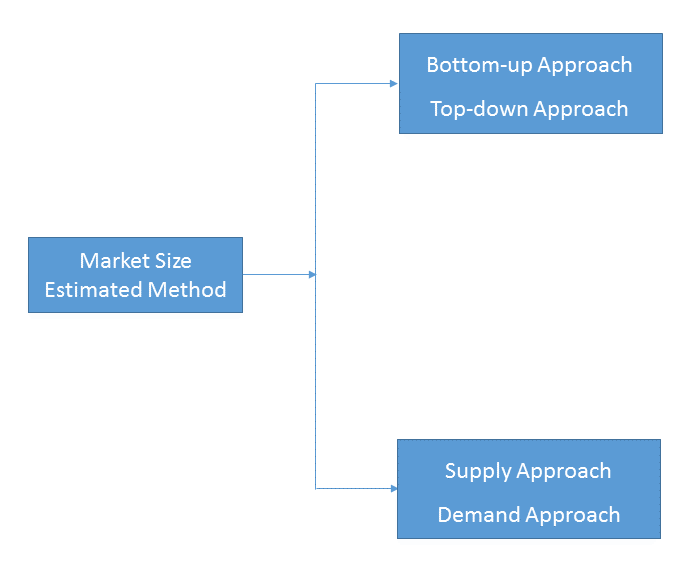
Bottom-up & top-down approach, supply & demand approach are the most important method which is used by HDIN Research to estimate the market size.
1)Top-down & Bottom-up Approach
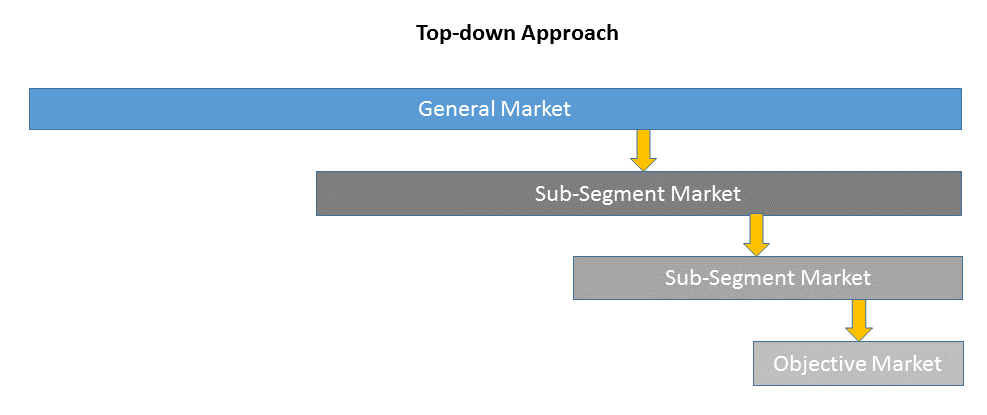
Top-down approach uses a general market size figure and determines the percentage that the objective market represents.
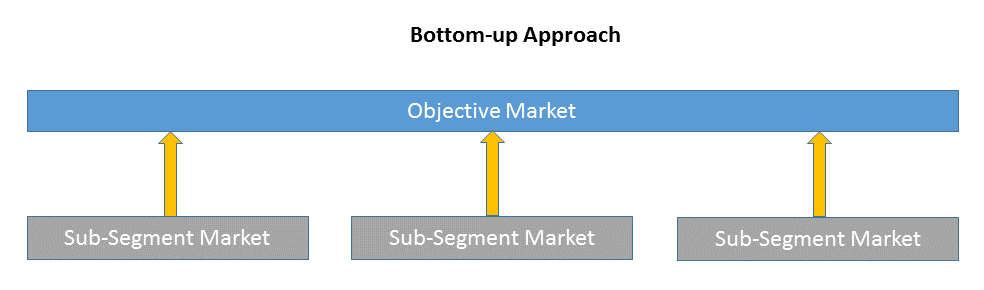
Bottom-up approach size the objective market by collecting the sub-segment information.
2)Supply & Demand Approach
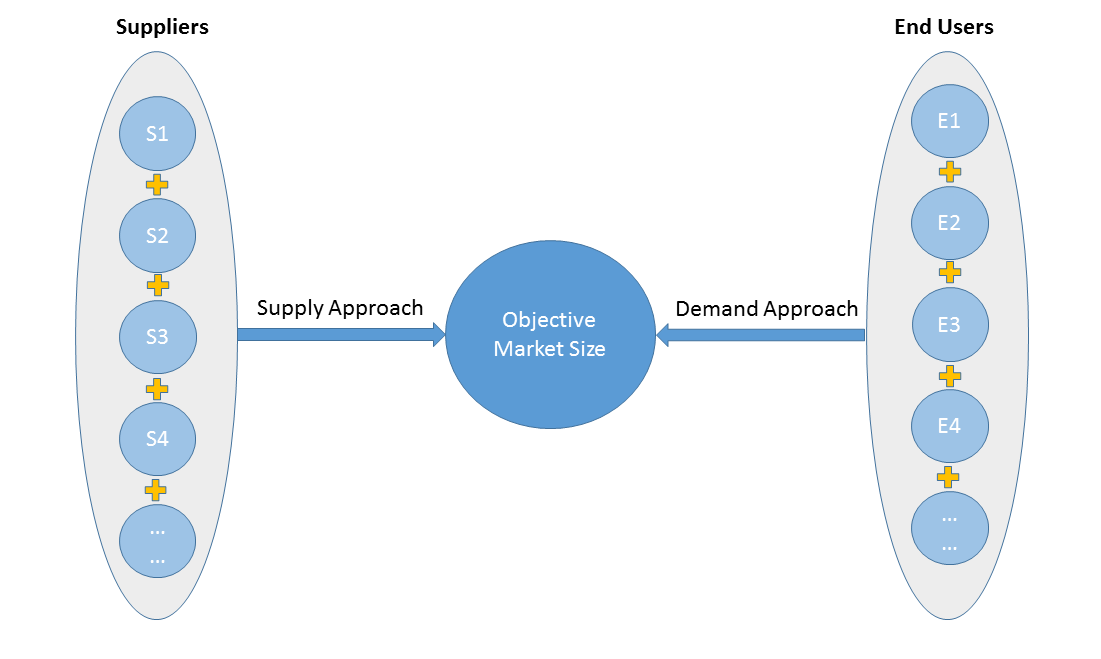
Supply approach is based on assessments of the size of each competitor supplying the objective market.
Demand approach combine end-user data within a market to estimate the objective market size. It is sometimes referred to as bottom-up approach.
- Forecasting Methodology
- Numerous factors impacting the market trend are considered for forecast model:
- New technology and application in the future;
- New project planned/under contraction;
- Global and regional underlying economic growth;
- Threatens of substitute products;
- Industry expert opinion;
- Policy and Society implication.
- Analysis Tools
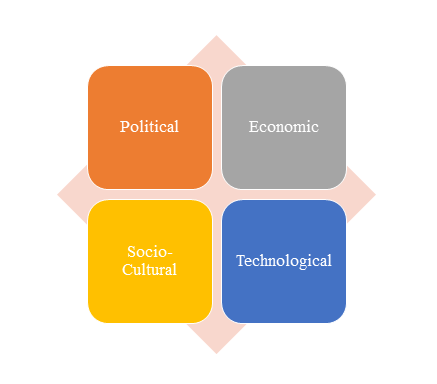
1)PEST Analysis
PEST Analysis is a simple and widely used tool that helps our client analyze the Political, Economic, Socio-Cultural, and Technological changes in their business environment.
- Benefits of a PEST analysis:
- It helps you to spot business opportunities, and it gives you advanced warning of significant threats.
- It reveals the direction of change within your business environment. This helps you shape what you’re doing, so that you work with change, rather than against it.
- It helps you avoid starting projects that are likely to fail, for reasons beyond your control.
- It can help you break free of unconscious assumptions when you enter a new country, region, or market; because it helps you develop an objective view of this new environment.
2)Porter’s Five Force Model Analysis
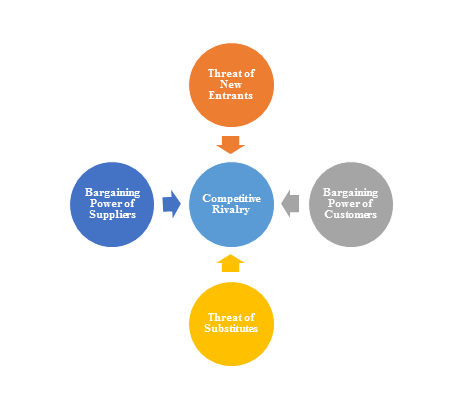
The Porter’s Five Force Model is a tool that can be used to analyze the opportunities and overall competitive advantage. The five forces that can assist in determining the competitive intensity and potential attractiveness within a specific area.
- Threat of New Entrants: Profitable industries that yield high returns will attract new firms.
- Threat of Substitutes: A substitute product uses a different technology to try to solve the same economic need.
- Bargaining Power of Customers: the ability of customers to put the firm under pressure, which also affects the customer's sensitivity to price changes.
- Bargaining Power of Suppliers: Suppliers of raw materials, components, labor, and services (such as expertise) to the firm can be a source of power over the firm when there are few substitutes.
- Competitive Rivalry: For most industries the intensity of competitive rivalry is the major determinant of the competitiveness of the industry.
3)Value Chain Analysis
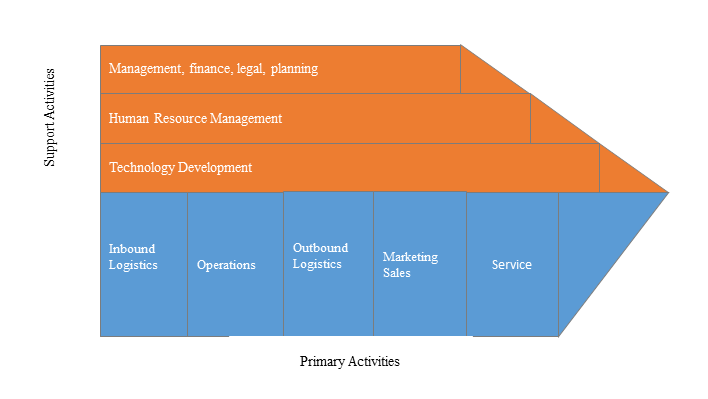
Value chain analysis is a tool to identify activities, within and around the firm and relating these activities to an assessment of competitive strength. Value chain can be analyzed by primary activities and supportive activities. Primary activities include: inbound logistics, operations, outbound logistics, marketing & sales, service. Support activities include: technology development, human resource management, management, finance, legal, planning.
4)SWOT Analysis
SWOT analysis is a tool used to evaluate a company's competitive position by identifying its strengths, weaknesses, opportunities and threats. The strengths and weakness is the inner factor; the opportunities and threats are the external factor. By analyzing the inner and external factors, the analysis can provide the detail information of the position of a player and the characteristics of the industry.
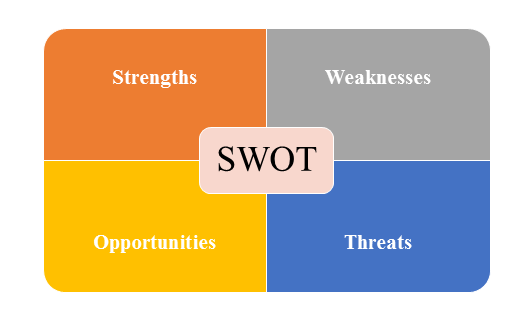
- Strengths describe what the player excels at and separates it from the competition
- Weaknesses stop the player from performing at its optimum level.
- Opportunities refer to favorable external factors that the player can use to give it a competitive advantage.
- Threats refer to factors that have the potential to harm the player.
- Data Sources
| Primary Sources | Secondary Sources |
|---|---|
| Face to face/Phone Interviews with market participants, such as: Manufactures; Distributors; End-users; Experts. Online Survey |
Government/International Organization Data: Annual Report/Presentation/Fact Book Internet Source Information Industry Association Data Free/Purchased Database Market Research Report Book/Journal/News |