Dispersion Dryer Market Summary: 2026-2031 Size, Pharma SDD & Industrial Outlook
- Single User License (1 Users) $ 3,500
- Team License (2~5 Users) $ 4,500
- Corporate License (>5 Users) $ 5,500
Product and Industry Overview
A Dispersion Dryer—widely termed a Dispersion Flash Dryer, Spin Flash Dryer (Swirl Fluidizer), or Pneumatic Dispersion Dryer (Ring Dryer) across industrial powder engineering and thermal process equipment manufacturing, alongside complementary spray and rotary dispersion drying architectures—is a continuous thermal-processing system engineered to simultaneously disintegrate wet filter cakes, viscous pastes, sludges, or liquid slurries and rapidly evaporate moisture inside a high-velocity heated gas stream. By unifying mechanical de-agglomeration, instantaneous moisture removal, and particle-size classification within a single compact unit operation, dispersion dryers eliminate upstream back-mixing and downstream milling while protecting heat-sensitive compounds through ultra-short thermal residence times.
In 2026, the global Dispersion Dryer market is estimated at USD 0.8 billion to USD 1.6 billion, and is projected to expand at a compound annual growth rate (CAGR) of 5.8% to 6.5% through 2031. Market growth is propelled by a potent convergence of high-margin pharmaceutical Spray-Dried Dispersion (SDD) commercialization, booming fine-chemical and lithium-ion battery precursor processing, expanding plant-based food protein extraction, and global industrial retrofits prioritizing lower thermal energy intensity.
Between 2024 and 2026, two defining commercial trends have accelerated capital deployment across the sector. Within biopharmaceuticals, contract development and manufacturing organizations (CDMOs) are scaling commercial spray-drying suites aggressively to solve poor oral bioavailability in modern small-molecule pipelines—vividly illustrated by WuXi STA's July 1, 2025 commissioning of a new commercial PSD-4 spray dryer at its Taixing API manufacturing facility in China (extending its SDD platform seamlessly from milligram clinical scale to metric-ton production), and Portuguese specialist Hovione's November 26, 2024 completion of multi-year spray-drying expansions in East Windsor, New Jersey (including a 31,000-square-foot facility addition) and Cork, Ireland under its USD 170 million global capacity program. Simultaneously, European process-equipment consolidation is reinforcing engineering balance sheets, highlighted by STAFAG International GmbH acquiring Uhingen, Germany-based Allgaier Process Technology GmbH effective January 1, 2024 following the former Allgaier Group's September 2023 insolvency filing, integrating its premier drying portfolio into the SIEBTECHNIK TEMA Group.
Regional Market Analysis
Regional demand patterns and equipment manufacturing competitiveness across the Dispersion Dryer market track closely with pharmaceutical CDMO clustering, specialty chemical and battery-material buildouts, mineral extraction intensity, and industrial energy decarbonization mandates.
Asia-Pacific (Estimated CAGR: 6.4% - 7.3%): Asia-Pacific stands as both the fastest-growing demand hub and the highest-volume equipment manufacturing center globally, anchored by China, India, Japan, South Korea, Australia, and Taiwan, China. China leads regional consumption across lithium-ion battery cathode precursors, fine chemicals, modified food starches, and commercial pharmaceutical spray-drying—exemplified by WuXi STA's July 2025 PSD-4 spray dryer launch in Taixing—while Jiangsu province operates as a globally competitive drying-machinery export hub supplying flash, spray, and rotary systems worldwide. India demonstrates brisk expansion fueled by generic pharmaceutical API manufacturing, specialty dyestuffs, agrochemicals, and processed food exports. Japan, South Korea, and Taiwan, China prioritize ultra-high-purity, energy-efficient dispersion dryers for advanced ceramics, electronic chemicals, battery materials, and innovator pharmaceuticals, while Australia sustains heavy rotary and flash drying capital outlays across lithium and base-metal mineral concentrate processing.
North America (Estimated CAGR: 5.5% - 6.3%): North America constitutes a premier high-margin technology and biopharmaceutical market led by the United States, Canada, and Mexico. U.S. demand is strongly propelled by commercial pharmaceutical Spray-Dried Dispersion (SDD) facilities—underscored by Hovione's November 2024 expansion completion in East Windsor, New Jersey—alongside sustained investments in plant-based food proteins, specialty polymers, and domestic critical-mineral beneficiation across the United States and Canada. Stringent workplace dust-explosion and air-emission standards favor closed-loop nitrogen-inerted and high-efficiency engineered drying lines supplied by established North American and European thermal specialists.
Europe (Estimated CAGR: 5.0% - 5.8%): Europe operates as a precision-engineering and energy-efficiency-led market centered in Germany, Ireland, Switzerland, France, the Netherlands, the United Kingdom, and Nordic pulp-and-paper corridors. Ireland and Continental Europe anchor major biopharmaceutical spray-drying manufacturing hubs (reinforced by Hovione's Cork, Ireland expansion), while structurally elevated industrial energy costs and strict carbon-reduction mandates accelerate demand for waste-heat recovery and low-temperature heat-pump condensation drying systems. Strategic corporate restructuring—exemplified by Allgaier Process Technology GmbH joining the SIEBTECHNIK TEMA Group under STAFAG International GmbH in January 2024—continues to consolidate Germany's global leadership in high-reliability thermal drying engineering.
South America (Estimated CAGR: 5.3% - 6.1%): Market expansion across South America—led by Brazil, Chile, Peru, and Argentina—is anchored by world-scale mineral extraction and agro-industrial processing. Copper, iron ore, and lithium brine-to-carbonate operations across Chile, Peru, and Argentina generate heavy-duty demand for rugged rotary and flash dispersion dryers reducing concentrate freight moisture. Brazil contributes strong parallel demand across its globally significant pulp-and-paper sector (pulp flash drying and wastewater sludge valorization) as well as expanding food starch and specialty chemical complexes.
Middle East and Africa (Estimated CAGR: 5.6% - 6.4%): Growth across the Middle East and Africa (MEA) is propelled by downstream mineral beneficiation, petrochemical diversification, and food and pharmaceutical localization across Saudi Arabia, the United Arab Emirates, Morocco, Egypt, and South Africa. Expanding phosphate, base-metal, and specialty chemical industrial zones across North Africa and the Gulf sustain growing capital procurement of high-throughput rotary and flash dispersion drying installations.
Market Segmentation Analysis
Commercial demand in the Dispersion Dryer market is structured across three primary equipment architectures (By Type) and five distinct industrial verticals (By Application), reflecting wide variations in feedstock consistency, hygiene rules, and batch-versus-continuous throughput.
By Type:
Flash Dryers: Encompassing Spin Flash Dryers (Swirl Fluidizers) and Pneumatic Dispersion (Ring) Dryers, flash dryers represent the quintessential industrial workhorse of dispersion drying. By integrating high-shear mechanical agitation with a high-velocity swirling heated gas stream, flash dryers instantaneously disintegrate cohesive wet filter cakes, viscous pastes, and sludges into uniform, free-flowing dry powders within seconds. Eliminating separate pre-granulation and post-milling steps while minimizing thermal degradation makes flash dryers the preferred architecture across fine chemicals, battery precursors, pigments, starch, and mineral filter cakes.
Spray Dryers: Commanding the highest value-per-unit margins, spray dryers process pumpable liquid solutions, emulsions, and fine slurries by atomizing feedstocks through precision rotary wheels or high-pressure nozzles into temperature-controlled drying chambers. Unmatched control over particle morphology, bulk density, and amorphous solid dispersion structure makes spray dryers indispensable across pharmaceutical SDD manufacturing, infant nutrition, dairy powders, flavorings, and advanced ceramic or catalyst powders.
Rotary Dryers: Engineered for high-tonnage, continuous heavy-duty processing of abrasive, irregular, or high-moisture bulk solids. Utilizing large rotating cylindrical drums equipped with tailored internal lifting flights that continuously cascade and disperse solids through heated co-current or counter-current gas streams, rotary dryers anchor bulk mining concentrates, pulp-and-paper sludges, fertilizers, and heavy industrial chemical granules.
By Application:
Pharmaceuticals: Representing the fastest-expanding high-margin vertical, pharmaceutical adoption is propelled by Spray-Dried Dispersion (SDD) platforms solving poor aqueous solubility and oral bioavailability challenges across modern small-molecule drug pipelines. Leading CDMOs and innovator drugmakers require seamless scale-up from milligram R&D units to metric-ton commercial lines—vividly demonstrated by WuXi STA's July 2025 PSD-4 spray dryer launch in China and Hovione's November 2024 expansions in New Jersey and Ireland—imposing rigorous cGMP cleanroom execution, closed-loop organic solvent recovery, and explosion-safe containment.
Chemical: Serving as the largest historical industrial equipment base for spin flash and pneumatic dispersion dryers, the chemical sector processes lithium-ion battery cathode precursors, titanium dioxide and organic pigments, polymer resins, flame retardants, agrochemicals, and catalysts demanding ultra-tight residual moisture tolerances, zero metallic contamination, and closed-loop inert gas operation.
Foods: A resilient, hygiene-critical segment covering plant-based protein isolates (pea, soy, wheat gluten), modified starches, dairy and infant formula powders, yeast extracts, and functional flavorings. Ultra-short thermal contact protects heat-sensitive proteins and flavors, while food processors mandate mirror-polished stainless-steel internals and automated clean-in-place (CIP) sanitization.
Mining: A heavy-capital throughput vertical deploying ruggedized rotary and high-capacity flash dispersion dryers to dewater metallic ore concentrates, lithium carbonate and spodumene filter cakes, rare-earth oxides, kaolin, and coal fines—slashing shipping water weight, preventing winter clumping, and optimizing downstream smelting energy efficiency.
Paper: A targeted industrial segment utilizing flash dispersion and rotary dryers for mechanical and fluff market pulp drying, calcium carbonate and kaolin paper-coating mineral pigments, and thermal drying of paper-mill wastewater sludges to reduce landfill tipping fees and recover biomass fuel value.
Industry Chain and Value Chain Analysis
The global Dispersion Dryer value chain links specialty metallurgy and precision thermal sub-components with application-specific process engineering, pilot-plant validation, and recurring lifecycle aftermarket services.
Upstream Alloys, Thermal Components, and Controls: Manufacturing relies on corrosion-resistant stainless steels (304 and 316L), abrasion-resistant duplex and nickel-based alloys (for acidic chemicals or abrasive mineral ores), precision high-speed rotary atomizers and pressure nozzles, direct/indirect industrial air heaters and heat-pump modules, high-efficiency baghouse dust collectors and cyclones, explosion-venting and suppression safety hardware, and automated PLC/SCADA instrumentation.
Midstream Custom Process Engineering and Pilot Testing: Industrial dispersion dryers are rarely off-the-shelf catalog machines; each system is custom-engineered around feedstock viscosity, stickiness, thermal sensitivity, dust-explosion kinetics, and target particle-size distribution. Consequently, maintaining in-house pilot-testing centers—allowing prospective industrial buyers to validate drying yields using actual wet filter cakes or slurries prior to committing capital—alongside computational fluid dynamics (CFD) airflow modeling represents the single highest barrier to entry in midstream manufacturing.
Downstream EPC, Direct Sales, and Aftermarket Channels: Equipment reaches end-users primarily via direct OEM technical engineering sales and industrial engineering-procurement-construction (EPC) contractors serving global pharmaceutical, chemical, food, and mining complexes. High-margin recurring aftermarket revenue stems from wear-intensive spare parts—including agitator rotors, atomizer wheels, mechanical shaft seals, specialized filter bags, burner assemblies, and energy-efficiency retrofit packages.
Value Distribution and Structural Bottlenecks: Standardized carbon-steel agricultural and basic mineral dryers operate on narrow fabrication margins vulnerable to intense regional price competition. Conversely, robust profit pools concentrate in cGMP closed-loop solvent pharmaceutical spray dryers, explosion-proof nitrogen-inerted battery-material flash dryers, and ultra-low-energy heat-pump condensation dryers. Core structural bottlenecks include heavy industrial thermal fuel intensity, stringent regional dust-explosion and VOC air-emission compliance, extended 6-to-18-month custom fabrication lead times, and specialized process-engineering talent shortages for challenging sticky-paste scale-ups.
Competitive Landscape and Key Players
The global Dispersion Dryer competitive landscape unites precision German and Japanese thermal-engineering powerhouses, specialized North American powder-processing leaders, rapidly scaling Chinese intelligent drying-equipment clusters, and cost-competitive South Asian machinery providers.
European and Japanese Thermal Engineering Leaders (Allgaier Process Technology, HARTER, KURIMOTO): Germany-based Allgaier Process Technology (headquartered in Uhingen) entered a strengthened strategic chapter effective January 1, 2024, when STAFAG International GmbH acquired Allgaier Process Technology GmbH following the former Allgaier Group's September 2023 insolvency filing and integrated it into the SIEBTECHNIK TEMA Group—securing robust capital backing and global service continuity for its renowned rotary, fluidized-bed, and industrial drying portfolio. Fellow German specialist HARTER differentiates sharply through closed-loop, heat-pump-based condensation drying technology tailored to low-temperature, zero-exhaust, energy-saving industrial and pharmaceutical applications. In Japan, KURIMOTO leverages deep heavy-machinery and powder-engineering heritage to deliver high-reliability dispersion, flash, and thermal processing dryers for fine chemicals, battery materials, ceramics, and food industries across Asia.
North American Industrial Drying Specialists (Bepex International, Advanced Drying Systems, Griffin Machinery): Bepex International anchors North American thermal powder processing with engineered flash and pneumatic dispersion drying platforms supported by extensive in-house pilot-testing capabilities serving leading chemical, polymer, food, and mineral producers. Advanced Drying Systems delivers custom-engineered rotary, flash, and spray dispersion drying lines focused on thermal efficiency and emission control across North American industrial plants, while Griffin Machinery serves regional chemical, mineral, and agricultural drying accounts with specialized process machinery.
Chinese Scaled Intelligent Drying Powerhouses (Jiangsu Yutong Drying, Jiangsu Xingxing Drying Equipment, Jiangsu Xianfeng Intelligent Technology): Anchored in Jiangsu province—China's premier global drying-equipment manufacturing hub—these three manufacturers pair formidable fabrication scale with accelerating automation upgrades. Jiangsu Yutong Drying operates as a full-line industrial powerhouse supplying spin flash, spray, and rotary dryers across domestic and international chemical, pharmaceutical, and food markets. Jiangsu Xingxing Drying Equipment specializes in customized spin flash dispersion and spray drying lines tailored to pigments, fine chemicals, and food ingredients. Jiangsu Xianfeng Intelligent Technology leads China's push toward smart, automated, closed-loop GMP spray and flash drying architectures capturing rapid expansion across new-energy battery materials and biopharmaceutical scale-up.
South Asian Process Equipment Contender (Shriram Associates): Based in India, Shriram Associates manufactures application-tailored flash, spray, and rotary dispersion dryers supporting India's expanding generic pharmaceutical, specialty chemical, dyestuff, and processed-food sectors while progressively broadening export reach across Asia, the Middle East, and Africa.
Market Opportunities and Challenges
Between 2026 and 2031, Dispersion Dryer manufacturers will balance surging high-margin pharmaceutical and energy-transition tailwinds against industrial energy costs and cyclical capital-spending discipline.
Key Market Opportunities:
Rapid Commercialization of Pharmaceutical Spray-Dried Dispersions (SDDs): Growing pipelines of poorly soluble small-molecule therapies drive multi-year CDMO investments in cGMP commercial spray dryers capable of seamless milligram-to-metric-ton scale-up, exemplified by recent major expansions from WuXi STA and Hovione.
Battery Materials and Critical Minerals Scaling: Global buildouts of lithium-ion battery cathode precursors, lithium carbonate/hydroxide refining, and rare-earth separation require precision closed-loop dispersion flash dryers engineered for ultra-low metallic contamination.
Industrial Decarbonization and Thermal Electrification: Elevated natural-gas prices and corporate Scope 1 carbon-reduction targets accelerate plant retrofits replacing legacy direct-fired dryers with waste-heat recovery loops, electrified air heaters, and low-temperature heat-pump condensation dryers.
Expansion of Plant-Based Proteins and Functional Food Ingredients: Surging global consumer demand for pea, soy, and specialty plant-protein concentrates sustains steady investments in sanitary, short-residence-time dispersion flash and spray dryers.
Structural Market Challenges:
High Thermal Energy Intensity and Capex Approval Hurdles: Moisture evaporation ranks among the most energy-intensive unit operations in manufacturing; volatile fossil fuel costs and carbon pricing elevate total-cost-of-ownership (TCO) scrutiny and prolong industrial capital approval cycles.
Complex Dust-Explosion and Solvent-Emission Compliance: Processing fine combustible organic powders and organic-solvent pharmaceutical dispersions mandates costly closed-loop nitrogen inerting, solvent-recovery condensers, and stringent regional dust-explosion safety systems.
Cyclical End-Market Demand and Mid-Tier Export Competition: Periodic capital-expenditure slowdowns across mining, pulp-and-paper, and bulk chemicals delay large rotary and flash dryer orders, while competitive export pricing from scaled Asian drying clusters compresses margins on standardized mid-tier equipment.
1.1 Study Scope ...... 1
1.2 Research Methodology ...... 2
1.2.1 Data Sources ...... 2
1.2.2 Assumptions ...... 4
1.3 Abbreviations and Acronyms ...... 5
Chapter 2 Global Dispersion Dryer Market Overview and Trends ...... 6
2.1 Market Definition, Thermal Dispersion Principles, and Coverage ...... 6
2.2 Global Market Size and Market Volume Historical Evolution (2021-2025) and Forecast (2027-2031) ...... 7
2.3 Industry Growth Drivers, Restraints, and Energy Transition Trends ...... 9
2.4 Raw Material Price Dynamics, Cost Structure Breakdown, and Pricing Trends ...... 10
Chapter 3 Value Chain, Manufacturing Technology, and Distribution Dynamics ...... 12
3.1 Upstream High-Grade Stainless Steel, Heat Exchangers, and Air Handling Systems Sourcing ...... 12
3.2 Thermal Efficiency, Cyclone Separation, Exhaust Heat Recovery, and Patent Analysis ...... 13
3.3 Downstream Industrial Integration and Value Chain Margins ...... 14
3.4 Distribution Channels, Direct Engineering EPC Contracts, and Distributor Networks ...... 15
Chapter 4 Global Dispersion Dryer Market by Type ...... 17
4.1 Product Type Categorization and Technical Comparison ...... 17
4.2 Spray Dryers Market Size and Volume (2021-2031) ...... 18
4.3 Rotary Dryers Market Size and Volume (2021-2031) ...... 19
4.4 Flash Dryers Market Size and Volume (2021-2031) ...... 21
Chapter 5 Global Dispersion Dryer Market by Application ...... 23
5.1 Application Segmentation and Thermal Sensitivity Requirements ...... 23
5.2 Foods Industry Market Size and Volume (2021-2031) ...... 24
5.3 Chemical Industry Market Size and Volume (2021-2031) ...... 25
5.4 Paper Industry Market Size and Volume (2021-2031) ...... 26
5.5 Mining Industry Market Size and Volume (2021-2031) ...... 27
5.6 Pharmaceuticals Industry Market Size and Volume (2021-2031) ...... 28
Chapter 6 Global Dispersion Dryer Trade Flows and Environmental Regulatory Policies ...... 30
6.1 Cross-Border Trade Flows, Tariffs, and Industrial Machinery Transport Logistics ...... 30
6.2 Key Exporting Hubs and Supply Routes ...... 31
6.3 Major Importing Countries and Equipment Sourcing Patterns ...... 32
6.4 Industrial Energy Efficiency Directives, Emissions Standards, and CE/ASME Certifications ...... 33
Chapter 7 North America Dispersion Dryer Market Analysis ...... 35
7.1 North America Market Size and Consumption Volume Breakdown (2021-2031) ...... 35
7.2 United States Market Consumption Volume and Revenue Assessment ...... 36
7.3 Canada Market Consumption Volume and Revenue Assessment ...... 38
7.4 Mexico Market Consumption Volume and Revenue Assessment ...... 39
Chapter 8 Europe Dispersion Dryer Market Analysis ...... 41
8.1 Europe Market Size and Consumption Volume Breakdown (2021-2031) ...... 41
8.2 Germany Market Consumption Volume and Revenue Assessment ...... 43
8.3 United Kingdom Market Consumption Volume and Revenue Assessment ...... 44
8.4 France Market Consumption Volume and Revenue Assessment ...... 45
8.5 Italy and Spain Market Consumption Volume and Revenue Assessment ...... 46
Chapter 9 Asia-Pacific Dispersion Dryer Market Analysis ...... 48
9.1 Asia-Pacific Market Size and Consumption Volume Breakdown (2021-2031) ...... 48
9.2 China Market Consumption Volume and Revenue Assessment ...... 50
9.3 Japan Market Consumption Volume and Revenue Assessment ...... 51
9.4 South Korea Market Consumption Volume and Revenue Assessment ...... 52
9.5 India Market Consumption Volume and Revenue Assessment ...... 53
9.6 Southeast Asia Market Consumption Volume and Revenue Assessment ...... 54
Chapter 10 Latin America, Middle East, and Africa Market Analysis ...... 56
10.1 Latin America Regional Consumption Volume and Market Revenue (2021-2031) ...... 56
10.2 Middle East and Africa Regional Consumption Volume and Market Revenue (2021-2031) ...... 58
Chapter 11 Global Competitive Landscape and Market Concentration ...... 60
11.1 Competitive Tiering and Enterprise Categorization ...... 60
11.2 Key Manufacturer Market Share and Revenue Positioning (2021-2026) ...... 61
11.3 Turnkey Engineering Partnerships, Technology Licensing, and M&A Dynamics ...... 62
Chapter 12 Key Players Profile ...... 64
12.1 KURIMOTO ...... 64
12.1.1 Company Overview ...... 64
12.1.2 SWOT Analysis ...... 65
12.1.3 Dispersion Dryer Sales, Revenue, Price, and Gross Margin (2021-2026) ...... 66
12.1.4 Product Portfolio, Engineering Capabilities, and Expansion Plans ...... 67
12.2 Bepex International ...... 68
12.2.1 Company Overview ...... 68
12.2.2 SWOT Analysis ...... 69
12.2.3 Dispersion Dryer Sales, Revenue, Price, and Gross Margin (2021-2026) ...... 70
12.2.4 Product Portfolio, Engineering Capabilities, and Expansion Plans ...... 71
12.3 Shriram Associates ...... 72
12.3.1 Company Overview ...... 72
12.3.2 SWOT Analysis ...... 73
12.3.3 Dispersion Dryer Sales, Revenue, Price, and Gross Margin (2021-2026) ...... 74
12.3.4 Product Portfolio, Engineering Capabilities, and Expansion Plans ...... 75
12.4 HARTER ...... 76
12.4.1 Company Overview ...... 76
12.4.2 SWOT Analysis ...... 77
12.4.3 Dispersion Dryer Sales, Revenue, Price, and Gross Margin (2021-2026) ...... 78
12.4.4 Product Portfolio, Engineering Capabilities, and Expansion Plans ...... 79
12.5 Allgaier Process Technology ...... 80
12.5.1 Company Overview ...... 80
12.5.2 SWOT Analysis ...... 81
12.5.3 Dispersion Dryer Sales, Revenue, Price, and Gross Margin (2021-2026) ...... 82
12.5.4 Product Portfolio, Engineering Capabilities, and Expansion Plans ...... 83
12.6 Jiangsu Yutong Drying ...... 84
12.6.1 Company Overview ...... 84
12.6.2 SWOT Analysis ...... 85
12.6.3 Dispersion Dryer Sales, Revenue, Price, and Gross Margin (2021-2026) ...... 86
12.6.4 Product Portfolio, Engineering Capabilities, and Expansion Plans ...... 87
12.7 Griffin Machinery ...... 88
12.7.1 Company Overview ...... 88
12.7.2 SWOT Analysis ...... 89
12.7.3 Dispersion Dryer Sales, Revenue, Price, and Gross Margin (2021-2026) ...... 90
12.7.4 Product Portfolio, Engineering Capabilities, and Expansion Plans ...... 91
12.8 Jiangsu Xingxing Drying Equipment ...... 92
12.8.1 Company Overview ...... 92
12.8.2 SWOT Analysis ...... 93
12.8.3 Dispersion Dryer Sales, Revenue, Price, and Gross Margin (2021-2026) ...... 94
12.8.4 Product Portfolio, Engineering Capabilities, and Expansion Plans ...... 95
12.9 Jiangsu Xianfeng Intelligent Technology ...... 96
12.9.1 Company Overview ...... 96
12.9.2 SWOT Analysis ...... 97
12.9.3 Dispersion Dryer Sales, Revenue, Price, and Gross Margin (2021-2026) ...... 98
12.9.4 Product Portfolio, Engineering Capabilities, and Expansion Plans ...... 99
12.10 Advanced Drying Systems ...... 100
12.10.1 Company Overview ...... 100
12.10.2 SWOT Analysis ...... 101
12.10.3 Dispersion Dryer Sales, Revenue, Price, and Gross Margin (2021-2026) ...... 102
12.10.4 Product Portfolio, Engineering Capabilities, and Expansion Plans ...... 103
Chapter 13 Strategic Recommendations and Growth Pathways ...... 104
13.1 Market Penetration Tactics and Modular Drying System Differentiation ...... 104
13.2 Decarbonization Pathways, Heat Pump Integration, and Smart Sensor Controls ...... 105
13.3 Actionable Guidance for Industrial Equipment Fabricators and Plant Operators ...... 106
Table 2 Primary and Secondary Information Source Distribution ...... 3
Table 3 Currency Exchange Rates and Modeling Assumptions ...... 4
Table 4 List of Acronyms and Technical Terms ...... 5
Table 5 Global Dispersion Dryer Market Size and Volume (2021-2031) ...... 8
Table 6 Global Dispersion Dryer Average Selling Price Across Key Regions (2021-2026) ...... 10
Table 7 Cost Structure Breakdown for Heavy Thermal Process Machinery ...... 11
Table 8 Raw Material and Component Sourcing Matrix for Dispersion Dryers ...... 12
Table 9 Key Patent Registrations in Thermal Dispersion and Airflow Geometry (2021-2026) ...... 14
Table 10 Direct Engineering EPC Contracts vs. Distributor Network Revenue Share (2021-2026) ...... 16
Table 11 Global Dispersion Dryer Market Size by Type (2021-2031) ...... 17
Table 12 Global Dispersion Dryer Consumption Volume by Type (2021-2031) ...... 18
Table 13 Global Spray Dryers Revenue and Volume by Region (2021-2031) ...... 19
Table 14 Global Rotary Dryers Revenue and Volume by Region (2021-2031) ...... 20
Table 15 Global Flash Dryers Revenue and Volume by Region (2021-2031) ...... 22
Table 16 Global Dispersion Dryer Market Size by Application (2021-2031) ...... 23
Table 17 Global Dispersion Dryer Consumption Volume by Application (2021-2031) ...... 24
Table 18 Foods Industry Dispersion Dryer Revenue by Region (2021-2031) ...... 25
Table 19 Chemical Industry Dispersion Dryer Revenue by Region (2021-2031) ...... 26
Table 20 Paper Industry Dispersion Dryer Revenue by Region (2021-2031) ...... 27
Table 21 Mining Industry Dispersion Dryer Revenue by Region (2021-2031) ...... 28
Table 22 Pharmaceuticals Industry Dispersion Dryer Revenue by Region (2021-2031) ...... 29
Table 23 Global Dispersion Dryer Cross-Border Trade Flows (2021-2026) ...... 30
Table 24 Major Dispersion Dryer Exporters and Average Export Values (2021-2026) ...... 31
Table 25 Major Dispersion Dryer Importers and Industrial Equipment Tariffs (2021-2026) ...... 32
Table 26 North America Dispersion Dryer Market Size and Volume by Type (2021-2031) ...... 35
Table 27 North America Dispersion Dryer Market Size by Application (2021-2031) ...... 36
Table 28 United States Dispersion Dryer Market Size and Volume by Type (2021-2031) ...... 37
Table 29 Canada Dispersion Dryer Market Size and Volume by Type (2021-2031) ...... 38
Table 30 Mexico Dispersion Dryer Market Size and Volume by Type (2021-2031) ...... 40
Table 31 Europe Dispersion Dryer Market Size and Volume by Type (2021-2031) ...... 41
Table 32 Europe Dispersion Dryer Market Size by Application (2021-2031) ...... 42
Table 33 Germany Dispersion Dryer Market Size and Volume by Type (2021-2031) ...... 43
Table 34 United Kingdom Dispersion Dryer Market Size and Volume by Type (2021-2031) ...... 44
Table 35 France Dispersion Dryer Market Size and Volume by Type (2021-2031) ...... 45
Table 36 Italy and Spain Dispersion Dryer Market Size and Volume by Type (2021-2031) ...... 47
Table 37 Asia-Pacific Dispersion Dryer Market Size and Volume by Type (2021-2031) ...... 48
Table 38 Asia-Pacific Dispersion Dryer Market Size by Application (2021-2031) ...... 49
Table 39 China Dispersion Dryer Market Size and Volume by Type (2021-2031) ...... 50
Table 40 Japan Dispersion Dryer Market Size and Volume by Type (2021-2031) ...... 51
Table 41 South Korea Dispersion Dryer Market Size and Volume by Type (2021-2031) ...... 52
Table 42 India Dispersion Dryer Market Size and Volume by Type (2021-2031) ...... 53
Table 43 Southeast Asia Dispersion Dryer Market Size and Volume by Type (2021-2031) ...... 55
Table 44 Latin America Dispersion Dryer Market Size and Volume by Country (2021-2031) ...... 57
Table 45 Middle East and Africa Dispersion Dryer Market Size and Volume by Country (2021-2031) ...... 59
Table 46 Leading Dispersion Dryer Manufacturers Competitive Tiering ...... 60
Table 47 KURIMOTO Dispersion Dryer Sales, Price, Cost and Gross Profit Margin (2021-2026) ...... 66
Table 48 Bepex International Dispersion Dryer Sales, Price, Cost and Gross Profit Margin (2021-2026) ...... 70
Table 49 Shriram Associates Dispersion Dryer Sales, Price, Cost and Gross Profit Margin (2021-2026) ...... 74
Table 50 HARTER Dispersion Dryer Sales, Price, Cost and Gross Profit Margin (2021-2026) ...... 78
Table 51 Allgaier Process Technology Dispersion Dryer Sales, Price, Cost and Gross Profit Margin (2021-2026) ...... 82
Table 52 Jiangsu Yutong Drying Dispersion Dryer Sales, Price, Cost and Gross Profit Margin (2021-2026) ...... 86
Table 53 Griffin Machinery Dispersion Dryer Sales, Price, Cost and Gross Profit Margin (2021-2026) ...... 90
Table 54 Jiangsu Xingxing Drying Equipment Dispersion Dryer Sales, Price, Cost and Gross Profit Margin (2021-2026) ...... 94
Table 55 Jiangsu Xianfeng Intelligent Technology Dispersion Dryer Sales, Price, Cost and Gross Profit Margin (2021-2026) ...... 98
Table 56 Advanced Drying Systems Dispersion Dryer Sales, Price, Cost and Gross Profit Margin (2021-2026) ...... 102
Table 57 Thermal Efficiency Improvement Benchmarks for Industrial Dryers ...... 105
Table 58 Strategic Evaluation Framework for Industrial Drying System Modernization ...... 107
Figure 1 Dispersion Dryer Research Framework and Econometric Sizing Model ...... 3
Figure 2 Top-Down and Bottom-Up Market Reconciliation Approaches ...... 4
Figure 3 Global Dispersion Dryer Market Size (2021-2031) ...... 8
Figure 4 Global Dispersion Dryer Consumption Volume (2021-2031) ...... 9
Figure 5 Market Drivers, Environmental Challenges, and Restraints Impact Radar ...... 10
Figure 6 Average Selling Price Evolution for Spray, Rotary, and Flash Dryers (2021-2031) ...... 11
Figure 7 Dispersion Dryer Industry Value Chain and Value Capture Analysis ...... 15
Figure 8 Global Dispersion Dryer Distribution Channel Share (2026) ...... 16
Figure 9 Global Dispersion Dryer Market Share by Type (2026) ...... 18
Figure 10 Spray Dryers Market Revenue Trajectory (2021-2031) ...... 19
Figure 11 Rotary Dryers Market Revenue Trajectory (2021-2031) ...... 21
Figure 12 Flash Dryers Market Revenue Trajectory (2021-2031) ...... 22
Figure 13 Global Dispersion Dryer Market Share by Application (2026) ...... 24
Figure 14 Foods Application Revenue Growth Curve (2021-2031) ...... 25
Figure 15 Chemical Application Revenue Growth Curve (2021-2031) ...... 26
Figure 16 Paper Application Revenue Growth Curve (2021-2031) ...... 27
Figure 17 Mining Application Revenue Growth Curve (2021-2031) ...... 28
Figure 18 Pharmaceuticals Application Revenue Growth Curve (2021-2031) ...... 29
Figure 19 Key Inter-Regional Shipping Corridors for Heavy Thermal Process Machinery ...... 32
Figure 20 North America Dispersion Dryer Revenue Share by Country (2026) ...... 36
Figure 21 United States Dispersion Dryer Consumption Volume Growth (2021-2031) ...... 37
Figure 22 Europe Dispersion Dryer Revenue Share by Country (2026) ...... 42
Figure 23 Germany Dispersion Dryer Consumption Volume Growth (2021-2031) ...... 44
Figure 24 Asia-Pacific Dispersion Dryer Revenue Share by Country (2026) ...... 49
Figure 25 China Dispersion Dryer Consumption Volume Growth (2021-2031) ...... 51
Figure 26 KURIMOTO Dispersion Dryer Market Share (2021-2026) ...... 67
Figure 27 Bepex International Dispersion Dryer Market Share (2021-2026) ...... 71
Figure 28 Shriram Associates Dispersion Dryer Market Share (2021-2026) ...... 75
Figure 29 HARTER Dispersion Dryer Market Share (2021-2026) ...... 79
Figure 30 Allgaier Process Technology Dispersion Dryer Market Share (2021-2026) ...... 83
Figure 31 Jiangsu Yutong Drying Dispersion Dryer Market Share (2021-2026) ...... 87
Figure 32 Griffin Machinery Dispersion Dryer Market Share (2021-2026) ...... 91
Figure 33 Jiangsu Xingxing Drying Equipment Dispersion Dryer Market Share (2021-2026) ...... 95
Figure 34 Jiangsu Xianfeng Intelligent Technology Dispersion Dryer Market Share (2021-2026) ...... 99
Figure 35 Advanced Drying Systems Dispersion Dryer Market Share (2021-2026) ...... 103
Figure 36 Next-Generation Low-Emission Industrial Drying Technology Roadmap (2026-2031) ...... 106
Research Methodology
- Market Estimated Methodology:
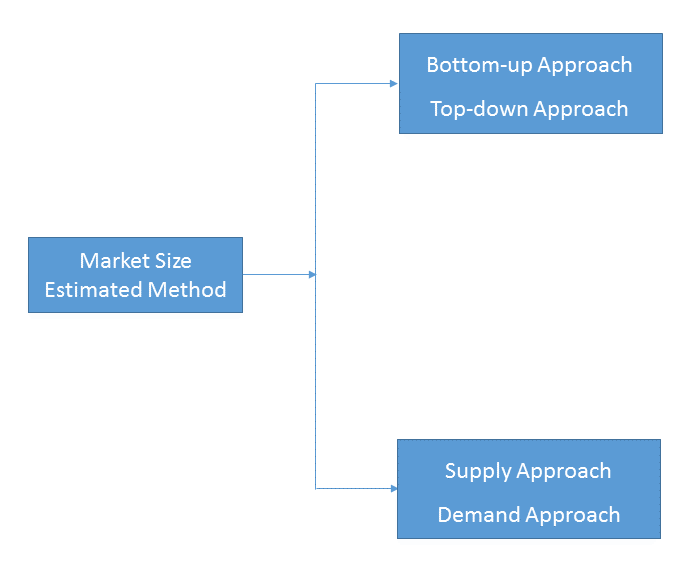
Bottom-up & top-down approach, supply & demand approach are the most important method which is used by HDIN Research to estimate the market size.
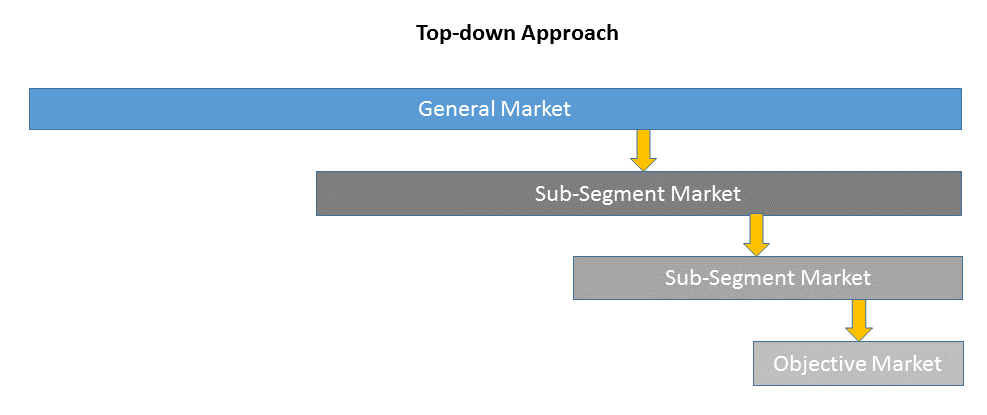
1)Top-down & Bottom-up Approach
Top-down approach uses a general market size figure and determines the percentage that the objective market represents.
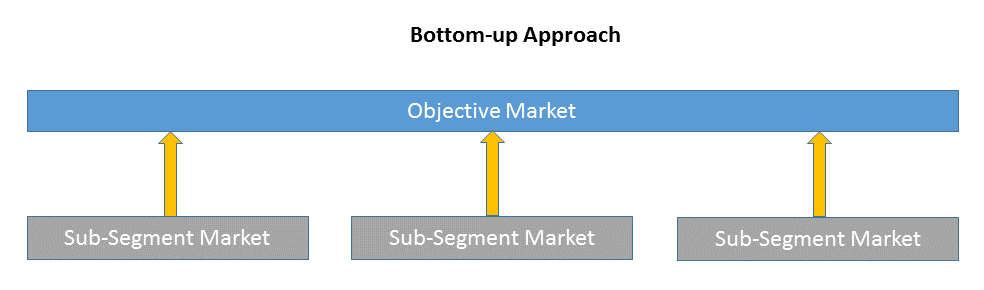
Bottom-up approach size the objective market by collecting the sub-segment information.
2)Supply & Demand Approach
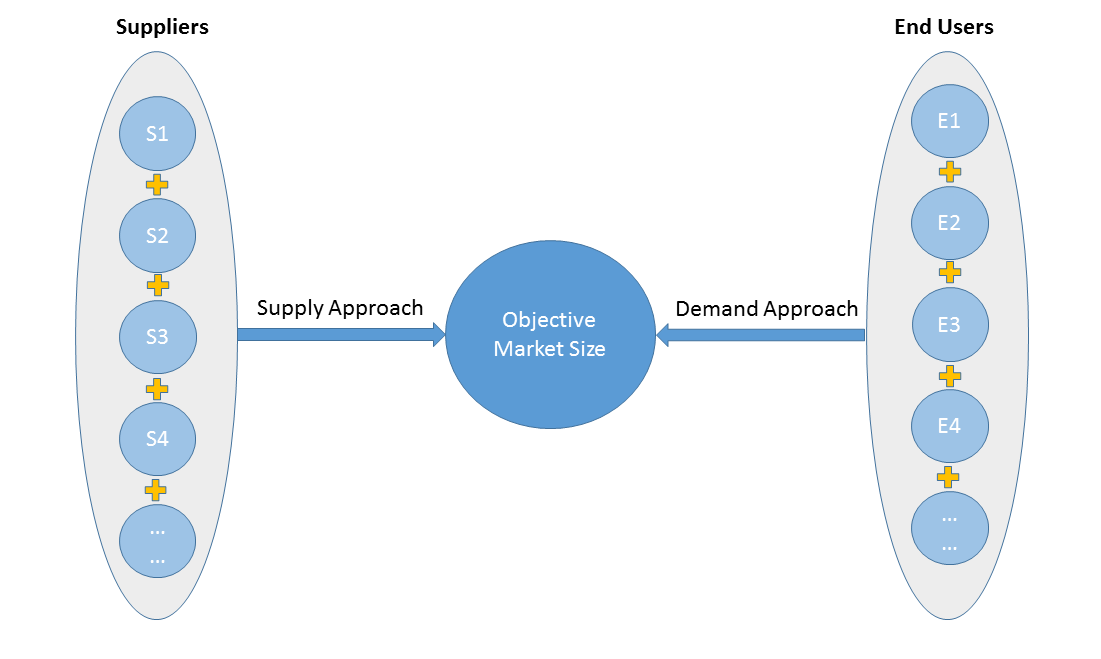
Supply approach is based on assessments of the size of each competitor supplying the objective market.
Demand approach combine end-user data within a market to estimate the objective market size. It is sometimes referred to as bottom-up approach.
- Forecasting Methodology
- Numerous factors impacting the market trend are considered for forecast model:
- New technology and application in the future;
- New project planned/under contraction;
- Global and regional underlying economic growth;
- Threatens of substitute products;
- Industry expert opinion;
- Policy and Society implication.
- Analysis Tools
1)PEST Analysis
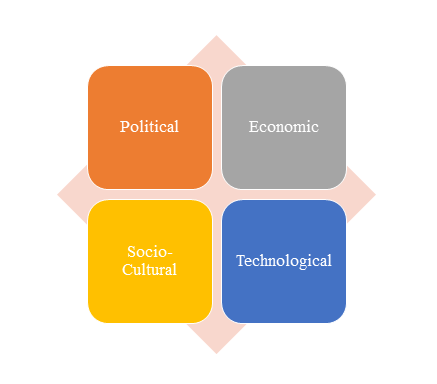
PEST Analysis is a simple and widely used tool that helps our client analyze the Political, Economic, Socio-Cultural, and Technological changes in their business environment.
- Benefits of a PEST analysis:
- It helps you to spot business opportunities, and it gives you advanced warning of significant threats.
- It reveals the direction of change within your business environment. This helps you shape what you’re doing, so that you work with change, rather than against it.
- It helps you avoid starting projects that are likely to fail, for reasons beyond your control.
- It can help you break free of unconscious assumptions when you enter a new country, region, or market; because it helps you develop an objective view of this new environment.
2)Porter’s Five Force Model Analysis
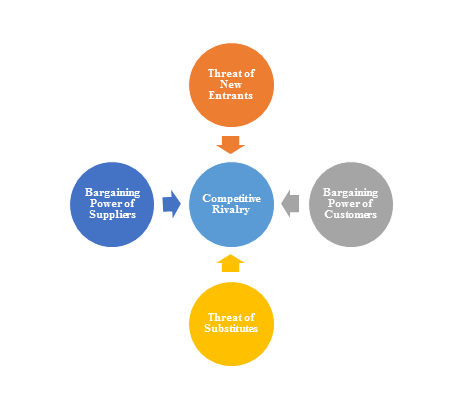
The Porter’s Five Force Model is a tool that can be used to analyze the opportunities and overall competitive advantage. The five forces that can assist in determining the competitive intensity and potential attractiveness within a specific area.
- Threat of New Entrants: Profitable industries that yield high returns will attract new firms.
- Threat of Substitutes: A substitute product uses a different technology to try to solve the same economic need.
- Bargaining Power of Customers: the ability of customers to put the firm under pressure, which also affects the customer's sensitivity to price changes.
- Bargaining Power of Suppliers: Suppliers of raw materials, components, labor, and services (such as expertise) to the firm can be a source of power over the firm when there are few substitutes.
- Competitive Rivalry: For most industries the intensity of competitive rivalry is the major determinant of the competitiveness of the industry.
3)Value Chain Analysis
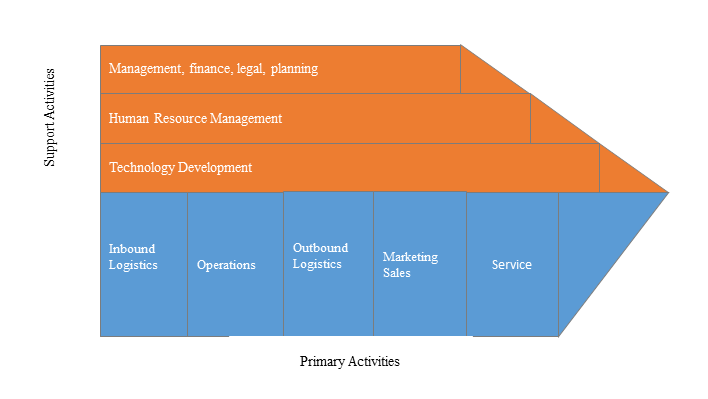
Value chain analysis is a tool to identify activities, within and around the firm and relating these activities to an assessment of competitive strength. Value chain can be analyzed by primary activities and supportive activities. Primary activities include: inbound logistics, operations, outbound logistics, marketing & sales, service. Support activities include: technology development, human resource management, management, finance, legal, planning.
4)SWOT Analysis
SWOT analysis is a tool used to evaluate a company's competitive position by identifying its strengths, weaknesses, opportunities and threats. The strengths and weakness is the inner factor; the opportunities and threats are the external factor. By analyzing the inner and external factors, the analysis can provide the detail information of the position of a player and the characteristics of the industry.
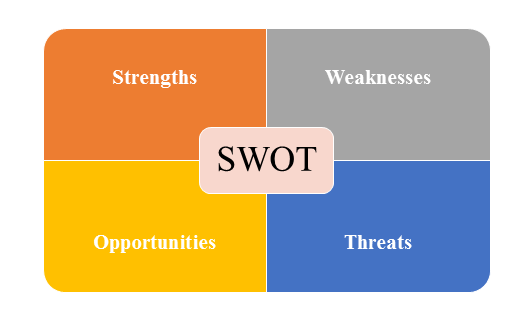
- Strengths describe what the player excels at and separates it from the competition
- Weaknesses stop the player from performing at its optimum level.
- Opportunities refer to favorable external factors that the player can use to give it a competitive advantage.
- Threats refer to factors that have the potential to harm the player.
- Data Sources
| Primary Sources | Secondary Sources |
|---|---|
| Face to face/Phone Interviews with market participants, such as: Manufactures; Distributors; End-users; Experts. Online Survey |
Government/International Organization Data: Annual Report/Presentation/Fact Book Internet Source Information Industry Association Data Free/Purchased Database Market Research Report Book/Journal/News |