Global Monorail Stairlift Market Strategic Outlook 2026-2031 Residential Accessibility Infrastructure And Aging In Place Technology Analysis
- Single User License (1 Users) $ 3,500
- Team License (2~5 Users) $ 4,500
- Corporate License (>5 Users) $ 5,500
The global monorail stairlift market in 2026 stands as a high-growth vertical within the broader assistive technology and residential infrastructure sectors. Defined by its utilization of a single, often highly customized rail system to transport individuals along staircases, the monorail stairlift—frequently referred to as a single-rail system—represents the premium segment of the stairlift industry. These systems are favored for their aesthetic minimalism, space-saving footprint, and superior ability to navigate complex, curved, or narrow staircases compared to traditional twin-rail alternatives. As of 2026, the market is valued between 230 million USD and 410 million USD, reflecting an industry catalyzed by the global "Aging in Place" movement. The sector is projected to maintain a compound annual growth rate (CAGR) of 3.7 percent to 5.9 percent through 2031.
The strategic landscape of mid-2026 is characterized by a significant wave of institutional consolidation and geographical expansion through targeted acquisitions. A pivotal development occurred in July 2026, when Savaria—a global leader in accessibility solutions and parent company of the century-old Handicare brand—announced the 100 percent acquisition of Vipal S.p.A., an Italian manufacturer of home elevators and lift equipment. This move is specifically designed to fortify Savaria’s European manufacturing footprint and enhance its portfolio of high-end monorail systems, such as the Handicare Freecurve series. Simultaneously, in the North American market, Galaxy Lifts (an affiliate of Canopy Brands) acquired Majic Stairs, a manufacturer of motorized telescopic attic stairs. This acquisition highlights the broader strategic trend of "Motorized Home Access," where players are expanding beyond traditional stairlifts to offer comprehensive automated accessibility solutions for the entire residential structure.
Technologically, the 2026 market is defined by the integration of smart sensors and predictive maintenance algorithms. Modern monorail systems are no longer passive mechanical devices; they are equipped with LiDAR and ultrasonic sensors to detect obstructions and ensure passenger safety. The shift toward modular rail systems, which can be custom-fitted in hours rather than days, is drastically reducing the "time-to-install," a critical competitive metric for market leaders. Furthermore, the aesthetic evolution of the monorail system has made it an integral part of interior design, with manufacturers offering a wide array of rail colors and upholstery options to cater to the luxury residential segment.
Regional Market Analysis
The geographical performance of the monorail stairlift market is dictated by the intersection of demographic aging, housing architecture, and regional healthcare reimbursement policies.
● North America holds a dominant strategic position, with a market share estimated between 35 percent and 39 percent. The region’s growth is driven by a high per-capita income and a cultural preference for aging in single-family homes rather than institutional care facilities. The July 2026 acquisition of Majic Stairs by Galaxy Lifts underscores the intensification of the "Motorized Home Access" market in the United States and Canada. North American consumers are increasingly seeking integrated solutions that combine stairlifts with other automated home entries, driving manufacturers toward a more holistic accessibility ecosystem.
● Europe remains the historical core of the monorail stairlift industry, accounting for a market share ranging from 30 percent to 34 percent. The European market is characterized by complex, narrow, and often historical staircases that necessitate the precision of single-rail systems. Savaria’s acquisition of Vipal S.p.A. in July 2026 signals a strategic pivot toward localizing manufacturing in Southern Europe to bypass logistical bottlenecks and better serve the Mediterranean market. Countries like the UK, Netherlands, and Germany remain the largest consumers, supported by well-established government grants and social security schemes for home modifications.
● Asia Pacific is the fastest-growing region, with an estimated market share of 18 percent to 22 percent. This growth is centered on the hyper-aging societies of Japan and South Korea, as well as the rapidly modernizing urban landscapes of Taiwan(China) and mainland China. In Taiwan(China), the demand for monorail stairlifts is surging in older multi-story residential buildings that lack elevators. Regional players like Daido Kogyo and Sugiyasu are leading the technical adaptation of stairlifts for the unique spatial constraints of Asian urban apartments.
● South America and the Middle East and Africa (MEA) represent emerging growth corridors, together accounting for 8 percent to 12 percent of the market. In the Middle East, particularly in the GCC countries, the focus is on the luxury villa segment, where monorail stairlifts are integrated as high-end lifestyle amenities. South America’s growth is primarily driven by Brazil and Argentina, where a growing middle class is increasingly investing in home medical equipment and accessibility upgrades for elderly family members.
Application and Segmentation Analysis
The application of monorail stairlifts is segmented by the environment of use, with distinct requirements for reliability, durability, and user interface.
● Household applications represent the vast majority of the market volume. In 2026, the priority in the residential segment is "Seamless Integration." Homeowners demand that stairlifts do not disrupt the architectural aesthetic of their homes. This has led to the rise of ultra-slim rails and "auto-folding" footrests and seats. The household segment is also the primary driver for "Smart Home" connectivity, where the stairlift can be summoned via a smartphone app or integrated with voice-controlled home assistants.
● Public Places, including small clinics, historical libraries, and community centers, constitute a critical high-spec segment. Monorail stairlifts in public applications must meet more rigorous safety standards and higher weight capacities. The 2026 trend in public sector procurement is "Turnkey Accessibility," where contractors favor manufacturers who can provide certified compliance with national disability acts (such as the ADA in the US or the EAA in Europe) alongside a comprehensive long-term maintenance contract.
Value Chain Analysis
The monorail stairlift value chain is undergoing a transition from a mechanical manufacturing model to a service-and-data-integrated ecosystem.
Raw Materials and Precision Componentry: The foundation lies in high-grade aluminum and steel for the rails, alongside specialized drive motors and gear systems. The "Value Pool" in 2026 is concentrated in the precision of the curved rail manufacturing, where CNC bending technology allows for millimetric accuracy.
Design and Engineering Integration: This is the primary "Information Gain" stage. Modern providers utilize photogrammetric scanning to create a 3D digital twin of a customer’s staircase. This data is then used to custom-engineer the monorail, ensuring a perfect fit and minimizing the need for on-site adjustments.
OEM Manufacturing and Customization: This stage involves the assembly of the carriage and the fabrication of the custom rail. Major players like Stannah and Acorn have optimized their production lines to handle thousands of unique rail configurations annually while maintaining strict quality control.
Distribution, Installation, and Aftercare: This final link is where the highest margins are often realized. Professional installation is mandatory for monorail systems, and the ability to offer a 24/7 service network is a major differentiator. The acquisitions by Savaria and Galaxy Lifts are aimed at capturing more of this downstream value by controlling the distribution and installation points in their respective regions.
Key Market Player Deep Profiles
● Acorn Stairlifts: As a dominant direct-to-consumer player, Acorn Stairlifts has revolutionized the market with its FastTrack modular rail system. Their 2026 strategic layout is focused on "Ultra-Rapid Delivery," aiming to reduce the lead time for a custom-curved monorail from weeks to days. Acorn’s core competency lies in its high-volume marketing and its specialized global installation force. In 2026, they are expanding their digital sales platform to include virtual home surveys, allowing them to provide instant quotes without an initial physical visit. Their strategic dynamic involves the use of standardized modular rail components that can be assembled in a variety of configurations, bridging the gap between the cost of a straight lift and the customization of a curved one.
● Savaria Stairlift: Following the acquisition of Handicare, Savaria has become one of the most comprehensive accessibility companies in the world. Their July 2026 acquisition of Vipal S.p.A. further consolidates their European presence. Savaria’s technical core competency is in high-end, complex monorail engineering, exemplified by the Handicare Freecurve, which is known for its ability to handle extremely tight turns and steep inclines. Their 2026 strategic dynamic involves the "Multi-Channel Distribution" model, serving both residential and commercial clients through a vast dealer network and direct sales. They are focusing on the "Luxury Mobility" segment, providing high-gloss rail finishes and premium upholstery to cater to affluent homeowners.
● Stannah Stairlift: As a fifth-generation family business, Stannah is synonymous with quality and reliability in the European and global markets. Their 2026 strategy is centered on "Aesthetic Innovation," providing monorail systems that double as pieces of modern furniture. Stannah’s technical layout emphasizes the "Starla" and "Siena" seat designs, which offer industry-leading ergonomics. Their core competency is in the precision of their bespoke rail manufacturing, where every monorail is treated as a unique engineering project. Their strategic dynamic involves the promotion of "Sustainable Mobility," utilizing recycled materials in their manufacturing and offering comprehensive refurbishment programs for older systems.
● TK Elevator: Formerly part of ThyssenKrupp, TK Elevator leverages its massive industrial engineering heritage to provide some of the most robust monorail stairlifts on the market, such as the S200. Their 2026 strategic layout is focused on "Industrial-Scale Reliability," targeting both the high-end residential and public infrastructure sectors. TK Elevator’s core competency lies in its "Advanced Swivel Technology," which allows for a smoother transition at the top and bottom of the stairs. Their strategic dynamic involves the integration of the stairlift into their broader "MAX" predictive maintenance platform, which uses IoT data to identify potential mechanical failures before they occur, ensuring near-zero downtime for their users.
● Bruno: Dominating the North American market for heavy-duty stairlifts, Bruno Independent Living Aids is known for its rugged and reliable monorail designs, such as the Elite Curved Rail. Their 2026 strategy centers on "Vertical Integration with Vehicle Access," helping users transition seamlessly from their home stairlift to their vehicle lift. Bruno’s core competency is in the weight capacity and durability of their systems, which are often the preferred choice for bariatric users. Their strategic dynamic involves a strong focus on the North American dealer network, providing them with advanced digital tools for staircase measurement and order management to ensure a high-precision fit for every installation.
● Otolift: Based in the Netherlands, Otolift is a leader in technical innovation, particularly in the development of extremely thin monorail systems. Their "Otolift Modul-Air" is recognized for having the thinnest single rail in the world, allowing for more space on the staircase for other users. Otolift’s 2026 strategy is built around "Technological Minimalism," targeting urban environments where space is at a premium. Their core competency lies in their specialized CNC bending technology and their athermal rail coatings. Their strategic dynamic involves expanding their presence in Asia and North America through strategic partnerships, positioning themselves as the "design-forward" choice for modern apartments.
● Platinum Stairlift: This UK-based manufacturer focuses on providing highly customized, bespoke monorail solutions primarily through a global network of independent dealers. Their 2026 strategic layout is focused on "Dealer Empowerment," providing their partners with the technical training and digital assets needed to sell complex curved systems. Platinum’s core competency is in the flexibility of their manufacturing, capable of producing rails for some of the most challenging staircase geometries in the world. Their strategic dynamic involves the development of the "Ultimate" rail system, which combines the strength of a twin-rail with the aesthetics of a monorail, targeting the mid-to-high-end residential segment.
● Daido Kogyo: A major player in the Japanese market, Daido Kogyo specializes in space-saving monorail solutions tailored for the compact architecture of Japanese homes. Their 2026 strategy is built on "Urban Adaptation," providing stairlifts that can be installed on steep, narrow stairs common in Tokyo and Osaka. Daido Kogyo’s core competency lies in its high-precision chain and drive systems, which ensure a quiet and smooth ride. Their strategic dynamic involves the integration of their stairlifts with Japanese "Safe-Home" initiatives, where accessibility equipment is treated as a standard component of healthy aging.
● Sugiyasu: Operating under the Bishamon brand, Sugiyasu is a leader in hydraulic and mechanical lift equipment in Asia. Their 2026 strategic layout for the monorail stairlift market involves the use of "Advanced Load-Sensing" technology to improve passenger safety. Sugiyasu’s core competency is in the durability and simplicity of their designs, which are engineered for long-term use with minimal maintenance. They have successfully leveraged their strong reputation in industrial lifts to capture a significant share of the Asian residential accessibility market, focusing on high-quality engineering and reliability.
● Harmar: Based in the US, Harmar is known for its versatile and easy-to-install accessibility solutions. Their 2026 strategy is centered on "The All-Access Home," providing a range of monorail stairlifts that are compatible with their vertical platform lifts and vehicle lifts. Harmar’s core competency lies in its "Helix" curved stairlift system, which is designed for rapid customization and installation. Their strategic dynamic involves a heavy focus on the US Veterans Affairs (VA) market and other government-funded programs, providing reliable accessibility for those who have served.
● Weigl Liftsysteme: This Austrian firm is a specialist in high-end, custom-engineered monorail systems for the European market. Their 2026 strategy focuses on "Architectural Excellence," working closely with architects to integrate monorail stairlifts into the original design of luxury homes. Weigl’s core competency is in the use of premium materials, including stainless steel and high-end timber finishes, to ensure the lift complements the home’s interior. Their strategic dynamic involves the focus on the high-end private client market in Central and Eastern Europe.
● Lehner Lifttechnik: Another Austrian specialist, Lehner focuses on providing accessibility solutions for both indoor and outdoor environments. Their 2026 strategic layout involves the development of "Climate-Resilient" monorail stairlifts that can function in extreme temperatures and high-humidity environments. Lehner’s core competency lies in their specialized coatings and weather-sealing technologies. They are a primary provider for coastal and alpine regions where standard indoor stairlifts may fail due to environmental stress.
● Yehe: A rising player in the Chinese market, Yehe focuses on high-volume production of cost-effective monorail stairlifts for the domestic market. Their 2026 strategy is built on "Mass Market Accessibility," aiming to make stairlifts affordable for the burgeoning middle class in China’s tier-2 and tier-3 cities. Yehe’s core competency is in its rapid manufacturing scale and its use of standardized components to drive down costs. They are increasingly looking to export their products to Southeast Asia and Eastern Europe.
● Diolift: Based in Central Europe, Diolift provides specialized monorail systems that focus on "Intuitive User Interfaces." Their 2026 technical roadmap includes the use of large-format touchscreens and voice-guided operation to assist users with cognitive or visual impairments. Diolift’s core competency is in the ergonomic design of their seats and controls. Their strategic dynamic involves partnering with occupational therapists to ensure their products meet the highest standards of accessibility and ease of use.
● Liwin: This firm specializes in modular and easy-to-install monorail stairlifts for the residential market. Their 2026 strategy centers on "The DIY Support" model, providing local contractors with the tools and training to install their systems with minimal overhead. Liwin’s core competency is in the simplicity of its rail interlocking systems, which allow for rapid assembly on-site. They are a key player in the European and North American aftermarket, targeting homeowners who need an immediate solution for a mobility crisis.
● Wealtree: Focusing on the high-growth Asian and Middle Eastern markets, Wealtree provides a range of stylish and reliable monorail stairlifts. Their 2026 strategic layout involves the use of "Advanced Battery Management" to ensure the lift remains operational even during power outages, a critical feature in regions with unstable grids. Wealtree’s core competency lies in its competitive pricing and its strong focus on customer service and localized technical support. They are positioning themselves as a reliable and affordable alternative to the major European and American brands in emerging markets.
Opportunities and Challenges
The monorail stairlift market is navigating a complex period of rapid demographic shifts and technical advancement.
● Opportunities: The primary opportunity lies in the "Silver Economy" and the trillion-dollar "Aging in Place" market. As millions of Baby Boomers age, the demand for high-quality, aesthetically pleasing home modifications will continue to surge. Furthermore, the integration of AI and IoT provides an opportunity for "Predictive Healthcare," where the stairlift can monitor a user’s weight and movement patterns to identify potential health issues. The July 2026 Galaxy Lifts acquisition of Majic Stairs also highlights the opportunity in the "Extended Home Access" market, where stairlift providers can expand into automated attic and basement entry systems.
● Challenges: The most significant challenge is the "High Initial Capital Expenditure." Despite technical advancements, monorail systems remain a major investment for most households, and the availability of government funding varies wildly by region. Furthermore, the "Bespoke Nature of Installation" makes the market difficult to scale compared to standardized consumer electronics. Each installation requires a high-precision survey and a custom-fabricated rail, which limits the potential for mass-market price reductions. Additionally, manufacturers must navigate an increasingly complex landscape of international safety certifications and building codes.
Macroeconomic and Geopolitical Influences
The 2026 monorail stairlift market is operating within an environment of sustained high interest rates and fluctuating residential real estate values. While expensive borrowing costs have slowed the pace of new home construction, they have simultaneously accelerated the "Renovation Market," as more families choose to modify their current homes rather than move to a retirement community. This macroeconomic shift directly benefits the monorail stairlift sector.
Geopolitically, the "Regionalization of the Supply Chain" is evident in the strategic acquisitions made in mid-2026. Savaria’s purchase of Vipal S.p.A. is a clear move to mitigate the risks of international shipping costs and geopolitical instability by establishing a strong, local manufacturing base in Italy. The trend toward "Industrial Sovereignty" in the EU and the US is also impacting the market, as governments prioritize the procurement of medical and accessibility equipment from allied nations.
Furthermore, the "Great Wealth Transfer" from the Baby Boomer generation is providing the capital necessary for large-scale home accessibility upgrades. In the 410 million USD market, the focus is shifting from "need-based" purchasing to "lifestyle-enhancement" purchasing. As we move toward 2031, the monorail stairlift will no longer be viewed as a medical necessity but as a sophisticated piece of household infrastructure, essential for maintaining the autonomy and quality of life for an aging global population.
1.1 Study Scope 1
1.2 Research Methodology 2
1.2.1 Data Sources 2
1.2.2 Assumptions 4
1.3 Abbreviations and Acronyms 5
Chapter 2 Global Monorail Stairlift Market Context and Macroeconomic Impact 6
2.1 Product Development Background 6
2.2 Macroeconomic Environment Analysis 8
2.2.1 Global GDP Trends and Healthcare Expenditure 9
2.2.2 Impact of Population Aging on Mobility Equipment Demand 11
2.3 Impact of Geopolitical Conflicts on the Monorail Stairlift Market 13
2.3.1 Supply Chain Disruptions for Precision Engineering Components 14
2.3.2 Regional Market Resilience and Trade Policy Shifts 16
2.4 Global Monorail Stairlift Market Volume and Market Size (2021-2026) 18
Chapter 3 Global Monorail Stairlift Market by Type 20
3.1 Market Volume and Size Analysis by Type (2021-2026) 20
3.2 Straight Monorail Stairlifts 22
3.3 Curved Monorail Stairlifts 23
3.4 Custom Rail Systems 24
Chapter 4 Global Monorail Stairlift Market by Application 26
4.1 Market Volume and Size Analysis by Application (2021-2026) 26
4.2 Household 28
4.3 Public Places 30
Chapter 5 Global Monorail Stairlift Market by Region 32
5.1 Market Volume and Size Analysis by Region (2021-2026) 32
5.2 North America (United States, Canada, Mexico) 34
5.3 Europe (Germany, UK, France, Italy, Nordics) 37
5.4 Asia-Pacific (China, Japan, India, South Korea, Taiwan (China), SE Asia) 41
5.5 Latin America (Brazil, Argentina) 45
5.6 Middle East & Africa (UAE, Saudi Arabia, South Africa) 47
Chapter 6 Monorail Stairlift Manufacturing Process and Patent Analysis 49
6.1 Production Flow and Rail Engineering Technologies 49
6.2 Core Technologies: Battery Backup, Safety Sensors, and Drive Units 51
6.3 Global Monorail Stairlift Patent Landscape Analysis 53
Chapter 7 Industry Chain and Value Chain Analysis 55
7.1 Value Chain Overview 55
7.2 Upstream Raw Materials and Component Suppliers (Steel, Electronics, Motors) 57
7.3 Midstream Manufacturing and Customization Analysis 59
7.4 Downstream Distribution, Installation, and After-Sales Services 60
Chapter 8 Global Monorail Stairlift Import and Export Analysis 62
8.1 Global Import Volume and Value (2021-2026) 62
8.2 Global Export Volume and Value (2021-2026) 64
Chapter 9 Competitive Landscape and Concentration Rate 66
9.1 Market Concentration Rate (CR3, CR5) 66
9.2 Competitive Ranking of Key Players (2025) 67
9.3 Strategic Mergers, Acquisitions, and Regional Expansion 69
Chapter 10 Key Players Analysis 71
10.1 Acorn Stairlifts 71
10.1.1 Company Overview and Global Operations 71
10.1.2 SWOT Analysis 72
10.1.3 Acorn Monorail Stairlift Sales, Price, Cost and Gross Profit Margin (2021-2026) 73
10.1.4 Marketing and Customer Support Strategy 74
10.2 Savaria Stairlift 75
10.2.1 Company Overview 75
10.2.2 SWOT Analysis 76
10.2.3 Savaria Monorail Stairlift Sales, Price, Cost and Gross Profit Margin (2021-2026) 77
10.3 Stannah Stairlift 78
10.3.1 Company Overview 78
10.3.2 SWOT Analysis 79
10.3.3 Stannah Monorail Stairlift Sales, Price, Cost and Gross Profit Margin (2021-2026) 80
10.4 TK Elevator 81
10.4.1 Company Overview 81
10.4.2 TK Elevator Monorail Stairlift Sales, Price, Cost and Gross Profit Margin (2021-2026) 82
10.5 Bruno 84
10.5.1 Company Overview 84
10.5.2 Bruno Monorail Stairlift Sales, Price, Cost and Gross Profit Margin (2021-2026) 85
10.6 Otolift 87
10.6.1 Company Overview 87
10.6.2 Otolift Monorail Stairlift Sales, Price, Cost and Gross Profit Margin (2021-2026) 88
10.7 Platinum Stairlift 90
10.7.1 Company Overview 90
10.7.2 Platinum Monorail Stairlift Sales, Price, Cost and Gross Profit Margin (2021-2026) 91
10.8 Daido Kogyo 93
10.8.1 Company Overview 93
10.8.2 Daido Kogyo Monorail Stairlift Sales, Price, Cost and Gross Profit Margin (2021-2026) 94
10.9 Sugiyasu 96
10.9.1 Company Overview 96
10.9.2 Sugiyasu Monorail Stairlift Sales, Price, Cost and Gross Profit Margin (2021-2026) 97
10.10 Harmar 99
10.10.1 Company Overview 99
10.10.2 Harmar Monorail Stairlift Sales, Price, Cost and Gross Profit Margin (2021-2026) 100
10.11 Weigl Liftsysteme 102
10.11.1 Company Overview 102
10.11.2 Weigl Monorail Stairlift Sales, Price, Cost and Gross Profit Margin (2021-2026) 103
10.12 Lehner Lifttechnik 105
10.12.1 Company Overview 105
10.12.2 Lehner Monorail Stairlift Sales, Price, Cost and Gross Profit Margin (2021-2026) 106
10.13 Yehe 108
10.13.1 Company Overview 108
10.13.2 Yehe Monorail Stairlift Sales, Price, Cost and Gross Profit Margin (2021-2026) 109
10.14 Diolift 111
10.14.1 Company Overview 111
10.14.2 Diolift Monorail Stairlift Sales, Price, Cost and Gross Profit Margin (2021-2026) 112
10.15 Liwin 114
10.15.1 Company Overview 114
10.15.2 Liwin Monorail Stairlift Sales, Price, Cost and Gross Profit Margin (2021-2026) 115
10.16 Wealtree 117
10.16.1 Company Overview 117
10.16.2 SWOT Analysis 118
10.16.3 Wealtree Monorail Stairlift Sales, Price, Cost and Gross Profit Margin (2021-2026) 119
Chapter 11 Global Monorail Stairlift Market Forecast (2027-2031) 120
11.1 Market Volume and Size Forecast 120
11.2 Forecast by Type (2027-2031) 122
11.3 Forecast by Application (2027-2031) 124
11.4 Forecast by Key Regions (2027-2031) 126
Chapter 12 Market Dynamics 128
12.1 Industry Drivers (Aging Population, Assisted Living Policies) 128
12.2 Industry Restraints (High Installation Cost, Structural Compatibility) 129
12.3 Industry Opportunities and Emerging Trends 130
Chapter 13 Research Findings and Conclusion 132
Table 2 Global Monorail Stairlift Market Volume by Type (2021-2026) 20
Table 3 Global Monorail Stairlift Market Size by Type (2021-2026) 21
Table 4 Global Monorail Stairlift Market Volume by Application (2021-2026) 26
Table 5 Global Monorail Stairlift Market Size by Application (2021-2026) 27
Table 6 North America Market Volume and Size by Key Regions (2021-2026) 36
Table 7 Europe Market Volume and Size by Key Regions (2021-2026) 40
Table 8 Asia-Pacific Market Volume and Size by Key Regions (2021-2026) 44
Table 9 Global Monorail Stairlift Key Patents List 54
Table 10 Global Monorail Stairlift Import and Export Data (2021-2026) 62
Table 11 Competitive Ranking of Key Players by Revenue (2025) 68
Table 12 Acorn Monorail Stairlift Sales, Price, Cost and Gross Profit Margin (2021-2026) 73
Table 13 Savaria Monorail Stairlift Sales, Price, Cost and Gross Profit Margin (2021-2026) 77
Table 14 Stannah Monorail Stairlift Sales, Price, Cost and Gross Profit Margin (2021-2026) 80
Table 15 TK Elevator Monorail Stairlift Sales, Price, Cost and Gross Profit Margin (2021-2026) 82
Table 16 Bruno Monorail Stairlift Sales, Price, Cost and Gross Profit Margin (2021-2026) 85
Table 17 Otolift Monorail Stairlift Sales, Price, Cost and Gross Profit Margin (2021-2026) 88
Table 18 Platinum Monorail Stairlift Sales, Price, Cost and Gross Profit Margin (2021-2026) 91
Table 19 Daido Kogyo Monorail Stairlift Sales, Price, Cost and Gross Profit Margin (2021-2026) 94
Table 20 Sugiyasu Monorail Stairlift Sales, Price, Cost and Gross Profit Margin (2021-2026) 97
Table 21 Harmar Monorail Stairlift Sales, Price, Cost and Gross Profit Margin (2021-2026) 100
Table 22 Weigl Monorail Stairlift Sales, Price, Cost and Gross Profit Margin (2021-2026) 103
Table 23 Lehner Monorail Stairlift Sales, Price, Cost and Gross Profit Margin (2021-2026) 106
Table 24 Yehe Monorail Stairlift Sales, Price, Cost and Gross Profit Margin (2021-2026) 109
Table 25 Diolift Monorail Stairlift Sales, Price, Cost and Gross Profit Margin (2021-2026) 112
Table 26 Liwin Monorail Stairlift Sales, Price, Cost and Gross Profit Margin (2021-2026) 115
Table 27 Wealtree Monorail Stairlift Sales, Price, Cost and Gross Profit Margin (2021-2026) 119
Table 28 Global Monorail Stairlift Market Volume Forecast by Type (2027-2031) 122
Table 29 Global Monorail Stairlift Market Size Forecast by Application (2027-2031) 124
Table 30 Global Monorail Stairlift Market Size Forecast by Key Regions (2027-2031) 126
Figure 1 Global Monorail Stairlift Market Size Growth Rate (2021-2026) 19
Figure 2 Impact of Geopolitical Conflicts on Metal Tooling Supply Chain 14
Figure 3 Global Monorail Stairlift Market Size Share by Type (2021-2026) 21
Figure 4 Global Monorail Stairlift Market Size Share by Application (2021-2026) 27
Figure 5 Global Monorail Stairlift Market Size Share by Region (2021-2026) 33
Figure 6 Monorail Stairlift Manufacturing Process Flowchart 50
Figure 7 Monorail Stairlift Industry Chain Mapping 56
Figure 8 Global Market Concentration Rate (CR5) in 2025 66
Figure 9 Acorn Monorail Stairlift Market Share (2021-2026) 73
Figure 10 Savaria Monorail Stairlift Market Share (2021-2026) 77
Figure 11 Stannah Monorail Stairlift Market Share (2021-2026) 80
Figure 12 TK Elevator Monorail Stairlift Market Share (2021-2026) 83
Figure 13 Bruno Monorail Stairlift Market Share (2021-2026) 86
Figure 14 Otolift Monorail Stairlift Market Share (2021-2026) 89
Figure 15 Platinum Monorail Stairlift Market Share (2021-2026) 92
Figure 16 Daido Kogyo Monorail Stairlift Market Share (2021-2026) 95
Figure 17 Sugiyasu Monorail Stairlift Market Share (2021-2026) 98
Figure 18 Harmar Monorail Stairlift Market Share (2021-2026) 101
Figure 19 Weigl Monorail Stairlift Market Share (2021-2026) 104
Figure 20 Lehner Monorail Stairlift Market Share (2021-2026) 107
Figure 21 Yehe Monorail Stairlift Market Share (2021-2026) 110
Figure 22 Diolift Monorail Stairlift Market Share (2021-2026) 113
Figure 23 Liwin Monorail Stairlift Market Share (2021-2026) 116
Figure 24 Wealtree Monorail Stairlift Market Share (2021-2026) 119
Figure 25 Global Monorail Stairlift Market Size Forecast (2027-2031) 121
Research Methodology
- Market Estimated Methodology:
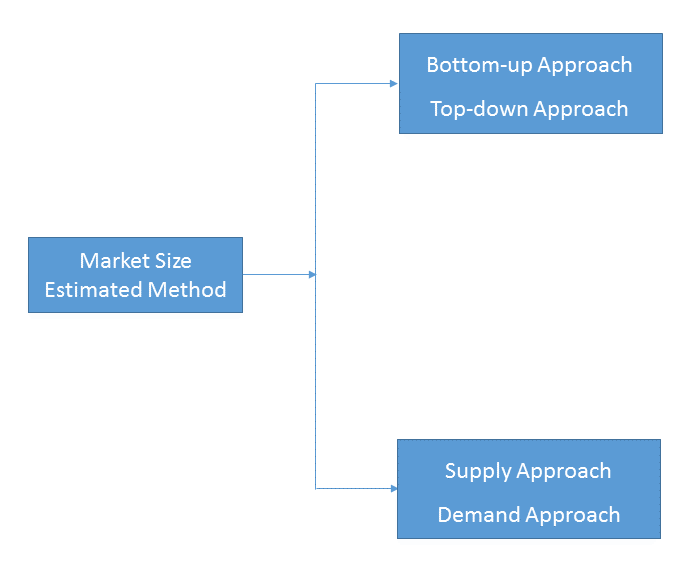
Bottom-up & top-down approach, supply & demand approach are the most important method which is used by HDIN Research to estimate the market size.
1)Top-down & Bottom-up Approach
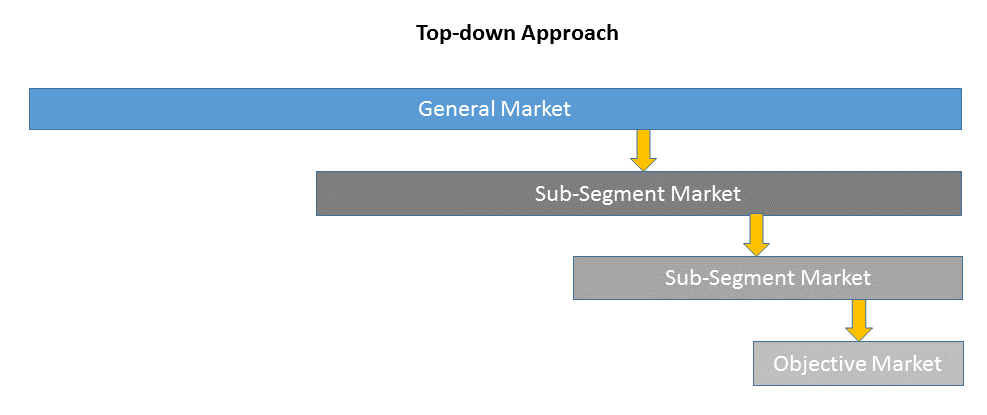
Top-down approach uses a general market size figure and determines the percentage that the objective market represents.
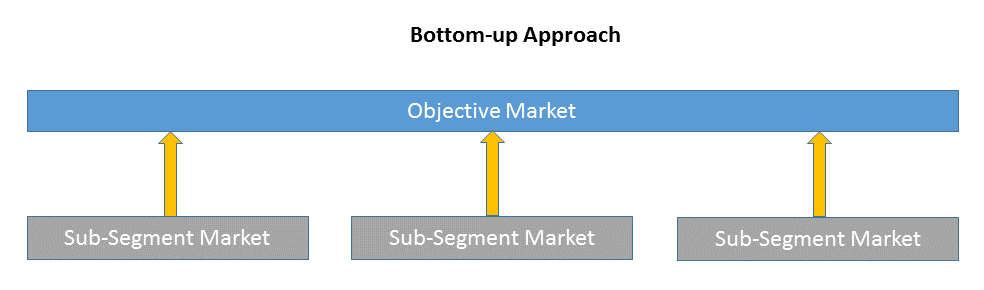
Bottom-up approach size the objective market by collecting the sub-segment information.
2)Supply & Demand Approach
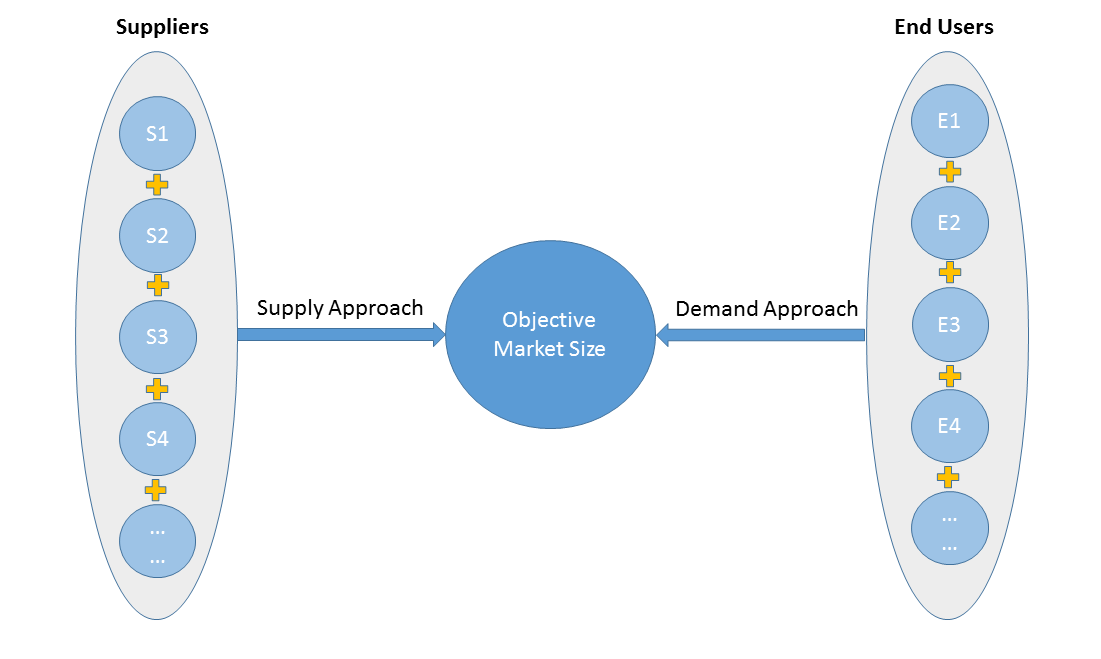
Supply approach is based on assessments of the size of each competitor supplying the objective market.
Demand approach combine end-user data within a market to estimate the objective market size. It is sometimes referred to as bottom-up approach.
- Forecasting Methodology
- Numerous factors impacting the market trend are considered for forecast model:
- New technology and application in the future;
- New project planned/under contraction;
- Global and regional underlying economic growth;
- Threatens of substitute products;
- Industry expert opinion;
- Policy and Society implication.
- Analysis Tools
1)PEST Analysis
PEST Analysis is a simple and widely used tool that helps our client analyze the Political, Economic, Socio-Cultural, and Technological changes in their business environment.
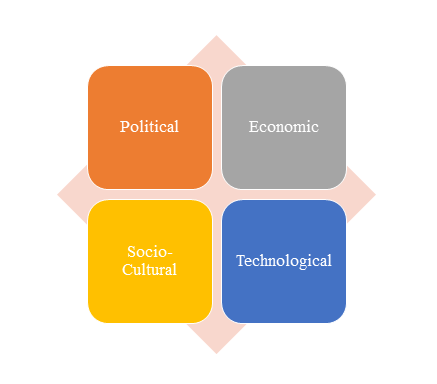
- Benefits of a PEST analysis:
- It helps you to spot business opportunities, and it gives you advanced warning of significant threats.
- It reveals the direction of change within your business environment. This helps you shape what you’re doing, so that you work with change, rather than against it.
- It helps you avoid starting projects that are likely to fail, for reasons beyond your control.
- It can help you break free of unconscious assumptions when you enter a new country, region, or market; because it helps you develop an objective view of this new environment.
2)Porter’s Five Force Model Analysis
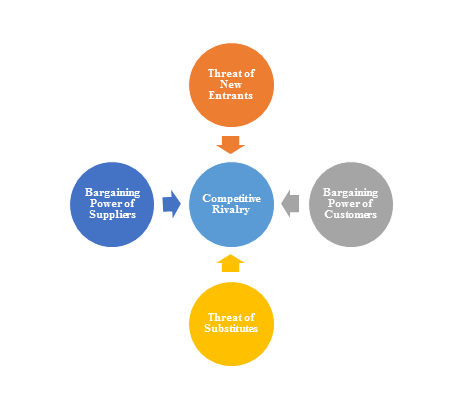
The Porter’s Five Force Model is a tool that can be used to analyze the opportunities and overall competitive advantage. The five forces that can assist in determining the competitive intensity and potential attractiveness within a specific area.
- Threat of New Entrants: Profitable industries that yield high returns will attract new firms.
- Threat of Substitutes: A substitute product uses a different technology to try to solve the same economic need.
- Bargaining Power of Customers: the ability of customers to put the firm under pressure, which also affects the customer's sensitivity to price changes.
- Bargaining Power of Suppliers: Suppliers of raw materials, components, labor, and services (such as expertise) to the firm can be a source of power over the firm when there are few substitutes.
- Competitive Rivalry: For most industries the intensity of competitive rivalry is the major determinant of the competitiveness of the industry.
3)Value Chain Analysis
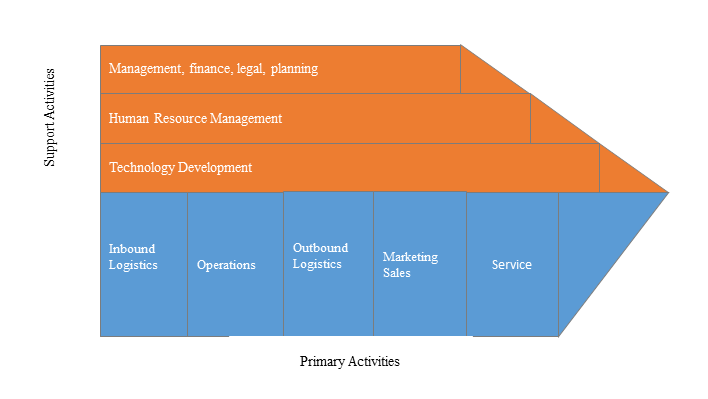
Value chain analysis is a tool to identify activities, within and around the firm and relating these activities to an assessment of competitive strength. Value chain can be analyzed by primary activities and supportive activities. Primary activities include: inbound logistics, operations, outbound logistics, marketing & sales, service. Support activities include: technology development, human resource management, management, finance, legal, planning.
4)SWOT Analysis
SWOT analysis is a tool used to evaluate a company's competitive position by identifying its strengths, weaknesses, opportunities and threats. The strengths and weakness is the inner factor; the opportunities and threats are the external factor. By analyzing the inner and external factors, the analysis can provide the detail information of the position of a player and the characteristics of the industry.
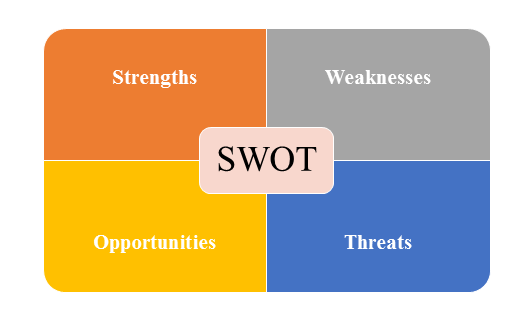
- Strengths describe what the player excels at and separates it from the competition
- Weaknesses stop the player from performing at its optimum level.
- Opportunities refer to favorable external factors that the player can use to give it a competitive advantage.
- Threats refer to factors that have the potential to harm the player.
- Data Sources
| Primary Sources | Secondary Sources |
|---|---|
| Face to face/Phone Interviews with market participants, such as: Manufactures; Distributors; End-users; Experts. Online Survey |
Government/International Organization Data: Annual Report/Presentation/Fact Book Internet Source Information Industry Association Data Free/Purchased Database Market Research Report Book/Journal/News |