Global Water Treatment Inverter Market Strategic Outlook 2026-2031 Industrial Automation And Fluid Management Infrastructure Integration Analysis
- Single User License (1 Users) $ 3,500
- Team License (2~5 Users) $ 4,500
- Corporate License (>5 Users) $ 5,500
The global water treatment inverter market in 2026 represents a critical intersection between environmental stewardship and industrial automation. As a specialized subset of the Variable Frequency Drive (VFD) industry, water treatment inverters are engineered to handle the specific torque and load characteristics of pumps, blowers, and mixers utilized in water supply and purification processes. As of 2026, the market is valued between 0.8 billion USD and 1.7 billion USD, reflecting a structural shift toward energy-intensive water management strategies necessitated by climate volatility and urban expansion. The sector is projected to maintain a compound annual growth rate (CAGR) ranging from 2.8 percent to 4.6 percent through 2031.
The strategic landscape of late 2026 is defined by the "Total Fluid Management" paradigm, where the inverter is no longer viewed as a standalone electrical component but as the intelligent core of an integrated hydraulic system. This is evidenced by significant capital movements in the fourth quarter of 2026. On November 12, 2026, the Sciens Water Opportunities Fund II announced the acquisition of Roberts Filter Group (RFG). This move by a major US water infrastructure investor to acquire a provider of engineered filtration and pretreatment solutions highlights the market’s push toward unified, automated water systems. Furthermore, the convergence of digital infrastructure and water management was solidified on September 24, 2026, when Vertiv Holdings Co announced its agreement to acquire King Environmental Services Ltd. (KES). By integrating KES’s fluid management and commissioning expertise for high-density, liquid-cooled data centers, Vertiv is positioning itself at the forefront of the specialized cooling water segment, where high-performance inverters are essential for precise thermal regulation.
Technologically, the 2026 market is characterized by the adoption of ultra-low harmonic (ULH) drives and integrated IoT diagnostics. As wastewater treatment plants and municipal water supply systems face rising energy costs, the demand for inverters that can provide up to 30 percent energy savings through optimized flow control is at an all-time high. The integration of artificial intelligence into inverter firmware allows for predictive maintenance, enabling operators to identify pump cavitation or motor wear before catastrophic failure occurs, thereby securing the resilience of critical public infrastructure.
Regional Market Analysis
The geographical performance of the water treatment inverter market is dictated by the divergence between aging infrastructure replacement in developed nations and the massive new-build requirements in emerging economies.
● North America holds a dominant strategic position, estimated with a market share between 34 percent and 38 percent. The region’s growth is catalyzed by federal funding for water infrastructure modernization and the rapid expansion of water-cooled data centers in the United States. The Sciens Water acquisition of Roberts Filter Group underscores a broader regional trend of institutional investment into the US water value chain, aiming to consolidate fragmented filtration and automation technologies into more efficient, resilient platforms.
● Asia Pacific is the largest regional market by volume, with an estimated share of 31 percent to 35 percent. This dominance is driven by massive industrialization in India and Southeast Asia, alongside the continued technological leadership of Taiwan(China) and mainland China. In Taiwan(China), the demand for high-purity water systems for semiconductor fabrication requires inverters with exceptional precision and reliability. Regional growth is further bolstered by China’s "Sponge City" initiatives and the expansion of rural water supply networks, where cost-effective and durable inverters from players like Inovance and INVT are gaining significant traction.
● Europe maintains a sophisticated market presence with a share ranging from 20 percent to 24 percent. The European landscape is defined by the world’s most stringent energy efficiency and environmental regulations. The Vertiv acquisition of King Environmental Services (KES) highlights the region’s focus on the intersection of data center cooling and fluid management. European utilities are increasingly adopting decentralized water treatment models, driving the demand for modular inverters with robust communication capabilities for remote operation.
● South America and the Middle East and Africa (MEA) represent emerging growth corridors, together accounting for 9 percent to 13 percent of the market. In the MEA region, particularly in the GCC countries, the focus is on massive desalination projects where high-power inverters are critical for managing the high-pressure pumping requirements. South America’s growth is primarily focused in Brazil and Chile, where mining and industrial water treatment projects are driving a niche demand for ruggedized, high-protection-class (IP66/67) inverters.
Application and Segmentation Analysis
The application of inverters in water treatment is segmented by the hydraulic requirements of the system and the complexity of the treatment process.
● Water Supply Systems represent the primary volume segment. In 2026, the priority in municipal water supply is constant pressure control. Inverters are utilized to eliminate water hammer and reduce pipe bursts by providing soft-start and soft-stop capabilities. The trend in 2026 is toward "Multi-Pump" control logic, where a single master inverter coordinates a bank of pumps to ensure optimal efficiency across varying demand cycles.
● Wastewater Treatment Plants (WWTP) constitute the most technically challenging segment. Here, inverters are essential for controlling the aeration blowers, which can account for up to 50 percent of a plant’s total energy consumption. By accurately matching the oxygen supply to the biological demand through inverter-controlled blowers, operators can achieve significant operational cost reductions. The 2026 market sees a surge in demand for inverters with specialized firmware for solids handling and anti-clogging routines.
● Cooling Water Systems are the fastest-growing application segment, driven by the cooling requirements of the global AI and data center boom. The Vertiv-KES deal illustrates the high value placed on fluid management in these environments. Inverters in cooling systems must provide millisecond-accurate response to temperature fluctuations to prevent hardware throttling, requiring high-bandwidth control loops and seamless integration with Building Management Systems (BMS).
Value Chain Analysis
The water treatment inverter value chain is undergoing a transition from a hardware-centric model to a digitally integrated "Hydraulic-as-a-Service" ecosystem.
Raw Materials and Power Electronics: The foundation lies in IGBTs (Insulated-Gate Bipolar Transistors), capacitors, and high-purity copper. In 2026, the "Value Pool" is shifting toward Silicon Carbide (SiC) and Gallium Nitride (GaN) components, which allow for smaller, more efficient inverters with better thermal performance.
OEM Inverter Manufacturing: This stage involve the integration of hardware and control software. Major players like ABB, Siemens, and Schneider have optimized their production lines for modularity, allowing for rapid customization of inverters with specific water-industry features such as "Pipe Fill" or "Dry Run" protection.
System Engineering and M&A Activity: This is a critical "Information Gain" stage. Acquisitions like Sciens Water’s purchase of Roberts Filter Group allow investors to capture the engineering value that sits between the component and the final installation. Engineering firms are increasingly specifying integrated inverter-motor-pump packages to guarantee system efficiency.
Distribution and Commissioning: The final link involves the localized setup and optimization of the inverter. Vertiv’s acquisition of KES emphasizes the importance of commissioning and load-testing services, particularly in critical infrastructure where downtime is not an option.
Key Market Player Deep Profiles
● ABB: As a global leader in power and automation, ABB’s strategy in 2026 is centered on the "ACQ580" dedicated water drive. Their technical core competency lies in ultra-low harmonic technology and the integration of SynRM (Synchronous Reluctance) motor control, which together provide world-class energy efficiency. ABB’s 2026 strategic layout involves the expansion of their digital "Ability" platform, offering cloud-based condition monitoring for water utilities. Their strategic dynamic is focused on "Sustainable Water Cycles," helping municipal clients reduce their carbon footprint through intelligent pump control and asset management. They maintain a dominant position in the North American and European premium segments.
● SIEMENS: Siemens utilizes its "Integrated Drive Systems" (IDS) approach to provide a seamless connection between the Sinamics inverter family and the TIA (Totally Integrated Automation) portal. In 2026, Siemens is focusing on "Digital Twin" technology for water treatment, allowing operators to simulate hydraulic behavior before commissioning. Their core competency is in the high-level integration of inverters with industrial PLC and SCADA systems. Their strategic dynamic involves the expansion of their presence in the Asian semiconductor water-treatment market, providing the high-precision control required for ultra-pure water production.
● Schneider Electric: Through its "EcoStruxure" architecture, Schneider Electric positions the Altivar Process inverter as a data-generating asset rather than a simple drive. Their 2026 strategy focuses on "Industrial Software Synergy," leveraging their acquisition of AVEVA to provide end-to-end visibility of water treatment operations. Schneider’s technical layout emphasizes embedded intelligence, where the inverter can perform its own energy auditing and process optimization. Their strategic dynamic is focused on the "Smart Water" movement, targeting North American and Middle Eastern markets with integrated energy and water management solutions.
● Danfoss: Danfoss is a pure-play specialist in power electronics, with its VLT AQUA Drive being an industry benchmark for water applications. Their 2026 strategic layout is focused on "Hydraulic Optimization," providing specialized features such as "Automatic Energy Optimization" (AEO) and "Deragging" for wastewater pumps. Danfoss’s core competency lies in their independent, platform-agnostic approach, allowing their inverters to work seamlessly with any motor brand. Their strategic dynamic involves a strong focus on the European and North American aftermarket, providing high-efficiency retrofit solutions for aging pumping stations.
● Rockwell Automation: Operating under the Allen-Bradley brand, Rockwell is a leader in the North American industrial market. Their 2026 strategy centers on "The Connected Enterprise," where the PowerFlex series of inverters is integrated into a unified Ethernet/IP network. Rockwell’s technical layout emphasizes safety and simplicity, with "Premier Integration" features that reduce the time required for inverter commissioning. Their strategic dynamic involves targeting the US municipal water market with robust, easy-to-maintain solutions that minimize the need for specialized on-site electrical expertise.
● YASKAWA: Known for its exceptional reliability and motor-control expertise, Yaskawa’s 2026 strategy involves the promotion of its U1000 Matrix Drive for the water industry. The Matrix technology allows for regenerative braking and low harmonics without external components, making it ideal for high-power pumping stations. Yaskawa’s core competency lies in their "Mechatronics" philosophy, ensuring that the inverter and motor act as a single, perfectly synchronized unit. Their strategic dynamic is focused on the Japanese and Asian markets, where they are a preferred supplier for large-scale infrastructure projects.
● MITSUBISHI ELECTRIC: Mitsubishi Electric leverages its strengths in factory automation to provide highly integrated water treatment solutions. Their 2026 technical roadmap focuses on the "FR-A800-E" series with integrated Ethernet communication. Their core competency is in the durability and longevity of their power electronics, designed for continuous operation in harsh industrial environments. Their strategic dynamic involves expanding their influence in the Southeast Asian market, providing turnkey automation solutions for industrial water and wastewater facilities.
● Fuji Electric: Fuji Electric is a specialist in high-performance power semiconductors, which it integrates into its FRENIC-AQUA series of inverters. Their 2026 strategy centers on "Energy Conservation and Environmental Protection," providing inverters with a high degree of recyclability and low environmental impact. Fuji’s technical layout emphasizes the use of their own proprietary 7th-generation IGBT technology to achieve superior efficiency. Their strategic dynamic is focused on the Asian industrial market and the global "Green Building" segment, where their inverters are used in large-scale HVAC and cooling water systems.
● Inovance Technology: As a rising powerhouse from China, Inovance has successfully challenged established Western brands through rapid innovation and aggressive pricing. Their 2026 strategy is built on "Industrial Domain Expertise," providing specialized inverters for the diverse water-treatment needs of the Chinese market. Their technical layout emphasizes high-density power modules and robust software for pump-specific applications. Their strategic dynamic involves the rapid expansion into the European and Southeast Asian markets, positioning themselves as a high-quality, cost-effective alternative for industrial water systems.
● Delta: Based in Taiwan(China), Delta is a global leader in power management and thermal solutions. Their 2026 strategic layout for the water treatment market involves the integration of their inverters with their own line of high-efficiency motors and PLC systems. Delta’s core competency lies in their "Green Manufacturing" philosophy and their massive scale in power electronics. Their strategic dynamic involves targeting the "Data Center Cooling" market globally, leveraging their thermal expertise to provide integrated fluid management solutions that complement the trends highlighted in the Vertiv-KES acquisition.
● GE Power Conversion: Part of the GE Vernova ecosystem, GE Power Conversion specializes in high-power inverters for massive-scale water projects. Their 2026 strategy is centered on "Energy Transition Infrastructure," providing the massive drives required for desalination plants and large-scale water transfer schemes. Their technical layout emphasizes the use of Medium Voltage (MV) inverters that offer superior efficiency for high-megawatt applications. Their strategic dynamic involves a focus on the Middle East and North American infrastructure markets, where they provide the "Heavy-Duty" power electronics required for national-level water security.
● INVT: INVT is a significant player in the mid-market and industrial segments, known for its versatile and cost-effective Goodrive series. Their 2026 strategy is focused on "The Global Mid-Market," providing reliable inverters with a focus on ease of use and rapid deployment. INVT’s core competency lies in their extensive R&D into specialized control algorithms for the water and wastewater industry. Their strategic dynamic involves expanding their distribution network in the MEA and South American regions, providing the "essential" automation required for regional water modernization projects.
● Hiconics Eco-energy Technology: A subsidiary of Midea Group, Hiconics specializes in High-Voltage (HV) inverters for energy-saving applications. Their 2026 strategy focuses on the "Industrial Decarbonization" trend, providing large-scale inverters for heavy industrial water pumping and treatment. Their technical layout emphasizes the "Multi-Level" topology that ensures high power quality and motor protection. Their strategic dynamic involves leveraging Midea’s global presence to expand their HV inverter sales into the international mining and municipal sectors.
● Xinfengguang Electronics: This player is a specialist in the Chinese high-voltage inverter market, with a strong focus on power quality and reactive power compensation. Their 2026 strategic layout involves the integration of SVG (Static Var Generator) technology into their water-treatment inverters to ensure the electrical stability of large-scale pumping stations. Their core competency is in their specialized power electronics for the energy and utility sectors. They are a key supplier for the "West-to-East Water Transfer Project" and other major Chinese infrastructure schemes.
● HopeSenlan Science and Technology: One of the earliest VFD manufacturers in China, HopeSenlan provides a range of inverters designed for the harsh environments of the water and wastewater industry. Their 2026 strategy focuses on "Reliability in Extreme Conditions," providing inverters with enhanced protection against moisture and corrosive gases. Their technical layout emphasizes the "Independent Air Duct" design that prevents internal contamination. Their strategic dynamic involves focusing on the domestic Chinese wastewater market and selective export markets in Central Asia and Eastern Europe.
● EURA DRIVES: EURA DRIVES focuses on provide compact and efficient inverters for the industrial and commercial water market. Their 2026 strategic roadmap centers on "Modular Efficiency," providing inverters that can be easily integrated into standardized pump skids and filtration systems. Their technical core competency is in their streamlined software that offers a balance of advanced features and simple setup. Their strategic dynamic involves a strong focus on the European OEM market, providing the "hidden" automation for many of the continent’s leading water-treatment equipment manufacturers.
● Sanjing Electric (SAJ): SAJ is a leader in the "Digital Energy" sector, specializing in solar inverters and water-pump inverters for agricultural and residential use. Their 2026 strategic layout involves the "Solar-Water Nexus," providing hybrid inverters that can run water pumps using both solar energy and the grid. Their technical core competency is in their "Smart Cloud" monitoring system, which allows for remote management of decentralized water systems. Their strategic dynamic is focused on the agricultural and rural water markets in Asia, Africa, and South America, providing sustainable water solutions for underserved regions.
Opportunities and Challenges
The water treatment inverter market is navigating a complex period of rapid technical advancement and shifting industrial priorities.
● Opportunities: The most significant opportunity lies in the "Liquid Cooling" of the digital economy. As demonstrated by the Vertiv-KES deal, the move toward high-density AI data centers requires sophisticated fluid management where inverters play a central role. Furthermore, the global push for "Energy Efficiency" in municipal infrastructure creates a massive replacement cycle for older, fixed-speed pumps. There is also a burgeoning opportunity in the "Smart Water" segment, where inverters serve as the primary data-collection points for hydraulic AI models, enabling a shift toward "Autonomous Water Treatment."
● Challenges: The industry faces a persistent "Technical Integration" challenge. As inverters become more complex and software-dependent, the need for specialized electrical and hydraulic knowledge among plant operators increases. There is also a significant "Cybersecurity" risk; as water-treatment inverters become interconnected via cloud platforms, they become potential targets for infrastructure-level cyberattacks. Furthermore, the volatility of the "Semiconductor Supply Chain" remains a risk to margin stability for inverter manufacturers, particularly as they transition to more advanced SiC and GaN power modules.
Macroeconomic and Geopolitical Influences
The 2026 water treatment inverter market is deeply impacted by the global realignment of infrastructure and energy security. The trend toward "Regionalizing Water Sovereignty" is a key driver, as nations invest in domestic desalination and wastewater reuse to mitigate climate risks.
Geopolitically, the "Strategic Decoupling" is affecting the procurement of industrial automation. Western nations are increasingly prioritizing inverters from allied-nation manufacturers for their critical water infrastructure, benefiting companies like ABB, Siemens, and Rockwell. Conversely, Chinese firms like Inovance and INVT are consolidating their dominance in the domestic market and expanding into the "Global South" as part of broader infrastructure investment initiatives.
Macroeconomically, the high-interest-rate environment of 2025-2026 has led to a focus on "Total Cost of Ownership" (TCO). Utilities are no longer making decisions based solely on initial CAPEX but are evaluating inverters on their long-term energy savings and maintenance reduction. This shift directly supports the premium-tier manufacturers who can provide documented efficiency gains. Furthermore, the Sciens Water acquisition of Roberts Filter Group illustrates the entry of "Smart Capital" into the water sector, where investors seek to capture the synergies between mechanical filtration and electronic automation. As we move toward 2031, the water treatment inverter will be the indispensable "Digital Muscle" at the heart of the global quest for water security.
1.1 Study Scope 1
1.2 Research Methodology 2
1.2.1 Data Sources 2
1.2.2 Assumptions 4
1.3 Abbreviations and Acronyms 5
Chapter 2 Global Water Treatment Inverter Market Context and Macroeconomic Impact 6
2.1 Product Development Background 6
2.2 Global Macroeconomic Environment Analysis 7
2.2.1 Global GDP Trends and Municipal Water Infrastructure Spending 8
2.2.2 Impact of Inflation and Semiconductor Component Costs 10
2.3 Impact of Geopolitical Conflicts on the Water Treatment Inverter Market 11
2.3.1 Supply Chain Resilience for Power Electronics (IGBTs and Chips) 12
2.3.2 Impact on Regional Energy Costs and Water Utility Modernization 13
2.4 Global Water Treatment Inverter Market Volume and Market Size (2021-2026) 15
Chapter 3 Global Water Treatment Inverter Market by Type 17
3.1 Market Volume and Size Analysis by Type (2021-2026) 17
3.2 Low-Voltage Water Treatment Inverters 19
3.3 Medium-Voltage Water Treatment Inverters 20
3.4 High-Voltage Water Treatment Inverters 21
Chapter 4 Global Water Treatment Inverter Market by Application 22
4.1 Market Volume and Size Analysis by Application (2021-2026) 22
4.2 Water Supply Systems 24
4.3 Wastewater Treatment Plants 25
4.4 Cooling Water Systems 26
Chapter 5 Global Water Treatment Inverter Market by Region 28
5.1 Market Volume and Size Analysis by Region (2021-2026) 28
5.2 North America (United States, Canada, Mexico) 30
5.3 Europe (Germany, UK, France, Italy, Spain, Nordics) 33
5.4 Asia-Pacific (China, Japan, India, South Korea, Taiwan (China), SE Asia) 37
5.5 Latin America (Brazil, Argentina) 41
5.6 Middle East & Africa (UAE, Saudi Arabia, South Africa) 43
Chapter 6 Water Treatment Inverter Manufacturing Process and Patent Analysis 45
6.1 Production Flow and Power Electronics Assembly 45
6.2 Core Technologies: Energy Saving Algorithms, Harmonic Mitigation, and IP Protection 47
6.3 Global Water Treatment Inverter Patent Landscape Analysis 49
Chapter 7 Industry Chain and Value Chain Analysis 51
7.1 Value Chain Overview 51
7.2 Upstream Raw Materials and Component Suppliers (IGBTs, Capacitors, PCBs) 53
7.3 Midstream Manufacturing and System Integration 55
7.4 Downstream Distribution and EPC Contractor Channels 57
Chapter 8 Global Water Treatment Inverter Import and Export Analysis 59
8.1 Global Import Volume and Value (2021-2026) 59
8.2 Global Export Volume and Value (2021-2026) 61
Chapter 9 Competitive Landscape and Concentration Rate 63
9.1 Market Concentration Rate (CR3, CR5) 63
9.2 Competitive Ranking of Key Players (2025) 64
9.3 Strategic Alliances, Mergers, and Technological Partnerships 66
Chapter 10 Key Players Analysis 68
10.1 ABB 68
10.1.1 Company Overview and Water Utility Solutions 68
10.1.2 SWOT Analysis 69
10.1.3 ABB Water Treatment Inverter Sales, Price, Cost and Gross Profit Margin (2021-2026) 70
10.1.4 ABB Water Treatment Inverter Market Share (2021-2026) 71
10.2 SIEMENS 72
10.2.1 Company Overview 72
10.2.2 SIEMENS Water Treatment Inverter Sales, Price, Cost and Gross Profit Margin (2021-2026) 73
10.2.3 SWOT Analysis 74
10.3 Schneider 75
10.3.1 Company Overview 75
10.3.2 Schneider Water Treatment Inverter Sales, Price, Cost and Gross Profit Margin (2021-2026) 76
10.3.3 SWOT Analysis 77
10.4 Danfoss 78
10.4.1 Company Overview 78
10.4.2 Danfoss Water Treatment Inverter Sales, Price, Cost and Gross Profit Margin (2021-2026) 79
10.5 Rockwell 81
10.5.1 Company Overview 81
10.5.2 Rockwell Water Treatment Inverter Sales, Price, Cost and Gross Profit Margin (2021-2026) 82
10.6 YASKAWA 84
10.6.1 Company Overview 84
10.6.2 YASKAWA Water Treatment Inverter Sales, Price, Cost and Gross Profit Margin (2021-2026) 85
10.7 MITSUBISHI ELECTRIC 87
10.7.1 Company Overview 87
10.7.2 MITSUBISHI ELECTRIC Water Treatment Inverter Sales, Price, Cost and Gross Profit Margin (2021-2026) 88
10.8 Fuji Electric 90
10.8.1 Company Overview 90
10.8.2 Fuji Electric Water Treatment Inverter Sales, Price, Cost and Gross Profit Margin (2021-2026) 91
10.9 Inovance Technology 93
10.9.1 Company Overview 93
10.9.2 Inovance Technology Water Treatment Inverter Sales, Price, Cost and Gross Profit Margin (2021-2026) 94
10.10 Delta 96
10.10.1 Company Overview 96
10.10.2 Delta Water Treatment Inverter Sales, Price, Cost and Gross Profit Margin (2021-2026) 97
10.11 GE Power Conversion 99
10.11.1 Company Overview 99
10.11.2 GE Power Conversion Water Treatment Inverter Sales, Price, Cost and Gross Profit Margin (2021-2026) 100
10.12 INVT 102
10.12.1 Company Overview 102
10.12.2 INVT Water Treatment Inverter Sales, Price, Cost and Gross Profit Margin (2021-2026) 103
10.13 Hiconics Eco-energy Technology 105
10.13.1 Company Overview 105
10.13.2 Hiconics Water Treatment Inverter Sales, Price, Cost and Gross Profit Margin (2021-2026) 106
10.14 Xinfengguang Electronics 108
10.14.1 Company Overview 108
10.14.2 Xinfengguang Water Treatment Inverter Sales, Price, Cost and Gross Profit Margin (2021-2026) 109
10.15 HopeSenlan Science and Technology 111
10.15.1 Company Overview 111
10.15.2 HopeSenlan Water Treatment Inverter Sales, Price, Cost and Gross Profit Margin (2021-2026) 112
10.16 EURA DRIVES 114
10.16.1 Company Overview 114
10.16.2 EURA DRIVES Water Treatment Inverter Sales, Price, Cost and Gross Profit Margin (2021-2026) 115
10.17 Sanjing Electric 117
10.17.1 Company Overview 117
10.17.2 Sanjing Electric Water Treatment Inverter Sales, Price, Cost and Gross Profit Margin (2021-2026) 118
Chapter 11 Global Water Treatment Inverter Market Forecast (2027-2031) 120
11.1 Market Volume and Size Forecast 120
11.2 Forecast by Type (2027-2031) 121
11.3 Forecast by Application (2027-2031) 122
11.4 Forecast by Key Regions (2027-2031) 123
Chapter 12 Market Dynamics 125
12.1 Industry Drivers (Energy Conservation Mandates, Smart Water Grids) 125
12.2 Industry Restraints (High Initial Capital Cost, Harmonic Interference) 126
12.3 Industry Opportunities and Trends (IIoT Integration and Predictive Maintenance) 127
Chapter 13 Research Findings and Conclusion 128
Table 2 Global Water Treatment Inverter Market Volume by Type (2021-2026) 17
Table 3 Global Water Treatment Inverter Market Size by Type (2021-2026) 18
Table 4 Global Water Treatment Inverter Market Volume by Application (2021-2026) 22
Table 5 Global Water Treatment Inverter Market Size by Application (2021-2026) 23
Table 6 North America Water Treatment Inverter Market Volume and Size by Key Regions (2021-2026) 32
Table 7 Europe Water Treatment Inverter Market Volume and Size by Key Regions (2021-2026) 36
Table 8 Asia-Pacific Water Treatment Inverter Market Volume and Size by Key Regions (2021-2026) 40
Table 9 Global Water Treatment Inverter Key Patents List 50
Table 10 Global Water Treatment Inverter Import and Export Data (2021-2026) 60
Table 11 Competitive Ranking of Key Players by Revenue (2025) 65
Table 12 ABB Water Treatment Inverter Sales, Price, Cost and Gross Profit Margin (2021-2026) 70
Table 13 SIEMENS Water Treatment Inverter Sales, Price, Cost and Gross Profit Margin (2021-2026) 73
Table 14 Schneider Water Treatment Inverter Sales, Price, Cost and Gross Profit Margin (2021-2026) 76
Table 15 Danfoss Water Treatment Inverter Sales, Price, Cost and Gross Profit Margin (2021-2026) 79
Table 16 Rockwell Water Treatment Inverter Sales, Price, Cost and Gross Profit Margin (2021-2026) 82
Table 17 YASKAWA Water Treatment Inverter Sales, Price, Cost and Gross Profit Margin (2021-2026) 85
Table 18 MITSUBISHI ELECTRIC Water Treatment Inverter Sales, Price, Cost and Gross Profit Margin (2021-2026) 88
Table 19 Fuji Electric Water Treatment Inverter Sales, Price, Cost and Gross Profit Margin (2021-2026) 91
Table 20 Inovance Technology Water Treatment Inverter Sales, Price, Cost and Gross Profit Margin (2021-2026) 94
Table 21 Delta Water Treatment Inverter Sales, Price, Cost and Gross Profit Margin (2021-2026) 97
Table 22 GE Power Conversion Water Treatment Inverter Sales, Price, Cost and Gross Profit Margin (2021-2026) 100
Table 23 INVT Water Treatment Inverter Sales, Price, Cost and Gross Profit Margin (2021-2026) 103
Table 24 Hiconics Water Treatment Inverter Sales, Price, Cost and Gross Profit Margin (2021-2026) 106
Table 25 Xinfengguang Water Treatment Inverter Sales, Price, Cost and Gross Profit Margin (2021-2026) 109
Table 26 HopeSenlan Water Treatment Inverter Sales, Price, Cost and Gross Profit Margin (2021-2026) 112
Table 27 EURA DRIVES Water Treatment Inverter Sales, Price, Cost and Gross Profit Margin (2021-2026) 115
Table 28 Sanjing Electric Water Treatment Inverter Sales, Price, Cost and Gross Profit Margin (2021-2026) 118
Table 29 Global Market Volume Forecast by Type (2027-2031) 121
Table 30 Global Market Size Forecast by Application (2027-2031) 122
Figure 1 Global Water Treatment Inverter Market Size Growth Rate (2021-2026) 16
Figure 2 Impact of Geopolitical Conflicts on Semiconductor Supply Chain 12
Figure 3 Global Market Size Share by Type (2021-2026) 18
Figure 4 Global Market Size Share by Application (2021-2026) 23
Figure 5 Global Market Size Share by Region (2021-2026) 29
Figure 6 Water Treatment Inverter Manufacturing Process Flowchart 46
Figure 7 Water Treatment Inverter Industry Chain Mapping 52
Figure 8 Global Market Concentration Rate (CR5) in 2025 63
Figure 9 ABB Water Treatment Inverter Market Share (2021-2026) 71
Figure 10 SIEMENS Water Treatment Inverter Market Share (2021-2026) 74
Figure 11 Schneider Water Treatment Inverter Market Share (2021-2026) 77
Figure 12 Danfoss Water Treatment Inverter Market Share (2021-2026) 80
Figure 13 Rockwell Water Treatment Inverter Market Share (2021-2026) 83
Figure 14 YASKAWA Water Treatment Inverter Market Share (2021-2026) 86
Figure 15 MITSUBISHI ELECTRIC Water Treatment Inverter Market Share (2021-2026) 89
Figure 16 Fuji Electric Water Treatment Inverter Market Share (2021-2026) 92
Figure 17 Inovance Technology Water Treatment Inverter Market Share (2021-2026) 95
Figure 18 Delta Water Treatment Inverter Market Share (2021-2026) 98
Figure 19 GE Power Conversion Water Treatment Inverter Market Share (2021-2026) 101
Figure 20 INVT Water Treatment Inverter Market Share (2021-2026) 104
Figure 21 Hiconics Water Treatment Inverter Market Share (2021-2026) 107
Figure 22 Xinfengguang Water Treatment Inverter Market Share (2021-2026) 110
Figure 23 HopeSenlan Water Treatment Inverter Market Share (2021-2026) 113
Figure 24 EURA DRIVES Water Treatment Inverter Market Share (2021-2026) 116
Figure 25 Sanjing Electric Water Treatment Inverter Market Share (2021-2026) 119
Figure 26 Global Water Treatment Inverter Market Size Forecast (2027-2031) 120
Research Methodology
- Market Estimated Methodology:
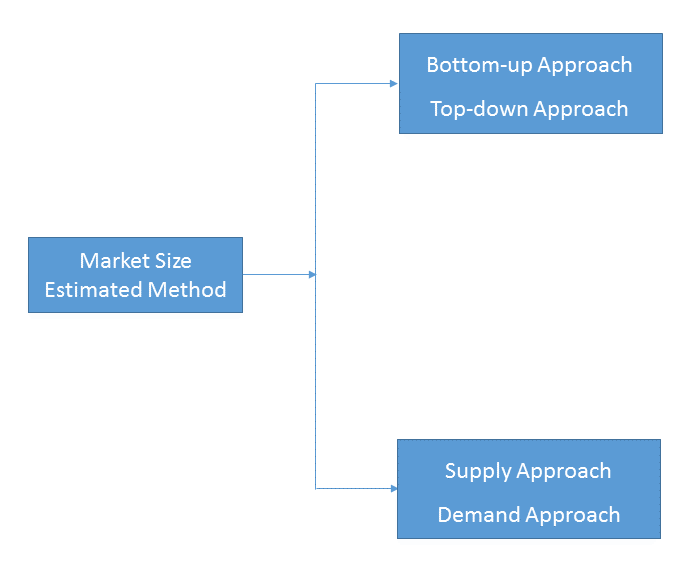
Bottom-up & top-down approach, supply & demand approach are the most important method which is used by HDIN Research to estimate the market size.
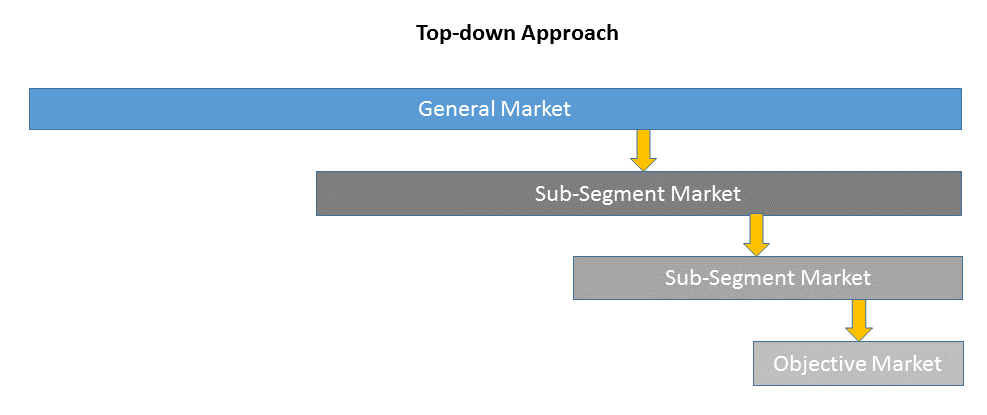
1)Top-down & Bottom-up Approach
Top-down approach uses a general market size figure and determines the percentage that the objective market represents.
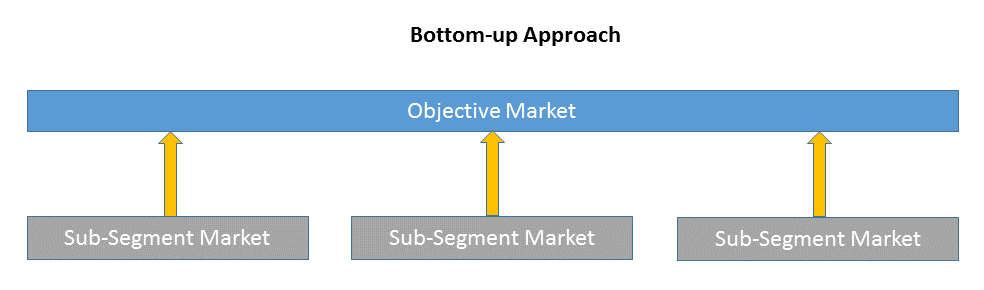
Bottom-up approach size the objective market by collecting the sub-segment information.
2)Supply & Demand Approach
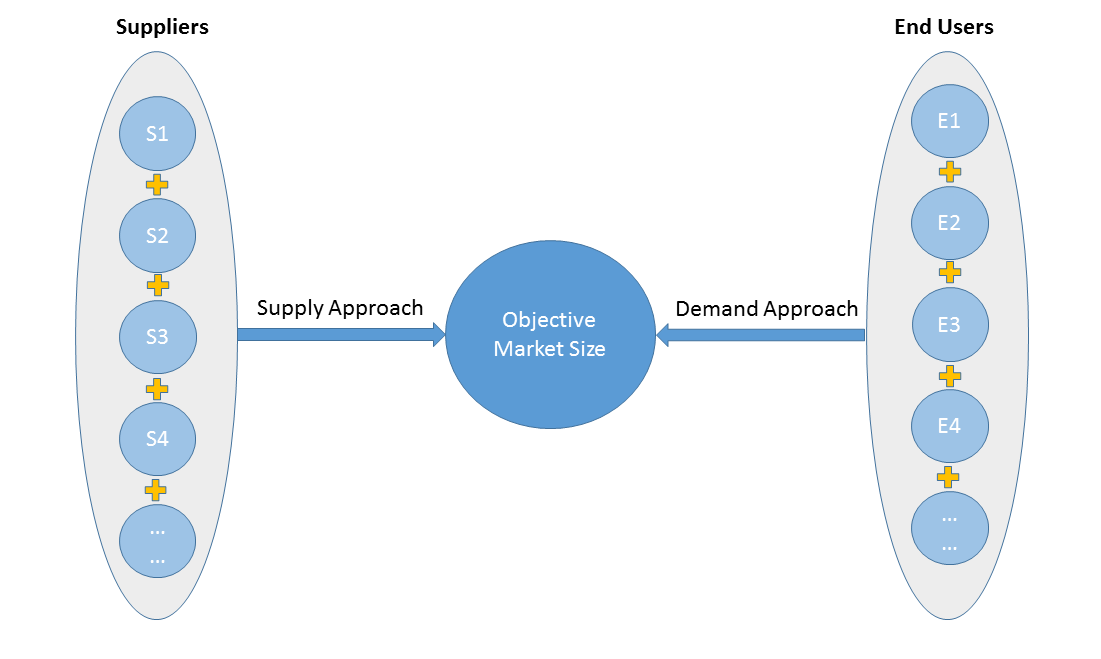
Supply approach is based on assessments of the size of each competitor supplying the objective market.
Demand approach combine end-user data within a market to estimate the objective market size. It is sometimes referred to as bottom-up approach.
- Forecasting Methodology
- Numerous factors impacting the market trend are considered for forecast model:
- New technology and application in the future;
- New project planned/under contraction;
- Global and regional underlying economic growth;
- Threatens of substitute products;
- Industry expert opinion;
- Policy and Society implication.
- Analysis Tools
1)PEST Analysis
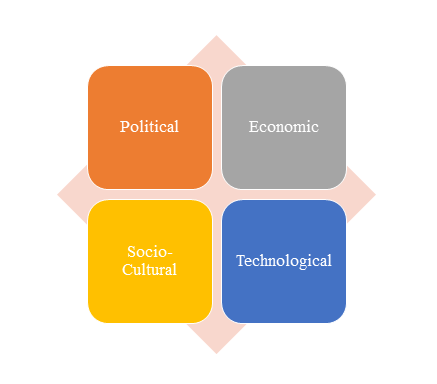
PEST Analysis is a simple and widely used tool that helps our client analyze the Political, Economic, Socio-Cultural, and Technological changes in their business environment.
- Benefits of a PEST analysis:
- It helps you to spot business opportunities, and it gives you advanced warning of significant threats.
- It reveals the direction of change within your business environment. This helps you shape what you’re doing, so that you work with change, rather than against it.
- It helps you avoid starting projects that are likely to fail, for reasons beyond your control.
- It can help you break free of unconscious assumptions when you enter a new country, region, or market; because it helps you develop an objective view of this new environment.
2)Porter’s Five Force Model Analysis
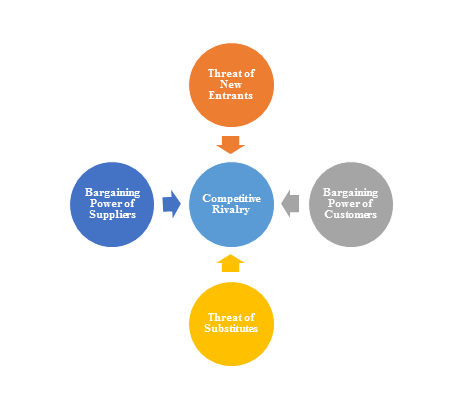
The Porter’s Five Force Model is a tool that can be used to analyze the opportunities and overall competitive advantage. The five forces that can assist in determining the competitive intensity and potential attractiveness within a specific area.
- Threat of New Entrants: Profitable industries that yield high returns will attract new firms.
- Threat of Substitutes: A substitute product uses a different technology to try to solve the same economic need.
- Bargaining Power of Customers: the ability of customers to put the firm under pressure, which also affects the customer's sensitivity to price changes.
- Bargaining Power of Suppliers: Suppliers of raw materials, components, labor, and services (such as expertise) to the firm can be a source of power over the firm when there are few substitutes.
- Competitive Rivalry: For most industries the intensity of competitive rivalry is the major determinant of the competitiveness of the industry.
3)Value Chain Analysis
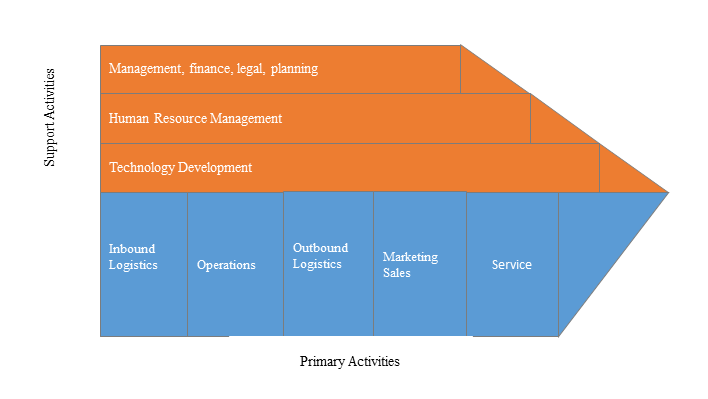
Value chain analysis is a tool to identify activities, within and around the firm and relating these activities to an assessment of competitive strength. Value chain can be analyzed by primary activities and supportive activities. Primary activities include: inbound logistics, operations, outbound logistics, marketing & sales, service. Support activities include: technology development, human resource management, management, finance, legal, planning.
4)SWOT Analysis
SWOT analysis is a tool used to evaluate a company's competitive position by identifying its strengths, weaknesses, opportunities and threats. The strengths and weakness is the inner factor; the opportunities and threats are the external factor. By analyzing the inner and external factors, the analysis can provide the detail information of the position of a player and the characteristics of the industry.
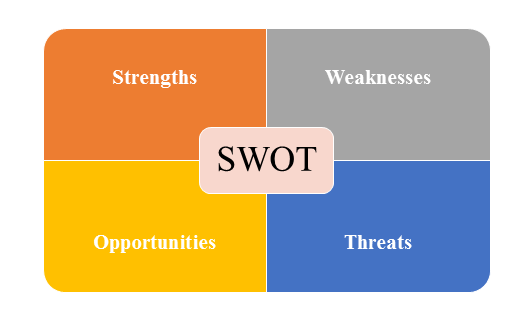
- Strengths describe what the player excels at and separates it from the competition
- Weaknesses stop the player from performing at its optimum level.
- Opportunities refer to favorable external factors that the player can use to give it a competitive advantage.
- Threats refer to factors that have the potential to harm the player.
- Data Sources
| Primary Sources | Secondary Sources |
|---|---|
| Face to face/Phone Interviews with market participants, such as: Manufactures; Distributors; End-users; Experts. Online Survey |
Government/International Organization Data: Annual Report/Presentation/Fact Book Internet Source Information Industry Association Data Free/Purchased Database Market Research Report Book/Journal/News |