Global Bottle Debagger Market Strategic Outlook 2026-2031 Automated Container Handling And Sterile Material Management Analysis
- Single User License (1 Users) $ 3,500
- Team License (2~5 Users) $ 4,500
- Corporate License (>5 Users) $ 5,500
The global bottle debagger market in 2026 represents a specialized but indispensable segment of the automated packaging and material handling industry. Bottle debaggers are critical systems designed to automate the removal of empty plastic or glass containers from large transportation bags or bulk pallets, facilitating a seamless transition into high-speed filling lines. As of 2026, the market is valued between 130 million USD and 220 million USD, reflecting an industry that is rapidly moving toward high-precision, low-touch operations. The sector is projected to expand at a compound annual growth rate (CAGR) of 2.3 percent to 4.1 percent through 2031. This growth is fundamentally driven by the convergence of labor scarcity in the manufacturing sector and the rising demand for aseptic handling in high-value beverage and pharmaceutical production.
The strategic landscape of mid-2026 is defined by geographic consolidation and technical refinement toward sterile environments. A significant structural shift occurred in April 2026, when ProMach, a global leader in packaging line solutions, acquired the UK-based food and beverage filling and packaging service provider, Evolution BPS. This acquisition marks a strategic expansion of ProMach’s footprint in the European container handling and filling market, emphasizing the industry-wide trend toward providing "integrated line" solutions rather than standalone equipment. By incorporating Evolution BPS, ProMach enhances its ability to deliver turnkey debagging and unscrambling systems that are deeply integrated with downstream European filling technology.
Simultaneously, technical innovation has reached a new plateau in the sterile handling segment. Also in April 2026, the German aseptic pharmaceutical giant Groninger unveiled a new patent (DE102024131115A1 / PCT/EP2025/080488) for an automated transfer and debagging system for sterile containers. This innovation addresses a critical "Information Gain" point in the industry: the need for high-efficiency, automated debagging that maintains the integrity of pre-sterilized containers without human intervention. As the beverage and pharmaceutical sectors increasingly overlap in their hygiene requirements, these high-spec debagging systems are becoming the primary gatekeepers of production line purity.
Regional Market Analysis
The geographical distribution of the bottle debagger market is dictated by the density of high-volume bottling facilities and the maturity of regional automation ecosystems.
● North America remains a dominant revenue generator, estimated to hold a market share between 36 percent and 40 percent. The region is home to several key innovators such as Dyco and Liquid Packaging Solutions. The North American market is currently characterized by a "Replacement and Upgrade" cycle, where older, labor-intensive debagging setups are being replaced by high-speed robotic systems. The ProMach acquisition strategy highlights the region's role as a base for global consolidators looking to export North American automation expertise to the European and Asian markets.
● Europe maintains a sophisticated market share ranging from 28 percent to 32 percent. The European landscape, led by technical giants in Germany, Spain, and Italy (such as AND&OR and Villani Giovanni), is the global benchmark for high-precision and sterile handling technology. The 2026 European market is focused on the "Pharma-Beverage" crossover, where Groninger’s latest patents in sterile debagging are setting new standards for liquid packaging hygiene. The acquisition of Evolution BPS by ProMach further underscores the strategic importance of the UK and European filling markets as high-growth hubs for container handling automation.
● Asia Pacific is identified as the fastest-growing region, with an estimated market share of 18 percent to 22 percent. Growth is concentrated in the massive beverage processing sectors of Southeast Asia and the advanced manufacturing hubs in Taiwan(China) and mainland China. In Taiwan(China), the demand for high-efficiency debagging is driven by the rapid expansion of the health-drink and plastic recycling sectors. Regional manufacturers like Sanli Machinery are increasingly competing with Western brands by offering modular, cost-effective debagging solutions that cater to the diverse container shapes prevalent in the Asian beverage market.
● South America and the Middle East and Africa (MEA) represent emerging growth corridors, together accounting for 10 percent to 14 percent of the market. In the MEA region, particularly in the GCC countries, the focus is on large-scale water and dairy bottling plants that require high-durability debagging systems capable of operating in harsh environments. South America’s growth is primarily focused in Brazil, where the expansion of the plastic recycling and sustainable packaging industries is driving a niche demand for debaggers capable of handling post-consumer resin (PCR) containers.
Application and Segmentation Analysis
The application of bottle debaggers is segmented by the throughput requirements and the specific material properties of the containers being handled.
● Beverage Processing represents the largest application segment. In 2026, the priority in beverage bottling is "Total Line Efficiency." Debaggers are being integrated with advanced unscramblers and air-conveyors to ensure that the filling machines operate at 100 percent capacity. The ProMach-Evolution BPS deal specifically targets this segment, aiming to provide a seamless data and material flow from the initial debagging stage to the final labeling. The trend in 2026 is toward "Tool-Less Changeover," where a single debagger can handle multiple bottle sizes and shapes with minimal downtime.
● Plastic Recycling is the most aggressive growth segment. As global regulations mandate higher percentages of recycled content in packaging, the demand for debaggers that can handle bulk-collected, recycled bottles for processing is surging. This application requires ruggedized systems capable of handling inconsistent bag weights and contaminated containers. The 2026 landscape sees a shift toward debaggers that include pre-sorting and air-cleaning capabilities as integrated features, helping to streamline the input side of the circular economy.
● Pharmaceutical and Sterile Applications (Niche Segment) constitute the highest value-per-unit. The Groninger patent reflects the intense focus on "Isolator-Integrated" debagging, where the system must operate within a controlled atmosphere. This segment is characterized by low-volume but high-complexity requirements, where the value of the debagger is measured by its ability to prevent container breakage and maintain absolute sterility.
Value Chain Analysis
The bottle debagger value chain is transforming from a mechanical fabrication model into a digitally integrated component of the "Smart Factory" ecosystem.
Raw Materials and Structural Components: The foundation lies in high-grade stainless steel and specialized low-friction polymers for conveyor tracks. The "Value Pool" in 2026 is concentrated in the durability of the cutting and suction mechanisms that handle the plastic bags, where manufacturers are utilizing hardened alloys to reduce wear and maintenance cycles.
Automation and Robotic Integration: This is the primary "Information Gain" stage. Modern debaggers are increasingly utilizing 6-axis robotic arms or high-speed SCARA robots for bag manipulation. Manufacturers who can provide integrated control software that synchronizes the debagger with the line-speed of the filler capture the highest market value. The integration of AI-driven vision systems to detect bag orientation and bottle jams is a key 2026 trend.
System Assembly and Customization: This stage involve the engineering of the debagger to fit the specific footprint of the customer's facility. Major players like Dyco and AND&OR have optimized their designs for modularity, allowing for rapid on-site assembly and scaling.
Aftermarket Service and Support: Given the high-speed nature of bottling lines, downtime is extremely expensive. Acquisitions like ProMach’s purchase of Evolution BPS are aimed at capturing more of the "Life-Cycle" value through localized technical support and spare parts distribution, particularly in the geographically diverse European market.
Key Market Player Deep Profiles
● Dyco: As a long-standing leader in the container handling industry, Dyco specializes in the design and manufacture of high-speed debagging and palletizing systems. Their 2026 strategic layout is focused on "Robotic Versatility," where their debagging systems are being upgraded with advanced end-of-arm tooling to handle ultra-lightweight and delicate plastic containers. Dyco’s core competency lies in their deep understanding of the North American beverage and blow-molding markets, providing systems that are recognized for their structural robustness and longevity. Their strategic dynamic involves the expansion of their "Smart-Control" platform, which uses IoT sensors to monitor motor health and bag-cutting precision, reducing the risk of unplanned downtime for large-scale bottling operations.
● Liquid Packaging Solutions (LPS): LPS is a versatile manufacturer of complete packaging systems, with a strong focus on custom-engineered debagging and unscrambling solutions. Their 2026 strategy centers on "Multi-Format Flexibility," providing debaggers that can be rapidly reconfigured for various container materials, including PET, HDPE, and glass. Their technical layout emphasizes a "User-Centric" interface, simplifying the changeover process for mid-sized beverage and chemical processors. LPS’s core competency is their ability to provide integrated turnkey lines for the North American market, making them a preferred partner for growing brands that require scalable and reliable container handling infrastructure.
● Automation Ideas: This player is a specialist in the engineering of high-capacity container handling and conveying systems. Their 2026 strategic roadmap is focused on "High-Velocity Throughput," targeting the massive production facilities of global beverage conglomerates. Automation Ideas’ technical core competency lies in their "Vacuum-Sweep" debagging technology, which ensures the gentle and rapid transfer of bottles from bags to conveyors. Their strategic dynamic involves the integration of their debaggers with advanced diagnostic software, providing plant managers with real-time data on container flow and equipment efficiency. They are a primary player in the modernization of North American dairy and juice bottling lines.
● Mexx Engineering: Based in Australia, Mexx Engineering provides specialized robotic and automated solutions for the beverage and pharmaceutical sectors in the Asia Pacific region. Their 2026 strategic layout involves the promotion of "Compact Robotic Debaggers," targeting urban manufacturing facilities where floor space is at a premium. Mexx’s core competency lies in their ability to integrate ABB or Fanuc robots with custom-designed end-effectors for delicate container handling. Their strategic dynamic involves a heavy push into the Southeast Asian market, leveraging their regional proximity to provide rapid technical support and customized engineering for the growing pharmaceutical sectors in Singapore and Taiwan(China).
● AND&OR: This Spanish firm is a global leader in the automation of blow-molding and bottling lines, with a strong emphasis on "Circular Economy" solutions. Their 2026 strategy centers on the integration of debagging with downstream plastic recycling and sorting systems. AND&OR’s technical layout emphasizes the use of high-speed linear robots and advanced vision systems to manage the inconsistencies of recycled bottle bags. Their core competency is their ability to provide "End-to-End" automation for the plastic packaging lifecycle. Their strategic dynamic involves the expansion of their global presence, particularly in Europe and South America, through a focus on sustainability and energy-efficient automation.
● Technica: Based in the Middle East with a strong global presence, Technica is a specialist in high-speed conveying and container handling solutions. Their 2026 strategic roadmap is focused on "Turnkey Line Integration," providing debaggers that are optimized for the extreme temperatures and high organic loads of Middle Eastern dairy and water plants. Technica’s technical core competency lies in their robust structural designs and the use of high-quality European components. Their strategic dynamic involves the expansion of their digital "Technica Care" service, using remote monitoring to provide technical assistance to their international client base, thereby reducing the need for on-site visits and ensuring continuous line operation.
● Custom Metal Designs: This player specializes in the fabrication of custom container handling equipment, with a strong focus on the North American beverage and household product sectors. Their 2026 strategic layout involves the development of "Hybrid Debaggers" that can handle both bagged and tray-loaded containers. Custom Metal Designs’ core competency lies in their ability to provide highly customized, ruggedized machinery that meets the specific floor-plan constraints of older manufacturing facilities. Their strategic dynamic involves a focus on the "Replacement Market," providing modern, automated debagging modules that can be retrofitted into existing production lines to improve efficiency.
● Villani Giovanni: Based in Italy, Villani Giovanni brings Mediterranean engineering precision to the automated packaging market. Their 2026 strategy is centered on "Aesthetic and Technical Excellence," providing debaggers that are both high-performing and meticulously designed for ease of cleaning and maintenance. Their core competency lies in their high-precision mechanical components and their specialized solutions for the high-end beverage and pharmaceutical markets. Their strategic dynamic involves the expansion of their footprint in Northern Europe and the Middle East, positioning themselves as a premium alternative to larger, mass-market automation firms.
● Isoma: This UK-based manufacturer is a specialist in the design and manufacture of high-speed bottle conveying and handling systems for the food and beverage industry. Following the acquisition of Evolution BPS by ProMach, Isoma is operating in a more consolidated European landscape. Their 2026 strategic focus is on "Integrated Line Coordination," ensuring their debaggers communicate seamlessly with the latest European filling technology. Isoma’s technical core competency is in their "Low-Impact" handling mechanisms, which reduce the risk of bottle scuffing and damage. Their strategic dynamic involves a focus on the premium UK dairy and specialized beverage sectors, providing high-reliability, local engineering support.
● Asmech Systems: Asmech is a prominent UK provider of conveyor and automated handling systems. Their 2026 strategic roadmap is built around "Sustainability in Automation," providing debaggers with low energy consumption and modular components that are easy to repair. Asmech’s technical core competency lies in their ability to provide highly flexible, bespoke debagging solutions for a wide range of container types, including specialized plastic vials and bottles. Their strategic dynamic involves a heavy focus on the "Pharma-Cosmetic" segment, where smaller container sizes and high-purity requirements demand specialized handling expertise.
● Filmatic: Based in South Africa and serving a global client base, Filmatic is a leader in the design and manufacture of filling and packaging systems for the liquid food industry. Their 2026 strategy is centered on "Export Growth," providing robust debagging solutions for the international dairy and fruit-juice markets. Filmatic’s technical layout emphasizes the "Tough-Environment" capability, ensuring their machines can operate reliably in regions with limited technical infrastructure. Their core competency is their ability to provide complete, integrated filling lines that include debagging, rinsing, filling, and capping, making them a preferred choice for large-scale industrial projects in emerging markets.
● Sanli Machinery: This player is a rising powerhouse in the Chinese and Southeast Asian automated packaging market. Their 2026 strategic layout is focused on "Mass Market Automation," providing high-speed debaggers at a competitive price point to support the rapid modernization of the Asian beverage industry. Sanli’s technical core competency is in their rapid manufacturing scale and their use of standardized, easy-to-source components. Their strategic dynamic involves the expansion of their influence in the Asia Pacific region, particularly within Taiwan(China) and Vietnam, where they provide the "essential" automation required for new, large-scale plastic recycling and bottling facilities.
Opportunities and Challenges
The bottle debagger market is navigating a complex period of rapid technical spillover and shifting industrial priorities.
● Opportunities: The most significant opportunity lies in the "Recycling Loop Integration." As global plastic regulations tighten, the demand for debaggers that can handle post-consumer resin (PCR) bottles for high-speed recycling lines is expected to surge. Furthermore, the development of "Sterile-Grade" debagging (as seen in the Groninger patent) provides a path for manufacturers to move into the high-margin pharmaceutical and biotech sectors. There is also a burgeoning opportunity in "Software-as-a-Service" (SaaS) for debaggers, where manufacturers provide AI-driven analytics and predictive maintenance as a subscription-based value-add.
● Challenges: The primary challenge remains the "High Initial CAPEX" required for advanced robotic debagging. Mid-sized bottlers may struggle with the investment costs, particularly in the current environment of high interest rates. Furthermore, the "Inconsistency of Bulk Packaging" creates a technical hurdle for automated systems; variations in bag tension and bottle orientation can lead to frequent jams. Manufacturers must also navigate a fragmented regulatory landscape, where safety and hygiene standards for food-contact machinery vary significantly across North America, Europe, and Asia.
Macroeconomic and Geopolitical Influences
The 2026 bottle debagger market is deeply impacted by the global realignment of manufacturing and the "Regionalization of Supply." The ProMach acquisition of Evolution BPS for UK-market expansion reflects the strategic value placed on "Localized Expertise" in a world where global shipping and trade are subject to geopolitical instability.
Geopolitically, the "Trade Decoupling" is affecting the procurement of automated machinery. North American and European firms are increasingly prioritizing "Friend-Shoring" for their high-end packaging lines, favoring manufacturers from allied nations to ensure long-term service and parts availability. This trend is particularly evident in the high-spec sterile segment, where the Groninger patent signals a move toward European-controlled pharmaceutical technology.
Macroeconomically, the "Labor Crisis" in the global bottling and recycling industry is the primary driver of market liquidity. As manual debagging becomes both expensive and difficult to staff, the ROI for automated debaggers has become significantly more attractive. Furthermore, the growth of the 30 trillion CNY Chinese construction and consumer market is driving a second-order demand for advanced beverage processing infrastructure across the Asia Pacific region. As we move toward 2031, the bottle debagger will no longer be a standalone mechanical "bag-tearer" but a high-precision, AI-monitored entry point for the global liquid packaging and recycling economy.
1.1 Study Scope 1
1.2 Research Methodology 2
1.2.1 Data Sources 2
1.2.2 Assumptions 4
1.3 Abbreviations and Acronyms 5
Chapter 2 Global Bottle Debagger Market Context and Macroeconomic Impact 6
2.1 Product Development Background 6
2.2 Global Macroeconomic Environment Analysis 7
2.2.1 Global GDP Trends and Packaging Automation Investment 8
2.2.2 Impact of Inflation and Metal Component Price Volatility 9
2.3 Impact of Geopolitical Conflicts on the Bottle Debagger Market 10
2.3.1 Supply Chain Disruptions for Robotics and PLC Components 10
2.3.2 Regional Packaging Demand and Trade Barrier Shifts 11
2.4 Global Bottle Debagger Market Volume and Market Size (2021-2026) 12
Chapter 3 Global Bottle Debagger Market by Type 13
3.1 Market Volume and Size Analysis by Type (2021-2026) 13
3.2 Semi-Automatic Bottle Debaggers 14
3.3 Fully Automatic Bottle Debaggers 15
3.4 High-Speed Bulk Bottle Debaggers 16
Chapter 4 Global Bottle Debagger Market by Application 17
4.1 Market Volume and Size Analysis by Application (2021-2026) 17
4.2 Beverage Processing 18
4.3 Plastic Recycling 20
Chapter 5 Global Bottle Debagger Market by Region 21
5.1 Market Volume and Size Analysis by Region (2021-2026) 21
5.2 North America Bottle Debagger Market Analysis 22
5.2.1 North America Market Volume and Market Size (2021-2026) 22
5.2.2 North America Market by Key Regions (United States, Canada, Mexico) 23
5.3 Europe Bottle Debagger Market Analysis 25
5.3.1 Europe Market Volume and Market Size (2021-2026) 25
5.3.2 Europe Market by Key Regions (Germany, United Kingdom, France, Italy, Spain) 26
5.4 Asia-Pacific Bottle Debagger Market Analysis 28
5.4.1 Asia-Pacific Market Volume and Market Size (2021-2026) 28
5.4.2 Asia-Pacific Market by Key Regions (China, Japan, India, South Korea, Taiwan (China)) 29
5.5 Latin America Bottle Debagger Market Analysis 32
5.5.1 Latin America Market Volume and Market Size (2021-2026) 32
5.5.2 Latin America Market by Key Regions (Brazil, Argentina) 33
5.6 Middle East & Africa Bottle Debagger Market Analysis 34
5.6.1 Middle East & Africa Market Volume and Market Size (2021-2026) 34
5.6.2 Middle East & Africa Market by Key Regions (UAE, Saudi Arabia, South Africa) 35
Chapter 6 Bottle Debagger Manufacturing Process and Patent Analysis 36
6.1 Production Flow and Structural Assembly Technologies 36
6.2 Core Technologies: Bag Slitting Mechanisms, Gripper Systems, and Conveyance 37
6.3 Global Bottle Debagger Patent Landscape Analysis 39
Chapter 7 Industry Chain and Value Chain Analysis 40
7.1 Value Chain Overview 40
7.2 Upstream Raw Materials and Components (Stainless Steel, Sensors, Actuators) 41
7.3 Midstream Manufacturing and System Integration 42
7.4 Downstream Distribution and End-User Packaging Lines 43
Chapter 8 Global Bottle Debagger Import and Export Analysis 44
8.1 Global Import Volume and Value (2021-2026) 44
8.2 Global Export Volume and Value (2021-2026) 45
Chapter 9 Competitive Landscape and Concentration Rate 47
9.1 Market Concentration Rate (CR3, CR5) 47
9.2 Competitive Ranking of Key Players (2025) 48
9.3 Strategic Alliances, Mergers, and Capacity Expansions 50
Chapter 10 Key Players Analysis 51
10.1 Dyco 51
10.1.1 Company Overview and Product Portfolio 51
10.1.2 SWOT Analysis 52
10.1.3 Dyco Bottle Debagger Sales, Price, Cost and Gross Profit Margin (2021-2026) 53
10.1.4 R&D Investment and Marketing Strategy 54
10.2 Liquid Packaging Solutions 55
10.2.1 Company Overview and Product Portfolio 55
10.2.2 SWOT Analysis 56
10.2.3 Liquid Packaging Solutions Bottle Debagger Sales, Price, Cost and Gross Profit Margin (2021-2026) 57
10.2.4 Marketing and Customer Support Strategy 58
10.3 Automation Ideas 59
10.3.1 Company Overview 59
10.3.2 SWOT Analysis 60
10.3.3 Automation Ideas Bottle Debagger Sales, Price, Cost and Gross Profit Margin (2021-2026) 61
10.4 Mexx Engineering 62
10.4.1 Company Overview and Robotics Integration 62
10.4.2 SWOT Analysis 63
10.4.3 Mexx Engineering Bottle Debagger Sales, Price, Cost and Gross Profit Margin (2021-2026) 64
10.4.4 Global Distribution Network 65
10.5 AND&OR 66
10.5.1 Company Overview and Product Portfolio 66
10.5.2 SWOT Analysis 67
10.5.3 AND&OR Bottle Debagger Sales, Price, Cost and Gross Profit Margin (2021-2026) 68
10.5.4 Innovation and Technological Capabilities 69
10.6 Technica 70
10.6.1 Company Overview 70
10.6.2 SWOT Analysis 71
10.6.3 Technica Bottle Debagger Sales, Price, Cost and Gross Profit Margin (2021-2026) 72
10.7 Custom Metal Designs 73
10.7.1 Company Overview and Product Portfolio 73
10.7.2 SWOT Analysis 74
10.7.3 Custom Metal Designs Bottle Debagger Sales, Price, Cost and Gross Profit Margin (2021-2026) 75
10.7.4 Regional Sales Strategy 76
10.8 Villani Giovanni 77
10.8.1 Company Overview 77
10.8.2 SWOT Analysis 78
10.8.3 Villani Giovanni Bottle Debagger Sales, Price, Cost and Gross Profit Margin (2021-2026) 79
10.9 Isoma 80
10.9.1 Company Overview and Product Portfolio 80
10.9.2 SWOT Analysis 81
10.9.3 Isoma Bottle Debagger Sales, Price, Cost and Gross Profit Margin (2021-2026) 82
10.9.4 R&D Strategy 83
10.10 Asmech Systems 84
10.10.1 Company Overview and Product Portfolio 84
10.10.2 SWOT Analysis 85
10.10.3 Asmech Systems Bottle Debagger Sales, Price, Cost and Gross Profit Margin (2021-2026) 86
10.10.4 Marketing and Service Network 87
10.11 Filmatic 88
10.11.1 Company Overview 88
10.11.2 SWOT Analysis 89
10.11.3 Filmatic Bottle Debagger Sales, Price, Cost and Gross Profit Margin (2021-2026) 90
10.12 Sanli Machinery 91
10.12.1 Company Overview and Product Portfolio 91
10.12.2 SWOT Analysis 92
10.12.3 Sanli Machinery Bottle Debagger Sales, Price, Cost and Gross Profit Margin (2021-2026) 93
10.12.4 Cost Optimization and Export Strategy 94
Chapter 11 Global Bottle Debagger Market Forecast (2027-2031) 95
11.1 Market Volume and Size Forecast 95
11.2 Forecast by Type (2027-2031) 96
11.3 Forecast by Application (2027-2031) 98
11.4 Forecast by Key Regions (2027-2031) 99
Chapter 12 Market Dynamics 101
12.1 Industry Drivers (Beverage Packaging Automation, Circular Economy) 101
12.2 Industry Restraints (High Capital Expenditure, Integration Complexity) 102
12.3 Industry Opportunities and Trends (Vision-Guided Robotics and Sustainability) 103
Chapter 13 Research Findings and Conclusion 104
Table 2 Global Bottle Debagger Market Volume by Type (2021-2026) 13
Table 3 Global Bottle Debagger Market Size by Type (2021-2026) 14
Table 4 Global Bottle Debagger Market Volume by Application (2021-2026) 17
Table 5 Global Bottle Debagger Market Size by Application (2021-2026) 18
Table 6 North America Bottle Debagger Market Volume and Size by Key Regions (2021-2026) 24
Table 7 Europe Bottle Debagger Market Volume and Size by Key Regions (2021-2026) 27
Table 8 Asia-Pacific Bottle Debagger Market Volume and Size by Key Regions (2021-2026) 30
Table 9 Latin America Bottle Debagger Market Volume and Size by Key Regions (2021-2026) 33
Table 10 Middle East & Africa Bottle Debagger Market Volume and Size by Key Regions (2021-2026) 35
Table 11 Global Bottle Debagger Major Patents List 39
Table 12 Global Bottle Debagger Import and Export Data (2021-2026) 44
Table 13 Competitive Ranking of Key Players by Revenue (2025) 48
Table 14 Dyco Bottle Debagger Sales, Price, Cost and Gross Profit Margin (2021-2026) 53
Table 15 Liquid Packaging Solutions Bottle Debagger Sales, Price, Cost and Gross Profit Margin (2021-2026) 57
Table 16 Automation Ideas Bottle Debagger Sales, Price, Cost and Gross Profit Margin (2021-2026) 61
Table 17 Mexx Engineering Bottle Debagger Sales, Price, Cost and Gross Profit Margin (2021-2026) 64
Table 18 AND&OR Bottle Debagger Sales, Price, Cost and Gross Profit Margin (2021-2026) 68
Table 19 Technica Bottle Debagger Sales, Price, Cost and Gross Profit Margin (2021-2026) 72
Table 20 Custom Metal Designs Bottle Debagger Sales, Price, Cost and Gross Profit Margin (2021-2026) 75
Table 21 Villani Giovanni Bottle Debagger Sales, Price, Cost and Gross Profit Margin (2021-2026) 79
Table 22 Isoma Bottle Debagger Sales, Price, Cost and Gross Profit Margin (2021-2026) 82
Table 23 Asmech Systems Bottle Debagger Sales, Price, Cost and Gross Profit Margin (2021-2026) 86
Table 24 Filmatic Bottle Debagger Sales, Price, Cost and Gross Profit Margin (2021-2026) 90
Table 25 Sanli Machinery Bottle Debagger Sales, Price, Cost and Gross Profit Margin (2021-2026) 93
Table 26 Global Bottle Debagger Market Volume Forecast by Type (2027-2031) 96
Table 27 Global Bottle Debagger Market Size Forecast by Application (2027-2031) 98
Table 28 Global Bottle Debagger Market Size Forecast by Key Regions (2027-2031) 100
Figure 1 Global Bottle Debagger Market Size Growth Rate (2021-2026) 12
Figure 2 Impact of Geopolitical Conflicts on Packaging Machinery Supply Chain 11
Figure 3 Global Bottle Debagger Market Size Share by Type (2021-2026) 14
Figure 4 Global Bottle Debagger Market Size Share by Application (2021-2026) 18
Figure 5 Global Bottle Debagger Market Size Share by Region (2021-2026) 21
Figure 6 Bottle Debagger Manufacturing Process Flowchart 36
Figure 7 Bottle Debagger Industry Chain Mapping 40
Figure 8 Global Market Concentration Rate (CR5) in 2025 47
Figure 9 Dyco Bottle Debagger Market Share (2021-2026) 54
Figure 10 Liquid Packaging Solutions Bottle Debagger Market Share (2021-2026) 58
Figure 11 Automation Ideas Bottle Debagger Market Share (2021-2026) 61
Figure 12 Mexx Engineering Bottle Debagger Market Share (2021-2026) 65
Figure 13 AND&OR Bottle Debagger Market Share (2021-2026) 69
Figure 14 Technica Bottle Debagger Market Share (2021-2026) 72
Figure 15 Custom Metal Designs Bottle Debagger Market Share (2021-2026) 76
Figure 16 Villani Giovanni Bottle Debagger Market Share (2021-2026) 79
Figure 17 Isoma Bottle Debagger Market Share (2021-2026) 83
Figure 18 Asmech Systems Bottle Debagger Market Share (2021-2026) 87
Figure 19 Filmatic Bottle Debagger Market Share (2021-2026) 90
Figure 20 Sanli Machinery Bottle Debagger Market Share (2021-2026) 94
Figure 21 Global Bottle Debagger Market Size Forecast (2027-2031) 95
Research Methodology
- Market Estimated Methodology:
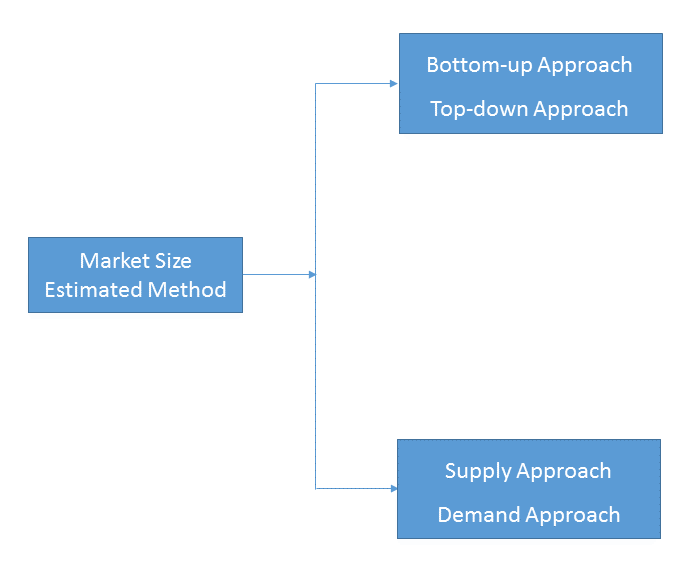
Bottom-up & top-down approach, supply & demand approach are the most important method which is used by HDIN Research to estimate the market size.
1)Top-down & Bottom-up Approach
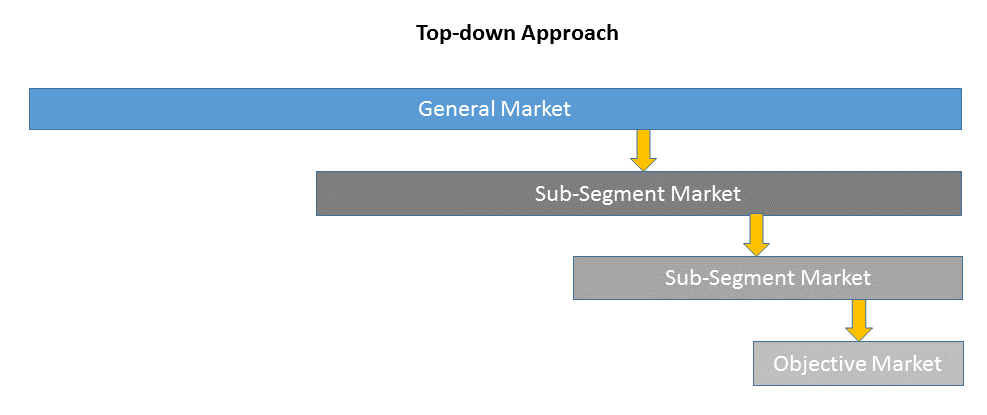
Top-down approach uses a general market size figure and determines the percentage that the objective market represents.
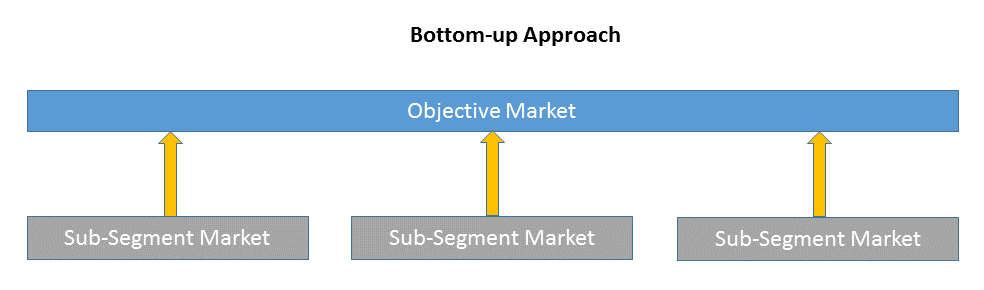
Bottom-up approach size the objective market by collecting the sub-segment information.
2)Supply & Demand Approach
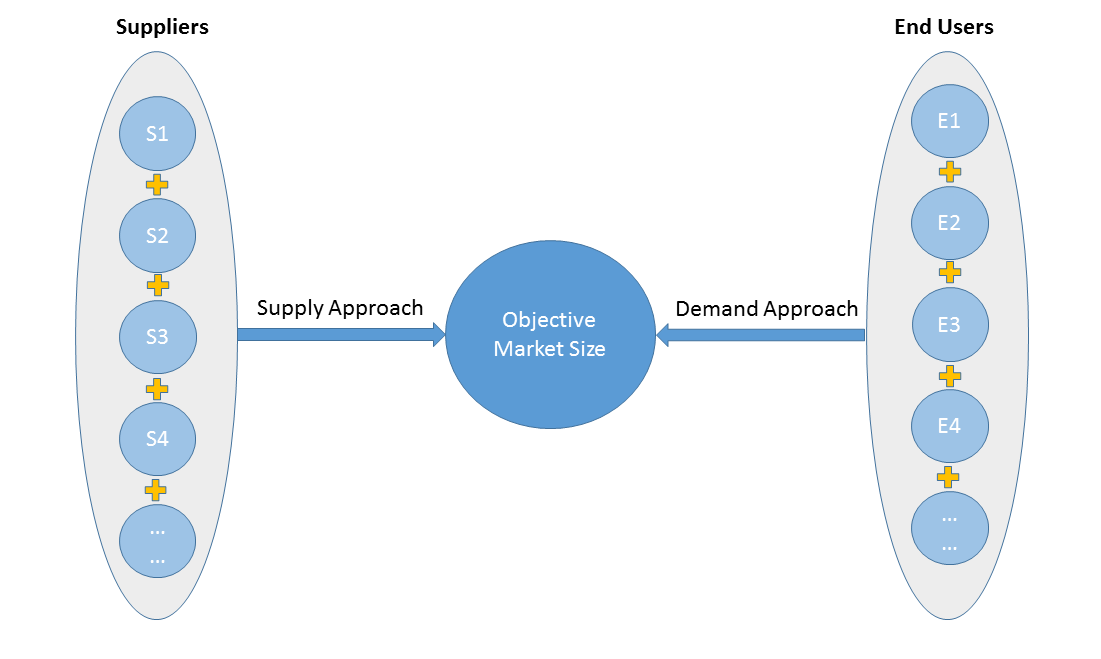
Supply approach is based on assessments of the size of each competitor supplying the objective market.
Demand approach combine end-user data within a market to estimate the objective market size. It is sometimes referred to as bottom-up approach.
- Forecasting Methodology
- Numerous factors impacting the market trend are considered for forecast model:
- New technology and application in the future;
- New project planned/under contraction;
- Global and regional underlying economic growth;
- Threatens of substitute products;
- Industry expert opinion;
- Policy and Society implication.
- Analysis Tools
1)PEST Analysis
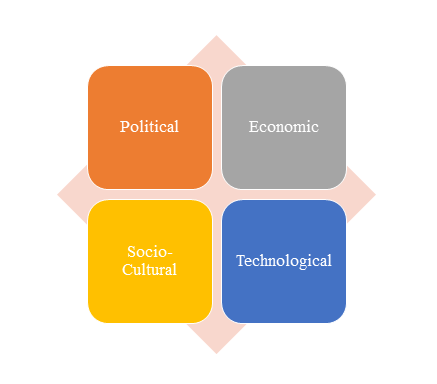
PEST Analysis is a simple and widely used tool that helps our client analyze the Political, Economic, Socio-Cultural, and Technological changes in their business environment.
- Benefits of a PEST analysis:
- It helps you to spot business opportunities, and it gives you advanced warning of significant threats.
- It reveals the direction of change within your business environment. This helps you shape what you’re doing, so that you work with change, rather than against it.
- It helps you avoid starting projects that are likely to fail, for reasons beyond your control.
- It can help you break free of unconscious assumptions when you enter a new country, region, or market; because it helps you develop an objective view of this new environment.
2)Porter’s Five Force Model Analysis
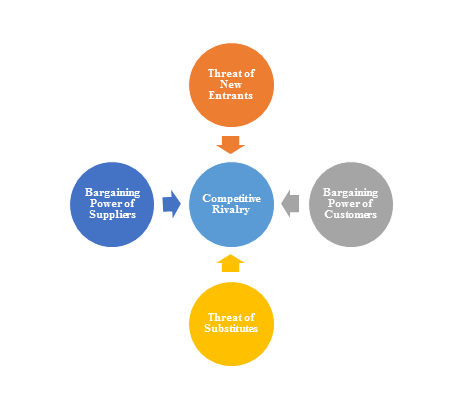
The Porter’s Five Force Model is a tool that can be used to analyze the opportunities and overall competitive advantage. The five forces that can assist in determining the competitive intensity and potential attractiveness within a specific area.
- Threat of New Entrants: Profitable industries that yield high returns will attract new firms.
- Threat of Substitutes: A substitute product uses a different technology to try to solve the same economic need.
- Bargaining Power of Customers: the ability of customers to put the firm under pressure, which also affects the customer's sensitivity to price changes.
- Bargaining Power of Suppliers: Suppliers of raw materials, components, labor, and services (such as expertise) to the firm can be a source of power over the firm when there are few substitutes.
- Competitive Rivalry: For most industries the intensity of competitive rivalry is the major determinant of the competitiveness of the industry.
3)Value Chain Analysis
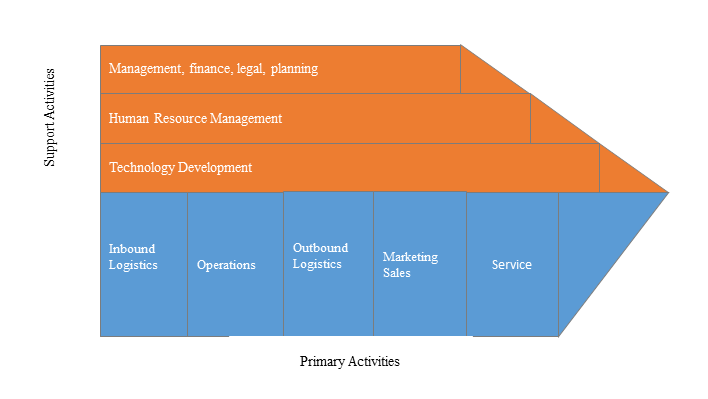
Value chain analysis is a tool to identify activities, within and around the firm and relating these activities to an assessment of competitive strength. Value chain can be analyzed by primary activities and supportive activities. Primary activities include: inbound logistics, operations, outbound logistics, marketing & sales, service. Support activities include: technology development, human resource management, management, finance, legal, planning.
4)SWOT Analysis
SWOT analysis is a tool used to evaluate a company's competitive position by identifying its strengths, weaknesses, opportunities and threats. The strengths and weakness is the inner factor; the opportunities and threats are the external factor. By analyzing the inner and external factors, the analysis can provide the detail information of the position of a player and the characteristics of the industry.
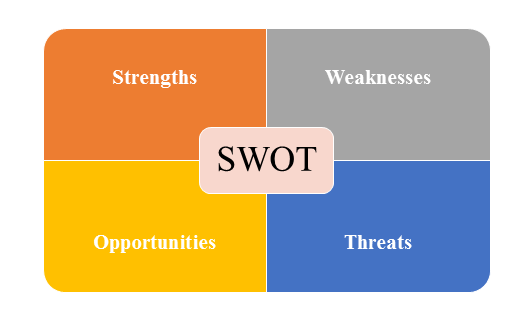
- Strengths describe what the player excels at and separates it from the competition
- Weaknesses stop the player from performing at its optimum level.
- Opportunities refer to favorable external factors that the player can use to give it a competitive advantage.
- Threats refer to factors that have the potential to harm the player.
- Data Sources
| Primary Sources | Secondary Sources |
|---|---|
| Face to face/Phone Interviews with market participants, such as: Manufactures; Distributors; End-users; Experts. Online Survey |
Government/International Organization Data: Annual Report/Presentation/Fact Book Internet Source Information Industry Association Data Free/Purchased Database Market Research Report Book/Journal/News |