Global Flat Roof Window Market Strategic Outlook 2026-2031 Architectural Aesthetics And Sustainable Fenestration Infrastructure Analysis
- Single User License (1 Users) $ 3,500
- Team License (2~5 Users) $ 4,500
- Corporate License (>5 Users) $ 5,500
The global flat roof window market in 2026 represents a sophisticated segment of the architectural fenestration industry, primarily driven by the convergence of modern urban design, energy efficiency mandates, and the psychological shift toward home wellness. Defined as glazed units specifically engineered for installation on roofs with a pitch between 0 and 15 degrees, these products have transitioned from industrial utility to high-end architectural statements. As of 2026, the market is valued between 210 million USD and 350 million USD. The sector is projected to maintain a compound annual growth rate (CAGR) of 3.0 percent to 5.4 percent through 2031, reflecting a resilient construction sector that increasingly prioritizes natural light as a core asset in both residential and commercial real estate.
The strategic landscape of mid-2026 is characterized by "Democratized Luxury" and aggressive portfolio consolidation. A pivotal development occurred on March 12, 2026, when Keylite Roof Windows, a key entity within The Keystone Group, announced the acquisition of the em.glaze and ray.lux flat glass rooflight ranges from Whitesales Ltd. This multi-million-pound acquisition is a cornerstone of Keylite’s growth strategy, aimed at diversifying its offerings beyond pitched roofs and strengthening its competitive position in the rapidly expanding flat glass segment. Simultaneously, on June 8, 2026, the industry leader VELUX announced a significant expansion of its flat roof portfolio targeting the mid-price segment. By offering high-quality glass top elements in robust aluminum designs for its established base units, VELUX is effectively making premium architectural aesthetics accessible outside the luxury bracket. This move signifies a broader market shift where high-performance glass-to-edge designs are becoming the standard for the mass market.
Technologically, the 2026 market is defined by the quest for the "Invisible Enclosure." Manufacturers are competing on thermal performance (low U-values), acoustic insulation, and the integration of smart sensors for automated ventilation. The rise of flat-roof extensions in urban residential areas has created a massive demand for walk-on rooflights and units that facilitate biophilic design. As carbon neutral building standards become mandatory in major economies, the flat roof window is being re-evaluated as a critical component for passive heating and cooling, moving it from a passive lighting fixture to an active participant in a building’s energy management system.
Regional Market Analysis
The geographical performance of the flat roof window market is dictated by the divergence between mature architectural renovation in Europe and the rapid commercial urbanization in the Asia Pacific.
● Europe remains the dominant revenue hub and the global center for technical innovation, holding an estimated share of 35 percent to 39 percent. The region’s leadership is sustained by a strong tradition of flat-roof modernism in the UK, Germany, and the Nordic countries. The 2026 dynamics are characterized by the integration of strict energy performance standards (such as Part L in the UK and similar EU mandates), which favor high-spec triple-glazed units. Keylite’s acquisition of the Whitesales ranges is specifically aimed at capturing a larger portion of the sophisticated European commercial and residential renovation market.
● North America holds a significant market share ranging from 28 percent to 32 percent. The regional market is driven by the expansion of the "Modern Farmhouse" and "Contemporary Urban" architectural styles, which utilize large flat-roof windows to maximize interior daylight. The industrial and commercial segments in the United States are also major consumers, utilizing large-scale modular rooflights for energy-efficient warehouse and office illumination. The focus in North America is increasingly on impact-resistant glass and storm-resilient designs to address the rising frequency of extreme weather events.
● Asia Pacific is identified as the fastest-growing region, with an estimated market share of 22 percent to 26 percent. This growth is anchored by the massive urbanization projects in mainland China and the high-density residential developments in Taiwan(China). In Taiwan(China), the demand is driven by the redevelopment of older urban districts where flat-roof windows are used to bring light into deep-plan residential blocks. Regional growth is further bolstered by the expansion of premium retail and hospitality infrastructure in Southeast Asia, where glass-intensive architecture is used as a brand differentiator.
● South America and the Middle East and Africa (MEA) represent emerging growth corridors, together accounting for 10 percent to 15 percent of the market. In the MEA region, particularly in the GCC countries, the focus is on high-performance solar control glass that allows for natural light while rejecting extreme thermal heat. South America’s growth is primarily focused in Brazil and Chile, where modern residential architecture is increasingly adopting European-style roof-glazing solutions to improve indoor environmental quality.
Application and Segmentation Analysis
The application of flat roof windows is increasingly segmented by the performance requirements of the building type and the desired aesthetic impact.
● Private Residences represent the most dynamic segment, fueled by the "Home Wellness" and "Biophilic Design" trends. Homeowners are increasingly willing to invest in high-spec flat-roof windows for kitchen extensions and home offices. The VELUX mid-market expansion targeting high-quality aluminum glass tops is a direct response to this segment’s demand for "architectural-grade" looks at accessible price points. The 2026 trend focuses on "Seamless Integration," where windows are designed to sit flush with the roofline to maintain a minimalist exterior aesthetic.
● Commercial Buildings, including offices, retail centers, and educational facilities, utilize flat roof windows to reduce the "Lighting Load" and improve the well-being of occupants. In this segment, the primary drivers are durability and safety. Large-scale modular systems that can be linked together to create continuous light strips are in high demand. The acquisition by Keylite of the em.glaze and ray.lux ranges provides a robust offering for commercial specifiers who require certified fire ratings and high-security glazing for urban commercial assets.
● Industrial Buildings utilize large-scale rooflights primarily for utility and energy savings. These units are often designed with high-impact polycarbonate or robust glass to withstand industrial environments. The focus in 2026 is on "Smoke and Heat Exhaust Ventilation Systems" (SHEVS), where the roof window serves a dual purpose as a safety exit for smoke during fire incidents. This segment requires providers like LAMILUX and Brett Martin to provide highly engineered solutions that meet stringent industrial safety codes.
Value Chain Analysis
The flat roof window value chain is undergoing a transition from a component manufacturing model to an "Integrated Building Envelope" ecosystem.
Raw Materials and Glass Technology: The foundation lies in high-performance float glass, extruded aluminum, and specialized insulation materials. In 2026, the "Value Pool" is shifting toward low-carbon aluminum and glass with specialized coatings (Low-E and solar control). Manufacturers that can document the "Embodied Carbon" of their materials are gaining an advantage in the public procurement sector.
Precision Engineering and Fabrication: This stage involve the assembly of the glazing unit with the frame and the base element. The high-margin value gain is found in the "Thermal Bridge" reduction. Manufacturers that utilize advanced thermal breaks and multi-chamber profiles can achieve the lower U-values required by modern building codes. The VELUX strategy of offering a robust aluminum design for its mid-segment base elements is an example of value-add engineering.
Distribution and Specification: This is a critical link in the chain, where architects and developers are the primary influencers. Acquisitions like Keylite’s purchase of the Whitesales lines allow manufacturers to provide a "Single-Source" solution to specifiers, reducing the complexity of the procurement process and ensuring system compatibility.
Installation and Technical Support: The final link involves the professional installation and commissioning of the units. Proper flashing and sealing are essential for long-term performance. Manufacturers are increasingly providing comprehensive installation guides and on-site support to ensure that their products maintain their performance ratings once installed in the roof envelope.
Key Market Player Deep Profiles
● VELUX: As the global market leader in roof windows, VELUX has consistently defined the industry’s technical and aesthetic standards. Their 2026 strategic layout is focused on "Sustainable Lighting for All," a push to bring high-end design to the broader market. In June 2026, VELUX announced the expansion of its flat roof window generation, introducing high-quality glass top elements in robust aluminum designs for the mid-price segment. This move allows the company to capture the "Aspiring Professional" demographic that desires premium architectural finishes without the luxury price tag. Their technical core competency lies in their integrated "Active House" concept, where windows are part of an automated climate control system. VELUX remains the benchmark for R&D in fenestration, focusing heavily on fully recyclable units and carbon-neutral manufacturing processes by 2030.
● FAKRO: Based in Poland, FAKRO has established itself as the primary global challenger to VELUX, known for its innovation in both pitched and flat roof applications. Their 2026 strategy is built on "Space Optimization and Safety," providing a wide range of walk-on rooflights and units with integrated sensors. FAKRO’s technical edge lies in its "Reinforced Structure" designs, which allow for some of the highest load-bearing capacities in the industry. Their core competency is the vertical integration of their manufacturing, from wood processing to advanced glass coating. Their strategic dynamic involves aggressive expansion in North America and Western Europe, positioning themselves as the "Innovator’s Choice" for complex architectural projects that require bespoke sizing and high-spec security features.
● Keylite: Part of The Keystone Group, Keylite has rapidly ascended the market through its focus on "Installer-Led Design." Their landmark acquisition of the em.glaze and ray.lux ranges from Whitesales Ltd in March 2026 marks a definitive move into the flat glass leadership space. This multi-million-pound deal allows Keylite to offer a comprehensive "Total Roof" solution. Their core competency lies in their "Integrated Thermal Collar" technology, which simplifies the installation process and ensures a high-performance thermal seal. Keylite’s strategic dynamic involves leveraging the massive distribution network of The Keystone Group to bring their new flat glass products to every major building merchant and contractor in the UK and Europe.
● Roofglaze: This UK-based specialist is a leader in the design, manufacture, and installation of premium rooflighting solutions for the commercial and high-end residential sectors. Their 2026 strategic layout is focused on "Bespoke Commercial Infrastructure," providing large-scale glass structures for schools, hospitals, and office complexes. Roofglaze’s technical core competency is in the engineering of oversized, multi-pane rooflights that maintain structural integrity and thermal performance. Their strategic dynamic involves a strong focus on the "Project Specification" market, working closely with leading architectural firms to deliver custom-engineered daylighting solutions that define the building's aesthetic and environmental performance.
● Glazing Vision: Known for its "Minimal Frame" philosophy, Glazing Vision is the premier provider for high-end architectural rooflights. Their 2026 strategy centers on "Transparent Architecture," offering products with virtually invisible frames to maximize the "Glass-to-View" ratio. Their core competency is in the development of flush-fit, walk-on, and sliding rooflights that are favored by luxury residential architects. Their strategic dynamic involves the expansion of their "Specialist Installer" network, ensuring that their high-precision products are fitted to the exacting standards required for luxury real estate. They are a primary driver of the "Sky-Only" aesthetic in modern urban penthouse and extension designs.
● LAMILUX: This German firm is a global leader in high-performance daylight systems and industrial ventilation. Their 2026 strategic layout is built around the "CI System," an integrated approach to aesthetics, thermal insulation, and fire safety. LAMILUX’s technical edge is in their use of fiber-reinforced plastics and advanced aluminum profiles to create highly durable and energy-efficient units for the industrial and commercial sectors. Their core competency is in the "Safety and SHEV" segment, providing certified smoke and heat exhaust systems that are integrated into the roof window design. Their strategic dynamic involves focusing on the European and Middle Eastern markets, providing the "Heavy-Duty" fenestration required for national-level infrastructure projects.
● Lonsdale: Lonsdale is a specialist in the historical and heritage segment of the rooflighting market, known for its high-quality patent glazing and traditional rooflight designs. Their 2026 strategy is focused on "Modernized Heritage," providing thermally efficient versions of traditional skylights for the renovation of listed buildings and period properties. Their core competency lies in their ability to match historical architectural details while meeting modern building regulations. Their strategic dynamic involves partnering with heritage organizations and specialized restoration contractors across Europe, ensuring that historical skylights are replaced with units that provide 21st-century thermal performance without compromising the building's character.
● The Rooflight Company: As the creator of the original "Conservation Rooflight," this company is a benchmark for aesthetic integrity and performance. Their 2026 strategic roadmap is built on "The Neo-Classical Modern" trend, providing sleek, low-profile rooflights for contemporary extensions and traditional homes alike. Their technical core competency is in their "Steel Frame" technology, which allows for thinner profiles and more glass area than traditional timber or aluminum. Their strategic dynamic involves the use of high-quality materials and a strong focus on "The Architect’s Vision," providing a range of customizable options for color, glazing, and operation.
● RoofLITE: Part of the Altaterra group (a VELUX sister company), RoofLITE focuses on the "Value-Driven Professional" segment. Their 2026 strategy is built on "Affordable Quality," providing reliable, standardized flat-roof windows for the mass-market residential builder. Their core competency lies in their streamlined manufacturing and distribution, offering high-performance units at a competitive price point. Their strategic dynamic involves a strong focus on the European "DIY and Trade" channels, providing the "essential" roof window for homeowners undertaking their own extensions or attic conversions.
● Brett Martin: This Northern Ireland-based firm is a diversified leader in plastic and glazing products. Their 2026 strategic layout for the flat roof window market is centered on "Material Versatility," offering both high-end glass and cost-effective polycarbonate rooflights. Brett Martin’s core competency is in the industrial and large-scale commercial segments, where their modular systems allow for the rapid coverage of large roof areas. Their strategic dynamic involves a heavy push into the global export market, providing durable and easy-to-install rooflighting solutions for warehouses and logistical hubs in North America and Asia.
● Okpol: Based in Poland, Okpol provides a wide range of roof windows and access hatches for the residential market. Their 2026 strategy is built on "Safety and Accessibility," focusing on flat roof windows that double as secure access points for maintenance and emergency exit. Okpol’s technical core competency lies in their "Security Glazing" and robust locking mechanisms. Their strategic dynamic involves focusing on the "Mid-Market" in Central and Eastern Europe, providing a balance of performance and price that caters to the growing middle class in the region.
● Fenstro: Fenstro focuses on the "Economic Renovation" segment, providing simple, reliable roof-glazing solutions for the price-sensitive residential market. Their 2026 strategy centers on "The Essential Skylight," stripping away unnecessary features to provide the maximum light for the lowest cost. Their core competency lies in their lean manufacturing and efficient logistics. Their strategic dynamic involves a strong presence in the digital retail and "Trade-Only" channels across Europe, providing a rapid-delivery solution for standard-sized flat roof projects.
● Dakea: Also part of the Altaterra group, Dakea is a brand designed "For Professionals, By Professionals." Their 2026 strategy is built on "The 20-Year Guarantee," focusing on the longevity and durability of their flat-roof windows. Dakea’s technical layout emphasizes high-quality timber and aluminum combinations that resist weathering and moisture. Their strategic dynamic involves a loyalty program for professional installers, providing them with the tools and warranties needed to build a high-trust business with their residential clients.
● The Skylight Company: This firm operates as a specialized integrator and provider of a wide range of rooflighting brands, offering "Daylighting Consultancy" to architects and developers. Their 2026 strategic focus is on the "Independent Choice" model, helping clients navigate the complex market to find the exact performance and aesthetic match for their project. Their core competency lies in their deep technical knowledge across all major brands and their ability to provide end-to-end service from specification to installation. Their strategic dynamic involves a focus on the premium London and South East UK residential markets, where they act as the "Trusted Partner" for high-value renovations.
Opportunities and Challenges
The flat roof window market is navigating a complex landscape of architectural innovation and regulatory pressure.
● Opportunities: The most significant opportunity lies in the "Smart Building" and "Energy Retrofit" movements. As governments incentivize the decarbonization of the existing building stock, the replacement of old, inefficient skylights with high-spec flat roof windows represents a multi-billion dollar replacement cycle. Furthermore, the integration of "Electrochromic Glass" (Smart Tinting) provides an opportunity for high-margin units that automatically manage heat gain and glare. The shift toward "Walk-on Roofs" in urban areas also creates an opportunity for providers to sell higher-value, structural-grade glazing units that turn rooftops into usable living space.
● Challenges: The primary challenge is the "Regulatory Complexity" of thermal performance. As U-value requirements become more stringent, manufacturers must invest heavily in triple and even quadruple glazing, which increases the weight and cost of the units. This puts pressure on the structural design of the roof and the logistics of installation. Furthermore, the "Commoditization of the Mid-Market" is a significant threat to margins; as leaders like VELUX democratize premium designs, smaller manufacturers must find niche aesthetic or technical specialties to avoid a "race to the bottom" on price. Additionally, the rising cost of energy-intensive glass manufacturing and aluminum smelting remains a risk to margin stability.
Macroeconomic and Geopolitical Influences
The 2026 flat roof window market is deeply impacted by the global realignment of the construction sector and the "Regionalization of Standards." Geopolitical tensions have led to a surge in demand for "Sovereign Supply Chains," where developers in the US and Europe prioritize products with high local content to avoid the risks of international trade disruptions.
From a macroeconomic perspective, the environment of sustained high interest rates has led to a stabilization in new-build construction, shifting the market’s focus toward the "High-Value Renovation" sector. Homeowners who are choosing to stay in their current homes rather than move are investing in high-quality extensions, which is the primary driver for the flat roof window market. This economic pressure is what makes the Keylite acquisition of Whitesales and the VELUX mid-market expansion so timely; both are positioning themselves to capture the "Professional Renovator" and "Smarter Commercial Investor" demographics.
Furthermore, the European "Green Deal" and the "Renovation Wave" initiative are providing a direct tailwind for the market, as they mandate higher energy performance for all building envelope components. In the Asia Pacific region, the growth of the 30 trillion CNY China construction market is shifting from "Quantity to Quality," creating a new demand for European-standard flat roof windows in high-end urban developments. As we move toward 2031, the flat roof window will be the indispensable "Environmental Valve" of the modern building, ensuring that natural light and thermal efficiency are perfectly balanced in the quest for sustainable urban living.
1.1 Study Scope 1
1.2 Research Methodology 2
1.2.1 Data Sources 2
1.2.2 Assumptions 4
1.3 Abbreviations and Acronyms 5
Chapter 2 Global Flat Roof Window Market Context and Macroeconomic Impact 6
2.1 Product Development Background 6
2.2 Global Macroeconomic Environment Analysis 7
2.2.1 Global GDP Trends and Construction Industry Outlook 7
2.2.2 Impact of Inflation and Building Material Price Volatility 8
2.3 Impact of Geopolitical Conflicts on the Flat Roof Window Market 9
2.3.1 Energy Costs and Supply Chain Disruptions in Glass and Aluminum 9
2.3.2 Green Building Directives and Regional Energy Security Policies 10
2.4 Global Flat Roof Window Market Volume and Market Size (2021-2026) 11
Chapter 3 Global Flat Roof Window Market by Type 12
3.1 Market Volume and Size Analysis by Type (2021-2026) 12
3.2 Fixed Flat Roof Windows 13
3.3 Manual Opening Flat Roof Windows 14
3.4 Electric and Solar-Powered Flat Roof Windows 15
3.5 Walk-On and Access Hatch Flat Roof Windows 16
Chapter 4 Global Flat Roof Window Market by Application 17
4.1 Market Volume and Size Analysis by Application (2021-2026) 17
4.2 Industrial Buildings 18
4.3 Commercial Buildings 19
4.4 Private Residences 20
Chapter 5 Global Flat Roof Window Market by Region 21
5.1 Market Volume and Size Analysis by Region (2021-2026) 21
5.2 North America Flat Roof Window Market Analysis 22
5.2.1 North America Market Volume and Market Size (2021-2026) 22
5.2.2 North America Market by Key Regions (United States, Canada, Mexico) 23
5.3 Europe Flat Roof Window Market Analysis 25
5.3.1 Europe Market Volume and Market Size (2021-2026) 25
5.3.2 Europe Market by Key Regions (Germany, United Kingdom, France, Poland, Italy) 26
5.4 Asia-Pacific Flat Roof Window Market Analysis 29
5.4.1 Asia-Pacific Market Volume and Market Size (2021-2026) 29
5.4.2 Asia-Pacific Market by Key Regions (China, Japan, India, South Korea, Taiwan (China)) 30
5.5 Latin America Flat Roof Window Market Analysis 32
5.5.1 Latin America Market Volume and Market Size (2021-2026) 32
5.5.2 Latin America Market by Key Regions (Brazil, Argentina) 33
5.6 Middle East & Africa Flat Roof Window Market Analysis 34
5.6.1 Middle East & Africa Market Volume and Market Size (2021-2026) 34
5.6.2 Middle East & Africa Market by Key Regions (UAE, Saudi Arabia, South Africa) 35
Chapter 6 Flat Roof Window Manufacturing Process and Patent Analysis 36
6.1 Production Flow: Glazing, Frame Extrusion, and Weatherproofing 36
6.2 Core Technologies: Triple Glazing, Thermal Breaks, and Smart Sensors 37
6.3 Global Flat Roof Window Patent Landscape Analysis 39
Chapter 7 Industry Chain and Value Chain Analysis 40
7.1 Value Chain Overview 40
7.2 Upstream Raw Materials and Components (Float Glass, Aluminum, PVC, Actuators) 41
7.3 Midstream Manufacturing and Quality Testing 42
7.4 Downstream Distribution Channels (Architectural Specifiers, Contractors, Retail) 43
Chapter 8 Global Flat Roof Window Import and Export Analysis 44
8.1 Global Import Volume and Value (2021-2026) 44
8.2 Global Export Volume and Value (2021-2026) 45
Chapter 9 Competitive Landscape and Concentration Rate 47
9.1 Market Concentration Rate (CR3, CR5) 47
9.2 Competitive Ranking of Key Players (2025) 48
9.3 Strategic Alliances, Mergers, and Product Innovations 50
Chapter 10 Key Players Analysis 51
10.1 VELUX 51
10.1.1 Company Overview and Product Portfolio 51
10.1.2 SWOT Analysis 52
10.1.3 VELUX Flat Roof Window Sales, Price, Cost and Gross Profit Margin (2021-2026) 53
10.1.4 R&D Investment and Global Marketing Strategy 54
10.2 FAKRO 56
10.2.1 Company Overview and Product Portfolio 56
10.2.2 SWOT Analysis 57
10.2.3 FAKRO Flat Roof Window Sales, Price, Cost and Gross Profit Margin (2021-2026) 58
10.2.4 European Expansion and Distribution Strategy 59
10.3 Keylite 60
10.3.1 Company Overview and Product Portfolio 60
10.3.2 SWOT Analysis 61
10.3.3 Keylite Flat Roof Window Sales, Price, Cost and Gross Profit Margin (2021-2026) 62
10.3.4 Product Innovation and Thermal Efficiency Focus 63
10.4 Roofglaze 64
10.4.1 Company Overview 64
10.4.2 SWOT Analysis 65
10.4.3 Roofglaze Flat Roof Window Sales, Price, Cost and Gross Profit Margin (2021-2026) 66
10.5 Glazing Vision 67
10.5.1 Company Overview and Architectural Glazing Solutions 67
10.5.2 SWOT Analysis 68
10.5.3 Glazing Vision Flat Roof Window Sales, Price, Cost and Gross Profit Margin (2021-2026) 69
10.5.4 Custom Engineering and Marketing Strategy 70
10.6 LAMILUX 71
10.6.1 Company Overview and Daylight Systems 71
10.6.2 SWOT Analysis 72
10.6.3 LAMILUX Flat Roof Window Sales, Price, Cost and Gross Profit Margin (2021-2026) 73
10.6.4 R&D and Industrial Building Strategy 74
10.7 Lonsdale 75
10.7.1 Company Overview 75
10.7.2 SWOT Analysis 76
10.7.3 Lonsdale Flat Roof Window Sales, Price, Cost and Gross Profit Margin (2021-2026) 77
10.8 The Rooflight Company 78
10.8.1 Company Overview and Product Portfolio 78
10.8.2 SWOT Analysis 79
10.8.3 The Rooflight Company Flat Roof Window Sales, Price, Cost and Gross Profit Margin (2021-2026) 80
10.8.4 Heritage and Contemporary Product Strategy 81
10.9 RoofLITE 82
10.9.1 Company Overview 82
10.9.2 SWOT Analysis 83
10.9.3 RoofLITE Flat Roof Window Sales, Price, Cost and Gross Profit Margin (2021-2026) 84
10.10 Brett Martin 85
10.10.1 Company Overview and Daylight Solutions 85
10.10.2 SWOT Analysis 86
10.10.3 Brett Martin Flat Roof Window Sales, Price, Cost and Gross Profit Margin (2021-2026) 87
10.10.4 Commercial and Industrial Channel Strategy 88
10.11 Okpol 89
10.11.1 Company Overview 89
10.11.2 SWOT Analysis 90
10.11.3 Okpol Flat Roof Window Sales, Price, Cost and Gross Profit Margin (2021-2026) 91
10.12 Fenstro 92
10.12.1 Company Overview 92
10.12.2 SWOT Analysis 93
10.12.3 Fenstro Flat Roof Window Sales, Price, Cost and Gross Profit Margin (2021-2026) 94
10.13 Dakea 95
10.13.1 Company Overview and Product Portfolio 95
10.13.2 SWOT Analysis 96
10.13.3 Dakea Flat Roof Window Sales, Price, Cost and Gross Profit Margin (2021-2026) 97
10.13.4 Value Positioning and Distribution Network 98
10.14 The Skylight Company 99
10.14.1 Company Overview 99
10.14.2 SWOT Analysis 100
10.14.3 The Skylight Company Flat Roof Window Sales, Price, Cost and Gross Profit Margin (2021-2026) 101
Chapter 11 Global Flat Roof Window Market Forecast (2027-2031) 102
11.1 Market Volume and Size Forecast 102
11.2 Forecast by Type (2027-2031) 103
11.3 Forecast by Application (2027-2031) 104
11.4 Forecast by Key Regions (2027-2031) 105
Chapter 12 Market Dynamics 107
12.1 Industry Drivers (Energy-Efficient Building Codes, Natural Daylighting Trends) 107
12.2 Industry Restraints (Installation Complexity, Waterproofing Risks) 108
12.3 Industry Opportunities and Trends (Smart Home Integration, Electrochromic Glass) 109
Chapter 13 Research Findings and Conclusion 110
Table 2 Global Flat Roof Window Market Volume by Type (2021-2026) 12
Table 3 Global Flat Roof Window Market Size by Type (2021-2026) 13
Table 4 Global Flat Roof Window Market Volume by Application (2021-2026) 17
Table 5 Global Flat Roof Window Market Size by Application (2021-2026) 18
Table 6 North America Flat Roof Window Market Volume and Size by Key Regions (2021-2026) 24
Table 7 Europe Flat Roof Window Market Volume and Size by Key Regions (2021-2026) 28
Table 8 Asia-Pacific Flat Roof Window Market Volume and Size by Key Regions (2021-2026) 31
Table 9 Latin America Flat Roof Window Market Volume and Size by Key Regions (2021-2026) 33
Table 10 Middle East & Africa Flat Roof Window Market Volume and Size by Key Regions (2021-2026) 35
Table 11 Global Flat Roof Window Major Patents List 39
Table 12 Global Flat Roof Window Import and Export Data (2021-2026) 44
Table 13 Competitive Ranking of Key Players by Revenue (2025) 48
Table 14 VELUX Flat Roof Window Sales, Price, Cost and Gross Profit Margin (2021-2026) 53
Table 15 FAKRO Flat Roof Window Sales, Price, Cost and Gross Profit Margin (2021-2026) 58
Table 16 Keylite Flat Roof Window Sales, Price, Cost and Gross Profit Margin (2021-2026) 62
Table 17 Roofglaze Flat Roof Window Sales, Price, Cost and Gross Profit Margin (2021-2026) 66
Table 18 Glazing Vision Flat Roof Window Sales, Price, Cost and Gross Profit Margin (2021-2026) 69
Table 19 LAMILUX Flat Roof Window Sales, Price, Cost and Gross Profit Margin (2021-2026) 73
Table 20 Lonsdale Flat Roof Window Sales, Price, Cost and Gross Profit Margin (2021-2026) 77
Table 21 The Rooflight Company Flat Roof Window Sales, Price, Cost and Gross Profit Margin (2021-2026) 80
Table 22 RoofLITE Flat Roof Window Sales, Price, Cost and Gross Profit Margin (2021-2026) 84
Table 23 Brett Martin Flat Roof Window Sales, Price, Cost and Gross Profit Margin (2021-2026) 87
Table 24 Okpol Flat Roof Window Sales, Price, Cost and Gross Profit Margin (2021-2026) 91
Table 25 Fenstro Flat Roof Window Sales, Price, Cost and Gross Profit Margin (2021-2026) 94
Table 26 Dakea Flat Roof Window Sales, Price, Cost and Gross Profit Margin (2021-2026) 97
Table 27 The Skylight Company Flat Roof Window Sales, Price, Cost and Gross Profit Margin (2021-2026) 101
Table 28 Global Flat Roof Window Market Volume Forecast by Type (2027-2031) 103
Table 29 Global Flat Roof Window Market Size Forecast by Application (2027-2031) 104
Table 30 Global Flat Roof Window Market Size Forecast by Key Regions (2027-2031) 106
Figure 1 Global Flat Roof Window Market Size Growth Rate (2021-2026) 11
Figure 2 Impact of Geopolitical Conflicts on Construction Material Supply Chain 9
Figure 3 Global Flat Roof Window Market Size Share by Type (2021-2026) 13
Figure 4 Global Flat Roof Window Market Size Share by Application (2021-2026) 18
Figure 5 Global Flat Roof Window Market Size Share by Region (2021-2026) 21
Figure 6 Flat Roof Window Manufacturing Process Flowchart 36
Figure 7 Flat Roof Window Industry Chain Mapping 40
Figure 8 Global Market Concentration Rate (CR5) in 2025 47
Figure 9 VELUX Flat Roof Window Market Share (2021-2026) 54
Figure 10 FAKRO Flat Roof Window Market Share (2021-2026) 59
Figure 11 Keylite Flat Roof Window Market Share (2021-2026) 63
Figure 12 Roofglaze Flat Roof Window Market Share (2021-2026) 66
Figure 13 Glazing Vision Flat Roof Window Market Share (2021-2026) 70
Figure 14 LAMILUX Flat Roof Window Market Share (2021-2026) 74
Figure 15 Lonsdale Flat Roof Window Market Share (2021-2026) 77
Figure 16 The Rooflight Company Flat Roof Window Market Share (2021-2026) 81
Figure 17 RoofLITE Flat Roof Window Market Share (2021-2026) 84
Figure 18 Brett Martin Flat Roof Window Market Share (2021-2026) 88
Figure 19 Okpol Flat Roof Window Market Share (2021-2026) 91
Figure 20 Fenstro Flat Roof Window Market Share (2021-2026) 94
Figure 21 Dakea Flat Roof Window Market Share (2021-2026) 98
Figure 22 The Skylight Company Flat Roof Window Market Share (2021-2026) 101
Figure 23 Global Flat Roof Window Market Size Forecast (2027-2031) 102
Research Methodology
- Market Estimated Methodology:
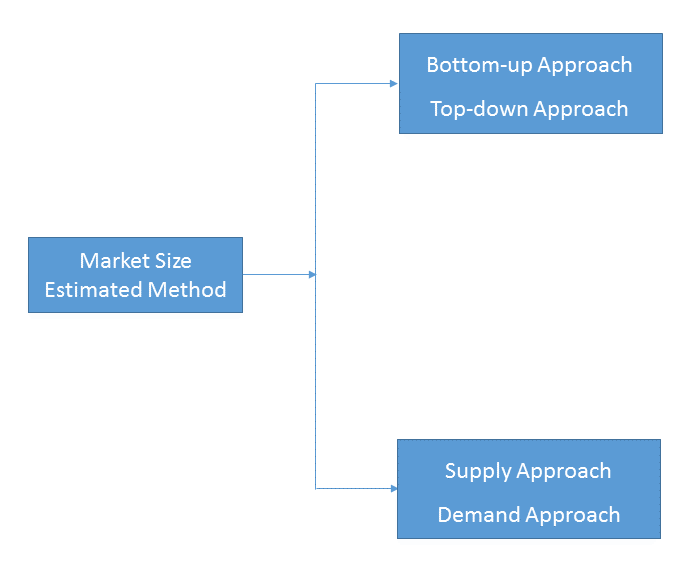
Bottom-up & top-down approach, supply & demand approach are the most important method which is used by HDIN Research to estimate the market size.
1)Top-down & Bottom-up Approach
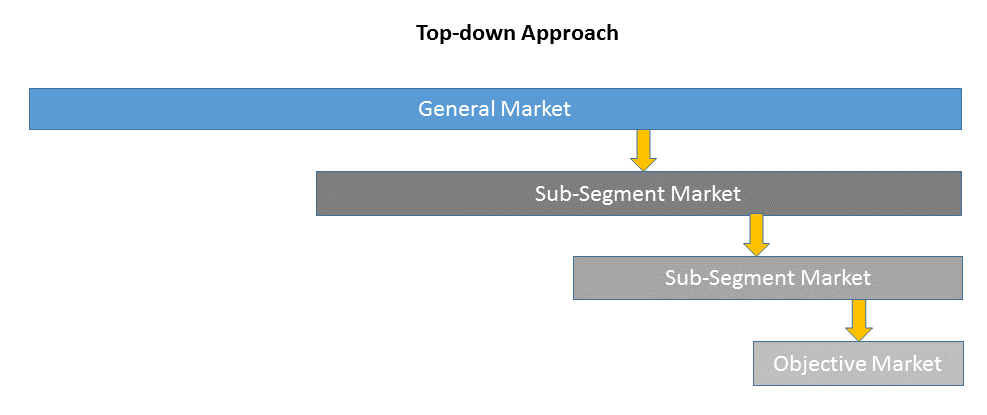
Top-down approach uses a general market size figure and determines the percentage that the objective market represents.
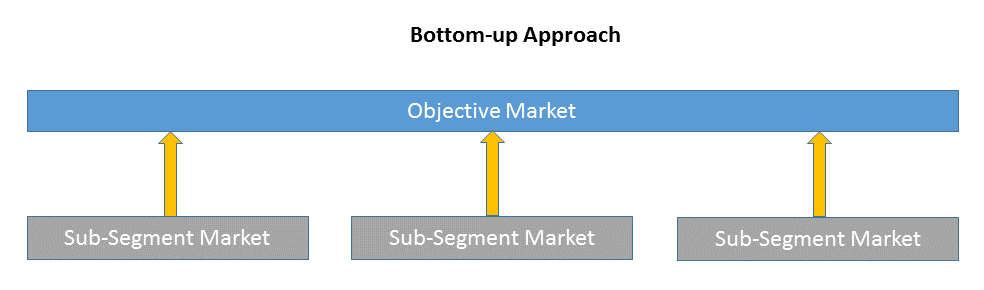
Bottom-up approach size the objective market by collecting the sub-segment information.
2)Supply & Demand Approach
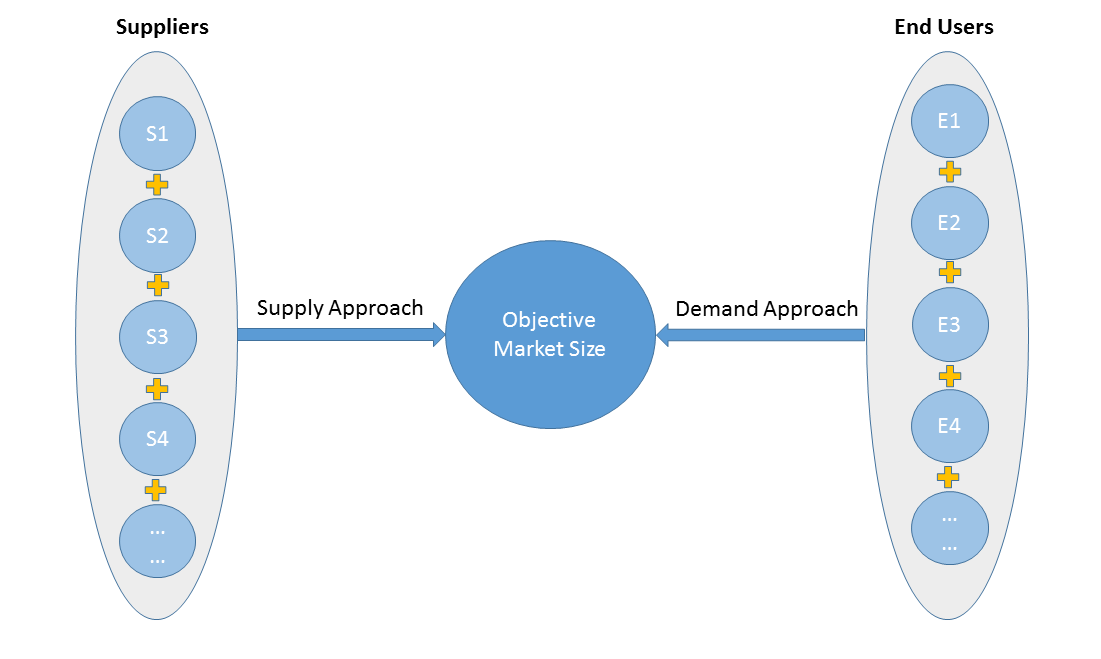
Supply approach is based on assessments of the size of each competitor supplying the objective market.
Demand approach combine end-user data within a market to estimate the objective market size. It is sometimes referred to as bottom-up approach.
- Forecasting Methodology
- Numerous factors impacting the market trend are considered for forecast model:
- New technology and application in the future;
- New project planned/under contraction;
- Global and regional underlying economic growth;
- Threatens of substitute products;
- Industry expert opinion;
- Policy and Society implication.
- Analysis Tools
1)PEST Analysis
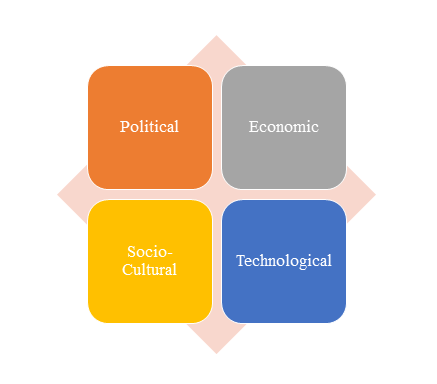
PEST Analysis is a simple and widely used tool that helps our client analyze the Political, Economic, Socio-Cultural, and Technological changes in their business environment.
- Benefits of a PEST analysis:
- It helps you to spot business opportunities, and it gives you advanced warning of significant threats.
- It reveals the direction of change within your business environment. This helps you shape what you’re doing, so that you work with change, rather than against it.
- It helps you avoid starting projects that are likely to fail, for reasons beyond your control.
- It can help you break free of unconscious assumptions when you enter a new country, region, or market; because it helps you develop an objective view of this new environment.
2)Porter’s Five Force Model Analysis
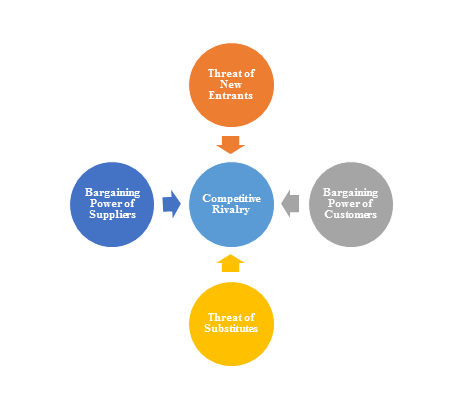
The Porter’s Five Force Model is a tool that can be used to analyze the opportunities and overall competitive advantage. The five forces that can assist in determining the competitive intensity and potential attractiveness within a specific area.
- Threat of New Entrants: Profitable industries that yield high returns will attract new firms.
- Threat of Substitutes: A substitute product uses a different technology to try to solve the same economic need.
- Bargaining Power of Customers: the ability of customers to put the firm under pressure, which also affects the customer's sensitivity to price changes.
- Bargaining Power of Suppliers: Suppliers of raw materials, components, labor, and services (such as expertise) to the firm can be a source of power over the firm when there are few substitutes.
- Competitive Rivalry: For most industries the intensity of competitive rivalry is the major determinant of the competitiveness of the industry.
3)Value Chain Analysis
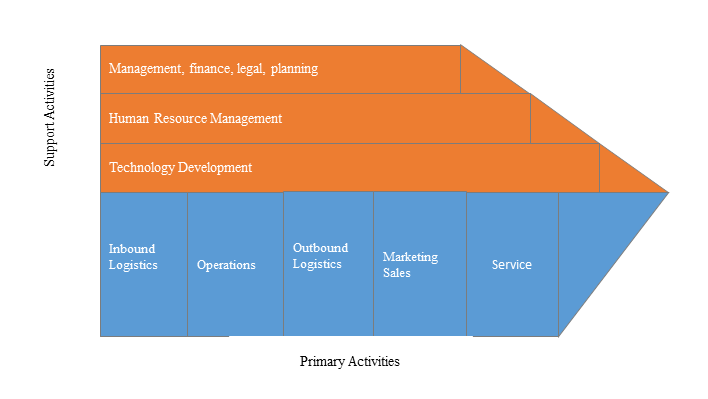
Value chain analysis is a tool to identify activities, within and around the firm and relating these activities to an assessment of competitive strength. Value chain can be analyzed by primary activities and supportive activities. Primary activities include: inbound logistics, operations, outbound logistics, marketing & sales, service. Support activities include: technology development, human resource management, management, finance, legal, planning.
4)SWOT Analysis
SWOT analysis is a tool used to evaluate a company's competitive position by identifying its strengths, weaknesses, opportunities and threats. The strengths and weakness is the inner factor; the opportunities and threats are the external factor. By analyzing the inner and external factors, the analysis can provide the detail information of the position of a player and the characteristics of the industry.
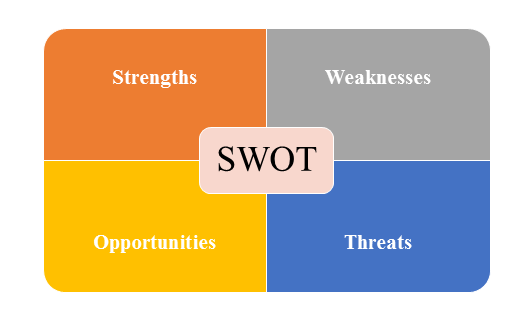
- Strengths describe what the player excels at and separates it from the competition
- Weaknesses stop the player from performing at its optimum level.
- Opportunities refer to favorable external factors that the player can use to give it a competitive advantage.
- Threats refer to factors that have the potential to harm the player.
- Data Sources
| Primary Sources | Secondary Sources |
|---|---|
| Face to face/Phone Interviews with market participants, such as: Manufactures; Distributors; End-users; Experts. Online Survey |
Government/International Organization Data: Annual Report/Presentation/Fact Book Internet Source Information Industry Association Data Free/Purchased Database Market Research Report Book/Journal/News |