Global Vector Inverter Market Strategic Outlook 2026-2031 Technical Infrastructure And Industrial Environmental Resilience Analysis
- Single User License (1 Users) $ 3,500
- Team License (2~5 Users) $ 4,500
- Corporate License (>5 Users) $ 5,500
The global vector inverter market in 2026 represents a critical cornerstone of the industrial automation ecosystem, providing the precision speed and torque control necessary for modern high-performance manufacturing. Unlike standard scalar drives, vector inverters (also known as field-oriented control drives) utilize sophisticated mathematical models to control the magnetic flux and torque of electric motors independently. This technical capability is essential for applications requiring high starting torque, precise speed regulation, and rapid dynamic response. As of 2026, the market is valued between 0.9 billion USD and 1.6 billion USD, reflecting a steady growth trajectory supported by a compound annual growth rate (CAGR) estimated between 2.1 percent and 4.2 percent through 2031.
The strategic landscape of 2026 is defined by a shift toward "Environmental Resilience" and "Application-Specific Engineering." Traditional inverters often suffer from premature failure when exposed to the harsh conditions typical of outdoor or high-moisture industrial environments. Strategic intelligence from mid-2026 highlights a major industry pivot toward high-protection ratings. On June 24, 2026, ZONCN, a prominent global manufacturer of industrial variable frequency drives (VFDs), officially released the T200-BF series. This IP66-sealed vector inverter is specifically tailored for constant pressure water supply, farm irrigation, and wastewater treatment. By integrating high-torque vector performance with a built-in multi-pump PID control in a compact, sealed unit, ZONCN has addressed a significant pain point for system integrators who previously struggled with dust, rain, and high humidity in outdoor pumping scenarios.
Further confirming this trend, the Hannover Messe 2026 served as a primary stage for high-performance innovations. K-DRIVE (K-Easy Automation) utilized the event on April 28, 2026, to showcase its latest KD600U high-performance vector inverter and the KD700 IP65 high-protection series. The feedback from long-term customers at the event underscored a market-wide demand for drives that combine sophisticated control algorithms with ruggedized physical architecture. As industries move toward 2031, the vector inverter will no longer be evaluated solely on its software intelligence, but on its ability to maintain that intelligence in the most demanding physical environments without the need for expensive external enclosures.
Regional Market Analysis
The geographical performance of the vector inverter market is dictated by the divergence between mature "Industry 4.0" adopters and rapidly industrializing emerging economies.
● Asia Pacific is the dominant regional market, holding an estimated share of 42 percent to 46 percent. This region is the global hub for both inverter manufacturing and industrial consumption. China remains the primary driver, fueled by the aggressive modernization of its machinery and textile sectors. Within Taiwan(China), the demand for high-precision vector inverters is concentrated in the semiconductor equipment and advanced packaging industries. The presence of innovators like ZONCN and Inovance (INOVS) in this region ensures a rapid cycle of technical iteration, particularly in the development of cost-effective, high-protection drives for the regional agricultural and water treatment sectors.
● Europe maintains a sophisticated market share ranging from 22 percent to 26 percent. The European landscape is characterized by the highest standards for energy efficiency and industrial safety. The Hannover Messe remains the critical node for European market dynamics, where German and Nordic engineering firms prioritize inverters that offer seamless integration into Profinet and EtherCAT networks. The 2026 European market is focused on the "Green Transition," where vector inverters are utilized to optimize the energy consumption of large-scale petrochemical and environmental protection systems.
● North America accounts for a market share between 18 percent and 22 percent. The North American market is driven by the replacement of aging industrial infrastructure and the expansion of the domestic packaging and petrochemical industries. There is a strong preference for "Ruggedized" and "Plug-and-Play" solutions that reduce on-site labor costs. The move toward localizing supply chains has led to an increased demand for inverters that comply with UL/CSA standards while offering the advanced torque control required for high-speed automated machinery.
● South America and the Middle East and Africa (MEA) represent emerging growth corridors, together accounting for 10 percent to 14 percent of the market. In the MEA region, the focus is on water scarcity and resource extraction, driving the demand for specialized drives like the T200-BF for irrigation and wastewater management. South America’s growth is primarily centered in Brazil’s industrial zones, where the machinery and textile industries are undergoing a digital transformation.
Application and Segmentation Analysis
The versatility of vector inverters allows for distinct strategic approaches across several critical industrial verticals.
● Machinery Industry: This is the most demanding segment for vector control, where precise positioning and high starting torque are non-negotiable. Applications include CNC machines, cranes, and metalworking equipment. The 2026 trend is toward "Integrated Safety," where STO (Safe Torque Off) and other functional safety features are built directly into the vector drive to comply with global machinery directives.
● Textile Industry: Inverters in this segment must manage complex tension control across hundreds of synchronized spindles. The printing and dyeing sub-sectors also require high-protection drives to resist the chemical vapors and moisture prevalent in the production environment. Vector control allows for the smooth acceleration and deceleration necessary to prevent yarn breakage, significantly increasing production yield.
● Packaging Industry: This segment prioritizes "High-Speed Response" and "Compact Form Factors." As packaging lines become more automated and multi-functional, vector inverters must provide millisecond-accurate speed control to ensure the integrity of high-speed filling and sealing processes.
● Water Treatment and Environmental Protection: As highlighted by the ZONCN T200-BF release, this segment is the primary driver for IP65/IP66 rated vector inverters. The requirement for multi-pump PID control allows for the efficient management of pressure and flow in municipal and industrial water systems, reducing the "Water-Energy Nexus" impact.
● Petrochemical Industry: Reliability is the paramount metric in this sector. Vector inverters are used to control large-scale pumps and compressors where a single failure can lead to significant downtime or safety risks. The focus here is on "Redundancy" and "Advanced Diagnostics" to ensure continuous operation in volatile environments.
Value Chain and Information Gain Analysis
The vector inverter value chain is shifting from a hardware-focused assembly model to a "Control-as-a-Service" ecosystem.
Raw Materials and Power Electronics: The value pool begins with the procurement of high-performance IGBTs (Insulated-Gate Bipolar Transistors) and MCUs (Microcontroller Units). In 2026, there is a strategic shift toward Silicon Carbide (SiC) power modules, which allow for higher switching frequencies and reduced thermal loss, enabling the "Sealed" designs seen in IP66 units.
OEM Engineering and Firmware Development: This is the primary "Information Gain" stage. The value is no longer just in the physical inverter, but in the sophisticated algorithms that manage the motor's vector space. Manufacturers who can provide "Auto-Tuning" features—where the inverter automatically identifies the motor's electrical parameters—capture significant value by reducing the commissioning time for end-users.
System Integration and Environmental Hardening: The ZONCN and K-DRIVE examples demonstrate that value is captured by engineering the drive to survive its environment. Integrating multi-pump controllers and PID loops into the drive itself eliminates the need for external PLCs in many applications, moving the "Intelligence" further down the value chain to the drive level.
Distribution and After-Market Support: In a market valued up to 1.6 billion USD, long-term technical support and the ability to provide rapid replacements are critical. Digital "Cloud-Link" features in modern inverters allow manufacturers to offer remote diagnostics, turning the inverter into a data-gathering node for industrial AI models.
Key Market Player Deep Profiles
● ABB: As a global leader in power and automation, ABB’s 2026 strategic layout is focused on "Total Efficiency." Their ACS series of vector inverters is the industry benchmark for energy-intensive applications. ABB’s core competency lies in its "Direct Torque Control" (DTC) technology, which provides the fastest torque response in the market without the need for an encoder. Their 2026 strategy involves the integration of their drives into the "ABB Ability" digital platform, offering predictive maintenance and energy auditing for the petrochemical and water treatment industries. They maintain a dominant position in the premium European and North American segments through a commitment to high functional safety and extreme reliability.
● Siemens: Siemens utilizes its "Sinamics" platform to provide a unified vector control architecture from 0.12 kW to 120 MW. Their 2026 strategic dynamic involves the "Digital Twin" concept, where the inverter is virtually commissioned within the TIA Portal before being physically installed. Siemens’ technical edge is in its seamless integration with Simatic controllers and its leadership in the "Green Manufacturing" movement. They are focusing on "High-Efficiency Hybridization," providing inverters that can manage both traditional induction motors and the latest permanent magnet motors used in high-efficiency industrial systems.
● Hitachi: Hitachi High-Tech and its industrial drives division focus on the "Heavy-Duty" segment, particularly in the machinery and environmental protection sectors. Their 2026 technical layout emphasizes the "SJ Series" of high-performance vector inverters, known for their ruggedness and high starting torque. Hitachi’s strategic dynamic involves a strong focus on the Asia Pacific infrastructure market, providing the power electronics required for large-scale urban water systems and industrial rail applications. Their core competency is in "Micro-Precision Control," where their inverters are used in specialized medical and laboratory machinery.
● DELIXI: As one of China’s largest electrical manufacturers, DELIXI has successfully transitioned from a domestic powerhouse to a global competitor. Their 2026 strategy is built on "Industrial Accessibility," providing high-quality vector inverters at a price point that facilitates the modernization of SMEs (Small and Medium Enterprises) across the Asia Pacific and MEA regions. Their technical layout emphasizes ease of use and rapid installation. DELIXI’s core competency lies in its massive distribution network and its ability to manufacture at a scale that ensures high supply chain resilience for its global partners.
● RIONO: This player is a specialist in the "Precision Textile" and "Printing" segments. RIONO’s 2026 strategic layout focuses on "Application-Specific Firmware," where their vector inverters come pre-programmed for the unique tension control requirements of multi-spindle textile machinery. Their technical edge is in their high-speed communication interfaces, allowing for perfect synchronization across complex production lines. RIONO’s strategic dynamic involves a focus on the South Asian and Middle Eastern textile hubs, providing the specialized automation required for high-yield fiber production.
● Danfoss: A pure-play specialist in power electronics, Danfoss’s VLT and VACON brands are synonymous with "Hydraulic Optimization." Their 2026 strategic dynamic is focused on the "Water-Energy Nexus," providing specialized vector inverters for the global water treatment industry. Danfoss’s technical core competency lies in its independent, platform-agnostic approach, ensuring their drives work perfectly with any motor or PLC brand. They are a leader in the development of "Decentralized Drives," where the inverter is mounted directly on the motor, reducing cabling costs and electrical interference in large-scale packaging and environmental plants.
● Cnweiken: Focusing on the "Digital-First" inverter market, Cnweiken provides a range of vector drives with integrated IoT and Bluetooth connectivity. Their 2026 strategy involves "The Mobile-Controlled Factory," allowing technicians to commission and monitor inverters via smartphone apps. Their technical layout emphasizes compact, high-density power modules designed for the packaging and machinery industries. Cnweiken’s core competency is in its rapid software iteration, frequently releasing firmware updates that improve motor control efficiency and expand communication protocol compatibility.
● INOVS (Inovance Technology): Inovance is the leading Chinese innovator in the industrial automation market. Their 2026 strategic layout is focused on "Total Solution Integration," where vector inverters are part of a broader package including servos, PLCs, and HMIs. Inovance’s technical core competency lies in its high-performance vector control algorithms that rival European standards. Their strategic dynamic involves the "Globalization of the Brand," establishing significant R&D and support centers in Europe and North America to challenge the established incumbents in the machinery and environmental protection sectors.
● ATLAS: This company focuses on the "Extreme Environment" segment of the vector inverter market. Their 2026 strategy involves the use of specialized "Athermal" materials and high-protection enclosures to serve the mining and heavy industrial sectors in South America and the MEA. ATLAS’s core competency is in "High-Voltage, High-Power" vector control, providing the massive drives required for industrial crushers and conveyor systems. Their strategic dynamic is built on "Maintenance-Free Longevity," offering extended warranties and ruggedized components that withstand extreme temperature fluctuations and physical vibration.
● Merckweir: Merckweir is a specialist in the "Precision Machinery and Printing" markets, focusing on ultra-low-noise and high-stability vector inverters. Their 2026 strategic roadmap centers on "The Quiet Factory," developing drives with advanced PWM (Pulse Width Modulation) techniques that minimize motor audible noise and electromagnetic interference. Their core competency is in "Spectral Purity" of the output wave, which is critical for sensitive electronics and precision medical manufacturing. They have a strong presence in the European and East Asian premium machinery markets.
● Vekont: Focusing on the "Modular and Scalable" segment, Vekont provides vector inverters that can be easily expanded with specialized communication or I/O modules. Their 2026 strategic layout is focused on "OEM Customization," allowing machine builders to tailor the inverter’s hardware and software to their specific needs. Vekont’s technical core competency is in its "Multi-Protocol" support, ensuring compatibility with virtually all industrial fieldbuses. Their strategic dynamic involves partnering with niche machinery manufacturers to provide "Private-Label" inverter solutions.
● LEAG: LEAG is a key player in the "Environmental Protection and Water Supply" market, providing robust vector inverters with integrated PID and multi-pump control. Their 2026 strategy focuses on "Urban Water Resilience," providing the drives required for high-rise building water supply and municipal drainage systems. LEAG’s technical edge is in their high-reliability power stage, designed to handle the frequent starting and stopping typical of water demand cycles. They have a dominant position in the Southeast Asian and Chinese municipal infrastructure sectors.
● SCOV: This firm specializes in the "Petrochemical and Oil & Gas" sectors, focusing on ATEX-compliant and explosion-proof vector inverters. Their 2026 strategic dynamic involves the development of "High-Security Inverters" with advanced encryption for communication, protecting critical energy infrastructure from cyberattacks. SCOV’s core competency is in "Safety-Critical Engineering," providing the documentation and certifications required for hazardous environments. They are a primary partner for major energy firms in the Middle East and the North Sea.
● HuaYuan: HuaYuan focuses on the "Mass-Market Industrial" segment, providing a range of versatile vector inverters for the textile and packaging industries. Their 2026 strategic layout is built on "Total Value," offering a balance of performance and cost-efficiency. HuaYuan’s technical layout emphasizes high-durability components and a user-friendly HMI. Their core competency is in their "Rapid Support Network," providing localized technical assistance across the primary industrial zones of Asia and South America.
● TECO: Based in Taiwan(China), TECO is a global motor and drive giant. Their 2026 strategy is centered on "The Green Power Loop," where their vector inverters are perfectly matched with their high-efficiency IE4 and IE5 motors. TECO’s technical core competency lies in its "Integrated Motor-Drive" (IMD) technology, which eliminates the need for separate control cabinets. Their strategic dynamic involves leveraging their global motor distribution network to provide integrated energy-saving solutions for the machinery and water treatment industries worldwide.
● Zhejiang Chuanken Electric: This company is a rising star in the Chinese "High-Performance Drive" market, focusing on advanced vector control for the machinery and printing sectors. Their 2026 strategy involves the use of "Advanced Sensorless Vector" technology, providing high-precision control even in applications where an encoder cannot be installed. Their core competency is in "Dynamic Response Tuning," allowing their inverters to handle sudden load changes with minimal speed deviation. They are increasingly focusing on the export market, providing technical alternatives to Western high-end drives.
● Yaskawa Electric: Yaskawa is a global leader in "Mechatronic Excellence," with its GA series of vector inverters being highly regarded for their longevity and ease of use. Their 2026 strategic layout is focused on "The Autonomous Factory," where inverters are integrated with robotics and motion control. Yaskawa’s technical core competency is in its "MTBF" (Mean Time Between Failure) ratings, which are among the highest in the industry. Their strategic dynamic involves a strong focus on the "Predictive Maintenance" segment, using AI to monitor motor health via the inverter’s internal data streams.
● Mitsubishi Electric: Mitsubishi Electric leverages its strengths in industrial automation to provide highly integrated "e-F@ctory" solutions. Their 2026 technical roadmap for the vector inverter market focuses on the "FR-A800" series with integrated AI for predictive maintenance. Their core competency is in the durability and electromagnetic compatibility (EMC) of their power electronics. Their strategic dynamic involves expanding their influence in the Southeast Asian machinery market, providing turnkey automation solutions for industrial facilities.
● Toshiba: Toshiba’s industrial drives division focuses on the "High-Power and High-Reliability" segments, particularly in the petrochemical and machinery industries. Their 2026 strategic layout involves the promotion of their "AS3" series of high-performance vector inverters. Toshiba’s technical edge is in its "Advanced Permanent Magnet" (APM) control, which allows for extremely high efficiency across a wide speed range. Their strategic dynamic involves focusing on the Japanese and North American infrastructure markets, providing the "Heavy-Duty" power electronics required for industrial security.
● LS Electric: Based in South Korea, LS Electric is a leader in the "Digital Power" sector, specializing in versatile and high-performance vector inverters for the machinery and packaging sectors. Their 2026 strategic layout involves the "iXP2" series with integrated touch-screen control and IoT connectivity. Their technical core competency is in their "Open-Source Communication" philosophy, ensuring their drives work seamlessly with various third-party PLCs. Their strategic dynamic is focused on the Asian and European mid-market, providing reliable and high-tech automation solutions.
● Fuji Electric: Fuji Electric is a specialist in high-performance power semiconductors, which it integrates into its "FRENIC-ACE" series of vector inverters. Their 2026 strategy centers on "Energy Conservation and Environmental Protection," providing inverters with a high degree of recyclability. Fuji’s technical layout emphasizes the use of their own proprietary 7th-generation IGBT technology. Their strategic dynamic is focused on the Asian industrial market and the global "Green Building" segment, where their inverters are used in large-scale HVAC and pump systems.
● Rockwell Automation: Operating under the Allen-Bradley brand, Rockwell is a leader in the North American industrial market. Their 2026 strategy centers on "The Connected Enterprise," where the PowerFlex series of vector inverters is integrated into a unified Ethernet/IP network. Rockwell’s technical layout emphasizes "Integrated Motion on EtherNet/IP," allowing for complex multi-axis control within a single network architecture. Their strategic dynamic involves targeting the US machinery and packaging markets with robust, high-security solutions that minimize the risk of industrial cyberattacks.
● Lenze Group: Based in Germany, Lenze is a specialist in "Motion Control" and drive-based automation. Their 2026 strategic layout is focused on "Mechatronic System Engineering," providing vector inverters that are part of a complete motion package including gearboxes and motors. Lenze’s core competency is in "Application Engineering," helping machinery manufacturers optimize their production lines for speed and precision. Their strategic dynamic involves a strong focus on the European packaging and textile sectors, providing the "hidden" intelligence for many of the continent’s leading automated systems.
Opportunities and Challenges
The vector inverter market is navigating a complex period of rapid technical advancement and shifting project economics.
● Opportunities: The most significant opportunity lies in the "Environmental Resilience" movement. As demonstrated by ZONCN and K-DRIVE, the development of IP65/IP66 rated inverters allows for the "de-centralization" of the drive cabinet, reducing cabling costs and thermal management requirements. Furthermore, the global push for "Industrial Energy Efficiency" creates a massive replacement cycle for older, less efficient drives. There is also a burgeoning opportunity in the "Smart Factory" segment, where vector inverters serve as the primary data-collection points for motor-driven AI models, enabling a shift toward "Autonomous Maintenance."
● Challenges: The industry faces a persistent "Skill Gap" in advanced drive commissioning. As vector inverters become more complex and software-dependent, the need for specialized knowledge in field-oriented control and industrial communication protocols increases. There is also a significant "Cybersecurity" risk; as inverters become interconnected via cloud platforms, they become potential targets for infrastructure-level attacks. Furthermore, the volatility of the "Semiconductor Supply Chain" remains a risk to margin stability for inverter manufacturers, particularly as they transition to more advanced SiC power modules.
Macroeconomic and Geopolitical Influences
The 2026 vector inverter market is deeply impacted by the global realignment of industrial supply chains and energy security. The trend toward "Regionalizing Industrial Sovereignty" is a key driver, as nations invest in domestic machinery and textile production to reduce reliance on long-distance imports.
Geopolitically, the "Strategic Decoupling" is affecting the procurement of industrial automation. Western nations are increasingly prioritizing inverters from allied-nation manufacturers for their critical infrastructure, benefiting companies like ABB, Siemens, and Rockwell. Conversely, Chinese firms are consolidating their dominance in the domestic market and expanding into the "Global South" as part of broader infrastructure investment initiatives.
Macroeconomically, the high-interest-rate environment of 2025-2026 has led to a focus on "Operational Efficiency." Manufacturers are no longer making decisions based solely on initial CAPEX but are evaluating inverters on their long-term energy savings and maintenance reduction. This shift directly supports the premium-tier manufacturers who can provide documented efficiency gains. Furthermore, the 2025-2026 trend of M&A and strategic partnerships in the "Environmental Protection" sector highlights the entry of "Smart Capital" into the industrial automation space, where investors seek to capture the synergies between mechanical durability and electronic intelligence. As we move toward 2031, the vector inverter will be the indispensable "Digital Nerve Center" at the heart of the global quest for efficient, resilient industrial production.
1.1 Study Scope 1
1.2 Research Methodology 2
1.2.1 Data Sources 2
1.2.2 Assumptions 4
1.3 Abbreviations and Acronyms 5
Chapter 2 Global Vector Inverter Market Context and Macroeconomic Impact 6
2.1 Product Development Background 6
2.2 Global Macroeconomic Environment Analysis 7
2.2.1 Global GDP Trends and Industrial Automation Investment 7
2.2.2 Impact of Inflation and Semiconductor Component Costs 8
2.3 Impact of Geopolitical Conflicts on the Vector Inverter Market 9
2.3.1 Supply Chain Resilience for IGBTs and Power Electronics 9
2.3.2 Energy Security Policies and Industrial Decarbonization Mandates 10
2.4 Global Vector Inverter Market Volume and Market Size (2021-2026) 11
Chapter 3 Global Vector Inverter Market by Type 12
3.1 Market Volume and Size Analysis by Type (2021-2026) 12
3.2 Sensorless Vector Control (Open-Loop) Inverters 13
3.3 Closed-Loop Vector Control Inverters 14
3.4 Low-Voltage Vector Inverters 15
3.5 Medium and High-Voltage Vector Inverters 16
Chapter 4 Global Vector Inverter Market by Application 17
4.1 Market Volume and Size Analysis by Application (2021-2026) 17
4.2 Machinery Industry 18
4.3 Textile Industry 19
4.4 Printing and Dyeing Industry 20
4.5 Packaging Industry 21
4.6 Petrochemical Industry 22
4.7 Water Treatment Industry 23
4.8 Environmental Protection Industry 24
Chapter 5 Global Vector Inverter Market by Region 25
5.1 Market Volume and Size Analysis by Region (2021-2026) 25
5.2 North America Vector Inverter Market Analysis 26
5.2.1 North America Market Volume and Market Size (2021-2026) 26
5.2.2 North America Market by Key Regions (United States, Canada, Mexico) 27
5.3 Europe Vector Inverter Market Analysis 29
5.3.1 Europe Market Volume and Market Size (2021-2026) 29
5.3.2 Europe Market by Key Regions (Germany, United Kingdom, France, Italy, Nordics) 30
5.4 Asia-Pacific Vector Inverter Market Analysis 33
5.4.1 Asia-Pacific Market Volume and Market Size (2021-2026) 33
5.4.2 Asia-Pacific Market by Key Regions (China, Japan, India, South Korea, Taiwan (China)) 34
5.5 Latin America Vector Inverter Market Analysis 36
5.5.1 Latin America Market Volume and Market Size (2021-2026) 36
5.5.2 Latin America Market by Key Regions (Brazil, Argentina) 37
5.6 Middle East & Africa Vector Inverter Market Analysis 38
5.6.1 Middle East & Africa Market Volume and Market Size (2021-2026) 38
5.6.2 Middle East & Africa Market by Key Regions (UAE, Saudi Arabia, South Africa) 39
Chapter 6 Vector Inverter Manufacturing Process and Patent Analysis 40
6.1 Production Flow: PCB Assembly, IGBT Integration, and Load Testing 40
6.2 Core Technologies: Field-Oriented Control (FOC) Algorithms and Harmonic Suppression 41
6.3 Global Vector Inverter Patent Landscape Analysis 43
Chapter 7 Industry Chain and Value Chain Analysis 44
7.1 Value Chain Overview 44
7.2 Upstream Raw Materials and Components (IGBT Modules, DSP Chips, Capacitors) 45
7.3 Midstream Manufacturing and Firmware Engineering 46
7.4 Downstream Distribution Channels (OEMs, System Integrators, Distributors) 47
Chapter 8 Global Vector Inverter Import and Export Analysis 48
8.1 Global Import Volume and Value (2021-2026) 48
8.2 Global Export Volume and Value (2021-2026) 49
Chapter 9 Competitive Landscape and Concentration Rate 51
9.1 Market Concentration Rate (CR3, CR5) 51
9.2 Competitive Ranking of Key Players (2025) 52
9.3 Strategic Alliances, Mergers, and Technological Partnerships 54
Chapter 10 Key Players Analysis 55
10.1 ABB 55
10.1.1 Company Overview and Product Portfolio 55
10.1.2 SWOT Analysis 56
10.1.3 ABB Vector Inverter Sales, Price, Cost and Gross Profit Margin (2021-2026) 57
10.1.4 R&D Investment and Global Motion Strategy 58
10.2 Siemens 59
10.2.1 Company Overview and Product Portfolio 59
10.2.2 SWOT Analysis 60
10.2.3 Siemens Vector Inverter Sales, Price, Cost and Gross Profit Margin (2021-2026) 61
10.2.4 Digital Industries Integration Strategy 62
10.3 Hitachi 63
10.3.1 Company Overview 63
10.3.2 SWOT Analysis 64
10.3.3 Hitachi Vector Inverter Sales, Price, Cost and Gross Profit Margin (2021-2026) 65
10.4 DELIXI 66
10.4.1 Company Overview 66
10.4.2 SWOT Analysis 67
10.4.3 DELIXI Vector Inverter Sales, Price, Cost and Gross Profit Margin (2021-2026) 68
10.5 RIONO 69
10.5.1 Company Overview 69
10.5.2 SWOT Analysis 70
10.5.3 RIONO Vector Inverter Sales, Price, Cost and Gross Profit Margin (2021-2026) 71
10.6 Danfoss 72
10.6.1 Company Overview and VLT/VACON Drives Portfolio 72
10.6.2 SWOT Analysis 73
10.6.3 Danfoss Vector Inverter Sales, Price, Cost and Gross Profit Margin (2021-2026) 74
10.6.4 Energy Efficiency and Sector Focus 75
10.7 Cnweiken 76
10.7.1 Company Overview 76
10.7.2 SWOT Analysis 77
10.7.3 Cnweiken Vector Inverter Sales, Price, Cost and Gross Profit Margin (2021-2026) 78
10.8 INOVS 79
10.8.1 Company Overview 79
10.8.2 SWOT Analysis 80
10.8.3 INOVS Vector Inverter Sales, Price, Cost and Gross Profit Margin (2021-2026) 81
10.9 ATLAS 82
10.9.1 Company Overview 82
10.9.2 SWOT Analysis 83
10.9.3 ATLAS Vector Inverter Sales, Price, Cost and Gross Profit Margin (2021-2026) 84
10.10 Merckweir 85
10.10.1 Company Overview 85
10.10.2 SWOT Analysis 86
10.10.3 Merckweir Vector Inverter Sales, Price, Cost and Gross Profit Margin (2021-2026) 87
10.11 Vekont 88
10.11.1 Company Overview 88
10.11.2 SWOT Analysis 89
10.11.3 Vekont Vector Inverter Sales, Price, Cost and Gross Profit Margin (2021-2026) 90
10.12 LEAG 91
10.12.1 Company Overview 91
10.12.2 SWOT Analysis 92
10.12.3 LEAG Vector Inverter Sales, Price, Cost and Gross Profit Margin (2021-2026) 93
10.13 SCOV 94
10.13.1 Company Overview 94
10.13.2 SWOT Analysis 95
10.13.3 SCOV Vector Inverter Sales, Price, Cost and Gross Profit Margin (2021-2026) 96
10.14 HuaYuan 97
10.14.1 Company Overview 97
10.14.2 SWOT Analysis 98
10.14.3 HuaYuan Vector Inverter Sales, Price, Cost and Gross Profit Margin (2021-2026) 99
10.15 TECO 100
10.15.1 Company Overview 100
10.15.2 SWOT Analysis 101
10.15.3 TECO Vector Inverter Sales, Price, Cost and Gross Profit Margin (2021-2026) 102
10.16 Zhejiang Chuanken Electric 103
10.16.1 Company Overview 103
10.16.2 SWOT Analysis 104
10.16.3 Zhejiang Chuanken Electric Vector Inverter Sales, Price, Cost and Gross Profit Margin (2021-2026) 105
10.17 Yaskawa Electric 106
10.17.1 Company Overview and Motion Control Portfolio 106
10.17.2 SWOT Analysis 107
10.17.3 Yaskawa Electric Vector Inverter Sales, Price, Cost and Gross Profit Margin (2021-2026) 108
10.17.4 Global R&D and Robotics Integration Strategy 109
10.18 Mitsubishi Electric 110
10.18.1 Company Overview and Factory Automation Portfolio 110
10.18.2 SWOT Analysis 111
10.18.3 Mitsubishi Electric Vector Inverter Sales, Price, Cost and Gross Profit Margin (2021-2026) 112
10.18.4 Smart Manufacturing Ecosystem Strategy 113
10.19 Toshiba 114
10.19.1 Company Overview 114
10.19.2 SWOT Analysis 115
10.19.3 Toshiba Vector Inverter Sales, Price, Cost and Gross Profit Margin (2021-2026) 116
10.20 LS Electric 117
10.20.1 Company Overview 117
10.20.2 SWOT Analysis 118
10.20.3 LS Electric Vector Inverter Sales, Price, Cost and Gross Profit Margin (2021-2026) 119
10.21 Fuji Electric 120
10.21.1 Company Overview 120
10.21.2 SWOT Analysis 121
10.21.3 Fuji Electric Vector Inverter Sales, Price, Cost and Gross Profit Margin (2021-2026) 122
10.22 Rockwell Automation 123
10.22.1 Company Overview 123
10.22.2 SWOT Analysis 124
10.22.3 Rockwell Automation Vector Inverter Sales, Price, Cost and Gross Profit Margin (2021-2026) 125
10.23 Lenze Group 126
10.23.1 Company Overview 126
10.23.2 SWOT Analysis 127
10.23.3 Lenze Group Vector Inverter Sales, Price, Cost and Gross Profit Margin (2021-2026) 128
Chapter 11 Global Vector Inverter Market Forecast (2027-2031) 129
11.1 Market Volume and Size Forecast 129
11.2 Forecast by Type (2027-2031) 130
11.3 Forecast by Application (2027-2031) 131
11.4 Forecast by Key Regions (2027-2031) 133
Chapter 12 Market Dynamics 135
12.1 Industry Drivers (Industrial Energy Efficiency, Motor Control Precision) 135
12.2 Industry Restraints (Semiconductor Supply Bottlenecks, Price Competition) 136
12.3 Industry Opportunities and Trends (SiC/GaN Power Devices, Predictive Diagnostics) 137
Chapter 13 Research Findings and Conclusion 138
Table 2 Global Vector Inverter Market Volume by Type (2021-2026) 12
Table 3 Global Vector Inverter Market Size by Type (2021-2026) 13
Table 4 Global Vector Inverter Market Volume by Application (2021-2026) 17
Table 5 Global Vector Inverter Market Size by Application (2021-2026) 18
Table 6 North America Vector Inverter Market Volume and Size by Key Regions (2021-2026) 28
Table 7 Europe Vector Inverter Market Volume and Size by Key Regions (2021-2026) 32
Table 8 Asia-Pacific Vector Inverter Market Volume and Size by Key Regions (2021-2026) 35
Table 9 Latin America Vector Inverter Market Volume and Size by Key Regions (2021-2026) 37
Table 10 Middle East & Africa Vector Inverter Market Volume and Size by Key Regions (2021-2026) 39
Table 11 Global Vector Inverter Major Patents List 43
Table 12 Global Vector Inverter Import and Export Data (2021-2026) 48
Table 13 Competitive Ranking of Key Players by Revenue (2025) 52
Table 14 ABB Vector Inverter Sales, Price, Cost and Gross Profit Margin (2021-2026) 57
Table 15 Siemens Vector Inverter Sales, Price, Cost and Gross Profit Margin (2021-2026) 61
Table 16 Hitachi Vector Inverter Sales, Price, Cost and Gross Profit Margin (2021-2026) 65
Table 17 DELIXI Vector Inverter Sales, Price, Cost and Gross Profit Margin (2021-2026) 68
Table 18 RIONO Vector Inverter Sales, Price, Cost and Gross Profit Margin (2021-2026) 71
Table 19 Danfoss Vector Inverter Sales, Price, Cost and Gross Profit Margin (2021-2026) 74
Table 20 Cnweiken Vector Inverter Sales, Price, Cost and Gross Profit Margin (2021-2026) 78
Table 21 INOVS Vector Inverter Sales, Price, Cost and Gross Profit Margin (2021-2026) 81
Table 22 ATLAS Vector Inverter Sales, Price, Cost and Gross Profit Margin (2021-2026) 84
Table 23 Merckweir Vector Inverter Sales, Price, Cost and Gross Profit Margin (2021-2026) 87
Table 24 Vekont Vector Inverter Sales, Price, Cost and Gross Profit Margin (2021-2026) 90
Table 25 LEAG Vector Inverter Sales, Price, Cost and Gross Profit Margin (2021-2026) 93
Table 26 SCOV Vector Inverter Sales, Price, Cost and Gross Profit Margin (2021-2026) 96
Table 27 HuaYuan Vector Inverter Sales, Price, Cost and Gross Profit Margin (2021-2026) 99
Table 28 TECO Vector Inverter Sales, Price, Cost and Gross Profit Margin (2021-2026) 102
Table 29 Zhejiang Chuanken Electric Vector Inverter Sales, Price, Cost and Gross Profit Margin (2021-2026) 105
Table 30 Yaskawa Electric Vector Inverter Sales, Price, Cost and Gross Profit Margin (2021-2026) 108
Table 31 Mitsubishi Electric Vector Inverter Sales, Price, Cost and Gross Profit Margin (2021-2026) 112
Table 32 Toshiba Vector Inverter Sales, Price, Cost and Gross Profit Margin (2021-2026) 116
Table 33 LS Electric Vector Inverter Sales, Price, Cost and Gross Profit Margin (2021-2026) 119
Table 34 Fuji Electric Vector Inverter Sales, Price, Cost and Gross Profit Margin (2021-2026) 122
Table 35 Rockwell Automation Vector Inverter Sales, Price, Cost and Gross Profit Margin (2021-2026) 125
Table 36 Lenze Group Vector Inverter Sales, Price, Cost and Gross Profit Margin (2021-2026) 128
Table 37 Global Vector Inverter Market Volume Forecast by Type (2027-2031) 130
Table 38 Global Vector Inverter Market Size Forecast by Application (2027-2031) 132
Table 39 Global Vector Inverter Market Size Forecast by Key Regions (2027-2031) 134
Figure 1 Global Vector Inverter Market Size Growth Rate (2021-2026) 11
Figure 2 Impact of Geopolitical Conflicts on Power Electronics Supply Chain 9
Figure 3 Global Vector Inverter Market Size Share by Type (2021-2026) 13
Figure 4 Global Vector Inverter Market Size Share by Application (2021-2026) 18
Figure 5 Global Vector Inverter Market Size Share by Region (2021-2026) 25
Figure 6 Vector Inverter Manufacturing Process Flowchart 40
Figure 7 Vector Inverter Industry Chain Mapping 44
Figure 8 Global Market Concentration Rate (CR5) in 2025 51
Figure 9 ABB Vector Inverter Market Share (2021-2026) 57
Figure 10 Siemens Vector Inverter Market Share (2021-2026) 61
Figure 11 Hitachi Vector Inverter Market Share (2021-2026) 65
Figure 12 DELIXI Vector Inverter Market Share (2021-2026) 68
Figure 13 RIONO Vector Inverter Market Share (2021-2026) 71
Figure 14 Danfoss Vector Inverter Market Share (2021-2026) 74
Figure 15 Cnweiken Vector Inverter Market Share (2021-2026) 78
Figure 16 INOVS Vector Inverter Market Share (2021-2026) 81
Figure 17 ATLAS Vector Inverter Market Share (2021-2026) 84
Figure 18 Merckweir Vector Inverter Market Share (2021-2026) 87
Figure 19 Vekont Vector Inverter Market Share (2021-2026) 90
Figure 20 LEAG Vector Inverter Market Share (2021-2026) 93
Figure 21 SCOV Vector Inverter Market Share (2021-2026) 96
Figure 22 HuaYuan Vector Inverter Market Share (2021-2026) 99
Figure 23 TECO Vector Inverter Market Share (2021-2026) 102
Figure 24 Zhejiang Chuanken Electric Vector Inverter Market Share (2021-2026) 105
Figure 25 Yaskawa Electric Vector Inverter Market Share (2021-2026) 108
Figure 26 Mitsubishi Electric Vector Inverter Market Share (2021-2026) 112
Figure 27 Toshiba Vector Inverter Market Share (2021-2026) 116
Figure 28 LS Electric Vector Inverter Market Share (2021-2026) 119
Figure 29 Fuji Electric Vector Inverter Market Share (2021-2026) 122
Figure 30 Rockwell Automation Vector Inverter Market Share (2021-2026) 125
Figure 31 Lenze Group Vector Inverter Market Share (2021-2026) 128
Figure 32 Global Vector Inverter Market Size Forecast (2027-2031) 129
Research Methodology
- Market Estimated Methodology:
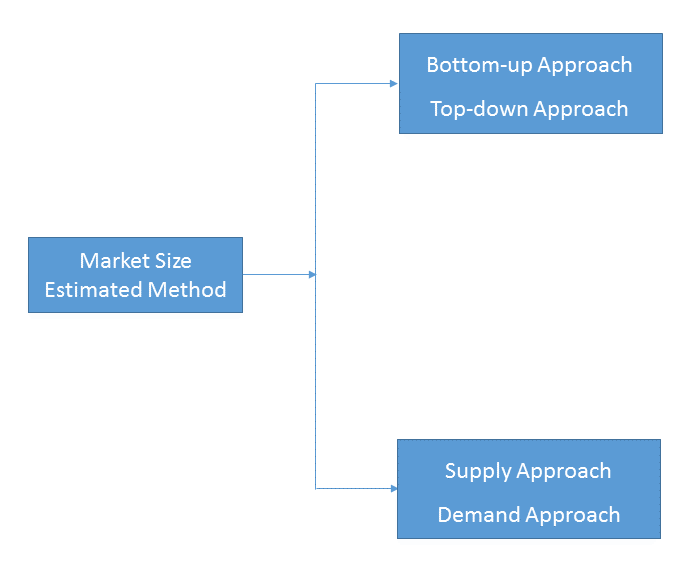
Bottom-up & top-down approach, supply & demand approach are the most important method which is used by HDIN Research to estimate the market size.
1)Top-down & Bottom-up Approach
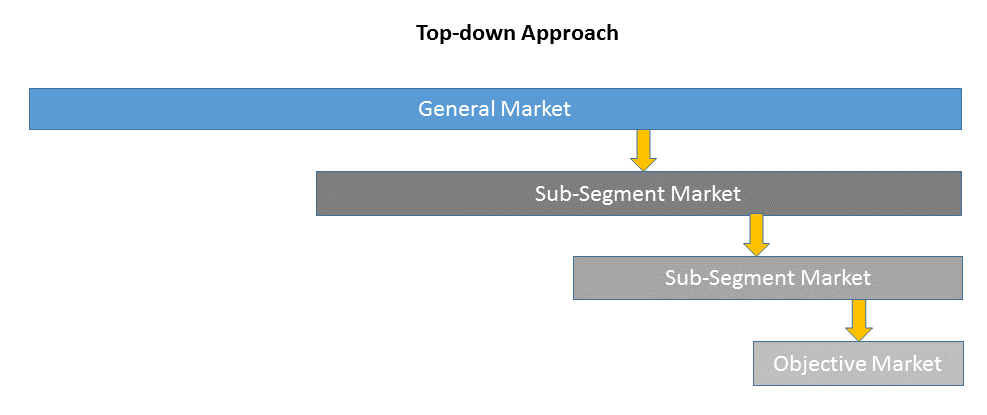
Top-down approach uses a general market size figure and determines the percentage that the objective market represents.
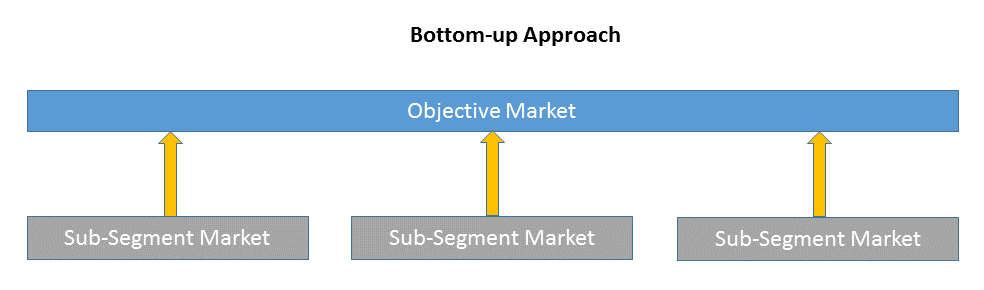
Bottom-up approach size the objective market by collecting the sub-segment information.
2)Supply & Demand Approach
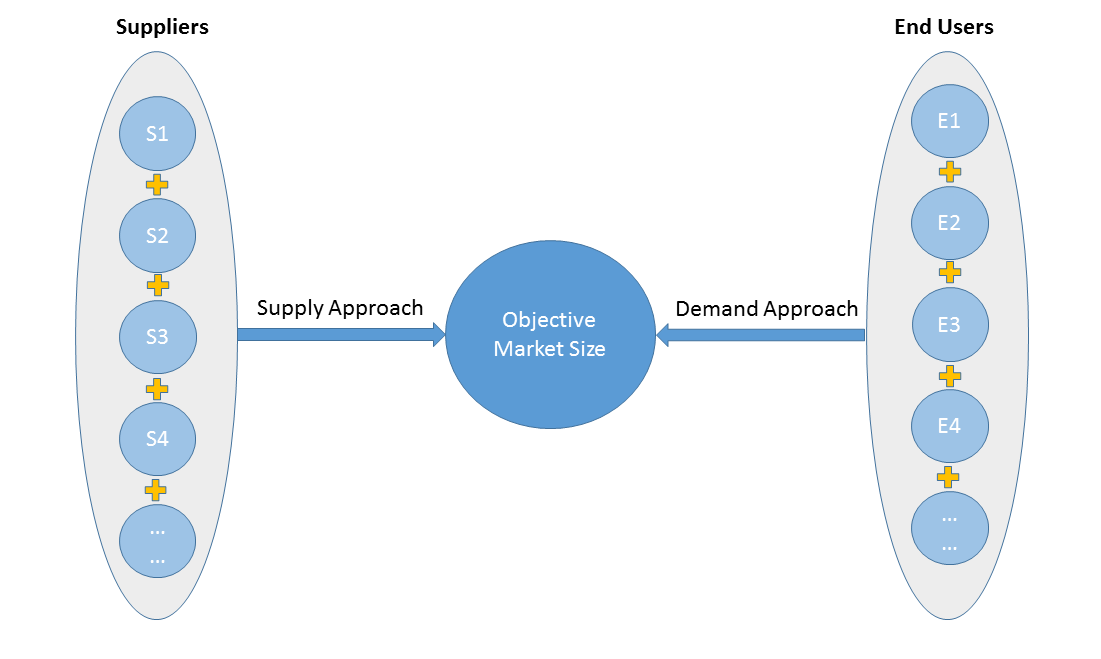
Supply approach is based on assessments of the size of each competitor supplying the objective market.
Demand approach combine end-user data within a market to estimate the objective market size. It is sometimes referred to as bottom-up approach.
- Forecasting Methodology
- Numerous factors impacting the market trend are considered for forecast model:
- New technology and application in the future;
- New project planned/under contraction;
- Global and regional underlying economic growth;
- Threatens of substitute products;
- Industry expert opinion;
- Policy and Society implication.
- Analysis Tools
1)PEST Analysis
PEST Analysis is a simple and widely used tool that helps our client analyze the Political, Economic, Socio-Cultural, and Technological changes in their business environment.
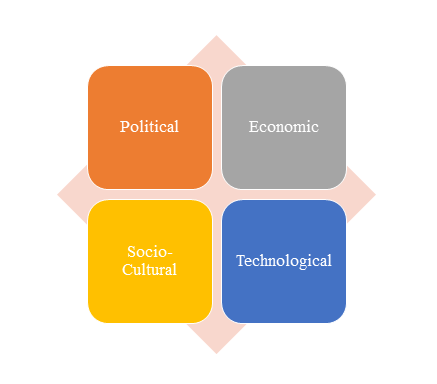
- Benefits of a PEST analysis:
- It helps you to spot business opportunities, and it gives you advanced warning of significant threats.
- It reveals the direction of change within your business environment. This helps you shape what you’re doing, so that you work with change, rather than against it.
- It helps you avoid starting projects that are likely to fail, for reasons beyond your control.
- It can help you break free of unconscious assumptions when you enter a new country, region, or market; because it helps you develop an objective view of this new environment.
2)Porter’s Five Force Model Analysis
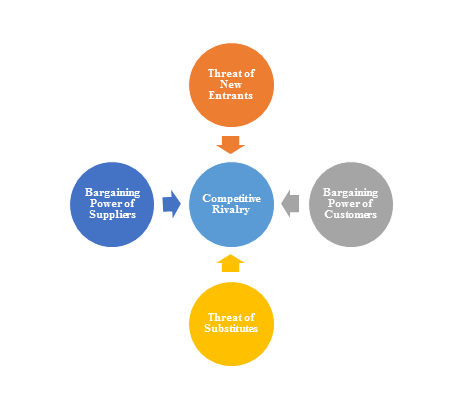
The Porter’s Five Force Model is a tool that can be used to analyze the opportunities and overall competitive advantage. The five forces that can assist in determining the competitive intensity and potential attractiveness within a specific area.
- Threat of New Entrants: Profitable industries that yield high returns will attract new firms.
- Threat of Substitutes: A substitute product uses a different technology to try to solve the same economic need.
- Bargaining Power of Customers: the ability of customers to put the firm under pressure, which also affects the customer's sensitivity to price changes.
- Bargaining Power of Suppliers: Suppliers of raw materials, components, labor, and services (such as expertise) to the firm can be a source of power over the firm when there are few substitutes.
- Competitive Rivalry: For most industries the intensity of competitive rivalry is the major determinant of the competitiveness of the industry.
3)Value Chain Analysis
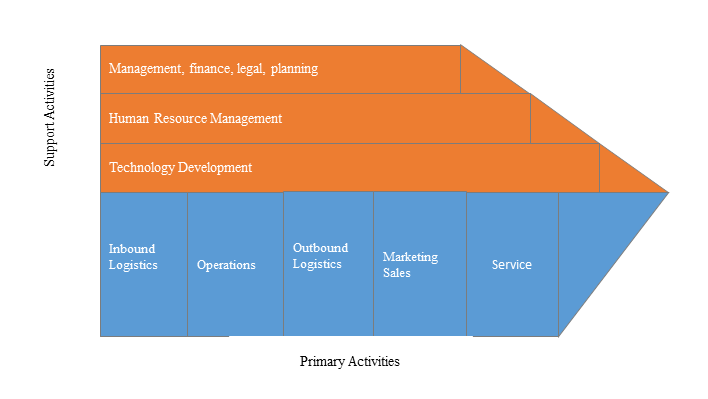
Value chain analysis is a tool to identify activities, within and around the firm and relating these activities to an assessment of competitive strength. Value chain can be analyzed by primary activities and supportive activities. Primary activities include: inbound logistics, operations, outbound logistics, marketing & sales, service. Support activities include: technology development, human resource management, management, finance, legal, planning.
4)SWOT Analysis
SWOT analysis is a tool used to evaluate a company's competitive position by identifying its strengths, weaknesses, opportunities and threats. The strengths and weakness is the inner factor; the opportunities and threats are the external factor. By analyzing the inner and external factors, the analysis can provide the detail information of the position of a player and the characteristics of the industry.
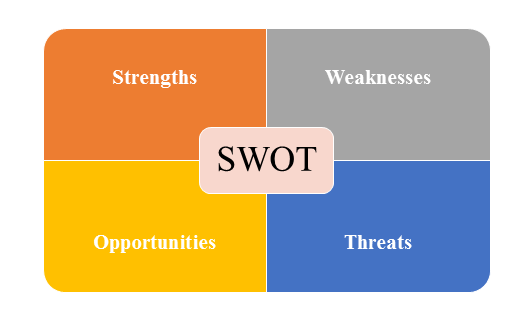
- Strengths describe what the player excels at and separates it from the competition
- Weaknesses stop the player from performing at its optimum level.
- Opportunities refer to favorable external factors that the player can use to give it a competitive advantage.
- Threats refer to factors that have the potential to harm the player.
- Data Sources
| Primary Sources | Secondary Sources |
|---|---|
| Face to face/Phone Interviews with market participants, such as: Manufactures; Distributors; End-users; Experts. Online Survey |
Government/International Organization Data: Annual Report/Presentation/Fact Book Internet Source Information Industry Association Data Free/Purchased Database Market Research Report Book/Journal/News |