Global Tobacco Packing Machine Market Strategic Outlook 2026-2031 Industrial Automation and Flexible Packaging Infrastructure Analysis
- Single User License (1 Users) $ 3,500
- Team License (2~5 Users) $ 4,500
- Corporate License (>5 Users) $ 5,500
The global tobacco packing machine market in 2026 represents a critical and highly specialized sector of the industrial machinery landscape, fundamentally driven by the enormous scale of global tobacco production and the increasing demand for high-speed, automated packaging solutions. As of 2026, the market is valued between 15.2 billion USD and 24.5 billion USD. This valuation is underpinned by the massive throughput of the global tobacco industry, which produces approximately 6 million tons of raw tobacco annually. The sector is projected to maintain a compound annual growth rate (CAGR) ranging from 2.9 percent to 4.6 percent through 2031, reflecting a shift toward operational efficiency and the adoption of advanced flexible packaging formats.
The strategic environment of mid-2026 is defined by a significant focus on high-performance components and the consolidation of technical expertise. A landmark development occurred on March 12, 2026, when ProMach, a global leader in processing and packaging machinery, announced the acquisition of Lako Tool & Manufacturing. This acquisition is highly significant for the tobacco sector, as Lako specializes in high-quality, durable sealing, cutting, and punching solutions for flexible film packaging. As the tobacco industry moves toward more complex pouch designs and flexible film applications to meet evolving consumer preferences and regulatory requirements, the integration of such high-precision sealing technology becomes a critical competitive advantage.
Furthermore, the geographical center of gravity for the market remains firmly in Asia, particularly within China, which produced approximately 2.3 million tons of tobacco in 2025—nearly 40 percent of the world’s total. This massive production base necessitates a robust and highly automated domestic machinery infrastructure. However, the market is also seeing significant activity in India, Brazil, Indonesia, and Zimbabwe, which are the other major global producers. The 2026 market is characterized by a "Technological Bifurcation": while mature markets focus on precision and regulatory compliance (such as plain packaging and track-and-trace serialization), emerging production hubs are focused on high-volume throughput and the replacement of legacy manual systems with automated primary and secondary packaging lines.
Regional Market Analysis
The geographical distribution of the tobacco packing machine market is dictated by the density of raw tobacco cultivation and the presence of centralized state-owned and multinational tobacco manufacturing entities.
● Asia Pacific is the dominant regional hub, holding a market share estimated between 45 percent and 49 percent. The region’s leadership is anchored by China’s unparalleled production volume of 2.3 million tons. Within Taiwan(China), the focus is on high-efficiency secondary packaging and export-oriented machinery. The regional dynamics are heavily influenced by the massive domestic consumption in China, India, and Indonesia, driving a continuous need for high-speed cigarette and bidi packing lines. Manufacturers in this region are increasingly focusing on "Smart Factory" integrations, where packing machines are linked to real-time production analytics.
● Europe maintains a sophisticated market share ranging from 17 percent to 21 percent. The European landscape, led by technical giants like Körber Technologies, is the global center for high-spec engineering and regulatory-driven innovation. The market is currently dealing with the technical challenges of "Plain Packaging" laws, which require machines that can handle frequent changeovers and precise print-on-demand capabilities. European manufacturers are also the leaders in sustainable packaging materials, developing machines capable of processing biodegradable and recyclable films without compromising on sealing speed.
● North America holds a market share between 14 percent and 18 percent. The market dynamic is characterized by the consolidation of large-scale manufacturing and a high demand for advanced flexible packaging solutions. The acquisition of Lako Tool by ProMach underscores the regional focus on high-performance sealing and cutting components. North American firms are primarily targeting the high-value specialty tobacco and smokeless tobacco segments, where packaging complexity is higher and requires more specialized machinery than standard cigarette lines.
● South America and the Middle East and Africa (MEA) represent critical growth corridors, together accounting for 15 percent to 19 percent of the market. Brazil and Zimbabwe are major global producers, necessitating a robust infrastructure for primary processing and bulk packaging. In the MEA region, the focus is on the establishment of local manufacturing hubs in countries like Egypt and South Africa, where international tobacco companies are investing in automated packing lines to serve growing regional demand.
Application and Segmentation Analysis
The application of tobacco packing machines is segmented by the primary sales channel, which dictates the packaging requirements for shelf-life, durability, and consumer engagement.
● Offline Sales (Traditional Retail) remain the primary volume driver, accounting for the vast majority of machine throughput. In 2026, the focus for offline packaging is "Shelf-Impact and Durability." Machines must be capable of high-speed production of hard-pack and soft-pack cigarettes that can withstand the rigors of global supply chains. The technical trend in this segment is the integration of "Fast Changeover" technology, allowing manufacturers to switch between different brand designs or regional health warning requirements with minimal downtime.
● Online Sales represent the fastest-growing application niche, particularly for specialty tobacco, cigars, and smokeless products. This channel requires packaging that is "E-commerce Ready"—meaning it must be robust enough for individual shipping while often requiring more personalized or high-end aesthetic finishes. The move toward online sales is driving the demand for smaller-scale, more flexible packing machines that can handle shorter production runs and higher levels of customization compared to the massive, high-speed lines used for traditional cigarette retail.
Value Chain Analysis
The tobacco packing machine value chain is transitioning from a traditional mechanical model to a high-precision, component-integrated ecosystem.
Raw Materials and High-Performance Components: The value begins with the procurement of specialized alloys and precision sensors. The acquisition of Lako Tool by ProMach highlights that the "Value Pool" in 2026 is concentrated in the critical interfaces of the machine—the sealing jaws, cutting blades, and punching tools. These components must withstand millions of cycles while maintaining microscopic precision to ensure the integrity of the flexible film.
OEM Machine Manufacturing: This stage involves the integration of mechanical systems with advanced PLCs and motion control. Major players like Körber and Soonfer are increasingly focusing on "Modular Architectures," where specific sections of the packing line (e.g., the cellophane wrapper or the cartoner) can be swapped out or upgraded independently, extending the operational life of the overall system.
Packaging Film and Consumables: The value chain is heavily dependent on the supply of flexible films, adhesives, and foils. Manufacturers are increasingly partnering with film producers to co-engineer machines that can handle thinner or more environmentally friendly materials, which often present challenges for traditional heat-sealing mechanisms.
Distribution and Technical Service: In a market where a single hour of downtime can lead to massive revenue losses, the final link in the chain is highly service-dependent. Manufacturers that offer remote diagnostics, 24/7 spare parts availability, and "Performance-Based" maintenance contracts are capturing a larger share of the market.
Key Market Player Deep Profiles
● Foshan Soonfer Intelligent Equipment: Soonfer has emerged as a major innovator in the high-speed automated packaging segment. Their 2026 strategic layout is focused on "Intelligent Vertical Integration," providing tobacco packing machines that are fully integrated with AI-driven vision systems for real-time defect detection. Soonfer’s core competency lies in their ability to deliver high-throughput machines that offer exceptional stability for both primary and secondary packaging. Their strategic dynamic involves the aggressive expansion of their export business, targeting the high-growth markets of Southeast Asia and the Middle East with robust, cost-effective hardware that challenges traditional European incumbents.
● Sidsam Group: Based in India, Sidsam Group is a diversified manufacturer known for its high-quality primary and secondary tobacco packaging machinery. Their 2026 strategy is centered on "Market Adaptability," providing machines that can handle a wide variety of tobacco products, from traditional cigarettes to regional specialties like bidi. Sidsam’s technical layout emphasizes "Lean Engineering," ensuring that their machines are easy to operate and maintain in diverse industrial environments. Their core competency is their deep understanding of the South Asian and African markets, where they have established a strong reputation for reliability and localized technical support.
● Phoenix Dison Tec: This company is a specialist in high-end, precision-engineered tobacco packing solutions, focusing on the luxury and specialty segments. Their 2026 strategic roadmap is built on "Premium Aesthetic Control," providing machines that can handle delicate foils and specialized papers without marking or damage. Phoenix Dison Tec’s core competency is in the "Soft-Touch" handling of tobacco products, ensuring that the final package meets the highest standards of luxury presentation. Their strategic dynamic involves partnering with boutique tobacco brands and high-end cigar manufacturers to provide custom-engineered packing lines that serve as a differentiator in the premium retail market.
● Kanishk Intertrade: Functioning as both a manufacturer and a strategic trading entity, Kanishk Intertrade provides a comprehensive range of tobacco processing and packing equipment. Their 2026 strategy focuses on "Turnkey Infrastructure," helping new entrants in the tobacco sector establish full-line operations. Kanishk’s technical core competency is in the "Integration of Global Components," utilizing the best sealing and cutting technology (often sourced from partners like Lako or ProMach) within their own machine frames. Their strategic dynamic involves a strong focus on the African and Central Asian production hubs, providing the essential machinery required to industrialize raw tobacco production in these regions.
● Foshan Jason Packaging Machinery: Jason Packaging is a leader in the versatile flexible packaging segment, with a strong focus on pouch-packing and flow-wrap machines for the tobacco industry. Their 2026 technical roadmap emphasizes "Multi-Format Flexibility," providing machines that can switch between different pouch sizes and film types with minimal manual adjustment. Jason Packaging’s core competency is in their "High-Performance Sealing" technology, which ensures a perfect moisture barrier for loose tobacco and smokeless products. Their strategic dynamic involves the use of digital "Self-Tuning" systems, where the machine automatically adjusts its temperature and pressure settings based on the film type being processed.
● HK Upperbond Industrial: Based in the Hong Kong hub, Upperbond Industrial is a critical supplier of industrial-grade tobacco packing machinery for the global market. Their 2026 strategy is centered on "Global Supply Chain Resilience," providing modular machines that can be shipped and assembled rapidly. Upperbond’s technical layout focuses on "High-Cycle Durability," utilizing hardened alloys and premium electronic components to ensure their machines can operate 24/7 in high-volume production environments. Their core competency is their "Global Support Network," providing 24-hour technical assistance and spare parts for their machines across five continents.
● Jochamp: Jochamp is a specialist in automated tobacco packaging with a focus on the "Small-to-Medium Enterprise" (SME) segment. Their 2026 strategic layout involves the "Democratization of Automation," providing high-spec packing machines at a price point that allows smaller tobacco producers to scale up their operations. Jochamp’s technical edge is in their "User-Centric Design," featuring intuitive touch-screen interfaces and simplified maintenance protocols. Their strategic dynamic involves a heavy push into the Latin American and Southeast Asian markets, helping local producers modernize their packaging lines to meet international quality standards.
● Körber Technologies: Formerly known as Hauni, Körber is the undisputed global leader in tobacco processing and packing technology. Their 2026 strategy, "The Factory of the Future," is centered on the full digitalization and automation of the tobacco manufacturing process. Körber’s technical core competency lies in their "Massive-Scale Throughput" and their industry-leading "Track-and-Trace" solutions, which allow every individual pack to be serialized and monitored. Their strategic dynamic involves the use of "Predictive Analytics," where the packing machine’s data is used to anticipate mechanical failures and optimize production schedules. They remain the primary partner for the world’s largest multinational tobacco firms, providing the high-end technology required for global regulatory compliance and operational dominance.
Opportunities and Challenges
The tobacco packing machine market is navigating a complex landscape of intense regulatory pressure and rapid technological evolution.
● Opportunities: The most significant opportunity lies in the "Flexible Packaging Pivot." As demonstrated by the ProMach acquisition of Lako Tool, the demand for high-precision sealing and cutting in flexible films is surging. This is driven by the growth of roll-your-own (RYO) and smokeless tobacco categories, which require specialized pouch-packing machinery. Furthermore, the mandatory implementation of "Track-and-Trace" legislation globally provides a massive opportunity for manufacturers of high-end packing lines that can integrate sophisticated serialization hardware and software. There is also a burgeoning market for "Sustainable Packaging Integration," where machines are designed to process paper-based or compostable films.
● Challenges: The primary challenge is the "Regulatory Squeeze." Plain packaging laws and increasing taxes on tobacco products in mature markets are putting pressure on manufacturer margins, forcing them to seek efficiency gains through automation. Furthermore, the "Stigma of Tobacco" has led some financial institutions and technology partners to distance themselves from the sector, complicating the financing and R&D for new machinery. Additionally, the "Supply Chain for Precision Components" remains a risk; any disruption in the supply of high-grade sensors or specialized sealing alloys can lead to significant production delays in a market that relies on high-speed, continuous operation.
Macroeconomic and Geopolitical Influences
The 2026 tobacco packing machine market is deeply impacted by the global realignment of industrial manufacturing and the dominance of the "China Production Hub." The FAOStat data confirms that China remains the center of gravity for the industry, and any shift in Chinese domestic policy or trade relations has a ripple effect across the entire global machinery supply chain.
Geopolitically, the "Strategic Decoupling" is affecting the procurement of industrial machinery. We are seeing a trend toward "Regionalization," where major producers in Brazil, India, and Indonesia are increasingly seeking to build or source packing machinery locally to reduce reliance on Western or Chinese imports. This trend favors firms like Sidsam and Kanishk that have strong regional manufacturing bases. The ProMach acquisition of Lako Tool highlights the "Consolidation of Precision," as Western firms seek to own the core IP of the flexible packaging process to maintain their technical edge over emerging competitors.
Macroeconomically, the high-interest-rate environment of 2025-2026 has led to a focus on "Asset Longevity." Tobacco manufacturers are prioritizing machines with high durability and the potential for modular upgrades, rather than the complete replacement of lines. This shift supports the high-end players like Körber and Soonfer who can provide long-term service and upgrade paths. As the industry moves toward 2031, the tobacco packing machine will be defined by its transition from a mechanical "Workhorse" to a high-precision "Data Node," essential for navigating the complex global landscape of tobacco production, regulation, and consumption.
1.1 Study Scope 1
1.2 Research Methodology 2
1.2.1 Data Sources 2
1.2.2 Assumptions 4
1.3 Abbreviations and Acronyms 5
Chapter 2 Global Tobacco Packing Machine Market Context and Macroeconomic Impact 6
2.1 Product Development Background 6
2.2 Global Macroeconomic Environment Analysis 7
2.2.1 Global GDP Trends and Tobacco Manufacturing Investment 7
2.2.2 Impact of Inflation and Precision Component Cost Volatility 8
2.3 Impact of Geopolitical Conflicts on the Tobacco Packing Machine Market 9
2.3.1 Supply Chain Disruptions for Servo Drives and PLC Systems 9
2.3.2 Cross-Border Trade Policies and Regional Production Shifts 10
2.4 Global Tobacco Packing Machine Market Volume and Market Size (2021-2026) 11
Chapter 3 Global Tobacco Packing Machine Market by Type 12
3.1 Market Volume and Size Analysis by Type (2021-2026) 12
3.2 Automatic Tobacco Packing Machines 13
3.3 Semi-Automatic Tobacco Packing Machines 14
3.4 High-Speed Overwrapping and Cartoning Machines 15
Chapter 4 Global Tobacco Packing Machine Market by Application / Sales Channel 17
4.1 Market Volume and Size Analysis by Application (2021-2026) 17
4.2 Online Sales 18
4.3 Offline Sales 19
Chapter 5 Global Tobacco Packing Machine Market by Region 21
5.1 Market Volume and Size Analysis by Region (2021-2026) 21
5.2 North America Tobacco Packing Machine Market Analysis 22
5.2.1 North America Market Volume and Market Size (2021-2026) 22
5.2.2 North America Market by Key Regions (United States, Canada, Mexico) 23
5.3 Europe Tobacco Packing Machine Market Analysis 25
5.3.1 Europe Market Volume and Market Size (2021-2026) 25
5.3.2 Europe Market by Key Regions (Germany, United Kingdom, France, Italy, Poland) 26
5.4 Asia-Pacific Tobacco Packing Machine Market Analysis 29
5.4.1 Asia-Pacific Market Volume and Market Size (2021-2026) 29
5.4.2 Asia-Pacific Market by Key Regions (China, Japan, India, Indonesia, Taiwan (China)) 30
5.5 Latin America Tobacco Packing Machine Market Analysis 32
5.5.1 Latin America Market Volume and Market Size (2021-2026) 32
5.5.2 Latin America Market by Key Regions (Brazil, Argentina) 33
5.6 Middle East & Africa Tobacco Packing Machine Market Analysis 34
5.6.1 Middle East & Africa Market Volume and Market Size (2021-2026) 34
5.6.2 Middle East & Africa Market by Key Regions (Turkey, UAE, Saudi Arabia, South Africa) 35
Chapter 6 Tobacco Packing Machine Manufacturing Process and Patent Analysis 36
6.1 Production Flow: Frame Fabrication, Servo Integration, and Calibration 36
6.2 Core Technologies: High-Speed Folding, Film Sealing, and Track-and-Trace Systems 37
6.3 Global Tobacco Packing Machine Patent Landscape Analysis 39
Chapter 7 Industry Chain and Value Chain Analysis 40
7.1 Value Chain Overview 40
7.2 Upstream Raw Materials and Components (Stainless Steel, Servo Motors, Sensors) 41
7.3 Midstream Manufacturing and Line Integration 42
7.4 Downstream Tobacco Manufacturers and Distribution Channels 43
Chapter 8 Global Tobacco Packing Machine Import and Export Analysis 44
8.1 Global Import Volume and Value (2021-2026) 44
8.2 Global Export Volume and Value (2021-2026) 45
Chapter 9 Competitive Landscape and Concentration Rate 47
9.1 Market Concentration Rate (CR3, CR5) 47
9.2 Competitive Ranking of Key Players (2025) 48
9.3 Strategic Alliances, Mergers, and Technological Upgrades 50
Chapter 10 Key Players Analysis 51
10.1 Foshan Soonfer Intelligent Equipment 51
10.1.1 Company Overview and Product Portfolio 51
10.1.2 SWOT Analysis 52
10.1.3 Foshan Soonfer Tobacco Packing Machine Sales, Price, Cost and Gross Profit Margin (2021-2026) 53
10.1.4 R&D Investment and Automation Strategy 54
10.2 Sidsam Group 55
10.2.1 Company Overview and Product Portfolio 55
10.2.2 SWOT Analysis 56
10.2.3 Sidsam Group Tobacco Packing Machine Sales, Price, Cost and Gross Profit Margin (2021-2026) 57
10.2.4 Marketing and Regional Distribution Strategy 58
10.3 Phoenix Dison Tec 59
10.3.1 Company Overview and Product Portfolio 59
10.3.2 SWOT Analysis 60
10.3.3 Phoenix Dison Tec Tobacco Packing Machine Sales, Price, Cost and Gross Profit Margin (2021-2026) 61
10.3.4 Technological Innovation and Service Network 62
10.4 Kanishk Intertrade 63
10.4.1 Company Overview and Product Portfolio 63
10.4.2 SWOT Analysis 64
10.4.3 Kanishk Intertrade Tobacco Packing Machine Sales, Price, Cost and Gross Profit Margin (2021-2026) 65
10.4.4 Global Export and Client Portfolio 66
10.5 Foshan Jason Packaging Machinery 67
10.5.1 Company Overview and Product Portfolio 67
10.5.2 SWOT Analysis 68
10.5.3 Foshan Jason Tobacco Packing Machine Sales, Price, Cost and Gross Profit Margin (2021-2026) 69
10.5.4 Cost Optimization and Manufacturing Strategy 70
10.6 HK Upperbond Industrial 71
10.6.1 Company Overview and Product Portfolio 71
10.6.2 SWOT Analysis 72
10.6.3 HK Upperbond Tobacco Packing Machine Sales, Price, Cost and Gross Profit Margin (2021-2026) 73
10.6.4 International Trade and Distribution Strategy 74
10.7 Jochamp 75
10.7.1 Company Overview and Product Portfolio 75
10.7.2 SWOT Analysis 76
10.7.3 Jochamp Tobacco Packing Machine Sales, Price, Cost and Gross Profit Margin (2021-2026) 77
10.7.4 Customized Packaging Solutions Strategy 78
10.8 Körber Technologies 79
10.8.1 Company Overview and Product Portfolio 79
10.8.2 SWOT Analysis 80
10.8.3 Körber Technologies Tobacco Packing Machine Sales, Price, Cost and Gross Profit Margin (2021-2026) 81
10.8.4 R&D Leadership and Global Operations Strategy 82
Chapter 11 Global Tobacco Packing Machine Market Forecast (2027-2031) 83
11.1 Market Volume and Size Forecast 83
11.2 Forecast by Type (2027-2031) 84
11.3 Forecast by Application (2027-2031) 86
11.4 Forecast by Key Regions (2027-2031) 87
Chapter 12 Market Dynamics 89
12.1 Industry Drivers (Automated Packaging Efficiency, Track-and-Trace Compliance) 89
12.2 Industry Restraints (Stringent Tobacco Control Regulations, High Capital Cost) 90
12.3 Industry Opportunities and Trends (Next-Gen Heated Tobacco Packaging, Eco-Friendly Materials) 91
Chapter 13 Research Findings and Conclusion 92
Table 2 Global Tobacco Packing Machine Market Volume by Type (2021-2026) 12
Table 3 Global Tobacco Packing Machine Market Size by Type (2021-2026) 13
Table 4 Global Tobacco Packing Machine Market Volume by Application (2021-2026) 17
Table 5 Global Tobacco Packing Machine Market Size by Application (2021-2026) 18
Table 6 North America Tobacco Packing Machine Market Volume and Size by Key Regions (2021-2026) 24
Table 7 Europe Tobacco Packing Machine Market Volume and Size by Key Regions (2021-2026) 28
Table 8 Asia-Pacific Tobacco Packing Machine Market Volume and Size by Key Regions (2021-2026) 31
Table 9 Latin America Tobacco Packing Machine Market Volume and Size by Key Regions (2021-2026) 33
Table 10 Middle East & Africa Tobacco Packing Machine Market Volume and Size by Key Regions (2021-2026) 35
Table 11 Global Tobacco Packing Machine Major Patents List 39
Table 12 Global Tobacco Packing Machine Import and Export Data (2021-2026) 44
Table 13 Competitive Ranking of Key Players by Revenue (2025) 48
Table 14 Foshan Soonfer Tobacco Packing Machine Sales, Price, Cost and Gross Profit Margin (2021-2026) 53
Table 15 Sidsam Group Tobacco Packing Machine Sales, Price, Cost and Gross Profit Margin (2021-2026) 57
Table 16 Phoenix Dison Tec Tobacco Packing Machine Sales, Price, Cost and Gross Profit Margin (2021-2026) 61
Table 17 Kanishk Intertrade Tobacco Packing Machine Sales, Price, Cost and Gross Profit Margin (2021-2026) 65
Table 18 Foshan Jason Tobacco Packing Machine Sales, Price, Cost and Gross Profit Margin (2021-2026) 69
Table 19 HK Upperbond Tobacco Packing Machine Sales, Price, Cost and Gross Profit Margin (2021-2026) 73
Table 20 Jochamp Tobacco Packing Machine Sales, Price, Cost and Gross Profit Margin (2021-2026) 77
Table 21 Körber Technologies Tobacco Packing Machine Sales, Price, Cost and Gross Profit Margin (2021-2026) 81
Table 22 Global Tobacco Packing Machine Market Volume Forecast by Type (2027-2031) 84
Table 23 Global Tobacco Packing Machine Market Size Forecast by Application (2027-2031) 86
Table 24 Global Tobacco Packing Machine Market Size Forecast by Key Regions (2027-2031) 88
Figure 1 Global Tobacco Packing Machine Market Size Growth Rate (2021-2026) 11
Figure 2 Impact of Geopolitical Conflicts on Packaging Machinery Supply Chain 10
Figure 3 Global Tobacco Packing Machine Market Size Share by Type (2021-2026) 13
Figure 4 Global Tobacco Packing Machine Market Size Share by Application (2021-2026) 18
Figure 5 Global Tobacco Packing Machine Market Size Share by Region (2021-2026) 21
Figure 6 Tobacco Packing Machine Manufacturing Process Flowchart 36
Figure 7 Tobacco Packing Machine Industry Chain Mapping 40
Figure 8 Global Market Concentration Rate (CR5) in 2025 47
Figure 9 Foshan Soonfer Tobacco Packing Machine Market Share (2021-2026) 54
Figure 10 Sidsam Group Tobacco Packing Machine Market Share (2021-2026) 58
Figure 11 Phoenix Dison Tec Tobacco Packing Machine Market Share (2021-2026) 62
Figure 12 Kanishk Intertrade Tobacco Packing Machine Market Share (2021-2026) 66
Figure 13 Foshan Jason Tobacco Packing Machine Market Share (2021-2026) 70
Figure 14 HK Upperbond Tobacco Packing Machine Market Share (2021-2026) 74
Figure 15 Jochamp Tobacco Packing Machine Market Share (2021-2026) 78
Figure 16 Körber Technologies Tobacco Packing Machine Market Share (2021-2026) 82
Figure 17 Global Tobacco Packing Machine Market Size Forecast (2027-2031) 83
Research Methodology
- Market Estimated Methodology:
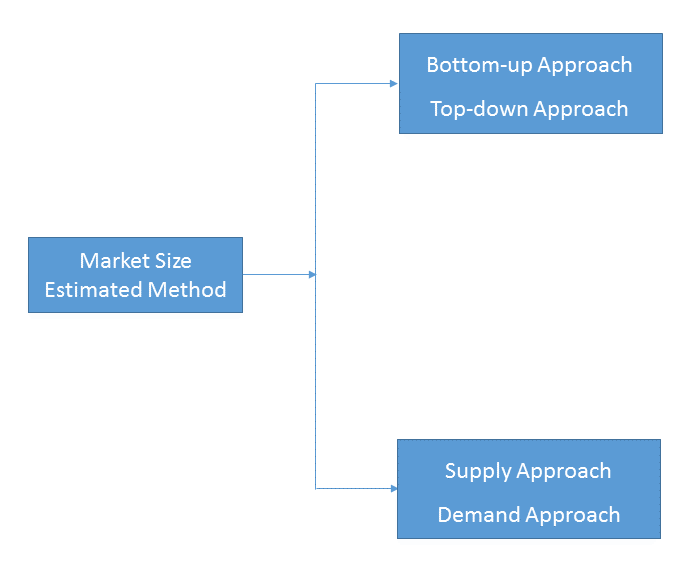
Bottom-up & top-down approach, supply & demand approach are the most important method which is used by HDIN Research to estimate the market size.
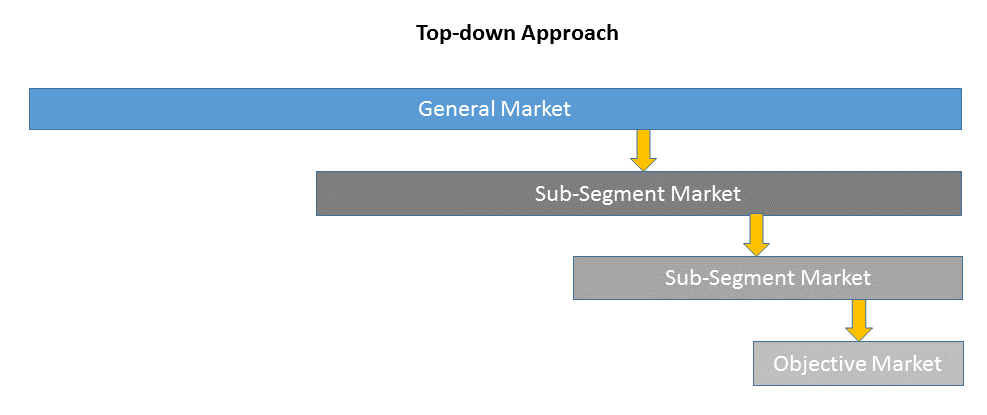
1)Top-down & Bottom-up Approach
Top-down approach uses a general market size figure and determines the percentage that the objective market represents.
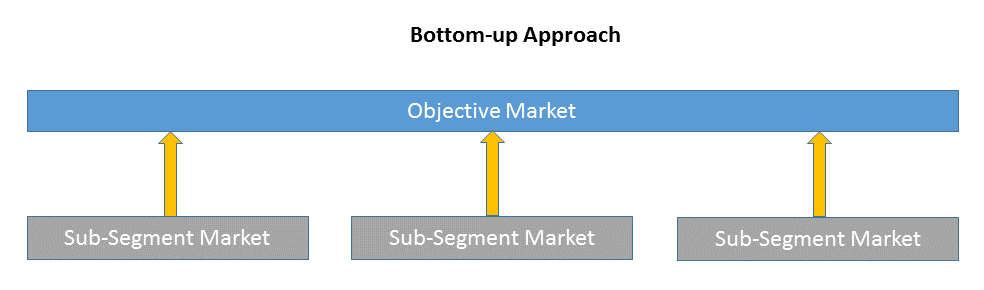
Bottom-up approach size the objective market by collecting the sub-segment information.
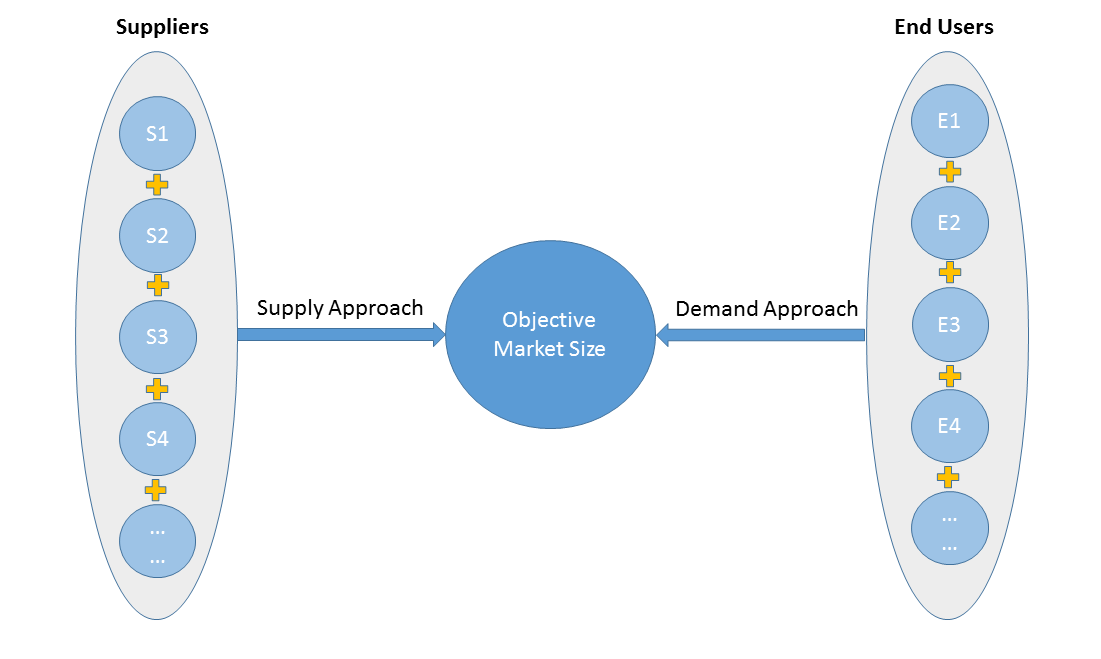
2)Supply & Demand Approach
Supply approach is based on assessments of the size of each competitor supplying the objective market.
Demand approach combine end-user data within a market to estimate the objective market size. It is sometimes referred to as bottom-up approach.
- Forecasting Methodology
- Numerous factors impacting the market trend are considered for forecast model:
- New technology and application in the future;
- New project planned/under contraction;
- Global and regional underlying economic growth;
- Threatens of substitute products;
- Industry expert opinion;
- Policy and Society implication.
- Analysis Tools
1)PEST Analysis
PEST Analysis is a simple and widely used tool that helps our client analyze the Political, Economic, Socio-Cultural, and Technological changes in their business environment.
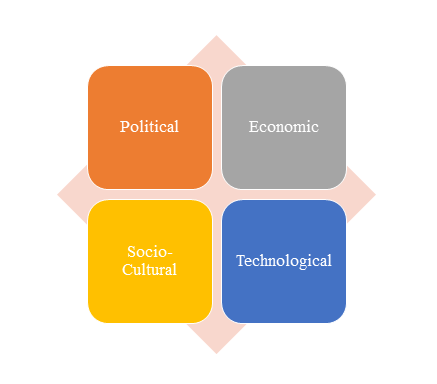
- Benefits of a PEST analysis:
- It helps you to spot business opportunities, and it gives you advanced warning of significant threats.
- It reveals the direction of change within your business environment. This helps you shape what you’re doing, so that you work with change, rather than against it.
- It helps you avoid starting projects that are likely to fail, for reasons beyond your control.
- It can help you break free of unconscious assumptions when you enter a new country, region, or market; because it helps you develop an objective view of this new environment.
2)Porter’s Five Force Model Analysis
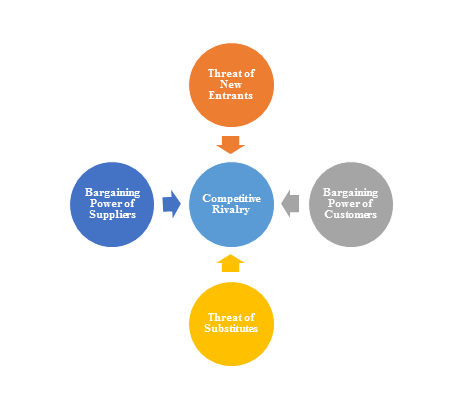
The Porter’s Five Force Model is a tool that can be used to analyze the opportunities and overall competitive advantage. The five forces that can assist in determining the competitive intensity and potential attractiveness within a specific area.
- Threat of New Entrants: Profitable industries that yield high returns will attract new firms.
- Threat of Substitutes: A substitute product uses a different technology to try to solve the same economic need.
- Bargaining Power of Customers: the ability of customers to put the firm under pressure, which also affects the customer's sensitivity to price changes.
- Bargaining Power of Suppliers: Suppliers of raw materials, components, labor, and services (such as expertise) to the firm can be a source of power over the firm when there are few substitutes.
- Competitive Rivalry: For most industries the intensity of competitive rivalry is the major determinant of the competitiveness of the industry.
3)Value Chain Analysis
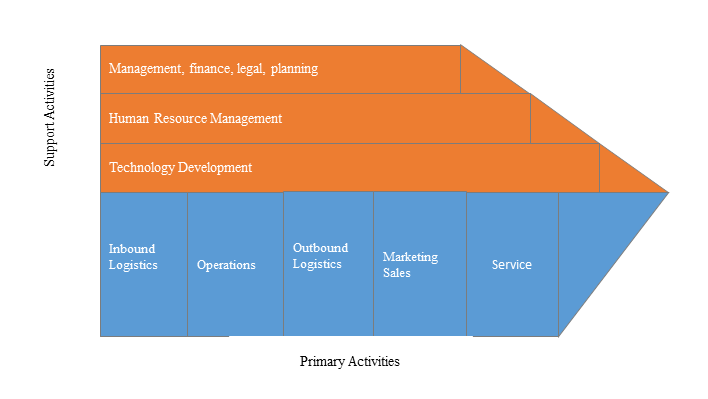
Value chain analysis is a tool to identify activities, within and around the firm and relating these activities to an assessment of competitive strength. Value chain can be analyzed by primary activities and supportive activities. Primary activities include: inbound logistics, operations, outbound logistics, marketing & sales, service. Support activities include: technology development, human resource management, management, finance, legal, planning.
4)SWOT Analysis
SWOT analysis is a tool used to evaluate a company's competitive position by identifying its strengths, weaknesses, opportunities and threats. The strengths and weakness is the inner factor; the opportunities and threats are the external factor. By analyzing the inner and external factors, the analysis can provide the detail information of the position of a player and the characteristics of the industry.
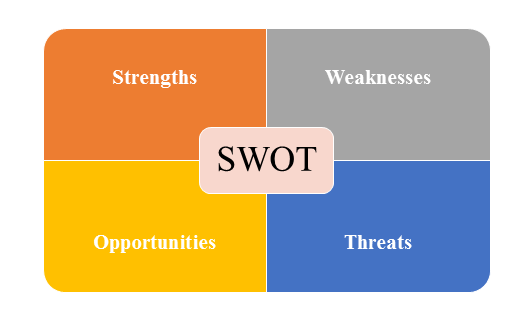
- Strengths describe what the player excels at and separates it from the competition
- Weaknesses stop the player from performing at its optimum level.
- Opportunities refer to favorable external factors that the player can use to give it a competitive advantage.
- Threats refer to factors that have the potential to harm the player.
- Data Sources
| Primary Sources | Secondary Sources |
|---|---|
| Face to face/Phone Interviews with market participants, such as: Manufactures; Distributors; End-users; Experts. Online Survey |
Government/International Organization Data: Annual Report/Presentation/Fact Book Internet Source Information Industry Association Data Free/Purchased Database Market Research Report Book/Journal/News |