Global Wound Debridement Market Strategic Outlook 2026-2031 Trauma Care Infrastructure and Regenerative Bio-Therapeutic Integration Analysis
- Single User License (1 Users) $ 3,500
- Team License (2~5 Users) $ 4,500
- Corporate License (>5 Users) $ 5,500
The global wound debridement market in 2026 occupies a foundational position in both acute trauma management and chronic wound care, serving as the essential first phase of wound bed preparation. By systematically removing necrotic, devitalized, and infected tissue—alongside resilient bacterial biofilms—debridement transforms stagnant or contaminated wounds into viable vascularized beds capable of granulation and closure. As of 2026, the market is valued between 4.1 billion USD and 6.9 billion USD, reflecting mature clinical adoption across developed healthcare systems paired with steady structural expansion in emerging economies. Projections indicate a compound annual growth rate (CAGR) ranging from 2.1 percent to 3.6 percent through 2031, driven by dual epidemiological pressures: the escalating global prevalence of diabetic and venous leg ulcers among aging populations, and an immense, persistent acute trauma burden.
Global trauma statistics illuminate the non-cyclical baseline demand for rapid surgical, hydrosurgical, and mechanical debridement. In 2025, nearly 50 million people sustained injuries and 1.3 million died as a result of road traffic accidents, positioning road injuries among the primary global causes of premature mortality and long-term disability. High-energy road trauma routinely generates complex, contaminated lacerations, crush injuries, and open fractures requiring urgent, multi-stage debridement in hospital trauma bays and operating rooms to prevent necrotizing infections and limb loss.
Concurrently, the strategic frontier of wound care in 2026 is defined by the seamless integration of wound bed preparation with autologous regenerative therapies. A milestone indicative of this convergence occurred on January 6, 2026, when Tiger BioSciences, a prominent innovator in regenerative medicine and tissue technology, announced the acquisition of Platelet-Rich Fibrin Matrix (PRFM) technology—encompassing proprietary PRFM tubes and a specialized wound dressing platform—from Bahia Medical Inc. This transaction illustrates a broader strategic imperative among advanced wound care players: capturing the full clinical continuum from initial necrotic tissue removal to immediate bioactive scaffolding. As payers scrutinize healing velocity and total episode-of-care costs, clinical protocols are shifting away from non-selective, painful traditional gauze toward precision modalities—including selective enzymatic gels, ultrasonic misting, monofilament mechanical pads, and point-of-care chemical biofilm disruptors—that rapidly prepare the wound bed for advanced regenerative closure.
Regional Market Analysis
The geographical dynamics of the wound debridement market reflect distinct healthcare reimbursement structures, chronic disease demographics, and regional trauma profiles.
● North America commands the largest revenue share, estimated between 38 percent and 42 percent. Regional demand is propelled by high incidence rates of diabetes-related foot ulcers, venous insufficiency, and obesity-associated surgical site complications, alongside well-established outpatient wound care clinic networks. In the United States, enzymatic debridement (such as collagenase ointments), hydrosurgical systems, and ultrasonic devices capture premium pricing, though evolving Medicare Local Coverage Determinations (LCDs) are intensifying pressure on manufacturers to demonstrate superior healing speed and cost-effectiveness. High-tech regenerative integrations, exemplified by Tiger BioSciences’ acquisition of Bahia Medical’s PRFM platform, experience their fastest early commercialization in North American specialized wound centers.
● Europe accounts for a mature and clinically rigorous market share ranging from 26 percent to 30 percent. European clinical guidelines strongly emphasize patient comfort, rapid biofilm management, and outpatient or home-nurse administration. Consequently, Europe serves as the global epicenter for innovative autolytic dressings, medical-grade honey formulations, chemical debridement gels, and gentle monofilament mechanical pads championed by regional powerhouses such as Lohmann & Rauscher, Mölnlycke, Coloplast, and RLS Global. Compliance with the EU Medical Device Regulation (MDR) has raised barriers to entry, favoring established players capable of financing extensive post-market clinical follow-up data.
● Asia Pacific represents the fastest-growing regional market, holding an estimated share between 18 percent and 22 percent. Rapid demographic aging in Japan, South Korea, and China is driving a sharp increase in chronic pressure injuries and diabetic wounds, while dense urban traffic patterns generate a disproportionately large share of the world’s nearly 50 million annual road trauma injuries. Within Taiwan(China), the healthcare system features advanced integrated diabetic foot management centers and high adoption rates of modern autolytic and ultrasonic debridement technologies reimbursed under comprehensive clinical frameworks. Across mainland China and India, hospital modernization initiatives are steadily shifting procurement from basic surgical blades toward standardized hydrosurgical and antimicrobial wound irrigation systems.
● South America and the Middle East and Africa (MEA) collectively account for 10 percent to 14 percent of global revenue. These regions bear an acute share of global road-injury morbidity, sustaining heavy demand for cost-effective surgical and mechanical debridement supplies in public trauma hospitals. Simultaneously, rapid expansion of private tertiary medical cities in the GCC nations and rising diabetic prevalence across Latin America (notably Brazil and Mexico) are accelerating uptake of imported advanced dressings, medical honey, and selective enzymatic debriding agents.
Application and Segmentation Analysis
Clinical deployment of debridement technologies is sharply segmented between high-acuity hospital settings and high-volume outpatient clinical environments, each optimizing for distinct operational variables.
● Hospitals represent the dominant revenue-generating application segment, absorbing complex acute trauma cases—including road traffic injuries, severe thermal burns, deep surgical dehiscence, and necrotizing soft-tissue infections. Hospital operating rooms and burn units rely heavily on high-energy selective modalities, specifically hydrosurgical debridement, low-frequency ultrasonic assisted wound therapy, and specialized sharp surgical instrumentation. In 2026, hospital value analysis committees (VACs) prioritize debridement platforms that reduce operating room occupancy time, minimize healthy tissue sacrifice, limit blood loss, and rapidly prepare complex trauma beds for skin grafting or dermal matrices.
● Clinics—spanning specialized outpatient wound care centers, podiatry practices, ambulatory surgical centers, and community health facilities—represent the primary volume growth engine. Managing chronic non-healing wounds requires repeatable, low-pain, rapid bedside interventions that do not necessitate general anesthesia or operating room scheduling. Consequently, clinics drive rapid adoption of single-use ergonomic sharp debridement tools, monofilament mechanical fiber pads, autolytic hydrofiber and hydrogel dressings, selective enzymatic ointments, and gentle chemical biofilm-softening gels. Increasingly, advanced clinics are pairing same-day bedside debridement directly with autologous regenerative dressings such as PRFM to accelerate closure trajectories within tight reimbursement windows.
Value Chain Analysis
The wound debridement value chain is structured around specialized material science, clinical validation moats, and recurring disposable utilization rather than heavy capital equipment sales.
Upstream Raw Materials and Biomaterials: Value creation originates with medical-grade biopolymers (carboxymethylcellulose, alginates, hydrogels), purified biological enzymes (clostridial collagenase, bromelain), specialized micro-polyester monofilaments, medical-grade stainless steel, and piezoelectric ultrasonic transducers. For emerging biological adjuncts like PRFM, precision blood-collection tubes and centrifugation consumables define upstream technical quality.
Device Engineering and Regulatory Validation: Manufacturers establish high competitive moats through selective tissue-sparing mechanisms—engineering devices that disrupt necrotic slough and biofilm while preserving viable micro-vasculature. Navigating FDA 510(k)/BLA pathways and EU MDR Class IIb/III clinical evidence requirements acts as a decisive filter separating tier-one multinationals from regional commodity producers.
High-Margin Recurring Consumables (Primary Value Pool): The highest and most resilient profit pools in 2026 reside in single-use procedural consumables and prescription topicals. Single-use hydrosurgery handpieces, sterile ultrasonic probes, disposable sharp curettes, mechanical debridement pads, and enzymatic tubes generate predictable annuity revenue linked directly to wound-visit frequency. Capital equipment placement (such as ultrasonic consoles) frequently operates on razor-and-blade or reagent-rental economics designed to lock in long-term disposable pull-through.
Downstream Distribution and Wound Center Management: Product adoption is heavily mediated by Group Purchasing Organizations (GPOs), integrated delivery networks (IDNs), and specialized outpatient wound center management companies. Suppliers that pair clinical consumables with digital wound-imaging software, clinician training academies, and reimbursement navigation services capture disproportionate wallet share.
Key Market Player Deep Profiles
● Smith & Nephew: As a premier global leader in advanced wound management, Smith & Nephew commands a uniquely balanced portfolio spanning high-tech surgical debridement and prescription enzymatic therapy. Its flagship VERSAJET Hydrosurgery System remains the gold standard in hospital burn units and trauma centers for precise tangential excision of necrotic tissue, while its SANTYL Ointment (collagenase) holds an entrenched, high-margin clinical franchise in selective enzymatic debridement across North America. In 2026, Smith & Nephew’s strategic dynamic centers on its "Wound Hygiene" and biofilm-eradication clinical pathways, linking debridement seamlessly to its ALLEVYN dressings and PICO negative pressure wound therapy (NPWT) ecosystems. Extensive global clinical education programs and direct hospital contracting reinforce its market leadership.
● B. Braun Melsungen: Headquartered in Germany, B. Braun leverages its deep surgical heritage and infection-prevention expertise to lead the antimicrobial wound cleansing and biofilm-disruption niche of the debridement landscape. Its flagship Prontosan portfolio—combining polyhexanide (PHMB) and betaine surfactant in irrigation solutions and hydrogels—is widely adopted across European and Asian hospitals to soften stubborn slough, penetrate bacterial biofilms, and facilitate atraumatic autolytic and mechanical debridement. Alongside its precision Aesculap surgical instrumentation for sharp hospital debridement, B. Braun’s 2026 strategy focuses on integrated infection-control protocols that reduce chronic wound bioburden and lower systemic antibiotic reliance in both acute trauma and outpatient settings.
● Coloplast: This Danish medtech specialist maintains a formidable presence in chronic wound care through its Biatain dressing platform and Purilon autolytic debridement hydrogels. Coloplast’s strategic positioning has been significantly elevated by its acquisition of Kerecis, integrating intact fish-skin biologics into its broader wound care continuum. In 2026, Coloplast’s strategy emphasizes pairing effective autolytic wound bed preparation with rapid biological closure for complex diabetic foot ulcers and burn injuries. Their core competitive advantage lies in superior exudate management engineering (3DFit Technology) that maintains optimal moisture balance for natural autolysis, backed by direct clinician engagement across Europe, North America, and expanding Asia-Pacific markets.
● ConvaTec: ConvaTec anchors its wound debridement influence in its proprietary Hydrofiber Technology (AQUACEL portfolio) and its globally championed "Wound Hygiene" clinical protocol, which institutionalizes early and repetitive debridement as a four-step standard of care for hard-to-heal wounds. By promoting autolytic debridement while locking away exudate and disrupting biofilm via Ag+ ionic silver formulations, ConvaTec captures substantial volume across hospitals and outpatient clinics. Furthermore, strategic commercial alliances in gentle chemical debridement and its InnovaMatrix placental tissue portfolio position ConvaTec in 2026 as an end-to-end partner spanning wound cleansing, debridement, antimicrobial protection, and regenerative closure.
● Mölnlycke Healthcare: Renowned globally for its Safetac soft silicone adhesive technology, Mölnlycke focuses on minimizing patient pain and periwound trauma during chronic wound management and autolytic debridement. Its product suite—including Normlgel, Mesalt hypertonic saline dressings, and Exufiber gelling fiber dressings—supports gentle, continuous debridement of sloughy wounds in hospitals and home-care settings. In 2026, Mölnlycke’s strategic dynamic integrates digital wound assessment partnerships and operating-room procedural trays (ProcedurePak), allowing hospital systems to standardize surgical debridement and post-operative dressing workflows while driving measurable reductions in nursing labor and dressing-change discomfort.
● Lohmann & Rauscher: Based in Germany and Austria, Lohmann & Rauscher (L&R) revolutionized outpatient and bedside mechanical debridement with the invention and global scaling of Debrisoft, a single-use monofilament polyester fiber pad and lolly system. Debrisoft enables nurses and clinicians to rapidly, virtually painlessly lift slough, debris, and biofilm from superficial and deep wounds in minutes without requiring sharp surgical credentialing. In 2026, L&R’s strategic layout capitalizes on shifting healthcare economics that favor nurse-led clinic and community debridement over expensive specialist visits. Complemented by Suprasorb autolytic and antimicrobial dressings, L&R commands strong clinical loyalty across Europe and is systematically expanding adoption in North America and Asia Pacific.
● Integra LifeSciences: Integra LifeSciences dominates the complex surgical reconstruction and regenerative dermal matrix market, maintaining a vital strategic stake in acute wound bed preparation. Its Tissue Technologies and Codman Specialty Surgical portfolios supply hospital trauma, burn, and plastic surgery suites with precision surgical instrumentation, ultrasonic tissue ablation tools, and world-leading dermal regeneration templates (such as Integra Bilayer Matrix and PriMatrix). In 2026, Integra’s strategic focus emphasizes clinical synergy: providing the precision surgical debridement capability required to create meticulously vascularized wound beds that maximize take-rates for its high-margin reconstructive matrices following severe road trauma or thermal burns.
● Arobella Medical: A specialized innovator headquartered in the United States, Arobella Medical focuses exclusively on low-frequency, contact and non-contact ultrasonic wound debridement via its Qoustic Wound Therapy System. Using dome-shaped ultrasonic curettes delivering gentle cavitation energy through sterile saline irrigation, the Qoustic system selectively fragments necrotic tissue and disrupts biofilm while preserving viable granulation tissue and minimizing aerosolization risks. In 2026, Arobella’s strategic dynamic targets high-volume hospital outpatient wound centers and podiatry clinics seeking a tissue-sparing, low-pain alternative to sharp excisional surgery, generating high-margin recurring revenue through single-use sterile ultrasonic curettes and irrigation tubing sets.
● Advancis Medical: Operating from the United Kingdom, Advancis Medical is a global specialist in medical-grade honey wound care, leveraging its Activon Manuka honey portfolio (tubes, tulle, and alginate dressings) for osmotic and autolytic debridement. Medical-grade Manuka honey naturally draws fluid through necrotic tissue to facilitate painless slough separation while simultaneously delivering broad-spectrum antimicrobial activity against multi-drug-resistant wound pathogens. In 2026, Advancis Medical’s strategy capitalizes on mounting global antimicrobial stewardship mandates and patient demand for natural, non-cytotoxic wound therapies, maintaining strong NHS institutional positioning in the UK while scaling distribution across Europe, the Middle East, and North America.
● RLS Global: This Swedish medtech innovator developed ChloraSolv, a patented, gentle chemical debridement gel utilizing a buffered amino-acid and low-concentration sodium hypochlorite formulation to selectively soften and dissolve necrotic tissue and slough in hard-to-heal lower extremity ulcers. Designed for effortless application in outpatient clinics and home care without sharp-instrument risk, ChloraSolv addresses a major clinical gap between slow autolytic dressings and invasive surgical debridement. In 2026, RLS Global’s commercial trajectory centers on scaling European and international market penetration through strategic distribution partnerships with major wound care multinationals, validating health-economic outcomes that reduce overall nursing visits and accelerate ulcer healing timelines.
● DeRoyal Industries: As a diversified, vertically integrated United States medical manufacturer, DeRoyal supplies hospitals and ambulatory surgery centers with extensive wound care dressings, autolytic hydrogels, hydrocolloids, and customized sterile sharp-debridement procedural trays. DeRoyal’s 2026 core competency rests in lean domestic manufacturing, flexible private-label kitting, and deep integration into acute-care hospital supply chains. By bundling sterile curettes, forceps, irrigation syringes, and post-debridement dressings into procedure-specific kits, DeRoyal helps hospital emergency departments and outpatient wound clinics streamline clinical workflows, reduce packaging waste, and tighten per-case procedural supply costs under value-based purchasing models.
● Sanara MedTech: Focused aggressively on the United States surgical and chronic wound care markets, Sanara MedTech combines targeted wound bed preparation with biological wound healing solutions. Its BIAKŌS Antimicrobial Skin and Wound Cleanser and Gel directly tackle mature bacterial biofilms and necrotic bioburden, preparing compromised tissue beds for its flagship CellerateRX Surgical Activated Collagen powder and gel. In 2026, Sanara MedTech’s strategic dynamic emphasizes multi-setting commercial expansion across acute hospitals, ambulatory surgical centers, and post-acute clinics, leveraging real-world clinical evidence and value-based care partnerships to demonstrate reduced surgical site infections and faster chronic wound closure.
● EZ Debride: Representing focused procedural innovation in outpatient wound care, EZ Debride engineered a patented, single-use sharp debridement instrument designed specifically to make bedside excisional debridement faster, safer, and more ergonomically controlled for physicians, podiatrists, and advanced practice nurses. Featuring a specialized stainless-steel scoop with controlled depth geometry, the device minimizes the risk of inadvertent deep tissue damage compared to traditional scalpels and curettes. In 2026, EZ Debride’s strategic focus centers on rapid clinic adoption across North America, tapping into the high-margin disposable procedural market by elevating safety standards and operational speed during routine outpatient debridement visits.
Opportunities and Challenges
The wound debridement market is navigating a delicate balance between breakthrough biological integration and stringent healthcare cost containment.
● Opportunities: The most compelling strategic opportunity lies in the convergence of selective debridement and autologous regenerative therapeutics—exemplified by Tiger BioSciences’ January 2026 acquisition of Bahia Medical’s PRFM technology. Pairing rapid, tissue-sparing bedside debridement with immediate autologous fibrin matrices dramatically compresses time-to-closure for complex chronic wounds. Simultaneously, escalating global antibiotic resistance is accelerating investment in non-antibiotic biofilm-disrupting agents, ultrasonic therapies, and medical-grade honey. In emerging economies, modernization of trauma systems to address the global burden of nearly 50 million annual road injuries creates substantial volume expansion for standardized surgical and hydrosurgical debridement platforms.
● Challenges: Market growth is tempered by tightening reimbursement frameworks across developed economies, particularly in the United States, where payer scrutiny over repeated sharp debridement billing and high-cost adjunctive therapies constrains pricing power. Capital-intensive modalities—such as ultrasonic and hydrosurgical consoles—face extended hospital procurement cycles amidst strained acute-care budgets. Furthermore, a persistent global shortage of certified wound, ostomy, and continence nurses (WOCNs) limits the capacity of outpatient clinics to deliver complex bedside debridement, forcing manufacturers to engineer increasingly intuitive, fail-safe tools suitable for generalist nursing staff.
Macroeconomic and Geopolitical Influences
The 2026 wound debridement market operates within a macroeconomic environment characterized by persistent hospital wage inflation and elevated capital borrowing costs. Because nursing and operating room labor represent the steepest cost components in acute and chronic wound care, hospital procurement committees increasingly evaluate debridement technologies through a "Total Episode-of-Care" lens rather than unit acquisition price. This macroeconomic dynamic directly favors rapid-acting mechanical pads, pre-assembled sterile debridement trays, and single-use ergonomic tools that slash procedure duration and eliminate instrument reprocessing overhead, even when carrying a modest per-unit premium over traditional gauze or reusable curettes.
Geopolitically, medical supply chain resilience and regulatory divergence are reshaping competitive footprints. Ongoing tariff pressures on medical-grade stainless steel, specialized synthetic polymers, and electronic ultrasonic subcomponents have prompted multinational OEMs to establish dual-regional manufacturing hubs across North America, Europe, and Asia Pacific. Simultaneously, the rigorous clinical evidence demands of the EU Medical Device Regulation (MDR) have triggered industry consolidation, as smaller single-product innovators increasingly license their technologies to or merge with capitalized strategics capable of funding multi-center clinical trials and global compliance infrastructures. As chronic metabolic disease prevalence climbs alongside stubbornly high global trauma rates, wound debridement platforms that seamlessly bridge efficient necrotic tissue removal with accelerated regenerative healing will anchor long-term value capture across global healthcare systems through 2031.
1.1 Study Scope 1
1.2 Research Methodology 2
1.2.1 Data Sources 2
1.2.2 Assumptions 3
1.3 Abbreviations and Acronyms 5
Chapter 2 Global Wound Debridement Market Dynamics 6
2.1 Market Drivers 6
2.2 Market Restraints 7
2.3 Macroeconomic Factors and Their Impact on Wound Care Expenditure 8
2.4 Geopolitical Conflicts and Medical Supply Chain Implications 9
2.5 Industry Trends: Shift Toward Ultrasonic and Enzymatic Therapies 10
2.6 Regulatory Landscape and Reimbursement Policies 11
Chapter 3 Global Wound Debridement Market by Method 12
3.1 Autolytic and Enzymatic Debridement 12
3.2 Mechanical and Hydrosurgery Debridement 13
3.3 Ultrasonic Debridement 14
3.4 Surgical and Sharp Debridement 15
Chapter 4 Global Wound Debridement Market by Application 17
4.1 Hospitals 17
4.2 Clinics 19
Chapter 5 Global Wound Debridement Market by Region 21
5.1 Global Wound Debridement Market Size by Region (2021-2031) 21
5.2 North America Wound Debridement Market Share 22
5.3 Europe Wound Debridement Market Share 23
5.4 Asia-Pacific Wound Debridement Market Share 24
5.5 Latin America Wound Debridement Market Share 25
5.6 Middle East & Africa Wound Debridement Market Share 25
Chapter 6 North America Wound Debridement Market Analysis 26
6.1 North America Market Overview 26
6.2 North America Market by Method 27
6.3 North America Market by Application 28
6.4 North America Market by Key Regions 29
6.4.1 United States 29
6.4.2 Canada 30
6.4.3 Mexico 30
Chapter 7 Europe Wound Debridement Market Analysis 31
7.1 Europe Market Overview 31
7.2 Europe Market by Method 32
7.3 Europe Market by Application 33
7.4 Europe Market by Key Regions 34
7.4.1 Germany 34
7.4.2 United Kingdom 34
7.4.3 France 35
7.4.4 Italy 35
7.4.5 Spain 35
Chapter 8 Asia-Pacific Wound Debridement Market Analysis 36
8.1 Asia-Pacific Market Overview 36
8.2 Asia-Pacific Market by Method 37
8.3 Asia-Pacific Market by Application 38
8.4 Asia-Pacific Market by Key Regions 39
8.4.1 China 39
8.4.2 Japan 40
8.4.3 India 40
8.4.4 South Korea 41
8.4.5 Taiwan (China) 41
Chapter 9 Latin America & Middle East and Africa Wound Debridement Market Analysis 42
9.1 Latin America Market Overview 42
9.2 Latin America Market by Key Regions 43
9.2.1 Brazil 43
9.2.2 Argentina 43
9.3 Middle East and Africa Market Overview 44
9.4 Middle East and Africa Market by Key Regions 45
9.4.1 GCC 45
9.4.2 South Africa 45
Chapter 10 Industry Value Chain, Manufacturing Process and Patent Analysis 46
10.1 Wound Debridement Value Chain Analysis 46
10.2 Raw Material Sourcing and Medical Device Manufacturing Process 47
10.3 Patent Landscape and Technological Innovations 48
10.4 Sales, Hospital Procurement, and Distribution Channels 50
Chapter 11 Competitive Landscape 51
11.1 Market Concentration Rate 51
11.2 Global Wound Debridement Market Share by Company (2021-2026) 52
11.3 Tier 1, Tier 2, and Tier 3 Companies 54
11.4 Mergers, Acquisitions, and Strategic Alliances 55
Chapter 12 Company Profiles 56
12.1 Smith & Nephew 56
12.1.1 Company Introduction 56
12.1.2 Smith & Nephew Wound Debridement Revenue, Cost and Gross Profit Margin (2021-2026) 57
12.1.3 SWOT Analysis 58
12.1.4 R&D Investments and Clinical Marketing Strategies 59
12.2 B. Braun Melsungen 61
12.2.1 Company Introduction 61
12.2.2 B. Braun Melsungen Wound Debridement Revenue, Cost and Gross Profit Margin (2021-2026) 62
12.2.3 SWOT Analysis 63
12.2.4 R&D Investments and Marketing Strategies 64
12.3 Coloplast 65
12.3.1 Company Introduction 65
12.3.2 Coloplast Wound Debridement Revenue, Cost and Gross Profit Margin (2021-2026) 66
12.3.3 SWOT Analysis 67
12.3.4 Chronic Wound Care Portfolio and Marketing Strategies 68
12.4 ConvaTec 69
12.4.1 Company Introduction 69
12.4.2 ConvaTec Wound Debridement Revenue, Cost and Gross Profit Margin (2021-2026) 70
12.4.3 SWOT Analysis 71
12.4.4 Hydrofiber Technology and Marketing Strategies 72
12.5 Molnlycke Healthcare 73
12.5.1 Company Introduction 73
12.5.2 Molnlycke Healthcare Wound Debridement Revenue, Cost and Gross Profit Margin (2021-2026) 74
12.5.3 SWOT Analysis 75
12.5.4 R&D Investments and Global Hospital Penetration Strategies 76
12.6 Lohmann & Rauscher 78
12.6.1 Company Introduction 78
12.6.2 Lohmann & Rauscher Wound Debridement Revenue, Cost and Gross Profit Margin (2021-2026) 79
12.6.3 SWOT Analysis 80
12.6.4 Mechanical Debridement Pad Innovation and Marketing Strategies 81
12.7 Integra Lifesciences 82
12.7.1 Company Introduction 82
12.7.2 Integra Lifesciences Wound Debridement Revenue, Cost and Gross Profit Margin (2021-2026) 83
12.7.3 SWOT Analysis 84
12.7.4 Regenerative Tissue Synergy and Marketing Strategies 85
12.8 Arobella Medical 86
12.8.1 Company Introduction 86
12.8.2 Arobella Medical Wound Debridement Revenue, Cost and Gross Profit Margin (2021-2026) 87
12.8.3 SWOT Analysis 87
12.8.4 Ultrasonic Debridement Specialization and Strategies 88
12.9 Advancis Medical 89
12.9.1 Company Introduction 89
12.9.2 Advancis Medical Wound Debridement Revenue, Cost and Gross Profit Margin (2021-2026) 90
12.9.3 SWOT Analysis 90
12.9.4 Medical Honey Autolytic Solutions and Marketing Strategies 91
12.10 RLS Global 92
12.10.1 Company Introduction 92
12.10.2 RLS Global Wound Debridement Revenue, Cost and Gross Profit Margin (2021-2026) 93
12.10.3 SWOT Analysis 93
12.10.4 Enzymatic Gel Technology and Clinical Strategies 94
12.11 DeRoyal Industries 95
12.11.1 Company Introduction 95
12.11.2 DeRoyal Industries Wound Debridement Revenue, Cost and Gross Profit Margin (2021-2026) 96
12.11.3 SWOT Analysis 97
12.11.4 Surgical Debridement Kits and Distribution Strategies 98
12.12 Sanara MedTech 99
12.12.1 Company Introduction 99
12.12.2 Sanara MedTech Wound Debridement Revenue, Cost and Gross Profit Margin (2021-2026) 100
12.12.3 SWOT Analysis 101
12.12.4 Biologics Integration and Outpatient Clinic Strategies 102
12.13 EZ Debride 103
12.13.1 Company Introduction 103
12.13.2 EZ Debride Wound Debridement Revenue, Cost and Gross Profit Margin (2021-2026) 104
12.13.3 SWOT Analysis 105
12.13.4 Single-Use Sharp Debridement Devices and Marketing Strategies 106
Chapter 13 Global Wound Debridement Market Forecast (2027-2031) 107
13.1 Global Wound Debridement Market Size Forecast (2027-2031) 107
13.2 Global Wound Debridement Market Forecast by Method (2027-2031) 108
13.3 Global Wound Debridement Market Forecast by Application (2027-2031) 110
13.4 Global Wound Debridement Market Forecast by Region (2027-2031) 111
Chapter 14 Research Findings and Conclusion 113
Table 2 Global Wound Debridement Market Size by Application (2021-2026) 18
Table 3 Global Wound Debridement Market Size by Region (2021-2026) 22
Table 4 North America Wound Debridement Market Size by Method (2021-2026) 27
Table 5 North America Wound Debridement Market Size by Application (2021-2026) 28
Table 6 North America Wound Debridement Market Size by Key Regions (2021-2026) 29
Table 7 Europe Wound Debridement Market Size by Method (2021-2026) 32
Table 8 Europe Wound Debridement Market Size by Application (2021-2026) 33
Table 9 Europe Wound Debridement Market Size by Key Regions (2021-2026) 34
Table 10 Asia-Pacific Wound Debridement Market Size by Method (2021-2026) 37
Table 11 Asia-Pacific Wound Debridement Market Size by Application (2021-2026) 38
Table 12 Asia-Pacific Wound Debridement Market Size by Key Regions (2021-2026) 39
Table 13 Latin America Wound Debridement Market Size by Key Regions (2021-2026) 43
Table 14 Middle East and Africa Wound Debridement Market Size by Key Regions (2021-2026) 45
Table 15 Global Wound Debridement Revenue by Company (2021-2026) 52
Table 16 Global Wound Debridement Market Share by Company (2021-2026) 53
Table 17 Smith & Nephew Wound Debridement Revenue, Cost and Gross Profit Margin (2021-2026) 57
Table 18 B. Braun Melsungen Wound Debridement Revenue, Cost and Gross Profit Margin (2021-2026) 62
Table 19 Coloplast Wound Debridement Revenue, Cost and Gross Profit Margin (2021-2026) 66
Table 20 ConvaTec Wound Debridement Revenue, Cost and Gross Profit Margin (2021-2026) 70
Table 21 Molnlycke Healthcare Wound Debridement Revenue, Cost and Gross Profit Margin (2021-2026) 74
Table 22 Lohmann & Rauscher Wound Debridement Revenue, Cost and Gross Profit Margin (2021-2026) 79
Table 23 Integra Lifesciences Wound Debridement Revenue, Cost and Gross Profit Margin (2021-2026) 83
Table 24 Arobella Medical Wound Debridement Revenue, Cost and Gross Profit Margin (2021-2026) 87
Table 25 Advancis Medical Wound Debridement Revenue, Cost and Gross Profit Margin (2021-2026) 90
Table 26 RLS Global Wound Debridement Revenue, Cost and Gross Profit Margin (2021-2026) 93
Table 27 DeRoyal Industries Wound Debridement Revenue, Cost and Gross Profit Margin (2021-2026) 96
Table 28 Sanara MedTech Wound Debridement Revenue, Cost and Gross Profit Margin (2021-2026) 100
Table 29 EZ Debride Wound Debridement Revenue, Cost and Gross Profit Margin (2021-2026) 104
Table 30 Global Wound Debridement Market Size Forecast by Method (2027-2031) 108
Table 31 Global Wound Debridement Market Size Forecast by Application (2027-2031) 110
Table 32 Global Wound Debridement Market Size Forecast by Region (2027-2031) 111
Figure 1 Research Methodology Flowchart 2
Figure 2 Global Wound Debridement Market Size (2021-2031) 6
Figure 3 Healthcare Expenditure Trends and Chronic Wound Prevalence 8
Figure 4 Impact of Geopolitical Conflicts on Medical Polymer and Bio-Enzyme Supply Chains 9
Figure 5 Global Wound Debridement Market Share by Method in 2026 12
Figure 6 Global Wound Debridement Market Share by Application in 2026 17
Figure 7 Global Wound Debridement Market Share by Region in 2026 21
Figure 8 North America Wound Debridement Market Size and Growth (2021-2031) 26
Figure 9 Europe Wound Debridement Market Size and Growth (2021-2031) 31
Figure 10 Asia-Pacific Wound Debridement Market Size and Growth (2021-2031) 36
Figure 11 Latin America Wound Debridement Market Size and Growth (2021-2031) 42
Figure 12 Middle East and Africa Wound Debridement Market Size and Growth (2021-2031) 44
Figure 13 Wound Debridement Industry Value Chain 46
Figure 14 Global Wound Debridement Patent Filings by Year (2021-2026) 48
Figure 15 Market Concentration Rate (CR5 and CR10) in 2026 51
Figure 16 Smith & Nephew Wound Debridement Market Share (2021-2026) 57
Figure 17 B. Braun Melsungen Wound Debridement Market Share (2021-2026) 62
Figure 18 Coloplast Wound Debridement Market Share (2021-2026) 66
Figure 19 ConvaTec Wound Debridement Market Share (2021-2026) 70
Figure 20 Molnlycke Healthcare Wound Debridement Market Share (2021-2026) 74
Figure 21 Lohmann & Rauscher Wound Debridement Market Share (2021-2026) 79
Figure 22 Integra Lifesciences Wound Debridement Market Share (2021-2026) 83
Figure 23 Arobella Medical Wound Debridement Market Share (2021-2026) 87
Figure 24 Advancis Medical Wound Debridement Market Share (2021-2026) 90
Figure 25 RLS Global Wound Debridement Market Share (2021-2026) 93
Figure 26 DeRoyal Industries Wound Debridement Market Share (2021-2026) 96
Figure 27 Sanara MedTech Wound Debridement Market Share (2021-2026) 100
Figure 28 EZ Debride Wound Debridement Market Share (2021-2026) 104
Figure 29 Global Wound Debridement Market Forecast by Method (2027-2031) 108
Figure 30 Global Wound Debridement Market Forecast by Application (2027-2031) 110
Research Methodology
- Market Estimated Methodology:
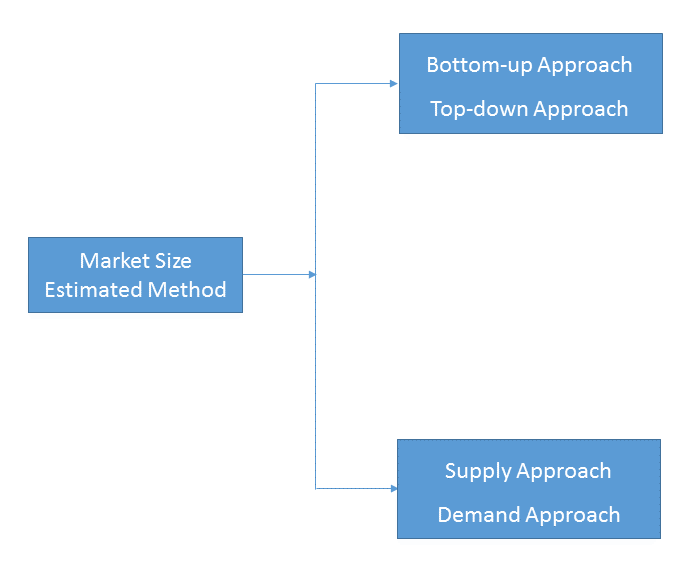
Bottom-up & top-down approach, supply & demand approach are the most important method which is used by HDIN Research to estimate the market size.
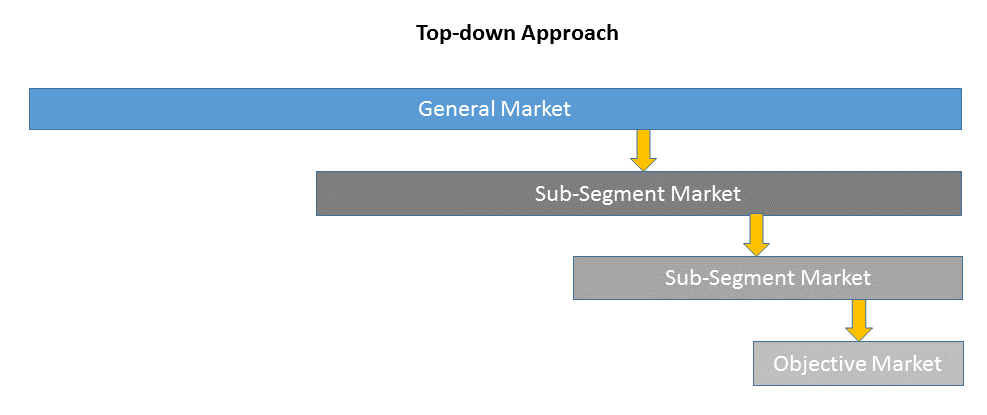
1)Top-down & Bottom-up Approach
Top-down approach uses a general market size figure and determines the percentage that the objective market represents.
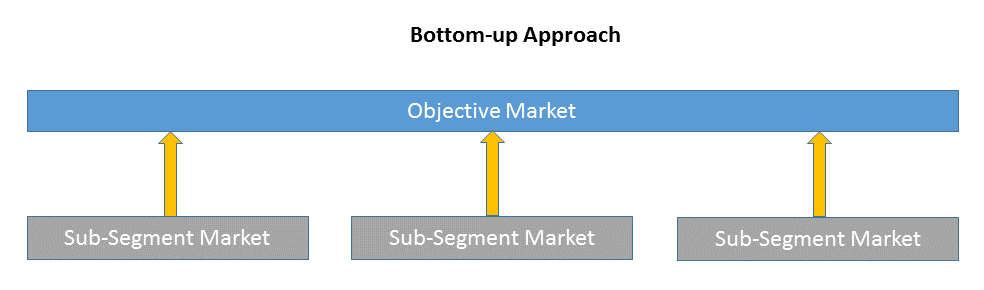
Bottom-up approach size the objective market by collecting the sub-segment information.
2)Supply & Demand Approach
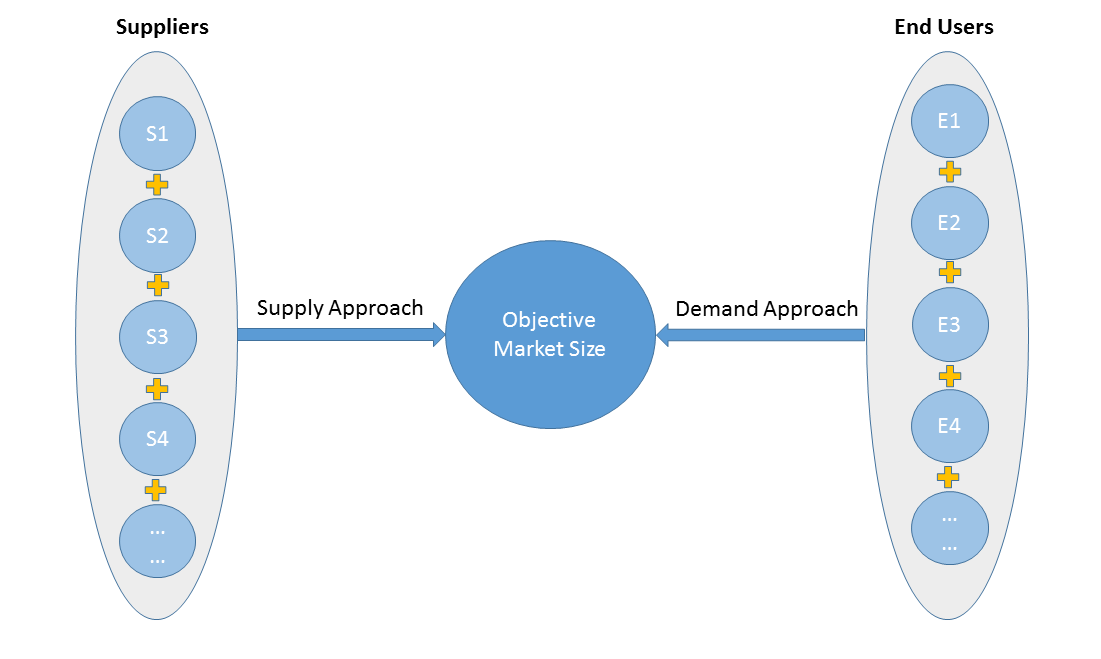
Supply approach is based on assessments of the size of each competitor supplying the objective market.
Demand approach combine end-user data within a market to estimate the objective market size. It is sometimes referred to as bottom-up approach.
- Forecasting Methodology
- Numerous factors impacting the market trend are considered for forecast model:
- New technology and application in the future;
- New project planned/under contraction;
- Global and regional underlying economic growth;
- Threatens of substitute products;
- Industry expert opinion;
- Policy and Society implication.
- Analysis Tools
1)PEST Analysis
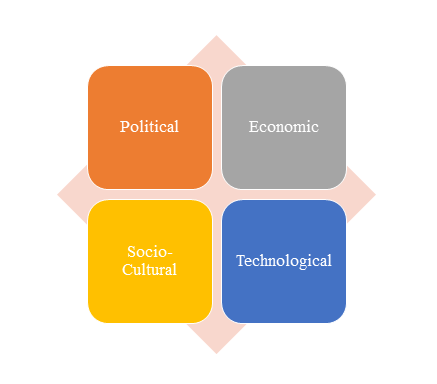
PEST Analysis is a simple and widely used tool that helps our client analyze the Political, Economic, Socio-Cultural, and Technological changes in their business environment.
- Benefits of a PEST analysis:
- It helps you to spot business opportunities, and it gives you advanced warning of significant threats.
- It reveals the direction of change within your business environment. This helps you shape what you’re doing, so that you work with change, rather than against it.
- It helps you avoid starting projects that are likely to fail, for reasons beyond your control.
- It can help you break free of unconscious assumptions when you enter a new country, region, or market; because it helps you develop an objective view of this new environment.
2)Porter’s Five Force Model Analysis
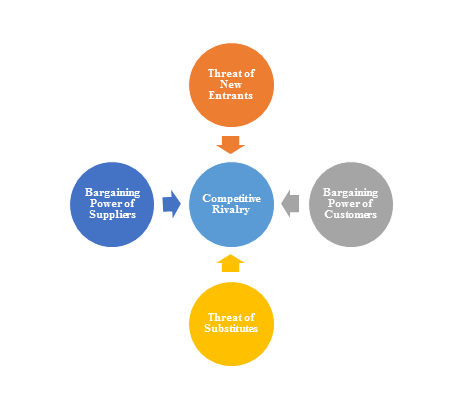
The Porter’s Five Force Model is a tool that can be used to analyze the opportunities and overall competitive advantage. The five forces that can assist in determining the competitive intensity and potential attractiveness within a specific area.
- Threat of New Entrants: Profitable industries that yield high returns will attract new firms.
- Threat of Substitutes: A substitute product uses a different technology to try to solve the same economic need.
- Bargaining Power of Customers: the ability of customers to put the firm under pressure, which also affects the customer's sensitivity to price changes.
- Bargaining Power of Suppliers: Suppliers of raw materials, components, labor, and services (such as expertise) to the firm can be a source of power over the firm when there are few substitutes.
- Competitive Rivalry: For most industries the intensity of competitive rivalry is the major determinant of the competitiveness of the industry.
3)Value Chain Analysis
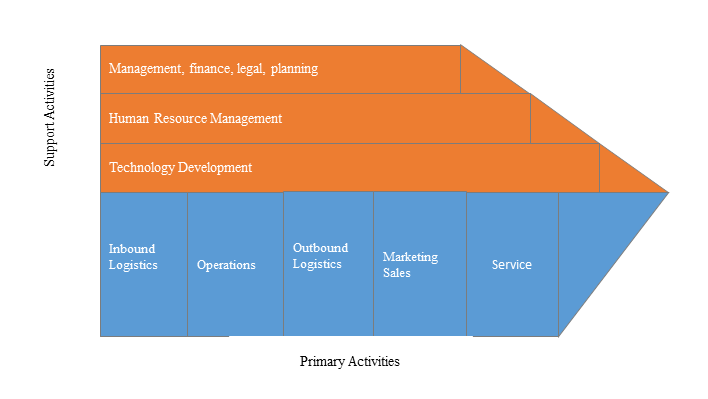
Value chain analysis is a tool to identify activities, within and around the firm and relating these activities to an assessment of competitive strength. Value chain can be analyzed by primary activities and supportive activities. Primary activities include: inbound logistics, operations, outbound logistics, marketing & sales, service. Support activities include: technology development, human resource management, management, finance, legal, planning.
4)SWOT Analysis
SWOT analysis is a tool used to evaluate a company's competitive position by identifying its strengths, weaknesses, opportunities and threats. The strengths and weakness is the inner factor; the opportunities and threats are the external factor. By analyzing the inner and external factors, the analysis can provide the detail information of the position of a player and the characteristics of the industry.
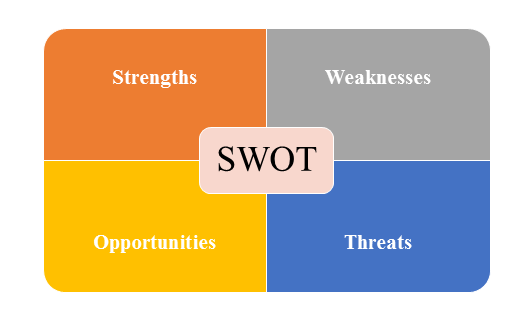
- Strengths describe what the player excels at and separates it from the competition
- Weaknesses stop the player from performing at its optimum level.
- Opportunities refer to favorable external factors that the player can use to give it a competitive advantage.
- Threats refer to factors that have the potential to harm the player.
- Data Sources
| Primary Sources | Secondary Sources |
|---|---|
| Face to face/Phone Interviews with market participants, such as: Manufactures; Distributors; End-users; Experts. Online Survey |
Government/International Organization Data: Annual Report/Presentation/Fact Book Internet Source Information Industry Association Data Free/Purchased Database Market Research Report Book/Journal/News |