Global Keyboard Pedal Market Strategic Outlook 2026-2031 Portable Keyboard Attachment Dynamics and Omnichannel Music Retail Analysis
- Single User License (1 Users) $ 3,500
- Team License (2~5 Users) $ 4,500
- Corporate License (>5 Users) $ 5,500
The global keyboard pedal market in 2026 occupies a resilient, high-attachment niche within the broader musical instruments (MI) and professional audio ecosystem. Encompassing binary sustain footswitches, acoustic-style weighted damper pedals with continuous half-pedaling resolution, assignable expression and volume controllers, and multi-pedal console units, keyboard pedals serve as the primary physical bridge translating lower-limb articulation into expressive musical dynamics. As of 2026, the global market is valued between 130 million USD and 240 million USD, projected to expand at a compound annual growth rate (CAGR) ranging from 3.7 percent to 6.4 percent through 2031. Growth is structurally anchored by sustained worldwide proliferation of portable digital keyboards, stage synthesizers, and compact MIDI controllers across home production studios, educational institutions, and touring live venues.
Unlike standalone capital musical instruments, demand velocity in the keyboard pedal market is governed heavily by two interdependent levers: primary hardware refresh cycles and omnichannel retail attachment strategies. On January 15, 2026, industry bellwether Yamaha Corporation announced the release of the PSR-E483 and PSR-E583, expanding its globally popular PSR series of portable keyboards. Featuring broadened voice libraries, enhanced automatic accompaniments, and performance-oriented production controls designed to transition seamlessly from home practice to live stage performance, such high-volume portable launches act as a direct demand multiplier for aftermarket pedals. Because entry- and mid-tier portable keyboards typically ship without acoustic-style sustain or assignable expression pedals included in the box, every major portable hardware refresh triggers an immediate wave of secondary pedal purchases.
Simultaneously, the downstream commercial architecture governing MI accessory distribution is undergoing active institutional modernization. On November 12, 2026, Pitbull Audio—one of North America’s prominent retailers of musical instruments, professional audio equipment, and music production technology—announced its acquisition and reorganization by an experienced music industry management team partnered with Balenca Venture Capital Company, LLC. This capital infusion reflects broader private-investor conviction in digitally agile, high-engagement MI retail ecosystems. In a fragmented accessory category like keyboard pedals, sophisticated retail merchandising, curated keyboard starter bundles, and expert digital consultation directly dictate brand share and gross margin capture.
Regional Market Analysis
The geographical performance of the keyboard pedal market mirrors regional density of live performance culture, institutional music education funding, and omnichannel MI retail maturity.
● North America commands the largest revenue share, estimated between 36 percent and 40 percent. Regional leadership is propelled by powerhouse omnichannel retailers—including Sweetwater, Kraft Music, Ted Brown Music, West Music, and Canada’s Long & McQuade—which maintain industry-leading accessory attachment rates through consultative sales engineering and pre-packaged instrument bundles. The November 2026 acquisition and reorganization of Pitbull Audio backed by Balenca Venture Capital underscores continued capital allocation toward capturing North America’s lucrative gigging, worship-band, and home-studio creator segments. Institutional K-12 school music lab budgets provide an additional counter-cyclical floor for durable sustain pedals.
● Europe accounts for a mature, quality-oriented market share ranging from 25 percent to 29 percent. European keyboardists exhibit a strong preference for weighted 88-key digital pianos, classical conservatory practice setups, and studio synthesizer rigs, driving higher average selling prices (ASPs) through continuous half-damper pedals and three-pedal console assemblies. Established regional leaders—such as Fair Deal Music in the United Kingdom and The Music House PHILIPPOS NAKAS across Greece and Southeastern Europe—anchor both retail and specialized music-school procurement while maintaining stringent compliance with EU RoHS and WEEE electronic accessory regulations.
● Asia Pacific represents the world’s primary manufacturing engine and fastest-expanding consumer market, holding an estimated share between 24 percent and 28 percent. Japan remains a cornerstone of both engineering standards (led by Yamaha) and high-velocity e-commerce distribution (led by Sound House), while Swee Lee Music drives modern creator engagement across Southeast Asia and Belfield Music anchors Oceania. Within Taiwan(China), the ecosystem contributes critical precision electro-mechanical components—including high-durability potentiometers, optical/Hall-effect sensors, and die-cast alloy housings—while supporting a vibrant local studio production and live-house performance scene. Rapid middle-class music education adoption across mainland China and India continues to accelerate volume expansion.
● South America and the Middle East and Africa (MEA) collectively represent 6 percent to 10 percent of global revenue. Growth across Latin America (notably Brazil and Mexico) is fueled by strong contemporary church/worship keyboard demand and expanding live concert circuits requiring rugged, universal polarity-switchable sustain pedals. In the MEA region, growing private music academies and hospitality live-entertainment hubs in the GCC countries sustain steady import demand for mid-to-premium stage keyboard accessories.
Application and Segmentation Analysis
Within the overarching Musical Performance application domain, keyboard pedal engineering and purchasing criteria diverge sharply across distinct performance contexts and technological tiers.
● Live Stage and Touring Performance represents the most demanding durability tier. Touring keyboardists, session players, and worship-band musicians utilizing stage pianos, synthesizers, and stage-ready portable arrangers (such as Yamaha’s newly released PSR-E583) require heavy-duty chrome-plated steel sustain pedals, non-slip vulcanized rubber undersides that grip slick stage flooring, and rugged continuous expression pedals capable of surviving constant transport. Dual-pedal and triple-pedal portable stage units—alongside programmable MIDI/USB-C foot controllers—enable performers to trigger patch changes, rotary speaker speeds, and filter sweeps hands-free during live sets.
● Studio Music Production and Content Creation constitute the fastest-evolving technical segment. Modern bedroom producers, film composers, and hybrid software-hardware creators demand continuous half-damper resolution (MIDI CC64) to capture authentic acoustic piano sympathy resonance within virtual instrument libraries, paired with smooth-throw optical or Hall-effect expression pedals for orchestral dynamics and synthesizer modulation. USB-MIDI and low-latency wireless Bluetooth-MIDI pedals are increasingly penetrating compact desktop production setups.
● Home Practice and Music Education represent the foundational unit-volume engine. Millions of beginner and intermediate students purchasing portable 61-key or 76-key keyboards (such as the PSR-E483) and compact home digital pianos rapidly outgrow flimsy square plastic footswitches, upgrading within months to weighted piano-style sustain pedals that replicate acoustic grand piano mechanical resistance and build proper classical pedaling technique.
Value Chain Analysis
The keyboard pedal value chain exhibits a distinct economic structure where hardware manufacturing scale in Asia intersects with high-margin brand bundling and omnichannel merchandising in Western and developed Asian markets.
Upstream Electro-Mechanical Components: Value creation initiates with tactile micro-switches, high-cycle rotary potentiometers (or increasingly, contactless magnetic Hall-effect and optical sensors that eliminate scratchy mechanical wear), high-tensile return springs, die-cast zinc/aluminum chassis, vulcanized elastomer anti-slip bases, and shielded quarter-inch TS/TRS cables. Precision calibration of spring tension and pedal travel arc directly defines perceived acoustic authenticity.
Midstream OEM and ODM Manufacturing: Hardware production is concentrated across mainland China, Taiwan(China), Japan, Indonesia, and Malaysia. Major instrument OEMs (such as Yamaha) design proprietary half-damper resistance curves and connector pinouts to encourage first-party accessory attach rates, while specialized ODMs and value brands (such as SUNLP) manufacture universal sustain pedals fitted with polarity-reversing switches to guarantee cross-brand compatibility across Yamaha, Roland, Korg, Casio, and Nord instruments.
Downstream Bundling and Omnichannel Retailing (Primary Value Pool): A defining commercial characteristic of the 130 million USD to 240 million USD keyboard pedal market is that substantial gross margin capture occurs at the retail and bundle-curation layer. Specialist MI retailers (Sweetwater, Kraft Music, Long & McQuade, Sound House) leverage high-intent keyboard transactions to attach 30 USD to 150 USD pedal upgrades via pre-configured bundles, personalized sales engineering, and private-label accessories—turning a modest standalone SKU into a cornerstone of MI retail profitability.
Key Market Player Deep Profiles
● Sweetwater: Headquartered in Fort Wayne, Indiana, Sweetwater stands as North America’s premier online musical instrument and pro-audio retail juggernaut. Sweetwater’s decisive competitive advantage in the keyboard pedal market rests on its high-touch "Sales Engineer" consultative model: rather than treating pedals as passive cart add-ons, dedicated specialists proactively match buyers of digital pianos, synthesizers, and portable keyboards with compatible polarity, half-damper, and continuous expression pedals. Supported by an automated multi-million-square-foot distribution hub, unmatched SKU depth across every tier-one OEM and boutique pedal brand, and a massive educational content engine, Sweetwater drives industry-leading pedal attachment rates across studio, worship, and touring musicians throughout the United States.
● Kraft Music: Operating from Franklin, Wisconsin, Kraft Music has built an iconic global reputation within the keyboard ecosystem as the undisputed pioneer of curated "Instrument Bundles." Recognizing that portable keyboards and stage pianos rarely arrive stage-ready out of the factory box, Kraft Music systematically engineers tiered value bundles combining flagship instruments (such as Yamaha’s PSR and Clavinova lines) with upgraded piano-style sustain pedals, expression controllers, double-braced stands, and padded benches. In 2026, Kraft Music’s strategic dynamic emphasizes frictionless e-commerce discovery, detailed video demonstrations clarifying pedal compatibility, and competitive bundle economics that consistently lift keyboard pedal unit volume across North America.
● Keyboard Kraze: Keyboard Kraze occupies an influential position within the modern digital MI commerce funnel as a dedicated specialist authority focused exclusively on keyboards, digital pianos, synthesizers, and essential performance accessories. Through deeply researched technical buyer guides, polarity compatibility breakdowns, and hands-on product evaluations comparing budget universal switches against studio-grade continuous dampers, Keyboard Kraze actively shapes purchasing intent for beginner home learners and gigging keyboardists alike. In 2026, as consumer decision journeys increasingly begin via organic search and creator comparisons before converting at major retail checkouts, specialized vertical platforms like Keyboard Kraze serve as high-leverage demand aggregators for both OEM and universal pedal brands.
● Gator Cases: Headquartered in Tampa, Florida, Gator Cases is a powerhouse manufacturer of musical instrument protection, stage hardware, and performance accessories distributed globally. Expanding beyond its foundational hardshell cases and gig bags through its Gator Frameworks and accessory divisions, the company supplies rugged universal keyboard sustain pedals, heavy-duty expression pedalboards, keyboard stands, and studio integration hardware engineered explicitly for touring durability. Gator’s core competitive moat rests on deep global dealer penetration—spanning virtually every major MI retail chain—combined with thoughtful industrial design such as non-slip treads, polarity-toggle switches, and road-ready enclosures tailored for working musicians.
● Ted Brown Music: Founded nearly a century ago and anchored in Tacoma, Washington, Ted Brown Music is one of the Pacific Northwest’s most respected full-line musical instrument retailers and institutional music education partners. Serving public school districts, university music departments, churches, and regional gigging performers, Ted Brown Music drives steady, high-trust attachment of durable sustain pedals, triple-pedal boards, and portable keyboard accessories. Their 2026 strategic focus blends traditional brick-and-mortar clinical expertise, instrument repair services, and regional school-outreach programs with modernized omnichannel fulfillment—sustaining loyal multi-generational customer relationships insulated from pure discount e-commerce churn.
● Yamaha: As the world’s largest and most influential musical instrument manufacturer, Japan’s Yamaha Corporation defines global technical and ergonomic benchmarks for keyboard pedals. Its comprehensive accessory matrix—spanning the industry-standard FC4A piano-style sustain pedal, the FC3A continuous half-damper pedal, the rugged FC7 heavy-duty expression controller, and LP-series triple-pedal units—enjoys immense captive attachment across millions of installed digital pianos and synthesizers. Yamaha’s January 15, 2026 launch of the PSR-E483 and PSR-E583 portable keyboards exemplifies its structural flywheel: expanding affordable home-to-stage hardware capabilities directly widens the global addressable base for genuine Yamaha sustain and assignable expression pedals worldwide.
● Belfield Music: Headquartered in Sydney, Belfield Music has established itself as one of Australia’s premier omnichannel musical instrument retailers, bridging a massive showroom footprint with high-velocity national e-commerce delivery. Specializing heavily in digital pianos, stage workstations, and portable arranger keyboards, Belfield Music plays a pivotal commercial role in Oceanic pedal distribution—pairing leading international brands like Yamaha, Roland, and Korg with both OEM half-damper units and affordable universal sustain switches. In 2026, Belfield Music’s strategic dynamic emphasizes aggressive digital merchandising, flexible consumer financing options, and localized warranty support tailored to Australia’s thriving home-studio and live-gigging communities.
● West Music: Based in Coralville, Iowa, West Music commands an unmatched leadership niche across North American music education, school classroom instrumentation, and music therapy. As a primary procurement partner for thousands of K-12 school districts, early childhood programs, and institutional keyboard labs, West Music drives recurring, high-volume institutional demand for ruggedized classroom sustain pedals and multi-unit keyboard accessories capable of enduring intensive daily student use. In 2026, their strategic focus integrates educational curriculum support, institutional bid fulfillment, and durable classroom-grade bundle configurations that prioritize long-term reliability over fragile consumer gimmicks.
● The Music House PHILIPPOS NAKAS: Founded in Athens, The Music House PHILIPPOS NAKAS stands as Greece’s and Southeastern Europe’s undisputed musical instrument retail, distribution, and conservatory-education leader. Maintaining decades-long flagship distribution ties with Yamaha alongside a broad international brand roster, Philippos Nakas operates an integrated ecosystem encompassing retail megastores, e-commerce logistics, and an extensive network of music conservatories. This vertical integration between music instruction and equipment retail creates a powerful structural funnel for keyboard pedals—guiding thousands of enrolled piano and keyboard students directly into properly weighted damper and triple-pedal upgrades across Greece, Cyprus, and neighboring Balkan markets.
● Swee Lee Music: Operating as Southeast Asia’s most iconic musical instrument retailer and lifestyle brand under the BandLab Technologies umbrella, Swee Lee Music anchors modern creator commerce across Singapore, Malaysia, Indonesia, and Vietnam. By transforming traditional music stores into experiential retail hubs blending instruments, studio production gear, vinyl, and café culture alongside sleek regional e-commerce fulfillment, Swee Lee captures Southeast Asia’s rapidly expanding generation of digital-native keyboardists and producers. In 2026, Swee Lee leverages its direct creator community and broad international distribution licenses to drive strong attachment of both boutique MIDI expression controllers and mainstream sustain pedals across high-growth ASEAN cities.
● Sound House: Headquartered in Narita, Japan, Sound House is Japan’s dominant direct-to-consumer MI and pro-audio e-commerce juggernaut, operating on massive warehouse automation and hyper-competitive direct-import pricing. Serving Japan’s dense ecosystem of live houses, session keyboardists, university bands, and home producers, Sound House pairs deep inventory of global OEM pedals (Yamaha, Roland, Korg) with aggressively priced house-brand universal sustain and expression pedals that capture tremendous entry- and mid-tier volume. In 2026, Sound House’s unmatched same-day domestic fulfillment speed, user-review transparency, and direct supply-chain integration solidify its command over Japan’s online keyboard accessory market.
● Long & McQuade: With over 100 retail locations spanning every Canadian province, Long & McQuade stands as Canada’s undisputed #1 musical instrument retailer and one of North America’s largest MI rental powerhouses. A uniquely powerful driver of Long & McQuade’s keyboard pedal velocity is its massive nationwide rental-to-own and short-term gig-rental program: thousands of rented digital pianos, stage keyboards, and portable workstations require constant replenishment of rugged sustain pedals, expression controllers, and triple-pedal bars. In 2026, Long & McQuade’s omnichannel scale, localized in-store repair workshops, and nationwide school-music contracts cement its structural dominance across Canadian keyboard accessory sales.
● Fair Deal Music: Headquartered in Birmingham, Fair Deal Music is a prominent United Kingdom musical instrument retailer renowned for deep technical specialization in digital pianos, synthesizers, and stage keyboards alongside competitive nationwide online fulfillment. Catering closely to UK gigging musicians, church worship teams, and home pianists, Fair Deal Music distinguishes itself through tailored accessory matching—ensuring buyers of sophisticated workstations and portable keyboards select accurate continuous half-damper pedals and compatible triple-pedal stands. In 2026, their strategic layout leverages agile digital customer service, flexible UK finance plans, and strong manufacturer partnerships to navigate post-inflation European discretionary spending.
● SUNLP: Representing the agile new wave of Asian musical instrument accessory brands, SUNLP focuses specifically on cost-competitive, high-utility keyboard sustain pedals and digital piano accessories engineered for global e-commerce and OEM/ODM distribution. Featuring universal polarity switches, chrome-plated steel pedals, anti-slip rubber bases, and acoustic-style ergonomic throw at highly accessible price points, SUNLP directly captures the massive global wave of entry-level portable keyboard owners seeking immediate upgrades over basic plastic footswitches. In 2026, SUNLP leverages lean Chinese manufacturing supply chains and cross-border marketplace optimization to scale unit penetration across North America, Europe, and emerging markets.
Opportunities and Challenges
The keyboard pedal market is navigating a nuanced commercial landscape balancing steady hardware refresh tailwinds against retail margin compression.
● Opportunities: High-volume launches of versatile home-to-stage portable keyboards—exemplified by Yamaha’s January 2026 release of the PSR-E483 and PSR-E583—create immediate, recurring aftermarket attach-rate waves for piano-style sustain and assignable expression pedals. Technologically, migrating continuous expression and half-damper pedals from mechanical potentiometers to contactless Hall-effect magnetic and optical sensors unlocks a lucrative replacement cycle among professional touring and studio musicians frustrated by scratchy, wear-prone analog pots. Furthermore, renewed private-equity and venture capital investment in omnichannel MI retail (signaled by the November 2026 Pitbull Audio reorganization with Balenca Venture Capital) is elevating data-driven bundle merchandising and higher-margin private-label pedal programs.
● Challenges: Severe entry-level commoditization across global online marketplaces poses a persistent margin threat to traditional accessory OEMs, as ultra-low-cost generic sustain pedals compress baseline price anchors. Additionally, persistent lack of cross-brand electrical standardization—specifically conflicting normally-open versus normally-closed switch polarities and varying potentiometer resistance values (10k ohm vs. 50k ohm) across major keyboard manufacturers—generates high consumer confusion and elevated e-commerce return rates. Finally, longer replacement cycles for durable stage-grade metal pedals naturally cap organic volume acceleration in saturated Western markets.
Macroeconomic and Geopolitical Influences
The 2026 keyboard pedal market operates within a macroeconomic climate defined by cautious household discretionary spending and elevated capital financing costs. Paradoxically, persistent consumer price sensitivity acts as a subtle structural tailwind for portable keyboards and their associated pedals: households deferring multi-thousand-dollar acoustic upright or grand piano purchases increasingly gravitate toward feature-rich, affordable digital portable keyboards (like the PSR-E483/E583) paired with weighted sustain pedals to approximate acoustic playability at a fraction of the outlay. Simultaneously, elevated retail borrowing costs have catalyzed MI retail consolidation and capital restructuring—illustrated clearly by Pitbull Audio’s November 2026 partnership with Balenca Venture Capital—as well-capitalized omnichannel players absorb independent brick-and-mortar shops to achieve warehousing, digital marketing, and private-label accessory scale.
Geopolitically, ongoing trade tariff adjustments on Chinese-manufactured electronics and stamped metal musical accessories continue to reshape upstream OEM/ODM sourcing strategies. Western accessory brands (such as Gator Cases) and major MI retail chains are progressively diversifying supplier footprints across Indonesia, Malaysia, Vietnam, and Taiwan(China) to shield landed accessory margins from duty spikes. Concurrently, currency exchange volatility—particularly prolonged Japanese yen fluctuations impacting export competitiveness for Japanese hardware leaders like Yamaha while pressuring import procurement costs for domestic Japanese e-tailers like Sound House—necessitates dynamic regional pricing adjustments. Across both physical concert stages and compact creator bedrooms, the keyboard pedal remains an irreplaceable tactile interface anchoring expressive digital musical performance through 2031.
1.1 Study Scope 1
1.2 Research Methodology 2
1.2.1 Data Sources 2
1.2.2 Assumptions 4
1.3 Abbreviations and Acronyms 5
Chapter 2 Global Keyboard Pedal Market Context and Macroeconomic Impact 6
2.1 Product Development Background 6
2.2 Global Macroeconomic Environment Analysis 7
2.2.1 Global GDP Trends and Consumer Discretionary Spending on Musical Instruments 7
2.2.2 Impact of Inflation and Electronic/Plastic Component Costs 8
2.3 Impact of Geopolitical Conflicts on the Keyboard Pedal Market 9
2.3.1 Supply Chain Disruptions for Sensors, Potentiometers, and Cables 9
2.3.2 Cross-Border Logistics and Retail Tariff Shifts 10
2.4 Global Keyboard Pedal Market Volume and Market Size (2021-2026) 11
Chapter 3 Global Keyboard Pedal Market by Type 12
3.1 Market Volume and Size Analysis by Type (2021-2026) 12
3.2 Sustain Pedals (Damper Pedals) 13
3.3 Expression Pedals 14
3.4 Triple Pedal Units 15
3.5 Volume and Switch Pedals 16
Chapter 4 Global Keyboard Pedal Market by Application 17
4.1 Market Volume and Size Analysis by Application (2021-2026) 17
4.2 Musical Performance 18
4.2.1 Live Stage Performance 18
4.2.2 Studio Recording and Music Production 19
4.2.3 Music Education and Home Practice 20
Chapter 5 Global Keyboard Pedal Market by Region 21
5.1 Market Volume and Size Analysis by Region (2021-2026) 21
5.2 North America Keyboard Pedal Market Analysis 22
5.2.1 North America Market Volume and Market Size (2021-2026) 22
5.2.2 North America Market by Key Regions (United States, Canada, Mexico) 23
5.3 Europe Keyboard Pedal Market Analysis 25
5.3.1 Europe Market Volume and Market Size (2021-2026) 25
5.3.2 Europe Market by Key Regions (Germany, United Kingdom, France, Italy, Greece) 26
5.4 Asia-Pacific Keyboard Pedal Market Analysis 29
5.4.1 Asia-Pacific Market Volume and Market Size (2021-2026) 29
5.4.2 Asia-Pacific Market by Key Regions (China, Japan, Australia, South Korea, Taiwan (China)) 30
5.5 Latin America Keyboard Pedal Market Analysis 32
5.5.1 Latin America Market Volume and Market Size (2021-2026) 32
5.5.2 Latin America Market by Key Regions (Brazil, Argentina) 33
5.6 Middle East & Africa Keyboard Pedal Market Analysis 34
5.6.1 Middle East & Africa Market Volume and Market Size (2021-2026) 34
5.6.2 Middle East & Africa Market by Key Regions (UAE, Saudi Arabia, South Africa) 35
Chapter 6 Keyboard Pedal Manufacturing Process and Patent Analysis 36
6.1 Production Flow: Chassis Stamping, Polymer Molding, and Switch Assembly 36
6.2 Core Technologies: Half-Damper Optical Sensing, Polarity Switching, and Slip-Resistant Bases 37
6.3 Global Keyboard Pedal Patent Landscape Analysis 39
Chapter 7 Industry Chain and Value Chain Analysis 40
7.1 Value Chain Overview 40
7.2 Upstream Raw Materials and Components (Micro-Switches, Potentiometers, ABS Plastics, Rubber) 41
7.3 Midstream Manufacturing and OEM/ODM Assembly 42
7.4 Downstream Distribution Channels (Online Musical Instrument Retailers, Brick-and-Mortar Stores) 43
Chapter 8 Global Keyboard Pedal Import and Export Analysis 44
8.1 Global Import Volume and Value (2021-2026) 44
8.2 Global Export Volume and Value (2021-2026) 45
Chapter 9 Competitive Landscape and Concentration Rate 47
9.1 Market Concentration Rate (CR3, CR5) 47
9.2 Competitive Ranking of Key Players (2025) 48
9.3 Strategic Alliances, Mergers, and Private-Label Expansions 50
Chapter 10 Key Players Analysis 51
10.1 Sweetwater 51
10.1.1 Company Overview and Product Portfolio 51
10.1.2 SWOT Analysis 52
10.1.3 Sweetwater Keyboard Pedal Sales, Price, Cost and Gross Profit Margin (2021-2026) 53
10.1.4 E-Commerce Fulfillment and Customer Support Strategy 54
10.2 Kraft Music 55
10.2.1 Company Overview and Product Portfolio 55
10.2.2 SWOT Analysis 56
10.2.3 Kraft Music Keyboard Pedal Sales, Price, Cost and Gross Profit Margin (2021-2026) 57
10.2.4 Bundle Marketing and Digital Merchandising Strategy 58
10.3 Keyboard Kraze 59
10.3.1 Company Overview 59
10.3.2 SWOT Analysis 60
10.3.3 Keyboard Kraze Keyboard Pedal Sales, Price, Cost and Gross Profit Margin (2021-2026) 61
10.4 Gator Cases 62
10.4.1 Company Overview and Accessory Portfolio 62
10.4.2 SWOT Analysis 63
10.4.3 Gator Cases Keyboard Pedal Sales, Price, Cost and Gross Profit Margin (2021-2026) 64
10.4.4 Hardware Durability and Retail Distribution Strategy 65
10.5 Ted Brown Music 66
10.5.1 Company Overview 66
10.5.2 SWOT Analysis 67
10.5.3 Ted Brown Music Keyboard Pedal Sales, Price, Cost and Gross Profit Margin (2021-2026) 68
10.6 Yamaha 69
10.6.1 Company Overview and Electronic Keyboard Ecosystem 69
10.6.2 SWOT Analysis 70
10.6.3 Yamaha Keyboard Pedal Sales, Price, Cost and Gross Profit Margin (2021-2026) 71
10.6.4 R&D Investment and Half-Damper Technology Strategy 72
10.6.5 Global Brand Positioning 73
10.7 Belfield Music 74
10.7.1 Company Overview 74
10.7.2 SWOT Analysis 75
10.7.3 Belfield Music Keyboard Pedal Sales, Price, Cost and Gross Profit Margin (2021-2026) 76
10.8 West Music 77
10.8.1 Company Overview 77
10.8.2 SWOT Analysis 78
10.8.3 West Music Keyboard Pedal Sales, Price, Cost and Gross Profit Margin (2021-2026) 79
10.9 The Music House PHILIPPOS NAKAS 80
10.9.1 Company Overview and Product Portfolio 80
10.9.2 SWOT Analysis 81
10.9.3 The Music House PHILIPPOS NAKAS Keyboard Pedal Sales, Price, Cost and Gross Profit Margin (2021-2026) 82
10.9.4 European Retail and Music Education Strategy 83
10.10 Swee Lee Music 84
10.10.1 Company Overview and Product Portfolio 84
10.10.2 SWOT Analysis 85
10.10.3 Swee Lee Music Keyboard Pedal Sales, Price, Cost and Gross Profit Margin (2021-2026) 86
10.10.4 Asia-Pacific Omnichannel Expansion Strategy 87
10.11 Sound House 88
10.11.1 Company Overview and Product Portfolio 88
10.11.2 SWOT Analysis 89
10.11.3 Sound House Keyboard Pedal Sales, Price, Cost and Gross Profit Margin (2021-2026) 90
10.11.4 High-Volume Online Logistics Strategy 91
10.12 Long & McQuade 92
10.12.1 Company Overview and Product Portfolio 92
10.12.2 SWOT Analysis 93
10.12.3 Long & McQuade Keyboard Pedal Sales, Price, Cost and Gross Profit Margin (2021-2026) 94
10.12.4 Rental, Retail, and Educational Channel Strategy 95
10.13 Fair Deal Music 96
10.13.1 Company Overview 96
10.13.2 SWOT Analysis 97
10.13.3 Fair Deal Music Keyboard Pedal Sales, Price, Cost and Gross Profit Margin (2021-2026) 98
10.14 SUNLP 99
10.14.1 Company Overview 99
10.14.2 SWOT Analysis 100
10.14.3 SUNLP Keyboard Pedal Sales, Price, Cost and Gross Profit Margin (2021-2026) 101
Chapter 11 Global Keyboard Pedal Market Forecast (2027-2031) 102
11.1 Market Volume and Size Forecast 102
11.2 Forecast by Type (2027-2031) 103
11.3 Forecast by Application (2027-2031) 104
11.4 Forecast by Key Regions (2027-2031) 105
Chapter 12 Market Dynamics 107
12.1 Industry Drivers (Growth in Digital Piano Adoption, Live Music Recovery, Music Education) 107
12.2 Industry Restraints (Intense Price Competition, Low Replacement Frequency) 108
12.3 Industry Opportunities and Trends (Wireless Bluetooth MIDI Pedals, Hall-Effect Magnetic Sensors) 109
Chapter 13 Research Findings and Conclusion 110
Table 2 Global Keyboard Pedal Market Volume by Type (2021-2026) 12
Table 3 Global Keyboard Pedal Market Size by Type (2021-2026) 13
Table 4 Global Keyboard Pedal Market Volume by Application (2021-2026) 17
Table 5 Global Keyboard Pedal Market Size by Application (2021-2026) 18
Table 6 North America Keyboard Pedal Market Volume and Size by Key Regions (2021-2026) 24
Table 7 Europe Keyboard Pedal Market Volume and Size by Key Regions (2021-2026) 28
Table 8 Asia-Pacific Keyboard Pedal Market Volume and Size by Key Regions (2021-2026) 31
Table 9 Latin America Keyboard Pedal Market Volume and Size by Key Regions (2021-2026) 33
Table 10 Middle East & Africa Keyboard Pedal Market Volume and Size by Key Regions (2021-2026) 35
Table 11 Global Keyboard Pedal Major Patents List 39
Table 12 Global Keyboard Pedal Import and Export Data (2021-2026) 44
Table 13 Competitive Ranking of Key Players by Revenue (2025) 48
Table 14 Sweetwater Keyboard Pedal Sales, Price, Cost and Gross Profit Margin (2021-2026) 53
Table 15 Kraft Music Keyboard Pedal Sales, Price, Cost and Gross Profit Margin (2021-2026) 57
Table 16 Keyboard Kraze Keyboard Pedal Sales, Price, Cost and Gross Profit Margin (2021-2026) 61
Table 17 Gator Cases Keyboard Pedal Sales, Price, Cost and Gross Profit Margin (2021-2026) 64
Table 18 Ted Brown Music Keyboard Pedal Sales, Price, Cost and Gross Profit Margin (2021-2026) 68
Table 19 Yamaha Keyboard Pedal Sales, Price, Cost and Gross Profit Margin (2021-2026) 71
Table 20 Belfield Music Keyboard Pedal Sales, Price, Cost and Gross Profit Margin (2021-2026) 76
Table 21 West Music Keyboard Pedal Sales, Price, Cost and Gross Profit Margin (2021-2026) 79
Table 22 The Music House PHILIPPOS NAKAS Keyboard Pedal Sales, Price, Cost and Gross Profit Margin (2021-2026) 82
Table 23 Swee Lee Music Keyboard Pedal Sales, Price, Cost and Gross Profit Margin (2021-2026) 86
Table 24 Sound House Keyboard Pedal Sales, Price, Cost and Gross Profit Margin (2021-2026) 90
Table 25 Long & McQuade Keyboard Pedal Sales, Price, Cost and Gross Profit Margin (2021-2026) 94
Table 26 Fair Deal Music Keyboard Pedal Sales, Price, Cost and Gross Profit Margin (2021-2026) 98
Table 27 SUNLP Keyboard Pedal Sales, Price, Cost and Gross Profit Margin (2021-2026) 101
Table 28 Global Keyboard Pedal Market Volume Forecast by Type (2027-2031) 103
Table 29 Global Keyboard Pedal Market Size Forecast by Application (2027-2031) 104
Table 30 Global Keyboard Pedal Market Size Forecast by Key Regions (2027-2031) 106
Figure 1 Global Keyboard Pedal Market Size Growth Rate (2021-2026) 11
Figure 2 Impact of Geopolitical Conflicts on Consumer Electronics Supply Chain 9
Figure 3 Global Keyboard Pedal Market Size Share by Type (2021-2026) 13
Figure 4 Global Keyboard Pedal Market Size Share by Application (2021-2026) 18
Figure 5 Global Keyboard Pedal Market Size Share by Region (2021-2026) 21
Figure 6 Keyboard Pedal Manufacturing Process Flowchart 36
Figure 7 Keyboard Pedal Industry Chain Mapping 40
Figure 8 Global Market Concentration Rate (CR5) in 2025 47
Figure 9 Sweetwater Keyboard Pedal Market Share (2021-2026) 54
Figure 10 Kraft Music Keyboard Pedal Market Share (2021-2026) 58
Figure 11 Keyboard Kraze Keyboard Pedal Market Share (2021-2026) 61
Figure 12 Gator Cases Keyboard Pedal Market Share (2021-2026) 65
Figure 13 Ted Brown Music Keyboard Pedal Market Share (2021-2026) 68
Figure 14 Yamaha Keyboard Pedal Market Share (2021-2026) 72
Figure 15 Belfield Music Keyboard Pedal Market Share (2021-2026) 76
Figure 16 West Music Keyboard Pedal Market Share (2021-2026) 79
Figure 17 The Music House PHILIPPOS NAKAS Keyboard Pedal Market Share (2021-2026) 83
Figure 18 Swee Lee Music Keyboard Pedal Market Share (2021-2026) 87
Figure 19 Sound House Keyboard Pedal Market Share (2021-2026) 91
Figure 20 Long & McQuade Keyboard Pedal Market Share (2021-2026) 95
Figure 21 Fair Deal Music Keyboard Pedal Market Share (2021-2026) 98
Figure 22 SUNLP Keyboard Pedal Market Share (2021-2026) 101
Figure 23 Global Keyboard Pedal Market Size Forecast (2027-2031) 102
Research Methodology
- Market Estimated Methodology:
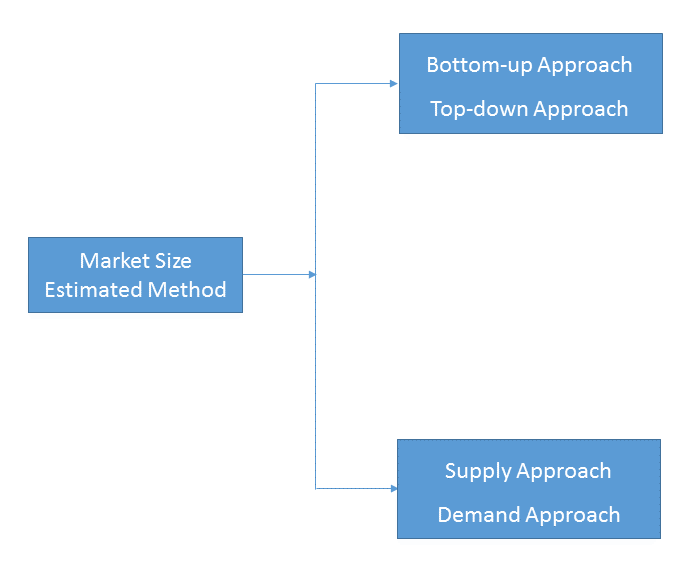
Bottom-up & top-down approach, supply & demand approach are the most important method which is used by HDIN Research to estimate the market size.
1)Top-down & Bottom-up Approach
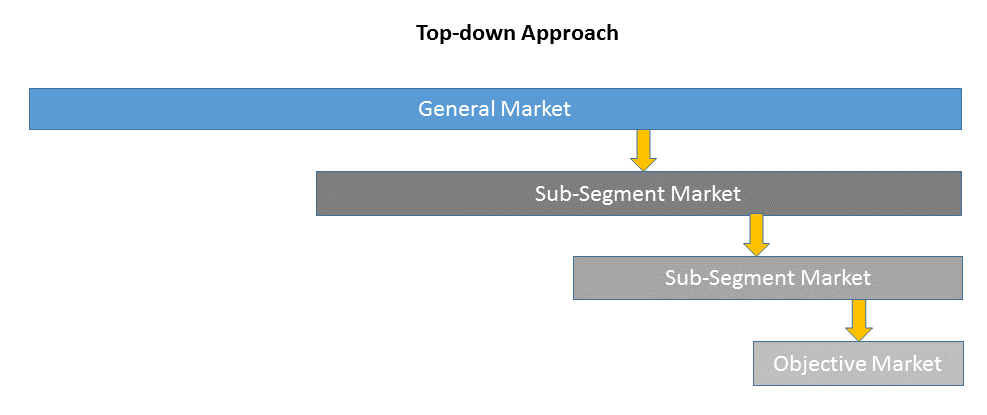
Top-down approach uses a general market size figure and determines the percentage that the objective market represents.
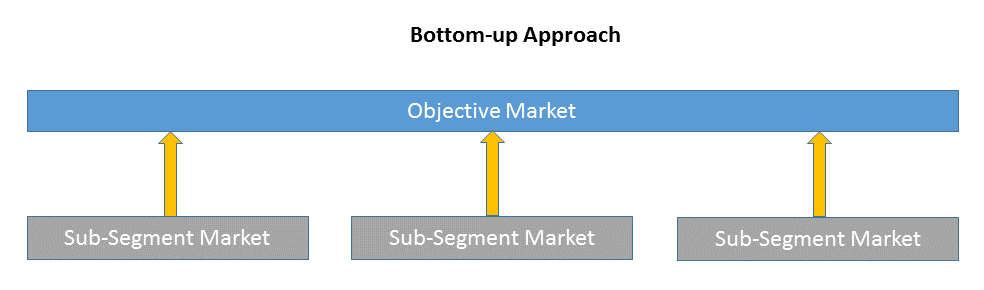
Bottom-up approach size the objective market by collecting the sub-segment information.
2)Supply & Demand Approach
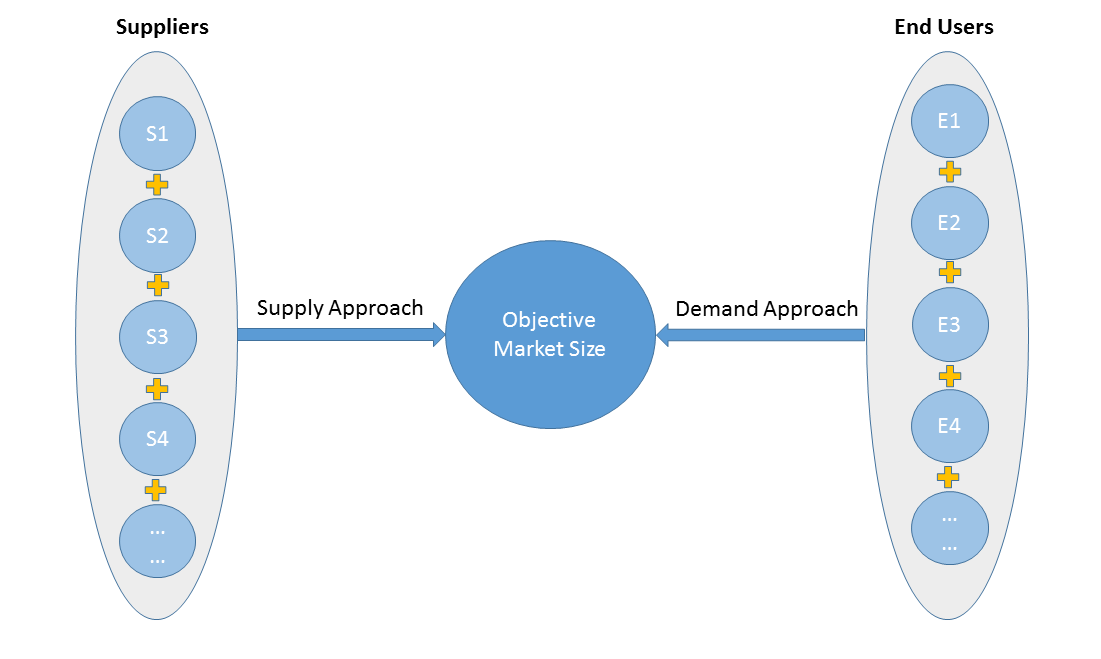
Supply approach is based on assessments of the size of each competitor supplying the objective market.
Demand approach combine end-user data within a market to estimate the objective market size. It is sometimes referred to as bottom-up approach.
- Forecasting Methodology
- Numerous factors impacting the market trend are considered for forecast model:
- New technology and application in the future;
- New project planned/under contraction;
- Global and regional underlying economic growth;
- Threatens of substitute products;
- Industry expert opinion;
- Policy and Society implication.
- Analysis Tools
1)PEST Analysis
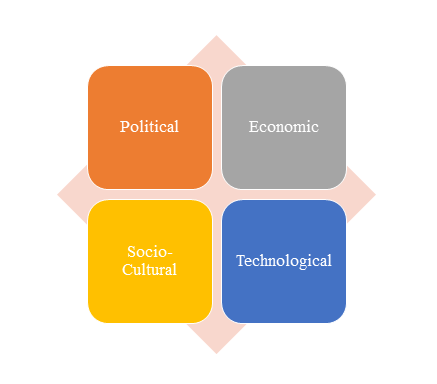
PEST Analysis is a simple and widely used tool that helps our client analyze the Political, Economic, Socio-Cultural, and Technological changes in their business environment.
- Benefits of a PEST analysis:
- It helps you to spot business opportunities, and it gives you advanced warning of significant threats.
- It reveals the direction of change within your business environment. This helps you shape what you’re doing, so that you work with change, rather than against it.
- It helps you avoid starting projects that are likely to fail, for reasons beyond your control.
- It can help you break free of unconscious assumptions when you enter a new country, region, or market; because it helps you develop an objective view of this new environment.
2)Porter’s Five Force Model Analysis
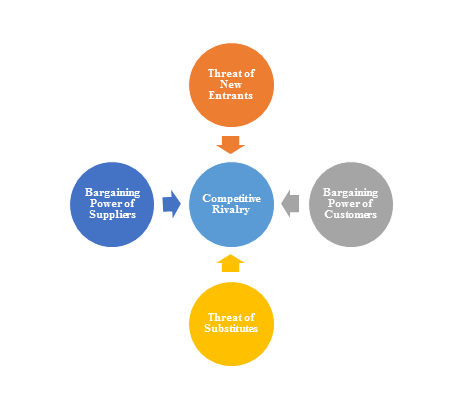
The Porter’s Five Force Model is a tool that can be used to analyze the opportunities and overall competitive advantage. The five forces that can assist in determining the competitive intensity and potential attractiveness within a specific area.
- Threat of New Entrants: Profitable industries that yield high returns will attract new firms.
- Threat of Substitutes: A substitute product uses a different technology to try to solve the same economic need.
- Bargaining Power of Customers: the ability of customers to put the firm under pressure, which also affects the customer's sensitivity to price changes.
- Bargaining Power of Suppliers: Suppliers of raw materials, components, labor, and services (such as expertise) to the firm can be a source of power over the firm when there are few substitutes.
- Competitive Rivalry: For most industries the intensity of competitive rivalry is the major determinant of the competitiveness of the industry.
3)Value Chain Analysis
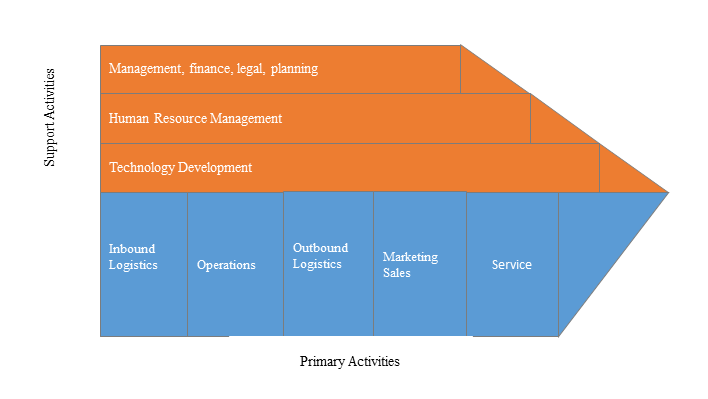
Value chain analysis is a tool to identify activities, within and around the firm and relating these activities to an assessment of competitive strength. Value chain can be analyzed by primary activities and supportive activities. Primary activities include: inbound logistics, operations, outbound logistics, marketing & sales, service. Support activities include: technology development, human resource management, management, finance, legal, planning.
4)SWOT Analysis
SWOT analysis is a tool used to evaluate a company's competitive position by identifying its strengths, weaknesses, opportunities and threats. The strengths and weakness is the inner factor; the opportunities and threats are the external factor. By analyzing the inner and external factors, the analysis can provide the detail information of the position of a player and the characteristics of the industry.
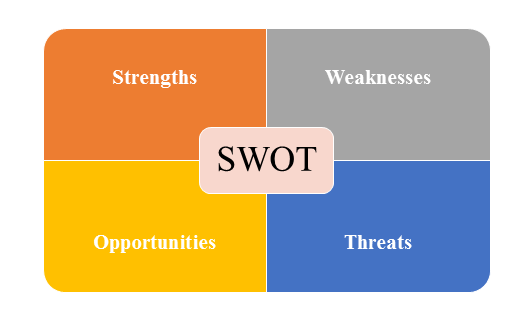
- Strengths describe what the player excels at and separates it from the competition
- Weaknesses stop the player from performing at its optimum level.
- Opportunities refer to favorable external factors that the player can use to give it a competitive advantage.
- Threats refer to factors that have the potential to harm the player.
- Data Sources
| Primary Sources | Secondary Sources |
|---|---|
| Face to face/Phone Interviews with market participants, such as: Manufactures; Distributors; End-users; Experts. Online Survey |
Government/International Organization Data: Annual Report/Presentation/Fact Book Internet Source Information Industry Association Data Free/Purchased Database Market Research Report Book/Journal/News |