Global Granite Cutting Machine Market Strategic Outlook 2026-2031 5-Axis CNC Stone Automation and Diamond Tooling Value Chain Analysis
- Single User License (1 Users) $ 3,500
- Team License (2~5 Users) $ 4,500
- Corporate License (>5 Users) $ 5,500
The global granite cutting machine market in 2026 represents a specialized, capital-intensive pillar of heavy extraction equipment and architectural fabrication automation. Spanning quarry diamond wire saws, multi-blade block cutters, multi-wire slabbing gang saws, 5-axis CNC bridge saws, and robotic sawjet hybrids, these machines are engineered to shear dense igneous granite (rating 6 to 7 on the Mohs hardness scale) with millimeter precision while minimizing slab breakage and kerf waste. As of 2026, the global market is valued between 0.8 billion USD and 1.4 billion USD, projected to expand at a compound annual growth rate (CAGR) ranging from 3.1 percent to 5.8 percent through 2031. Growth is structurally driven by quarry mechanization in emerging stone-producing belts, commercial architectural cladding demand, and acute labor-substitution automation across Western countertop fabrication shops.
A critical yet frequently overlooked determinant of granite cutting machine operating economics lies upstream in the global carbon and synthetic diamond tooling supply chain. Because granite cannot be efficiently processed without synthetic industrial diamond-impregnated circular blades and diamond wire-saw beads—which rely on high-purity carbon precursors for High-Pressure High-Temperature (HPHT) diamond synthesis and synthetic graphite sintering molds—shifts in global graphite extraction directly govern cutting consumable stability. In 2025, global natural graphite production rebounded strongly to approximately 1.82 million metric tons (up notably from roughly 1.60 million tons in 2024), while global synthetic graphite output across lithium-ion anode and industrial segments reached approximately 2.50 million tons. China maintained its commanding upstream position with roughly 1.18 million tons of natural graphite—accounting for approximately 64.8 percent of global supply—while Africa’s natural graphite output climbed sharply to roughly 280,000 tons in 2025, propelled by project restarts and ramp-ups in Mozambique (including the Balama and Nipepe operations) and Madagascar.
This upstream mineral recovery carries dual strategic implications for the 2026 granite cutting machinery landscape. First, expanded natural and synthetic graphite throughput stabilizes the cost floor for industrial diamond blades and wire-saw consumables essential to running high-speed granite machines. Second, the revitalization of large-scale hard-rock mineral extraction across Southern and Eastern Africa mirrors broader capital deployment into mechanized quarrying infrastructure, creating parallel tailwinds for rugged block-extraction and primary slabbing machinery across resource-rich developing regions. Technologically, meanwhile, developed markets are rapidly replacing manual bridge saws with enclosed 5-axis CNC sawjets, overhead vein-matching camera nesting, and automated vacuum slab manipulators to satisfy stringent occupational silica-dust regulations.
Regional Market Analysis
The geographical distribution of the granite cutting machine market reflects a distinct division between raw-stone quarrying powerhouses, Asian CNC machinery manufacturing hubs, and highly automated Western fabrication markets.
● Asia Pacific commands the largest global market share, estimated between 42 percent and 46 percent. The region serves simultaneously as the world’s dominant manufacturing engine for granite cutting hardware—anchored by dense stone-machinery clusters in China’s Fujian (Nan’an and Putian) and Shandong provinces alongside major Indian quarry-equipment corridors—and its highest-volume consumer. China’s 64.8 percent share of global natural graphite production (1.18 million tons in 2025) reinforces an unmatched, vertically integrated domestic diamond-tooling ecosystem supporting local giants such as Hualong Machinery and Shengda Machinery. Within Taiwan(China), regional value concentrates in high-precision CNC motion controllers, servo drives, and precision stone-processing systems supporting East Asian luxury commercial real estate and architectural cladding.
● Europe accounts for a technically premier market share ranging from 22 percent to 26 percent. Centered in Italy’s historic Veneto and Carrara stone-engineering belt—led by industry titan Breton—alongside Spain and Portugal, Europe defines the global frontier for multi-wire thin-kerf slabbing, high-speed 5-axis CNC milling, and zero-discharge closed-loop water recycling. Strict European Union occupational exposure limits for respirable crystalline silica (RCS) continue to mandate enclosed, wet-cut automated cells across European fabrication workshops.
● North America captures a high-margin market share between 18 percent and 22 percent. Regional demand is heavily concentrated in downstream construction fabrication—specifically residential kitchen countertops, hospitality vanities, and commercial stone facades. Facing persistent shortages of experienced stone sawyers and strict OSHA silica enforcement, North American fabricators are aggressively adopting robotic sawjet cells (pioneered by BACA Systems) and dust-controlled precision rail saws (such as AccuGlide) to double shop-floor throughput per operator.
● South America and the Middle East and Africa (MEA) collectively represent 10 percent to 14 percent of global revenue, representing the fastest-mechanizing primary quarrying frontier. Brazil’s Espírito Santo state remains a global powerhouse for exotic granite block extraction, steadily upgrading legacy gang saws to thin-kerf multi-wire diamond machines. Across Africa, renewed institutional investment in hard-rock mining—highlighted by Mozambique’s Balama and Nipepe project restarts and Madagascar lifting African natural graphite output to roughly 280,000 tons in 2025—reflects wider extraction modernization spanning granite quarries in South Africa, Zimbabwe, and East Africa. Concurrently, ambitious commercial architecture across the GCC nations sustains strong demand for precision architectural facade-cutting machinery.
Application and Segmentation Analysis
Granite cutting machinery is cleanly segmented between primary raw-material extraction in quarries and precision dimensional finishing in architectural fabrication facilities.
● Mining Industry (Quarrying and Primary Slabbing) demands extreme structural torque, weather-resistant durability, and high material yield. Equipment encompasses quarry diamond wire saws, dual-blade rail-mounted quarry mining cutters, and massive multi-wire block-slabbing gang saws capable of slicing 30-ton granite blocks into 2 cm or 3 cm slabs simultaneously. In 2026, the dominant operational KPI in granite mining is kerf-loss reduction: transitioning from legacy steel-shot gang saws (10–12 mm kerf waste) to ultra-thin diamond multi-wire saws (5–6 mm kerf) yields 10 percent to 15 percent additional salable slab surface area per extracted quarry block while drastically cutting electricity and water slurry disposal costs.
● Construction Industry (Architectural Fabrication, Countertops, and Cladding) prioritizes geometric versatility, edge-finish precision, and rapid job-to-job changeover. High-volume countertop factories and architectural masonry plants rely on 5-axis CNC bridge saws and robotic sawjets that combine circular diamond blades (for fast straight cuts and 45-degree mitered waterfall edges) with high-pressure abrasive waterjets (for zero-overcut tight inner radii and sink cutouts). In 2026, multi-material adaptability is paramount: modern granite bridge saws are engineered with variable-frequency spindles capable of switching seamlessly between natural granite, engineered quartz, and ultra-compact sintered porcelain slabs.
Value Chain Analysis
The granite cutting machine value chain balances heavy mechanical metallurgy with precision diamond-tooling chemistry and smart CAD/CAM nesting software.
Upstream Carbon/Diamond Tooling and Precision Components: Value originates across two parallel tracks. Mechanically, manufacturers source heavy stress-relieved cast-iron monoblocks, precision linear guideways, high-torque waterproof CNC spindles, and multi-axis servo controllers. Chemically and metallurgically, cutting efficacy relies on industrial diamond blades and wire beads derived from upstream synthetic (~2.50 million tons) and natural (~1.82 million tons) graphite supply chains—where carbon purity directly impacts HPHT diamond crystal strength and segment wear life.
Midstream OEM Fabrication and Assembly: Machine builders differentiate through structural vibration damping, corrosion-resistant galvanized or stainless-steel splash shielding, and precision gantry calibration that preserves straight-line tolerances across 3-meter to 4-meter granite slabs.
Automated Nesting Software, Robotic Sawjets, and Multi-Wire Systems (Primary Value Pool): The highest profit margins in 2026 sit in fully integrated digital workflows rather than bare mechanical bridge saws. Overhead slab-scanning cameras paired with AI vein-matching nesting software, automated vacuum-pod piece manipulators (eliminating manual slab re-positioning during miter cuts), and robotic sawjet hybrids command substantial premiums and multi-year software/service annuities.
Downstream Distribution and Consumables Pull-Through: Tier-1 European and American OEMs deploy direct technical engineering teams for turnkey quarry and mega-fabricator installations, while agile Asian manufacturers utilize global trade networks and direct digital channels to serve SME workshops. Continuous wear of diamond blades, wire ropes, and abrasive garnet generates steady aftermarket consumable revenue.
Key Market Player Deep Profiles
● Schind Machines: Operating as a focused industrial stone-processing machinery manufacturer, Schind Machines delivers rugged block cutters, hydraulic bridge saws, and automated slab-cutting equipment engineered for demanding quarry and commercial masonry environments. Their technical layout prioritizes mechanical reliability, rigid cast-frame stability, and intuitive PLC operator interfaces tailored to minimize unplanned downtime during continuous multi-shift granite slicing. In 2026, Schind Machines concentrates on strengthening regional distribution across emerging construction corridors, providing dependable mid-tier cutting platforms that bridge the gap between basic manual saws and capital-intensive European automated factories.
● BACA Systems: Headquartered in Orion Township, Michigan, BACA Systems has fundamentally disrupted the North American stone fabrication industry as the premier pioneer of robotic sawjet automation. Its flagship Robo SawJet integrates a heavy-duty KUKA 6-axis industrial robot arm outfitted with both a high-horsepower circular diamond saw and a high-pressure abrasive waterjet, paired with dual cutting tables and automated overhead digital slab photography. By allowing a single operator to achieve twice the cutting throughput of traditional bridge saws while maximizing yield on expensive exotic granite slabs, BACA Systems directly addresses acute United States skilled-labor shortages and OSHA silica compliance mandates in 2026.
● Breton: Headquartered in Castello di Godego, Italy, Breton stands as the undisputed global technological titan in stone processing machinery and turnkey engineered-stone plants. Spanning massive multi-wire diamond gang saws for primary granite slabbing to its iconic Genya and Combicut 5-axis CNC sawjet centers, Breton establishes international benchmarks for micron-level cutting speed, structural rigidity, and software-driven smart-factory integration. In 2026, Breton’s strategic layout focuses on Industry 4.0 "Lights-Out Stone Fabrication"—connecting automated slab warehouses, robotic loading cranes, high-speed CNC sawjets, and closed-loop water-treatment plants for top-tier global granite quarries and commercial architectural contractors.
● SMT IMP&EXP: Operating as a specialized stone-machinery export integrator and global supply-chain partner, SMT IMP&EXP bridges China’s prolific stone-equipment manufacturing clusters with international quarry operators and architectural stone fabricators. Beyond supplying infrared bridge cutters, multi-blade granite block saws, and diamond wire tooling, SMT IMP&EXP captures value through turnkey export engineering—handling voltage/compliance adaptation, consolidated multi-machine factory kitting, international freight logistics, and spare-parts replenishment across emerging markets in Africa, South America, and the Middle East.
● SIGMA MACHINE TOOLS: Based in India—one of the world’s largest natural granite quarrying and export powerhouses—SIGMA MACHINE TOOLS specializes in heavy-duty granite multi-blade block cutters, precision gang saws, quarry wire saws, and automated bridge cutting machines. Engineered specifically to endure high ambient heat and abrasive hard-rock Indian granite varieties (such as Absolute Black and Tan Brown), SIGMA’s machines emphasize oversized drive bearings, heavy welded gantries, and economical maintenance accessibility. In 2026, SIGMA leverages India’s booming domestic infrastructure construction while expanding equipment exports across African and Middle Eastern stone-processing zones.
● ZL Machine: Headquartered in China’s industrial stone-machinery sector, ZL Machine manufactures a targeted portfolio of granite bridge cutting machines, automated infrared slab saws, and hydraulic profiling equipment serving residential and commercial construction fabricators. Their technical competency centers on user-friendly PLC touch controls, magnetic-scale positioning accuracy, and compact monoblock steel frames that allow rapid plug-and-play installation inside standard shipping containers without complex concrete foundation pouring. In 2026, ZL Machine competes effectively across Southeast Asia, Eastern Europe, and Latin America through streamlined manufacturing costs and rapid customization.
● YONGTAO: Based in Foshan, Guangdong—China’s epicenter for architectural ceramic and stone-processing machinery—YONGTAO specializes in high-speed granite tile cutting, continuous 45-degree chamfering and mitering lines, and automated edge-profiling equipment. Unlike quarry-focused block-cutter vendors, YONGTAO’s core competency targets high-throughput downstream construction finishing, enabling commercial cladding contractors and tile-processing plants to process thousands of square meters of granite flooring and architectural facade strips daily with minimal edge chipping. In 2026, YONGTAO continues upgrading multi-head automated conveyor lines with servo-driven width adjustment to handle rapid batch changeovers.
● Shuttle Eng Works: Operating within India’s specialized quarry and stone-fabrication engineering sector, Shuttle Eng Works manufactures rugged granite block-dressing cutters, single- and multi-blade hydraulic bridge saws, and custom industrial stone-handling equipment. Focusing on high mechanical torque and simplified hydraulic circuits built to tolerate unstable regional power grids and dusty quarry environments, Shuttle Eng Works commands strong loyalty among regional Indian stone processors and African/Middle Eastern quarry contractors seeking durable, easily serviceable machinery with rapid capital payback.
● Shengda Machinery: Founded in Nan’an, Fujian—widely recognized as the global capital of stone trading and processing—Shengda Machinery stands among China’s largest and most respected CNC stone-machinery pioneers. Operating expansive automated production bases, Shengda delivers an end-to-end granite portfolio encompassing multi-wire diamond saws, 5-axis CNC bridge saws with integrated vacuum slab manipulators, and intelligent robotic stone-sorting lines. In 2026, Shengda’s strategic dynamic pairs European-inspired CAD/CAM Italian-interface controllers with massive Chinese manufacturing scale, capturing tier-one domestic factories and expanding aggressively through dedicated service dealers across North America, Europe, and Brazil.
● Moscut Stone Machine: Moscut Stone Machine operates as a modern, export-oriented Chinese CNC stone machinery specialist focused intensely on 5-axis monoblock bridge saws, integrated sawjet cutters, and automated slab-nesting platforms tailored for countertop and architectural granite shops. Emphasizing clean industrial enclosure design, overhead vein-matching cameras, and pre-programmed parametric countertop libraries (for rapid sink cutouts, drainboards, and mitered aprons), Moscut lowers the technical training curve for mid-sized fabrication workshops globally. In 2026, Moscut accelerates international traction by aligning electrical safety standards (CE/UL readiness) with competitive landed pricing.
● DAEON Machinery: DAEON Machinery focuses on engineered granite cutting and slab-processing systems—spanning hydraulic bridge saws, multi-blade block cutters, and automated stone-chamfering machinery—serving Asian and international construction materials factories. Their technical approach balances robust cast-iron bridge rigidity with modern variable-frequency spindle drives that optimize blade peripheral speed across varying granite mineral densities. In 2026, DAEON prioritizes energy-efficient motor retrofits and modular dust-suppression water manifolds to help regional fabricators comply with tightening industrial environmental inspections.
● AccuGlide: Headquartered in the United States, AccuGlide occupies a highly defensible, specialized niche as the leading innovator of portable, precision rail-guided stone saws engineered explicitly for granite, quartzite, and porcelain slabs. Rather than competing with massive 15-ton factory bridge saws, AccuGlide’s patented linear-track wet saws enable countertop installers, small custom shops, and commercial job-site contractors to execute dead-straight, chip-free cuts and precision miters directly on-site with full wet dust suppression. In 2026, AccuGlide’s compact footprint, OSHA silica compliance, and rapid setup continue driving high-margin adoption across North American and European specialty stone installers.
● STYLECNC: Headquartered in Jinan, China, STYLECNC has built a formidable global direct-to-buyer CNC machinery brand spanning metal, wood, and dedicated stone-cutting centers. Their granite portfolio features agile 4-axis and 5-axis CNC bridge saws, waterjet-saw hybrids, and CNC stone engraving/milling routers equipped with standardized international servo components and accessible CAM software. Leveraging dominant digital search presence, transparent technical specifications, and worldwide door-to-door logistics, STYLECNC captures surging demand from small-to-medium countertop fabricators and monument makers across North America, Europe, and Oceania seeking accessible entry into 5-axis CNC automation.
● iGolden CNC: Operating alongside Jinan’s prolific CNC export ecosystem, iGolden CNC delivers customizable 5-axis CNC stone bridge saws, infrared granite cutters, and multi-function stone machining centers tailored for SME architectural and kitchen fabrication shops worldwide. Their core competitive proposition combines rapid build-to-order adaptability—configuring vacuum-lifter attachments, camera nesting, and extended Z-axis clearances for thick granite monuments—with competitive factory-direct pricing and responsive remote commissioning support. In 2026, iGolden CNC steadily expands market share across emerging construction hubs in Latin America, the Middle East, and Eastern Europe.
● Hualong Machinery: Headquartered in Putian, Fujian, Hualong Machinery is a premier Chinese industrial titan specializing across the entire granite lifecycle—from primary quarry mining to finished architectural CNC fabrication. Globally renowned as a market leader in dual-blade quarry granite mining machines, high-efficiency multi-wire diamond saws, and 5-axis monoblock CNC bridge saws, Hualong holds extensive engineering patents aimed at cutting power consumption and boosting quarry block recovery. In 2026, Hualong capitalizes directly on surging quarry mechanization across Africa, India, Brazil, and Southeast Asia—providing turnkey primary extraction and slabbing fleets supported by global engineering deployment teams.
Opportunities and Challenges
The granite cutting machine market is navigating a structural shift from brute-force mechanical cutting toward software-orchestrated, environmentally compliant fabrication cells.
● Opportunities: Strict occupational health enforcement regarding respirable crystalline silica (OSHA in the United States and EU RCS directives) acts as a powerful mandatory catalyst forcing thousands of legacy dry-cutting and manual workshops to upgrade into enclosed, wet-cut 5-axis CNC bridge saws and robotic sawjets. Simultaneously, transitioning quarries from traditional steel-shot gang saws to thin-kerf multi-wire diamond saws unlocks 10 percent to 15 percent higher slab yield per extracted block, delivering compelling payback even amidst elevated interest rates. Furthermore, revitalized African hard-rock mining investment—paralleling Africa’s 2025 jump to 280,000 tons in natural graphite output—signals expanding greenfield quarry mechanization across resource-rich African and Latin American belts.
● Challenges: Market growth in residential countertops faces sustained material substitution pressure from engineered quartz and large-format sintered porcelain slabs, compelling granite machine OEMs to engineer versatile multi-material spindles and gentler blade-feed algorithms to prevent brittle porcelain cracking. Concurrently, intense price competition from dozens of export-focused Chinese CNC machinery builders continues to compress hardware margins in the standard 5-axis monoblock bridge saw tier. Additionally, rising municipal water-treatment fees and stringent quarry environmental permitting increase total compliance costs for end-users operating high-volume wet cutting lines.
Macroeconomic and Geopolitical Influences
The 2026 granite cutting machine market operates within a macroeconomic climate defined by elevated mortgage and commercial borrowing rates across Western economies alongside resilient public infrastructure spending in Asia Pacific and the Middle East. Because high interest rates have moderated speculative residential housing starts in North America and Europe, stone fabricators have pivoted capital allocation away from simple square-footage expansion toward high-ROI labor-replacement technologies—explaining strong demand for robotic sawjets (BACA Systems) and automated CNC cells that slash skilled-labor dependency per kitchen job.
Geopolitically, global trade tariffs and critical mineral supply chains exert both direct and indirect leverage on the stone-cutting machinery ecosystem. Escalating Western import tariffs on Chinese industrial machinery are incentivizing tier-one Asian OEMs (such as Shengda and Hualong) to establish localized regional warehouses, assembly partnerships, and service hubs in North America, Europe, and Latin America while sharpening the domestic competitiveness of Italian (Breton) and American (BACA Systems, AccuGlide) manufacturers. Upstream, China’s commanding 64.8 percent share of global natural graphite production (1.18 million tons in 2025) alongside roughly 2.50 million tons of global synthetic graphite underpins the industrial diamond blade and wire-saw consumables indispensable to granite cutting. Simultaneously, Africa’s rapid mineral-extraction expansion to 280,000 tons of natural graphite—driven by Mozambique’s Balama and Nipepe projects and Madagascar—illustrates accelerating geopolitical diversification of global mining investment, laying the foundation for sustained multi-year demand for rugged quarry extraction and precision stone-cutting machinery through 2031.
1.1 Study Scope 1
1.2 Research Methodology 2
1.2.1 Data Sources 2
1.2.2 Assumptions 4
1.3 Abbreviations and Acronyms 5
Chapter 2 Global Granite Cutting Machine Market Context and Macroeconomic Impact 6
2.1 Product Development Background 6
2.2 Global Macroeconomic Environment Analysis 7
2.2.1 Global GDP Trends and Construction Sector Investment 7
2.2.2 Impact of Inflation and Heavy Machinery Raw Material Costs 8
2.3 Impact of Geopolitical Conflicts on the Granite Cutting Machine Market 9
2.3.1 Supply Chain Disruptions for Servo Systems, Motors, and Diamond Tooling 9
2.3.2 Cross-Border Freight Logistics and Trade Tariff Shifts 10
2.4 Global Granite Cutting Machine Market Volume and Market Size (2021-2026) 11
Chapter 3 Global Granite Cutting Machine Market by Type 12
3.1 Market Volume and Size Analysis by Type (2021-2026) 12
3.2 Bridge Saw Granite Cutting Machines 13
3.3 5-Axis CNC Granite Cutting Machines 14
3.4 Diamond Wire Saw Machines 15
3.5 Waterjet Granite Cutting Machines 16
Chapter 4 Global Granite Cutting Machine Market by Application 17
4.1 Market Volume and Size Analysis by Application (2021-2026) 17
4.2 Mining Industry (Quarrying and Block Extraction) 18
4.3 Construction Industry (Slabs, Countertops, Architectural Facades) 19
Chapter 5 Global Granite Cutting Machine Market by Region 20
5.1 Market Volume and Size Analysis by Region (2021-2026) 20
5.2 North America Granite Cutting Machine Market Analysis 21
5.2.1 North America Market Volume and Market Size (2021-2026) 21
5.2.2 North America Market by Key Regions (United States, Canada, Mexico) 22
5.3 Europe Granite Cutting Machine Market Analysis 24
5.3.1 Europe Market Volume and Market Size (2021-2026) 24
5.3.2 Europe Market by Key Regions (Italy, Germany, Spain, United Kingdom, France) 25
5.4 Asia-Pacific Granite Cutting Machine Market Analysis 28
5.4.1 Asia-Pacific Market Volume and Market Size (2021-2026) 28
5.4.2 Asia-Pacific Market by Key Regions (China, India, Japan, South Korea, Taiwan (China)) 29
5.5 Latin America Granite Cutting Machine Market Analysis 31
5.5.1 Latin America Market Volume and Market Size (2021-2026) 31
5.5.2 Latin America Market by Key Regions (Brazil, Argentina) 32
5.6 Middle East & Africa Granite Cutting Machine Market Analysis 33
5.6.1 Middle East & Africa Market Volume and Market Size (2021-2026) 33
5.6.2 Middle East & Africa Market by Key Regions (Turkey, UAE, Saudi Arabia, South Africa) 34
Chapter 6 Granite Cutting Machine Manufacturing Process and Patent Analysis 35
6.1 Production Flow: Heavy Cast Iron Gantry Fabrication, Linear Guide Assembly, and Calibration 35
6.2 Core Technologies: Multi-Axis Interpolation, Laser Alignment, and Water Recycling Systems 36
6.3 Global Granite Cutting Machine Patent Landscape Analysis 38
Chapter 7 Industry Chain and Value Chain Analysis 39
7.1 Value Chain Overview 39
7.2 Upstream Raw Materials and Components (Cast Iron, High-Torque Spindles, Diamond Blades, CNC Controllers) 40
7.3 Midstream Machine Manufacturing and Testing 41
7.4 Downstream Stone Quarries, Fabrication Shops, and Construction Contractors 42
Chapter 8 Global Granite Cutting Machine Import and Export Analysis 43
8.1 Global Import Volume and Value (2021-2026) 43
8.2 Global Export Volume and Value (2021-2026) 44
Chapter 9 Competitive Landscape and Concentration Rate 46
9.1 Market Concentration Rate (CR3, CR5) 46
9.2 Competitive Ranking of Key Players (2025) 47
9.3 Strategic Alliances, Mergers, and Global Dealer Network Expansions 49
Chapter 10 Key Players Analysis 50
10.1 Schind Machines 50
10.1.1 Company Overview and Product Portfolio 50
10.1.2 SWOT Analysis 51
10.1.3 Schind Machines Granite Cutting Machine Sales, Price, Cost and Gross Profit Margin (2021-2026) 52
10.1.4 Regional Service and Distribution Strategy 53
10.2 BACA Systems 54
10.2.1 Company Overview and Robotic Waterjet/Saw Portfolio 54
10.2.2 SWOT Analysis 55
10.2.3 BACA Systems Granite Cutting Machine Sales, Price, Cost and Gross Profit Margin (2021-2026) 56
10.2.4 North American Automation Strategy 57
10.3 Breton 58
10.3.1 Company Overview and Stone Processing Portfolio 58
10.3.2 SWOT Analysis 59
10.3.3 Breton Granite Cutting Machine Sales, Price, Cost and Gross Profit Margin (2021-2026) 60
10.3.4 R&D Leadership and Turnkey Plant Integration 61
10.3.5 Global Brand Positioning 62
10.4 SMT IMP&EXP 63
10.4.1 Company Overview 63
10.4.2 SWOT Analysis 64
10.4.3 SMT IMP&EXP Granite Cutting Machine Sales, Price, Cost and Gross Profit Margin (2021-2026) 65
10.5 SIGMA MACHINE TOOLS 66
10.5.1 Company Overview 66
10.5.2 SWOT Analysis 67
10.5.3 SIGMA MACHINE TOOLS Granite Cutting Machine Sales, Price, Cost and Gross Profit Margin (2021-2026) 68
10.6 ZL Machine 69
10.6.1 Company Overview 69
10.6.2 SWOT Analysis 70
10.6.3 ZL Machine Granite Cutting Machine Sales, Price, Cost and Gross Profit Margin (2021-2026) 71
10.7 YONGTAO 72
10.7.1 Company Overview and Product Portfolio 72
10.7.2 SWOT Analysis 73
10.7.3 YONGTAO Granite Cutting Machine Sales, Price, Cost and Gross Profit Margin (2021-2026) 74
10.7.4 Export Market Expansion Strategy 75
10.8 Shuttle Eng Works 76
10.8.1 Company Overview 76
10.8.2 SWOT Analysis 77
10.8.3 Shuttle Eng Works Granite Cutting Machine Sales, Price, Cost and Gross Profit Margin (2021-2026) 78
10.9 Shengda Machinery 79
10.9.1 Company Overview and CNC Stone Machinery Portfolio 79
10.9.2 SWOT Analysis 80
10.9.3 Shengda Machinery Granite Cutting Machine Sales, Price, Cost and Gross Profit Margin (2021-2026) 81
10.9.4 Manufacturing Scale and Innovation Strategy 82
10.10 Moscut Stone Machine 83
10.10.1 Company Overview 83
10.10.2 SWOT Analysis 84
10.10.3 Moscut Stone Machine Granite Cutting Machine Sales, Price, Cost and Gross Profit Margin (2021-2026) 85
10.11 DAEON Machinery 86
10.11.1 Company Overview 86
10.11.2 SWOT Analysis 87
10.11.3 DAEON Machinery Granite Cutting Machine Sales, Price, Cost and Gross Profit Margin (2021-2026) 88
10.12 AccuGlide 89
10.12.1 Company Overview and Sawing Systems Portfolio 89
10.12.2 SWOT Analysis 90
10.12.3 AccuGlide Granite Cutting Machine Sales, Price, Cost and Gross Profit Margin (2021-2026) 91
10.12.4 Precision Fabrication Support Strategy 92
10.13 STYLECNC 93
10.13.1 Company Overview and CNC Router/Saw Portfolio 93
10.13.2 SWOT Analysis 94
10.13.3 STYLECNC Granite Cutting Machine Sales, Price, Cost and Gross Profit Margin (2021-2026) 95
10.13.4 Digital Marketing and Global E-Commerce Strategy 96
10.14 iGolden CNC 97
10.14.1 Company Overview and Product Portfolio 97
10.14.2 SWOT Analysis 98
10.14.3 iGolden CNC Granite Cutting Machine Sales, Price, Cost and Gross Profit Margin (2021-2026) 99
10.14.4 Cost Optimization and Customization Strategy 100
10.15 Hualong Machinery 101
10.15.1 Company Overview and Mining/Quarry Machinery Portfolio 101
10.15.2 SWOT Analysis 102
10.15.3 Hualong Machinery Granite Cutting Machine Sales, Price, Cost and Gross Profit Margin (2021-2026) 103
10.15.4 Global Distribution and Quarry Equipment Strategy 104
Chapter 11 Global Granite Cutting Machine Market Forecast (2027-2031) 105
11.1 Market Volume and Size Forecast 105
11.2 Forecast by Type (2027-2031) 106
11.3 Forecast by Application (2027-2031) 108
11.4 Forecast by Key Regions (2027-2031) 109
Chapter 12 Market Dynamics 111
12.1 Industry Drivers (Commercial Infrastructure Growth, Automated Slab Fabrication) 111
12.2 Industry Restraints (High Capital Investment, Competition from Engineered Quartz) 112
12.3 Industry Opportunities and Trends (5-Axis Robotic Integration, Eco-Friendly Dust Suppression) 113
Chapter 13 Research Findings and Conclusion 114
Table 2 Global Granite Cutting Machine Market Volume by Type (2021-2026) 12
Table 3 Global Granite Cutting Machine Market Size by Type (2021-2026) 13
Table 4 Global Granite Cutting Machine Market Volume by Application (2021-2026) 17
Table 5 Global Granite Cutting Machine Market Size by Application (2021-2026) 18
Table 6 North America Granite Cutting Machine Market Volume and Size by Key Regions (2021-2026) 23
Table 7 Europe Granite Cutting Machine Market Volume and Size by Key Regions (2021-2026) 27
Table 8 Asia-Pacific Granite Cutting Machine Market Volume and Size by Key Regions (2021-2026) 30
Table 9 Latin America Granite Cutting Machine Market Volume and Size by Key Regions (2021-2026) 32
Table 10 Middle East & Africa Granite Cutting Machine Market Volume and Size by Key Regions (2021-2026) 34
Table 11 Global Granite Cutting Machine Major Patents List 38
Table 12 Global Granite Cutting Machine Import and Export Data (2021-2026) 43
Table 13 Competitive Ranking of Key Players by Revenue (2025) 47
Table 14 Schind Machines Granite Cutting Machine Sales, Price, Cost and Gross Profit Margin (2021-2026) 52
Table 15 BACA Systems Granite Cutting Machine Sales, Price, Cost and Gross Profit Margin (2021-2026) 56
Table 16 Breton Granite Cutting Machine Sales, Price, Cost and Gross Profit Margin (2021-2026) 60
Table 17 SMT IMP&EXP Granite Cutting Machine Sales, Price, Cost and Gross Profit Margin (2021-2026) 65
Table 18 SIGMA MACHINE TOOLS Granite Cutting Machine Sales, Price, Cost and Gross Profit Margin (2021-2026) 68
Table 19 ZL Machine Granite Cutting Machine Sales, Price, Cost and Gross Profit Margin (2021-2026) 71
Table 20 YONGTAO Granite Cutting Machine Sales, Price, Cost and Gross Profit Margin (2021-2026) 74
Table 21 Shuttle Eng Works Granite Cutting Machine Sales, Price, Cost and Gross Profit Margin (2021-2026) 78
Table 22 Shengda Machinery Granite Cutting Machine Sales, Price, Cost and Gross Profit Margin (2021-2026) 81
Table 23 Moscut Stone Machine Granite Cutting Machine Sales, Price, Cost and Gross Profit Margin (2021-2026) 85
Table 24 DAEON Machinery Granite Cutting Machine Sales, Price, Cost and Gross Profit Margin (2021-2026) 88
Table 25 AccuGlide Granite Cutting Machine Sales, Price, Cost and Gross Profit Margin (2021-2026) 91
Table 26 STYLECNC Granite Cutting Machine Sales, Price, Cost and Gross Profit Margin (2021-2026) 95
Table 27 iGolden CNC Granite Cutting Machine Sales, Price, Cost and Gross Profit Margin (2021-2026) 99
Table 28 Hualong Machinery Granite Cutting Machine Sales, Price, Cost and Gross Profit Margin (2021-2026) 103
Table 29 Global Granite Cutting Machine Market Volume Forecast by Type (2027-2031) 106
Table 30 Global Granite Cutting Machine Market Size Forecast by Application (2027-2031) 108
Table 31 Global Granite Cutting Machine Market Size Forecast by Key Regions (2027-2031) 110
Figure 1 Global Granite Cutting Machine Market Size Growth Rate (2021-2026) 11
Figure 2 Impact of Geopolitical Conflicts on Heavy Stone Machinery Supply Chain 10
Figure 3 Global Granite Cutting Machine Market Size Share by Type (2021-2026) 13
Figure 4 Global Granite Cutting Machine Market Size Share by Application (2021-2026) 17
Figure 5 Global Granite Cutting Machine Market Size Share by Region (2021-2026) 20
Figure 6 Granite Cutting Machine Manufacturing Process Flowchart 35
Figure 7 Granite Cutting Machine Industry Chain Mapping 39
Figure 8 Global Market Concentration Rate (CR5) in 2025 46
Figure 9 Schind Machines Granite Cutting Machine Market Share (2021-2026) 53
Figure 10 BACA Systems Granite Cutting Machine Market Share (2021-2026) 57
Figure 11 Breton Granite Cutting Machine Market Share (2021-2026) 61
Figure 12 SMT IMP&EXP Granite Cutting Machine Market Share (2021-2026) 65
Figure 13 SIGMA MACHINE TOOLS Granite Cutting Machine Market Share (2021-2026) 68
Figure 14 ZL Machine Granite Cutting Machine Market Share (2021-2026) 71
Figure 15 YONGTAO Granite Cutting Machine Market Share (2021-2026) 75
Figure 16 Shuttle Eng Works Granite Cutting Machine Market Share (2021-2026) 78
Figure 17 Shengda Machinery Granite Cutting Machine Market Share (2021-2026) 82
Figure 18 Moscut Stone Machine Granite Cutting Machine Market Share (2021-2026) 85
Figure 19 DAEON Machinery Granite Cutting Machine Market Share (2021-2026) 88
Figure 20 AccuGlide Granite Cutting Machine Market Share (2021-2026) 92
Figure 21 STYLECNC Granite Cutting Machine Market Share (2021-2026) 96
Figure 22 iGolden CNC Granite Cutting Machine Market Share (2021-2026) 100
Figure 23 Hualong Machinery Granite Cutting Machine Market Share (2021-2026) 104
Figure 24 Global Granite Cutting Machine Market Size Forecast (2027-2031) 105
Research Methodology
- Market Estimated Methodology:
Bottom-up & top-down approach, supply & demand approach are the most important method which is used by HDIN Research to estimate the market size.
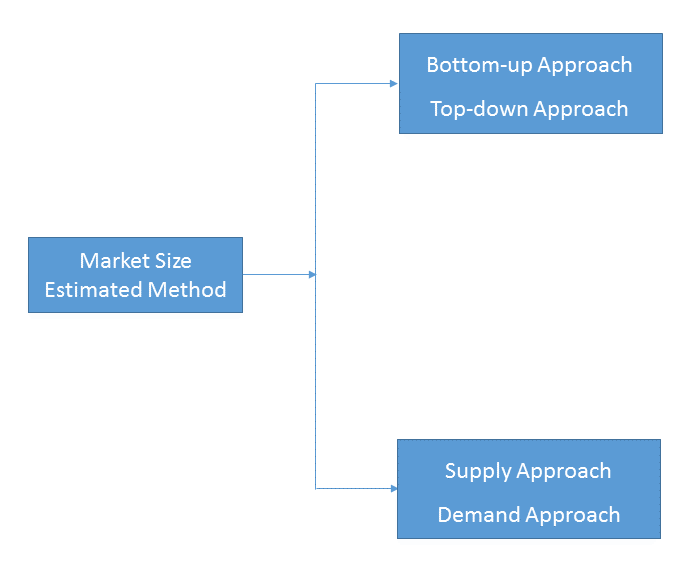
1)Top-down & Bottom-up Approach
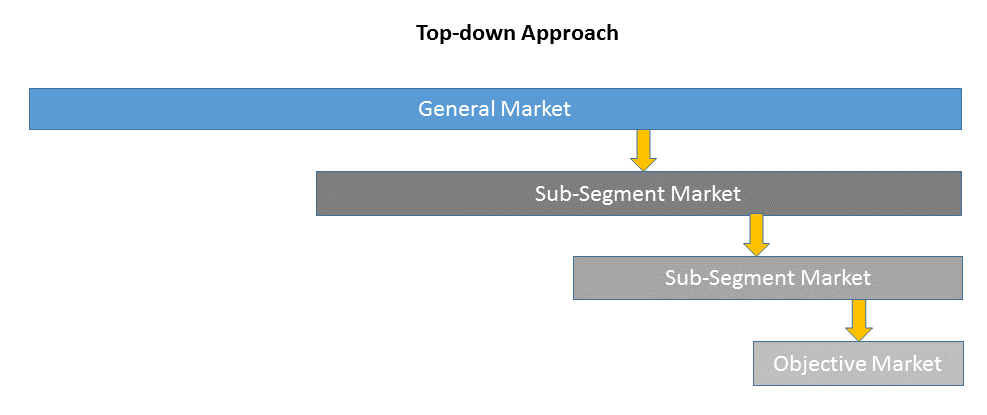
Top-down approach uses a general market size figure and determines the percentage that the objective market represents.
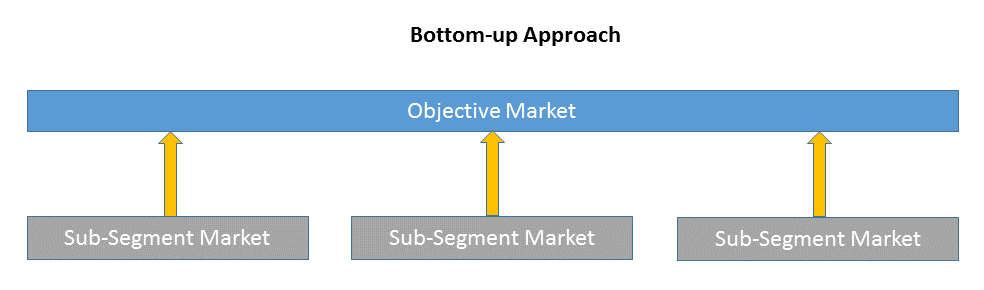
Bottom-up approach size the objective market by collecting the sub-segment information.
2)Supply & Demand Approach
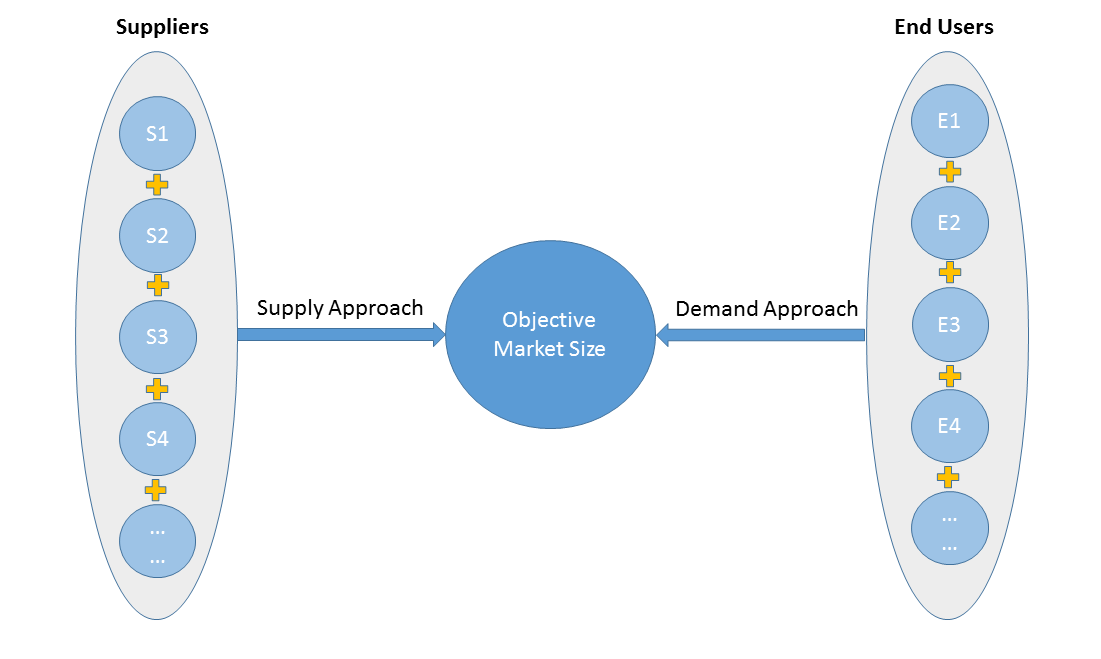
Supply approach is based on assessments of the size of each competitor supplying the objective market.
Demand approach combine end-user data within a market to estimate the objective market size. It is sometimes referred to as bottom-up approach.
- Forecasting Methodology
- Numerous factors impacting the market trend are considered for forecast model:
- New technology and application in the future;
- New project planned/under contraction;
- Global and regional underlying economic growth;
- Threatens of substitute products;
- Industry expert opinion;
- Policy and Society implication.
- Analysis Tools
1)PEST Analysis
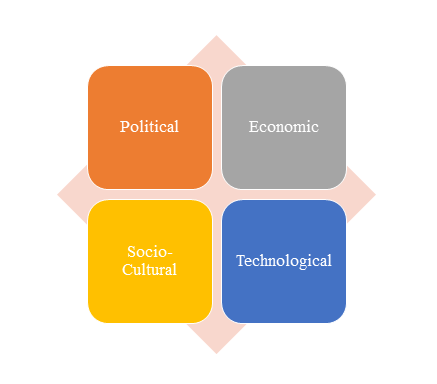
PEST Analysis is a simple and widely used tool that helps our client analyze the Political, Economic, Socio-Cultural, and Technological changes in their business environment.
- Benefits of a PEST analysis:
- It helps you to spot business opportunities, and it gives you advanced warning of significant threats.
- It reveals the direction of change within your business environment. This helps you shape what you’re doing, so that you work with change, rather than against it.
- It helps you avoid starting projects that are likely to fail, for reasons beyond your control.
- It can help you break free of unconscious assumptions when you enter a new country, region, or market; because it helps you develop an objective view of this new environment.
2)Porter’s Five Force Model Analysis
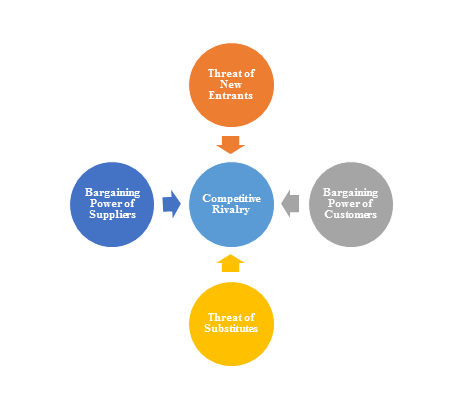
The Porter’s Five Force Model is a tool that can be used to analyze the opportunities and overall competitive advantage. The five forces that can assist in determining the competitive intensity and potential attractiveness within a specific area.
- Threat of New Entrants: Profitable industries that yield high returns will attract new firms.
- Threat of Substitutes: A substitute product uses a different technology to try to solve the same economic need.
- Bargaining Power of Customers: the ability of customers to put the firm under pressure, which also affects the customer's sensitivity to price changes.
- Bargaining Power of Suppliers: Suppliers of raw materials, components, labor, and services (such as expertise) to the firm can be a source of power over the firm when there are few substitutes.
- Competitive Rivalry: For most industries the intensity of competitive rivalry is the major determinant of the competitiveness of the industry.
3)Value Chain Analysis
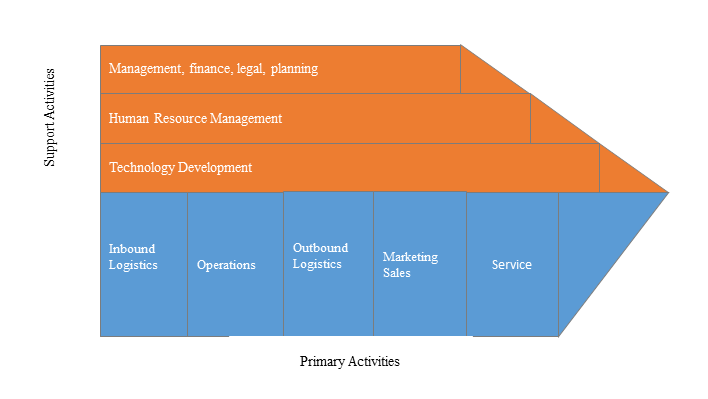
Value chain analysis is a tool to identify activities, within and around the firm and relating these activities to an assessment of competitive strength. Value chain can be analyzed by primary activities and supportive activities. Primary activities include: inbound logistics, operations, outbound logistics, marketing & sales, service. Support activities include: technology development, human resource management, management, finance, legal, planning.
4)SWOT Analysis
SWOT analysis is a tool used to evaluate a company's competitive position by identifying its strengths, weaknesses, opportunities and threats. The strengths and weakness is the inner factor; the opportunities and threats are the external factor. By analyzing the inner and external factors, the analysis can provide the detail information of the position of a player and the characteristics of the industry.
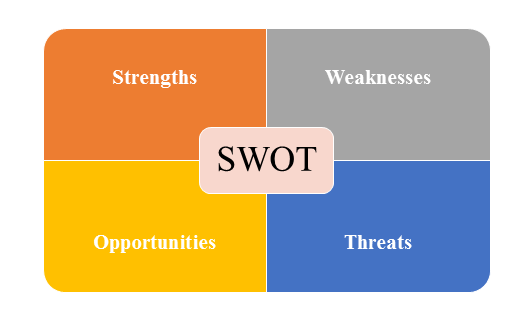
- Strengths describe what the player excels at and separates it from the competition
- Weaknesses stop the player from performing at its optimum level.
- Opportunities refer to favorable external factors that the player can use to give it a competitive advantage.
- Threats refer to factors that have the potential to harm the player.
- Data Sources
| Primary Sources | Secondary Sources |
|---|---|
| Face to face/Phone Interviews with market participants, such as: Manufactures; Distributors; End-users; Experts. Online Survey |
Government/International Organization Data: Annual Report/Presentation/Fact Book Internet Source Information Industry Association Data Free/Purchased Database Market Research Report Book/Journal/News |