Global Axicon Market Strategic Outlook 2026-2031 Non-Diffracting Bessel Beam Optics and Ophthalmic Imaging Innovation Analysis
- Single User License (1 Users) $ 3,500
- Team License (2~5 Users) $ 4,500
- Corporate License (>5 Users) $ 5,500
The global axicon market in 2026 occupies a highly specialized, optically decisive niche within precision photonics, medical ophthalmology, and advanced laser instrumentation. Characterized by a conical optical surface—fabricated as refractive lenses, reflective mirrors, or wafer-etched diffractive phase elements—axicons transform collimated Gaussian laser beams into two uniquely valuable intensity distributions: elongated, non-diffracting Bessel-like focal lines possessing extraordinary depth of focus, or constant-thickness annular ring profiles in the far field. As of 2026, the global market is valued between 320 million USD and 530 million USD, projected to expand steadily at a compound annual growth rate (CAGR) ranging from 4.6 percent to 7.3 percent through 2031 as clinical retinal imaging, ultrafast microscopy, and precision beam-shaping architectures overcome longstanding optical physics bottlenecks.
Between mid-2025 and mid-2026, three major scientific and engineering breakthroughs substantially elevated the commercial utility and design accessibility of axicon optics. First, in July 2025, research published in Biomedical Optics Express demonstrated the integration of a dual-axicon configuration inside Adaptive Optics Scanning Light Ophthalmoscopy (AOSLO), achieving simultaneous large depth-of-focus imaging of both retinal photoreceptor layers and retinal micro-vasculature—while utilizing annular axicon illumination to slash optical power loss from roughly 60 percent under conventional opaque mask setups down to approximately 12 percent. For clinical ophthalmic equipment OEMs operating under stringent ocular phototoxicity safety ceilings, this nearly fivefold reduction in illumination loss marks a watershed clinical inflection point.
Second, addressing the most notorious fabrication defect in refractive conical lenses, researchers at the September 2025 SPIE Lens Design and Optical Engineering XXVI conference unveiled a novel "Center Flat Axicon Lens" design. By purposefully engineering a controlled central flat facet rather than struggling against unavoidable microscopic apex rounding during traditional CNC grinding, this architecture suppresses on-axis diffraction stray light and dramatically enhances annular ring uniformity. Third, accelerating downstream adoption, leading optical modeling software LightTrans VirtualLab Fusion released dedicated Phase-Only Axicon Gaussian-to-Bessel beam shaper specifications and digital-twin models in April 2026—substantially compressing complex Bessel-beam optical engineering cycles across both industrial laser processing and academic research laboratories.
Regional Market Analysis
The geographical distribution of the axicon market mirrors global hubs of ultra-precision deterministic glass polishing, ophthalmic medical device manufacturing, and ultrafast laser research.
● North America commands the largest global revenue share, estimated between 36 percent and 40 percent. Regional dominance is anchored by global photonics catalog and laser-optics titans including Thorlabs Inc, Edmund Optics Inc, MKS Instruments (Newport Corporation), Coherent Inc, and CVI Laser Optics (IDEX Corporation). Demand in 2026 is propelled by United States clinical ophthalmic OCT and AOSLO instrument development, leading academic biophotonics institutes, defense laser metrology, and high-power ultrafast glass-processing OEMs.
● Europe represents the premier engineering epicenter for precision conical metrology, ultrafast optics, and optical simulation software, holding a market share ranging from 28 percent to 32 percent. Anchored by German leaders Jenoptik AG, Laser Components GmbH, Menlo Systems GmbH, and Photonics Products GmbH—alongside Jena-based simulation innovator LightTrans and Lithuania’s ultrafast-optics specialist Eksma Optics—Europe excels in wafer-level Phase-Only diffractive axicons, Center Flat apex machining, and European clinical ophthalmic surgical platforms.
● Asia Pacific represents the fastest-growing regional market and a major precision-molding center, capturing an estimated share between 24 percent and 28 percent. Japan’s OptoSigma Corporation leads regional precision fused-silica opto-mechanics, while China and South Korea drive accelerating consumption across industrial Bessel-beam display glass dicing and expanding academic photonics labs. Within Taiwan(China), regional competitiveness centers on precision optical glass molding (PGM), semiconductor glass-interposer ultrafast laser singulation optics, and high-precision ophthalmic diagnostic sub-assembly manufacturing.
● South America and the Middle East and Africa (MEA) collectively account for 4 percent to 8 percent of global revenue. Adoption concentrates primarily in university physics and quantum-optics research laboratories across Brazil alongside premium tertiary ophthalmology hospitals in the GCC nations upgrading to extended-depth-of-focus retinal imaging systems.
Application and Segmentation Analysis
Axicon engineering specifications diverge sharply across medical clinical instrumentation and frontier scientific research depending on wavelength, damage threshold, and axial beam uniformity.
● Ophthalmic Equipment represents a high-margin, rapidly advancing clinical vertical spanning Optical Coherence Tomography (OCT), Adaptive Optics Scanning Light Ophthalmoscopy (AOSLO), and femtosecond laser refractive surgery. Conventional spherical lenses suffer acute trade-offs between lateral resolution and axial depth of focus when imaging curved, multi-layered retinal tissue. The July 2025 Biomedical Optics Express dual-axicon AOSLO breakthrough—delivering simultaneous sharp imaging of photoreceptor and vascular layers while cutting optical power loss from roughly 60 percent to roughly 12 percent—directly validates axicons as core enablers of safer, higher-signal-to-noise early screening for glaucoma, diabetic retinopathy, and macular degeneration.
● Scientific Research constitutes the primary technical incubator and broadest SKU-diversity vertical. Core applications encompass Bessel light-sheet fluorescence microscopy (allowing deep-tissue 3D cellular imaging through scattering biological media), optical trapping and annular optical tweezers for manipulating fragile live cells and low-index nanoparticles, cold-atom optical waveguides for quantum sensing, laser-induced plasma channels, and precision optical alignment metrology. The April 2026 release of Phase-Only Axicon digital-twin specifications within LightTrans VirtualLab Fusion directly lowers modeling barriers across university and national-lab Bessel-beam setups.
● Optical Architecture Evolution (Refractive, Reflective, and Phase-Only Diffractive): Standard bulk refractive fused-silica and CaF2 axicons remain the volume core—now gaining significant beam-uniformity upgrades via the September 2025 SPIE Center Flat Axicon geometry. Concurrently, monolithic reflective metallic/coated conical mirrors capture ultra-broadband femtosecond pulse applications where refractive glass introduces chromatic dispersion, while wafer-etched Phase-Only Diffractive Axicons (championed by Jenoptik) enable compact integration and high-throughput industrial Bessel-beam glass stealth dicing.
Value Chain Analysis
The axicon value chain exhibits steep technical barriers to entry centered on non-spherical conical polishing, sub-millimeter apex metrology, and ultra-high laser-induced damage threshold (LIDT) coatings.
Upstream Ultra-Pure Optical Substrates and Coatings: Value creation begins with UV-grade synthetic fused silica, low-hydroxyl IR fused silica, N-BK7 borosilicate glass, Calcium Fluoride (CaF2), Zinc Selenide (ZnSe), and specialized low-scatter ion-beam sputtered (IBS) anti-reflective dielectric coatings engineered for femtosecond and excimer wavelengths.
Midstream Conical Fabrication and Apex Metrology: Unlike standard spherical lenses that can be pitch-polished in bulk batches, generating a mathematically sharp conical tip poses extreme physical difficulty. Uncontrolled tip rounding creates intense axial intensity oscillations and parasitic diffraction rings. Mastering deterministic CNC grinding, Magneto-Rheological Finishing (MRF), single-point diamond turning (SPDT), wafer-level reactive ion etching (for diffractive axicons), and precision Center Flat apex engineering defines top-tier manufacturing capability.
High-Uniformity Precision Axicons, Phase-Only DOEs, and Integrated Modules (Primary Value Pool): Highest profit pools in 2026 reside in ultra-tight apex-angle tolerance fused-silica axicons, engineered Center Flat ophthalmic/metrology lenses, wafer-level Phase-Only diffractive Bessel beam shapers, and pre-aligned dual-axicon or zoom-axicon optical assemblies that eliminate painful end-user tilt/decentering alignment errors.
Downstream Distribution and Digital-Twin Co-Design: Hardware flows via direct OEM engineering contracts with ophthalmic device makers and ultrafast laser builders, complemented by high-velocity global R&D catalog ecosystems (Thorlabs, Edmund Optics, Newport, OptoSigma, Eksma) increasingly linked to digital-twin optical libraries such as LightTrans VirtualLab Fusion.
Key Market Player Deep Profiles
● Thorlabs Inc: Headquartered in Newton, New Jersey, Thorlabs Inc operates as the global photonics industry’s premier vertically integrated catalog and manufacturing powerhouse, offering one of the broadest off-the-shelf axicon portfolios spanning UV fused silica, N-BK7, CaF2, and monolithic reflective gold/aluminum conical mirrors. Thorlabs’ decisive competitive advantage rests on end-to-end R&D ecosystem integration—pairing tightly characterized axicons with precision kinematically mounted cages, dual-axicon beam expanders, and rapid next-day global fulfillment. In 2026, Thorlabs serves as the primary rapid-prototyping backbone enabling academic and clinical researchers worldwide to build novel AOSLO ophthalmic imaging setups, Bessel light-sheet microscopes, and optical trapping benches.
● Edmund Optics Inc: Headquartered in Barrington, New Jersey, Edmund Optics Inc commands premier global reach across both R&D catalog sales and high-volume custom OEM precision optics. Under its flagship TECHSPEC product line, Edmund Optics manufactures high-precision UV fused-silica and ZnSe axicon lenses featuring ultra-tight apex-angle tolerances, minimized tip-radius defects, and high-LIDT laser-line anti-reflective coatings tailored for industrial and medical lasers. In 2026, Edmund Optics’ strategic dynamic bridges early scientific prototyping directly into ISO-certified volume OEM manufacturing—leveraging global fabrication and coating centers across North America, Europe, and Asia to supply ophthalmic diagnostic and industrial laser-shaping equipment makers.
● OptoSigma Corporation: Headquartered in Tokyo, Japan with major commercial operations across North America and Europe, OptoSigma Corporation is globally esteemed for ultra-precision optical elements, laser-grade synthetic fused-silica axicons, and rock-solid opto-mechanical mounting hardware. Renowned for rigorous Japanese surface-figure verification, ultra-low scatter polishing, and cleanroom stability, OptoSigma commands deep institutional trust among semiconductor laser-dicing OEMs, academic biophotonics researchers, and ophthalmic instrumentation developers across Japan, Taiwan(China), and Western markets. In 2026, OptoSigma continues refining precision non-spherical optical assemblies and multi-axis alignment stages designed to mitigate the acute tilt sensitivity inherent to Bessel-beam systems.
● MKS Instruments (Newport Corporation): Operating from Irvine, California as the core photonics pillar of MKS Instruments, Newport Corporation delivers an unmatched integrated laser-to-optics ecosystem combining high-LIDT fused-silica axicons, reflective conical beam shapers, Spectra-Physics ultrafast femtosecond lasers, and Ophir beam-profiling diagnostics. Rather than selling isolated optical components, Newport captures high-margin enterprise value by engineering validated Bessel-beam delivery paths for scientific research, semiconductor glass-substrate stealth cutting, and multiphoton microscopy. In 2026, surging demand for ultrafast laser glass micro-processing and advanced biophotonics sustains strong global pull across Newport’s precision beam-shaping portfolio.
● Coherent Inc: Headquartered in Saxonburg, Pennsylvania, Coherent Corp (integrating legacy Coherent Inc and II-VI) stands as a colossal vertically integrated photonics titan controlling upstream optical substrate synthesis (fused silica, ZnSe, sapphire, CaF2), world-class thin-film coating, and downstream precision laser systems. Within the axicon market, Coherent supplies ultra-high-LIDT conical optics and integrated Bessel-beam processing heads engineered for high-throughput brittle-material dicing (smartphone display glass, sapphire wafers, semiconductor glass interposers) alongside specialized ophthalmic medical laser optics. In 2026, Coherent’s unmatched material-science scale shields its OEM customers from specialty substrate shortages while setting performance benchmarks in multi-hundred-watt ultrafast beam shaping.
● Photonics Products GmbH: Operating within Germany’s dense precision-optics and laser-engineering corridor, Photonics Products GmbH focuses on specialized laser diode modules, custom micro-optics integration, and turnkey optical beam-shaping assemblies. Rather than competing strictly in loose catalog glass lenses, the company excels in opto-mechanical packaging—integrating compact semiconductor laser sources directly with precision refractive or diffractive axicon lenses to deliver pre-aligned, factory-calibrated annular ring projectors and structured illumination heads. In 2026, Photonics Products GmbH targets European ophthalmic diagnostic OEMs, automated industrial machine-vision inspection, and compact biomedical sensing instruments requiring plug-and-play ring illumination.
● CVI Laser Optics (a part of IDEX Corporation): Operating from Albuquerque, New Mexico and the Isle of Man as a flagship precision-optics franchise within IDEX Health & Science, CVI Laser Optics is a globally respected veteran in ultra-high-LIDT laser optics and custom precision-polished crystalline and fused-silica components. Specializing in extreme-environment UV, visible, and NIR laser-line coatings with ultra-low absorption and minimal wavefront distortion, CVI Laser Optics fabricates custom precision axicons built to survive high-energy pulsed scientific, defense, and ultrafast industrial laser systems. In 2026, IDEX’s broad life-science and biophotonics platform reinforces CVI’s deep penetration across premier ophthalmic, flow-cytometry, and academic research OEMs.
● Eksma Optics: Headquartered in Vilnius, Lithuania—one of Europe’s premier global centers for ultrafast laser technology—Eksma Optics has earned world-class standing in high-precision UV fused-silica positive and negative axicons engineered explicitly for picosecond and femtosecond laser systems. Differentiating through exceptionally crisp conical apex control, ultra-low wavefront error, and specialized high-LIDT broadband dielectric coatings, Eksma Optics supplies both custom OEM conical optics and specialized Bessel-beam generators for nonlinear optics, laser micromachining, and advanced European/North American scientific laboratories. In 2026, Eksma’s agile custom fabrication and deep ultrafast laser physics expertise sustain strong high-margin growth.
● AML Technologies: Operating as a specialized precision photonics and industrial laser-engineering innovator, AML Technologies concentrates on customized laser-optics integration, precision mechanical alignment systems, and application-specific beam-shaping assemblies serving scientific research and advanced manufacturing. Addressing the acute operational sensitivity of conical optics—where sub-milliradian angular misalignment degrades Bessel-beam symmetry—AML Technologies adds value through engineered mounting mechanics, precision beam-conditioning integration, and customized subsystem assembly. In 2026, the company captures growing OEM demand for ruggedized, ready-to-integrate beam-shaping subassemblies across specialized metrology and precision processing platforms.
● Menlo Systems GmbH: Headquartered in Martinsried near Munich, Germany, Menlo Systems GmbH is a globally renowned pioneer of Nobel-prize-derived optical frequency combs, ultra-low-noise femtosecond fiber lasers, and terahertz metrology systems. Serving as a foundational ecosystem anchor within frontier scientific research—including high-precision multiphoton microscopy, optical coherence imaging, cold-atom quantum physics, and ultrafast spectroscopy—Menlo Systems’ ultra-stable femtosecond pulse engines frequently operate upstream of precision dispersion-free reflective and fused-silica axicon beam shapers. In 2026, accelerating sovereign investment in quantum metrology and advanced biophotonics across Europe and North America reinforces Menlo Systems’ influence across cutting-edge Bessel-beam research suites.
● Laser Components GmbH: Headquartered in Olching, Germany with manufacturing and commercial sites across Europe and the United States, Laser Components GmbH operates as a premier international specialist in custom laser optics, specialized dielectric coatings, and integrated photonics assemblies spanning deep-UV through far-infrared wavelengths. Within the axicon arena, the company delivers customized refractive fused-silica/IR axicons and diffractive beam-shaping elements tailored specifically to stringent European ophthalmic, biophotonics, and scientific instrumentation specifications. In 2026, Laser Components differentiates through responsive German engineering consultation, tight coating spectral customization, and reliable small-to-medium volume OEM fulfillment.
● Jenoptik AG: Headquartered in Jena, Germany—the historic heart of European optical engineering and home to leading optical simulation ecosystems—Jenoptik AG stands as a global titan in wafer-level micro-optics and Diffractive Optical Elements (DOEs). Jenoptik leads the industry in precision-etched fused-silica Phase-Only Diffractive Axicons—aligning seamlessly with April 2026 LightTrans VirtualLab Fusion digital-twin modeling standards—that eliminate mechanical conical tip rounding while surviving extreme industrial and medical laser power densities. In 2026, Jenoptik captures top-tier OEM contracts across global ophthalmic surgical systems, semiconductor glass processing, and biophotonics instrumentation requiring reproducible wafer-scale beam-shaping accuracy.
Opportunities and Challenges
The axicon market is entering a high-value phase of technical maturation driven by clinical ophthalmology breakthroughs and digital-twin optical engineering.
● Opportunities: Clinical adoption of dual-axicon Adaptive Optics Scanning Light Ophthalmoscopy (validated by the July 2025 Biomedical Optics Express breakthrough slashing illumination power loss from ~60 percent to ~12 percent) opens a compelling multi-year equipment upgrade wave across retinal diagnostics and early neurodegeneration/glaucoma screening. Concurrently, commercial scaling of the September 2025 SPIE Center Flat Axicon geometry enables precision metrology and medical OEMs to achieve unprecedented annular beam uniformity without prohibitive apex-polishing costs. Furthermore, April 2026 LightTrans VirtualLab Fusion Phase-Only Axicon digital-twin models dramatically accelerate adoption of diffractive Bessel-beam shapers across both academic research and semiconductor glass-interposer laser singulation.
● Challenges: Axicons exhibit notorious mechanical alignment intolerance; microscopic lateral decentering or angular tilt relative to the incident Gaussian laser axis immediately introduces severe astigmatic distortions rather than concentric rings, raising integration and assembly costs for downstream OEMs. On the manufacturing floor, verifying conical surface figure and sub-50-micron apex geometry requires expensive specialized interferometry and skilled deterministic MRF polishing, constraining rapid throughput expansion. Additionally, chromatic dispersion in refractive glass axicons complicates ultra-broadband femtosecond applications, necessitating costlier monolithic reflective mirrors or custom achromatic doublets.
Macroeconomic and Geopolitical Influences
The 2026 axicon market demonstrates resilient, technology-driven expansion amidst elevated global interest rates and selective public-sector research budgets. While tighter university endowment and government grant scrutiny in certain Western economies has tempered bulk general-lab spending, non-discretionary demographic demand in ophthalmology—as aging populations across North America, Europe, Japan, and China drive surging volumes of retinal OCT/AOSLO diagnostics and refractive eye procedures—provides a durable, high-margin commercial anchor. Simultaneously, software-enabled digital-twin engineering (such as LightTrans’s April 2026 Phase-Only Axicon models) reduces R&D prototyping waste, improving capital efficiency for optical OEMs operating under higher borrowing costs.
Geopolitically, ultra-pure UV fused silica, high-LIDT ultrafast dielectric coatings, and precision deterministic optical polishing machinery remain sensitive nodes within global dual-use export control architectures. Western medical device primes, semiconductor laser-dicing OEMs, and defense-adjacent optical laboratories increasingly prioritize sovereign and allied optical supply chains across North America (Thorlabs, Edmund, MKS/Newport, Coherent, CVI/IDEX), Europe (Jenoptik, Eksma, Laser Components, Menlo Systems), Japan (OptoSigma), and Taiwan(China)’s precision glass-molding and semiconductor-packaging ecosystems. As clinical ophthalmology demands higher signal-to-noise retinal imaging and scientific research pushes deeper into non-diffracting Bessel-beam physics, precision axicon manufacturers mastering tip-defect suppression, wafer-level phase engineering, and digital-twin co-design will capture disproportionate value through 2031.
1.1 Study Scope 1
1.2 Research Methodology 2
1.2.1 Data Sources 2
1.2.2 Assumptions 4
1.3 Abbreviations and Acronyms 5
Chapter 2 Global Axicon Market Context and Macroeconomic Impact 6
2.1 Product Development Background 6
2.2 Global Macroeconomic Environment Analysis 7
2.2.1 Global GDP Trends and Scientific/Medical R&D Investment 7
2.2.2 Impact of Inflation and Precision Optical Material Price Volatility 8
2.3 Impact of Geopolitical Conflicts on the Axicon Market 9
2.3.1 Supply Chain Disruptions for High-Purity Fused Silica and Optical Crystals 9
2.3.2 Cross-Border Export Controls on Precision Laser Optics 10
2.4 Global Axicon Market Volume and Market Size (2021-2026) 11
Chapter 3 Global Axicon Market by Type 12
3.1 Market Volume and Size Analysis by Type (2021-2026) 12
3.2 Refractive Glass and Fused Silica Axicons 13
3.3 Reflective Metallic Axicons 14
3.4 Infrared (ZnSe/CaF2) and Diffractive Axicons 15
Chapter 4 Global Axicon Market by Application 16
4.1 Market Volume and Size Analysis by Application (2021-2026) 16
4.2 Ophthalmic Equipment (Laser Eye Surgery, OCT Imaging) 17
4.3 Scientific Research (Bessel Beam Generation, Optical Tweezers, Microscopy) 18
4.4 Industrial Laser Micromachining and Metrology 19
Chapter 5 Global Axicon Market by Region 20
5.1 Market Volume and Size Analysis by Region (2021-2026) 20
5.2 North America Axicon Market Analysis 21
5.2.1 North America Market Volume and Market Size (2021-2026) 21
5.2.2 North America Market by Key Regions (United States, Canada, Mexico) 22
5.3 Europe Axicon Market Analysis 24
5.3.1 Europe Market Volume and Market Size (2021-2026) 24
5.3.2 Europe Market by Key Regions (Germany, United Kingdom, France, Italy, Switzerland) 25
5.4 Asia-Pacific Axicon Market Analysis 28
5.4.1 Asia-Pacific Market Volume and Market Size (2021-2026) 28
5.4.2 Asia-Pacific Market by Key Regions (China, Japan, India, South Korea, Taiwan (China)) 29
5.5 Latin America Axicon Market Analysis 31
5.5.1 Latin America Market Volume and Market Size (2021-2026) 31
5.5.2 Latin America Market by Key Regions (Brazil, Argentina) 32
5.6 Middle East & Africa Axicon Market Analysis 33
5.6.1 Middle East & Africa Market Volume and Market Size (2021-2026) 33
5.6.2 Middle East & Africa Market by Key Regions (UAE, Saudi Arabia, South Africa) 34
Chapter 6 Axicon Manufacturing Process and Patent Analysis 35
6.1 Production Flow: CNC Conical Grinding, Diamond Turning, and Magnetorheological Finishing 35
6.2 Core Technologies: Apex Tip Precision, Anti-Reflective Coatings, and Wavefront Metrology 36
6.3 Global Axicon Patent Landscape Analysis 38
Chapter 7 Industry Chain and Value Chain Analysis 39
7.1 Value Chain Overview 39
7.2 Upstream Raw Materials (UV Fused Silica, N-BK7, Zinc Selenide, Coating Targets) 40
7.3 Midstream Precision Optical Fabrication and Testing 41
7.4 Downstream Distribution Channels (Catalog Suppliers, MedTech OEMs, Research Labs) 42
Chapter 8 Global Axicon Import and Export Analysis 43
8.1 Global Import Volume and Value (2021-2026) 43
8.2 Global Export Volume and Value (2021-2026) 44
Chapter 9 Competitive Landscape and Concentration Rate 46
9.1 Market Concentration Rate (CR3, CR5) 46
9.2 Competitive Ranking of Key Players (2025) 47
9.3 Strategic Alliances, Mergers, and Photonics Acquisitions 49
Chapter 10 Key Players Analysis 50
10.1 Thorlabs Inc 50
10.1.1 Company Overview and Optical Component Portfolio 50
10.1.2 SWOT Analysis 51
10.1.3 Thorlabs Inc Axicon Sales, Price, Cost and Gross Profit Margin (2021-2026) 52
10.1.4 Academic Research Fulfillment and Catalog Strategy 53
10.2 Edmund Optics Inc 54
10.2.1 Company Overview and Precision Optics Portfolio 54
10.2.2 SWOT Analysis 55
10.2.3 Edmund Optics Inc Axicon Sales, Price, Cost and Gross Profit Margin (2021-2026) 56
10.2.4 Global Manufacturing and E-Commerce Strategy 57
10.3 OptoSigma Corporation 58
10.3.1 Company Overview and Optical Mechanics Portfolio 58
10.3.2 SWOT Analysis 59
10.3.3 OptoSigma Corporation Axicon Sales, Price, Cost and Gross Profit Margin (2021-2026) 60
10.3.4 Asia-Pacific and OEM Supply Strategy 61
10.4 MKS Instruments (Newport Corporation) 62
10.4.1 Company Overview and Photonics Solutions 62
10.4.2 SWOT Analysis 63
10.4.3 MKS Instruments (Newport) Axicon Sales, Price, Cost and Gross Profit Margin (2021-2026) 64
10.4.4 Integrated Laser and Motion Control Strategy 65
10.5 Coherent Inc 66
10.5.1 Company Overview and Laser Optics Portfolio 66
10.5.2 SWOT Analysis 67
10.5.3 Coherent Inc Axicon Sales, Price, Cost and Gross Profit Margin (2021-2026) 68
10.5.4 High-Power Laser Damage Threshold R&D Strategy 69
10.6 Photonics Products GmbH 70
10.6.1 Company Overview 70
10.6.2 SWOT Analysis 71
10.6.3 Photonics Products GmbH Axicon Sales, Price, Cost and Gross Profit Margin (2021-2026) 72
10.7 CVI Laser Optics (a part of IDEX Corporation) 73
10.7.1 Company Overview and Custom Laser Optics Portfolio 73
10.7.2 SWOT Analysis 74
10.7.3 CVI Laser Optics Axicon Sales, Price, Cost and Gross Profit Margin (2021-2026) 75
10.7.4 Medical and Ophthalmic OEM Partnership Strategy 76
10.8 Eksma Optics 77
10.8.1 Company Overview and Ultrafast Laser Optics Portfolio 77
10.8.2 SWOT Analysis 78
10.8.3 Eksma Optics Axicon Sales, Price, Cost and Gross Profit Margin (2021-2026) 79
10.8.4 Femtosecond Laser and Scientific Market Strategy 80
10.9 AML Technologies 81
10.9.1 Company Overview 81
10.9.2 SWOT Analysis 82
10.9.3 AML Technologies Axicon Sales, Price, Cost and Gross Profit Margin (2021-2026) 83
10.10 Menlo Systems GmbH 84
10.10.1 Company Overview 84
10.10.2 SWOT Analysis 85
10.10.3 Menlo Systems GmbH Axicon Sales, Price, Cost and Gross Profit Margin (2021-2026) 86
10.11 Laser Components GmbH 87
10.11.1 Company Overview and Specialty Optics Portfolio 87
10.11.2 SWOT Analysis 88
10.11.3 Laser Components GmbH Axicon Sales, Price, Cost and Gross Profit Margin (2021-2026) 89
10.11.4 European Coating and Quality Control Strategy 90
10.12 Jenoptik AG 91
10.12.1 Company Overview and Light & Optics Portfolio 91
10.12.2 SWOT Analysis 92
10.12.3 Jenoptik AG Axicon Sales, Price, Cost and Gross Profit Margin (2021-2026) 93
10.12.4 Biophotonics and Micro-Optics Integration Strategy 94
Chapter 11 Global Axicon Market Forecast (2027-2031) 95
11.1 Market Volume and Size Forecast 95
11.2 Forecast by Type (2027-2031) 96
11.3 Forecast by Application (2027-2031) 98
11.4 Forecast by Key Regions (2027-2031) 99
Chapter 12 Market Dynamics 101
12.1 Industry Drivers (Ophthalmic Laser Surgery Growth, Light-Sheet Microscopy Adoption) 101
12.2 Industry Restraints (Apex Rounding Defects, High Precision Metrology Costs) 102
12.3 Industry Opportunities and Trends (Achromatic Doublet Axicons, Ultrafast Bessel Beam Machining) 103
Chapter 13 Research Findings and Conclusion 104
Table 2 Global Axicon Market Volume by Type (2021-2026) 12
Table 3 Global Axicon Market Size by Type (2021-2026) 13
Table 4 Global Axicon Market Volume by Application (2021-2026) 16
Table 5 Global Axicon Market Size by Application (2021-2026) 17
Table 6 North America Axicon Market Volume and Size by Key Regions (2021-2026) 23
Table 7 Europe Axicon Market Volume and Size by Key Regions (2021-2026) 27
Table 8 Asia-Pacific Axicon Market Volume and Size by Key Regions (2021-2026) 30
Table 9 Latin America Axicon Market Volume and Size by Key Regions (2021-2026) 32
Table 10 Middle East & Africa Axicon Market Volume and Size by Key Regions (2021-2026) 34
Table 11 Global Axicon Major Patents List 38
Table 12 Global Axicon Import and Export Data (2021-2026) 43
Table 13 Competitive Ranking of Key Players by Revenue (2025) 47
Table 14 Thorlabs Inc Axicon Sales, Price, Cost and Gross Profit Margin (2021-2026) 52
Table 15 Edmund Optics Inc Axicon Sales, Price, Cost and Gross Profit Margin (2021-2026) 56
Table 16 OptoSigma Corporation Axicon Sales, Price, Cost and Gross Profit Margin (2021-2026) 60
Table 17 MKS Instruments (Newport) Axicon Sales, Price, Cost and Gross Profit Margin (2021-2026) 64
Table 18 Coherent Inc Axicon Sales, Price, Cost and Gross Profit Margin (2021-2026) 68
Table 19 Photonics Products GmbH Axicon Sales, Price, Cost and Gross Profit Margin (2021-2026) 72
Table 20 CVI Laser Optics Axicon Sales, Price, Cost and Gross Profit Margin (2021-2026) 75
Table 21 Eksma Optics Axicon Sales, Price, Cost and Gross Profit Margin (2021-2026) 79
Table 22 AML Technologies Axicon Sales, Price, Cost and Gross Profit Margin (2021-2026) 83
Table 23 Menlo Systems GmbH Axicon Sales, Price, Cost and Gross Profit Margin (2021-2026) 86
Table 24 Laser Components GmbH Axicon Sales, Price, Cost and Gross Profit Margin (2021-2026) 89
Table 25 Jenoptik AG Axicon Sales, Price, Cost and Gross Profit Margin (2021-2026) 93
Table 26 Global Axicon Market Volume Forecast by Type (2027-2031) 96
Table 27 Global Axicon Market Size Forecast by Application (2027-2031) 98
Table 28 Global Axicon Market Size Forecast by Key Regions (2027-2031) 100
Figure 1 Global Axicon Market Size Growth Rate (2021-2026) 11
Figure 2 Impact of Geopolitical Conflicts on Precision Laser Optics Supply Chain 10
Figure 3 Global Axicon Market Size Share by Type (2021-2026) 13
Figure 4 Global Axicon Market Size Share by Application (2021-2026) 17
Figure 5 Global Axicon Market Size Share by Region (2021-2026) 20
Figure 6 Axicon Manufacturing Process Flowchart 35
Figure 7 Axicon Industry Chain Mapping 39
Figure 8 Global Market Concentration Rate (CR5) in 2025 46
Figure 9 Thorlabs Inc Axicon Market Share (2021-2026) 53
Figure 10 Edmund Optics Inc Axicon Market Share (2021-2026) 57
Figure 11 OptoSigma Corporation Axicon Market Share (2021-2026) 61
Figure 12 MKS Instruments (Newport) Axicon Market Share (2021-2026) 65
Figure 13 Coherent Inc Axicon Market Share (2021-2026) 69
Figure 14 Photonics Products GmbH Axicon Market Share (2021-2026) 72
Figure 15 CVI Laser Optics Axicon Market Share (2021-2026) 76
Figure 16 Eksma Optics Axicon Market Share (2021-2026) 80
Figure 17 AML Technologies Axicon Market Share (2021-2026) 83
Figure 18 Menlo Systems GmbH Axicon Market Share (2021-2026) 86
Figure 19 Laser Components GmbH Axicon Market Share (2021-2026) 90
Figure 20 Jenoptik AG Axicon Market Share (2021-2026) 94
Figure 21 Global Axicon Market Size Forecast (2027-2031) 95
Research Methodology
- Market Estimated Methodology:
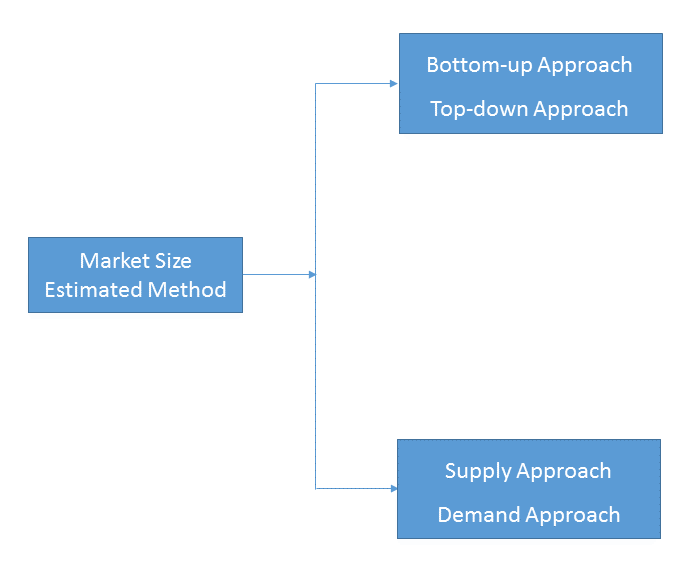
Bottom-up & top-down approach, supply & demand approach are the most important method which is used by HDIN Research to estimate the market size.
1)Top-down & Bottom-up Approach
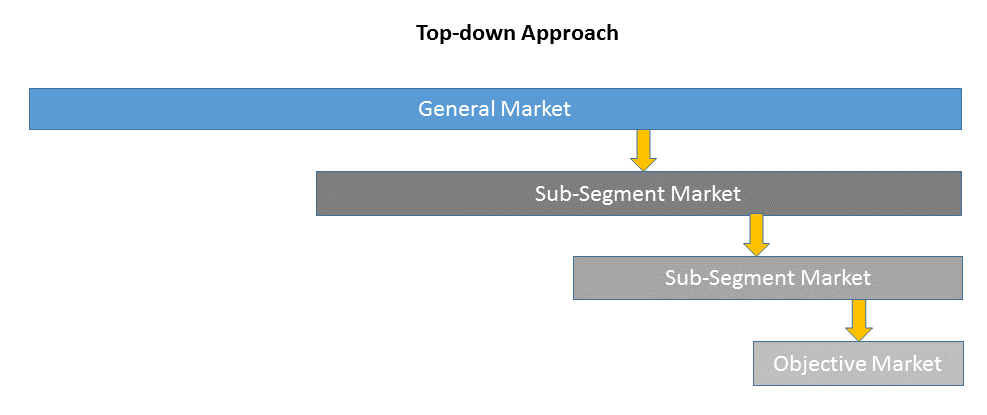
Top-down approach uses a general market size figure and determines the percentage that the objective market represents.
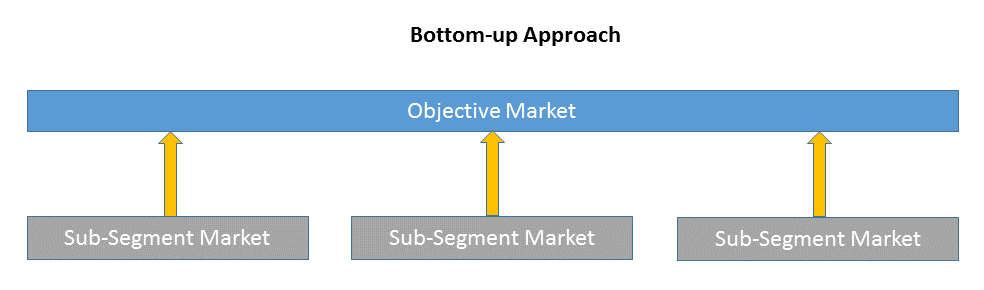
Bottom-up approach size the objective market by collecting the sub-segment information.
2)Supply & Demand Approach
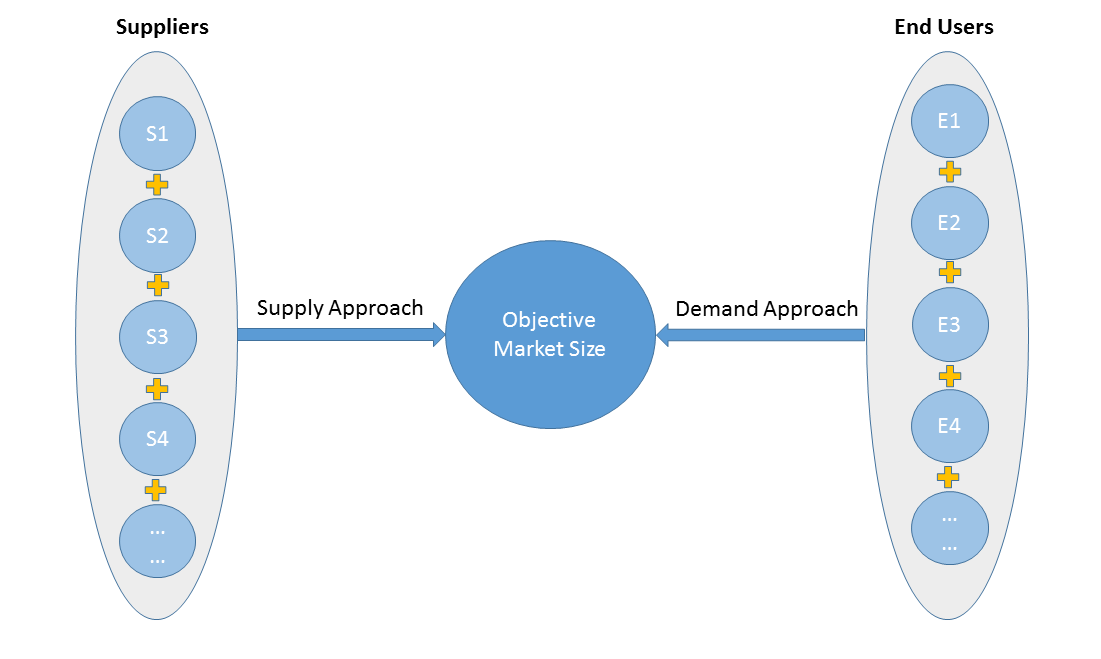
Supply approach is based on assessments of the size of each competitor supplying the objective market.
Demand approach combine end-user data within a market to estimate the objective market size. It is sometimes referred to as bottom-up approach.
- Forecasting Methodology
- Numerous factors impacting the market trend are considered for forecast model:
- New technology and application in the future;
- New project planned/under contraction;
- Global and regional underlying economic growth;
- Threatens of substitute products;
- Industry expert opinion;
- Policy and Society implication.
- Analysis Tools
1)PEST Analysis
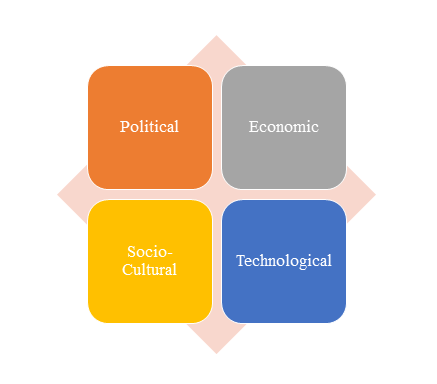
PEST Analysis is a simple and widely used tool that helps our client analyze the Political, Economic, Socio-Cultural, and Technological changes in their business environment.
- Benefits of a PEST analysis:
- It helps you to spot business opportunities, and it gives you advanced warning of significant threats.
- It reveals the direction of change within your business environment. This helps you shape what you’re doing, so that you work with change, rather than against it.
- It helps you avoid starting projects that are likely to fail, for reasons beyond your control.
- It can help you break free of unconscious assumptions when you enter a new country, region, or market; because it helps you develop an objective view of this new environment.
2)Porter’s Five Force Model Analysis
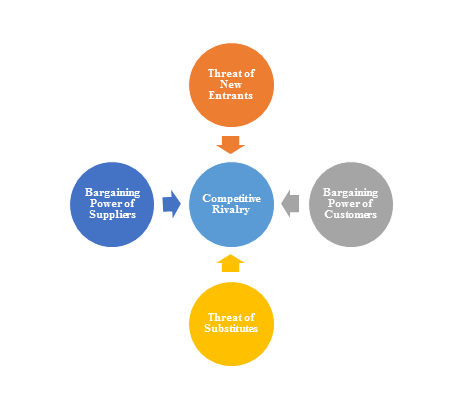
The Porter’s Five Force Model is a tool that can be used to analyze the opportunities and overall competitive advantage. The five forces that can assist in determining the competitive intensity and potential attractiveness within a specific area.
- Threat of New Entrants: Profitable industries that yield high returns will attract new firms.
- Threat of Substitutes: A substitute product uses a different technology to try to solve the same economic need.
- Bargaining Power of Customers: the ability of customers to put the firm under pressure, which also affects the customer's sensitivity to price changes.
- Bargaining Power of Suppliers: Suppliers of raw materials, components, labor, and services (such as expertise) to the firm can be a source of power over the firm when there are few substitutes.
- Competitive Rivalry: For most industries the intensity of competitive rivalry is the major determinant of the competitiveness of the industry.
3)Value Chain Analysis
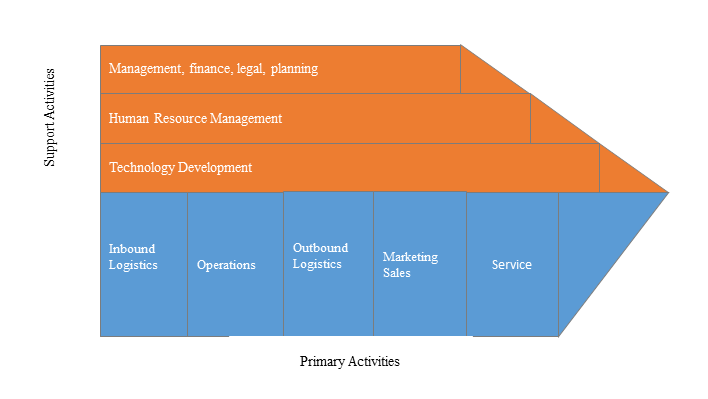
Value chain analysis is a tool to identify activities, within and around the firm and relating these activities to an assessment of competitive strength. Value chain can be analyzed by primary activities and supportive activities. Primary activities include: inbound logistics, operations, outbound logistics, marketing & sales, service. Support activities include: technology development, human resource management, management, finance, legal, planning.
4)SWOT Analysis
SWOT analysis is a tool used to evaluate a company's competitive position by identifying its strengths, weaknesses, opportunities and threats. The strengths and weakness is the inner factor; the opportunities and threats are the external factor. By analyzing the inner and external factors, the analysis can provide the detail information of the position of a player and the characteristics of the industry.
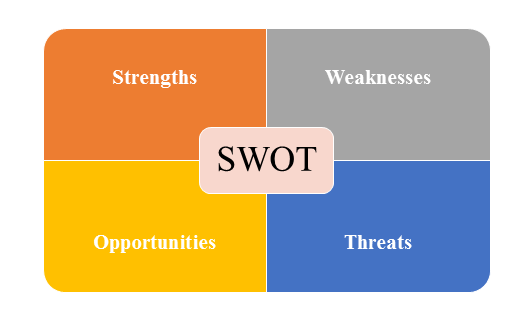
- Strengths describe what the player excels at and separates it from the competition
- Weaknesses stop the player from performing at its optimum level.
- Opportunities refer to favorable external factors that the player can use to give it a competitive advantage.
- Threats refer to factors that have the potential to harm the player.
- Data Sources
| Primary Sources | Secondary Sources |
|---|---|
| Face to face/Phone Interviews with market participants, such as: Manufactures; Distributors; End-users; Experts. Online Survey |
Government/International Organization Data: Annual Report/Presentation/Fact Book Internet Source Information Industry Association Data Free/Purchased Database Market Research Report Book/Journal/News |